Vinnie Jones On Lotteries
In today’s Sunday Times, Vinnie Jones is asked about life and money.
One question was “What would you do if you won the lottery jackpot?”
He replied. “I’ve won the lottery of life, which is bigger than any financial lottery.”
I’ll go along with that!
I always feel, I’ve had some very good luck and some extremely crap luck too!
Never On Sunday
There have always been things that were banned on Sundays or because of personal reasons, you never did on that day.
- A Welsh friend at Liverpool University called David Roberts didn’t use to drink on Sundays when I first met him. But we soon cured him of that!
- My late wife, who had been a Sunday school teacher in her time, wouldn’t go to the cinema on Sunday, as her mother thought it ungodly.
- For myself, I don’t think I went to a football match on a Sunday until I was about forty, as they were never staged on Sundays.
I also remember the first day, that C and myself went to the first 1000 Guineas at Newmarket on a Sunday. Now horse racing and most other sport on a Sunday is considered normal, just as it is in the rest of the world.
It also used to be that the Northern City Line didn’t run at weekends, despite having three stations that served The Emirates Stadium.
This morning before it rained, I took a trip to Harringay station to view the Wightman Road Bridge, by taking a 38 bus to Essex Road station and then going three stops to the North.
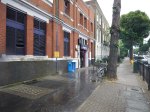


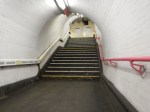

The line is getting new Class 717 trains, but I do feel that some work to improve the stations might not be a bad idea.
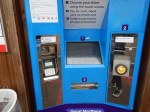
I actually wanted to buy a ticket on that dreadful machine from the Zone 6 boundary to Guildford, but unlike London Overground and some other companies ticket machines, it doesn’t sell such a useful ticket, which I wrote about in The Price Of Freedom.
More details of the Class 717 trains are given in this article in Rail Magazine, which is entitled New Govia Thameslink Railway trains to be Class 717s. This is said.
They are similar to the Class 700s being built by Siemens for GTR (of which 16 are in the UK), but they must have end doors as per safety regulations due to their operation in the Moorgate Tunnels. The design of this is at an advanced stage, with construction due to start this year.
I have felt that the Northern City Line, would be a classic application for an IPEMU for some time, as this would enable the Moorgate tunnels to be electrically-dead, as the trains would use batteries between Drayton Park and Moorgate stations. This would have the following effects.
- The third-rail electrification could be deactivated or even removed.
- The trains could also be 25 VAC only, if they wouldn’t be going into any other third-rail territory.
How would this impact tunnel safety regulations?
Whatever happens to this line, running a seven day a week service, will make the Northern City Line a valuable rail line in my part of London.
On a personal note, the line and Essex Road station in particular, will help me cut-out the dreaded Highbury and Islington station, with its long passageways and lack of lifts.
Common Sense Between Exeter And Plymouth
After the failure of the South Devon Sea Wall in 2014 and the cutting of the main line at Dawlish, something had to be done to make sure there was an alternative rail route between Exeter and Plymouth.
In the June 2016 Edition of Modern Railways there is an article entitled Cheaper Okehampton Route Proposed, which puts forward the latest thinking. The article starts like this.
The Peninsular Rail Task Force is advocating the reopening of the former Southern Railway route between Exeter and Plymouth via Okehampton as a secondary route rather than as a bypass for the existing line via Dawlish.
The Task Force has produced a 20-year plan for investment in the south west’s rail network. This link can access a draft summary report.
The old Southern Railway route between Exeter and Plymouth is described in Wikipedia as Partly Closed, but with much of the infrastructure intact, although the track has been lifted in places. It sounds that it has been left in a similar state to the Waverley Route and the Varsity Line, after cuts in the 1960s and 1970s. These two routes have been or will be partly or fully reopened.
Exeter to Plymouth via Okehampton is certainly in a better state with regard to trains than either the Waverley Route or Varsity Line were before work started.
- Trains run on the Tarka Line from Exeter to Crediton, before that line goes off to Barnstaple.
- The Dartmoor Railway also uses the route to take passengers between Exeter and Okehampton.
- From Okehampton to Tavistock, the track has been lifted.
- Tavistock is getting a new station and being connected to the Tamar Valley Line at Bere Alston.
- The Tamar Valley Line then takes passengers to Plymouth.
It may have the air of being assembled from Beeching’s left-overs, but it looks like it would work. Especially, as there should be no problem in the next few years in acquiring high-quality new or refurbished diesel trains for the line.
The Modern Railways article also says.
- The line’s function would be to provide a modest service serving local stations and to offer diversionary capability.
- Eight new stations would be provided.
- The line would be unlikely to be electrified.
- To help funding new housing would be built along the line.
A double-track railway with diesel trains would do the following.
- Improve the economy of Devon around the fringes of Dartmoor.
- Help in the development of much-needed housing in the area.
- Provide a much-needed freight route to and from the peninsular.
- Provide sufficient capacity in the event of problems at Dawlish.
But knowing Murphy’s Law, if the line were to reinstated, the sea at Dawlish would behave itself.
I also think that once the decision is made to reinstate the line, that it would be a project to build in a series of smaller related projects.
- Build the station at Tavistock and connect it to the Tamar Valley Line Line at Bere Alston, to create an hourly Plymouth to Tavistock service.
- Upgrade Okehampton station and the Dartmoor Railway to create an hourly Exeter to Okehampton service.
- Acquire some new or refurbished diesel trains for the routes and also for other local services in Devon. The trains would need to be weather-proofed for the Dawlish route.
- Build new stations at Okehampton East, North Tawton and Bow on the Okehampton to Exeter section.
- Reinstate the Tavistock to Okehampton route with stations at Lydford and Sourton Parkway.
Done in small stages, I think that other than getting a railway delivered at an affordable cost on an earlier date, it would have other advantages.
- Once the first two phases are complete, all but about sixteen miles of the route would be running trains.
- Hourly services at both ends of the line would give reliable forecasts as to expected passenger usage of the completed line.
- The hourly services would surely have a Borders Railway-style effect on tourism.
- Building in small stages could minimise heritage issues, that probably don’t come into play until the Tavistock to Okehampton section is designed and built.
Like the Borders Railway and the Varsity Line, it strikes me that this route from Exeter to Plymouth was wrongly closed in the 1960s and 1970s. But then Harold Wilson, that well-known friend of trains, flew to his cottage on the Scilly Isles.
I believe that this plan is a good one and I’m looking forward to exploring the complete line in the future.
The BHS Collapse Turns Nasty
The top story on the BBC web site today is entitled BHS collapse: Sir Philip Green demands ‘biased’ MP Frank Field resigns.
I don’t think I would get on well with either Sir Philip Green or Frank Field, but as I don’t have to, it’s very much irrelevant.
Reading Green’s Wikipedia entry, says to me that we have too many differences and a friend once had a serious difference of opinion with Field, which makes me feel that I wouldn’t get on with him either.
My personal view on BHS was expressed in How Many Shoppers Will Mourn The Death of BHS?
I think for a start, it has to be asked, how BHS got into the sorry state they were before the collapse!
I shall be taking strong interest in when Green and Field meet next week.
If the meeting ever takes place!
Phince Philip On Crossrail
Matthew Parris , who admits he is no royalist, has an article in today’s Times entitled The Debt We Owe To A Thoroughly Modern Philip, in which he praises Prince Philip’s attitude to engineering, science and technology amongst other things.
He finishes the article like this..
Earlier this year, at 94, Prince Philip descended into the main tunnel of London’s Crossrail project to see more. They told him it would open in 2018.
“Too late foe me,” he said. Then he thought again. “Or perhaps not.”
I hope not.
I would agree with Matthew.
Wightman Road Bridge Is Falling Down
I went to IKEA this morning on a 341 bus (As one does?) and the area around Harringay Green Lanes station.was locked solid.
A quick check on the Internetfrom my phone, told me that Wightman Road is closed.
This Google Map shows the area between Harringay Green Lanes station and Harringay station.
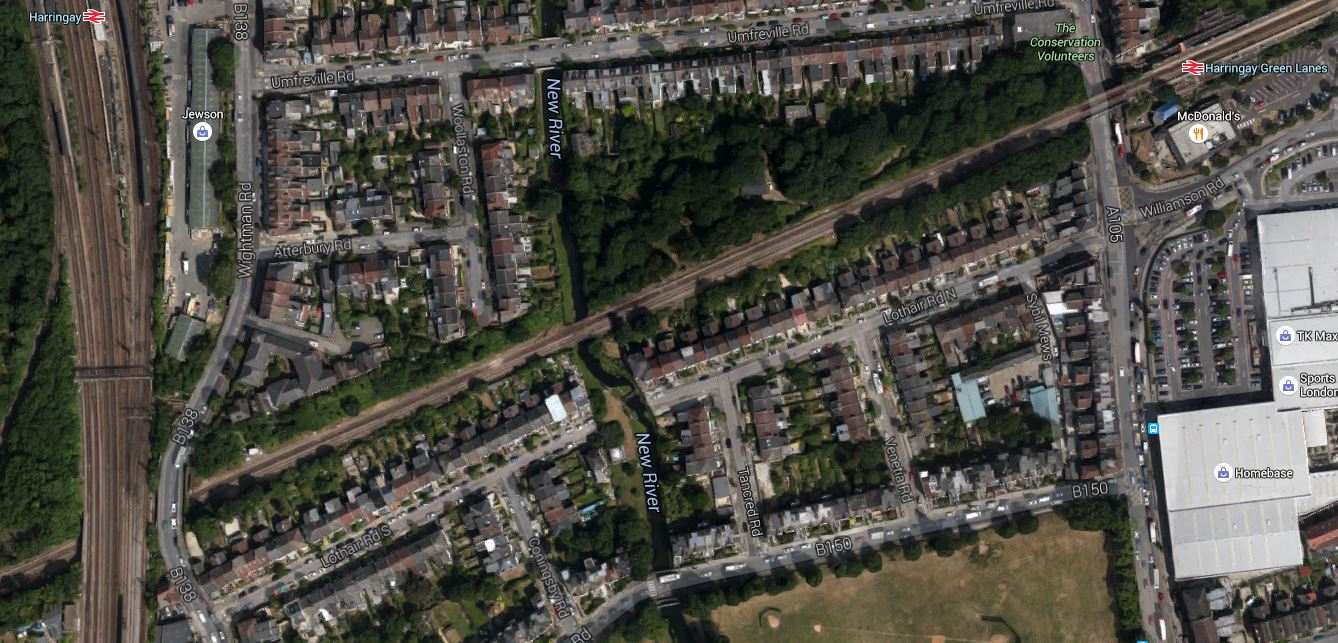
Wightman Road Bridge
If you follow the Gospel Oak to Barking Line (GOBlin) westward from Harringay Green Lanes station, you come to the important bridge where the East Coast Main Line goes over the GOBlin. To the East of this bridge is a road bridge that takes Wightman Road, which is a major route numbered B138 over the railway.
This would appear to be the bridge that is causing the trouble.
I can only find one authorative document on the web and that is this page on the Haringey Council web site, which is entitled Bridge Reconstruction Work in Wightman Road. This is said.
Work is under way to replace the defective bridge over the railway lines on Wightman Road. The bridge is showing signs of severe deterioration. Network Rail are carrying out the work to coincide with the closure of the Gospel Oak-Barking line, which is undergoing electrification. Both projects are being carried out at the same time to help minimise transport disruption.
The main construction work will run from March to September 2016. While every effort will be made to minimize disruption to traffic, there will be a period when complete road closure will be unavoidable. A temporary footbridge will be put in place to provide access for pedestrians and cyclists while the work is in progress.
Incidentally,. I’ve not heard anything on the news or seen anything in the papers. When I checked a few minutes ago, there was nothing I could find on the Transport for London or Network Rail web sites.
So is this another case of Network Rail not giving the truth about bad problems in the hope they’ll not be spotted?
Or do they think that informing the general public is not important?
These are some pictures, I took at a visit to the bridge on a quiet Sunday morning.
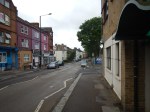

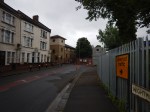


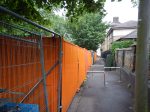


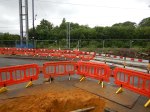


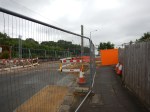
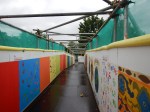
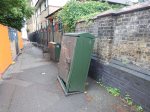
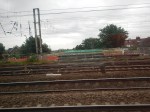
There’s certainly more useful infrormation at the bridge site, than on the web.
One notice labelled Wightman Road Overbridge says this.
- What: The existing Wightman Road Overbridge is to be demolished to bridge abutments to enable a complete bridge reconstruction.
- When: The construction phase is due to start in March 2016 and run until September 2016.
- Installation of scaffold walkway and access platform planned for March 2016.
- Diversion of services and removal of road surface are planned for April 2016 & May 2016.
- Removal of existing highway and bridge is planned for June & July 2016.
- Installation of new bridge deck planned for July 2016.
- Reinstatement of the highway, VRS and services is planned for July & August 2016.
- Why: The Wightman Road Overbridge is now at the end of its design life.In 2005 the structure was assessed and it was decided to renew the life-expired structure to modern-day standards.
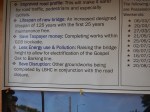
A second notice says this.
- Improved Road Profile: This will make it safer for road traffic, pedestrians and especially cyclists.
- Lifespan of New Bridge: An increased design lifespan of 125 years with the first 25 years maintenance free.
- Save Taxpayer Money: Completing works within GOB blockade.
- Less Energy Use And Pollution: Raising the bridge height to allow for electrification of the Gospel Oak to Barking Line.
- Save Disruption: Other groundworks being completed by LBHC in conjunction with the road closure.
The pictures show that good progress appears to be being made. It would appear that services are being diverted, but that the original road surface is still in place. There were also notices prominently displayed saying that on the weekends of the 25th June and 2nd July the pedestrian walkway would be closed, as a crane would be working. Could this be when the old bridge is lifted out and the new one is lifted in?
Let’s face it, 125 year old bridges do get tired! The bridges at Upper Holloway, South Tottenham and Highbury and Islington stations have all been or are being replaced!
I do wonder, if the urgent need to replace this bridge might explain the progress on the GOBlin electrification. Network Rail and Murphys seemed to have had a simple plan, which was proceeding in the early months of 2016. Then they found they needed a six month closure of the railway to replace the Wightman Road bridge and that blew a big hole right through everything.
But that doesn’t explain, why TfL and Network Rail haven’t disclosed the detailed truth to the people of North London!
At least when they’ve replaced the bridge, they’ll have a strong structure that they could use to support the overhead wires.
The Price Of Freedom
I had a tidy up this morning and found a lot of orange rail tickets.
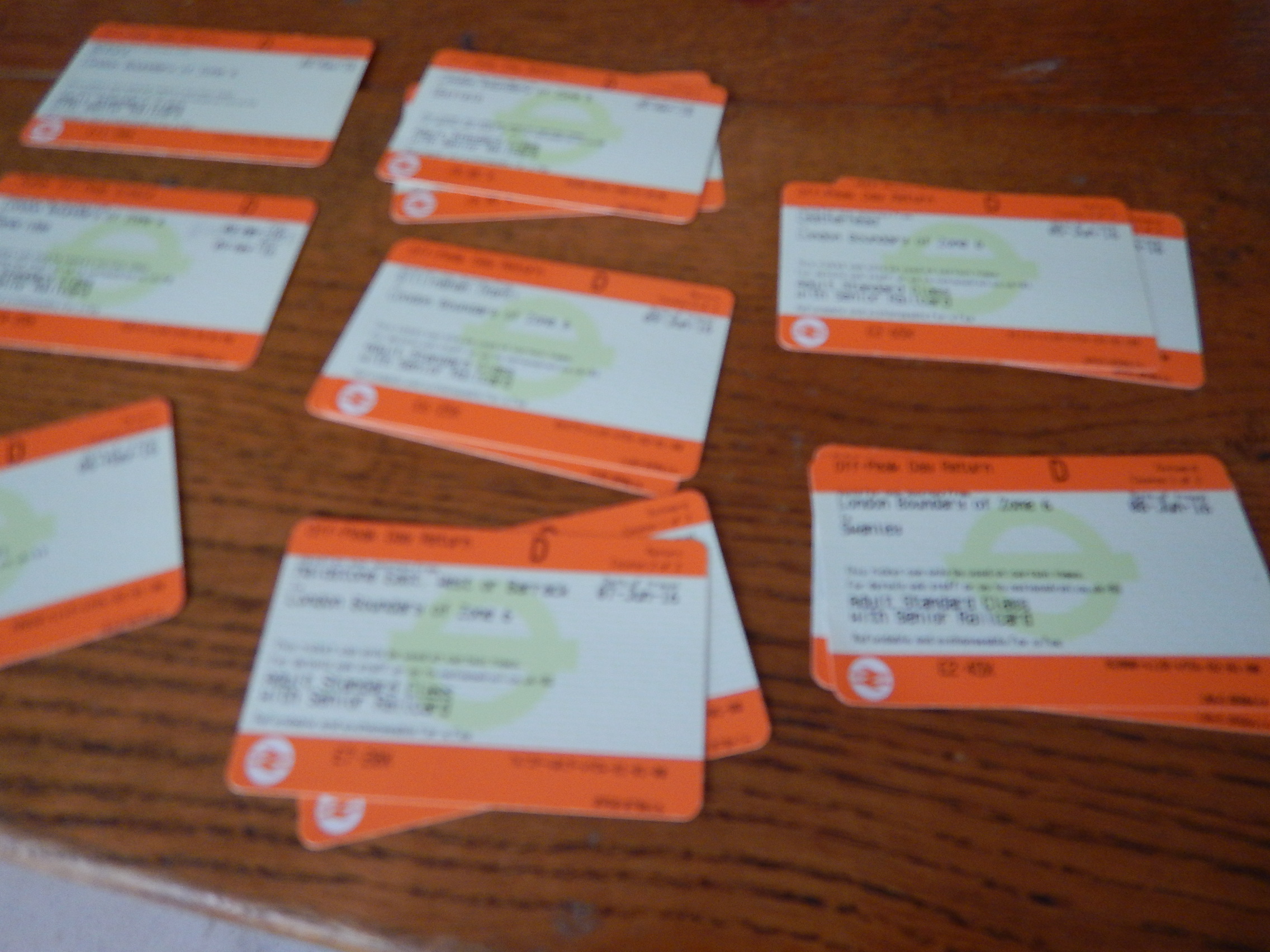
Orange Rail Tickets
These tickets are some Singles, but mainly Returns to places on the fringes of London.
- Aylesbbury Vale Parkway £9.65 ReturnBedford £12.00 Single
- Cambridge £10.25 Single
- Dorking £3.25 Return
- Gerrards Cross £4.05 Single
- Gillingham £6.25 Return
- Henley-on-Thames £6.85 Return
- Leatherhead £2.65 Return
- Maidstone £7.20 Return
- Marlow £5.70 Return
- Milton Keynes 12.60 Return
- Oxford £11.90 Return
- Oxted £2.80 Return
- Rochester £5.55 Single
- Seaford £14.15 Return
- Slough £2.85 Return
- Swanley £2.45 Return
- Tilbury £2.45 Single
- Uckfield £8.85 Return
- Windsor and Eton Riverside £5.20 Single
- Working £5.15 Return
Some of these journeys may seem better value than you can get.
But then as I live in London and have a Freedom Pass, which gives me free travel to the Zone 6 Boundary of London’s travel system, so I’m buying a ticket from that boundary to my destination, which I then buy with a discount, as I have a Senior Railcard.
I also live close to Dalston Junction station, which is one of an increasing number of stations, where you can purchase a ticket from the Zone 6 boundary to a large number of stations, in a ring around London, in a ticket machine without resource to either the Internet or a Ticket Office.
What would be better, would be able to associate a bank card with my Freedom Pass and Senior Railcard. So if I used the bank card as a ticket, like millions do across London every day, it would deduct the cost of my travel to the Zone 6 boundary, that I get free with my Freedom Pass, and then charge me accordingly.
An Estate Agent, who I meet on the street by my house and with whom I often have a quick chat, believes that inward migration of older people into London is driven by the following factors.
- Availability of quality housing, that is comparable in price to a large residence in a good location in the countryside.
- Free public transport for most over sixty-five. Even if you weren’t born in the UK
- Lots of free museums and galleries.
- Lots of paid for events, culture and attractions.
- World-class free healthcare.
- The ability to live without a car.
The last time we met, he told me how he’d just sold a French couple a quality two-bedroom house round the corner to help get round some of France’s tax and inheritance rules.
Who’d have thought that London would be a place where people retire?
But then since about 2000, my late wife, C and myself had planned to sell-up in Suffolk at some time and move to somewhere like Hampstead.
Sadly, she didn’t make it, so I came by myself to the more edgy and plebian Hackney.
But I don’t regret the change of location one iota.
Where will I explore today?
The Old Rochester Station
The old Rochester station closed a few months ago.
But you can still see it from the train, as it goes through.


A station man at Gillingham station told me, that the platforms at the old station are sometimes used to turn trains back to London.
When the site is fully cleared, there would probably be some space for sidings to store and reverse trains.
Chatham Station
Chatham station is one of the stations, that could be important to a proposed South London Outer Orbital .
The proposal says that two trains per hour (tph) could go to the Medway Towns.
These are pictures I took of the station, as I passed through.
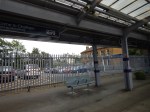
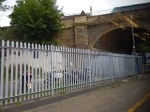
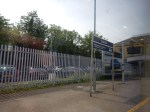
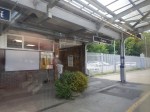
As I said in Gillingham Station, up to nine trains per hour (tph), could call at all three Medway towns of Rochester, Chatham and Gillingham, so all Chatham station needs to be is a quality two-platform station able to handle twelve-car trains every six or so minutes.
I’m certain Chatham station is up to that!
Gillingham Station
Gillingham station is one of the stations, that could be important to a proposed South London Outer Orbital .
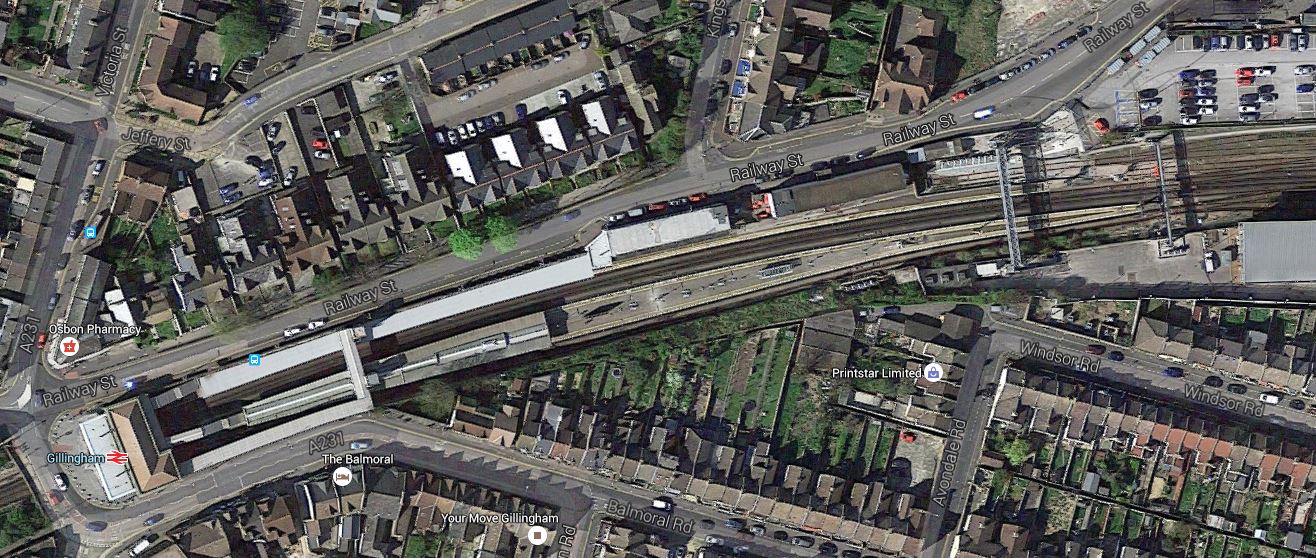
The proposal says that two trains per hour (tph) could go to the Medway Towns. As Gillingham has a new station building and a bay platform 1, which is capable of taking twelve-car trains, it must be a possible terminus.
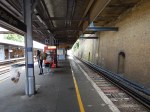
These are pictures I took of the station, as I passed through.
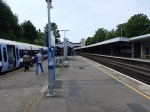
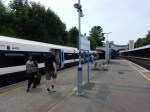
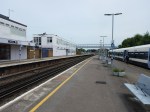
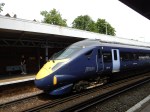
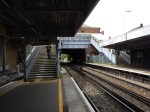
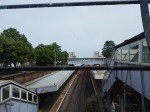
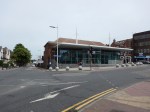
This Google Map shows Gillingham station.
Gillingham Station
Gillingham would certainly do as a terminal of the South London Orbital Route.
In fact there is tremendous scope for an efficient turning of trains for both the South London Orbital Route and Crossrail in the Medway Towns.
Currently London-bound trains from Gillingham go to the following stations.
- 2tph to London St Pancras via Chatham and Ebbsfleet International
- 3tph to London Victoria via Chatham and Bromley South (1tph calling at Denmark Hill)
- 2tph to London Charing Cross via Dartford and Woolwich Arsenal
I’m not sure, but most trains seem to stop at all three of Gillingham, Chatham and Rochester.The 2 tph from Charing Cross also return to London after terminating in the Bay Platform 1.
If the South London Orbital Route adds two tph to Gillingham from Swanley and Bromley South, then I suspect that the Bay Platform 1 could easily accommodate the current service and the South London Orbital Route.
That would give Gillingham, Chatham and Rochester, their own local 9 tph shuttle. Other places will get jealous.
 The Anonymous Widower