Portugal’s Sevenair Eyes Up To 6 Heart Aerospace ES-30 Electric Aircraft
The title of this post, is the same as that of this article on Simple Flying.
Some points from the article.
- Sevenair are a Portuguese regional airline.
- Sevenair run several short routes.
- Heart Aerospace has 230 firm orders and a 100 options for the the ES-30.
Heart Aerospace may not have been the first company to fly an electric airliner, but they do seem to be attracting orders.
‘It Was Wonderful’: Eviation’s Alice Electric Airplane Wins Praise After Its First Flight Test
The title of this post, is the same as that of this article on GeekWire.
The long-expected first flight of Eviation Alice has happened.
The flight was only a short one and was described like this in the article.
Alice flew for eight minutes and reached a maximum altitude of 3,500 feet before landing safely back at the airport.
There is also a video in this article on Electrek, which is entitled Watch Eviation’s All-Electric Alice Aircraft First Flight.
This is an important milestone in the history of aviation.
American Airlines Orders 60 Overture Supersonic Jets
The title of this post, is the same as that of this article on The Times.
This is the introductory paragraph.
The revival of supersonic passenger travel, thought to be long dead with the demise of Concorde nearly two decades ago, could be about to take wing as American Airlines has put in an order for 60 aircraft capable of flying at 1.7 times the speed of sound.
The aircraft has changed a bit since I wrote about it in United Airlines Eyes A Supersonic Future With Deal To Buy Boom’s Overture Jets, which was posted in June 2021.
- It now has four engines instead of three.
- Speed has now been disclosed as Mach 1.7, which is slower than Concorde’s Mach 2.04.
Boom envisages its first commercial flights in 2029.
ZeroAvia Hydrogen Powered Jets For American Airlines?
The title of this post, is the same as that of this article on Aviation Source.
The article states that American Airlines will be investing an undisclosed amount into ZeroAvia and that it might use their regional hydrogen-powered aircraft in the United States.
easyJet And Rolls-Royce Pioneer Hydrogen Energy Combustion Technology In H2ZERO Partnership
The title of this post, is the same as that of this press release from Rolls-Royce.
These three opening paragraphs outline the project.
easyJet and Rolls-Royce today announced a ground-breaking new partnership, H2ZERO, that will pioneer the development of hydrogen combustion engine technology capable of powering a range of aircraft, including those in the narrow-body market segment.
Both companies have committed to working together on a series of engine tests on the ground, starting later this year and have a shared ambition to take the technology into the air. The objective of the partnership is to demonstrate that hydrogen has the potential to power a range of aircraft from the mid-2030s onwards.
While Rolls-Royce will bring its expertise in engine development and combustion systems, easyJet will contribute its operational knowledge and experience to H2ZERO and will also directly invest in the test programme.
This to my mind is good news.
This paragraph gives details of some of the planned work.
Through H2ZERO, the companies will support an early concept ground test of a Rolls-Royce AE 2100 engine in the UK later this year. This will be followed by a full-scale ground test of a Rolls-Royce Pearl 15 jet engine – a range of location options are being assessed for this including the Rolls-Royce test facility in Mississippi, USA. The programme will build on initial hydrogen combustion and fuel system rig tests that Rolls-Royce is undertaking with both Cranfield and Loughborough universities.
Note.
- The Rolls-Royce AE 2100 engine, powers the Lockheed Super Hercules amongst others.
- Rolls-Royce Pearl 15 powers various business jets.
easyJet and Rolls-Royce certainly have ambitions, and as there is little about the route they are taking to decarbonise, I would assume, that the main purpose of the study, is to find the optimal route.
I have just found this paper on the German Aerospace Centre web site, which is entitled Assessment Of Hydrogen Fuel Tank Integration At
Aircraft Level.
It uses as a baseline aircraft, the Airbus A320neo, of which easyJet have a few!
I suspect that using some of the techniques outlined in this paper, Rolls-Royce could decarbonise an Airbus A320neo.
Aerospace Electrified By New Technology
The title of this post, is the same as of this article on the BBC.
The article is a good summary of the state of zero-carbon aviation.
News Of The Day From Rolls-Royce
This press release from Rolls-Royce is entitled Rolls-Royce Advances Hybrid-Electric Flight With New Technology To Lead The Way In Advanced Air Mobility.
This is the introductory paragraph.
Rolls-Royce is officially announcing the development of turbogenerator technology, which includes a new small engine designed for hybrid-electric applications. The system will be an on-board power source with scalable power offerings and will complement the Rolls-Royce Electrical propulsion portfolio, enabling extended range on sustainable aviation fuels and later as it comes available through hydrogen combustion.
This paragraph outlines the use of the new small engine.
Current battery technology means all-electric propulsion will enable eVTOL and fixed wing commuter aircraft for short flights in and between cities and island-hopping in locations like Norway and the Scottish Isles. By developing turbogenerator technology, that will be scaled to serve a power range between 500 kW and 1200 kW, we can open up new longer routes that our electric battery powered aircraft can also support.
There is also a video in the press release, which gives more information.
- The turbogenerator is compatible to their electric power and propulsion offering.
- The turbogenerator has a power of 500-1200 kW to serve different aircraft platforms.
- The system is modular and can be tailored to different applications.
- The turbogenerator can either power the aircraft directly or charge the batteries.
- The system can be configured to provide primary power for other applications.
- Rolls-Royce are designing all the components; the turbogenerator, the gas turbine, the generator, the power electronics, so they all fit together in a compact and lightweight solution.
- Rolls-Royce intend to manufacture all components themselves and not rely on bought-in modules.
- Every gram of weight saved is important.
I suspect that one of the keys to making this all work is a very comprehensive and clever control system.
I have a few thoughts.
Weight Is Key
Rolls-Royce emphasise weight saving in the video. Obviously, this is important with any form of flying machine.
An Example System
Let’s suppose you want an electric power system to power a railway locomotive or one of those large mining trucks.
- The locomotive or truck has an electric transmission.
- Power of 2 MW is needed.
- A battery is needed.
- Fuel will be Sustainable Aviation Fuel (SAF) or hydrogen.
A series hybrid-electric power unit will be created from available modules, which could be very fuel efficient.
What Will Rolls-Royce’s System Be Able to Power?
Although the system is aimed at the next generation of electric flying machines, these systems will be used in any application that wants an efficient zero- or low-carbon power source.
Consider.
- Some large trucks have diesel engines with a power of almost 500 kW.
- A Class 68 bi-mode locomotive has a 700 kW diesel engine.
- A Class 802 train has three 700 kW diesel engines.
- Rolls-Royce subsidiary MTU are a large supplier of diesel engines for rail, road and water.
It looks to me that Rolls-Royce have sized the system to hoover up applications and they have MTU’s experience to engineer the applications.
Class 43 Power Cars
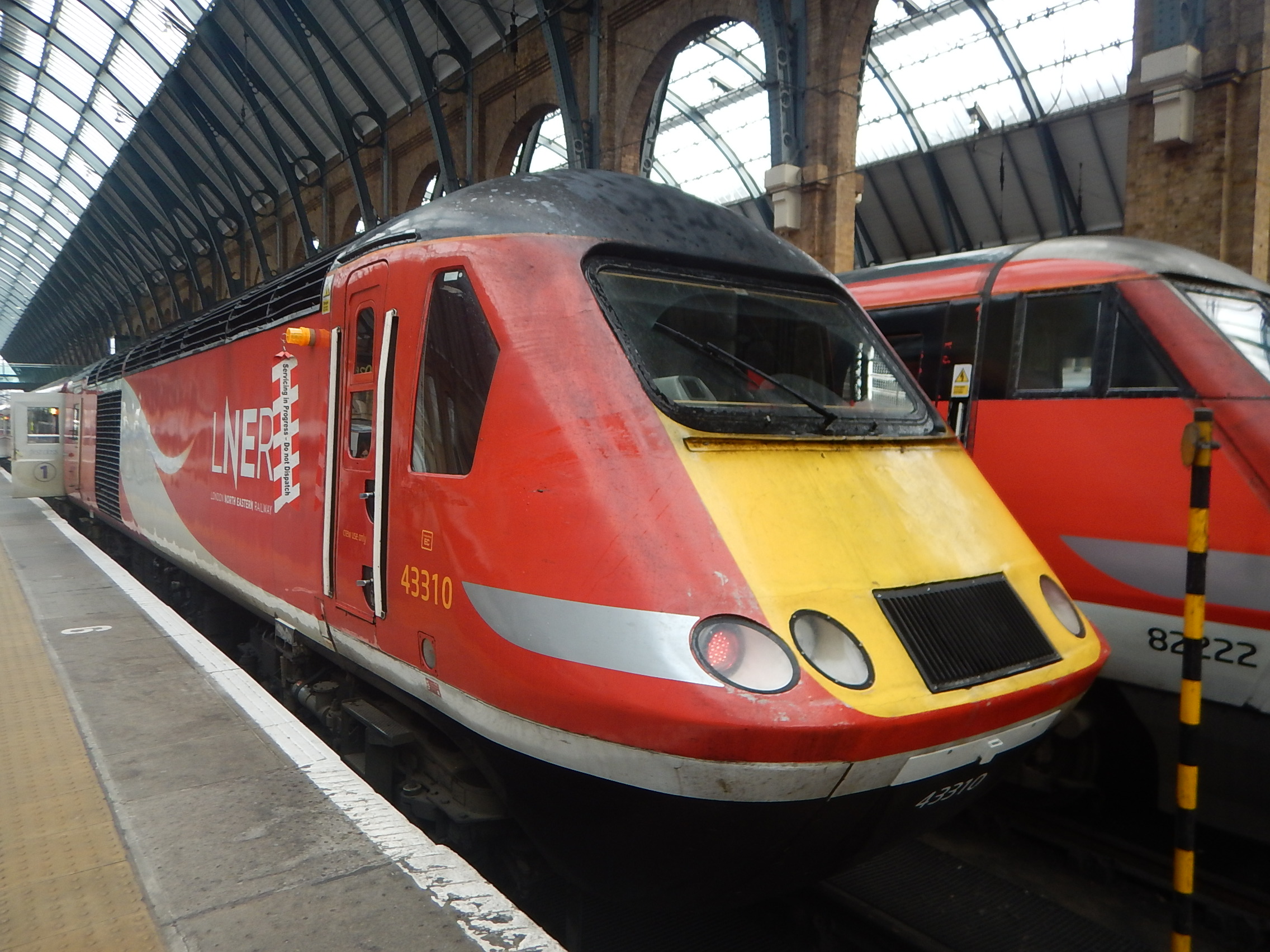
The iconic Class 43 power cars running on UK railways are an interesting possibility for powering with Rolls-Royce’s new system.
- Despite being over forty-years old, there are over a hundred and twenty still in service.
- They were upgraded with new 1.7 MW MTU diesel engines in the early part of this century.
- Rolls-Royce is based in Derby.
- The Class 43 power cars were developed in Derby.
- Hydrogen-powered Class 43 power cars, hauling GWR Castles or ScotRail Inter7Cities would be tourist attractions.
- The Class 43 power cars need to be either decarbonised or replaced in the next few years.
Decarbonisation using Rolls-Royce’s new system would probably be more affordable.
This all sounds like a project designed in a pub in Derby, with large amounts of real ale involved.
But I wouldn’t be surprised if it happened.
Will The System Be Upgradable From Sustainable Aviation Fuel To Hydrogen?
This is an except from the introductory paragraph.
The system will be an on-board power source with scalable power offerings and will complement the Rolls-Royce Electrical propulsion portfolio, enabling extended range on sustainable aviation fuels and later as it comes available through hydrogen combustion.
This would appear that if used in aviation, it will be possible to upgrade the system from sustainable aviation fuel to hydrogen, when a suitable hydrogen supply becomes available.
But all applications could be upgraded.

A truck, like the one shown in the picture could be delivered as one running on sustainable aviation fuel and converted to hydrogen later.
Conclusion
Rolls-Royce have put together a modular system, that will have lots of applications.
Monte To Purchase 100 FC Aircraft Drives From ZeroAvia
The title of this post, is the same as that of this article on electrive.com.
This is the first paragraph.
ZeroAvia and Monte Aircraft Leasing will jointly market hydrogen-powered aircraft to regional operators. Under an agreement now signed between the companies, Monte will purchase up to 100 ZA600 hydrogen-electric powertrains from ZeroAvia to be installed on existing and new 5- to 20-seat aircraft.
Monte look to be an interesting company from their web site, which has this title.
Supporting The Transition Of The Regional Aviation Industry To Net Zero Carbon Emissions
The business model appears to be a well-proven and it is not that far removed from the one, colleagues and myself used to sell the project management system; Artemis.
In our case we took proven Hewlett-Packard computers and and other hardware, added our Artemis software and a custom-made desk and leased the systems to those who wanted to do project management, with as much support as our clients required. Customers just had to supply operators, printer paper and a thirteen amp socket.
Finance was obtained by various innovative methods, often through a bank manager, who was a bit of a rogue. But he was a rogue, who was on the side of the angels.
Later he became a firm friend of mine, before he sadly died within a few days of my wife.
Monte Aircraft Leasing’s model would appear to take a proven aircraft like a Cessna Caravan, Dornier 228 or Dash 8, replace the turboprop engines with a zero-carbon powerplant and then lease the aircraft. Often this will just be an additional lease to the existing operator.
The great advantage of this approach, is that the reengined aircraft does not need to be fully re-certified. It can fly under a Supplemental Type Certificate, which is described like this in Wikipedia.
A supplemental type certificate (STC) is a civil aviation authority-approved major modification or repair to an existing type certified aircraft, engine or propeller. As it adds to the existing type certificate, it is deemed “supplemental”. In the United States issuance of such certificates is under the purview of the Federal Aviation Administration (FAA).
Monte seem to have found a good way to make money from going net-zero.
2.7M Tonnes Of Co2 Could Be Saved Per Year If UK Domestic Flights Went Electric
The title of this post is the same as that of this article on Simple Flying.
This is the introductory paragraph.
Analysing over 100 domestic routes within the UK, researchers have uncovered some significant Co2 reductions upon the inevitable switch to electric.
It is an excellent summary of the state and potential of electric airliners in the UK.
The article gives this example of the sort of carbon savings, that can be achieved.
One of the shortest domestic flights in the United Kingdom, a 38-minute hop between Belfast International and the Isle of Man, uses around 36kg of carbon dioxide per passenger. In 2019, the route served approximately 20,000 passengers – with a switch to electric aviation, 752 tonnes of carbon dioxide could be cut on the 76-mile flight.
The article says this about one of the more developed electric aircraft; the ES-19 from Heart Aerospace.
One manufacturer, in particular, is seeing a significant surge in interest; Swedish electric aircraft startup, Heart Aviation. Currently holding letters of interest from United Airlines and Finnair, Heart’s 19-seat ES-19 is set to be the first all-electric regional aircraft, boasting a 400km range with a full-charge time of just 40 minutes. The first flight is planned for 2024, with an anticipated 2026 start date.
Airports within a 400 km range from London would include.
- Anglesey
- Blackpool
- Exeter
- Guernsey
- Jersey
- Leeds/Bradford
- Liverpool
- Manchester
- Newquay
- Norwich
- Paris
- Schipol
Dublin, Isle of Man and Newcastle are just over 400 km.
Note.
I also suspect that Dublin, Edinburgh, Leeds and Liverpool would make excellent hubs for electric aircraft.
I used Free Map Tools to get the distances.
HyPoint And GTL Ultra-Light Liquid Hydrogen Tanks Could Be A Jet Fuel Game Changer
The title of this post, is the same as that of this article on Hydrogen Fuel News.
This is a sentence from the article.
HyPoint and GTL have been developing a groundbreaking liquid hydrogen cryotank design that could turn the entire aircraft industry on its head.
It is claimed that these ultra-light tanks could give a four times increase in range for jet-fuelled aircraft.
The article also claims that HyPoint has developed a new ctype of fuel-cell that could make conventional jet fuel obsolete.
Occasionally, ideas come along, that are literally too good to be true! Usually, they are!
But this one could be the one in a hundred, that isn’t!
Visit the HyPoint web site and see what you think!
I also think, that the technology may have other applications, in addition to aviation.
 The Anonymous Widower