East India And Blackheath Stations Through The Silvertown Tunnel – 22nd August 2025
I haven’t been through the Silvertown Tunnel for some weeks, so yesterday, as I wanted to have a look at the refurubished Blackheath station, I went and had a look.
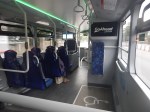
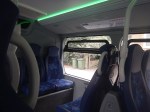
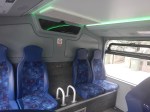
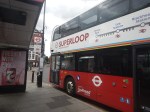
Note.
- The journey was made at about 11:00 on a Friday morning.
- The bus was more of a taxi, as only about five passengers used it.
- The tunnel wasn’t very busy with traffic.
This article on Highways Magazine is entitled Traffic Volumes Down At Blackwall And Silvertown Tolls.
This is the sub-heading.
Daily traffic volumes for both the newly opened Silvertown and Blackwall tunnels are 7.6% lower than in the same period last year for just the Blackwall tunnel, Highways can reveal.
I feel very much, that the Silvertown Tunnel is being underused and perhaps we should run more local buses or even long-distance coaches through the tunnel.
Severe Delays At Blackwall Tunnel, Woolwich Ferry And Dartford
The title of this post is the same as that of this article on Murky Depths.
These three paragraphs give more details.
There are severe delays at all crossings of the Thames between east and south east London and beyond this afternoon after a collision on the Dartford crossing.
Miles of queues are in place at the approach to the Blackwall crossing with traffic backed up for the entire length of the A2 and A102 between the M25 and Greenwich then back into east London.
Extremely long waits for the Woolwich ferry are also seen, with numerous bus routes delayed.
It appears to have been caused by a crash on the Dartford Crossing, that required extensive repairs to the road and barriers.
In 2015, I published No To Silvertown Tunnel.
Since the tunnel opened, I have written Is The Silvertown Tunnel A Silver Elephant?
I am certainly keeping an open mind, after yesterday’s article in Murky Depths.
Silvertown Tunnel Easing Congestion, TfL Says
The title of this post, is the same as that of this article on the BBC.
This is the sub-heading.
Transport for London (TfL) has shared the first insights about the impact on traffic of the new Silvertown Tunnel, as part of commissioner Andy Lord’s latest report to the TfL Board.
These two initial paragraphs gives a summary of about three weeks traffic.
Analysis of data between 21 April and 11 May shows the Silvertown and Blackwall tunnels are being used by an average of about 88,000 vehicles on a typical weekday. Of these, about 20,000 are using the Silvertown Tunnel.
Before the tunnel opened on 7 April, about 100,000 vehicles used the Blackwall Tunnel on weekdays.
TfL are claiming that this 12,000 drop in traffic is helping to ease congestion.
Logically, a drop in traffic will ease congestion, but the BBC article also says this.
However, it said it was aware of some increased traffic volumes at other river crossings, including the Woolwich Ferry.
The only other river crossings in the area are the Rotherhithe Tunnel and the Woolwich Ferry, both of which are free to all users.
So is the drop in traffic through the Blackwall and Silvertown Tunnels, due to drivers objecting to paying a toll and taking a free route instead?
On The Buses
The BBC article says this about bus passengers.
Mr Lord’s report also provided ridership data about the three bus services that operate through both tunnels: the new Superloop SL4, the extended route 129 and the 108, which already ran through the Blackwall Tunnel before 7 April.
Across the routes there is a daily average of more than 20,000 passengers making use of these services, of which typically about 7,000 are crossing the river using one of the two tunnels. In March 2025, there were about 2,700 crossings a day made using route 108.
The increase in bus passengers is not surprising.
Before the opening of the Silvertown Tunnel, there was just this bus service through the Blackwall Tunnel.
- London Bus 108 – Stratford and Lewisham via North Greenwich.
This has now been joined by, these bus services through the Silvertown Tunnel.
- London Bus 129 – Great Eastern Quay and Lewisham via City Airport and North Greenwich.
- London Bus SL4 – Canary Wharf and Grove Park via East India, Blackheath and Lee.
Note how the buses call at rail stations, an airport and other important traffic interchanges.
In Could The Silvertown Tunnel Handle More Buses?, I asked if buses through the Silvertown Tunnel should be increased?
Given that traffic through the combined Silvertown/Blackwall complex has dropped by 12,000 vehicles per day, that must leave space for a few buses or coaches.
- Assuming, that one bus or coach takes up the space of four cars, that would be space for 3,000 buses/coaches per day.
- Also assuming the bus and coach services are run on a twenty-four hour basis, that would be 125 buses/coaches per hour.
If the bus and coach services ran every ten minutes, that would say, there is space in the tunnel for up to a dozen new bus or coach routes.
There could develop a virtuous circle and feedback loop, which drives the tunnel to a state of equilibrium, where traffic grows through the tunnels, until it is maximised.
Consider.
- Research shows a bus route from A to B through the tunnel would attract passengers.
- Drivers and their passengers decide that on balance a bus ride is more convenient, no slower and more affordable than driving.
- Congestion charges and other charges for non-electric vehicles will play their part.
- Green issues will also will play their part.
- Fewer cars will use the tunnels.
- Increasing tunnel charges will only drive more car users to the buses.
- More free space in the tunnel, will allow more bus and coach routes.
- More bus and coach routes will attract drivers from their cars.
Eventually, equilibrium will be reached.
A similar effect happens, when a new bypass is opened and as if by magic it fills up.
When it happens with train services I call it, London Overground Syndrome.
On Your Bike
The BBC article says this about cyclists.
There is also a cycle shuttle service, enabling cyclists to take their bikes free of charge on a bus through the Silvertown Tunnel. TfL said some 100-150 people were using it on a typical day.
While this is below its capacity, TfL believes usage will grow as cyclists adapt their routes to benefit from this safer crossing option.
When I used to cycle around London in the 1970s, I never cycled under the Thames, but I did generally cycle as fast as I could across the city. I wouldn’t have put my bicycle on a free bus.
So, is this why the cycle shuttle service is below capacity?
The BBC article says this.
TfL believes usage will grow as cyclists adapt their routes to benefit from this safer crossing option.
I believe, that if TfL should ever charge for the cycle shuttle service, they’d kill it.
In my opinion, they’d be better off providing secure bike parking, but even some of that seems lightly used.
Tunnel Performance
The BBC article says this about tunnel charging and performance.
TfL said it intended to publish quarterly factsheets on the operational performance of the tunnels’ toll scheme.
This will include information about how many people pay the charge, the compliance rates for vehicles using the tunnels and the number of Penalty Charge Notices that are issued.
The first of these factsheets will be published later this year, but initial data shows that compliance has steadily increased, with about 90% of motorists either paying a charge or benefiting from an exemption.
Surprisingly, so far, I haven’t met anybody who has driven through the Silvertown Tunnel, except for a couple of bus drivers.
Is The Silvertown Tunnel A Silver Elephant?
I have been through the Silvertown Tunnel several times now and every time the bus has never really slowed for lots of traffic.
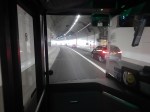
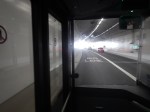
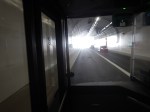
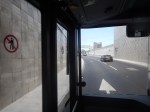
I went through this morning on Easter Sunday and these pictures show all the other traffic I saw.
Note.
- I was sitting in the front passenger seat of a 129 bus, which is on the left of the bus.
- We were going from South to North through the Silvertown Tunnel.
- I could read the driver’s speedometer and it showed within a mile per hour of thirty all the way.
- We were passed by only one car in the tunnel.
- There were about a dozen passengers on the lower deck of the bus.
- I didn’t check how many were on the top deck of the bus.
Even on an Easter Sunday, I would have thought the service would have been busier.
Is The Silvertown Tunnel A Silver Elephant?
There are two answera to this question.
- Yes – A lot of money has been spent for just a few cars and bus passengers to have an easy ride through the tunnel.
- No – As traffic is flowing freely through the tunnel, it shows the tunnel is doing its job and freeing up traffic in East London.
But whatever view you take, a lot of money has been spent for a small number of vehicles and passengers to pass through the tunnel.
I also suspect very little extra revenue is being generated.
The Jubilee Line Was Busy
The complete route I took this morning was as follows.
- Home To Angel – 38 bus – Not very busy.
- Angel to London Bridge – Northern Line – Not very busy.
- London Bridge to North Greenwich – Jubilee Line – All seats taken.
- North Greenwich to West Silvertown – 129 bus – Not very busy.
- West Silvertown to Canning Town – Docklands Light Railway – Not very busy.
- Canning Town to Canada Water – Jubilee Line – All seats taken.
- Canada Water to Dalston Junction – Overground – Not very busy.
- Dalston Junction to Home – 30 bus – Not very busy.
Note.
- Only the sections on the Jubilee Line were really busy, with all seats taken.
- London Bridge, Stratford and Waterloo stations on the Jubilee Line are also busy National Rail stations.
- London Bridge, Canada Water, North Greenwich, Canning Town and Stratford all have large modern well-designed bus stations within easy walking distance of the Jubilee Line.
- Given, that there is now a charge to cross the river, have a lot of people decided to take the Jubilee Line rather than their car to go to the O2 at North Greenwich and the Olympic Park and Eastfield at Stratford?
I strongly feel, that more capacity is needed on the Jubilee Line, as no matter what time I use it, I never seem to get a seat.
Taking The Dover Road
This Google Map shows how the A2 ( the Dover Road) links up with the Silvertown and Blackwall Tunnels.
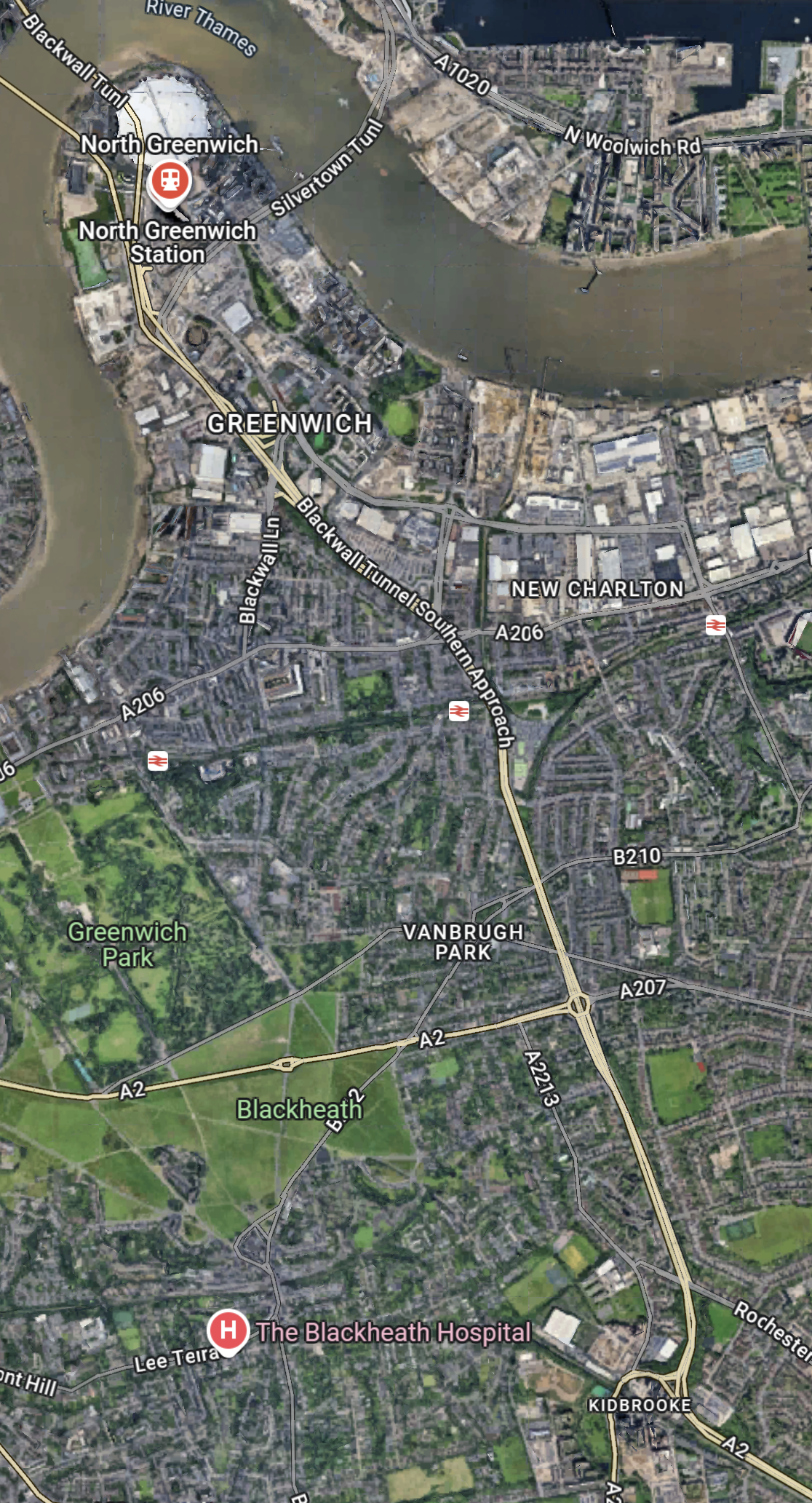
Note.
- The O2 in the North-West corner of the map, with North Greenwich station in red under it.
- The Blackwall Tunnel crosses the river to the North-West of the O2.
- The Silvertown Tunnel crosses the river to the East of the O2.
- Running diagonally across the map is the Blackwall Tunnel Southern Approach, which also serves the Silvertown Tunnel.
- The station to the West of the Southern Approach is Westcombe Park station.
- Click the map to show it to a larger scale.
This second Google Map shows the O2, North Greenwich station and the approaches to both tunnels.
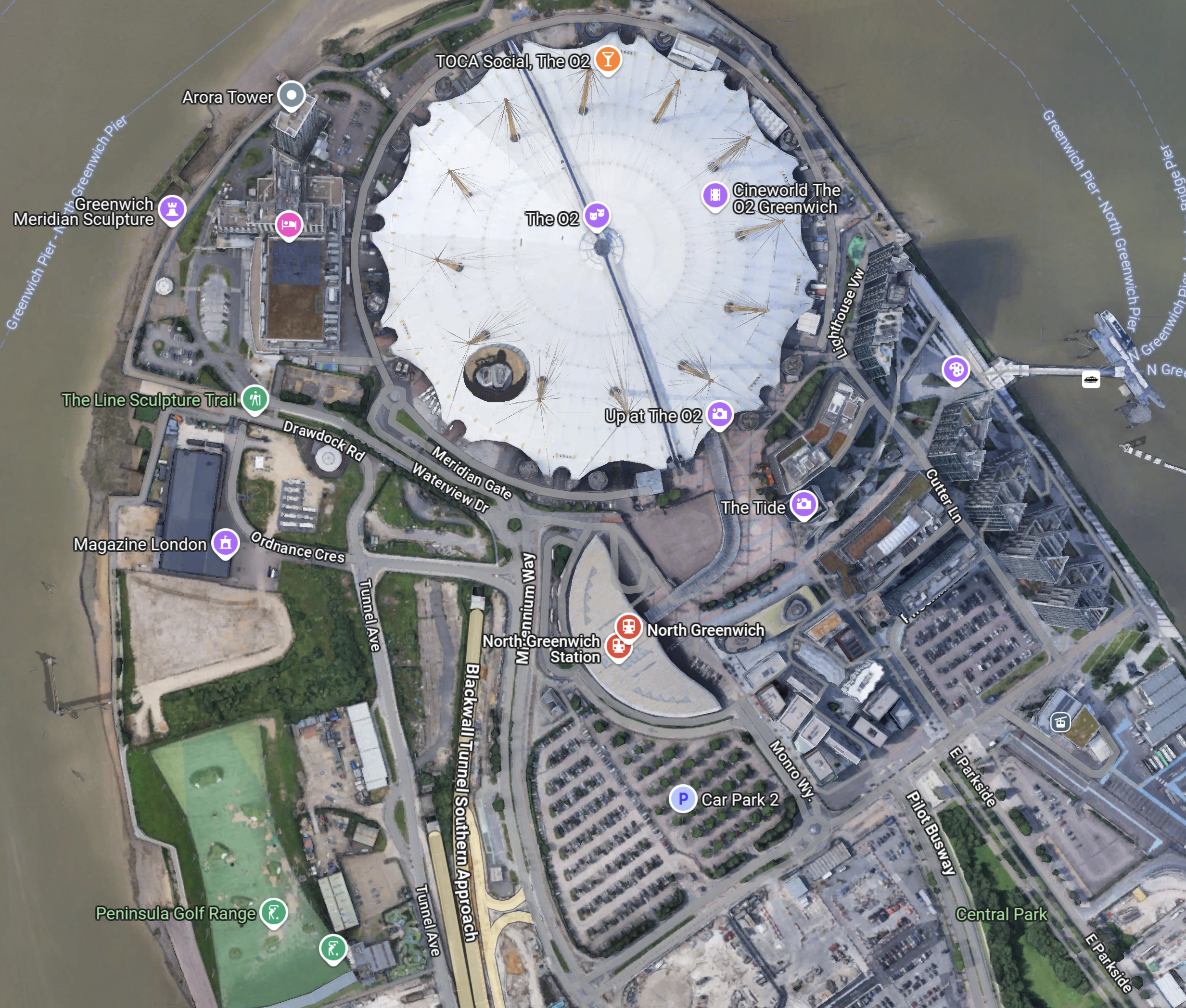
Note.
- The half-moon-shaped building is North Greenwich station.
- The tunnel approaches are rather complicated, but seem to be working well.
- There is lots of car parking.
- The Blackwall Tunnel Southern Approach leaves the tunnles in a Southerly direction.
- Click the map to show it to a larger scale.
This third Google Map shows how the A2 (Dover Road) and A20 (Folkestone Road) link up to the Blackwall Tunnel Southern Approach.
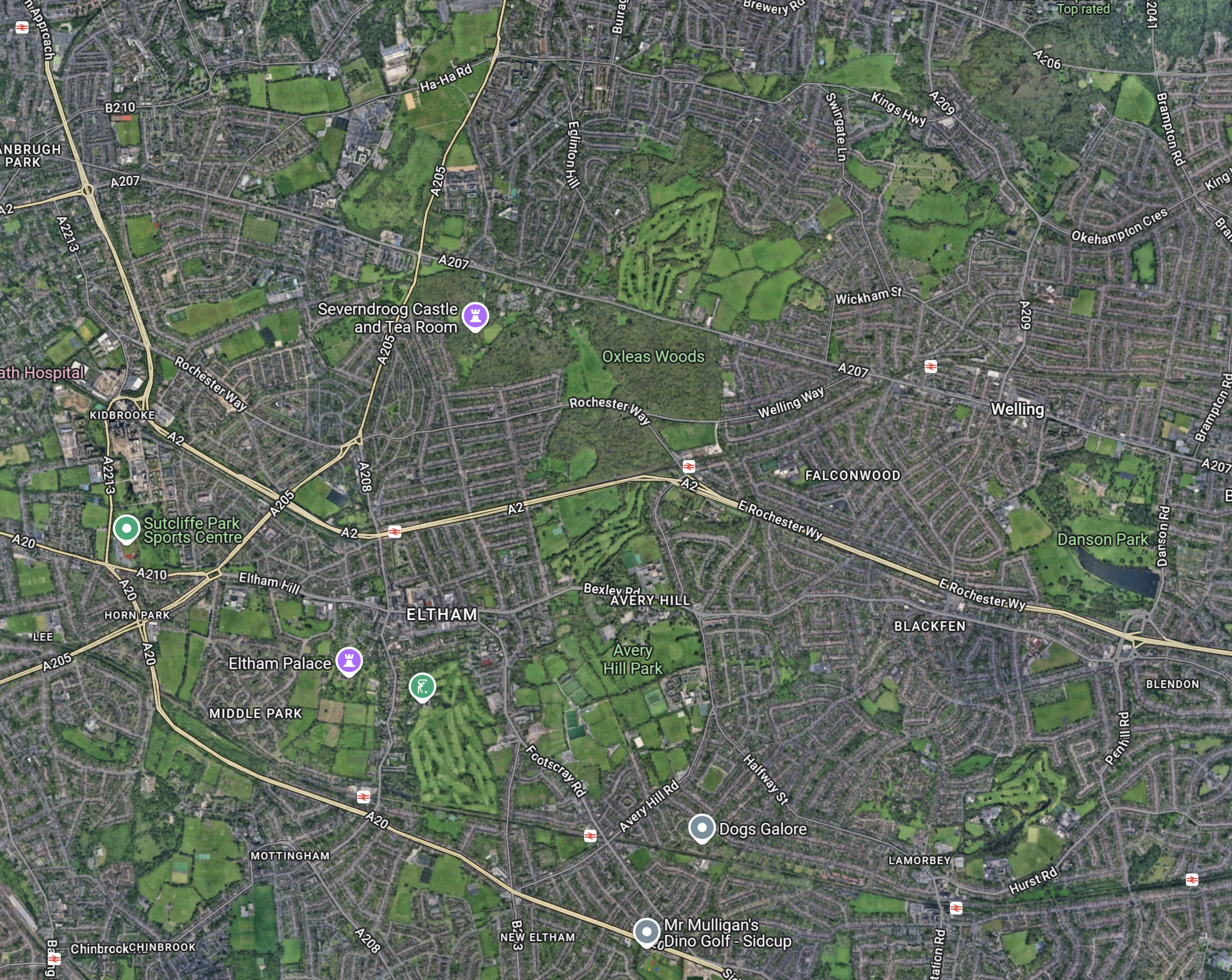
Note.
- The station in the North-West corner of the map is Westcombe Park.
- The road running diagonally South-East from the corner is the Blackwall Tunnel Southern Approach.
- The Blackwall Tunnel Southern Approach then turns East to join with the A2 (Dover Road).
- The Blackwall Tunnel Southern Approach also links up with the A20 (Folkestone Road) , which is the other road running diagonally at the bottom of the map.
In some ways, I am rather surprised at how little traffic is passing through the tunnels given this double dual-carriageway/motorway connection to East Kent, the Channel Tunnel and the Continent. It also has a double connection at both the A2 and A20 to join the M25.
Perhaps, it does mean that the charges are frightening drivers away.
The Roads To The North
This Google Map shows the main approach road to the Blackwall Tunnel.
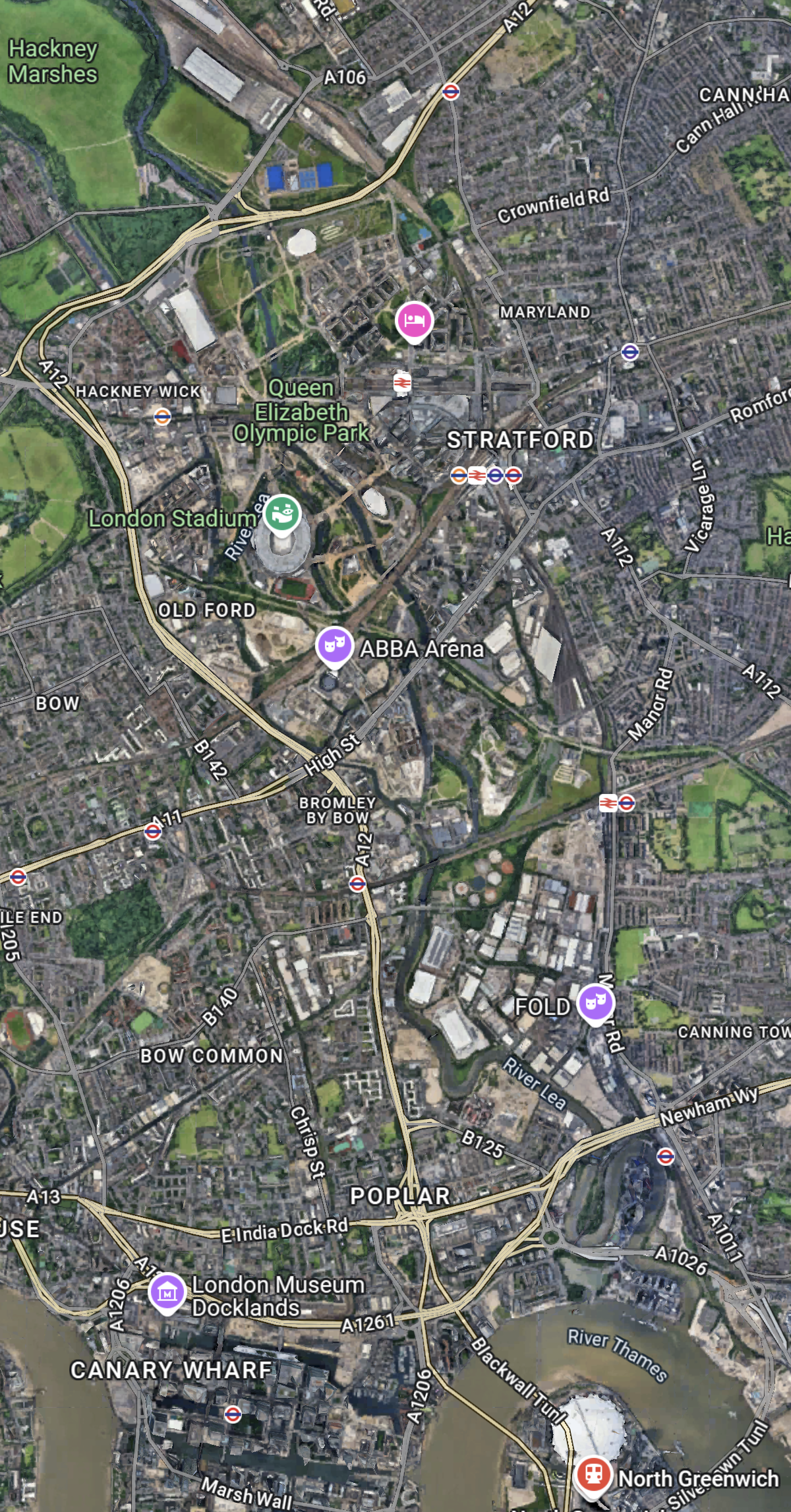
Note.
- The O2 and North Greenwich station in the South-East corner of the map.
- The Blackwall Tunnel crosses the river to the North-West of the O2.
- The A12 dual-carriageway runs North up the Lea Valley through Hackney.
- There is a dual-carriageway/motorway box formed by the M11 in the West, A12 in the East, M 25 in the North and A 406 in the South to speed traffic on its way, including to the two main routes to the North; the M1 and the A1.
I have lived for thirty years of my life in North London, and I feel, that although the roads to the North of London could be improved, I don’t suspect they are the reason drivers are not using the Silvertown and Blackwall Tunnels.
I would suspect that drivers don’t like or trust the charging system, or could it be that the public transport system in London and especially the East of London is too good?
But we do need to increase the capacity of the Jubilee Line either directly or would a high-capacity bus-route shadowing the line, be able to add the extra capacity needed?
Silvertown Tunnel Increases Network Resilience But It Comes At A Cost, Says Logistics UK
The title of this post, is the same as that of this article on UK Haulier.
This paragraph summarises the view of Chris Yarsley of Logistics UK.
Following the opening of the Silvertown tunnel in London, Logistics UK Senior Policy Manager – Road Freight Regulation Chris Yarsley says it will increase network resilience and make journey times more predictable, but feels the high toll charges penalise essential delivery vehicles who have no alternative means of servicing the capital.
Click this link to see all my Silvertown Tunnel posts.
Note.
- I have been through the Silvertown Tunnel a number of times now and I have only seen one large truck and a couple of vans in the tunnel.
- I have also seen no congestion at any of the entrances to the tunnels.
It certainly seems to have been well-designed.
Blackwall Tunnel On A Sunday Morning
This morning, as it was a Sunday, I checked out Blackwall and Silvertown Tunnels for traffic for free, using my Freedom Pass.





These pictures were taken, on my route South to North Greenwich station.
Note.
Is This The Best Seat On A Bus Through The Silvertown Tunnel?
This morning, as it was a Sunday, I checked out Blackwall and Silvertown Tunnels for traffic for free, using my Freedom Pass.
These pictures were taken, on my route back from North Greenwich station to Gallions Reach, where the 129 bus terminates North of the Thames.
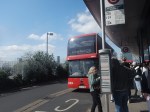
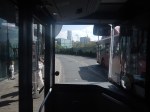
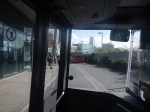
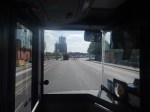
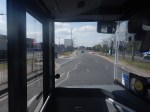
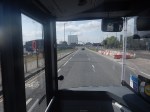
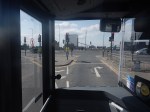
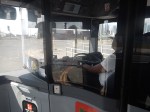
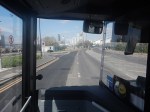
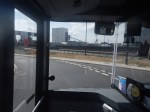
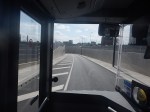
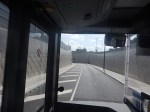
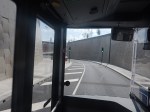
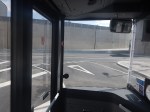

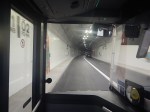
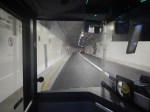



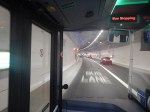
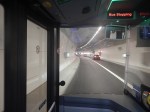
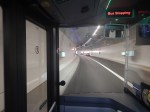
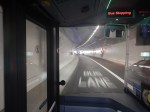




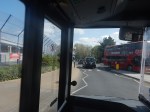
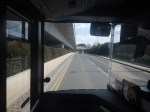


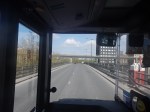


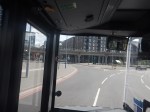
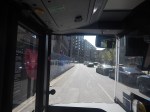

Note.
- I was on a 129 bus as the first picture shows.
- I was sitting opposite to the driver in a single seat on the left hand side at the front.
- For much of our trip through the tunnel, we were following the Silvertown Cycle Shuttle.
- From about picture number 22, it’s clear we are following another bus.
- The 129 bus runs along the route of the London City Airport/Woolwich Arsenal branch of the Docklands Light Railway for a time. It has stops at West Silvertown, Pontoon Dock and London City Airport.
- The last section of the route to Gallions Reach, is mainly new housing, a park, a couple of supermarkets and a Premier Inn.
- The area seems well-served with buses to take you to the supermarkets, the Docklands Light Railway and the London City Airport.
- Three of the last five pictures, show where I was sitting.
The pictures all entries to and exits from the tunnel have been smooth, except for the occasional short red traffic light.
Checking The Traffic In The Blackwall Tunnel
In A Return Journey Through The Silvertown Tunnel On A 129 Bus, I observed that there wasn’t much traffic in the Silvertown Tunnel, but that it might be in the Blackwall Tunnel.
So this morning, I went through the Blackwall tunnel to check and took these pictures.
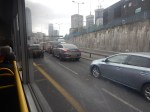
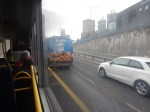
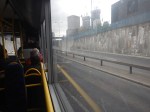
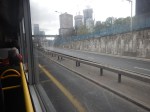
Note.
- I caught the 108 bus from bus stop F, which is opposite the taxi rank at Stratford station.
- The bus went round parts of the Olympic Park to pick up passengers.
- There was quite a bit of traffic slowing my journey before the Blackwall Tunnel.
- I went Southbound first in the modern tunnel buiult in the 1960s.
- I turned round at North Greenwich station, as the bus was crowded and I wanted a good seat from on return, from which to take pictures.
- I came back in the Northbound tunnel, which dates from the 1890s.
But I achieved my objective and found that the Blackwall Tunnel was taking more vehicles than the Silvertown Tunnel. Even the buses were taking more passengers!
I have further thoughts.
I Don’t Like The Blackwall Tunnel
Consider.
- We were going to my Uncle Bert’s house in Broadstairs one day, when I was about eight.
- In those days of the 1950s, there was only one bore of the tunnel and we got stuck in it, for a couple of hours.
- I don’t remember using the tunnel again and I suspect we probably used Tower or London Bridge.
The last time I used it in a car, was coming back from Gatwick to when we lived just North of Ipswich and the Dartford Crossing was blocked. So I cut through South-East London, drove through the Blackwall Tunnel and up the A12.
If I Was A Driver I’d Probably Take The Silvertown Tunnel
Unless of course there was a problem!
Could The Silvertown Tunnel Handle More Buses?
In A Return Journey Through The Silvertown Tunnel On A 129 Bus, I took these pictures inside the Silvertown Tunnel when the bus was coming North.
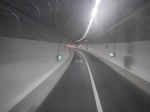
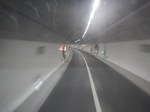
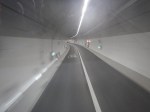
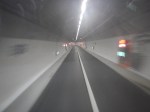
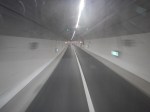
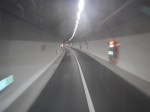
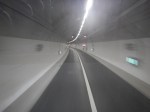
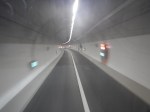
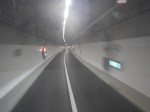
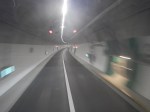
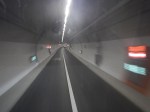
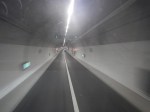
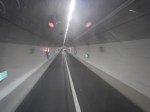
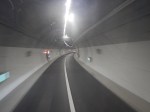
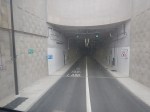
Note.
- The left lane is marked Bus Lane.
- Only one car is visible in the right lane.
- The tunnel seems well-lit.
I have some thoughts
Where’s The Traffic?
It does appear that two apparently empty lanes in each direction, don’t carry a large number of vehicles.
- Have the tolls and arguments frightened traffic away?
- Are the tolls too high?
- From the full set of pictures in the linked post, it would appear more vehicles were using the Blackwall Tunnel.
- Could it be that drivers are frightened of getting a speeding ticket?
- Are drivers frightened of sharing the tunnel with buses and heavy trucks?
Both bores of the Silvertown Tunnel seem to have similar traffic levels.
What’s The Capacity Of A Bus Lane?
In the Wikipedia entry for bus lane, this is said.
The busiest bus lane in the United States is the Lincoln Tunnel XBL (exclusive bus lane) along the Lincoln Tunnel Approach and Helix in Hudson County, New Jersey, which carries approximately 700 buses per hour during morning peak times an average of one bus every 5.1 seconds.[ In contrast, the Cross-Harbour Tunnel in Hong Kong carries 14,500 buses per day, or an average of about 605 an hour all day (not just peak times), but the bus lane must give way to all the other road users resulting in long queues of buses.
Perhaps a more realistic example of tunnel capacity from the UK, would be the Victoria Line, which handles thirty-six * eight-car trains per hour (tph) in both directions in two tunnels.
I would certainly expect that if Dear Old Vicky can manage 36 x 8-car trains per hour, then the Silvertown tunnel could handle thirty-six buses per hour.
Especially, if the buses had a distance keeping capability, as many trains do.
How Many Buses Per Hour Are Planned to Use The Silvertown And Blackwall Tunnels?
This handy map from Transport for London, shows the three bus routes passing through the Silvertown and Blackwall Tunnels.
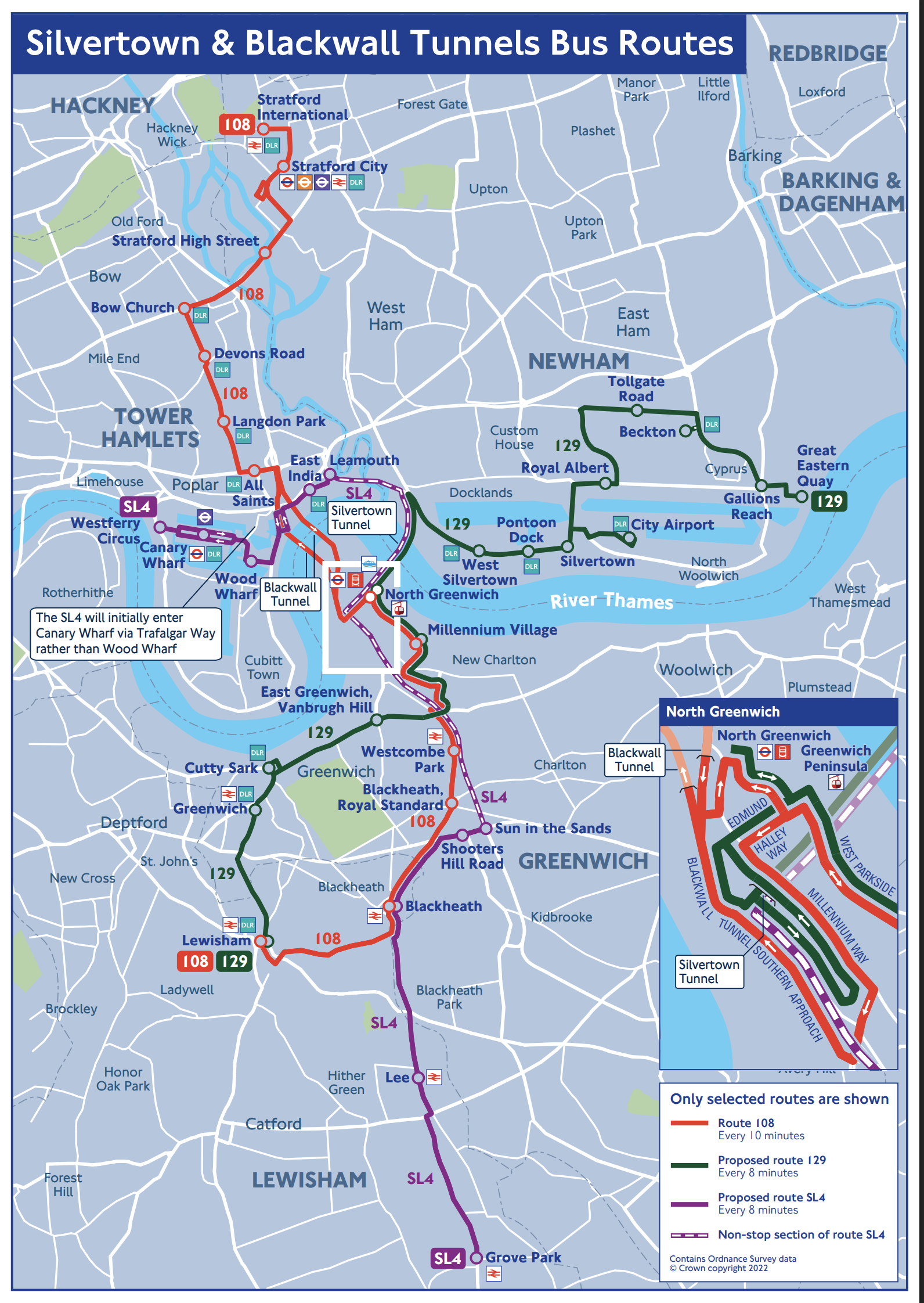
Click the map to show it to a larger scale.
The map gives these frequencies for the three bus routes using the tunnels.
Bus Route SL4
Operates once every 8 minutes or at seven buses per hour.
Bus Route 108
Operates once every 10 minutes or at six buses per hour.
Bus Route 129
Operates once every 8 minutes or at seven buses per hour.
Silvertown Tunnel Bicycle Shuttle
Google AI says this.
The Silvertown Tunnel cycle shuttle bus runs approximately every 12 minutes, operating daily from 6:30 am to 9:30 pm, except for Christmas Day, offering a safe and quick way for cyclists to cross the Thames.
This operates at five buses per hour.
Number Of Buses Through The Tunnels
There will be around nineteen buses per hour, through the Silvertown Tunnel and six through the Blackwall.
The Silvertown Tunnel looks like it has been designed to accept more buses.
One thing this means, is that if the Blackwall gets shut, then the 108 can use some of the spare capacity in the Silvertown Tunnel.
Could A Coach Station For Europe Use Some Of The Spare Capacity?
In Development To The West Of The North Entrance Of The Silvertown Tunnel, I displayed this.
This Google Map shows the site to the West of the North entrance of the Silvertown Tunnel.
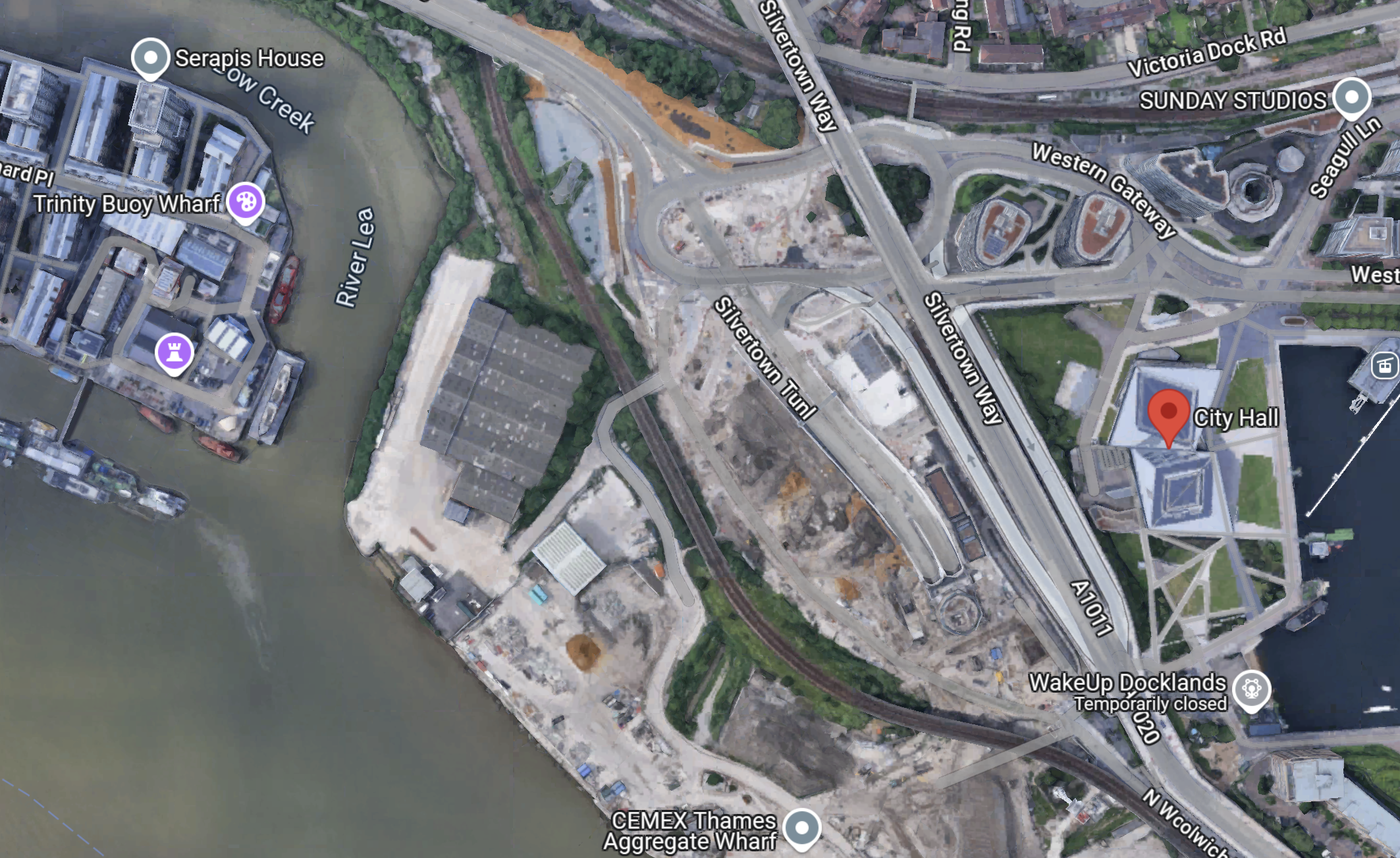
Note.
- The red arrow indicates City Hall.
- There is a large site between the DLR and the river.
- The Docklands Light Railway separates the site from the North entrance of the Silvertown Tunnel.
- The CEMEX Thames Aggregate Wharf seems to occupy part of the site.
This picture shows the North entrance of the Silvertown Tunnel from the cable-car.
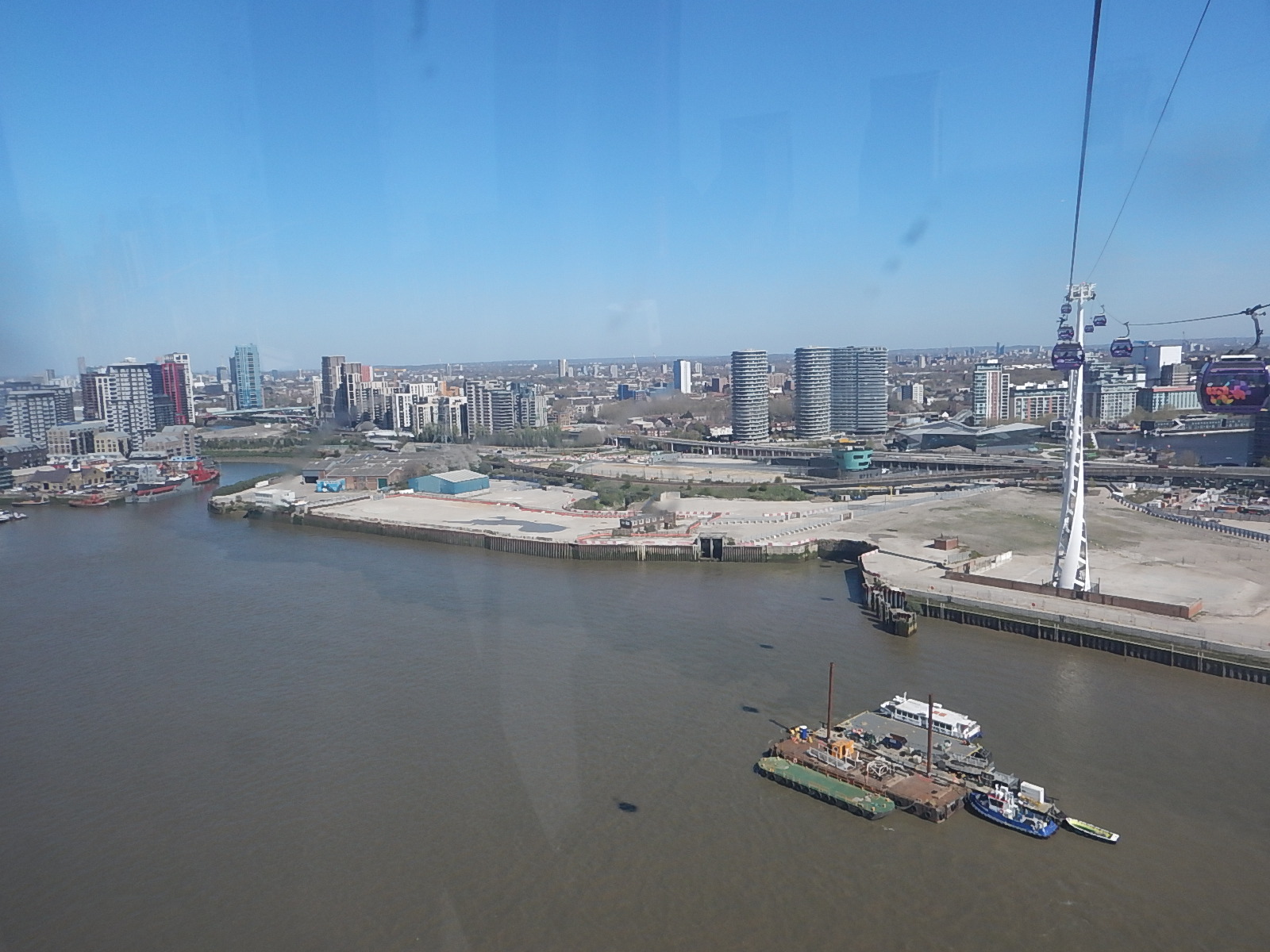
It is surely a site with development potential, as Roy Brooks would say.
It will probably be used for more tower blocks along the Thames.
But could it be used for a coach station to handle the increasing number of coaches between London and the Continent?
- A Docklands Light Railway station could be built to serve the site.
- Thames Clippers could also serve the site.
- Coaches could use the Silvertown Tunnel to start their journey out of the capital.
It is certainly a possibility.
Could The Silvertown Tunnel Be Used For Route-Proving For The Docklands Light Railway?
In TfL Considering Extending DLR As Far As Abbey Wood, I discussed extending the Docklands Light Railway to Thamesmead or Abbey Wood.
This map from Ian Visits shows the area.
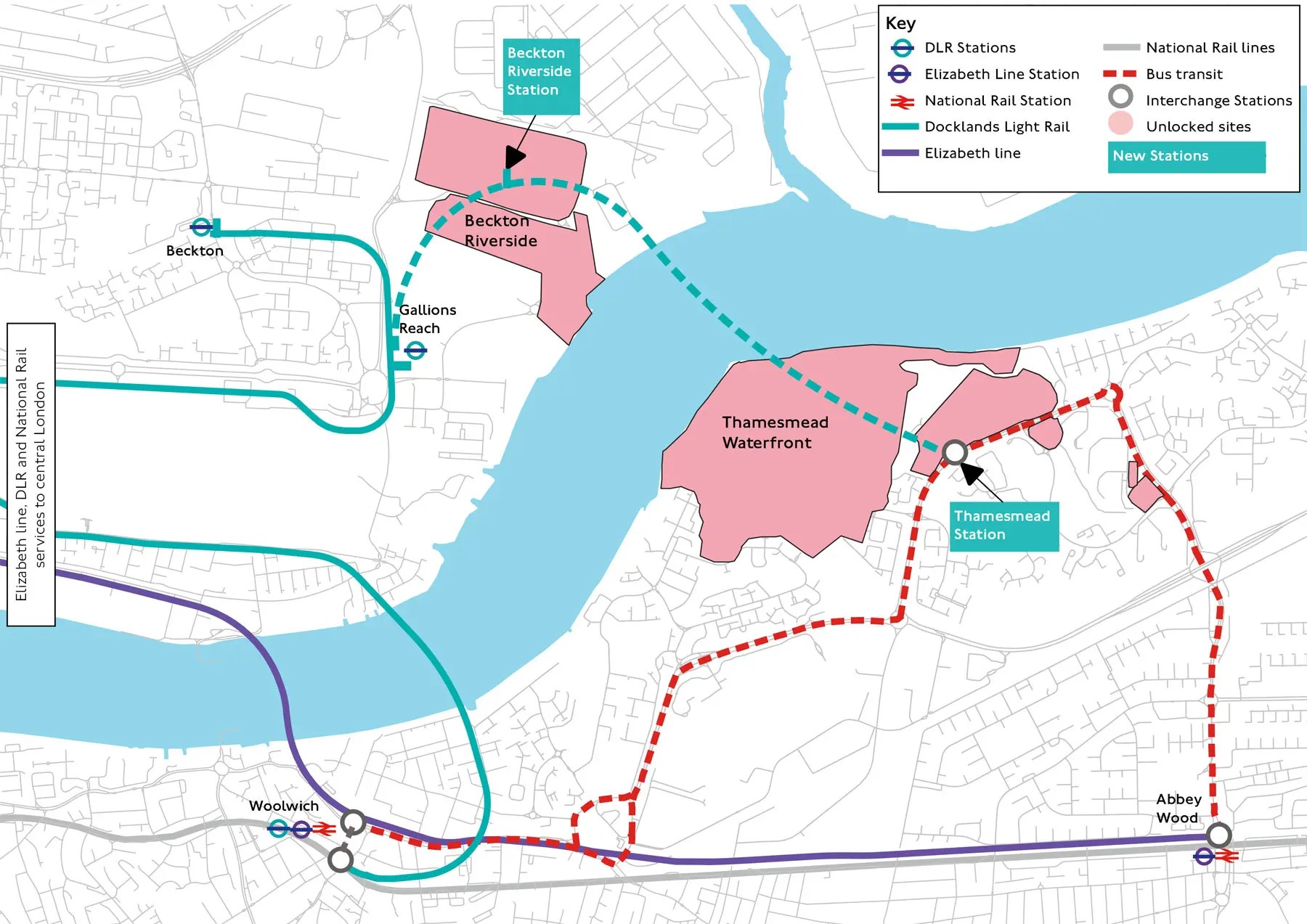
Running a four buses per hour service through the Silvertown Tunnel, would be an ideal way of proving what is the best route.
Extending The Docklands Light Railway To The West
No matter how the Docklands Railway is extended to the East, either by physical means like extra branches or by virtual means like connecting to bus routes, this will mean that there will need to be more terminal capacity in the West, to take the pressure off Bank and Tower Gateway stations.
In A Connection Between City Thameslink Station And The Docklands Light Railway, I described a proposal to extend the Docklands Light Railway to Euston, St. Pancras and Victoria.
In the Wikipedia entry for the Docklands Light Railway, there is a section describing a proposed Euston/St. Pancras Extension.
This is said.
In 2011, strategy documents proposed a DLR extension to Euston and St Pancras. Transport for London have considered driving a line from City Thameslink via Holborn north to the rail termini. The main benefit of such an extension would be to broaden the available direct transport links to the Canary Wharf site. It would create a new artery in central London and help relieve the Northern and Circle lines and provide another metro line to serve the High Speed line into Euston.
This map from Transport for London, shows the possible Western extension of the DLR.
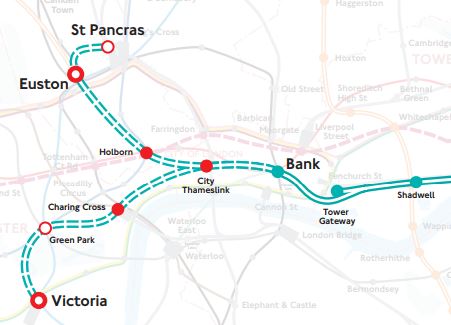
With all the problems of the funding of Crossrail 2, that I wrote about in Crossrail 2 Review Prompts Fresh Delays, could this extension of the DLR, be a good idea?
Consider.
- Victoria, Euston and St. Pancras are prosposed Crossrail 2 stations.
- It would link Canary Wharf and the City of London to Eurostar, Northern and Scottish services and High Speed Two.
- It would give all of the Docklands Light Railway network access to Thameslink.
- A pair of well-designed termini at Euston and St. Pancras would probably increase frequency and capacity on the Bank branch of the system.
- The DLR is getting new higher capacity trains.
- Bank station is being upgraded with forty percent more passenger capacity.
- Holborn station is being upgraded and hopefully will be future-proofed for this extension.
- One big advantage at City Thameslink, is that Thameslink and the proposed DLR extension will cross at right-angles, thus probably making designing a good step-free interchange easier.
- The Bank Branch of the DLR currently handles 15 tph, but could probably handle more, if they went on to two terminal stations at St Pancras and Victoria..
- Waterloo and City Line can run at twenty-four tph.
Cinderella she may be, but then she always delivers, when there is a desperate need, just as she did magnificently at the 2012 Olympics.
Something is needed to handle the extra passengers at Euston, that will be brought to London by High Speed Two. Cinderella is the only way to deliver a connection in a reasonable time.
The only problem with this extension of the DLR, is that compared to the rest of the system, the views will be terrible.
For myself and all the others living along the East London Line, with a step-free change at Shadwell, we would get excellent access to Euston, St. Pancras and Victoria.
But could the line still be called the Docklands Light Railway, as it spreads its tentacles further?
A Step-Free Adventure Under The Thames Between Moorgate and Grove Park
I am assembling this post, as a number of sub-posts, so it will not make sense until it is finished.
From Moorgate Station To East India Station
I started this adventure from Moorgate, but I could have started it from any Central London location that is well-connected to Bank station.
As I had had a full English breakfast in a pot, at Leon on Moorgate, it seemed to be a good place to start.
My route started simple, in that I took the Northern Line to Bank station and then took the Docklands Light Railway to East India station.
This first gallery of pictures shows my journey until I caught the SL4 bus at East India station.
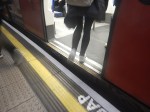
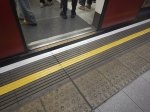
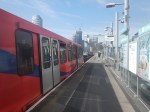
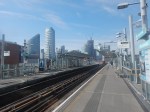
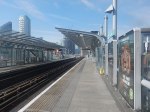
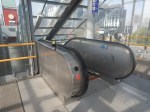
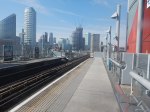
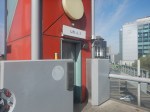
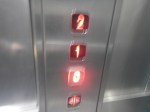
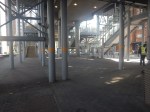
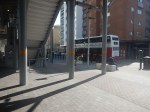
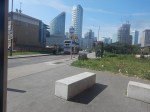
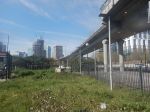
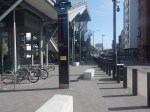
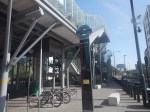
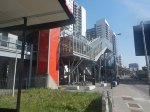
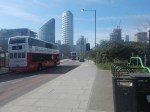
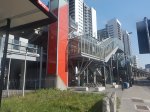
Note.
- The first few pictures show getting to East India station on the Docklands Light Railway.
- Moorgate station has a high step into the Northern Line train.
- All the others are more or less level.
- East India station is then shown in detail.
East India station is fully step-free with lifts.
Southbound Through The Silvertown Tunnel
This second gallery of pictures shows my Southbound journey approaching and through the Silvertown Tunnel.
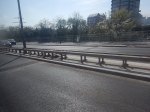
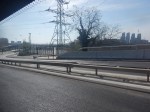
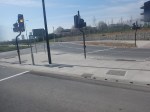
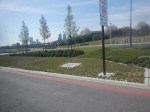
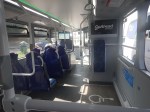
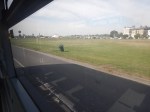
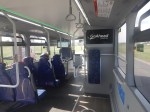
Note.
- The dual-carriageway leading to the tunnel wasn’t busy.
- The bus was in the inside lane all the way through.
- I don’t think anybody passed the bus.
- There appeared to be more traffic coming out of the Blackwall Tunnel.
The traffic from the two tunnels seemed to merging well.
Blackheath Station
This third gallery of pictures shows Blackheath station.
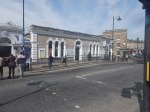
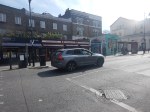
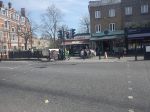
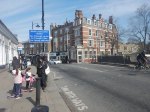
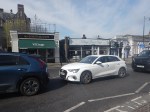
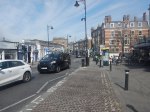
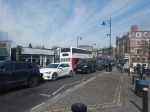
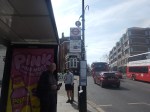
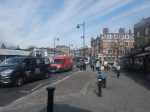
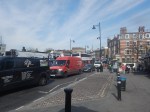
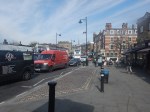
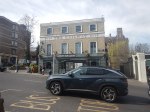
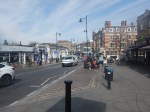
Note.
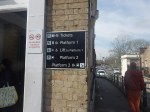
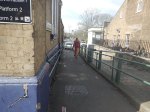
- Blackheath station has a good number of useful shops for a worthwhile pit-stop.
- There was even a fish and chip shop.
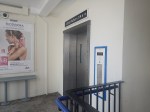
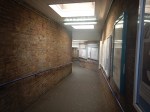
- Blackheath station has a lift to one platform and a ramp to the other.
- The bus stop I used was only a small step into the bus.
The transfer between bus and train would not be as easy as East India station, but I don’t think it would be difficult for say someone in a wheel-chair.
Lee Station
This fourth gallery of pictures shows Lee station.
Note.
- The station was a stiff uphill walk from the bus stop.
- Both platforms had their own uphill walk.
If I was in a wheel-chair, I’d give this Lee station a miss.
Grove Park
The route ends at Grove Park bus station.
This fifth gallery of pictures shows, where the bus terminated.
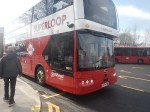
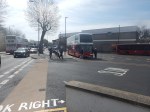
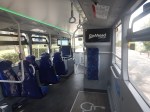
Note.
- It wasn’t the most interesting of places.
- I couldn’t even find a decent cafe for a coffee.
- In the fifteen minutes I was at Grove Park, I must have seen five SL4 buses.
- I’d hoped it would be near to Grove Park station, but I couldn’t see any signs to it and the two people I asked didn’t know where it was.
- In the end I had to walk about five hundred metres to get the SL4 back to Central London.
My mother always advised you take a posse with you, when you venture into South London. She was right!
When I got home, I looked up, where I’d been on Google Maps.
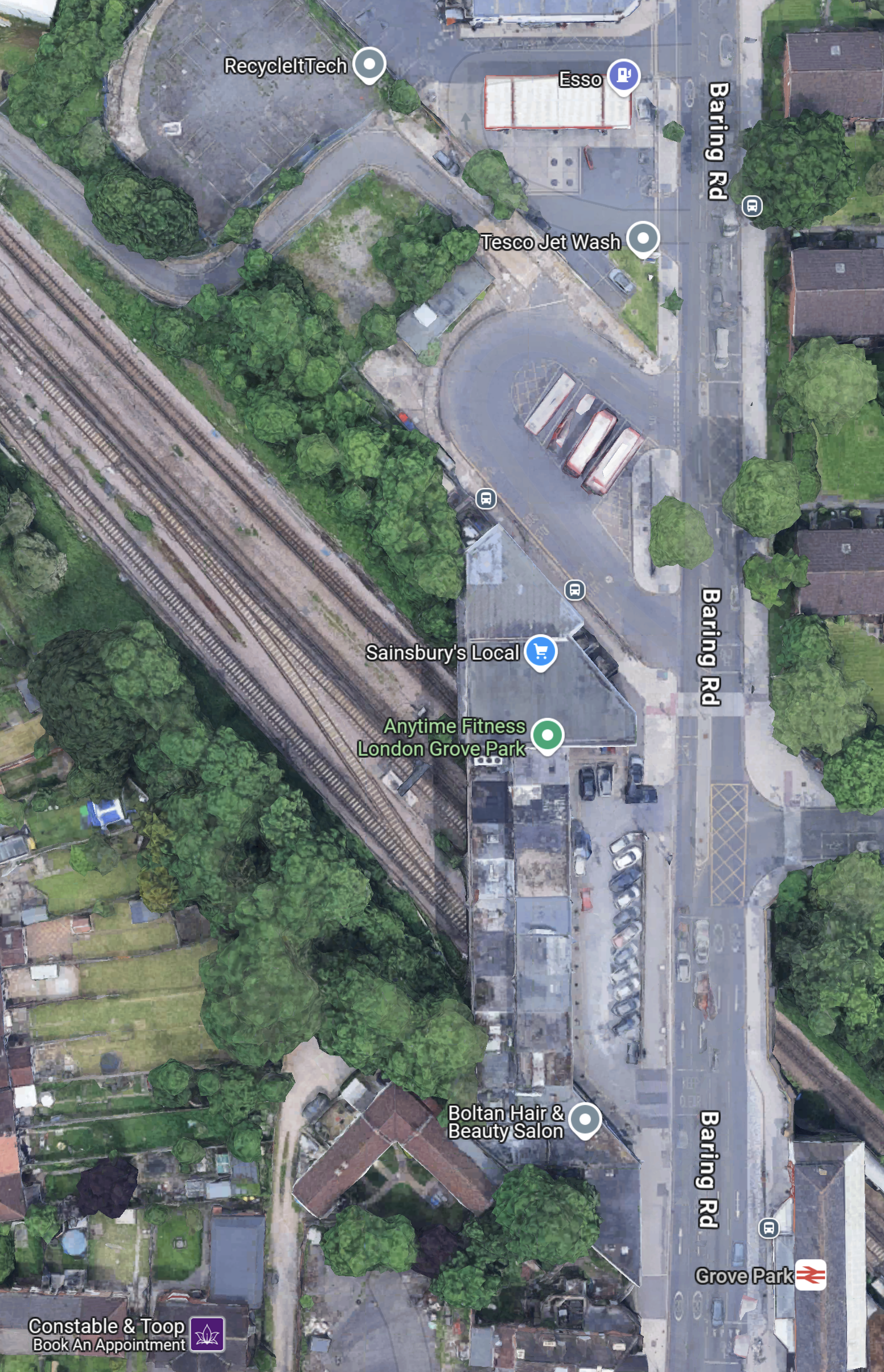
Note.
- Baring Road running North-South down the Eastern side of the map.
- The Esso filling station and the bus station are at the top of the map.
- Grove Park station is at the bottom of the map.
My mother would have said, this is why you need a posse.
Return To East India Station
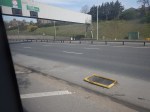
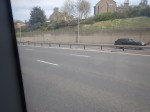
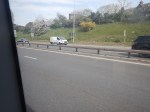
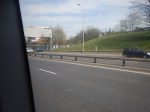
This sixth gallery of pictures shows the run up the dual-carriageway approach and the run through the tunnel.


Note.
 The Anonymous Widower