Govia Thameslink Railway Issues a Prior Information Notice For New Trains
This article on Railway Gazette is entitled UK Railway News Round-Up and contains this section.
Govia Thameslink Railway has issued a prior information notice seeking the provision of between 21 and 30 four-car 25 kV 50 Hz 160 km/h through-gangwayed EMUs with air-conditioning and toilets for use on existing and/or additional Great Northern services from May 2024. Maintenance would be undertaken in-house at Hornsey depot, supported by a Technical Support & Spares Supply Agreement.
I find this all a bit puzzling.
- The trains that need replacing are surely the eighteen Class 313 trains, that run on the West Coastway Line, as they are some of the oldest trains on the UK network.
- If Govia Thameslink Railway were serious about decarbonisation, they would also replace the Class 171 diesel trains, that work the Marshlink Line and the Uckfield branch, with electric trains with a range of thirty miles on batteries.
How many trains would be needed to replace the Class 313 and Class 171 trains?
- The eighteen three-car Class 313 trains could be replaced with an equal number of new four-car trains and this might result in a rise in passenger numbers.
- I would assume the eighteen trains includes allowances for trains in maintenance and spare trains for when a train fails.
- It may be possible to replace the six four-car Class 171 trains used on the Marshfield Line with three new four-car trains, which have a range of thirty miles on batteries.
- The eleven two-car Class 171 trains used on the Uckfield branch could be replaced with three new four-car trains, which have a range of thirty miles on batteries and would run as four-car trains.
- If eight-car trains were needed on the Uckfield branch, there would be a need for six new four-car trains.
- If twelve-car trains were needed on the Uckfield branch, there would be a need for nine new four-car trains.
Note.
- If four-car trains are needed on the Uckfield branch, this means a total of 18+3+3 or 24 trains.
- If eight-car trains are needed on the Uckfield branch, this means a total of 18+3+6 or 27 trains.
- If twelve-car trains are needed on the Uckfield branch, this means a total of 18+3+9 or 30 trains.
Trains on these Southern routes wouldn’t be stabled at Hornsey depot, but could be moved to Hornsey for maintenance using Thameslink.
But the puzzling bit is that the prior information notice says that the trains will be.
Four-car 25 kV 50 Hz 160 km/h through-gangwayed EMUs with air-conditioning and toilets for use on existing and/or additional Great Northern services from May 2024.
Note.
- There is no mention of the trains being able to run on 750 VDC third-rail infrastructure.
- The trains will run on Great Northern services and the Class 313 and Class 171 trains run on Southern routes.
- The only Great Northern services, that have not been moved to Thameslink are Kings Cross and Cambridge, Ely and King’s Lynn and services to Moorgate.
- The Moorgate services have their own dual-voltage Class 717 trains.
- Govia Thameslink Railway have ambitions to double the frequency of trains to King’s Lynn.
- Two eight-car trains per hour (tph) between King’s Cross and King’s Lynn would need sixteen operational four-car trains.
- Two twelve-car trains per hour (tph) between King’s Cross and King’s Lynn would need twenty-four operational four-car trains.
If Govia Thameslink Railway are thinking of thirty new trains, they must have other destinations in mind.
Could we be seeing a double swap?
- An appropriate number of new trains are procured to run Great Northern services between Kings Cross and Cambridge, Ely and King’s Lynn.
- The Class 387 trains released will be moved to the South to replace the Class 313 and Class 171 trains.
- Some or all of the transferred Class 387 trains will be fitted with batteries to give a range of thirty miles without electrification.
Note.
- Could the new trains be Siemens Desiro City trains like the Class 700 and Class 717 trains, which are already maintained at Hornsey depot? It would surely be more efficient and save money.
- Class 387 trains are dual voltage and would need little or no modification to replace the Class 313 trains.
- Uckfield and Hurst Green junction is 24.7 miles.
- Ashford International and Ore is 25.4 miles
- Adding a battery to a Class 387 train has not been done, but Bombardier converted a near-identical Class 379 train to battery-electric operation over eight years ago.
- Converting a Class 387 train gives a dual-voltage battery-electric train.
- I suspect a charger would be needed at Uckfield. Could it be a short length of 25 KVAC overhead electrification?
Could all the Class 387 trains, that will replace the Class 313 and Class 171 trains be identical to ease the problems, when a train develops a fault?
Conclusion
It looks a good plan.
It also opens up the following possibilities.
- Deployment of 750 VDC battery-electric trains on other routes.
- Deployment of 25 KVAC overhead battery-electric trains on other routes.
- Deployment of tri-mode battery-electric trains on other routes.
- Charging of battery-electric trains using a short length of 25 KVAC overhead electrification.
- Fitting of batteries to Class 379 trains to create a 25 KVAC overhead battery-electric train.
It might be possible to convert other Electrostars to battery-electric operation.
Ignoring Class 387 trains on dedicated services like Heathrow and Gatwick Express, these trains are available for conversion.
- Class 379 trains – Stored – 30 trains
- Class 387 trains – Govia Thameslink Railway – 40 trains
- Class 387 trains – Great Western Railway – 33 trains
Note.
- This gives 103 trains.
- They all have good interiors.
- They are all 100/110 mph trains.
- All trains could be updated to 110 mph.
- All trains can use 25 KVAC overhead electrification.
- The Class 387 trains can also use 750 VDC third-rail electrification.
- The Class 379 trains were built in 2010-2011.
- The Class 387 trains were built from 2014.
I believe both classes will make excellent battery-electric trains.
Where will they be deployed?
These are a selection of routes starting in the South-East of England.
- Ashford International and Eastbourne.
- Gravesend and Hoo.
- London Bridge and Uckfield.
- London Paddington and Bedwyn.
- London Paddington and Oxford.
- Reading and Basingstoke.
- Reading and Gatwick.
- Reading and Redhill.
- Slough and Windsor & Eton Central.
- Twyford and Henley-on-Thames
I’ve only added routes which are less than thirty miles.
Britain’s Longest Road Tunnel Could Be Built Along A27
The title of this post is the same as that of this article in The Argus.
These three paragraphs outline the scheme.
The longest road tunnel in the UK could be built as a long-term solution to congestion along the A27.
The tunnel, which would cost around £2 billion, has been touted as a way of addressing traffic and a way to improve local quality of life.
A new report by Transport for the South East (TfSE) said investing in such schemes is the only way carbon emissions from congested road traffic can be seriously tackled and improve.
The article also states, that the project is unlikely to be started before 2050.
These are my thoughts.
Where Will The Tunnel Be Built?
This Google Map shows Worthing.
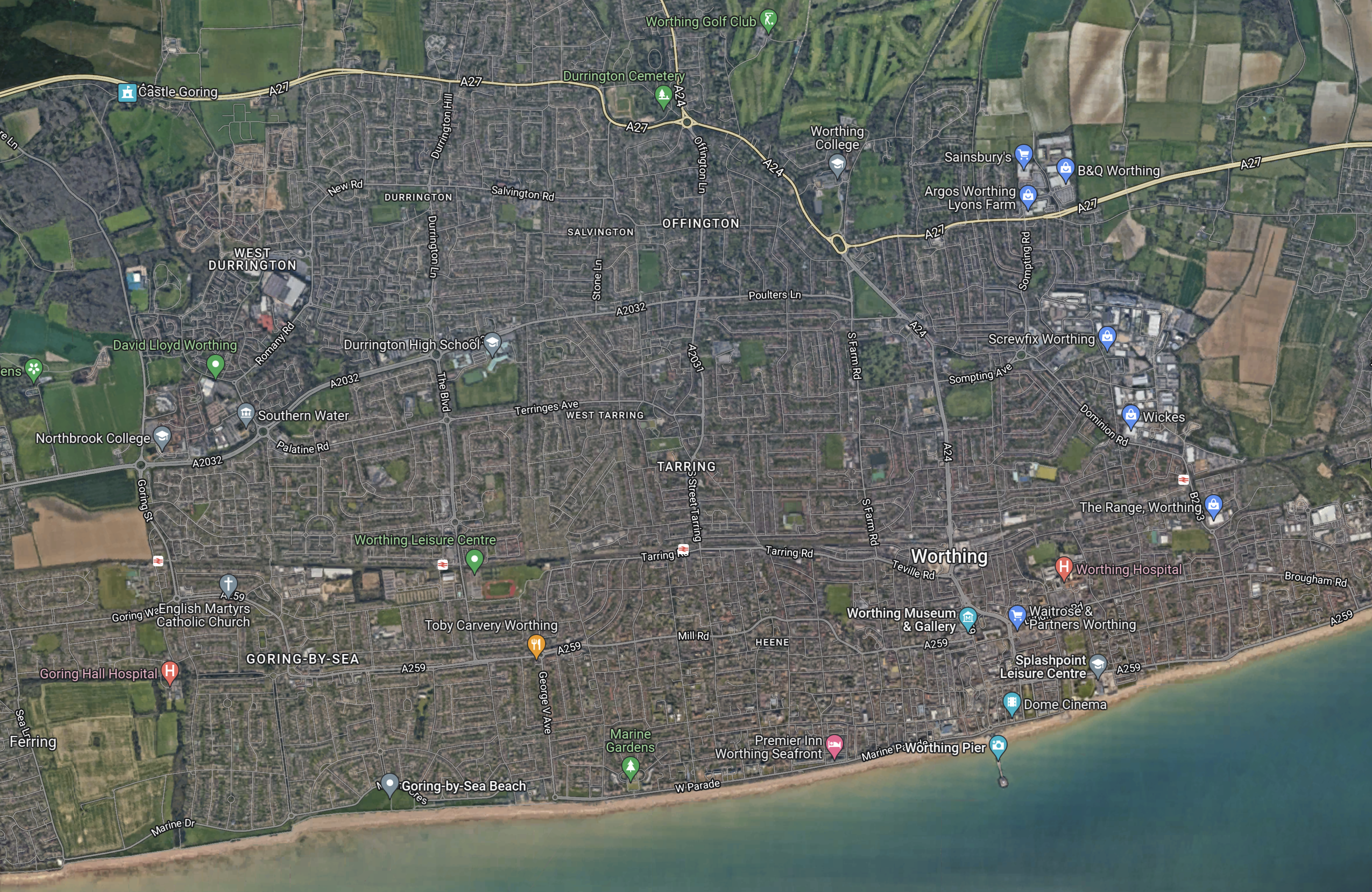
Note.
- The A27 road runs roughly across the top of the map.
- The A27 has sections of dual-carriageway.
- There are two roundabouts, where the A27 connects with the A24 road between London and Worthing via Sutton, Dorking and Horsham.
- The West Coastway Line runs across the middle of the map.
- Four of the five stations in Worthing are visible.
- From East to West the stations are East Worthing, Worthing, West Worthing and Durrington-on-Sea, with Goring-by-Sea off the map to the West.
This Google Map shows the section of the A27 to the West of the A24.
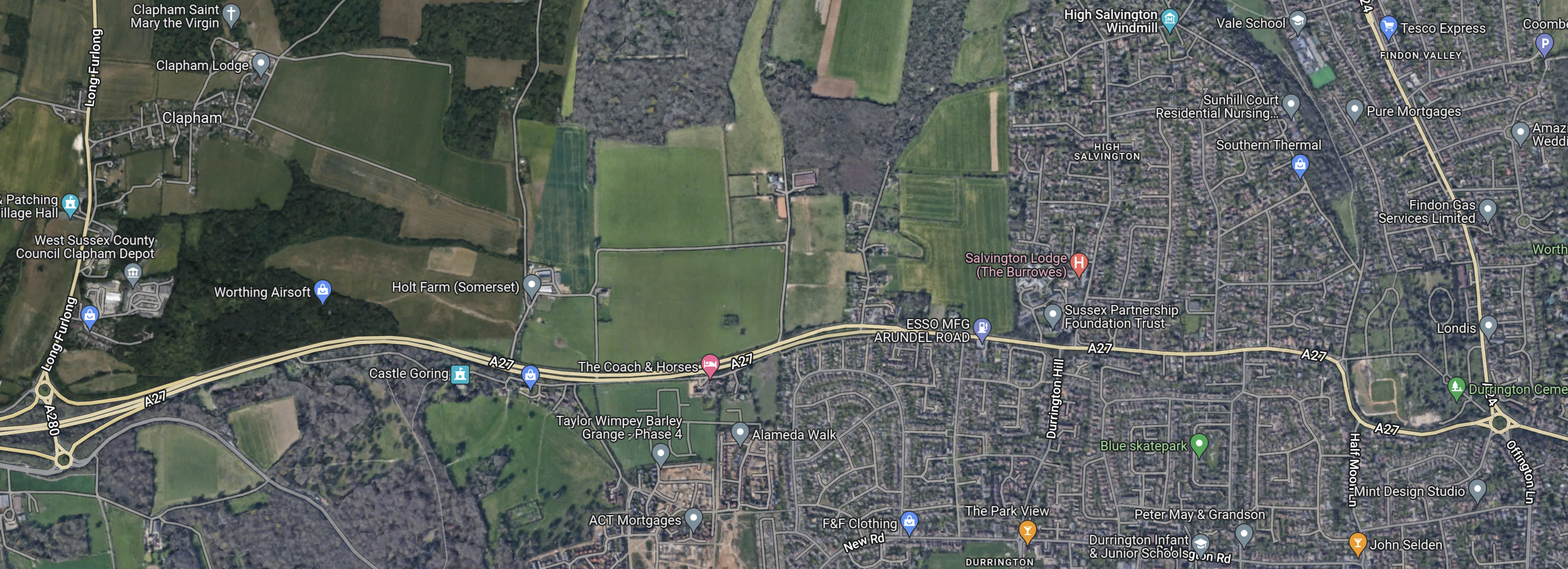
Note.
- The A27 goes all the way across the map.
- There is a large junction with the A280 at the Western edge of the map.
- There is a large roundabout at the junction with the A24, at the Eastern edge of the map.
- The Western half of the A27 between the two junctions, appears to be dual-carriageway.
- The A27 continues in the West as a dual-carriageway between the junction with the A280, almost as far as Arundel.
I suspect the Western portal of the tunnel would be close to the junction with the A280 and for much of the route, it could be bored under the A27 to minimise noise and vibration for those living along the route.
This third Google Map shows the section of the A27 to the East of the A24.
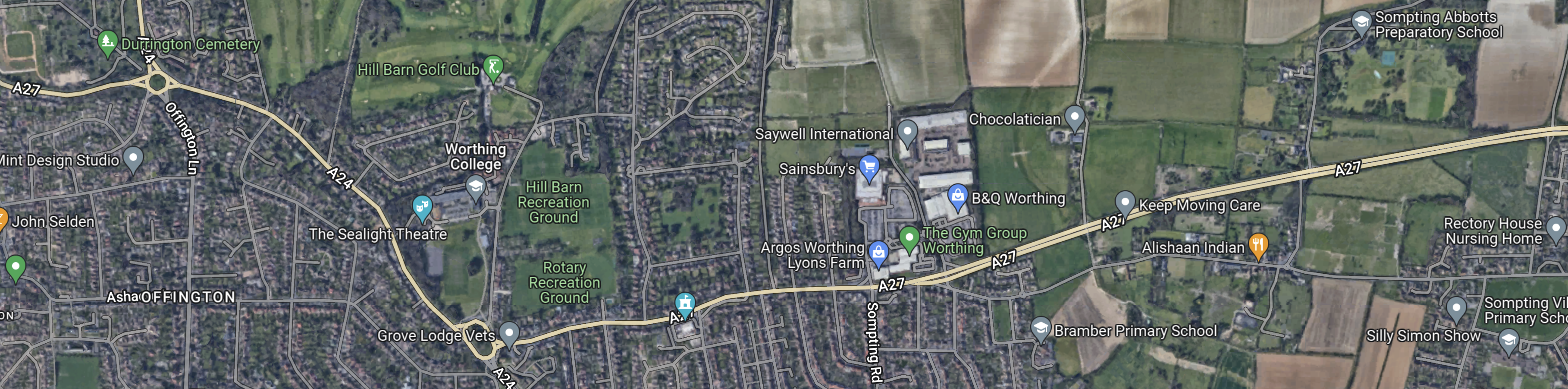
Note.
- The A27 goes all the way across the map.
- It shares a route with the A24 between the two roundabouts towards the West of the map.
- The Eastern section of the A27 appears to be dual-carriageway.
- T27 continues in the East to the North of Shoreham and Brighton and the South of Lewes.
I suspect the Eastern portal of the tunnel would be close to the Western end of the dual-carriageway section to Lewes and for much of the route, it could be bored under the A27 and A24 to minimise noise and vibration for those living along the route.
As we’re good at tunneling in the UK, I don’t think this will be a difficult tunnel to bore.
What Should We Do In The Interim?
The article in the Argus says this.
Should the plans go ahead, the tunnel could be ready for construction by 2050, with a range of other measures proposed to cut congestion in the short term.
2050 is a long time to wait.
I haven’t driven in the area much in the last twenty years, as even before I didn’t drive, I’ve tended to take the train to places like Brighton, Eastbourne, Portsmouth and Southampton.
In my experience the East and West Coastway Lines along the South Coast have reasons, why people drive for preference.
- The trains are not frequent enough. There should be four trains per hour (tph) if possible.
- There needs to be more direct train services to London and Gatwick Airport.
- Some of the stations are not very passenger-friendly. More step-free access is needed.
- Some of the stations can’t handle twelve-car trains.
- The Class 313 trains, that are used to the West of Brighton, were built in the 1970s. Similar trains of that period in the rest of the UK, have either been replaced or will soon be.
- Is there enough car parking?
- Could some closed stations be reopened?
- Could Park-and-Ride facilities be built, where the A27 crosses the railway?
- Would it help, if the West and East Coastway Lines didn’t need a change at Brighton?
- Would a high speed service between Eastbourne and London via Hastings and High Speed One attract leisure passengers.
An improved railway might reduce traffic on the A27.
Perhaps the easiest improvement would be to replace all the East and West Coastway fleet with new or refurbished trains with the following specification.
- 100 mph operation.
- High-class well-designed interior matched to the passenger mix.
- Ability to handle the Marshlink Line and other sections without electrification.
- Wi-fi and power sockets.
- A refreshment trolley might be a good idea.
A marketing campaign might help.
Is This The Shape Of Freight To Come?
This article on Rail Advent is entitled Eversholt Rail Unveils First Swift Express Freight Train In Doncaster.
It is a full report on the first of a new breed of freight trains based on redundant 100 mph electric multiple units.
Three Rail Problems
The rail industry, its financiers and customers have a lot of problems, they’d like to solve, but these three seem to be coming together to create a whole new industry.
Rolling Stock Leasing Companies Have A Surplus Of Redundant Rolling Stock
Most of the released rolling stock has been made redundant because of the arrival of new trains.
- Some trains and locomotives, like Greater Anglia’s Class 379 trains and Class 90 locomotives will probably be passed on to other operators.
- Some trains like Greater Anglia’s Class 315 trains and Govia Thameslink Railway‘s Class 313 trains and Merseyrail‘s Class 507 trains and Class 508 trains will probably only be fit for scrapping.
- Climate change ambitions will probably finish off anything which is elderly and diesel-powered.
What will be left will be a an assortment, which will contain a lot of trains with these characteristics.
- Four cars
- Can run in formations of 4, 8 and 12 cars
- Electrically-powered.
- Some trains are even dual voltage.
- 100 mph operating speed.
- Good reliability.
- Easy maintenance and modification if needed.
Many were even built over thirty years ago by British Rail Engineering Ltd.
As someone, who used to part-own a company that leased trucks to operators, I know that to maximise cash-flow and ultimately profits, you don’t want them sitting in a yard or a siding.
Conversion to zero carbon is one option.
- Porterbrook have said they will convert the Class 350 trains, that they own to battery-electric operation.
- Porterbrook have also converted some Class 319 trains to electro-diesel Class 769 trains.
- Porterbrook have also converted a Class 319 train to hydrogen operation.
- Eversholt Rail Group and Alstom are converting Class 321 trains to hydrogen operation.
I also believe that the redundant Class 379 trains will also be converted to battery-electric operation.
But there will still be a substantial number of quality trains, that need a second life.
The Growth Of Parcel Freight
Parcel freight traffic driven by on-line shopping, has boomed in the pandemic.
This type of traffic often originates from outside of the UK and enters the country at places like London Gateway or East Midlands Airport.
Much of it is currently distributed to large cities by truck, which in this day and age is not a green option, or even an option at all.
Rail Operations Group have leased ten Class 769 trains and 9 Class 319 trains with the intention of running parcel services under the Orion brand. I wrote about this proposal in A Freight Shuttle For Liverpool Street Station Planned.
Road Congestion
Road congestion is getting worse and there is bir much point in having product stuck on the motorway, when it can be running along at a 100 mph on an electrified rail line.
The Need For Just-In-Time Deliveries
Many factories these days work on the Just-In-Time principle, with product delivered just as its needed.
As an example Toyota build their cars at Burnaston near Derby, but the engines are built in North Wales. I suspect that they go across the country by truck.
Looking at maps, the engine plant could be rail connected and I feel one could be arranged at Burnaston.
Do they keep a good stock of engines at Burnaston?
I can see several situations like this needing a regular company train.
Fast Food
Because of Brexit we will need to be growing more of our own food.
Traditionally, the Class 43 power cars of InterCity 125 trains carried flowers and fish up from Cornwall.
So will we see rail provide an alternative.
Conclusion
Put these problems together and you can see a fair number of four-car electric multiple units being converted to short 100 mph electric freight trains.
Eversholt Rail Group‘s Swift Express Freight Train is very much a demonstrator for their ideas and it has some expected and unexpected features.
Based On A Class 321 train
The train is based on a four-car Class 321 train.

I rode one recently and I timed it at over 90 mph on the way to Southend.
Trolley Cages
Pictures in the Rail Advent article show a stripped-bare interior with a steel floor, with another picture showing three supermarket trolley cages arranged across the train.
One estimate in the article says that each coach can handle over fifty of these cages and up to nine-and-a-half tonnes of cargo.
Four Seats And A Toilet
Eversholt feel that some of the trains could be used in a Travelling Post Office mode and there may be a need for sorting en route, so two first-class seats, two second-class seats and a toilet are provided.
This train would enable an Anglo-Scottish parcel service.
- It might stop several times en route.
- At each stop parcels would be rolled out and in, perhaps with the help of a Harrington Hump.
- The on-train staff would sort the incoming parcels and put them in the required trolley for offloading.
I don’t think though, they’ll be delivering postal orders.
A Last Mile Capability
The article also disclosed that Eversholt were thinking of fitting a Last-Mile capability to the Swift Express Freight Train.
Batteries were mentioned and they would obviously work.
But one development recently is Porterbrook’s HydroFlex train, which has converted a Class 319 train to hydrogen power.
- The conversion was done by Birmingham University.
- It appears that all the hydrogen gubbins is underneath the floor, so cargo capacity would not be reduced.
I suspect underfloor hydrogen power could be very viable in an express freight train.
Fleet Size
The article talks of a fleet size of twenty and also says that the first train has been leased to an unnamed parcel distributor in the UK.
A Scrapyard Special Ready For The Blowtorch
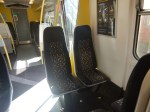
I took these pictures of possibly the worst train, I’ve ridden in for some years.
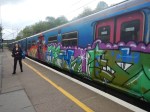
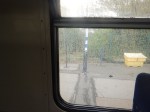
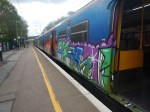
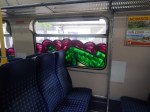
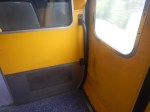
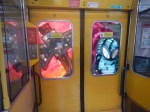
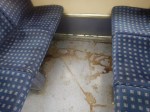
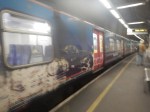
I took this Class 313 train between Hertford North and Old |Street stations.
Not all trains of this age have to be so dirty and unkempt.
In Liverpool’s Underground Trains, I showed these pictures.
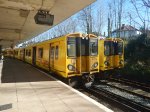
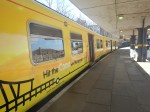
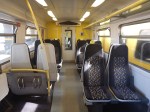
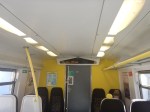
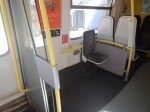
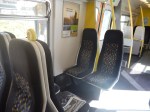
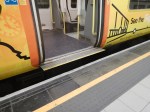
These Merseyrail Class 507/508 trains are only three years younger, than those in London.
Both fleets are being replaced before the end of 2020.
So it’s not that if trains are going to the scrapyard they have to be let go!
I do wonder whether that this illustrates the point, that if trains are run as a concession from the Local Authority, like those of Merseyrail and London Overground, there is much better control of service quality.
In Gibb Report – Moorgate Services Could Be Transferred To The London Overground, I laid out Chris Gibb’s view of what should happen.
This was my conclusion.
Chris Gibb has made an interesting proposal.
There are good reasons to transfer the Great Northern Metro to London Overground.
- London Overground have the expertise to introduce the new trains.
- Transport for London have the expertise to redevelop the stations on the route at the Southern end.
- GTR will be able to concentrate on Thameslink
- Moorgate, Old Street, Essex Road and Highbury and Islington stations become Transport for London-only stations.
- London would gain a new Metro line between Moorgate and Alexandra Palace via Highbury and Islington and Finsbury Park, that extends into Hertfordshire and has a frequency of at least twelve tph.
- Crossrail gets another North-South feeder line.
- Highbury and Islington and Finsbury Park will become high quality interchanges.
- The Hertford Loop Line can be developed independently of Thameslink and the East Coast Main Line to be a high-capacity North-South Metro from North London to Stevenage.
- The Victoria Line gets a cross-platform connection to the Great Northern Metro for Crossrail at Highbury and Islington.
- The only problem, is that it might remove some of the reasons for extending Crossrail 2 to New Southgate.
Overall it strikes me that GTR have been working totally without any vision or any idea about how their new trains will transform the Great Northern Metro.
I hope Sadiq Khan is watching what is happening from his bunker in South London.
A Class 313 Train In Not Bad Condition
On Friday, I took a train between Moorgate and Essex Road stations.
It was not in bad condition.
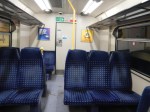
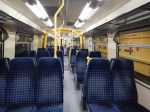
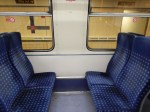
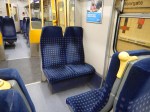
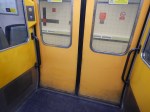
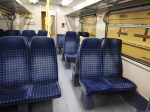
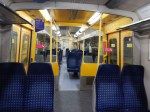
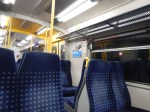
These trains are three-car trains and run in pairs as six-cars.
These trains used to run on the Watford DC Line, so I wonder if when they get to be released by the new Class 717 trains, some could be put back on that line to release some more Class 378 trains for the Gospel Oak to Barking Line.
Anybody like a game of Musical Trains?
 The Anonymous Widower