Last ‘319s’ On Thameslink This Summer
The title of this post is the title of an article in the May 2017 Edition of Modern Railways.
This is the first paragraph of the article.
Govia Thameslink Railway plans to withdraw its last Class 319s by the end of June, allowing it to operate a full Class 700 service on Thameslink this summer.
According to Wikipedia on the 28th April 2017, Thameslink still have thirty-five examples (319/0 – 13 and 319/4 – 22) and there are twelve examples Off Lease (319/2 – 1,319/3- 6 and 319/4 – 5)
So it looks like there could be a maximum of forty-seven trains released, of the following types.
In Riding In A Clean Class 319/4 Train, I wrote about riding in a particularly nice Class 319/4 train. If any of the other twenty-six are in as good a condition, operators will want to take them over.
There’s certainly enough trains to keep the refurbishment line busy for four or five years.
There is also plenty of scope for speculation about the specification of the refurbished trains and where the trains will see service.
- How many will end up as bi-mode Class 319 Flex trains?
- How many will retain their third rail capability?
- How many will retain their First Class seats?
- How many will get wi-fi?
- How many will end up in a reserve fleet to cover for train shortages? Think level crossing accidents!
- Will any have a luxury interior, so they can be used as special event trains and shuttles? Think Edinburgh to St. Andrews for the Open or Manchester to Aintree for the Grand National!
- Will any be bought for use in non-passenger roles? Think 100 mph parcel carriers bringing goods into and out of big city stations at three in the morning!
- Will any be bought by Network Rail for engineering purposes? Think testing and checking overhead and third-rail electrification!
Uses will be demand-led and I suspect some will be very surprising.
Operators have never had a train that is both a 100 mph electric train and a 90 mph diesel train, which is available, affordable and proven.
I shall discuss a few of the ideas in detail.
Parcels Trains
Currently, Royal Mail uses the closely-related Class 325 trains to move parcels traffic around the country. These trains have the following specification.
- They are four-car electric units.
- They can run as four, eight and twelve car units.
- They are 100 mph dual-voltage trains.
- Each car can carry twelve tonnes.
- They use the same running gear as the Class 319 trains.
If they have a problem it is that they can only run on electrified lines, so they seem to be confined to the West and East Coast Main Lines.
Royal Mail and their train operator DB Cargo UK, might be interested in some more trains. They might even have use for some Class 319 Flex trains for routes with no or partial electrification.
In A Station At Doncaster Sheffield Airport, I talked of Peel Group’s plans to develop the Airport.
I said this.
It should also be stated that Doncaster Sheffield Airport has air cargo ambitions.
Consider.
- It has a massive runway, that was able to accept the Space Shuttle in an emergency.
- The airport has lots of space for cargo terminals.
- The largest cargo planes, that exist only in the minds of Airbus and Boeing engineers would be welcome.
- The Great Northern and Great Eastern Joint Railway, which is a major freight route between the South East and the North passes the airport.
- Plans exist to create a network of high speed package carrying trains. I’d use Doncaster Shjeffield Airport as a hub.
- Amazon already fly freight to and from the Airport. Deliveries could leave the United States in the evening and be in Edinburgh, Glasgow, Liverpool, London and Manchester for a morning delivery.
It looks like the Peel Group have a plan to create a transport interchange for both passengers and freight for a cost of millions, not billions. But it were to be worth spending billions, I’m certain that they can obtain it.
Could Class 319 trains be the trains delivering the parcels to main-line stations all over the country for onward distribution?
There must also be specialist and possibly perishable cargoes like fish and flowers, perhaps between Cornwall and London. Some of the cargoes now go in the large space in the locomotives of the InterCity 125s , but these trains are being phased out.
Could a Class 319 Flex train substitue with honour?
The Luxury Go-Anywhere Shuttle Train
Look at the venues for the Open Championship and they seem to be tucked away. But supposing there was an all Class 319 Flex train fitted with all First Class seating and a bar, it would make a very good alternative to get spectators to the venue in style.
Other venues within the trains range would include.
- Aintree, Ascvot, Chelternham, Doncaster, Epsom, Goodwood, Haydock Park, Newbury, Newmarket, Sandown Park and York racecourses.
- Glastonbury for the Festival
- Henley for the Regatta.
- Important football and rugby matches.
Travel First Class in any InterCity 125 and you realise the standard that can be applied to a Mark 3 coach.
Reserve Trains
Greater Anglia are often short of a train or two, with the cause often being a level crossing accident.
Their way round the problem is to hire in two Class 68 locomotives and some elderly coaches.
But surely, a better way, would be to have an appropriate number of Class 319 Flex trains available for hire with a driver!
They could deputise for a 100 mph electric train and an up to 90 mph diesel train.
Network Rail Use
Network Rail have a highly-instrumented InterCity 125 called the New Measurement Train, which is used to test the condition of the tracks all over the UK.
But it can only test those tracks where an InterCity 125 train is allowed.
If Network Rail ever need to create a smaller version of the train and especially one to test both overhead and third-rail electrification systems, a Class 319 train would be a candidate.
Conclusion
Porterbrook’s Sales and Marketing Department are going to have fun!
Heritage Railways And Class 319 Flex Trains
Heritage Railways In The UK
Wikipedia introduces their Heritage Railway entry by saying this.
A heritage railway is a railway kept to carry living history rail traffic in order to re-create or preserve railway scenes of the past. Often heritage railways are old railway lines preserved in a state which depicts a certain period, or periods, in the history of railway systems.
But that doesn’t mean heritage railways in the UK are not run to the best professional standards.
The Class 319 Flex Train
The Class 319 Flex Train is an electro-diesel version of the Class 319 Train, originally built in the 1980s to serve the Thameslink routes.
These trains are almost as old as the classic Range Rovers., but they have probably been looked after to much higher standards.
Some trains have recently undergone a light refurbishment and are now working electric services for Northern in North-West England.
Northern would run more of the trains, if Network Rail had been able to stick to their electrification timetable.
So Northern and the train rolling stock leasing company; Porterbrook have decided to create the electro-diesel version by installing two rail-proven MAN diesels and an ABB alternator. The train will be able to generate its own electricity and thus work lines without electrification.
I have seen an advance copy of the brochure and the train combines the 100 mph capability of the original trains with the ability to work the very stiff Buxton Line.
Porterbrook describe the train as a Go-Anywhere Solution.
Through Services Onto Heritage Lines
I don’t know how many heritage lines run services that are habitually used by commuters going to school, college or on business, but there have been and might still are be heritage lines where this happens.
The next sections give my thoughts on possible connections and services.
Severn Valley Railway
The Severn Valley Railway runs for a distance of 16 miles between Kidderminster Town and Brignorth stations.
At Kidderminster, there is a connection to the Birmingham to Worcester Line.
This Google Map shows the two adjoining Kidderminster stations.
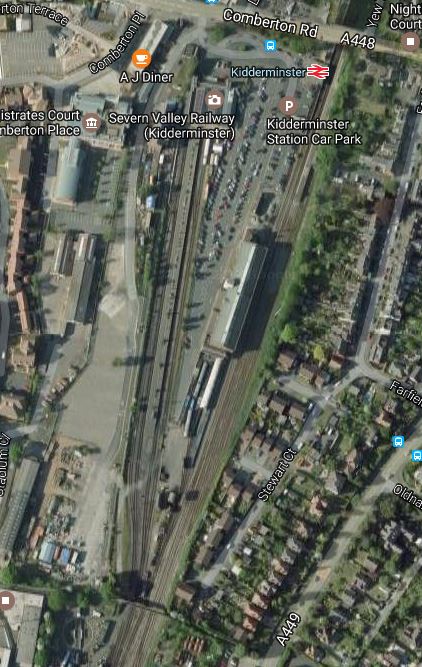
There is a section called Other Operational Extensions in the Wikipedia entry for the Severn Valley Railway, where this is said.
The General Manager, Nick Ralls has confirmed that Chiltern Railways have approached the Severn Valley Railway with a view to extending a number of its peak-time Marylebone to Kidderminster services to Bewdley to alleviate road congestion in the Kidderminster/Stourport/Bewdley area. This has raised questions regarding car parking limitations near Bewdley station. Should this go ahead the distinction between a heritage railway and a contemporary railway operation would be blurred. In conjunction with this there have been suggestions for locating a Park and Ride facility near Foley Park Halt. Investigations are in-hand to construct a station to serve a conference centre and hotel to be located at the West Midlands Safari Park.
Consider.
- According to Wikipedia, it is a future aspiration of Network Rail to electrify the entire Birmingham to Worcester via Kidderminster Line, as well as the Chiltern Main Line to London Marylebone.
- If Chiltern Railways could run to Bewdley station, surely a Class 319 Flex train could run a service to the Severn Valley Railway from anywhere between Kidderminster and Birmingham.
- If the electrification ever happens, a Class 319 Flex train could run under the wires to Kidderminster and then use diesel power to Bewdley or even Brignorth.
When does a heritage and tourist railway become a commuter route?
Swanage Railway
The Swanage Railway are working on a connection to the main line at Wareham station.
This Google Map shows Wareham station in the North East corner, with the South Western Main Line running across the image.
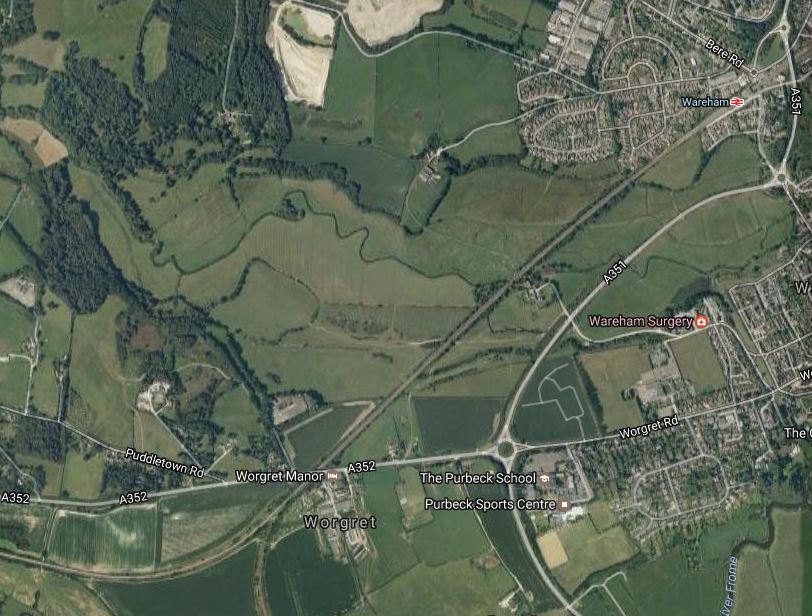
Wareham Station And The Swanage Railway
In the South West corner of the map, a junction can be seen, where the Swanage Railway joins from the South.
As the Class 319 Flex train would probably be a train fully-certified to go on any line, where the Class 319 train can run, it could run from say Poole or Bournemouth stations to the terminus of the Swanage Railway at Swanage via the iconic Corfe Castle.
- I think that Bournemouth station could turnback a local service to Swanage station.
- The Class 319 Flex train would use the third-rail electrification on the main line.
- On the main line, it would be a 100 mph train, just like the Class 444 trains working the line to Waterloo.
- The train would use diesel power to Swanage.
- I don’t think much new infrastructure would be needed, once the connection at Wareham is finished.Is a Class 319 train old enough to count as heritage? I suppose it’s fake with a couple of modern German diesels!
It could work as both a local train service and a tourist attraction.
Could There Be A Battery-Powered Class 319 Flex Train?
In the advance copy of the brochure for the Class 319 Flex train, that Porterbrook have sent me, there is a few comments about using batteries on the train.
This strong statement is Porterbrook’s view on a battery-option for the train.
A large battery option was shown to be heavy, would require a lot of space and have long recharge times.
But Porterbrook are also quoted in the article in Rail Magazine, which is entitled Flex… and flexibility, as saying.
Batteries are definitely doable, but rail will have to overcome the current range limitations for traction power. We think traction battery technology will give you a range of around 20km to 30km [12-18 miles] before needing recharging, and this is not enough for most operators.
But a lot of uses of a battery train are for very short distances.
- Moving a train in a depot.
- Moving a train to an electrically-dead siding for overnight parking.
- Moving a train to a safe evacuation place like the next station after an electrification failure.
- Moving a train over an electrically-dead section of line.
- Running on very short branch lines without electrification.
- Running to a temporary station.
- Remote start-up of the train.
As the Class 319 train is a DC train, fitting batteries would not need an expensive voltage converter.
Electrically-Dead Stations
The new Health and Safety regulations as regards electricity in stations are causing Network Rail serious problems and great expense with electrification.
A train with a limited battery option may offer significant safety advantages in that if it had a range of six mile or so on full batteries then stations could be built without electrification.
Third rail systems are often broken in stations for a short distance, so that staff can safely cross the tracks. They are also broken at level crossings.
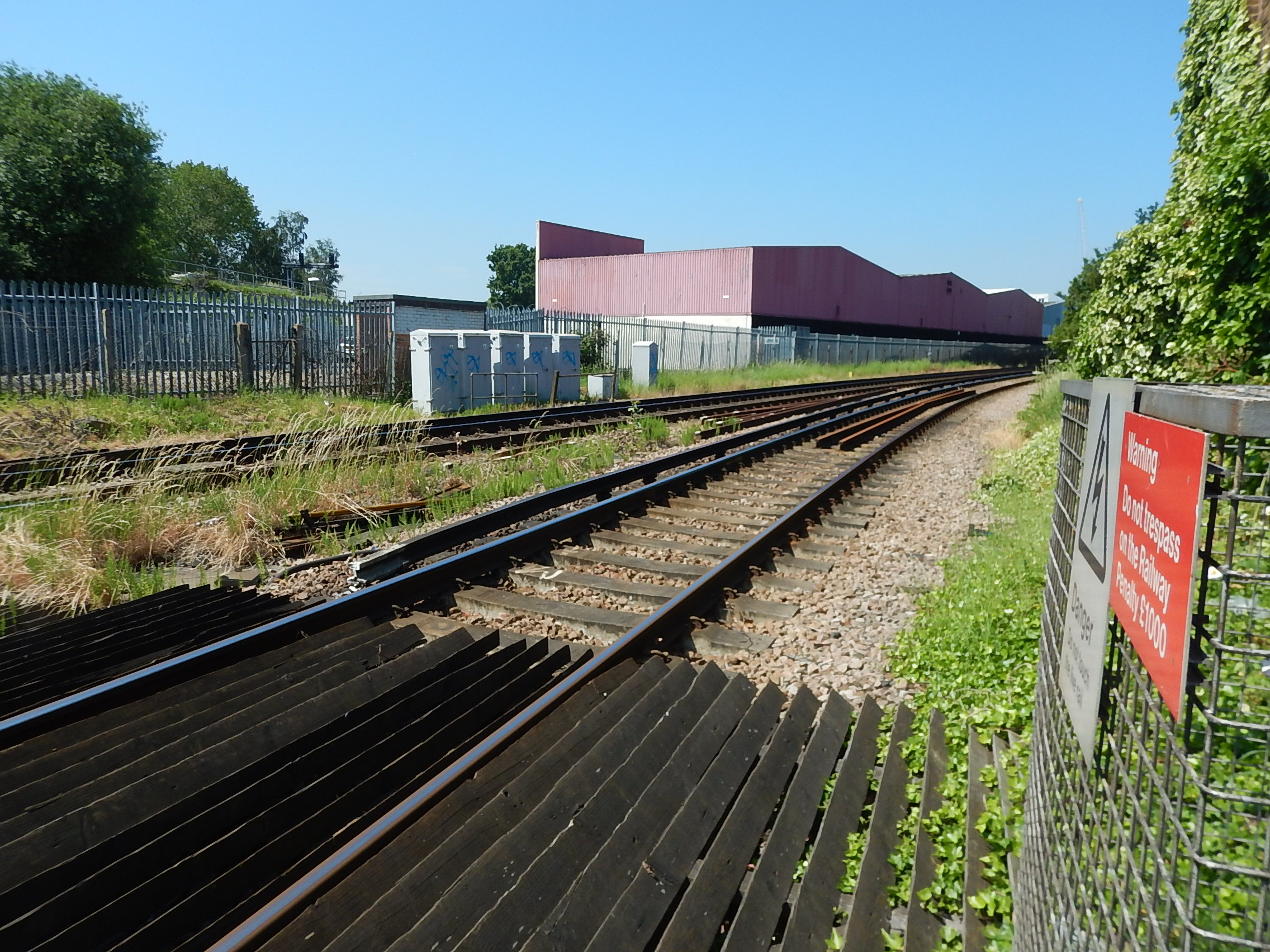
Most trains including all Class 319 trains have contact shoes at both end of the train and can bridge a short gap.
An onboard battery would allow the trains to bridge larger gaps.
The problem with overhead electrification is that the pantograph must be lowered and raised at the correct times. But this is one of those problems that could be done automatically and safely by systems linked to GPS.
There’s certainly a patent with the name of Pantograph Control Via GPS.
No overhead wires in a station with a rich architectural heritage, may lead to easier and more affordable electrification.
Think Hebden Bridge!
Very Short Branch Lines
Several branch lines that have been proposed for electrification are less than six miles in length.
- Brentford – 4 miles
- Greenford – 2.7 miles
- Henley – 4.5 miles
- Levenmouth Rail Link – 5 miles
- Windsor – 2.5 miles
So if 20 to 30 km. (12-18 mile) range mentioned by Porterbrook is serious, a Class 319 Flex train with batteries instead of diesel engines should be able to handle short branch lines with ease, provided that the batteries could be charged on the main line or in an electrified bay platform.
As electrificastion procedes more opportunities will present themselves.
This Google Map shows the distance between Leeds Bradford Airport and the Harrogate Line.
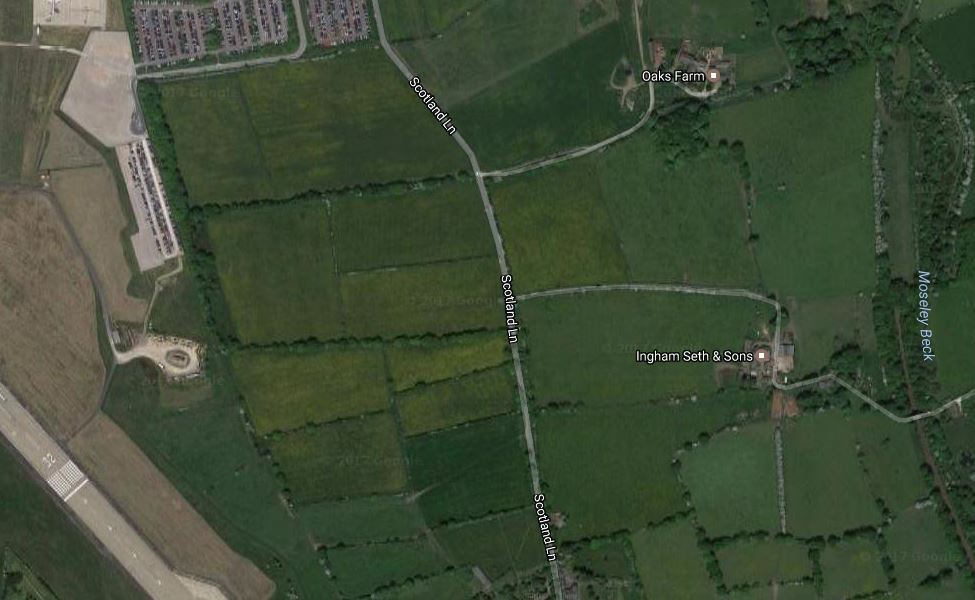
The Harrogate Line is likely to be electrified in the next tranch of electrification, as most of the other suburban lines from Leeds are already electrified.
The distance between the Airport and the Harrogate Line is probably about a mile, so Class 319 trains fitted with an affordable battery could manage this line.
Battery Technology Will Improve
It should be born in mind that battery technology will get better, thus range will increase for a battery if a given physical size.
A guaranteed twenty mile range would bring these routes into the list of possible routes for a Class 319 train with batteries.
- Braintree – 6.4 miles
- Coventry to Nuneaton – 10 miles
- Marlow – 7.25 miles
- Windermere – 10 miles
Braintree is interesting, as it needs a passing loop and the cheapest way to do this would be to remove the electrification, update the track and signalling and use an independently-powered train.
Battery Technology On Other Trains
Simpler battery systems like this will be able to be applied to a large number of modern electric trains on UK railways.
- Class 321 trains
- Class 375 trains
- Class 377 trains
- Class 378 trains
- Class 379 trains
- Class 387 trains
Note that I haven’t included the Alstom, CAF, Hitachi, Siemens and Stadler trains running now or in the future.
Will they sit on their hands and watch the other manufacturers’ trains get more efficient? You bet they won’t!
It is also worth noting that some of these trains, unlike the Class 319 trains, have regenerative braking, which could store their braking-generated energy in the battery, rather than returning it to the electrification.
Conclusion
Porterbrook have let a big genie out of the bottle.
Riding In A Clean Class 319/4 Train
The Class 319/4 train is the upmarket version of the Class 319 train with First Class seats, less 2+3 seating and a fully-accessible toilet.
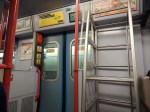
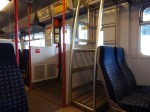
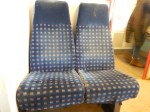
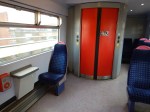
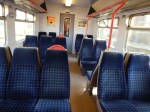

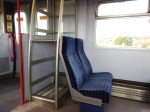
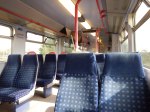

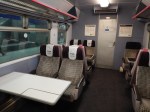


I took the pictures on a particularly neat and tidy Thameslink train.
It is likely that the Class 319 Flex train will use this interior, especially as the prototype is a conversion of a Class 319/4 train.
According to Wikipedia, there are still 23 Class 319/4 trains in service with Thameslink, with a few actually off lease, so there should be quite a few of this variant to convert.
In the article in Rail Magazine, which is entitled Flex… and flexibility, this is said.
One unit has moved to Loughborough (319427), but this is not one of the eight destined for Northern. Instead, it will be deployed for dimensional analysis. Only so much can be planned on paper and computers, and this will enable the various teams to evaluate the train and ensure everything fits.
Sounds like good engineering and as the train was off lease, it probably wasn’t one of best, so if it eventually becomes a spares donor or scrap, no-one is probably bothered, given that there are quite a few Class 319/4 trains available for conversion.
In fact after riding in a couple of Northern’s Class 319 trains last week, I definitely felt that the Class 319/4 train in the pictures, rode a lot better and more like what you’d expect from a train derived from a Mark 3 coach.
Conclusion
The more I read and observe about the Class 319 Flex train, the more I like the project.
I wonder how much a new bi-mode four-car multiple unit would cost? As a rough guide London Overground are paying nearly six million for each of their Class 710 trains.
Class 319/4 trains converted to Class 319 Flex trains will have the following extra and proven features.
- 100 mph as against 75 mph top speed.
- 91-92 mph top speed away from wires on diesel.
- First Class seating
- Fully-accessible toilet.
- The ability to survive a direct hit from a 24 tonne cement mixer truck dropped from a bridge.
But the Class 319 Flex is not a new train.
The Oxshott incident with the cement mixer truck, did happen to a Class 455 train, but this is also Mark 3 coach-based, like the Class 319 train.
Flex… and flexibility
This is the title of an article in Rail Magazine, which is an interview with Helen Simpson and Mark Isbern of Porterbrook.
There is a lot of information about why Porterbrook went the hybrid route rather than batteries.
These are some of facts disclosed.
- Manchester Piccadilly to Buxton was chosen as the test route as it uphill all the way with 12 stops.
- They have simulated running on routes on Great Western, London Midland and in Wales.
- The Flex technique could be applied to other EMUs such as Electrostars.
- Top speed is 100 mph under the wires and 91-92 mph when running on diesel.
- Conversion takes between four and six weeks.
- Most of the changes are in the driving vehicles.
- Porterbrook are converting an initial batch of eight trains and that they will be based on the Class 319/4 version of the train.
Above all the air of professionalism, that I felt from the advance brochure they sent me, has been maintained.
I am impressed.
These are my thoughts.
The Conversion Process
The conversion process appears to be designed for simplicity and a fair bit of throughput.
- The starting point appears to be a Class 319 train, updated with the required interior and paintjob by Knorr-Bremse at Wolverton.
- Existing Northern trains could also be converted.
- Engine rafts will be assembled and tested in advance.
- Engine rafts and other equipment are fitted to the driving cars.
My project management knowledge, leads me to feel this is a well-designed production process.
As there are 86 Class 319 trains in total, if the orders roll in, production should run smoothly.
It’s also not as if, everybody’s working on a train they don’t know well.
The Initial Eight Trains
It would appear that four trains are to be delivered by the end of December 2017. After that, at 4-6 weeks a train, the other four should be delivered in time for the May 2018 timetable change.
When I wrote Why Not Buxton To Hellifield?, I calculated that to run an hourly service between Buxton and Clitheroe would need four trains and a half-hourly service would need eight trains.
It’s not that this Buxton to Clitheroe service will be run, but running intensive services on stiff routes needs a lot of trains.
Now, if the trains do what the specification says in practice, as they do on the computer, I can see a situation, where Northern and its drivers will be able to use these trains on more and more of Northern’s numerous partly-electrified routes.
So if it all works out, I can see more trains being converted!
But if the conversion process is well-planned, that won’t be a problem.
The 91-92 mph Speed On Diesel
This surprised me, but it is significant.
My trip from Huddersfield to Blackburn in the Peak on Friday wasn’t the best of trips.
- The Class 156 train was severely asthmatic.
- Half the four-car unit was unserviceable.
- The train was full to bursting.
It gave me the impression that the train needed a major refurbishment.
The Class 156 train is a 75 mph train and if the Class 319 Flex can do over 90 mph on diesel, it would be an obvious train, with which to run services like Huddersfield to Blackburn.
Class 185 Replacement
Northern currently hire four Class 185 trains from TransPennine for the following routes.
- Manchester Airport to Blackpool North
- Manchester Airport to Barrow in Furness
- Oxenholme to Windermere
The sub-lease runs out in December 2017.
If things work out as planned and the Blackpool Branch is electrified, then Manchester Airport to Blackpool North could be worked by an electric Class 319 train.
If the wires don’t get switched on, then like the other two routes, Class 319 Flex trains will be needed.
It will be interesting to see how a Class 319 Flex performs against a Class 185 on these routes, as they are both 100 mph trains, where there is electrification.
The Four-Car Bi-Mode Train
The Class 319 Flex train is an affordable four-car bi-mode or electro-diesel train, promoted by Porterbrook and to be used by Northern.
- The train is affordable, as it is based on a refurbished Class 319 train, which was built thirty years ago.
- The train is a dual-voltage unit and can be powered by either 25 KVAC overhead or 750 VDC third-rail electrification.
- Each unit also has two rail-proven MAN diesel engines, for powering the train on lines without electrification.
If there is a drawback, it is that with their interiors so far, Northern have opted for a no-frills interior with no wi-fi.
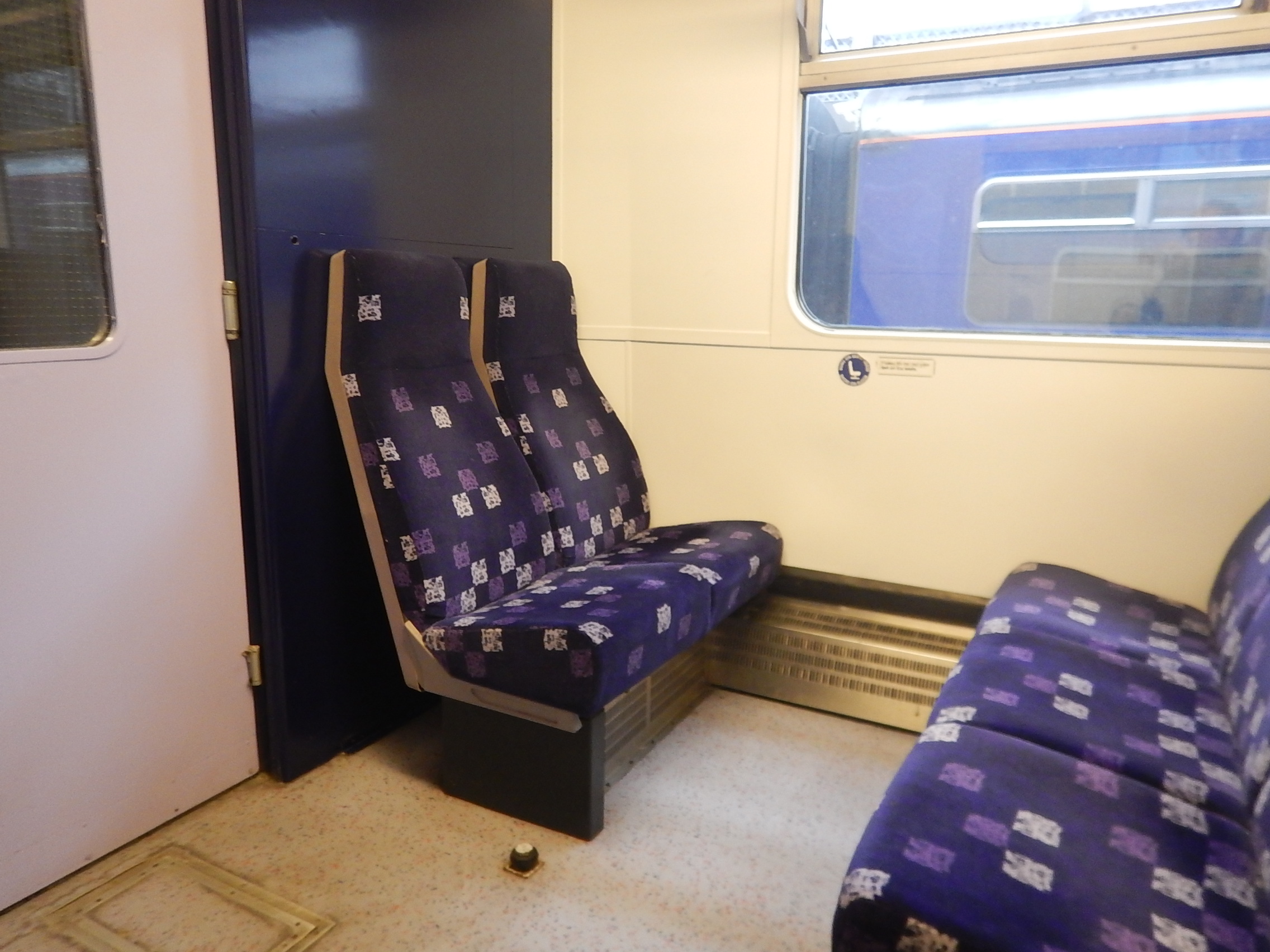
Compare this with the interior of a Class 455 train.
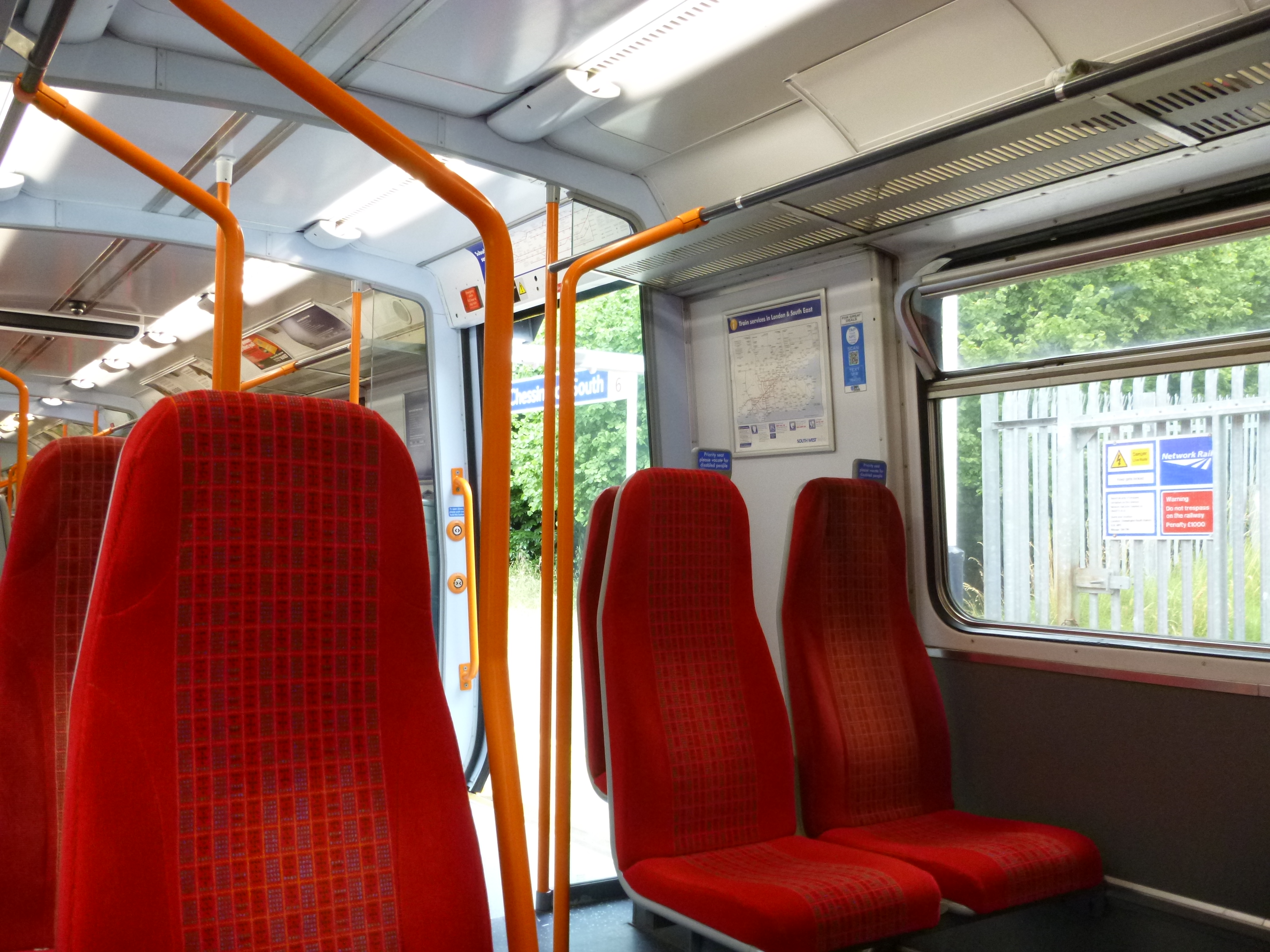
The trains were originally built within a couple of years, but the updated interior specified by South West Trains is much more impressive and passenger-friendly than that used by Northern.
Both trains are four-car units and are based on the Mark 3 coach, so underneath the skin, they probably have a lot in common.
There are a large number of four-car trains on UK railways so it must be a train length that is convenient for operators.
But strangely until now there has not been a four-car bi-mode train.
But then bi-mode trains are not that common, with the only UK train of that type; the Class 800 train, yet to enter service.
But the Class 800 train is for the long distance market and is a five-car or nine-car 125 mph train.
I do wonder, if the reason we have no four-car bi-mode trains, is that no-one has bothered to design one so no-one has wanted one.
But Porterbrook own 86 of these Class 319 trains, which are reliable 100 mph trains, that drivers tell me they like, because of their performance and excellent brakes.
Because of their age, they’re probably not worth a great deal more than scrap value, but because of the depth of knowledge of what can be done with Mark 3 coaches, they can be turned into a useful train by quality engineering.
Porterbrook have seen a gap in the market with Northern for a train specifically designed to be able to handle their toughest route, which is Manchester Piccadilly to Buxtonup the very steep Buxton Line. But the train is no one-trick pony and can run on virtually any of Northern’s routes, whether they are electrified or not.
So Northern can use the train for a variety of purposes.
- Running services on routes, that are not fully electrified.
- New route development.
- Extension of existing electrified routes.
- Replacement of a failed unit, which could be electric or diesel
Northern will have two versions of the Class 319 train; electric and bi-mode, just like other train operating companies will have electric and bi-mode versions of the Class 800 train.
I suspect that to passengers and all train staff except the driver, there will not be many obvious differences between the two versions.
Some routes will probably be able to be served by both versions.
The Bombardier Aventra
I feel very much that the Aventra will have one or more independently-powered versions.
The Aventra has a slightly unusual and innovative electrical layout.
This article in Global Rail News from 2011, which is entitled Bombardier’s AVENTRA – A new era in train performance, gives some details of the Aventra’s electrical systems. This is said.
AVENTRA can run on both 25kV AC and 750V DC power – the high-efficiency transformers being another area where a heavier component was chosen because, in the long term, it’s cheaper to run. Pairs of cars will run off a common power bus with a converter on one car powering both. The other car can be fitted with power storage devices such as super-capacitors or Lithium-Iron batteries if required.
This was published six years ago, so I suspect Bombardier have improved the concept.
Perhaps instead of a power storage device, they could squeeze in a small diesel engine and an alternator.
I’ve believed for a long time, that the Class 710 train being built by Bombardier for the London Overground, has onboard energy storage and that I wouldn’t be surprised if it used the storage to capture energy from regenerative braking, just as a lot of hybrid vehicles, like a London Routemaster and a Toyota Prius.
It won’t be a high-power bi-mode like the Class 319 Flex train, but it could have a useful range on the stored energy.
But it will be an all-electric train and probably more energy-efficient.
Other Four-Car Bi-Modes
I can’t believe that other train manufacturers are not looking at various forms of bi-mode trains.
Hitachi make the Class 800 trains at Newton Aycliffe, where they also make the four-car Class 385 train for ScotRail.
And what about Alstom, CAF, Siemens and Stadler?
What About Five Cars?
Four-car trains mean that operators can run eight and twelve car trains, when they are convenient. But other companies prefer five-car and ten-car trains.
We have the Class 800 trains, which are a 125 mph bi-mode, but we don’t have a five-car bi-mode suburban trundler. A few would surely be useful for Southern to handle Uckfield and the Marshlink Line.
I also believe that Greater Anglia’s five-car Aventras could have the limited independent capacity given by onboard energy storage.
I suspect that what the train operators need, the train operators will get!
Conclusion
We will see a complete spectrum of bi-mode four-car trains. And a few fuve-cars too!
, o
Thoughts And Facts About Class 319 Flex Trains From Manchester And Blackburn Into The Hills
On Thursday and Friday last week, I spent two days in the Premier Inn at Blackburn and explored the rail lines around the town with journeys all over the area that should by now have been fully electrified.
Class 319 Flex Trains
The main reasons to go was to see some Friends In The North and to see Ipswich play at Barnsley, but I also wanted to explore some of the hilly routes in Lancashire.
Porterbrook in their brochure for the Class 319 Flex trains says that the objective for the train is that it can run from Manchester Piccadilly to Buxton on the Buxton Line, under the power that is available, which is electrification only as far as Hazel Grove station.
The Routes With Hills
There are three routes from Manchester and Blackburn that climb into the hills.
- The Ribble Valley Line to Blackburn via Bromley Cross and then on to Clitheroe and Hellifield stations.
- The East Lancashire Line Line to Colne station
- The Buxton Line to Buxton station.
The lines are not for low-powered trains and the current Class 150 or Class 156 trains struggled on the three climbs I did.
- Hazel Grove to Buxton in the afternoon.
- Blackburn to Clitheroe early in the morning.
- Bolton to Blackburn, crush-loaded in the rush hour.
Someone told me, that leaf fall can be a problem in the Autumn.
In no particular, these are my thoughts and some facts from other sources and my observations.
Blackburn Depot
A conductor told me that Northern Rail will be creating a depot and basing train crew at Blackburn.
This article in the Lancashire Telegraph is entitled Multi-million pound train depot set for Blackburn.
This is said.
Blackburn is to get a new multi-million pound train depot as the latest stage of East Lancashire’s rail revolution.
The stabling, maintenance and cleaning centre will include an office block and new connection to the existing Bolton junction where the tracks to Preston and Darwen divide.
If as I believe the Class 319 Flex trains could serve Clitheroe/Hellifield and Colne, then it could be an ideal location. Especially, if the Clitheroe/Hellifield and Buxton services were run back-to-back across Manchester.
Double Track Most Of The Way
The three lines have the following track layouts.
- The Ribble Valley Line has a large proportion of double track, which stretches to Hellifield.
- The Buxton Line is double-track.
- The East Lancashire Line is single-track from Rose Grove station to Colne station.
So hopefully, if two trains per hour (tph) were to be run on these three branches, passing would be possible.
Hellifield
Hellifield station is where the Ribble Valley Line connects to the Settle-Carlisle Line.
A conductor told me that he’d heard that Northern would like to serve Hellifield more regularly.
Since I first wrote this, I’ve heard that the tracki at Hellifield has been recently replaced and is in good condition.
Housing And Other Property Development
As I travelled along the lines to Clitheroe and Buxton, there was a lot of housing development along the line, at places like Clitheroe, Hazel Grove, Whalley to name just three.
The crowded trains I used in the Peak to Blackburn are going to carry even more passengers and the need for capacity with power on these lines will increase.
Tourism Issues
Buxton, Clitheroe Colne and Hellifield all have reasons for tourists and especially those that enjoy visiting the hills.
I have no figures to back it up, but I suspect leisure passengers often go loaded with children in buggies, bicycles and heavy rucksacks and cases. They certainly do in the Summer on the trains of East Anglia and that is flat.
Add in the weather forecast and the effects of new trains and at times, there could be a large increase in leisure and tourism-related travel.
If the trains connected the Settle and Carlisle Line at Hellifield to Blackburn, Manchester and perhaps Buxton, this would surely open up a tourist train route, that Doctor Beeching wouldn’t have thought was the least bit feasible.
Future Train Frequencies
Train frequencies to Manchester could possibly grow to the following.
- Blackburn – 2 tph to Manchester Piccadilly
- Blackburn – 2 tph to Manchester Victoria
- Buxton – 2 tph
- Clitheroe – 2 tph
- Hazel Grove – 4 tph
In addition, the intersecting route from Blackpool South to Colne via Preston and Blackburn, could be running 2 tph.
I do suspect though, that 1 tph to and from Hellifield will be enough. But who knows? I could just be as wrong as Beeching.
The lines probably have a Peak problem, that is fairly unusual in the UK, but probably is common in countries with real mountains like Austria, Japan and Switzerland. One direction of Peak travel is downhill, but the other is up a very steep railway.
On train frequencies, this is said in the Wikipedia entry for the Ribble Valley Line.
A six-week engineering blockade saw the existing passing loop there extended by 1 mile (1.6 km) at each end and signalling improvements made to add capacity on the line and allow for service frequencies between Bolton & Blackburn to be doubled to two trains per hour each way throughout the day from December 2017.
Could this be why, Porterbrook are planning to deliver four refurbished Class 319 Flex trains by the end of 2017, according to their brochure?
Some powerful extra trains will probably be needed to achieve the objective of 2 tph to Blackburn and four Class 319 Flex will help.
Future Train Capacity
I did two journeys in the Peak to Blackburn; in the first I took the slower service via Todmorden and Burnley in a two-car train and in the second, I took the direct route via Bromley Cross, in a four-car formation.
The second was the most crowded, but it was Friday. It also struggled up the hill from Bolton to Blackburn.
Northern’s decision to go for a four-car Class 319 Flex train which could be used on some of these routes, is understandable.
Blackburn To Huddersfield
I travelled to Huddersfield station from Manchester Victoria and didn’t see any signs of electrification on this important route.
Returning to Blackburn from Huddersfield, my train was a direct service which travelled via Manchester Victoria, Bolton and Bromley Cross.
This would be an ideal service to run using a Class 319 Flex train, until Network Rail get their act together and electrify Manchester Victoria to Huddersfield. Even if they only get the wires as far as Stalybridge, the Class 319 Flex would be an enormous improvement compared to the asthmatic Class 156, that struggled with its full load of passengers to Blackburn.
The Calder Valley Line
The Calder Valley Line goes through very picturesque countryside between Preston and Leeds.
I think that full electrification of this line could never happen.
- The line has large numbers of stone and brick viaducts and bridges, which would be very expensive to modify for electrification.
- The station at Hebden Bridge is Grade II Listed.
- There is electrification between Leeds and Bradford, which could probably be extended as far as Halifax.
- Preston is fully electrified and affordable electrification to Blackburn or perhaps Rose Grove or Burnley Manchester Road stations should be possible.
- Electrification to Rose Grove would mean that the service between Blackpool South and Colne could be run using electricity between Rose Grove and Kirkham and Wesham stations.
But the biggest problem would be the opposition to overhead gantries in the hills.
The distances are revealing.
- Burnley to Halifax is just over twenty miles
- Blackburn to Halifax is just over thirty miles.
If Halifax to Bradford wasn’t electrified then that adds another ten miles.
All distances would be within range of a modern bi-mode train, including a Class 319 Flex.
Other Destinations
From Hazel Grove, it is possible for diesel trains to access the Hope Valley Line towards Sheffield.
There must be stations on this line that are possible destinations for a Class 319 Flex train.
Chester and Windermere have also been mentioned as future destinations for the train.
Electrification
Electrification has been painfully slow in the North-West, as it has in most places in the UK.
It looks like that by the end of 2017, Manchester to Preston via Bolton and the Blackpool Branch to Blackpool North station will be electrified.
The advantage of the Class 319 Flex is that it can use this electrified set of lines to run services to stations like Barrow, Blackburn, Blackpool South, Burnley, Chester, Hebden Bridge, Sellafield and Windermere, that are off the electrified network in conjunction with the Class 319 trains.
The Need For A Train To Climb The Hills
From this brief analysis and my observations, it would seem that Northern need a few four-car trains with adequate power to get up the hills at a speed, that enables an efficient timetable. As some of the routes from Manchester Piccadilly and Victoria are electrified, the ideal train would need the capability to use the wires.
If ever, there was a series of routes that need a bi-mode train, then it is these routes.
The Class 319 Flex And The CAF Civity
The Class 319 Flex has according to the brochure I’ve seen been designed to run from Manchester to Buxton with a full load of passengers in the Peak or perhaps after a City-United Derby.
But Northern have ordered new CAF Civity trains in the following versions.
- 25 two-car Class 195 diesel trains
- 30 three-car Class 195 diesel trains
- 31 three-car Class 331 electric trains
- 12 four-car Class 331 electric trains.
This is said in the Wikipedia entry for the Class 331 trains.
In early 2016 it was confirmed that Spanish rolling stock manufacturer CAF would construct the new electric powered trains which are planned to operate in West Yorkshire to replace Class 321 and Class 322 trains and work alongside the current fleet of Class 333 units. The four-car Class 331 units will be deployed on electrified services from Manchester Piccadilly to replace the Class 323 units which are due to return to Porterbrook at the end of their current lease in 2018.
So it would appear that the Class 319 trains will continue to operate for a few years yet! Hopefully with better seats, wi-fi and a few other smaller improvements.
I think that Northern have decided that until the Class 195 trains arrive that the Class 319 Flex trains are the best short-term solution. But given the overcrowding on the routes will the future three-car trains have enough capacity?
So I suspect, if Northern go the CAF Civity route, I feel that Northern will acquire some longer diesel trains or even some dual-power Civitys.
But at least running Class 319 Flex trains on the route will effectively produce the specification for these hilly routes.
Class 319 Flex Trains And Reopening Newcastle To Ashington
In Reopening Newcastle To Ashington, I suggested that Class 319 Flex trains might be useful in reopening the Northumberland Line to passenger trains.
This map is taken from on the South East Northumberland Rail User Group (SENRUG) web site.

The East Coast Main Line is shown in red, with the proposed reopened line in a thick orange.
I have since heard from SENRUG and this is a summary of their e-mail.
- The line from Newcastle to Ashington takes freight along its entire length.
- The route between Newcastle and Bedlington and the Choppington Branch is a diversionary route for HSTs.
- The new Hitachi Class 800 trains will be able to use the Bedlington-Choppington route.
- SENRUG are promoting Ashington to Butterwell as an extension to the route and a further HST diversion.
The e-mail finishes with this sentence.
Northern tell us the reason why they don’t want electric trains on the Morpeth branch (which is wired) is because they need to consolidate maintenance expertise at Heaton Depot and need flexibility to switch units around from route to route. Thus any new stock for the Ashington route also has to travel on the 3 other routes, all of which also take freight and inter-city type services.
Come in the Class 319 Flex train, the Teessiders, Tynesiders and Wearsiders need you!
- Newcastle-Morpeth would be run using electric power, with all other lines from Newcastle using two 390kW rail-proven MAN diesel engines.
- The trains have a performance as good if not better than a Class 156 train.
- The trains are four-car and meet all regulations.
- Back-to-back services through Newcastle, such as Ashington to Sunderland or Middlesborough and Morpeth to Hexham, would be possible.
- The trains could also work Middlesbrough – Newcastle – Hexham – Carlisle via the Leamside Line, if Northern wanted to open the line in 2019.
- Northern get their route flexibility from Newcasstle, as the trains could work any route from the city.
- The standard Class 319 trains have mixed it with big freight trains for thirty years on the Bedpan (Bedford to Brighton via St. Pancras).
- They can go anywhere that an HST or a Class 156 train can go. So does that include some lines of the Metro?
- When on the East Coast Main Line, they can up pantograph and cruise at 100 mph, just as they do on the West Coast Main Line now.
- If any lines have steep gradients, the trains are designed for the 1-in-60 climb up to Buxton after a United-City Derby.
But the biggest advantage of the train, must be that as planners have ideas for new services, so long as the track and signalling are up-to-scratch, it’s just a case of Have Track, Will Travel!
As Northern were part of the writing of the specification for the Class 319 Flex train, I can’t believe that they didn’t take what they could do in the North East into account.
Consider.
- Northern are developing a similar network using a mix of Class 319 and Class 319 Flex trains linking Blackpool, Liverpool, Manchester and Preston, based at Allerton Depot in Liverpool.
- There have been proposals for new stations on the East Coast Main Line between Newcastle and Berwick-on-Tweed. 100 mph Class 319 trains would be ideal for a stopping service between Newcastle and Berwick.
- Are there possibilities to run services into North Yorkshire?
- Class 319 Flex trains could work Newcastle to Carlisle.
- Bishop Auckland, Northallerton, Saltburn, Sunderland and Whitby could be worked from Midlesbrough.
Northern could stable an appropriate mix of Class 319 and Class 319 Flex trains at a convenient depot, deploying as required using the electrified East Coast Main Line.
Could Northern be developing an electric hub concept, as what could happen in the North East could mirror what is happening in the North West?
- Central depot on an electrified main line, with good high-speed electrified connections to all routes served.
- A number of four-car 100 mph electric trains- At present they have a total of thirty Class 319 trains.
- A number of four-car 100 mph bi-mode trains. – At present they have a number of Class 319 Flex trains in development.
- New routes could be developed using the bi-mode Flex trains.
- If electrification happens on a route, the electric trains might take over.
But Northern have forty-three Class 331 electric trains on order.
These are three and four car 100 mph trains.. Northern probably have plans for these trains, but they could supplement the fleet at either hub, as routes get more numerous and passenger numbers increase.
A similar electric hub could develop at Leeds.
It looks to be a very flexible philosophy.
At some point in the future, it could happen that all Class 319 trains are the Flex variant and they work in tandem with a bog-standard four-car 100 mph electric multiple unit.
A Design Crime – Train Platform Interface At St. Pancras Thameslink
Frank Grdner has been complaining at the problems of travelling on planes in a wheelchair.
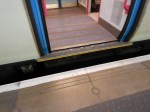
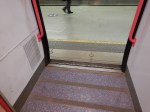
I took these pictures of the step between platform and train at St. Pancras Thameslink station.
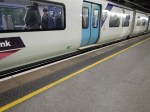


All of the trains including the 1980s built Class 319 trains seem to require the same step-up into the train.
As the Platforms at the station were built after the Class 319 trains became the most numerous trains on the route, this a real design crime of the highest order.
It would appear that Merseyrail will offer roll-across access with their new trains, so why isn’t Thameslink.
But then in an ideal world, St. Pancras station needs a substantial rebuild underground.
Porterbrook Launch A Tri-Mode Train
In Bi-Mode Ate My Electrification, I asked this question.
Could We See A Tri-Mode Train?
Little did I suspect that just a few hours later, one would arrive.
This article on Global Rail News is entitled Northern and Porterbrook to convert electric trains to bi-mode.
This is the opening paragraph.
Leasing company Porterbrook is developing a bi-mode variant of Northern’s Class 319 EMU.
But that is not all, as this is said later.
Porterbrook said the design requires minimal modifications to the train. Additional batteries could also be fitted to improve performance on non-electrified sections.
So Northern will have a Class 319 Flex train that can run from electric, diesel or battery power.
That sounds like tri-mode to me.
Is It A Quad-Mode?
Some might even think it a quad-mode, as it could also run using 750 VDC third-rail electrification. It would help the trains charge the batteries at Southport, Ormskirk and Kirkby stations, which are terminals of Merseyrail’s third-rail network.
Will A Class 319 Flex Work Like A Hybrid Bus?
Several types of hybrid buses work, by driving the wheels using electric motors powered from a battery, that is charged from a small diesel engine.
When the battery is full, the engine is switched off.
So could, the Class 319 Flex be using hybrid bus methods to power the train?
The power-packs would keep the battery charged and the train would be driven from the battery or the external electrification.
One advantage of doing this, is that say on arrival at Blackpool with batteries without much power, the power-packs could charge the batteries before the train left for Preston and the overhead wires.
The driver would drive the train as an electric train, using electrification or battery automatically. The control system would cut the power-packs in to charge the batteries as necessary.
If they do go this route, could they be raiding the parts bin of the UK’s hybrid-bus manufacturers?
The 4.5 litre diesel engine and a 75 kW-hour battery, used by London’s Routemaster would surely be certified for use in a rail application and their performance and reliability will be well-documented.
Why Convert A Class 319 Train?
Who’d have thought that they’d convert a Class 319 train.
Consider.
- The class was built in the late-1980s.
- They are not the most stylish of trains, with all the panache of a house built by a Local Authority in the 1950s.
But over the last year or so, Northern have been refurbishing the trains and have probably found that under the skin, there are no serious problems and they have solutions for the minor ones.
They also scrub up pretty well and I suspect that if a bit more was spent on the interior, they could probably be better.
In my travels to Liverpool over the last year, I have talked to several drivers of Class 319 trains.
- Generally, they seem to like them.
- One told me, that on the West Coast Main Line, they will still hold 100 mph, so they are no suburban trundler!
- I have heard lavish praise for the brakes.
The only complaint, was that because of the softish suspension, the first few trains didn’t ride too well over Chat Moss.
They also have other things in their favour.
- There are 86 of the four-car trains, of which Northern has 32.
- The creation of a prototype, shouldn’t be a long process, unless Network Rail take forever to certify the train.
It should also be noted, that some of the similar Class 321 trains are having their traction equipment updated. So there may be some lessons from each program that can be applied to the other, especially as Wabtec are involved in both projects.
Will The Class 319 Flex Have Regenerative Braking?
The one problem with the Class 319 is that the trains don’t have regenerative braking.
If they did and they had onboard energy storage then the braking energy could be stored when a train stops at a station and recycled to get the train started after passengers have left and joined the train.
This would improve the energy efficiency and extend the range of the train, when running on lines without electrification.
How Will A Class 319 Flex Perform On Inclines?
Some of Northern’s routes like the Ribble Valley Line, climb into the hills.
Will the performance of the trains be sufficient to work these lines?
How Much Automation Will There Be On A Class 319 Flex?
The trains aren’t particularly complex, but with at least three power sources, it would probably help the driver, if changeover from one system to another was an automatically controlled.
It would also probably help if pantograph raising and lowering was automatic and could be at line speed.
Could A Class 319 Flex Be Able To Run Under Tram Rules?
In Zwickau in Germany, diesel multiple units, run through the town at slow speed under rules similar to those used by trams.
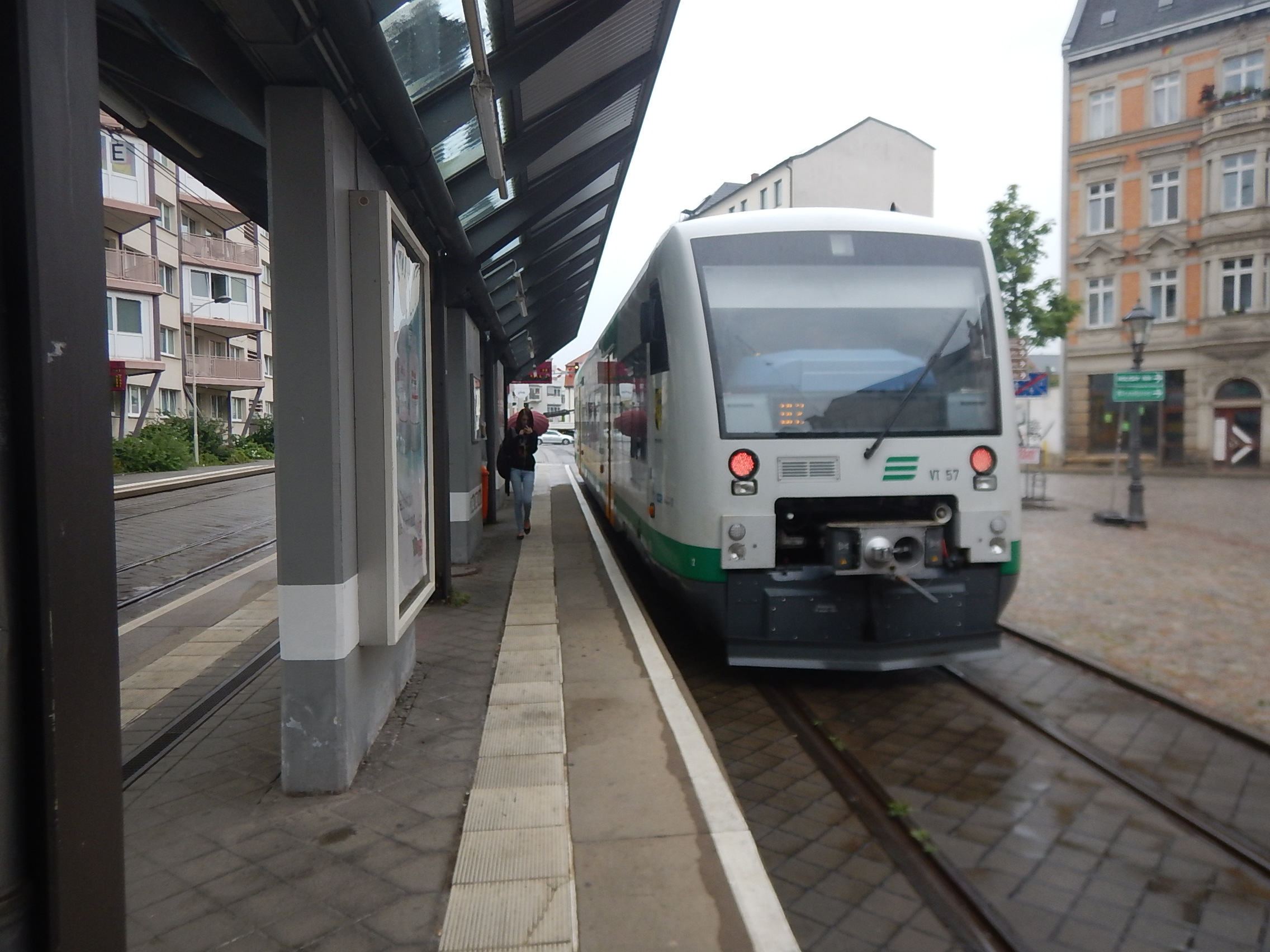
A DMU at the train stop in the centre of Zwickau
From Zwickau HbF to the Zwickau Zentrum stop, the diesel multiple units run on a line designed to the following rules.
- Slow tram-like maximum speed.
- A track with electrification just for the trams with which the trains share the line.
- Rail signalling.
- Simple stations, designed to fit the trams and trains working the line.
- Passengers can walk across the lines, as they can on any tramway.
- There’s even a couple of level crossings.
Zwickau’s system is more complicated than would be needed in the UK, as the trams and trains are of different gauges, so there is an unusual three-rail track, to accommodate standard- and metre-gauge vehicles.
Note that the system in Zwickau does not use a purpose-built tram-train, as the trains are standard Deutsche Bahn diesel multiple units, which were built by Stadler. They are very much like Class 172 trains. They just behave like trams away from the main line.
They are best described as Train-trams!
Will a Class 319 Flex be certified to do the same?
In a simple example, a Class 319 Flex could go through the buffers at Blackpool South station and continue through the car parks to a stop by the football ground.
Where Will Northern Use A Class 319 Flex?
Windermere To Manchester
When the franchise responsible for Windermere station changed from TransPennine to Northern, there was talk of electrifying the Windermere Branch Line , so that it could have an electric train service to Manchester or Manchester Airport.
But Network Rail’s electrification performance, stopped that, so passengers between Windermere and Manchester have to change at somewhere like Oxenholme Lake District station.
From Windermere, there is one direct train per day to Manchester Piccadilly and Manchester Airport, which takes two and a half hours and an hourly shuttle to Oxenholme.
I’m sure that Windermere to Manchester is the sort of route that Northern would like to cover with a direct hourly electric train. From December 2017 if Network Rail perform, the only part of the route from Windermere to Manchester Airport, that will not be electrified will be the ten miles of the Windermere Branch Line.
If Network Rail haven’t performed, the trains could use the electrified route via Nreton-le-Willows and the West Coast Main Line.
As it will take something like five hours to go from Windermere to Manchester Airport and back, it will need five trains yo provide an hourly service all day. Alternative power sources would only be used on the Windermere Branch.
Blackpool To Manchester And Liverpool
I would suspect that an early objective of the design of the Class 319 Flex, would be the ability to do a return trip between Preston and Blackpool, as this would enable services between Blackpool and Crewe, Liverpool, Manchester and Warrington.
The Blackpool Branch has the following characteristics.
- It is without electrification.
- It is only about fifteen miles long.
- It is has two current termini in Blackpool North and Blackpool South stations.
- There have been proposals in the last few years to reinstate services on the Fleetwood Branch Line to a new Fleetwood station.
The return trip would be about 30 miles on to each terminus, but trains could use their power-packs if needed to charge their on-board energy storage before returning to Preston.
Blackpool North to Liverpool Lime Street would only need a Class 319 Flex train to be delivered.
Blackpool to Manchester Victoria, Piccadilly or Airport, would need the Preston to Manchester electrification to be completed, unless they could sneak down the West Coast Main Line.
It looks to my simple mind, that as regards Liverpool, Manchester and Prestojn to Windermere and Blackpool, the Class 319 Flex is a very workable solution, whether Network Rail finish the electrification of Manchester to Preston or not!
As the residents and visitors of Blackpool should understand trams, I could see Class 319 Flex trains running to Blackpool South and Fleetwood through simplified stations without any electrification, under rules similar to trams.
If the Germans can do it in Zwickau, then surely Lancastraians can do it in Blackpool.
Being able to run four-car Class 319 Flex trains to Blackpool South would also help to increase services to the area, if the Open Championship were to be held at Royal Lytham. A simple station could even be built adjacent to the course.
Blackpool South To Colne
The East Lancashire Line spans the Preston between Blackpool South and Colne stations.
After a long chat with an off-duty conductor on a crowded train in Summer 2016 on this line, I’ve thought it was a line , that could do with an improved level of service and more capacity.
Since then I’ve experienced severe overcrowding after Ipswich played at Blackburn on the same day that Blackpool played at Accrington.
Consider.
- Blackpool South to Preston is about fifteen miles.
- Preston station is electrified.
- Blackburn station has recently been rebuilt.
- Trains going between the Manchester to Preston Line and the East Lancashire Line can bypass Preston station.
- Blackburn station has a West-facing bay platform.
- Preston to Blackburn is about ten miles.
- Preston to Burnley is about twenty-five miles
- Preston to Colne is about thirty miles.
It would certainly appear that the following services would be possible using Class 319 Flex trains.
- Blackburn to Blackpool South
- Blackburn to Blackpool North
- Blackburn to Manchester via Bolton
- Blackburn to Manchester via the West Coast Main Line
- Blackburn to Liverpool.
This opens up all sorts of possibilities for integrated services centred on Preston.
If Blackburn to Preston were to be electrified, this would probably bring Colne and Burnley into the operational range of Class 319 Flex trains.
Northern could have tremendous fun planning those services!
Colne To Skipton
This missing link in Northern’s network could be a worthwhile line to reinstate.
So why not create a single-track line without electrification between Colne and Skipton stations?
Consider.
- The missing track between the two stations is just 11.5 miles.
- The reinstatement would probably only need one expensive bridge, that would be North of Colne station.
- The line could be a valuable piece of tourist infrastructure.
- A Leeds to Blackpool service via Burnley and Blackburn through the Pennines would be possible.
It could be designed to be easily worked by Class 319 Flex trains.
I somehow like the concept of 1980s British Rail electric multiple units, built to bring commuters to and from London, being redeveloped as a tourist train, through some of the most beautiful parts of The North.
The Ribble Valley Line
The Ribble Valley Line could be an interesting challenge to run using Class 319 Flex trains.
Consider.
- The Southern section of the line is twelve miles between a hopefully electrified Bolton station and Blackburn.
- The Northern section is ten miles between Blackburn and Clitheroe stations.
- The Northern section is a climb into the hills.
- The Ribble Valley and East Lancashire Lines share tracks sround Blackburn station.
I think that if Preston to Blackburn were to be electrified, Class 319 Flex trains, might be able to reach Clitheroe.
Stalybridge
In the January 2017 Edition of Modern Railways, there is an article entitled Extra Platforms At Piccadilly Abandoned?.
In this article it suggests that electrification between Manchester Victoria and |Stalybridge might be late. This is also said.
However, any delay in wiring the section crates problems for Northern in that its plans for the move to additional electric services sees them terminating at Stalybridge rather than at Manchester Victoria, freeing up -platform capacity.
But Stalybridge is under nine miles to the East of Manchester Victoria, so a Class 319 Flex could be used to bridge the gap.
So do we have the bizarre result of obtaining some bi-mode trains freeing up platform space?
Manchester Victoria To Huddersfield
Once Network Rail get Manchester Victoria to Stalybridge electrified, Huddersfield is only another twenty miles, so could be in reach of a Class 319 Flex.
Southport And Kirkby To Manchester
North of Liverpool, there are two routes, which go between Wigan Wallgate station and Southport and Kirkby stations.
There are also three routes from Wigan Wallgate to Manchester.
The line between Bolton and Wigan Wallgate was supposed to be electrified by December 2017, but no work appears to be ongoing yet.
But when Manchester to Preston and Wigan to Bolton are electrified, there will be an electric route to Manchester Victoria, Piccadilly and Airport stations from Wigan Wallgate.
So could Wigan Wallgate to Southport (20 miles) and Wigan Wallgate to Kirkby (16m iles) be bridged by a Class 319 Flex?
One great advantage at Southport and Kirkby is that 750 CDC third-rail electrification is available. So could the batteries be charged using this electrification, whilst the train is turned back..
A Train Designed For A Specific Route
It seems that one of the great features of the Class 319 Flex trains, is that the number of different power sources will mean that trains can be designed for a particular route.
So if say on a route, like the Ribble Valley Line to Clitheroe, more power might be needed, then an extra battery might be added, as has been stated in some of the various Press Releases for the train.
Routes In The East
I have only looked at the routes I know in the West of the Northern franchise.
But as it is an extensive franchise providing services over a wide area, there could be routes in the East, where the Class 319 Flex could provide an increase in capacity and quality of service.
Porterbrook
I must say something about Porterbrook’s involvement in this development.
Porterbrook are a leasing company and they are not participating in this venture out of charity.
By financing the increase in the capabilities of this train, they are doing themselves a big favour by turning a Class 319 train of limited use and value into a more desirable asset for a train operating company, that they can lease for a higher price.
- Northern get a train they need to increase capacity and expand electric services.
- Passengers travel in a refurbished faster four-car electric train instead of a two-car diesel train of possibly dubious quality.
- Hopefully, the better train service will create economic activity and jobs.
Porterbrook will of course expect to make a return on their investment.
Other Customers
This article on the European Railway Review is entitled Porterbrook and Northern to jointly develop bi-mode Class 319 Flex trains. It says the following.
The first Bi-mode Class 319 Flex trains will be in Northern passenger service by 2018. The units will then become available to operators who wish to make full use of electrically powered rolling stock on partially electrified routes.
It will be interesting to see, who leases the trains.
Conclusions
I am drawn to the following conclusions.
- Nothing about the technicalities of the Class 319 Train is difficult and with my limited experience of project management in railway engineering , if Wabtec give a delivery date, it will likely be achieved.
- There are lots of ways to run these trains, especially if modes can be switched automatically.
- The trains would be more efficient and have a longer range, if they had regenerative braking.
- The trains will be incredibly useful in providing electric services across the Northern franchise.
- I believe that used on a line like Harrogate Line, they will also show whether a line should be electrified.
I think the concept is very sound and good for Porterbrook, Northern and their passengers. It will also create economic ctivity and jobs.
If the Class 319 Flex proves to be a success, I feel that other trains will be upgraded in this way.
 The Anonymous Widower