How Cambridge University Test Students For The Covids
In Tom Whipple’s excellent article in The Times today, which is entitled In Search Of A Less Painful Route Through The Long Covid Winter, there is this paragraph.
They also point to a different, smaller-scale, test. In the summer, Cambridge University decided to go its own way on testing. Each “bubble” of students put their swabs to be tested together. If they contained a positive — validated through a far more effective laboratory test — they were each retested. At the start of the autumn term, the university experienced the usual run of cases. In the final week, when other universities were seeing mass outbreaks, all 10,000 students were tested. There were zero positives.
Could this simple method, speed up mass testing of residential areas, care homes and other universities?
My Advice To Coeliacs On A Gluten-Free Diet Concerning The Covids
As a coeliac, I have been worried about the Covids and researching the statistics for some months.
Who Are Likely To Be Coeliac?
In the next sub-sections, I look at various groups.
Ashkenazi Jews
I am coeliac because there is an unbroken genetic line to my great-great-great-grandfather; Robert, who was a Jewish tailor from Königsberg in East Prussia. Census records in the UK, say that he arrived around 1800 and setup business in Bexley. Like many Jews from East Prussia, he had to leave, when he became eighteen, because he was male, Jewish and not one of the privileged families.
I know little of him, except from a brief chat from my father, whose own grandfather had met him as a child and remembered him, as a small elderly man, who didn’t speak any English.
I did get some more details of the Jewish community in East Prussia from a curator at the German Historical Museum in Berlin, and I don’t think she was proud at her countrymen’s treatment of the Jews before the Second World War. By the 1930s many had fled to the UK or the United States.
Wikipedia has a detailed History of the Jews in Königsberg.
In May this year at the height of the first wave of the pandemic, I wrote Jews In The UK And COVID-19, which is based on three articles in the Times of Israel.
This is an extract from my post.
I am also fairly sure, that my coeliac disease came from my Ashkenazi Jewish genes.
This second article on The Times of Israel is entitled Jewish Charity Warns Of Coeliac ‘Stigma’ As Half-A-Million Said Undiagnosed.
This is the introductory paragraph.
A Jewish charity says there is a “stigma” surrounding coeliac disease in the Jewish community, after a national charity warned that there were still half a million people in the UK who are undiagnosed.
I would assume that the half-a-million figure refers to all the population of the UK, as there are only about half that number of Jews in the UK.
Could coeliac stigma mean that there many older Jews, who are coeliac, have not been diagnosed and their poorer immune systems make them more vulnerable to COVID-19?
In the post, I also came to this conclusion.
I should say, that I’m no medic, but just a humble engineer, mathematician and statistician, who has nearly sixty years experience of analysing data.
That experience applied to coeliac disease and COVID-19, says that undiagnosed coeliac disease, is not helping our fight against COVID-19!
I stand by that statement today.
The Elderly
I suppose at seventy-three, I’m in this group too!
In April this year I wrote A Thought On Deaths Of The Elderly From Covid-19, where this was the conclusion.
Many of those 120,000 coeliacs will have been born before 1960 and have a high probably of not having been diagnosed. for the simple reason, that a childhood test for coeliac disease didn’t exist.
Will these undiagnosed coeliacs have a compromised immune system, that makes them more susceptible to Covid-19?
It has been said, that a good immune system helps you fight Covid-19!
I heard today of an 85-year-old coeliac, who was diagnosed at forty and is bright as a button on a gluten-free diet. They have already had their jab. Excellent!
The Irish
As with the Ashkenazi Jews, the Irish have suffered bad living conditions and famine and they seem to have more than their fair share of coeliac disease.
Black People With Slaves As Ancestors
In the last thirty years or so, I have come across three or four West Africans with coeliac disease, including one, who was an excellent chef in a pub, near where I lived at the time. I also met an American vet online called DogtorJ, who wrote this paper on his web site, which is entitled Why Is The Plane Of Our Nation’s Health In A Death Spiral? He was referring to the United States, but a lot of the points he makes can equally apply to the UK and other nations.
In one section he talks about the historical atrocity of the slave trade from a medical perspective, where he says this.
I read in one source that approximately 6% of the slaves never made it to their destinations, many of whom died of dysentery. It suddenly dawned on me that they could have easily been the newest batch of gluten intolerants. These transplanted people had never eaten wheat-based foods in the past and yet here they were, under the worst possible conditions, having this new dietary challenge suddenly thrust upon them in the form of the white man’s bread.
DogtorJ’s reasoning applies to Afro-Americans, but it could surely apply to all slaves and their descendants, just as one coeliac ancestor passed me the disease.
People From The Indian Sub-Continent
I always thought that the Indian Sub-Continent was fairly free of coeliac disease, as Indian cuisine is rice-based and I’ve had many excellent gluten-free meals in Indian restaurants all over the UK.
But then I found this article on the Indian Journal Of Research Medicine.
I wrote about the article in Coeliac Disease: Can We Avert The Impending Epidemic In India?
I finished with these sentences.
What do I know? I’m just an engineer and a coeliac who has a good nose for problems!
But please someone! Research the connection between undiagnosed coeliac disease and COVID-19!
My son; George was an undiagnosed coeliac with a gluten-rich and smoky lifestyle. He died at just 37 from pancreatic cancer.
Did he have a poor immune system, which meant he couldn’t fight the cancer? One expert on cancer said, “Yes!”
Are people from the sub-continent suffering from the same problems, that slaves did several centuries ago?
Research From The University Of Padua
This paper on the US National Library of Medicine, which is from the University of Padua in Italy.
The University followed a group of 138 patients with coeliac disease, who had been on a gluten-free diet for at least six years, through the first wave of the Covid-19 pandemic in Padua.
This sentence, sums up the study.
In this analysis we report a real life “snapshot” of a cohort of CeD patients during the SARS-CoV-2 outbreak in Italy, all followed in one tertiary centre in a red area of Northern Italy. Our data show, in accordance with Emmi et al., the absolute absence of COVID-19 diagnosis in our population, although 18 subjects experienced flu-like symptoms with only one having undergone naso-pharyngeal swab.
It says that no test subject caught Covid-19, in an admittedly smallish number of patients.
But it reinforces my call for more research into whether if you are a diagnosed coeliac on a long-term gluten-free diet, you have an immune system, that gives you a degree of protection from the Covids.
It should be remembered, that Joe West of Nottingham University has shown, that diagnosed coeliacs on a gluten-free diet have a 25% lower risk of cancer compared to the general population.
My Advice To Coeliacs On A Gluten-Free Diet Concerning The Covids
I shall be carrying on with my gluten-free diet, as the respected University of Padua found no problems in doing so!
A Small Piece Of Research
If you are on a gluten-free diet or you are a coeliac, you might like to fill in my poll, if you haven’t suffered from the Covids.
Did I Have A Close Brush With Covid-19?
In January, this year, I wrote a post called Mule Trains Between Liverpool And Norwich, where I went between Liverpool and Sheffield on a train formed of of several Class 153 trains.
I didn’t think of it, at the time, I wrote the post, but at Manchester Piccadilly station, the train filled up with a large number of Chinese students returning to University.
The students were happy and laughing, but you wouldn’t have complained about them, but there must have been twenty taking most of the available seats in my carriage. I shared a table with three!
At the time, Covid-19 had hardly started to invade the UK, with most cases starting in March.
But, after hearing someone’s story on the radio yesterday, I wonder about the health of those students.
I certainly, didn’t catch the covids seriously after that train journey and haven’t had the virus since, to my knowledge. But thinking back I may have felt unwell the next day.
But after reading the scientific paper from the University of Padua, that I wrote about in Risk of COVID-19 In Celiac Disease Patients, perhaps I was protected by a natural immunity provided by being a coeliac on a long-term gluten-free diet.
As my father said, I was born lucky!
Risk Of COVID-19 In Celiac Disease Patients
The title of this post, is the same as that of this paper on the US National Library of Medicine, which is from the University of Padua in Italy.
This is an extract from the paper.
Among the 171 patients included in our registry and on gluten free diet from at least six months, we contacted 138 CeD subjects (80.7%), aged 41.3 years old (SD 14.9), 73.9% were females on a gluten-free diet from a mean of 6.6 years (SD 6.0). Two patients had a diagnosis of refractory celiac disease type one and one of refractory celiac disease type 2. Among them, none reported to have been diagnosed with COVID-19, whereas 19 CeD patients experienced flu-like symptoms with 1 of them having undergone a negative naso-pharyngeal swab.
This is another sentence, summing up the study.
In this analysis we report a real life “snapshot” of a cohort of CeD patients during the SARS-CoV-2 outbreak in Italy, all followed in one tertiary centre in a red area of Northern Italy. Our data show, in accordance with Emmi et al., the absolute absence of COVID-19 diagnosis in our population, although 18 subjects experienced flu-like symptoms with only one having undergone naso-pharyngeal swab.
That is very firm and the report finishes with this sentence.
We only evaluated patients on a gluten free diet, so far no data on the risk at the time of diagnosis can be extrapolated from this study. Long-term clinical and epidemiological studies in celiac disease will be of great utility in the field but these preliminary data seem to suggest that CeD patients are not at higher risk of COVID-19.
Note.
- SARS-CoV-2 causes Covid-19.
- All their patients were suffering from coeliac disease and were on a gluten-free diet for more than six months.
I’m no medic, but I’m a seventy-three-year-old man with coeliac disease on a gluten-free diet.
I shall be sticking to my diet, in addition to social distancing.
How Do We Protect Ourselves From Covidiots Like These?
I had to laugh when I heard this story on the BBC!
They gave a summary on Radio 5 of this story from Reuters, which is entitled London Police Irritated By Makeshift Nightclub In Barbershop Basement.
But I do suspect, that the Soho police were a lot more than irritated.
I certainly am furious at such irresponsible behaviour!
Covid: Genes Hold Clues To Why Some People Get Severely Ill
The title of this post, is the same as that of this article on the BBC.
This is the opening paragraph.
Why some people with coronavirus have no symptoms and others get extremely ill is one of the pandemic’s biggest puzzles.
It is now less of a puzzle, thanks to research led by the University of Edinburgh.
These paragraphs explain the methodology.
Scientists looked at the DNA of patients in more than 200 intensive care units in UK hospitals.
They scanned each person’s genes, which contain the instructions for every biological process – including how to fight a virus.
Their genomes were then compared with the DNA of healthy people to pinpoint any genetic differences, and a number were found – the first in a gene called TYK2.
One of the other genes mentioned is IFNAR2, where this was said.
Variations in a gene called IFNAR2 were also identified in the intensive care patients.
IFNAR2 is linked to a potent anti-viral molecule called interferon, which helps to kick-start the immune system as soon as an infection is detected.
It’s thought that producing too little interferon can give the virus an early advantage, allowing it to quickly replicate, leading to more severe disease.
I know a bit about interferon and I must admit I’ve made a bit of profit on shares in Synairgen, which are linking interferon with an inhaler.
I then typed “coeliac disease and interferon” into Google and found this article on The Lancet, which is entitled Onset Of Coeliac Disease and Interferon Treatment.
My medical knowledge is very limited, but it does appear that if you are coeliac on a gluten-free diet, you don’t get any problems, with interferon.
The plot thickens!
Not for nothing, do some doctors call coeliac disease, the Many-Headed Hydra.
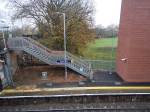
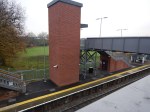
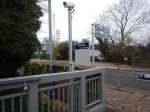
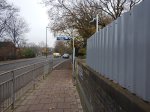
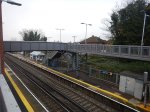
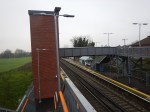
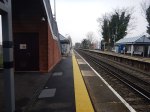
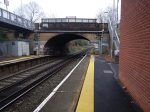
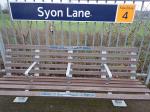
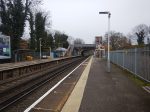
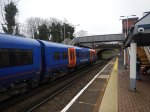
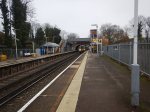
Syon Lane Station – 7th December 2020
The step-free footbridge at Syon Lane station has been completed and open for some time now.
I took these pictures today.
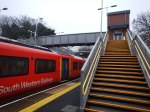
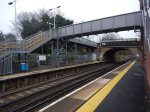
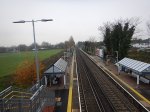
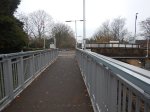
Note.
- The footbridge only has one lift on Platform 2.
- The step-free route to Platform 1 is a level footpath, which leads to the bus stop.
- There are three sets of stairs, two to Platform 2 and one to Platform 1.
- There is also a seat designed for Covid-19.
My first post on this project was Syon Lane Station To Go Step-Free, which was posted on April 30, 2019.
These smaller rail projects must be built in a more timely manner.
Thoughts On Mass Vaccination
We should steal an idea from the French.
In the first wave of the virus, they had to move seriously ill patients all over the country and to Germany, where there was bed space.
So they converted a TGV to a hospital train.
This page on the SNCF web site, is entitled Covid-10: Behind the Scenes Of Our High-Speed Hospital Train.
Could we not create a Vaccination Train using one of the recently withdrawn InterCity 125s?
They are easily shortened to any convenient length and the carriages have a very smooth ride.
The French converted their hospital train in 48 hours, so surely we can do as well!
The trains have the advantage, that they are certified go to over ninety percent of UK main line railway stations.
Network Rail have a track inspection train, called the New Measurement Train, that works a pattern all over the UK. It is based on an InterCity 125 and is full of delicate instruments, designed to keep the railways of the UK safe.

The picture shows Network Rail’s New Measurement Train at Westbury station.
The Vaccination Train or Trains could be based at a convenient central location, where the vaccine would be safely stored.
- Trains would be loaded overnight with the vaccine and other stores and locate early to their site for the day.
- Sites would typically be stations, where a platform existed that was long enough for the train.
- Staff to both process the vaccine and treat patients could either go on the train or be drawn from local medical staff, or be a mixture of the two.
- Specialists handling the vaccine would probably come from the centre, as this would ensure totally correct handling of the vaccine.
- They would set up at a suitable site and handle the patients booked for the day.
- Injections could even take place on the train, in specially fitted out carriages.
I would think, that the train would be self contained and generate all its own electricity.
Why I’ll Delay Having The Coronavirus Vaccine
The vaccines are coming for the covids, but I won’t be having a jab, if one is offered to me, in the first round. I may not be offered one, as I am only 73 and in good health.
But there are many out there, who need the vaccine more than I do, who will be given lower priority than myself.
So I’ll wait!
I am also a diagnosed coeliac on a gluten-free diet and my statistical researches and news reports, show that communities and groups with high levels of undiagnosed coeliacs have suffered badly from the covids.
These communities and groups include.
- Anybody born before 1960, as there was no test for coeliac disease in children before then.
- Ashkenazi Jews. My coeliac genes come from an ancestor in this group.
- Irish
- Caribbean. West Africans have a tendency to coeliac disease and what better way to bring it out, than starve them on slave ships and feed them on only bread and water.
I have also found a research paper, that shows, that India could now experience a coeliac disease epidemic, caused by modern strains of wheat. See Coeliac Disease: Can We Avert The Impending Epidemic In India?
Coeliacs on a gluten-free diet, are an interesting group, in that according to peer-reviewed research by Joe West of Nottingham University, they are 25 % less likely to suffer from cancer.
How can one disease protect you from another?
My coeliac disease was indicated by low-levels of B12, as gluten was damaging my gut and stopping it absorbing vital vitamins. By removing the gluten from my diet, my B12 levels returned to normal.
So it’s the diet that protects my health.
If you think, you are coeliac, don’t be put off by horror stores of multiple endoscopies and the difficulty of sticking to a gluten-free diet. I may have been one of the first individuals tested, by the current genetic method, which is now used by most GPs. A blood sample is sent off for a test and that is generally all that is done in most cases. I heard in 48 hours.
So why is it beneficial in the case of cancer?
It can only be, that with all those vitamins, coeliacs on a gluten-free diet have a very healthy immune system.
So does, this immune system, help protect coeliacs from the covids?
Until proven otherwise, my statistical research, thinks it does!
So I believe, that I can afford to wait.
Has Good Project Management Helped The UK Get The Vaccine Early?
Professor Van-Tam, this morning on BBC Breakfast, praised the planning of the drug companies and the various health bodies in charge of certification of the vaccines.
As someone, who was at the heart of the Project Management Revolution in the 1970s and 1980s, this cheers me.
Looking back, my biggest contribution to project management, was to prove that you didn’t need to use a large mainframe computer and software would work on a small desk-sized machine and ultimately on a personal computer, thus bringing project management to everyone.
Northern Powerhouse Rail – Significant Upgrades Of The East Coast Main Line From Leeds To Newcastle (Via York And Darlington) And Restoration Of The Leamside Line
In this article on Transport for the North, which is entitled Northern Powerhouse Rail Progress As Recommendations Made To Government, one of the recommendations proposed for Northern Powerhouse Rail is significant upgrades to the East Coast Main Line and reopening of the Leamside Line.
Northern Powerhouse Rail’s Objective For The Leeds and Newcastle Route
Wikipedia, other sources and my calculations say this about the trains between Leeds and Newcastle.
- The distance between the two stations is 106 miles
- The current service takes around 85 minutes and has a frequency of three trains per hour (tph)
- This gives an average speed of 75 mph for the fastest journey.
- The proposed service with Northern Powerhouse Rail will take 58 minutes and have a frequency of four tph.
- This gives an average speed of 110 mph for the journey.
This last figure of 110 mph, indicates to me that a faster route will be needed.
These are example average speeds on the East Coast Main Line.
- London Kings Cross and Doncaster – 156 miles – 98 minutes – 95.5 mph
- London Kings Cross and Leeds – 186 miles – 133 minutes – 84 mph
- London Kings Cross and York – 188.5 miles – 140 minutes – 81 mph
- London Kings Cross and Hull – 205.3 miles – 176 minutes – 70 mph
- York and Newcastle – 80 miles – 66 minutes – 73 mph
I also predicted in Thoughts On Digital Signalling On The East Coast Main Line, that with full digital in-cab ERTMS signalling and other improvements, that both London Kings Cross and Leeds and York would be two-hour services, with Hull a two-and-a-half service.
- London Kings Cross and Leeds in two hours would be an average speed of 93 mph.
- London Kings Cross and York in two hours would be an average speed of 94.2 mph.
- London Kings Cross and Hull in two-and-a-half hours would be an average speed of 94.2 mph.
I am fairly certain, that to achieve the required 110 mph average between Leeds and Newcastle to meet Northern Powerhouse Rail’s objective of four tph in under an hour will need, at least the following.
- Full digital in-cab ERTMS signalling
- Completion of the electrification between Leeds and York.
- Ability to run at up to 140 mph in places.
- Significant track upgrades.
It could also eliminate diesel traction on passenger services on the route.
High Speed Two’s Objective For The York and Newcastle Route
At the present time, High Speed Two is not planning to run any direct trains between Leeds and Newcastle, so I’ll look at its proposed service between York and Newcastle instead.
- Current Service – 80 miles – 66 minutes – 73 mph
- High Speed Two – 80 miles – 52 minutes – 92 mph
Note.
- High Speed Two will be running three tph between York and Newcastle.
- Northern Powerhouse Rail have an objective of 58 minutes for Leeds and Newcastle.
High Speed Two and Northern Powerhouse Rail do not not have incompatible ambitions.
Current Direct Leeds And Newcastle Services
These are the current direct Leeds and Newcastle services.
- TransPennine Express – 1 tph – Liverpool Lime Street and Edinburgh
- TransPennine Express – 1 tph – Manchester Airport and Newcastle.
- CrossCountry – 1 tph – Plymouth and Edinburgh
Timings appear to be between 81 and 91 minutes.
What Would A Leeds And Newcastle In Under An Hour Do For London Kings Cross And Edinburgh Timings?
This question has to be asked, as a 58 minute time between Leeds and Newcastle will mean that timings between York and Newcastle must reduce.
York And Newcastle at various average speeds give the following times.
- 73 mph (current average) – 66 minutes
- 80 mph – 60 minutes
- 90 mph – 53 minutes
- 92 mph – 52 minutes (High Speed Two promise)
- 100 mph – 48 minutes
- 110 mph – 44 minutes
If any speed over 90 mph can be averaged between York and Newcastle, this means that with a London and York time of under two hours the following times are possible.
- London Kings Cross and Newcastle in under three hours. – High Speed Two are promising two hours and seventeen minutes.
- London Kings Cross and Edinburgh in under four hours. – High Speed Two are promising three hours and forty minutes.
Consider.
- An InterCity 225 achieved a time of under three-and-a-half hours between London and Edinburgh. in 1991.
- That record journey was at an average speed of 112 mph.
- There must be opportunities for speed improvements North of Newcastle.
- Train and signalling technology is improving.
- High Speed Two is promising three hours and forty minutes between London and Edinburgh.
I can see a fascinating rivalry between trains on High Speed Two and the East Coast Main Line, developing, about who can be faster between London and Edinburgh.
Current Projects Between Leeds And Newcastle
These projects are in planning or under way on the section of the East Coast Main Line between Leeds and Newcastle.
Phase 2 Of The East Coast Main Line Power Supply Upgrade
Phase 1 between London and Doncaster should have been completed, if the covids allowed and now work can be concentrated on Phase 2 to the North of Doncaster.
This page on the Network Rail web site describes the project. These paragraphs are the introduction to Phase 2.
Phase 2 of the project will involve the installation of feeder and substations along the route, capacity upgrades, new 132kv connection at Hambleton junction and upgrades to existing power supply connections.
The second phase of the project is currently in design stages and dates for carrying out the work are still being finalised.
Phase 2 will be delivering upgraded power to the East Coast Mainline railway between Bawtry and Edinburgh.
This project may not improve speeds on the railway, but it will certainly improve reliability and reduce the use of diesel power.
I do wonder, that as the reliability of the East Coast Main Line increases, this will reduce the need for the electric Class 801 trains, to have diesel engines for when the power supply fails.
It is known, that the Class 803 trains, that are under construction for East Coast Trains, will have only a small battery for emergency use.
A sensible weight saving would surely improve the acceleration and deceleration of the trains.
York to Church Fenton Improvement Scheme
This page of the Network Rail web site, describes the project. These paragraphs introduce the project.
Our work between York and Church Fenton is in preparation for the Transpennine Upgrade, which will provide more capacity and faster journeys between Manchester Victoria and York, via Leeds and Huddersfield.
The five mile stretch between Church Fenton and Colton Junction – the major junction where trains from Leeds join the East Coast Main Line towards York – sees over 100 trains each day, with up to one freight or passenger train passing through every five minutes. This is one of the busiest stretches of railway in the North.
The work will include.
- Modernising the signalling.
- Replacing about five miles of track between Holgate (York) and Colton Junction.
- Completing the eleven miles of electrification between York and Church Fenton stations.
I estimate that when the project is completed, there will be only around thirteen miles of track without electrification between Church Fenton station and Neville Hill TMD in Leeds.
The route between Church Fenton and Garforth stations, is shown in this map clipped from High Speed Two.
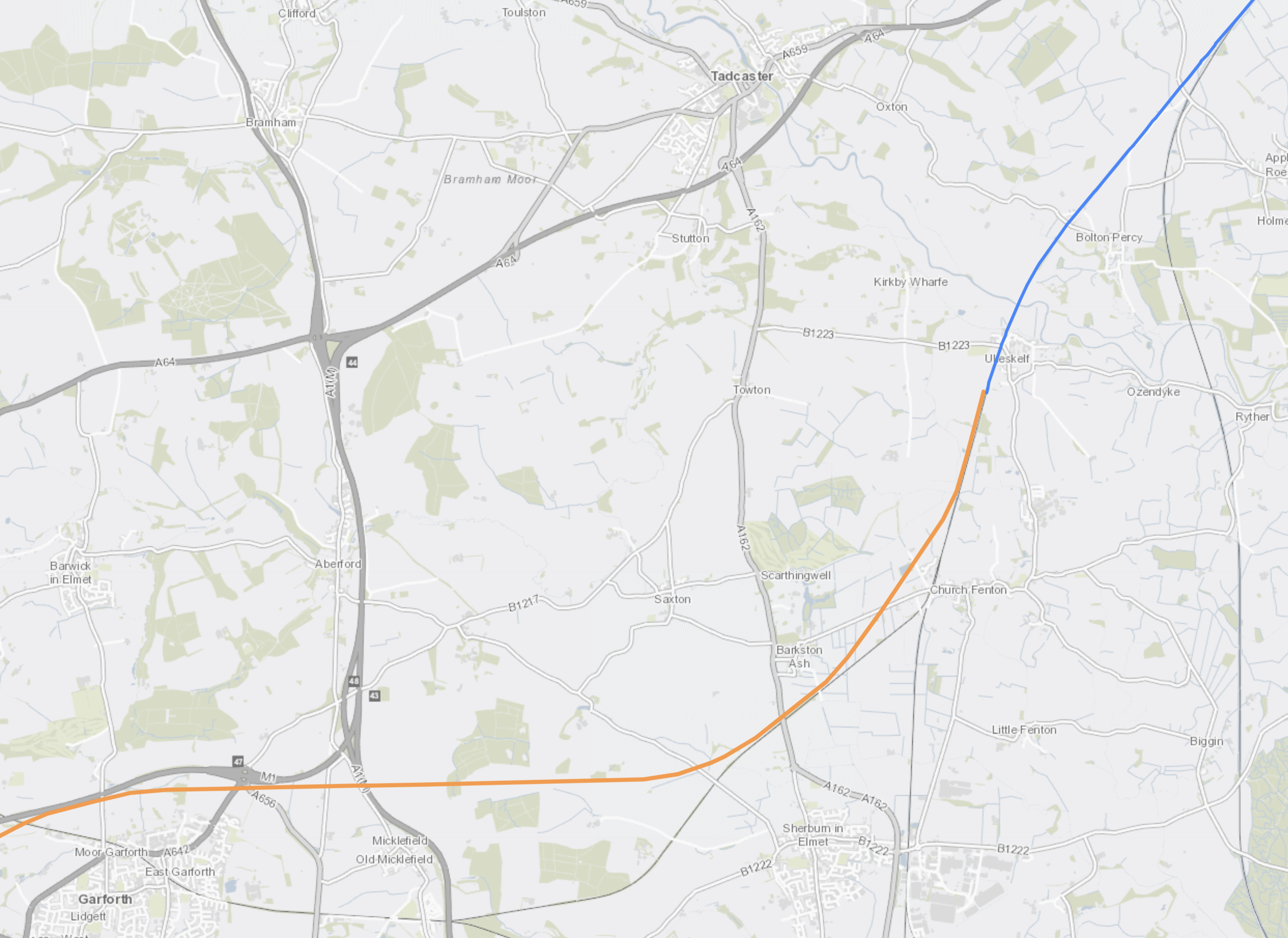
Note.
- York is just off the North-East corner of the map.
- Garforth is in the South-West corner of the map.
- Shown in orange is the new route of High Speed Two from East of Leeds towards York.
- Shown in blue is existing tracks, that will be used to take High Speed Two Trains to York and further North.
- The rail line running North-South on the edge of the map is the Selby Diversion, which opened in 1983 and was built to avoid possible subsidence from the Selby coalfield.
- The pre-Selby Diversion route of the East Coast Main Line goes South from the join of the blue and orange sections of High Speed Two.
- At Church Fenton station, this route splits, with one route going West through Micklefield, East Garforth and Garforth stations to Neville Hill TMD and Leeds.
- The main road going North-South is the A1 (M).
It seems to me, that High Speed Two’s and Northern Powerhouse Rail’s plans in this area, are still being developed.
- There has been no decision on the electrification between Church Fenton and Neville Hill TMD.
- How do Northern Powerhouse Rail trains go between Leeds and Hull?
- How do Northern Powerhouse Rail trains go between Leeds and York?
- How do High Speed Two trains go between Leeds and York?
I suspect, when the full plans are published, it will answer a lot of questions.
Darlington Station Remodelling
A remodelling of Darlington station is under consideration.
I outlined this in £100m Station Revamp Could Double Local Train Services.
This was my conclusion in the related article.
I think that this will happen.
-
- The Tees Valley Line trains will be greatly improved by this project.
- Trains will generally run at up to 140 mph on the East Coast Main Line, under full digital control, like a slower High Speed Two.
- There will be two high speed platforms to the East of the current station, where most if not all of the High Speed Two, LNER and other fast services will stop.
- There could be up to 15 tph on the high speed lines.
With full step-free access between the high speed and the local platforms in the current station, this will be a great improvement.
It will create a major interchange, where high speed trains from High Speed Two, LNER and Northern Powerhouse Rail will do the following.
- Approach at 140 mph or more.
- Perform a controlled stop in the station.
- Drop and pick-up passengers.
- Accelerate back up to linespeed.
The station stop will be highly-automated and monitored by the driver.
One of the objectives would be to save time for all fast trains.
Capacity And Other Problems Between Leeds And Newcastle Listed In Wikipedia
These problems are listed in a section called Capacity Problems in the Wikipedia entry for the East Coast Main Line.
The North Throat Of York Station Including Skelton Bridge Junction
I describe this problem and my solution in Improving The North Throat Of York Station Including Skelton Bridge Junction.
Use Of The Leamside Line
Wikipedia says this about capacity to the South of Newcastle.
South of Newcastle to Northallerton (which is also predominately double track), leading to proposals to reopen the Leamside line to passenger and freight traffic.
I could have included it in the previous section, but as it such a important topic, it probably deserves its own section.
Looking at maps, reopening is more than a a possibility. Especially, as reopening is proposed by Northern Powerhouse Rail and mentioned in the title of this post.
I discussed the Leamside Line in detail in Boris Johnson Backs Station Opening Which Could See Metro Link To County Durham, which I wrote in June this year.
These are some extra thoughts, that update the original post.
Ferryhill Station
I was prompted to write the related post, by something Boris Johnson said at PMQs and it was mainly about Ferryhill station.
In the latest copy of this document on the Government web site, which is entitled Restoring Your Railway: Successful Bids, a new station at Ferryhill has been successful. Another bid in the same area to restore rail services between Consett and Newcastle has also been successful.
This map shows the East Coast Main Line as it goes North South between Durham and Darlington.
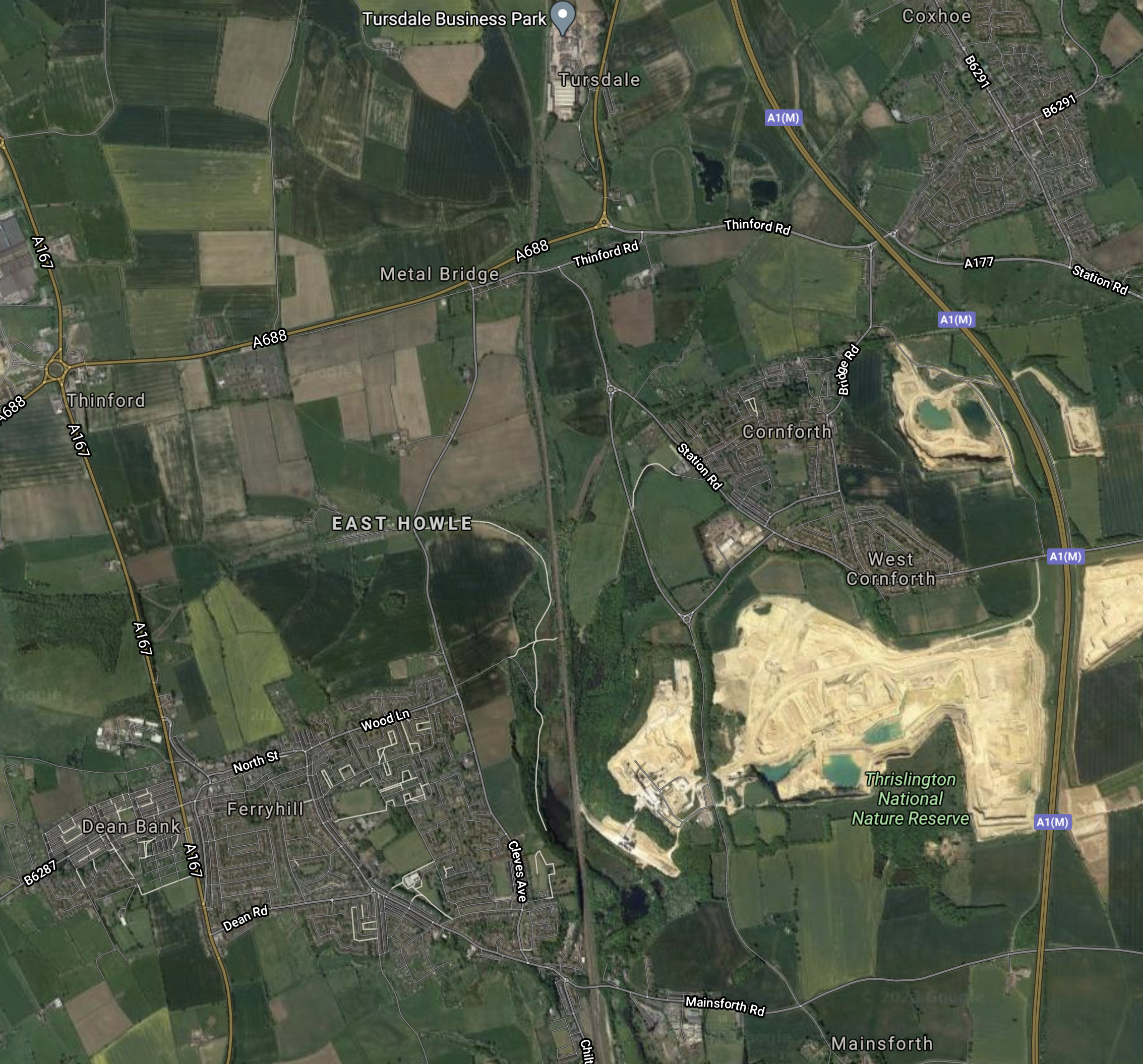
Note.
- Ferryhill is in the South-West of the map opposite the sand-pits in the South-East
- The East Coast Main Line runs North-South between the village an d the sand-pits.
- Follow the railway North and you come to Tursdale, where there is a junction between the East Coast Main Line and the Leamside Line.
- The East Coast Main Line goes North-Westerly towards Durham and Newcastle.
- The Leamside Line goes North to Washington and Newcastle.
- There is also the Stillington Freight Line going South-Easterly to Sedgefield and Stockton from Ferryhill.
Could Ferryhill be a useful interchange to local services connecting to Newcastle, Sunderland and Washington in the North and Hartlepool, Middlesbrough and Stockton in the South?
The Leamside Line As An East Coast Main Line Diversion
I didn’t discuss using the line as a diversion for the East Coast Main Line in my original post, but if the infrastructure is to the required standard, I don’t see why it can’t take diverted traffic, even if it is also used for the Tyne and Wear Metro.
It should be remembered, that to create extra capacity on the East Coast Main Line between Peterborough and Doncaster, the route of the Great Northern and Great Eastern Joint Railway, was upgraded. I first wrote about this line six years ago in Project Managers Having Fun In The East and the route seems to be working well. It is now being augmented by the addition of the £200 million Werrington Dive Under. See Werrington Dive-Under – 8th November 2018, for more details of this project, which will speed up all trains on the East Coast Main Line.
After the undoubted success of the upgrade of the Great Northern and Great Eastern Joint Railway, surely the team responsible for it, should be given the task of devising a similar plan for the Leamside Line, to take pressure off the East Coast Main Line between Newcastle and Northallerton.
Sharing The Leamside Line
The Tyne and Wear Metro also has its eyes on the Leamside Line for an extension.
It should be noted that the Extension To Wearside, uses the Karlsruhe Model to allow the Metro trains to share with freight and other passenger trains.
The new Stadler trains will probably make this even easier, so I wouldn’t be surprised to see a reopened Leamside Line handling a varied assortment of trains of all types.
The Sunderland Example
Sunderland station is a station, which has both Metro and mainline services from the same platforms.
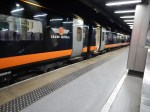
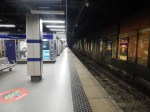
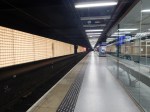
Could a station at Washington be built to similar principles, so that some long distance services to Newcastle used this station?
A Terminal Station On The Leamside Line
Newcastle station may be a Grade One Listed station, but it is built on a curve and would be a nightmare to expand with more platforms.
Sunderland station is already used as a terminal for London trains, so would it be sensible to provide a terminal at somewhere like Washington?
My Final Thought On The Leamside Line
Reopen it!
A Few Random Final Thoughts
This post has got me thinking.
Newcastle Station Capacity
I have seen reports over the years that Newcastle station, is lacking in capacity.
- There could be extra services, as High Speed Two is proposing two tph from London Euston stations and one tph from Birmingham Curzon Street station.
- There may be extra services because of Northern Powerhouse Rail, which has an objective of four tph from Leeds station.
- There may be extra services because of new services to Ashington and Blyth.
- There may be extra services because of new services to Consett.
Note.
- The first two services could use two hundred metre long trains.
- Some platforms can accept 234 metre long Class 800 trains.
- The last two services might use the Metro platforms.
As the station has twelve platforms, I feel with careful operation, that the station will have enough capacity.
This Google Map shows the station.
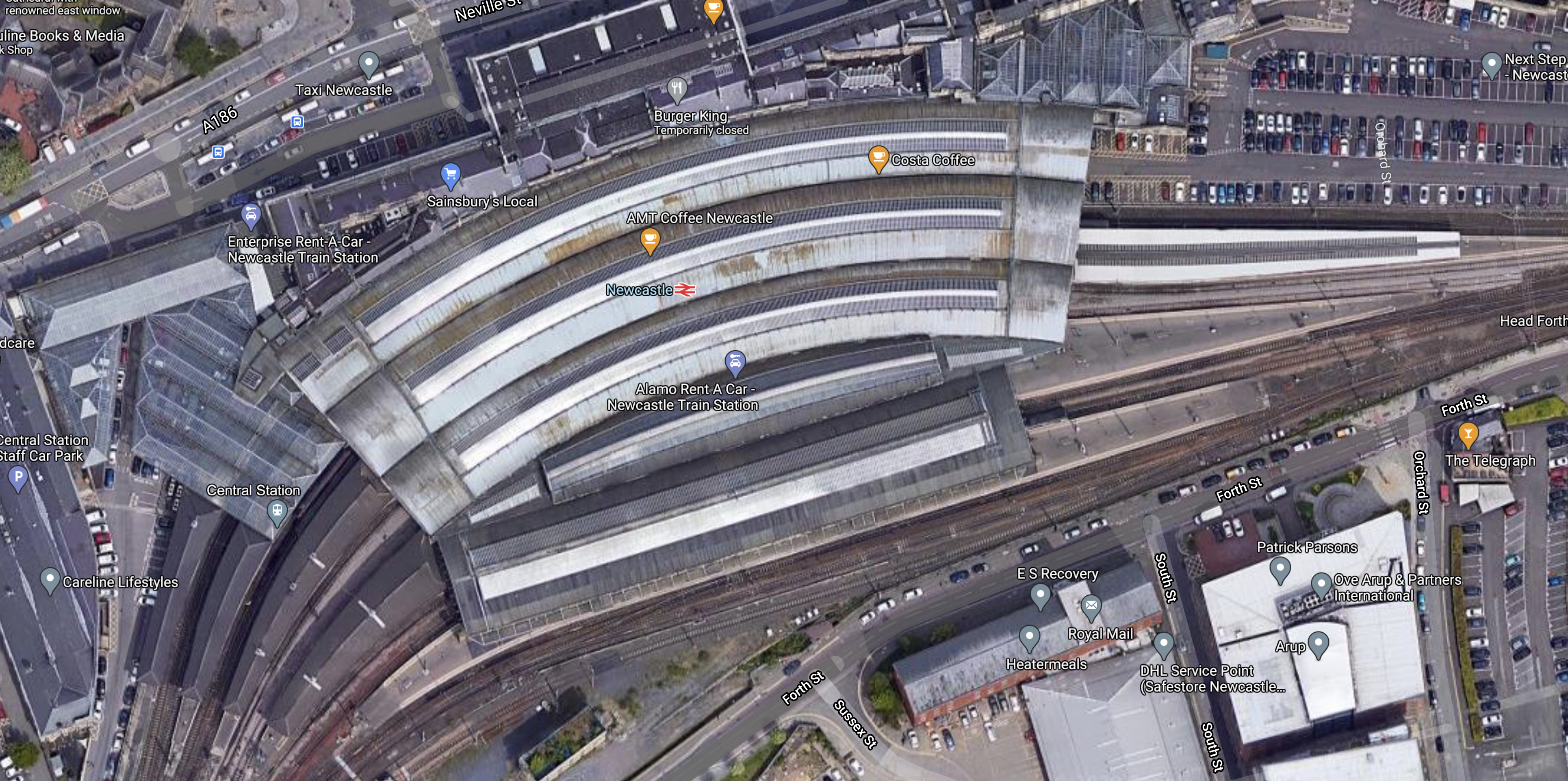
And this second Google Map shows the station, its position with relation to the Tyne and the lines rail routes to and from the station.

Note.
- Trains from the South arrive over the King Edward VII Bridge and enter Newcastle station from the West.
- Trains from England to Scotland go through the station from West to East and then go straight on and turn North for Berwick and Scotland.
- Next to the King Edward VII Bridge is the blue-coloured Queen Elizabeth II Bridge, which takes the Tyne and Wear Metro across the Tyne, where it uses two platforms underneath Newcastle station.
- The next bridge is the High Level Bridge, which connects the East end of the station to the rail network, South of the Tyne. It connects to the Durham Coast Line to Teeside and the Leamside Line.
History has delivered Newcastle a comprehensive track layout through and around Newcastle station.
- Services from the East can be run back-to-back with services from the West.
- The Metro and its two underground platforms removes a lot of traffic from the main station.
- There are seven through platforms, of which at least three are over two hundred metres long.
- There are four West-facing bay platforms and one facing East.
But most intriguingly, it looks like it will be possible for trains to loop through the station from the South, by perhaps arriving over the King Edward VII bridge and leaving over the High Level bridge. Or they could go the other way.
Could this be why reoopening the Leamside Line is important?
LNER’s Extra Paths
The sentence, from an article entitled LNER Seeks 10 More Bi-Modes, in the December 2020 Edition of Modern Railways indicates that more capacity will be available to LNER.
Infrastructure upgrades are due to prompt a timetable recast in May 2022 (delayed from December 2021) from which point LNER will operate 6.5 trains per hour, out of Kings Cross, compared to five today.
I suspect that LNER could use the half path to run a one train per two hour (tp2h) service to Hull.
- Currently, London Kings Cross and Hull takes a few minutes under three hours.
- Currently, Doncaster and Hull takes around 55 minutes.
- I have estimated that once full digital in-cab signalling is operational, that London Kings Cross and Hull could take a few minutes under two-and-a-half hours.
The full path to Hull could be shared with Hull Trains to provide an hourly service between London Kings Cross and Hull.
LNER could do something special with the full extra path.
Consider.
- Some train operating companies have said, that they’ll be looking to attract customers from the budget airlines.
- There could be a need for more capacity between London Kings Cross and all of Edinburgh, Leeds and Newcastle.
- Faster services would be attractive to passengers.
- York and Leeds will be fully electrified or trains could be fitted with batteries to bridge the thirteen mile gap in the electrification.
A limited-stop service between London Kings Cross and Edinburgh via Leeds could be an interesting addition.
- The train would only stop at Leeds and possibly Newcastle.
- One objective would be a time under three-and-a-half hours between London Kings Cross and Edinburgh.
- What time could be achieved between London Kings Cross and Leeds?
It would certainly give High Speed Two a run for its money!
A New Elizabethan
I can remember The Elizabethan, which was a steam-hauled non-stop express between London and Edinburgh between 1953 and 1961.
I have laid out my ideas for a modern express train of the same name in A New Elizabethan.
It could be an interesting concept, to increase capacity between London and Edinburgh.
As I indicated in the previous section, LNER certainly have a path, that could be used to their advantage.
High Speed Two
The East Coast Main Line and High Speed Two have a lot in common.
- The two routes will share tracks between a junction near Ulleskelf station and Newcastle station.
- High Speed Two Classic Compatible trains could be based on Hitachi AT-300 train technology.
- High Speed Two Classic Compatible trains would probably be able to run on the East Coast Main Line between London Kings Cross And Edinburgh.
- Trains from both routes will share platforms at York, Darlington, Durham and Newcastle stations.
- I would hope that the signalling systems on both routes are compatible.
From a project management point of view, this commonality means that in an ideal world the new route of both High Speed Two and Northern Powerhouse Rail, and the upgrades to the East Coast Main Line should be planned together.
I believe there are still details on the design of the joint route, that have not been disclosed, or perhaps not even decided.
- Will between Church Fenton station and Neville Hill depot be electrified?
- How will Northern Powerhouse Rail connect Leeds and Hull stations?
- How will Northern Powerhouse Rail connect Leeds and York stations?
- Will High Speed Two connect Leeds and York stations?
- What will be the operating speed of the joint section of the East Coast Main Line?
- What will be the capacity in trains per hour of the joint section of the East Coast Main Line?
- Will Newcastle station need an extra platform to handle three High Speed Two tph from London Euston
Two projects have been discussed in this post.
- The unlocking of the bottleneck at Skelton Bridge.
- The reopening of the Leamside Line.
I feel that these projects are important and will probably be needed for efficient operation of High Speed Two.
Other early projects could include.
- Upgrading and electrification of the chosen route between Leeds and Hull,
- Installation of the chosen system of in-cab ERTMS digital signalling on the route.
- Electrification between Church Fenton station and Neville Hill depot.
I would deliver these and other joint projects early, so that travellers see a positive benefit from High Speed Two before the main work has even started.
High Speed East Coast
I wonder what is the maximum speed of the Class 80x trains, that are the backbone of services on the East Coast Main Line.
Consider.
- It is known, that with in-cab digital ERTMS signalling, these trains will be capable of 140 mph, but could they go even faster.
- High Speed Two Classic Compatible trains will be capable of 225 mph.
- Will Hitachi’s offering for these trains, be based on the Class 80x trains?
I would think, that it is fairly likely, that the existing Class 80x trains could be updated to an operating speed in the range of 150-160 mph.
In Thoughts On Digital Signalling On The East Coast Main Line, I said this.
The combined affect of both track and signalling improvements is illustrated by this simple calculation.
-
- As Dalton-on-Tees is North of Doncaster, the route between Woolmer Green and Doncaster should be possible to be run at 140 mph
- Woolmer Green and Doncaster stations are 132.1 miles apart.
- Non-stop York and London Kings Cross trains are currently timed at 70 minutes between Doncaster and Woolmer Green stations.
- This is an average speed of 113.2 mph.
If 140 mph could be maintained between Doncaster and Woolmer Green, the section of the journey would take 56.6 minutes, which is a saving of 13.4 minutes.
I can do this calculation for higher speeds.
- 150 mph would take 52.8 minutes
- 160 mph would take 49.5 minutes
- 170 mph would take 46.6 minutes
- 180 mph would take 44 minutes
- 200 mph would take 39.6 minutes
Note.
- Eurostar’s latest Class 374 trains are capable of operating at 200 mph.
- A Class 395 train, which is closely related to the Class 80x trains, has attained a record speed of 157 mph.
There may be worthwhile time savings to be made, on some of the straighter sections of the East Coast Main Line.
Other improvements will also be needed.
- A solution to the Newark crossing problem, which could be solved by the use of in-cab ERTMS digital signalling. See Could ERTMS And ETCS Solve The Newark Crossing Problem?
- Some extra four-tracking of the route.
- Upgrading of Cambridge and Kings Lynn services for faster running. See Call For ETCS On King’s Lynn Route.
Note, that I am assuming, that the Digswell Viaduct section would not be updated, as it would cause too much disruption.
I also believe that by using selective joining and splitting at Edinburgh, Leeds and perhaps Doncaster, Grantham, Newark or York, that a very comprehensive network of direct trains to and from London can be built from Grantham Northwards.
Beverley, Bradford, Cleethorpes, Glasgow, Grimsby, Harrogate, Huddersfield, Hull, Lincoln, Middlesbrough, Nottingham, Perth, Redcar, Sheffield, Skipton, Sunderland and Washington could all be served at an appropriate frequency.
- Some like Bradford, Glasgow, Harrogate, Hull, Lincoln and Middlesbrough would have several trains per day.
- Others might have a much more limited service.
What sort of timings will be possible.
- London Kings Cross and Doncaster could be around an hour.
- London Kings Cross and Leeds could be around one hour and thirty minutes, using the current Doncaster and Leeds time, as against the one hour and twenty-one minutes for High Speed Two.
- London Kings Cross and York could be around one hour and twenty-three minutes, using the current Doncaster and York time, as against the one hour and twenty-four minutes for High Speed Two.
- Timings between York and Newcastle would be the same fifty-two minutes as High Speed Two, as the track will be the limitation for both services.
- High Speed Two’s timing for York and Newcastle is given as fifty-two minutes, with York and Darlington as twenty-five minutes.
- London Kings Cross and Darlington could be around one hour and forty-nine minutes
- London Kings Cross and Newcastle could be around two hours and sixteen minutes.
- London Kings Cross and Edinburgh would be under three-and-a-half hours, as against the proposed three hours and forty-eight minutes for High Speed Two.
High Speed East Coast would be a serious and viable alternative to High Speed Two for the Eastern side of England and Scotland.
Conclusion
This is an important joint project for Northern Powerhouse Rail, High Speed Two and the East Coast Main Line.
Project Management Recommendations
This project divides neatly into several smaller projects..
- Upgrade the power supply on the East Coast Main Line.
- Finish the York to Church Fenton Improvement Scheme
- Remodel Darlington station.
- Install of in-cab ERTMS digital signalling.
- Complete the electrification between Neville Hill TMD and York.
- Solve the problem of Skelton Bridge and its complicated track layout.
- Reopen the Leamside Line.
Most of these projects are independent of each other and all would give early benefits to the East Coast Main Line.
When complete, we’ll see the following timing improvements.
- Leeds and Newcastle will drop from 85 minutes to 56 minutes, with an increase in frequency from three to four tph.
- York and Newcastle will drop from 57-66 minutes to 52 minutes.
- There could be ten minutes savings on Edinburgh services.
Passengers and operators would welcome this group of projects being started early.
 The Anonymous Widower