By Rail Between Derby And Manchester via Sheffield
In his article entitled Connecting The Powerhouses in the June 2017 Edition of Modern Railways, Colin Boocock, says that the one rail route between Derby and Manchester, is to go via Sheffield.
There is one train an hour that takes one hour 38 minutes with a change at Sheffield. The two legs appear to take 33 and 52 minutes respectively with a thirteen minute wait at Sheffield station, which is a well-equipped station.
Change the destination to Manchester Airport and it’s still one train an hour and the journey takes two minutes over two hours.
Incidentally, the fastest trains to Manchester and Manchester Airport via Sheffield seem to be the same trains.
Improving the times on this route will not be easy.
- Stops are minimal at only Chesterfield, Stockport, Manchester Piccadilly and Manchester Airport.
- The service uses the 90 mph Hope Valley Line between Sheffield and Manchester.
- The only electrification is between Stockport and Manchester Airport.
- Electrification from Sheffield to Stockport on the Hope Valley Line will be difficult because of the terrain and the countryside lobby.
- Electrification from Derby to Sheffield will be difficult, as the line goes through a World Heritage Site.
The closure of the electrified Woodhead Line to passenger traffic in 1970, with the benefit of hindsight, now looks to be a crass decision of the highest order. I assume that, the great friend of the railways; Harold Wilson was in charge!
Conclusions
Going between Derby and Manchester by rail is a practical proposition, but it is a route, which would be difficult to improve.
By Rail Between Derby And Manchester via Stoke
In his article entitled Connecting The Powerhouses in the June 2017 Edition of Modern Railways, Colin Boocock, says that the best rail route between Derby and Manchester, is to go via Stoke.
There is one train an hour that takes one hour 44 minutes with a change at Stoke. The two legs appear to take 51 and 42 minutes respectively with an eleven minute wait at Stoke station, which is a well-equipped Virgin station.
Change the destination to Manchester Airport and there is an extra change of train and a journey which is at least half-an-hour longer.
You can actually do Derby to Manchester Airport in a couple of minutes over two hours, if you go via Sheffield.
But it does seem a bit crazy, as Manchester Airport is actually eight miles closer to Derby if you drive.
Stoke is well connected to Manchester with up to four trains per hour to Manchester Piccadilly, some of which take just forty minutes. Manchester Airport takes just over the hour with a change at Crewe or Manchester Piccadilly.
The Crewe to Derby Line links Derby and Stoke via Uttoxeter.
This description of the route comes from this section in Wikipedia.
The route is double track for all of its length except for a three-mile section between Alsager and Crewe, which was singled by British Rail. Whilst the majority of the route is not electrified, the section between Stoke Junction and Crewe is as this is a part of the West Coast Main Line.
This means that it should be possible to run electric trains between Manchester Airport and Stoke. As there would be no chnge at Crewe using best times on Stoke-Crewe and Crewe-Manchester Airport giives a time of about fifty minutes.
The route between Stoke and Derby is not electrified and the operating speed of the line is given as 70 mph.
Surely, as it connects Derby and Nottingham to Stoke and the electrified West Coast Main Line, it should have a faster operating speed. In an ideal world, Derby to Stoke must be a prime candidate for electrification. Some of London Overground’s redundant 100 mph Class 317 trains could probably do Derby to Stoke in perhaps thirty-five minutes.
So with electrification all the way, a time of about one hour twenty -five minutes between Derby and Stoke would be possible in a train, that once graced the Stansted Express. So it’s even got luggage racks.
But Derby to Stoke won’t be electrified for years, so could the current service get passengers to Stoke?
There is a section called Services in the Wikipedia entry for the Crewe-Stoke Line. This is said.
The line sees a basic hourly service in each direction with trains calling at all stations on the route however Peartree which is served by 2 Derby bound trains and 3 Crewe bound trains per weekday.
The majority of services on the route since December 2008 have been provided by Class 153 “Super Sprinter” Diesel Multiple Units however Class 158 “Express Sprinter” and Class 156 “Super Sprinter” units are occasionally used. Overcrowding remains a major issue on the route, particularly in the morning and evening peak and a weekends. Passengers are occasionally left behind.
That is a truly pitiful service, as the main rail route from Derby to Manchester is run by a single-coach Class 153 train at times.
It’s amazing anybody trusts the line enough to use it.
As with the Derwent Valley Line, which I wrote about in Exploring The Derwent Valley Line, the problem is probably down to a shortage of suitable trains.
The line needs a suitable bi-mode train.
- At least four-cars.
- Airport interior with luggage racks.
- Possibly a First Class compartment.
- Ability to do the forty miles between Stoke and Nottingham on diesel.
A Flex version of a Class 317 train would do nicely and could probably do Nottingham to Manchester Airport in two hours. This would mean.
- Four trains could provide an hourly service.
- Eight trains would provide a two trains per hour service.
Would you believe that London Overground will release the eight Class 317/7 trains with the Airport interior next year, when they are replaced by new Class 710 trains?
Conclusion
The more I do little exercises like this, the more I believe that Porterbrook’s Flex concept is not only high-class engineering, but it is a idea, that has arrived at exactly the right time.
The only problem with converting Class 317 trains, is they are owned by Angel Trains! I’m sure that that is not an insurmountable problem!
Ilkeston Station Opens
I went to the new Ilkeston station this morning and took these pictures.

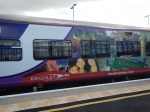
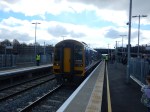

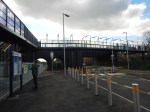
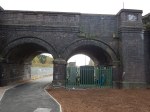
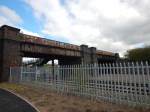

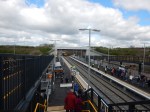
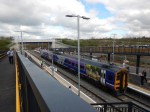
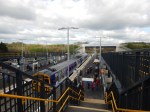
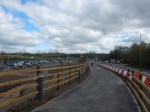
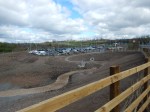
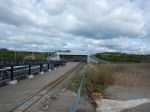
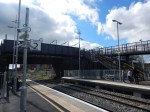
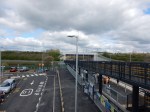
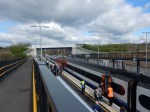
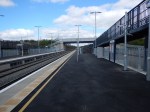
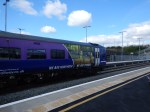
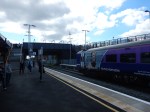
It is not the most sophisticated of stations and it is worth comparing the design with Lea Bridge station.
This picture is from A Look At Lea Bridge Station, which shows the station in detail.

Comparing Ilkeston and Lea Bridge stations, there are similarities and differences.
- Both stations are built adjacent to existing road bridges.
- Both road bridges have some good brickwork and a utilitarian span over the railway.
- Both stations have two platforms on the outside of a double-track main line.
- Both stations don’t have ticket barriers.
- Lea Bridge has lifts and Ilkeston has long ramps for step-free access.
- Lea Bridge is fitted with comprehensive CCTV for Driver Only Operation (DOO). Ilkeston is not!
- Ilkeston has car parking and Lea Bridge has none.
Both stations cost around ten million pounds, with perhaps Lea Bridge slightly more because of the lifts and DOO cameras.
My Overall View
I think that Ilkeston station is a job well-done by the architect to keep costs to a minimum for a well-functioning station, that meets all current and future regulations.
These are more details on various features.
The Station Entrance
One of my gripes with Lea Bridge station, is that when I use that station, I take a bus to it, which drops me just before the road bridge over the station. I then have to walk past the station footbridge, with no possible access and in a great circle to get to the station entrance at the side.
At Ilkeston, those walking to the station by the side of the road that crosses the bridge, just walk over the station footbridge, from which they walk down to their chosen platform.
This is a much better arrangement and will surely suggest to passers-by, that using the train isn’t a hassle.
When I went to Ilkeston, some months ago, I remember that the area between the Town Centre had what developers call potential and perhaps could be turned into a green walking and cycling route.
This Google Map shows the relationship between the town and the station.
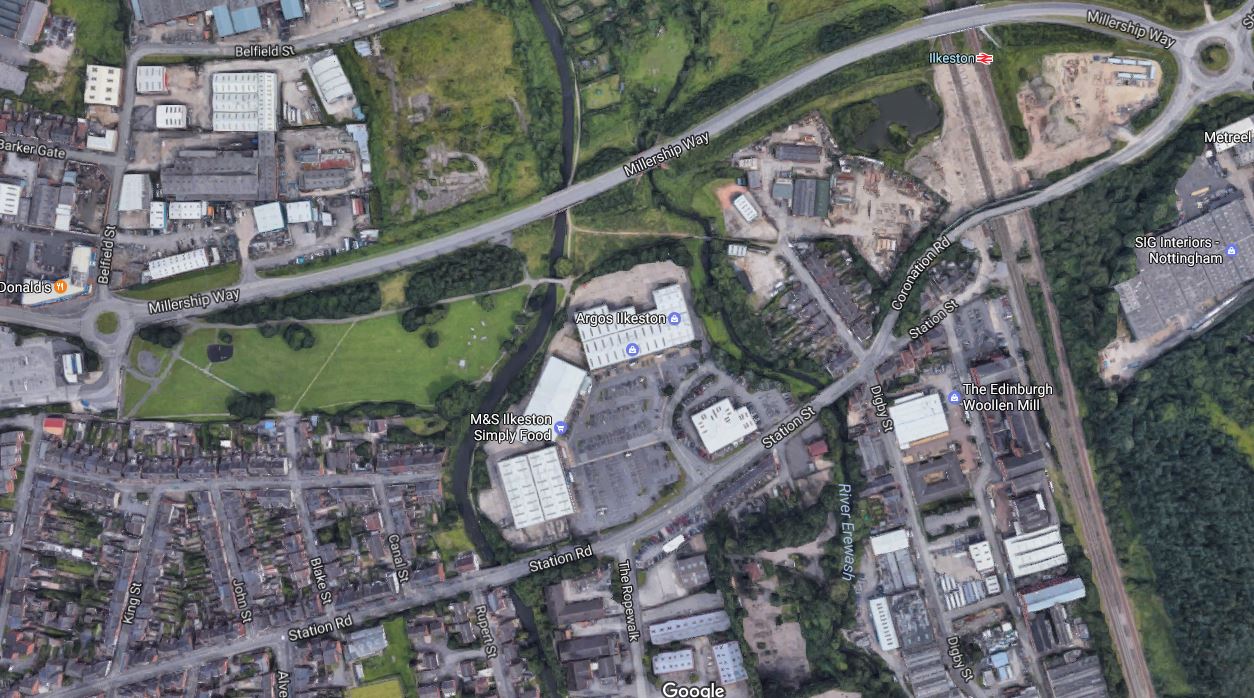
It certainly isn’t as desolate as the Town Centre was on my last visit. There’s even a Marks and Spencer’s Simply Food store in a retail park, just a couple of hundred metres from the station.
I made a mistake in not exploring that way today, as it looked not to be finished.
I shall return!
Car Parking
The car parks are on both sides of the tracks, which is good for the able-bodied passengers, as if space allows they can park where is best for their personal circumstances.
My one worry about the car parking, is that 150 spaces might not be enough.
On the other hand car ownership is low in the Erewash Valley! So perhaps they expect a lot of passengers to walk to the station.
Access To The Platforms
At present, the landscaping is not finished on the Nottingham-bound side (Platformk 2) of the station and I suspect the walking route to the platform will be improved.
But supposing you are a passenger with a touch of arthritis and failing eyesight. Whatever side you park your car, you will have to negotiate both long ramps to cross the tracks, when you catch a train out of Ilkeston or on your return.
But saying that several London Overground stations near me use long ramps and there doesn’t appear to be too many protests.
Lifts would of course be better. But a lot more costly!
Picking Up And Dropping Off Passengers
The drop-off/pick-up point is by the Chesterfield-bound Platform 1, but I suspect that when the station is completed, drivers will be able to do the drop-off/pick-up in the car park by Platform 2.
Taxi Rank
The taxi rank is by the Chesterfield-bound Platform 1, so passengers arriving on Platform 2 will have to cross the tracks on the footbridge.
I did talk to a taxi driver called Paul Kitchener, who is one half of a taxi company called Paul and Jackie Taxi. I was able to find them on Fscebook, so if you have special needs for a taxi and you don’t live in Ilkeston, you could always contact them first.
Shelters and Ticket Machines
As expected a shelter is provided on both platforms, but perhaps more surprisingly, there is a ticket machine on both platforms as well.
Thjs duplication of ticket machines is to be welcomed, as is placing them in an obvious place on the platform.
The Germans make their ticket machines very easy to find, which is not often the policy of some of our train operators.
Two ticket machines by stairs to the footbridge, which pedestrians will use as access to the station, is an idea, that might result in more revenue for the train operator.
Bike And Motor-Cycle Parking
I didn’t see much, although there were a few hoops outside Platform 1
Coffee Kiosks
A guy from London Overground, told me that if you have a coffee kiosk on the platform, it may attract more passengers.
The platforms at Ilkeston might not be quite big enough for a kiosk, but I’m certain the architect has ideas.
Future Proofing
There have been troubles recently, where stations have been built without enough clearance for future electrification.
Without getting out a measure, it appears that the two existing road bridges and the new foot-bridge at Ilkeston, may have enough clearance to satisfy the most nit-picking of inspectors. The bridge that could be dodgy is the rusty road bridge and that would not be the most difficult bridge to replace with a new one.
Perhaps, as it has not been given a coat of paint, the new bridges are being constructed, as I write.
The design of the station, would also allow the following.
- Two fast lines through the station, between Platform 2 and the boundary fence, where there is already an avoiding line.
- The possibility of putting a second face on Platform 2, so that a bay platform or a platform on a fast line could be created.
- The addition of lifts.
I also suspect that the platforms are long enough for a Class 222 train to call.
A Good Local Reaction
One of the staff told me that he reckoned about five hundred people had come to have a look at the new station, which he felt was more than expected.
Several, that I spoke to seemed enthusiastic.
One couple, I spoke to, said forty-eight pounds each was a lot to get see their daughter and her family. But yet again, they hadn’t heard of the Two Together Railcard. They felt thirty-two pounds was a lot more reasonable.
Services
Current services through the station are an hourly train between Leeds and Nottingham via Sheffield and a two-hourly service between Liverpool and Nottingham via Manchester.
This gives an impressive list of destinations from Ilkeston, that includes Barnsley, Chesterfield, Ely (for Cambridge), Leeds, Liverpool, Manchester, Norwich, Nottingham and Sheffield.
But what is missing are connections to Birmingham, Derby, London and Mansfield.
London will be solved in the future, when passengers by their journey hsbits put sufficient pressure on the train operator.
A solution for Derby and Mansfield was proposed in this article in the Nottingham Post which is entitled Hopes HS2 could see ‘Maid Marian Line’ opened to passengers.
There is a freight-only line between Kirkby-in-Ashfield station on the Robin Hood Line and Pye Bridge on the Erewash Valley Line, on which Ilkeston is situated.
The proposal would allow trains to go between Kirkby-in-Ashfield via Pinxton and Selston to Langley Mill and Ilkeston and then on to Toton for HS2.
From there services could go on to Nottingham or Derby and also give access to the Nottingham Express Transit at Toton.
In my view, the ideal service would be Mansfield to Derby via Kirkby-in-Ashfield, Langley Mill, Ilkeston, Toton (when built), Long Eaton and Spondon.
At Derby, there is also up to four trains per hour to Birmingham.
Conclusion
This is a fine station, which has been built at a keen price, which with more services will be a big asset to Ilkeston.
Plans For East Midlands Hub Station For HS2 Are Beginning To Emerge
East Midlands Hub (Toton) station depending on who’s writing the words is beginning to emerge from HS2’s plans. (I shall use Toton HS2 in this post, to emphasise I mean the HS2 station.) Wikipedia says this about the station.
It is intended to be located on the existing railway sidings in Toton, situated between Nottingham and Derby. A connection to the Nottingham tram system and new connections to existing rail services are proposed, to link the station to Nottingham, Derby and Leicester railway stations. The station would be located adjacent to the M1 motorway in Nottinghamshire, close to the border with Derbyshire.
This Google Map shows the location.
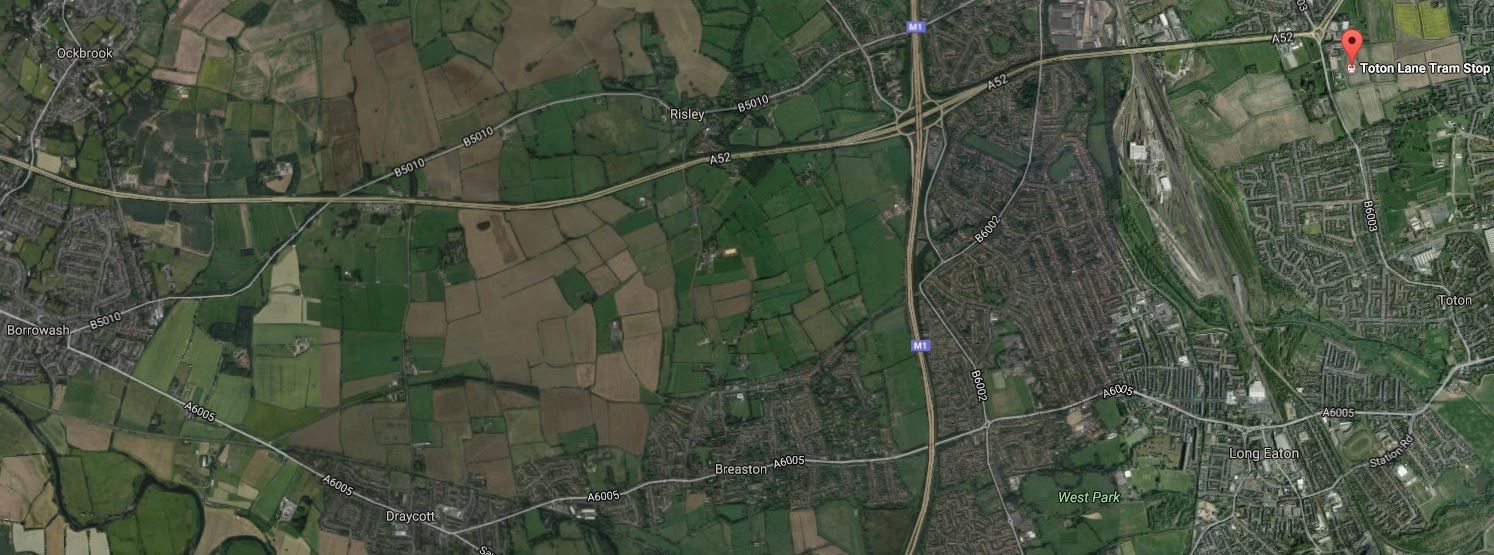
The red arrow marks Toton Lane Tram Stop, which is a Psrk-and-Ride terminus of the Nottingham Express Transit. Between the tram stop and the M1, the Erewash Valley Line passes through in a North-South alignment. South of the East-West A52 is the site of Toton Sidings, which is proposed for the new Toton HS2 station.
I think that HS2 have made a good start in the planning of the connections at this station.
Link To Nottingham Express Transit
Extension of route 1 to serve HS2 at Toton and Derby is a section in the Wikipedia entry for the Nottingham Express Transit.
This is said.
News that a station for the proposed HS2 line (the East Midlands Hub) is likely to be built on the site of Toton sidings, only a short distance from the Toton Lane terminus has fuelled speculation that the line could be extended to the new station. In November 2015 there was a proposal for the tram network to be extended from Toton to Derby. Two routes were later proposed by the D2N2 local enterprise partnership for the route to Derby. The first route would be via the A52 while the second would be via Borrowash and Spondon.
This is not a cheapskate extension to connect Nottingham to HS2, but a proper solution, that creates a high-capacity link running from Nottingham to Derby via the new Toton HS2 station.
- The A52 is the East-West road connecting Derby and Nottingham, which is clearly shown on the Google Map.
- Borrowash is a village at the Western edge of the Google Map, with Spondon, which has a station on the Midland Main Line to Derby, just off the map to the West.
I wouldn’t rule out the possibility of extending the trams from Toton HS2 using tram-trains to go via Long Eaton and Spondon to Derby.
- Tram-trains could use existing track between Toton HS2 and Derby, provided it was electrified.
- Daul-voltage tram-trains would be needed to work on main line and tramway electrification.
- Journey time from Derby to Toton HS2 could be around 20 minutes.
- Network Rail’s plan to move Long Eaton station should make this easier.
- A high frequency service could be run.
- Extra stops could be introduced.
- There are tram-train versions of the Alstom Citadis trams used in Nottingham.
Tram-trains would need 25 KVAC electrification along the route between Toton HS2 and Derby stations. But surely the Midland Main Line electrification will have got to these two stations by 2026 or so!
Nottingham To Derby Via Toton HS2
Nottingham and Derby are two very different cities, but both are successful in their own ways.
Currently, there are about three direct trains per hour (tph) between the two cities.
- Birmingham-Coventry has 7 tph
- Birmingham-Wolverhampton has 9 tph and the Midland Metro.
- Manchester-Leeds has 8 tph
- Leeds-Bradord has 6 tph
Nottingham and Derby get a very raw deal and working on the London Overground/Merseyrail principle of Turn-Up-And-Go , Derby and Nottingham need a four tph connecting service to give passengers something that is acceptable.
As with Birmingham-Woverhampton, a mix of heavy rail, tram and perhaps tram-train might give the two cities the service to Toton HS2 and between themselves, that they need.
Bssed on good practice in London, Birmingham and Liverpool, I would provide the following minimum service.
- 4 tph – Express heavy rail stopping at Beeston, Toton HS2, Long Easton and Spondon.
- 4 tph – Tram-train stopping everywhere between Hucknall and Derby via Beeston, Toton HS2, Long Eaton and Spondon.
- 3 tph – Extra long distance trains calling at both, which would probably also stop at Toton HS2.
It would be a darn site better than what is currently provided.
A Notts/Derbys Crossrail
There might even be a case for a Newark to Burton-on-Trent service via Nottingham, Toton HS2, Long Eaton and Derby. It would be Notts/Derbys version of Crossrail, feeding passengers from all over the area to HS2.
Nottingham City Centre To London In Under 90 Minutes
Currently Nottingham to London takes one hour forty minutes by the fastest trains. But after HS2 opens, it would take 30 minutes from Nottingham to Toton HS and the 52 minutes by HS2 to London.
So even if the classic service to St. Pancras gets faster and more frequent, will passengers opt for the quicker HS2 from Toton HS2?
If say Toton HS2 to London was four tph and run on almost a Turn-Up-And-Go basis, and the connections to Derby and Nottingham were upwards of six tph, the classic trains will have to work hard to maintain market share.
Derby to London wouldn’t show the same improvement as Nottingham to London, but the service could be more frequent and probably well under ninety ,minutes.
The big winners would be the passengers from the Far West of Derby to the Far East of Nottingham.
Using The Erewash Valley Line
Network Rail is improving the Erewash Valley Line. Under Future is a section in the Wikipedia entry for the line.
This is said.
Network Rail as part of a £250 million investment in the regions railways has proposed improvements to the junctions at each end, resignalling throughout, and a new East Midlands Control Centre.
As well as renewing the signalling, three junctions at Trowell, Ironville and Codnor Park will be redesigned and rebuilt. Since the existing Midland Main Line from Derby through the Derwent Valley has a number of tunnels and cuttings which are listed buildings and it is a World Heritage Area, it seems that the Erewash line is ripe for expansion.
It would seem that Network Rail are creating a 125 mph-plus line between East Midlands Parkway and Chesterfield stations. Is this part of a pragmatic philosophy to improve services from London to Chesterfield and Sheffield.
- Derby to Chesterfield along the Derwent Valley will not be electrified because of heritage and engineering reasons.
- Derby to Sheffield via Chesterfield will be served by bi-mode or other independently-powered trains.
- The Erewash Valley Line will be electrified and could even be cleared to allow 140 mph running.
- London to Sheffield trains would go via East Midlands Parkway, Long Eaton, Toton HS2 and Chesterfield.
Even if HS2 isn’t built, Chesterfield and Sheffield would get a vastly improved service to London.
When HS2 is built to Toton HS2, HS2 can take advantage of the Erewash Valley Line to create faster services to the North.
Extending HS2 To Sheffield
If HS2 can get to Toton HS2 in 52 minutes, surely this could mean a London-Sheffield time of well under two hours once the Erewash Valley Line is electrified, even if passengers had to change trains.
But I think we know enough about the dynamics of High Speed Trains, that can run at 225 mph on High Speed Lines to get them to run at 125 or even 140 mph on high standard main lines, like the Midland Main Line.
After HS2 opens to Toton HS2, Chesterfield and Sheffield would get a better service from London in three ways.
- Direct from London on the Midland Main Line.
- By HS2 with a change at Toton HS2 to a classic service.
- By HS2 direct.
All services would use the electrified Erewash Valley Line to get to Chesterfield.
It should be noted that from 2020, London-Norwich will be on a frequency of 3 tph. Surely, the much larger Sheffield needs 4 tph to and from London.
Using The Robin Hood Line
The Robin Hood Line goes between Nottingham in the South to Mansfield Woodhouse and Worksop in the North.
- It is an underdeveloped line with diesel multiple units running to a frequency of 2 tph.
- The Southern end of the line connects to the tracks through Toton HS2, so it wouldn’t be difficult to use the new station as an additional terminus for the Robin Hood Line.
- At the Northern end, there is scope to develop new branches.
I can envisage Nottingham developing the Robin Hood Line into a suburban network feeding passengers to both the City Centre and Toton HS2.
Extending HS2 to North Nottinghamshire And Lincoln
In After The Robin Hood Line Will Nottingham See The Maid Marian Line?, I wrote about an article in the Nottingham Post is entitled Hopes HS2 could see ‘Maid Marian Line’ opened to passengers.
There is a freight only line, that if reopened to passenger traffic would allow trains to connect from Toton HS2, through Ilkeston and Langley Mill to North Nottinghamshire and all the way across Lincolnshire to Lincoln, thus giving a large area direct access to HS2.
Lincoln to London would be under two hours with a change at Toton HS2.
Will All Sorts Of Towns And Cities Get The Benefit Of Direct HS2 Trains?
I have mentioned a lot of stations at various town and cities in this post.
To take Langley Mill station as an example, currently this gets at least one fast train a day to and from St. Pancras.
When the new HS2 trains are running between London, Chesterfield and Sheffield via Toton HS2, will they do the same thing?
If they do, then stations like Ilkeston, Langley Mill and Alfreton could get a direct HS2 service to and from Birmingham and London.
One of the things to note, is that the new trains will be much faster at stopping and getting on their way again, than the current generation of trains, so adding stops between Toton HS and Sheffield. won’t delay the service like it does today.
As I said earlier, I believe there could be a similar connecting service from Toton HS2 to Lincoln, calling at Kirkby-in-Ashfield, Mansfield, Gainsborough, Lincoln and Cleethorpes.
The train to Lincoln would probably be a short five can train and it would couple and uncouple with a similar train at Toton for the express journey South.
Other destinations from Toton HS, might include Doncaster, Doncaster Airport and Hull.
It’s one thing for a short train to trundle round Nottinghamshire and Lincolnshire at 100 mph, but when on HS2, you probably need two trains coupled together to maximise the use of a limited number of train paths.
Connections could also be created using slower trains! But they wouldn’t be so sexy!
A New City At Toton
The Sunday Times has an article this week, which was entitled Next Arrival On The HS2 Line: A Brand New City.
It is an interesting proposition.
- There’s certainly space between Derby and Nottingham.
- Birmingham will be 19 minutes away by HS2.
- London will be within the hour.
- The M1 will pass right through the city.
But above all we need more housing.
Conclusion
The HS2 station at East Midlands Hub or Toton HS2, is a lot more than a HS2 station for Nottingham and Derby.
I would do the following.
- Electrify to Sheffield on the Erewash Valley Line and between Derby and Nottingham.
- Extend the Nottingham Express Transit to Derby via Toton HS2 using tram-train technology.
- Run a 4 tph express local service between Derby and Nottingham via Toton HS2.
- Make sure that HS2 reaches Toton HS2 as soon as possible.
- Build the new city at Toton.
Surely because the Nottingham-Derby area has a lot to gain from HS2, it would probably be very beneficial for HS2’s revenue.
Thoughts On Midland Main Line Electrification
I have been thinking about how the method of electrifying the Midland Main Line might change if the Aventra IPEMU was available.
These are thoughts in no particular order.
The Battery High Speed Train
An Aventra uses a modern version of the same bogies that are used in the Class 222 trains, which are capable of 200 kph. As the Class 387 train, which is a version of the Electrostar, can travel at 110 mph, I wouldn’t rule out that the more modern Aventra could run at 200 kph or 125 mph.
Acceleration on batteries would be the problem, not maintaining a high speed. that had been built up whilst running under the wires.
Also, when the train comes to the end of its northward journey at say Corby, it has to brake. With regenerative braking on the Aventra IPEMU, all of this energy would go back into the batteries.
So does this mean that no charging would need to be provided at say Corby?
I’m not totally sure of the mathematics and physics, but I’m certain that a battery electric train with regenerative braking, would put a significant part of the electricity it would need to accelerate away from a station, into the batteries as it stopped.
This would mean that stops at Wellingborough and Kettering would not stop Corby services from reaching their destination.
St. Pancras to Corby
I estimate that the distance from the end of the electrification at Bedford and Corby station is about thirty five miles.
This would mean that this route out of St.Pancras could be covered by an Aventra IPEMU.
Would this release a Class 222 train for use elsewhere? Or would the Aventra IPEMUs enable East Midlands Trains to offer more capacity or an increased frequency on this service?
St. Pancras to Leicester
I estimate that the distance from the end of the electrification at Bedford and Leicester station is about fifty miles.
This would mean that this route out of St.Pancras to Leicester could be covered by an Aventra IPEMU, especially if it were possible to recharge the train at Leicester, using the sort of short electrification, I wrote about at Rugeley Trent Valley station in Up And Down The Chase Line.
Leicester has problems as a station, as this extract from Wikipedia says.
Train operators using the station include CrossCountry and East Midlands Trains. Due to a 15 mph maximum speed to the south of the station, all passenger trains stop at the station. Up until the winter 2008 timetable, the morning southbound The Master Cutler express from Leeds to London St Pancras was an exception although this now also calls.
Leicester is a bottleneck station as it has only four platforms. All platforms are well utilised, especially platforms two and three which receive freight as well as passenger trains. A freight loop goes to the east of the station alongside the carriage sidings which run adjacent to platform four.
This Google Map of the station shows the platforms and the freight loop.

Leicester Station
It does look that there would be space to expand the station and from this section in Wikipedia, I’m sure Network Rail are working on an upgrade to the area to address all the problems.
It would appear to be stating the obvious to say, that Leicester station must be sorted first before any electrification in the area.
An extra bay platform would probably allow Aventra IPEMUs to run an electrified service to St. Pancras, if East Midlands Trains felt this was needed. Because of the regenerating braking of the train, it might not be necessary to provide a means of charging the trains at Leicester.
Creating A High Speed Route To Chesterfield and Sheffield
A few years ago, much of the Erewash Valley Line was upgraded ready for electrification and high speed running. On the Future of this line, Wikipedia says this.
Network Rail as part of a £250 million investment in the regions railways has proposed improvements to the junctions at each end, resignalling throughout, and a new East Midlands Control Centre.
As well as renewing the signalling, three junctions at Trowell, Ironville and Codnor Park will be redesigned and rebuilt. Since the existing Midland Main Line from Derby through the Derwent Valley has a number of tunnels and cuttings which are listed buildings and it is a World Heritage Area, it seems that the Erewash line is ripe for expansion. As the new signalling is rolled out, train detection is moving away from the traditional Track circuit detection of trains to Axle counting.
So could we see all of the very fastest services from St. Pancras to Chesterfield and Sheffield using this route?
Is the route from Trent Junction in the South to Chesterfield and Sheffield in the North ready for electrification?
Network Rail must ensure that as much of the line is capable of 125 mph running and that all bridges and tunnels have sufficient clearance from London to Sheffield via Chesterfield.
Creeping The Electrification North
From Bedford the electrification would be crept north at a sensible pace, which would be designed to cause minimum disruption to services.
Every mile it went north would increase the reach of the new electric trains, but only after the bottleneck of Leicester was eased to allow high speed running through the station.
The Electric Spine
If the Electric Spine was to be implemented in full from Southampton to Sheffield and Doncaster, then the electrification must be completed North of Bedford.
But as there are a lot of places where the electrification will not be completed elsewhere, will we see a shift towards electro-diesel freight locomotives like the Class 88.
So although freight would take advantage of an electrified Midland Main Line, it may not be as important as many think.
Completing The Electrified Routes to Sheffield, Nottingham and Derby
These three important cities all have extensive local rail networks, that could benefit from an electrified hub, so that Aventra IPEMUs could be used to bring benefits to all the communities served by diesel multiple units and in Sheffield’s case, quite a few Pacers.
So as a minimum, this electrification must be completed.
- East Midlands Parkway to Derby
- East Midlands Parkway to Nottingham
- East Midlands Parkway to Chesterfield and Sheffield via the Erewash Valley Line.
Chesterfield to Derby would probably be filed in the Too Difficult box, but would be an easy run for an Aventra IPEMU.
Note that I would start the electrification from East Midlands Parkway, as this station and the Airport are talked about as destinations for tram-train services.
Obviously to complete the Electric Spine, the following electrification would also need to be done.
- Complete the electrification between Bedford and East Midlands Parkway.
- Sheffield to Doncaster.
But once Sheffield station is electrified none of the many local lines reaching out from the city would need to be electrified, as most services could be run using Aventra IPEMUs. Obviously, if there was a special reason like freight or tram-trains, this wiring would only help the Aventra IPEMUs.
New Elecric Services
Once electrification has been installed up the Erewash Valley Line to Sheffield, lots of important places become within range of Aventra IPEMUs running from St. Pancras.
- Barnsley
- Bradford
- Huddersfield
- Leeds
- Manchester
It would also mean that several existing cross-country services could be run using electric trains.
- Liverpool to Norwich
- Nottingham to Cardiff
- Bristol to Newcastle
Remarkable in some ways as a lot of electrification has been dropped.
Ilkeston Station In A Few Years Time
I am not putting a time-scale on this, as there are so many possibilities in the mix.
I think we can assume that at some point, there will be a new station, that will look substantially like this visualisation.
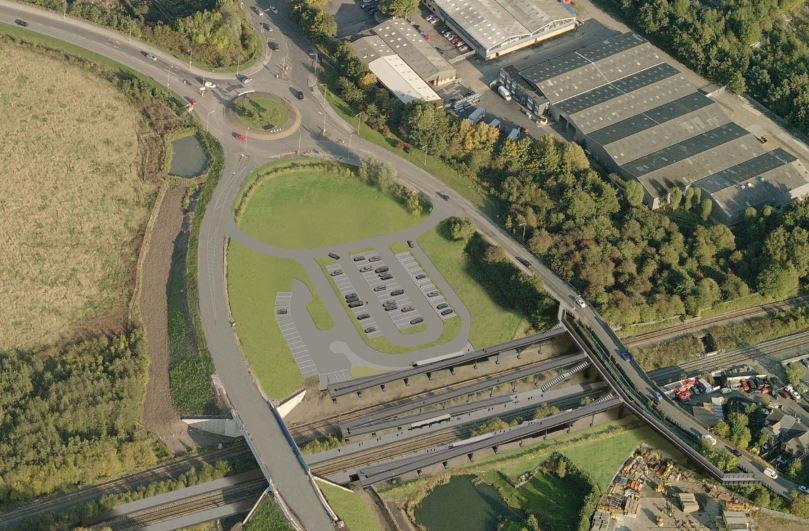
Ilkeston Station Visualisation
The Wikipedia entry for Ilkeston station says that the station is expected to open in August 2016. I think this may be challenging, but there is one factor that makes building a station here easier. It would appear that there will not be any substantial new track, so other than the station, there should not be a great deal of work to do, before trains can provide a service at the station.
There was also a substantial amount of engineering work done to the line through Ilkeston and Langley Mill in Summer 2007.
The Initial Train Service
I had intended to check whether trains between Nottingham and Leeds that call at Langley Mill, actually pass through the Ilkeston station site, when I visited Ilkeston. But as the weather was so bad and I was sitting on the other side of the train, I didn’t see anything.
I shall certainly be going to Nottingham on October 24th, so if I don’t get the information by then, I can take a detour.
If the trains that go through Langley Mill can stop at Ilkeston, the station would not have to wait long before the timetables were adjusted, so that they called. According to Wikipedia, this is the services at Langley Mill.
Northern Rail run an hourly service between Nottingham and Leeds that stops at Langley Mill. This service started from the December 2008 timetable change.
East Midlands Trains operate a few services per day from Langley Mill southbound to Nottingham and beyond (usually Norwich) and northbound to Sheffield (usually continuing to Liverpool Lime Street).
Some East Midlands Trains Mainline services from London St Pancras to Sheffield / Leeds call here, but generally interchange with London services should be made at Nottingham.
Incidentally a typical Nottingham to Leeds service stops at Langley Mill, Alfreton, Chesterfield, Dronfield, Sheffield, Meadowhall, Barnsley and Wakefield Kirkgate.
So will the new station at Ilkeston get a similar service? I think that the service will be at least as good as that to Langley Mill.
After all the timetable change of 2008 was implemented, when it was quite likely that a station would be built at Ilkeston, so I would assume timings make allowance for a possible stop at Ilkeston
In fact of the two stations, if either gets preference for services, it is more likely to be Ilkeston, as unless Langley Mill is upgraded it is a very basic station according to Network Rail.
One of the usual problems, when starting a service is finding the trains to run it. This delayed the opening of the Todmorden Curve by several months.
But in the case of services at Ilkeston, it’s mainly a process adjusting schedules so that passing trains, stop at the station.
Problems On The Midland Main Line Through Derby
It’s an ill wind, that blows nobody any good!
Ilkeston station is actually on the Erewash Valley Line, which runs from Long Eaton to south of Chesterfield joining the Midland Main Line at both ends.
In the Future section for the Erewash Valley Line on Wikipedia, this is said.
Network Rail as part of a £250 million investment in the regions railways has proposed improvements to the junctions at each end, resignalling throughout, and a new East Midlands Control Centre.
As well as renewing the signalling, three junctions at Trowell, Ironville and Codnor Park will be redesigned and rebuilt. Since the existing Midland Main Line from Derby through the Derwent Valley has a number of tunnels and cuttings which are listed buildings and it is a World Heritage Area, it seems that the Erewash line is ripe for expansion.
So it looks like Ilkeston could be on a by-pass of the Midland Main Line.
Electrification
The Midland Main Line is scheduled to be electrified and the services on the line could be provided by Class 800 and Class 801 trains,
I just wonder if Class 800 electro-diesel trains were run through Derby and Class 801 electric trains were run on the Erewash Valley Line, this might get round the problem of the heritage lobby objecting to electrifying through the World Heritage Area of the Derwent Valley, with its Grade 2 Listed tunnels and cuttings.
Derby would still get new trains. It would just be that the faster electrified ones ran up the Erewash Valley Line.
Would these trains call selectively at Long Eaton, Alfreton and Ilkeston?
Services To Derby
Ilkeston is in Derbyshire, so I expect there will be pressure to have a direct service to Derby.
At present, if you want to go between Langley Mill and Derby, you have to change at either Nottingham or Chesterfield.
I suspect that when Ilkeston station opens the route between Ilkeston and Derby will be as tortuous as it is now from Langley Mill.
Look at this Google Map of the area.
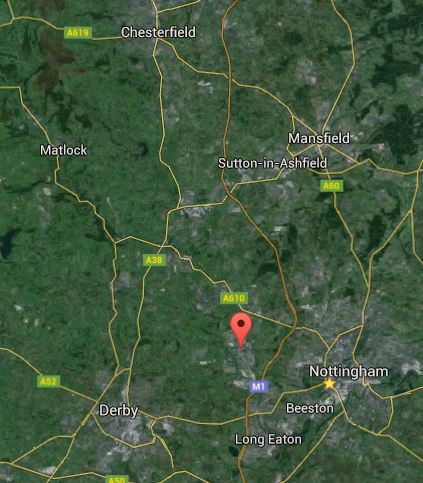
Around Ilkeston
Ilkeston is indicated by the red arrow.
There must be a better way, than changing trains in Nottingham or Chesterfield.
But what?
The Erewash Valley Line goes South to Long Eaton, which has several trains per hour direct to Derby, so this could be the key to getting to Derby.
In a Notes on Current Station section on the Wikipedia entry for Long Eaton station, this is said.
The usable length of the station platforms is shorter than the express trains which stop here, so passengers arriving from London, Derby or Sheffield will usually have to get off from the front four carriages. Elderly passengers or those with pushchairs, heavy luggage or bicycles wishing to alight at Loughborough should take particular care to board the correct portion of the train. Cycles may have to be stored in vestibules away from the cycle lockers depending on the orientation of the train.
It is planned that both platforms will be extended by up to 10 metres by no later than 2012.
It is anticipated that developments along the Erewash line will result in changes for Long Eaton station. A plan drawn up in 2011 recommended a new Derby to Mansfield service via new stations at Breaston & Draycott, Long Eaton West (renamed from Long Eaton), Long Eaton Central, Stapleford & Sandiacre, Ilkeston, Eastwood & Langley Mill (renamed from Langley Mill), Selston & Somercotes and then to Pinxton via new trackbed connecting with the Mansfield line from Nottingham at Kirkby in Ashfield.
It strikes me that work at Long Eaton, the several new stations and improvements north of Langley Mill would enable direct services from Ilkeston to both Derby and Mansfield. A trackbed from Langley Mill to Kirkby in Ashfield is shown on Google Maps.

Langley Mill to Kirkby-in-Ashfield
Alfreton is the station at the top left and Kirkby-in-Ashfield is at the top right. The Erewash Valley Line from Langley Mill, enters at the bottom and splits with one branch going to Alfretonand the other going East to cross the M1 and join the Robin Hood Line south of Kirkby-in-Ashfield.
On an Ordnance Survey map, dated 2009, the railway is shown as a multiple track line, probably serving collieries and open cast coalfields.
It all sounds very feasible too! Especially, as the Erewash Valley is an area of high unemployment, low car ownership and a dependence on public transport.
IPEMU Trains For Ilkeston?
If the Erewash Valley Line is electrified, so that Class 801 can run fast from London to Chesterfield and Sheffield, one option for the local services is to use Aventra IPEMU trains, which will be built in Derby.
IPEMU stands for Independently Powered Electric Multiple Unit. These trains have all the features of the standard four-car electric multiple unit, but they have an on-board battery that is charged when running from the overhead line and gives them a range of about sixty miles, when the wires run out.
So chargeing the battery on the Erewash Valley Line, they could reach Derby, Mansfield and Nottingham.
If Nottingham and Derby weren’t electrified until a later phase, then Class 800 electro-diesel trains could work the routes to London, until full electrification were to be completed.
Watch what happens about IPEMU trains.
Rumours have appeared in Modern Railways that orders for trains powered by the technology are imminent.
Tram-Trains For Ilkeston?
In my view the Nottingham Express Transit will get overcrowded in a few years and the capacity of the system will have to be increased.
One way to increase capacity would be to run tram-trains to destinations away from the city on the heavy rail lines. Once in the city centre they transfer to the tram lines and run as trams to suitable destinations, thus increasing the number of trams running on the various lines.
So tram-trains could say run between Ilkeston and say the Old Market Square or the Queens Medical Centre and then on to one of the terminals.
It all sounds rather fanciful, but go to Karlsruhe or Kassel and see the tram-trains in action.
Ilkeston To HS2
Tram-trains, IPEMU or standard trains from Ilkeston and other places to the North could link quite a few places to the proposed East Midlands Hub station at Toton.
Conclusion
The more I look at the future of Ilkeston station, the more I realise that constructing the new station is just petty cash in the big scheme of things around rail and tram expansion in the East Midlands.
A lot of money has been spent in sorting Nottingham station and expanding the Nottingham Express Transit and a lot more will be spent in improving and electrifying the Midland Main Line and the Erewash Valley Line. The latter will be equipped with several new stations and probably new trains of some sort.
Tram-Trains To East Midlands Airport
I have a Google Alert looking for tram-trains and it found this article on the Nottingham Post entitled Could tram-trains link Nottingham to East Midlands Airport?
It’s a thought!
The article talks about a proposal to create a link between East Midlands Airport and the Midland Main Line, that would allow tram-trains to connect the airport to cities like Nottingham, Derby and Leicester and the proposed HS2 station at Toton.
This is a Google Map of the area between the Airport and the Midland Main Line.
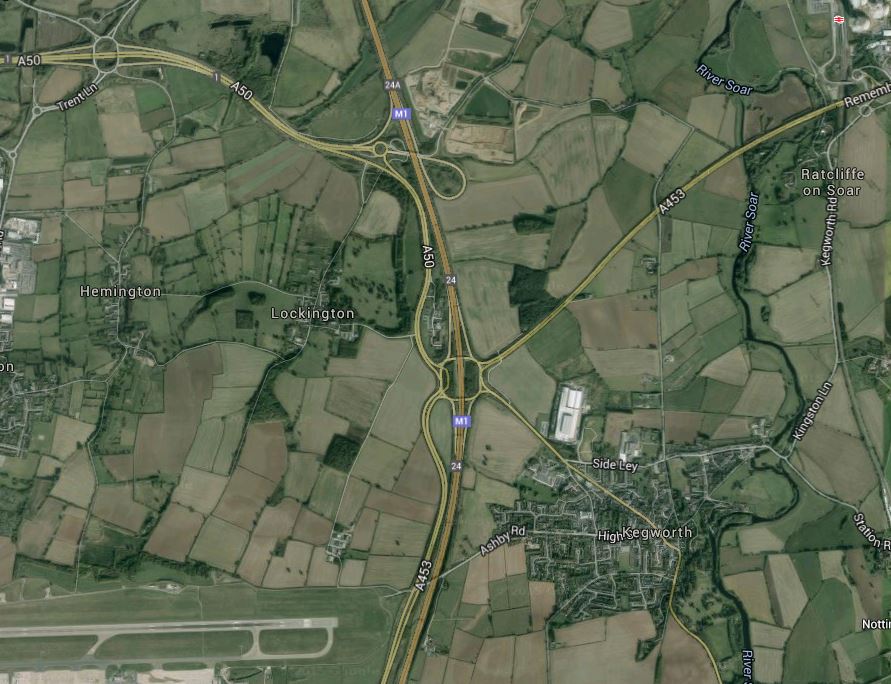
East Midlands Airport, the M1 And The Midland Main Line
East Midlands Parkway station is at the top right of the map.
I think that properly designed this idea could have legs.
A few points.
- Some doubt the South East will ever get a new runway, so improving connections to East Midlands Airport would surely mean more passengers flew from their local airport, rather than a congested Heathrow.
- It would improve links between the major cities and population centres of the East Midlands and they probably need an improved turn-up-and-go four trains per hour service between each.
- There are a number of intermediate stations to the various destinations, which probably need better connections.
- The tram-line would also cross the M1. So would a pick-up/drop-off tram stop ease travel in the area?
- Once the tram-train technology is proven and approved and the Midland Main Line is electrified, I doubt that creating the link would be a difficult planning or engineering project.
I will be very surprised if at some point in the future, some form of light or heavy rail line doesn’t reach East Midlands Airport.
But then I think tram-trains would be best.
Match Twenty-Five – Ipswich 0 – Derby 1
If the biggest crowd at Portman Road for four years had welcomed Charlton, them the cowd for the visit of Derby must be one of the largest at the ground for a televised Championship match, with the exception of an East Anglian Derby.
Sadly though, Ipswich lost after giving away a silly goal and are now down to third place, one point behind Bournemouth and Derby.
Network Rail have decided to play rebuilding the railway again, so despite going to the match in style, I came home in an uncomfortable Class 321 train, with no wi-fi or onboard catering.
I don’t think I’ll be going First again, until normal service is resumed.
It’s funny, but we’ve played two lunchtime matches at home this season and lost both one-nil. The other was against Norwich.
We shouldn’t play any more!
Match Five – Derby 1 – Ipswich 1
Derby is one of the easier grounds to get to from the excellent rail station, in that it’s just about a walk of about ten minutes.
Today though, I went via Oakham to have lunch with a friend, so I had to change trains twice at Peterborough and Leicester. Both changes were the ones that should be avoided, where you have to climb up one set of steps and then down to another platform. There were lifts, but in some places on the rail network, we’re seeing reorganising, that mean the up and downs are minimised. We need more innovative thinking.
Oakham is a small simple station, with a pub and brewery attached, so it’s a good place to meet for business or pleasure.
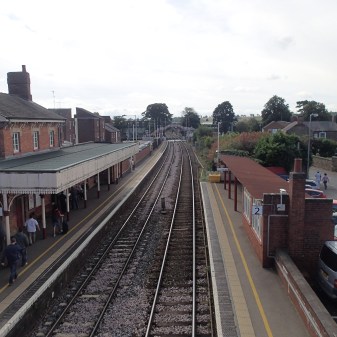
Oakham Station
The picture shows the station from the footbridge. In the distance you can just see the infamous level crossing, that is a pain to people living in the town. The signal box there was used as a model for the Airfix kit.
After an excellent lunch at the Finches near Oakham, I arrived a few minutes late at Derby and thought I’d buy my return ticket before the match.
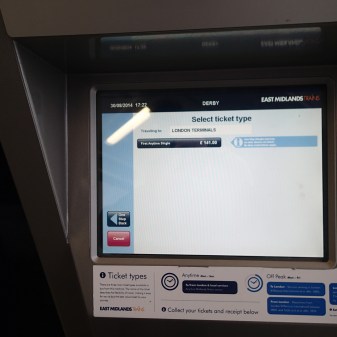
£141 – You Must Be Joking!
This was the only ticket offered by East Midlands Trains. A First Anytime Single at £141.
For Ipswich fans, the match was overshadowed by the news that David McGoldrick is leaving for Leicester. If he had played, the result might have been different as a couple of chances missed in the second half, were possibly the sort, he wouldn’t have missed.
But if Mick McCarthy has got the reported eight million for McGoldrick, then turning round the player’s career and getting half a season out of him for Town, has been good business for all concerned. Let’s hope Mick can resurrect Conor Sammon‘s career in the same way.
The match was enlivened by the debut of Ted Bishop, who after a quiet first half, started to create trouble for Derby in the second half. In dealing with him in one instance, Derby gave away the free kick that led to Ipswich’s equaliser. One shot from distance and another he had when he came on as a substitute at Crawley, show that he might have some serious talent in the future as a scorer from midfield, in the manner of Matt Holland. In some ways, the shot today, was reminiscent of some from Ipswich’s legend Ted Phillips, who I saw score several goals in the early 1960s.
When Bishop tired, he was replaced by Alex Henshall, who showed he could torment the Derby defence.
So two youngsters with a combined age of 38, showed the Ipswich fans, that this season might not be in the dire mould of some of recent memory.
I eventually got home with a ticket that cost £42.90, which was just forty pence more than their on-line price and £2.70 more than the sum of my two tickets to get to Derby. But why don’t East Midlands Trains make their ticket machines easier to use. The trouble was that I tried to buy a ticket via EMTrains, rather than Any Permitted Route on the machine. But as East Midland Trains was the operator I needed for London, surely my choice was logical.
Incidentally, on the train to London, I sat with a Derby fan, who said that for Tuesday night matches he reluctantly had to drive, as there is no late London-bound train after the match.
I don’t find East Midlands Trains good value and avoid them, if I possibly can.
 The Anonymous Widower