Have I Put In Enough Sockets?
We live in an age, where every device we have has a different charger and everything else needs to be connected to the mains.
My phone, broadband and Sky television lines all come in at one end of my living room, whereas the ideal place for the television is at the other end on a bracket that allows the television to either face the room or be visible from the kitchen.

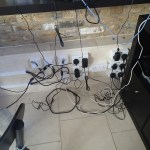
So I decided to put upwards of a dozen plugs at each end of the room and run three HDMI cables along the wall, so that I could feed the signals to the television. I also ran aerial and Ethernet cables along the wall. Note the two plastic trunkings.
Until now, I’ve just used long HDMI cables, which because they have to go into the back of the Sky and BT boxes, they go round the bend a few times and make everything difficult.
The new layout, has also allowed me to move my laptop, so that when I use it, I face directly at the television, which is much more comfortable.
A Safari To The Wilds Of Barking
This morning, I took the bus to Barking Riverside to get a feel of the area, that in a few years time will be served by the Gospel Oak to Barking Line Extension to Barking Riverside.
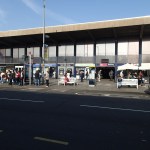
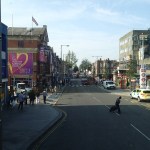
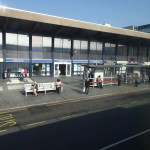
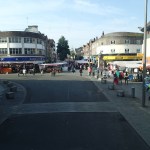

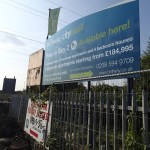
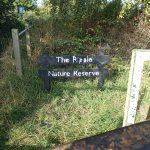
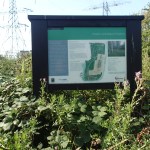
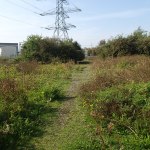

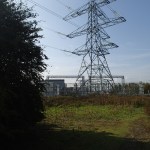








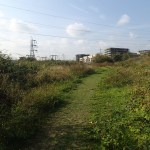
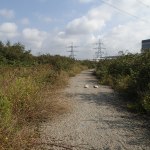


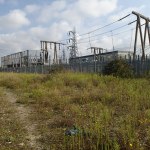
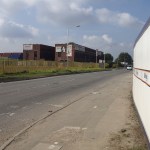
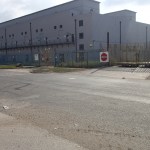
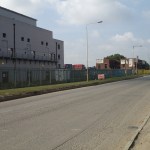
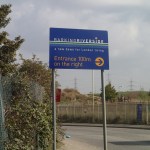


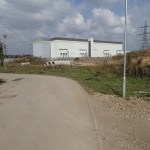
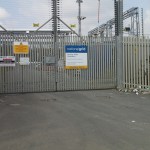
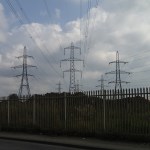
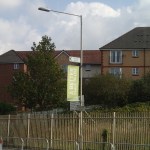
The Ripple Nature Reserve in the area, is just like some of the industrial wastelands, that I remember from my childhood in London after the Second World War.
Are Electric Cars The Way Forward?
They may well be, but judging by the reports from California about Tessla, it would appear that they are a long way away. This report from the BBC talks about the fires the cars are suffering. This is the first two paragraphs.
Battery fires in Tesla Model S electric cars have prompted an investigation by the US government’s auto safety agency.
Fires broke out in two cars in the US after debris hit the undercarriage, said the National Highway Traffic Safety Administration (NHTSA).
But just as with the Boeing Dreamliner, the batteries don’t seem to be up to the job.
As an Electrical Engineer, I believe that electric cars will not be a feasible proposition, until batteries can store several times as much energy safely as they do today.
Electric buses, trams and possibly some trucks are more likely to be commonplace, as their pattern of frequent stops and heavier payloads, may mean that some form of economic electric storage is available soon. Even with hybrid buses, one of the major running costs is the need to replace the batteries every few years or so.
I will be surprised, if electric cards, are little more than what they have been for the last hundred years; an interesting curiosity.
More Hot Air For Bunhill
During Open House in September, I visited the Bunhill Energy Centre, which provides heat and power for homes in Islington.
There are now reports like this one on ITV, that they will be taking in the waste heat from the Underground and an electricity sub-station. I would assume the latter is the massive one between the Regent’s Canal and City Road, that provides power to the City of London.
Perhaps they should build a centre like Bunhill close to the Houses of Parliament to heat homes n Westminster!
Stories About Wind Power
I don’t like large onshore wind turbines, as I believe they destroy wonderful views and the economics are not very sound.
On the other hand, when they are offshore, they are less intrusive and the economics might be better. But even so the arrays have to be properly designed and sited.
The real place for wind turbines is to provide distributed power to difficult places, where a small amount of electricity is required and running a cable would be expensive.
I’ve not been happy on the effect of turbines on birds ever since, I read several articles about how in the United States, wind farms kill eagles and other large birds. Yesterday The Times published a similar article about their effect on bats.
I’m always sceptical about the reasons for publishing these articles, as I’m pretty certain, that they are very much the sort of story that pleases Middle England, who feel the turbines will make their house drop in value.
The Times also published a story about a wind turbine on the Welsh Assembly, which is also reported on the BBC. This is the first paragraph.
A wind turbine that cost the Welsh government £48,000 to buy has been generating an average of just £5 worth of electricity per month.
It all goes to show that wind turbines may not be as economic, as their proponents say they will be.
One thing I’d like to see is an open database on the Internet of all turbines, with their detailed cost, subsidy and revenue, so anybody who wanted to, could check the efficiency and economics of any turbine.
Only if that information wee to be freely available, would we be able to know if they were money well spent.
Handyman On A Bike
I saw this bike chained to a lamp-post by Haggerston station.
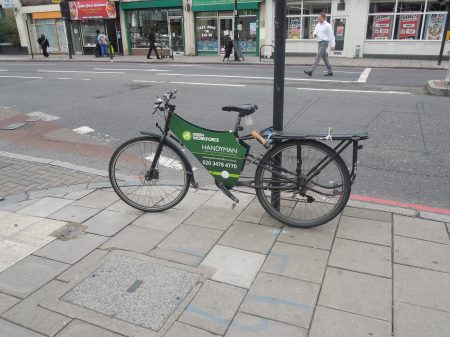
Handyman On A Bike
It’s an idea of which I very much approve. I wish Green Workforce the best of luck.
Lib Dems Get It Right On Cars
There has generally been negative reaction to the Lib Dems proposal to ban diesel and petrol cars by 2040. The story was reported here in the Telegraph. This is the first paragraph.
Nick Clegg’s party has unveiled proposals to only allow ultra-low carbon vehicles on UK roads by 2040.
The controversial measures would mean millions of petrol and diesel cars being forbidden.
Only electric vehicles and ultra-efficient hybrid cars would be allowed on UK roads under the Lib Dem plans.
However, petrol and diesel vehicles would still be allowed for freight purposes.
I don’t think they will or should be banned, but by 2040, most vehicles will not use fossil fuel.
I’m not speaking here as a wishful thinking non-driver, but as an engineer, who follows innovations and economics strongly.
Various developments will gradually eat away at the market for conventional vehicles and new ultra low emission vehicles will in the next couple of decades be cheaper to buy and run than anything else.
One thing that will help the transition is in cities like London, where there is a large market to replace the black cabs. This article in the Guardian describes Nissan’s first attempt. Seeing and using viable and well-liked electric taxis will convince people, that electric cars can work.
However any party that wants to bring in a ban on petrol and diesel cars would be committing political suicide.
All politicians need to do, is provide the infrastructure that ultra-low emission vehicles will need.
Should We have Built It In The First Place?
One of the dramatic news stories on BBC television this morning, is the blowing up of the tower of Inverkip power station chimney in Scotland. Out of curiosity, I looked up the power station on Wikipedia and found an article, which showed how building the station seems to have been an enormous waste of money. Here’s what they say on the use of the power station.
It was to be Scotland’s first oil-fired power station. However, the soaring price of oil as a result of the 1973 oil crisis meant that by the time construction was completed generation was uneconomical. It was never utilised commercially, with 1200 MW kept in reserve and the remaining capacity being used to satisfy peak demand. It was only used at peak capacity during the miners’ strike of 1984-85, when low coal supplies prompted operation. Generation ceased in January 1988 and although the plant was retained as a strategic reserve, it was never used as such. The plant was finally mothballed in the late 1990s, but was kept fully operational until 2006 when it was decommissioned.
No wonder our electricity bills are so expensive, with gold-plated elephants like this to support.
I suppose, at least a lot of people got a cheap thrill when they saw the chimney blown up.
London’s Hydrogen Buses
London has a few hydrogen-powered buses that run on route RV1 from Tower Gateway to Covent Garden via the South Bank of the Thanes.

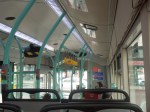


I used this route to get back to North of the Thames, so I could get home, after visiting the Tate Modern.
There’s more about the technology between these hydrogen buses here. The buses would appear to be powered by fuel cells from Canadian company, Ballard, running on a Volvo chassis with a body by Wrightbus from Northern Ireland. There’s a lot of independent hybrid vigour there to go with the conservative bit from Volvo.
Should We Have Unit Pricing For Energy?
Go back thirty years or more and you paid for what you used with energy. I’m not sure if you paid a standing charge, akin to a telephone line rental, but you knew exactly where you stood. If you used more electricity you paid more money.
Now it is not as simple and to be cynical, I think the energy companies like it that way, as customers find it hard to compare prices.
So when EDF suggests going back to simple pricing, as is stated in this report, do I think it is a good thing?
Of course I do!
But there is something we need even more urgently and that is a smart meter, so we can see how much electricity and gas we are using.
I haven’t seen any reports yet, but a smart meter connected to a smart phone and then linked back to smart heating controls, must save a lot of money. Just think of this simple case. Do you switch your central heating on and off, at the most optimum times. Without information you’re just fishing in the dark.
But I doubt I’ll ever see unit pricing and smart metering, as the energy companies will do all they can to delay its implementation.
 The Anonymous Widower