Progress In Front Of Moorgate Station – 7th August 2023
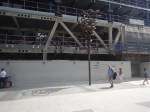
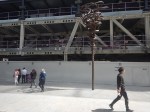
The pedestrian area in front of the Elizabeth Line entrance at Moorgate station is progressing and I took these pictures this morning.
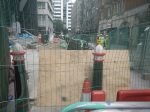
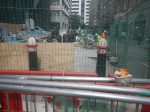
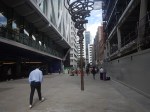
Note.
- The tree-like sculpture is Manifold (Major Third) 5:4, is by Conrad Shawcross, which I showed being installed in An Art Installation In Front Of Moorgate Station.
- The pedestrian area will be protected by the City of London’s distinctive bollards.
- Only two of the bollards have been painted in their final colours.
- In No Budget; Employ Students, I talked about how the City of London has form in using art students to do decorative paintwork.
The UK is certainly going for appropriately-sized pedestrian areas in front of stations to allow travellers to get easily clear at busy times.
Not Getting Wet At Paddington Station
On my trip to High Street Kensington station today, I changed trains at Paddington both ways between the Elizabeth and Central Lines.
Going, I took the route I did in The Lizzie Line And Circle/District Line Interchange At Paddington – 1st July 2022.
Coming back, I walked through the station in the dry, despite it chucking it down outside.
At least outside the Elizabeth Line was under a roof and dry.
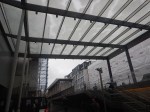
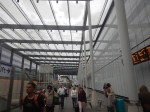
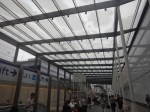
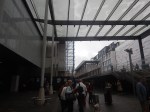
Despite the rain, the clouds on the glass roof are visible.
Are The Elizabeth Line Trains Ready To Be Lengthened?
When Transport for London updated the North and East London Lines of the London Overground in the early years of this century, they felt that four-car Class 378 trains would have enough capacity for the lines. But the lines proved more popular than, they had expected and the trains were very overcrowded. So it was decided to lengthen the trains to the five cars they are today.
This wasn’t as easy as it seems, as platforms at several stations had to be lengthened, which was disruptive and expensive.
One day last week, I was in Farringdon station and took these pictures of the platform edge doors at the back end of a Class 345 train.
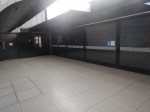
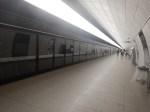
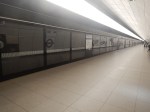
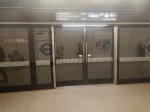
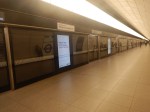
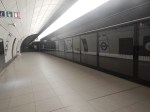
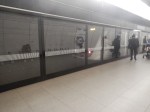
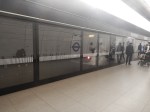
Note how, that when a train is in the station, it doesn’t reach to the end.
But this is not always the case, as this picture from Paddington station shows.
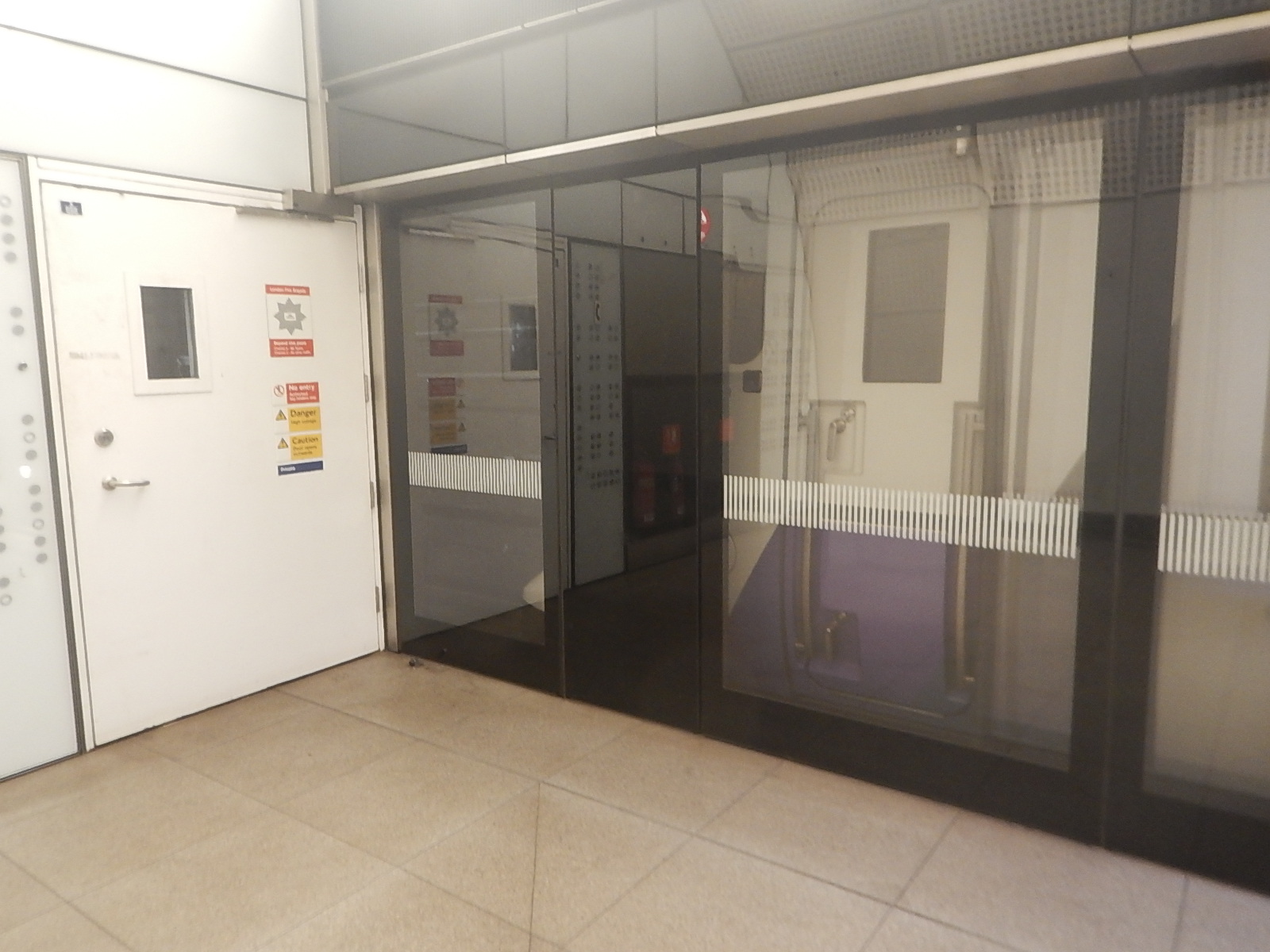
Does this mean that some underground Elizabeth Line platforms are longer than others?
In Bombardier’s Plug-and-Play Train, I discuss the plug-and-play design of Aventras.
- This plug-and-play design allows trains to be lengthened or shortened by adding or removing carriages.
- Class 345 trains are actually two half-trains, with a trailer car in between them.
So is this why Class 345 trains have run services as both seven-car and nine-car trains?
The former have three-car half-trains and the latter have four-car half-trains, with an extra MS car.
Talk Of Eleven-Car Trains
If you search the Internet, you’ll find forums and web pages speculating about. whether the trains will be lengthened to ten-cars or even eleven-cars.
Consider.
- The current trains are 204.73 metres long.
- Extra intermediate cars are all 22.5 metres long.
- The trains also are probably fitted with selective door opening or can be as most modern trains have it.
This would mean, that a ten-car train would be 227.23 metres long and an eleven-car train will be 249.73 metres.
The eleven-car figure is just 27 centimetres short of 250 metres.
I wouldn’t me surprised if the maximum train length was given to Bombardier as 250 metres.
I certainly feel, that if it should be decided to lengthen the trains by adding another carriage or two, that this will not be a problem.
The Elizabeth Line’s Two Problems
These posts talk about the two problems.
In TfL Needs More Elizabeth Line Trains Because Of HS2 Delays At Euston, I talked about what happens, if High Speed Two doesn’t link initially to Euston.
In Elizabeth Line: Commuters Say Service ‘Not What Was Promised’, I talked about problems of overcrowding at the Western end of the line.
The solutions to both problems are either more trains or adding more carriages to existing trains.
In this article on Ian Visits, which has the same title as the first post, Ian says this about ordering more trains.
Although HS2 isn’t expected to open until some point between 2029-33, TfL is warning that it will need to place the orders for the new trains soon, as the cost of doing so later will be significantly more expensive. That’s because the factory lines to build Elizabeth line trains at Alstom’s factory in Derbyshire are still in place, but will be demobilised soon. If the trains aren’t ordered before that happens, then the cost of reactivating the factory lines has to be included in the bill.
I suspect, it probably applies to an order for extra carriages as well.
Problems For Alstom
But will a substantial order for more Class 345 trains or carriages cause problems for Alstom at Derby?
This extract from the Wikipedia entry for High Speed Two rolling stock, describes how the Hitachi-Alstom joint venture will build the Classic-Compatible trains for High Speed Two.
Vehicle body assembly and initial fitting out of the trains will take place at the Hitachi Newton Aycliffe factory, the bogies will be manufactured at the Alstom factory in Crewe, and final assembly and fit-out, including the interiors, electronics and bogies, will take place at Alstom’s factory in Derby.
If more Class 345 trains are to be built at Derby, does it mean a rethink by the joint venture?
In Battery EMUs Envisaged In Southeastern Fleet Procurement, I talked about how Southeastern were looking for new trains. Given that Aventras from Alstom could be in the frame for these new trrains for Southeastern, does that give Alstom more complications?
London North Eastern Railway Runs Trial Train To Liverpool Street
The title of this post, is the same as that of this article on Rail Advent.
These two paragraphs, describe why this was done.
In an effort to mitigate the effect on passengers during disruption to services, London North Eastern Railway (LNER) ran one of its Azuma trains from Finsbury Park to London Liverpool Street during the early hours of this morning, Friday, 14th July.
The trial run took place to determine the long-term feasibility of diverting services during periods of planned disruption or when significant engineering works were taking place.
There doesn’t seem to have been any problems.
- The route in from Finsbury Park station went through Canonbury, Dalston Kingsland, Hackney Central, Homerton, Hackney Wick, Stratford and Bethnal Green stations, which was a distance of 9.6 miles.
- The route out to Finsbury Park station went through Bethnal Green, Cambridge Heath, London Fields, Dalston Kingsland and Canonbury, what was a distance of 5.8 miles.
Note.
- Two different routes were checked.
- The Class 800 train had five cars.
- Platform 4 at Liverpool Street station was used, which is normally used by London Overground and Cambridge services.
As this comes so soon after the test run to Cleethorpes, that I wrote about in Azuma Test Train Takes To The Tracks As LNER Trials Possible New Route, I wonder if Network Rail and the train operating companies are planning for some worst case scenario, where the two or more of the West Coast Main Line, Midland Main Lone and East Coast Main Line are blocked.
LNER and Network Rail have shown the following.
- Azumas can use Cleethorpes station.
- Azumas can use Liverpool Street station.
We also know that Cleethorpes has a direct TransPennine train service across the North of England to Doncaster, Sheffield, Manchester and Liverpool.
So if say Euston has to be shut for perhaps fourteen days during the construction of High Speed Two, a service between Liverpool Street and Cleethorpes via Colchester, Ipswich, Cambridge, Peterborough and Lincoln could be used to get some passengers to and from the North.
The other big problem is the removal of the problems of the Newark Crossing, which if it results in a long blockade of the East Coast Main Line, might need services to go into an alternative London terminal.
The Powerhouse In The East
Consider.
- The importance of Cambridge to the economy of the UK is growing fast.
- The city suffers from a shortage of commercial premises, housing and staff at all levels.
- I have just looked at the non-passenger traffic on the West Anglia Main Line for all of yesterday and there were just six freight trains through Bishop’s Stortford.
I wonder, if it would be possible to run a Liverpool Street and Cleethorpes service via Cambridge, Ely, Peterborough, Spalding, Sleaford, Lincoln, Market Rasen, Barnetby and Grimsby Town?
- The service avoids the East Coast Main Line, except through Peterborough, where it would use the separate Werrington lines.
- Liverpool Street is in the heart of one of the world’s major financial centres.
- Liverpool Street is on the Elizabeth Line.
- The service could call at Stansted Airport, but a reverse would be needed.
- Peterborough is sometimes promoted in Cambridge as a city, that could be developed, to provide support for Cambridge.
- A reverse would be needed at Lincoln.
- Lincoln is developing as a university city with character.
- Grimsby and Cleethorpes are close to the fast expanding Humberside renewable energy and hydrogen cluster.
The service could be paired with a Liverpool Street and Norwich service, via Ely, Thetford, Attleborough and Wymondham.
The services could alternate every half hour or perhaps leave London as a pair and split and join at Cambridge.
Platform Availability At Kings Cross And Liverpool Street
Consider.
- Digital signalling on the East Coast Main Line will increase the number of possible trains between London and the North.
- LNER have said they want to increase services to the North and have identified a possible service to Cleethorpes.
- Grand Central would like to increase services to Bradford.
- Lumo have started services to Newcastle and Edinburgh from Kings Cross.
- The Elizabeth Line now runs less services into Liverpool Street station.
- The Elizabeth Line connects to Liverpool Street, but doesn’t connect to King’s Cross.
- Liverpool Street is to undergo a major refurbishment, which should increase the overall passenger capacity of the station.
Would it be sensible to move a small number of services from King’s Cross to Liverpool Street?
Surely, the logical service to move to Liverpool Street would be the new Cleethorpes service.
- It would route via Cambridge, Cambridge North, Ely, Peterborough, Spalding, Sleaford, Lincoln, Market Rasen, Barnetby and Grimsby Town.
- It would use the Werrington Lines through Peterborough.
- It would not need a path on the East Coast Main Line.
- The service would provide a much needed direct link between Cambridge and Lincoln via Peterborough.
- The service could also be hourly or two-hourly.
I also believe that a Liverpool Street and Cleethorpes service could be run by a battery-electric Azuma.
- The route is electrified between Liverpool Street and Ely and through Peterborough.
- Ely and Peterborough is 30 miles.
- Peterborough and Lincoln is 56.9 miles.
- Lincoln and Cleethorpes is 47.2 miles.
- There would need to be a charging station or a few miles of electrification at Cleethorpes.
- There may be 134.1 miles of unelectrified track, but there can be a Splash and Dash at Peterborough.
A Stadler Akku would be able to handle this route, so I suspect that a similar-sized battery-electric Azuma should also be able to handle the route.
Riding The SL8 Bus Between Shepherd’s Bush Market And Uxbridge Stations – 16th July 2023
This draft map from TfL illustrates the concept of the Superloop.
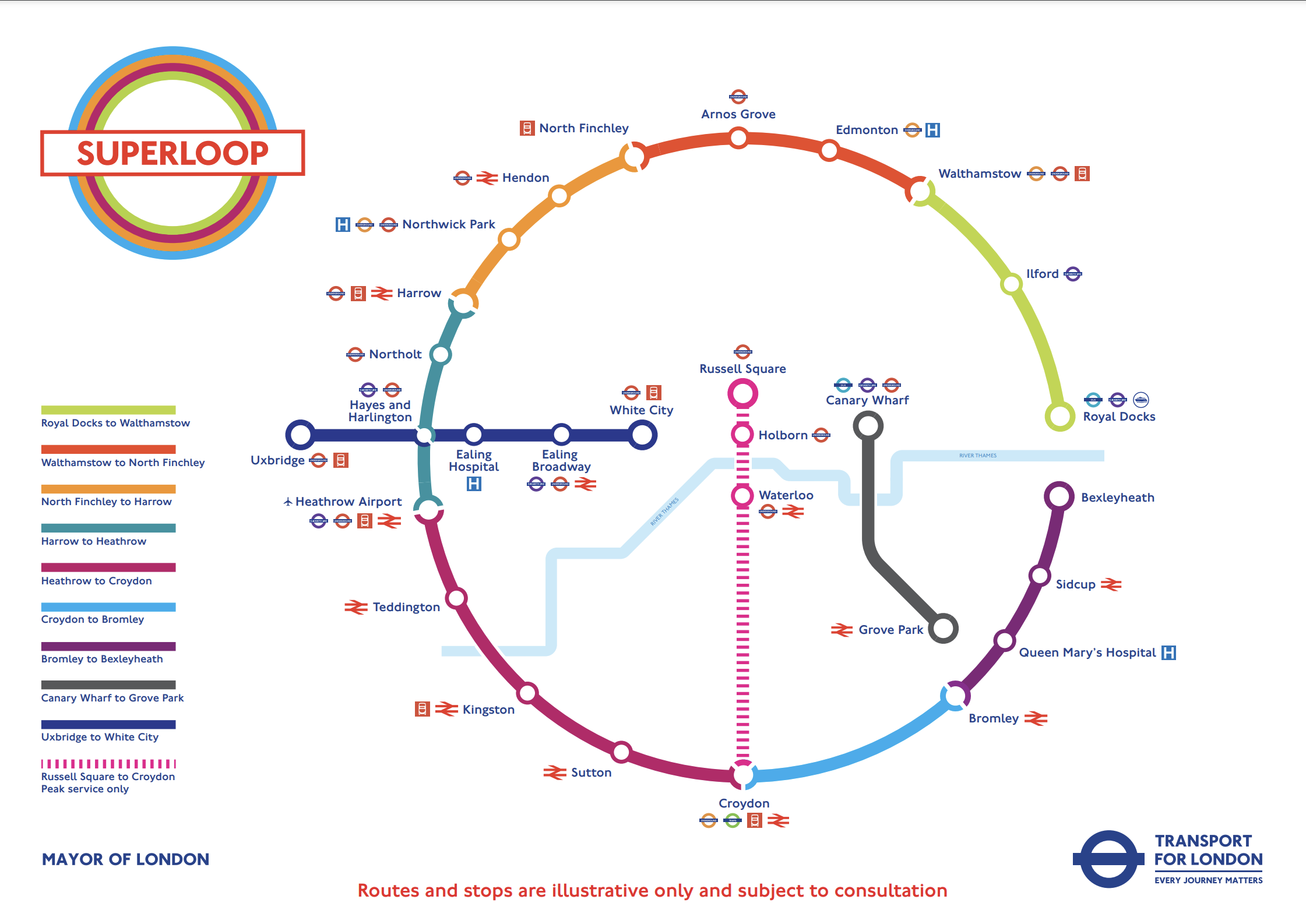
The spoke on the Western side of the map is route SL8 between White City and Uxbridge stations.
This morning I rode the route between Shepherd’s Bush Market and Uxbridge stations and took these pictures.

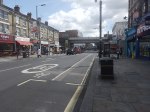
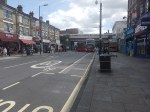
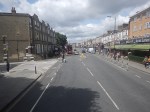

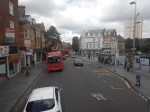
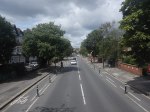
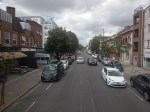
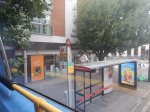
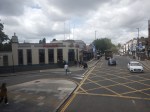
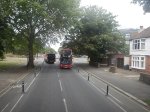
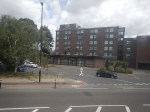
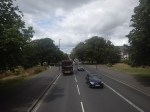

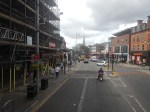
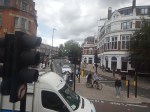
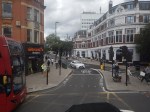
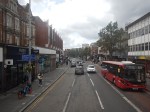
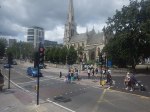

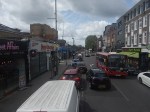
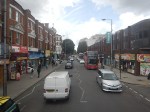
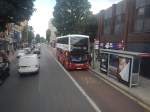
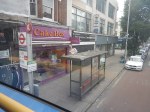
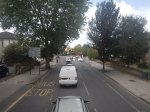
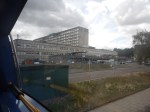
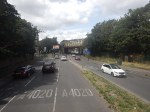
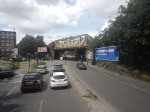
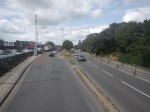
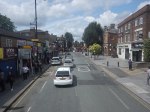
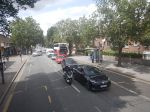
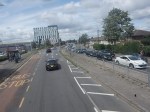
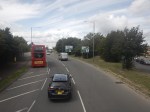
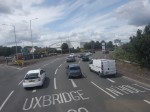
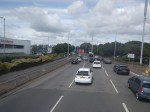
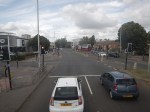
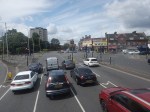
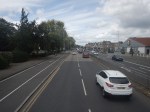
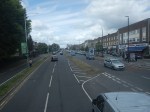
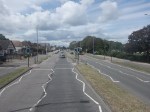
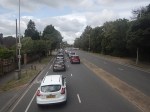
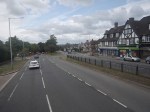
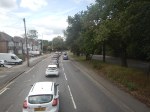

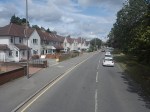
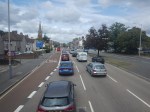
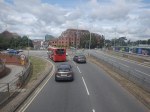
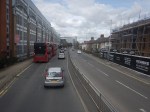
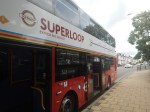
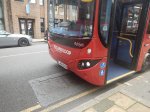
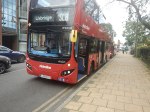
Note.
- Some of the buses have still to be painted in the new white-topped Superloop livery.
- The buses are diesel-powered.
- The stops have their own livery.
- I estimate the route is 12.3 miles long and the bus took 67 minutes.
- The frequency appeared to be typically four buses per hour.
- The route is mainly dual-carriageway to the West of Ealing Hospital.
Route SL8 used to be route 607 and except for the branding nothing has changed.
I have few thoughts.
The Concept
The concept seemed to work well, where the roads were free of traffic.
But we get get a bit delayed through places like Ealing Broadway, where parking reduced the width of the road.
The Route
The route connects quite a few stations and other important locations.
From East to West they include.
- Westfield Shopping Centre
- Shepherd’s Bush station for the Central Line and the Overground.
- Shepherd’s Bush Market station for the Hammersmith and City Line
- Acton Central station for the Overground
- Ealing Common station for the District and Piccadilly Lines.
- Ealing Broadway station for the Central, District and Elizabeth Lines.
- Ealing Broadway
- Ealing Town Hall
- Ealing Hospital
- Southall Broadway
- Hayes
Note.
- The route is very much the same as the now-abandoned West London Tram, which was proposed twenty years ago.
- The tram was opposed y the three London boroughs on the route, as it cut them in half. But buses don’t cause the same problems.
- The Superloop map shows that the SL8 bus calls at Hayes and Harlington station, but we went nowhere near it today.
- The route with its sections of dual carriageway and congested shopping streets was a bit like the route o Birmingham’s hydrogen buses, that I wrote about in Riding Birmingham’s New Hydrogen-Powered Buses.
I feel as the route is very similar to the West London Tram, which was probably extensively researched, that there won’t be too many changes to this route.
Parking Along The Route
I wouldn’t be surprised to see more parking restrictions along the route, to speed up the buses in the crowded shopping streets like Acton, Ealing Broadway and Southall Broadway.
The Buses
The buses are Egyptian-built eVoSeti diesel buses, which use a Volvo chassis.
- I don’t like these buses as they don’t have a flat floor and I’ve seen some passengers struggling with the stairs on the lower deck.
- At least the stairs to the upper deck aren’t too bad.
We used to have them locally in Dalston and I used to avoid them, if there was another bus close behind.
This new route, though should be served by zero-carbon buses, so that pollution and carbon emissions are reduced.
- Between White City and Uxbridge takes over an hour.
- A battery-electric bus would need recharging during the day.
- It looks like there’s not much space at White City and Uxbridge stations, to install charging stations.
- A hydrogen-powered bus could probably manage all day on one filling.
For these reasons, I suspect that hydrogen buses would be the preferred option.
A Very Busy Paddington – 4th July 2023
On my trip to Marsh Barton station, Paddington was very busy, as these pictures show.

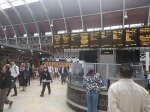

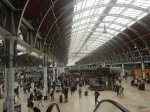

Note.
- Trains were leaving to Cheltenham Spa, Great Malvern. Newquay and Paignton, in addition to the more expected destinations of Bristol Temple Meads, Cardiff and Swansea.
- I took the Elizabeth Line to the station and it was very busy.
I feel, that action needs to be taken to increase the capacity of the station for both passengers and trains.
These are my thoughts.
Catching Trains From Reading
Recently, if I want to go somewhere, that is within an hour West of Reading station, I’ve started taking the Elizabeth Line to Reading using my Freedom Pass and then buying an Off Peak Day Return ticket from Reading.
- It saves a few pounds.
- I can catch the Elizabeth Line train at Moorgate direct to Reading, after having breakfast on Moorgate.
- Moorgate is an easy bus ride from outside my house.
I suspect some other Freedom Pass holders will start to use Reading station to go West.
The only disadvantages are that you miss the Reading train and have to wait half-an-hour for another and that buying tickets at Reading means leaving the station.
Improvements, I would make would include.
- Four trains per hour (tph) between Whitechapel and Reading.
- A ticket machine on the bridge at Reading station, so that those needing a ticket can buy one without leaving the station.
I suspect other improvements could also improve this option.
A Second Concourse At The Western End Of Paddington Station
If you go to Paddington station on the Hammersmith and City Line of the Underground, you can walk across the top of the main station and take stairs down to the platform for your departing train.
There has been talk of improving this area of the station, so that passengers using that route from the Underground have an easier route with more facilities like cafes, shops and toilets.
I’m all for this improvement.
What Is The Point Of Heathrow Express?
On my trip, I watched a Heathrow Express arrive in Paddington and just a few people got off.
I am utterly certain, that the Elizabeth Line is giving Heathrow Express a good kicking, as it is so much better connected to the important destinations within London, like Bond Street, Canary Wharf, Farringdon for Thameslink, Liverpool Street for The City, Stratford for events and Whitechapel for the East London Line.
Discussions of the future of Heathrow Express, must also include the Western Rail Link to Heathrow, which is currently being planned by Network Rail.
This page on the Network Rail web site gives more details, including these benefits for the link.
- Reduce rail journey times between Reading and Heathrow by delivering a new, faster, frequent, more reliable direct train service to Heathrow with four trains per hour in each direction. All trains would call at Reading and Slough and alternate trains at Twyford and Maidenhead. Journey times could be as short as 26 minutes from Reading and 6 to 7 minutes from Slough.
- Significantly improve rail connectivity to Heathrow from the Thames Valley, South Coast, South West, South Wales and West Midlands.
- Provide an alternative form of transport for passengers and the large number of people who work at the airport who are currently travelling by road.
- Ease congestion on some of the UK’s busiest roads, the M4, M3 and M25 resulting in lower CO2 emissions equivalent to approximately 30 million road miles per year, helping to deliver the UK’s climate change and carbon reduction targets.
- Generate economic growth and new jobs across the Thames Valley and surrounding areas.
- Reduce passenger congestion at London Paddington.
There is then the question of who should run the service; Heathrow Express, the Elizabeth Line or both.
At the present time, trains from London to Heathrow are.
- Elizabeth Line – 2 tph – Shenfield and Terminal 5
- Elizabeth Line – 4 tph – Abbey Wood and Terminal 4
- Heathrow Express – 4 tph – Paddington and Terminal 5
Note.
- All trains also serve Heathrow Terminals 2 and 3.
- The Piccadilly Line also serves all Heathrow Terminals.
- It appears that Terminal 4 is only served by the Elizabeth Line.
- Terminal 5 has 6 tph, but the Western Rail Link will be at a frequency of four tph.
Because of the mismatch at Terminal 5 and that two tph will stop at Slough, Maidenhead and Twyford, I suspect we might see the following services on the Western Rail Link
- Elizabeth Line – 2 tph – Terminal 5 and Reading via Slough, Maidenhead and Twyford
- Heathrow Express – 2 tph – Terminal 5 and Reading via Slough.
Note.
- This would give Reading and Central London, a much-needed four tph on the Elizabeth Line. Two tph would be direct and two tph would be via Heathrow.
- It would not require any more paths in the Elizabeth Line Central Tunnel, as the 2 tph between Shenfield and Terminal 5 will just be extended to Reading.
- Heathrow Express has Western access with a connection to Reading.
It looks like this service pattern could be a good compromise.
I also suspect that this would improve passenger numbers for Heathrow Express.
Could Heathrow Express Run Its Service Using One Platform At Paddington?
I am fairly certain that this would be possible, if passenger access to the platforms at Paddington station were to be improved, by the building of a second concourse at the Western end of the station.
It is also likely, that full digital signalling will be applied between Paddington and Reading and this will surely improve the ease of running four tph into one platform at London Paddington for Heathrow Express.
I can see, that a reorganisation of Heathrow Express after the building of a second Western concourse at Paddington and the Western Rail Link to Heathrow, that Heathrow Express could be able to release a platform.
Could Great Western Railway Reorganise Suburban Services?
These are Great Western Railway’s suburban services, that terminate at Paddington.
- 1 tph – London Paddington and Oxford via Reading and Didcot Parkway
- 2 tph – London Paddington and Didcot Parkway via Slough, Maidenhead, Twyford, Reading, Tilehurst, Pangbourne, Goring & Streatley and Cholsey
- 1 tph – London Paddington and Newbury via Reading, Theale and Thatcham
Note.
- The Oxford services, are run by Class 800 trains, running as either five-car, nine-car or ten-car trains.
- Oxford is also served by the hourly Paddington and Great Malvern service.
- All of the other services, are run by Class 387 trains, running as either four-car or eight-car trains.
- There doesn’t seem to be any pattern to the platforms used by these services.
I find the last point very surprising, as my extensive scheduling experience says that it is easier to schedule several similar processes, rather than a number of different ones.
This OpenRailwayMap shows the platforms at Paddington station.
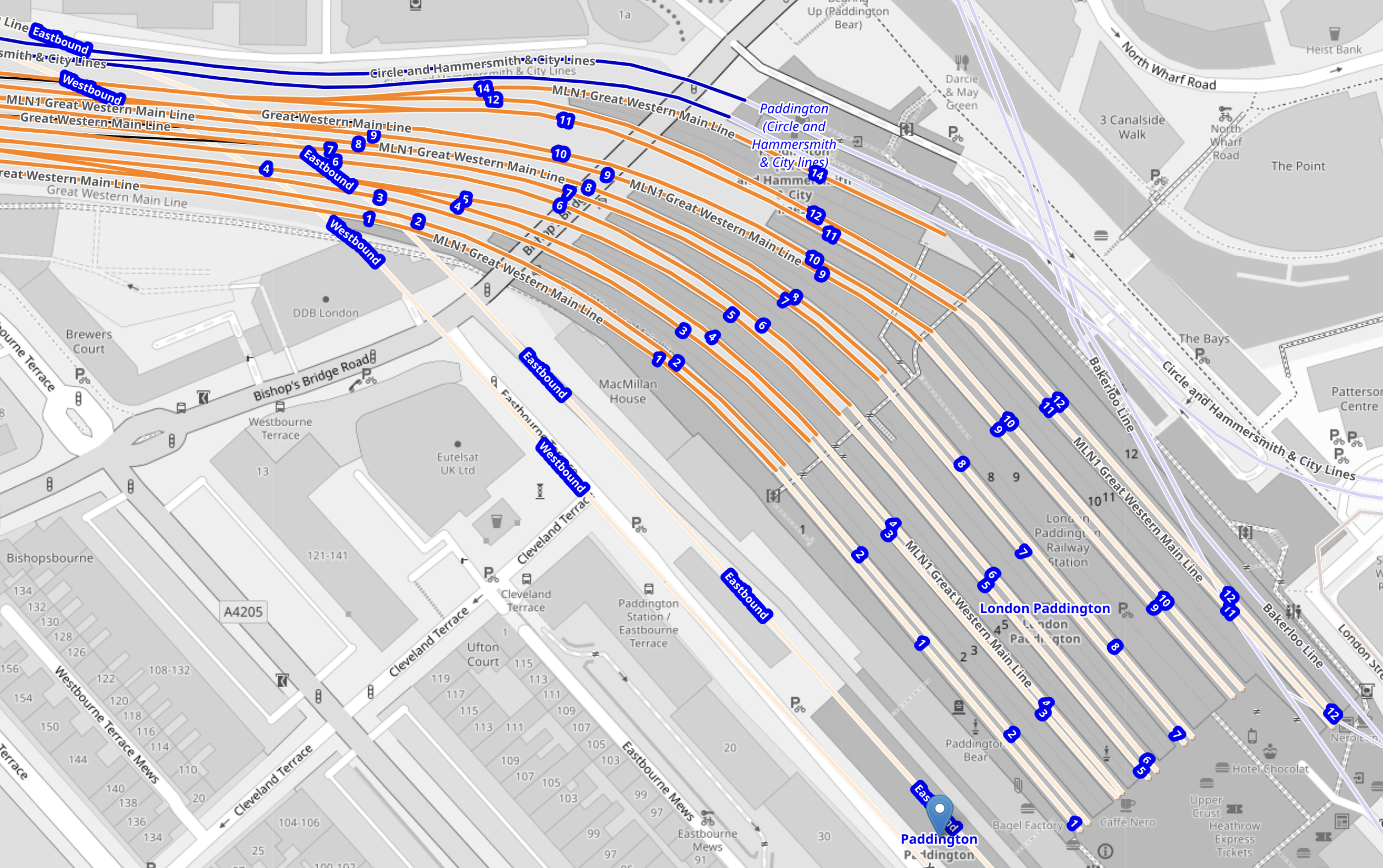
Note.
- The platforms are numbered 1 to 14 from South-West to North-East.
- Platforms 1 to 12 all appear to long platforms about the same length.
- As some platforms can take ten-car Class 800 trains, I wouldn’t be surprised to find out all platforms 1-12 can.
- The only short platform is platform 14, which can accommodate an eight-car Class 387 train, which is 163 metres long.
It looks to me, with twelve long similar platforms, they can schedule the platforms on the fly, so perhaps this explains, the randomness of platform allocations.
I think in an ideal world, I would try and organise these services as follows.
- The Oxford and Great Malvern services could share a platform at Paddington, which would help passengers to find the next Oxford train.
- The Didcot Parkway and Newbury services could also share a platform at Paddington, for the same reason.
- Unless Didcot Parkway and Newbury services are occasionally run by a twelve-car train, they could even use the short platform 14.
This would surely be a more efficient use of the platforms at Paddington station.
Could Didcot Parkway Services Become Another Elizabeth Line Destination?
Consider.
- Didcot Parkway to London Paddington services appear to use the same tracks as Elizabeth Line services between Reading and Southall West Junction, where they change to the main line for Paddington.
- London Paddington to Didcot Parkway services appear to use the main line from Paddington to Dolphin Junction, which is just to the East of Slough station, where it joins the same tracks as Elizabeth Line services to Reading.
- Nine-car Class 345 trains are forty metres longer than an eight-car Class 387 train.
- Class 345 trains are 90 mph trains.
- Class 387 trains are 110 mph trains.
- Class 387 trains wouldn’t fit the platform edge doors in the Elizabeth Line Central Tunnel.
It would appear that the Didcot Parkway and London Paddington services could be moved to the Elizabeth Line, by doing the following.
- The Class 387 trains would be replaced by Class 345 trains.
- Trains to London would go straight on at Southall West Junction and through the Elizabeth Line Central Tunnel.
- Trains from London would emerge from the Elizabeth Line Central Tunnel on the right track for Reading.
- There might be a need to lengthen a few platforms.
Note.
- The Didcot Parkway to London Paddington services would not need to use the main line.
- 2 tph would be removed from Paddington station.
As one electric train is being replaced by another, there would probably be no need for more electrification.
Could Newbury Services Become Another Elizabeth Line Destination?
Consider.
Freight trains appear to be able to go from Theale station to Platform 5 at Slough station, through Platform 15 at Reading station, which is a possible route that a Newbury to the Elizabeth Line Central Tunnel train would take.
Freight trains appear to be able to go from Platform 4 at Slough station to Theale station, through Platform 15 at Reading station, which is a possible route that an Elizabeth Line Central Tunnel to Newbury train would take.
It would appear that the Newbury and London Paddington services could be moved to the Elizabeth Line, by doing the following.
- The Class 387 trains would be replaced by Class 345 trains.
- Trains through Reading would follow the freight route.
- There might be a need to lengthen a few platforms.
Note.
- The Newbury to London Paddington services would not need to use the main line.
- 1 tph would be removed from Paddington station.
As one electric train is being replaced by another, there would probably be no need for more electrification.
Conclusion
It looks like the capacity of Paddington station can be increased by the following.
- Building a new second concourse at the Western end of the station.
- Heathrow Express releasing a platform.
- Oxford and Great Malvern services could share a platform at Paddington
- Moving Didcot Parkway and Newbury services to the Elizabeth Line.
No new electrification would be required.
Swan On The Tracks Halts Trains On London’s Elizabeth Line
The title of this post, is the same as that of this article on the Guardian.
This is the sub-heading.
Passengers held on trains for up to hour as services suspended between Heathrow and Abbey Wood
These paragraphs outline the story.
Services on a major section of London’s new £19bn Elizabeth line have been suspended because of a swan blocking the tracks.
Transport for London (TfL) said there were no services between Heathrow airport in west London and Abbey Wood in south-east London – via the centre of the capital – due to “an obstruction on the track”. It said there were severe delays on the rest of the line.
I actually got delayed by this, as I was trying to get my shopping home from Moorgate.
The 141 bus, that I took as an alternative was also severely delayed. But not by swans, but by the policies of a Mayor who can’t do sums!
Silvertown Tunnel Works – 26th June 2023
I took these pictures of the Silvertown Tunnel works on the North Bank of the Thames today.
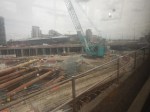
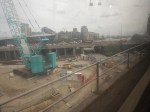
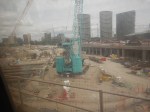
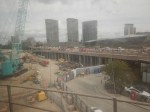
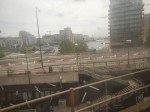
I went on to Woolwich, did some shopping and then took the Elizabeth Line to Whitechapel to come home.
An Aborted Trip To Cardiff
I got up early, this morning with the aim of spending a day in Cardiff looking at the progress on the Valley Lines and have a drink with a friend.
But the trip is off, as there are no trains to Heathrow and Reading on the Elizabeth Line, due to a shortage of staff.
There are also some gaps in the Great Western Railway service to Cardiff, for the same reason.
Is this to show sympathy with Putin?
The Shuttle Lift At Whitechapel Station
Whitechapel station is an unusual station on the London Overground/Underground network, as the two Overground tracks are underneath the two Underground tracks.
But then Marc Brunel and his more famous son; Isambard didn’t realise that their Thames Tunnel would eventually be part of London’s circular Overground railway.
The interchange is further complicated, by the Elizabeth Line being dozens of metres below the Overground, so that is connected to the main station bridge concourse by a giant three-barrel escalator.

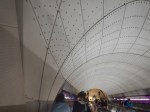
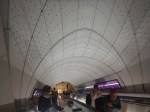
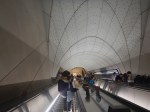
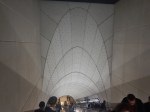
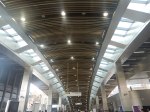
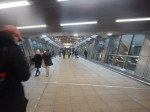
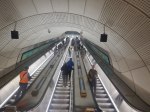
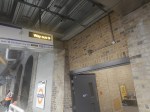
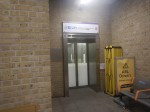
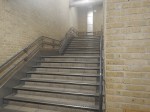
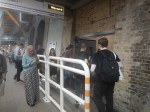
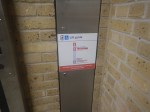
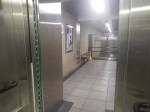
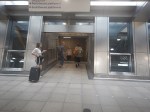
A single shuttle lift and a set of stairs connect the bridge concourse to the Northbound Overground platform.
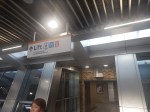
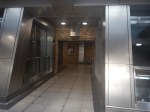
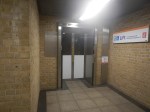
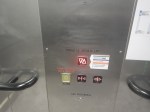
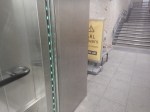
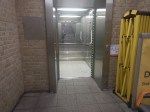
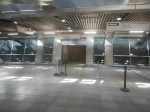
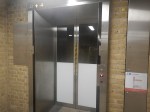
Note.
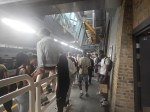
- The route is well used, as passengers have realised it is the fastest way between the Elizabeth Line and the Northbound London Overground.
- Judging by the number of passengers, who exit from the first car of Northbound Overground trains, this route could be a popular one for passengers from South London, who are continuing their journey on the Elizabeth Line.
- I use the route to come home with shopping, I’ve bought along the Elizabeth Line. I can manage the Lizzie Line escalators with two shopping bags and after rising from the depths at Whitechapel, I can take this lift to the first car of a train for Dalston, where there is a lift to the street and a bus to home.
- The lift has only two stops and one button is used to shuttle it, between the stops.
- The lower lift stop is perhaps ten metres from the first car of Northbound Overground train.
- The upper lift stop is perhaps ten metres from the bridge concourse and twenty from the escalator to the Elizabeth Line.
Strangely, the lift and stairs arrangement is more complicated on the Southbound platform of the Overground.
London’s transport network needs more simple shuttle lifts like this.
 The Anonymous Widower