The Simple Logic Of An Engineer or Scientist
Let’s face it we’ve got to generate more electricity in a zero-carbon way. Or should I say capture more energy?
One way to do this is to put photo-voltaic cells everywhere. But they are expensive and in many places can’t be used for aesthetic reasons.
So I was pleased to see in today’s Sunday Times, that a company, called Oxford Photovoltaics, is developing a solar cell that can be built into a window.
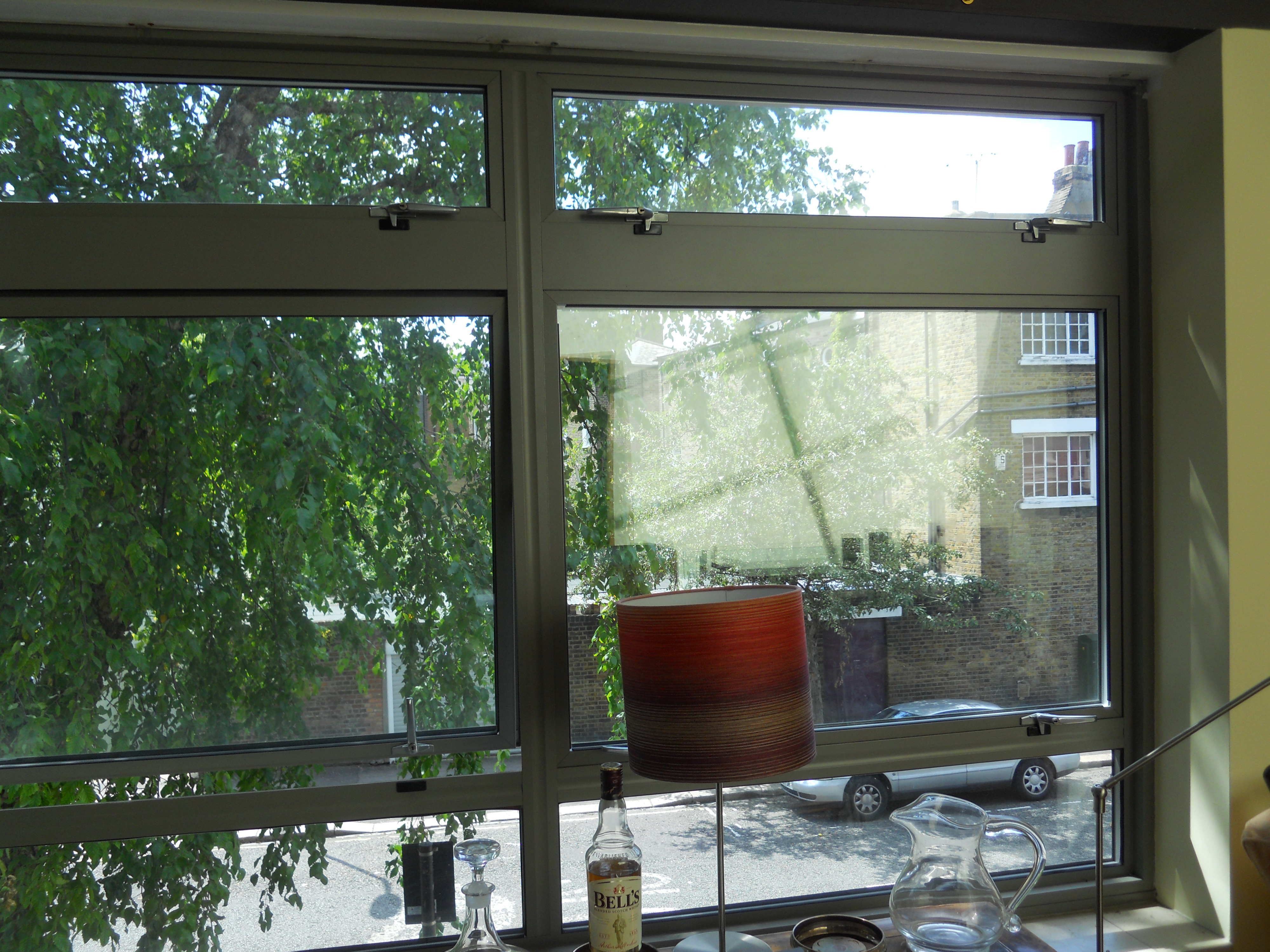
My Front Window
The picture shows one of my two front windows, which are actually glazed as many windows are by double-glazed panels that slot into aluminium or plastic frames. So to mount one of these sandwich glass photo voltaic cells could be a simple replacement.
I suspect too, that with a proper control system, the windows could be controlled to let the appropriate amount of sunlight through for lighting and warmth purposes. Most of the energy absorbed would become electricity, which could be fed back into the grid or used in the building.
The great advantage of this system, is that to be ready for it, when it is fully developed, you don’t have to do anything now except to ensure that all new houses, flats and offices are built to accept simple drop-in glazing panels.
This compny may not be the one that succeeds, but one definitely will.
A Final Good Bye TO EDF Energy – Hopefully!
When I Bought This house the electricity and gas supplier was EDF Energy. At the time I thought it would be a good idea to stick with them, as it might be less hassle to get them to continue to do the supply than change.
But after trying to get sense from EDF Energy, I signed up with nPower, as I detailed here. I set up Direct Debits too, soon after they changed the meter on the day they said they would, and at the time precisely.
In my original post, I did imply that Thames Water, tried to get aggressive in trying to sell me things I didn’t need. But I’ll forgive them that, as when I needed to read the water meter, the lady in the call centre told me in detail how to do it. They also gave me a free tour of Abbey Mills and the sewers with very good food afterwards.
Over the six months or so, I’ve got a lot of writs for the previous owners tenants. The biggest of which was for several hundred pounds from a company collecting on behalf of EDF Energy. It was from an agency in Glasgow, so I suspected someone from Alex Ferguson’s charm school to give me some form of hair-drying, when I phoned them. But I got a nice guy, who told me to forget the bill and shred it, after asking a few questions in a polite manner.
Nothing much happened until about two months ago, except for a series of mysterious calls on my mobile phone, which might be linked to EDF Energy.
I then got a bill from EDF Energy of £180.83, which on querying with them, they said was for the time whilst they were swapping everything over to nPower. I immediately queried it on the phone and I then got a reduced bill of £70.46, but I thought this was still too high as it ran from the 1st December 2010, when I didn’t move in until the 12th.
I was now dealing with them by e-mail and the e-mail said this.
If you have any further queries please do not hesitate to contact me via my email.
So I did. Several times, in an attempt to get the bill adjusted to the 12th of December or full explanation of their calculations. Let’s face it there comes a point, where you don’t fight a bill of seventy quid any longer, as it just isn’t worth the effort. I also put it in a letter to them.
That point came on Thursday, when I sent them the money by bank transfer. But even that wasn’t as simple as paying other companies, as their bank, doesn’t accept the faster payments system, that virtually all others do. This excellent system means you get a certified receipt for a payment within a few minutes. Read about them here in the Guardian. If ever there was a reason for Internet banking, it’s this payment system.
It’s been debited from my bank account, so it’s somewhere in the system. It’s probably being processed in some overseas department of France, if they use a French bank.
I should say that their automated system phoned my mobile phone number, despite the fact that I told them I always deal with people over my landline. This automated system had no way getting a realperson and expected me to type in the twelve digits of my debit card number without making a mistake. I can do that easily on my large button landline phone, but not on my Nokia 6310i. Their automated system is about as customer friendly to someone with a small disability like me, as a unicycle. So in the end I hung up on them. They didn’t ring again. Surely that is wrong, as some other companies, will ring you back with a real person if the person accepting the call doesn’t seem to be responding properly.
Let’s hope that’s the end of it. I shall certainly not be recommending EDF Energy to any of my friends. As they say on Eurovision, they have earned nil points for Customer Service.
Any more calls from them and I’ll use the famous Sun headline from the 1970s or so.
The Waste Incinerator at Edmonton
Whilst I was in IKEA, I took this picture of the waste incinerator at Edmonton.
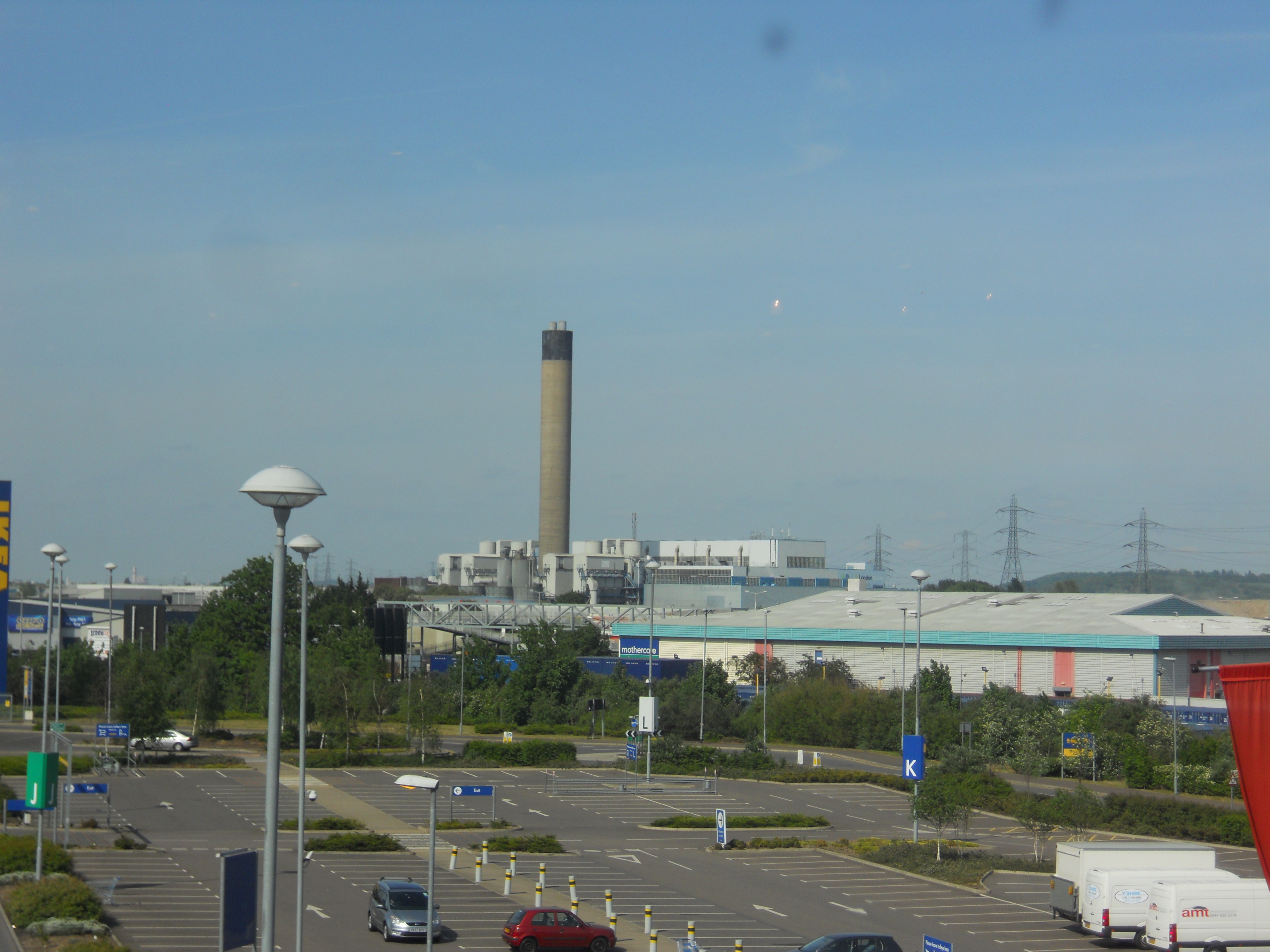
The Waste Incinerator at Edmonton
To some the incinerator is controversial and some such as Greenpeace want it shut down.
The solution to a lot of rubbish is recycling, but then the proportion recycled in London is lower than in many other parts of the country. It is probably easier to get people to sort their rubbish in larger sizes of dwelling, as they have more space for the various bins. So at the end of the day, there will be either a lot of waste for landfill or incineration. Hackney tries hard and the recyclers are a sensible bunch, but are all of the residents.
So whether people like it or not, there will always be a need for incineration.
Perhaps we should follow the Austrian solution.
Fridenreich Hundertwasser was a controversial Austrian artist and architect.
I remember seeing somewhere that he didn’t like incinerators, so Vienna asked him to see if he could do better. He came up with the waste powered heating system at Spittelau powered by waste.

District Heating System at Spittelau
It certainly looks better than Edmonton.
So perhaps we should get the best artists and architects to design incinerators and other buildings like power stations and sewage works so we can be proud of them. Isn’t that what Joseph Bazalgette did with Abbey Mills? Obviously, we must also get the technology right, so the only things that emerge from the plant is energy and clean air and water.
A properly designed plant would be so much better than the alternative of landfill.
The other technology we need is an automatic system that sorts rubbish into the various types of recyclables and what must be buried or burnt. But that will come in the next few years!
I’m also very much in favour of rewarding councils that recycle a high proportion of their waste. trucks are easily weighed on leaving and return from the depots, so it is easy to work out how much rubbish is recycled overall. You could even work it out on a round-by-round basis and reward the operatives and residents appropriately.
But I am against weighing individual bins, as that is unpopular on the one hand and could lead to all sorts of unsavoury practices on the other.
I do think though, that it might be possible to incentivise people to recycle bottles and akuminium cans, by paying a collective bounty to the area round the recycling points. I laid out my thoughts here.
The Discontinuous NHS
I am a control engineer by training, although I haven’t really practised since the early 1970s. But any control engineer will tell you that the most difficult system to control is one with discontinuities. I always liken it to riding a bicycle, which you may be able to do happily on the flat, but then you need to go up or down a kerb and you have a problem.
Some of the biggest problems we get in life are concerned with discontinuities; such as birth, marriages and deaths. We also get a whole series of problems when we do something like move house.
Organisations such as the banks, insurance, utility and telephone companies, major retailers, supermarkets and some government agenices like the DVLC, TV Licensing and a few others, have used modern methods, such as web sites, e-mail, text messaging and dare I say it well-designed call centres to liase with their customers in whatever way those important customers find easiest and most convenient. If say a gas company doesn’t do what the customers want, then those same customers will desert it.
Moving wasn’t particularly difficult for me, with respect to gas, electricity, banks, gas, water, credit cards, broadband, TV and phones, even if I have a couple of minor issues to sort out.
One problem I have had was getting used to the refuse system. But Hackney council were very helpful over the phone and the binmen sorted out the small details. But in an ideal world all councils would use the same collection system. In a few years time, they probably will, as one method will probably be cheapest for all councils to operate for a variety of reasons. The method will probably have a high level of recycling too.
But the NHS seems almost to be designed to be discontinuous.
My previous and current surgeries are run on different lines, probably use different computer systems and have made my transfer a lot more difficult than it should be, as I can’t understand, why the same system is not used in both places. Would, BP, Shell or Esso, use different computer systems in all the garages they supply with fuel? I don’t know, but I suspect they don’t!
Today, I miscalculated when I would run out of tablets. I thought I had another weeks supply, which I do, except for the statins I take. So I needed to get some more.
At my previous surgery, I just e-mailed them and they would be ready within 24 hours. But my new surgery doesn’t have a pharmacist and after visiting them this morning, they informed me, I wouldn’t get the prescription forms until tomorrow afternoon. I had assumed as it was a repeat prescriptiuon, I could just pick one up and get it dispensed. I thought that I might be able to get some in emergency at a pharmacist, but this would need a visit to a doctor at an NHS walk-in centre. Would we accept such a system for buying groceries at Tesco’s.
We need two things.
- Every surgery should use similar systems and methods. They should also make it clear to new patients, how you get repeat prescriptions.
- All repeat prescriptions, should be on a central NHS database, so that you can walk into any pharmacy and get the drugs you need. But would that be giving too much power to the patient and pharmacists? What would happen say if I was on holiday in Cromer and I lost my backpack with all my drugs in it? I suspect, it would probably take a whole day to sort it out!
The NHS might save billions by doing what any sensible organisation would do and many government agencies already do. Service would improve to the more modern standards that people expect and receive from many companies they deal with on a day-to-day basis.
Fuel Prices
Someone has sent me an invitation to join their group protesting about fuel prices.
I will not be joining, as I’ve always felt that a large part of the problems of this fragile planet are caused by people, and especially Americans, who create just too much carbon dioxide, which every scientifically correct individual knows has a lot to do with global warming. Today, as I write, the Zoological Society of London, launches the Edge Coral Reefs project to save them from extinction.
So what should we do about fuel prices?
It’s not so much about what you do with the prices it’s what you do with the tax revenues they generate.
I have seen the benefits of putting container traffic on the trains in and out of Felixstowe Docks. There are less trucks on the road for a start and how much is this contributing to reduction in carbon emissions and shorter journey times for other motorists. So the first thing we should do is make sure that more and more containers go between the ports and inland depots by train. And preferably by electric trains. There are a few links that need to be built, like one to the new container terminal in Liverpool and we also need better road-rail interfaces in some large conurbations.
I actually think that one of the reasons truck drivers are militant, is tat they can see these job losses arriving as the containers shift to rail. The rail freight companies are talking about saving truck journeys in hundreds of thousands with each new scheme.
Railway electrification and better commuter trains and buses should be another beneficiary of extra tax revenue, as give people better services and they use them. I know it’s only a small line across Suffolk, but as the Ipswich-Cambridge service has improved over the last few years, more and more people have used the service. I also know examples of couples, who have effectively gone from two to one car, because of better public transport.
I’ve worked at home for over forty years and this can easily be encouraged by faster broadband everywhere. I also believe that this can in itself be a strong engine for growth in rural areas, where public transport of a sufficient standard will never be available.
I would also like to see fuel taxes used to reduce Income Tax and increase benefits in some cases.
We must use all of these things to nudge people towards a more sustainable lifestyle.
Technology too has its part to play in this and I’d like to see developments like these cars proposed by Gordon Murray. But would these wean people away from their beloved 4x4s and people carriers? Probably not, but fuel prices are one way to make them pay for their selfishness!
So in my view, high fuel prices should be here to stay.
Everybody Got it Wrong
The US Government report on the Deepwater Horizon disaster would appear to lay the blame thick and evenly.
But should we really be drilling offshore, when statistics show that on-shore drilling is so much safer?
The problem is also made worse in the United States because of their misguided energy policies and absolute adoration of the car.
Moaning About the Price of Petrol
I’ve had a rough three years and now can’t drive because of the strokes. I just laugh at all those idiots, who insist on using their cars to do things, that I now have to do happily on the bus, or by walking. Although I live in London, I rarely use the tube, as the bus stops within a hundred metres.
Today, I’m off to Liverpool on the train from Euston. In First Class too! Paid for incidentally, by selling something on eBay from a car I used to own twenty years ago, that just happened to turn up in the move.
Life is fun! And funny as I listen to the selfish moaners!
C Would Not Have Been Amused
I most certainly aren’t and she would have been with me on this one.
The lights in this house are generally wall units, which were originally fitted with 40 watt tungsten bulbs, that I believe should be removed immediately, as we do need to do something about our electricity consumption and carbon emissions. As half of them have failed, the light in some parts of the house is not good. The fittings were designed for 100 watt tungsten screw bulbs, which despite being available in markets round here should not be sold. Finding an adequate energy-saving replacement is proving tiresome, as it seems that many shops only carry a few very standard and expensive bulbs. So perhaps people in London stick with their illegal tungsten bulbs. As an example, I’ve not seen one of the clever light sensitive bulbs I used to use outside in Suffolk.
There are also loads of the dreaded MR16 halogen bulbs. I hate them as they give me headaches, but the LED replacements don’t. They also give out a lot more light, use a lot less energy and last for ever. I did manage to find two and they helped, but I need to find a lot more, as quite a few of the old ones have either failed or flash on and off.
Matt Ridley on Shale Gas
Matt Ridley is one of my favourite authors. I first read his book,Genome: The Autobiography of a Species in 23 Chapters


He has written an article for the Times today about extracting gas from shale rock and how it could solve the energy gap.
Here’s a couple of paragraphs.
Whether Mr Huhne likes it or not, a dash for gas is coming. What’s more, it is almost all good news. The discovery of how to exploit huge global reserves of gas encased in shale rock is causing epochal change in the energy scene. Shale gas is like any other gas except that it is everywhere: from Poland to Pennsylvania, from Queensland to Sichuan. There is even some in the Wirral and the Weald, but don’t hold your breath that the Nimbys will let much of it be tapped.
America, where the shale gas revolution began, has 50 years, probably more, of increasingly cheap supplies. The US is not just turning away liquefied-natural-gas tankers from Qatar (hence the current low price of gas), but considering turning gas-import terminals over to exports. Shale gas is popular with those who do not like being dependent on Putins and Ahmadinejads, so unpopular with those two martinets.
I’ll add my thoughts to his on the various ways of generating electricity or heat.
- Coal – Dirty, polluting and kills those that mine it, either directly or slowly with nasty lung diseases.
- Nuclear – Clean, but unloved by the greens and many of the general public.
- Wind – Loved by the greens, but unsightly, very inefficient and needs to have some form of backup generation.
- Solar – Alright in the Sahara, but problematic elsewhere.
- Oil – Works, but too valuable for other purposes to burn.
- Tidal – Expensive and unpopular.
- Gas – Clean, less than half the CO2 of coal and doesn’t need unsightly overhead lines, as you can distribute the gas by hidden pipes.
So as Ridley says gas from shale has a lot going for it.
I agree for now! But who’s to say something even better won’t come along in a couple of years. Never underestimate the ingenuity of the human mind and the politician’s ability to always look up the backside of a gift horse, rather than check the important parts, like the legs, heart, lungs and temperament.
I Don’t Like Gas
There are reports coming in of a gas explosion in Salford. It would appear that people are trapped.
I don’t like gas and when I designed this house, the propane tanks are a long way from the house, the AGA is electric and the boiler is in an outhouse.
My fears stem partly from working in the chemical industry for ICI in the 1960s, when a gas explosion destroyed the reaction vessel and killed two people on Polythene 6 plant. A lot of engineers I worked with didn’t like compressed gas, as only a couple of kilograms have a tremendous explosive force.
My new house in London will probably be heated by gas, but I will make sure that all the safety equipment is installed. I will of course not allow anybody to smoke.
But even with all the checks, I’d much prefer that the only energy we took into our houses and factories was electricity. After all it is probably a lot safer and much easier to distribute!
 The Anonymous Widower