Exeter St. Davids To Dawlish – 4th July 2023
I took these pictures as I travelled between Exeter St.Davids and Dawlish stations.












































This OpenRailway map shows the route of the line between Exeter St. Davids and Plymouth stations.

Note.
- The line is shown in orange.
- Exeter St. Davids station is at the top of the map.
- The blue arrow marks the position of the new Marsh Barton station, which opened to the public today.
- Stations in order from the North on the line are Starcross, Dawlish Warren, Dawlish, Teignmouth and Newton Abbot.
- The line follows the Western bank of the River Exe to the sea.
- On my view, it is one of the most spectacular rail lines in the UK.
But the sea can get very angry, as I saw in An Angry Sea At Dawlish.
Taunton To Exeter St. Davids – 4th July 2023
I took these pictures as I travelled from Taunton station to Exeter St.Davids station.
































































This Google Map shows a section of the M5 North of Collumpton.
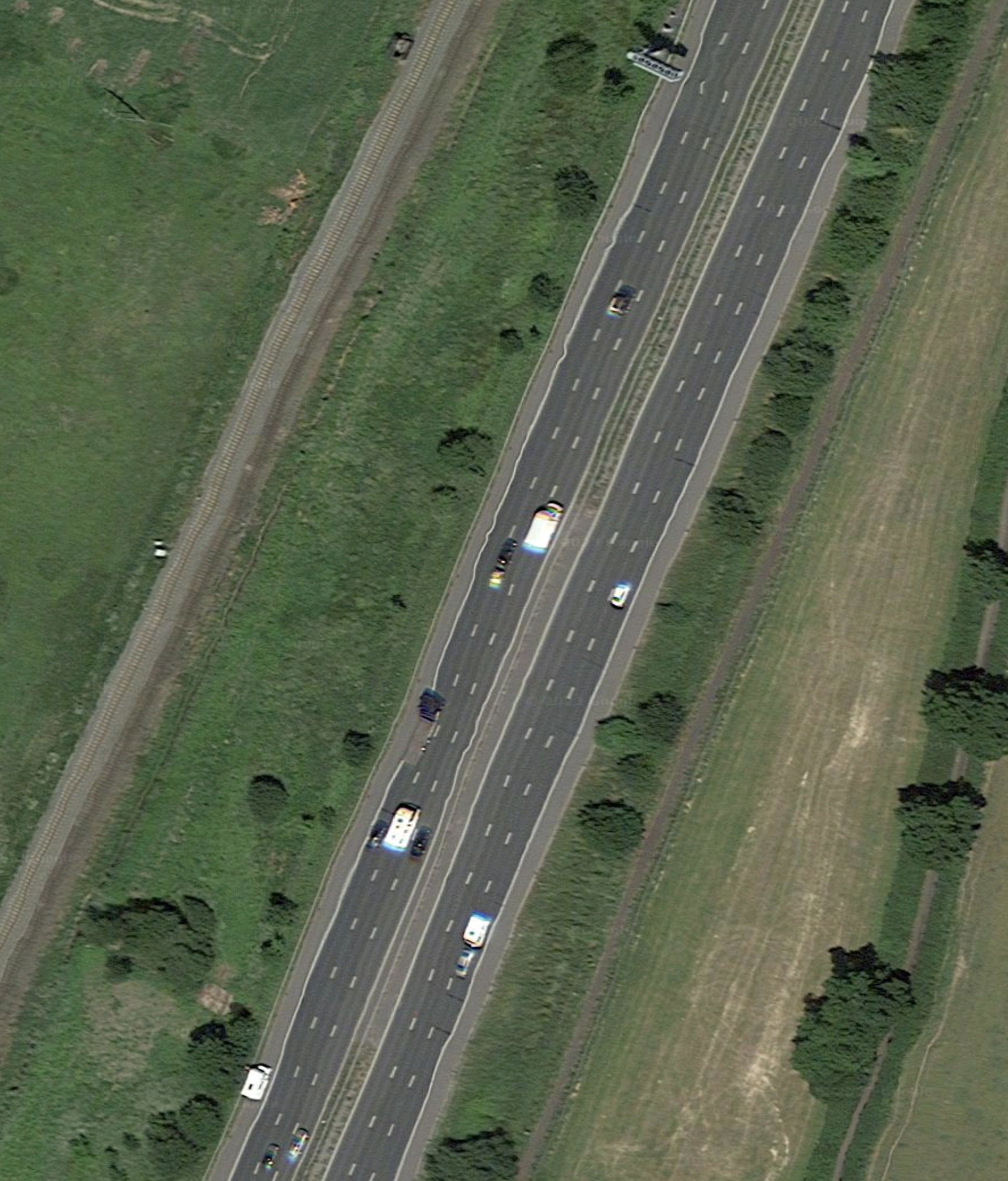
Note.
- The proximity of the M5 motorway to the railway, in some pictures and the map.
- There is space to plant large numbers of trees between the motorway and the railway.
- There are high voltage overhead electrical cables running along the same corridor.
- Collumpton services are also placed between the motorway and the railway.
I believe that with good landscaping, it would be possible to improve the motorway and railway corridor, between Taunton and South of Collumpton.
This OpenRailwayMap shows the track between Wellington and Collumpton, between Taunton and Exeter.
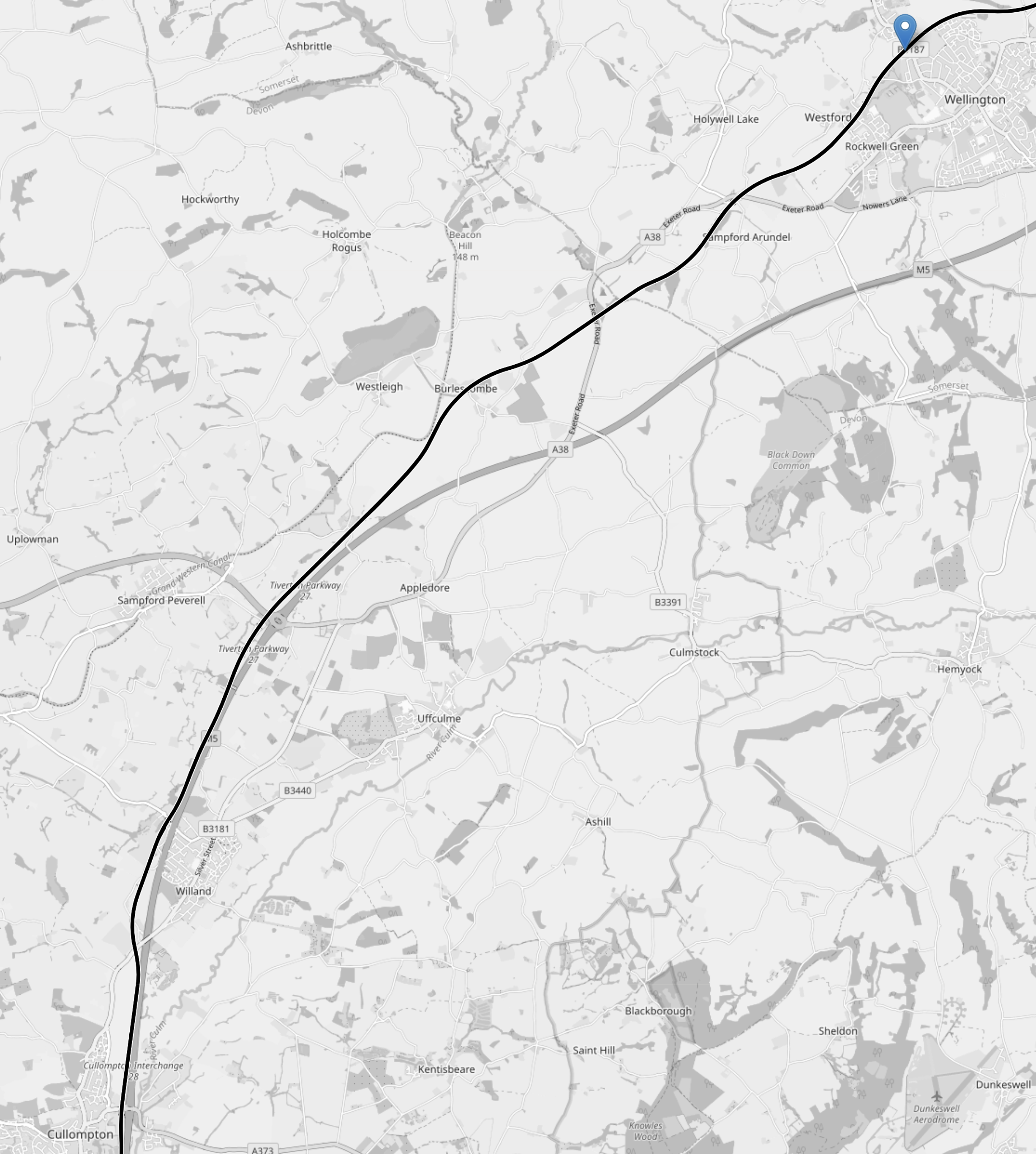
Note.
- The black line is the railway between Taunton and Exeter.
- The blue arrow in the North-East corner of the map indicates the position of the proposed Wellington station.
- Collumpton is in the South-West corner of the map and has also been put forward for a new Collumpton station.
- I talked about the reopening of these two stations in Reopening Of Wellington and Cullompton Stations.
- The M5 to the North of Collumpton runs closely alongside the railway.
- According to Real Time Trains, it takes just under ten minutes to go the thirteen miles between Wellington and Cullompton.
I believe that by using partial electrification, good engineering and innovative landscaping, that sufficient electrification can be erected between Taunton and South of Collumpton, that would ensure the following.
- Trains would leave Taunton going East with enough charge to travel the 89.6 miles to Newbury.
- Trains would leave Taunton going North with enough charge to travel the 51.7 miles to Patchway via Western-super-Mare and Bristol Temple Meads.
- Trains would leave Cullompton going South with enough charge to travel the 32.9 miles to Okehampton.
- Trains would leave Cullompton going South with enough charge to travel the 36.6 miles to Paignton.
- Trains would leave Cullompton going South with enough charge to travel the 60.4 miles to Plymouth.
Note.
- I’ve added Okehampton, as I feel that if Dawlish had another encounter with Poseidon, Okehampton with its proposed Parkway station on the A30 could be the terminus for coaches to and from Cornwall.
- Charging could be needed at Okehampton and Paignton.
- Charging at Okehampton and Paignton, wouldn’t be needed, if the battery-electric trains had enough range to do the return trip.
Electrification of Plymouth and Penzance stations, as I outlined in Thoughts About Electrification Through Devon And Cornwall, would enable battery-electric trains to bridge the gap of 79.5 miles, between these two stations.
Conclusion
It looks like some miles of sympathetic electrification and landscaping between Taunton and South of Cullompton, is the key to running battery-electric train to Devon and Cornwall.
Marsh Barton Station Will Open On Tuesday, 4th July 2023
This is said on this page on the Great Western Railway web site.
The station is due to open on Tuesday 4 July 2023.
This Google map shows Marsh Barton station under construction.
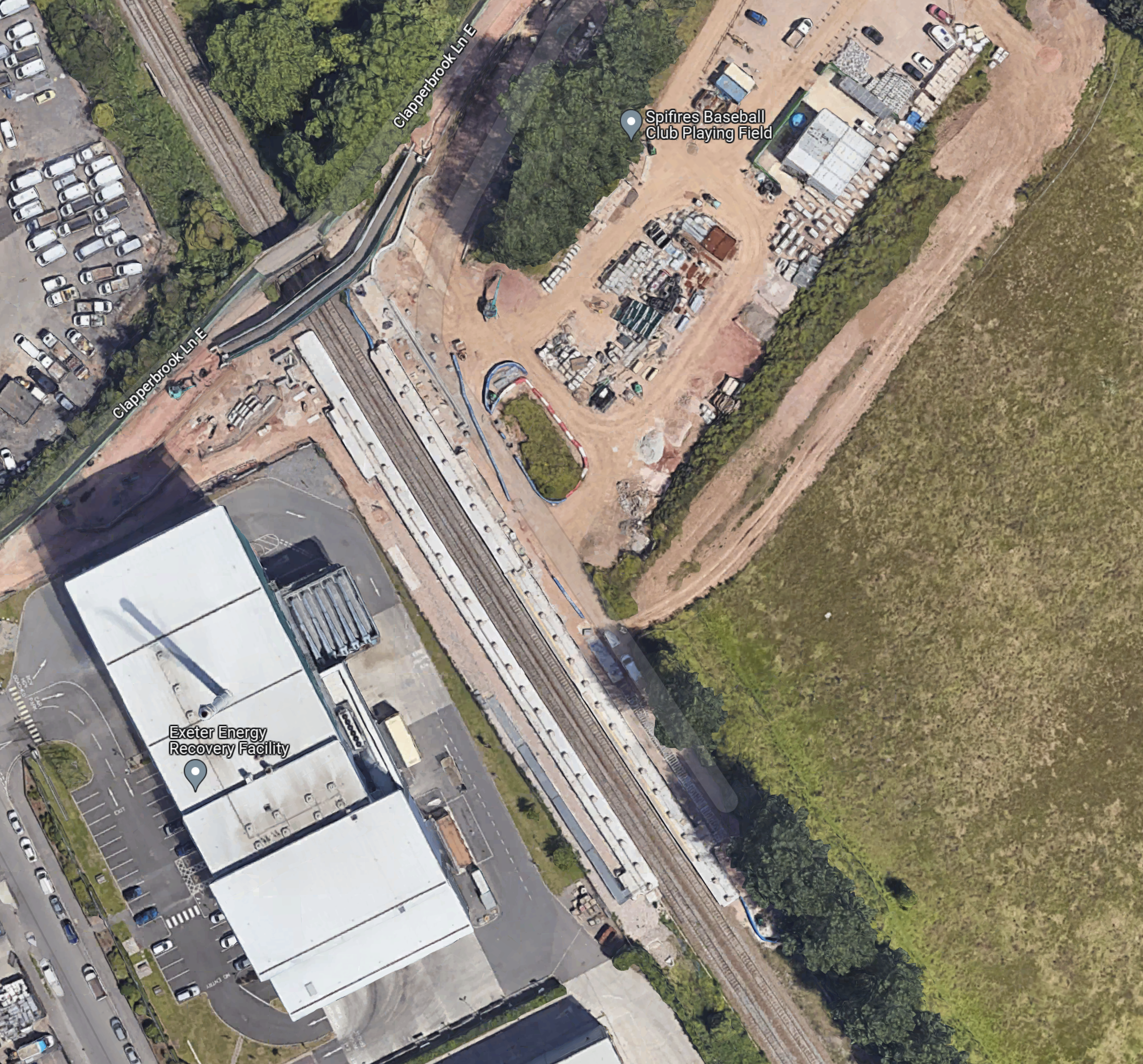
Note.
- The two five-car platforms.
- The pedestrian and cycle bridge over the tracks at the Northern end of the station.
- I would assume, that the bridges have been made high enough over the tracks for electrification.
The page on the Great Western Railway web site also has a couple of videos showing construction of the station.
Services
The page on the Great Western Railway web site also says this about services at the station.
Marsh Barton will be served by our local services between Paignton and Exmouth which run through the heart of Exeter.
We aim to provide hourly off-peak services to the station with additional trains stopping at peak times.
Currently, there is an hourly train that stops at all stations between Exmouth and Paignton, which will probably be the main service.
In addition five long distance services will pass through Marsh Barton station.
- Two trains per day (tpd) – London Paddington and Paignton via Reading, Newbury, Hungerford, Pewsey, Westbury, Castle Cary, Taunton, Tiverton Parkway, Exeter St. Davids, Dawlish, Teignmouth, Newton Abbot, Torre and Torquay
- Three tpd – London Paddington and Plymouth via Reading, Newbury, Hungerford, Pewsey, Westbury, Castle Cary, Taunton, Tiverton Parkway, Exeter St. Davids, Dawlish, Teignmouth, Newton Abbot, Totnes and Ivybridge
- One train per two hours (tp2h) – London Paddington and Plymouth via Reading, Taunton, Tiverton Parkway, Exeter St Davids, Newton Abbot and Totnes.
- One tp2h – London Paddington and Penzance via Reading, Taunton, Tiverton Parkway, Exeter St Davids, Newton Abbot, Totnes, Plymouth, Liskeard, Bodmin Parkway, Par, St Austell, Truro, Redruth, Camborne and St Erth.
- One tp2h – Cardiff Central and Penzance via Newport, Severn Tunnel Junction, Patchway, Filton Abbey Wood, Bristol Temple Meads, Nailsea & Backwell, Yatton, Worle, Weston-super-Mare, Highbridge & Burnham, Bridgwater, Taunton, Tiverton Parkway, Exeter St Davids, Dawlish, Teignmouth, Newton Abbot, Totnes, Ivybridge, Plymouth, Devonport, Dockyard, Keyham, St Budeaux Ferry Road, Saltash, St Germans, Menheniot, Liskeard, Bodmin Parkway, Lostwithiel, Par, St Austell, Truro, Redruth, Camborne, Hayle and St. Erth
Note.
- The fifth train is definitely what you would call a stopping train.
- All the through expresses stop at Taunton, Tiverton Parkway, Exeter St Davids and Newton Abbot.
- The stopping service, the Paignton trains and some Plymouth trains stop at Dawlish and Teignmouth.
- All trains stopping at Plymouth, stop at Totnes.
- The Paignton and Plymouth services are run using Class 802 trains.
- The fifth stopping service is run by a GWR Castle.
- Marsh Barton station has been built for five-car Class 802 trains.
As the GWR Castles are being retired and will probably be replaced by more Class 802 trains, we are very likely to see more Hitachi trains working between Taunton and Penzance via Tiverton Parkway, Exeter St Davids, Dawlish, Teignmouth, Newton Abbot, Totnes, Plymouth, Liskeard, Bodmin Parkway, St Austell, Truro, Redruth, Camborne and Hayle.
The Ways First Group, Hitachi, Hyperdrive Innovation and Turntide Technologies Can Enable Electric Trains To Run Between Basingstoke And Exeter
Who Are Turntide Technologies?
The Wikipedia entry for the company starts with this paragraph.
Turntide Technologies is a US-based business that makes intelligent, sustainable motor systems. Turntide applies its Technology for Sustainable Operations across buildings, agriculture, and transportation segments. It maintains operations in the USA, Canada, the United Kingdom, and India.
These three paragraphs from the Technology section of the Wikipedia entry outline their technology.
Turntide’s core product is its Technology for Sustainable Operations, a cloud-based open platform that monitors and automates building and vehicle systems. The platform is powered by its Smart Motor System, a connected hardware-software machine built around a high rotor pole switched reluctance motor.
Southern California Edison utility certified in 2018 that the V01 Smart Motor System reduced energy consumption by 23%-57% compared with a standard AC induction motor, and 11% compared with an induction motor controlled by a variable frequency drive.
In 2019, National Renewable Energy Laboratory certified that Turntide’s motor reduced energy consumption in refrigerator condenser fans by 29%-71%.
Note.
- Turntide’s efficiencies, which appear to have been verified by reputable organisations, if they can be reproduced in traction systems for battery-powered transport could improve range substantially.
- There are also other more efficient electric motors being developed.
- I wrote about Norfolk-based advanced traction motor company; Equipmake in Equipmake Hybrid To Battery Powered LT11.
- Motors like these, are the engineer’s cure for range anxiety.
I have to ask, if Hitachi (, and Stadler) are using more efficient motors to stretch the range of their battery-electric trains.
Initially, Hitachi asked Hyperdrive Innovation to design battery packs for Class 802 and other similar trains.
These three posts give some details about the battery project involving the two companies.
- Hitachi And Eversholt Rail To Develop GWR Intercity Battery Hybrid Train – Offering Fuel Savings Of More Than 20%
- Hitachi Rail And Angel Trains To Create Intercity Battery Hybrid Train On TransPennine Express
- More On Batteries On Class 802 Trains
Consider.
- In June 2021, Turntide acquired Hyperdrive Innovation.
- So did this effectively invite Turntide to the project?
- According to the Internet, Hitachi are one of the largest manufacturers of electric motors.
- Turntide are very-well funded by the likes of Bill Gates, Robert Downey Junior and some big funds.
Has there been some intense design meetings, which have been beneficial to all parties?
In my experience, these groupings don’t often work out how they should!
But this relationship seems to be doing fine.
One of Hitachi’s managers from the battery-train project even appears in the video on Turntide’s home page.
Electrifying Basingstoke And Exeter
Consider these facts about the route.
- Basingstoke and Salisbury is 35.8 miles.
- Salisbury and Exeter is 88.5 miles.
- Basingstoke and Exeter is 124.3 miles.
- There is no electrification.
- There are 14 stops between Salisbury and Exeter.
- There are 4 stops between Basingstoke and Salisbury.
- Trains are up to nine car Class 159 trains.
- Average speeds are not much better than 50 mph.
- Maximum speeds vary between 75 and 90 mph.
To get an estimate of how much energy, a Basingstoke and Exeter train will use, I’ll start with a figure from How Much Power Is Needed To Run A Train At 125 Or 100 mph?.
At 125 mph, a Class 801 train has a usage figure of 3.42 kWh per vehicle mile.
As drag is proportional to the square of the speed, which gives
- At 100 mph, a Class 801 train has a usage figure of 2.19 kWh per vehicle mile.
- At 80 mph, a Class 801 train has a usage figure of 1.40 kWh per vehicle mile.
For this calculation I’ll take the 80 mph figure of 1.40 kWh per vehicle mile.
Assuming a five-car train travelling between Basingstoke and Exeter, which is 124.3 miles gives a figure of 870 kWh.
But this is only one use of energy on the train.
- Every time, the train accelerates it will need power, but it will charge itself using regenerative braking.
- An all-electric Class 803 train has a mass of 228.5 tonnes and carries 400 passengers.
- If I assume that each passenger is 80 Kg including baggage, bikes and buggies, that gives a mass of 32 tonnes or a total mass of 260.5 tonnes.
- Putting these figures into Omni’s Kinetic Energy calculator gives a figure of 46.3 kWh at 80 mph.
As there are eighteen stops along the route and at each stop it could lose up to twenty percent of its energy, this means that the eighteen stops will cost 166.7 KWh.
Adding this to the 870 KWh it takes to maintain speed, it looks like a trip between Basingstoke and Exeter will take 1036.7 kWh.
Could this be a 200 kWh battery in each coach?
Obviously, this is only a rough calculation and with the better figures Hitachi would have, I would suspect much better answers.
But I do believe that it would be possible to run between Basingstoke and Exeter on battery power, if the train was efficient.
Charging The Train
The train would be charged on the third-rail electrification between Waterloo and Basingstoke.
But what would happen at Exeter?
The trains could be bi-modes like Hitachi’s Class 395 trains for Southeastern,
One of Vivarail’s third-rail charging systems, that First Group, acquired from the Receiver of Vivarail could be used.
Getting The Order Right
Would between Basingstoke and Exeter, be a sensible route to convert to battery-electric trains early, as it would release a useful fleet of diesel trains, that might be able to fill in for a couple of years by replacing the Castles!
Possible Regular Services Between West Somerset Railway And Taunton
The title of this post, is the same as that of this article on Rail Advent.
These are the introductory paragraphs.
Hopes are growing that regular scheduled train services will once more operate between the West Somerset Railway (WSR) and the national rail network.
There is an increasing interest in re-opening long-closed stations and lines on the network. To this end, a partnership working group has been set up to look at the prospects of running scheduled trains between WSR’s Bishops Lydeard station and Taunton, which would safeguard the WSR’s long-term future.
The working group comprises representatives of the Heart of South West Local Enterprise Partnership, Great Western Railway, Network Rail, Somerset County Council, and WSR Plc.
Given the success of the reopened Okehampton station, that I wrote about in Success For The Dartmoor Line, where 2,500 passengers a week have used the trains since last November, I wonder if Somerset is aiming to emulate Devon’s success, with the West Somerset Railway.
There are certainly similarities between the two routes.
Connection To The County Town
Both routes connect to the county town.
- The Dartmoor Line connects to Exeter, which is the county town of Devon.
- The West Somerset Railway connects to Taunton, which is the county town of Somerset.
As the county town usually contains important local services like the council offices and the Courts, this is often convenient.
Connection To The Great Western Railway
Both routes could have excellent connections to the Great Western Railway.
- Exeter St. David’s station is a major interchange.
- Taunton station could be a more important interchange.
Note.
- Both stations have connections to Bristol, London and Cornwall.
- The two stations are well-connected to each other.
- Both stations have six platforms, which include some bay platforms for branch line services.
This Google Map shows the less developed Taunton station.
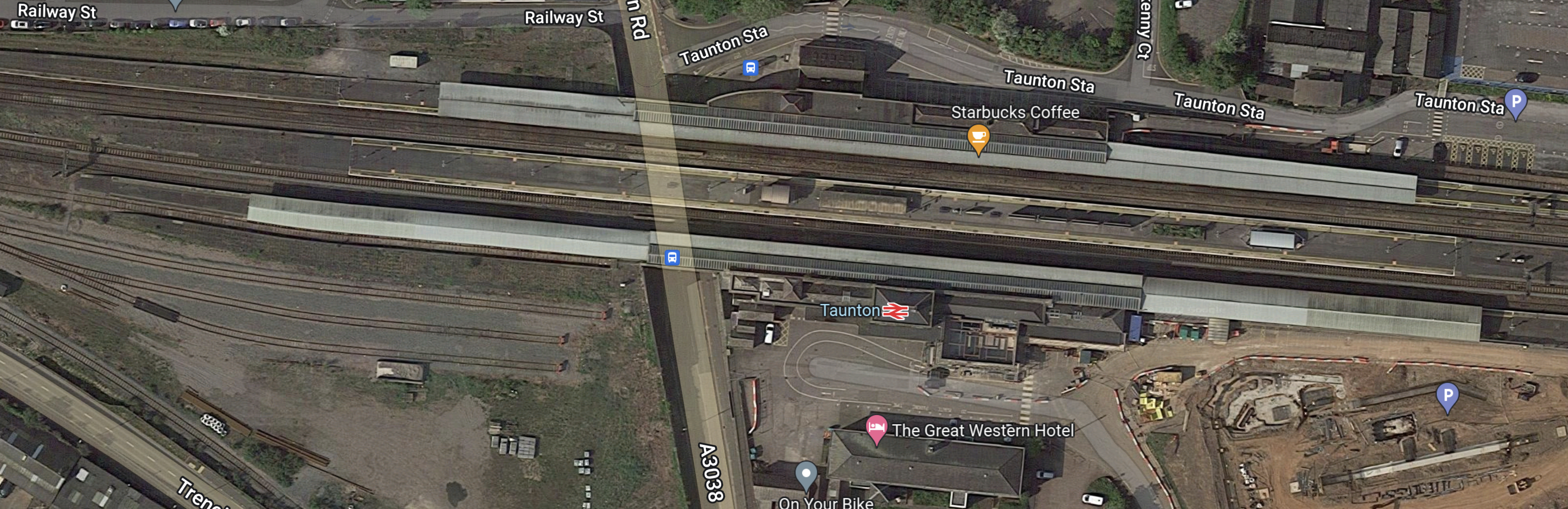
Note that there appears to be lots of space for development of rail and related development.
Both Branches Were/Are In Use Before Development
Before the Dartmoor Line was reopened, the route was in occasional use for both freight and passenger trains. Great Western Railway have in recent years run InterCity125 trains to Okehampton station.
With reopening the line to Okehampton, there was no major viaduct or bridges to rebuild, although Network Rail took the prudent decision to relay the track.
It would appear that the West Somerset Railway has similar use for both freight and passenger trains. How much work will be needed to bring it up to an acceptable standard.
Great Western Railway Are Providing Initial Weekend Services
On the Dartmoor Line services started between Exeter and Okehampton in 2019 and Wikipedia says this about initial services between Taunton and Bishops Lydeard station.
In 2019, the WSR entered into a partnership with the modern Great Western Railway (GWR) to operate Summer Saturday services to Bishops Lydeard from Taunton beginning on 27 July 2019. The introduction of these GWR services will mark the first time the station has been connected to the rest of the national rail network since its initial closure in 1971.
Is history going to repeat itself?
The First Step
This paragraph from the Rail Advent article, indicates the first step to reopening a service between Taunton and Minehead.
The first task will be to look at the simplest and most effective way in which the link between the WSR and the mainline can be improved, signalled, and operated. An outline business plan will then be developed to estimate how much it would cost.
This Google Map shows the link between the West Somerset Railway and the mainline.
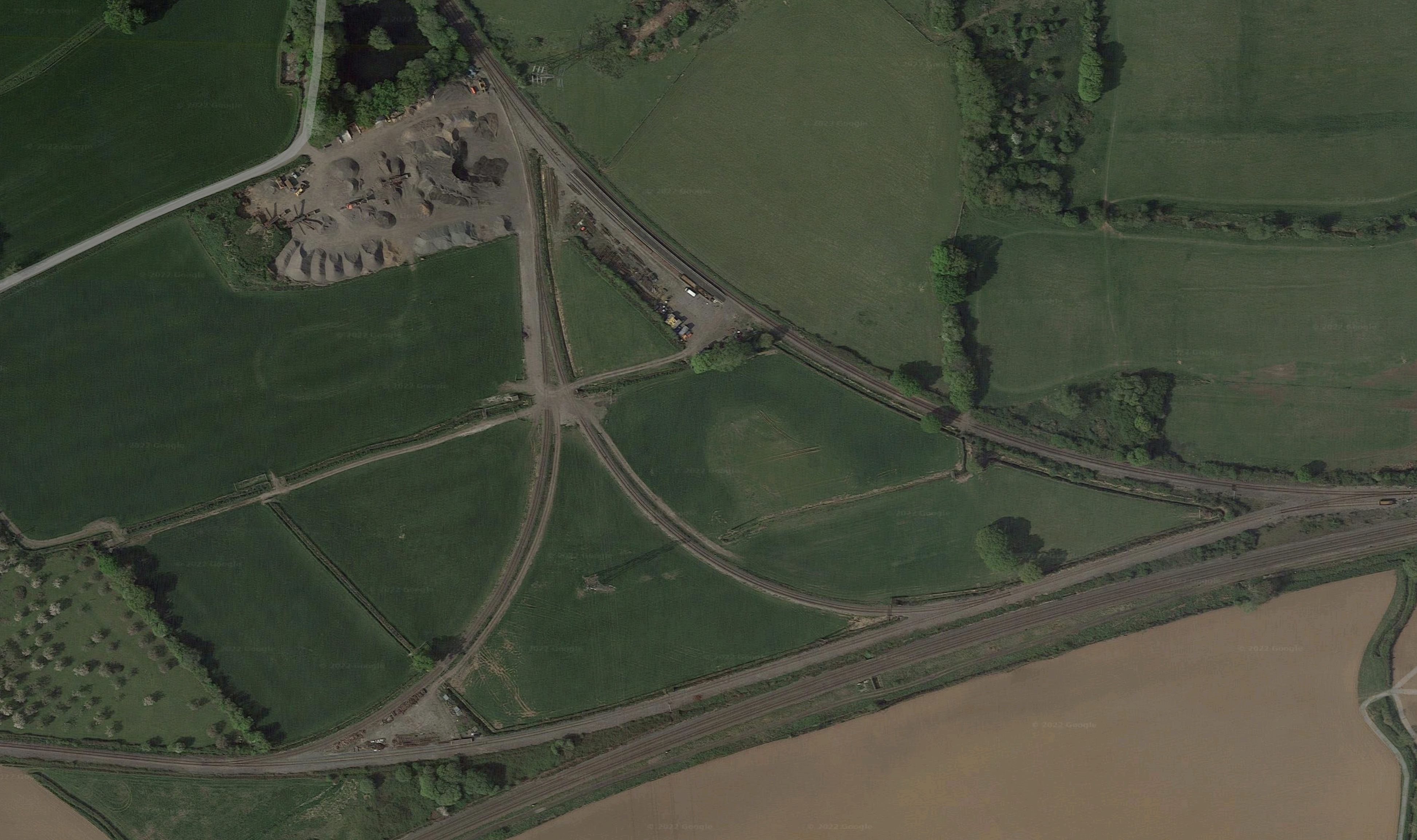
Note.
- The large triangular junction.
- The Bristol-Exeter railway runs East-West across the bottom of the map.
- Minehead is to the North.
- Taunton is to the East.
- A disused line to Barnstaple is to the West.
- The site to the West of the top of the triangular junction is a ballast cleaning site.
It does appear that there could be the space to create an efficient junction linking the two railways.
Initial Regular Services
This was one of the introductory paragraphs.
There is an increasing interest in re-opening long-closed stations and lines on the network. To this end, a partnership working group has been set up to look at the prospects of running scheduled trains between WSR’s Bishops Lydeard station and Taunton, which would safeguard the WSR’s long-term future.
This page on the Railway Touring Company web site is entitled The West Somerset Steam Express.
This paragraph describes the trip.
This series of trains from London Paddington to Minehead features haulage by two steam locomotives in one day.
One steam locomotive will haul our train from London Paddington to the West Somerset Railway at Bishops Lydeard.
The Heritage Railway will then provide a steam locomotive to haul our train to Minehead and back. This provides a truly fascinating day out travelling through beautiful scenery to the Bristol Channel coast.
So it looks like, the initial services on the between Taunton and Bishops Lydeard stations, will duplicate services that are already planned on a very much less frequent basis.
Bishops Lydeard Station
Bishops Lydeard station is the station, where mainline and West Somerset services meet.
This OpenRailwayMap shows the track layout at the station.
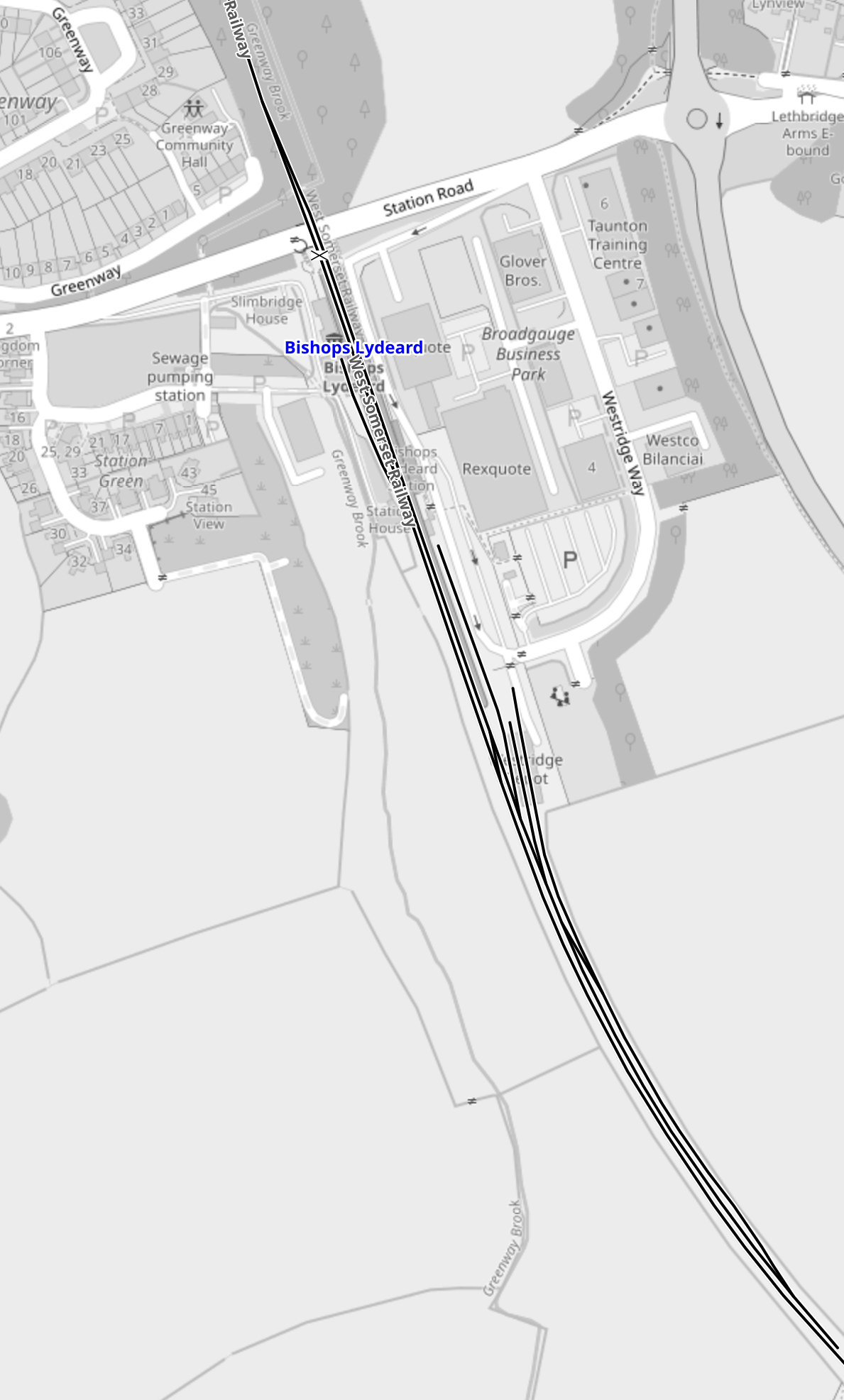
Note.
- The station is the Southern terminus of the West Somerset Railway.
- Track is single to the North and South of the station.
- Bishops Lydeard station has two platforms.
- There is a passing loop.
If the terminal station has a serious problem, it doesn’t appear to have much parking.
So it would appear, that a link to Taunton might improve the finances of the West Somerset Railway, by attracting more visitors.
Onward To Minehead
This OpenRailwayMap shows the last section of the West Somerset Railway to Minehead.
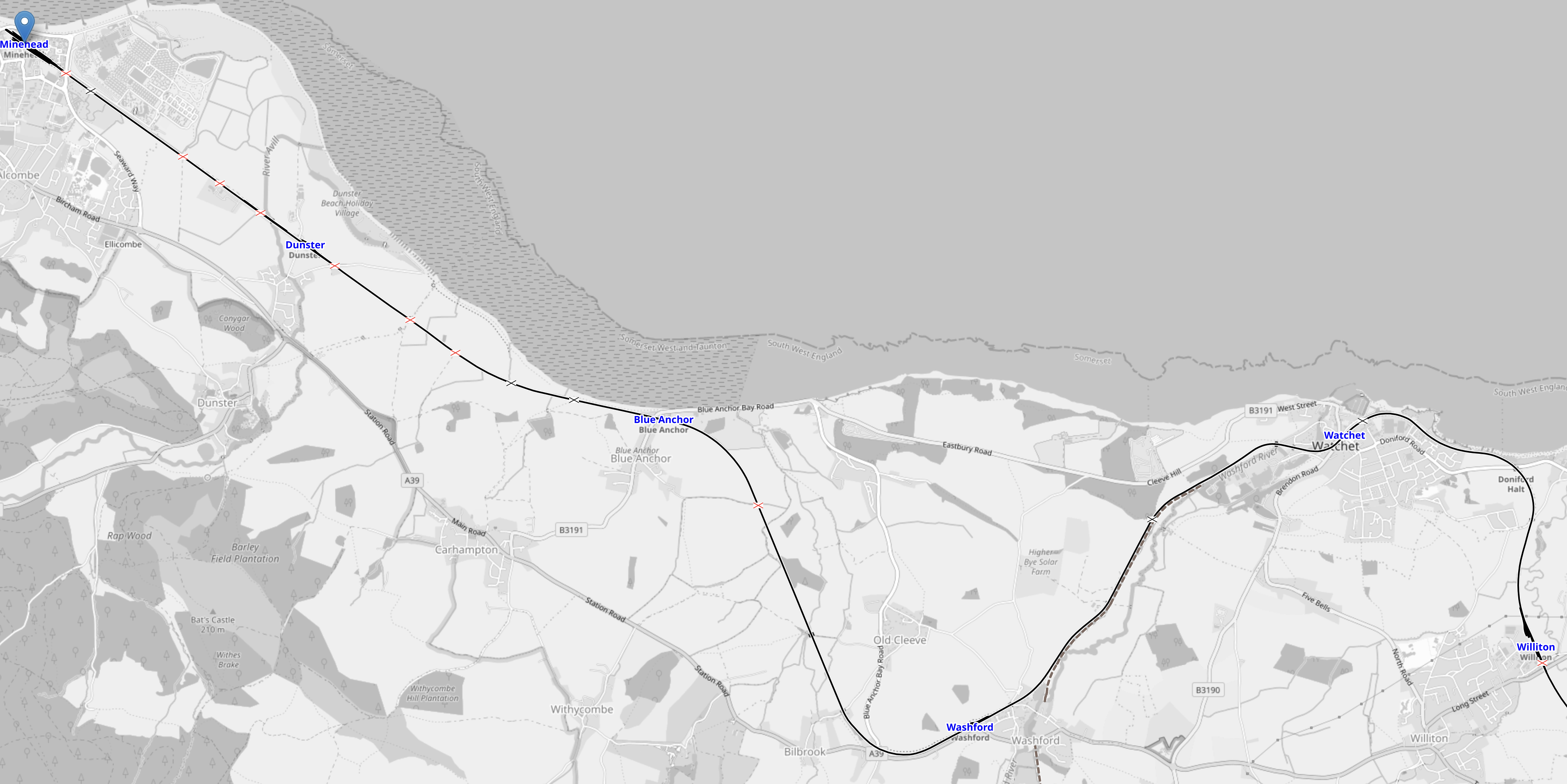
Note.
- Minehead station is in the North West corner of the map.
- Minehead station appears to be a well-equipped station, with two platforms.
- Minehead station even has a turntable for turning locomotives.
- There are four or five stations close to the coast.
The Wikipedia entry for Minehead, says this about the town.
The parish of Minehead has a population of approximately 11,981, making it the most populous town in the western part of the Somerset West and Taunton local government district, which in turn, is the worst area in the country for social mobility.
The West Somerset Railway could become both a useful and a real bucket-and-spade railway. Surely, that could generate revenue and level-up the area.
Financing
If you want something to work well, you must get the finances right.
I have lived in Dalston in London for twelve years now. When I moved here after my wife died and I had had a serious stroke, which left me unable to drive, I relied on an antiquated mainly bendy-bus-based public transport system.
Then along came the Overground and fleets of shiny new buses and Hackney and Dalston in particular was more than levelled up with London’s more salubrious boroughs.
Shopping improved with M & S returning after at least seventy years. There’s even a Pret, which boomed during the pandemic.
Transport for London got the financing for the Overground right and they created a success.
Conclusion
Can the initial working group find a financial model so that the West Somerset Railway can do for West Somerset, what the Overground has done for Dalston and the Dartmoor Line appears to be doing for Devon?
I thoroughly hope so!
Over 10,000 People Use Reopened Dartmoor Line In First Two Weeks
The title of this post, is the same as that of this press release from the Dartmoor Line.
These are the first three paragraphs of the press release.
More than 10,000 people have travelled on the Dartmoor Line in the first two weeks since its reopening.
The line reopened for regular year-round, all-week passenger services on Saturday 20 November and demand for the trains linking Okehampton and Exeter has continued to remain high.
The reopening of the Dartmoor Line is the first of the Government’s Restoring Your Railway schemes, made possible thanks to over £40 million Government investment.
All concerned must be very pleased, especially as it was delivered £10 million under budget and within nine months, ahead of time.
I described my first use of the new route to Okehampton in A Few Hours In Okehampton, where I came to this conclusion.
Exeter and Okehampton is a well-thought out reopening, that will be welcomed in the South West of England.
It would appear the passenger numbers confirm my conclusion.
Since my visit to Okehampton, I have wondered, whether the apparent success of the Okehampton reopening, would have any other effects.
In the December 2021 Edition of Modern Railways, there is an article, which is entitled South West Seeks More Reopenings, with a sub-title of Okehampton Service Could Be A Precursor.
The article details a number of projects.
Marsh Barton Station
A new Marsh Barton station is under construction and has a December 2022 opening date.
Edginswell Station
A new Edginswell station is being planned to serve Torbay Hospital on the Riviera Line, with a possible opening of 2025.
Collumpton And Wellington Stations
The last budget chipped in five million, so that preferred options and a full business case can be developed for these two new stations.
- Collumpton station will probably be developed at the site of the old station, which is close to Collumpton Services on the M5.
- Wellington station will probably be on a new site at Longworth Farm, where five hundred houses are being developed.
The Modern Railways article also says this about housing.
Thousands of houses are expected to be built in both towns in the next decade, making provision of railway stations highly desirable to avoid soaring road congestion.
Network Rail and Great Western Railway also seem to be experimenting with different service patterns through the two stations.
- Both hourly and two-hourly services have been tested.
- In the December 2021 timetable there is now a two-hourly GWR Castle service over the Taunton and Exeter stretch, that will call at the two new stations, when they open.
- To have an hourly service there will also be a Taunton and Exeter shuttle.
This service would provide access to education and employment in Exeter, Taunton and Bristol.
The cost benefit ratio is above the Government’s limit for backing of two.
Opening of the two new stations is pencilled in for 2025.
Barnstaple And Axminster
The Modern Railways article also says this.
As part of the Devon Metro concept, Devon County Council aspires to extend further eastwards the hourly Barnstaple services that currently terminate at Exeter Central, perhaps as far as Axminster.
This would need track improvements East of Pinhoe station.
The current timings of the two sections are as follows.
- Exeter Central and Axminster – 37 minutes
- Exeter Central and Barnstaple – 74 minutes
These timings probably mean that a round trip between Axminster and Barnstaple can be done in a convenient four hours, so an hourly service would need four trains.
From sometime next year, when the frequency of the Exeter Central and Okehampton service becomes hourly, the services along the route will be as follows.
- Exeter St. Davids and Axminster – Hourly
- Exeter Central and Barnstaple – Hourly
- Exeter Central and Okehampton – Hourly
There is also a service, that runs every thirty minutes between Exmouth and Paignton via Exeter Central and Exeter St. Davids, Newton Abbot and Torquay.
The frequencies on the various sections would be as follows.
- Barnstaple and Crediton – One tph
- Okehampton and Crediton – One tph
- Crediton and Exeter St. Davids – Two tph
- Paignton and Exeter St. Davids – At least two tph
- Exeter St. Davids and Exeter Central – Five tph
- Exeter Central and Axminster – One tph
- Exeter Central and Exmouth – Two tph
Note.
- tph is trains per hour.
- Other services run between Exeter St. Davids and Paignton stations.
- In recent years a new station at Cranbrook has opened between Exeter Central and Axminster.
Extending the Barnstaple and Exeter Central service to Axminster would double the frequency on the Exeter Central and Axminster section.
Axminster station is shown in this Google Map.
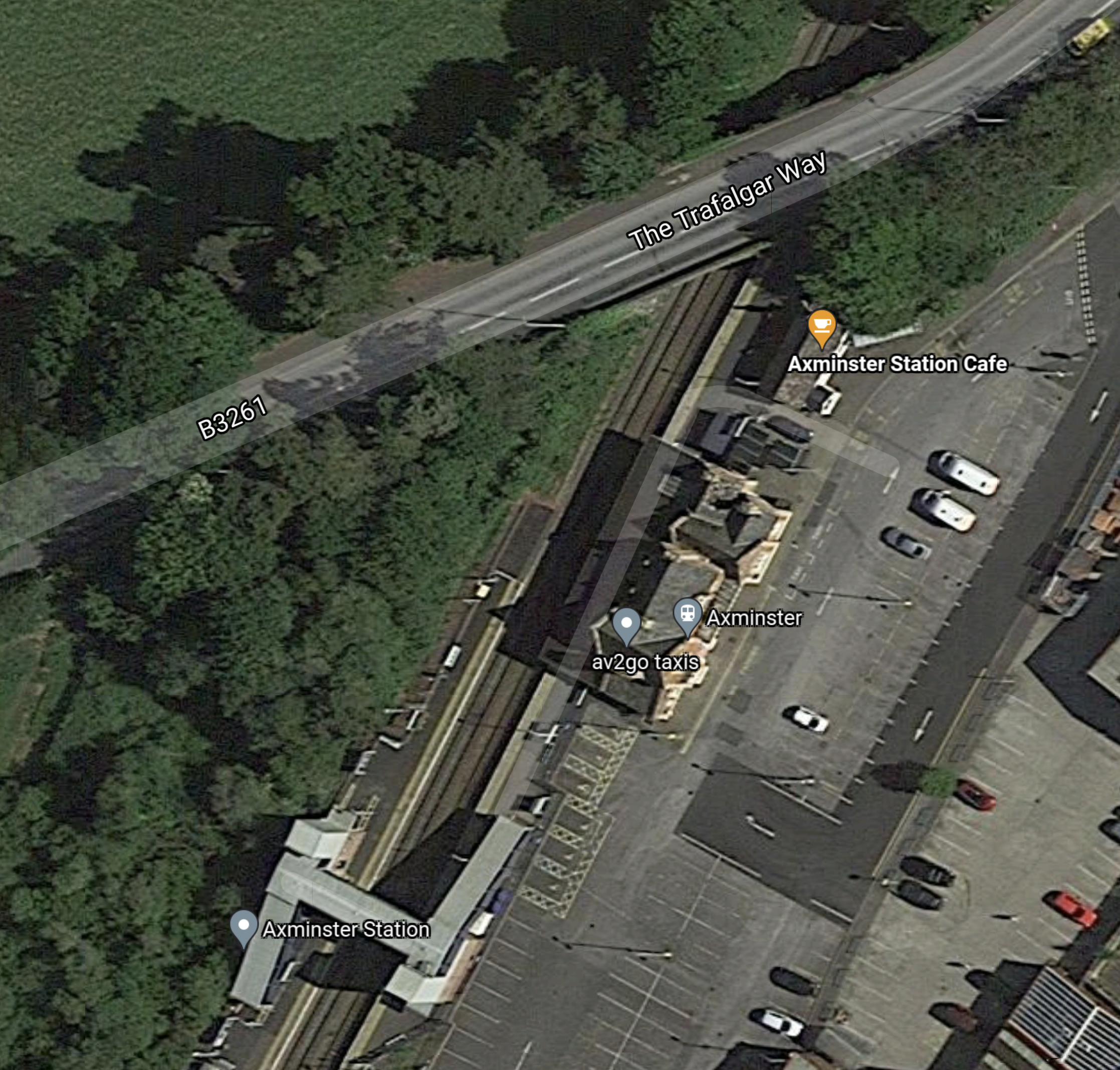
Note.
- The station has two platforms.
- The station appears to have a bridge with lifts.
- The station has a good road connection and the parking could probably be extended.
Axminster station could certainly handle a fast train between London and Exeter, a stopping train to Barnstaple and all the passengers.
Devon Metro
It does appear that the services of the Devon Metro are coming together.
- Paignton and Exmouth is already running.
- Barnstaple and Exeter Central is already running.
- Okehampton and Exeter Central has just started.
- Exeter St. Davids and Taunton via new stations at Collumpton and Wellington is being planned.
- Barnstaple and Exeter Central needs to be extended to Axminster.
How many other cities in the UK could benefit from a metro of this quality?
Bere Alston And Tavistock
The Modern Railways article also says this.
Meanwhile, further west on the former Southern network, restoration of services from Bere Alston to Tavistock has long been proposed, giving Tavistock a rail link to Plymouth. Christian Irwin, Network Rail’s Industry Programme Manager (South West), who oversaw the Okehampton reopening that came in early and underbudget, says he is keen to repeat the trick on the Tavistock route.
It is probably more difficult than at Okehampton.
- The trackbed is mainly intact, but the track has been lifted.
- The track to be laid is shorter than at Okehampton.
- Two structures at the Southern end need to be replaced.
- A new station needs to be built at Tavistock.
Devon County Council seems to be in control of the land needed.
Proposed services seem to be as follows.
- Plymouth and Gunnislake via Bere Alston – One train per two hours (tp2h)
- Plymouth and Tavistock via Bere Alston – One tph
Overall it looks like the Tavistock project will be more expensive than that at Okehampton, but there would appear to be more contributions from developers.
Devon County Council are hoping that the Tavistock link could be build in the next decade.
Tavistock And Okehampton
After the reconnection of Tavistock to the National Rail network, the council would hope to complete the link between Tavistock and Okehampton.
This would give the following benefits.
- Improved public transport connectivity in West Devon and North Cornwall.
- Improve revenue potential at Okehampton and Tavistock stations.
- Create an easier freight route.
- Create an alternative route, if the coastal route is closed.
It is a challenging project, but I feel it will be possible by perhaps 2035.
A Few Hours In Okehampton
Today, I took a trip by train to Okehampton and spent a couple of hours in the town.
I took the 10:04 from Paddington and after changing at Exeter St. Davids, I arrived in Okehampton at 13:11
Coming back, I took the 15:24 from Okehampton and arrived in Paddington at 18:24.
So the journeys took about three hours.
These pictures show Okehampton station.





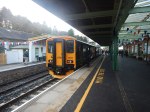




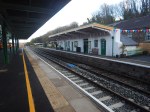

Note.
- The train was two Class 150 trains coupled together.
- I suspect the platform is long enough to take a GWR Castle train
- The bus in the pictures is the 118, of which more later.
- It looked like a buffet was under construction.
- The new train information displays.
I took the bus down to Okehampton, where I took these pictures, as I walked around.












Note, that the first three pictures show the museum and the cycle works cafe, where I had a coffee and a delicious gluten-free flapjack.
I have a few thoughts on my journey, both now and in the future.
The 118 Bus
The 118 bus runs between Tavistock and Okehampton station.
- It serves the villages in between.
- It meets the trains from Exeter and takes them to Okehampton Town Centre.
- It picks people up from Okehampton Town Centre and takes them to the station just before the trains leave for Exeter.
- It accepts contactless payment.
It is a well-designed bus route that links passengers with the trains to and from Exeter.
Many other towns could follow Okehampton’s lead.
Walking Between Station And The Town Centre
I could certainly walk down the hill, but one of the locals said that it rather a stiff walk up the hill that takes about fifteen minutes, if you’re up to it. He also felt a taxi would be about a fiver.
Could A Battery Train Work The Service between Exeter And Okehampton Station?
Consider.
- It is 24.8 miles between Exeter St. David and Okehampton stations.
- It is a rise of under 200 metres.
- The Class 150 trains climbed the hill at around 30 mph, but in places it was lower.
- Hitachi, Stadler and Vivarail are talking about battery-electric trains with a range of fifty miles.
- I was talking to one of the Great Western Railway staff and he said in the days of steam, the trains used to roll down the hill into Exeter.
- There is the 18 MW Den Brook Wind Farm close to Okehampton.
- With regenerative braking rolling down would recharge the batteries.
I suspect, that designing a battery-electric train to climb the hill is possible.
My rough estimate says that a battery of around 500 KWh could be enough.
Are The People Of Devon Going To Use The Train?
I took these pictures as I joined the train back to Exeter.








The people were a mixture of those arriving from Exeter and those returning to Exeter, but most seats were taken on the way back.
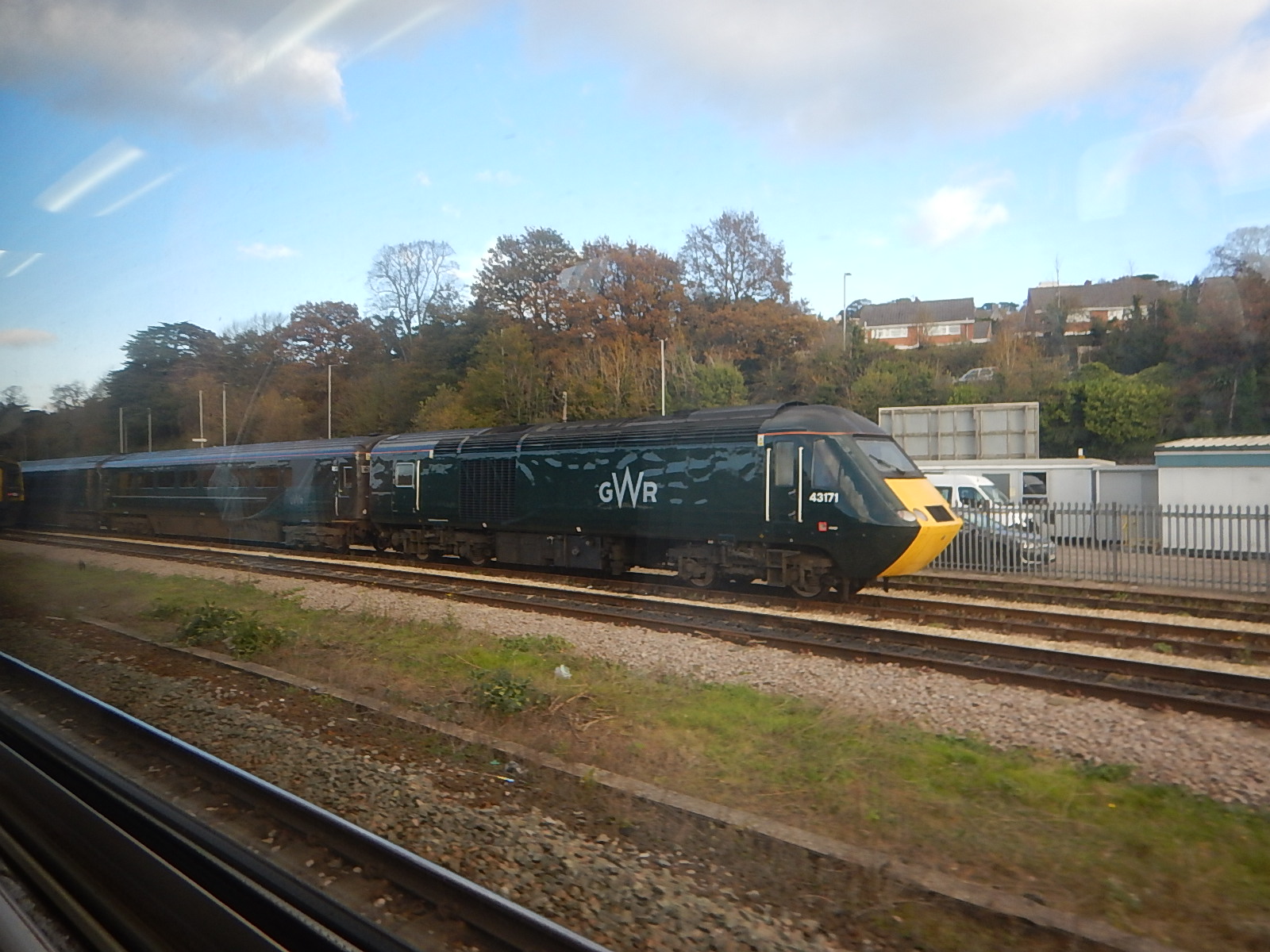
I can see Great Western Railway running Castles, like the one in the picture, for services on this route in the Summer, both to attract passengers and to cope with their numbers.
Local Reaction
I talked to several local people and they were all pleased that the service has been reinstated.
The only complaint was that it should have happened sooner.
Is A Day Trip Possible?
Suppose you live in London and your mother or other close relative lives in Okehampton.
Would it be possible to be able to visit them on their birthday for a good lunch?
Consider.
- At the present time, trains from London, connect to the Okehampton service about every two hours.
- The first connecting service leaves Paddington at 08:04.
- Trains take around three hours between Paddington and Okehampton.
- From probably May 2022, there will be hourly connections to Okehampton.
- The last London train leaves Exeter at 20:46.
If you wanted to be a real hero, you could always take the Night Riviera back to London, which leaves Exeter at 0100.
I would say that if they planned it properly, a day trip from London to Okehampton by train, is feasible for a special occasion.
Will Great Western Railway Ever Run Direct Trains Between London Paddington And Okehampton?
I doubt this would be a regular service but I do believe that it is technically feasible.
- Trains would need to reverse at Exeter St. Davids.
- Trains would probably be limited to five car Class 802 trains.
- Okehampton station could probably accommodate a five-car Class 802 train.
- I estimate that the journey time would be a few minutes under three hours.
It should be noted that Paignton gets around three trains per day (tpd) from Paddington.
It might be that if the demand was there, a few trains per day could be run to and from London, by splitting and joining with the Paignton service at Exeter St. Davids.
- If both services were run by five-car trains, there would be a ten-car service to and from London.
- It certainly looks that GWR wouldn’t have to spend a great deal to implement the service.
- The extra capacity of the five-car train might help commuters into Exeter.
It is likely that this service wouldn’t run until Okehampton Parkway station is opened, which would attract travellers from the West, who would arrive at the station along the A 30 dual-carriageway
I can certainly see a service leaving Okehampton at around seven in the morning and getting into London about ten, paired with a late afternoon/evening train home.
It should be noted, that First Group with their Lumo service between London and Edinburgh, seem to negotiate for paths that create revenue.
But I do wonder, if one of the reasons , that Great Western Railway, Network Rail, Devon County Council, the Department of Transport and the Government were all very much in favour of reopening this route, is that it creates a valid alternative route between London and Plymouth and all places to the West, should the main route via Dawlish be breached again by the sea.
Okehampton station and the future Okehampton Parkway station are both close to the A30 which would allow express coaches to Plymouth and all over West Devon and Cornwall to bypass the trouble.
Hopefully, because the alterative route has been enabled the worst won’t happen.
Conclusion
Exeter and Okehampton is a well-thought out reopening, that will be welcomed in the South West of England.
Trains Restart On Dartmoor Rail Line After 49 Years
The title of this post, is the same as that of this article on the BBC.
This shows what Network Rail can do, if they pull out all the stops.
I have said this before in Railway Restored: Regular Trains To Run On Dartmoor Line For First Time In 50 Years.
Network Rail have set themselves a good precedent to open the line in nine months and £10 million under budget.
But it could turn out to be one of the most significant days in the development of the railways of the UK.
Well done! Network Rail!
Here’s to the next reopening!
Reinstating The Line Between Tavistock And Bere Alston And Providing New Services To And From Plymouth
On October 27th this Beeching Reversal Project was given £50,000 to build a case for reinstating.
This project finally seems to be getting going.
The complete reinstatement between Exeter and Plymouth seems to be developing into a three-phase project.
- Phase 1 – Exeter and Okehampton – This is now complete and trains are test running, with services due to start on the 20th November.
- Phase 2 – Tavistock And Bere Alston – This section is being planned and if approved could be the next section to be opened.
- Phase 3 – Tavistock and Okehampton – This would complete the reinstatement of the route between Exeter and Plymouth.
These are my thoughts.
The Completion Of Phase 1
Trains are now test running to between Exeter and Okehampton.
The full service starts on the 20th November.
- On that day, there will be eight trains per day (tpd) in both directions.
- Trains will leave Exeter at 06:32, 08:41, 10:36, 12:37, 14:38, 16:36, 18:48 and 21:00.
- Trains will leave Okehampton at 07:39, 09:45, 11:39, 13:39, 15:39, 17:46, 19:51 and 22:34.
- Trains are times to take around forty minutes for each trip.
- The service is pathed as a Class 150/153/155/156 DMU
- The service is planned for a maximum speed of 75 mph.
Note.
- This is approximately one train per two hours (tp2h).
- It looks like the service could be worked by a single train shuttling all day.
The Wikipedia entry for Okehampton station says this.
The service will increase to hourly towards the end of 2022.
It has been a very smooth restoration of service.
Okehampton Parkway Station
Okehampton Parkway station is to be built to the East of Okehampton at Stockley Hamlet.
- It will be close to a junction with the A30 dual-carriageway, which links London and Penzance.
- The A30 connects to the Cornish Main Line in Cornwall at Bodmin, Redruth and Penzance.
It looks like it could be a very useful Park-and-Ride station for Exeter and Okehampton.
Could The Okehampton Stations Be Used To By-Pass Dawlish?
In 2014, the sea breached the sea wall and the railway at Dawlish, on the Great Western Main Line between Exeter and Plymouth. Trains couldn’t run past Exeter.
I very much feel that with global warming and seemingly increasingly bad weather that we can’t say that a breach won’t happen again.
Could it be possible to use the one of the Okehampton stations, as a terminal for a Rail Replacement service that connected to Plymouth and Cornwall?
The Gap Between Okehampton And Bere Alston
This Google Map shows the gap between Okehampton and Bere Alston stations.
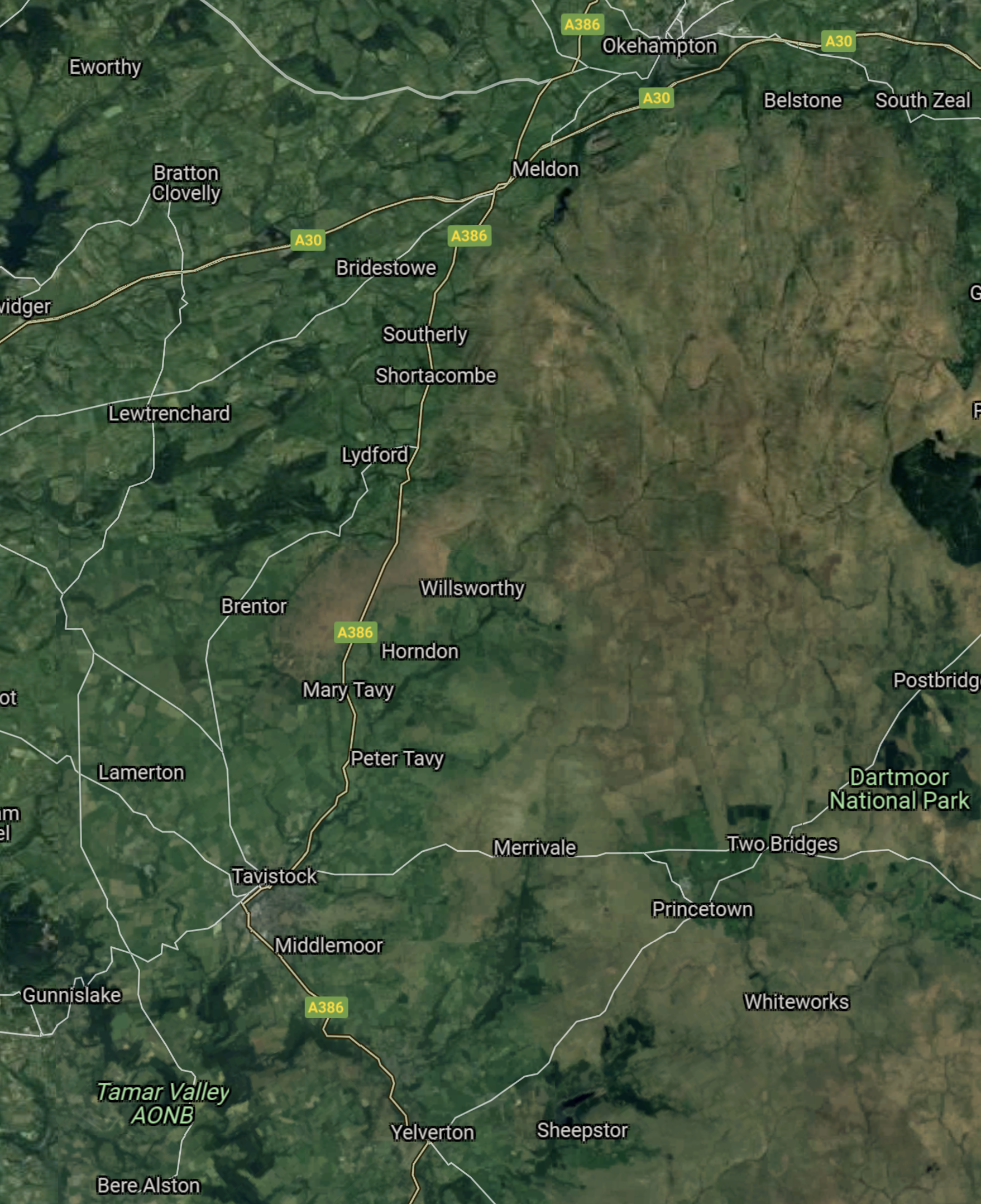
Note.
- Okehampton is at the top of the map between the three green rectangles which mark the main roads.
- Bere Alston is in the South-West corner of the map.
- Tavistock is North of Bere Alston.
- The three places are connected by the A 386 road.
Is there a bus between Okehampton and Bere Alston, that serves Tavistock and the major villages?
Phase 2 – Tavistock And Bere Alston
This Google Map shows between Tavistock and Beer Alston station.

Note.
- Tavistock is in the North-East corner of the map.
- Bere Alston is in the South-West corner of the map.
- I estimate that about six miles of new track will have to be laid.
This Google Map shows Bere Alston station, which is to the North-West of the village.
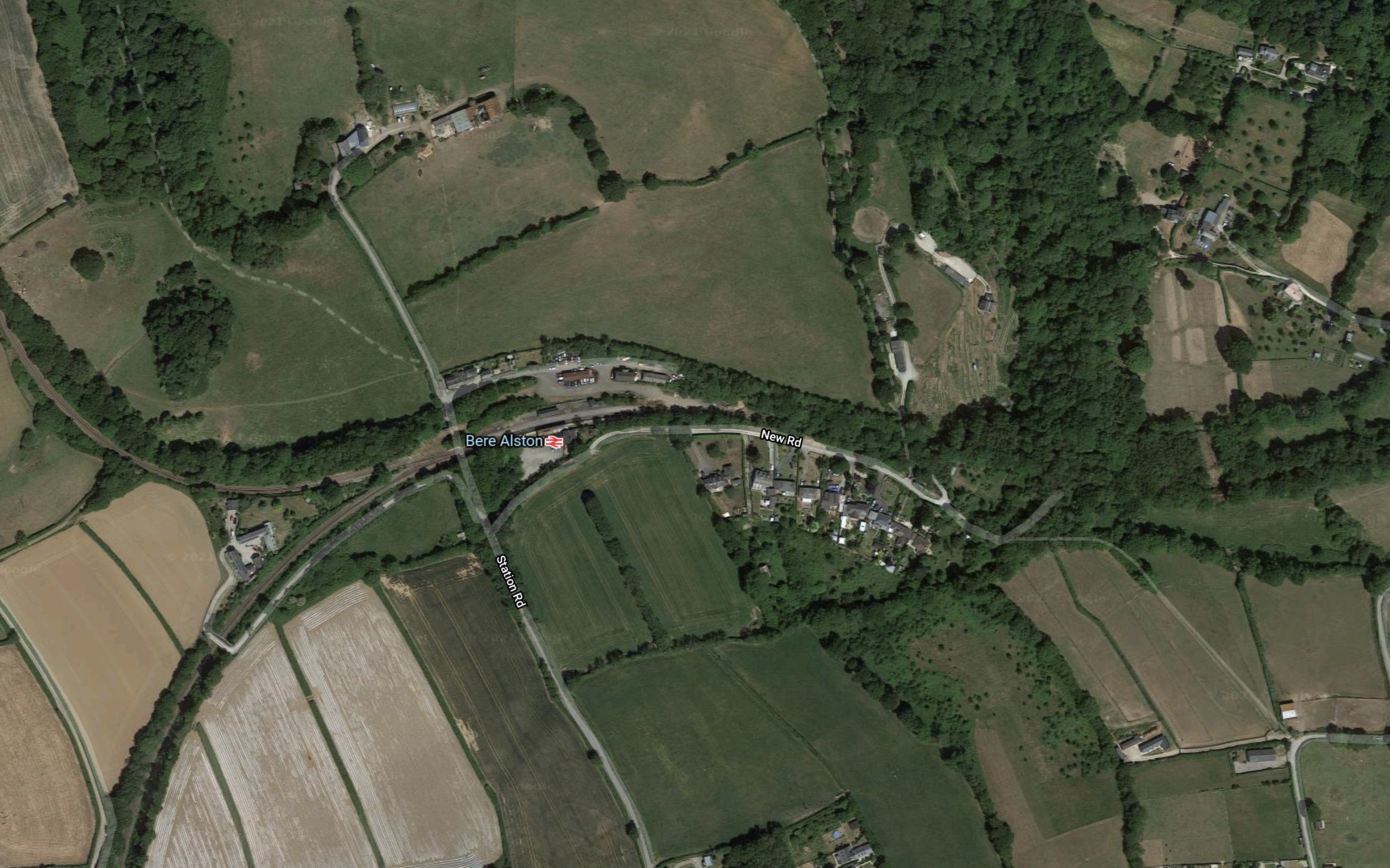
Note.
- Bere Alston station is on the Tamar Valley Line.
- The Tamar Valley Line is all single-track.
- Trains to and from Gunnislake station use the Northbound track at the junction to the West of the station.
- Trains to and from Plymouth use the Southbound track at the junction to the West of the station.
- Trains between Gunnislake and Plymouth reverse at Bere Alston station.
It would appear that the route to Tavistock continued to the East.
This Google Map clearly shows the route of the disused railway as it runs North-East from Bere Alston station.

Note.
Bere Alston station is the South-West corner of the map.
The dark green line of the railway runs to the North-East corner of the map.
As all the railways in the area seem to have been single-track, I would suspect that any rebuilt railway on this route will be single track.
I have followed the dark green line through to Tavistock which is shown in this Google Map.

As the Department of Transport are prepared to finance a study for reinstatement of the route, I would suspect that there is a feasible route between Bere Alston and Tavistock.
- There would appear to be no bridges or viaducts between Bere Alston and the outskirts of Tavistock.
- Before closure, there no stations between Bere Alston and Tavistock North stations.
- Bere Alston station would need to be rebuilt.
The Wikipedia entry for Tavistock North station, says this about the condition of the line.
The station building has been restored and converted into three self-catering cottages. The stationmaster’s house is being restored as a private dwelling, while the goods yard, now known as Kilworthy Park, houses the offices of West Devon Borough Council. The track bed for about one mile (1.6 km) south of Tavistock North station is open to the public as a footpath and nature reserve, and it is possible to walk across the viaducts that overlook the town.
The rest of the track bed south of Tavistock is almost intact to Bere Alston, where it joins the present-day Tamar Valley Line. There has been discussion regarding the re-opening of a rail link for a number of years. Engineering assessment has shown that the track bed, and structures such as bridges and tunnels, are in sound condition.
I can foresee some problems, in what might not be one of the most challenging of projects.
- Claiming back the railway from the walkers and cyclists.
- The ownership of the stationmaster’s house.
Unlike Scotland, England didn’t make sure that rail routes could be converted back to railways if needed.
My project management knowledge leads me to agree with what appears to be a decision to do this part of the route next.
Phase 3 – Okehampton And Tavistock
The title of this project as given in the Railway Gazette article is as follows.
Reinstating The Line Between Tavistock And Bere Alston And Providing New Services To And From Plymouth
If you read this literally, it doesn’t mention anything about connecting to Okehampton and Exeter.
- Looking at maps and reading up on the line, it does appear that the route may be more challenging.
- The route also contains the Meldon Viaduct, which is a scheduled monument.
Until a viable plan is developed, it might be better and more affordable to run zero-carbon buses between Tavistock and Okehampton.
 The Anonymous Widower