Whisky Galore!
The Levenmouth Rail Link has carried freight in the past.
Mainly in the past, it was coal to the now-demolished Methil power station.
But it has been known to carry whisky for Diageo.
This Google map shows the area.
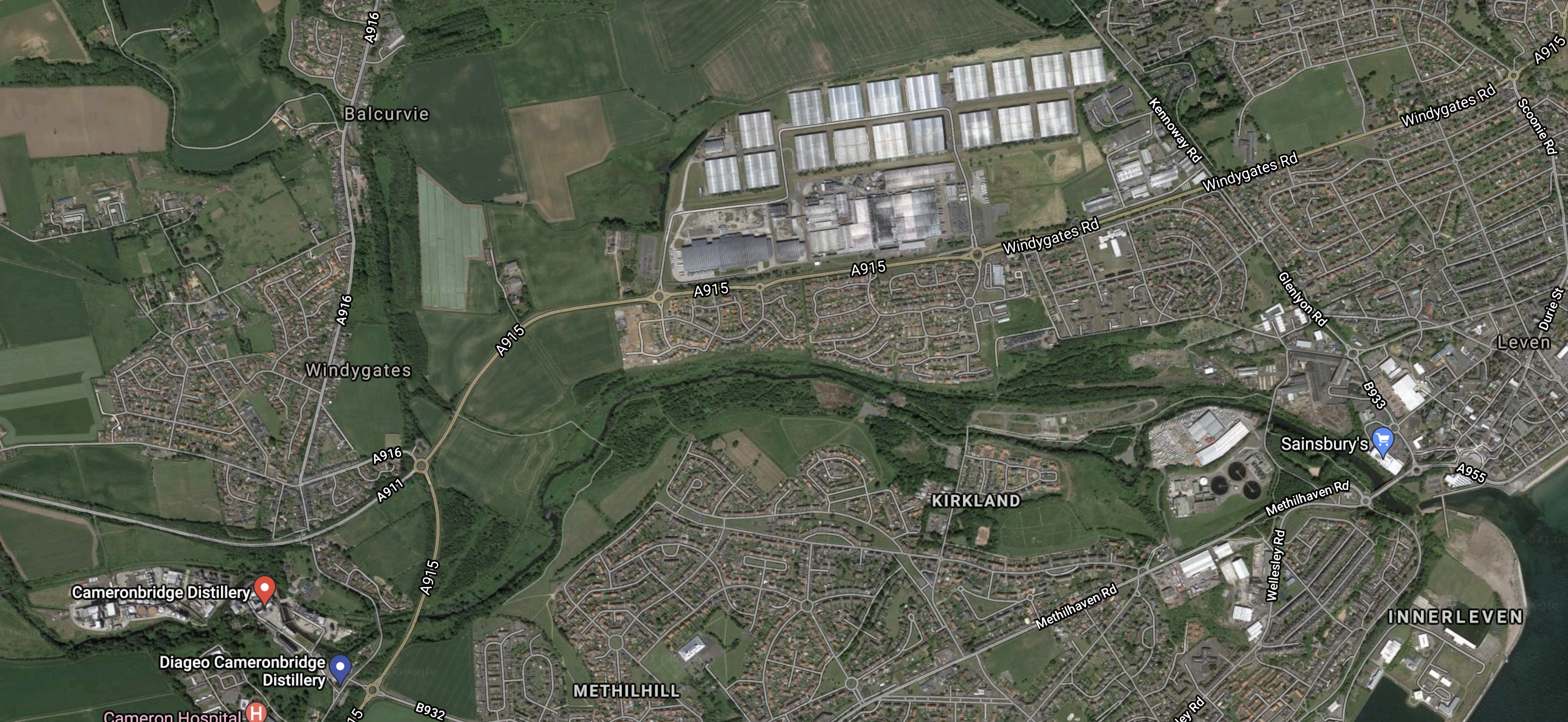
Note.
- The blue dot marking Sainsbury’s by the bew Leven station, by the mouth of the River Leven.
- The railway follows the river with Cameron Bridge station to the East of the A915 and the two Camero Bridge distilleries.
- The silver warehouses at the North side of the map are labelled Diageo Global Supply.
I wonder, if a siding can be provided for the distribution of products stored in the warehouses?
Companies are looking to lower their carbon-footprint and I wouldn’t be surprised, if Diageo were looking at rail distribution.
Modern Rail Freight Distribution
Companies are converting redundant electric multiple units into fast parcel delivery trains to replace diesel trucks.
- Typically, four-car trains are used.
- Trains have a 100 mph capability and can be 240 metres in length.
- Eversholt Rail Group are proposing adding battery power. This would be ideal to reach Cameron Bridge over the Forth Bridge.
These trains would be ideal for the delivery of Scotch Whisky.
They might even be capable of exporting product through the Channel Tunnel.
I don’t think the capacity of the Levenmouth Rail Link would be a problem, as it is a double-track railway, that can probably handle over four trains per hour and there is plenty of capacity for a number of freight trains.
Conclusion
I think freight will play a use in the future of the Levenmouth Rail Link.
Related Posts
The New Leven Station On The Levenmouth Rail Link
The New Cameron Bridge Station On The Levenmouth Rail Link
Is This The Shape Of Freight To Come?
This article on Rail Advent is entitled Eversholt Rail Unveils First Swift Express Freight Train In Doncaster.
It is a full report on the first of a new breed of freight trains based on redundant 100 mph electric multiple units.
Three Rail Problems
The rail industry, its financiers and customers have a lot of problems, they’d like to solve, but these three seem to be coming together to create a whole new industry.
Rolling Stock Leasing Companies Have A Surplus Of Redundant Rolling Stock
Most of the released rolling stock has been made redundant because of the arrival of new trains.
- Some trains and locomotives, like Greater Anglia’s Class 379 trains and Class 90 locomotives will probably be passed on to other operators.
- Some trains like Greater Anglia’s Class 315 trains and Govia Thameslink Railway‘s Class 313 trains and Merseyrail‘s Class 507 trains and Class 508 trains will probably only be fit for scrapping.
- Climate change ambitions will probably finish off anything which is elderly and diesel-powered.
What will be left will be a an assortment, which will contain a lot of trains with these characteristics.
- Four cars
- Can run in formations of 4, 8 and 12 cars
- Electrically-powered.
- Some trains are even dual voltage.
- 100 mph operating speed.
- Good reliability.
- Easy maintenance and modification if needed.
Many were even built over thirty years ago by British Rail Engineering Ltd.
As someone, who used to part-own a company that leased trucks to operators, I know that to maximise cash-flow and ultimately profits, you don’t want them sitting in a yard or a siding.
Conversion to zero carbon is one option.
- Porterbrook have said they will convert the Class 350 trains, that they own to battery-electric operation.
- Porterbrook have also converted some Class 319 trains to electro-diesel Class 769 trains.
- Porterbrook have also converted a Class 319 train to hydrogen operation.
- Eversholt Rail Group and Alstom are converting Class 321 trains to hydrogen operation.
I also believe that the redundant Class 379 trains will also be converted to battery-electric operation.
But there will still be a substantial number of quality trains, that need a second life.
The Growth Of Parcel Freight
Parcel freight traffic driven by on-line shopping, has boomed in the pandemic.
This type of traffic often originates from outside of the UK and enters the country at places like London Gateway or East Midlands Airport.
Much of it is currently distributed to large cities by truck, which in this day and age is not a green option, or even an option at all.
Rail Operations Group have leased ten Class 769 trains and 9 Class 319 trains with the intention of running parcel services under the Orion brand. I wrote about this proposal in A Freight Shuttle For Liverpool Street Station Planned.
Road Congestion
Road congestion is getting worse and there is bir much point in having product stuck on the motorway, when it can be running along at a 100 mph on an electrified rail line.
The Need For Just-In-Time Deliveries
Many factories these days work on the Just-In-Time principle, with product delivered just as its needed.
As an example Toyota build their cars at Burnaston near Derby, but the engines are built in North Wales. I suspect that they go across the country by truck.
Looking at maps, the engine plant could be rail connected and I feel one could be arranged at Burnaston.
Do they keep a good stock of engines at Burnaston?
I can see several situations like this needing a regular company train.
Fast Food
Because of Brexit we will need to be growing more of our own food.
Traditionally, the Class 43 power cars of InterCity 125 trains carried flowers and fish up from Cornwall.
So will we see rail provide an alternative.
Conclusion
Put these problems together and you can see a fair number of four-car electric multiple units being converted to short 100 mph electric freight trains.
Eversholt Rail Group‘s Swift Express Freight Train is very much a demonstrator for their ideas and it has some expected and unexpected features.
Based On A Class 321 train
The train is based on a four-car Class 321 train.

I rode one recently and I timed it at over 90 mph on the way to Southend.
Trolley Cages
Pictures in the Rail Advent article show a stripped-bare interior with a steel floor, with another picture showing three supermarket trolley cages arranged across the train.
One estimate in the article says that each coach can handle over fifty of these cages and up to nine-and-a-half tonnes of cargo.
Four Seats And A Toilet
Eversholt feel that some of the trains could be used in a Travelling Post Office mode and there may be a need for sorting en route, so two first-class seats, two second-class seats and a toilet are provided.
This train would enable an Anglo-Scottish parcel service.
- It might stop several times en route.
- At each stop parcels would be rolled out and in, perhaps with the help of a Harrington Hump.
- The on-train staff would sort the incoming parcels and put them in the required trolley for offloading.
I don’t think though, they’ll be delivering postal orders.
A Last Mile Capability
The article also disclosed that Eversholt were thinking of fitting a Last-Mile capability to the Swift Express Freight Train.
Batteries were mentioned and they would obviously work.
But one development recently is Porterbrook’s HydroFlex train, which has converted a Class 319 train to hydrogen power.
- The conversion was done by Birmingham University.
- It appears that all the hydrogen gubbins is underneath the floor, so cargo capacity would not be reduced.
I suspect underfloor hydrogen power could be very viable in an express freight train.
Fleet Size
The article talks of a fleet size of twenty and also says that the first train has been leased to an unnamed parcel distributor in the UK.
My First Ride In A Class 769 Train
I went to Cardiff today and had my first ride in a Class 769 train. These pictures summarise my ride on the train between Cardiff Central and Bargoed stations.




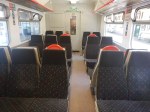
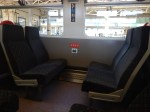
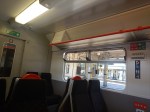
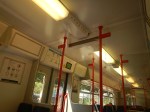


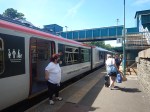
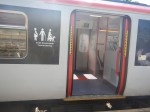
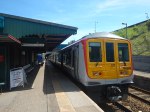
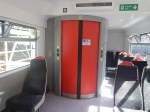
So what was it like?
Noise And Vibration
Going up to Bargoed, I deliberately sat as near over the top of the engine as I could.
There was a bit of a whine, but not as much as in a new Class 195 train.
For those, who commuted on Class 319 trains for years on Thameslink, they probably wouldn’t notice much difference.
Performance
For a 100 mph electric train built for running between the flat lands of Bedfordshire and the South Coast over the hillocks of the Downs, the train climbed to Bengoed, which has an altitude of around a thousand feet with a purpose.
But then I have a Porterbrook brochure for these trains and the power source was sized, such that the train would be able to climb the stiffest routes in the UK.
The Interior
It looked to me like the Thameslink interior with new sea covers and plugs to charge a mobile phone.
They could certainly be upgraded a bit further to the standard of the Class 319 trains on the Abbey Line, that I wrote about in A Very Smart Class 319 Train.
A Job To Do
Trains for Wales has acquired these trains for extra capacity, whilst they refurbish their Class 150, 153 and 160 trains.
It looks to me, that they will do this job more than adequately.
Future Uses
I suspect Porterbrook hope that these trains will find uses around the UK, as they have spent a lot of time, effort and money to bring these trains into service.
But there are around eighty of the Class 319 trains in service or in store, from which the Class 769 trains are converted.
So they could find uses in several niche applications.
Short Term Fleets
This is effectively, the Trains for Wales application, where extra trains are provided, so that a fleet refurbishment can be performed.
- They would surely, have been a better replacement fleet for Greater Anglia, than the three Mark 2 coaches and a pair of diesel locomotives, that they used after a series of level crossing accidents.
- They could also be used to increase capacity for some major events like the Open Golf or a pop festival.
- Uniquely, they can stand in for both a 100 mph electric train or a 90 mph diesel train.
- They can even be fitted with third-rail shoes.
- They are the right size at four cars.
- They fit most UK platforms.
- They can be run in formations of up to twelve cars.
I wouldn’t be surprised to see Porterbrook or someone on their behalf, keep a fleet of trains on standby to handle short term needs.
Route Development And Testing
There has been a lot of pressure to open up new routes in recent years and these trains would be ideal to try out routes and test new electrification.
Tri-Mode Services
Great Western Railway have a particular problem with their service between Reading and Gatwick, in that it has some third-rail electrification. As they might like to extend this service to Oxford, an ideal train would be dual-voltage and self-powered.
This extract is from the Great Western Railway section in the Wikipedia entry for the Class 769 train.
Although initially planned for use in London and the Thames Valley whilst twelve Class 387 units are modified for Heathrow Express services, the future plan for these units will be operating on services between Oxford, Reading and Gatwick Airport, which would mean operating on unelectrified, 25 kV AC OHLE and 750 V DC third-rail routes. To enable this, Great Western Railway’s allocation of Class 769 units will retain their dual-voltage capability in addition to being fitted with diesel power units. The units will also receive an internal refurbishment and be fitted with air cooling.
I suspect, that they’ll also be used on the Henley, Marlow and Windsor branches, which have some operational problems.
- The branches are not electrified.
- Some branches run occasional services to Paddington.
- The Windsor branch probably needs more capacity.
The Marlow branch could be difficult, but I suspect that, there’s a solution somewhere.
Luxury Bi-Modes
Greater Anglia felt they needed luxury bi-modes for East Anglia and they bought Class 755 trains, which are probably a lot more expensive, as they are brand-new and from Stadler of Switzerland.
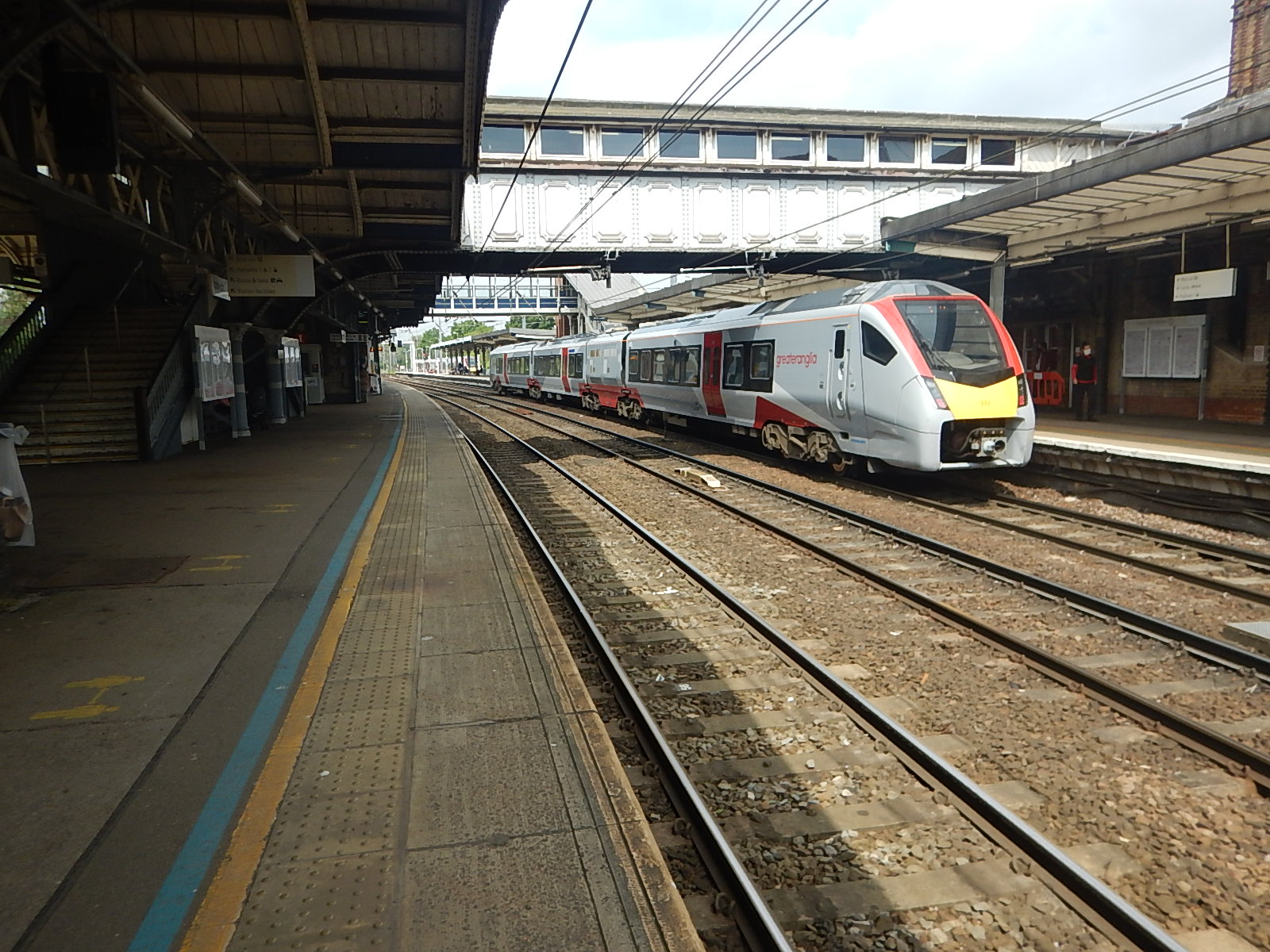
Surprisingly, the Class 319 trains have a higher passenger capacity.
But both trains could do a similar task, where the route is partially electrified.
As I said earlier about the GWR units.
The units will also receive an internal refurbishment and be fitted with air cooling.
Porterbrook’s brochure for the Class 769 train talks about using them between Manchester and Buxton.
Surely, this route could do with a Northern version of a GWR interior.
I also think a service should link Hellifield and Buxton. as I wrote about in Why Not Buxton To Hellifield?
That would show what Class 769 trains could do!
It would also connect the Peak District to the hills North of Lancashire.
I might also be, that the standby-fleet should also be the luxury variant of the train. Surely, supporters going to the Open at some of the inaccessible venues could afford pay to pay extra for a comfy train.
Express Freight And Parcels Services
Rail Operations Group would appear to have placed the second-largest order for Class 769 trains, which they will use to launch a high-speed parcels service called Orion.
This extract is from the Rail Operations Group section in the Wikipedia entry for the Class 769 train.
Orion is aiming to launch its first trial service conveying parcels and light freight in April 2021, with the Midlands to Mossend now likely to be the debut flow. The company is to use converted Class 319s for the service and is now planning for a fleet of 19 four-car units – nine Class 319s and 10 Class 769s. Arlington Fleet Services at Eastleigh is modifying the interiors of the units to accommodate roller cages for parcels, with the aim of operating primarily under electric power but with the 769s using their diesel engines to act as tractor units for the 319s on non-electrified stretches. The first 769 bi-mode, No 769501, has undergone its Flex conversion at Brush in Loughborough and is due to be outshopped from Arlington at Eastleigh in March following its interior modification.
In Did These Strawberries Have Road- Or Rail-Miles?, I talked about strawberries going between Scotland and London.
Surely, the movement of high-quality food could be one of the cargoes for Orion.
It wouldn’t be the first such traffic, as Class 43 power cars of the InterCity 125s used to carry flowers and fish up to London from Cornwall.
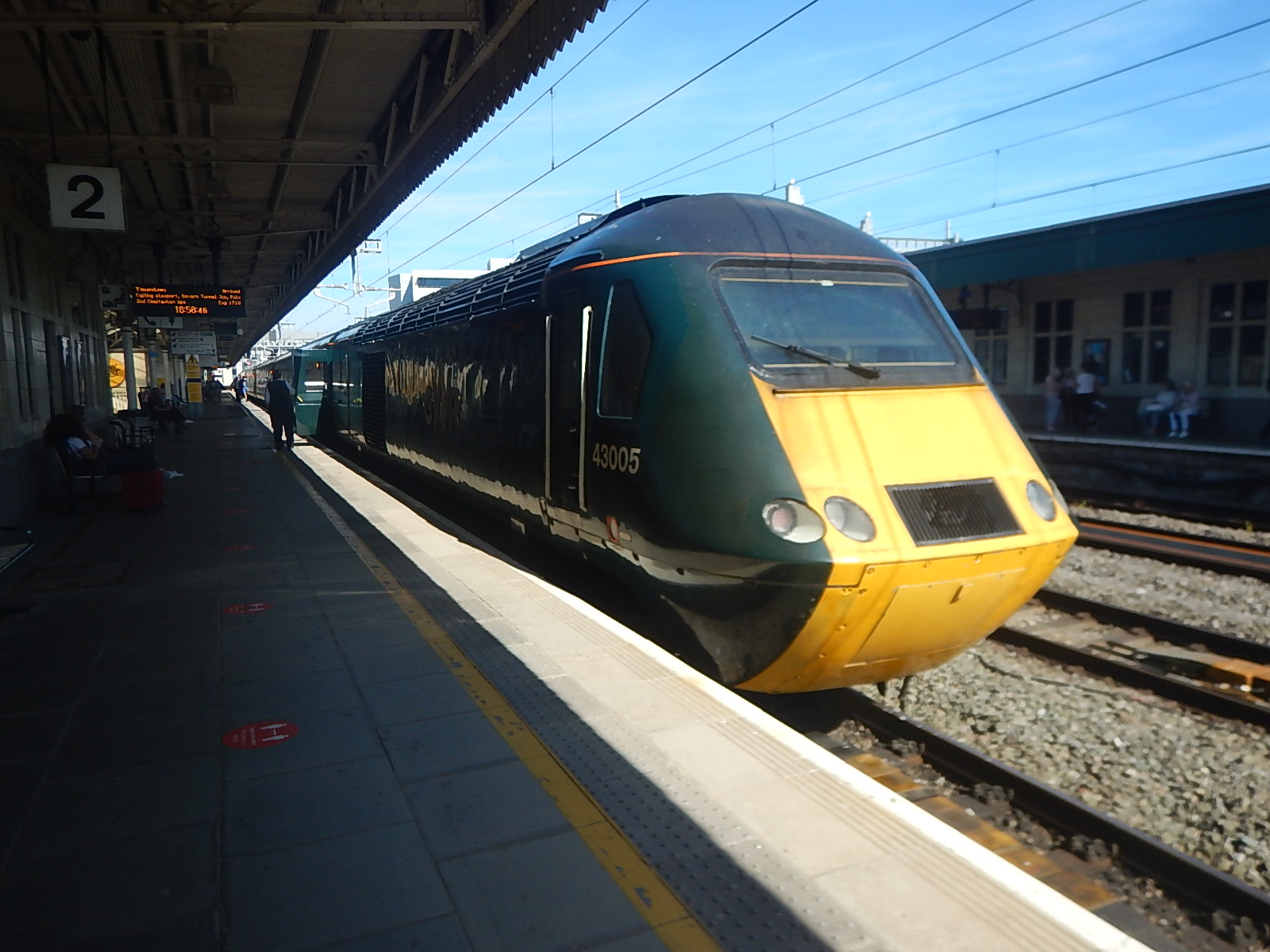
There’s a lot of space in the back of a Class 43 power car.
I certainly feel there are possibilities for using Class 769 trains as high speed parcels transport.
It should be noted that Class 325 trains already run high speed parcel services up and down the country on behalf of Royal Mail. These trains may look like later British Rail trains, but they are in fact based on Class 319 trains.
So I doubt, there’ll be any worries that the trains can’t handle the required services after conversion.
Conclusion
It looks to me that Porterbrooks plan to convert numbers of their Class 319 trains into Class 769 trains will find several ready markets.
It could be argued that more carbon savings could be achieved by perhaps a new battery-electric or hydrogen-electric train. But these will take years to develop!
These trains are a good short-term solution, that will help define their zero-carbon successors.
Did These Strawberries Have Road- Or Rail-Miles?
These strawberries were grown my M Porter in Perthshire and I bought them in the M & S Simply Food store in Waterloo station.


So did they travel between Perthshire and London, by truck or train?
I think the strawberries came from East Seaton Farm, owned by Lochart and Debbie Porter.

If the strawberries were to be grown any further East, they’d be grown in the middle of the North Sea.
But did they come South, by road or rail?
I suspect it was the former, but there is change in the air! Or do I mean on the rails?
In My First Ride In A Class 769 Train, I talked about Rail Operations Group and their proposed Orion parcels service, that will use Class 769 trains.
This service would surely be ideal to bring strawberries and Arbroath smokies to the South.
Swift Express Freight Demonstrator To Be Tested
The title of this post, is the same as that of this article on Railway Gazette.
This is the first paragraph.
Leasing company Eversholt Rail and Ricardo have teamed up to develop an electric multiple-unit intended to demonstrate a cost-effective and low carbon way of transporting parcels.
Other points include.
- A Class 321 train will be converted.
- The trains have a top speed of 100 mph.
- Each vehicle will handle up to twelve tonnes of freight.
Eversholt are talking to possible operators.
Conclusion
There are various train leasing companies and operators looking at similar concepts.
I’m sure one will create a viable model.
Freight Tram-Train To Be Tested In Karlsruhe
The title of this post is the same as that of this article on Railway Gazette.
This is the introductory paragraph.
Trials with a prototype freight tram or tram-train are to start in Karlsruhe and the surrounding area in 2022. The concept is being drawn up with a view to improving urban life by reducing road traffic and the emissions it generates.
There are other cargo trams in Germany, like the CarGoTram in Dresden and I think it is a concept, we’ll see in other places.
In High Speed Urban Freight Logistics By Rail, I wrote about Rail Operations Group’s plans to run freight services between London Gateway and Liverpool Street station.
It may be different technology, but it has similar objectives.
Class 319 Train Used In GB Railfreight Parcel Test At London Euston
The title of this post is the same as that of this article on Rail Advent.
This is the introductory paragraph.
GB Railfreight has used a Class 319 train during a successful trial of former commuter trains for express parcel delivery services.
Other points from the article.
- Standard roll-cages can be loaded and offloaded at most major stations.
- A substantial amount of cargo can be carried.
- GBRf is talking to the Government about deliveries to hospitals.
It should be noted that the Class 325 trains that are used to move goods for Royal Mail are based on Class 319 trains.
- Both trains are based on the legendary Mark 3 coach.
- There are sixteen of these Royal Mail trains.
- Each train is four cars.
- Each car can hold up to twelve tonnes.
- They are capable of 100 mph like the Class 319 trains.
- Class 319 trains are being converted into bi-mode Class 769 trains for use by Rail Operations Group as parcel trains.
As there are still at least fifty Class 319 trains still available for modification, will it mean a more will be converted into parcels trains?
Thoughts On The Design Of A High Speed Freight Shuttle
I am enthusiastic about the concept proposed by Rail Operations Group, that will see Class 769 trains running freight shuttles between London Gateway and Liverpool Street station, which I wrote about in A Freight Shuttle For Liverpool Street Station Planned.
But if you were starting from scratch, how would you design the ultimate freight shuttle train?
Consider these objectives.
The Amazon Objective
Amazon and their suppliers would like next day delivery for all of their customers.
Probably within a country the size of the UK, next day delivery can be achieved.
But I suspect that Amazon and their competitors would like anybody in the world to get as near as next day delivery as possible from anywhere in the world.
Giving worldwide next day delivery is obviously impossible, but giving it to as much of the world as is currently practical is clearly an Amazon objective.
We live in a I-Want-It-Now world!
Destinations To Be Served
I feel that places to be served by high speed light freight shuttles fall into various groups.
Major Cities
The proposed shuttle into Liverpool Street station will be the first of many.
Liverpool Street station is also an easy station at which to run such a service.
- There is level access from the street for vehicles like electric vans and cargo bikes at Platform 10, using the old taxi cab road.
- The station and the approaches are fully electrified.
- Crossrail will release platform space at the station.
Three trains per day can probably be accommodated in the Off Peak hours, with more services during the night.
It would not be possible to fit a light freight facility into all city-centre stations, as easily as it appears to be at Liverpool Street.
But I do think light freight facilities of this type at the following stations could be possible..
- Brighton
- Bristol Temple Meads
- Glasgow Central
- Liverpool Lime Street
- London Euston
- London Paddington
- Manchester Piccadilly
- Nottingham
Some recently rebuilt stations like Birmingham New Street, would be very difficult, so I would recommend that all station developments, should take possible light freight facilities into account.
Logistics Parks, Ports And Airports
London Gateway is a large port and logistics facility, to the East of London.
This Google Map shows London Gateway.
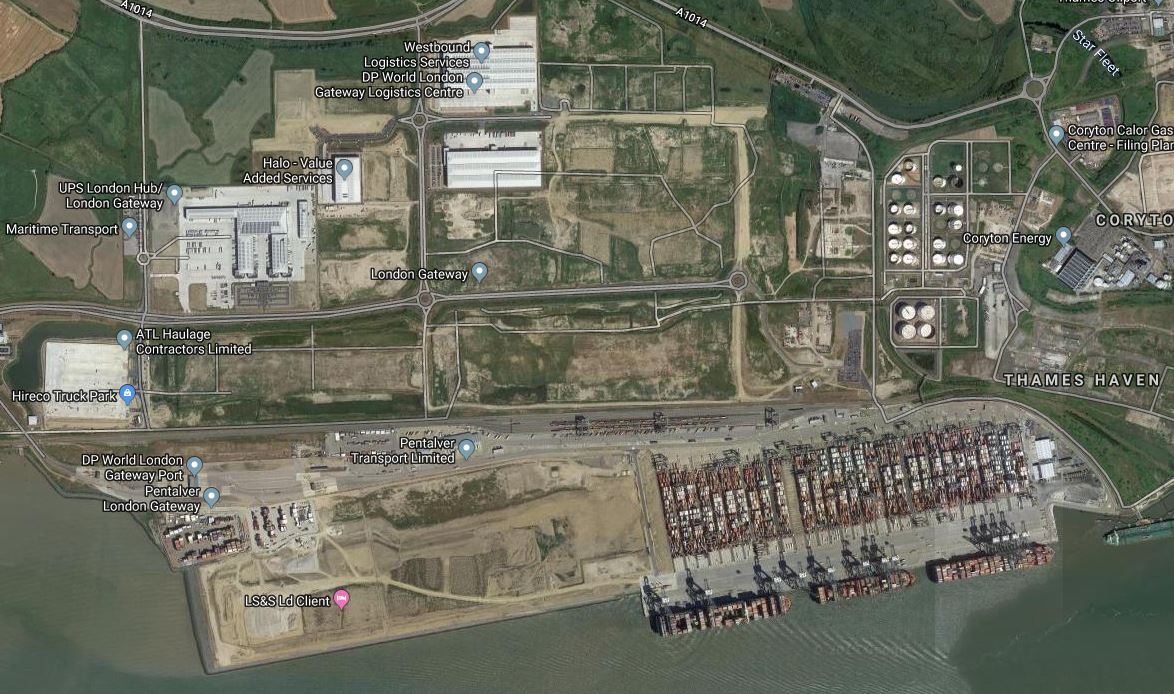
The logistics park is still being developed to the North of the port, with the rail lines in between the two.
- I have searched the rail lines and I can’t see anything like a loading bay for a freight shuttle, which surely will be something like a platform for passengers.
- It is early days yet and this map could be a couple of years old.
- There would also be space to the North of the rail lines for someone like Hermes, UPS or Yodel to build a large secure shed with a siding alongside, served by a platform, so that goods could be rolled into the trains.
- It should be possible to electrify the siding, in a similar way to Platform 10 at Liverpool Street station.
It’ll all come clear, when the service starts.
Other ports like Felixstowe, Immingham, Liverpool and Southampton might also want to develop high speed light freight services as will the various logistics parks and freight terminals dotted around the country.
Most are served by rail connections, although in many cases like Felixstowe, London Gateway, Liverpool and Southampton, the last few miles need to use some form of independent power.
Could these light freight services connect to airports like Heathrow, Manchester and Stansted?
Retail Parks And Out-Of-Town Shopping Centres
Large retail groups, like Marks and Spencer, Sainsburys and Tesco have set up large distribution centres often in the centre of England, some of which have rail access.
Could major retail centres like Lakeside in Essex, Sheffield Meadowhill, Gateshead Metro Centre and others receive goods by rail.
Specialist Terminals
If you go to Montrose station, you can see the remains of sidings, where Scottish fish was loaded to be taken by rail to ports for export to places like New York.
But it is likely that specialist terminals will be setup to handle goods, such as seafood, flowers and Scotch whisky.
Some seasonal products like Cornish flowers would only need a part-time facility, but these would only be rudimentary.
Long Rural Routes
I can see the requirement for light freight deliveries increasing in all parts of the UK.
Some destinations are probably expensive for delivery companies.
But could an integrated delivery system be setup using the long rural rail routes.
- Inverness and Wick
- Inverness and Aberdeen
- Glasow and Oban
- Chester and Holyhead
- Settle and Carlisle
Services might automatically roll pallets off and on at stations, which would then be handled locally by a purpose-built van or light truck.
- Some services would start in London and the South-East, but others could start in the East Midlands or the Scotland’s Central Belt
- Some services would connect with ferries to serve islands, like the Hebrides and the Orkneys.
- A daily service might do wonders for business in rural areas.
London and Wick takes thirteen hours by passenger train. This would enable, somebody in Wick wanting an urgent part for a machine that has broken, to order it from London and certainly receive it within forty-eight hours.
Great Britain And Ireland Services
Services between Great Britain and Ireland will be a problem, as trains will have to unload on one side of the Irish sea onto trucks for delivery after the sea crossing.
Unless politicians do what I suggest in A Solution To The Northern Irish Problem!, which is to build a high speed rail system connecting Scotland and Northern Ireland.
- The main crossing would be a bridge or a tunnel, where my preference would be for a bridge.
- The main route would be Glasgow and Dublin via Stranraer and Belfast.
- There would be a 125 mph connection between Carlisle and Stranraer
- The Irish section of the route would be an electrified standard-gauge railway capable of running trains at 125 mph.
- The route would handle passengers and freight.
- There could a branch to Shannon, where some proposals have been made to create a deep water port.
I estimated that London and Belfast would take four hours, with an hour longer for Dublin.
But as this fixed link would probably not be built this century, as Ulster always says no, unloading on to trucks would probably be necessary for a long time.
Continental Services
Why not? Unlike Ireland, there’s a rail connection and it’s standard gauge!
Eurostar has shown that the same trains can run successfully on British, French, Belgian and Dutch railways and trains can now be fitted with systems to access the various electrification voltages.
I wouldn’t be surprised to see a Europe-wide high-speed light freight service for appropriate cargoes.
Summing Up Destinations
I can sum up the destinations as follows.
- They will not be large grand affairs, in many cases.
- There must be easy access for local transport, which will include a proportion of electric vehicles.
- Destinations are generally within a few miles of an electrified main line.
- Some services like Cornish flowers or Scottish seafood will need an independently-powered train, with a moderate range.
You can see why Rail Operations Group have chosen to use bi-mode Class 769 trains, as they will be ideal to connect to places perhaps a hundred miles from electrification.
New Or Refurbished Trains?
The proposed service is to be run with a Class 769 train, which is a bi-mode rebuild of a 1980s Class 319 train.
But would it be better to use a brand new train, rather than an old conversion?
In the future, if the experiment is a success, a new train will probably be designed, that will be based on the experience of the trials.
But at the moment modifying an old train, is probably a more affordable approach and one that carries less risk.
Operating Speed
The Class 769 train can operate at 100 mph on electrified lines and at around 90 mph, when relying on the diesel generators.
In High Speed Urban Freight Logistics By Rail, I talked about Rail Operations Group’s plans for running high speed freight services between Thames Gateway and the Central Belt in Scotland.
Surely, a faster train would be desirable for services along high speed lines.
Train Capacity And Interior
This will depend on the application and I suspect Rail Operation Group’s trial will show the optimum design.
But I wouldn’t be surprised to see trains based on British Rail’s standard length of eighty metres, as this would mean, they will easily fit so many existing stations without expensive modification.
If longer trains are needed for busy routes, then the trains could work in twos or threes, as many British Rail electric multiple units have done for decades.
Are Freight Shuttles Ideal Trains For Battery Power?
The train will not need the full air-conditioning and toilet services of a passenger train, which could mean.
- Electrical power needed for services other than traction would be lower.
- Underneath the train could be relatively free of equipment.
In addition, it should be noted.
- Most routes will be run for the major part on electrified lines.
- Charging technology for batteries at remote destinations could be easily provided.
- Battery-electric trains have operational, environmental and marketing advantages over trains with diesel engines.
So why not efficiently fill space under the train with batteries?
For their initial service between London Gateway and Liverpool Street station, Rail Operations Group would probably only need to use diesel for less than a dozen miles.
Could Modified InterCity 125 Trains Be Used?
The fact that they are diesel is a major drawback, but there are other problems too!
- Major structural work would be needed to create cargo doors.
- I suspect that they may be too long.
- They may not be very operator friendly.
Other companies have proposed them for high speed freight, but nothing has materialised so far.
Conclusion
Rail Operation Group’s thinking is spot on!
The New Light Freight Terminal At Liverpool Street Station
These pictures show the old cab road at Liverpool Street station, where the proposed light freight terminal will be developed.





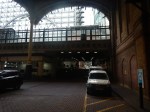
The spacious cab road shut a few years ago and was moved to its current position in front of the station. Nowadays it is used mainly for deliveries to the station and the retail units, by Network Rail maintenance vehicles and sometimes by Rail Replacement Buses.
This second set of pictures show the exit of the cab road in Primrose Street, behind the station.


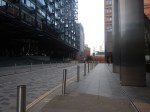

Note these points about the old cab road.
- There is some nice ironwork and a vaulted ceiling, but nothing that would be damaged if electric vans and cargo bikes used the cab road to serve freight shuttles.
- The road surface and the brickwork all appear to be in good condition.
- By removing the barrier between the cab road and platform 10, there would be no problem loading and unloading trains.
- There is also a good wide passage leading from the old cab road to the main concourse of the station.
I suspect that the only functional building in the area, which is the Left Luggage Office, will have to be moved. But it might be better placed on the main concourse.
Platform 10 Looks Very Convenient For The Freight Shuttle
The closeness of Platform 10 and the old cab road makes the platform look very convenient for the terminus of freight shuttles from London Gateway
How Will The Freight Shuttles Travel Between London Gateway And Liverpool Street Station?
The route from London Gateway to Liverpool Street station will be as follows.
- From London Gateway, the train will join the London, Tilbury and Southend Railway between Stanford-le-Hope and East Tilbury stations.
- The train will only run using diesel on the spur to London Gateway.
- The train will continue to Barking, where it will take the Gospel Oak to Barking Line.
This map from carto.metro.free.fr shows the tracks, where the Gospel Oak to Barking Line crosses over the Great Eastern Main Line.
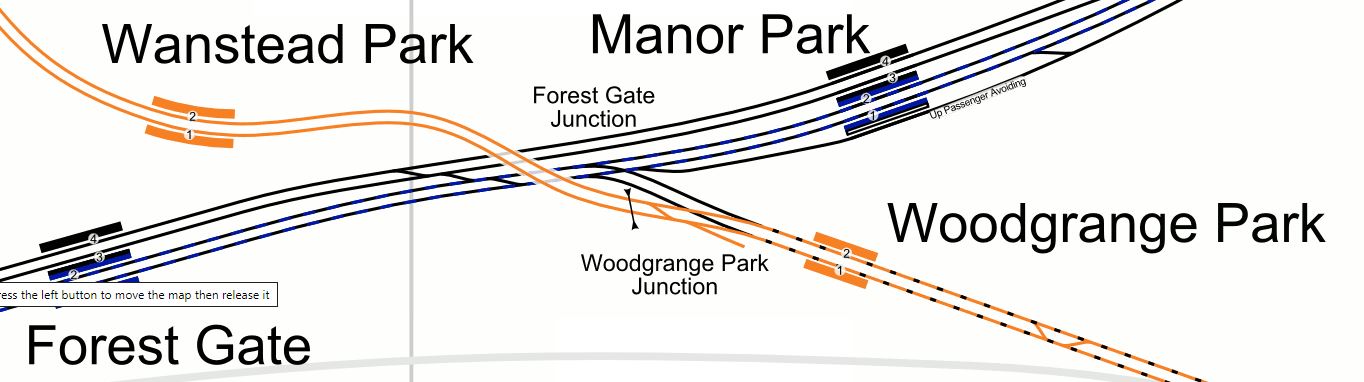
The train will join the Great Eastern Main Line here for a fast run into Liverpool Street station.
- I suspect the train will switch to the fast lines using the crossovers shown in the map.
- Note that the performance of a Class 769 train on electrified track, will be only slightly less than the expresses.
At Liverpool Street station, the train will run into Platform 10.
Will Liverpool Street Station Lose A Platform?
Currently, Platforms 9 and 10 are generally used for the London and Norwich services.
- These trains run at a frequency of two trains per hour (tph).
- They are formed of a rake of Mark 3 coaches topped sand tailed by a Class 90 locomotive and a driving van trailer.
- They call at various stations en route including Chelmsford, Colchester and Ipswich and are very heavily used at peak times.
- Entry to and exit from the trains is not of a modern standard and I suspect turnround times can sometimes must be very slow.
From next year, these trains will be replaced by modern twelve-car Class 745 trains.
- These trains have 757 seats, which I have read somewhere is more than the current trains.
- The trains will have level access between train and platform at all stations.
- I suspect turnround times will be shorter, due to the modern design.
Frequency between London and Norwich will also be increased yp three tph, by extending a service between London and Ipswich, which will be run by a Class 720 train.
Will it be possible to fit three tph into Platforms 9 and 10?
I suspect that it might be tight, as over the last few months, Norwich trains have sometimes been using higher numbered platforms like 14.
So will the proposed three tph to Colchester, Ipswich and Norwich be moved to two higher numbered platforms.
This would enable platform 10 to be used by freight shuttle trains, but will the station be able to run all the services, with one platform less?
Current Services Into Liverpool Street Station
Current services from Liverpool Street station are as follows.
- Six tph – GEML – TfL Rail – Shenfield
- Three tph – GEML – Greater Anglia – Southend
- Two tph – GEML – Greater Anglia – Norwich
- One tph – GEML – Greater Anglia – Ipswich
- One tph – GEML – Greater Anglia – Clacton
- One tph – GEML – Greater Anglia – Colchester Town
- One tph – GEML – Greater Anglia – Braintree
- Four tph – WAML- London Overground – Chingford
- Two tph – WAML- London Overground – Cheshunt
- Two tph – WAML- London Overground – Enfield Town
- Four tph – WAML- Greater Anglia – Stansted Airport
- Two tph – WAML- Greater Anglia – Hertford East
- Two tph – WAML- Greater Anglia -Cambridge
Totalling these up means the following.
- 16 tph use the double-track West Anglia Main Line (WAML)
- 15 tph use the four-track Great Eastern Main Line (GEML) as far as Shenfield.
- 6 tph use the double-track GEML to the North of Shenfield.
It looks neatly balanced.
Would moving Norwich services to a pair of the higher-numbered platforms improve operation?
All WAML services would be in platforms 1 to 9, as against platforms 1 to 8 now!
All GEML services would be in platforms 10 to 18, as against platforms 9 to 18 now!
If platform 10 is used by the freight shuttles, this would make operational sense, as the shuttle will approach Liverpool Street along the GEML after joining at Manor Park station.
Future Services Into Liverpool Street Station
From 2021 or so, these could be the from Liverpool Street station.
- Three tph – GEML – Greater Anglia – Southend
- Three tph – GEML – Greater Anglia – Norwich
- One tph – GEML – Greater Anglia – Clacton
- One tph – GEML – Greater Anglia – Colchester Town
- One tph – GEML – Greater Anglia – Braintree
- Four tph – WAML- London Overground – Chingford
- Two tph – WAML- London Overground – Cheshunt
- Two tph – WAML- London Overground – Enfield Town
- Four tph – WAML- Greater Anglia – Stansted Airport
- Two tph – WAML- Greater Anglia – Hertford East
- Two tph – WAML- Greater Anglia -Cambridge
Totalling these up means the following.
- 16 tph use the double-track West Anglia Main Line (WAML)
- 9 tph use the four-track Great Eastern Main Line (GEML) as far as Shenfield.
- 12 tph from Crossrail will use the slow lines as far as Shenfield.
- 3 tph use the double-track GEML to the North of Shenfield.
Crossrail has opened up capacity on the Great Eastern Main Line.
- Currently, there are 15 tph on the GEML using platforms 9 to 15.
- In 2021, there will be just 9 tph on the GEML using platforms 10 to 17.
There will be extra services to Lowestoft and Crossrail’s Peak Hour service to Gidea Park station.
But even so, I suspect there will be space for more services.
High Speed Urban Freight Logistics By Rail
The title of this article is the same as that of this article on World Cargo News.
It describes from a freight operator’s point-of-view, Rail Operation’s Group‘s plans to run freight services between London Gateway and Liverpool Street station, which I wrote about in A Freight Shuttle For Liverpool Street Station Planned.
Points include.
- Current operators are struggling to lower their carbon footprint.
- Congestion is affecting delivery times.
- Charges to use London’s ULEZ could add two hundred pounds per round trip to costs.
- To enter London, trucks will need high visibility cabs in a couple of years time.
- Last mile delivery would be by e-vans and cargo bikes.
- This initial service is about proving the concept and identifying the best techniques.
The article also discloses that Rail Operations Group are planning to run a high-speed overnight freight service between London Gateway and the Central Belt in Scotland, using their modified Class 769 trains.
- Journey time will be reduced from eleven-twelve hours by truck to five-and-a-half by rail.
- The deadline for guaranteed overnight delivery will go from 20:00 to 23:00.
- Trains will be running at 100 mph on electricity all the way.
- If it works going North, surely it will work going South.
I can see Rail Operations Group needing a lot more trains, than the two they have ordered.
 The Anonymous Widower