The Crews Bracing Themselves For A Rise In Electric Car Fires
The title of this post, is the same as that of this article on the BBC.
This is the sub-heading.
Each year, Essex Fire and Rescue Service focuses on one area of “top-up” training for its crews. In recent years, this has included sessions on firefighting at height and managing hazardous materials. This year, a new course is being introduced: How to deal with electric vehicle fires. Why?
These are the first three paragraphs.
Station manager Terry Maher has recently taken on a new role within the fire service.
A hazardous material expert, he is now the service’s lead officer on tackling lithium-ion battery fires.
His new responsibility comes as the number of electric vehicles (EVs) on UK roads hits more than 540,000. And the number is rising fast.
The article certainly worried me.
Most of the views expressed are by a fire officer, who is also a hazard materials expert.
It should be remembered that I have had serious fire training both as a Scout with the London Fire Brigade and a few years later at both Enfield Rolling Mills and at ICI.
These are a few points from the article.
- Dealing with a petrol or diesel car fire would normally take about 30 minutes. With an EV fire we’re looking at four or five hours or longer, if we’ve used water.
- As more and more people use electric vehicles we can expect more and more electric vehicle fires.
- The results of text searches show there were 59 electric vehicle fire references in 2022-23 across England – up from 30 the previous year.
We are dealing with dangerous vehicles and must handle with care.
These are my thoughts.
Car Insurance Rates For Electric Vehicles Will Rise
The worse the risk, the more you will have to pay.
A Full Safety Assessment Should Be Done Before Buying An Electric Vehicle
For instance, I have an integral garage in my house and wouldn’t feel safe at night, if an electric car or bicycle was in there on charge.
I certainly wouldn’t buy an electric car with a plastic body. Although I did own a Lotus Elan for over twenty years.
Conclusion
Everybody, who is thinking of buying an electric car or bicycle, should read the BBC article first.
Fire Safety Of Battery-Electric Vehicles
I notice that there has been talk of fires in battery-electric vehicles on this blog.
So I thought I’d put up a post with an appropriate topic.
There are some things that already could worry me.
- Vivarail had a fire early on.
- The Merseyrail Class 777 trains go in the tunnels under Liverpool.
- The new Piccadilly Line trains will have batteries.
- Did electric vehicle batteries contribute to the ferocity of the fire in the Luton Airport car park?
- Fire brigades are getting very worried about e-scooter and e-bike fires.
- This page on the Internet gives details of recent BESS fires.
- Do we investigate fires and publish the results properly?
I have some questions.
- Would it be sensible to have nationwide database of all batteries?
- Should we use more non-lithium methods in large stationary batteries?
- Should we use more capacitors?
- Should we make it a criminal offence to build or use a non-compliant e-bike or e-scooter?
- Should installing a battery in your house, need a safety certificate?
One half of me says yes and the other says no, to some of these questions.
Fire On Scroby Sands Wind Turbine Self-Extinguishes, Incident Under Investigation
The title of this post, is the same as that of this article on offshoreWIND.biz.
This is the sub-heading.
A wind turbine at the Scroby Sands offshore wind farm in the UK caught fire yesterday morning (15 August). The cause of the fire, which self-extinguished later the same day, is now being investigated.
This sort of incident doesn’t seem to be reported very often, although this one was shown prominently in this article on the BBC, which contains a video.
Tesla Megapack Battery Caught Fire At PG & E Substation In California
The title of this post, is the same as that of this article on CNBC, which was published in September 2022.
The article starts with these three key points.
- A Tesla Megapack caught fire at a PG&E energy storage facility in Monterey, California on Tuesday.
- The fire caused road closures and shelter-in-place orders for residents nearby.
- Richard Stedman, an air pollution control officer for the Monterey Bay Air Resources District (MBARD) said in general lithium ion battery fires can emit toxic constituents like hydrochloric and hydrofluoric acid.
The article goes on to say, that there were no power outages and no on-site personnel were injured.
In the late 1960s, I worked for ICI at Runcorn.
One of the instruments, I helped to develop was a detector for water in bromochlorodifluoromethane or BCF, as it is commonly known.
- You may have seen BCF on a fire-extinguisher, as that is the chemical’s main use.
- In those days, ICI made BCF on a plant that also manufactured the anaesthetic; Fluothane.
- The plant was in Rocksavage works by the Mersey.
It should be noted, that Rocksavage works had one of the best safety records in the whole of the company.
When the instrument was ready, I was told to go to the plant and see Charlie Akers, who was the foreman electrician on the plant. He would arrange fitting the instrument to the plant.
- Charlie was a short stout man and the first thing he did was to get a proper mug out of a box of perhaps two dozen new ones and write my name on it.
- He then made us both mugs of fresh tea with fresh milk from a bottle.
- He said something like. “Now you’ve got no excuse to come and see me before you go on the plant or have any questions!”
- He also said that everybody, who worked in Rocksavage was very proud of its safety record and proceeded to give me a tour of the plant pointing out its hazards.
One lesson, I learned that day and still do was to walk up stairs in a hazardous environment using the stanchions of the rails. You never know what has fallen on the handrails. On the BCF plant this could have been hydrochloric and hydrofluoric acid.
- At one point to illustrate the danger of the latter, he took a pair of tweezers and put a spec of hydrofluoric acid (HF) dust on the tip of my finger, which was painful.
- He also said that HBr was a lot more dangerous.
I didn’t disgrace myself on that plant and the lessons, I learned that day have stayed with me all my life. I even think, that they have had positive effects on my stroke recovery, as I was given tips about how to get out of a chemical plant, after a fire or serious spillage.
Thank you Charlie!
One of the key points in the CNBC article, is that lithium-ion battery fires can emit hydrochloric and hydrofluoric acid.
It makes me wonder, if our high levels of usage of these batteries for where there is an alternative is a good idea.
Serious Fire At Silvertown Tunnel Worksite: Severe Repercussions?
The title of this post, is the same as that of this article on Murky Depths.
Apparently, this may mean that the tunnel builders may have to build more affordable homes, if the tunnel is delayed.
Given the serious opposition to this tunnel, I wonder if this wasn’t an accidental fire.
Heavy Fire Doors At Moorgate Stations – 6th December 2021
They’re certainly not stinting on safety in Moorgate station.
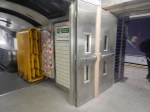

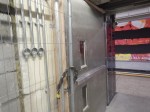
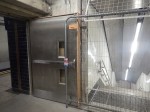
These doors will cut off the passages between Crossrail and the Northern Line.
The Debate Over Burning Dead Trees To Create Biomass Energy
The title of this post, is the same as that of this article on Wired.
This is the sub-title.
Critics worry about the risks of overcutting and wood smoke. But supporters say the practice will prevent megafires—which release even more carbon dioxide.
For those who worry about the ethics of biomass, it is a must-read.
A Design Crime – The Average Smoke Detector
On Saturday Evening, the smoke detector in my bedroom decided to go off.
I was able to silence it about three times, but it refused to go off permanently.
I then decided to take it down, by standing on the bed.
Unfortunately, I slipped and broke the detector.
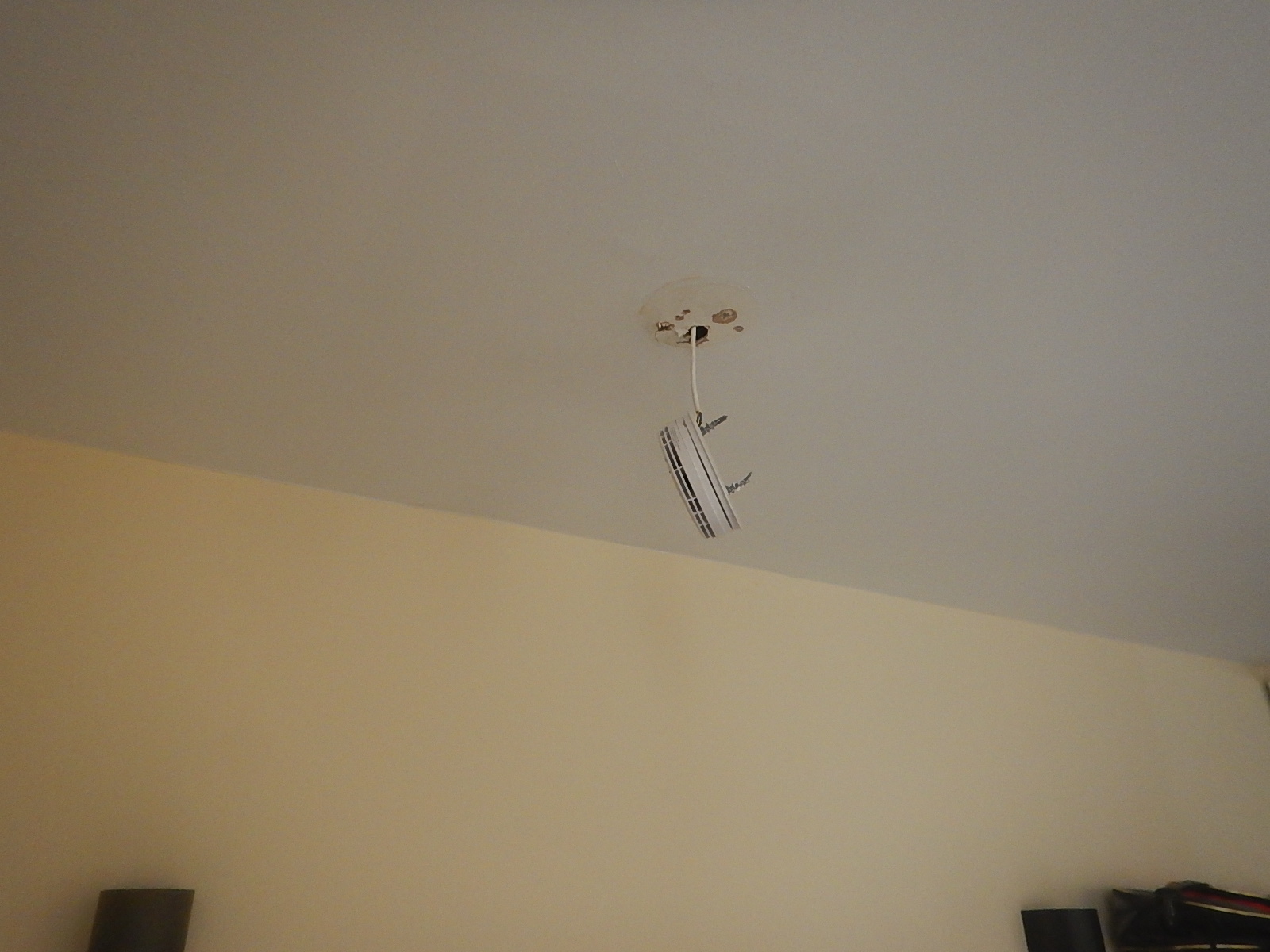
It is not the first altercation, I have had with the cheap and nasty smoke detectors in this house, which were probably bought in Istanbul market for a few pence.
- In my view, there is a need for a superior type of smoke detector wired into a building in a better way.
- It should be possible to replace a failed detector, like I had on Saturday in a simple operation without any tools.
- There should also be a master switch in the house, that switches off all the smoke detectors.
- Instructions on how to deal with the smoke detectors in case of failure should be in an obvious place in the house, like on the door of the meter cupboard.
Smoke detectors are too important, to be designed down to the cheapest possible station and most are a true design crime.
Grenfell Tower Fire: ‘Systemic Failures’ In Fire Brigade’s Response
The title of this post is the same as that of this article on the BBC.
This is the introductory paragraph.
The London Fire Brigade (LFB) has been condemned for “serious shortcomings” and systemic failures in its response to the Grenfell Tower fire, in a report into the 2017 blaze.
I am particularly worried about the stay-put policy.
In the 1950s, I was a member of the Scouts and several times we did exercises with the London Fire Brigade, where we were taught how to get out of blazing buildings. We were also used as dummy causalities in major incident training.
Certainly, the advice then for a fire was to get out.
Around 1970, I worked on chemical plants for ICI and fire safety was taken very seriously.
I remember being told to know your escape route from where you were working. And get out fast, if anything happened. Not that it did!
One other thing I remember is on the Wilton site, seeing office windows with “Perspex Window – Fine Hazard” stencilled on them. The reason for this, was that a nearby polythene plant very occasionally caused spectacular aerial explosions and glass windows were just too dangerous, as when shattered, they covered those inside with shards of glass.
If you read the story of the Summerland Disaster in August 1973, which killed fifty people and injured eighty, Wikipedia says this about the building.
The street frontage and part of the roof was clad in Oroglas, a transparent acrylic glass sheeting.
Oroglas is a poly(methyl methacrylate) and is another tradename for the same plastic, which ICI called Perspex.
I’d left ICI, by the time of the Summerland Disaster, but I was still in contact with friends, who worked in Plastics Division, who were responsible for Perspex. One was very critical of the use of Oroglas in the building. I was also told that ICI turned down Summerland order, as they thought it was not a suitable application, as Perspex was too flammable.
I should also say, that I have lived in a tower block with my family.
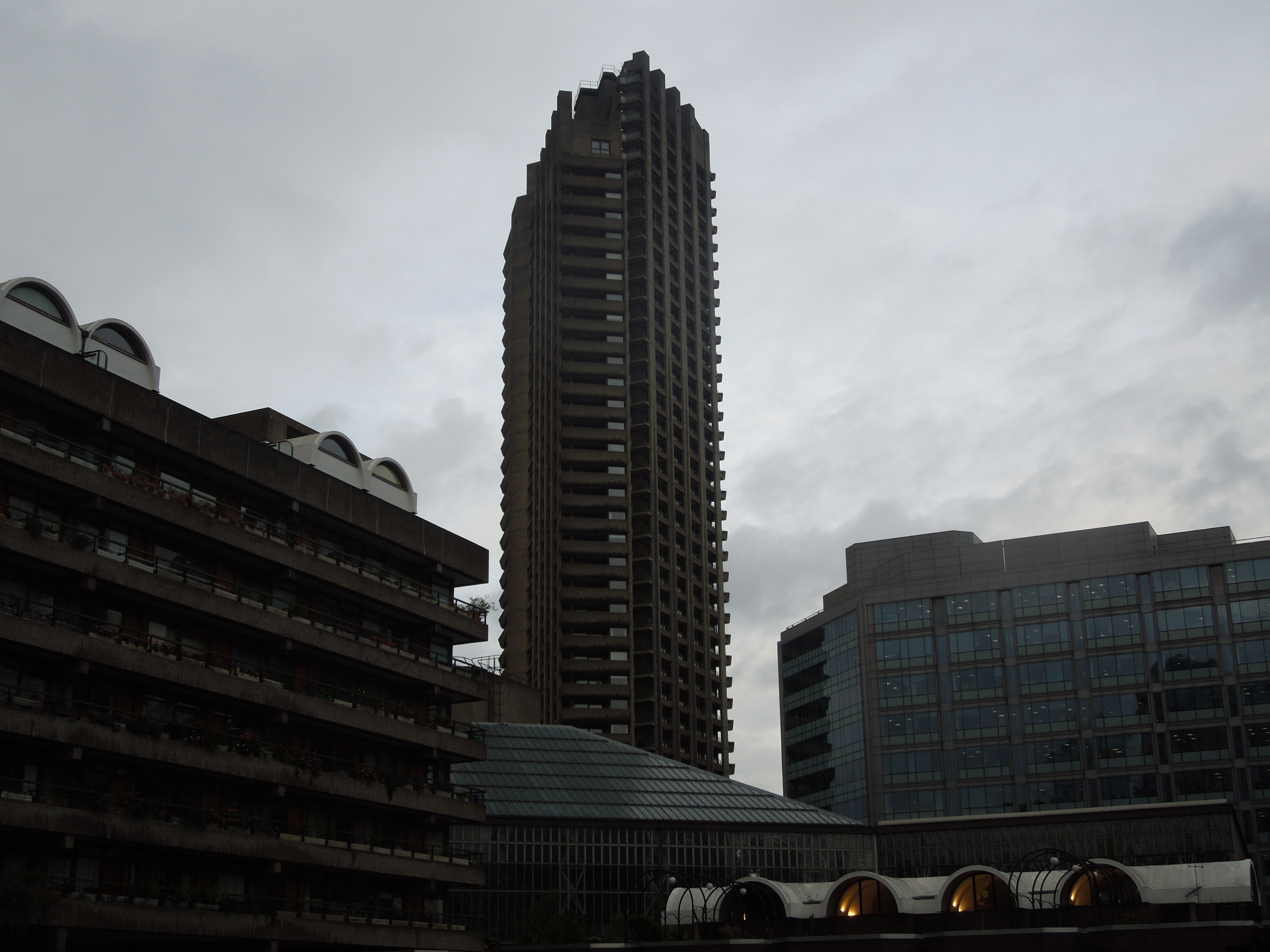
From my knowledge, I would not have lived in a building with flammable cladding.
Cromwell Tower in the Barbican is clad in concrete, with a network of tunnels going a couple of floors down from each flat on the thirty-five floors. I can remember checking the fire escapes before I signed the lease.
It also has no gas supply, with underfloor electric heating.
After the Grenfell Tower fire, I feel that architects and lawmakers have completely ignored the lessons of history!
Conclusion
There is a need to make sure that we take on board all the lessons of Grenfell, so that the chance of another disaster are minimised.
 The Anonymous Widower