Major Milestone Marked As Half A Million Journeys Are Made On The Northumberland Line
The title of this post, is the same as that of this news item on the Northumberland County Council web site.
These are the first four paragraphs.
500,000 passengers have now travelled on the Northumberland Line since it opened, train operator Northern has announced.
The operator has been running trains since the line opened in December 2024, with the milestone of half a million customer journeys achieved just eight months later.
Services call at Newcastle, Manors and at new stations in Seaton Delaval, Newsham and Ashington, with a journey along the entire route taking around 35 minutes and a single fare costing no more than £3.
Trains are proving to be particularly popular during school holidays and weekends.
This news release shows how successful and popular reopening disused railways can be and paints a similar picture to what happened in Deven on the Dartmoor Line to Okehampton, that I wrote about in Dartmoor Line Passes 250,000 Journeys On Its First Anniversary, As Rail Minister Visits To Mark Official Opening Of The Station Building.
We should be looking for more similar lines like the Dartmoor and Northumberland Lines to reopen.
These must be candidates.
- The Ivanhoe Line in Leicestershire.
- The Fleetwood Line in Lancashire.
- The Wisbech Line in Cambridgeshire.
At least the government is reopening the Portishead Line in Somerset.
More Government Details Emerge On How Fleetwood’s Rail Link Will Be Restored – Using Tram-Train Technology
The title of this post, is the same as that of this article on the Blackpool Gazette.
This is the sub-heading.
New details have emerged about how the Government plans to restore the rail link between Fleetwood and Poulton using state-of-the-art tram-train technology.
These are points from the article, which mainly come from a letter to the local MP; Paul Maynard.
- In a letter to Mr Maynard, Rail Minister Huw Merriman has set out for the first time how the Government intends to restore the rail link.
- The Government is now looking at the finer details of a tram-train scheme and how the project can be funded.
- Tram-trains will be used for the link.
- The re-opened railway can be linked into the existing Blackpool to Fleetwood tramway, allowing services to run into the heart of Fleetwood.
- Services would operate twice hourly from Preston station to Poulton-le-Fylde over the existing heavy rail network, before joining a new light rail link between Poulton-le-Fylde and the Denham Way roundabout on Amounderness Way, calling at up to three new intermediate stops.
- From the roundabout, the services would continue on the existing Blackpool tram network towards Fleetwood town centre and Fleetwood ferry terminal.
- The Government is committed to the project.
These are my detailed thoughts.
The Route
The Blackpool Gazette article describes the route like this.
Services would operate twice hourly from Preston station to Poulton-le-Fylde over the existing heavy rail network, before joining a new light rail link between Poulton-le-Fylde and the Denham Way roundabout on Amounderness Way, calling at up to three new intermediate stops.
From the roundabout, the services would continue on the existing Blackpool tram network towards Fleetwood town centre and Fleetwood ferry terminal.
This map from OpenRailwayMap shows the route.
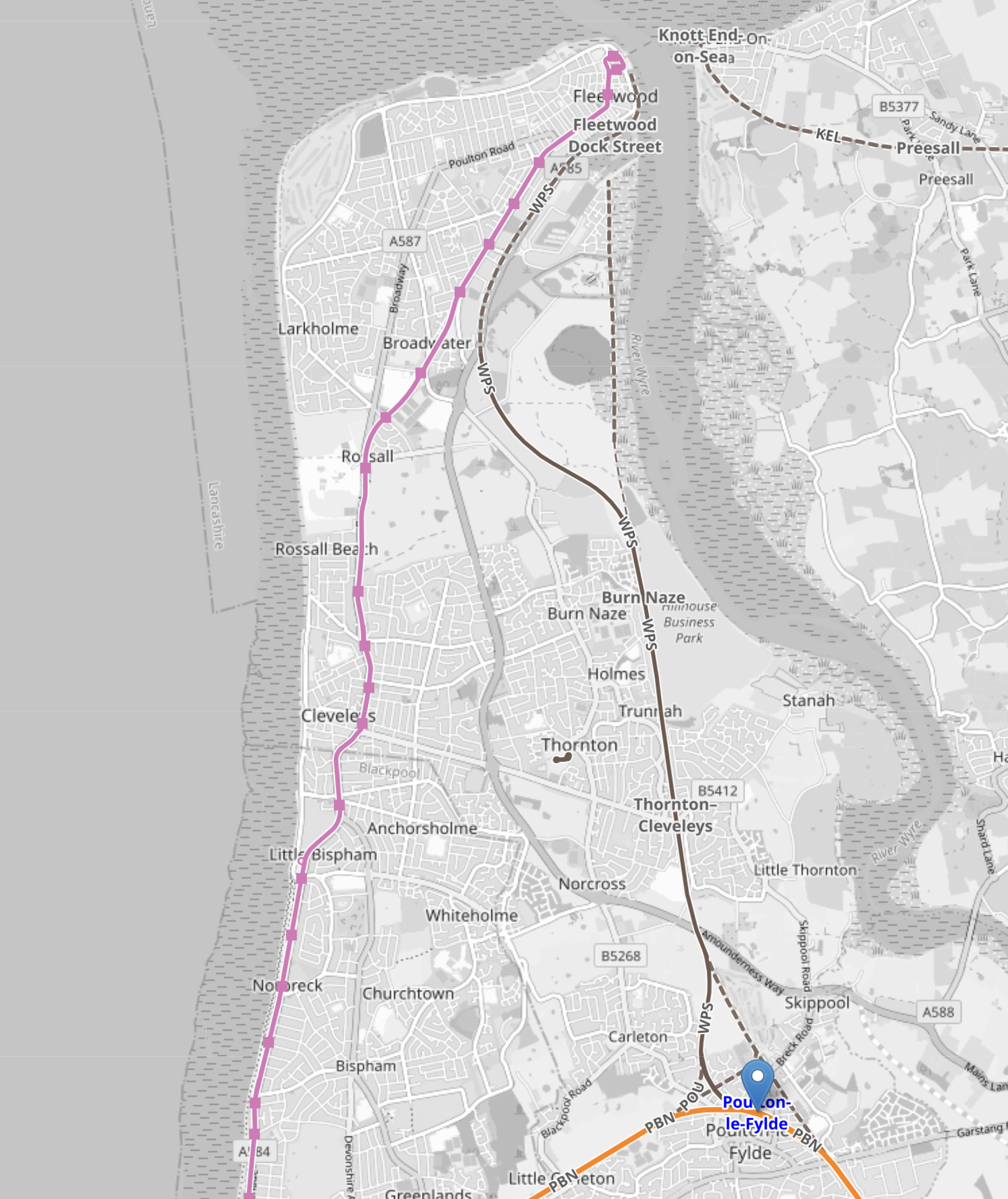
Note.
- Poulton-le-Fylde station is marked by the blue arrow in the South-East corner of the map.
- The pink line running up the coast is the Blackpool tramway.
- The Blackpool tramway terminates at Fleetwood Ferry at the top of the map.
This second OpenRailwayMap shows Fleetwood Ferry tram terminus.
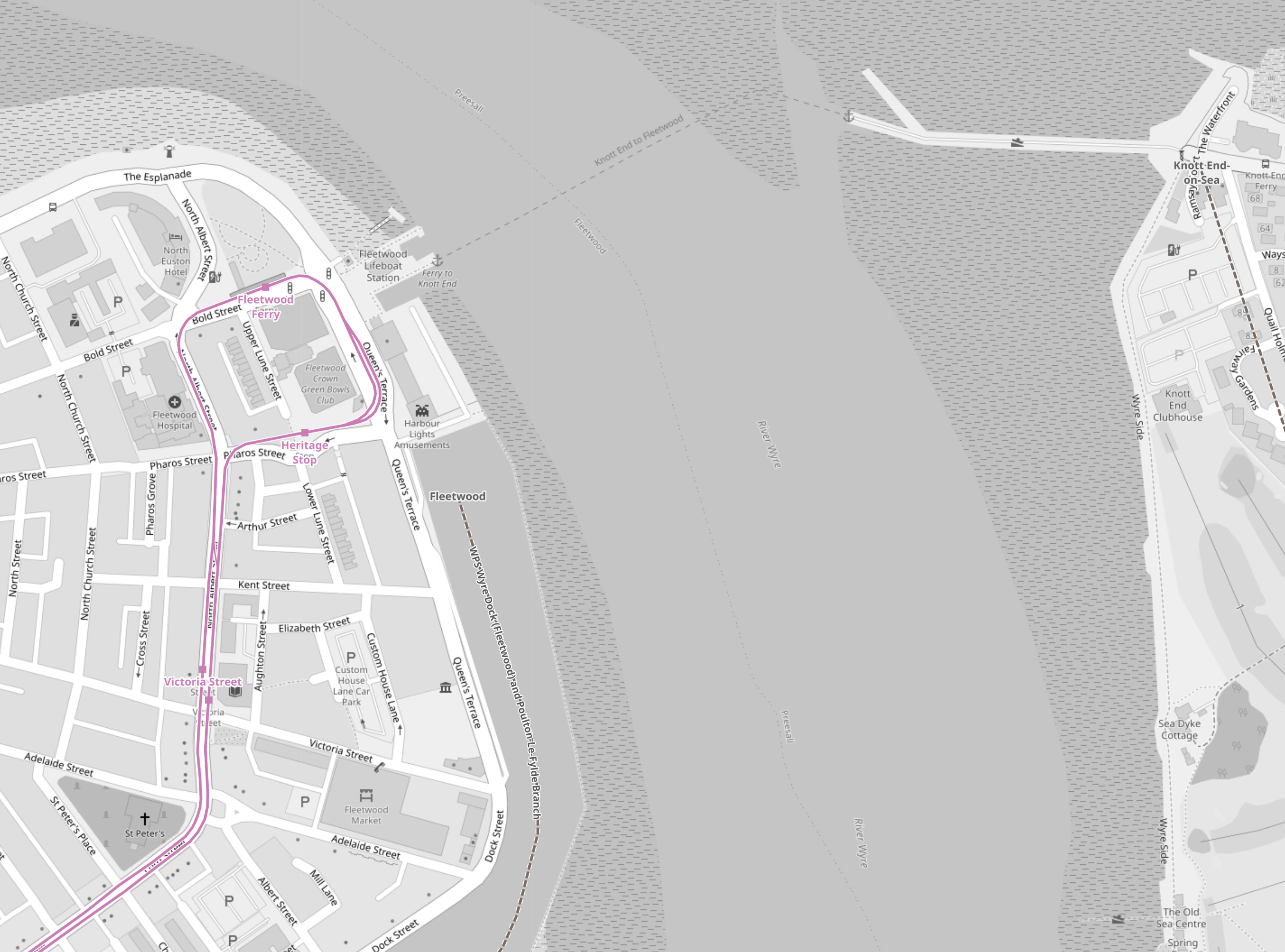
Note.
- As before, the Blackpool tramway tracks are shown in pink.
- There is a lifeboat station and a ferry to the other side.
- The tracks allow a tram to come from the South, go round the loop and return to the South.
- I believe that both the Blackpool tramway and the Fleetwood tram-train will both reverse direction in the same way.
- No new infrastructure would be needed at the Fleetwood Ferry terminal, except for perhaps a few signs.
This third OpenRailwayMap shows the track from Fleetwood Ferry to the Lindel Road tram stop.
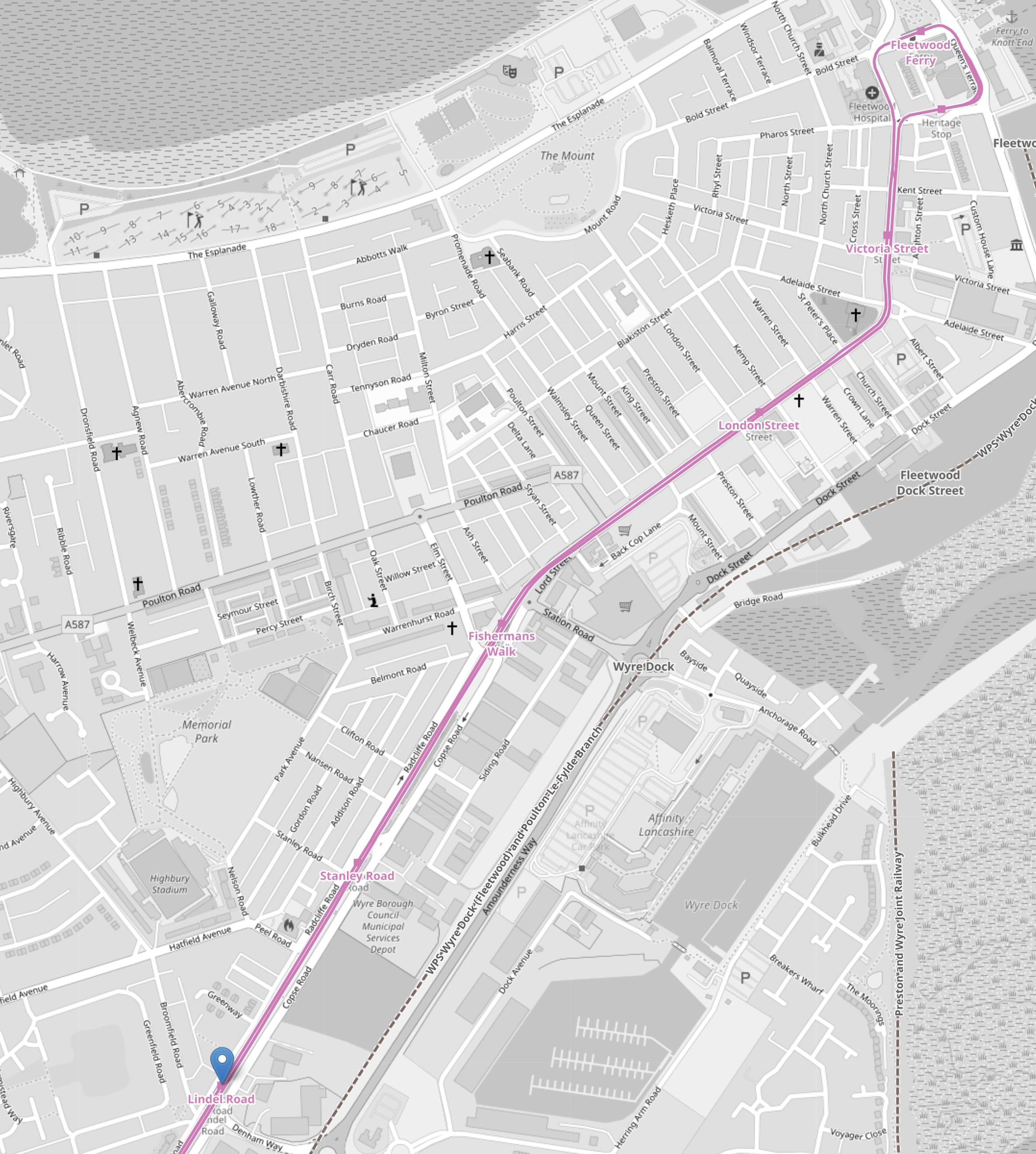
Note.
- As before, the Blackpool tramway tracks are shown in pink.
- Fleetwood Ferry is in the North-East corner if the map.
- Lindel Road tram stop is marked by the blue arrow in the South-West corner if the map.
This fourth OpenRailwayMap shows the Lindel Road tram stop area at a larger scale.
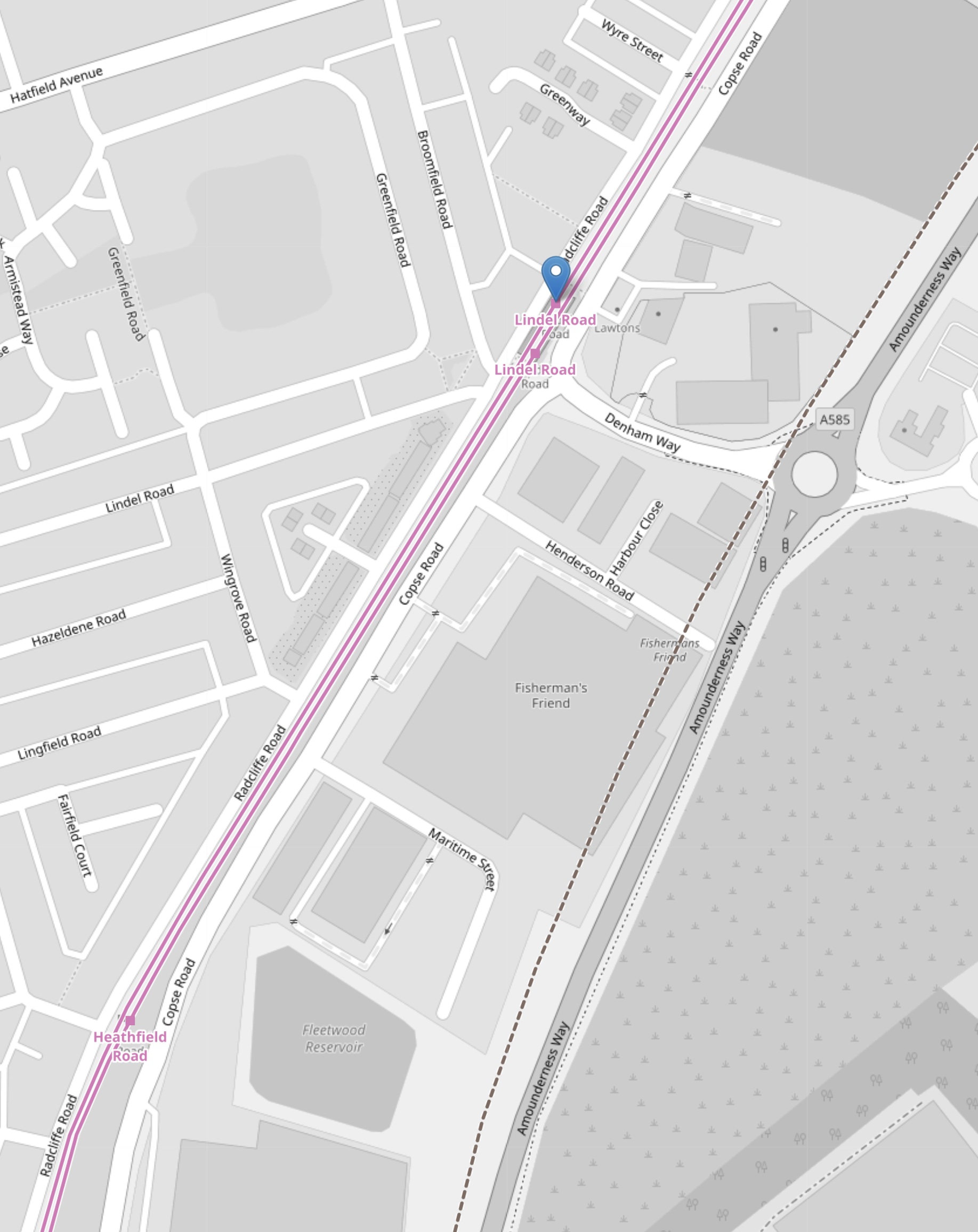
Note.
- As before, the Blackpool tramway tracks are shown in pink.
- Lindel Road tram stop is marked by the blue arrow.
- Running parallel to and to the East of the Blackpool tramway is Amounderness Way, which appears to have been built on the line of the railway to Fleetwood.
- Along the West side of Amounderness Way, a disused railway is indicated, which must be the closed railway to Fleetwood.
I believe that Network Rail or their engineers have found a route to connect the old branch line to the Blackpool tramway.
- The railway connecting the Blackpool tramway and the closed railway to Fleetwood, would only need to be single-track.
- There might be a convenient route, where all the land is owned by the Council.
- If the tram-trains were to be was fitted batteries, then there would be no need to electrify the line.
I suspect, that the connection would be to the South of Lindel Road tram stop.
- This would mean that the tram-train would serve a number of stops in the town centre.
- The tram-train could use the catenary of the Blackpool tramway.
- Connection and disconnection to the catenary could be done in the Lindel Road tram stop.
This Google Map shows the area of the Lindel Road tram stop and Denham Road.
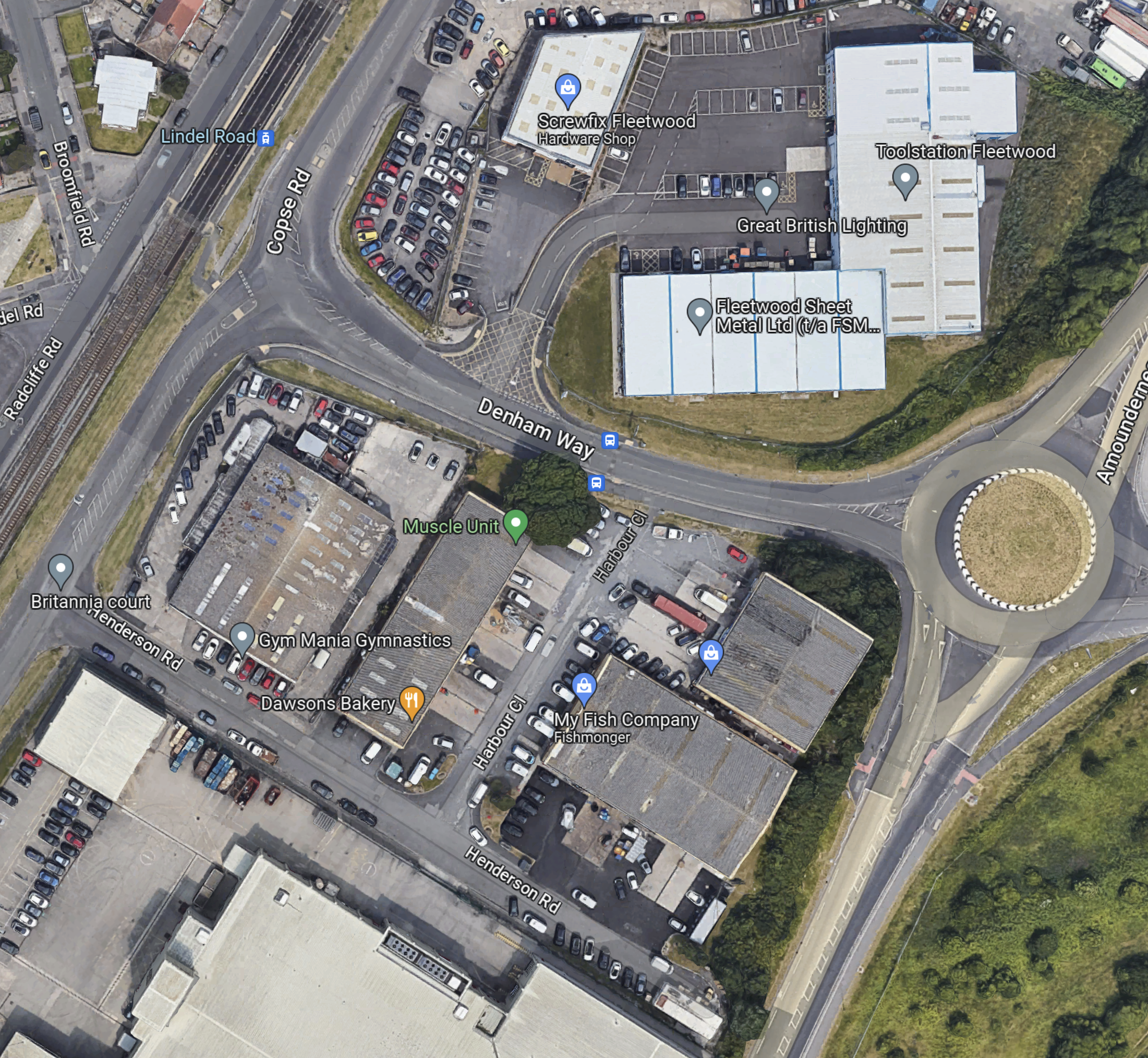
Note.
- The Lindel Road tram stop in the North-West corner of the map, with the Blackpool tramway running NE-SW across the corner of the map.
- The roundabout and Amounderness Way on the East side of the map.
- Denham Way connecting the roundabout to Copse Road and the tram stop.
- On the fourth OpenRailwayMap it showed the original line of the railway was to the West of Amounderness Way.
So could the spur between the Lindel Road tram stop and the railway to Poulton-le-Fylde station take the following route?
- Just South of the tram stop the two tracks connect to a new single-track that goes East on the South side of Denham Way.
- The turn would be quite sharp, but trams and tram-trains have the articulation of a snake and can use tight turns and narrow formations.
- The crossing of Copse Road would be protected by traffic lights.
When the tram-train gets to the roundabout other end of Denham way, I think there are two choices.
- Turn sharp right and go South alongside the West side of Amounderness Way.
- Somehow cross Amounderness Way and go down the West side.
This Google Map Amounderness Way going South.
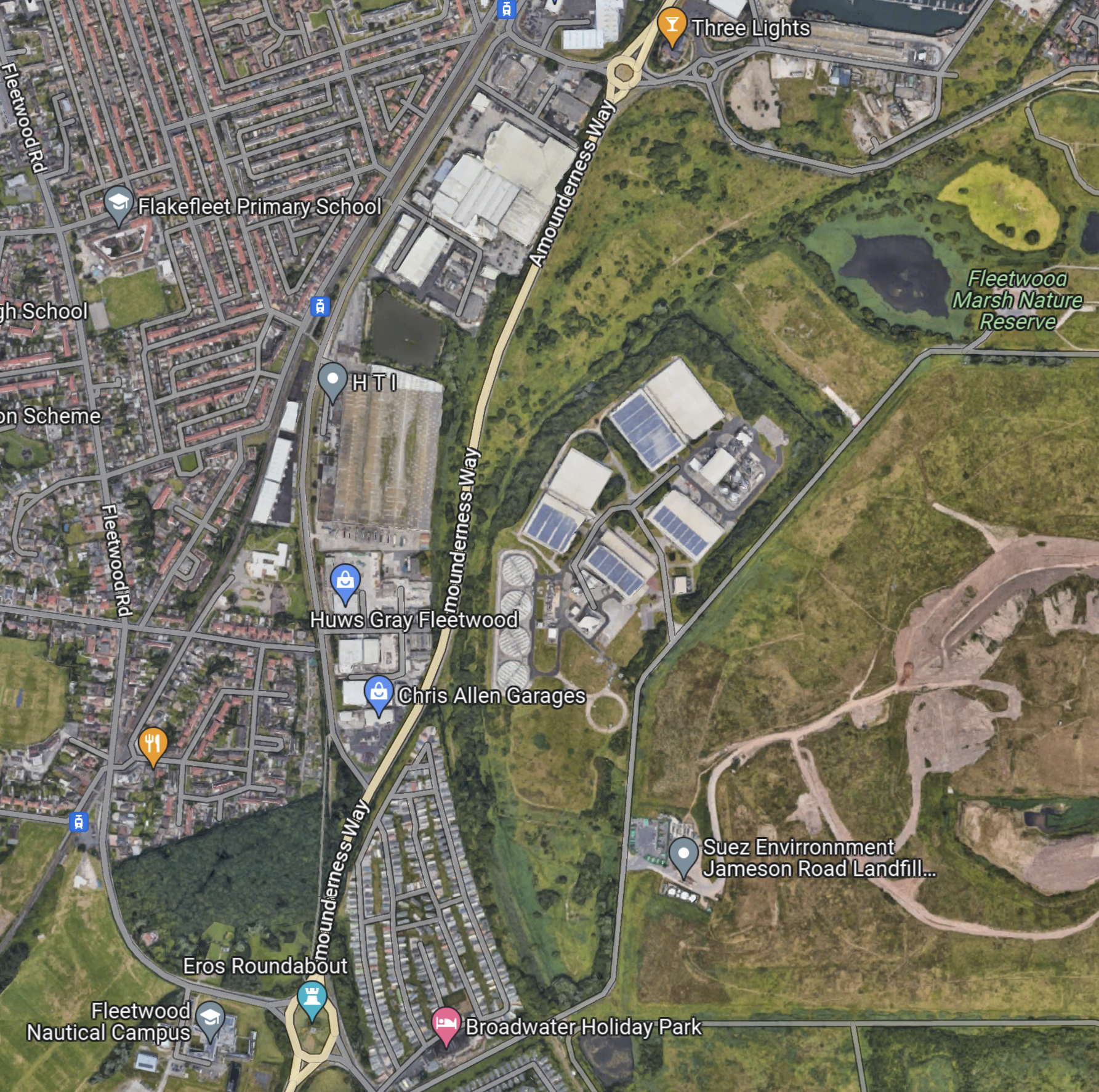
Note.
- Amounderness Way runs North-South down the map between two roundabouts.
- The large industrial area to the East of the road is labelled as SUEZ Recycling and Recovery.
- North-East of SUEZ is Fleetwood Marsh Nature Reserve.
- South-East of SUEZ is SUEZ Environmental Jameson Road Landfill and Lancashire County Council’s Fleetwood Household Waste Recycling Centre.
- There also seem to be a lot of large holiday caravans.
- There is a road running along the South-East of the large SUEZ site called Jameson Road.
The Wikipedia entry for the Fleetwood branch line, says this about the state of the branch.
Some of the line is now cleared of overgrowth because the northern track was not lifted from past Burn Naze Halt to just beyond Jameson Road Fleetwood. However, the road bridge was filled in below it. The junction, last used when goods trains took coal to Fleetwood Power Station, still exists. Looking over the road bridge on Jameson Road, the track to both north & south can still be seen through the undergrowth. In the 1990s, the new A585 The Amounderness Way bypass has been built on the former trackbed, although sufficient space still exists for a reinstated railway should it be required.
Note.
- It appears that enough space has been left at the Northern end to connect to the Blackpool tramway.
- It doesn’t seem to be in too bad a state.
- I suspect that rebuilding the branch has a similar degree of difficulty to rebuilding the Dartmoor Line to Okehampton, which is now operating successfully.
This gave me hope, that a single-track tramway could be built between Poulton-le-Fylde junction and the Lindel Road tram stop.
This Google Map shows the track meeting the filled in road bridge on Jameson Road.
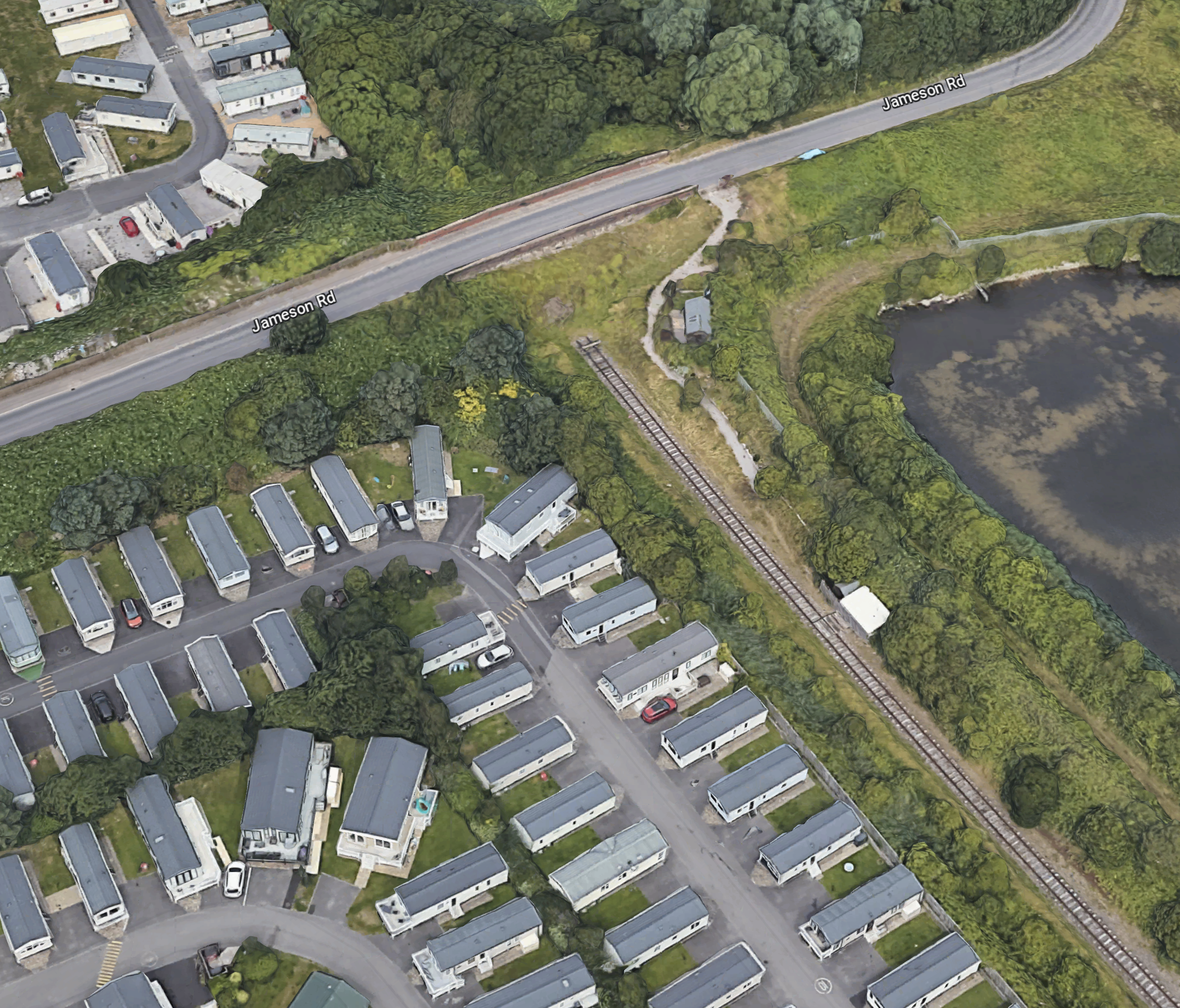
Note.
- If that’s not a single-track railway and the filled-in bridge on Jameson Road, I’m a Dutchman.
- The railway can be followed on Google Maps for most of the way to Poulton-le-Fylde station.
- Google Maps also shows traces of railway to the North of the bridge on Jameson Road.
This Google Map shows the section of Amounderness Way from the North of the SUEZ Recycling and Recovery site to the Denham Way roundabout.
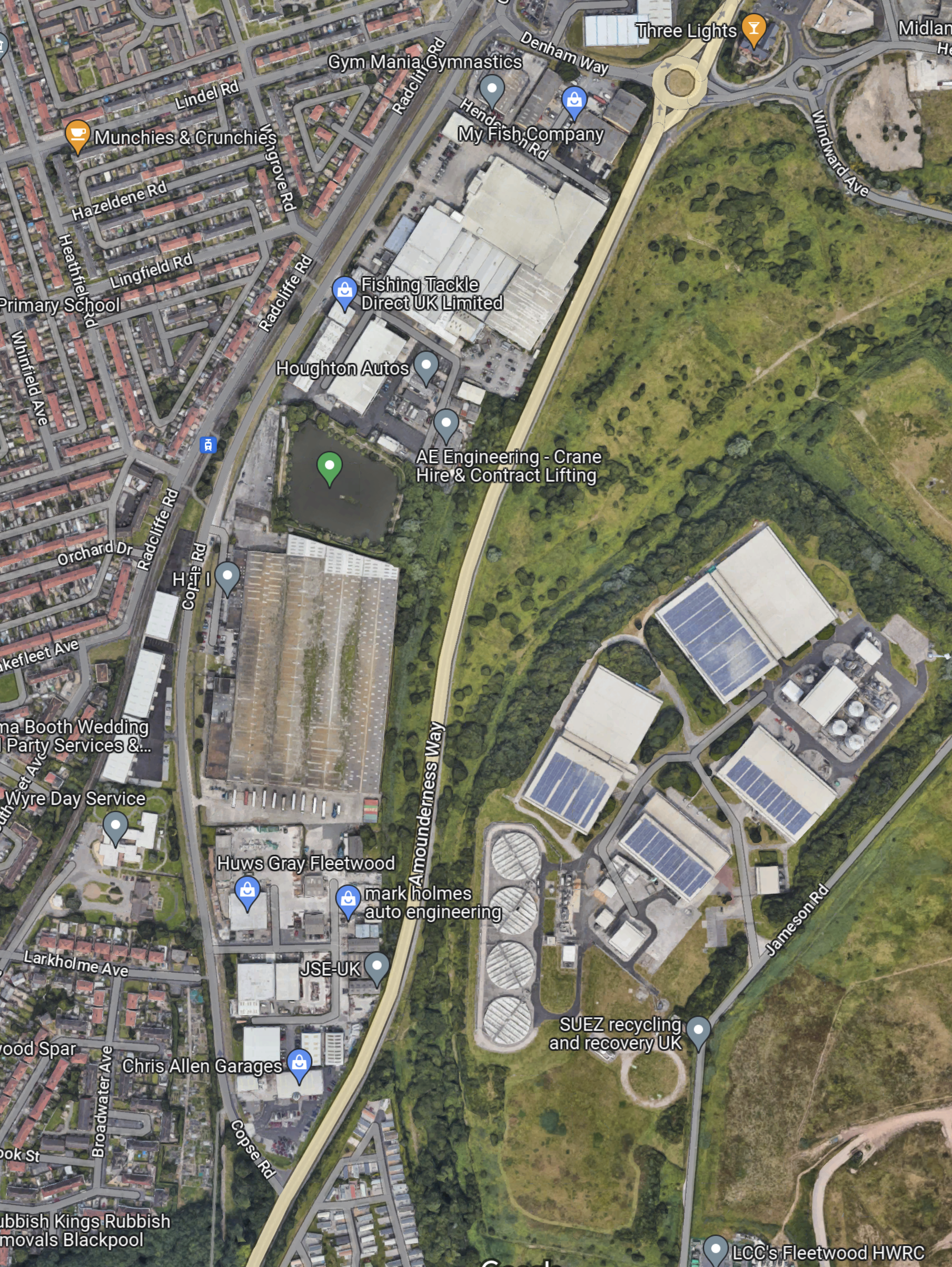
I suspect that the tram would go straight up the East side of ‘Amounderness Way.
But how would the tramway cross the road.
This Google Map shows Denham Way, the roundabout and Lindel Road tram stop.
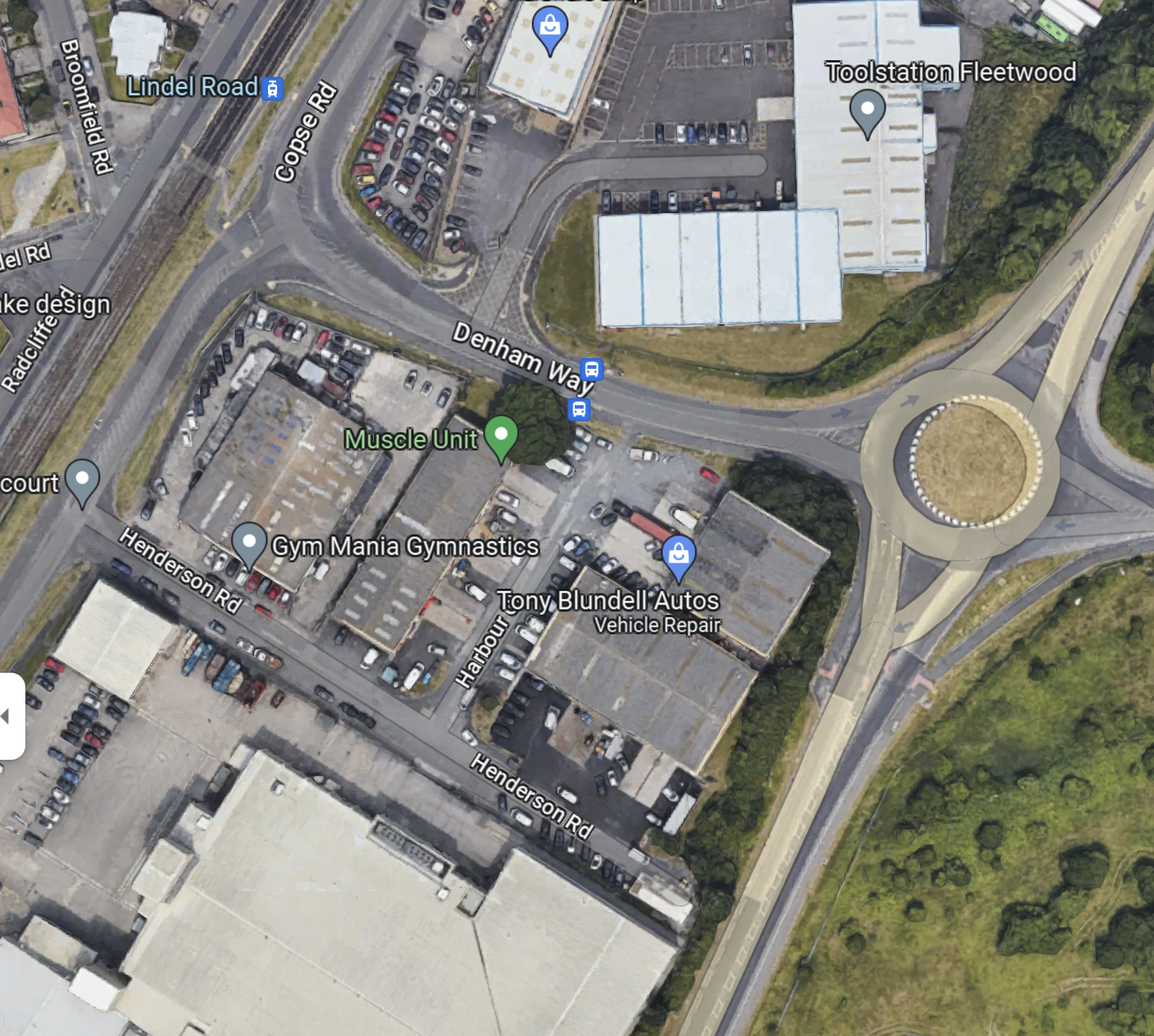
I am fairly sure that a single-track bridge of some sort could connect Lindel Road tram stop with a single-track railway along the East side of Amounderness Way, to link up with the orphaned track South of Jameson Road.
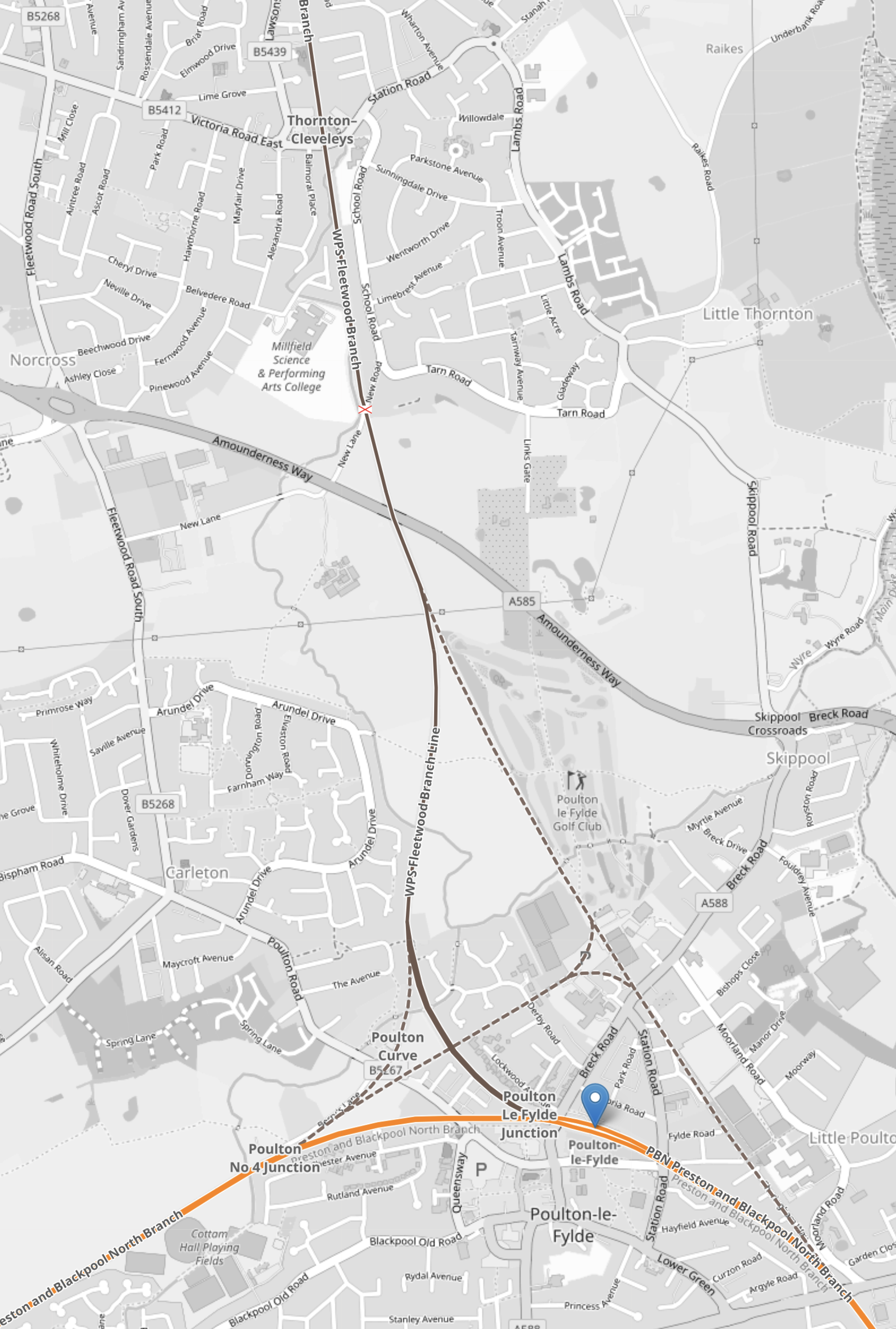
This OpenRailwayMap shows Poulton-le-Fylde junction, where the former railway to Fleetwood, joins the Blackpool branch.
Note.
- Poulton-le-Fylde station is indicated by the blue arrow.
- The orange track is the Blackpool branch to Blackpool North station.
- Poulton-le-Fylde junction is to the West of the station.
- The track going North from the junction, is the disused track to Fleetwood.
- The map also shows a couple of level crossings.
I am fairly certain, that a single-track tramway could be built between Poulton-le-Fylde junction and the Lindel Road tram stop.
This OpenRailwayMap shows Poulton-le-Fylde junction and Poulton-le-Fylde station.
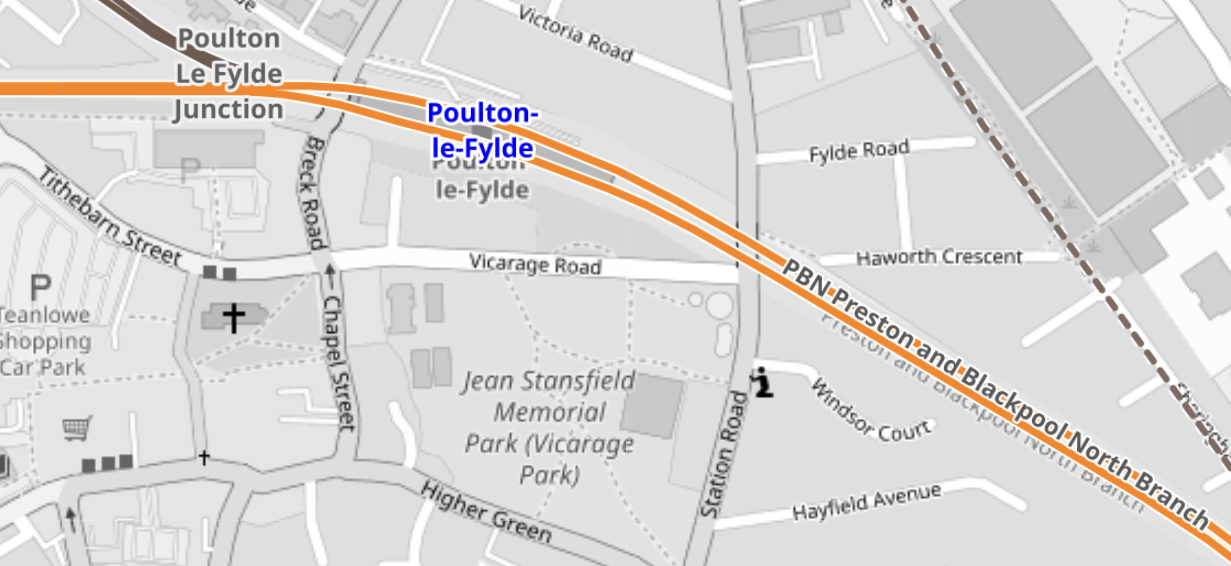
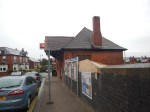
These pictures taken in 2018, show Poulton-le-Fylde station.
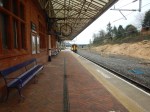
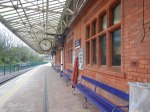
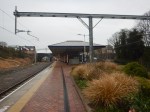
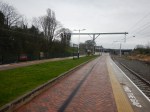
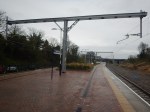

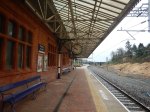
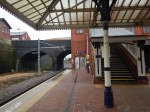
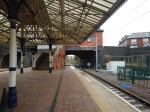
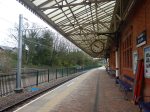
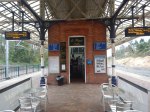
Note.
- It is a small station, that oozes quality.
- The tracks and electrification were all installed or renewed in the last few years.
- There is even a cafe and a lift to the street.
- The flower-beds in the middle of the platform, are at the Preston end of the station.
- As the tram-trains will stop in the station, they can raise and lower the pantograph in the station.
- Tram-trains and trains will share the appropriate platform.
The possibility can probably be arranged that an incoming train to Blackpool North will be able to drop passengers at a waiting tram-train for Fleetwood Ferry.
Will The New Fleetwood Branch Be Electrified?
There are various arguments for and against electrification between Poulton-le-Fylde station and the Lindel Road tram stop.
In favour, is that a continuous catenary can be run from end-to end, with 750 VDC electrification.
- An insulated section would be used at Poulton-le-Fylde station to separate the 750 VDC of the tramway and the 25 KVAC of the Blackpool branch.
- Standard tram-trains, like Sheffield’s Class 399 tram-trains could be used.
- Battery-electric tram-trains are probably more expensive.
Against electrification are.
- There would be no electrification between Poulton-le-Fylde station and the Lindel Road tram stop to install.
- There would be no need for any modifications to the catenary at Poulton-le-Fylde station and the Lindel Road tram stop.
- The filled in bridge mentioned in Wikipedia, might only need a tram-sized hole and not complete rebuilding to get the trams through.
- Occasional freight trains could probably be run, if required.
- Battery-electric tram-trains are proven technology.
It will definitely one for the accountants to decide.
The Tram-Trains
These are pictures of Stadler Citylink tram-trains in Sheffield.
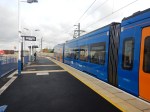
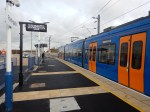

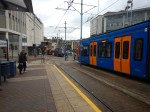
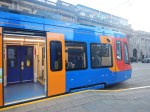
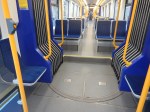

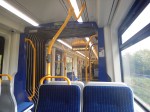
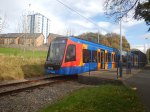
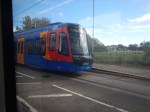
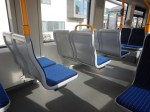
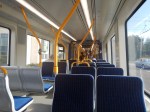
Note.
- These Class 399 tram-trains were the first tram-trains to run in the UK, when they entered service in 2017.
- They were built by Stadler in Spain.
- They share the tracks in Sheffield happily with Sheffield’s other trams of a different type.
- At the time, Paul Maynard, who is the local MP, was the Parliamentary Under Secretary of State for Transport, so I suspect that explains, why the MP appears pleased with the choice of tram-trains and talks knowledgeably about them.
- There is also a battery electric version of these tram-trains, which has been ordered by the South Wales Metro.
- Blackpool’s tramway uses Bombardier Flexity 2 trams. However, it doesn’t seem, that there is a tram-train version of the Flexity 2.
- Merseyrail in the Liverpool area, are introducing a large fleet of Stadler trains, which will be running to Preston in a couple of years.
I suspect that these tram-trains will be built by Stadler and they could be fitted with batteries.
Tram-Train Frequency Between Fleetwood Ferry And Poulton-le-Fylde Station
The Blackpool Gazette article is definite, that the frequency of the tram-train will be two trains per hour (tph).
Consider.
- The Blackpool tramway operates a service of trams every 10-15 minutes between Starr Gate and Fleetwood Ferry, so the frequency will be increased by two tph North of Lindel Road tram stop.
- As heritage trams also share the route to Fleetwood, I suspect that at some busy times, the Fleetwood Ferry and Preston service could be reduced to hourly.
- But it does look to me, that the all-important terminal at Fleetwood Ferry has been well-designed and can handle the extra traffic.
- Looking at the timetable for the Blackpool tramway, trams take forty-one minutes between Fleetwood Ferry and the North Pier.
- As Poulton-le-Fylde station and North Pier tram stop, are probably similar distances from Fleetwood Ferry, I suspect that Poulton-le-Fylde station and Fleetwood Ferry would take thirty minutes or more.
- Real Time Trains indicates that electric trains to Blackpool North station take around 16-17 minutes between Poulton-le-Fylde and Preston stations, with diesel trains taking a couple of minutes more.
- Add in time for stops at Kirkham & Wesham, possibly another at Salwick and cleaning and crew changeover at Preston station, I suspect that a roundtrip from Preston to Fleetwood Ferry and back will take a very convenient two hours.
A two hour round trip and two tph, will mean four trains will be needed to work the timetable.
I can’t prove it, but I my gut feeling is that there there will be a passing loop somewhere between Poulton-le-Fylde station and the Lindel Road tram stop.
The passing loop would also give scope for operational flexibility.
Train Services Through Poulton-le-Fylde Station
Train services through Poulton-le-Fylde station are currently as follows.
- Avanti West Coast – London Euston and Blackpool North – 1 train per day (tpd)
- Northern – Liverpool Lime Street and Blackpool North – 1 tph
- Northern – Manchester Airport and Blackpool North – 2 tph
- Northern – York and Blackpool North – 1 tph
Note that all trains stop at Preston.
The Avanti West Coast service only calls Southbound, but I wouldn’t be surprised, if the Fleetwood tram-train is built, that Avanti West Coast started a Northbound service.
Could The Blackpool South Branch Be Served By Similar Tram-Trains?
In Beeching Reversal – South Fylde Line Passing Loop, I talked about improving the Blackpool South branch.
Objectives included.
- Two tph.
- Better trains.
- A passing loop that would enable the 2 tph.
Note.
- Pacers have been replaced with Class 150 trains.
- The route is electrified between Preston and Kirkham & Wesham station.
- 12.2 miles are without electrification.
It certainly would seem possible that if a battery-electric tram-train had sufficient range, it could handle the current route to Blackpool South station.
The trams would have a ninety-minute round trip between Preston an Blackpool South stations and two tph, will mean three trains will be needed to work the timetable.
The MP is quoted in the Blackpool Gazette article, as liking the concept of a tram loop to Blackpool from Preston.
Trams might go to Fleetwood, down the promenade and then take the Blackpool South branch beck to Preston.
It could obviously go the other way around the loop.
This Google Map shows the location of Blackpool South station.
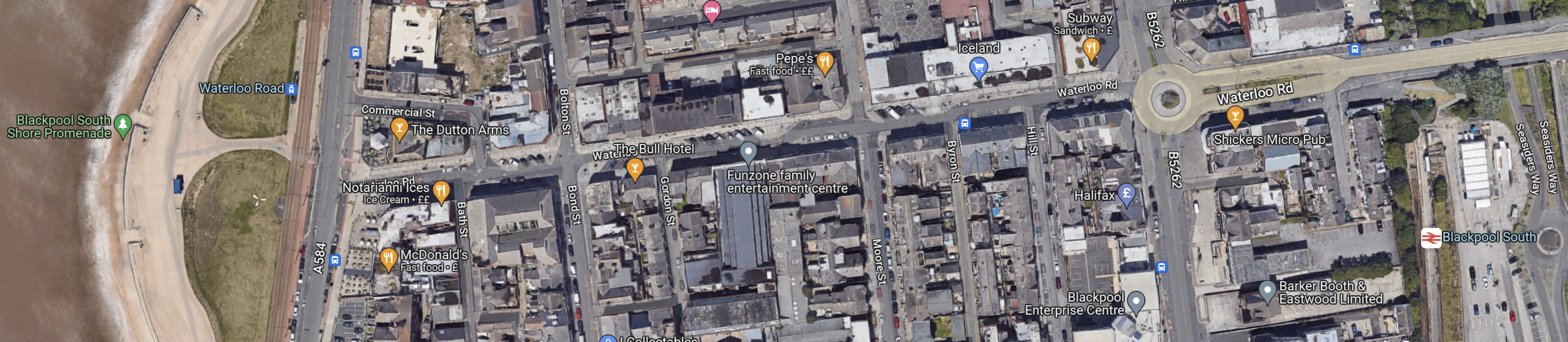
Note.
At the West side of the map is the promenade, with tramway running North and South.
At the East side of the map is Blackpool South station.
The walking route between the tramway and the station is not arduous, but it is not a seamless transfer.
It might be better to make the connection at Blackpool Pleasure Beach, which is shown in this Google Map.
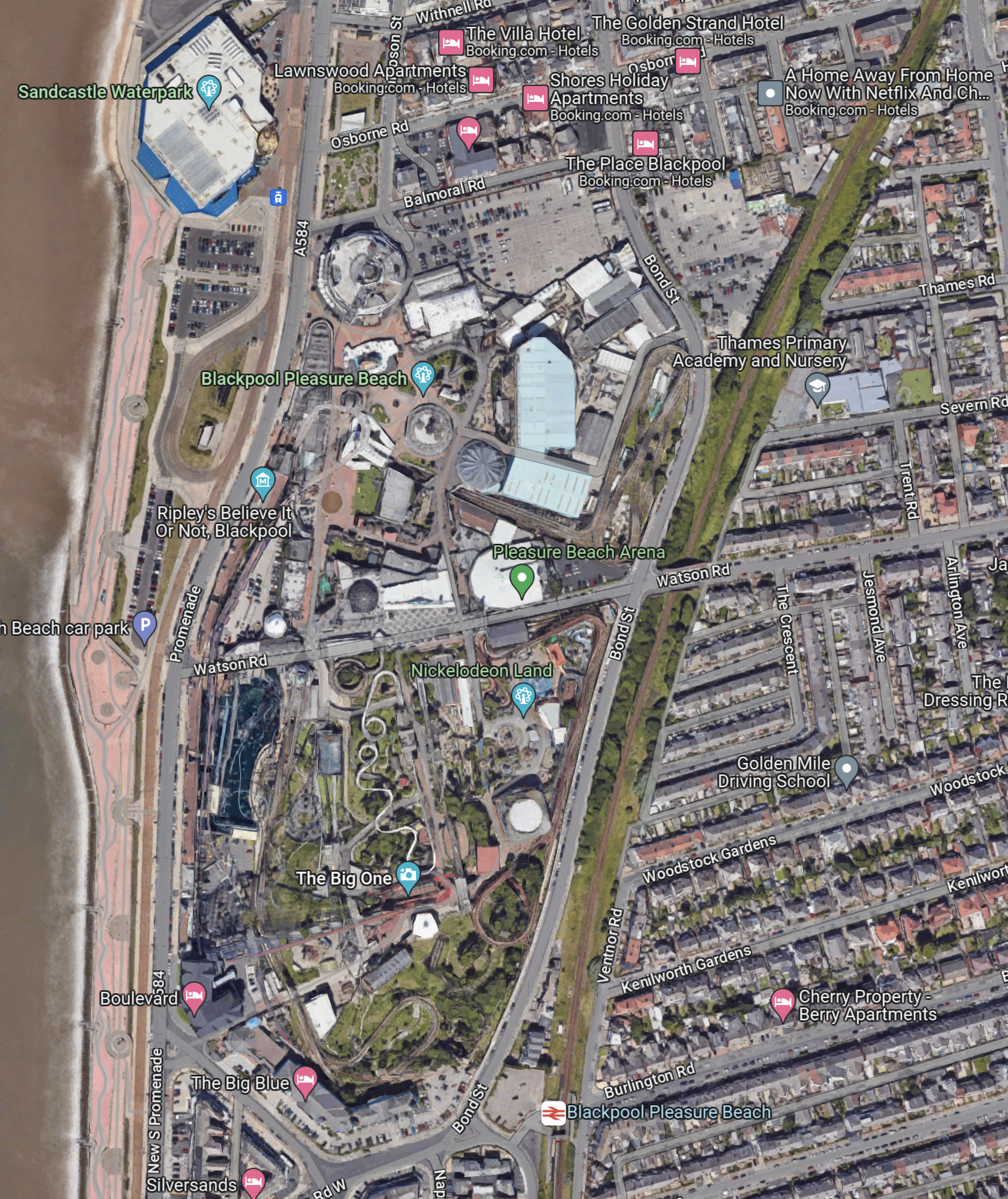
Note.
- The Pleasure Beach lies between the tramway and the promenade by the beach and the Blackpool South branch on the East side.
- There are two stops on the tramway and a station just to the South.
Perhaps, if the Pleasure Beach were redeveloping an area, they might leave provision for tram-trains to to sneak through to join the tramway going North.
But it’s a difficult problem, as there is not much space, that is undeveloped and the roads aren’t very wide.
This Google Map shows the North Pier and Blackpool North station.
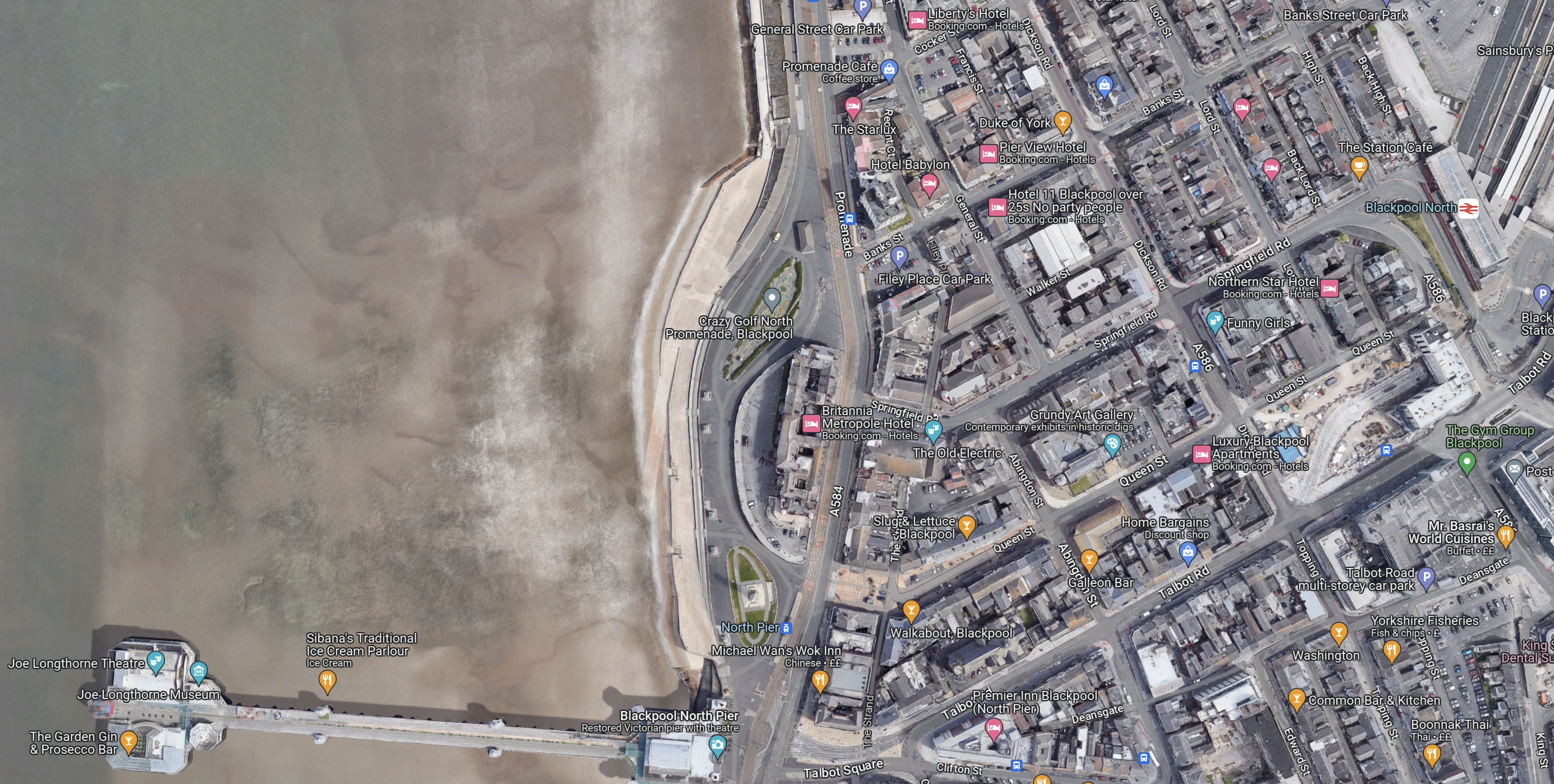
Note.
- The North Pier is in the South-West corner of the map.
- Blackpool North station, which is Blackpool’s main station is in the North-East corner of the map.
- The tramway runs along the sea-front.
The North Pier and the station are linked by Talbot Road.
This Google Map shows Talbot Road and the development of a tram stop by Blackpool North station.
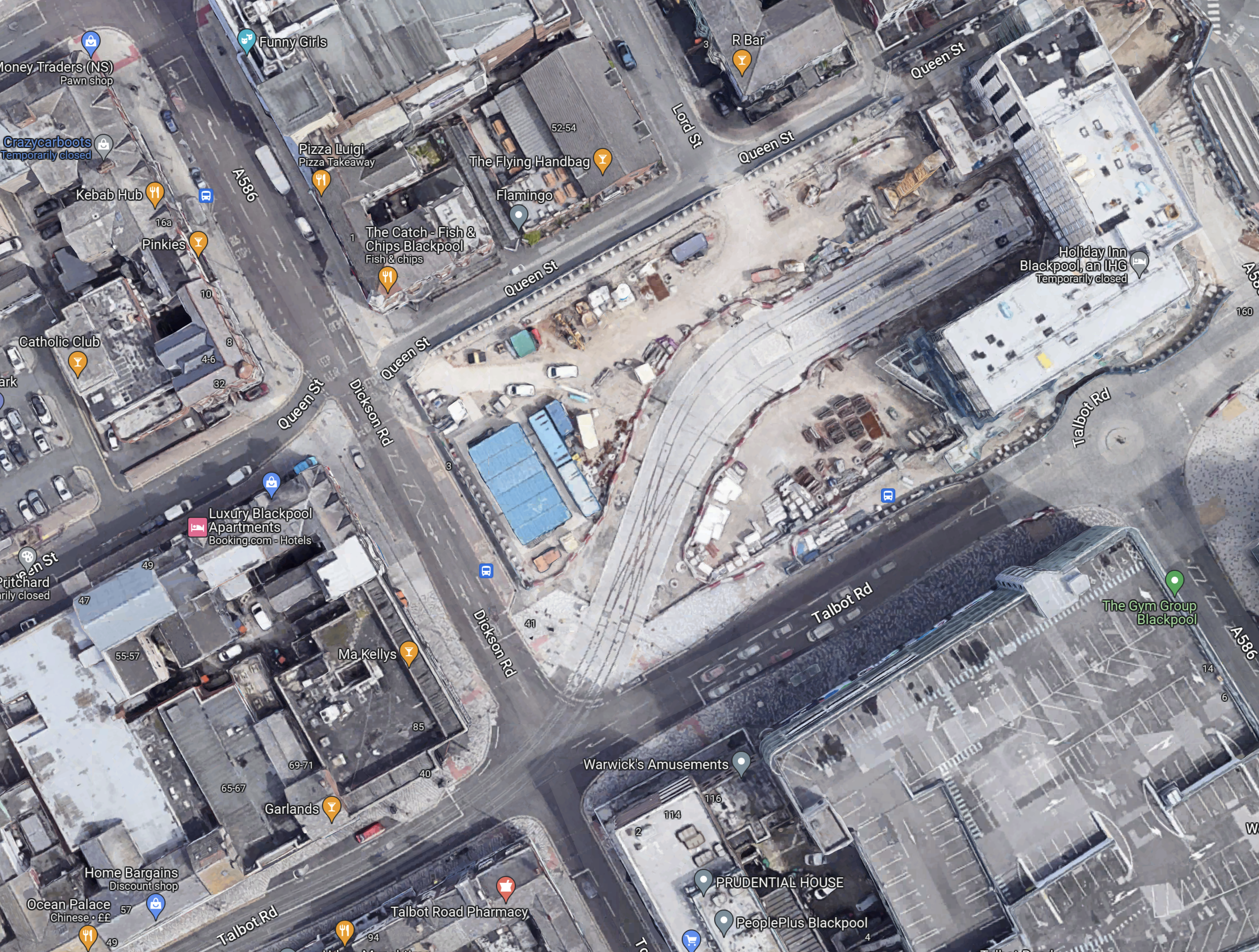
Note.
- To create the space a large Wilkinson’s store was demolished.
- Blaxkpool North station is just off the North-East corner of the map.
- The tram stop will have two platforms.
- There is a large diamond crossing on the approach to the tram stop, so operation is smooth and reliable.
- It looks like there will be substantial development around and possibly over the tram stop.
This Google Map shows Talbot Square, where the tram branch to Blackpool North station joins the main North-South tramway.
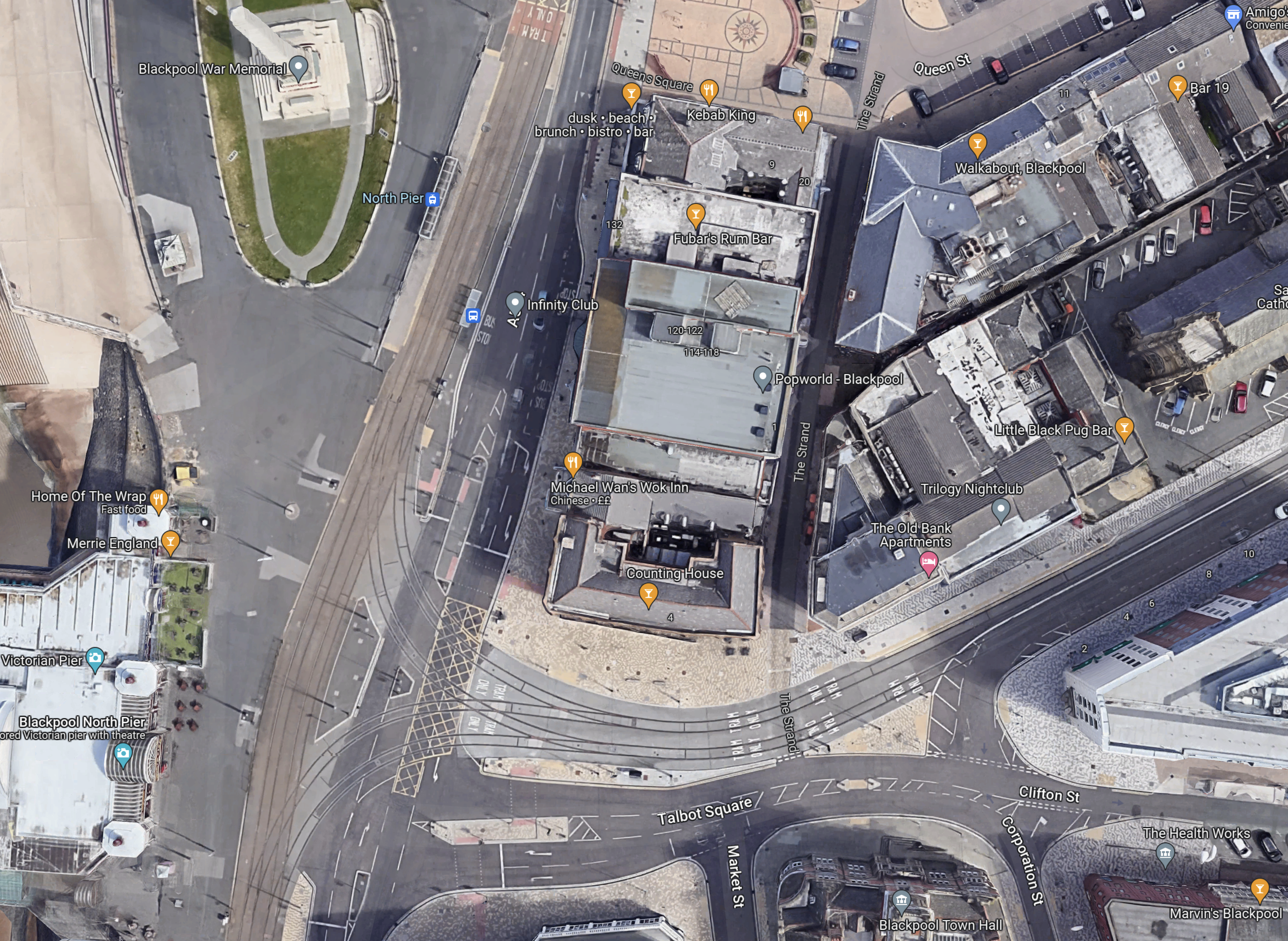
It is all very crowded and I believe this illustrates, why despite their close proximity, there is no rail connection between the Blackpool South branch and the Blackpool tramway.
There just isn’t the space to put in junctions like this and the tramway doesn’t go past Blackpool Airport, so the connection would have to be amongst the crowded houses on the sea front.
The Development Of Blackpool Airport
Aviation is changing and I believe a new breed of airliners and the airports to serve them, will be developed in the next few years.
- Zero-carbon aircraft are being developed and I believe some will have entered service by 2026.
- They will be powered directly by batteries or from green hydrogen.
- Some like the Eviation Alice are already entering a flight-test program, that will lead to certification.
- These airliners are likely to be smaller and quieter than current airliners, with typically a passenger capacity of around 19 passengers.
- They will often fly routes between smaller regional airports.
Blackpool Airport could be an ideal airport for these airliners.
- Offshore electricity and even hydrogen generated offshore will be easy to deliver to Blackpool Airport.
- It could have excellent transport connections with trams and trains.
- Blackpool Airport has good runways.
- Many take-offs will be over the sea.
- We will see airports converting to zero-carbon airports.
So why not Blackpool Airport?
These are distances between Blackpool Airport and other airports.
- Aberdeen – 238 miles
- Amsterdam Schipol – 340 miles
- Belfast City – 128 miles
- Cardiff – 165 miles
- Dublin – 134 miles
- Edinburgh – 150 miles
- Exeter – 211 miles
- Geneva – 661 miles
- Glasgow – 155 miles
- Haverfordwest – 157 miles
- Jersey – 318 miles
- Kirkwall – 358 miles
- London Gatwick – 220 miles
- London Heathrow – 192 miles
- London Southend – 219 miles
- Newcastle – 89 miles
- Paris Orly – 422 miles
- Isle of Man Ronaldsway – 68 miles
- Shannon – 254 miles
- Southampton – 208 miles
- Sumburgh – 427 miles
These distances fit nicely with the range of the nine-seater Eviation Alice electric aircraft, which is predicted to be 620 miles.
This Google Map shows Blackpool Airport.
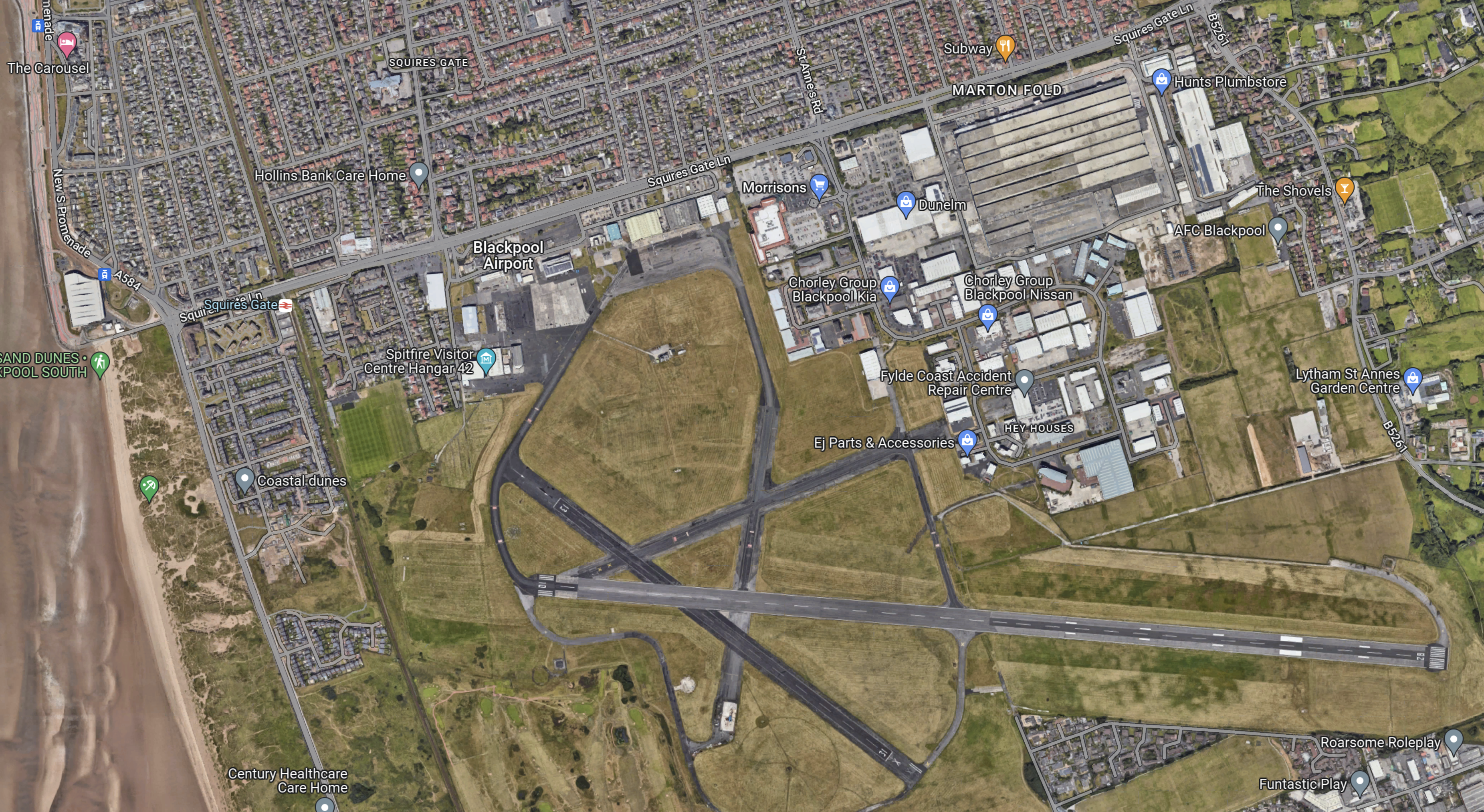
Note.
- The East-West main runway, which is over 1,800 metres long, which will probably mean an easier takeoff into the wind, for much of the time.
- The acres of space.
- The Blackpool South branch running down the side of the airport, with Squires Gate station on the road past the Airport.
- But zoom in on the airport and some improvement and refurbishment needs to be done. Years of neglect and uncertainty has taken its toll.
This Google Map shows the North-West corner of the map at a greater scale.
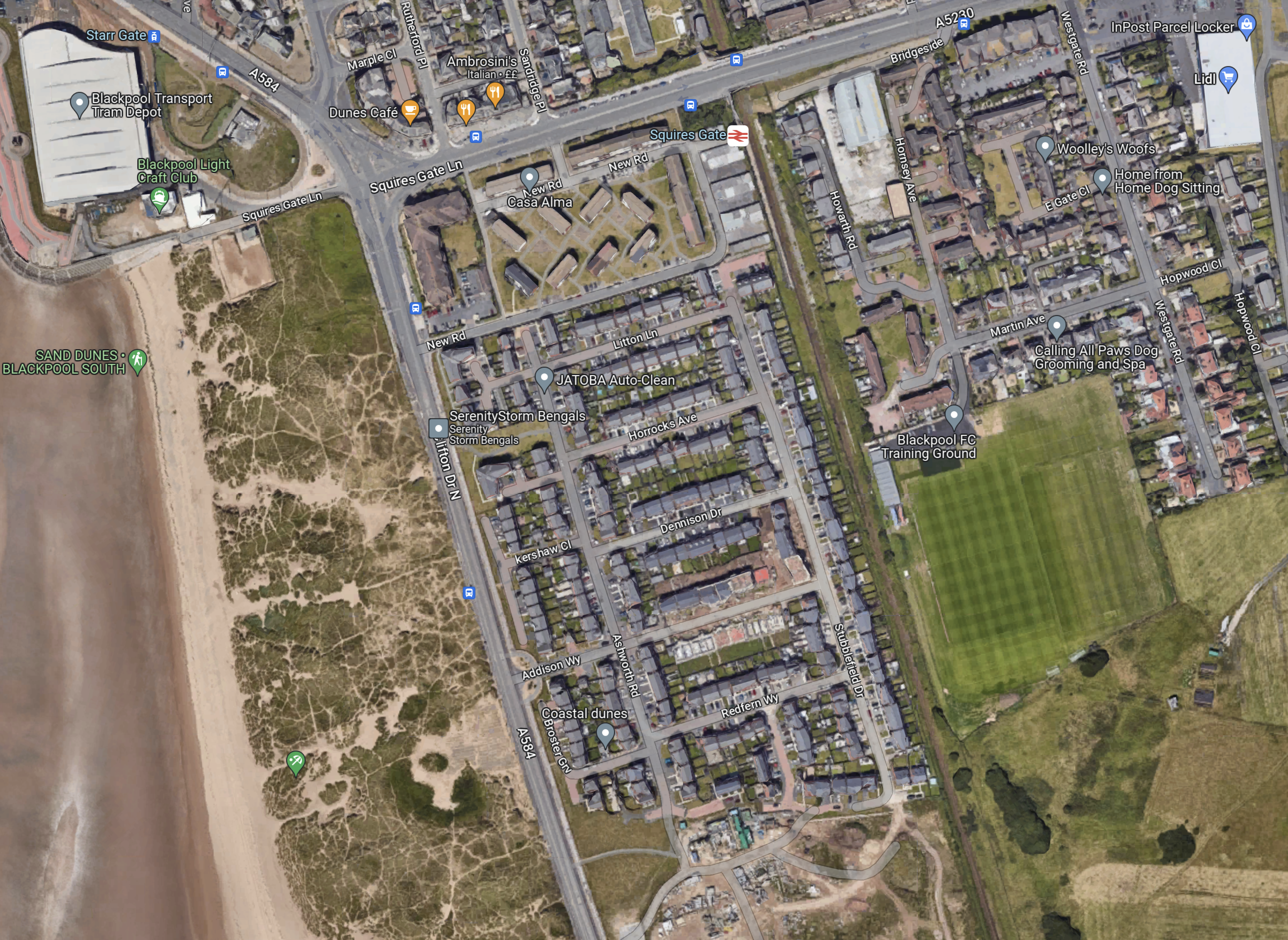
Note.
- In the North-West corner of the map is Blackpool tramway’s depot and Starr Gate tram stop with its loop.
- The rail station is Squires Gate for Blackpool Airport.
- The smart green space to the East of the railway is Blackpool FC’s training ground.
- Below the training ground on the East side is Blackpool Airport.
- On the other side of the track from the Airport, it appears to be the local rubbish dump.
I wonder, if this is where the Blackpool tramway and the Blackpool South branch could be joined up.
- A joint two-platform station partly on Airport land would replace the current Squires Gate station.
- It could be connected to the Airport terminal by some form of shuttle or travellator.
- The trams would be connected to the Starr Gate loop by a line going along the front, as the tramway does in much of Blackpool, before cutting through the waste ground.
- Trains to Blackpool South station would use their current route.
This plan and probably lots of others could allow a Blackpool loop tram-train from Preston.
What would a zero-carbon airport do for Blackpool?
Could Class 777 Trains Create A Metro Centred On Preston?
Preston station is a major station on the West Coast Main Line, that will be served by High Speed Two.
- Electric long distance services to and from Birmingham, Carlisle, Liverpool, London Euston, Manchester, Edinburgh and Glasgow serve the station.
- Electric and diesel local services fan out from the station to Barrow-in-Furness, Blackburn, Blackpool, Burnley, Colne, Liverpool, Manchester and Ormskirk.
- Other local services could be developed.
Could the local services be turned into a zero-carbon Metro centred on Preston station, that would possibly use a version of Merseyrail’s Class 777 trains?
The Routes
These routes could be part of the Metro.
Preston And Barrow-in-Furness
Consider.
- This route is 55.8 miles long.
- The service calls at Lancaster, Carnforth, Silverdale, Arnside, Grange-over-Sands, Kents Bank, Cark, Ulverston, Dalton and Roose
- The route is electrified between Preston and Carnforth.
- 28.1 miles of the route are without electrification.
Northern use Class 195 diesel trains on this route.
Preston And Blackpool North
Consider.
- This route is 17.5 miles long.
- The service calls at Kirkham & Wesham, Poulton-le-Fylde and Layton
- The route is fully-electrified.
Northern use Class 195, 319 and 331 trains on this route.
Preston And Blackpool South
Consider.
- This route is 19.9 miles long.
- The service calls at Salwick, Kirkham & Wesham, Moss Side, Lytham, Ansdell & Fairhaven, St Annes-on-the-Sea, Squires Gate and Blackpool Pleasure Beach
- The route is electrified between Preston and Kirkham & Wesham
- 12.1 miles of the route are without electrification.
Northern use diesel trains on this route.
Preston And Colne
Consider.
- This route is 29.1 miles long.
- The service calls at Lostock Hall, Bamber Bridge, Pleasington, Cherry Tree, Mill Hill, Blackburn, Rishton, Church & Oswaldtwistle, Accrington, Huncoat, Hapton, Rose Grove, Burnley Barracks, Burnley Central, Brierfield and Nelson.
- Colne is 165 metres above sea level.
- The route is not electrified.
Northern use diesel trains on this route.
This route could also be extended to Skipton in Yorkshire, which is something that was promised by Government a few years ago.
The extension to Skipton could be another 15 miles.
Preston And Fleetwood
Consider.
- This route is 20.9 miles long.
- The service could call at Salwick, Kirkham & Wesham and Poulton-le-Fylde
- The route is electrified between Preston and Poulton-le-Fylde
- This route would need to be reinstated.
6.6 miles of the route are without electrification.
Preston And Liverpool Lime Street via St. Helens
Consider.
- This route is 35.2 miles long.
- The service calls at Huyton, St Helens Central, Wigan North Western, Euxton Balshaw Lane and Leyland
- The route is fully-electrified.
Northern use Class 319 and 331 trains on this route.
Preston And Manchester Airport
Consider.
- This route is 35.2 miles long.
- The service calls at Heald Green, Manchester Piccadilly, Manchester Oxford Road, Deansgate, Salford Crescent, Bolton, Lostock, Horwich Parkway, Blackrod, Adlington (1tph), Chorley, Buckshaw Parkway and Leyland
- The route is fully-electrified.
Northern use Class 195 and 331 trains on this route.
Preston And Ormskirk
Consider.
- This route is 15.3 miles long.
- The service calls at Burscough Junction, Rufford and Croston.
- The route is not electrified.
Merseyrail have their eyes on this route.
Preston And Windermere
Consider.
- This route is 50.3 miles long.
- The service calls at Lancaster, Carnforth, Oxenholme Lake District, Kendal, Burneside and Staveley
- The route is electrified between Preston and Oxenholme Lake District.
- 10.2 miles of the route are without electrification.
Northern use Class 195 diesel trains on this route.
Class 777 Trains
Consider.
- According to Stadler’s specification for the Class 777 IPEMU, the battery-equipped Class 777 trains have a range of 55 km or 34.2 miles.
- But, according to New Merseyrail Train Runs 135km On Battery, these trains have done 135 km or 83.9 miles.
- As there is no third-rail electrification at Preston, but lots of 25 KVAC overhead electrification, the version of the Class 777 train for 25 KVAC overhead will need to be used.
- There is no way that any third-rail electrification can be installed.
One comment to my post; The Stadler Data Sheet For A Class 777 IPEMU, suggests that batteries can’t be used with the 25 KVAC variant of the Class 777 due to lack of space.
I will use a starting point for the Class 777 IPEMU, that can access 25 KVAC has a range of 40 miles, which is just under half of the demonstrated maximum range of the current trains.
Class 331 Trains With Batteries
CAF have proposed a battery-electric version of their Class 331 train.
The closely-related Class 195 diesel trains and Class 331 trains already work some of the routes through Preston.
In Thoughts On CAF’s Battery-Electric Class 331 Trains, I estimated the range of these trains and reckoned that they would be between 35 and 70 miles.
The South Wales Valley Lines Solution
In The Greening Of The Valleys, I describe how the South Wales Metro will use a mix of trains.
- Stadler Citylink tram-trains for local routes.
- Stadler FLIRTs for routes on the main lines.
So could a Metro centred on Preston be based on the same principle?
I’ll look at each line in order.
Preston And Barrow-in-Furness
Consider.
- This route is 55.8 miles long.
- 28.1 miles of the route are without electrification.
- Northern use Class 195 diesel trains on this route.
A Class 331 with a battery range of sixty miles could work this route, charging the batteries between Preston and Carnforth.
Preston And Blackpool North
Any train that could use 25 KVAC electrification could use this route.
Preston And Blackpool South
Consider.
- This route is 19.9 miles long.
- 12.1 miles of the route are without electrification.
- Northern use diesel trains on this route.
A Class 777 with a battery range of 24.2 miles could work this route, charging the batteries between Preston and Kirkham & Wesham.
Preston And Colne
Consider.
- This route is 29.1 miles long.
- Colne is 165 metres above sea level.
- The route is not electrified.
- Northern use diesel trains on this route.
A Class 777 with a battery range of 30 miles could work this route, charging the batteries at Preston and Colne.
It might be prudent to electrify the single track line between Gannow Junction and Colne, so that trains have enough power to climb the hill to Colne and reach Colne with a full battery.
The extension to Skipton would require a range of 30 miles or just fifteen miles, if the 25 KVAC at Skipton was used to recharge the trains.
Preston And Fleetwood
Consider.
- This route is 20.9 miles long.
- 6.6 miles of the route are without electrification.
A Class 777 with a battery range of 13.2 miles could work this route, charging the batteries between Preston and Poulton-le-Fylde.
Preston And Liverpool Lime Street via St. Helens
Any train that could use 25 KVAC electrification could use this route.
Preston And Manchester Airport
Any train that could use 25 KVAC electrification could use this route.
Preston And Ormskirk
Consider.
- This route is 15.3 miles long.
- The route is not electrified.
A Class 777 with a battery range of 30.6 miles could work this route.
Trains would charge on their home network.
Preston And Windermere
Consider.
- This route is 50.3 miles long.
- 10.2 miles of the route are without electrification.
- Northern use Class 195 diesel trains on this route.
A Class 331 with a battery range of 20.4 miles could work this route, charging the batteries between Preston and Oxenholme Lake District.
Electrification Between Preston and Skipton Via Colne
Earlier when discussing the service to Colne and Slopton, I said this.
It might be prudent to electrify the single track line between Gannow Junction and Colne.
But surely, as this would mean, that virtually the whole route between The West Coast Main Line at Preston and the East Coast Main Line would be electrified, it would be sensible to electrify between Preston and Gannow Junction.
If this electrification were to be made continuous, this would mean the following.
- There would be a fully-electrified line between Blackpool and Leeds, which could be worked by Class 331 trains.
- There could be a valuable diversion route to help, whilst the main transPennine routes were upgraded.
- Class 777 trains with batteries would only be needed on the Blackpool South and Fleetwood routes from Preston.
The battery range needed would be just 24.2 miles to handle the longer Blackpool South route.
£500m Fund To Restore Beeching Rail Cuts Goes Ahead Amid Criticism
The title of this post is the same as that of this article on the BBC.
This is the introductory paragraph.
A government fund is to be launched later to restore historic railway lines closed more than 50 years ago under the so-called Beeching cuts.
The two initial grants are for studies about reopening the Northumberland Line to Blyth and Ashington in the North East and to Fleetwood to the North of Blackpool.
Blyth And Ashington
Consider.
- The tracks already exist.
- There may still be some freight traffic on the route.
- Connections to the Tyne and Wear Metro appear possible.
- The Tyne and Wear Metro already shares tracks with other freight and passenger services.
- New stations and probably new signalling will be needed.
- The distance between the proposed Northern terminals and the connections with the Tyne and Wear Metro are under twenty miles, which could make battery operation easily possible.
- The Tyne and Wear Metro is currently procuring a new fleet of trains.
I believe that these branches could be integrated into the Tyne and Wear Metro, providing that the new trains have the right specification.
Light rail vehicles like the Class 398 tram-trains being procured for the South Wales Metro should be able to run these services.
But other manufacturers might have better solutions!
Fleetwood Branch
This extension would need the following.
- Restoration of the existing track between Poulton-le-Fylde and Fleetwood.
- One or more new stations.
- Probable resignalling.
In a simple installation, there is probably space to put a bay platform in Poulton-le-Fylde station, so that a shuttle service could be run to Fleetwood.
But services could also be extended to Preston.
Blackpool though has other rail problems like what are they going to do with the Blackpool South Line.
I believe Blackpool could use similar solutions on both the Blackpool South and Fleetwood Lines to create a bigger solution for the whole of the area.
Conclusion
It looks to me that the government has started with two schemes that are possible and where the track still exists.
It is to be hoped that the two studies come up with easy-to-build and fundable schemes, which are the first of many.
Blackpool Tramway Is Reaching Towards The Station
On Saturday, I went to Blackpool and rode the Blackpool Tramway to Fleetwood to see Ipswich play.
This Google Map shows the current walking route between Blackpool North station and the North Pier tram stop.
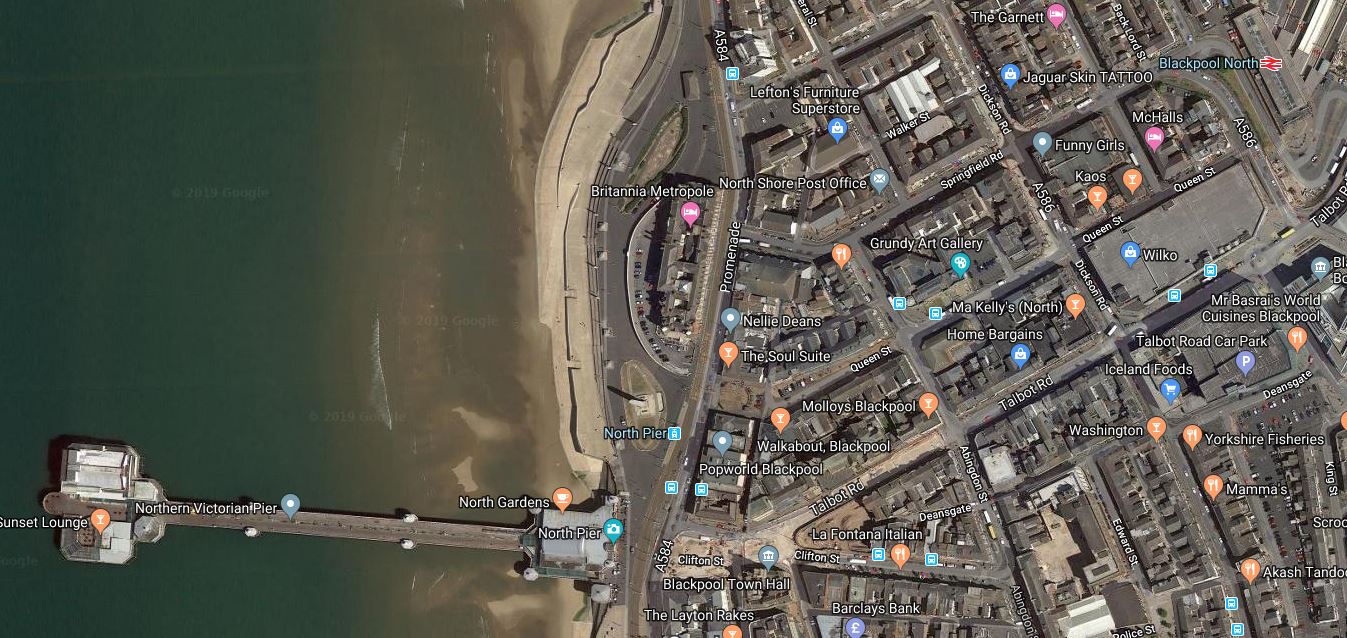
Note.
- The station is in the North East corner of the map.
- The North Pier tram stop is by the North Pier!
- The main tram route passes North-South across the map, close to the shore end of the pier.
- The walk is along Talbot Road.
- Close to the station is a branch of Wilko.
The new tram tracks will be laid along Talbot Road and these pictures show the current progress of the new tracks.
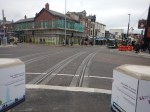


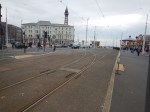
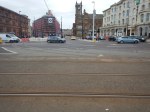
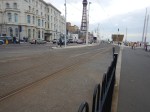

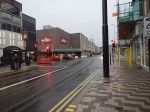
Note.
- The spur is twin-track.
- The first two and the last pictures appear to show the tram tracks going into Wilko.
- The tram tracks appear to share the road with other traffic.
- There is a full triangular junction where the spur meets the main North-South tramway.
A few extra facts and thoughts.
What About Wilko?
The Wilko store will either be demolished or modified and the space will be used by a tram stop.
- It will be reached by an underpass from the station.
- I suspect it will have two platforms.
- One platform might be for trams to the North and the others for trams to the South.
- There will probably be a few kiosks and small shops.
Done well and it would give passengers a good welcome.
The Track Layout
The track layout with the full triangular junction and a double-track to the station gives a lot of flexibility.
- Trams can go between the the tram station and the North.
- Trams can go between the the tram station and the South.
- Trams could even come from the North, reverse in the station and go out to the South! Or vice-versa!
I also think it has been designed to be ready for expansion of the Blackpool Tramway.
A Tram Stop At Talbot Square
I have found a document on the Blackpool Council web site, that says this.
A tram stop on Talbot Square would be developed while road layouts are being examined so the new scheme would interfere as little as possible with drivers.
There is certainly enough space.
Could Tram-Trains Connect At Blackpool North Station To The Blackpool Tramway?
This Google Map shows Blackpool North station and the nearby Wilko.
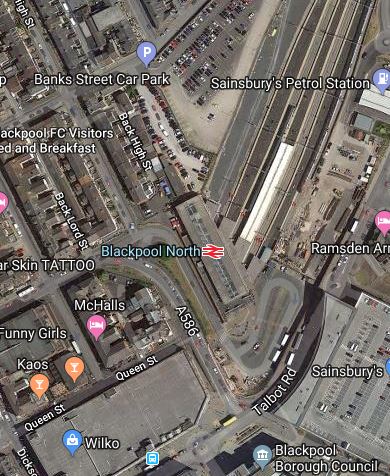
I think it would be possible for tram-trains to come straight through the railway station and connect to the Blackpool Tramway.
- I would suspect that a frequency of between four and six trains per hour (tph) would be possible.
- The Tram-trains would have a battery capability with a range of perhaps twenty or thirty miles.
- The tram-trains would obviously come from Preston.
- But would they go on to Blackburn, Burnley, Clitheroe, Colne, Ormskirk, Southport and/or Todmorden.
The designs of the tracks, Blackpool North station and the proposed Blackpool North tram stop, would not seem to rule out the creation of a tram-train network with the Blackpool Tramway as the Western terminus.
Tram-Trains To The South
The new tram link at Blackpool North station will link the station to Blackpool Pleasure Beach and other attractions South of the North Pier.
To not annoy and discourage visitors, the frequency should be at least six tph or one tram every ten minutes. as little Harry and little Summer won’t late any longer!
Tram-trains to and from Preston and beyond, would have the following effects.
- A lot of visitors wouldn’t have to change between train and tram.
- They would reinforce the service between Blackpool North station and the Southern terminus at Starr Gate.
- They might cut the number of cars needing to park in Blackpool.
- Blackpool would become the only place in the world where you could see heritage trams, modern trams and tram-trains using the same system.
This tram-train link would surely improve the economy of Blackpool and the \Fylde Coast.
But the tram-trains don’t need to terminate at Starr Gate.
This Google Map shows the Blackpool Tramway’s Southern terminus and depot at Starr Gate and the nearby Squires Gate station.
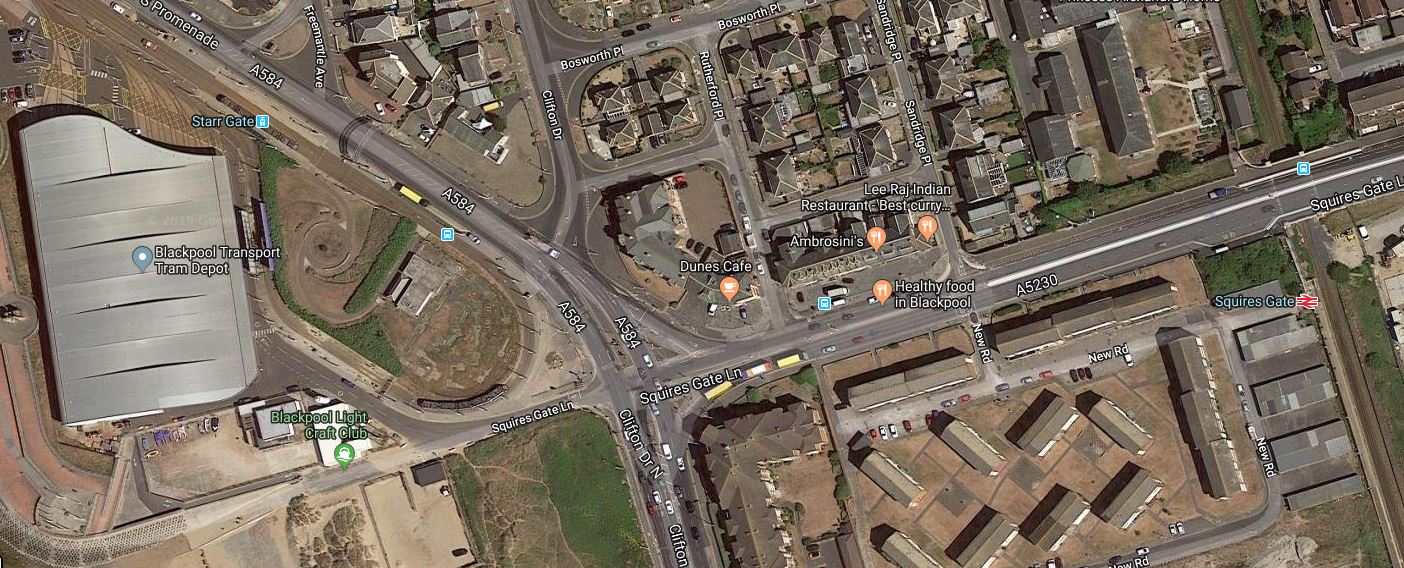
Note.
- Starr Gate Depot on the West side of the map.
- The turning loop for the trams outside.
- Squires Gate station four hundred metres to the East.
I don’t think it would be difficult to connect the two rail systems.
- Tram-trains would be able to more freely between the Blackpool Tramway and the South Fylde Line to Kirkham & Wesham and Preston stations.
- The route between Kirkham & Wesham and Preston stations is electrified.
- The length of the section without electrification between Kirkham & Wesham and Blackpool South stations is just over twelve miles.
- The route West of Kirkham & Wesham station is single-track, but could probably be capable of handling more trains per hour, with some improvements like sections of double track.
I can’t see why tram-trains with a battery capability, which could be similar to those destined for the South Wales Metro, couldn’t run an extended service between Preston and the Blackpool Tramway.
- Tram-trains would change systems at Blackpool North station and Squires Gate/Starr Gate.
- Tram-trains would call at all stations and tramway stops in both directions.
- A frequency of at least two tph in both directions would be my preference.
- Tram-trains could easily handle the section without electrification on batteries charged on the existing electrification.
- It would provide improved public transport links to the important golf course at Royal Lytham.
I also feel that running battery tram-trains on the South Fylde Line could be an affordable solution to improving public transport in the area.
Tram-Trains To The North
The same arguments that can be used to allow tram-trains to go South along the Blackpool Tramway, will also work, for allowing tram-trains to go to the North.
But there is no railway in good condition to create a loop, as can be done to the South.
Perhaps, two tram-trains per hour could go to Fleetwood Ferry tram stop and use the loop to return to Blackpool North station.
Fleetwood would regain a rail service to Preston, that appears to have been discontinued in the 1960s.
Reinstatement Of The Fleetwood Branch Line
The Association of Train Operating Companies has proposed the reopening of the Fleetwood Branch Line, which would connect Fleetwood with Poulton-le-Fylde on the electrified line to Blackpool North station.
The branch is also being developed for heritage purposes.
I do wonder though, that a tram-train solution, where tram-trains run between Preston and Fleetwood via Kirkham & Wesham, Blackpool North and the Blsckpool Tramway, may give a higher return.
Obviously, a full study needs to be done.
Other Issues
On my trip to Fleetwood, two other issues were obvious.
A Distinct Lack Of Shelters
I took this picture, as I returned to the trams after the match.
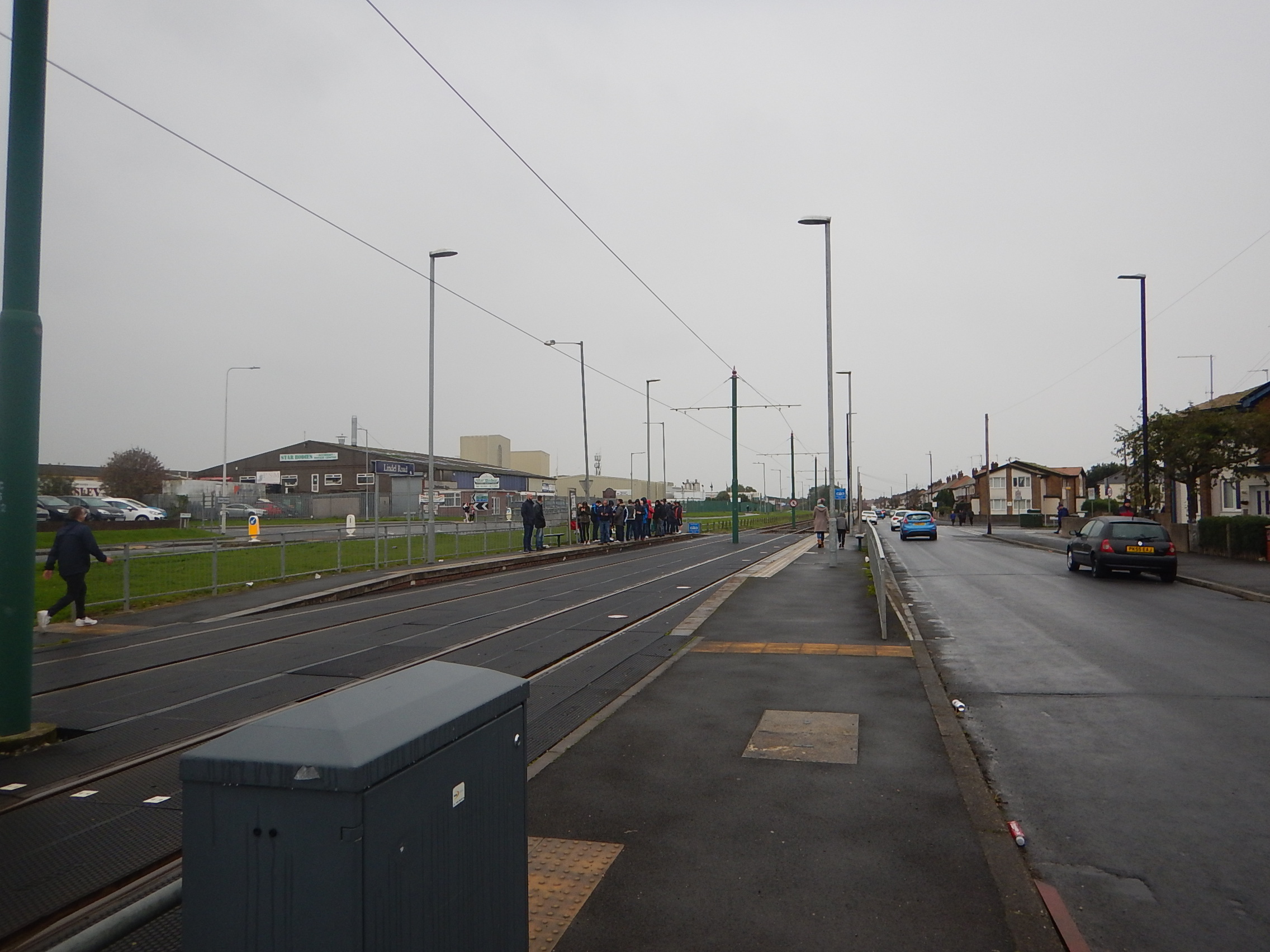
At the time it was chucking it down!
Perhaps, they’d increase ridership, if passengers had some more shelter.
Bank Card Ticketing
I rarely carry cash these days, as I generally use contactless payments, for all payments under thirty pounds.
But on the Blackpool Tramway, you have to use cash!
That is so Nineteenth Century!
Conclusion
Blackpool Tramway can be built into a much more comprehensive and more customer-friendly tram and tram-train network.
 The Anonymous Widower