UK Government Sets 8-Hour Minimum For LDES Cap-And-Floor Sheme
The title of this post, is the sa,e as that of this article on Energy Storage News.
This is the sub-heading.
The UK government has published a Technical Decision Document confirming crucial aspects of its long duration electricity storage (LDES) cap-and-floor scheme, which includes increasing the minimum duration required from six hours to eight
These paragraphs give full details.
The document, released by regulator Ofgem on 11 March, details the final overarching rules and requirements for the scheme as well as how it will be implemented, though significant detail still remains to be worked out.
The scheme will provide a cap-and-floor revenue protection for 20-25 years that will allow all capital costs to be recoverable, and is effectively a subsidy for LDES projects that may not be commercially viable without it. Most energy storage projects being deployed in the UK today are lithium-ion battery energy storage systems (BESS) of somewhere between 1-hour and 3-hour in duration (very occasionally higher).
One of the most significant new details of the scheme is that, following industry feedback, the minimum duration for projects to qualify has been increased from six hours to eight hours of continuous rated power.
The ‘continuous rated power’ aspect prevents shorter duration projects from bidding in a smaller section of their MW capacity in order to act like an 8-hour system.
Another interesting detail pointed out by several commentators is that the cap is a ‘soft’ one, meaning it will allow extra revenue to be shared between developers and consumers. Exact details on the ratio are yet to be determined.
As a Graduate Control Engineer from Liverpool University in the 1960s, I hope that the move from a six to eight hours minimum duration is feasible.
I wasn’t dealing with power systems, but with multi-vessel chemical plants.
These are my thoughts.
The biggest project, I was dealing with a few years later in the 1970s, was the modeling of all the the reservoirs and pipelines by the Water Resoures Board.
As the supply side of the water industry hasn’t had too many issues with the volume of water supplied, I feel that the main modelers must have done a reasonable job.
Six To Eight Hours Of Continuous Operation
The article says this about uprating from six to eight hours of continuous operations.
All the systems that have been proposed for cap-and-floor operation, seem to have some form of physical storage.
- Energy Dome appears to have tents of carbon dioxide.
- Energy Vault uses stacks of heavy weights.
- Form Energy has tanks of rust.
- Gravitricity has huge weights in disued mine shafts.
- Highview Power has large tanks of liquid air.
- Pumped storage hydro has two lakes, that hold water.
- Rheenergise has two large tanks, of a water-based slurry.
So to go from six to eight hours will hopefully just need some more storage.
Highview Power appears to use similar gas tanks to those used to store natural gas or hydrogen.
This image clipped from Highview’s web site, shows large tanks for liquified gas storage.
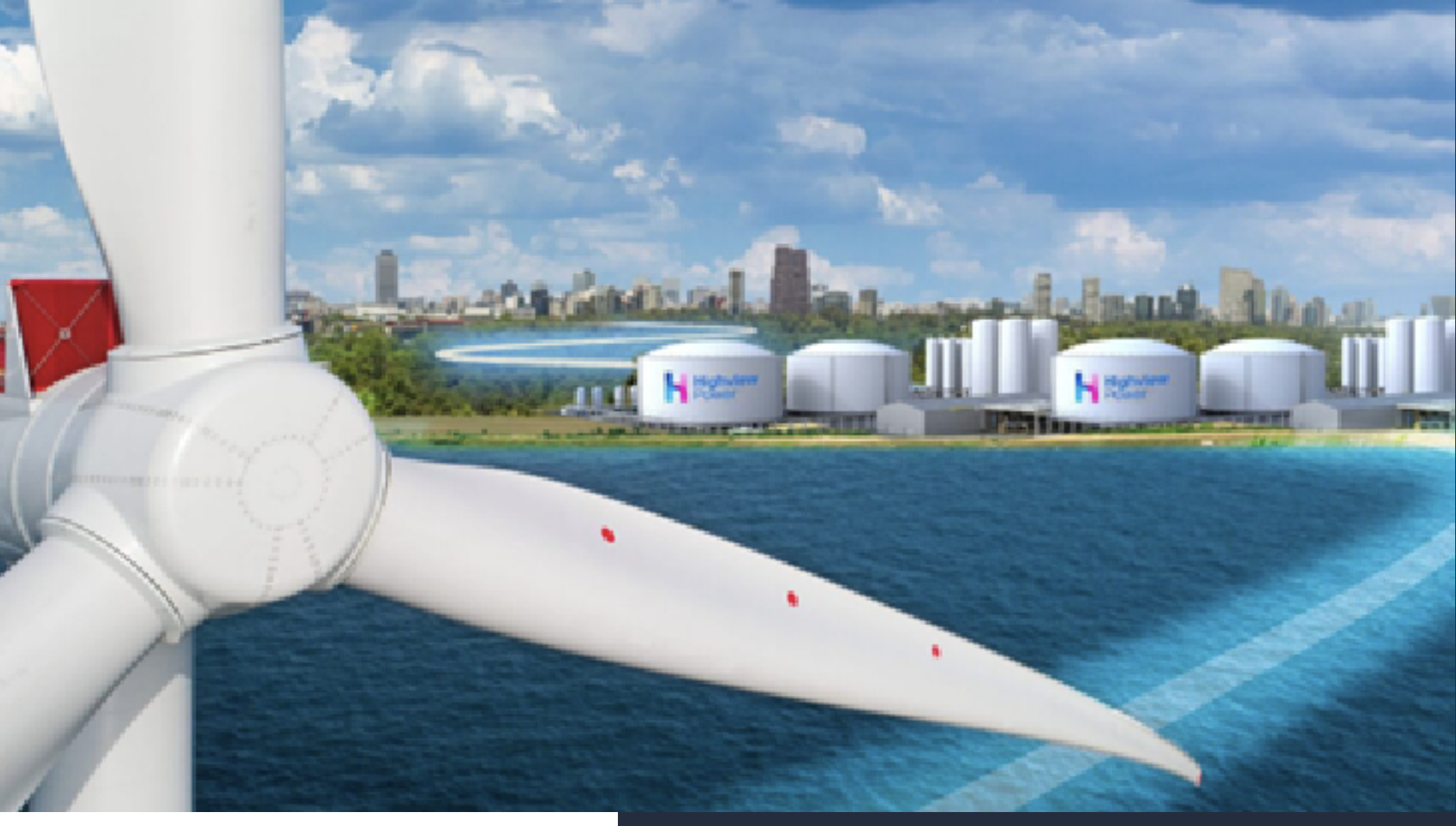
With tanks like these, which can hold GW-equivalents of liquid air, Highview could be building batteries with storage to rival the smaller pumped storage hydroelectric power stations. They are already talking of 200 MW/2.5 GWh systems, which would have a 12.5 hour continuous rating and would probably need two to three tanks.
Coire Glas Pumped Storage
I’ll use Coire Glas pumped storage hydro electric power station as an example.
As currently planned SSE’s Cioire Glas pumped storage hydroelectric power station is 1.5 GW/30 GWh, so it has a a 20 hour continuous rating.
In The UK’s Pumped Storage Hydroelectricity, I gave a rough estimate of the pumped storage hydroelectricity systems in operation or planed as nearly 11 GW/224GWh.
The Soft Cap
The article says this about a soft cap.
Another interesting detail pointed out by several commentators is that the cap is a ‘soft’ one, meaning it will allow extra revenue to be shared between developers and consumers. Exact details on the ratio are yet to be determined.
I seem to remember that when I was modeling a larger multi-vessel chemical plant at ICI, I was using sharing between vessels, to get the system to operate on a PACE-231R analog computer.
So I suspect a soft cap is possible.
America Is Building The World’s Biggest Battery—And It Will Run On Rust
The title of this post, is the same as that of this article on Popular Mechanics.
It is the first article, that I’ve found that gives a good explanation of Form Energy’s battery, that uses iron oxide for energy storage.
Given the backing of the likes of Bill Gates and Jeff Bezos, this could be a serious player in the energy storage market.
The article is certainly worth a read.l
Form Energy To Begin Manufacturing Iron Air Batteries In Weirton To Stabilize Electrical Grid
The title of this post, is the same as that of this article on wesa.fm.
These three paragraphs detail the story.
A company pioneering electrical grid batteries that will provide days of backup power for power plants reliant on renewable energy is building out its manufacturing arm throughout the greater Pittsburgh region.
Form Energy is on track to begin manufacturing the new kind of grid asset this spring, one the company says is sorely needed in a destabilized climate. As bonuses, it’s cheap — made of earth-abundant and predominantly domestically sourced materials — and Form needs a large, maker workforce to pull it off.
This is a welcomed development in the community of Weirton, West Virginia, which has seen population and industry decline steadily since the 1970s. Most recently, Cleveland-Cliffs — a neighbor company in the small town — announced it would idle its tinplate production plant and lay off up to 900 employees.
I like Form Energy’s iron-air batteries.
They would appear to be a direct replacement for lithium-ion batteries in stationary applications likeBattery-Energy Storage Systems (BESS).
I suspect they will work eoth the grid-balancing software developed for lithium-ion batteries.
- They use rust and air to store energy.
- The science came out of MIT.
- The venture is well-backed by the likes of Bill Gates.
There’s more about this factory on this page of their web site.
- The web site talks of innovative software, like grid modelling software.
- They aim to start production in the second half of this year.
- At full production the factory will employ 750 people.
- The annual production will be 500 MW of batteries.
This is a company to watch.
National Grid To Accelerate Up To 20GW Of Grid Connections Across Its Transmission And Distribution Networks
The title of this post, is the same as that of this press release from National Grid.
These four bullet points, act as sub-headings.
- Connection dates of 10GW of battery projects accelerated at transmission level, and 10GW of capacity unlocked at distribution level, both part of the Electricity System Operator (ESO)’s connections five-point plan.
- Battery energy storage projects connecting to the transmission network to be offered new connection dates averaging four years earlier than their current agreement.
- The accelerated 20GW equates to the capacity of six Hinkley Point C nuclear power stations.
- Work is part of ongoing collaborative industry efforts, together with Ofgem and government, to speed up and reform connections.
This is the opening paragraph.
National Grid is accelerating the connection of up to 20GW of clean energy projects to its electricity transmission and distribution networks in England and Wales as part of ongoing collaborative work across industry.
As I write this, the UK is generating 38.5 GW of electricity, so another 20 GW will be a large increase in capacity.
I shall look at what National Grid are proposing in sections.
10 GW Of Battery Power
These two paragraphs, outline the plan for 10 GW of battery power.
On its transmission network, 19 battery energy storage projects worth around 10GW will be offered dates to plug in averaging four years earlier than their current agreement, based on a new approach which removes the need for non-essential engineering works prior to connecting storage.
The new policy is part of National Grid’s connections reform initiative targeting transmission capacity, spearheaded by the ESO – which owns the contractual relationship with connecting projects – and actioned jointly with National Grid Electricity Transmission (ET), the part of the business which designs and builds the transmission infrastructure needed in England and Wales to plug projects in.
It looks to me that someone has been doing some serious mathematical modelling of the UK’s electricity network.
Fifty years ago, I provided the differential equation solving software, that enabled the Water Resources Board to plan, where reservoirs and pipelines were to be built. I have no idea how successful it was, but we don’t seem to have any serious water supply problems, except when there is equipment failures or serious drought.
But modelling water and electrical networks is mathematically similar, with rainfall, pipelines and reservoirs in the water network and power generation, transmission lines and batteries and pumped storage hydroelectricity in the electricity network.
I’d be interesting to know what software was used to solve the mathematical model.
I certainly agree with the solution.
Two of our modern sources of renewable energy; solar and wind are not very predictable, but cost a lot of capital investment to build.
So it is very wrong not to do something positive with any excess electricity generated. And what better place to put it than in a battery, so it can be retrieved later.
The earlier, the batteries come on stream, the earlier, the batteries can save all the excess electricity.
So moving the plug in dates for battery storage four years earlier is a very positive thing to do.
A simple calculation shows that for 10 GW, we would need nineteen batteries of about 526 MW.
Ideally, like power stations, they would be spread around the country.
Could Pumped-Storage Hydroelectricity Be Used?
The largest battery in the UK is the Dinorwig pumped-storage hydroelectric power station, which is commonly known as Electric Mountain or Mynydd Gwefru if you’re Welsh.
- It opened in 1984, after a ten years of construction.
- It has a power output of 1.8 GW.
- The energy storage capacity of the station is around 9.1 GWh.
Roughly, every gigawatt of output is backed up by 5 GWh of storage.
If the proposed nineteen new batteries have the same power to storage ratio as Electric Mountain, then each battery will have a storage capacity of 2.63 GWh
SSE Renewables are planning two large pumped-storage hydroelectric power stations in Scotland.
- Coire Glas – 1.5 GW/30 GWh – Possible completion in 2031.
- Loch Sloy – 152.5 MW/25 GWh – See SSE Unveils Redevelopment Plans For Sloy Hydro-Electric Power Station.
A quick calculation, says we’d need seven pumped-storage hydroelectric power stations, which need a lot of space and a handy mountain.
I don’t think pumped-storage hydroelectric would be feasible.
Could Lithium-Ion Batteries Be Used?
My mathematical jottings have shown we need nineteen batteries with this specification.
- An output of about 526 MW.
- A storage capacity of around 2.63 GWh
This Wikipedia entry gives a list of the world’s largest battery power stations.
The current largest is Vistra Moss Landing battery in California, which has this specification.
- An output of 750 MW.
- A storage capacity of 3 GWh
Reading the Wikipedia entry for Vistra Moss Landing, it appears to have taken five years to construct.
I believe that nineteen lithium-ion batteries could handle National Grid’s need and they could be built in a reasonable time.
Could Any Other Batteries Be Used?
Rounding the battery size, I feel it would be better have twenty batteries with this specification.
- An output of 500 MW.
- A storage capacity of 2.5 GWh
Are there any companies that could produce a battery of that size?
Form Energy
Form Energy are well-backed with an MIT heritage, but their largest proposed battery is only 10 MW/1 GWh.
They could be a possibility, but I feel it’s only a small chance.
Highview Power
Highview Power say this about their next projects on this page of their web site.
Highview Power’s next projects will be located in Scotland and the North East and each will be 200MW/2.5GWh capacity. These will be located on the national transmission network where the wind is being generated and therefore will enable these regions to unleash their untapped renewable energy potential and store excess wind power at scale.
Note.
- This is more like the size.
- Work is now underway at Carrington – a 50MW / 300MWh plant at Trafford Energy Park near Manchester.
- Highview’s technology uses liquid air to store energy and well-proven turbo-machinery.
- Highview have a co-operation agreement with Ørsted
They are a definite possibility.
10 GW Of Extra Unlocked Capacity
These two paragraphs, outline the plan for 10 GW of extra unlocked capacity.
On its distribution network in the Midlands, South West of England and South Wales, the additional 10GW of unlocked capacity announced recently is set to accelerate the connection of scores of low carbon technology projects, bringing forward some ‘shovel ready’ schemes by up to five years.
National Grid has already been in contact with more than 200 projects interested in fast tracking their distribution connection dates in the first wave of the capacity release, with 16 expressing an interest in connecting in the next 12 months and another 180 looking to connect within two to five years.
This page from National Grid ESO, lists the actions that were taken to release the extra grid capacity.
Conclusion
This looks to be a very good plan from National Grid.
US Utility Xcel To Put Form Energy’s 100-hour Iron-Air Battery At Retiring Coal Power Plant Sites
The title of this post is the same as that of this article on Energy Storage News.
This is the first two paragraphs.
‘Multi-day’ battery storage startup Form Energy’s proprietary iron-air battery is set to be deployed at the sites of two US coal power plants due for retirement.
Form Energy said yesterday that definitive agreements have been signed with Minnesota-headquartered utility company Xcel Energy for the two projects, one in Minnesota and the other in Colorado.
On their Technology page, they say this about their battery storage technology.
Our first commercial product is an iron-air battery capable of storing electricity for 100 hours at system costs competitive with legacy power plants. Made from iron, one of the most abundant minerals on Earth, this front-of-the-meter battery will enable a cost-effective, renewable energy grid year-round.
They also seem to be very much into grid-modelling technology. As I’ve build mathematical models for sixty years, I like that!
It does seem Form Energy is on its way.
Form Energy And The UK
This article on the Telegraph, which is entitled Britain Will Soon Have A Glut Of Cheap Power, And World-Leading Batteries To Store It, is proving to be a mine of information about the development of the UK Power Network.
Reliable information about US startup; Form Energy has been hard to find.
But the Telegraph article has these three paragraphs on Form Energy.
Form Energy in Boston – backed by Jeff Bezos and Bill Gates – is working on an iron-air “rust” battery based on the reversible oxidation of iron pellets. It does not require rare and polluting minerals such as vanadium, and will have a 100-hour range.
“The modules will produce electricity for one-tenth the cost of any technology available today for grid storage,” the company told Recharge.
Form Energy has been working with National Grid to map out the economics of UK renewables with storage, and how to cope with future curtailment. And it too praises the UK as a global trailblazer, though its pilot project next year will be in Minnesota.
Note.
- Iron certainly, isn’t an exotic material.
- A hundred hour range is claimed.
- If National Grid have been working with Form Energy, is it reasonable to assume, that they have been working with Highview Power?
- Good to see that Form Energy praises the UK as a global trailblazer. I have noted several times, that the Department for Business, Energy and Industrial Strategy seems to be well-advised.
Will National Grid put in one of Form Energy’s batteries? It would be a prudent thing to do, to make sure you get the best.
A Rusting Battery In Minnesota Could Unlock The Electric Grid Of The Future
The title of this post is the same as that of this article on the West Central Tribune.
This is the first paragraph.
A pilot project between Minnesota’s second largest supplier of electricity, Great River Energy, and a Massachusetts start-up claims to have a breakthrough in battery technology that would allow for vast expansions of renewable energy on the power grid.
The article goes on to describe Form Energy’s batteries and gives a couple of pictures.
I’m not sure, but it looks like the battery can supply 1 MW for a hundred hours.
Form Energy have impressive backers and have been secretive in the past, but the concept of using iron oxide (rust) as an energy storage medium sounds to me, to be a challenging idea.
Form Energy’s New Low-Cost, Iron-Air Battery Runs For 100 Hours
The title of this post, is the same as that of this article on the Singularity Hub.
This paragraph sums up the genesis of the battery.
A secretive startup backed by Bill Gates’ Breakthrough Energy Ventures thinks it may have the answer, though. Form Energy, which was co-founded by the creator of Tesla’s Powerwall battery, Mateo Jaramillo, and MIT battery guru Yet-Ming Chiang, has unveiled a new battery design that essentially relies on a process of “reversible rusting” to provide multi-day energy storage at ultra-low costs.
And this paragraph describes the operation of the battery.
The company’s batteries are each about the size of a washing machine, and are filled with iron pellets and a water-based electrolyte similar to that used in AA batteries. To discharge, the battery breathes in oxygen from the air, converting the pellets to iron oxide, or rust, and producing electricity in the process. To charge, the application of a current converts the rust back into iron and expels the oxygen.
It’s all very fascinating and leads to a battery made from very affordable materials.
The article quotes between $50 to $80 per kilowatt-hour for lithium-ion batteries and around $20 per kilowatt-hour for Form Energy’s battery.
Conclusion
The article is definitely a must-read.
I feel that Form Energy should be added to my list of viable batteries.
Form Energy Discloses A Small Amount
Form Energy has been a bit mysterious, but this article on Energy Storage News, which is entitled Renewables As Baseload Energy: Form Energy’s Multi-Day |Storage Seeks To Replace Gas And Coal.
Form Energy certainly have large ambitions, backing from organisations like Bill Gates’ Breakthrough Energy Ventures and an order for a 1 MW/150 MWh pilot for Great River Energy in Minnesota, and I suspect this is probably enough to ensure success in the mid-size market sector, which they share with the UK’s Highview Power, who are building their first grid-scale 50 MW/ 250 MWh at Carrington to the South of Manchester.
The article is certainly an interesting insight into one of the new energy storage ventures.
Long-Duration Energy Storage Milestones Achieved By Lockheed, Eos And Form Energy
The title of this post, is the same as that of this article on Energy Storage News.
Lockheed
I find it significant that Lockheed Martin have developed a new redox flow battery, which is a 500kW / 2.5MWh system.
Last year, the company had revenue of nearly sixty billion dollars, with a net income of over six billion dollars. They certainly have the resources and the name to make a big impression on the long-duration storage market.
Their GridStar Flow technology is also detailed on this page on the Lockheed Martin web site.
The page lists these features.
- Optimized for 6+ hours of flexible discharge
- Flexibility to switch between products to maximize revenue
- 100 percent depth-of-discharge with minimal degradation
- A design life of 20 years
- Ability to size energy and power independently
- Mildly alkaline, aqueous electrolytes that are safe (nonflammable, noncorrosive, stable)
- Competitive total cost of ownership
It looks impressive.
EOS Energy
EOS Energy can’t be doing badly, as they’re preparing to list on NASDAQ.
Form Energy
Form Energy are also reported to have had a $70 million investment.
Conclusion
It appears long duration energy storage is doing well across the pond.
My money would be on Lockheed to produce the most successful product.
 The Anonymous Widower