A Steamy Morning At Kings Cross Station
I had wondered why there was a train to Norwich on the destination board at Kings Cross station.
This is the reason why.

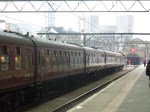
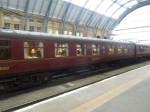


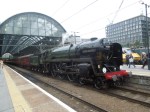


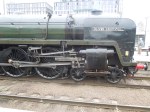
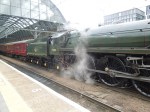
A couple of times in the 1950s or 1960s, I went to Ipswich from London by train with a Britannia Class at the front. I wonder if I was ever hauled by Oliver Cromwell.
I am not a particular enthusiast for steam trains, but they are very much part of the world’s technological heritage. I do think it as pity though, that we didn’t save more for posterity, as the enthusiasm they generate, is something that many of us need more of. It might even inspire more students to be the future engineers, we definitely need in this country and in fact most of the world.
It is also amazing to see a 1950s-designed steam locomotive amongst all of the high speed electrics, at possibly the best recently refurbished station in the world.
Imagine the excitement and probable increase in tourism, if every Saturday, we could see a vintage locomotive steam out of Kings Cross. The demand is probably there, but I doubt we have enough reliable main-line steam engines to provide such a spectacle. Remember that steam locomotives are not noted for their reliability.
Who Was Germaine Necker?
This blue plaque was on the back wall of the old Dickins and Jones building in Regent Street.
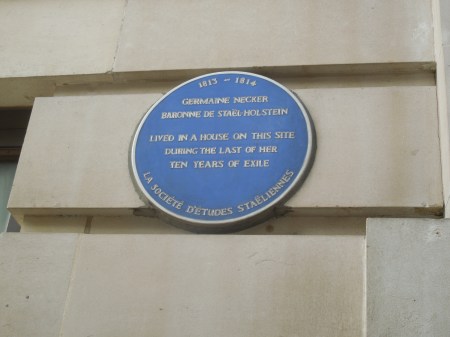
Who Was Germaine Necker?
So who was she? Wikipedia shows she was a very unusual lady for her time. Here is an except.
She was one of Napoleon’s principal opponents. Celebrated for her conversational eloquence, she participated actively in the political and intellectual life of her times. Her works, both critical and fictional, made their mark on the history of European Romanticism.
Interesting!
The Mary Rose
One of the main reasons to go to Portsmouth was to see the Mary Rose.
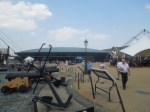


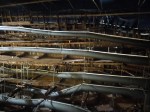


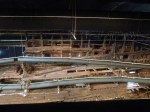

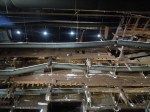


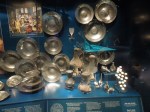
The building might look rather bland on the outside, but the Tudor warship and the way it is displayed surrounded by objects retrieved from the wreck is truly spectacular.
Some of these pictures were taken from a glass-walled lift that ascends at one end of the museum giving superb views of the ship.
It will become even more spectacular inhopefully 2016, when because the ship will be completed dried out and preserved, they will be able to fully open up the views of the ship.
The UK To Get A Huguenot Heritage Centre
My mother’s family was of Huguenot ancestry, with her father being an engraver of note.
So I was pleased to see an article in The Times saying that a Huguenote Heritage Centre is being set up at The French Hospital in Rochester.
The Vasa Museum
One of the reasons, I went to Stockholm was to see the Vasa.


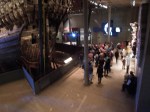





I first heard about the ship in my teens, when it was raised from the floor of Stockholm Harbour. The techniques of raising the ship were also detailed in the Meccano Magazine.
It will be interesting to see how the Vasa compares with the Mary Rose.
I must have spent about three hours wandering around the museum and afterwards I felt a lot better, as the humidity in the museum was about 60% to keep the ship [preserved.
A Blue Plaque In Stepney
I found this blue plaque as I walked back to the Overground from the river.
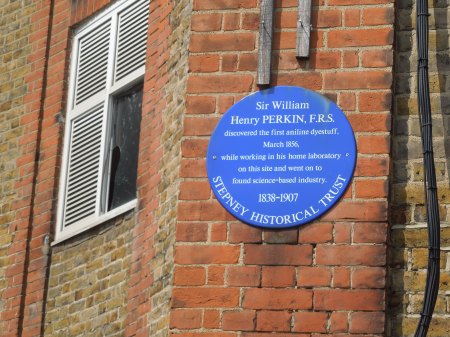
A Blue Plaque In Stepney
Sir William Henry Perkin, FRS 4 July 1907) was an English chemist best known for his discovery, at the age of 18, of the first aniline dye, mauveine. So it is not just today, when people create something amazing before their twentieth birthday! But how many today do such work, when they were born into relatively humble circumstances?
He was certainly one of the world’s greatest chemists. He is even commemorated by the Americans with the Perkin Medal.
Were The Pilgrim Fathers From Essex?
This story started in the Times yesterday and was repeated here in the Telegraph, which throws Grimsby into the mix.
So you can take your pick from any of a number of places!
The choice is yours!
The Evacuation Of The Gibraltarians
I knew little of the history of Gibraltar in the Second World War, although I did know little bits about its role in naval activities and as a place, where evading servicemen aimed for, to get back home.
But I knew nothing about, what happened to the people of the colony during the war.
As I walked towards the centre of town after landing, I noticed this statue on a roundabout.
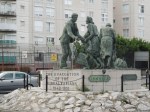


It is called the Evacuation Of The Gibraltarians and there is more about the true story here in Wikipedia.
I feel, the story goes a long way to explain, why Gibraltarians want to determine their own future.
Passing Naval Battles
We were continually passing the locations of famous naval battles. Mostly, where the British gave the French or in later times, the Germans a good kicking.
As we passed through the Bay of Biscay, we passed Quiberon Bay, St. Nazaire and Aix Roads, although we were well offshore.
And then after Corunna, we passed Cape Finisterre, where two battles were fought in 1747 and one in 1805.
Later of course we passed Trafalgar and actually went into Cadiz, where Drake famously singed the King of Spain’s beard.
General Sikorski
General Sikorski was a wartime Polish leader.


The pictures show his statue in Portland Place.

