New Hitachi Rolling Stock Unveiled by Hull Trains As Part Of £60m Investment
The title of this post is the same as that of this article on Rail Technology Magazine.
Five new Class 802 trains will replace Hull Train‘s current fleet of four Class 180 trains and an InterCity 125.
Currently, the InterCity 125 runs the service between Kings Cross and Beverley stations, whilst three Class 180 trains are needed to run the six round trips between Kings Cross and Hull stations.
So Hull Trains have a spare train, that can be in maintenance.
With five new Class 802 trains, replacing the current fleet, four will be needed for the current service, thus leaving a spare train.
The new trains will give various advantages.
- The Class new 802 trains have a top speed of 140 mph, whereas the current Class 180 trains can only do 125 mph.
- The Class 802 trains have an increase of thirteen percent in seating capacity.
- They will obviously have a better interior, with everything passengers expect.
In a few years time, the extra speed may offer a big advantage.
The Southern part of the East Coast Main Line is being upgraded to allow 140 mph running, which would probably save around ten minutes on a journey between Kings Cross and Hull stations.
Could this time-saving mean, that extra services between Kings Cross and Hull stations are possible?
If 140 mph running allowed a round trip in under five hours, I have a feeling this could mean over ten trains per day in each direction, if there are enough paths available.
But flights of Class 800 trains and Class 802 trains running at 140 mph might just do it.
Conclusion
What would ten trains per day between Kings Cross and Hull, do for the economy of Hull?
The East Coast Main Line might not have the 250 mph operating speed of High Speed Two, but 140 mph isn’t that slow.
Lord Adonis On Crossrail Of The North
There has been a lot of talk recently about HS3, Northern Powerhouse Rail or Crossrail Of The North.
On Radio 5 Live, this morning, Lord Adonis said a lot of sensible things about the high speed line from Liverpool to Hull via Manchester and Leeds.
His plea was for a plan for a start and he suggested that an objective would be to halve the journey time from Manchester to Leeds and have a train every few minutes.
He suggested it could be probably built using a mixture of new track alignments and existing railways.
I agree with what he said, but the problem is that every Tom, Dick and Harriet has their own ideas of what they want.
How Would I Design Crossrail Of The North?
I can at least look at this without favouring any one of the North’s great urban area.
Urban Areas Of The North
I will list those with populations of over 200,000,, from this list in Wikipedia.
- Manchester – 2,553,379
- West Yorkshire – 1,777,934
- Liverpool – 864,122
- Tyneside – 774,891
- Nottingham – 729,977
- Sheffield – 685,368
- Teeside – 376,633
- Stoke-on-Trent – 372,775
- Sunderland – 335,415
- Birkenhead – 325,264
- Hull – 314,018
- Preston – 313,322
- Blackpool – 239,409
- Barnsley – 223,281
Urban areas with populations between 100,000 and 200,000 include Wigan, Mansfield, Warrington, Doncaster, York, Burnley, Blackburn, Grimsby, Accrington, Burton, Lincoln and Chesterfield.
Some of the connections between pairs of these areas are truly dreadful despite being only fifty or so files apart.
Northern Connect
I would think it reasonable that all these centres of population have good, preferably direct, connections between them.
Northern obviously think this way as they are creating a concept called Northern Connect, using new Class 195 trains to connect many of these areas with a quality service.
The North TransPennine Routes
TransPennine operate these North Pennine routes.
- 1 train per hour (tph) – Liverpool Lime Street to Newcastle
- 1 tph – Manchester Airport to Middlesbrough
- 1 tph – Manchester Airport to York
- 1 tph – Liverpool Lime Street – Scarborough
- 1 tph – Manchester Piccadilly to Hull
Note that the opening of the Ordsal Chord iin a few months, might change the routing of some of these services.
All of these services use the Huddersfield Line between Manchester and Leeds, stopping at both Huddersfield and Leeds stations.
Manchester Victoria To Leeds
As Lord Adonis said, the important section is between Manchester Victoria and Leeds stations.
I’ll start with a comparison of a series of rail journeys, all of which are about the same length.
- The fastest trains between Manchester Victoria and Leeds take forty-nine minutes, with a stop at Huddersfield, and are just 1 tph
- Norwich to Ipswich in a couple of years, will take 30 minutes at a frequency of 3 tph.
- Glasgow to Edinburgh currently takes about fifty minutes, at a frequency of 4 tph.
- Cardiff to Swansea currently takes 52-54 minutes, at a frequency of 2 tph.
It does seem that the North has a point if two of East Anglia’s larger cities get a better service than Leeds and Manchester.
The Huddersfield Line And The Great Eastern Main Line Compared
It is also enlightening to compare the Manchester to Leeds Line via Huddersfield to Ipswich To Norwich section of the Great Eastern Main Line.
It should be noted that I’m comparing these two lines, as both have lived on scraps from Central Government for decades. I also know the Great Eastern Main Line well!
- Both lines are double-track.
- Norwich-Ipswich is flat.
- The Huddersfield Line is rather hilly
- Norwich-Ipswich has only two stations and only the occasional slower service.
- The Huddersfield Line has numerous stations and local services.
- Norwich-Ipswich is electrified to a robust standard.
- On the Huddersfield Line, only Manchester to Stalybridge is scheduled for electrification.
- Norwich-Ipswich has a 100 mph speed limit, that could possibly be raised in places.
- I can’t find the speed limit on the Huddersfield Line, but suspect it could be less than 100 mph.
It is truthful to say that the Huddersfield Line is a much more challenging route than the Norwich to Ipswich.
The Effect Of Electrification On The Great Eastern Main Line
It might appear that the electrification of the Great Eastern Main Line makes for the difference in times.
But it should also be remembered that Ipswich to Norwich wasn’t electrified until the mid 1980s and if I remember correctly before that date, the fastest expresses were timed at two hours from Norwich to London with just two stops. The fastest services now are ten minutes under two hours with four stops.
With the introduction of the new Class 745 trains, timings of ninety minutes have been promised to the Department for Transport.
Timings did not drop significantly with the electrification in the mid-1980s, Services just became more reliable with more stops, as electric trains can accelerate better.
The decrease in timings over the next few years will be down to the following.
- Removal of bottlenecks like Trowse Bridge.
- Increase in speed limits.
- Trains with a shorter dwell time at stations.
- Trains with better acceleration and braking.
- Improved track and signalling.
- All passenger trains on the line will have the same performance.
I will be very interested to see what timings, the Class 745 trains eventually achieve!
Electrifying Between Leeds And Manchester Victoria Stations
It looks like the electrification between Manchester Victoria and Stalybridge stations will be complete by the end of this year.
The central section of the route is problematical with the Grade 1 Listed Huddersfield station and large numbers of bridges.
In TransPennine Electrification And Piccadilly Upgrade Now Also In Doubt, I came to these conclusions about electrifying the route.
-
Electrification would not go anywhere near Huddersfield, as the heritage lobby and their lawyers would have a field day.
-
Standedge and Morley tunnels are over 2,000 metres long, double track and Standedge is level. If they needed refurbishment in the future, perhaps they could be electrified with an overhead rail, so that bi-modes could have a couple of miles of electricity.
-
Electrification might be extended at the Manchester and Leeds ends of the line, so that the two cities could improve their local suburban electric networks.
-
An alternative would be that the Leeds and Manchester suburban electric networks were provided with a few Class 769 trains or even some brand new four-car bi-modes.
-
Services between Leeds and Manchester would be run by fast bi-modes.
Is there a more difficult stretch of possible electrification in the UK?
The Ultimate Bi-Mode Train
Currently four bi-mode trains are planned for introduction into the UK.
- Hitachi Class 800 trains and Class 802 trains.
- Stadler Class 755 trains
- Porterbrook Class 769 trains
Note.
- Two hundred and eleven bi-mode trains have been ordered.
- Nineteen Class 802 trains have been ordered for TransPennine routes.
In Do Class 800/801/802 Trains Use Batteries For Regenerative Braking?, I look at the prospect of using energy storage in Hitachi’s bi-mode trains.
The Class 802 train is probably something like the ultimate bi-mode train.
- 125 mph using electrification.
- 100 mph under diesel power
- Regenerative braking at all times using energy storage.
- Automatic pantograph raising and lowering.
- Sophisticated in-cab signalling.
Obviously, interior fitment would be up to the operator.
Class 195 Trains
Northern is acquiring 25 x two-car and 30 x three-car Class 195 trains.
These are 100 mph trains, so it must be a good idea to make sure all Northern services that use the same routes as TransPennine services are run by these faster trains.
Short/Medium Term – A Classic Manchester Victoria To Leeds Route
TransPennine Express are already planning to run Class 802 trains between Liverpool and Newcastle via Manchester and Leeds. It looks to me, that whoever plans their train policy, saw the electrification crisis coming.
I wonder what times they can achieve between Leeds and Manchester Victoria, if the following were to be done.
- Stalybridge to Manchester Victoria electrification is complete.
- Track and signalling is the best it can be.
- The route has a 100 mph operating speed.
- All trains on the route are 100 mph capable.
- Northern replaces their scrapyard specials with Class 195 trains.
The reason for the same operating speed of 100 mph, enables trains to follow each other in a stream. It could be 90 mph, if that was easier for the route.
Station dwell times can also be reduced.
Due to overcrowding, the TransPennine dwell times, must currently be some of the worst in the UK.
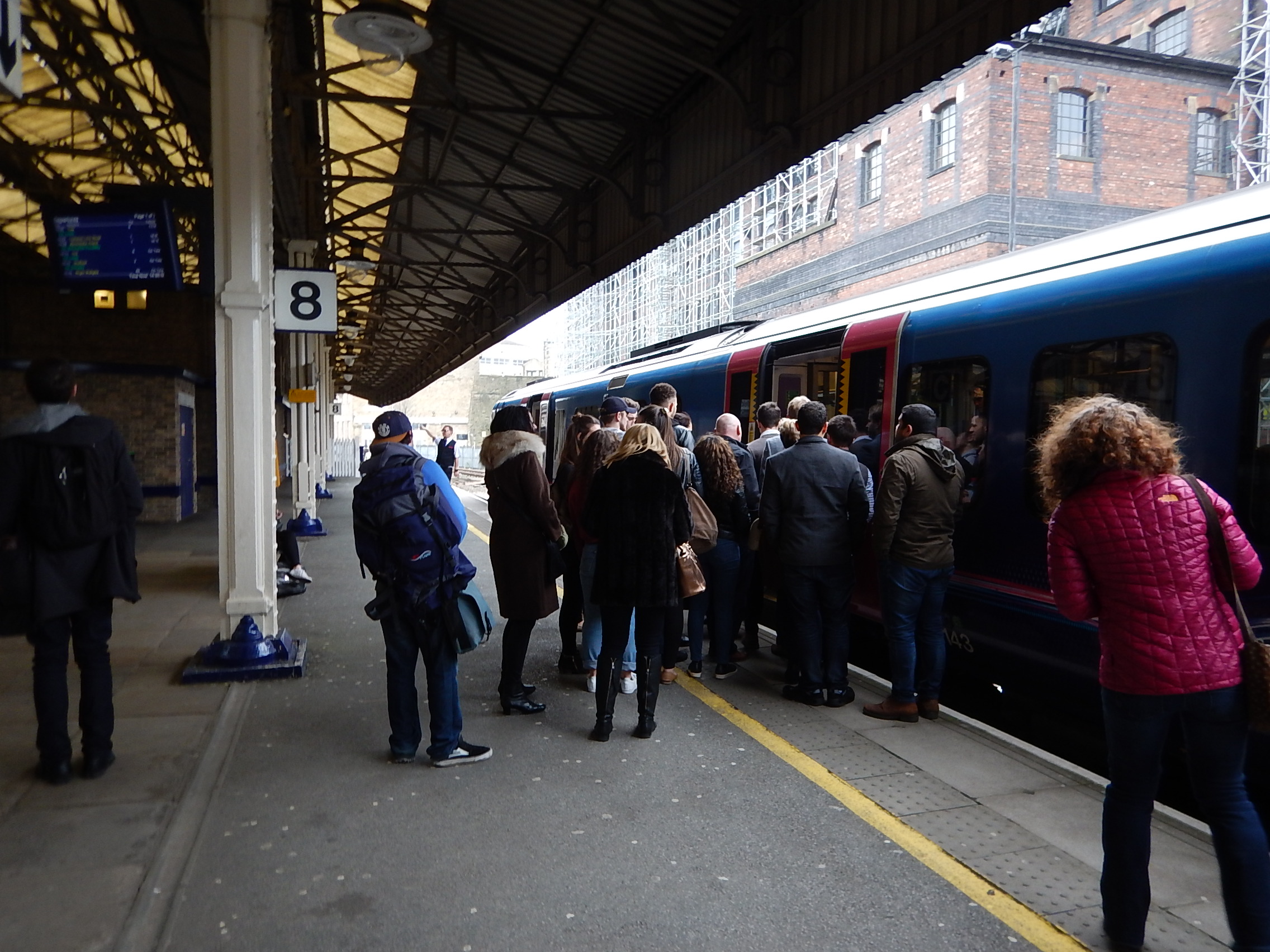
This is typical at Huddersfield.
Not even the Japanese with their pushers could get this to work.
But a modern train like the Class 802 train with wide lobbies and adequate capacity should cope.
So what time could be possible, if everything goes as planned?
If Norwich to Ipswich which is about the same distance as Leeds to Manchester, can be achieved in thirty minutes, I believe it is possible that the Northern route could be achieved in the same time or perhaps thirty-five minutes.
Thirty-five minutes should be adequate for a few years, if say there was a train every ten minutes!
Long Term – A Genuine High Speed Manchester Victoria To Leeds Route
I’ve flown my virtual helicopter between Manchester and Leeds and it is not flat agricultural land like seventy percent of the route of HS2.
I believe that creating a genuine high speed route, with say a 140 mph top speed across the Pennines will be a major engineering challenge that will make Crossrail in London look easy.
It may even be more economic to develop 140 mph hydrogen-powered tilting trains, that can run on the classic route at 125 mph.
Only one thing matters to passengers; a fast reliable and very comfortable and affordable train service across the country.
Manchester Victoria To Manchester Airport
When the Ordsall Chord opens any Leeds to Manchester Victoria service can continue to Deansgate, Oxford Road, Manchester Piccadilly and Manchester Airport stations.
Manchester Victoria To Liverpool
Currently, services between Liverpool Lime Street and Manchester Victoria stations take a few minutes over half-an-hour.
I would suspect that thirty minutes is achievable, if the following is done.
- The four-tracking at Huyton is completed.
- Track and signalling is the best it can be.
- The route has a 100 mph operating speed.
- All trains on the route are 100 mph capable.
- Northern replaces their scrapyard specials with Class 195 trains.
I suspect all of this is in progress.
Note, this is very similar work, to that needed between Manchester and Leeds.
Leeds To Hull
Currently, services between Leeds and Hull stations take a few minutes under an hour.
A few thoughts on the route.
- The Selby Line from Leeds to Hull is double-track and not electrified.
- From my virtual helicopter, it appears to be straight in very flat country, so it is no wonder Hull Trains offered to electrify the line.
- If the Selby swing bridge were to be sorted, it could become a 100 mph line with trains to match.
- Northern replaces their scrapyard specials with Class 195 trains.
- Modern in-cab signalling.
I suspect quite a few minutes could be taken off this route which is about fifty miles.
I suspect this line will eventually be electrified, as it could give sound time savings and it looks relatively easy.
York To Scarborough
Currently, services between York and Scarborough stations take forty-nine minutes, with one tph.
- Similar improvements to the double-track unelectrified line as for the Leeds to Hull route, could be made.
- But if the line has a problem , it is that it has 89 level crossings, although Network Rail intends to close them all before 2025.
I wonder, if the time can be reduced between York and Scarborough, such that two tph can be timetabled.
I doubt York to Scarborough will be electrified.
Northallerton To Middlesbrough
This short line is quite heavily used and is a valuable diversion route, so I suspect nothing urgent needs to be done.
Like Leeds to Hull, I suspect this line will eventually be electrified.
Conclusions
I have come to the following conclusions.
- Manchester Victoria to Leeds is achievable in half-an-hour with the new trains on order and no major infrastructure, other than that already planned.
- Any line where TransPennine Express services run needs to have the highest possible operating speed and no slow trains.
- Northern need to get their Class 195 trains into service as soon as possible.
Improvements are much-needed in the North, which could include.
- A short/medium term plan to deliver the best possible service with the new trains ordered by Northern and TransPennine Express.
- A long term plan to deliver a genuine 140 mph service across the North of England.
- A plan to improve the Calder Valley and Hope Valley Lines across the Pennines.
- A plan to improve some of the poor connections across the North.
- A strategy to make the best use of connections with HS2.
A detailed plan is needed that lays down what should be done in the next ten to twenty years.
The plan is also needed as soon as possible.
Crossrails For The North
Regularly there are references in the media for Crossrail for the North.
This article in Rochdale Online is entitled Andy Burham calls for ‘Crossrail for North’
Note that the misspelling of Andy Burnham; the Mayor of Manchester’s name is from the web site.
Andy Burnham and many others have a point that West-East connections across the North are not good, but it is not that simple.
Hence the reason, I’ve called this post Crossrails For The North and not Crossrail For The North.
Northern And London Crossrails Compared
If you look at Greater London, the distance between Reading and Shenfield stations, which are two of the termini of London’s Crossrail, is about eighty miles and when Crossrail opens a train will take about one hour forty minutes.
By comparison, Liverpool to Leeds is just over seventy miles and the current fastest trains take ninety minutes with two stops at Manchester Victoria and Huddersfield stations.
Those that live East of Leeds, keep reading.
The differences between the two routes, when Crossrail opens will be mainly down to the number of stops, frequency and connectivity.
- The Northern Route is shorter and hence marginally faster.
- The London route has more stops.
- The London route has a higher frequency.
- The London route is electrified.
- The London route will be served by specially-designed Class 345 trains.
But possibly most importantly, the London route connects to a large number of North-South cross-city railways.
It is sensible to think of London’s Crossrail as a loose ball of chunky knitting wool with a big fat needle stuck through it.
The ball of knitting wool is Central London with all its Underground and Overground Lines.
- Bakerloo Line – North-West – South-East through City Centre
- Central Line – West-East through City Centre
- District Line – West-East through City Centre
- East London Line – North-South to East of City Centre
- Gospel Oak to Barking Line – West – East to North of City Centre
- Hammersmith and City Line – West – East through City Centre
- Jubilee Line – North-East through City Centre
- Metropolitan Line – West – East through City Centre
- Northern Line – North-South through City Centre
- Northern City Line – North from the City Centre.
- North London Line – West – East to North of City Centre
- Piccadilly Line – North – West through City Centre
- Thameslink – North – South through City Centre
- Victoria Line – North-East – South-West through City Centre
- Waterloo and City Line – South from the Centre Centre
- West London Line – North-South to West of City Centre
Crossrail is the big fat needle struck right through the middle.
You could actually argue that not just one big fat needle is through the middle, as Crossrail is paralleled by some of London’s historic Underground Lines.
- The Central Line connects at Stratford, Liverpool Street, Tottenham Court Road, Bond Street and Ealing Broadway stations.
- The District Line connects at Whitechapel and Ealing Broadway stations.
- The Metropolitan Line connects at Whitechapel, Farringdon and Paddington stations.
- In the future, the North London Line will connect at Stratford and the new Old Oak Common station.
Crossrail is going to be a massive playground for the duckers-and-divers, as they search for the fastest route.
How London Crossrail Will Develop
London Crossrail is not a complete system, with certain connections not of the best.
- Eurostar from St. Psncras International
- HighSpeed services from Stratford International
- HS2
- Piccadilly Line
- Scottish and Northern services from Euston and Kings Cross
- Victoria Line
Several of these connections can be addressed by smaller projects like the necessary rebuilding of tube stations like Bank, Charing Cross, Euston and Oxford Circus.
A lot of London politicians are pushing for Crossrail 2 , but London will be given a big increase in capacity with Crossrail and I think there is an opportunity to redefine the scope of the later project, in the light of what happens after Crossrail opens.
Consider the following, which will happen after Crossrail opens.
- Huge pedestrianisation will happen in the City of London and the West End.
- Hopefully, walking in large parts of Central London will improve to the standard of the bus- and car-free Central Liverpool.
- On foot interchanges like Oxford Circus-Bond Street and Bank-Liverpool Street will be easier and quicker than now.
- The long-neglected and ill-fated Northern City Line is getting new trains, higher frequencies and hopefully a deep-clean of the stations.
- Liverpool Street and Moorgate stations will effectively become one station with world class connectivity.
- The Waterloo and City Line will be improved and probably go 24/7!
- Waterloo station will get a forty percent capacity increase this summer.
- The Northern Line Extension to Battersea will open in 2020.
- New trains will have been delivered for London Overground’s Liverpool Street and Gospel Oak to Barking services.
Londoners will fully exploit the network and importantly Transport for London will have detailed information from the ticketing system on the routes taken and the bottlenecks as they develop.
Access For All
Access for All is a National programme, that is making stations all over the country accessible to as many passengers as possible.
Check the list of stations being updated under Access For All
After the General Election, I would not be surprised to see funding for this programme increased all over the country, as it is both necessary and a quick way to attract more passengers to the railways.
New Stations
Since 2000, seventy-four new stations have opened or reopened.
I can rarely remember stations reopening last century, but the 4-5 new stations every year since the turn of the Millennium, seems to have continued this year with the opening of Cambridge North, Ilkeston and Low Moor
The New Franchises
Five franchises have been awarded lately.
- Greater Anglia
- Northern
- ScotRail
- South Western Trains
- TransPennine
A feature of all these franchises is that the operators are introducing a lot of new trains and substantially refurbishing others.
Will this trend continue?
Obviously, the operators have done their sums and find that new trains attract more passengers.
There is a major problem with new trains, in that capacity to build them must be getting very short. I also don’t think that Chinese trains will be welcomed.
If I was Prime Minister, I’d make sure there was enough capacity to build and refurbish trains in the United Kingdom.
Building Crossrail 2
There is no doubt that at some time in the future, Crossrail 2 will be built.
But unlike Crossrail, which is a massive project similar in size to the Channel Tunnel,, the electrification of the Great Western Railway or HS2, it is a collection of smaller projects that can be phased over the years, with each phase giving substantial benefits to London, train companies and passengers, be they Londoners, commuters, visitors or tourists.
I would build it in the following sequence of sub-projects.
- Four-Tracking Of The West Anglia Main Line – Extra capacity on the West Anglia Main Line is needed for both improved London-Stansted-Cambridge services and Crossrail 2.
- New High-Capacity Crossrail-Compatible Trains North of London – Greater Anglia and London Overground have already ordered these trains to replace the current thirty-year-old trains.
- Station Improvements North of London – Improvement are much needed and are already planned and underway at Tottenham Hale and Meridian Water.
- Improve Connection To Sub-Surface Lines At St. Pancras Station – The current connectivity is terrible between these lines and Thameslink and the HighSpeed lines to Kent.
- Connect Euston Square Tube Station To Euston Station To Give Extra Capacity During Euston Rebuilding For HS2
- Introduction Of A New Stratford-Tottenham Hale-Angel Road Service – The delivery date for STAR is 2019.
- Introduction Of Chingford-Walthamstow-Stratford Services – This would improve access to Crossrail and take pressure from the Victoria Line.
- New Stansted And Cambridge Services From Stratford – Greater Anglia have suggested this and there’s even an unused loop at Stratford, that could be used to turn trains and allow them to call at Stratford International for Eurostar to the Continent and HighSpeed services to Kent.
- More Terminal Capacity for Trains From North of London – The Stratford loop would increase the terminal capacity for Greater Anglia and also give access to the Jubilee Line for London Bridge, Waterloo and Westminster.
- Use Improved Capacity At Waterloo To Increase Services On Proposed Crossrail 2 Southern Branches – The extra capacity should help.
- New High-Capacity Crossrail-Compatible Trains South of London – South Western Trains have indicated this will happen.
- Station Improvements South of London – Improvements are much needed.
- Rebuild Euston Tube Station In Cnjunction With HS2 –
Only when these phases are completed, would the central tunnel be bored.
This step-by-step approach has several advantages.
- The pace of the project can be geared to the finance and resources available.
- Some developments can have a significant local design and scope input.
- Much needed stations can be built early to generate passengers and cash flow.
- Trains can be follow-on orders to Crossrail.
- The suburban sections of the route will always be available for passenger traffic.
When Crossrail 2 is complete, the second big fat knitting needle has been stuck in the ball of wool.
What Can The North Learn From London?
I would argue that one of the keys to London’s success over the years has been its comprehensive multi-layered public transport system.
- Crossrail, Crossrail 2, Thameslink and the Overground could be considered the top layer.
- The Underground, the Docklands Light Railway and the suburban electric trains are the middle layer.
- Buses form the local and bottom layer.
Underneath a walking and cycling layer is emerging.
The North of England can be considered a series of local transport networks, which are connected by a series of major lines, which are equivalent to London’s Crossrail, Crossrail 2 etc.
Northern Connect
I find it interesting that Northern are introducing a Northern Connect service, which Wikipedia describes as follows.
From December 2019, Northern will operate a network of twelve Northern Connect interurban express services. Eleven of these will be operated by brand-new Class 195 diesel multiple units and Class 331 electric multiple units, whilst the Middlesbrough to Carlisle via Newcastle route will be operated by refurbished Class 158 units.
Places that will be served by Northern Connect routes include Bradford, Chester, Halifax, Leeds, Liverpool, Manchester, Middlesbrough, Nottingham, Newcastle, Preston, Sheffield, Barnsley, Lincoln, Wakefield and York.
Local Networks In The North
Some of the local Northern networks in places like Leeds, Liverpool, Manchester, Newcastle, Nottingham and Sheffield are certainly better than others.
It could also be argued that the six cities I named, are among the most successful and vibrant cities of the North.
I feel that for the railways to be successful in the North and for some cities to have a major improvement in prosperity, that some of the local networks need substantial improvement.
TransPennine And Feeder Routes
The starting point is to detail the Northern Connect and TransPennine Express services in the North.
The Northern Connect services given in the January 2016 Edition of Modern Railways are as follows.
- Middlesbrough to Newcastle
- Newcastle to Carlisle
- Hull to Sheffield
- Nottingham to Bradford via Leeds
- Lincoln to Leeds via Sheffield and Barnsley
- Liverpool to Manchester Airport via Warrington
- Chester to Leeds via Warrington, Manchester Victoria and the Calder Valley
- Blackpool North to York via Preston and Leeds
- Barrow to Manchester Airport
- Bradford to Manchester Airport via the Calder Valley.
- Blackpool to Manchester Airport
- Windermere to Manchester Airport
I suspect plans have changed since January 2016, but the possible routes are a good start.
According to Wikipedia, TransPennine routes are as follows.
- Liverpool Lime Street to Newcastle via Manchester Victoria, Huddersfield, Leeds and York
- Manchester Airport to Middlesbrough via Manchester Piccadilly, Huddersfield, Leeds and York
- Manchester Airport to York via Manchester Piccadilly, Huddersfield and Leeds
- Liverpool Lime Street to Scarborough via Manchester Piccadilly, Huddersfield, Dewsbury, Leeds and York
- Manchester Piccadilly to Hull via Huddersfield, Dewsbury, Leeds and Selby
- Manchester Airport to Cleethorpes via Manchester Piccadilly, Stockport, Sheffield, Meadowhall and Doncaster
- Manchester Airport to Edinburgh Waverley/Glasgow Central via Manchester Piccadilly
These routes will change in the next year, when the Ordsall Chord opens.
The opening of the chord, may mean that certain services to Manchester Airport, will not need to reverse at Manchester Piccadilly.
Summarising the East-West routes across the Pennines gives.
- Newcastle to Carlisle
- Manchester Victoria to Leeds via the Calder Valley Line
- Manchester Victoria to Leeds via Huddersfield
- Blackpool North to Leeds via Preston and the Calder Valley Line
- Manchester Piccadilly to Doncaster via the Hope Valley Line and Sheffield
None of these lines are fully electrified.
They are also connected to their ultimate destinations by feeder lines.
- Liverpool to Manchester Airport via Warrington
- Chester to Manchester Victoria via Warrington
- Liverpool to Manchester Victoria
- Leeds to Newcastle via York
- York to Middlesbrough
- York to Scarborough
- Leeds to Hull
Only the following lines will be fully electrified by December 2017.
- Liverpool to Manchester Victoria
- The West Coast Main Line
- The East Coast Main Line
- Some Suburban Routes in Blackpool, Liverpool, Manchester and Preston
- Some Suburban Routes in Bradford and Leeds
Most of the routes will have to be run by diesel or bi-mode trains.
The Crossrails For The North
There are five East-West routes across the Pennines used by Northern Connect and TransPennine Express.
- Newcastle to Carlisle
- Manchester Victoria to Leeds via the Calder Valley Line
- Manchester Victoria to Leeds via Huddersfield
- Blackpool North to Leeds via Preston and the Calder Valley Line
- Manchester Piccadilly to Doncaster via the Hope Valley Line and Sheffield
To these I would add two extra lines.
- Leeds to Carlisle via Settle
- Preston to Leeds via Burnley, Colne and Skipton.
Note
- I have added the Settle-Carlisle Line, as it is world-renowned, is in excellent condition and if provided with a decent train service, could be a major attraction, that would bring tourists to the area.
- The Skipton to Colne Line should be reinstated, to create a direct connection between the electrified local networks servingLeeds/Bradford and Liverpool/Manchester/Preston.
But there would be seven magnificent routes across the Pennines, which could be updated to the following objectives.
- Frequent trains on all lines with at least two trains per hour (tph)
- 100 mph running where possible.
- As high a frequency as possible on the core section between Manchester Victoria and Leeds. Plans exist for six tph, which is a good start.
- In the East trains would fan out to Cleethorpes, Grimsby, Hull, Newcastle and Scarborough, as they do now.
- In the West trains would fan out to Blackpool, Chester, Crewe and Liverpool.
- Lots of cross-platform connections at stations like Leeds, Liverpool, Manchester Victoria, Newcastle, Preston and York with long distance North-South services to London and the South and Scotland.
- All stations would be step-free with lifts or ramps.
In addition provision should be made early to make sure that there are good connections to HS2.
Electrification
Obviously, electrification would be an ultimate goal on all these East-West routes.
But there are various problems with the electrification of the Peenine sections of the routes.
- These lines have large numbers of low bridges and high viaducts.
- Electrification would need to be robust because of the weather.
- Electrification gantries might not fit well in the scenery.
- Installation and servicing of overhead electrification may not be an easy process.
On the other hand, the noise of diesel trains might not be welcomed.
However, I believe that in the next ten years much quieter self-powered trains will be commonplace.
At the present time, if diesel or bi-mode trains are acceptable, then they should be used to provide a service.
Looking at the various feeder routes to the East and West of the Pennine sections, it is a different matter.
- Routes are less challenging.
- There are fewer bridges and viaducts.
- Installation and servicing of overhead electrification would be easier.
There is already a lot of electrification at the East and West, which could be extended to places like Chester, Hull and Middlesbrough.
A Pennine core without difficult electrification, between electrified feeder routes may be the most efficient way to run the routes using bi-mode trains.
It might be sensible to use Class 88 bi-mode locomotives instead of the currently proposed Class 68 locomotives with rakes of coaches, as is planned by TransPennine Express.
A Hull to Liverpool service would run under the following power.
- Hull to Bradford via Leeds – Electricity
- Bradford to Stalybridge- Diesel
- Stalybridge to Liverpool via Manchester Victoria – Electricity.
Around thirty miles would be on diesel and the difficult electrification in the Pennines would be avoided.
Infrastructure
This table is a brief summary of the routes.
- Newcastle to Carlisle – Double track, 18 stations
- Manchester Victoria to Leeds via the Calder Valley Line – Double track – 17 stations
- Manchester Victoria to Leeds via Huddersfield – Double track – 14 stations
- Blackpool North to Leeds via Preston and the Calder Valley Line – Double track – 14 stations
- Manchester Piccadilly to Doncaster via the Hope Valley Line and Sheffield – Double track – 18 stations
- Leeds to Carlisle via Settle – Double track – 10 stations
- Preston to Leeds via Burnley, Colne and Skipton – Part Single track
Note.
- Most routes are double track, which aids train scheduling.
- All except Skipton to Colne seem to be in good condition.
- I can’t find much information about speed limits.
I think it is true to say, that none of the routes could be a high speed line, although a large proportion could have substantial speed increases.
From what I have seen in East Anglia, I suspect most routes could be upgraded to 100 mph, which with the train frequencies of say four tph could give a substantial increase in service quality.
Stations
Many of the secondary stations on these routes are not blessed with facilities like ticket machines, lifts and step-free access.
If I compare, what I see on the web, with what I have experienced in East Anglia, the quality of the smaller stations is not good.
Services
The services along the lines are not of a high frequency or of a high speed, but Northern and TransPennine Express intend to increase frequencies and speed.
The new trains with their faster stops will help.
This is said about the Future Services of TransPennine Express on Wikipedia.
A twice-hourly service between Manchester and Newcastle will be phased in between December 2016 and December 2017, made up of the existing service from Liverpool and a reinstated service from Manchester Airport. Trains between Liverpool and Newcastle will be extended to Edinburgh via the East Coast Main Line, giving a twice-hourly service between Leeds and Edinburgh together with an hourly CrossCountry service. Trains between Liverpool and Scarborough will be rerouted via Manchester Victoria and Newton-le-Willows to provide a half-hourly fast service between Liverpool and Manchester. It is also planned to operate a six train per hour frequency between Manchester and Leeds, up from five today.
I can’t find anything about timings.
A High Speed Line
Building a new high speed line will be difficult, expensive and may take years, as there will probably be a need for a costly tunnel through solid rock between Manchester and Leeds.
So a prudent Project Management strategy could be phased in the same way I proposed for London’s Crossrail 2.
- Increase Line Speed – This would probably give the largest benefit, as it would enable more and faster trains.
- Electrify From Leeds To York – This would enable TransPennine’s Class 802 trains between Liverpool/Manchester Airport and Newcastle/Edinburgh to run more efficiently.
- Electrify From Liverpool To Manchester Airport Via Warrington – This would tidy up electrification between Liverpool and Manchester.
- Electrify To Chester From Crewe and Warrington – This would link North Wales to the TransPennine routes.
- Electrify From Leeds To Hull – This would be a comparatively easy electrification.
- Create The Skipton To Colne Link – This would link the two Norhern suburban electric networks and become a valuable transport asset for both local residents and visitors.
- Improve Stations – Better facilities and atep-free access is desperately needed. Especially at secondary stations.
- Improve Local Networks In Selected Cities – Some are much better than others.
- Increase Train Frequencies – Run at least two tph on all routes.
Hopefully, a decent service can be provided, until a new high speed route can be built.
One great advantage that this project has compared say to the electrification of the Great Western Railway, is that because there are several current routes, if one needs to be closed for a short time, there is a suitable alternative.
Bi-Mode Ate My Electrification
The title of this post, is the headline on an article by Roger Ford in the January 2017 Edition of Modern Railways.
The article describes how electrification of the rail line between Selby and Hull has been dropped and quotes Chris Grayling as implying that it’s all because the train companies have bought Class 802 trains, which are bi-mode, and won’t need electrification between Selby and Hull.
Both train companies; Hull Trains and TransPennine Express need to run high-class services with modern fast trains to Hull.
I will look at Hull Trains need in more detail.
Much of the route used by Hull Trains is along the electrified East Coast Main Line, so a 140 mph capability could be needed in the next few years, as speeds increase on that line.
If the Selby-Hull line were to be electrified, Hull Trains could run electric trains like Class 801 trains, InterCity 225s, or perhaps a version of the Stadler Flirt, that Greater Anglia will be running.
Hull Trains obviously need to increase quality and capacity on the route and it appears that the only train available is the bi-mode Class 802 train.
The only certain way Hull Trains could get new trains in a reasonable time, given that electrification is continually being kicked into the long grass, is the bi-mode route.
Purists might not like the bi-mode train, but at least it will enable Hull to have a quality high-speed train service.
The Problems With Electrification
Electrification is needed, so that trains can run fast and efficiently, without the noise, pollution and carbon-emissions of diesel power.
But.
- Electrification in the UK, is like trying to make a Victorian house fit for a modern lifestyle and it is even more expensive.
- Electrification gantries and wires, ruin landscapes.
- Much of our railway infrastructure,like stations, bridges and viaducts are beautiful structures in their own right and perhaps electrification will not be for some of them.
As we get further into the future, I think that there will be more reasons why existing lines will not be electrified.
We’re All In It Together
Several countries have a substantial proportion of lines without electrification, of which Germany, India and, the UK and the US are the most notable examples.
So ideas will be developed in these and other countries, that could be replicated in other countries with a pressing need for electrification.
The Problem Is An Opportunity For The Train Builders
Consider.
- Hitachi have developed their Class 800 family of trains to include bi-modes.
- Bombardier are developing trains with onboard electric storage and have a philosophy for all markets that I wrote iabout in Parallel Thinking From Bombardier.
- Stadler have a Pandora’s box for of ideas and technologies.
- CAF are supplying trams with onboard energy storage.
I can’t believe that Alstom, Siemens and other fFar Eastern manufacturers are not looking at using self-powered trains to cut down on electrification.
It is also worth noting that others are developing technologies, that will assist train builders in providing the trains that train companies and their passengers desire.
- Tessla and other companies are developing batteries with a higher storage density.
- Automatic pantograph up and down is being developed, so trains can use overhead power, where it exists.
- Automatic coupling and uncoupling will be developed.
- Trains will be driven automatically, so minimum power is used.
The train of the future will be powered and braked by electricity, and highly automated. It could be driven automatically, but I suspect like the Victoria Line or your average commercial airliner, the driver will be in overall control and monitoring everything.
Why Trains Need An Energy Storage Capability?
If an electric train has an onboard energy storage capability, it has various advantages.
- It can store the energy generated from regenerative braking and release it to help get the train back up to speed.
- On board energy storage can be used with both electric and diesel-electric trains.
- Depots can be designed with less electrification for safety and to save money.
- Trains can be given a remote wake-up capability as I discussed in Do Bombardier Aventras Have Remote Wake-Up?, so a train parked in a siding can be warmed up ready for the driver at the start of the day.
- Trains can recover to the next station using stored power, if electrification power fails.
- Trains can take diversions without electrification if needed.
- Depending on the size of the storage, trains could provide a service over a limited distance on stored power alone.
Hybrid cars and buses, which have onboard energy storage, might suggest even more reasons.
Energy Storage Can Only Get Better
Over the last few decades the energy capable of being stored in a device of a fixed physical size and weight has increased dramatically.
This process can only increase, so onboard energy storage will become more and more viable.
What Is The Kinetic Energy Of A Train?
I ask this question to show the energy values involved.
If I take a nine-car Class 345 train, which will be used on Crossrail, this has a mass of less than 350 tonnes and a maximum speed of 145 kph.
1500 passengers at 80 kg each works out at another 120 tonnes.
So for this crude estimate I’ll use 450 tonnes for the mass of a loaded train.
This gives the train an energy of 365 megajoules or 101 kilowatt-hours.
This amount of energy is only a couple of kWh larger than the largest battery size of a Tessla Model S car.
Can Regenerative Braking Be Handled By Onboard Energy Storage On A Train?
As an example, look at the Stadler Flirts and Bombardier Aventras, that will be running between London Liverpool Street and Cambridge, Colchester, Ipswich, Norwich, Southend and Stansted Airport.
- These are fully-electrified lines.
- The ability to stop and restart quickly is needed as these are very busy lines, with another 110 mph train along in a couple of minutes.
- All the passenger trains on the lines will have regenerative braking.
The electricity generated by braking can either be returned to the overhead wires using an inverter to get the voltages right or stored on the train in an onboard energy storage device.
Both methods are possible with good electrical engineering and there is probably no weight or installation advantage with either technology.
I don’t know what Stadler are doing, but this article in Global Rail News from 2011, which is entitled Bombardier’s AVENTRA – A new era in train performance, gives some details of the Aventra’s electrical systems. This is said.
AVENTRA can run on both 25kV AC and 750V DC power – the high-efficiency transformers being another area where a heavier component was chosen because, in the long term, it’s cheaper to run. Pairs of cars will run off a common power bus with a converter on one car powering both. The other car can be fitted with power storage devices such as super-capacitors or Lithium-Iron batteries if required.
As this was published five years ago, I can’t believe that an innovative company like Stadler have not been thinking about onboard electrical storage.
As I showed in the previous section, the kinetic energy of a Crossrail Class 345 train is around 101 kiowatt-hours.
So it is not beyond the bounds of possibility that a couple of Tessla batteries could handle the regenerative braking for a fully-loaded Crossrail train!
The same would apply to all of the trains in East Anglia, which would probably have a bit more kinetic energy.
It can obviously be done on an Aventra, so I feel that the Flirts will do it as well.
If all the trains on the routes handled their own regenerative braking, this could mean that there would be no need for the power supply to the overhead wires to be able to handle it. Whether that would save money, I don’t know!
Can the same technology be applied to a locomotive-hauled train, like a Class 68 locomotive pulling a rake of five Mark 3 coaches at 160 kph?
The kinetic energy is slightly less than that of the Crossrail train, so it might be feasible to put onboard energy storage in the diesel-electric locomotive to reuse braking energy.
Onboard energy storage for regenerative braking will become universal on all electric or diesel-electric trains.
In March 2016, I wrote Will London Overground Fit On-board Energy Storage To Class 378 Trains?, which was based on this article in Rail Technology Magazine entitled Bombardier enters key analysis phase of IPEMU. In the article, Marc Phillips of Bombardier is quoted as saying this.
All Electrostars to some degree can be retrofitted with batteries. We are talking the newer generation EMU as well as the older generation. So, the 387s and 378s are the ones where we have re-gen braking where we can top-up the batteries and use the braking energy to charge the batteries. That gives us the best cost-benefit over operational life.
So it would seem that the Class 378 trains of the London Overground are candidates for fitting with batteries. This would give the following advantages.
- Electricity savings.
- Recovery to the next station if the electricity supply fails.
- Simplified depot layouts with less electrification.
As nearly all lines are electrified in London, the ability to travel on short routes without electrification wouldn’t be needed.
On the other hand, new services might need a new branch line or a chord between two electrified lines, which if worked with trains with onboard energy storage, would not need to be electrified.
In Don’t Mention Electrification!, I noted that in all the documents for the extension of the Gospel Oak to Barking Line to Barking Riverside, there is no mention of electrification, although electric trains are stated to be working the route.
So could this be the first newly-built line in the UK to be worked by electric trains powered by onboard energy storage?
How Far Will Trains Go On Onboard Energy Storage?
This is very much a case of answering these and other questions.
- How much range do you want?
- Does the route have lots of stops?
- Is the route hilly?
- How much space there is on the train?
In the end, the most important question is can you afford it?
Could We See A Tri-Mode Train?
A tri-mode train would be one that could use the following power sources.
- Electric power from either 25 KVAC overhead or 750 VDC third-rail.
- Diesel power.
- Onboard energy storage.
It could even pick up 750 VDC from a tramway, if it was running as a train-tram.
Consider.
- If you look at an Hitachi Class 800 train, I suspect that the engineers could find space somewhere for onboard energy storage.
- The Aventra double-power-car concept, has probably been designed with a diesel version in mind.
- A hydrogen fuel-cell would be an alternative to diesel.
- The power control system would just switch between power sources automatically.
It’s all down to good engineering design and innovation.
I suspect, that a tri-mode train will be launched in the next few years.
Conclusions
I believe there is a lot of scope to cut the amount of electrification that is done, by using alternative technologies.
The bi-mode is in pole position, but with the advance of battery and other technologies, the current lead will not last long.
From Hull To Sheffield
I escaped from Hull on a train to Sheffield, as on my walk across the city from my hotel to the station, I didn’t pass one welcoming looking cafe or a suitable shop to buy my copy of The Times. I did finally find a cafe in the station called the London Way Cafe, but I’d already bought my ticket and didn’t fancy waiting an hour and a half for the train after the one I was catching.





The route to Sheffield via Goole and Doncaster is across very flat country as the pictures show.
Can I come to any conclusions?
- I think the last time, I did this journey it was in a dreaded Pacer, but this time it was a clean Class 158 train. So some things are getting better!
- Part of Hull station has been turned into a bus station, which is properly integrated with the trains.
- The signposting in the station to local attractions like The Deep and the KC Stadium can’t even be judged on quality, as there isn’t any.
Much of the line is the Hull to Doncaster branch, which effectively connect the two TransPennine routes into Hull and Cleethorpes at Gilberdyke and Thorne. It is not electrified, but given the fact that Doncaster is and Sheffield could be in a few years, this line would be ideal for IPEMUs running a possible half-hourly electric service between Hull and Sheffield via Doncaster.
At present Hull trains from London take two hours thirty minutes for a direct run via Selby and if you change at Doncaster it takes a few minutes under three hours using Virgin East Coast.
So perhaps if the Sheffield to Hull service is improved using IPEMUs and a bit of selective electrification is installed from say Doncaster to Thorne or in Hull station, the service from London with a change at Doncaster could be reduced to almost the two and half hours using the direct train.
But if IPEMUs can do Doncaster to Hull, then surely Hull Trains could use them on the Doncaster route to go to Hull as an all-electric alternative. They could still serve Brough, but Selby would need to use that route.
This simple exercise shows how IPEMUs could change the rail landscape of the UK.
The 2017 UK City Of Culture
Hull is going to be the 2017 UK City of Culture

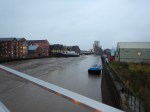


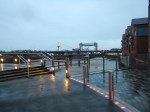
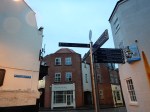

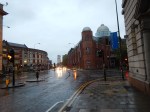



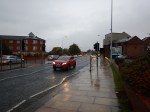

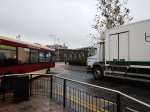
I walked across Hull twice from my supposedly City Centre hotel, which seemed to be almost closer to Grimsby than the railway station.
The first time was in the dark and there were no signs or maps, so I had to climb up on a dual-carriageway bridge, as the direct route across the footbridge was blocked due to demolition. The taxi-driver who brought me to the hotel said that all other routes were dangerous.
Despite the hotel saying it would take twenty minutes to get to football at the KC Stadium, It took me over an hour.
The pictures were taken in the morning and it was very wet, as they show.
I had hoped to find a paper shop to buy my copy of The Times, but in the forty minute walk, I didn’t pass one open shop selling newspapers. They was also no nice cafe for breakfast.
So instead of looking around Hull, I made an executive decision to go to Meadowhall to get some breakfast.
I know it was eight o’clock, but round here in East London, most things start at seven. Even my local Carluccio’s opens at eight in the week and nine at the weekends.
I got lost both times and I couldn’t even find a taxi to take me to the station.
I have never seen a city so badly signposted in my life.
But then to many of these towns and cities, maps are a waste of money, as everybody uses smart phones.
I don’t as my left hand isn’t good enough to hold it steady enough. Also as it was raining, the screen doesn’t appear to be too readable underwater.
UK Capital of Culture 2017?
They’re having a laugh or are they trying to lure visitors into those unsavoury areas my taxi driver warned me about?
I shan’t be going back to Hull again.
The place is an absolute disgrace as regards welcoming visitors, who don’t have cars and prefer or have to walk.
Scarborough
I’d never been to Scarborough before so I took the opportunity to visit on my way from York to Hull.
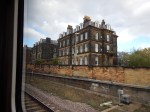
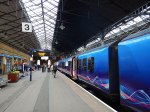

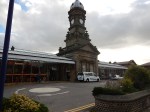


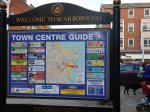
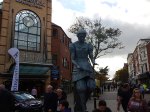

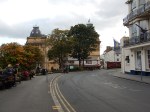


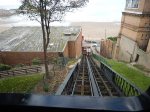
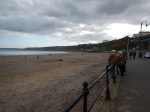
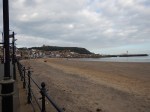
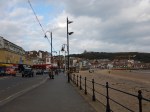
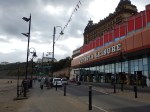
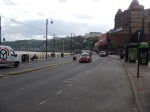
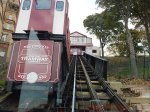



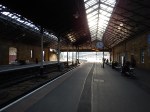
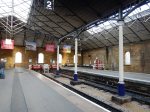
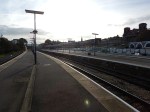
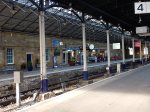

Looking back from a few days away, I think that Scarborough, would be a better place to stay than Hull.
I came to Scarborough station on one a Class 185 train and left in a Class 158 train, so I didn’t have to experience a Pacer. According to Wikipedia the Hull to Scarborough Line is usually worked by the very acceptable Class 158 trains, sometimes coupled to something else for more capacity. This is said.
Services are usually worked by Class 158 DMUs. Summer weekends see services operated by a Class 158 coupled to a Class 153 or extra Class 158 providing a 3/4-car unit for additional capacity. Sundays also see a variety of traction traversing the line to retain crew knowledge; this can include Class 153, Class 150, Class 142 and Class 144.
You do wonder how much traffic this route could generate if it was electrified and run by a new four-car electric train.
It would be very expensive to electrify, as until Hull is electrified, it would be a stand-alone system for about forty miles, that was a long way from any other electrification.
But if some means were to be provided to charge the trains at Scarborough and Hull, I suspect that IPEMUs could provide services between Scarborough and Hull and Scarborough and York with ease, given the easy nature of the lines.
This would also allow the TransPennine services from Scarborough to Manchester and Liverpool to be run by high-speed IPEMUs, which could bridge the electrifdication gap between Leeds and Manchester.
In an ideal world, a service should be provided between Scarborough and Whitby, which if there was an improved service around Scarborough would probably be needed to serve the tourism industry.
That area of East Yorkshire needs to be developed with respect to the leisure and tourism opportunities it offers.
Hull Trains Take The Pragmatic Decision
The September edition of Modern Railways has an article entitled Hull Trains Plans Bi-Mode Fleet.
Like First Great Western, First Hull Trains seem to have lost patience with Network Rail and the article said they were thinking about ordering bi-mode or electro-diesel trains.
They have now ordered five Class 800 trains from Hitachi, as is reported here on the BBC. This is the start of the article.
A rail company is investing £68m in a fleet of faster trains to ensure shorter journey times to London.
Hull Trains said it was buying five trains capable of running on either electricity-powered routes or with diesel fuel.
The firm said the trains had been bought because of delays in country-wide electrification of the rail network.
So it looks like the non-electrification of Selby to Hull has caused the company to take this pragmatic decision. In the last few months, they’ve even looked at electrifying that line themselves.
At least they will not be left with a fleet of incompatible trains, as when the electrification finally happens on all their routes to Hull and Beverly, the trains can be converted to all-electric Class 801 trains.
I do wonder if the delayed electrification across the UK, will cause a few more companies to take pragmatic decisions!
I think we might see.
- First TransPennine ordering Class 800 Trains for Liverpool to Hull and Newcastle.
- Virgin ordering Class 800 Trains for London to Chester, North Wales and Holyhead.
To get around the problems of non-electrified lines.
Should We Create A Northern Playground In Addition To A Northern Powerhouse?
George Osborne and other politicians, thinkers, academics and businessmen talk about creating a Northern Powerhouse.
I am very much in agreement to these aims, but from my London-based viewpoint, I tend to think that the North has a lot more to offer.
Two of the bigger successes of the North in recent years have been the reinvigoration of Liverpool as one of the best tourist destinations in the world and the Tour de France in Yorkshire in 2014.
So should any Northern Powerhouse plans, take more than a large nod to emphasising the leisure and tourism opportunities in the area?
The government’s plan for transport in the North released yesterday and discussed in this post, is fifty years too late and if it’s implemented, it will be some years, before High Speed Trains touch 140 mph on the way between Liverpool and Hull and Newcastle.
The high speed railway should remain an end objective, but in the mean time, we should do various things to make the wait bearable.
1. Electrification In The North
The Electrification in the North study recommended that virtually all lines north of a line drawn between Chester and Lincoln be electrified. A rolling program should be planned that virtually eliminates diesel-powered passenger and freight trains.
This would speed up services between all the major cities and also connect all of the wonderful rural lines that cross the Pennines and hug the coastline to major centres of population.
So this electrification program is just as much Northern Playground as Northern Powerhouse.
2. Contactless Ticketing
Plans for the North talk about an Oyster Card for the North. As so many Londoners will tell you, Oyster is old superseded technology and so last decade.
We need a universal contactless ticketing system based on bank cards that works all over the UK!
This would mean that you just turned up at any station, bus or tram stop in the UK, touched in and you’re off on your journey.
Those who doubt this is possible, should spend a week using their bank card as a ticket in Greater London. They will find a system totally devoid or hassle and cash, well-liked by both passengers and staff. It also automatically gives you the cheapest price for the collection of journeys you take over a day, week or month.
Leisure passengers by their more spasmodic and impulsive nature will benefit tremendously from simple contactless ticketing.
3. Maps And Information Everybody Can Understand
As London was first in the world with decent maps and also because it is so large, that no resident knows the whole city, London needs comprehensive maps and travel information displayed everywhere in a common easily-understood and learned format.
As the combined population of the North of England is upwards of eleven million as against the eight of Greater London in a wider area, I suspect those in the North find themselves in an unknown area more often than those in Greater London.
So one thing that the North needs for both Playground and Powerhouse is a universal mapping and information system, which is the same all across the various parts of the North.
I feel that the North should use London’s system, which includes.
1, A detailed local walking map on every bus stop, tram stop and station.
2. Comprehensive bus information at every station.
3, A detailed bus spider map on every bus stop, tram stop and station.
4. A five digit number on every bus stop, which if sent as an SMS message to a short SMS number, gives details of the next few buses.
,I doubt that this will ever happen, as no council in the North would ever allow something to be used in exactly the same way as it is in London. Or if it was one of the larger cities, in the same format as another.
If the system relied on passengers having and using smart phones, then it should be prohibited.
But quite frankly, at the moment the information systems in the North are truly dreadful.
4. Two Hours From London
This is a list of the major cities of the North and typical fastest journey times by train to and from London.
Barnsley – 2:34 to 2:45 – Change at Sheffield
Blackburn – 2:56 – Change at Preston
Blackpool – 2:45 – Change at Preston
Bolton – 2:45 – Change at Manchester
Bradford – 2:49 to 2:52 – Change at Leeds
Burnley – 3:41 – Change at Preston
Darlington – 2:20 – Direct
Doncaster – 1:34 to 1:38 – Direct
Halifax – 2:48 – Direct/3:08 – Change at Leeds
Harrogate – 2:43 – Change at York or Leeds
Huddersfield- 2:52 to 2~:54 – Change at Manchester or Leeds
Hull – 2:33 – Direct
Leeds – 2:11 to 2:13 – Direct
Liverpool – 2:12 to 2:14 – Direct
Manchester – 2:07 to 2:09 – Direct
Middlesbrough – 2:57 to 2:59 – Change at Darlington
Newcastle – 2:50 – Direct
Preston – 2:08 – Direct
Rotherham – 2:16 to 2:28 – Change at Doncaster or Sheffield
Sheffield – 2:01 – Direct
Stockport – 1:55 to 1:56 – Direct
Warrington – 1:44 – Direct
Wigan – 1:55 – Direct
York – 1:50 to 2:02 – Direct
This list shows several things.
1. Many of the direct journeys between London and the North could be brought consistently under two hours, once ERTMS allows 140 mph running on the East Coast Main Line and the West Coast Main Line in a few years time.
2. Electrification of the Midland Main Line to Sheffield will bring that city consistently under two hours from London, which will speed up the journey to Barnsley, Rotherham and other places.
3. Some destinations like Blackpool, Bradford, Huddersfield, Hull and Middlesbrough would get a significantly faster service to and from London, if there was no need to change.
If we get the expected speed up on the East and West Coast Main Lines, what sort of times will we get to the major cities in the North.
Adjusting for the probable speed increase from 125 to 140 mph. gives these estimates for the following journeys.
Darlington – 2:05
Doncaster -1:26
Hull – 2:17
Leeds – 1:57
Liverpool – 1:59
Manchester – 1:55
Newcastle – 2:32
Preston – 1:54
York 1:47
I think we can say that in a few years time, many more towns and cities in the North will be within two hours from London, which can only be beneficial to those places for both Powerhouse and Playground purposes.
I regularly go to the North for the day by train to see football. Some places like Middlesbrough and Blackburn are tiring journeys, but get them under two hours and leisure traffic can’t help but increase, especially, if there were more affordable good hotels and better late train services back to London..
5. Better Connectivity
More places could be brought under the important two hour ideal, if perhaps the east-west routes interfaced better with the north-south ones at places like Darlington, Doncaster, Leeds, Preston and York.
In an ideal world, a passenger from say London to Hull, should be able to step off a northbound train at Doncaster and just by walking across the platform to step on to a train for Hull. At the same time passengers from Sheffield and Rotherham going to Newcastle would just step across the platform the other way.
This may seem rather utopian, but precise timing of trains is what ERTMS is supposed to enable.
The easier it is to get between any two points in the North, the more things will be improved.
6. High Speed Lines Across The Country
When the upgrade and electrification of the Midland Main Line is completed in 2020, there will be three major 140 mph railways between London and the North.
To complement these there needs to be High Speed Lines across the country from say Liverpool to Hull and Newcastle.
Any east-west lines will connect with the north-south lines at places like Darlington, Doncaster, Leeds, Manchester, Newcastle, Preston, Sheffield and York.
As I said in the previous section, there needs to be good interfaces between the two sets of lines to speed up journeys to stations that are a change away from the north-south lines.
At some point in the future, there will be a need for purpose-built High Speed Lines across the county.
But by the time this is done, I think tunnelling techniques will have improved to such a degree that instead of building a surface railway with all the planning and other difficulties that entails, a tunnel will be bored under the Pennines to connect Hull and Doncaster with Liverpool. The tunnel would be arranged to pass under major stations like Sheffield and Manchester Piccadilly and could connect to them by lifts and escalators.
Such a tunnel could be bored to a W10 loading gauge, so that it could transfer freight containers under the Pennines to link Liverpool and the West Coast Main Line with the Electric Spine to Southampton and the East Coast Main Line to London Gateway and Felixstowe. I believe a high-capacity freight railway between east and west through the Pennines, will have the same effect as theFelixstowe-Nuneaton freight corridor has had on the A14.
This Google Earth image shows the towns and cities between Liverpool and Hull.
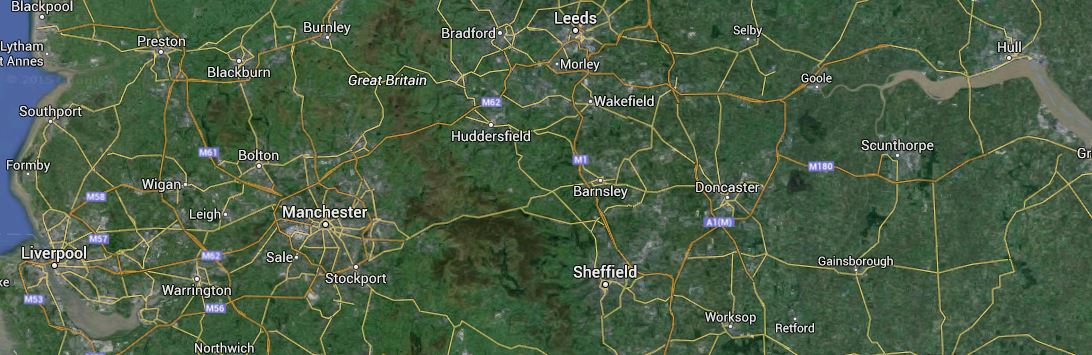
Liverpool To Hull
It may seem a long way to bore a tunnel even if it didn’t go all the distance, but we’re probably talking about 2030 and the machines then, will make today’s machines look like toys. The tunnel would probably start west of Manchester and go to east of Sheffield, which would be under fifty kilometres, connecting to Liverpool and Hull by means of surface lines.
Also if any new route could handle freight and link the Port of Liverpool to the east side of England this could have interesting possibilities.
For instance, would it be quicker for containerised freight from the United States and Canada to reach Germany and Central Europe if it went via Liverpool and a freight train through the Channel Tunnel?
Plans of this nature have existed for years, but none has ever been implemented. Some proposals for the Great Central Railway are given here.
It all goes to show that modern technology will create lots of options for putting a High Speed Line across the country.
Both Powerhouse and Playground will benefit.
Crossrail Of The North
Is it farther between Liverpool and Hull or from London to Norwich?
Actually, they are about the same being around two hundred kilometres for both.
But compare the train times between the two city pairs.
Liverpool to Hull takes three and a quarter hours, with at least one change, whereas London to Norwich takes five minutes under two hours.
Actually, the London to Norwich service hasn’t improved much since the 1960s, as British Rail’s aspiration then had the catchy phrase of a two-hour, two-stop service.
Since then the line has been electrified and a typical train stops up to six times on the route, with eight coach services running twice every hour.
You might think, that being that the line runs across the flat East Anglian countryside that it is a railway on which high speeds of the order of two hundred kilometres per hour are possible.
But you’d be wrong, as the line isn’t straight and the maximum speed is only a hundred and sixty!
Even so, plans are afoot to do the London to Norwich trip in ninety minutes, probably using the current trains, albeit with perhaps some new locomotives.
All this shows what a disgrace the rail routes across the North of England are.
Few are electrified and trains are often scrapyard specials. There are some new trains, but these are seriously overcrowded.
Politicians should hang their heads in shame.
At least George Osborne seems to be thinking about it, judging by reports on the BBC this morning.
The North of England needs a high frequency and high capacity, world-class railway linking the main cities together. As with London to Norwich, Liverpool to Hull should be at least twice an hour in ninety minutes or less. It should all be possible with good 1980s, let alone the best modern, technology.
 The Anonymous Widower