Latest On Hydrogen Trains In The Tees Valley
In the June 2021 Edition of Modern Railways, there is an article which is entitled Northern Looks To The Future.
This is a paragraph.
Northern has been working on proposals to introduce both hydrogen and battery conversions. For the former, the Tees Valley has been selected for the potential deployment of a whole system production pilot for a hydrogen fleet, with a dedicated depot, fuelling infrastructure and trains. A sub-fleet of Class 600 HMUs, converted by Alstom and Eversholt Rail from Class 321 EMUs and dubbed ‘Breeze’, is the preferred option for routes radiating from Middlesbrough to Nunthorpe, Bishop Auckland and Saltburn, creating a small self-contained network. If approved, these plans would fit with the Government’s aim to develop a hydrogen hub in the Tees Valley.
Could the Class 600 trains finally be on their way?
Romania Wants To Buy Hydrogen-Powered Trains
The title of this post, is the same as that of this article on Romania Insider.
This is the first paragraph.
Romania’s minister of transport announced that the National Relaunch and Resilience Plan (PNRR) includes the purchase of some 10-12 hydrogen-powered trains for the Bucharest-Pitesti route.
Note that Bucharest and Pitesti are about 120 kilometres apart.
Conclusion
It looks like an ideal route for hydrogen trains.
- New hydrogen trains can probably take over from the current diesel trains with only a few modifications to the tracks and signalling.
- A hydrogen refuelling station would need to be provided.
- The route is not overly long.
- The train manufacturer could be delivering a standard fully-financed package of trains, hydrogen refuelling system and training.
As it is effectively, a replacement of one self-powered train with another, from the time order to in service could be a fairly short time of a couple of years or so.
Councillors Approve Train Station For Inverness Airport
The title of this post, is the same as that of this article on Rail Technology Magazine.
These are the first two paragraphs.
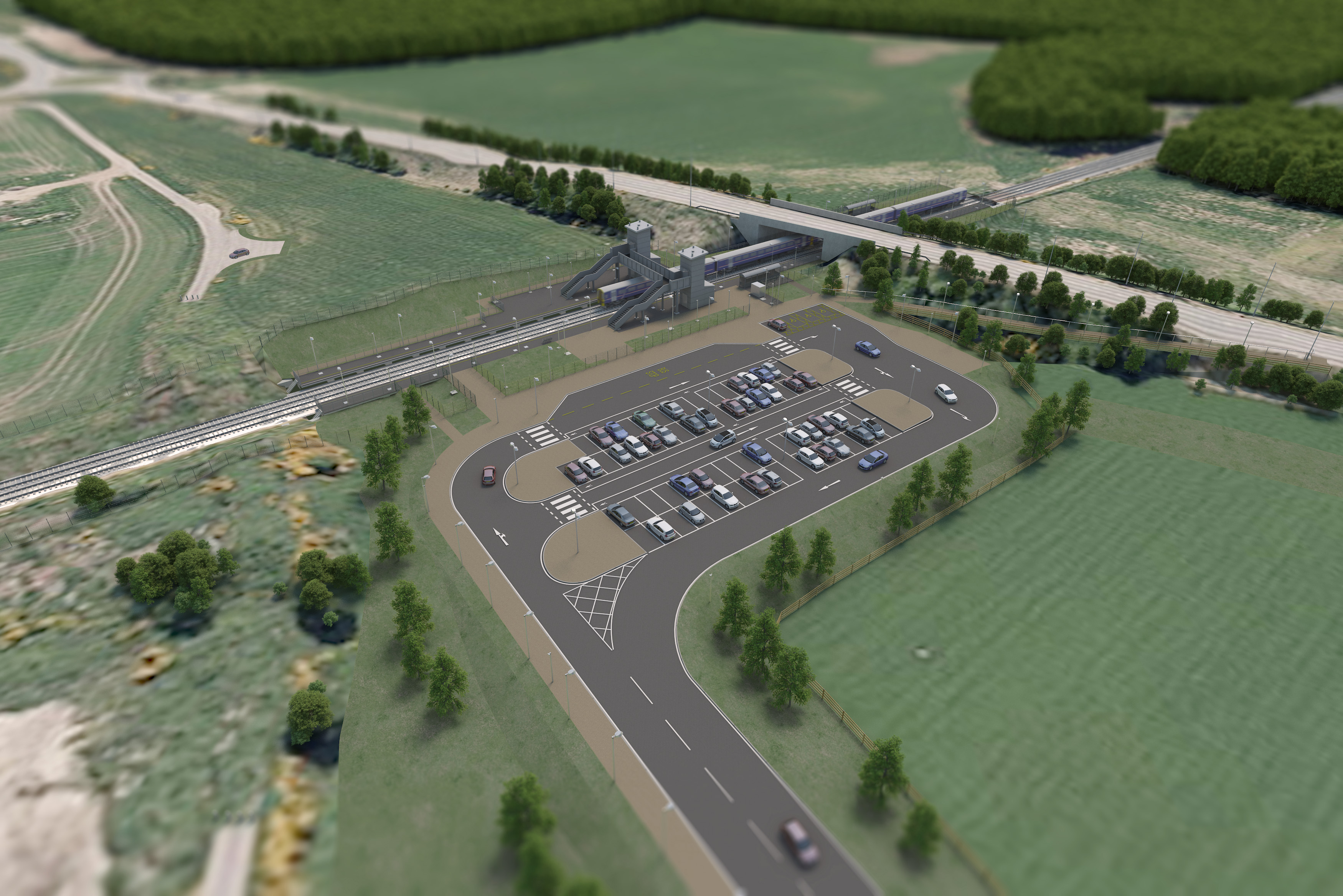
Planning permission has finally been granted for a two-platform train station at Inverness Airport.
The plans were “reluctantly” granted by the Highland Council, as much debate over the Petty Level crossing which is to be removed as a consequence.
Ir certainly looks like there were strong arguments over the level crossing.
This Network Rail visualisation shows the station from a virtual helicopter hovering over the Airport.
And this Google Map shows the Airport from the South-West
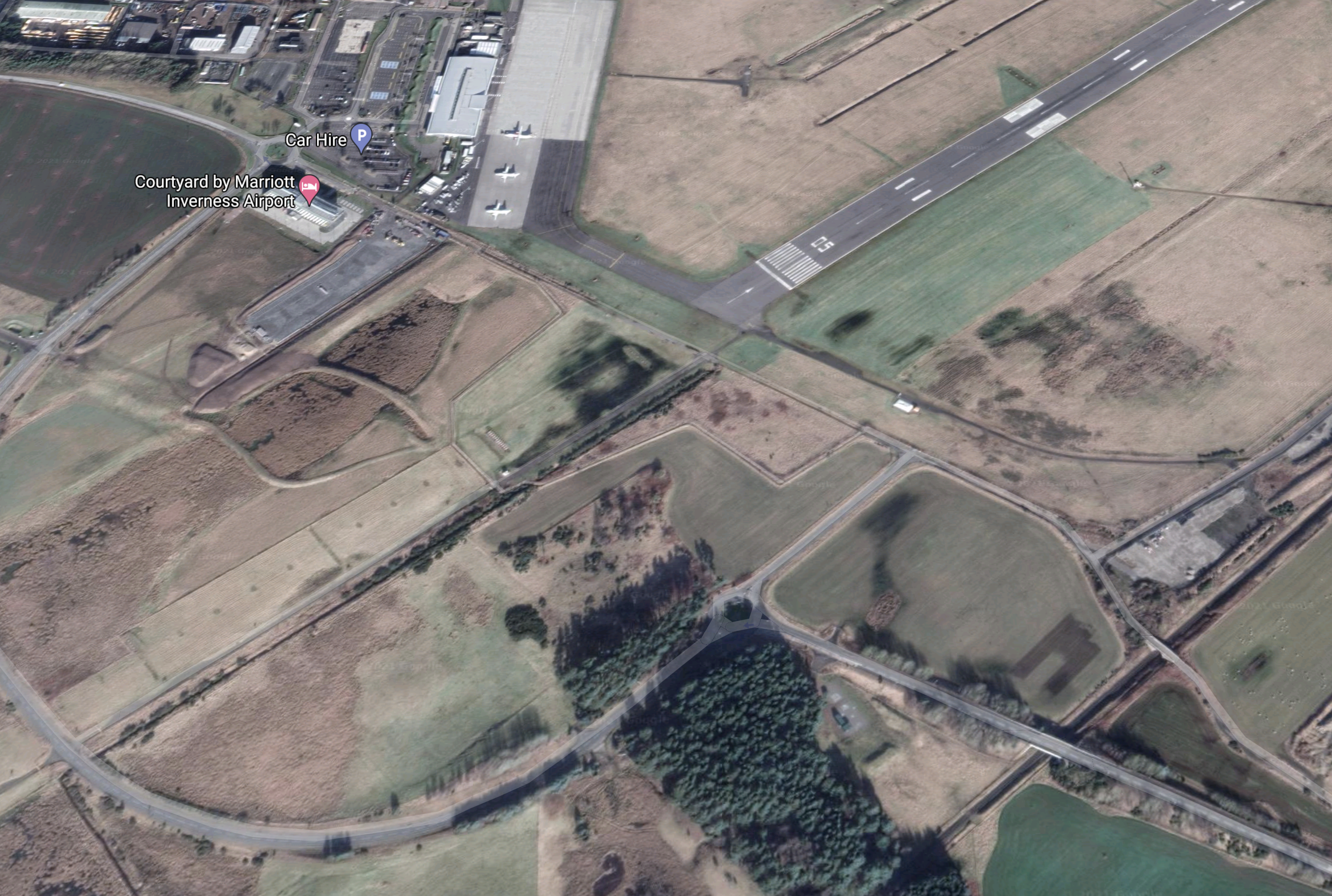
Note.
- The link road to the A96 crossing the railway in both images. But from opposite directions.
- In the Network Rail visualisation you can see the roundabout, where the link road joins the A96 in the top left corner.
- The current railway is only single track, but Network Rail will be doubling it.
- From these images and this document on the Network Rail web site, I can deduce this about the station.
- The station will have two platforms that will be capable of handling six-car trains.
- The footbridge is shown with lifts.
- The station will be able to be used as a Park-and-Ride for Inverness.
I suspect there will be a shuttle bus to the Airport terminal.
Travel Between London And Inverness
I’ve been to Inverness twice and and in both cases, I’ve gone by train.
- The first time, I went by a day train from Edinburgh. And I was in the cab courtesy of East Coast. I wrote about it in Edinburgh to Inverness in the Cab of an HST.
- The other occasion, I took the Caledonian Sleeper to Inverness and that is a civilised way to go.
I feel that on this route very keen competition could develop.
Advantages Of Flying
Flying to Inverness Airport has these advantages.
- A shorter journey time.
- A greater choice of destinations.
- Destinations in the sun.
- After the new station is built it will be rail connected all the way to Aberdeen.
This Google map shows Inverness and Inverness Airport.
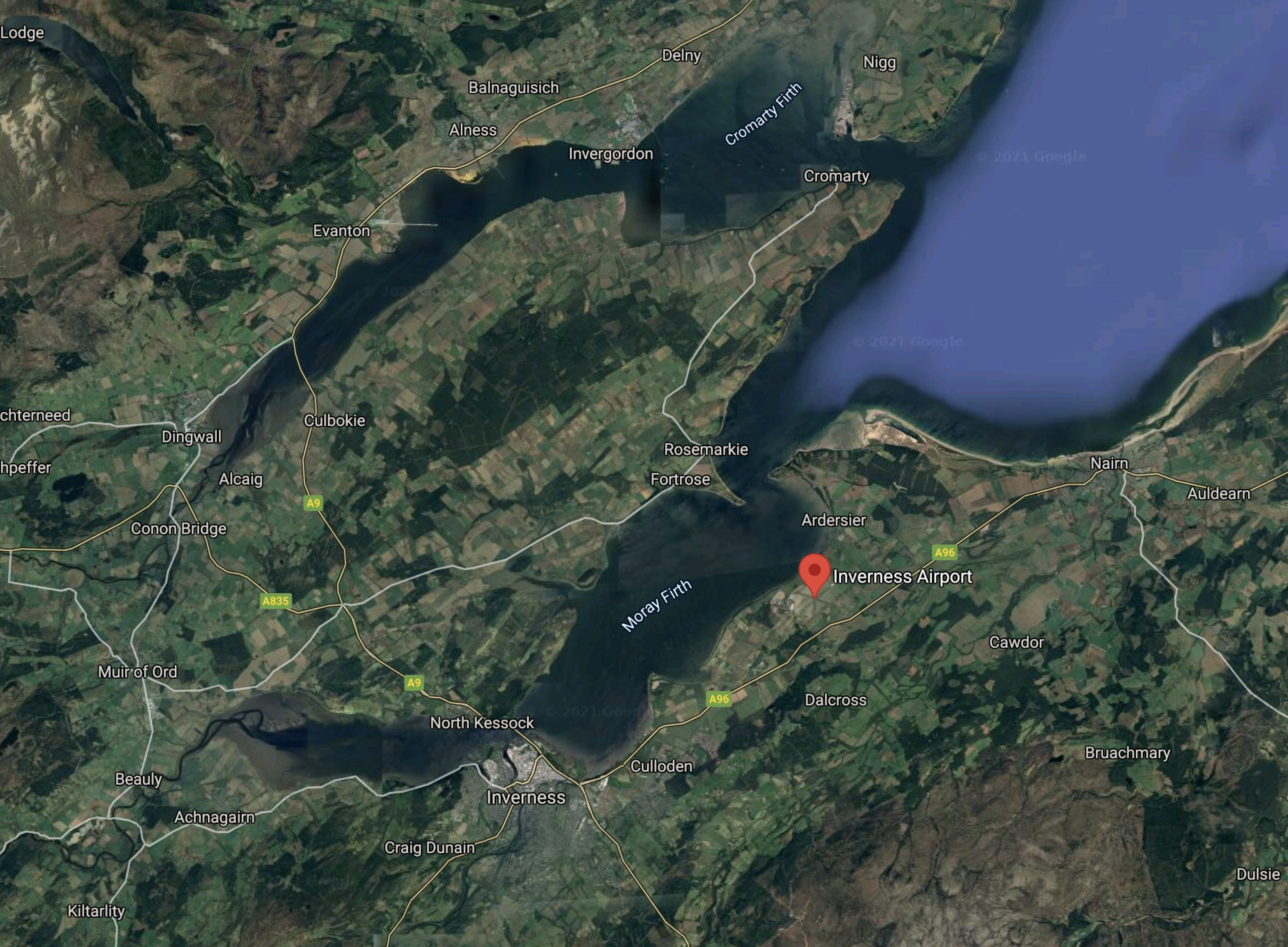
Note.
- The city of Inverness is at the Southern end of the Moray Firth.
- With all the water, I suspect the airport can be a good neighbour as far as noise and pollution are concerned.
- The Airport would have good access to green hydrogen and electricity from renewable sources.
- Even the Airport train and all the ground-handling equipment could run on hydrogen.
I feel that the Airport could sell itself as an environmentally-friendly way to the Highlands, when sufficient numbers of zero-carbon aircraft are available.
- You should be able to fly in from Amsterdam, Birmingham, Brussels, Geneva, London, Manchester etc. and not feel any environmental guilt.
- Airbus’s proposed hydrogen-powered ZEROe Turbofan is quoted as having a range of 2,000+ nautical miles,
- That distance would put a lot of the sun in range of Inverness Airport.
- Smaller feeder airliners could connect to other airports in the North of Scotland and the islands.
Inverness Airport will not be beaten without a fight.
Advantages Of Trains
Taking the train to Inverness has the following advantages.
- Luxury
- Zero Carbon-Footprint
- The possibility of an overnight trip on a sleeper train.
- The scenery through the Highlands.
I also believe that it would be possible to design a hydrogen-powered luxury train. I laid out my ideas in LNER Seeks 10 More Bi-Modes.
I believe a train could have this specification.
- 140 mph operation on 25 KVAC overhead electrification. This was done by British Rail almost forty years ago.
- Ability to use full digital in-cab signalling. This is on its way and already working in some applications.
- 110 mph operation on hydrogen. Hitachi are planning 100 mph battery trains, so it should be possible.
- 400 mile range on one filling of hydrogen. This is working in Germany.
- Ability to be upgraded to higher speeds on electric power, should the East Coast Main Line be upgraded for higher speeds in the future. The train manufacturers are probably ahead of track designers with this one.
I believe a sub-seven hour time would be possible between London and Inverness.
Conclusion
This is the sort of route, where rail and air will have a hard fight for supremacy.
€190m Order To Bring Hydrogen Trains To Regions In France
The title of this post, is the same as that of this article on H2 View.
This is the introductory paragraph.
What is believed to be the first order of dual mode electric-hydrogen trains has been made today (8th April) for the Auvergne-Rhône-Alpes, Bourgogne-Franche-Comté, Grand Est and Occitanie regions of France.
I very much hope that Alstom’s Class 600 trains for the UK are dual mode, as that surely is the best design option.
Beeching Reversal – Firsby And Louth
This is one of the Round 3 bids of Beeching Reversal projects that the Government and Network Rail are proposing to reverse some of the Beeching cuts.
The Proposed Route
This route was part of the historic East Lincolnshire Railway, which is shown in this diagram from Wikipedia.
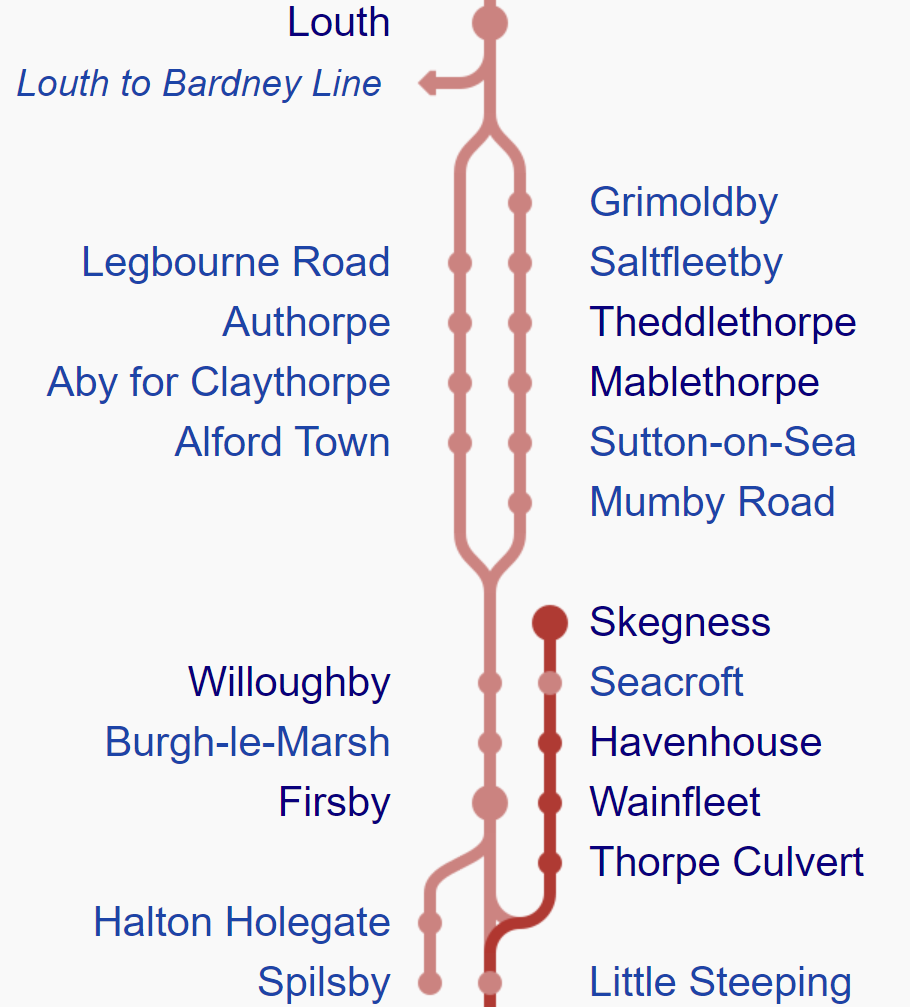
Note.
- North of Louth, the line used to connect to Grimsby Town, Immingham and Cleethorpes.
- The loop that goes through Mablethorpe.
- Boston is to the South.
- The Poacher Line between Boston and Skegness is the only section that is still open.
These Google Maps show sections and features of the route.
North From Spilsby Road Level Crossing
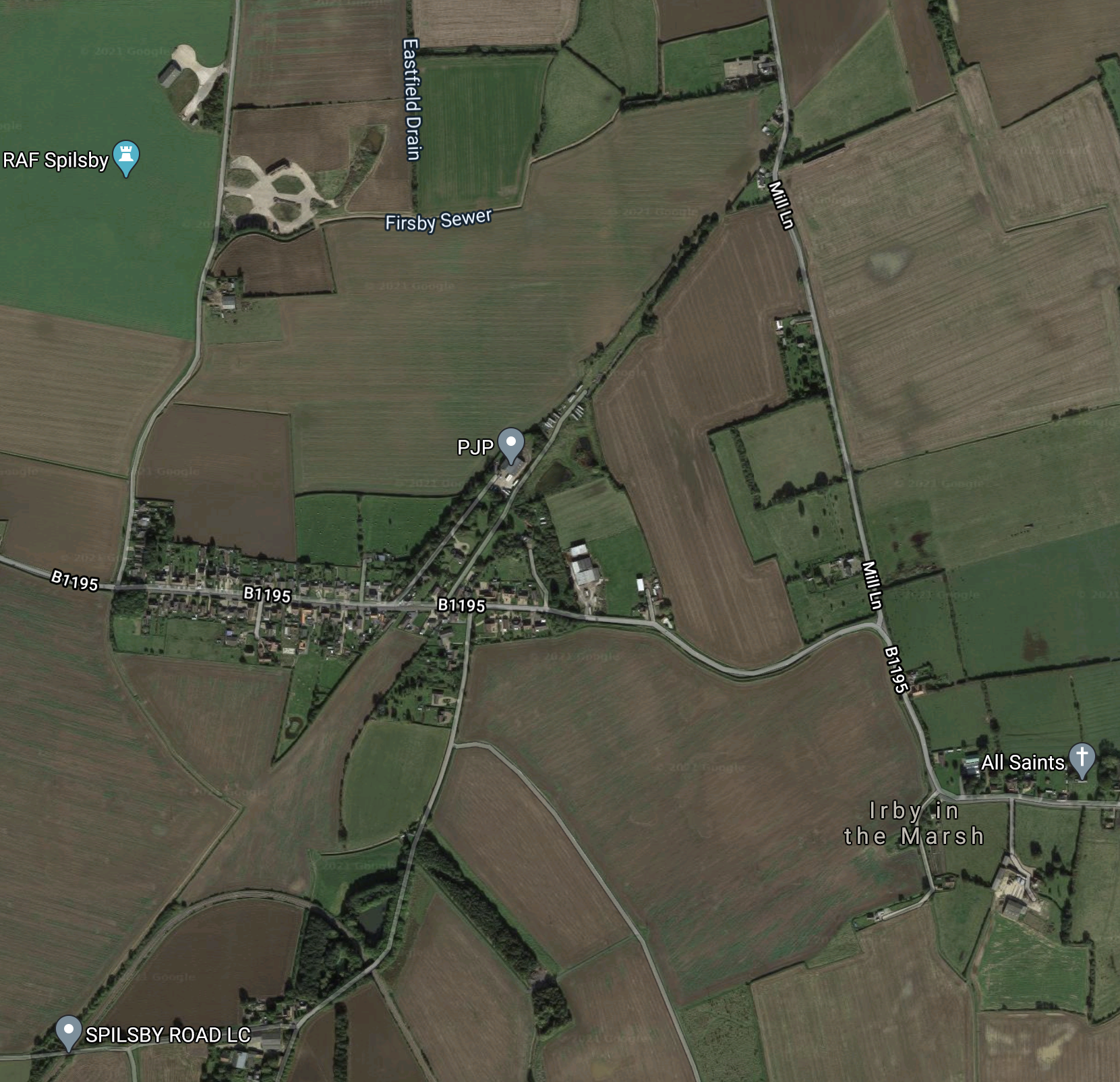
The Spilsby Road level crossing is in the South-West corner, with the track of the old railway between Firsby and Louth going to the North-East.
Junction With The Poacher Line
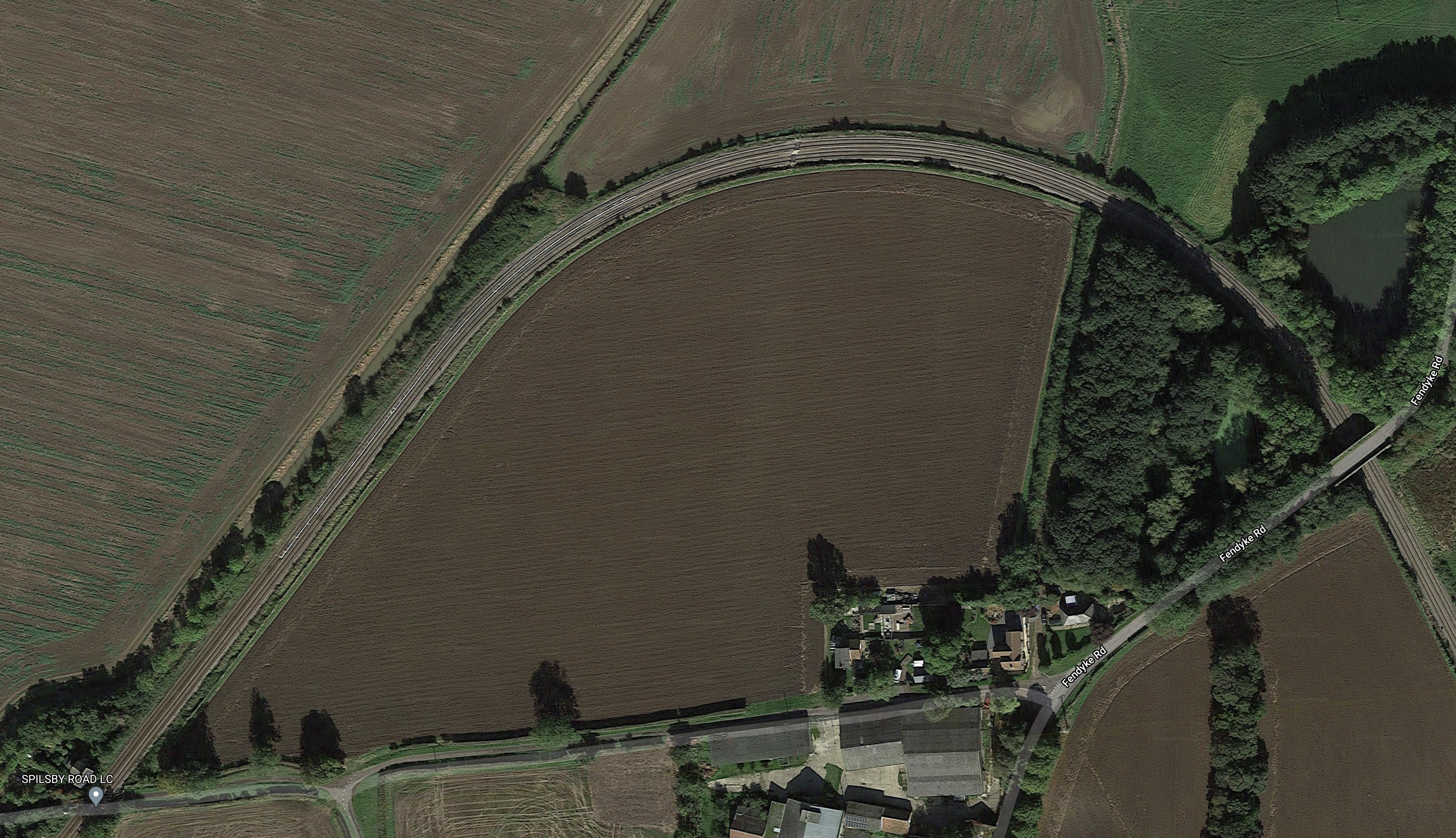
This is an enlargement of the South-West corner of the map.
- The Spilsby Road level crossing can be seen.
- The Poacher Line does a loop and goes South-East on its way to Skegness.
- It looks like Firsby station was quite important, with three platforms and lots of facilities.
A junction could be built here to connect the Firsby and Louth line to the Poacher Line.
Would a station built between the lines, be possible to provide interchange between the Louth and Skegness trains?
Willoughby Station
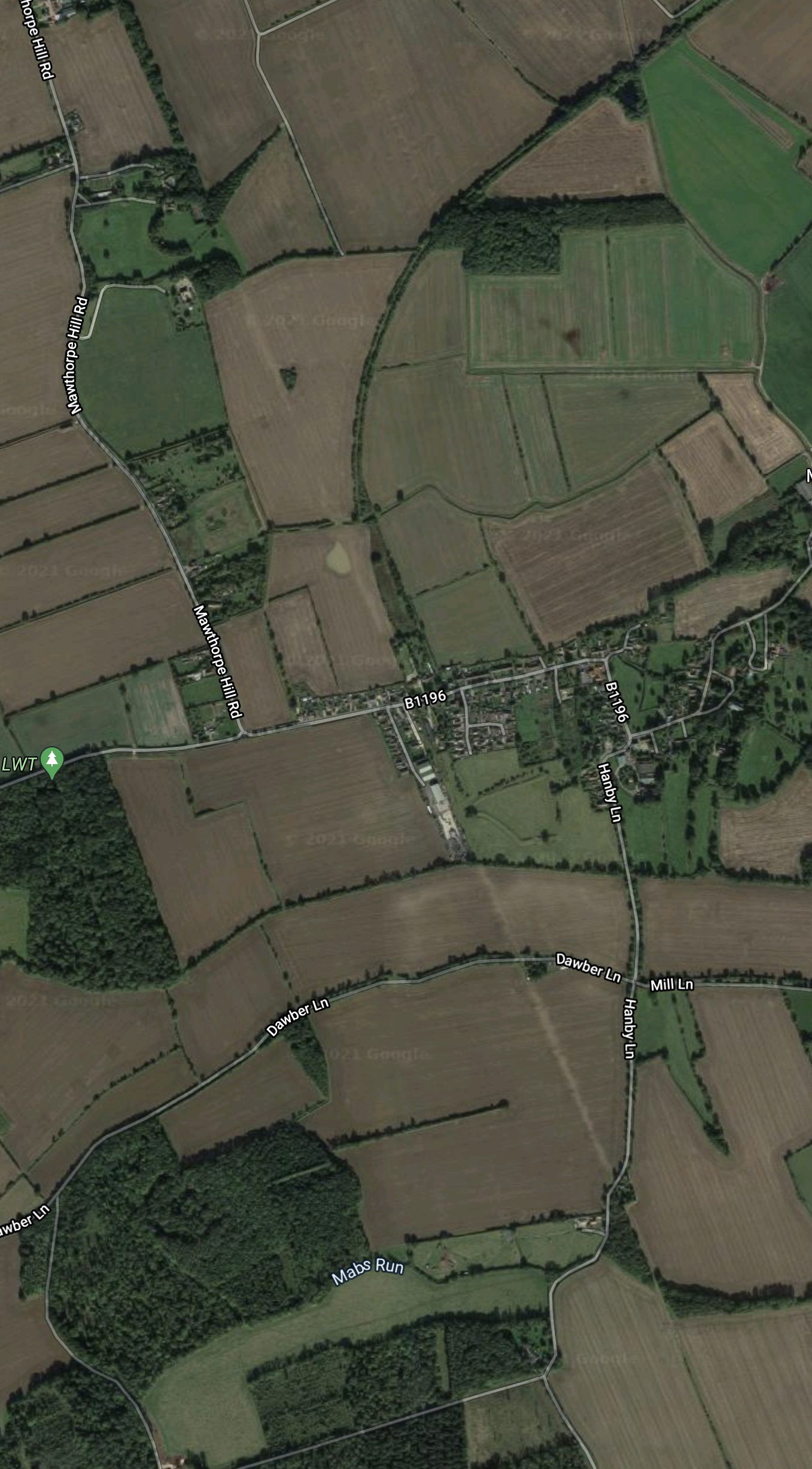
Note.
- The scar of the East Lincolnshire Railway can be followed from the South-East corner to the North-West corner of the map.
- The green scar of the Mablethorpe loop can be seen branching off from the East Lincolnshire Railway to the North-East corner of the map.
Could a station be rebuilt at Willoughby?
Alford And Alford Town Station

Note.
- The green scar of the East Lincolnshire Railway can be can be followed from the South-East corner to the North-West corner of the map.
- The town is Alford
- If you click on the map to enlarge it, you can see Station Road, which must have been the location of Alford Town station.
I would have thought a station would be needed.
Straight Between Alford And Louth
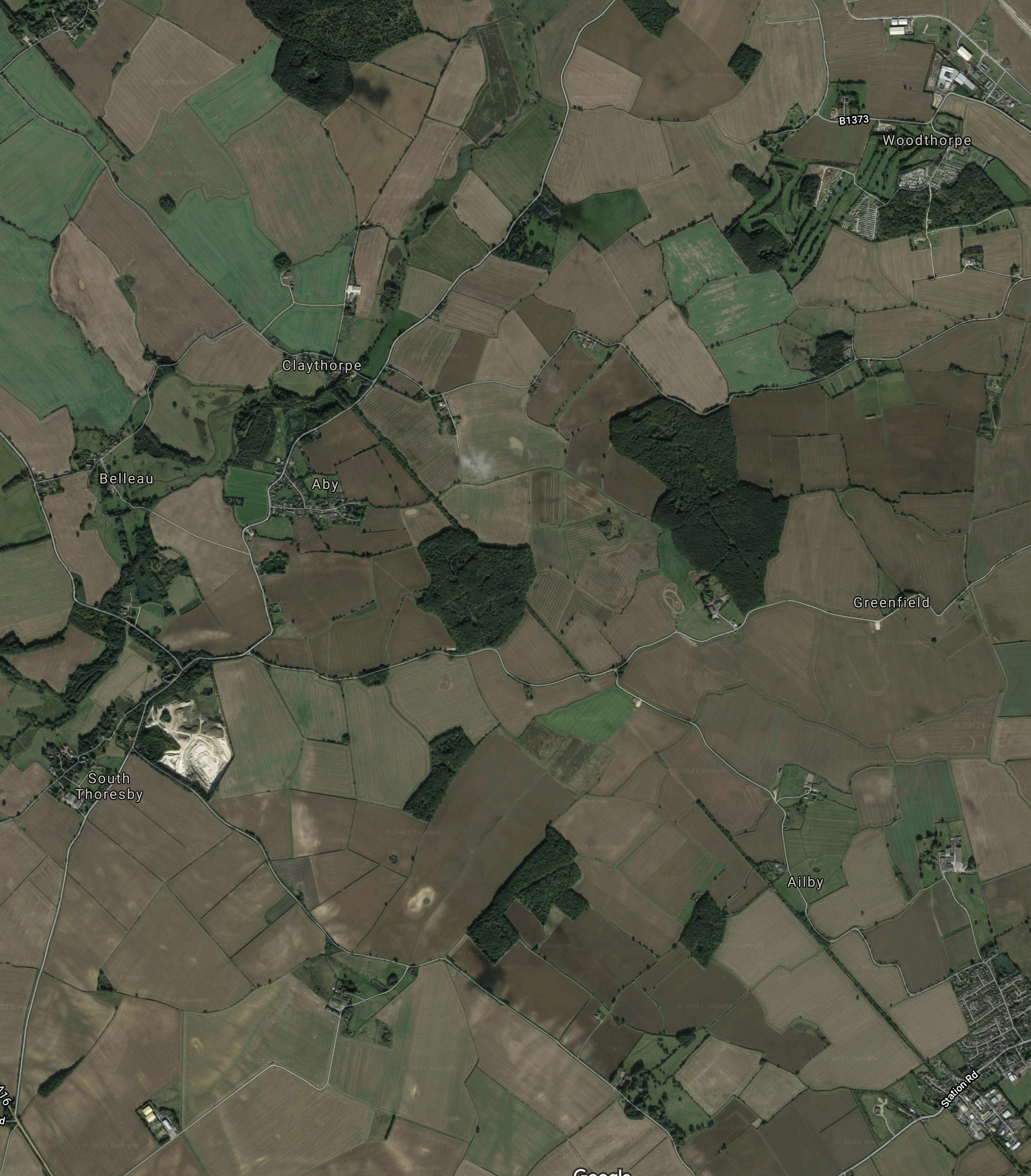
Note.
- The green scar of the East Lincolnshire Railway can be can be followed from the South-East corner to the North-West corner of the map.
- There are three stations on this section; Aby for Claythorpe, Authorpe and Legbourne Road.
This section would appear to be a rail engineer’s dream.
How many stations would be needed?
Louth

Note.
- The green scar of the East Lincolnshire Railway can be can be followed from the South-East corner to the North edge of the map.
- Louth is the largest town in Lincolnshire without a station.
It could be difficult to thread the line through the town.
Onward To Grimsby
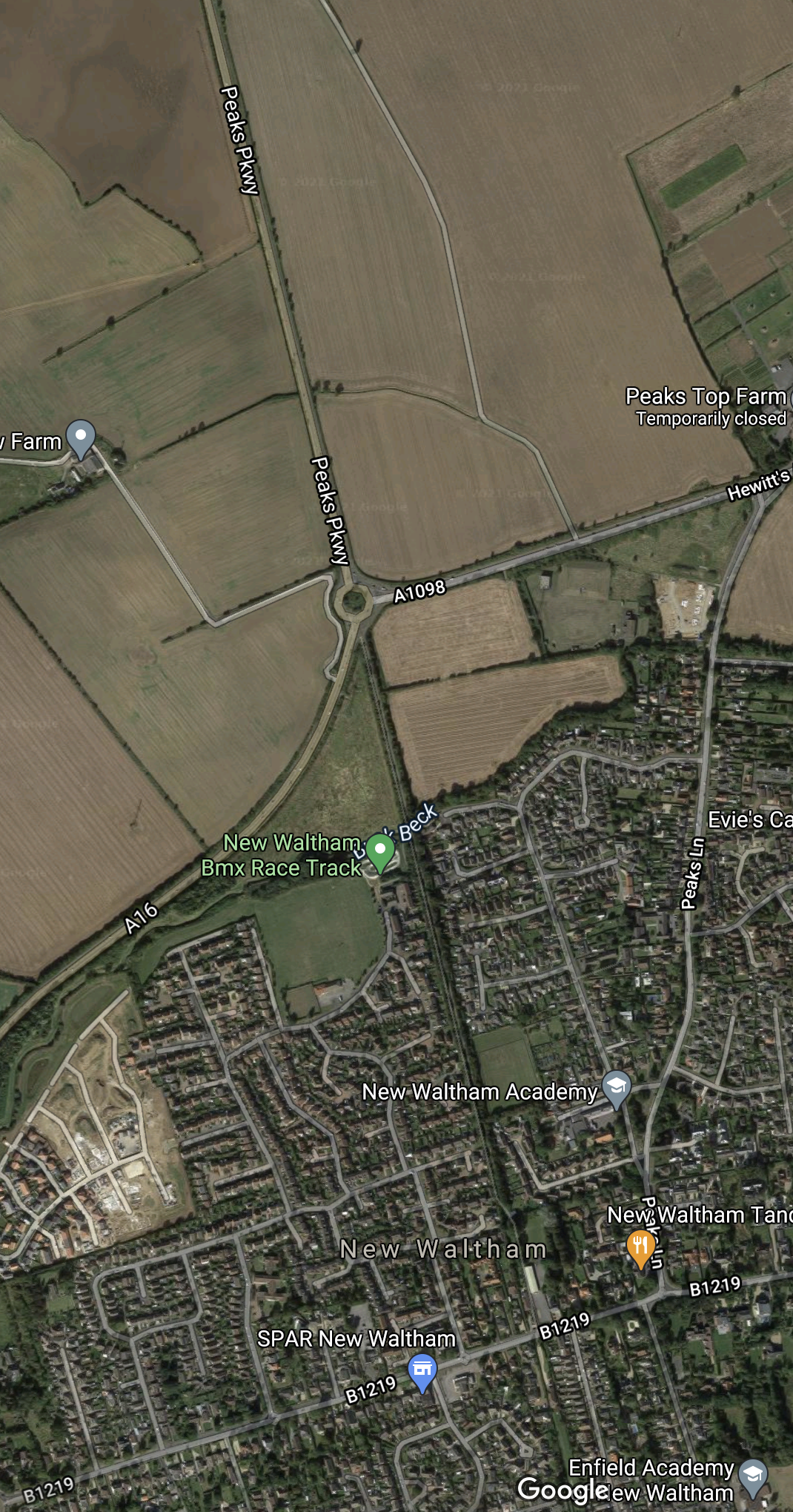
The map shows the final section of the route between Louth and Grimsby.
Note that from North of New Waltham, the track bed has been used for Peeks Parkway.
Does this mean that any reopened rail line between Firsby and Louth must end at New Waltham or Louth?
Grimsby Town Station And Centre
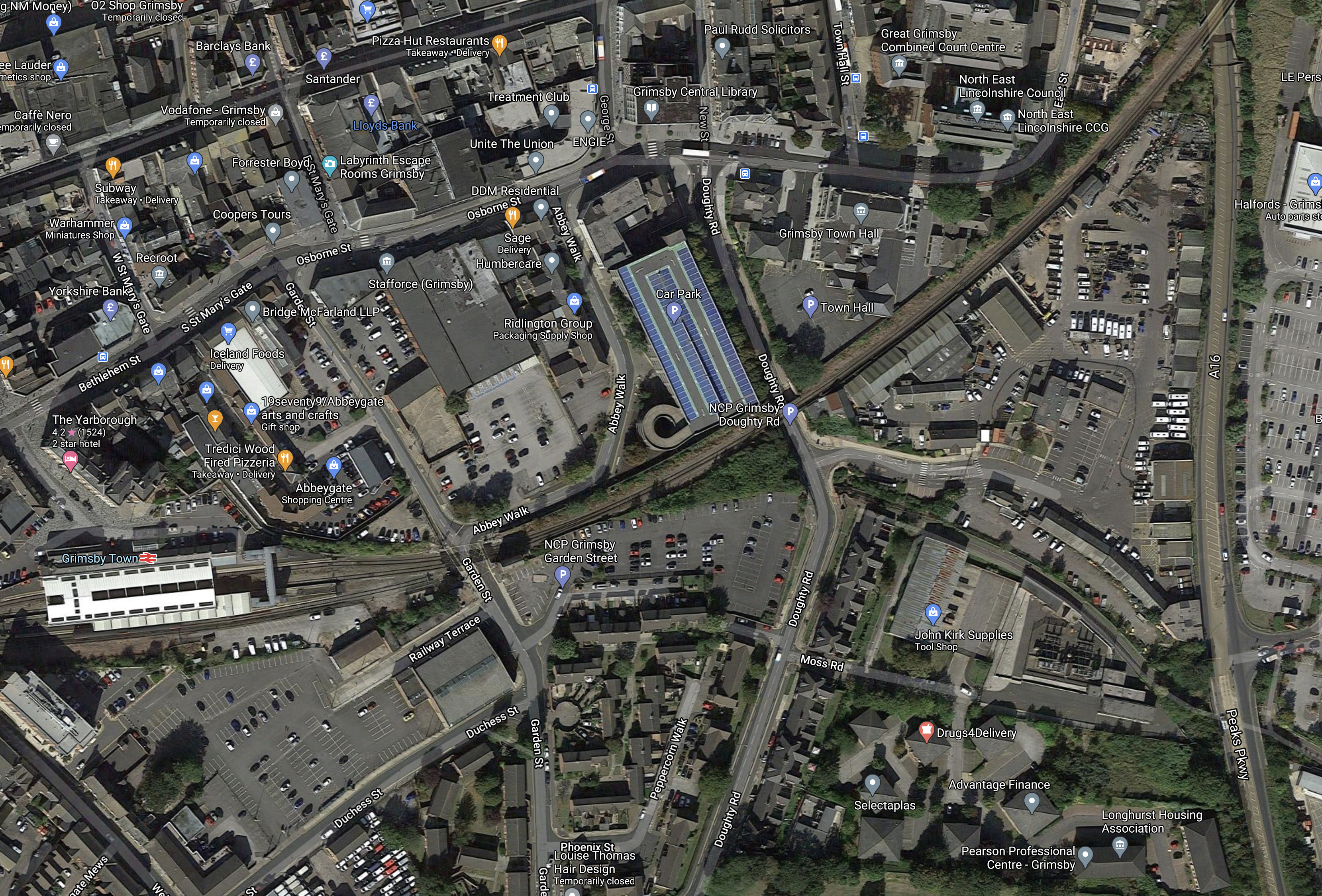
Note.
- Grimsby Town station is in the West.
- The rail line between Grimsby Town and Cleethorpes stations runs across the map.
- Peeks Parkway runs up the East side of the map.
- It looks to me, that this was once a large triangular junction, that also allowed trains to go between Grimsby Town an Louth stations.
Grimsby town centre seems to have been planned for cars and losers without cars can go elsewhere.
Thoughts On The Firsby And Louth Rail Link
I have a few thoughts on the possible design of a rail link between Firsby and Louth.
Should The Line Allow Freight Trains?
It might be a future need that freight trains will need to go between say Peterborough and Immingham, but I don’t think any use that route at present.
So other than the occasional maintenance train, I think the route could be freight-free at present.
Should The Line Terminate at Grimsby?
Consider.
- Grimsby is a town of 88,000
- It is a large centre for food processing, which needs large numbers of people.
- Grimsby is becoming an increasing important centre for the development of renewable energy.
- Grimsby and Boston are nearly fifty miles apart, which illustrates that Lincolnshire is not a small county.
I believe in a perfect world, Grimsby would have an hourly train service to Boston via Louth and several other stops.
Terminating at Louth rather than Grimsby would be like terminating all trans pennine services at Leeds.
So how would a line terminate at Grimsby?
- The missing side of the triangular junction could be rebuilt, so that traIns could run between Grimsby Town and Louth stations.
- Trains could terminate at a new Grimsby South station on the outskirts of the town.
- Trains could continue through Grimsby Docks station and terminate at Cleethorpes. with possibly an additional station in Grimsby town centre.
There is always an innovative tram-train solution, where with a small amount of street running, they sneaked into the town centre and called at Grimsby Town station and the major places people needed to visit.
This solution has been proposed for Ipswich and Felixstowe by East West Rail to increase the capacity on the Felixstowe Branch. I wrote about this scheme in Could There Be A Tram-Train Between Ipswich And Felixstowe?.
It would be challenging, but I think that it might be possible.
Failing that, I believe that a single-track could be sneaked along Peeks Parkway and go through the town centre to Grimsby Docks and Cleethorpes. stations.
The distance between Cleethorpes and New Waltham is about 7 miles.
A train would probably take about ten minutes.
Any town centre station could be a single platform.
Would An Hourly Service Be Enough?
An hourly service between Boston and Louth would probably be enough, but in an ideal world two trains per hour (tph) would probably be better.
- A single-track section between New Waltham and Cleethorpes could probably handle four tph working bi-directionally.
- Two tph is also regularly handled on single platform stations, like Galashiels and Newcourt.
- The long straight sections of the route offer lots of scope for loops.
My feeling, is the service should start hourly, but that it can be designed to be upgraded to two tph. Or it could even work at two tph at certain times of the day.
Could Boston and Cleethorpes Be Run In Fifty Minutes?
Consider.
- This time would be ideal for a service as it would give ten minutes to turn the trains at both ends.
- Boston and Cleethorpes would be the longest service that would be run and it is 50 miles.
- Fifty minutes would need an average speed including stops of 60 mph.
- Ipswich and Cambridge is run at an average of 43.2 mph with seven stops.
- The straight and flat Breckland Line has an operating speed of between 75 and 90 mph.
- Trains between Cambridge and Norwich average 53 mph with six stops.
I believe that the Firsby and Louth line could be built with an operating speed of up to 90 mph and fifty minutes between Boston and Cleethorpes could be possible.
Will Firsby And Louth Be Single Track?
I believe that the route can be single track with one platform stations.
This will save both space and costs and would probably allow two tph with careful design.
As there are long straight sections to the North of Alford, I suspect it wouldn’t be difficult to add passing loops, if they were required.
What Rolling Stock Would Be Used?
Lincolnshire is a renewable energy-rich county and because of offshore wind and the HumberZero project, Lincolnshire will probably have more wind power and green hydrogen per head of population, than any other area of the UK.
So undoubtedly, the trains will be zero carbon, which means, electrification, battery electric or hydrogen trains.
If new trains are in the budget, then the obvious candidate is the Hitachi Regional Battery Train.
The specification is given in this Hitachi infographic.

Note that it is a 100 mph train with a range of 56 miles.
It would need to be charged at both ends of the route.
In Cleethorpes Station – 16th September 2020, I suggested that electrification be added between Cleethorpes and Habrough stations should be electrified, so Cleethorpes and Manchester services could be run by Hitachi Regional Battery Trains.
This electrification could be used to charge the trains at Cleethorpes or a charging system could be installed.
This Google Map shows Boston station.
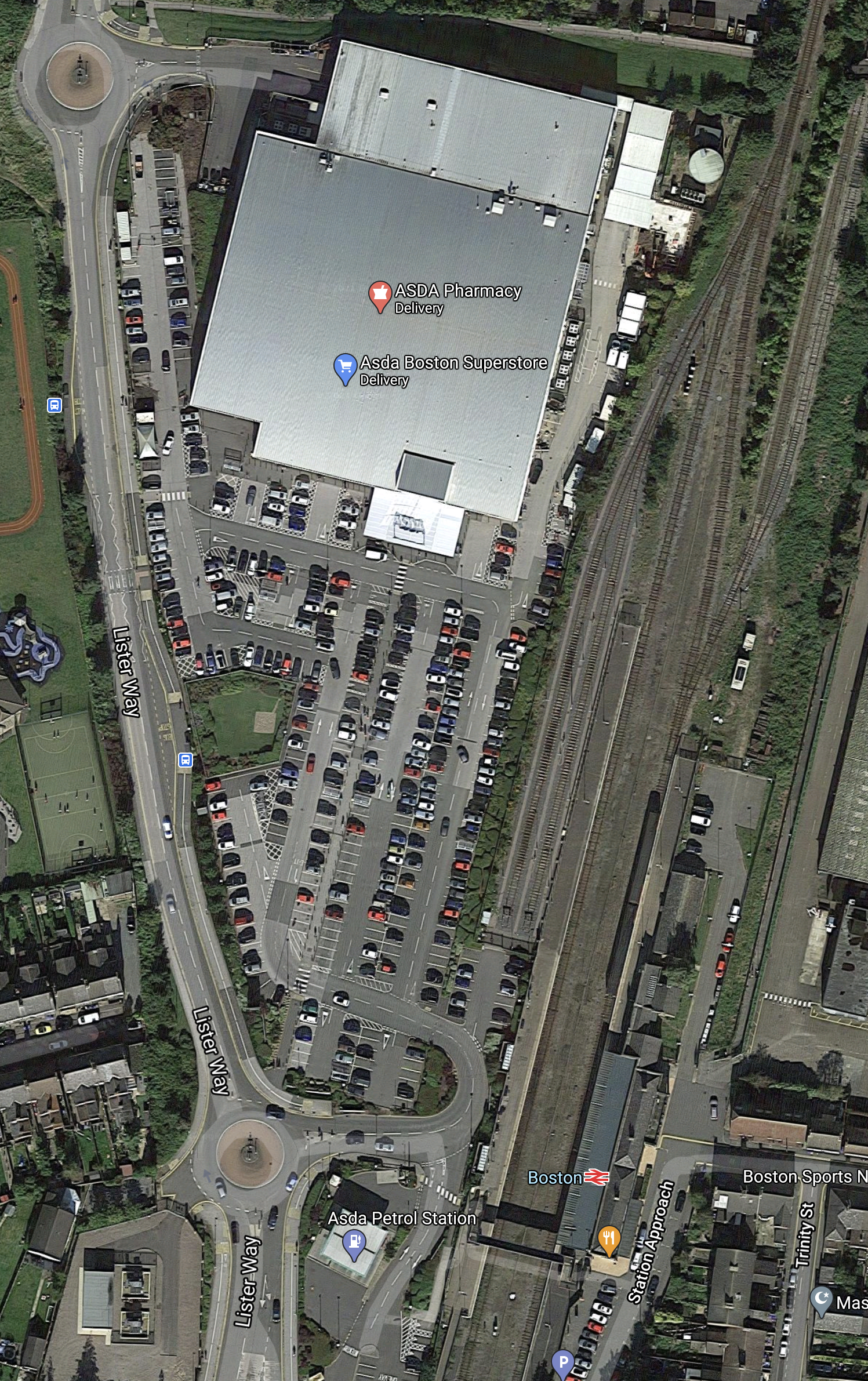
Note.
- The station has only two platforms.
- It looks like there were two North-facing bay platforms.
A charging system would be added to charge the trains.
The other obvious train for the route, would be Alstom’s Class 600 train, which is powered by hydrogen.
This is a visualisation of the train.
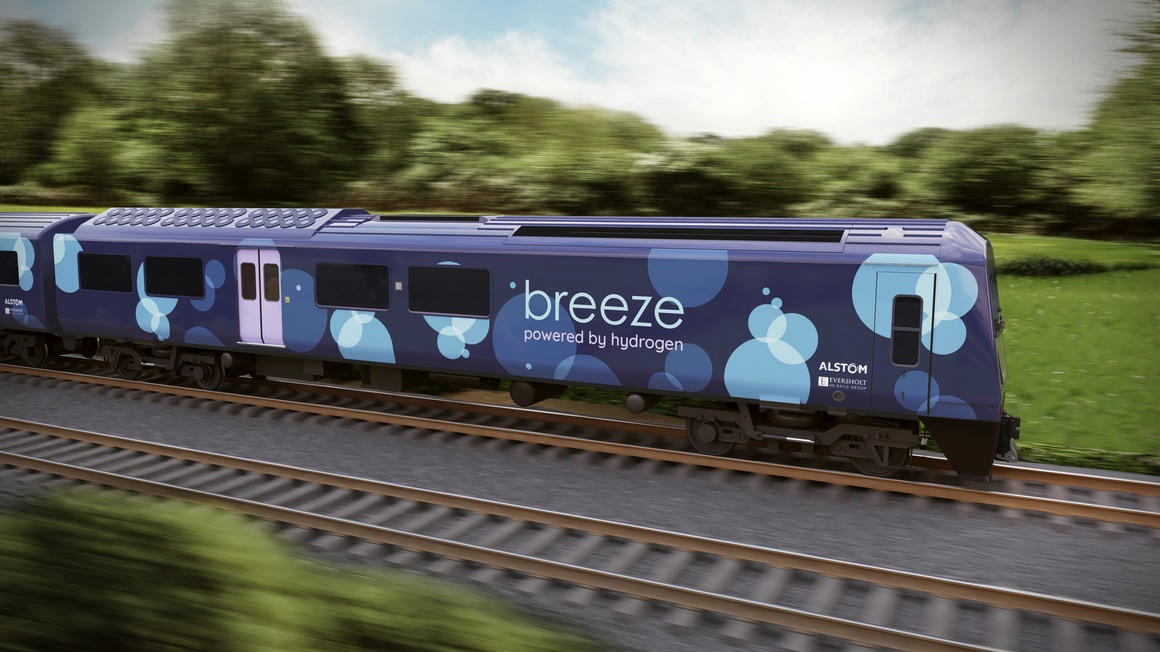
The specification has not been published yet, so there is no idea of the operating speed, although the range will be several hundred miles.
I speculated about the train in Breeze Hydrogen Multiple-Unit Order Expected Soon.
- There will be plenty of hydrogen available in Lincolnshire if the Humber Zero project goes to plan.
- Trains may be able to do several trips between refuelling.
- Trains will not need any infrastructure at Boston.
The forsby and Louth route would be an ideal route for both trains.
The Hitachi product will probably be slightly larger, faster and new!
First French Region Signs Hydrogen Train Contract
The title of this post, is the same as that of this article on the International Railway Journal.
This is the introductory paragraph.
The Bourgogne-Franche Comté region has signed a contract with Alstom, through operator French National Railways (SNCF), for the supply of three Coradia Polyvalent electro-hydrogen dual-mode multiple units.
These are some points from the article.
- The three trains are from an order for 14 from four French regions.
- The trains can use 1500 VDC and 25 KVAC electrification.
- They will be able to use hydrogen power, where there is no electrification.
- Range on hydrogen will be 400-600 km.
- Operating speed will be up to 160 kph.
- Trains will be four cars, with a capacity of 220 passengers.
- Trains will start test running in 2024 on the 19km non-electrified Auxerre – Laroche – Migennes line.
As with the Alstom Class 600 hydrogen trains for the UK, deliveries don’t seem to be fast.
I wrote Hydrogen Trains Ready To Steam Ahead in January 2019. This is the first few paragraphs.
The title of this post is the same as that of an article in today’s copy of The Times.
This is the first two paragraphs.
Hydrogen trains will be introduced in as little as two years under ambitious plans to phase out dirty diesel engines.
The trains, which are almost silent and have zero emissions, will operate at speeds of up to 90 mph and release steam only as a by-product. The new trains, which will be called “Breeze” will be employed on commuter and suburban lines by early 2021.
Wikipedia is now saying, that these trains will enter service in 2024.
As Alstom haven’t got any orders for the train, I will be very surprised if they achieve that date.
Is it Alstom, French project management or problems with hydrogen?
I don’t think it’s anything to do with hydrogen, as the Germans built the successful iLint for Alstom and Birmingham University put together a hydrogen demonstration train in double-quick time.
Given all the problems that the French are having with rolling out the Covid-19 vaccine could it be that the French have a Can’t Do! attitude, rather than most other countries, which seem to have a Can Do! attitude.
Are Hydrogen-Fuelled Vehicles A Waste Of Our Time And Energy?
The title of this post, is the same as that of this article on Engineering & Technology, which is the magazine of the Institution of Engineering and Technology. So it should be authoritative.
This is the concluding paragraph.
Cars account for 61 per cent of surface transport emissions, HGVs only 17 per cent, buses 3 per cent, and rail 2 per cent (CCC, December 2020) so for cost/benefit it cannot be worthwhile switching to hydrogen fuel cell buses and trains. Through any impartial lens of engineering science, hydrogen fuel cell cars do not appear to be a transport winner and the Government should revisit decisions it has made about related funding. But then there is political virtue signalling.
It is a must-read contribution to the debate, as to whether hydrogen or battery power, is best for surface transport.
I don’t believe there is a simple answer, because for some applications, battery electric power is not feasible because of reasons of power or range.
- Would a battery-electric truck, be able to haul a forty-four tonne load between the Channel Tunnel and Scotland?
- Would a battery-electric locomotive be able to haul a thousand tonne aggregate or stone train for anything but a few tens of miles?
- Is it possible to design a a battery-electric double-deck bus, that can carry seventy passengers?
I believe there are applications, where battery-electric is not a feasible alternative to the current diesel traction.
It is worth noting, that truck-maker; Daimler is planning to have both battery and hydrogen heavy trucks in its product line.
Users will choose, what is the best zero-carbon transport for their needs.
The Black Cab Driver’s Answer
It is always said, that, if you want to know the answer to a difficult question, you ask the opinion of a black cab driver.
So as the new electric black taxis, are the most common electric vehicle, that the average Londoner uses, what do the guys up-front say about their expensive vehicles.
- Regularly, cab drivers complain to me about the range and having to use the diesel engine to charge the battery or power the car.
- Some suggest to me, that hydrogen might be a better way to make the vehicles zero-carbon.
I think they may have a point about hydrogen being a better method of powering a black taxi, when you look at the pattern of journeys and the battery size and charging limitations of the vehicle.
These limitations may reduce in the future, as the technology gets better, with higher density batteries and faster charging.
We could even see a design and sales war between battery and hydrogen black cabs.
It always pays to follow the money!
Italy’s Hardest-Hit Covid-19 Region To Become ‘Hydrogen Valley’
The title of this post, is the same as that of this article on Energy Live News.
This is the first paragraphs.
Lombardy, Italy’s hardest-hit Covid-19 region, will soon become home to the ‘country’s first hydrogen valley’.
Enel Green Power has signed a memorandum of understanding (MoU) with the Italian transport group FNM, to purchase new hydrogen-powered trains, replace the current diesel-powered trains and build hydrogen production facilities powered by renewable energy.
These facilities will be constructed to support the journeys of hydrogen trains.
It sounds like good thinking.
Germany Tasks TÜV With Finding Standards For H2 Trains
The title of this post, is the same as that of this article on Electrive.
This is the introductory paragraph.
TÜV Rheinland InterTraffic has been commissioned to develop a standard for hydrogen applications in rail vehicles. Until now, authorities have had to rely on technical regulations and standards from the automotive industry for conformity assessments.
As hydrogen trains have entered service in Germany and have been trialled on rail networks in Austria, Italy, The Netherlands and the UK, this is probably about time, especially as Spain and Switzerland will soon be joining the club.
As most of Europe has the same loading gauge, it looks to me that the German standard will be a de-facto European standard, that could also be used for countries like Australia, Canada and the United States.
But in the UK, we have a smaller loading gauge, so will the German standard be application to the UK?
As some German S-bahn trains are not much bigger than say a Siemens-built Class 700 train, I suspect that the Germans could write a dual standard, that covered the following.
- Standard UK-sized trains.
- Standard EU-sized trains.
- Standard German S-bajm-sized trains.
After all, if it could be arranged, one world-wide standard would probably be a good idea.
Alstom Calls For Hydrogen Rail Fleets In The UK
The title of this post, is the same as that of this article on H2View.
These are the first three paragraphs.
Alstom has called for a £10bn investment programme in UK rail and mass transit systems, through which it would like fleets of clean, zero emission hydrogen trains to replace pouting diesel alternatives.
Titled: The UK’s New Green Age; A Step Change in Transport Decarbonisation, the report states that 300-400 hydrogen trains could be launched simply with a like for like replacement of diesels and would deliver huge environmental benefits.
The report was released after recent research revealed that the UK is lagging behind surrounding countries in comparable infrastructure. For example, France has over double the number of mass transit systems as the UK, whilst Germany has four.
There is a rapidly developing argument between the proposers of hydrogen and battery trains.
Consider.
- Both types of train can ve a straight replacement for diesel trains, often with very little modification to stations.
- As both hydrogen and battery trains have electric traction, they could have improved performance, so tracks and signalling might need upgrades to make full use of that performance to provide a better service for passengers.
- Hydrogen trains will need a refuelling strategy.
- Hydrogen trains need to carry a large tank of hydrogen.
- Battery trains may well need charging systems or extra lengths of electrification for charging.
- The UK will have plenty of green hydrogen and zero carbon electricity.
I also believe that hydrogen and battery trains designed from scratch will be much better than conversions of existing stock.
Conclusion
I think the environment will win this argument.
I can see cost and local circumstances deciding, whether to use battery or hydrogen trains.
For instance, Ipswich and Norwich, where there are an electrified main lines, might become battery train hubs, whereas Middlesbrough, where there is a plentiful supply of hydrogen, might use hydrogen trains for local services.

