The Problem Of Electrifying Leicester Station
This post is my attempt to try and explain the problem of electrifying the Midland Main Line through Leicester station.
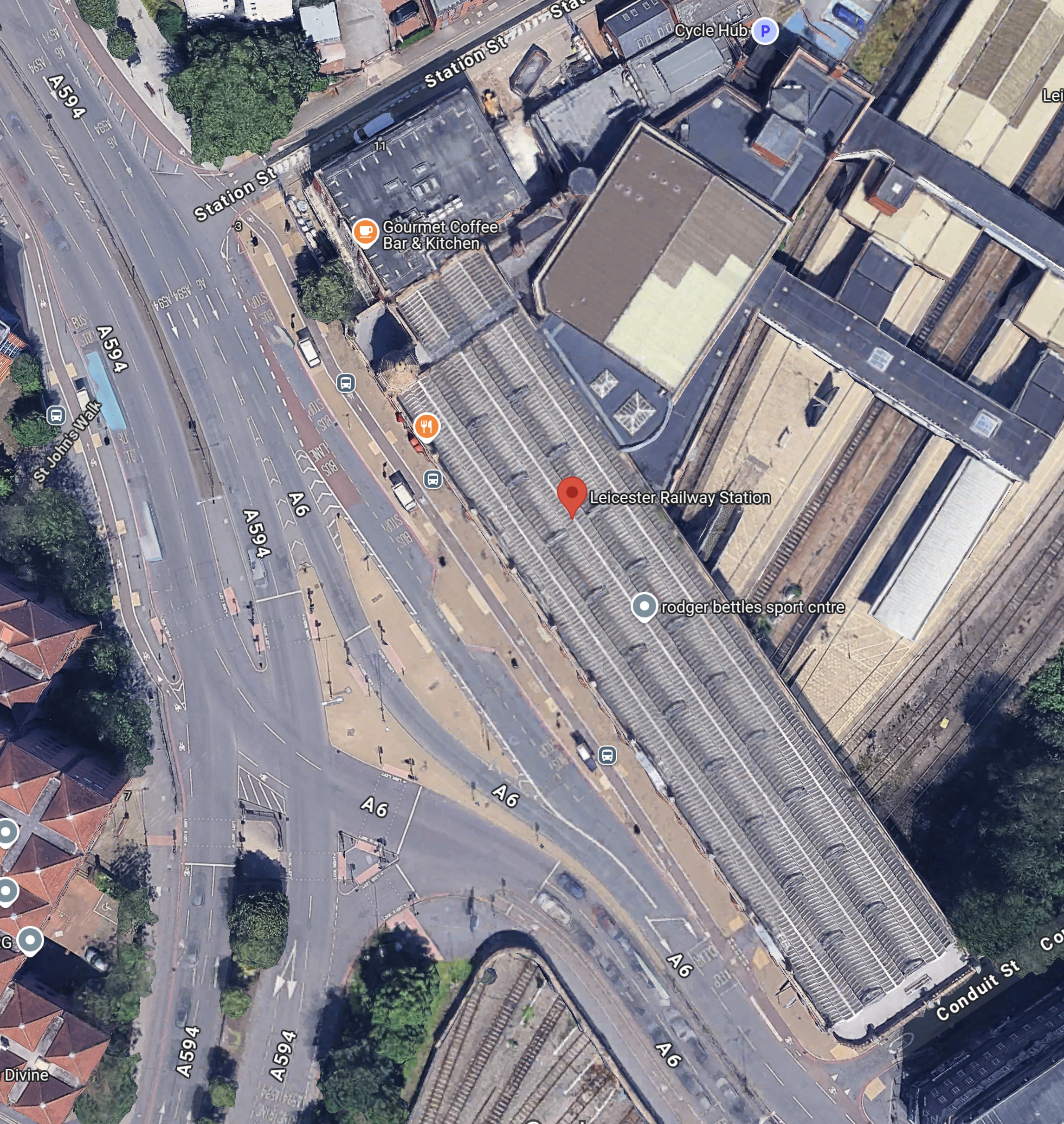
This Google map shows the Southern end of the station.
This OpenRailwayMap shows the station.
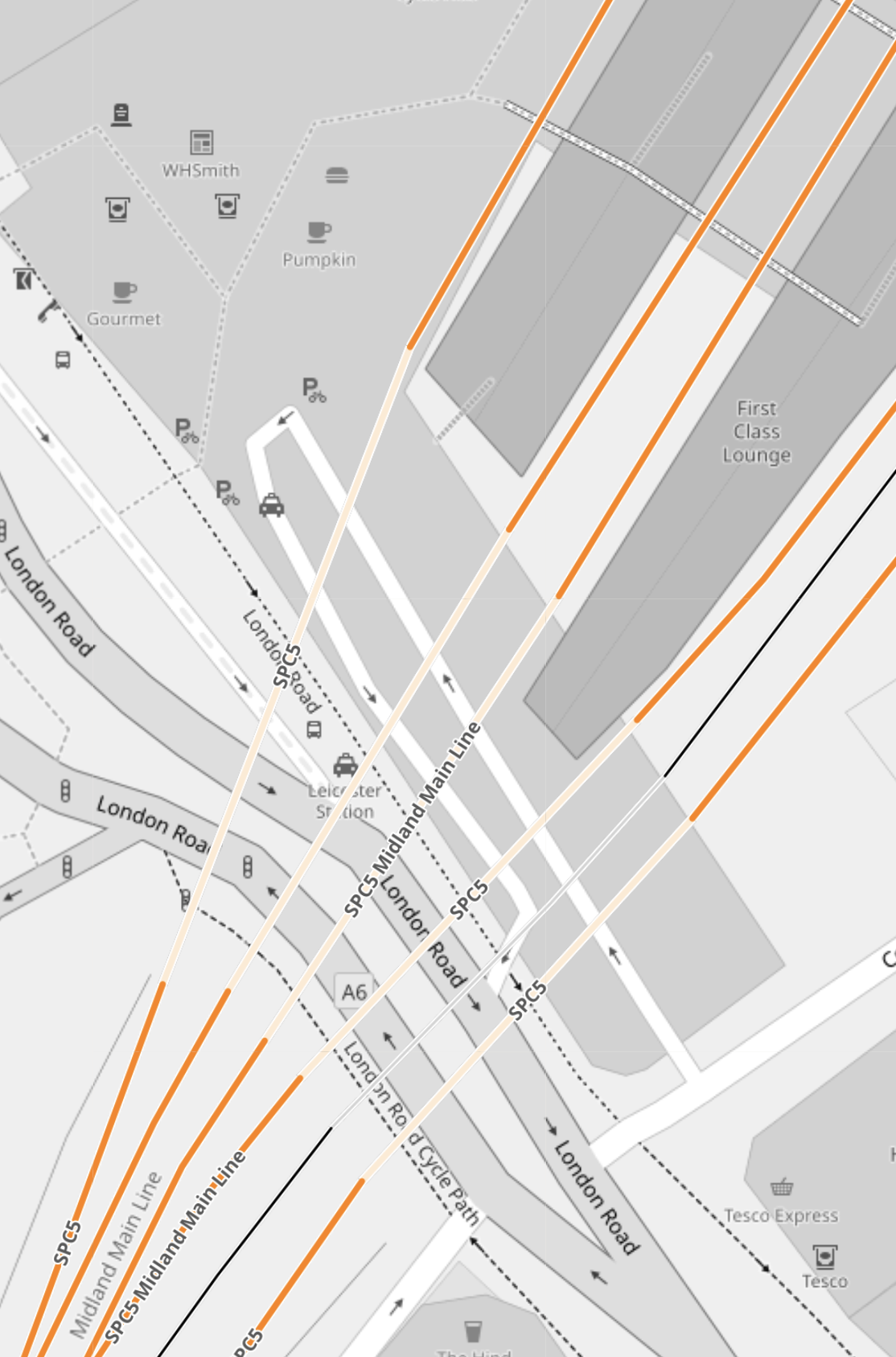
Note.
- There appear to be five tunnels under the station buildings and London Road.
- What is the tunnel going underneath the tracks used for?
Leicester station has a Grade II Listed frontage.










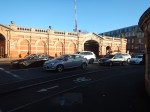



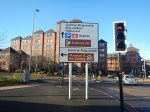


Note.
- It is an impressive Victorian station.
- The station building is on a bridge over the tracks.
- The station is also on one of the main roads through Leicester.
- The road layout is very complicated.
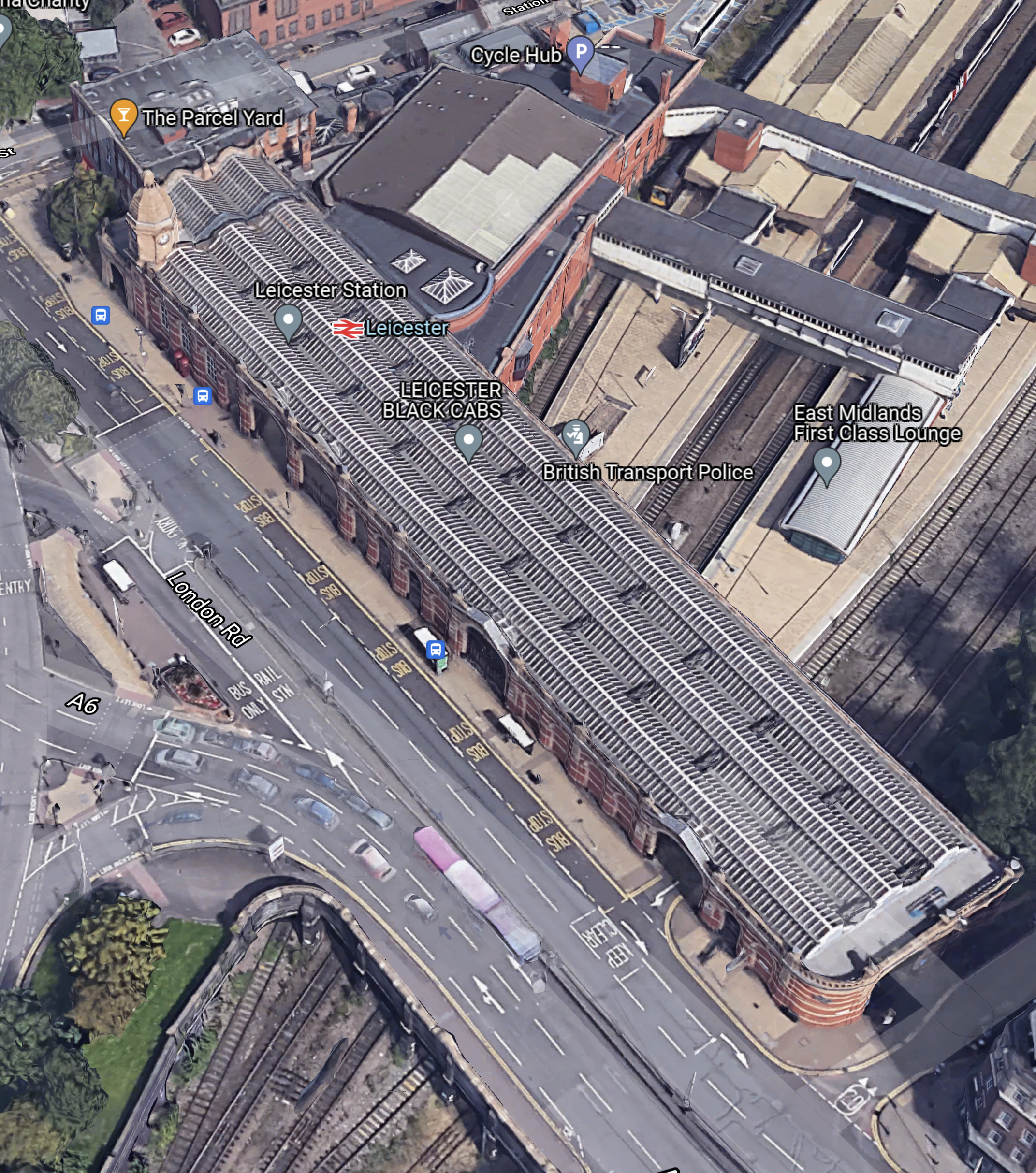
This 3D Google Map, shows an aerial view of the station.
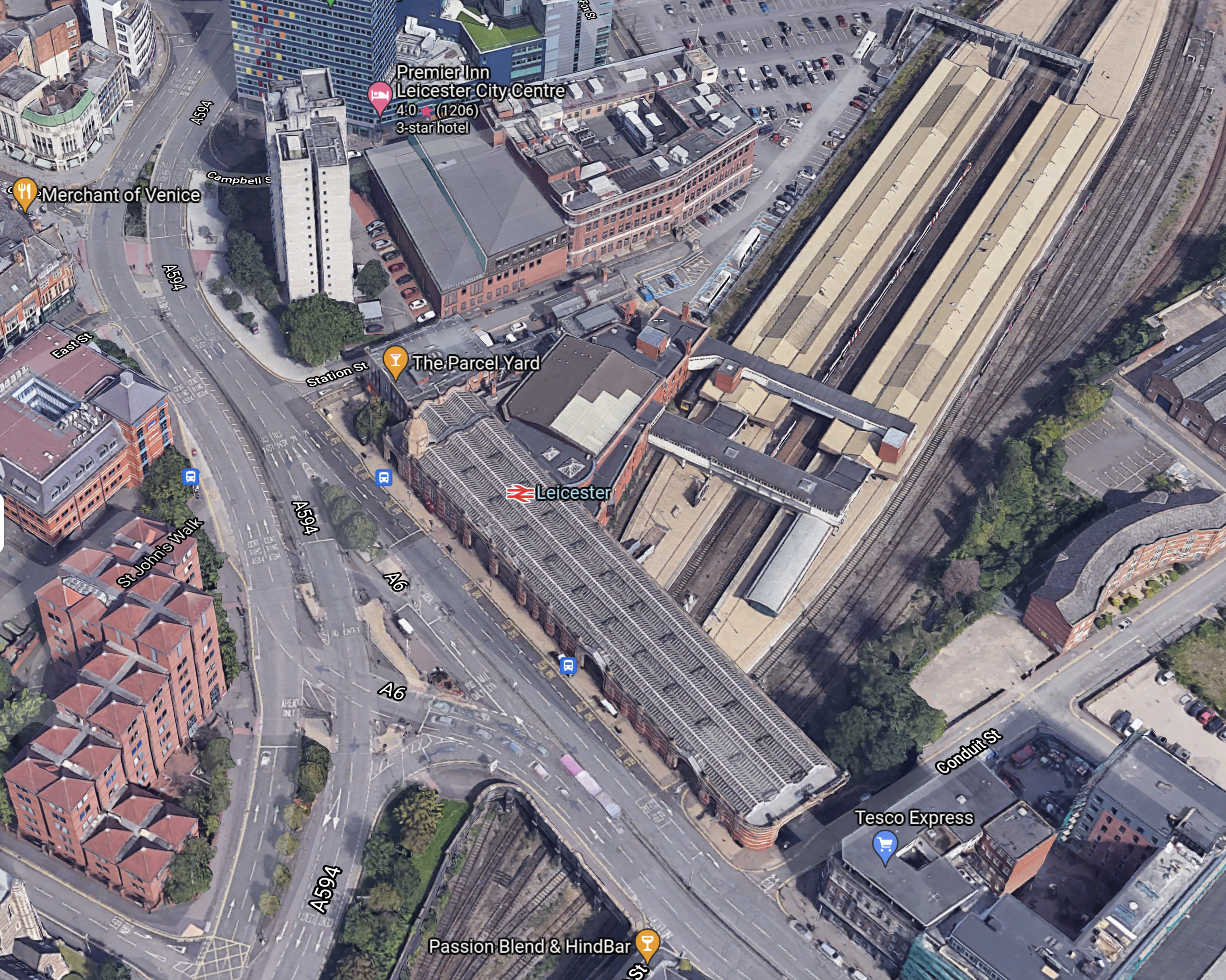
Note.
- There four platforms, which are numbered 1-4 from the left.
- The expresses between London and Derby, Nottingham and Sheffield use the two middle tracks.
- Other main line and East-West services use the outside platforms.
- There is an avoiding line for freight services.
- 5. The step-free footbridge is clearly visible.
This second 3D Google Map, shows an enlargement of the frontage of the station.
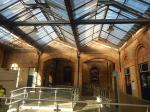
These pictures show what is inside the building at the front of the station.




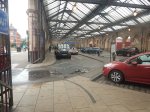

The building would appear to be a Grade II Listed taxi rank and free twenty-minute car park.
There are plans to increase the capacity of the station.
- A fifth platform will be added.
- Three miles of quadruple track will be be built South of the station.
- The Midland Main Line was also to be electrified.
Real Time Trains indicates that the distance between Leicester and Wigston North junction is 3.1 miles.
This OpenRailMap shows that section of track.
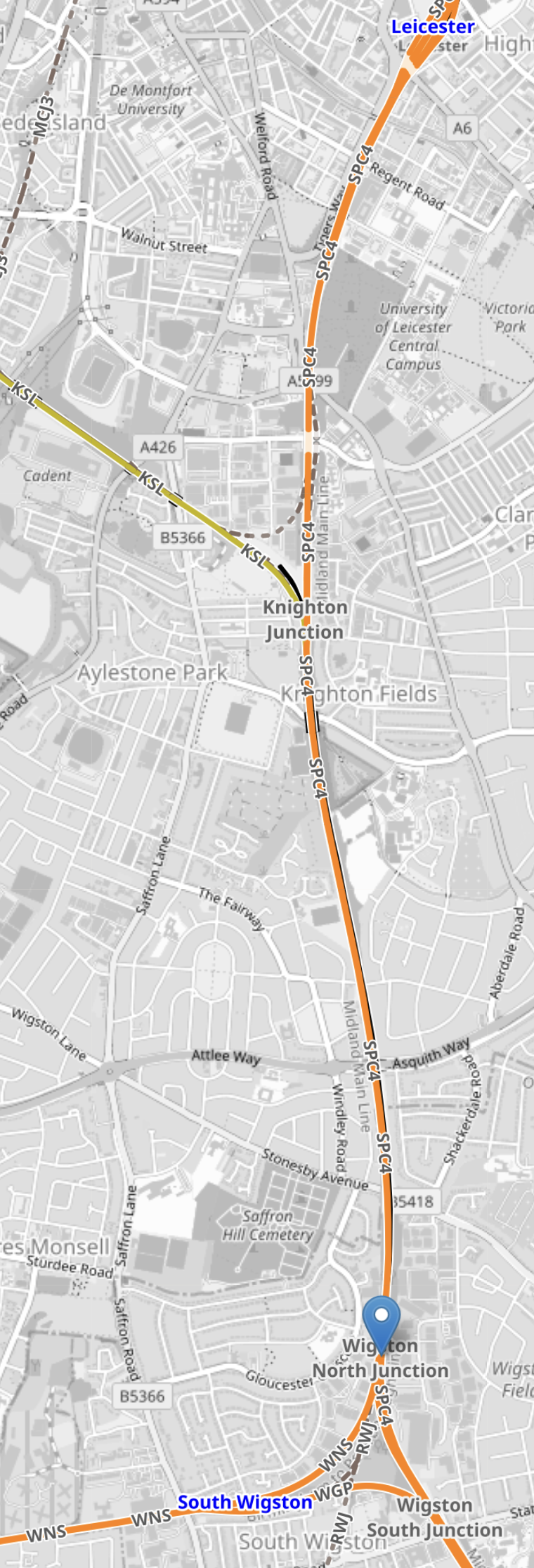
Note.
- Leiester station is at the top of the map.
- Wigston junction is the triangular junction at the bottom of the map.
- Wigston North Junction is indicated by the blue arrow.
- OpenRailwayMap only shows a 100 mph Northbound track and a 90 mph Southbound track on the route.
It looks to me, that four tracks between Leicester and Wigston North junction would mean that trains could expedite arrivals to and departures from Leicester to and from the South.
South From Wigston Junction
Consider.
- London St. Pancras and Kettering is a four-track railway as far as the Corby Branch.
- North of Luton the slowest maximum speed is 100 mph, with much of the line rated at 110 mph plus.
- Wigston North junction and Luton station is 65.8 miles.
- Current Class 222 diesel trains typically take 40 minutes.
- This is an average speed of 98.7 mph.
- An average speed of 110 mph between Wigston North junction and Luton station would take 36 minutes.
- An average speed of 125 mph between Wigston North junction and Luton station would take 31.6 minutes.
- An average speed of 130 mph between Wigston North junction and Luton station would take 30.4 minutes.
I believe with track improvements and digital signalling, there are time savings to be gained between St. Pancras and Leicester stations.
Ultimately, if the 140 mph design speed of the Class 810 trains under digital signalling could be maintained, this would do the following.
- Push the St. Pancras and Leicester times under an hour.
- Push the St. Pancras and Nottingham times under ninety minutes.
- Push the St. Pancras and Sheffield times under two hours.
Batteries would only be used on the three miles between Wigston North junction and Leicester station.
Could Bi-Mode Trains Be Used?
They could be used initially and to prove if the partial electrification works.
But each train has four diesel engines and sometimes they will be working in pairs through the stations between Leicester and Sheffield.
Passengers will take a dim view of being covered in lots of diesel smoke, when they have been promised clean, zero-carbon electric trains.
But the battery-electric trains will be much quieter and pollution-free.
This page on the Hitachi Rail web site is entitled Intercity Battery Trains.
New Infrastructure Needed
The only infrastructure needed will be that which will support the new trains.
The Class 810 trains will be maintained at Etches Park at Derby.
If they are battery-electric trains, there may be some strategically-placed chargers, which typically would be a short length of overhead wire.
Midland Main Line Electrification – 4th Jan 2022
I took these pictures from the train today, as I went to Leicester.




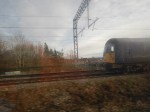
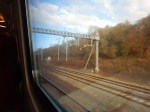
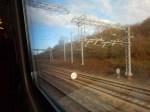



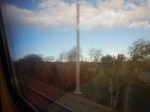

Note.
- We overtook the Class 360 train to Corby, just before it left the main line at Kettering North junction.
- Once past Kettering North junction, the Midland Main Line is only two tracks as far as Leicester station.
- A lot of the gantries on the two slow lines seem tall.
- At least twenty gantries had been installed North of the junction.
Some of the new gantries looked to be lighter than those South of the junction, but then they are only supporting electrification for two tracks, rather than four.
This Google Map shows the junction.
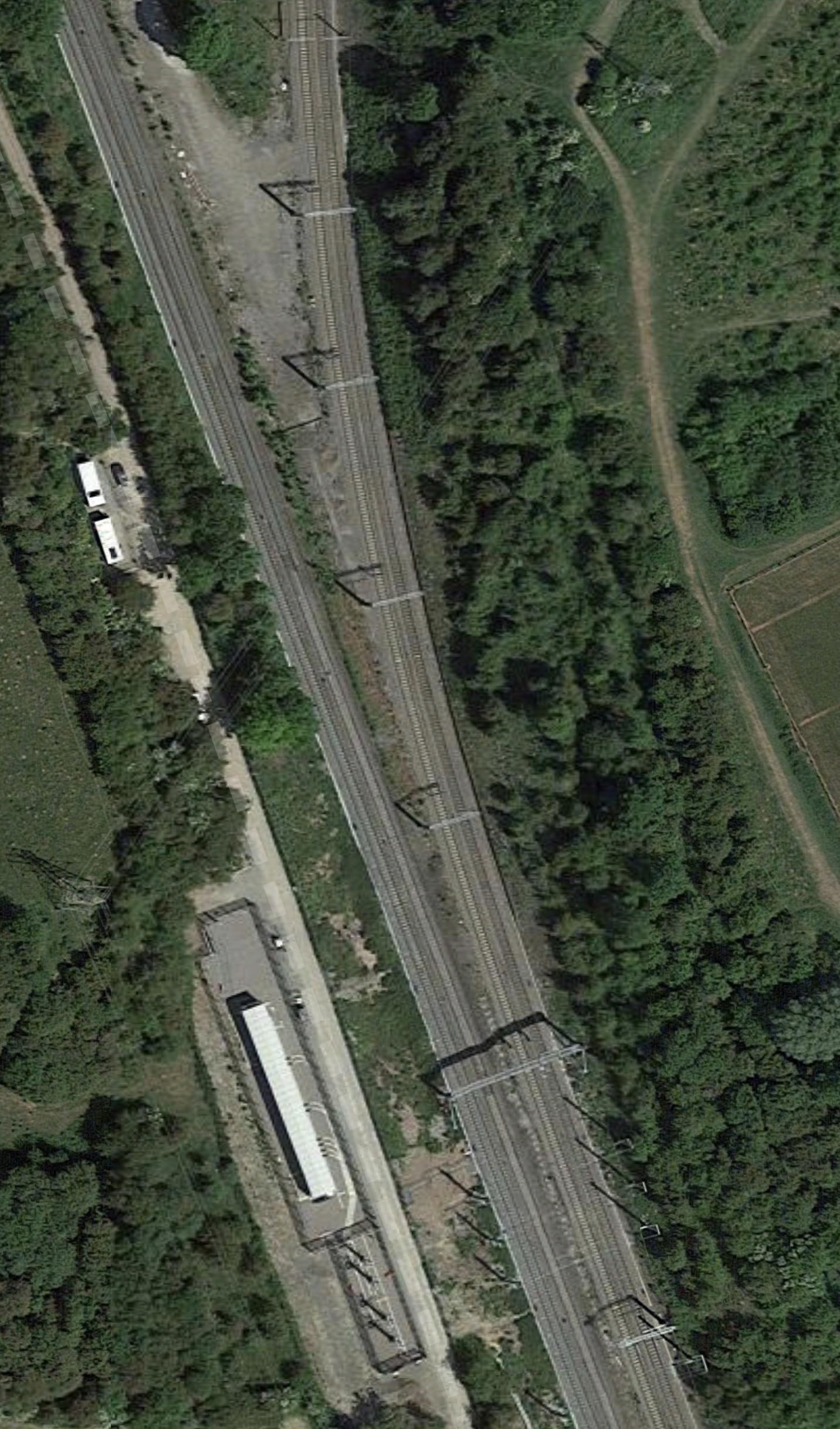
In this section, my train overtook the train to Corby.
- The track going North-West goes to Leicester.
- The track going North-East goes to Corby.
- The track going South goes to Kettering.
- It looks like to the West of the Midland Main Line is a large electricity sub-station.
In the tenth of my pictures you can see the three vertical poles opposite the sub-station, which can be picked out in the map.
Testing Begins On Midland Main Line Electrification
The title of this post, is the same as that of this article on Rail Magazine.
- From the article, it looks like the first part of mechanical testing has been completed as planned and unpowered pantograph runs have been performed at up to 110 mph.
- It does seem to me, that this thirty miles of electrification has avoided the troubles that have plagued similar projects in recent years.
Perhaps the good progress on this electrification, is making the government think again about early electrification of all of the Midland Main Line
In Hopes Rekindled Of Full Midland Main Line Electrification. I showed how battery electric Class 810 trains would be able to work the route.
This was my conclusion of that earlier post.
It appears that both the Nottingham and Sheffield services can be run using battery electric Class 810 trains.
- All four diesel engines in the Class 810 trains would need to be replaced with batteries.
- The route between Clay Cross North Junction and Sheffield station, which will be shared with High Speed Two, will need to be electrified.
- Charging facilities for the battery electric trains will need to be provided at Nottingham.
On the other hand using battery electric trains mean the two tricky sections of the Derwent Valley Mills and Leicester station and possibly others, won’t need to be electrified to enable electric trains to run on the East Midlands Railway network.
Will it be the first main line service in the world, run by battery electric trains?
There was one thing, that wasn’t available, a month ago, when I wrote that post – A charging system for battery electric trains, that could be installed at Nottingham.
In Vivarail’s Plans For Zero-Emission Trains, I report on Adrian Shooter’s plans for Vivarail, which are outlined in a video by Modern Railways.
Ar one point he says this see about Vivarail’s Fast Charge system.
The system has now been given preliminary approval to be installed as the UK’s standard charging system for any make of train.
I may have got the word’s slightly wrong, but I believe the overall message is correct.
So could we see a Hitachi Class 810 train using Vivarail’s patented Fast Charge system at Nottingham?
In Interview: Hitachi’s Nick Hughes On Driving Innovation In Rail Propulsion, Nick Hughes of Hitachi is quoted as saying.
Rail is going to become increasingly digitised and integrated into other sectors involved in smart cities, mobility-as-a-service and flexible green grid. Therefore, Hitachi Rail won’t be able to stay at the forefront of innovation by its self. This is why we are focused on building partnerships with other like-minded, innovative, clean tech companies like Hyperdrive Innovation, Perpetuum and Hitachi group companies such as Hitachi ABB.
Does Vivarail fit that philosophy? In my view, it does!
This Hitachi infographic gives the specification of their Regional Battery Train.

Note.
- The range on battery power is 90 km or 56 miles at up to 100 mph.
- Class 810 trains could be converted to battery electric trains by replacing the diesel engines with batteries.
- As the electrification has reached Kettering. there is only 55 miles between London St Pancras and Nottingham without electrification.
I could see Class 810 trains running between St. Pancras and Nottingham on delivery, provided the following projects have been completed.
- Hitachi have been able to give the Class 810 trains a range of say 60 miles on batteries.
- Hitachi have modified their trains, so they can be recharged by a Vivarail Fast Charge system in fifteen minutes.
- Vivarail have installed a Fast Charge facility at Nottingham station.
Network Rail are planning to extend the electrification from Kettering to Market Harborough, which would reduce the distance without electrification to under 50 miles. This would make running battery electric trains between London St. Pancras and Nottingham even easier.
Expanding The Network
If I am putting two and two together correctly and Hitachi have turned to Vivarail to provide a charging system or a licence for the use of the technology, I am sure, it would be possible to create a comprehensive network of battery electric trains.
Consider.
- Hitachi should be able to squeeze a sixty mile range at 90-100 mph from a battery-equipped Class 810 trains.
- Market Harborough and Derby are about 47 miles apart.
- Derby and Sheffield are about 36 miles apart
- Sheffield and Leeds are about 48 miles apart
- Corby and Leicester are about 41 miles apart.
Vivarail Fast Charge systems at Derby, Leicester and Sheffield would enable the following routes to be run using battery electric trains.
- London St. Pancras and Sheffield via Derby – Fast Charging at Derby and Sheffield
- London St. Pancras and Leeds via Derby and Sheffield – Fast Charging at Derby and Sheffield
- London St. Pancras and Sheffield via the Erewash Valley Line – Fast Charging at Ilkeston (?) and Sheffield
- London St. Pancras and Leicester via Corby – Fast Charging at Leicester
Note.
- The only extra electrification needed for the initial network would be between Kettering and Market Harborough.
- The Class 810 trains would all be identical.
- The Class 810 trains might even be built and delivered as battery electric trains
- Trains would also charge the batteries between London St. Pancras and Market Harborough, between London St. Pancras and Corby. and between Leeds and Wakefield Westgate.
The network can be extended by adding more electrification and Fast Charge systems.
Conclusion
The technologies of Hitachi and Vivarail seem complimentary and could result in a fully electric main line train network for East Midlands Railway.
 The Anonymous Widower