Why Did London Ever Buy the Bendy Buses?
One of the bus routes, the 141, near me, has some double-deck buses that are about ten years old. So they are not in the best of condition, but they don’t break down and take passengers, both able-bodied and disabled with ease.
Today, I was on a new Dennis Trident and from where I sat in the front, I could see the warranty plate. The chassis and bodywork got twelve years, the engine three and the gear-box five, which struck me as a firm statement of reliability by the manufacturer.
I also have the 73 or seventy-free near me, which are younger than the older 141s and are starting to look rather tatty. Given their accident record and the fact that passengers, drivers, cyclists and pedestrians don’t like them, it always puzzles me, why anybody would be stupid enough to buy the damn things in the first place?
Especially, as they are Spanish-built, whereas both Wright and Dennis Alexander buses are assembled in the UK.
What really shows up the bendy bus to me, is when I go shopping at Upper Street. I have a choice of six direct routes home, but I rarely catch a 73. I usually go in the morning, when bus loads are low, so on return on a double deck bus, I usually am able to walk easily to the back of the bus and sit with my shopping bag on the seat next to me. So I have comfortable ride home. On a bendy bus, space is so much more cramped, that I either put the bag on my lap or block the aisle with it. I have heard that new London buses will have seats wider than the legal minimum at 440 mm. For a small person like me, that means I can sit on a window seat with my shopping outside and not block the aisle seat.
We’re Really In It Now
I was also given a tour of part of the Northern Outfall Sewer at Hackney Wick.
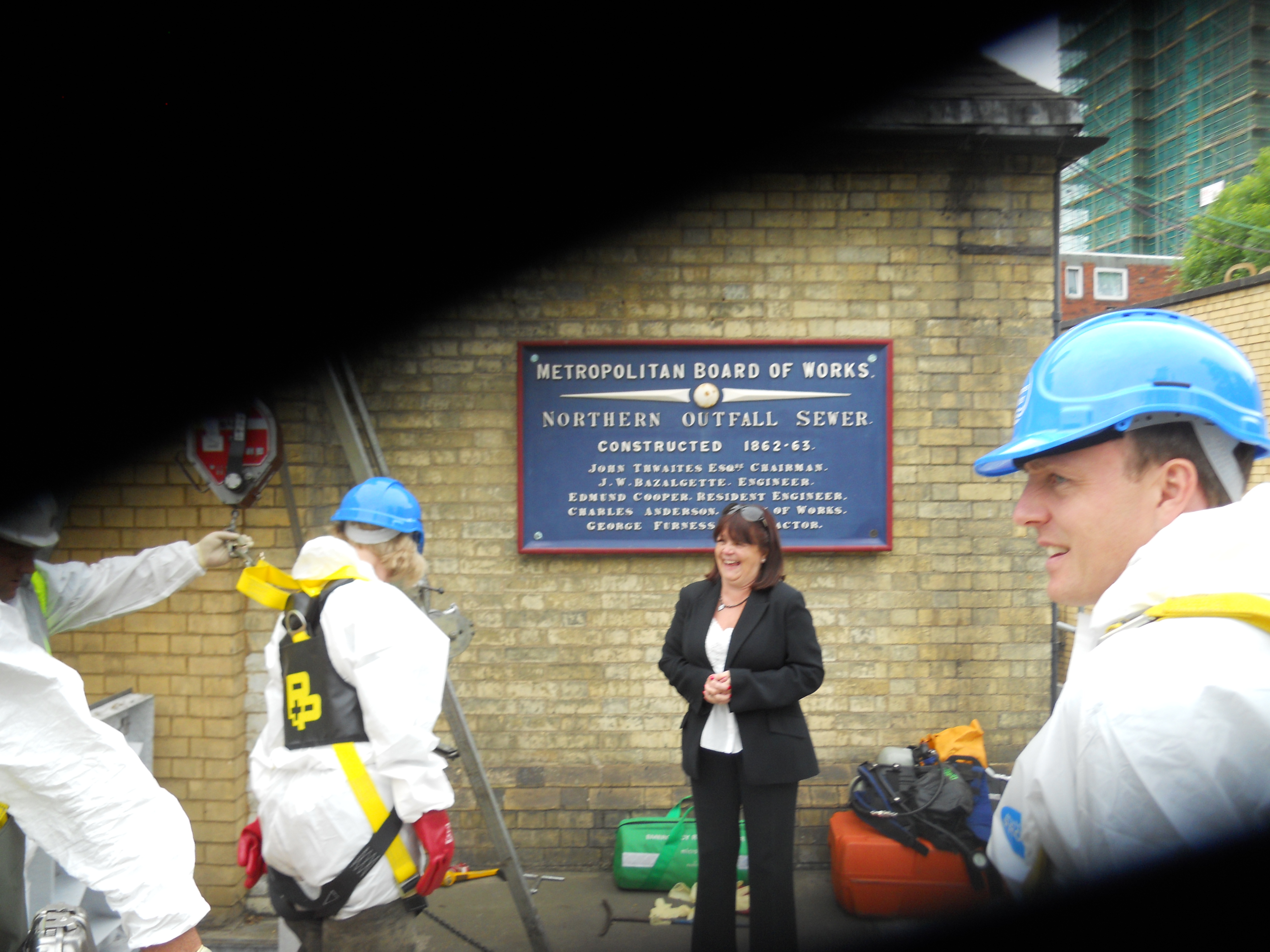
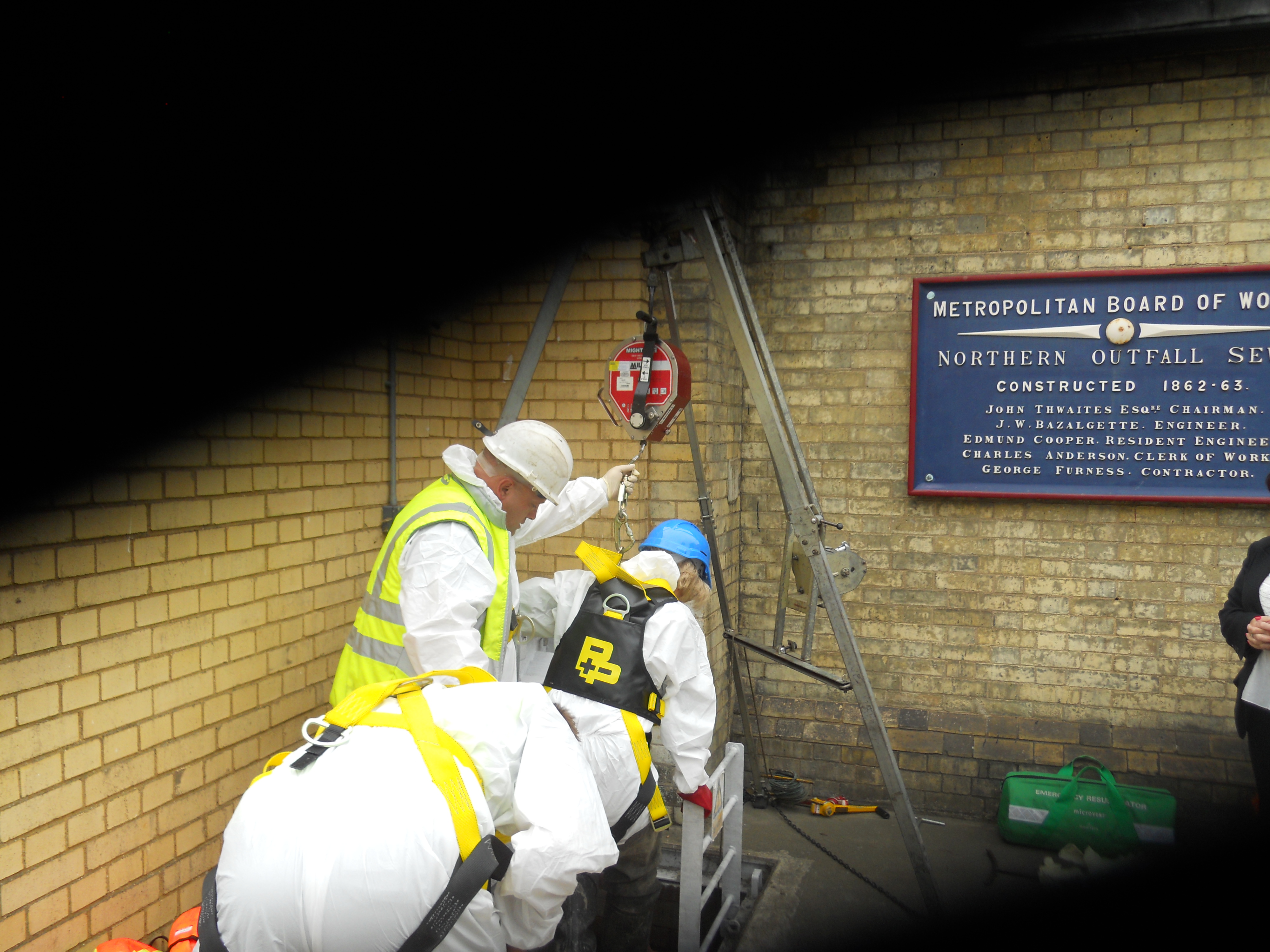
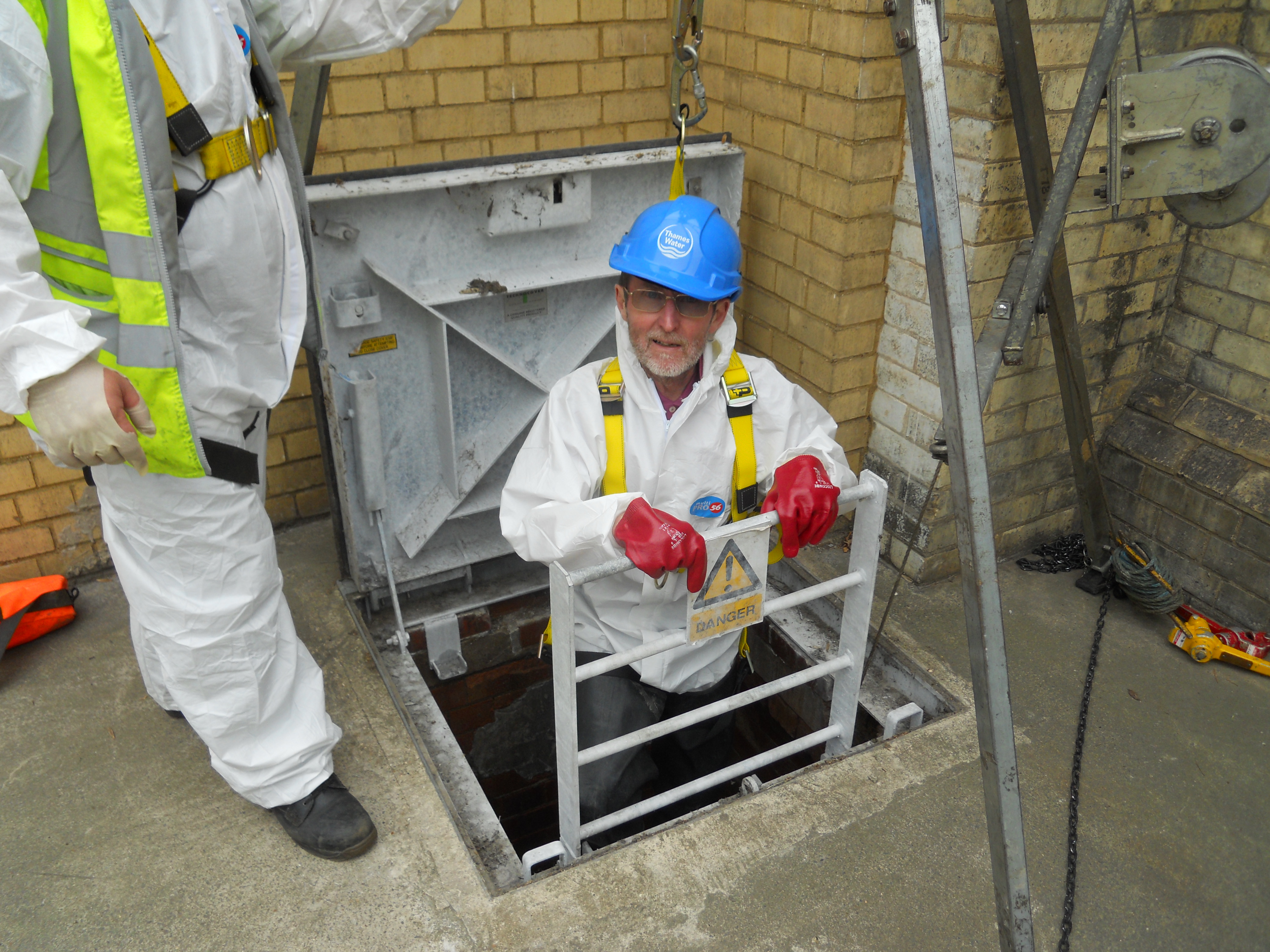
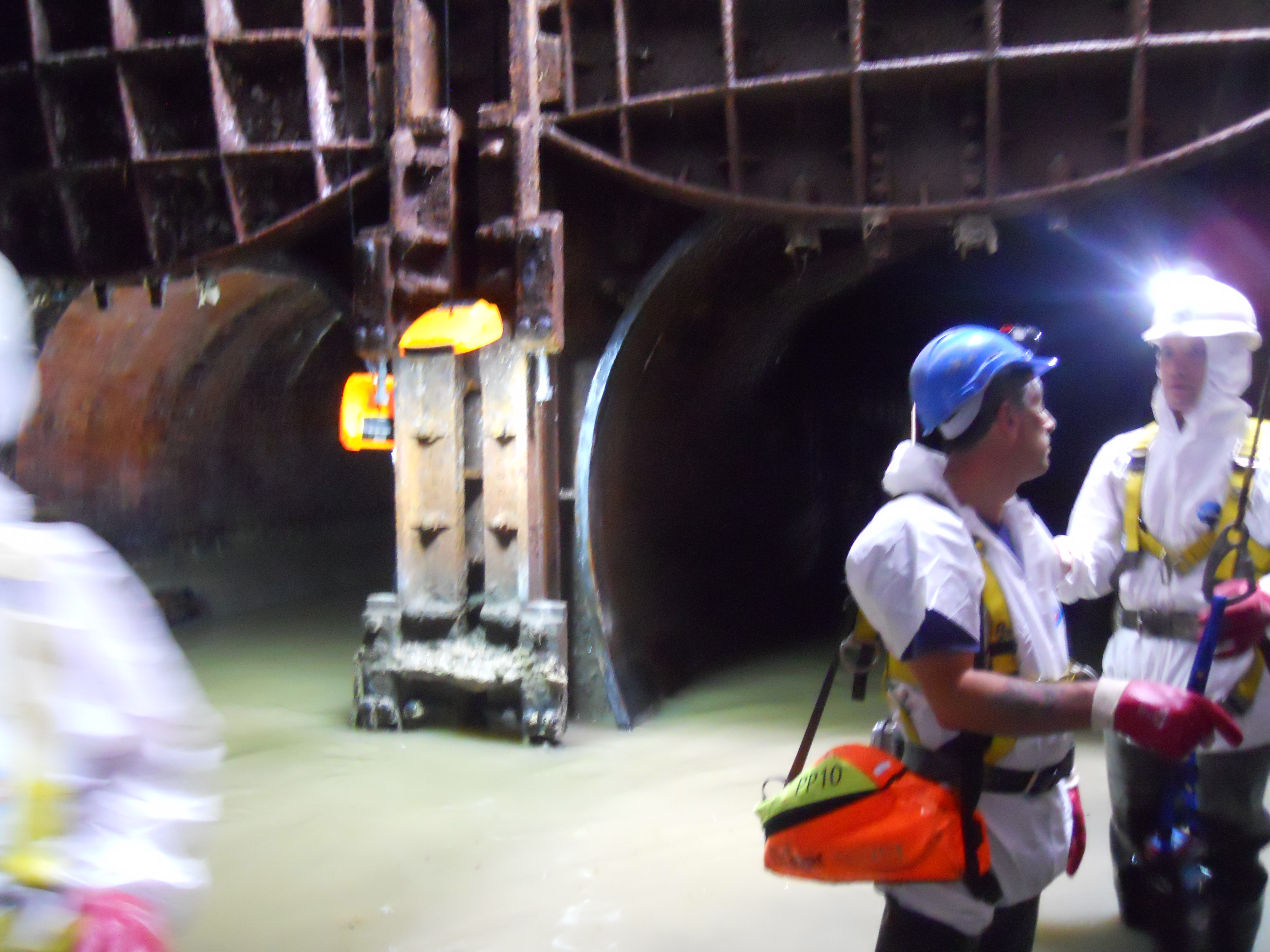
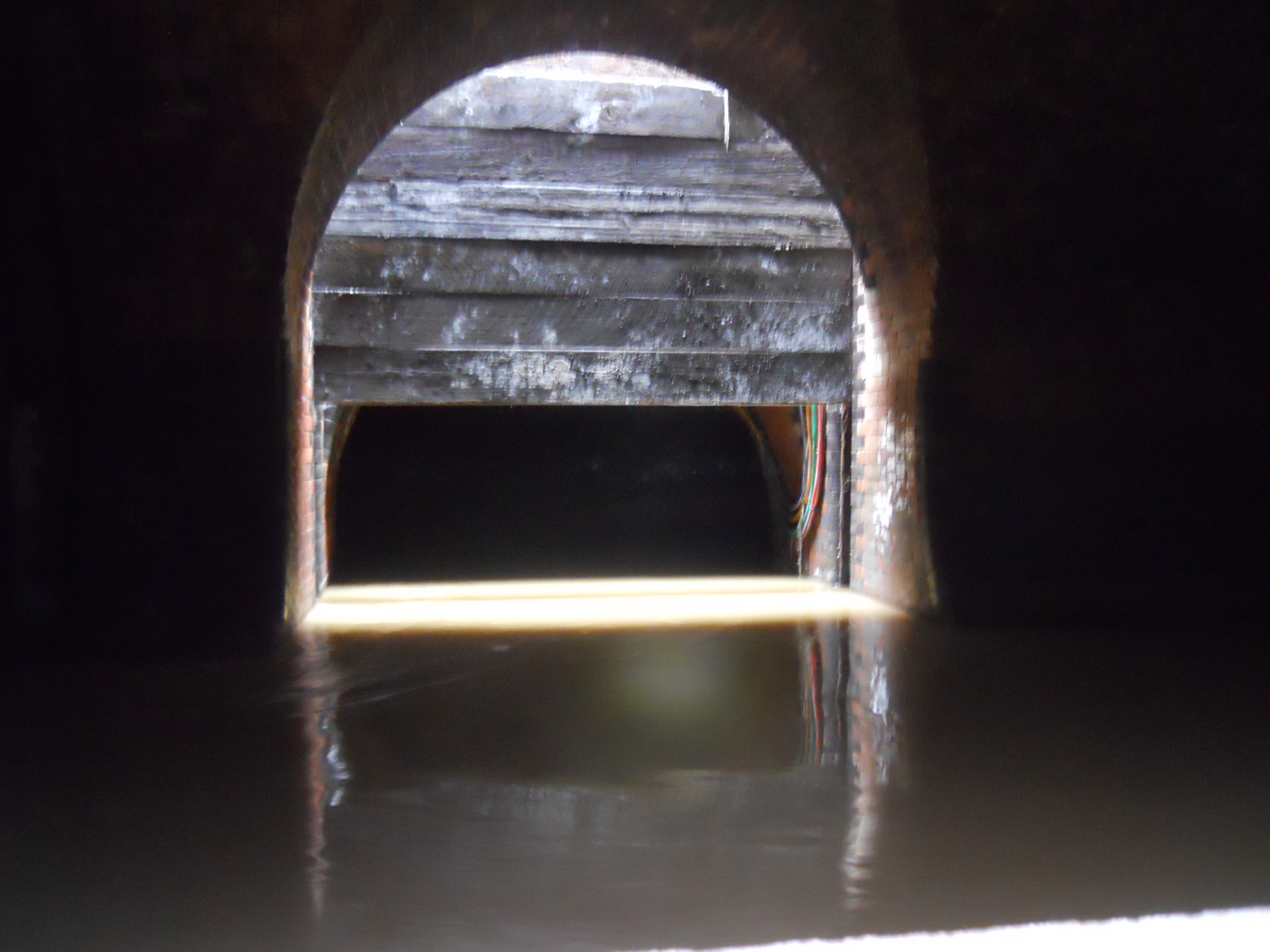
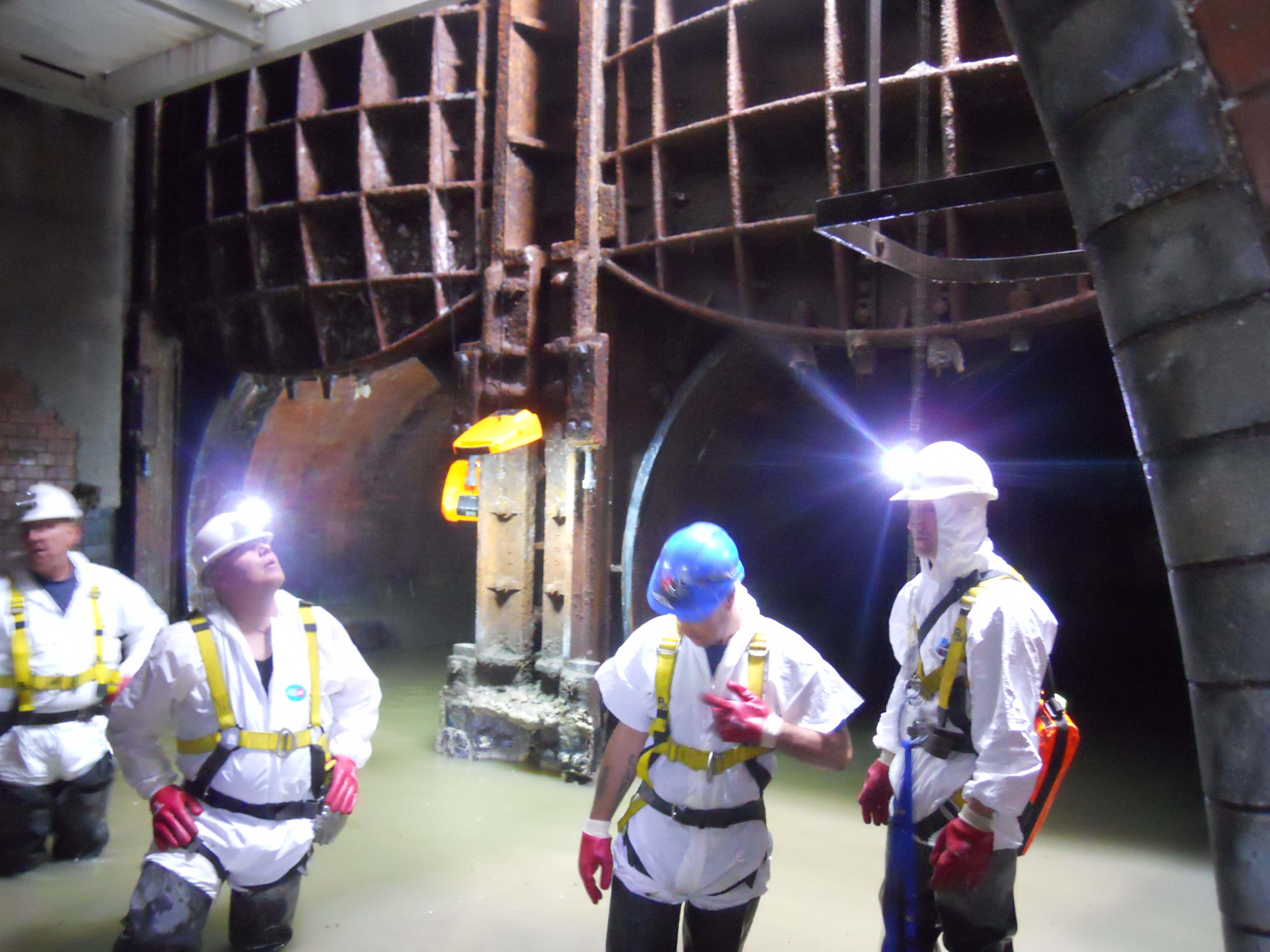

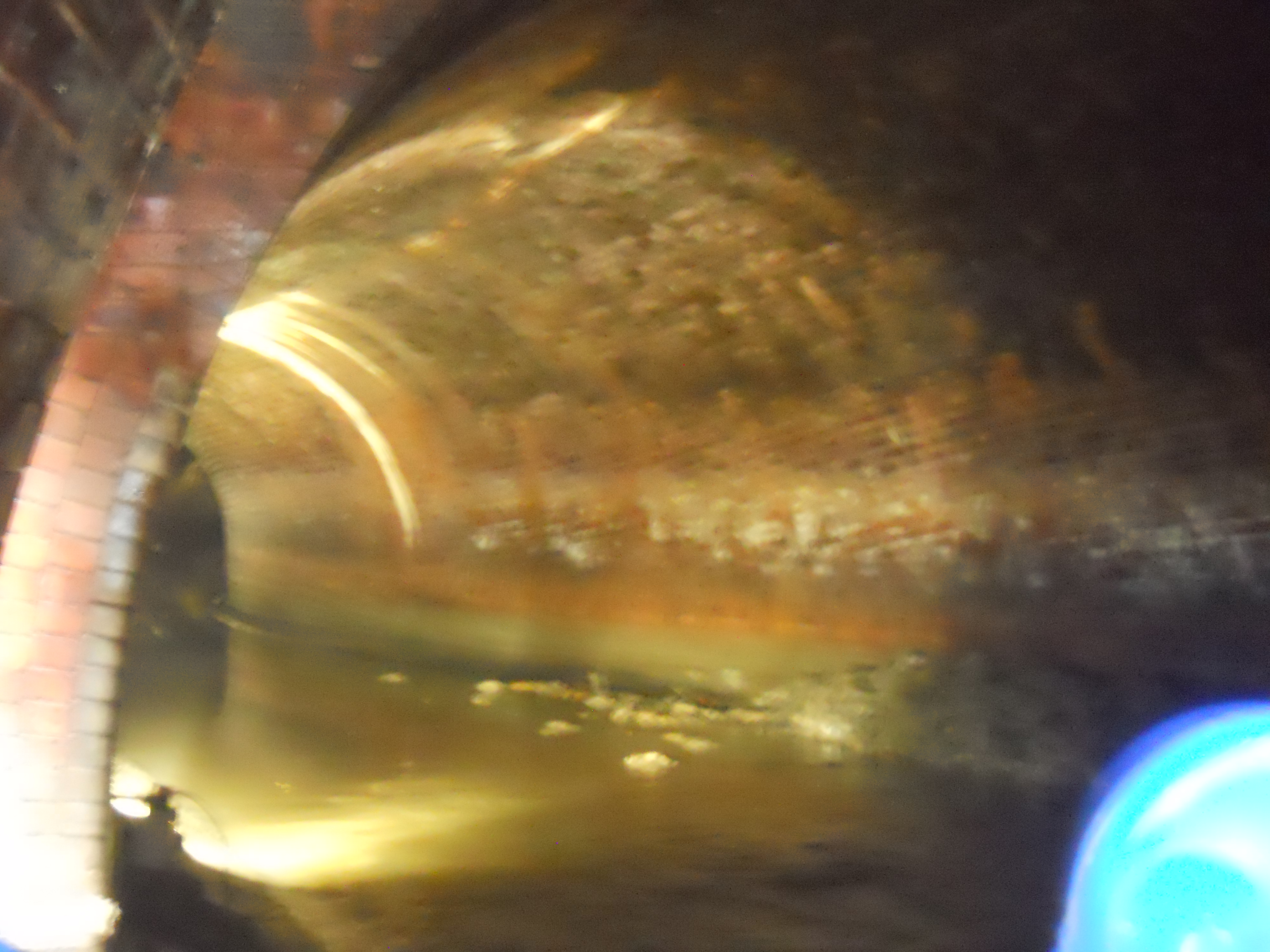
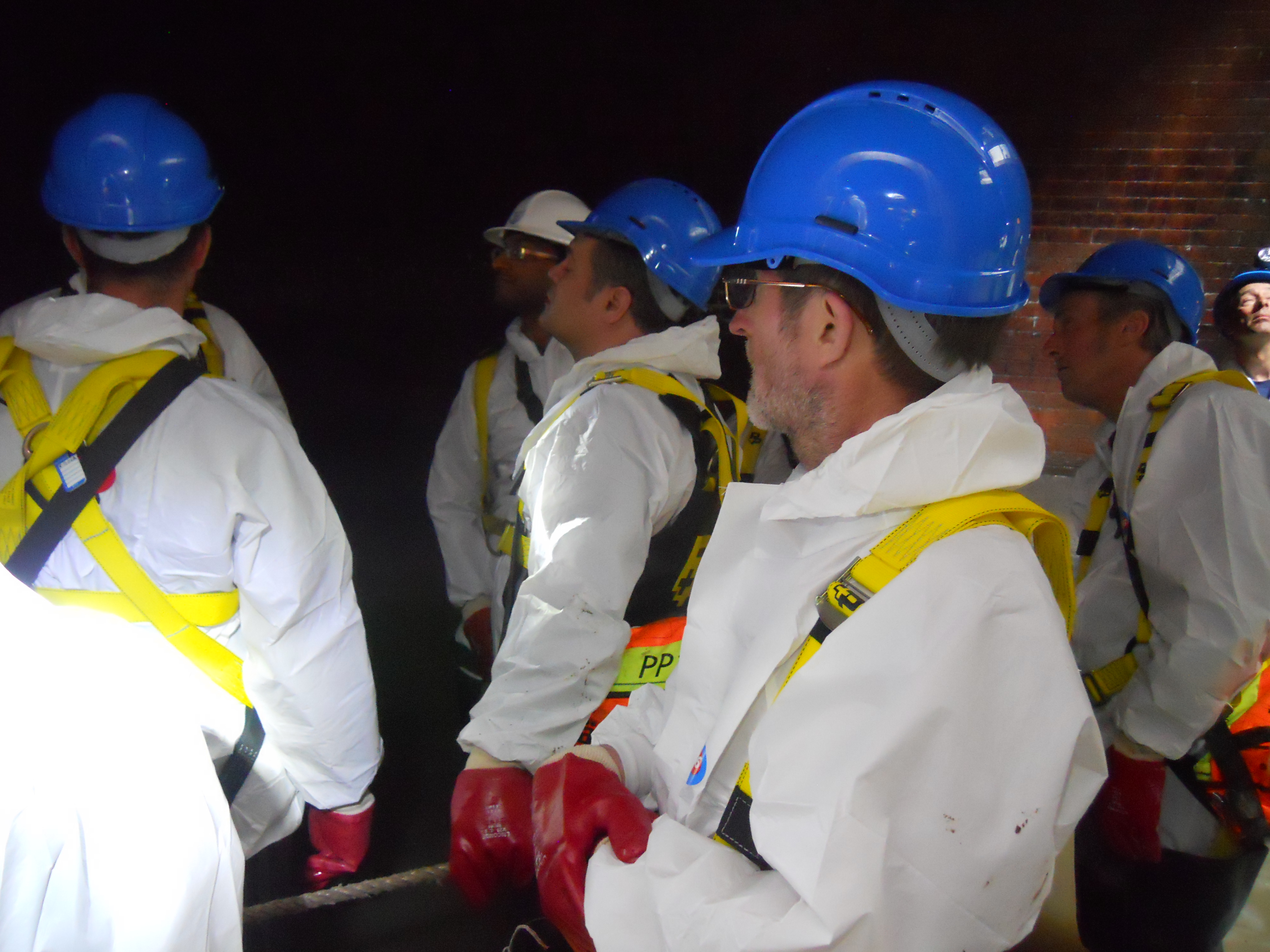
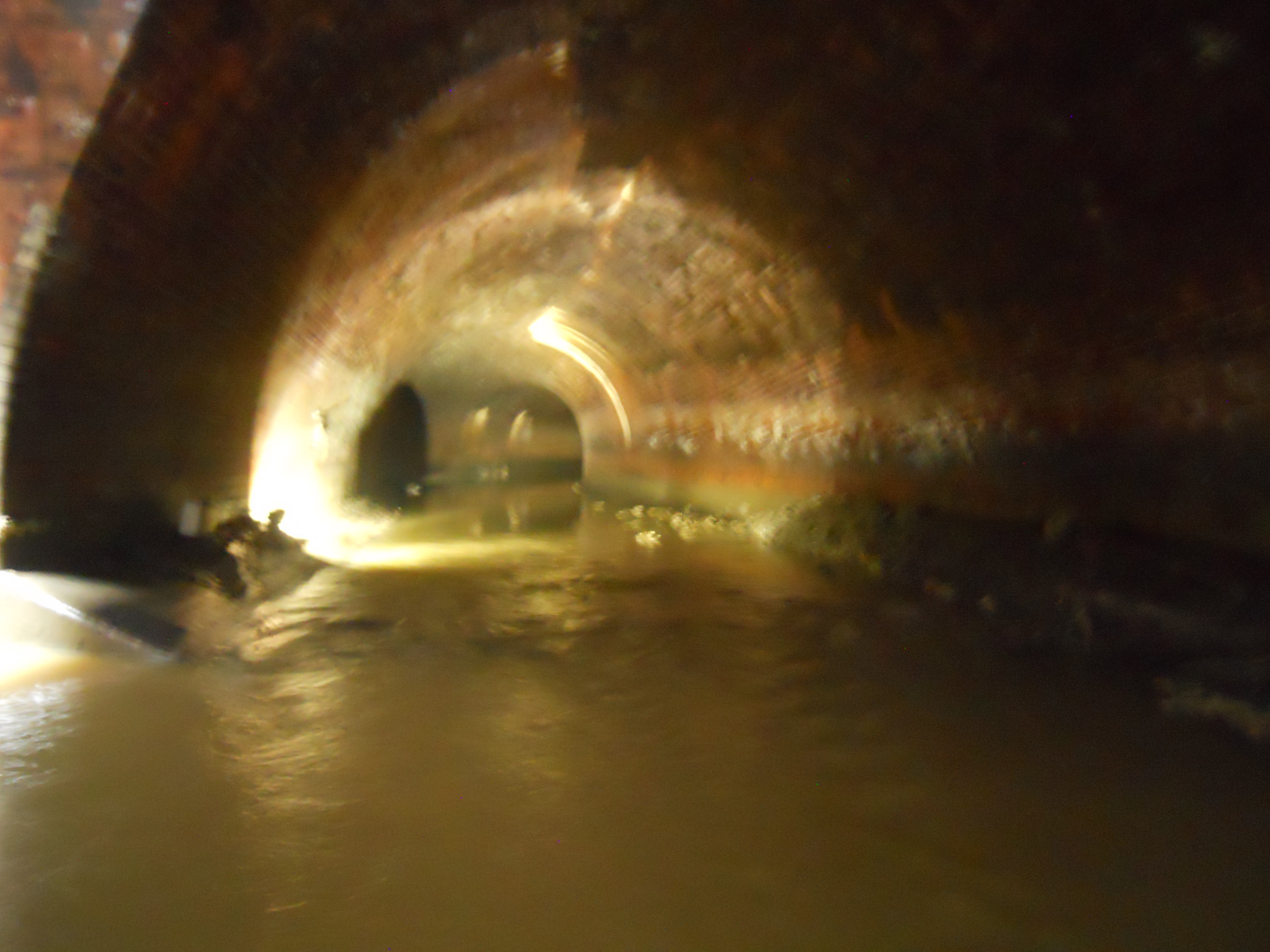
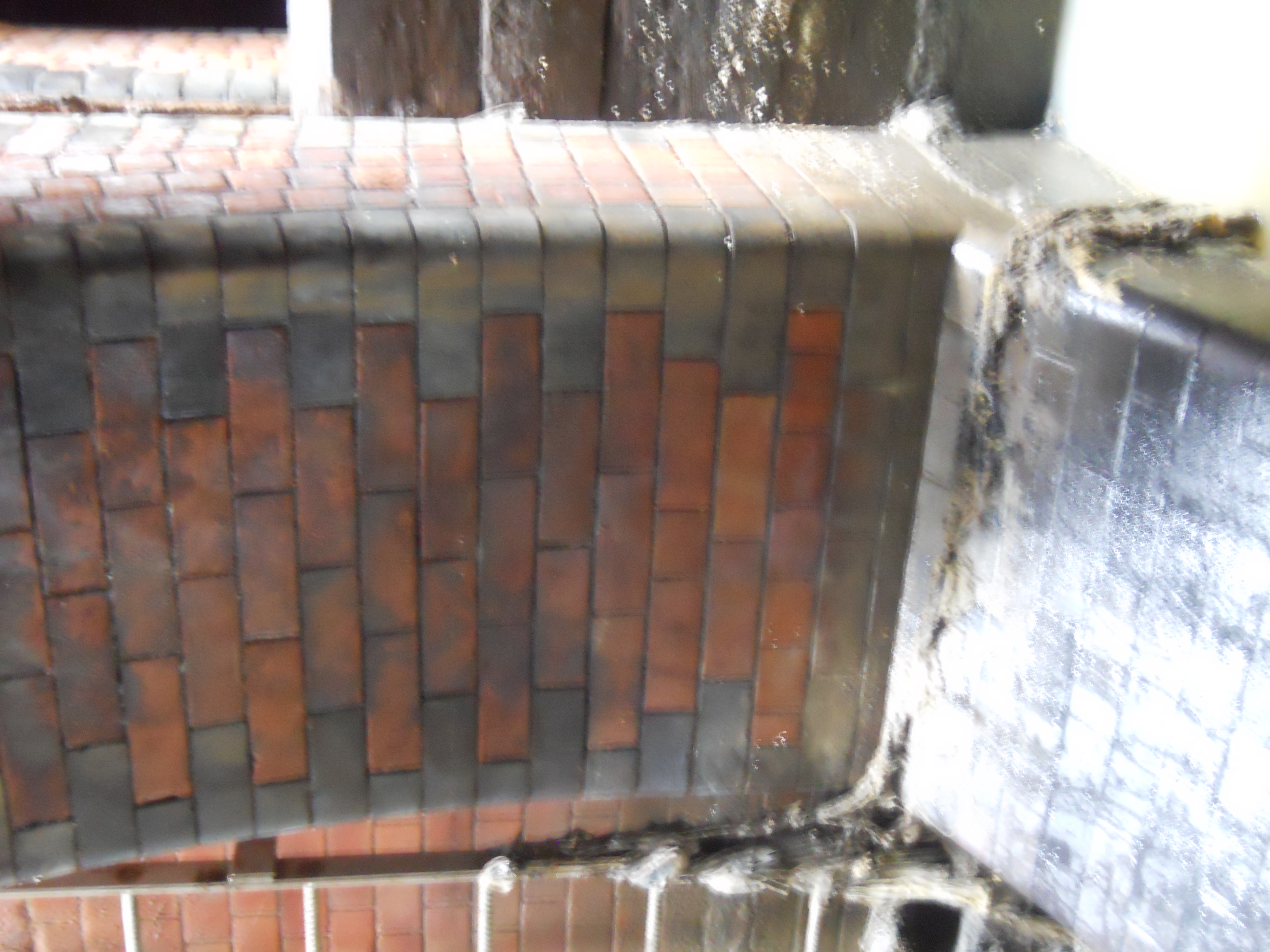
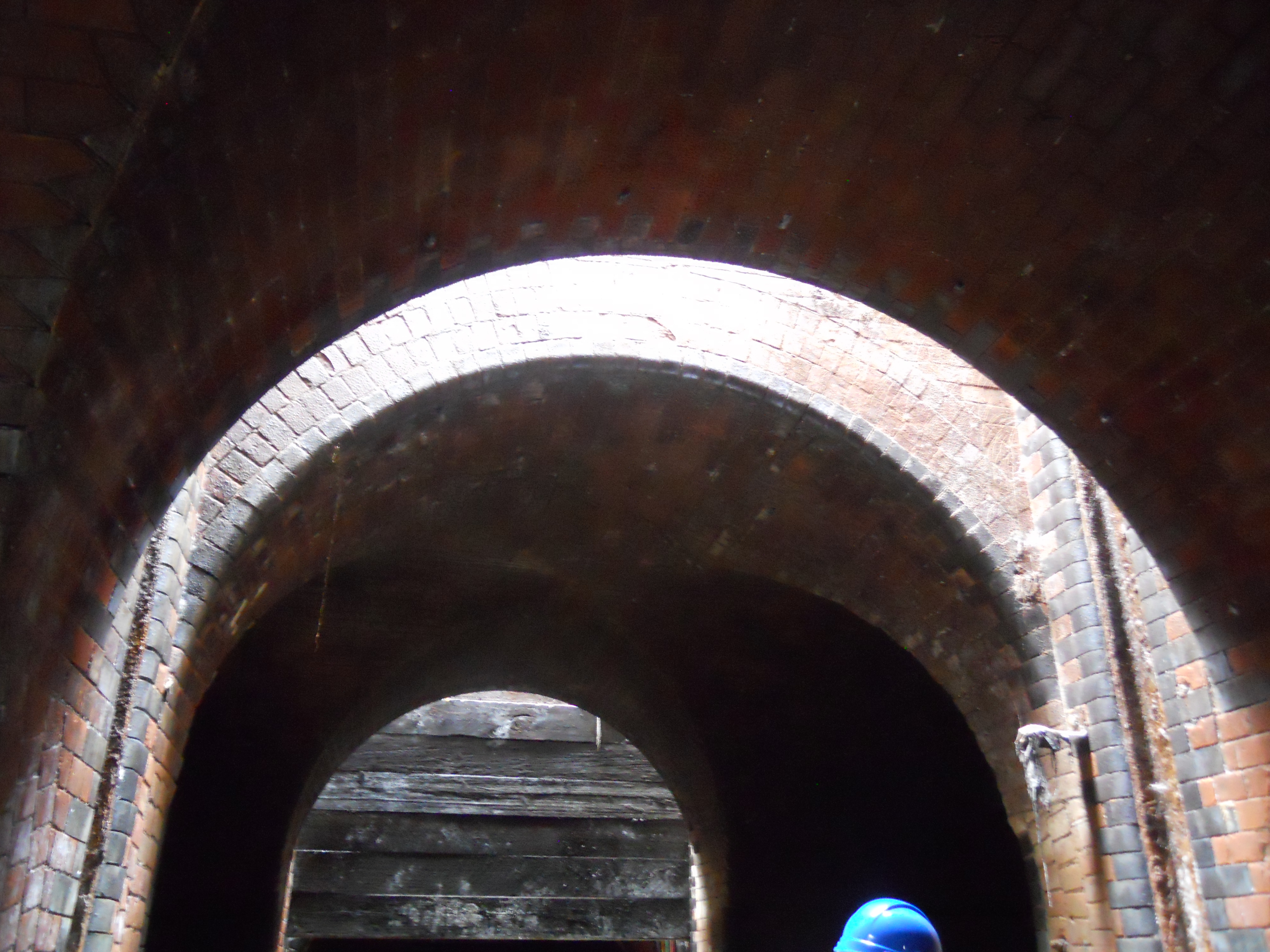
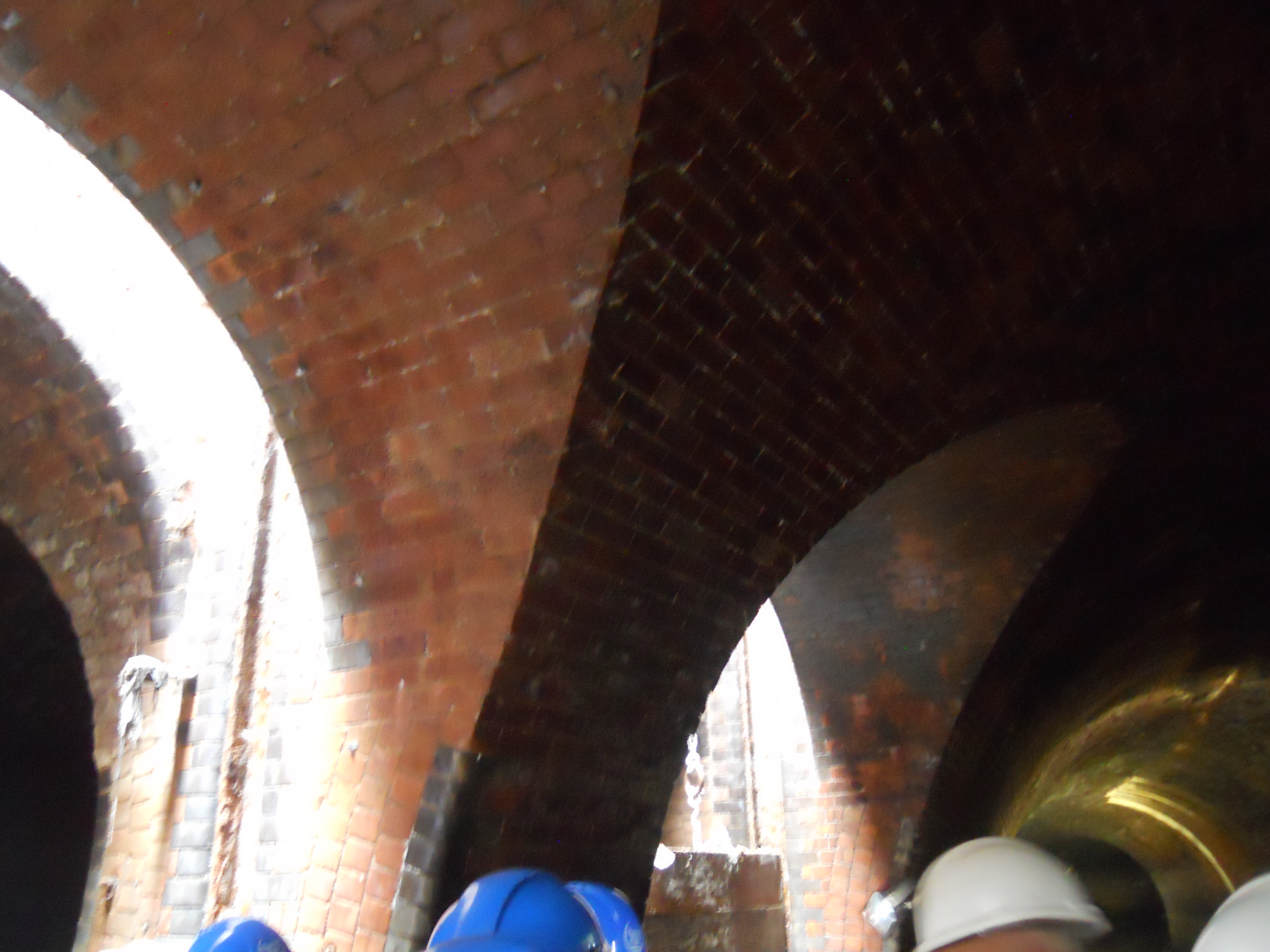
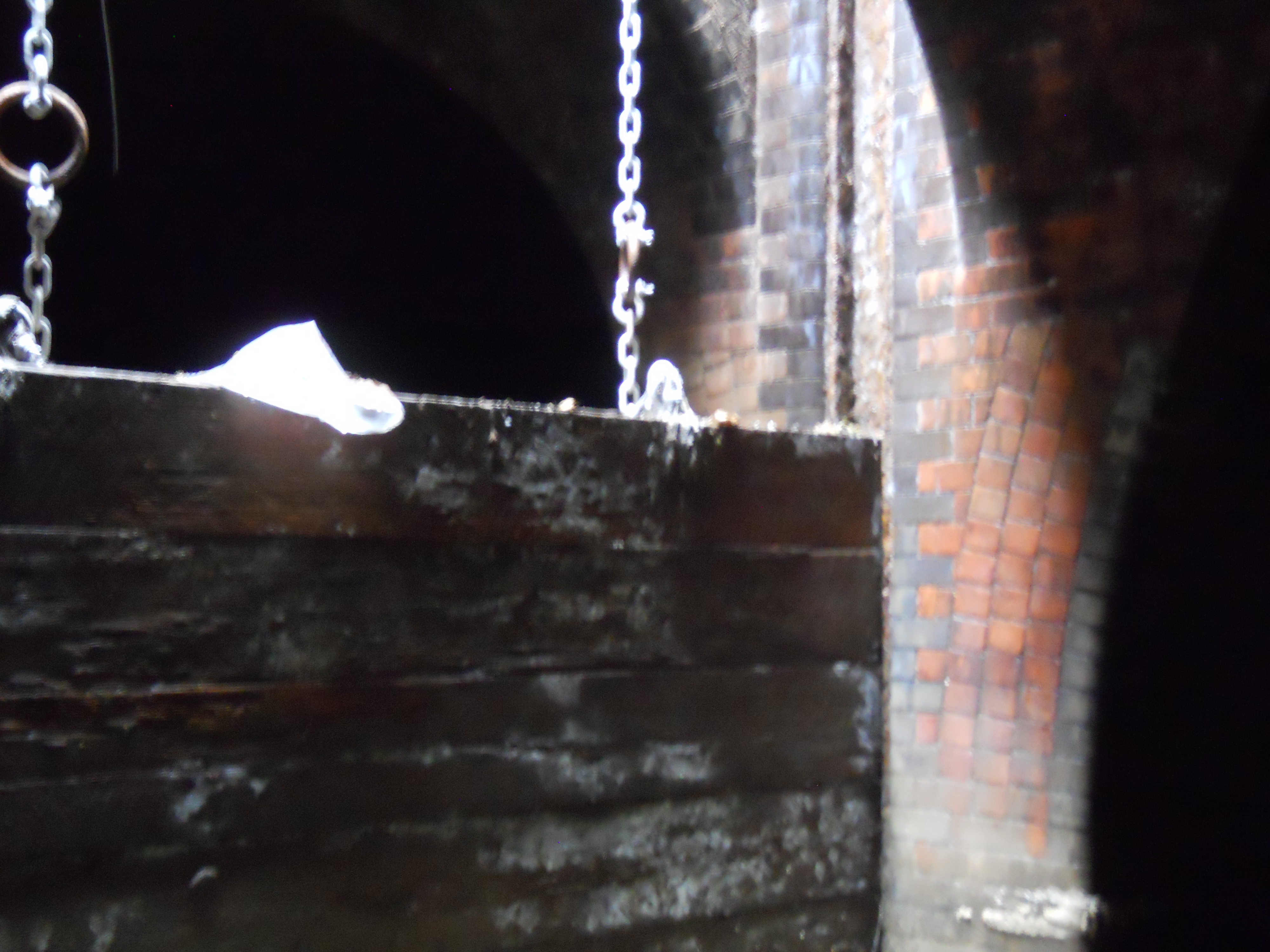
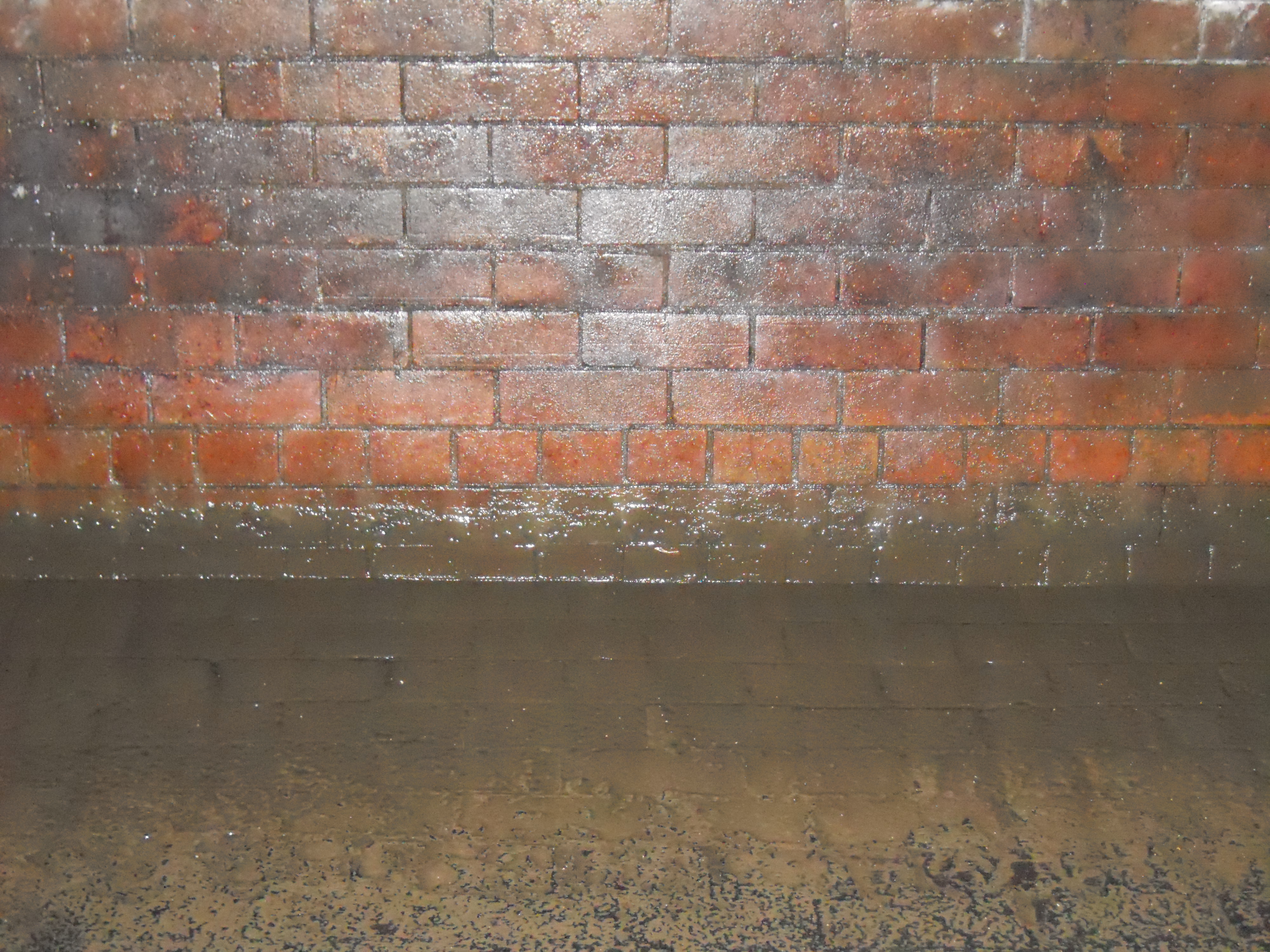
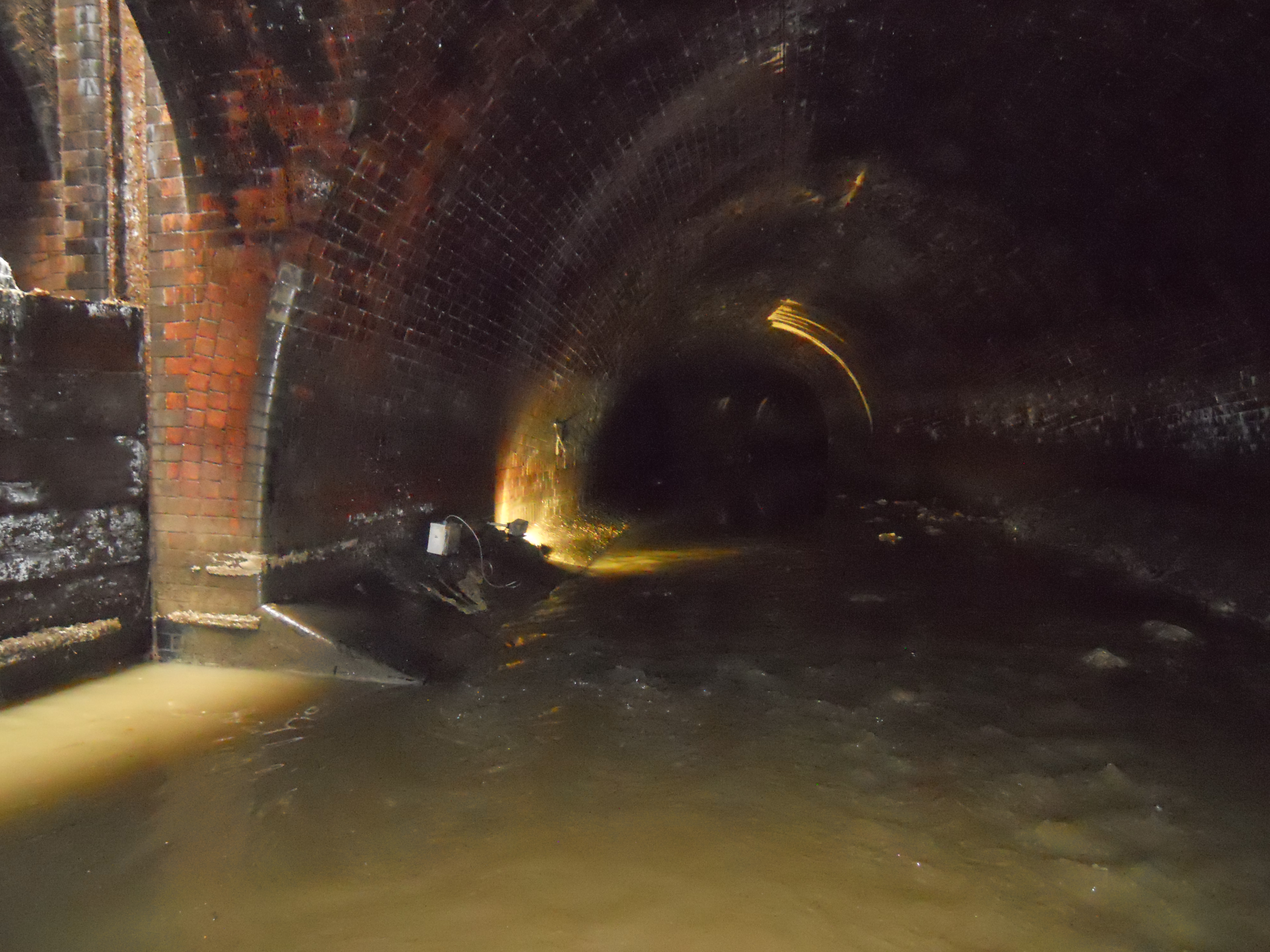
These pictures were not taken by me, as you can see I was rather protected again the effluent from half of London’s drains and toilets.
Note the quality of the brickwork, which is over a hundred years old, with some nearly fifty years older than that!
It should also be noted, that I was breathing a lot better in the sewer. I suppose there isn’t much pollen down there!
I also didn’t have any problems walking in the almost thigh high water. You have to feel your way with your feet, but then I was taught to do this in industrial environments that may be dangerous, by Health and Safety when I worked for ICI in the 1960s. The only problem I had was that when I first got down there it took a couple of minutes for my eyes to be able to see things properly.
But I survived it with ease and the only thing I couldn’t do was take the photos. The photos incidentally were taken by Daniel, who has his own blog called The Sewerman’s Log. It’s an excellent well-written insight into the day-to-day happenings in London’s sewers and what it is really like to work up-to-your-waist in things that polite society doesn’t talk about. This post is a good place to start in his blog, as it gives a good summary of the problems and also gives an insight into how Dan Snow was kitted up for his recent television series.
A Visit To Abbey Mills
This week is Sewer Week and I had an invite to visit the pumping station at Abbey Mills.

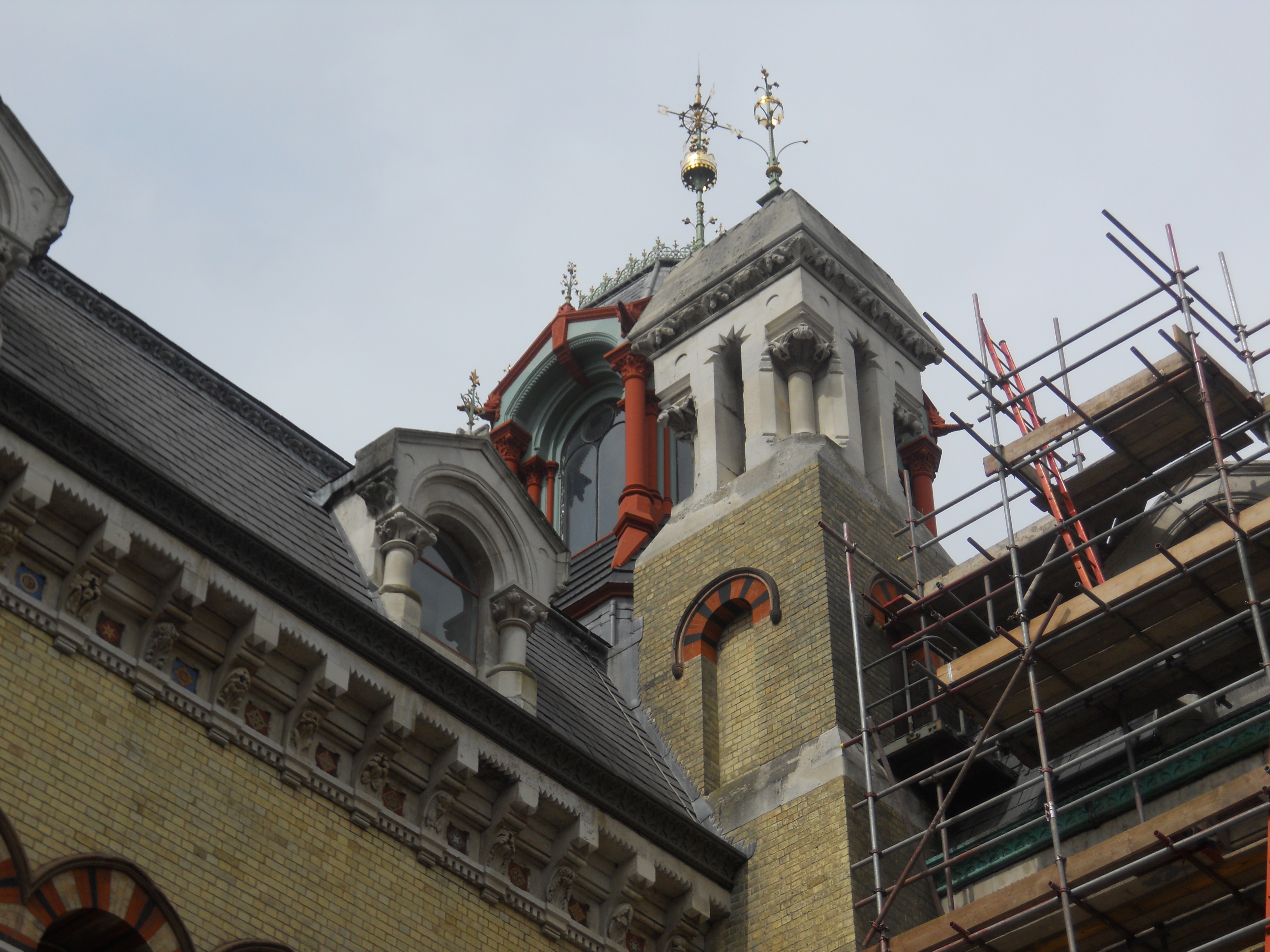

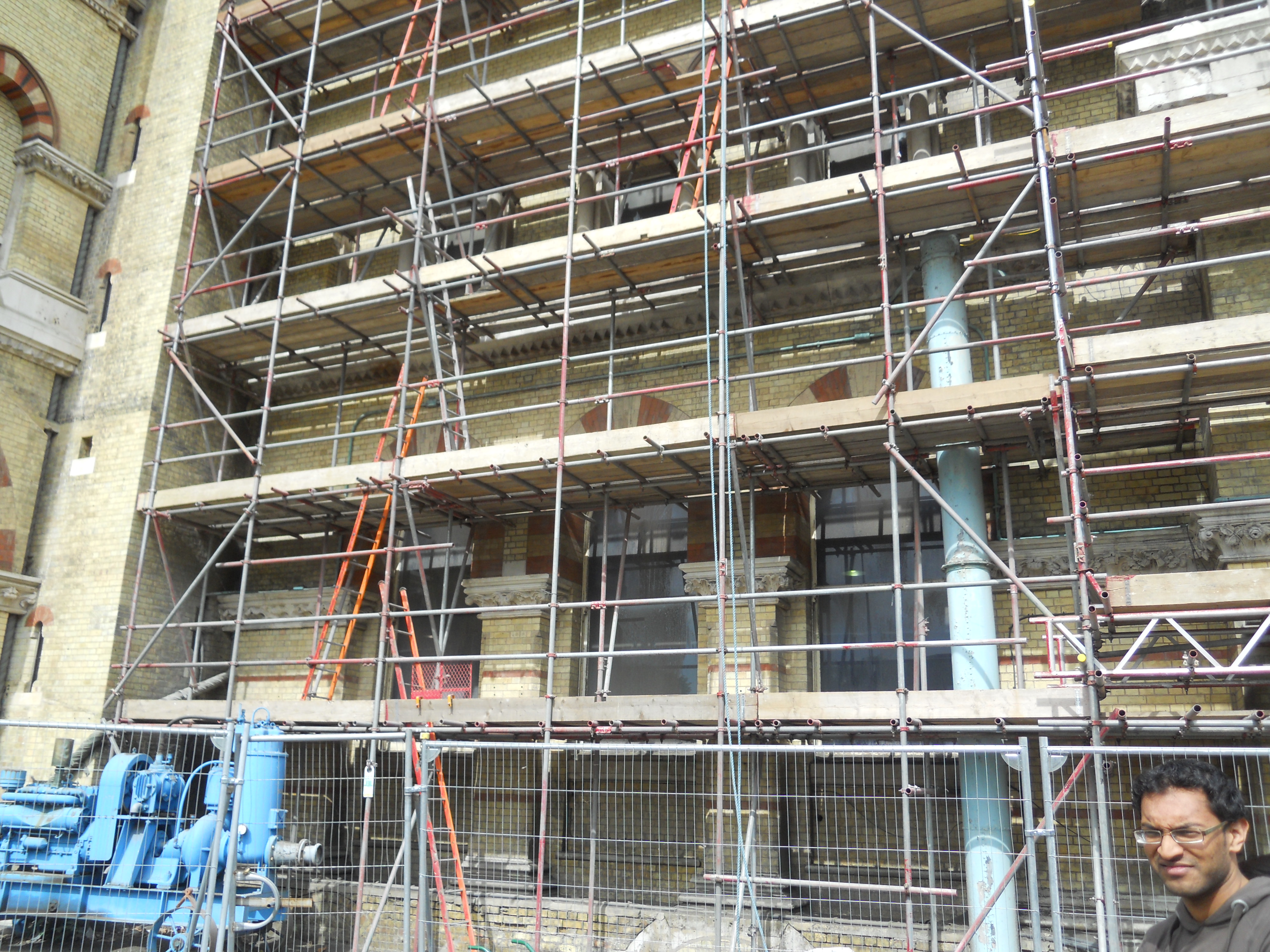
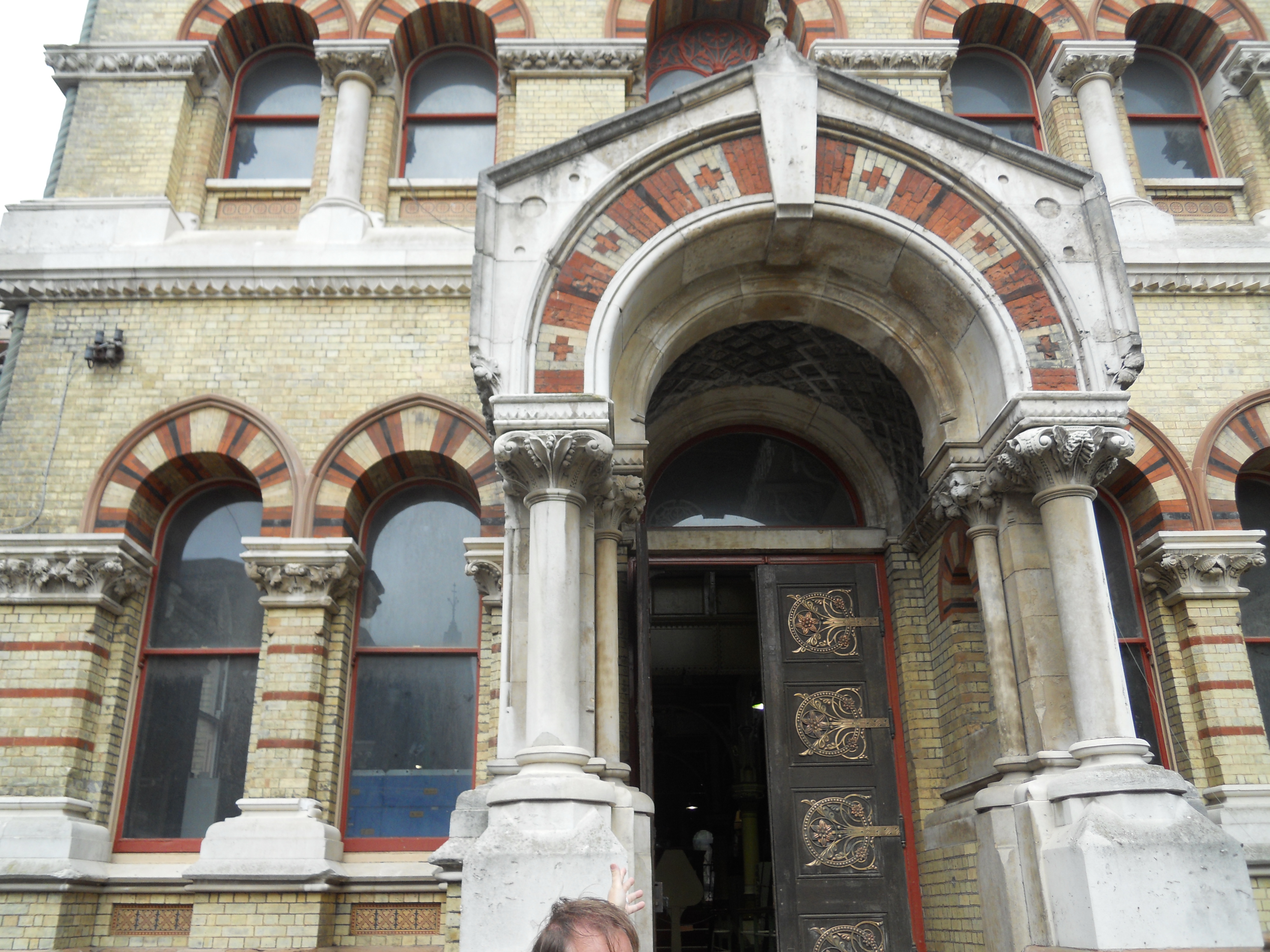


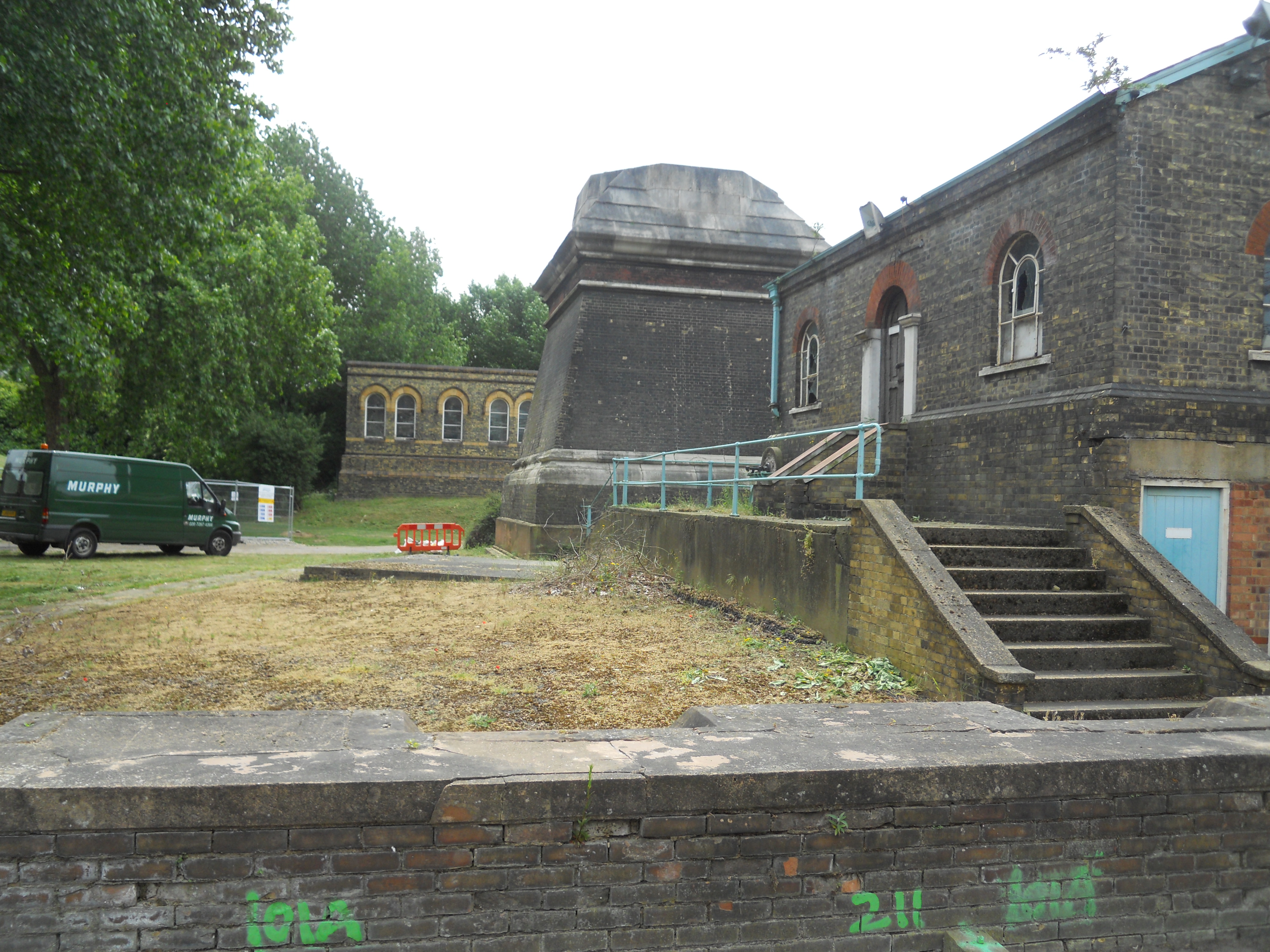
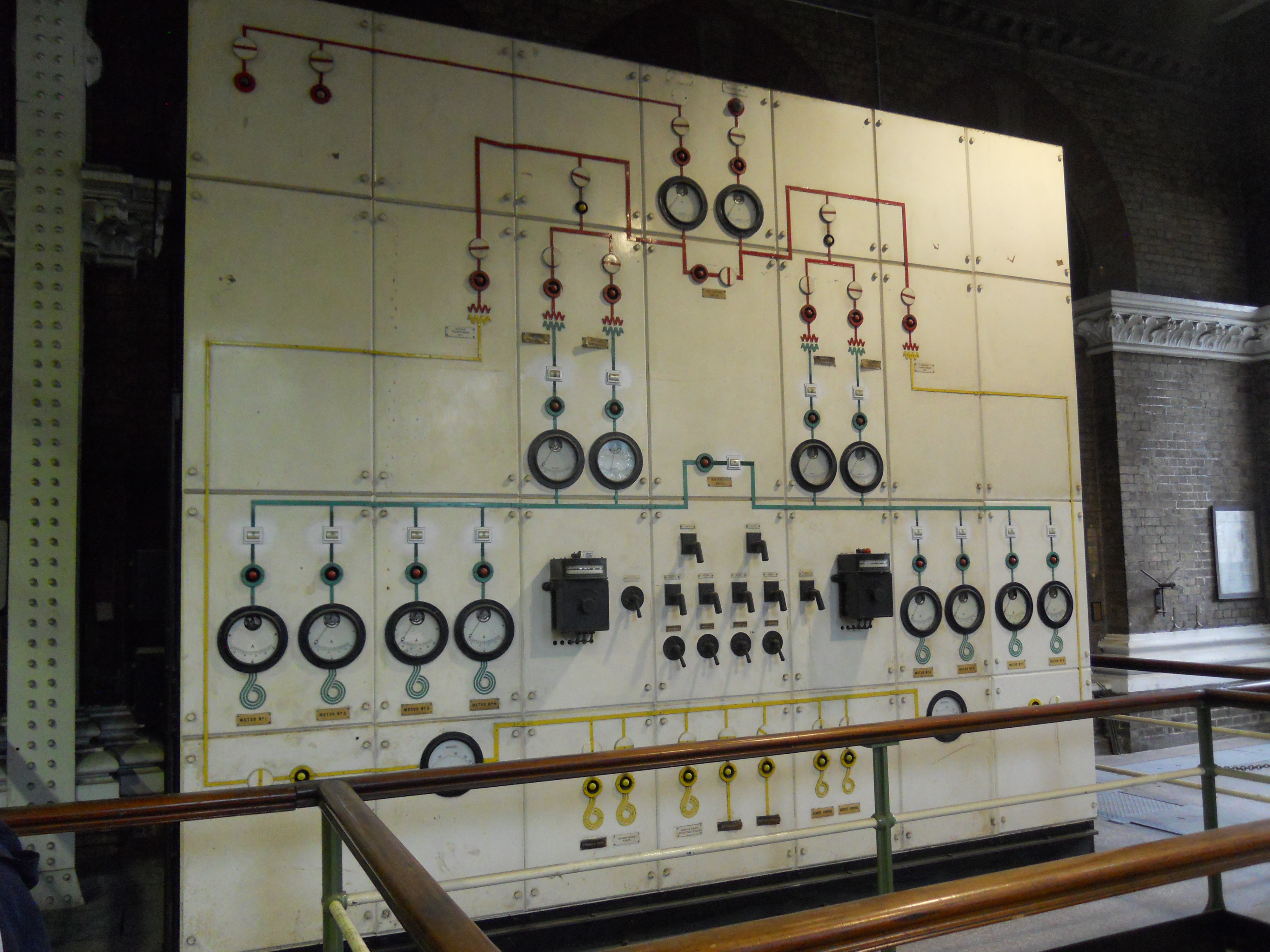
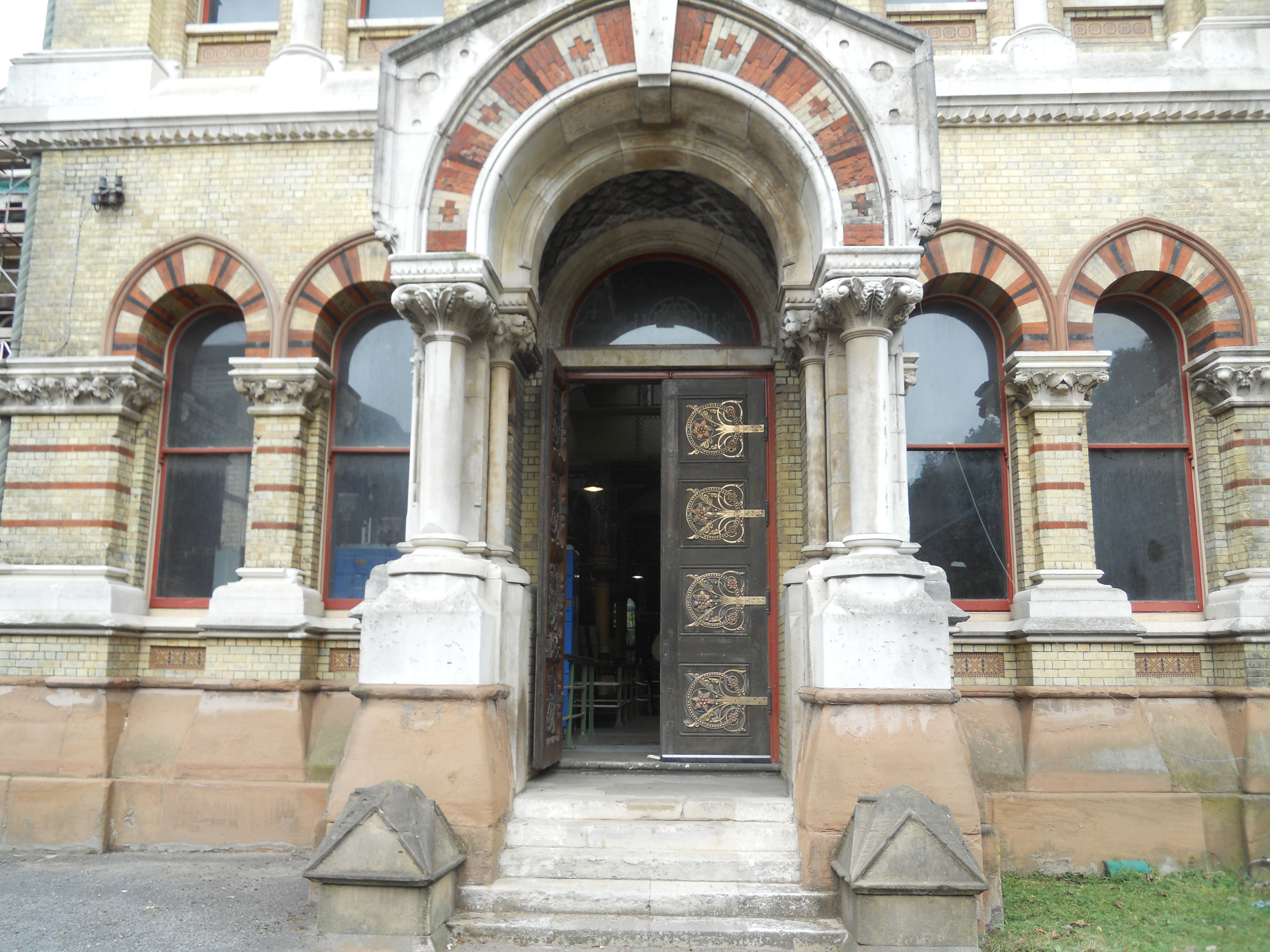
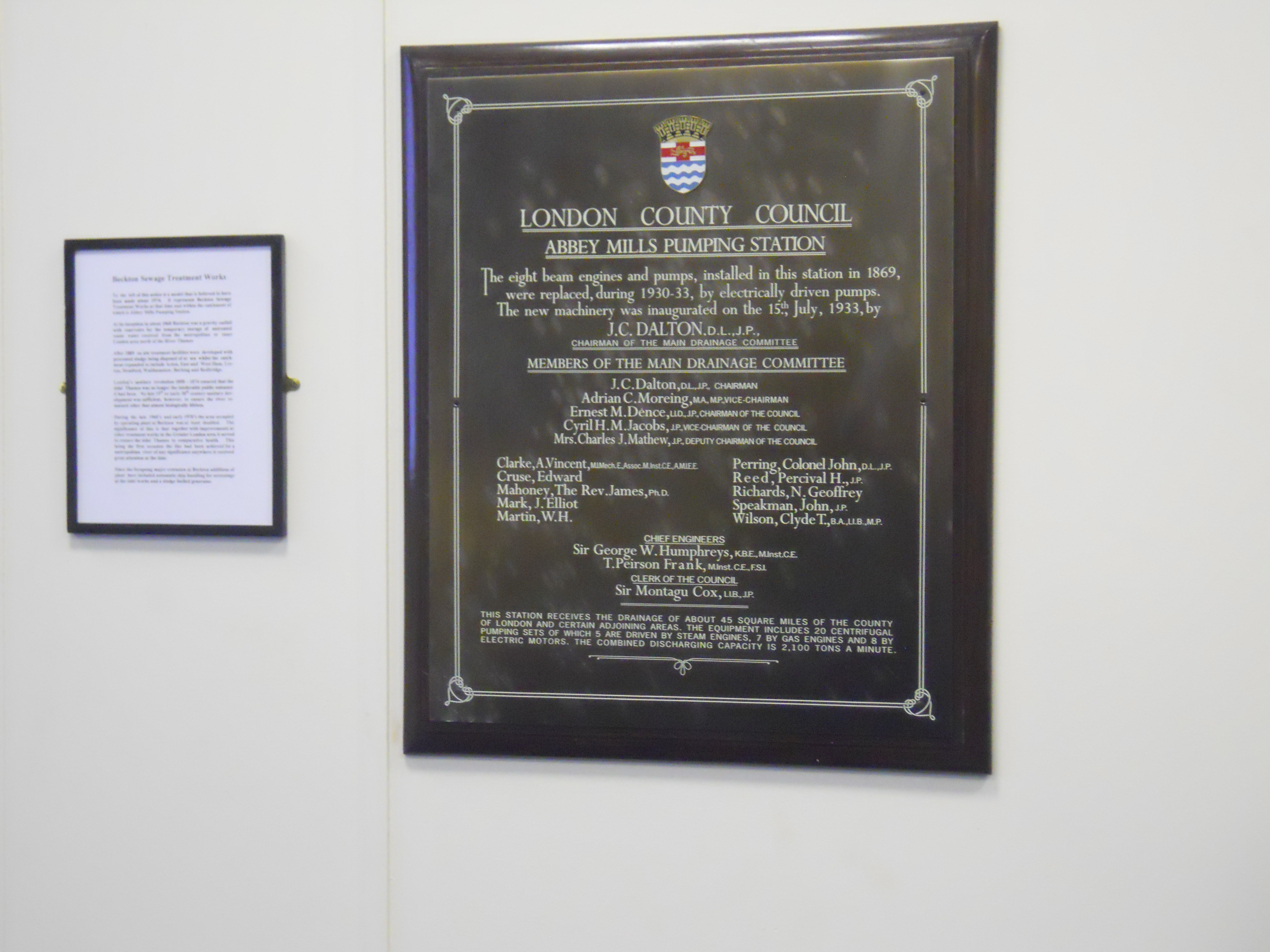
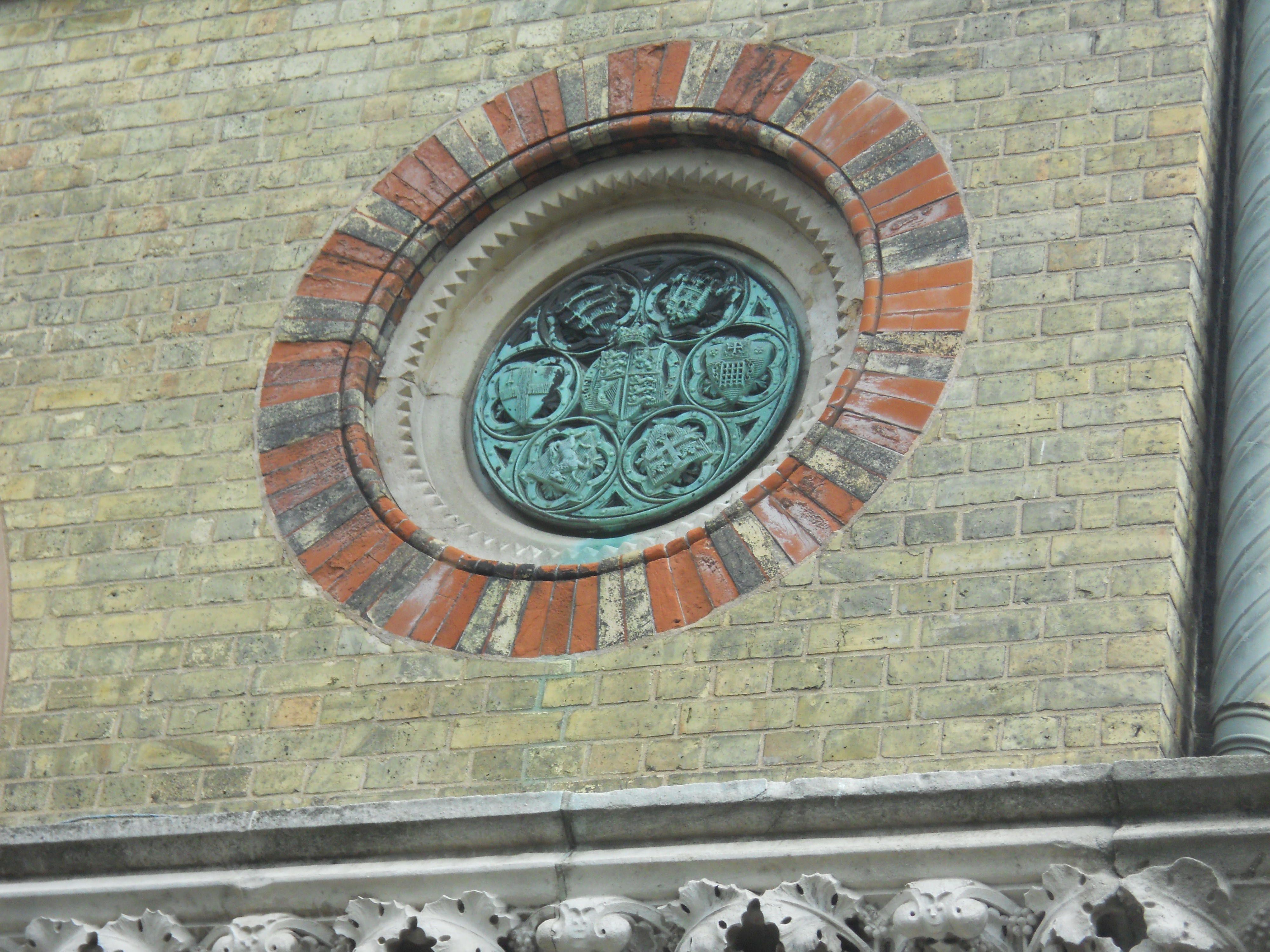
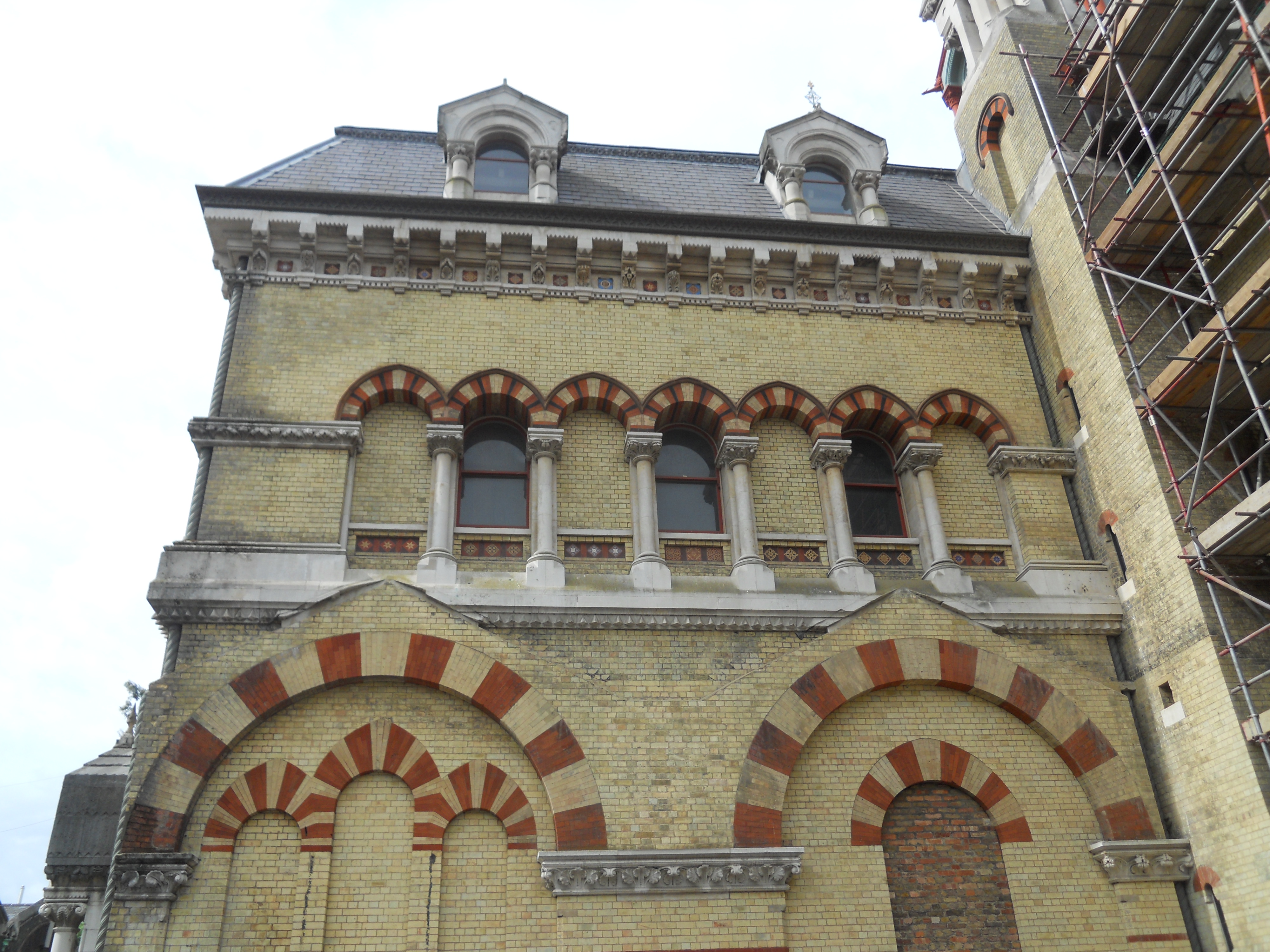
These pictures were taken of the outside and inside of this cathedral of sewage.
Formula One Meets Victorian Technology
A few years ago, Thames Water had a problem. Under the pumping station are Victorian centrifugal pumps that pump raw sewage to Beckton works for treatment. These are connected to 1930s electric motors in Dalek-like structures on the ground floor, using heavy steel shafts. The motors are controlled from the control panel in the last image.
The shafts were showing signs of their age and needed replacement.
So Thames Water turned to the experts in high-power transmission at high speed – Formula One.
The pumps are now connected to the electric motors, using high-strength, lower-weight carbon-fibre shafts.
It was a fascinating visit and thanks to Thames Water, who made it all possible.
The 400th Anniversary of the Opening of London’s New River
You don’t get too many four hundredth anniversaries in the world, but in 2013, there will be an important one for London.
Melvin Bragg did a program on the 400th anniversary of the King James Bible this year and he has been on television talking about it. But where is the program about the New River, which brings fresh water to London? And has done since 1613!
I was brought up in Southgate and cycling around the area as a child it was something you couldn’t avoid. I now live near its southern end and every time I go to the Angel, I see the statue of Hugh Myddelton on Islington Green.
The story of this great undertaking gets a good mention in Wikipedia, but surely the 400th anniversary deserves something more.
For a start, how many schools along the river are doing projects or having parties to celebrate the anniversary?
In some ways, the history of the river has lessons for the modern world, where water is such a precious commodity.
Surely, this anniversary is something that should interest someone like Griff Rhys Jones or Adam Hart Davis.
The Blind Beggar and His Dog
After the cemetery, I crossed under the railway and made my way to Globe Town, intending to photograph the Blind Beggar and His Dog by Elisabeth Frink.
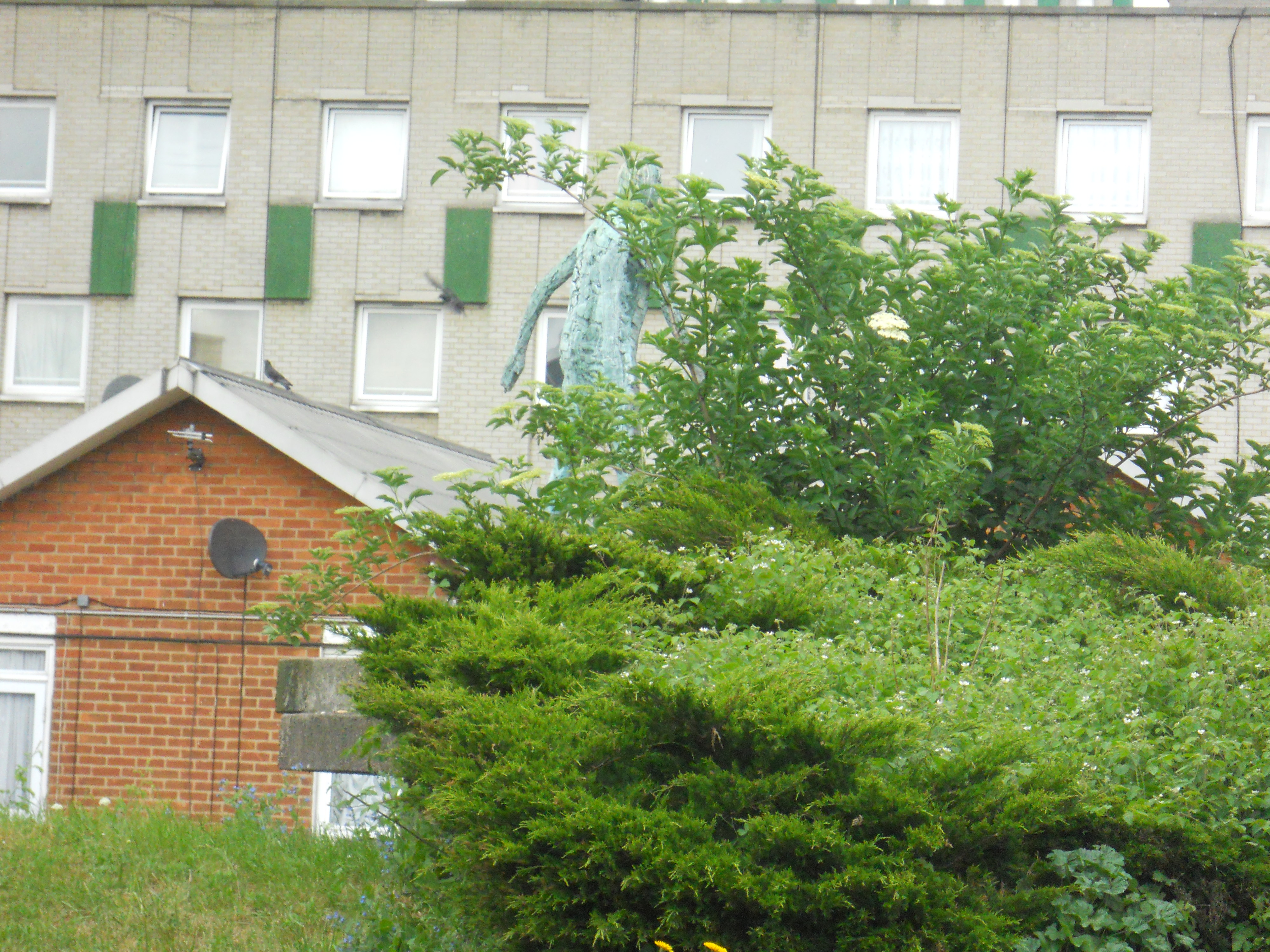
Elisabeth Frink's Blind Beggar and His Dog
Elisabeth Frink was born in the same village where I used to live in Suffolk.
I know times are hard, but surely this important sculpture by a world-famous artist can be displayed better.
An Abandoned Jewish Cemetery
Walking around London, I get amazed and sometimes very sad.
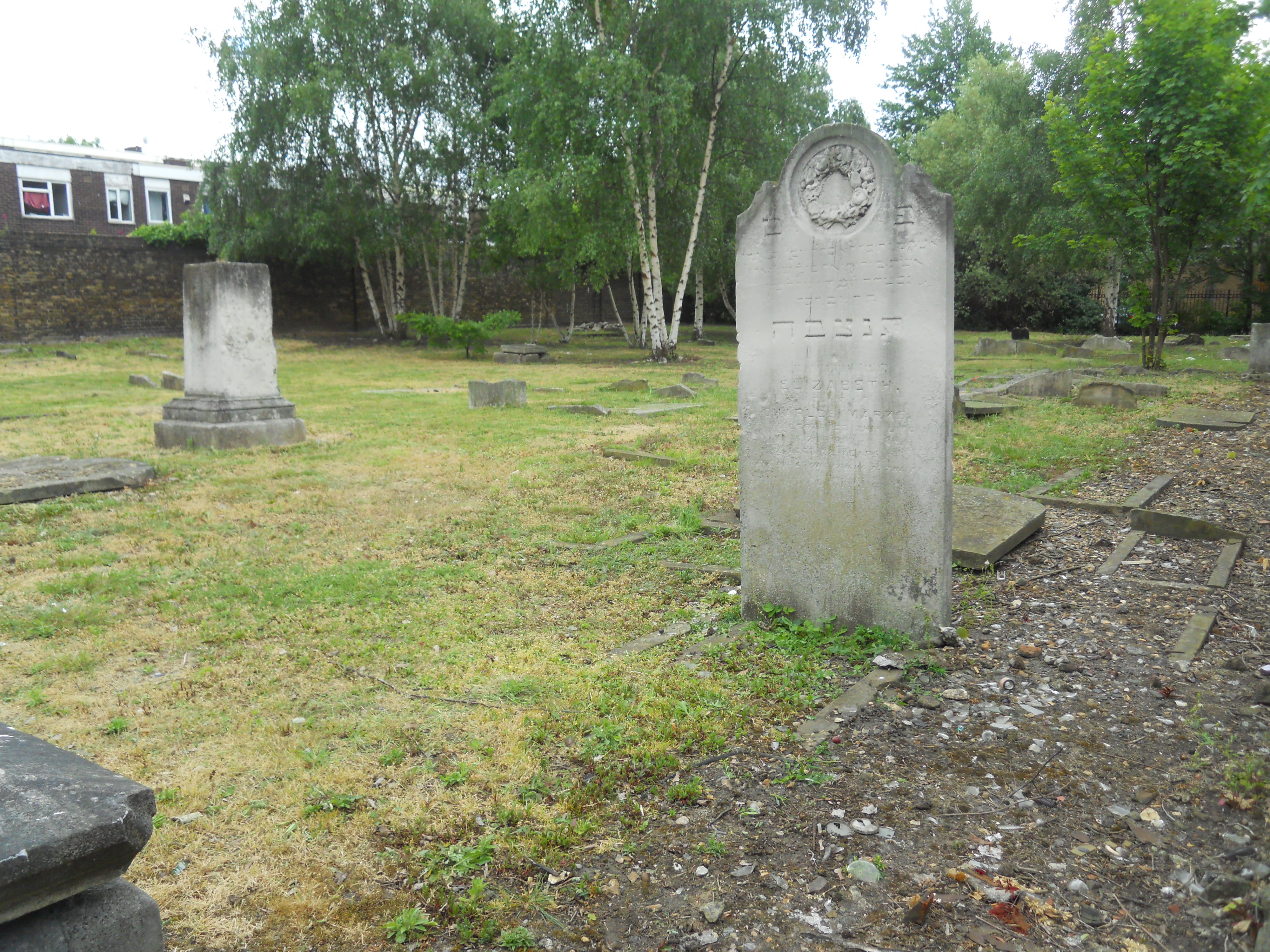
An Abandoned Jewish Cemetery
This picture was taken at a virtually abandoned Jewish Cemetery in Bancroft Road behind the Mile End Hospital.
Yesterday, I was amazed at finding this cemetery without any information on either my map or the fence and saddened at its state.
In Search of Jack Nissenthal
In the web site on the BBC relating the story of Jack Nissenthal, it says that he was born in Cottage Row in Bow.
Yesterday, I decided to find out more. searching the Internet, showed no trace of Cottage Row in Bow, so I took the bus to my nearest big library; the City of London, library in the Barbican Centre. There displayed in a cabinet was a map of poverty for London and a Cottage Grove could be easily seen in Bow Neighbourhood, but not a Cottage Row. My up-to-date A-Z didn’t show Cottage Grove at all. So the librarian and myself concluded that development had taken place and the street pattern had been changed. Rhondda Grove seemed to occupy the same place as Cottage Grove.
So it was a tube ride to Mile End station via Bethnal Green to see what I could find.
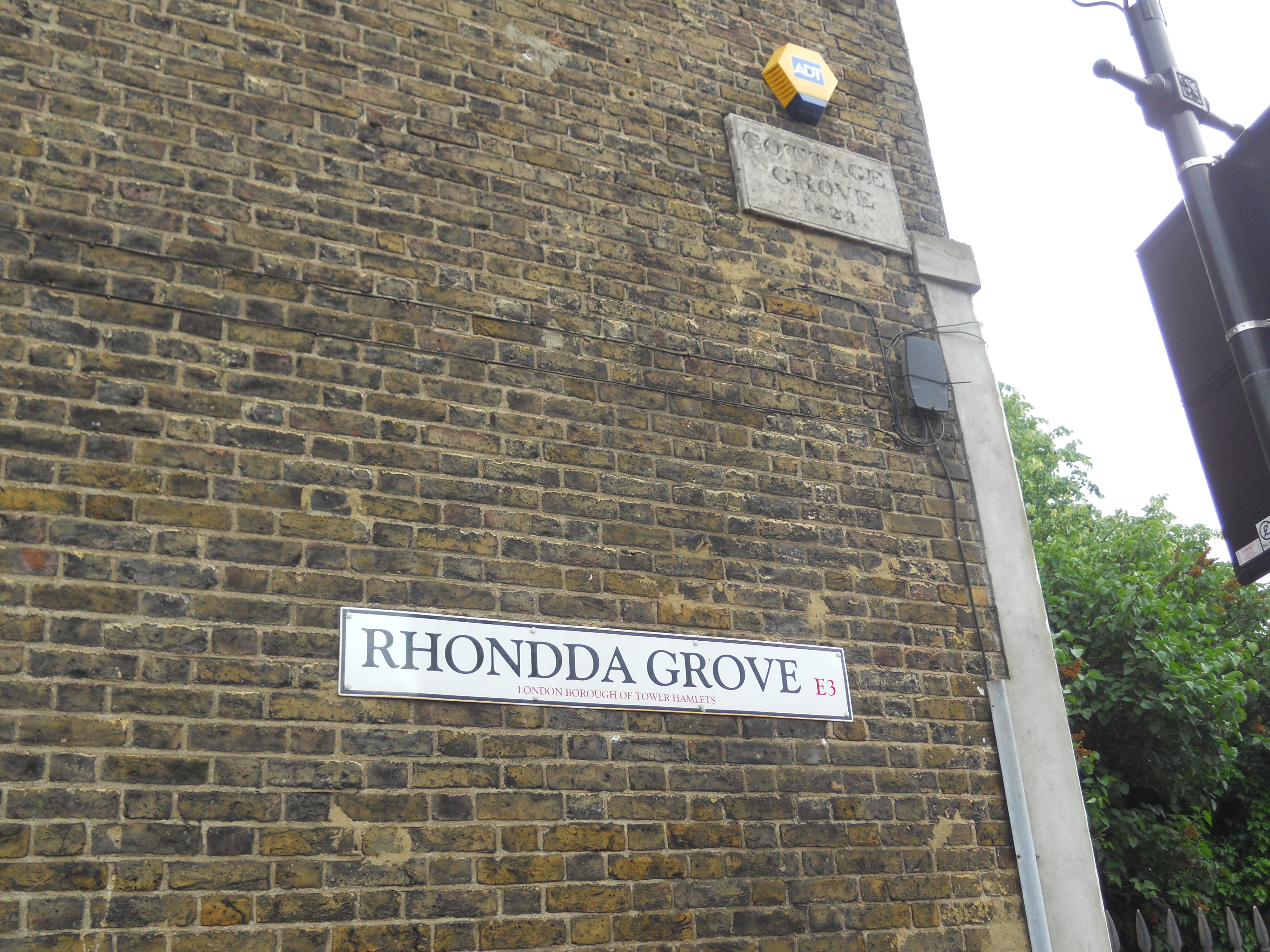
Rhondda Grove/Cottage Grove in Bow
This picture shows the end of Rhondda Grove. Note the Cottage Grove sign with a date of 1823.
It is a pleasant street now with most of the terrace and other houses now fully modernised.
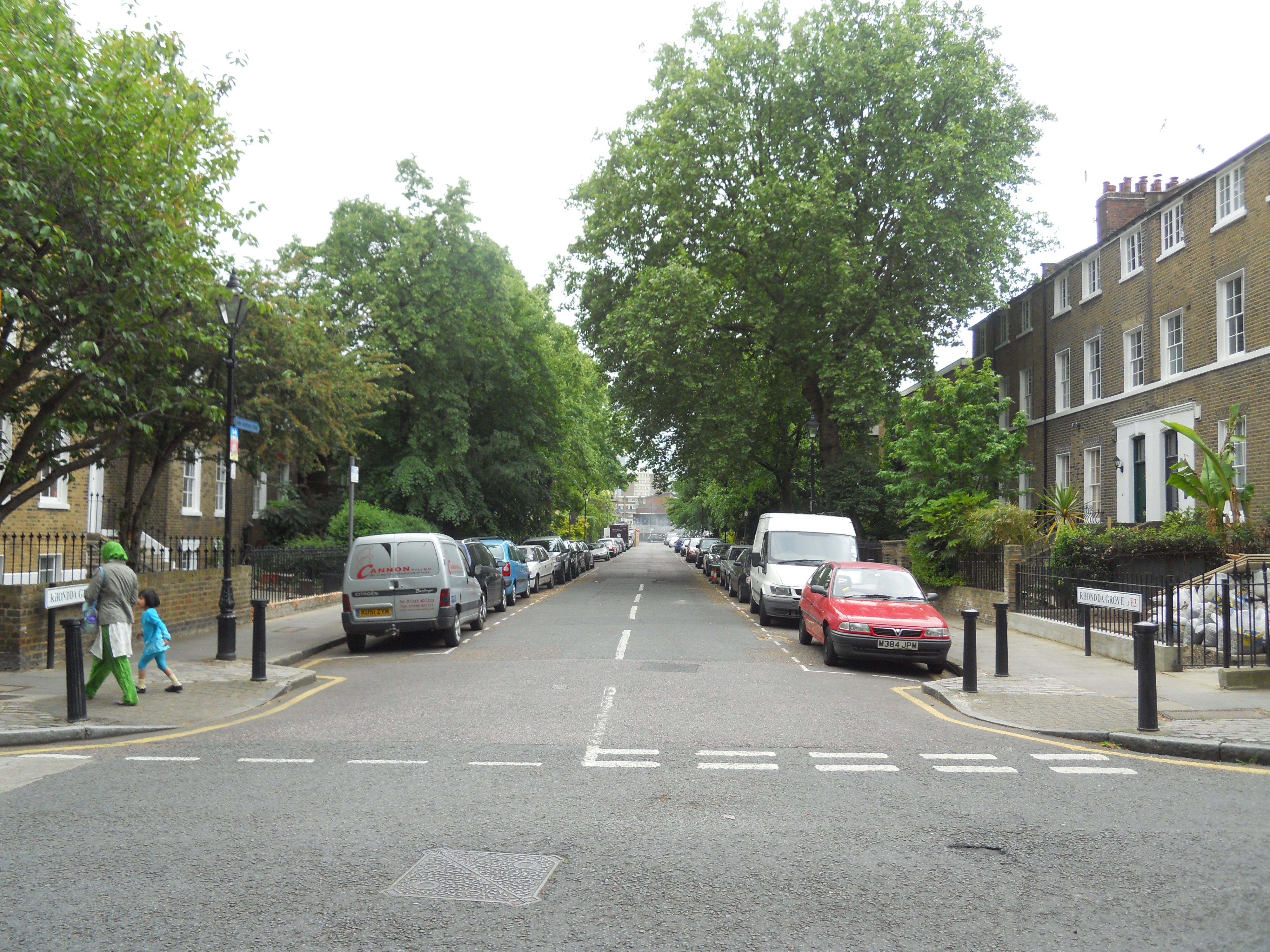
Rhondda Grove, Bow
There appeared to be not too many spaces or new properties, that would be typical of bomb damage.
So was this the street where Jack Nissenthal grew up?
I then went to Tower Hamlets Archive Centre in Bancroft Road just around the corner.
They did confirm from a 1920s London Street Atlas, that there was only one Cottage Row in London at the time of Jack’s birth and that was in South East London. Cottage Grove had not yet been renamed. On searching the large scale maps of the area, I did find that the street seemed to have been renamed in the late nineteenth century. There were also a few mews houses behind the street. So could one of these been known locally as Cottage Row?
Forty Years On!
It is almost forty years since C and myself moved into the Barbican with our young family.
Now they are building the Heron next door.

The Heron Peeks Above the Barbican
The Barbican and its three iconic towers were very much of the 1960s, just as the Heron is of today. The Barbican with its sculptured concrete is pretty much unique, but from what I’ve read and seen, the Heron will be very modern and have a very much lower carbon footprint.
All of the towers in the Barbican will share one thing with the Heron and that is superb views. But the view from the Heron won’t have the view we did of Whitbread‘s working brewery complete with its dray horses, that in the 1970s still performed some of the local deliveries in the city.
But living in the Barbican was a pleasureable experience in the 1970s and we all liked it. I still felt good as I went back to the complex to visit the library to do some research for a book.
I hope living in the Heron will be just as pleasureable. But it will probably not have the eclectic mix of people that the Barbican had when it opened. I suspect now the Barbican has changed, what with buy-to-let, second homes in the country and the changes brought by the credit crunch.
Naming of the Districts of the London Olympic Site
After the Olympics in 2012, the Olympic Park will be split into five new districts of London.
There is a competition to name them.
I’ve just entered to name Area 5. I would like to call it Bazalgette City. And here’s why!
London has nothing named after the man, who probably did more to design and build the infrastructure of sewers, embankments and other public works that are still in use today. Without Bazalgette, London would have not become a modern city until much later. This area contains much of the immense Northern Outfall Sewer, which Bazalgette created that is now 150 years old and the area is also close to his Cathedral of Sewage at Abbey Mills. Hence if should be Bazalgette City and not Bazalgette Town, as every city needs a cathedral.
I’ll add other names I can think of later, but the competition closes on the 16th May.
Yesterday’s Person of the Day was a Woman
With all the elections and the referendum going on in the UK and Obama’s trimphalist vengeance in the United States it fell to a woman to add some sanity to the world.
Lady Justice Hallett’s handling of the inquests into the London bombings of the 7th July 2005 has been exemplary and shows how justice can be seen to be done and closure can be brought to a tragic part of British history.
There will always be some who call for more enquiries to apportion blame, but in my view it is time for everybody to move on. I have lost two members of my close family to vicious cancers and can sympathise with those who have lost someone dear to them. Who do I have to blame?
Life is a perilous and risky business and it is only by means of luck that we live as long as we do!

