Lord Adonis On Crossrail Of The North
There has been a lot of talk recently about HS3, Northern Powerhouse Rail or Crossrail Of The North.
On Radio 5 Live, this morning, Lord Adonis said a lot of sensible things about the high speed line from Liverpool to Hull via Manchester and Leeds.
His plea was for a plan for a start and he suggested that an objective would be to halve the journey time from Manchester to Leeds and have a train every few minutes.
He suggested it could be probably built using a mixture of new track alignments and existing railways.
I agree with what he said, but the problem is that every Tom, Dick and Harriet has their own ideas of what they want.
How Would I Design Crossrail Of The North?
I can at least look at this without favouring any one of the North’s great urban area.
Urban Areas Of The North
I will list those with populations of over 200,000,, from this list in Wikipedia.
- Manchester – 2,553,379
- West Yorkshire – 1,777,934
- Liverpool – 864,122
- Tyneside – 774,891
- Nottingham – 729,977
- Sheffield – 685,368
- Teeside – 376,633
- Stoke-on-Trent – 372,775
- Sunderland – 335,415
- Birkenhead – 325,264
- Hull – 314,018
- Preston – 313,322
- Blackpool – 239,409
- Barnsley – 223,281
Urban areas with populations between 100,000 and 200,000 include Wigan, Mansfield, Warrington, Doncaster, York, Burnley, Blackburn, Grimsby, Accrington, Burton, Lincoln and Chesterfield.
Some of the connections between pairs of these areas are truly dreadful despite being only fifty or so files apart.
Northern Connect
I would think it reasonable that all these centres of population have good, preferably direct, connections between them.
Northern obviously think this way as they are creating a concept called Northern Connect, using new Class 195 trains to connect many of these areas with a quality service.
The North TransPennine Routes
TransPennine operate these North Pennine routes.
- 1 train per hour (tph) – Liverpool Lime Street to Newcastle
- 1 tph – Manchester Airport to Middlesbrough
- 1 tph – Manchester Airport to York
- 1 tph – Liverpool Lime Street – Scarborough
- 1 tph – Manchester Piccadilly to Hull
Note that the opening of the Ordsal Chord iin a few months, might change the routing of some of these services.
All of these services use the Huddersfield Line between Manchester and Leeds, stopping at both Huddersfield and Leeds stations.
Manchester Victoria To Leeds
As Lord Adonis said, the important section is between Manchester Victoria and Leeds stations.
I’ll start with a comparison of a series of rail journeys, all of which are about the same length.
- The fastest trains between Manchester Victoria and Leeds take forty-nine minutes, with a stop at Huddersfield, and are just 1 tph
- Norwich to Ipswich in a couple of years, will take 30 minutes at a frequency of 3 tph.
- Glasgow to Edinburgh currently takes about fifty minutes, at a frequency of 4 tph.
- Cardiff to Swansea currently takes 52-54 minutes, at a frequency of 2 tph.
It does seem that the North has a point if two of East Anglia’s larger cities get a better service than Leeds and Manchester.
The Huddersfield Line And The Great Eastern Main Line Compared
It is also enlightening to compare the Manchester to Leeds Line via Huddersfield to Ipswich To Norwich section of the Great Eastern Main Line.
It should be noted that I’m comparing these two lines, as both have lived on scraps from Central Government for decades. I also know the Great Eastern Main Line well!
- Both lines are double-track.
- Norwich-Ipswich is flat.
- The Huddersfield Line is rather hilly
- Norwich-Ipswich has only two stations and only the occasional slower service.
- The Huddersfield Line has numerous stations and local services.
- Norwich-Ipswich is electrified to a robust standard.
- On the Huddersfield Line, only Manchester to Stalybridge is scheduled for electrification.
- Norwich-Ipswich has a 100 mph speed limit, that could possibly be raised in places.
- I can’t find the speed limit on the Huddersfield Line, but suspect it could be less than 100 mph.
It is truthful to say that the Huddersfield Line is a much more challenging route than the Norwich to Ipswich.
The Effect Of Electrification On The Great Eastern Main Line
It might appear that the electrification of the Great Eastern Main Line makes for the difference in times.
But it should also be remembered that Ipswich to Norwich wasn’t electrified until the mid 1980s and if I remember correctly before that date, the fastest expresses were timed at two hours from Norwich to London with just two stops. The fastest services now are ten minutes under two hours with four stops.
With the introduction of the new Class 745 trains, timings of ninety minutes have been promised to the Department for Transport.
Timings did not drop significantly with the electrification in the mid-1980s, Services just became more reliable with more stops, as electric trains can accelerate better.
The decrease in timings over the next few years will be down to the following.
- Removal of bottlenecks like Trowse Bridge.
- Increase in speed limits.
- Trains with a shorter dwell time at stations.
- Trains with better acceleration and braking.
- Improved track and signalling.
- All passenger trains on the line will have the same performance.
I will be very interested to see what timings, the Class 745 trains eventually achieve!
Electrifying Between Leeds And Manchester Victoria Stations
It looks like the electrification between Manchester Victoria and Stalybridge stations will be complete by the end of this year.
The central section of the route is problematical with the Grade 1 Listed Huddersfield station and large numbers of bridges.
In TransPennine Electrification And Piccadilly Upgrade Now Also In Doubt, I came to these conclusions about electrifying the route.
-
Electrification would not go anywhere near Huddersfield, as the heritage lobby and their lawyers would have a field day.
-
Standedge and Morley tunnels are over 2,000 metres long, double track and Standedge is level. If they needed refurbishment in the future, perhaps they could be electrified with an overhead rail, so that bi-modes could have a couple of miles of electricity.
-
Electrification might be extended at the Manchester and Leeds ends of the line, so that the two cities could improve their local suburban electric networks.
-
An alternative would be that the Leeds and Manchester suburban electric networks were provided with a few Class 769 trains or even some brand new four-car bi-modes.
-
Services between Leeds and Manchester would be run by fast bi-modes.
Is there a more difficult stretch of possible electrification in the UK?
The Ultimate Bi-Mode Train
Currently four bi-mode trains are planned for introduction into the UK.
- Hitachi Class 800 trains and Class 802 trains.
- Stadler Class 755 trains
- Porterbrook Class 769 trains
Note.
- Two hundred and eleven bi-mode trains have been ordered.
- Nineteen Class 802 trains have been ordered for TransPennine routes.
In Do Class 800/801/802 Trains Use Batteries For Regenerative Braking?, I look at the prospect of using energy storage in Hitachi’s bi-mode trains.
The Class 802 train is probably something like the ultimate bi-mode train.
- 125 mph using electrification.
- 100 mph under diesel power
- Regenerative braking at all times using energy storage.
- Automatic pantograph raising and lowering.
- Sophisticated in-cab signalling.
Obviously, interior fitment would be up to the operator.
Class 195 Trains
Northern is acquiring 25 x two-car and 30 x three-car Class 195 trains.
These are 100 mph trains, so it must be a good idea to make sure all Northern services that use the same routes as TransPennine services are run by these faster trains.
Short/Medium Term – A Classic Manchester Victoria To Leeds Route
TransPennine Express are already planning to run Class 802 trains between Liverpool and Newcastle via Manchester and Leeds. It looks to me, that whoever plans their train policy, saw the electrification crisis coming.
I wonder what times they can achieve between Leeds and Manchester Victoria, if the following were to be done.
- Stalybridge to Manchester Victoria electrification is complete.
- Track and signalling is the best it can be.
- The route has a 100 mph operating speed.
- All trains on the route are 100 mph capable.
- Northern replaces their scrapyard specials with Class 195 trains.
The reason for the same operating speed of 100 mph, enables trains to follow each other in a stream. It could be 90 mph, if that was easier for the route.
Station dwell times can also be reduced.
Due to overcrowding, the TransPennine dwell times, must currently be some of the worst in the UK.
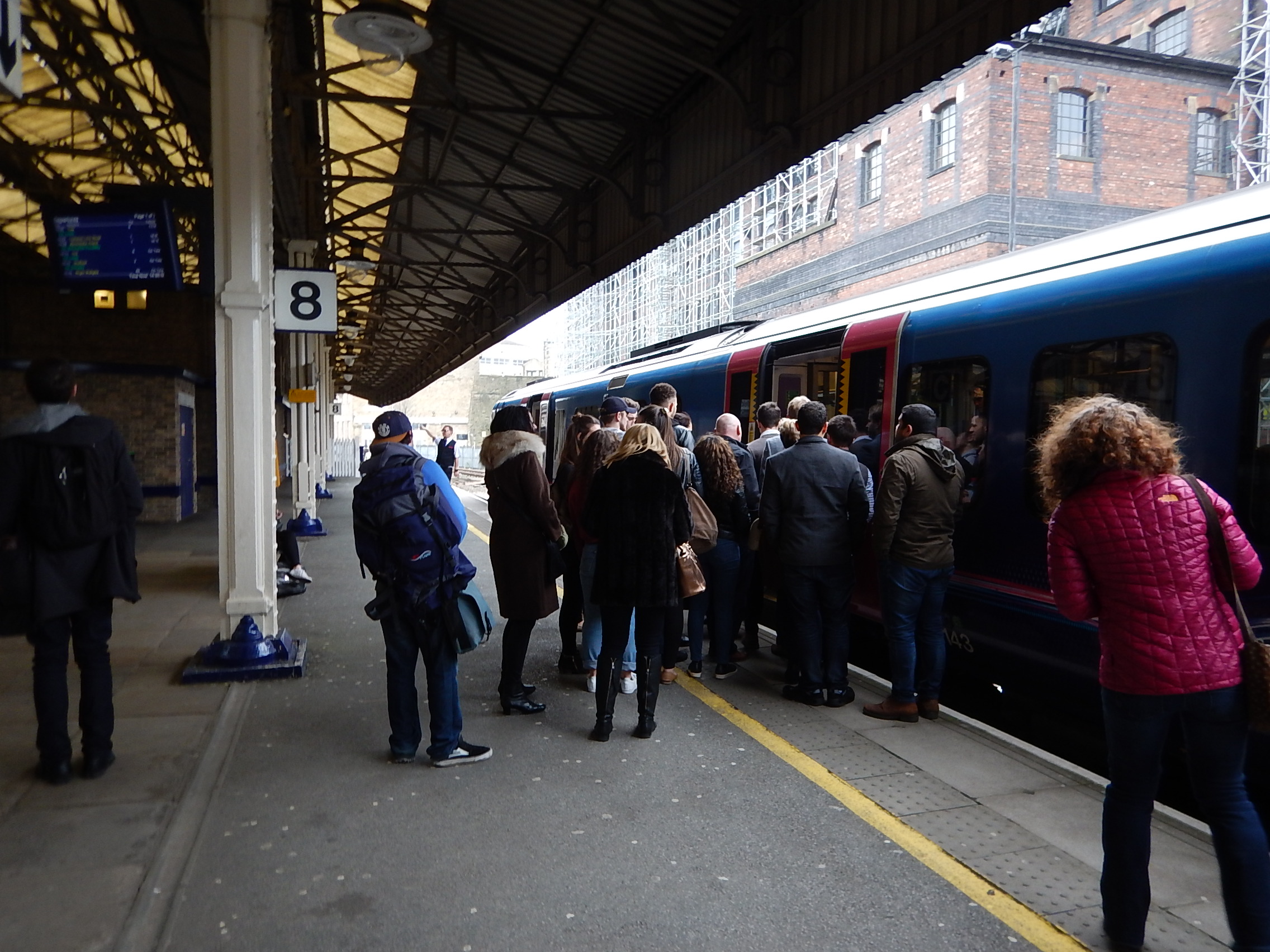
This is typical at Huddersfield.
Not even the Japanese with their pushers could get this to work.
But a modern train like the Class 802 train with wide lobbies and adequate capacity should cope.
So what time could be possible, if everything goes as planned?
If Norwich to Ipswich which is about the same distance as Leeds to Manchester, can be achieved in thirty minutes, I believe it is possible that the Northern route could be achieved in the same time or perhaps thirty-five minutes.
Thirty-five minutes should be adequate for a few years, if say there was a train every ten minutes!
Long Term – A Genuine High Speed Manchester Victoria To Leeds Route
I’ve flown my virtual helicopter between Manchester and Leeds and it is not flat agricultural land like seventy percent of the route of HS2.
I believe that creating a genuine high speed route, with say a 140 mph top speed across the Pennines will be a major engineering challenge that will make Crossrail in London look easy.
It may even be more economic to develop 140 mph hydrogen-powered tilting trains, that can run on the classic route at 125 mph.
Only one thing matters to passengers; a fast reliable and very comfortable and affordable train service across the country.
Manchester Victoria To Manchester Airport
When the Ordsall Chord opens any Leeds to Manchester Victoria service can continue to Deansgate, Oxford Road, Manchester Piccadilly and Manchester Airport stations.
Manchester Victoria To Liverpool
Currently, services between Liverpool Lime Street and Manchester Victoria stations take a few minutes over half-an-hour.
I would suspect that thirty minutes is achievable, if the following is done.
- The four-tracking at Huyton is completed.
- Track and signalling is the best it can be.
- The route has a 100 mph operating speed.
- All trains on the route are 100 mph capable.
- Northern replaces their scrapyard specials with Class 195 trains.
I suspect all of this is in progress.
Note, this is very similar work, to that needed between Manchester and Leeds.
Leeds To Hull
Currently, services between Leeds and Hull stations take a few minutes under an hour.
A few thoughts on the route.
- The Selby Line from Leeds to Hull is double-track and not electrified.
- From my virtual helicopter, it appears to be straight in very flat country, so it is no wonder Hull Trains offered to electrify the line.
- If the Selby swing bridge were to be sorted, it could become a 100 mph line with trains to match.
- Northern replaces their scrapyard specials with Class 195 trains.
- Modern in-cab signalling.
I suspect quite a few minutes could be taken off this route which is about fifty miles.
I suspect this line will eventually be electrified, as it could give sound time savings and it looks relatively easy.
York To Scarborough
Currently, services between York and Scarborough stations take forty-nine minutes, with one tph.
- Similar improvements to the double-track unelectrified line as for the Leeds to Hull route, could be made.
- But if the line has a problem , it is that it has 89 level crossings, although Network Rail intends to close them all before 2025.
I wonder, if the time can be reduced between York and Scarborough, such that two tph can be timetabled.
I doubt York to Scarborough will be electrified.
Northallerton To Middlesbrough
This short line is quite heavily used and is a valuable diversion route, so I suspect nothing urgent needs to be done.
Like Leeds to Hull, I suspect this line will eventually be electrified.
Conclusions
I have come to the following conclusions.
- Manchester Victoria to Leeds is achievable in half-an-hour with the new trains on order and no major infrastructure, other than that already planned.
- Any line where TransPennine Express services run needs to have the highest possible operating speed and no slow trains.
- Northern need to get their Class 195 trains into service as soon as possible.
Improvements are much-needed in the North, which could include.
- A short/medium term plan to deliver the best possible service with the new trains ordered by Northern and TransPennine Express.
- A long term plan to deliver a genuine 140 mph service across the North of England.
- A plan to improve the Calder Valley and Hope Valley Lines across the Pennines.
- A plan to improve some of the poor connections across the North.
- A strategy to make the best use of connections with HS2.
A detailed plan is needed that lays down what should be done in the next ten to twenty years.
The plan is also needed as soon as possible.
Could Platform 13 And 14 At Manchester Piccadilly Station Be Improved?
I took this picture on the island platform 13 /14, at Manchester Piccadilly station on my trip to the North last week.
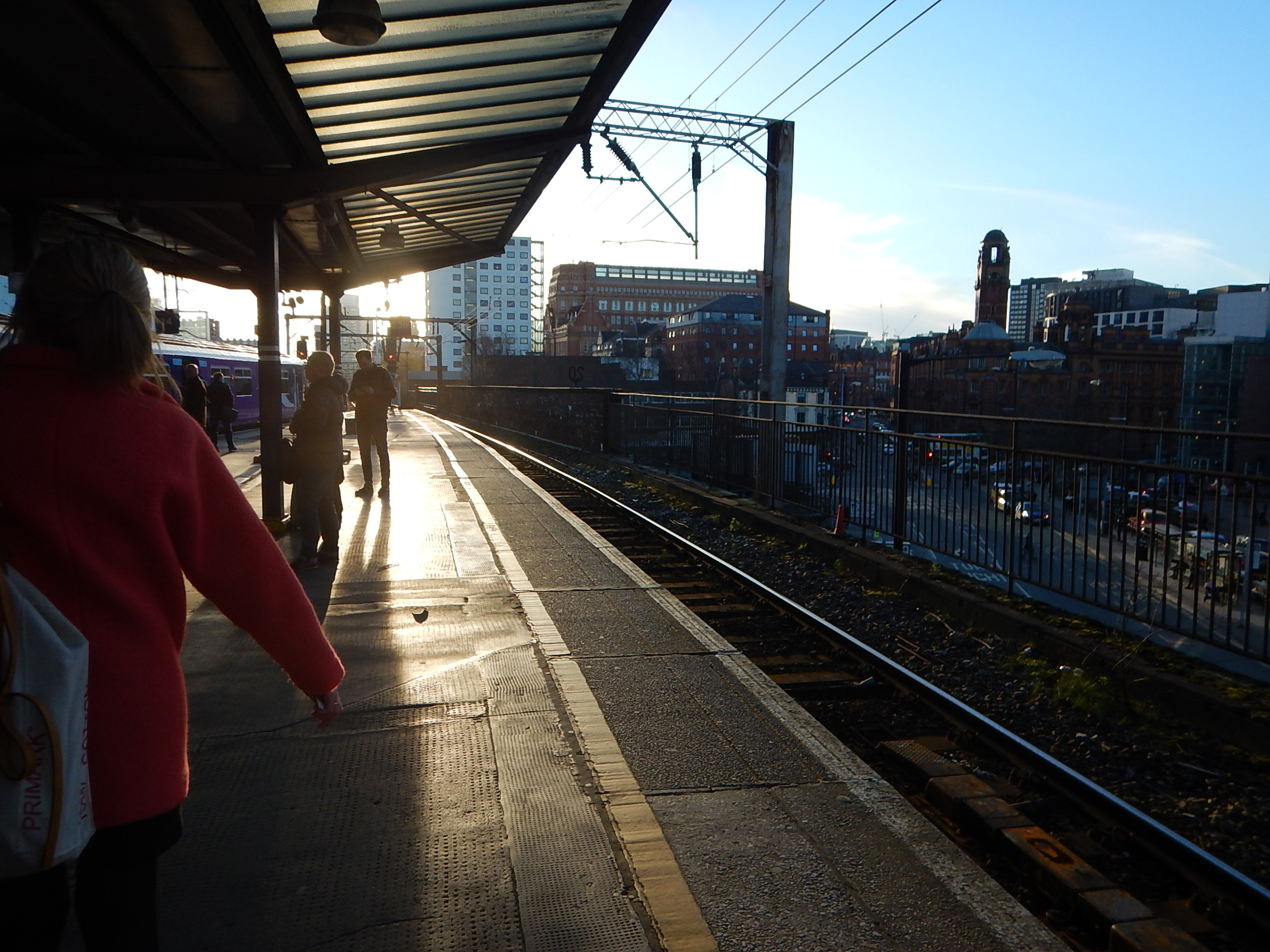
I actually took the picture, as I wanted to check if the lines were electrified, which can be seen.
Services Through Manchester Victoria, Manchester Piccadilly and Salford Crescent Stations
After the current works on the Ordsall Chord has been completed, Manchester Victoria, Manchester Piccadilly and Salford Crescent stations will form a triangle of lines and stations, through which services passing through Manchester will travel. This map from Wikipedia shows the lines in a simplified form.
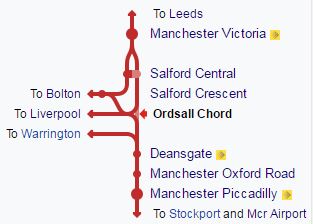
Note the lines to Leeds, Bolton, Liverpool, Warrington, Stockport. It is a real Crossrails of the North.
The only similar intensive set of railway junctions in a city with multiple terminal stations is be the tangle of lines across the South Bank of the Thames in London encompassing London Bridge, Cannon Street, Blackfriars, Waterloo East and Charing Cross stations. This map from Wikipedia shows the lines in a simplified form.
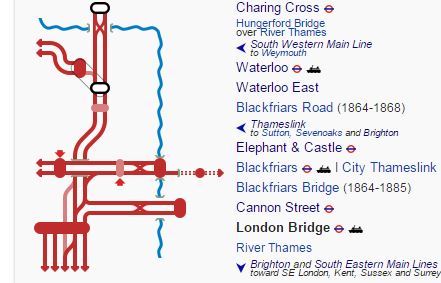
Simple it is not!
As an aside it should be noted that Thameslink is planned to run twenty-four trains per hour (tph), through the central core tunnel, of which sixteen tph stop at both Blackfriars and London Bridge stations. Add in the 14 tph terminating at Charing Cross and the 16 tph terminating at Cannon Street, all of which stop at London Bridge and you get a measure of the capability of modern signalling.
Northern Electric Services To Manchester Airport
As I write this, Northern Electrics trains from Liverpool Lime Street, Edinburgh via Wigan North Western and Blackpool North via Bolton are all scheduled to call in Platforms 13 at Manchester Piccadilly station within the next hour on their way to Manchester Airport. Only the Liverpool service is run by an electric train, which is one of the 100 mph Class 319 trains.
But after the Manchester to Preston Line via Bolton and the Blackpool Branch Lines are electrified and the Ordsall Chord is opened, which will hopefully happen late in 2017, there could be more Northern |Electrics services through these platforms going to Manchester Airport from these and other stations.
- Barrow-in-Furness – Flex
- Blackpool North
- Bolton
- Blackburn – Flex
- Huddersfield – Flex
- Liverpool Lime Street
- Manchester Victoria
- Preston
- Stalybridge – Flex
- Warrington Central – Flex
- Windermere – Flex
Stations marked with Flex will be run by Class 319 Flex trains, but as they will be running on the overhead wires through these platforms to and from the Airport, they can be considered to be the same as the electric Class 319 trains.
If you look at the current service between Manchester Oxford Road and Manchester Airport stations, the frequency is something like eight trains per hour.
So there will be a large number of electric trains going through Platforms 13/14 at Piccadilly! And the trains will be getting longer, with the minimum train size being four-cars and surely eight-cars are possible on some routes.
All of these services will bring passengers to and from Platforms 13 /14 at Piccadilly.
Manchester’s New Urban Link
Across the South Bank of London most people take the Jubilee Line!
But I don’t!
Between say London Bridge and Charing Cross, I will use Southeastern’s 14 tph service between the two stations, as it’s quicker, the views are better and there’s less walking in tunnels underground.
And according to some of their Customer Service people, I’m not the only one.
Manchester will also be getting a new similar high capacity urban link from Manchester Piccadilly station across the city, that will serve.
- Manchester Oxford Road
- Deansgate
Before splitting into two branches.
- Salford Crescent via the Windsor Link
- Salford Central and Manchester Victoria via the new Ordsall Chord
As there is also a line that joins Salford Crescent to Manchester Victoria via Salford Crescent, train planners will have a lot of scope for improving services.
- Liverpool and Manchester services have a choice of Manchester terminals and a variety of routes.
- A service linking Edinburgh, Newcastle, York, Leeds, Huddersfield, Manchester Victoria, Manchester Piccadilly and Manchester Airport would be possible. Current services go via the West Coast Main Line.
- Inwards to Manchester, an improved Salford Crescent station could be a cross-platform interchange with Salford Central/Victoria services on one platform face and Deansgate/Oxford Road/Piccadilly/Airport services on the other.
- Similarly, outwards from Manchester, Salford Crescent station could be a cross platform interchange between services.
I think that this could lead to the Metrolink being connected to one or both of the two Salford stations.
To sum everything up, there will be lots of trains going through the three stations of Manchester Victoria, Manchester Piccadilly and Salford Crescent.
And all those trains using the Windsor Link and the Ordsall Chord will be coming through Platform 13 or Platform 14 at Manchester Piccadlly station.
Overcrowding At Platform 13 and 14 At Manchester Piccadilly Station
Overcrowding at these two platforms is bad enough already and it’s going to get worse if more and longer trains are running through the platforms.
Looking at the picture, the platforms are not overly-wide either.
But at least there are solutions, as I’ll discuss now.
The Alternative Route
Londoners are world-champions at ducking-and diving and will find the route that is quickest after a few weeks of a new rail line or bus route opening. It’s probably one of the reasons that Transport for London, placed the forecast for the passenger usage on the London Overground on the low side.
I don’t know how Mancunians will react to the Ordsall Chord and the new Northern Electrics services, but if they quickly suss-out the best route for their personal journey, this may mean that passengers avoid using Platforms 13/14 at Piccadilly.
There are a quite a few interchange stations on the Piccadilly-Salford Crescent and Piccadilly-Victoria routes through the City.
Better Access To The Island Platform 13/14
Access to the island platform is not good and perhaps more escalators and lifts will help.
Whatever is done to improve the through route, improvement of the access will be on the list of projects to perform.
A Bigger Island Platform 13/14
Looking at the picture in this post, I wonder if the island platform could be made bigger.
If it was wider, this would need the tracks to be moved apart and if this is possible another metre on the platform width would help.
I was on Platform A at St. Pancras Thameslink station this morning and it is very long platform, with the trains stopping vaguely in the middle, thus leaving spare platform space at each end.
So if the platform could be lengthened would this help with the overcrowding?
This Google Map shows the Western end of Platform 13/14.
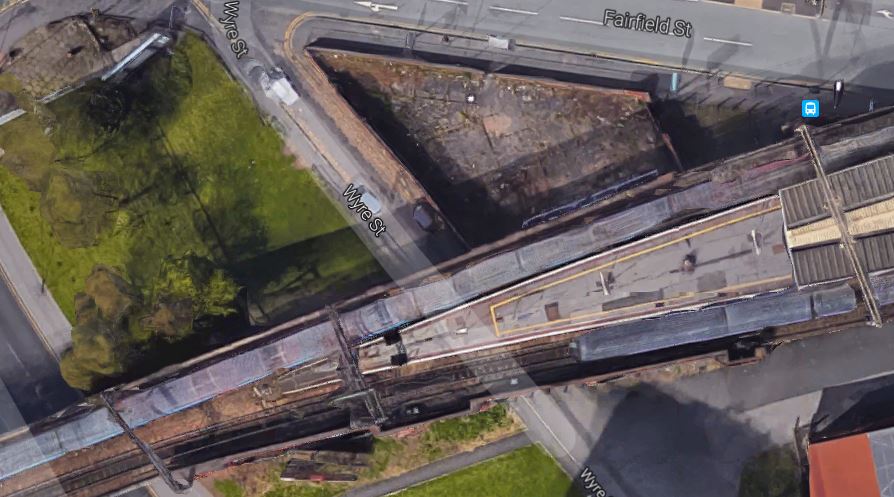
Platform 13/14 is the pointy one in the middle.
And this one the Eastern end.
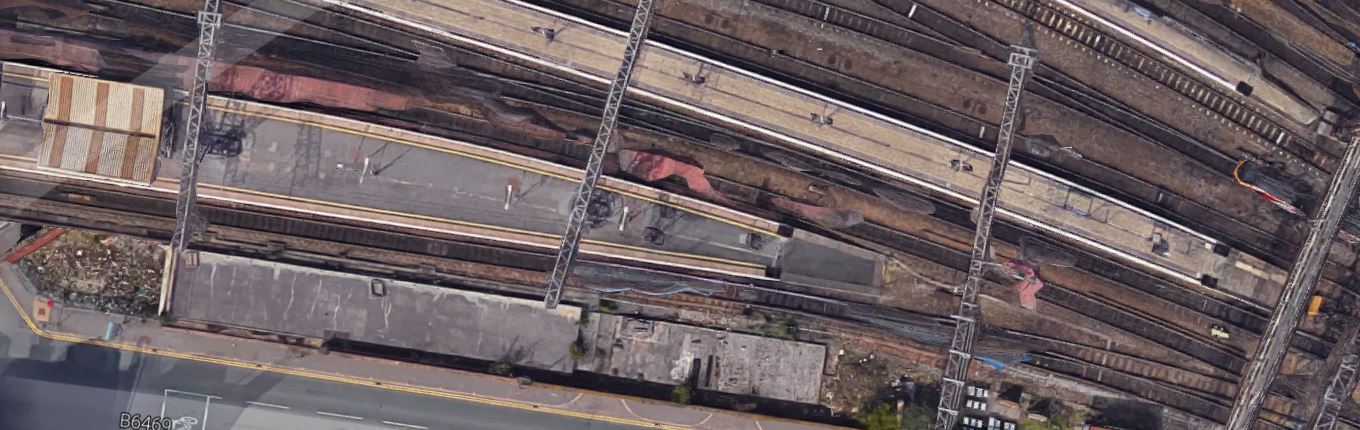
Again Platform 13/14 is the one in the middle.
It’s all very tight and I estimate Platform 13/14 isn’t much more then ten metres wide at any point.
Access to Platforms 13/14 From Below
I don’t know whether this is possible, but the platforms sit on a large viaduct and in many stations like this escalators and lifts are used to access the platforms from below.
This picture shows the Platforms on the viaduct.
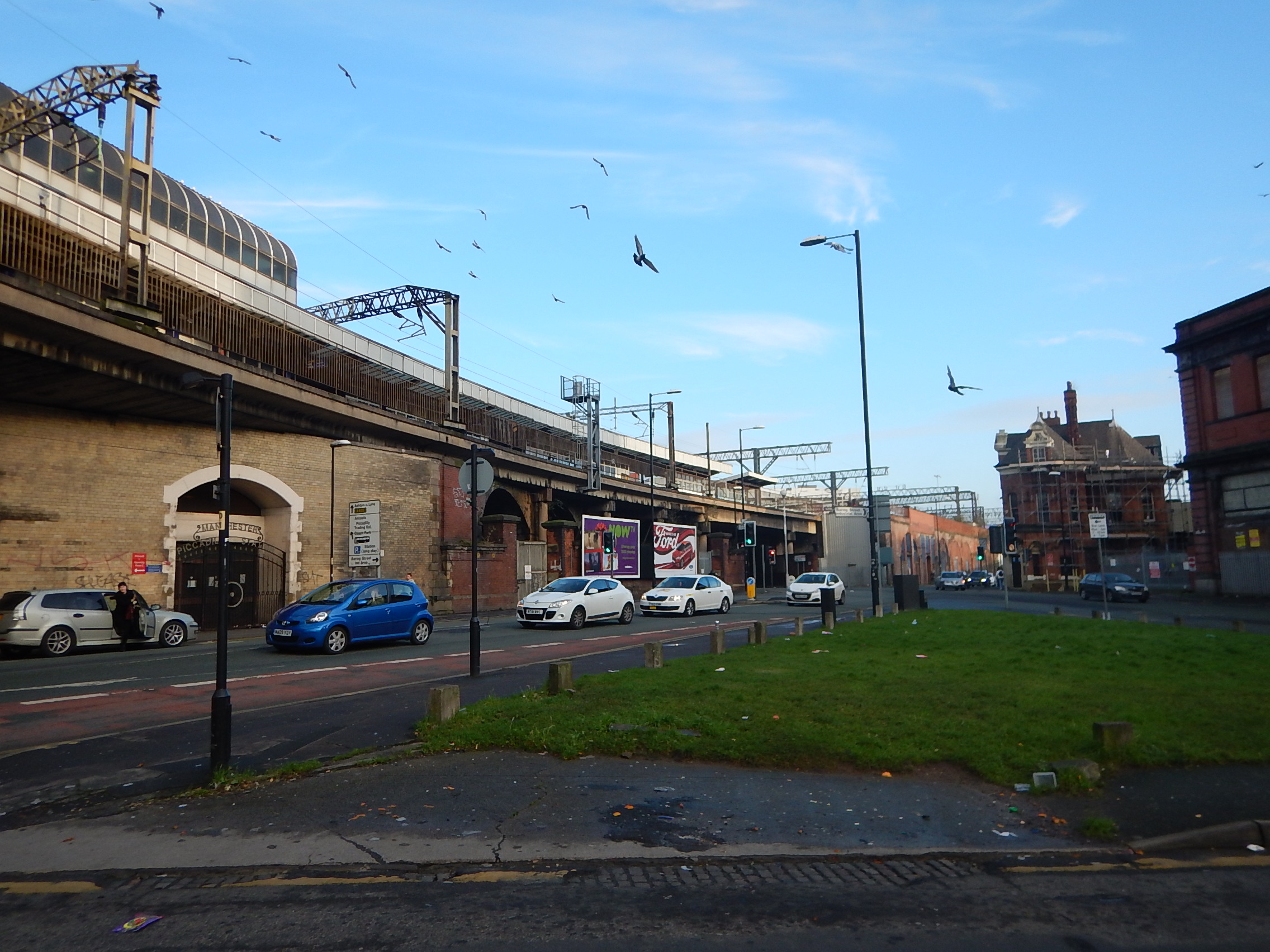
Platform 14 is closest to the camera.
I think that with imagination, access might be possible from this side.
A New Bridge To Platforms 13/14
This Google Map shows the London end of the platforms at Piccadilly.
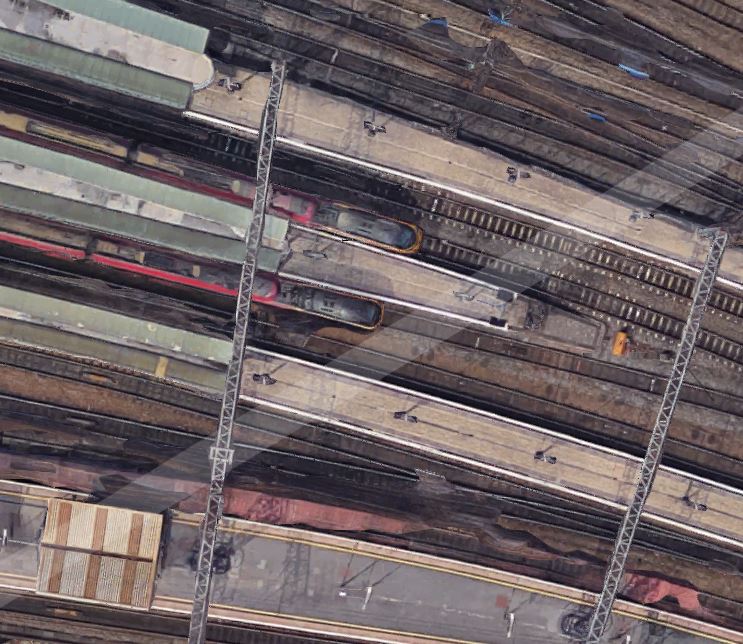
Platform 13/14 is at the bottom of the picture.
I think there is space to put a second bridge over the platforms here and it could reach all the way to the new HS2 platforms on the other side of the station.
Platforms 15 And 16 At Manchester Piccadilly Station
Building two new platforms 15 and 16 has been touted as a solution.
I think that the key to whether four through platforms is needed, is how many trains will be going through.
In a few years time the two track cross-London lines; Crossrail aqnd Thameslink will be handling 24 tph, with a third; the East London Line handling 20 tph.
Also at London Bridge, 54 tph in both directions are handled by nine platforms, which means that an average of 12 tph go through each platform.
If you look at the Y-shaped line through Manchester, Thameslink could be overlaid on the top.
- Blackfriars would be Platforms 13/14 at Piccadilly.
- St. Pancras Thameslink would be Deansgate.
- West Hampstead Thameslink would be Salford Crescent.
- Finsbury Park would be Victoria.
Other conditions would be needed for a throughput approaching that of Thameslink.
- All trains must be modern electric trains, capable of making quick stops.
- All trains must be fitted with modern signalling.
- No trains terminating at Manchester Oxford Road
- Some services from the North linked back-to-back with services to the South to free up platform space at Victoria and Piccadilly.
Thameslink is aiming for 24 tph and currently runs 14 tph.
I can’t see, if everything is done correctly, that Platform 13/14 at Piccadilly can’t handle somewhere between 14-24 tph.
And as Thameslink manages 14 tph with a proportion of Class 319 trains, I would be very surprised if this figure is not attainable.
Under Proposal in the Wikipedia entry for the Ordsall Chord, this is said.
The Ordsall Chord will provide a direct link between Piccadilly and Victoria stations, allowing trains from Manchester Victoria and the east to continue to Piccadilly. On completion the chord will allow four trains per hour to travel between Manchester Airport/Manchester Piccadilly and Manchester Victoria in each direction, eight trains per hour from Manchester Victoria towards the west via Chat Moss, and six trains per hour from Manchester Piccadilly towards either Chat Moss or Bolton and Preston. Other trains will travel from Manchester Piccadilly via Warrington.
This appears to say that only the following trains would use Platform 13/14 at Piccadilly.
- 4 tph Manchester Airport/Piccadilly to Victoria
- 6 tph Piccadilly to Chat Moss or Bolton/Preston
So that is just 10 tph.
Currently, in the Peak, it appears that the frequency of trains between Oxford Road and Piccadilly is 10 tph.
I have a feeling that with a bit of reorganisation of services, the rather difficut problem of building Platforms 15/16 can be delayed for ten years or more, if not for ever.
Manchester Airport From The South
How would people from Birmingham, London and the South get to Manchester Airport?
There are two routes.
- Change at Manchester Picaadilly to any of the several tph to Manchester Airport
- Change at Crewe to the Crewe-Manchester Line.
I would use the second option as it’s fifteen minutes quicker and avoids Platform 13/14 at Piccadilly.
I suspect that the train companies will reorganise their services from Crewe to Manchester via the Airport to take advantage of the Ordsall curve and the new electrification North of Manchester.
HS2 Arrives At Crewe
HS2 will have various effects, when it arrives at Crewe in 2027!
One interesting idea, borrowed from the French, would be to split and join, shorter HS2 trains at Crewe. So perhaps two or even three shorter units would work as a larger unit between London and Crewe.
The advantage of this is that anywhere that is electrified and has a platform long enough could get a high-speed service to London and the South, if the market was there.
According to this page in the Guardian, Crewe will be just 58 minutes from London, instead of the fastest time of 97 minutes today.
Currently Crewe to Manchester Airport takes thirty minutes in a Class 323 train. If as I suspect HS2 trains can run efficiently on classic lines, the following times might be possible using the 110 mph Crewe-Manchester Line to complete the journey.
- Manchester Piccadilly – 88 minutes instead of the current 127 minutes.
- Manchester Airport – possibly 78 minutes instead of 144 minutes.
- Stockport – 76 minutes instead of 115 minutes
No services would need any changes.
But a train might leave London, do a quick stop at Crewe, where it divided with one portion going to Manchester Airport and the other to Stockport and Manchester Piccadilly.
The operator would be able to run short HS2 trains on the classic lines to the North and East of Manchester using the lines now being electrified.
Currently, Huddersfield to Manchester Piccadilly takes 33 minutes, so a modern electric train must be able to do the journey in 20 minutes.
On my estimate of 88 minutes to Piccadilly using HS2, on the electrified existing tracks Huddersfield could be reached without a change in 108 minutes.
The current fastest time is 175 minutes with a change at York.
Running HS2 trains through platforms 13/14 at Piccadilly would have no effect on the design of the platforms, as the HS2 trains will be designed to run to any electrified platform, that is long enough.
The interesting destination of a portion of a train would be Blackburn, if the electrification was extended to the town.
I estimate it could be done in 133 minutes without a change as opposed to 162 minutes today with a change at Preston.
Until 1964, the Ribble Valley Line used to host a Manchester-Glasgow express and now I believe it could have a HS2 service to and from London.
Conclusion
Manchester and its environs will get a much better rail system.
But I suspect it will be some years before Piccadilly gets Platforms 15/16
Walking Manchester Metrolink’s Second City Crossing
I took these pictures when I walked the route of Manchester Metrolink‘s Second City Crossing (2CC).
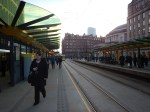

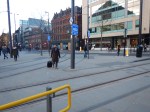



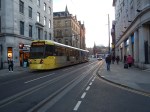
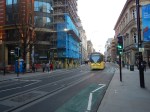


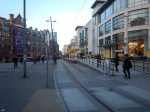
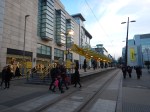
I think it could be more interesting than just a second route across the City Centre for the trams.
This Google Map shows the train and tram lines through Deansgate station and Deansgate-Castlefield tram-stop,
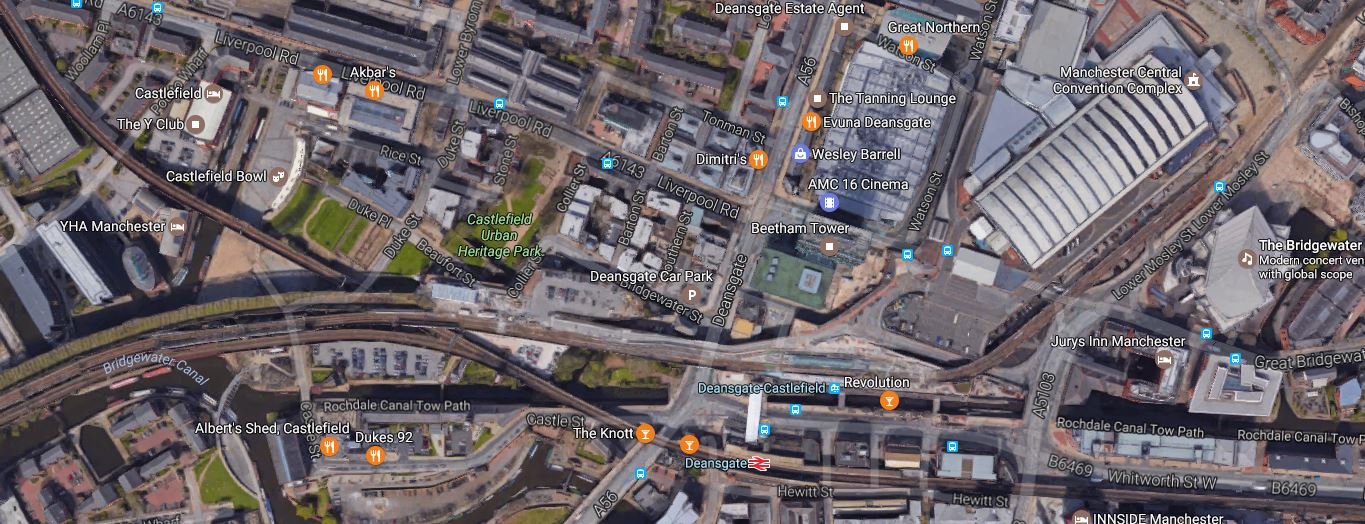
Note.
- St. Peter’s Square tram-stop, which is the Western end of the 2CC, is the next one to the East from Deansgate-Castlefield.
- The rail and tram lines run close together to the West of Deansgate station.
- The rail line runs to Trafford Park, Warrington Central and then on to Liverpool.
This Google Map shows the train and tram lines to the immediate East of Manchester Victoria station.
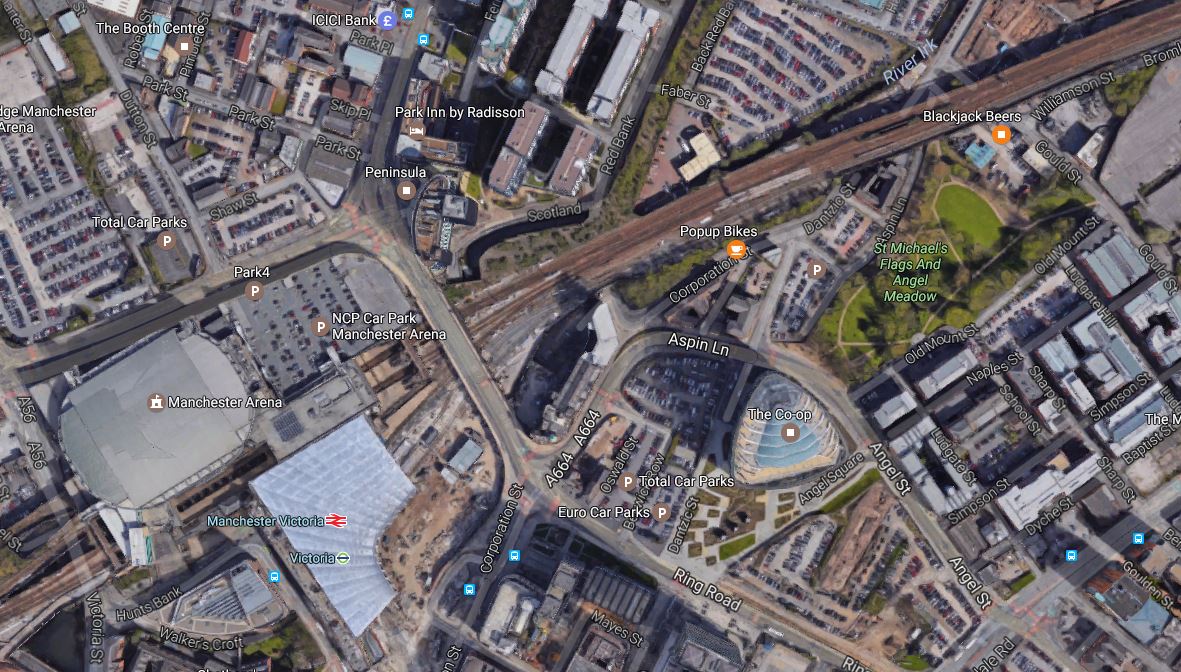
Note.
- Victoria station is the Eastern end of the 2CC.
- The rail and tram lines run close together to the East of Victoria station.
- The rail lines run to Rochdale, Burnley, Hebden Bridge and Ashton-under-Lyme.
I can’t believe that the 2CC wasn’t designed without thinking about incorporating it as part of a tram-train route across the City.
Consider the Class 399 tram-train being trialled in Sheffield.
- It can work as a standard tram on a tram network, running under tram rules.
- It can work as 62 mph train on an electrified rail line.
- It can run on both 25 KVAC and 1500 VDC overhead electrification.
- On rail lines it can share with any train, like for instance a Class 319 pr Class 185 train.
It would probably need to be a version tailored to Manchester’s tram standards, but once the Manchester to Liverpool Line via Warrington and the Calder Valley Line are electrified, a Class 399 tram-train could work the following route.
- Starting from Liverpool Lime Street it would run as a train until just before Deansgate station.
- It would then switch to the tram lines and take the 2CC to Manchester Victoria station, running as a tram.
- To the East of Victoria station, the tram-train would switch to the Calder Valley Line and run as a tram, perhaps to Burnley or Hebdeb Bridge.
You have to remember that tram-trains are a bit like 4x4s and if there is a route on which they can run, then they can take it given that track, electrification and signalling are in place.
There would be no reason, why once at Burnley say, the tram-train could not go walkabout around the town.
Conclusion
On a quick look, it would appear that the Second City Crossing (2CC) has been built so that tram-trains across the city centre have not been ruled out.
Passing The Ordsall Chord Site
The first set of pictures were taken on Friday between Deansgate and Salford Cresent stations show the current state of the bridge across the River Irwell.


I took these pictures were taken on the Saturday, as my train from Liverpool went between Eccles and Manchester Victoria stations and then from a second train from Manchester Victoria on its way to Wigan via Salford Central and Salford C resent stations.
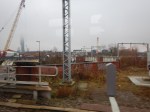
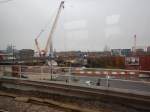


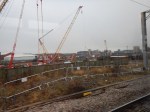
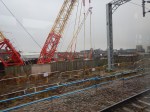

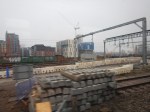
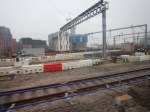

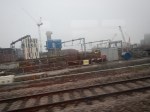
Note.
- The first train was the 11:20 from Liverpool Lime Street to Manchester Victoria.
- The second train was from Manchester Victoria to Wigan Wallgate.
- The biggest crane on the site has a capacity of 1,350 tinnes and is the largest mobile crane in the country.
I’ll be going back, when it all reopens to have a look.
Probably the best way to get the pictures is to go to Manchester on a sunny day, buy a Lancashire Day Ranger ticket and constatntly shuttle back and forwards across the various lines.
The Future Of The Calder Valley Line
On Saturday and Sunday, I did four trips on the Calder Valley Line
- From Leeds to Burnley Manchester Road
- From Burnley Manchester Road to Manchester Victoria
- From Manchester Victoria to Hebden Bridge
- From Hebden Bridge To Leeds
The pictures aren’t as comprehensive, as I would like, but at times the rain was very heavy.
The Route And Trains
This diagram clipped from Wikipedia, shows the route of the Calder Valley Line.
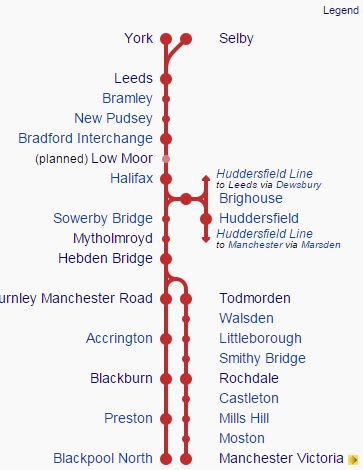
Calder Valley Line
Note.
- Since the opening of the five hundred metre long Todmorden Curve last year, there is now a direct hourly service between Blackburn and Manchester Victoria via Accrington, Burnley Manchester Road and Todmorden. I used this valuable new service on Sunday.
- Brighouse station reopened in 2000 on a link between the Calder Valley Line and the Huddersfield Line.
- The Huddersfield Line is being electrified.
- Low Moor station is being built and should open next year.
There is not much electrification.
- Leeds to York is either electrified or will be in conjunction with the Huddersfield Line electrification.
- Other routes between Leeds and the other Bradford station; Forster Square are electrified.
- Manchester Victoria station is electrified.
- Preston station is electrified and hopefully will be electrified to Blackpool North station.
The trains are a mixture of diesel Class 150 and Class 158 trains, run by Northern Rail. The Class 150s are a bit small and uncomfortable for the route and the top speeds of 75 mp for the Class 150s and 90 mph for the Class 158s, are probably not fast enough, especially as the two ends of the line have higher speed limits.
The Future
Wikipedia has a section on the Future of the Calder Valley Line. This is said.
Improvements to the line are proposed as part of Network Rail’s Northern Hub plans, which would allow for more frequent services on the line. Some services via Bradford would also be extended to Chester,Crewe, Liverpool and Manchester Airport. The Chester & Liverpool services have since been incorporated into the new Northern Rail franchise agreement – awarded to Arriva Rail North in December 2015 and due to start in April 2016, these will be marketed under the “Northern Connect” brand and operated by new 100mph DMUs once delivered. The Manchester Airport trains will follow one the Ordsall Curve is completed in 2018.
Low Moor station, between Bradford Interchange and Halifax, is due to be re-opened in 2016. A business case is being developed to re-open Elland station between Halifax and Brighouse.
There is no mention of electrification, for which the earliest dates are quoted as somewhere in the period from 2019-2024.
But there is this article is on the Shields Gazette web site, with a title of Electrification of the Calder Valley is ‘top priority’ says Rail Minister.
This article is backed up by other statements, so Network Rail and the Government are thinking seriously about electrification of the Calder Valley Line.
Network development and/or electrification is happening at both ends of the Calder Valley Line and I’ll look at both.
Network Development in Leeds and Bradford
The West Yorkshire Metro has proposed electrification of the Harrogate Line and have performed an extensive new station study.
They have already opened Apperley Bridge station and Kirkstall Forge station will follow in a few weeks.
The new stations survey mentions these new stations.
- East Leeds Parkway – This will be a Parkway station on the Selby Line and will also be a terminus for services from the West, that now terminate in Leeds.
- Elland – This will be between Halifax and Brighouse.
- Haxby – This will be on the York to Scarborough Line
- Crosshills – This will be on the Airedale Line
As I said earlier Low Moor station is being built. It will be on the unelectrified line between Bradford Interchange and Halifax. If Elland station is reopened, then it will be the other side of Halifax towards Brighouse. To serve both these new stations trains will have to serve the following stations.
- Bradford Interchange
- Low Moor
- Halifax
- Elland
- Brighouse
- Huddersfield
This is a modification to the current hourly service from Bradford Interchange to Huddersfield via Brighouse.
In the next few years hopefully, Huddersfield will be electrified, but there is no chance that this route into Bradford Interchange will be electrified at the same time. It would probably be pointless, as Bradford Interchange station, unlike Bradford Forster Square station is not electrified.
To make matters a lot more complicated, the stupid fact that Bradford has two entirely separate stations, means the following.
- There is no train, that calls at both Leeds and Bradford and goes on to Huddersfield and Manchester.
- There is no train, that calls at both Leeds and Bradford and goes on to Halifax and Hebden Bridge.
- There will be no direct train between Leeds and Low Moor.
I think other journeys of less than twenty or thirty miles in the Leeds-Bradford area will probably be either impossible or much more complicated than they should be.
Also, at the moment, two of the Leeds-Bradford routes are electrified and the Calder Valley Line is not.
The only new electrification in the area planned, will be the fast route on the Huddersfield Line from Leeds to Huddersfield via Dewsbury.
To help in comprehension, this is a Google Map, showing how the Calder Valley Line links into Bradford Interchange.
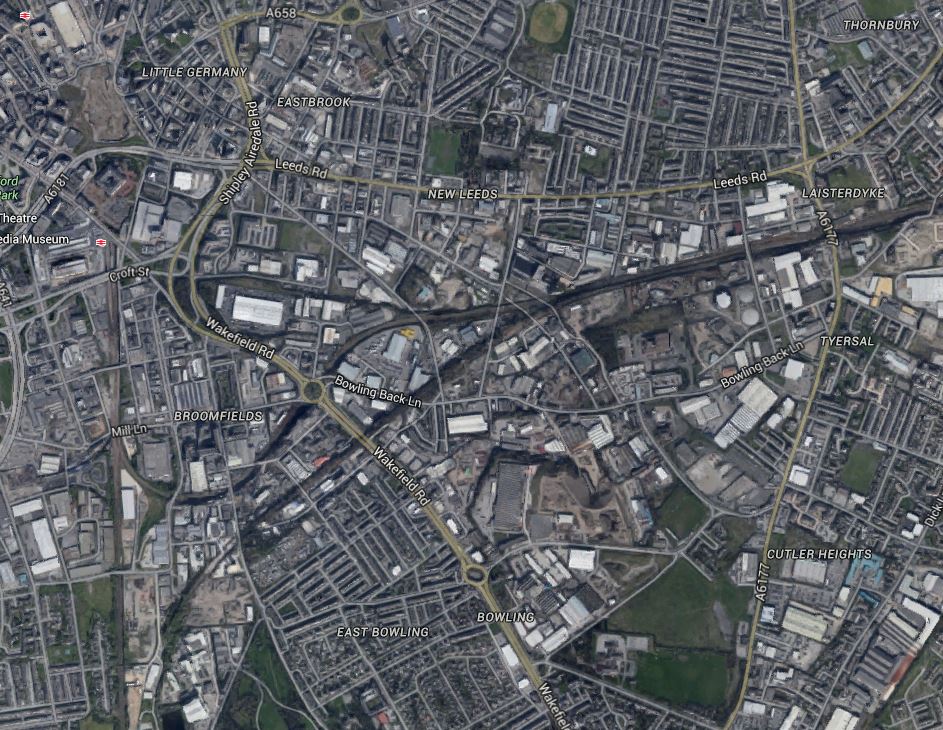
Bradford And The Calder Valley Line
Bradford Forster Square Station is in the North-East corner of the map, with Bradford Interchange below it.
Note how the Calder Valley Line comes in from Leeds in the east, before doing a turn to the north and Bradford Interchange station. After reversing in the station, trains leave the station in a southerly direction towards the new Low Moor station and onto the West. Because of the dark scar below the line, I wonder if in the past, there has been a connection by-passing the station.
It’s a mess!
The solution needs to be four-fold.
- Electrify Leeds to Huddersfield via Dewsbury. This is being done.
- Electrify the Calder Valley Line from Leeds through Bradford and Low Moor as far as Halifax.
- Electrify the link between the Calder Valley Line and the Huddersfield Line through Brighouse.
- Sort out the absurd situation of the two Bradford stations.
This would enable the West Yorkshire Metro to expand its network of electric trains in the area. It could even use IPEMUs, which would charge their batteries on the electrified core network and then provide services to other towns and cities.
- Scarborough via York and Haxby
- Hull
- Sheffield via Doncaster
- Ripon via Harrogate – I wrote about this in North Yorkshire Proposes Rail Expansion
- Colne via Skipton and a new section of track. – I wrote about this in The Todmorden Curve Has Helped A Campaign For More
I’m sure that the West Yorkshire Metro can be ambitious and will have other and better ideas.
Network Development in Lancashire
Currently, there is a lot happening at the other end of the Calder Valley Line.
- The Todmorden Curve has opened and a new hourly service runs between Blackburn and Manchester Victoria.
- Manchester Victoria station is becoming a top class station and an electrified hub for services spreading out from Manchester.
- Manchester Victoria to Liverpool Lime Street is now electrified.
- Manchester Victoria to Blackpool North via Bolton and Preston is being fully electrified.
- The Ordsall Curve is finally being built to link Manchester Piccadilly and Victoria stations.
- Merseyrail is acquiring a new fleet of trains, which may include IPEMUs.
With the devolution of local rail services to local bodies, I suspect other things will happen.
Northern Connect
Northern Connect is a new sub-brand that will be introduced by Arriva Rail North.
Services in the sub-brand using the Calder Valley Line include.
- Chester to Leeds via Warrington, Manchester Victoria and the Calder Valley
- Blackpool North to York via Preston and Leeds
- Bradford to Manchester Airport via the Calder Valley.
Will the first two services call at Bradford Interchange and will the third call at Leeds?
According to the January 2016 Edition of Modern Railways, these routes will be worked by new diesel multiple units.
The Chester and Manchester Airport services may need to be delayed until after the Ordsall Chord is opened.
But whatever happens Arriva Rail North will be running more services on the Calder Valley Line.
For commercial reasons, they would like to do the following.
- Run faster services.
- Run more frequent services.
- Run services with smart new trains.
- Run services with electric trains.
All except the last could be possible in the next few years.
The Current Infrastructure
The Calder Valley Line between Halifax and Burnley is summed up by Wikipedia like this.
For the section between Halifax and Burnley the line uses the valley of the River Calder, which in fact comprises two separate valleys with rivers of the same name, that of West Yorkshire and the Lancashire River Calder thus giving the services their name; it also follows the Rochdale Canal from Todmorden into Manchester. Since the route crosses the Pennines, there are many tunnels to negotiate en route.
I counted twelve tunnels and at least two major viaducts. The tunnels include at least three over a thousand metres, one of which; the Summit Tunnel is over 2.6 miles long.
The Summit Tunnel is one of the oldest rail tunnels in the world, is lined with 23 million bricks and has been used continuously since it opened in the 1840s.
This Google Map shows the challenging nature of the line.

Between Burnley And Todmorden
Note how the line threads its way between the hills and houses and uses a tunnel to get through.
It must be a nightmare on which to work.
As if the hills, valleys and rivers wasn’t enough, stuck in the middle of the line is the Grade II Listed Hebden Bridge station. I wrote about it in Hebden Bridge and feel that the heritage lobby will strongly resist any changes to this station.
In fact, electrification across the Pennines could bring out all the environment lobby, who feel views are more important, than jobs and prosperity.
I have a feeling, that any sane electrification engineer will look at this line between Manchester Victoria and Halifax and between Blackburn and Todmorden and say that electrifying the line is just not on!
He or she would also feel that leaving the sleeping giant of the Summit Tunnel lie would be best.
But apart from that, the line seems sound and in good order.
Electric Trains On The Calder Valley Line
If electrification of the Calder Valley Line is a top priority of politicians how can that be squared with the undoubtedly difficult nature of the work that would be required to electrify the line.
So what can be electrified?
- As I said earlier, there will be strong pressure to electrify around Leeds and Bradford. to perhaps as far as Halifax and Brighouse.
- I also suspect that electrifying from the West Coast Main Line at Preston to Blackburn would be relatively easy.
So this would leave the these gaps of lines and routes without electrification.
- Blackburn to Halifax – Around thirty miles
- Manchester Victoria to Halifax – Around thirty-five miles
- Blackburn to Manchester Victoria – Around forty miles
All of these runs would be totally within the range of an IPEMU.
Preston to Blackburn electrification, might also allow IPEMUs to take over the following routes.
- Blackpool South to Colne and possibly on to Skipton on a new section of track.
- Blackpool North to Settle
- Manchester Victoria to Clitheroe via Blackburn
So I believe it is possible for the Calder Valley Line to get electric trains, without the cost and disruption of installing the overhead wires.
Manchester Victoria Station Is Nearly Finished
It’s getting to the point, where the upgrade of Manchester Victoria station is nearly finished.

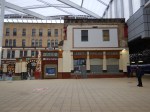

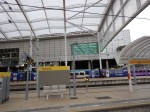
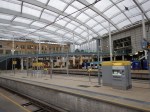
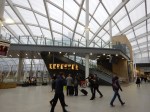

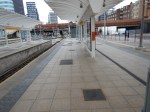

It really does show how good design can take a dark dump and make it a place you are happy to visit. Unlike Manchester Piccadilly, which now looks very third-rate.
There’s lots of space and it’s only a short walk to the trams.
In my view the following needs to be done to finish Victoria.
- Walking maps around the station.
- The Metrolink could do with better maps and information.
- A few litter bins.
- Contactless bank card ticketing.
But then the devil is in the detail.
Manchester should start to realise that it will get lots of visitors, who won’t know their way around the city centre.
The Proof That Good Design Doesn’t Have To Be Expensive
I’ve watched the transformation of Manchester Victoria station from a dirty dump over the last few years. These are a few posts.
- Manchester’s Disorganised Public Transport
- Victoria Gets A Posh Umbrella
- Will Manchester Victoria Station Be Promoted To The Premier League?
- Coffee And Seats At Manchester Victoria
But now as this article on the BBC shows, it’s all finished.
Compared to other station works in the UK, the title of the report is surprising – Manchester Victoria reopens after £44m upgrade
But then the best design is often not as expensive as the crap!
Long may Victoria reign in Manchester!
Coffee And Seats At Manchester Victoria
The upgrade at Manchester Victoria station is approaching completion and as I passed through yesterday, the refreshment room was open and their were extra chairs everywhere in a Northern Rail promotion.








It’s just a pity that the coffee shop, just had to be those tax-avoiders; Starbucks.
Restoring Manchester Victoria Station
I took these pictures as I passed through Manchester Victoria station today.




Some might think, that we spend more time and effort on getting the heritage details perfect, than we do on improving the experience for passengers.
My only hope is that if this space gets used as a restaurant, then it gets one with a bit of quality.
Will Manchester Victoria Station Be Promoted To The Premier League?
When I arrived at Manchester Victoria station, I expected the usual mess and a walk to pick up the tram to Piccadilly.
But I was greeted by a dry station, where the trams were now sheltering under an almost complete, but spectacular roof!
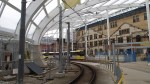

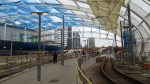
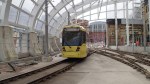








Victoria may date from the 1840s, but look at her now!
There was also today’s news on the Modern Railway’s web site, that the Class 319 trains had started working from Liverpool to Manchester Airport.
As my train went past Liverpool South Parkway later, I got several glimpses of smartly refurbished trains cascaded from Thameslink.
Soon, they will be running between Liverpool Lime Street and Manchester Victoria stations via Wigan.
Are one sprightly Victorian lady and a set of reliable British Rail-era electric trains finally going to give Manchester and Liverpool, the first class train connection they need and deserve?

