Two Bombed Out Churches
In the UK, we have several bombed-out churches from the Second World War. I have post about St. Luke in Liverpool before, which is generally known in the city as the bombed-out church.
On my weekend trip to Plymouth and Bristol, I came across two more. First was the Charles Church in Plymouth.
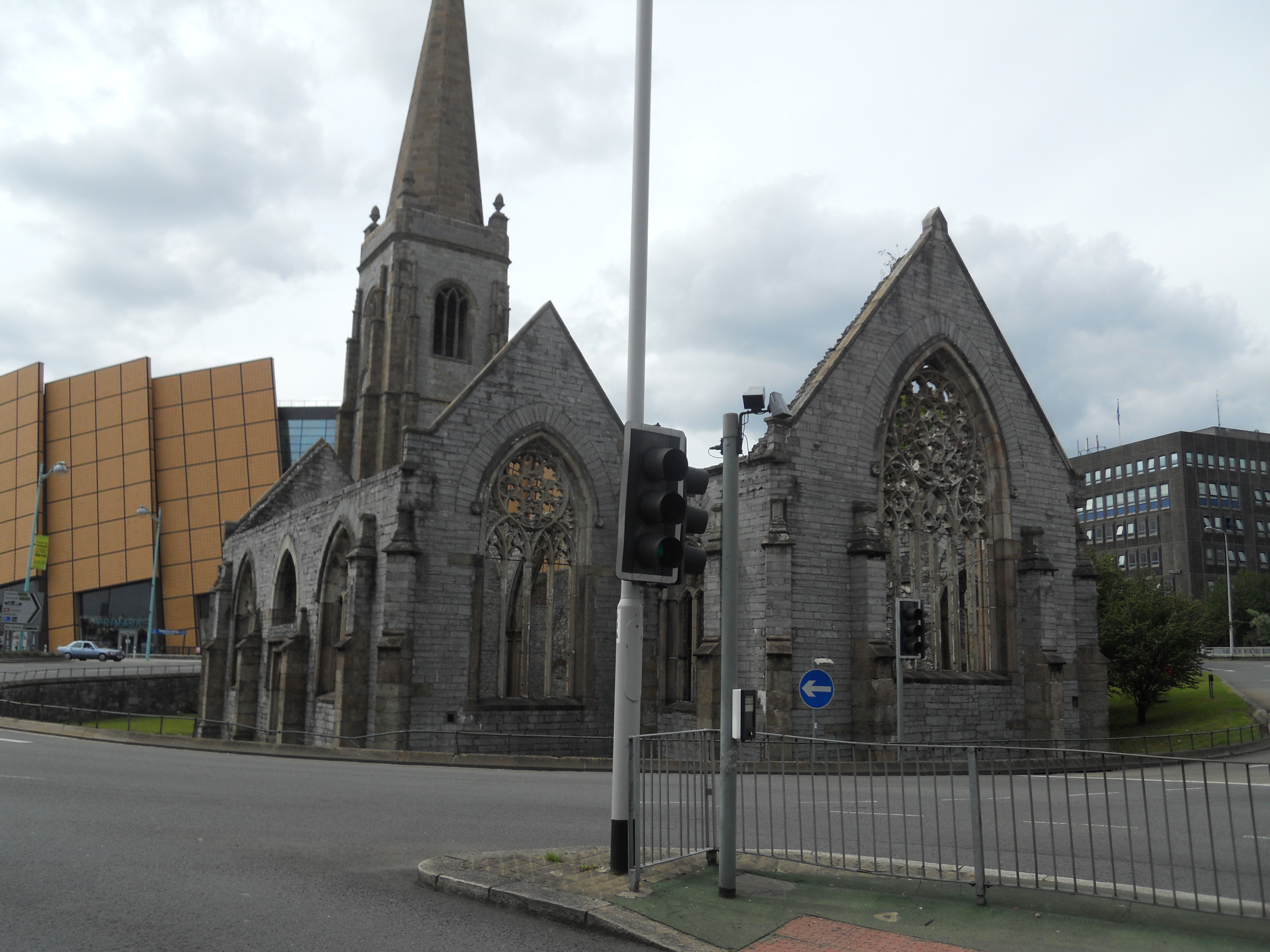
Charles Church, Plymouth
If ever there a badly situated ruin, that is a monument to the excesses of town-planning it is this. Surely, they could at least given pedestrians access, but it seems to be unfortunately left in the wrong place by the bombing of the Second World War.
In some ways, this church sums up Plymouth. Very disappointing!
And then there was St. Peter’s in Bristol.
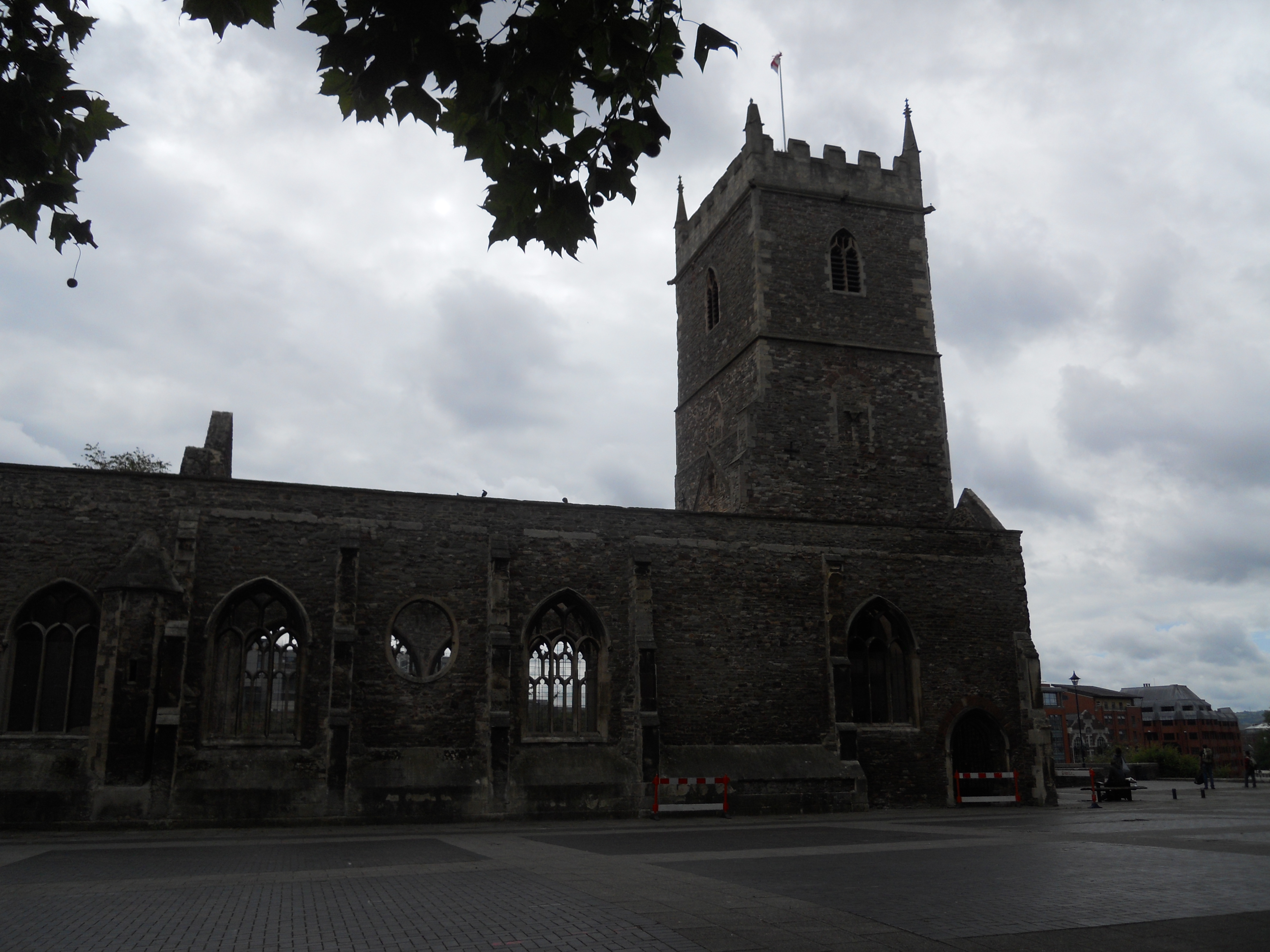
St. Peter's Church, Bristol
The surroundings have been left to show it off properly as a monument to those who died. It also had an information board.

Information on St. Peter's Church, Bristol
Plymouth could learn a lot from Bristol.
The Museum of London Docklands
I ended up here yesterday by accident, as I’d gone to Docklands to have lunch and got caught in the rain. So as it was free I went inside.
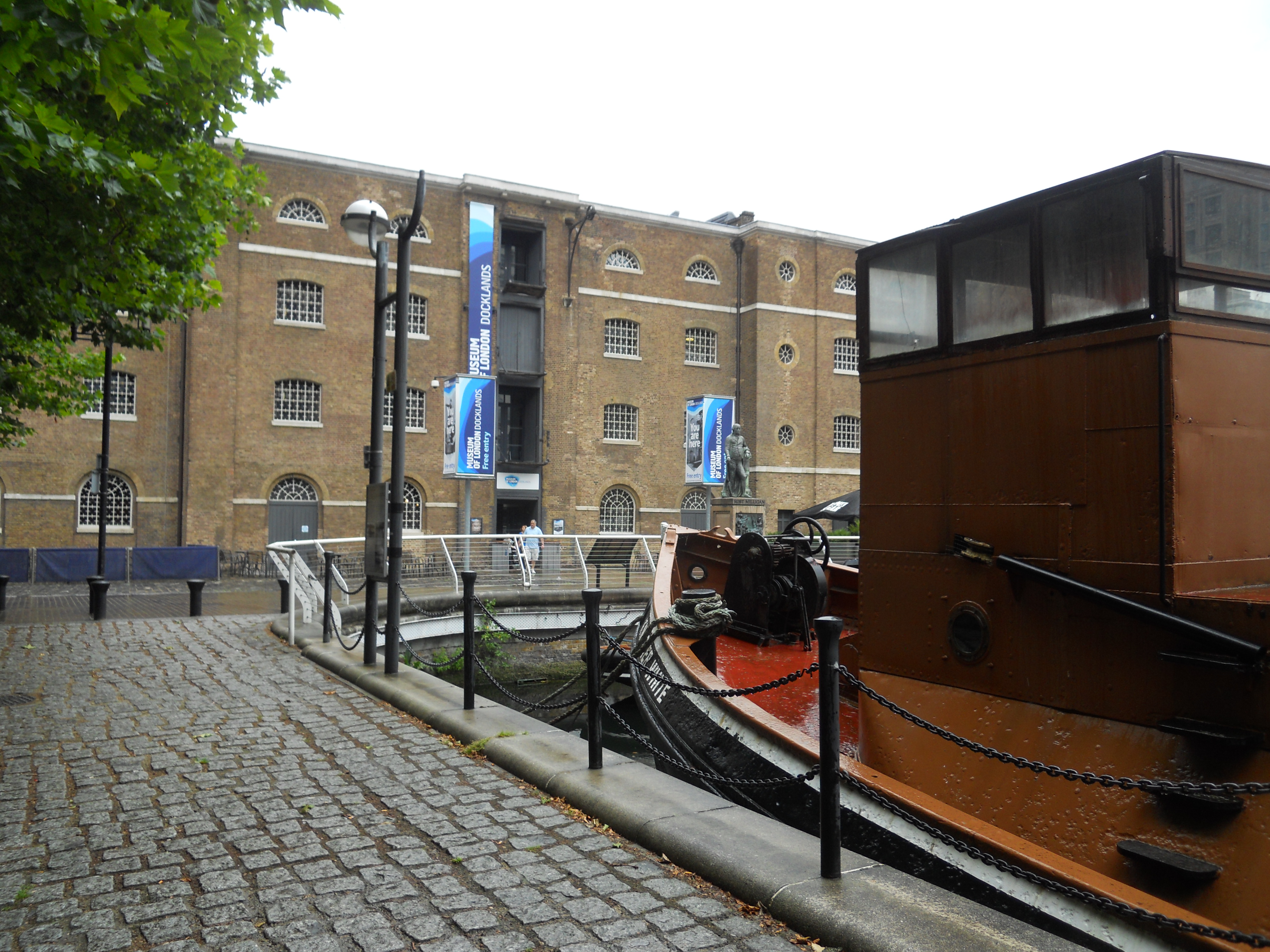
Museum of London Docklands
It was definitely worth a visit. I should say that it is very comprehensive and it will take at least three or four hours to see everything.
I particularly liked the section on some of the technology we used to invade Europe on D-Day. It’s the first place I’ve seen a detailed display about PLUTO (Pipe Line Under The Ocean), which supplied fuel to the invading forces using undersea pipelines. The museum also has a large display about the Mulberry Harbours, that were created to land Allied forces in Normandy. Some of the giant Phoenix caissons were actually built in the drained West India Docks, where Canary Wharf has now been developed. I have actually been inside the four Phoenix breakwaters, which were used to bridge the gaps in the dykes in the Netherlands after the terrible floods of 1955 and now form the Watersnoodmuseum.
It covers London Docklasnds from Roman times to the present and all of the important figures like the Brunels and Bazalgette are properly documernted.
During the Olympics, the Museum will become the German House. I wonder what some of them will make of the wartime section!
Ball Bearings, The Mosquito Airliner and The Gay Viking
This story from Coast last night was fascinating, as it told the story of how the British ran the German blockade of Sweden during the Second World War to obtain essential supplies of ball bearings and other advanced technology.
I have been fascinated by the Mosquito, de Havilland’s Wooden Wonder, since I was a child and after reading the definitive book on the aircraft about thirty years ago, I realised just what a superb aircraft it was. Last night, they showed rare film of Mosquito airliners of BOAC, running the blockade to Sweden to obtain the ball bearings.
But they could not carry very much, although they were successful despite being unarmed.The airliners had a pressurised cabin, so they could go very high and remember that at the time the Mosquito was one of the fastest aircraft in the world. So they relied on height and speed for defence.
This was where the Gay Viking and her siblings came in. They were fast motor gun boats, built by Camper and Nicholsons, who are more well-known for their yachts for the rich and famous. They could bring in forty tons of cargo. The trips are described on Gay Viking’s Wikipedia entry.
Bring Back the Corvette
When I was watching the MS Deutschland depart yesterday, a Belgian ship the Godetia, was alongside the quay. Wikipedia says this about the history of the ship.
The Godetia is the successor of the HMS Godetia (K226), a British Flower class corvette which was manned by Belgian sailors during Second World War.
So what was a Flower class Corvette? There is a long wikipedia article here.
They were built as simple ships, originally to escort coastal convoys. But as the war progressed, and things got worse in the North Atlantic, these simple ships were used to protect convoys from U-Boats. I know a bit about this, as my next door neighbour in Felixstowe had served on corvettes during the Second World War. He could have written this.
Service on Flowers in the North Atlantic was typically cold, wet, monotonous and uncomfortable. Every dip of the fo’c’sle into an oncoming wave was followed by a cascade of water into the well deck amidships. Men at action stations were drenched with spray and water entered living spaces through hatches opened to access ammunition magazines. Interior decks were constantly wet and condensation dripped from the overheads.[9] The head (or sanitary toilet) was drained by a straight pipe to the ocean; and a reverse flow of the icy North Atlantic would cleanse the backside of those using it during rough weather. By 1941, corvettes carried twice as many crewmen as anticipated in the original design. Men slept on lockers or tabletops or in any dark place that offered a little warmth. The warships were nicknamed “the pekingese of the ocean”. They had a reputation of having poor sea-handling characteristics, most often rolling in heavy seas, with complete 80-degree rolls (40 degrees each side of the normal upright position) being fairly common; it was said they “would roll on wet grass”.[10] Many crewmen suffered severe motion sickness for a few weeks until they acclimatised to shipboard life.[9] It should be noted however, the general design of the Flowers was extremely seaworthy (just poor sea-handling characteristics), as no Allied sailor was ever lost overboard from a Flower during World War II, outside of enemy action.
So why should we bring them back?
Our armed forces are strapped for cash, just as those of virtually every other nation is.
We also are suffering from multiple threats like piracy around the coast of Africa and South-East Asia and probably other places soon, as the world economy gets worse. There are also fishery protection and humaritarian needs, where large ships are a massive overkill.
These uses will probably not meet anybody more heavily armed than with an RPG or a heavy machine gun.
So would a modern design built on a steel hull in larger numbers, be the ideal ship for these types of actions? Some years ago, there was a proposal for an Osprey class frigate, which would have been based on the profile of a cross-channel ferry. But the civil servants, who dispense what the Navy gets, decided in their wisdom that the sleek aluminium hulled ones were so much better. I always remember talking to an officer on a Sealink ferry, who had gone to the Falklands War. He said that the seas were so bad, that the ferries had to slow down to allow the sleek naval ships to keep up.
Interestingly, the Americans have come up with the concept of a Littoral combat ship.
I suspect that there is a sensible design in there, which would probably be something like this.
- Steel hull and superstructure
- Small crew, but the ability to cater for quite a few more.
- Ability to carry a modular mission payload. Just like Thunderbird 2!
- Ability to land and refuel a helicopter and/or perhaps a drone.
- Diesel engine powered
- Moderate range and enough speed to get out of the way of pirates with RPGs in rubber boats
- Good commuication and other systems, so that groups from different navies could work together in serious situations.
I also feel that if the modules could be similar in size to standard shipping containers, then when there is a humanitarian emergency in a place that is difficult to get to, then they can be used to bring in supplies and equipment. All this would need would be for the ships to have similar module loading.
Perhaps what is needed is something with the seaworthiness of a lifeboat, the strength of the average ferry and the adaptability of a Lockheed Hercules!
Boadicea Stands Guard
Standing guard opposite the Houses of Parliament is Boadicea, or as she is more normally spelled these days, Boudica.
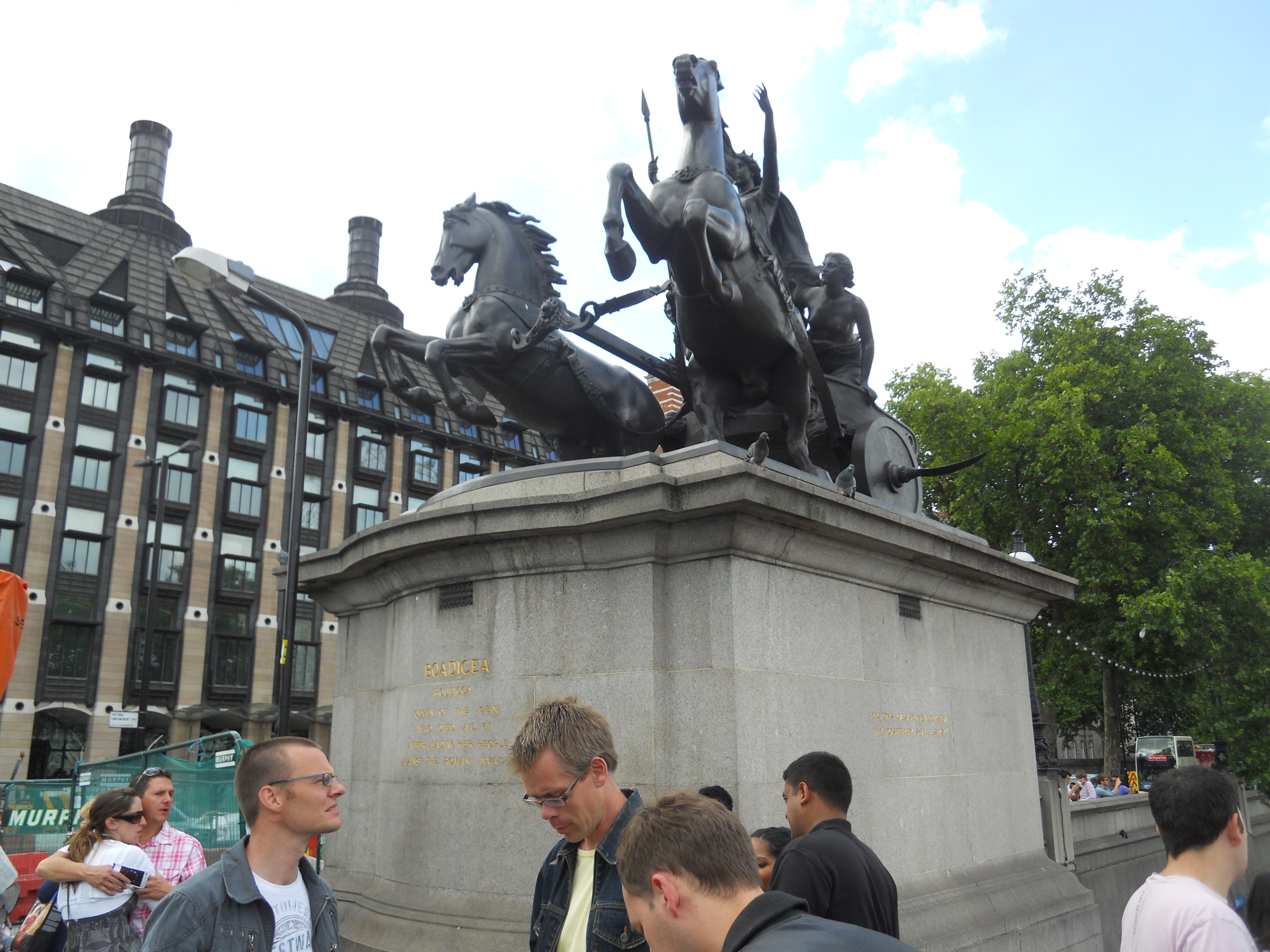
Boadicea Stands Guard
She may or may not have defeated the Romans, as whatever happened they remained in Britain.
Her spirit lives on, especially in East Anglia. She probably came from that region, although no-one is sure quite where! I have heard several people say, including my father, that if the Germans had landed in Suffolk in the Second World War, they would have got similar treatment to that meted out by Boadicea and her ragbag army of upwards of 100,000 men. When questioned as to the legitimacy of this treatment under the Geneva Convention, a common reply was “What would Boadicea have done?” I don’t know the truth of all these reports, but I know Suffolk people well and they wouldn’t have taken an invasion lightly.
Some also say that her tribe, the Iceni, were the supreme horsemen, who when their horses were suffering from horse sickness, looked for a new and healthier place to raise them. They found this valley in the chalk downs and moved there, calling the place New Horse Market. In time this was corrupted to Newmarket. The town is the world centre of horse racing and breeding, known amongst racing people as Headquarters. Every thoroughbred can trace their ancestry back to this small town in Suffolk.
Carve Her Name With Pride
I was walking along the Albert Embankment yesterday opposite the Houses of Parliament, when I saw this statue.
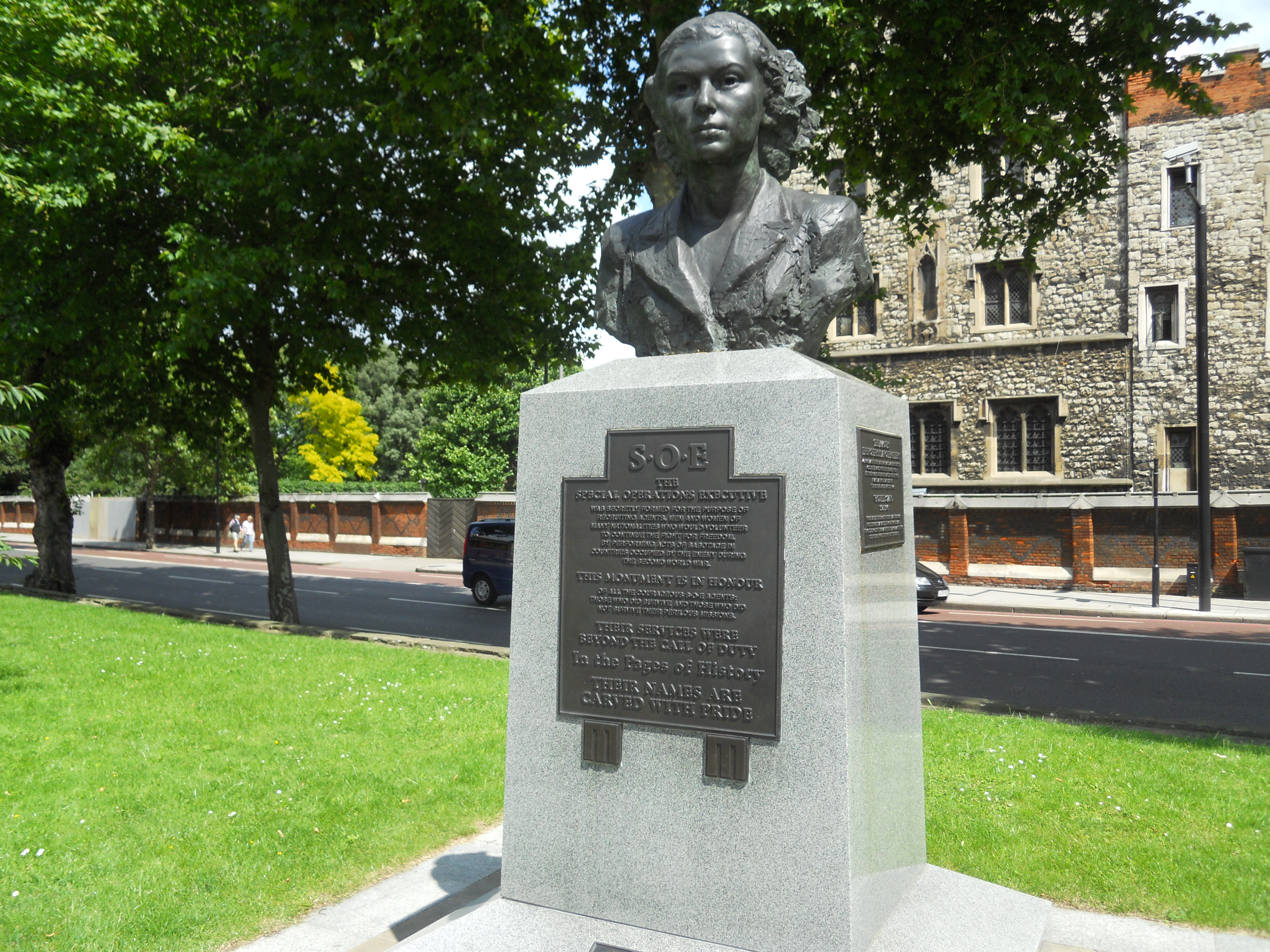
SOE Memorial
It is of Violette Szabo GC, who was one of the best known of the 170 SOE agents who went to France to as Churchill put it “Set Europe Ablaze”. 117 of those sent died including thirteen women. Violette Szabo was just 23, when she was executed in Ravensbruck.
A film was made about Violette in 1958 called Carve Her Name With Pride starring Virginia McKenna. Hence the title of this post.
The British POWs Who Went Fox-Hunting
This may seem a strange heading, as after all Adolf Hitler banned hunting and the Boy Scouts before the Second World War. But these prisoners weren’t in Germany or the parts of Europe they had occupied, but in the Republic of Ireland.
Dan Snow, is making about a program this bizarre story, which also includes recovering a Spitfire from a Donegal peat bog. To make the story even more strange, the pilot was an American, who like all Americans fighting at that time in the War had been stripped of his citizenship.
There is more here on the BBC web site.
But then the role of the Irish in the Second World War contains a lot of strange and almost unbelievable facts.
I once heard that more from the south actually fought in British forces in the war than from the North. Remember that there was no conscription in the North. This page from the Imperial War Museum explains why.
To avoid inflaming sentiments in the nationalist community, conscription was not extended to Northern Ireland.
Even today, I believe that the Irish Guards still accept some recruits from the Republic. This report gives the stories of two Irish Guards killed in Iraq. One was from Zimbabwe and the other from Dublin. There’s more on the story here.
Christ Church Greyfriars
Tonight, I also had a look at Christ Church Greyfriars, the remains of which lies behind St. Paul’s. It wasn’t as lucky as its larger neighbour had been in the Blitz.




Like St. Luke’s in Liverpool it stands as a memorial to those who died and suffered in the Second World War.
A Piece of Concrete With a Lot of History
This piece of concrete in the Victoria Town Gardens behind the Palace of Westminster, looks like a very rudimentary and hurried repair.

A Repair to the River Thames Wall
But behind it all is a bit of forgotten history. This picture shows a steel girder, which could be a piece of railway line in the concrete.

Steel Girder in the River Thames Wall
And this shows that the detail on the river side, that is a feature of the Thames river wall is missing.
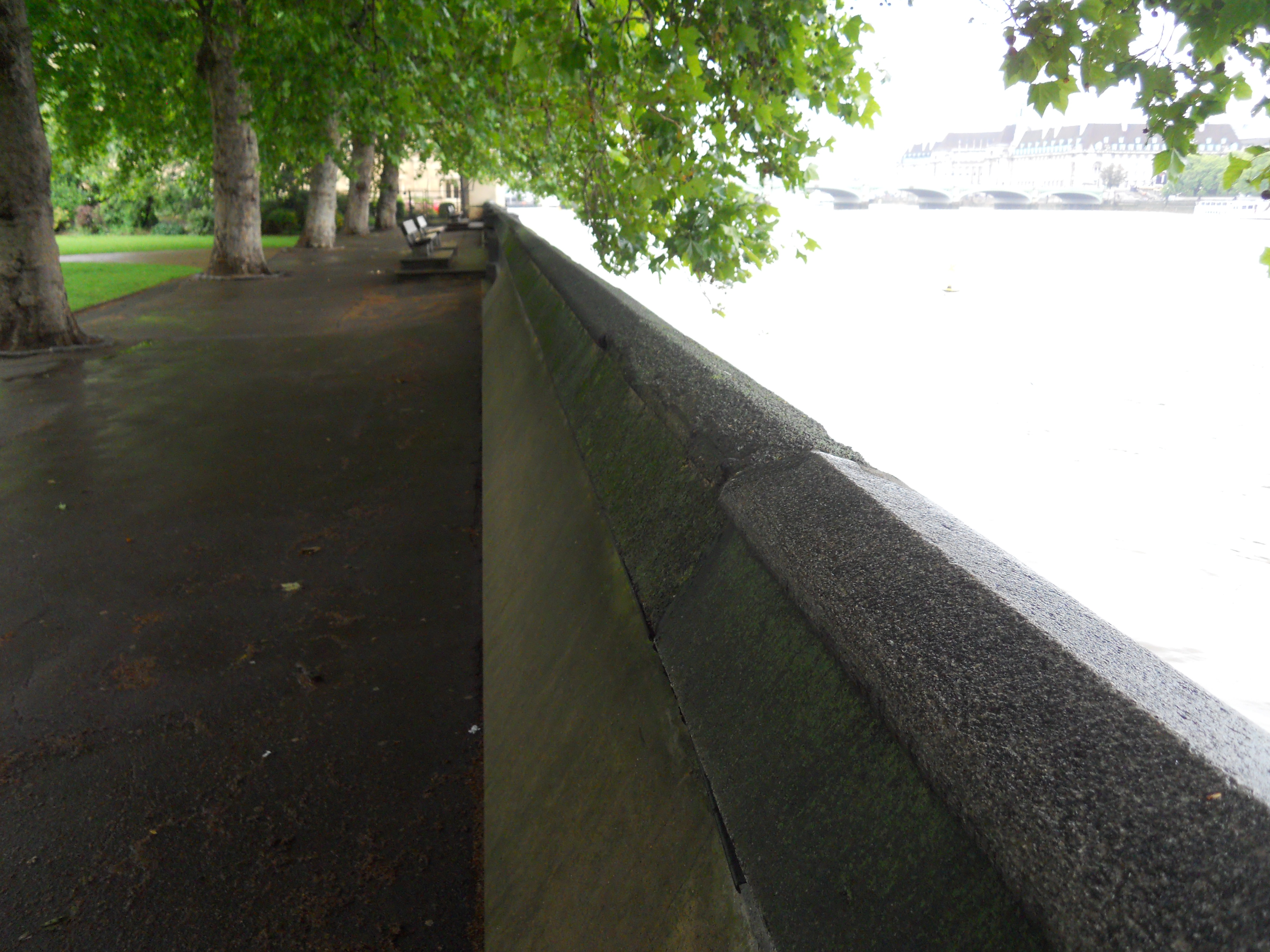
Missing Details in the River Thames Wall
So what is it all about?
I went to a lunchtime lecture at University College London about archaeology on the River Thames. The lecturer explained that during the Second World War, we identified that a serious break in the wall of the River Thames could have flooded much of the central part of the city. This would have probably flooded the London Underground as well.
So a top secret repair unit was set up to fix any breakages in the wall immediately. As the lecturer said, even today little is known about the unit. During the war they kept it quiet, as they didn’t want the Germans to know how vulnerable London was. After all, the Germans only needed to be lucky once.
But as you can see, even if the repair would not be acceptable today, it has fulfilled its purpose for seventy years.
Was It Right To Bomb Germany As We Did in the Second World War?
I have felt for a long time that the bombing of German cities by the RAF and the USAAF was rather a pointless exercise driven more by vengeance and revenge than any strategic purpose to defeat the Nazis.
Remember, I was brought up in London and many of my relatives experienced the bombing first hand. My grandfather’s premises close to the Barbican, where he worked as an engraver, were completely destroyed in the Blitz. Many of these people weren’t too bothered about the bombing as it just made them angry and anyway they survived. Others might have felt different, but most just felt that you had to deal with what happened and get on with life. Supposedly, one of the reasons for bombing civilians was to break their moral and hopefully get them to turn against the government. I think that London and other British cities that were bombed showed that it didn’t work. If anything it just stiffened their resolve to carry on.
Was it any different in Germany, when we bombed their cities? I’ve only met a couple of Germans, who endured the bombing from the RAF and the USAAF and they didn’t seem to react any differently to the way we did. And they probably suffered a lot more.
But also remember that a 250,000 from both the RAF and the USAAF either died or went missing in the bombing of Germany. So in some ways we lost the trained personnel that we really needed to support the invasion.
I also remember reading the history of the de Havilland Mosquito. Initially this superb design wasn’t really wanted by the RAF, as they felt who in his right mind would want to fly across to bomb Germany in an unarmed aircraft built out of ply and balsa wood. To them and the USAAF, a heavily armed four engined bomber would obviously be better. But statistics proved them wrong, as the Mosquito, which carried virtually the same bomb load as a B-17, but with a crew of two instead of ten, had a much higher return rate and much lower losses of crew. It was also much faster and could bomb Germany twice in one night.
In my view it should have been used strategically to take out German infrastructure, such as important factories and rail junctions. Wikipedia says this.
Mosquitos were widely used by the RAF Pathfinder Force, which marked targets for night-time strategic bombing. Despite an initially high loss rate, the Mosquito ended the war with the lowest losses of any aircraft in RAF Bomber Command service. Post war, the RAF found that when finally applied to bombing, in terms of useful damage done, the Mosquito had proved 4.95 times cheaper than the Avro Lancaster.
Yesterday, the obituary of Flight Lieutenant Don Nelson was published in the papers.
He was an RAF navigator, who helped to plan the destruction of German infrastructure in the run up to D-Day.
This is an extract from The Times.
In the spring of 1944 Bomber Command under its redoubtable but stubborn leader, Air Chief Marshal Sir Arthur Harris, was ordered to divert a proportion of its energies from the strategic bombing of Germany, of which Harris was the architect, to attacking targets in northern France and Belgium — railways, bridges, tunnels, marshalling yards — whose destruction would materially expedite the forthcoming Allied invasion of German-occupied Europe.
Although Harris dug his heels in against what he was convinced was a misuse of his strategic bomber force, a trial raid against a railway centre at Trappes, south west of Paris, in early March resulted in such spectacular destruction and dislocation of rail traffic that it became evident that a sustained assault by Bomber Command would be capable of virtually paralysing the German capacity to move troops against whatever beach heads the Allies might establish before, and not after, the projected invasion. This was a vital discovery. In spite of Harris’s protests his best bomber squadrons were from then until June 6, 1944, and afterwards, employed on this momentous interdiction work.
The Telegraph tells a very similar story.
Looking back with 20/20 hindsight, I think we probably could have done better in our bombing campaign against Germany, by bombing infrastructure important to the war effort, rather than the general population.
We also never learn from the past, as if we look at Iraq, Afghanistan and now Libya, we continue to make the same mistakes we always do. Inevitably vengeance seems to get mixed up with the simple objective of defeating a vile and hideous regime and its leader.
 The Anonymous Widower