SaxaVord ‘A Real Spaceport Now’ After First Rocket Explosion
The title of this post, is the same as that of the title of this article on The Times.
This is the sub-heading.
Despite the disappointment of last Monday’s fire engineers remain confident that the Unst site is ready for launch
These are the first two paragraphs.
Nothing could look more ominous for the European space industry than the tower of flame lighting up the skies over Shetland’s SaxaVord spaceport when a prototype engine suddenly and spectacularly caught fire on the launchpad last week.
The blaze was certainly “a nightmare” for the engineers of Rocket Factory Augsburg (RFA), the German company that hoped to conduct its first vertical rocket launch this year.
These are my thoughts and some from the article.
- I can remember a headline of Ike’s Phutnik, in a tabloid, when the United States tried to launch their first satellite.
- The safety systems seem to have worked well and no-one was hurt.
- The Chief Operating Officer of Rocket Factory Augsburg, still seems to have the ambition to make the project succeed.
- The operators are confident that SaxaVord will be ready for the next trials, whenever they are required.
- There is interest from Malaysia, to launch earth observation satellites.
- Scotland also offers other opportunities to southeast Asian tech businesses, as there are no launch sites in the region.
But most importantly, SaxaVord is generating interest from a wide range of users, as this paragraph indicates.
Others have already decided. SaxaVord has struck launch agreements with Lockheed Martin, the US aerospace giant and the German company HyImpulse as well as the UK’s Skyrora. Another four deals with international satellite companies are said to be in the offing.
If an established company were to launch a successful satellite, it could make all the difference to SaxaVord.
Conclusion
These are the last two paragraphs of the article.
Interest on this global scale enables the Scottish space pioneers to shrug off Monday’s blaze and the bad publicity it entailed. For anyone thinking the fire was bad news, emails from colleagues in the US told an altogether different story.
“You’re a real spaceport now,” read one message to a Shetland engineer. “You can’t call yourself a spaceport until you’ve had a rocket blow up!”
I have been to a party at NASA in Houston and they wouldn’t have been as successful, as they have, if they gave up on a failure. They try, try and try again.
Meet The British ‘Space Inspectors’ Working For A Safe Blast-Off
The title of this post, is the same as that of this article on the Daily Telegraph.
This is the sub-heading.
A small band of professionals is keeping Britain’s £65 billion space economy in good working order
The article talks about how the Civil Aviation Authority will make sure we boldly go, with a high degree of safety, starting with these three paragraphs.
With Britain’s first vertical launch expected to lift off from Shetland this year, the UK could soon become the go-to European destination for space missions.
But behind the scenes, an army of ‘space inspectors’ is ensuring that, despite reaching for the stars, companies have their feet planted firmly on the ground.
It is the job of the Civil Aviation Authority (CAA) to make sure that things go off with a bang – but only at the right time.
Having lived through all the excitement of space exploration from Sputnik 1 in 1957 onwards.
A few decades ago, when I was in Florida, I saw a launch of the Space Shuttle.
Hopefully, I’ll be lucky enough to get to Shetland or Cornwall to see a space launch from the UK.
The Daily Telegraph article also has this paragraph.
There are more than 2,200 companies working in Britain’s £65 billion space economy from satellite manufacturers to spaceports, from software to observation. The industry has grown significantly in recent years, and is aiming to capture 10 per cent of the global space market by 2030.
I don’t think, the ten-year-old boy, that my father woke in 1957 to tell about Sputnik 1, really ever thought ever thought there would be a chance that he’d see a space launch from the UK.
But now it appears to be happening! Fingers crossed!
UK Space Agency And NNL Work On World’s First Space Battery Powered By British Fuel
The title of this post, is the same as that of this press release from the UK Government.
This is the sub-title.
The UK Space Agency and the National Nuclear Laboratory (NNL) are to collaborate on the world’s first space battery powered by Americium-241.
And these three paragraphs outline the project.
This work, commissioned and funded by the UK Space Agency from NNL, will be delivered in a new £19 million laboratory in Cumbria equipped with next-generation equipment and technology. It will deliver a sovereign supply of fuel for space batteries in the context of a global shortage, enabling the UK and its partners to pursue new space science and exploration missions.
Creating new highly-skilled jobs in the North West of England, it will drive innovation in radiochemistry and separations science and open a new market for the UK space sector.
Atomic space batteries, also known as Radioisotope Power Systems (RPSs), release heat as the radioactivity within them decays. The heat can be used directly to prevent spacecraft from freezing and it can be converted into electricity to power onboard systems. The batteries go on working for decades, without need for maintenance over the many years in which a spacecraft could be travelling.
These two paragraphs explain, why there is a need for a new type of atomic space batteries.
Considered ‘mission critical technologies’ by space agencies in the UK and around the world, all the Apollo missions had an atomic battery in tow, as has every rover that has gone to Mars. Until now, these have been powered by Plutonium-238, a radioisotope produced only in the US, where supply is limited, and Russia, so an alternative is urgently needed.
NNL, the UK’s national laboratory for nuclear fission, has been working on this endeavor since 2009, when its researchers first discovered that Americium-241, an alternative to Plutonium-238, is produced during the radioactive decay of used fuel from nuclear reactors and that it emits power for over 400 years.
With the supply plentiful – the new laboratory is being opened at NNL’s flagship Central Laboratory on the Sellafield site, home to the largest resource of Americium-241 available for extraction in the world – the new collaboration will turn a proven scientific concept into a fully-realised technology. It will be operational within the next four years and is expected to be first used on the European Space Agency’s Argonaut mission to the Moon and for future missions into deep space.
It would appear that Americium-241 has several advantages over Plutonium-238.
- Plutonium-238 has supply problems
- Who in their right mind, would buy a product like this from Russia or China?
- The batteries have a life of 400 years.
- There is plenty of suitable nuclear waste at Sellafield, from which Americium-241 can be extracted.
It looks like the first batteries could also be available in four years.
Aunt Margery
My late wife; C’s Aunt Margery was a lady, who needed a pacemaker. I seem to remember that after several of her pacemakers had run out of power and were replaced, and eventually she was fitted with a nuclear-powered pacemaker in the 1970s or 1980s.
This page on the Stanford University web site is entitled The History Of Nuclear Powered Pacemakers. It was written by Matthew DeGraw.
Many of these pacemakers in the 1960s and 1970s, were powered by Plutonium-238.
The last paragraph is entitled The Rise Of Lithium Battery Pacemakers And Fall Of Nuclear Pacemakers, where this is said.
Despite the often longer life-expectancies, nuclear pacemakers quickly became a part of the past when lithium batteries were developed. Not only did the technology improve, allowing for lighter, smaller, and programmable pacemakers, but doctors began to realize that this excessive longevity of nuclear pacemakers was excessive. Lithium pacemakers often last 10-15 years allowing for doctors to check in on their patients and replace either the batteries or the pacemakers themselves with new and improved technology as it is develops in those 10-15 year spans. While there are still several remaining patients with nuclear-powered pacemakers functioning in their bodies, it is likely that in the next few decades as these patients pass away, so will the once promising nuclear pacemakers.
Would the use of Americium-241 to power a nuclear pacemaker transform the economics of these devices?
I wonder, if there’s a cardiologist out there, who by chance reads this blog, who could answer my question!
Russians Board International Space Station In Ukrainian Colours
The title of this post, is the same as that of this article on the BBC.
This is the introductory paragraph.
Russian cosmonauts have arrived at the International Space Station wearing Ukrainian colours, in what appears to be a statement opposing the invasion.
Who do you think, you are kidding, Mr Putin!
Shetland Blasts Off Into Space Race As Britain’s First Rocket Launch Pad Skyrora
The title of this post, is the same as that of this article on The Times.
This second paragraph, explains what Skyrora are doing.
Skyrora, a technology company with its headquarters in Edinburgh, has agreed a deal for scores of rocket launches over the next decade from a site on Unst, the most northerly of the Shetland islands.
This Google Map shows the most Northerly part of Unst.
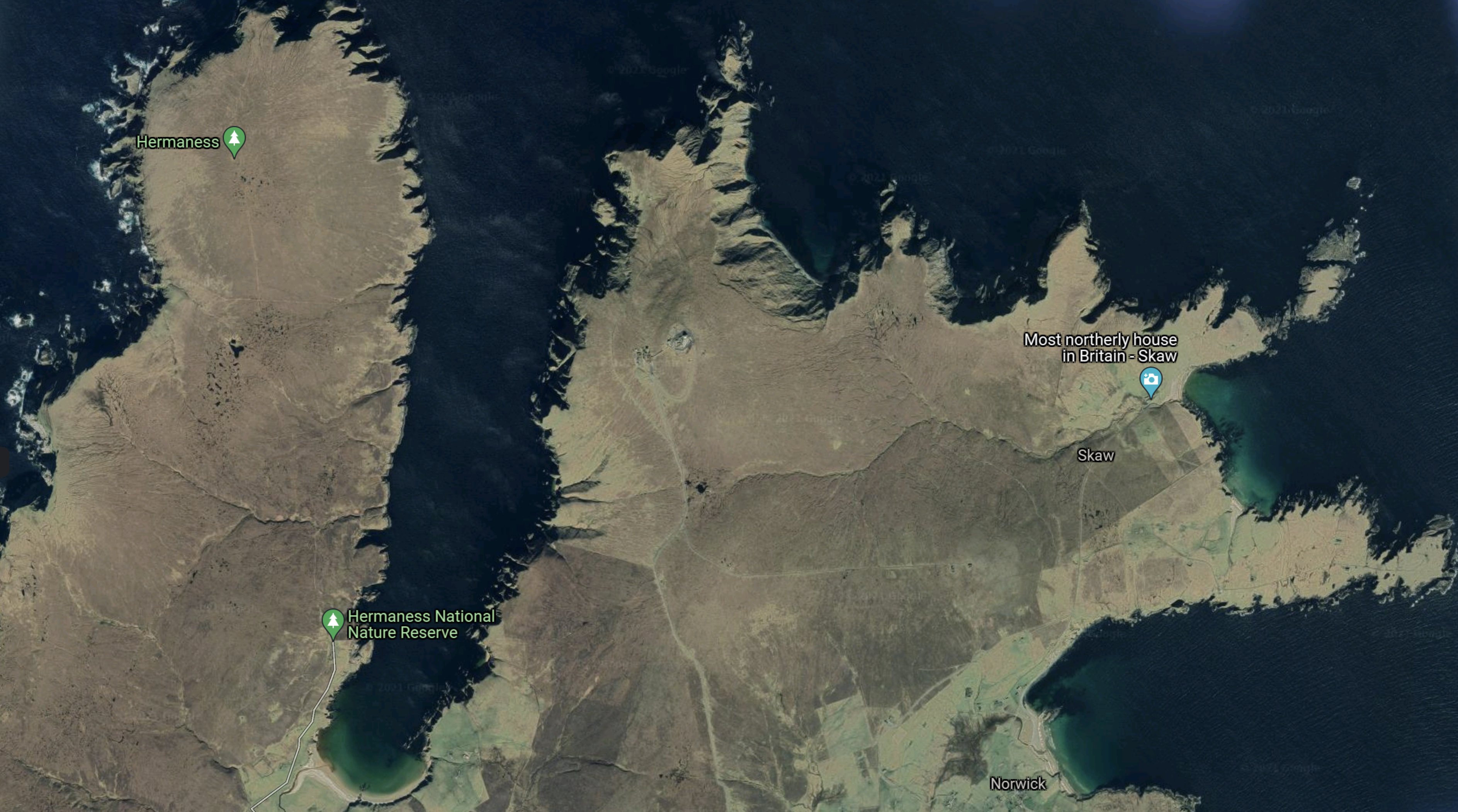
There’s not really much there, except birds, trees and the most northerly house in Britain.
Enlarging to the West of the house, gives this second Google Map.
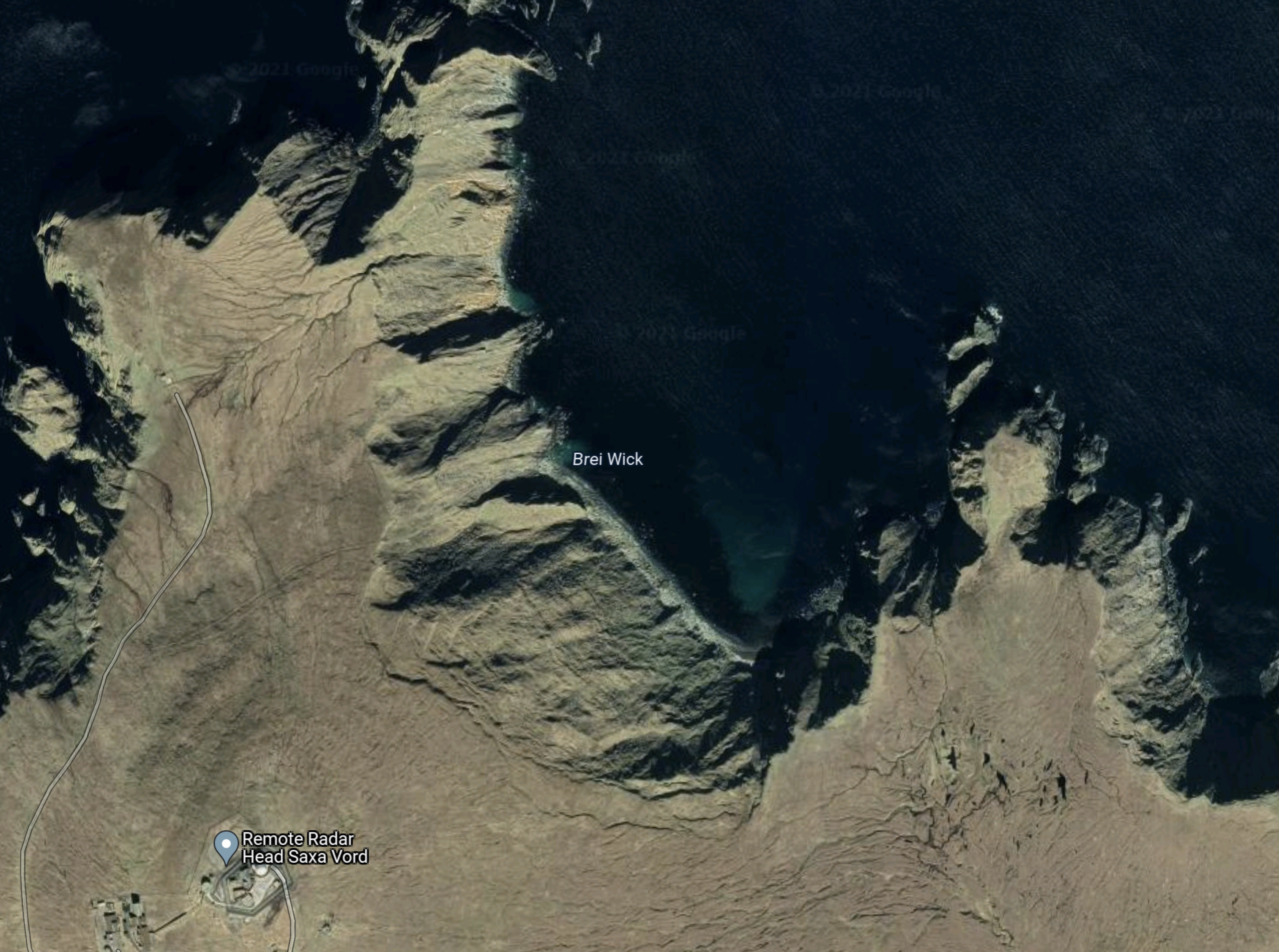
Note the Remote Radar Head Saxa Vord, which has a Wikipedia entry as RAF Saxa Voe.
- It is now a fully-operational radar station again, after closure in 2006.
- It is at the same latitude as St. Petersburg and Anchorage.
- In 1992, it measured a wind speed of 197 mph, before the equipment blew away.
The Wikipedia entry is worth a read, as it gives a deep insight into radar and its tracking of Russian intruders in the Cold War.
This third Google Map shows a 3D closeup of the radar.
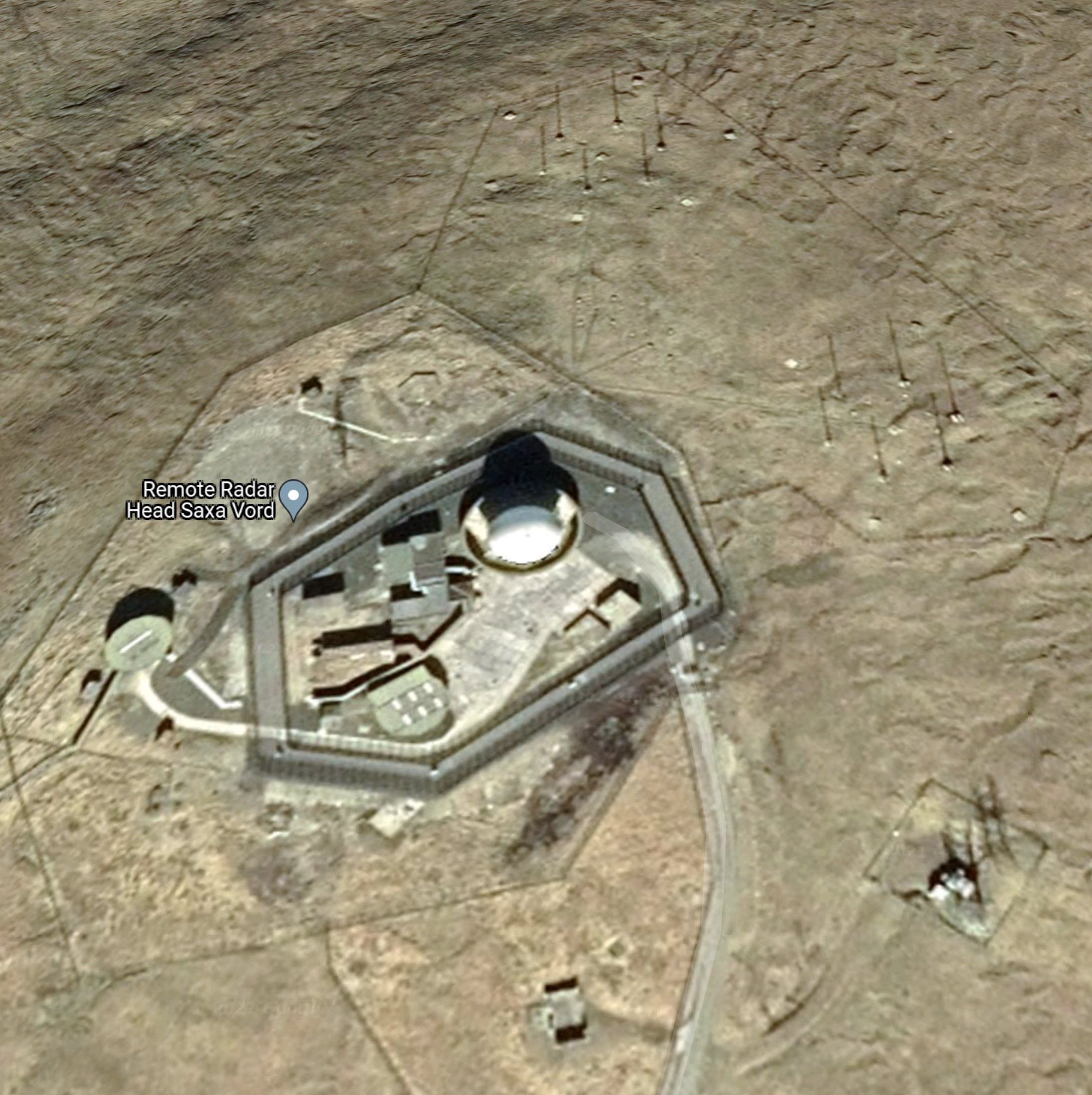
No staff are based at Saxa Vord, although maintenance staff do visit.
According to The Times, the space port will be at Lamba Ness, which is to the East of the most northerly house in Britain.
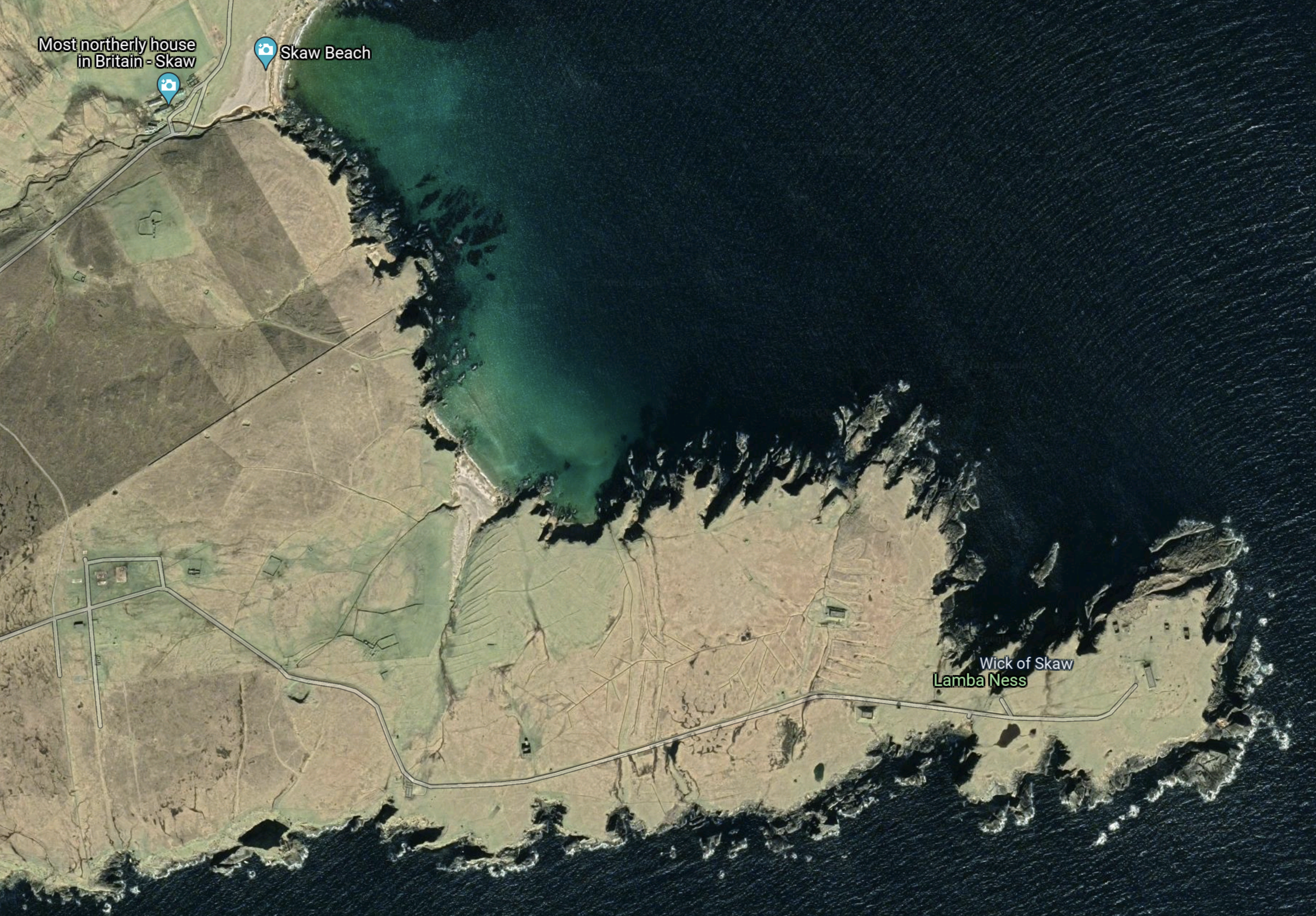
The peninsular in the South-East is marked Lamba Ness.
It may seem a very bleak place, but it could have one thing, that rocketry will need – rocket fuel!
In Do BP And The Germans Have A Cunning Plan For European Energy Domination?, I introduced Project Orion, which is an electrification and hydrogen hub and clean energy project in the Shetland Islands.
The project’s scope is described in this graphic.
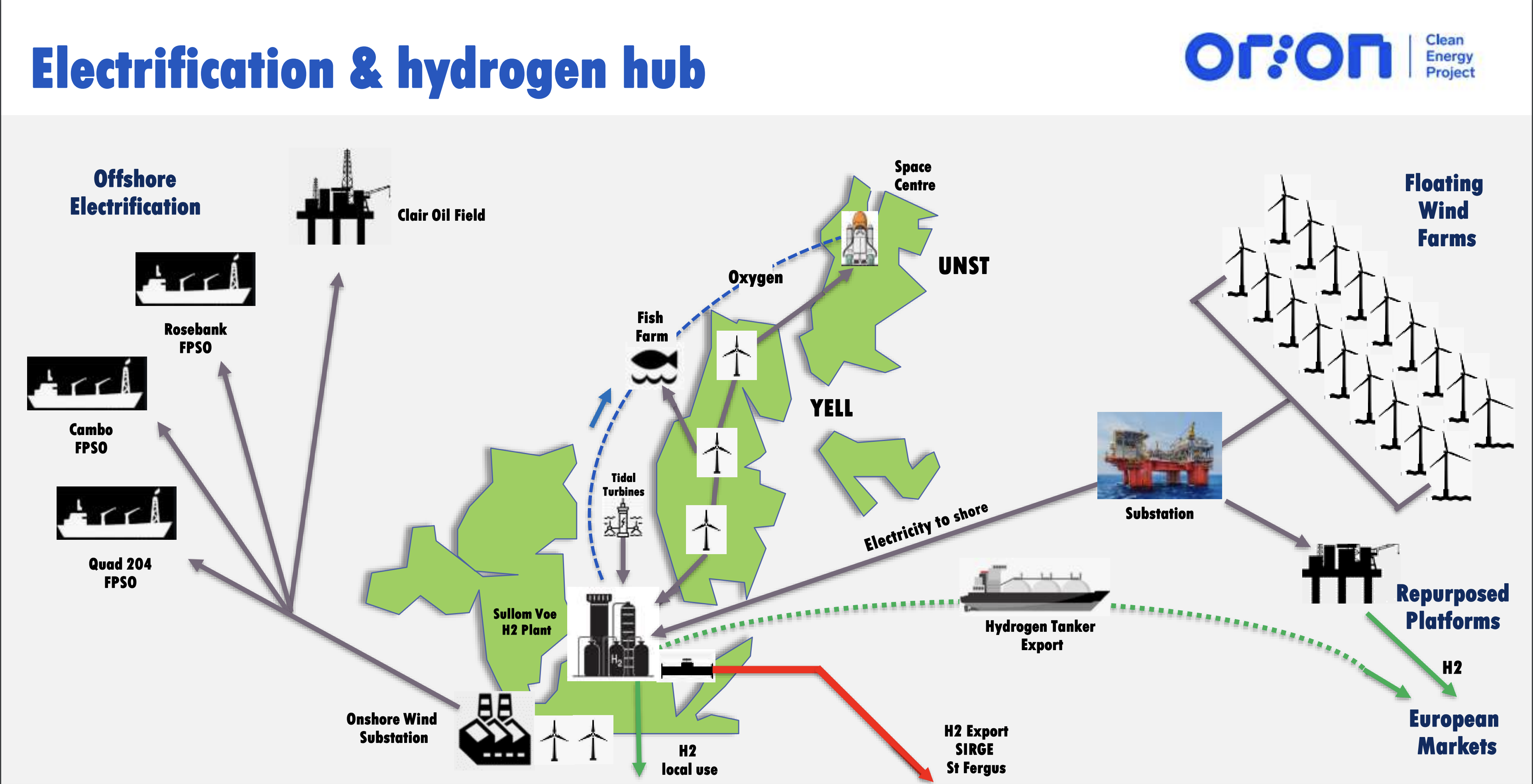
Note
- Project Orion now has its own web site.
- A Space Centre is shown on the Island of Unst.
- There is an oxygen pipeline shown dotted in blue from the proposed Sullom Voe H2 Plant to the Fish Farm and on to the Space Centre.
- I suspect if required, there could be a hydrogen pipeline.
The Space Centre on Unst could be fuelled by renewable energy.
Who Are Skyrora?
They have a web site, which displays this mission statement.
Represents a new breed of private rocket companies developing the next generation of launch vehicles for the burgeoning small satellite market.
The Times also has this paragraph.
At the end of last year, the company also completed trials of the third stage of its Skyrora XL rocket, including its orbital transfer vehicle which, once in orbit, can refire its engines 15 times to carry out tasks such as acting as a space tug, completing maintenance or removing defunct satellites.
The company seems to have big ambitions driven by innovation and a large range of ideas.
Conclusion
I shall be following this company.
Jack Kinzler
Read his obituary in the Washington Post. This is the introductory paragraph.
As chief of the all-purpose machine and tool shop at the National Aeronautics and Space Administration’s Johnson Space Center in Houston, Mr. Kinzler specialized in down-to-earth solutions for beyond-the-stratosphere problems.
They don’t make them like him any more!
Voyager Has Boldly Gone
In the past week or so, the Voyager-1 space probe has left the solar system. The story is reported here on the BBC.
The probe is expected to still be transmitting data back to earth until possibly 2025.
Who said that 1960s technology wasn’t any good and thoroughly unreliable?
Richard Feynman
I’d never heard of Richard Feynman, before tonight, when BBC2 had a program about his work on the Enquiry into the Challenger Disaster and a profile of his life. Wikipedia says this about the report on Challenger.
He warned in his appendix to the commission’s report (which was included only after he threatened not to sign the report), “For a successful technology, reality must take precedence over public relations, for nature cannot be fooled.”
It’s a wonderful quote and all politicians should have it tattooed on their bottom.
My Son Gets In The Times Again!
I had a letter published in The Times today about the birth of our first son, as Neil Armstrong set off for the moon.
Sir, My late wife gave birth to our first son on July 16, 1969, in the Middlesex Hospital in London, as the astronauts left for the Moon.
From the time of his birth until the Eagle landed, no babies were born in the hospital. Perhaps mothers had something more important on their mind. But after the successful landing, all hell broke loose and there were babies everywhere.
The compositors in The Times may have been in a similar emotional state, as our son’s birth announcement was out of order.
I’ve never seen another birth announcement out of order. But then there were two editions of the paper that night; one said they’d landed and the other said they’d walked on the moon.
Farewell Neil Armstrong
It’s all very sad that he’s passed away, but then we all have to go at some time.
Our eldest son was born in the Middlesex Hospital in London, as they left for the moon and was in the births column of The Times on the day they landed. I still have a copy of the paper.
The strange thing was that from the time our son was born to the time they landed on the moon, no babies were born. But when they landed all hell broke loose and they came one after another. Everybody had more exciting things to watch, than give birth.
I remember they asked a mother, if her baby born just after the landing would be called Neil. She said no! He’s being called Paul.
Today would also have been C’s sixty-fourth birthday. But tomorrow is also our middle son’s forty-second.
 The Anonymous Widower