Uncovering The Past On Thameslink
The definition of archaeology according to the Oxford English Dictionary is.
The study of human history and prehistory through the excavation of sites and the analysis of artefacts and other physical remains.
So perhaps calling digging up an old nineteenth century station is stretching the definition a bit far.
But this report on the BBC web site about the uncovering of the disused Southwark Park station is fascinating none-the-less. This is an extract from the report.
The station was discovered as engineers constructed the Bermondsey Dive Under, which will see two Victorian viaducts partially-demolished and rebuilt to allow trains from south east London and Kent to dive down, under a new route carrying Thameslink services from Croydon.
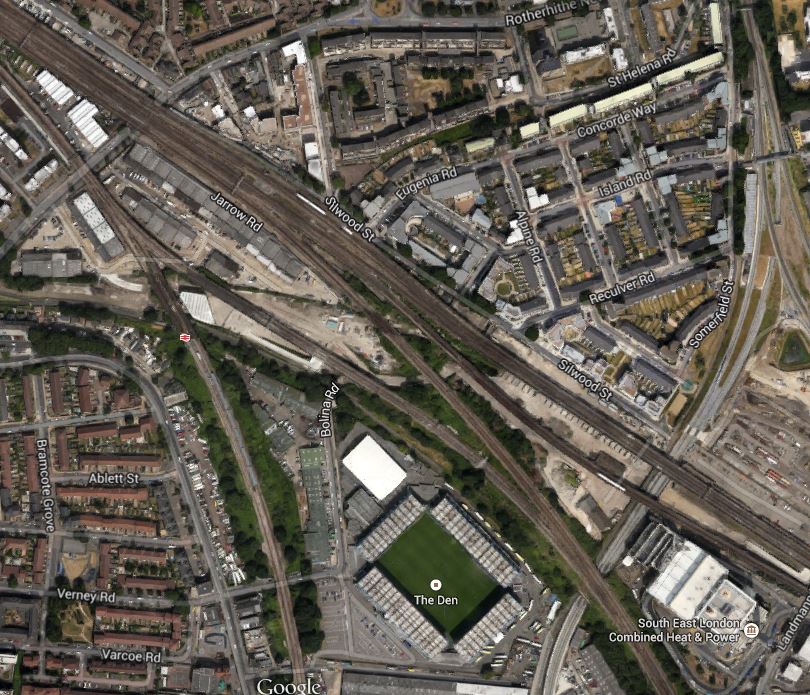
There’s more here on the Ian Visits site and here on the Thameslink web site. This is a Google Earth image of the area.
Bermondsey Dive-Under
Note The New Den, which is Millwall’s ground and SELCHP incinerator to its right. The image highlights the complicated nature of the lines into London Bridge station. The line that runs between the football ground and the incinerator in a south-easterly direction is the Thameslink line between London Bridge and New Cross Gate. The smaller line that crosses this line at right angles is the Overground line between Surrey Quays and Clapham Junction.
Where this Overground line crosses Surrey Canal Road just off the bottom of this image, construction should start on the new New Bermondsey station later this year.
Southwark Park station was under the tracks , where Rotherhithe New Road crosses underneath.
The Station Now Arriving Is Running Late
Network Rail is creating several new stations in the UK. But not every one seems to be going to the original schedule.
In the following, which lists current new station projects in Wikipedia, I have not included any Crossrail or Borders Railway stations.
Appleby Bridge
The station at Appleby Bridge would appear to be progressing according to the latest plan and could open on time in August 2015. I went past the site recently but didn’t manage to see much.
Bermuda Park
Bermuda Park station is a small station in Nuneaton, but according to this story in the Nuneaton News, construction appears to be going well for an opening this year.
Cambridge Science Park
Cambridge Science Park station was originally approved in December 2013 scheduled to open in December 2015. This has now slipped to December 2016.
When I last went past the area in March 2015, there appeared to be little happening.
Cassiobridge And Watford Vicarage Road
Cassiobridge and Watford Vicarage Road are two new tube stations being built on the Croxley Link of the Metropolitan Line linking it to Watford Junction. The link and the new and updated stations were due to open in 2016, but after the takeover of the project responsibility and management by Transport for London, the completion date is now a more realistic 2018.
Coventry Arena
Like Bermuda Park, Coventry Arena is a new station on the Coventry to Nuneaton Line. Like Bermuda Park, things seem to be going well for a scheduled opening in May 2015.
Cranbrook
Cranbrook station is a small single-platform being built in Devon, perhaps using ideas borrowing from James Cook. Progress is summed up by this story in the Exeter Express and Echo.
Ebbw Vale Town
Ebbw Vale Town is a new terminus station for the Ebbw Vale Railway, being built for the town and various reports say it will open this year.
Ilkeston
If ever a station was delayed by great crested newts on the line, it is the new Ilkeston station. This story on the BBC details the problems, which mean that this important station will be delivered over two years late.
Would the Germans, French and Italians allow this sort of construction delay? The Chinese would probably serve them with ginger, pak choi and noodles.
Kenilworth
Kenilworth station has had a protracted gestation period, with an original planned opening of 2013, which is now scheduled for December 2016, with this report in the Leamington Observer saying work will start this year. It looks impressive and it is one I’m looking forward to use.
Kirkstall Forge
Thje builders must be confident of the schedule for Kirkstall Forge station, as the Wikipedia entry gives a completion date of the station is given as October 2015, which is confirmed on this page on the Leeds Metro web site. When I passed recently, there certainly seemed to be an embryonic station at the site.
Lea Bridge
It was hoped that Lea Bridge station would reopen in late 2014, but despite one sighting of the orange army, nothing seems to be happening. and the new hoped-for opening date of December 2015 would appear to be optimistic.
Oxford Parkway
Oxford Parkway station is not only a new station, but one at the interim end of a new privately-funded railway route from London. As it is key to the opening of the line, I would suspect that the planned opening date of September 2015 will be achieved.
Wixams
Wixams railway station was originally promised to be completed this year. This report on Bedfordshire on Sunday takes about broken promises and a much-delayed station. In other words, it is an aspiration, that has not been planned.
The lateness with some of these stations is a trend that is worrying, but in many cases it seems that you can’t blame the politicians but bad planning and the not getting everything sorted before announcing start and finish dates.
And of course there are the newts at Ilkeston!
Crossrail 2 At Dalston
In a post called An Opportunity For Dalston, I looked at how a double-ended station for Crossrail 2 might connect with both Kingsland and Junction stations. I felt it could bring major advantages to the area of not requiring any demolition, except for the unloved Kingsland station, much better interchange for passengers and improved pedestrians routes in the area.
I concluded that all was possible because the Victorians spaced the stations to enable a modern Crossrail station to fit in between. This map from the Crossrail 2 web site, shows the two stations and the safeguarded area.

Crossrail 2 In Dalston
The rail line at the far right or north is the North London Line with High Speed One beneath. The safeguarded area would appear to follow the Kingland High Road, but it does pass close to both stations.
I just thought it was logical and never envisaged that those working on the project would entertain a similar idea. But after contacting my MP, I have received a letter from Michele Dix, who is the Managing Director of Crossrail 2. This is a paragraph.
We have been working closely with the London borough of Hackney on the early development of the proposals for how Crossrail 2 could ultimately serve Dalston. The work to date has been based around delivering a double-ended station, with one end being at Dalston Junction, and the other at Dalston Kingsland, thereby allowing the Crossrail 2 station to link to both existing stations. As Mr. Miller rightly points out, the distance between the existing stations is well suited to the 250m long platforms that will be required for the Crossrail 2 station, and the greater interchange opportunities to London Overground services also deliver significant benefits.
Various factors will also drive the design of the Crossrail 2 station and the related Dalston Kingsland station at Dalston.
1. Crossrail 2 will have to get past and probably under High Speed One and the Dalston Curve, that takes the East London Line to Canonbury and Highbury and Islington. So it will be a deep line, where any stations will need escalators and/or lifts. These stations will also probably be built from the tunnel up, as parts of Whitechapel station are being built for Crossrail.
2. Could Dalston Kingsland station be designed as a station with entrances on both sides of Kingsland High Street, perhaps with a single island platform served by escalators and lifts?
3. Demolition of any quality buildings will stir up a lot of opposition.
4. There isn’t many places to put a work site, with the possible exception of the Car Park in Bentley Road which is in the safeguarded area.
5.Surely the Ridley Road market could be improved by good design of the new stations.
I think there is a chance for a good architect with a bit of vision to create an innovative world class station.
Perhaps, we need our own versions of these distinctive fosteritos to access the Crossrail 2 station from the surface.




These were designed by Sir Norman Foster for the Bilbao Metro. Hence the name!
I also think that if the design is right, Crossrail 2 can sneak its way through Dalston, with little disruption and no demolition of a building worth saving.,
Why shouldn’t us plebs in Dalston have the best?
Crossrail 2 At South Tottenham/Seven Sisters
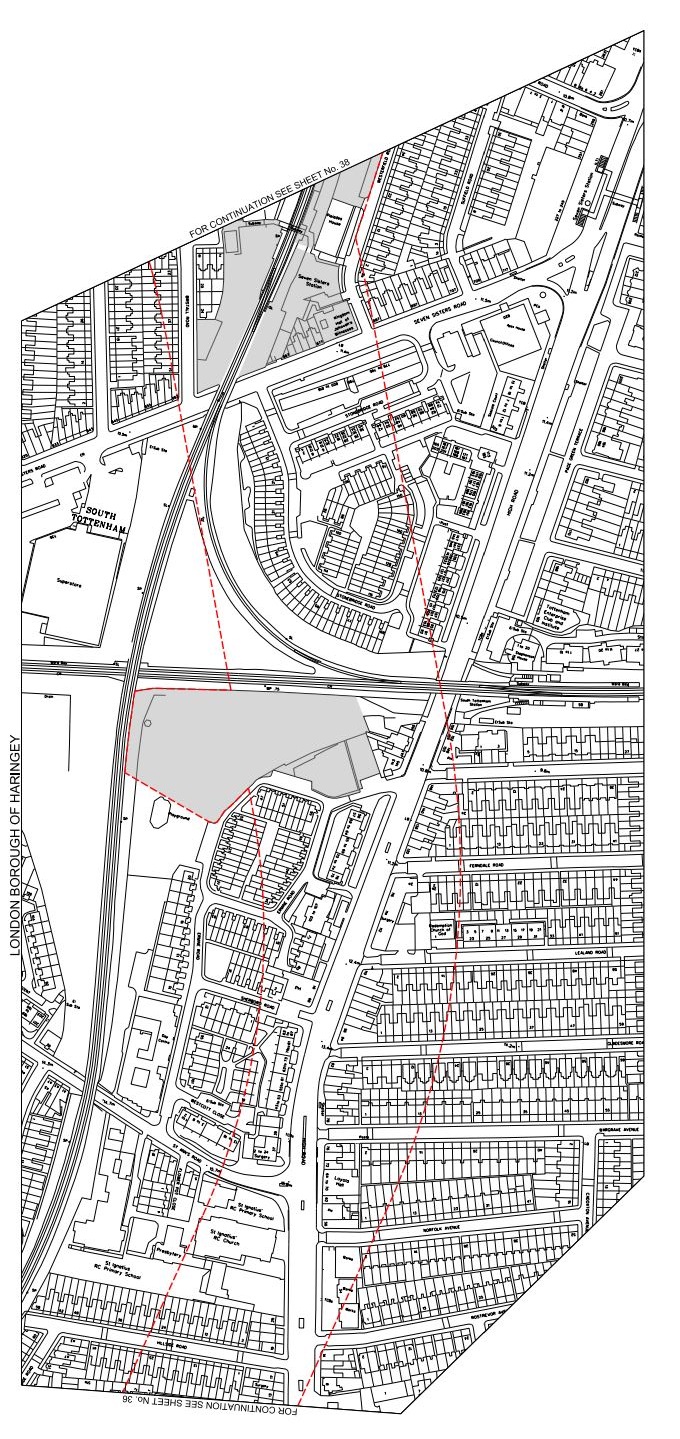
In this post, I speculated that South Tottenham and Seven Sisters stations could share a double-ended Crossrail 2 station. This is a map taken from the Crossrail 2 web site.
Crossrail 2 At Seven Sisters
The two rail lines are the Gospel Oak to Barking Line (GOBlin) going across the map and the Lea Valley Line into Liverpool Street via Hackney Downs going down. This Google Earth image gives another view.
South Tottenham And Seven Sisters
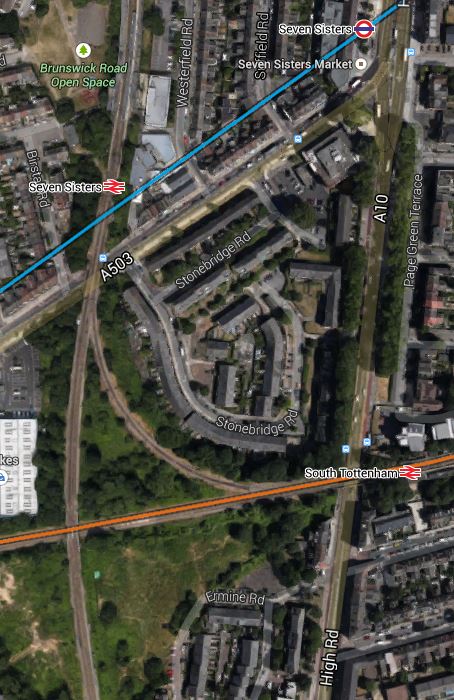
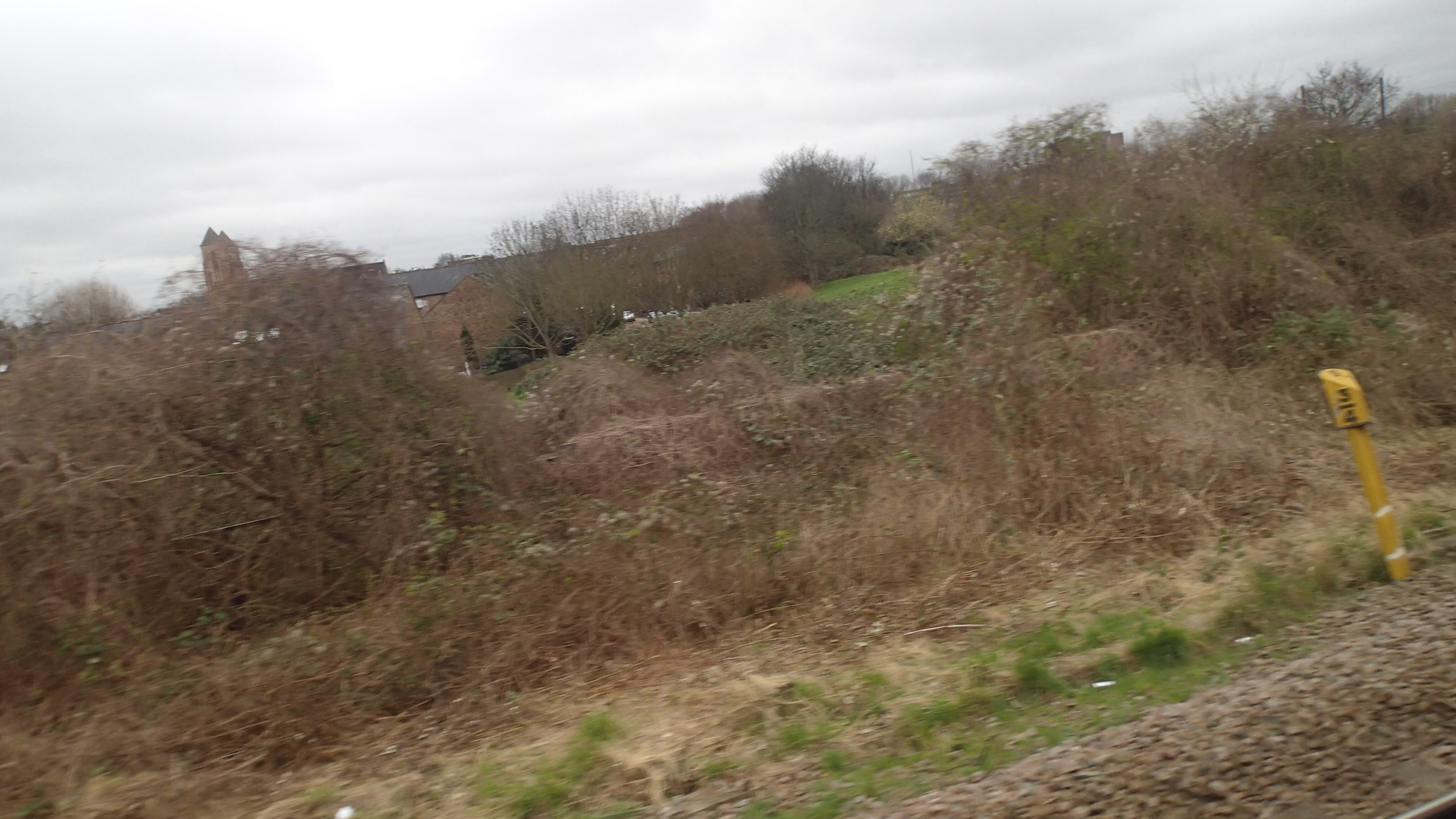
The orange line is the GOBlin and the blue one is the Victoria Line. Note the area south of the GOBlin, which has been safeguarded. Could this be used for a shaft to access the tunnels or help to build a large double-ended station? I took this picture of the area from a train going to Barking.
Safeguarded For Crossrail 2
It would probably be in a better state after Crossrail 2 had reinstated the land after use.
At least the distance between Seven Sisters and South Tottenham stations at about two hundred metres or so, would be pretty compatible with the length and size of a Crossrail-sized train and platforms.
So I come to the conclusion, that Seven Sisters station will built as a double-ended station and be a major interchange between London Overground ‘s Gospel Oak to Barking and Lea Valley Lines, the Victoria Line, Crossrail 2 and National Rail services. Such an interchange will support major development in a part of London, that desperately needs more housing, jobs and leisure and business opportunities.
Visiting Kenilworth Castle By Train
The BBC is doing an outside broadcast today from Kenilworth Castle.
It seemed somewhere that I might like to visit, but as I don’t drive it is a bit of a problem.
However, Kenilworth station is in the process of being rebuilt. The castle and the location of the station are both on this Google Earth image.
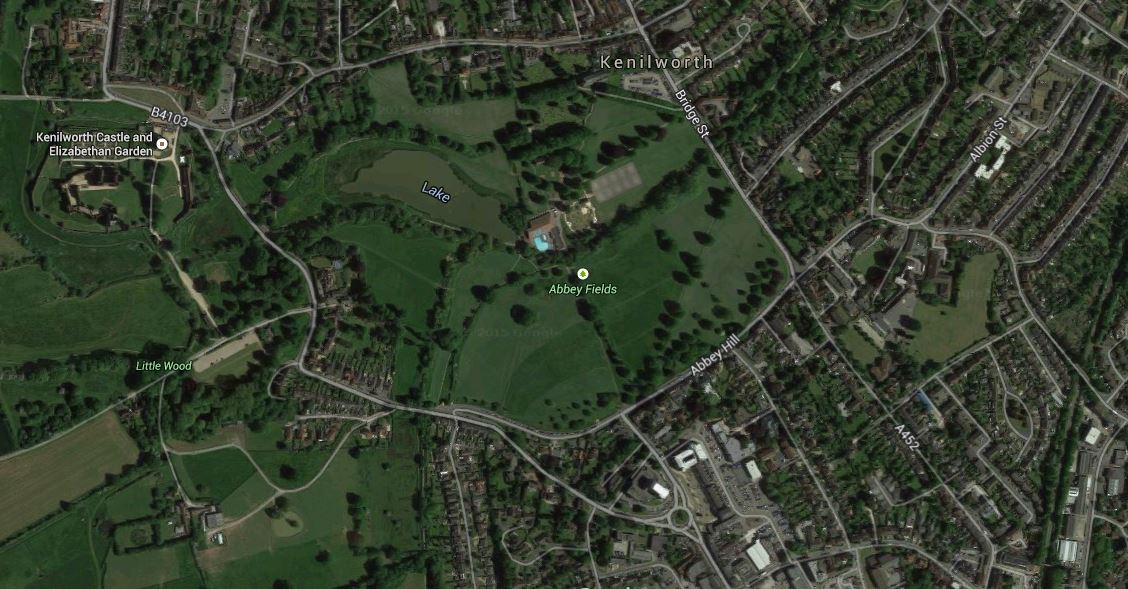
Kenilworth Station And Castle
The castle is obvious and the station is at the bottom-right or south-east corner. I estimate that the distance will be about a well-signposted mile, when the station opens.
If Kenilworth Castle get their strategy right, they could see an increase in visitors.
I for one, will be going when hopefully Kenilworth station opens in 2016.
How many other stately homes and heritage sites have their rail and bus transport links up to scratch?
A Transport Hub Fit For A Major Airport
I’ve only been to Manchester Airport once and that was many years ago, when I flew my Piper Arrow into the then single-runway airport.
On my trip north today, I wanted to take a ride on one of the refurbished Class 319 trains running between the airport and Liverpool Lime Street, so as I got a good deal on tickets including a trip in First to Crewe, I went via the airport.
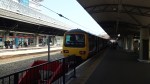
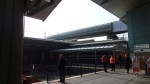
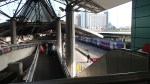

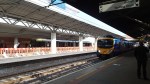
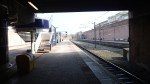
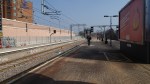
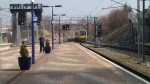
The pictures show the rail station at the airport, which has three platforms for trains and one for the Metrolink. A fourth rail platform is under construction.
Most of the pictures were taken looking towards the entry to the station, with the platforms being number 1, 2 3 and 4 for right to left (south to north).
If the Metrolink platform was given a number, it would be five.
This Google Earth image shows the station and the surrounding area.
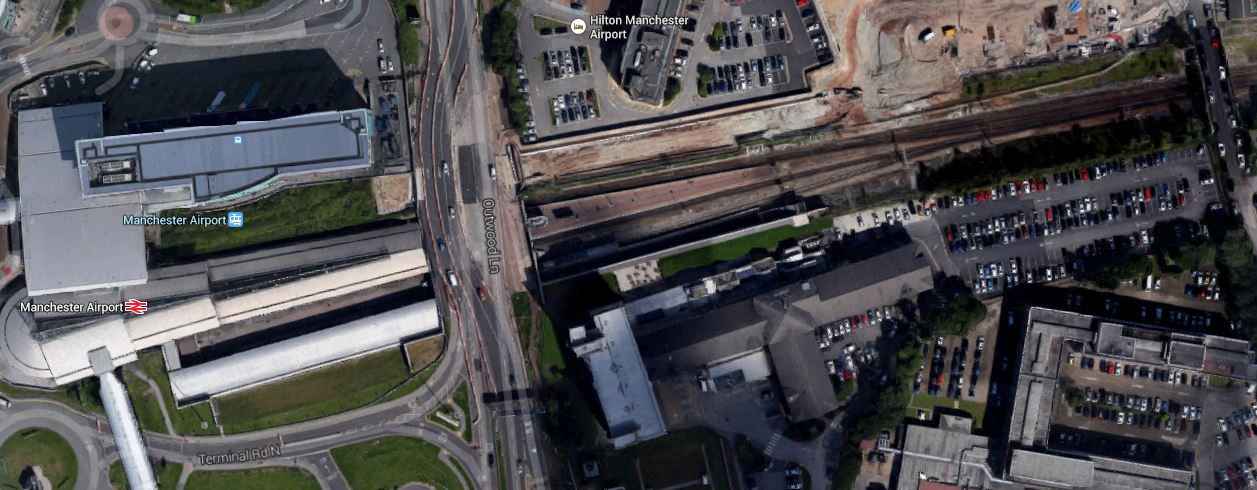
Manchester Airport Station
Note the current three rail platforms with the Metrolink between them and the bus station. My Class 323 train from Crewe arrived on the southernmost platform, which is numbered one. Platforms two and three are either side of a long island and it would appear that the construction work between platform three and the Metrolink and the bus station will be the new platform four.
A station-man indicated that the lines into the station are a bit limited and expansion of the rail links out of the station might be something to upgrade in the future.
One difference between this airport station and most of the other ones I’ve visited was that it wasn’t buried deep in a dark claustrophobic pit under the airport. So I was able to walk up and down in the sun, whilst waiting for my train!
My only disappointment was that instead of getting a refurbished Class 319 train, I got a clean Class 156 train.
Will Brent Cross Thameslink Station Get The Go-Ahead?
This was said in this article in the Standard last night.
At the same time, the Chancellor is promising a £97 million downpayment for a new station at Brent Cross, a major redevelopment area highlighted in his National Infrastructure Plan with last December’s Autumn Statement. It could help start construction of 7,500 homes. Another £7 million will go to the Croydon growth zone, aiming to create 4,000 homes. A further £1 million will fund the new London Land Commission to help create a “Domesday Book” of surplus public-sector land and brownfield sites for redevelopment.
London desperately needs more housing and building it around the Shopping Centre and a new Brent Cross Thameslink station at Brent Cross, astride the North Circular Road on surplus railway land must be a good idea.
This is a Google Earth image of the area.
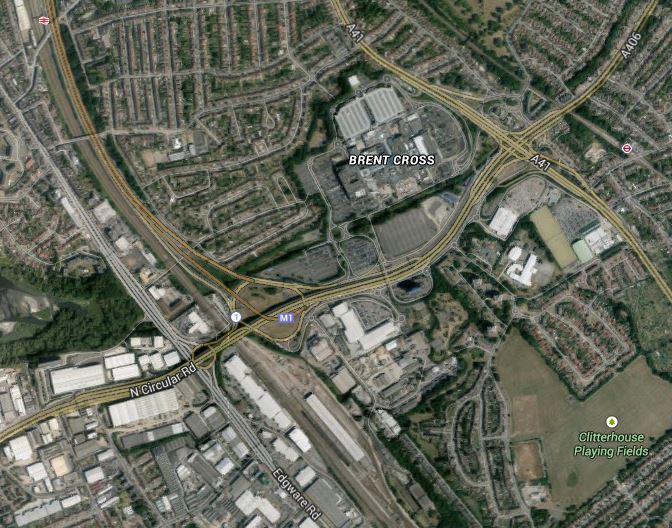
Brent Cross
The Midland Main Line on which the station will be built runs north-south at the western edge of the image, with Hendon station just visible at the top beside the M1.
The Shopping Centre is clearly marked and the A41 passes beside it towards the east.
The whole area is dominated by the roads and flyovers of the M1, A5, A41 and North Circular Road, which are choked with traffic. As the developers of the new Brent Cross Cricklewood development are spending £4.5 billion over the next twenty years and have stated they are improving the roads and other transport links in the area, together with creating four new parks, could we see all of these roads either buried in tunnels or more likely roofed over so that all traffic is put out of sight and mind?
According to the development web site, one of first things being done is this.
Renew and revive Clitterhouse Playing Fields and Claremont Park creating two beautiful community parks, as well as starting to create Brent Riverside Park.
Let’s hope this defines how they mean to carry on. Clitterhouse Playing Fields are at the south-east corner of the Google image.
The developers and their architects could have great fun with this development.
Looking at the position of the station, one place to put it could be where the Midland Main Line crosses the North Circular Road in an echo of how Blackfriars station was recently rebuilt over the Thames.
I can see in my mind, a shining glass palace with a roof garden above the roads with an enormous red rail sign, saying “I’m Brent Cross Thameslink, Ride Me!”
It would be the signature for the whole development.
The new station would also be a major interchange where passengers to and from the East Midlands and South Yorkshire changed between the new electric trains on the Midland Main Line and London’s rail system.
James Cook Station – The Reinvention Of The Halt
Simple stations or halts, were once very common on UK railways. These pictures show James Cook station in Middlesbrough, which is a new small station, that opened in May 2014.
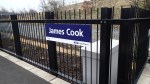

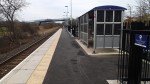

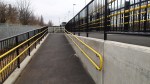
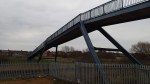
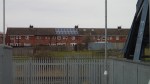

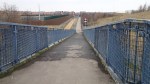

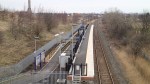


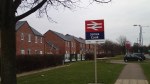
As the trains stopping at the station have conductors to sell tickets, there is no ticket machine, but there is a smart shelter, a help point, a destination board, a step-free bridge and ramps to the single platform.
James Cook station is the first construction in the possible creation of a Tees Valley Metro, which may see other new stations created or old ones reopened.
Surely, some of the ideas used in the design of the single platform James Cook station could be used at several places on the Tees Valley Metro and the wider UK rail network.
Incidentally, is there another station named solely after a person?
The Updating Of Newcastle Station
Newcastle station is one of the most important stations on the East Coast Main Line. I took these pictures of the station redevelopment as I passed through.
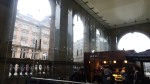

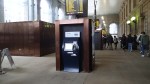

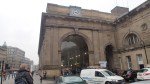
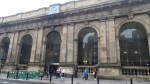
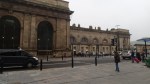

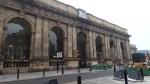
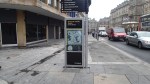
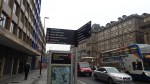
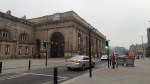
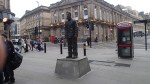

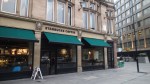


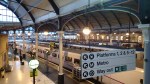

My memories of the station usually involve how blustery it can be. The glazing of the front of the station, may not be as dramatic as that at Strasbourg, but it did seem to make the station entrance a lot more civilised. The position of the ticket machines and information screens under the portico, is an idea that could have been borrowed from the French station, with which it shares a lot of operational characteristics, like fast trains to the capital, an extensive regional network and a below-ground metro or tram.
Newcastle has now joined Kings Cross and Liverpool Lime Street, where you can walk straight outside the station and be in a partly-pedestrianised area, where you can get your bearings of the city, that might be unknown to you. As the pictures show work is still continuing in this area.
Newcastle is one of six operational stations in the UK, that is a Grade One Listed Building. The others are Bristol Temple Meads, Huddersfield, Kings Cross, Paddington and St. Pancras. I can see Manchester Victoria joining this elite group, when it is completed.
Kirkstall Forge – A New Station For Leeds
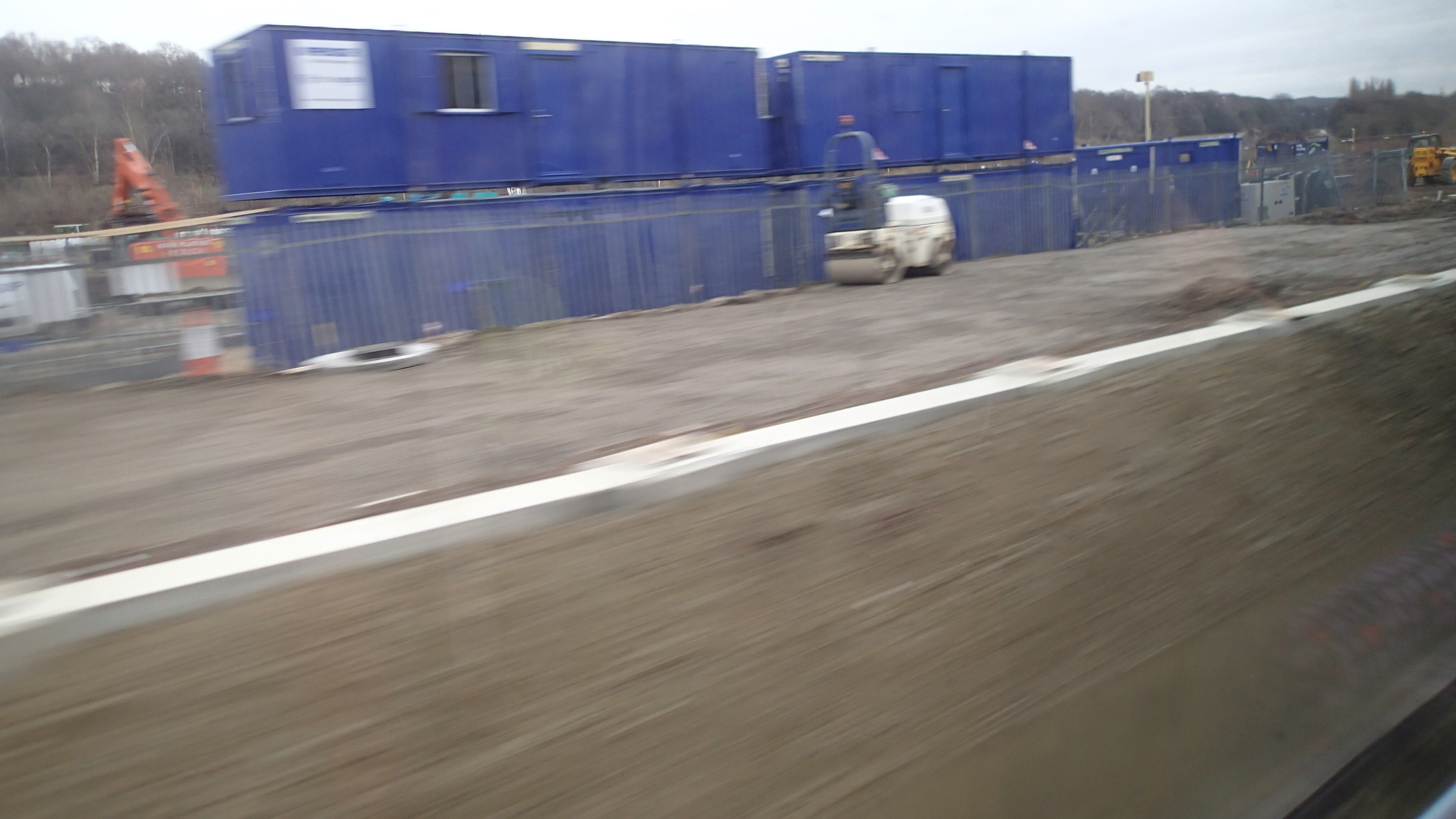
Kirkstall Forge station is currently being built on the line between Leeds and Bradford. I took this ratrher bad picture from a crowded train, as my train took me into Leeds.
Kirkstall Forge – A New Station For Leeds
The station is being built to serve the large residential and business development at Kirkstall Forge.
Surely, every large development needs to be connected properly to the local public transport system. This would appear to be a good example, which is good for everyone. The property developers must have a big selling point to their properties, as frequent electric trains will take people to nearby city centres and business districts. We must not commit the mistakes of the 1960s, where we built large new towns or estates, like Skelmersdale and Thamesmead without a rail or rapid transit connection
 The Anonymous Widower