Eastern Central Line Stations To Be Made Step-Free
Five stations at the Eastern End of the Central Line are to be made step-free.
These pictures show the various stations. on the 22nd January 2018.
Buckhurst Hill
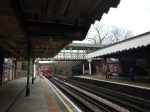
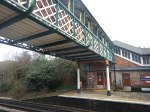
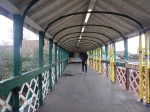
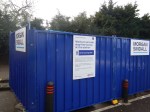
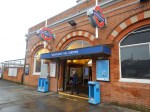
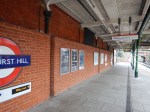
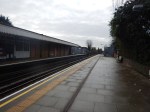

Work is already underway to reopen an old subway at the Southern end of the station. A completion date of Summer 2018 is displayed.
Will lifts be added to this subway?
Debden
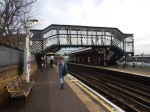
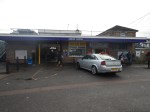

No work has started yet! Will the current bridge be replaced?
Newbury Park
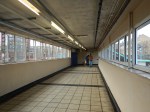
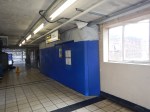
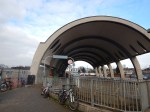
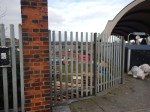
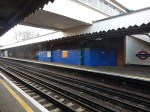
Work has started. A completion date of Summer 2018 is displayed.
Snaresbrook
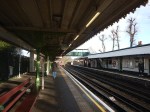
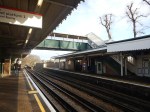
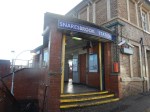
No work has started yet! Will the current bridge be replaced?
South Woodford
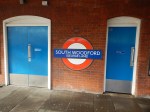
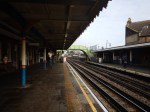
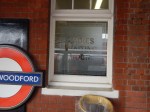
No work has started yet!
Summary
These stations were built by the Great Eastern Railway in the nineteenth century, with the exception of Newbury Park, which was built for the Central Line after the Second World War.
The Great Eastern stations show their heritage with good brickwork, period features and a good selection of wrought iron bridges.
Newbury Park station is Grade II Listed because of the hideous concrete bus station.
What Are Transport for London’s Plans?
Transport for London have stated that their aim is to eventually have all Underground stations with full step-free access.
There are twenty station East of Stratford station on the Central Line.
Currently, four have some degree of step-free access, so these five added stations would bring the step-free stations to forty-five percent.
Could all this work, be due to the fact, that when Crossrail opens, the Eastern section of the Central Line will effectively become a branch of London’s new line? The two lines will have a step-free cross-platform interchange at Stratford.
Will this give a marketing advantage, as there will now be a totally step-free route from a lot of Eastern Central Line stations to the West End, Paddington and Heathrow?
Could car parking be a factor?
- Only Debden and Newbury Park stations, of those being made step-free have car parks with over a hundred spaces.
- Disabled spaces are generally less than ten.
- Of the other step-free stations in the area, only Epping has a large car park.
It is probably more affordable to add step-free access to stations, than provide disabled parking spaces, closer into London.
Onward To Ongar
Currently, there are no plans to extend the Central Line to Ongar.
But I do wonder, if this could be reconsidered in the future.
- The roads will get more congested.
- More housing is built in this part of Essex.
- Crossrail will probably attrack passengers to use the Central Line.
- The Central Line’s new trains in a few years will cut journey times and add capacity.
What will probably decide the matter is overcrowding at Epping station.
Tube Stations To Be Made Step-Free
This article on City AM is entitled London Mayor Sadiq Khan Names The Next 13 Tube Stations Going Step-Free.
They are.
- Boston Manor – Piccadilly Line
- Burnt Oak – Northern Line
- Debden – Central Line
- Hanger Lane – Central Line
- Ickenham – Metropolitan and Piccadilly Lines
- Northolt – Central Line
- North Ealing – Piccadilly Line
- Park Royal – Piccadilly Line
- Rickmansworth – Metropolitan Line
- Ruislip – Metropolitan and Piccadilly Lines
- Snaresbrook – Central Line
- Sudbury Hill – Piccadilly Line
- Wimbledon Park – District Line
These are in addition to these stations, which are already in the pipeline for step-free access.
- Amersham – Metropolitan Line
- Bromley-by-Bow – District And Hammersmith & City Lines – Opening in 2018
- Buckhurst Hil – Central Line – Opening in 2018
- Cockfosters – Piccadilly Line
- Harrow-on-the-Hill – Metropolitan Line – Opening in 2019
- Mill Hill East – Northern Line
- Newbury Park – Central Line – Opening in 2018
- Osterley – Piccadilly Line
- South Woodford – Central Line
As the City AM article reports that the new thirteen station will cost £200 million to upgrade, there is around £300 million of work to9 be done in total.
Perhaps some of the contracts will go the companies hit by Carillion’s failure!
How To Build Railway Stations
With all the troubles caused by the failure of Carillion, it is good to report on a company, that is providing new and improved railway infrastructuresubstantially on time and on budget.
This article on Rail Engineer is entitled VolkerFitzpatrick: Upgrading Stations.
This is the first two paragraphs.
With Network Rail’s comprehensive Railway Upgrade Plan well underway and the modernisation of Britain’s railways firmly in the spotlight, there is a growing need and expectation for first-class stations and infrastructure to accommodate growing numbers of passengers nationwide.
One business with a huge role in the modernisation programme has developed a reputation as an exceptional multi-disciplinary contractor, with extensive capabilities in civil engineering, building and rail, meeting the demands of a wide range of clients across multiple disciplines. It is this consolidated approach that has helped VolkerFitzpatrick deliver several high-profile UK railway station schemes in the last 10 years.
The article then goes on to describe how the company tackled the following stations.
- Cambridge North – Described in Cambridge Gets Its Own Mini-Crossrail
- Gatwick Airport – New platform and expansion, that opened in 2014
- Hackney Wick – Complete station rebuild for 2018 – The major work is described in A Tough Way To Spend Easter.
- Imperial Wharf – New station in 2007
- Lea Bridge – Described in The People Of London Welcome Lea Bridge Station
It then goes on to detail the company’s omvolvement in the Lea Valley Improvement Program, which will deliver new stations at Tottenham Hale, Northumberland Park and Meridian Water.
Read the Rail |Engineer article, as it gives a good insight into design and construction.
How To Recycle A Station
Hanborough station on the Cotswold Line in Oxfordshire in being expanded.
Wikipedia says this, about theplans announced in 2016.
Plans were announced to increase services from Hanborough Station, by Great Western Railway. A launch event was held in Witney, at which GWR’s managing director Mark Hopwood said that the investment needed was £275 million. Double tracking would be reinstated between North Oxford and Long Hanborough and two disused platforms reopened. The local constituency MP and Prime Minister David Cameron told delegates at the meeting ” am utterly convinced of the necessity of investing in this line. I will do everything I can to give this vision a boost.”
This article on IanVisits, is entitled How Crossrail’s Legacy Could End Up In Rural Oxfordshire.
The article describes how the temporary station at Abbey Wood station, during Crossrail construction.
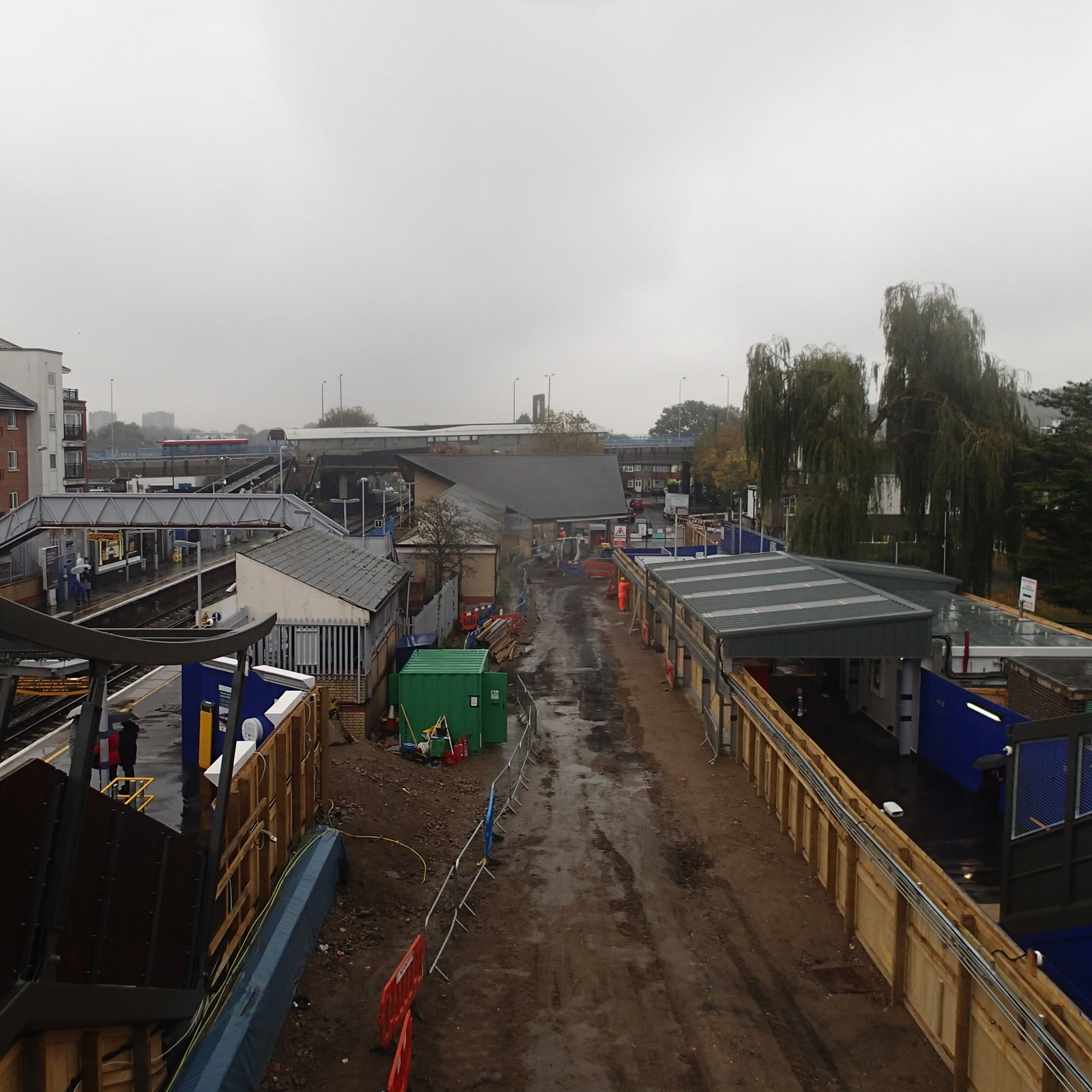
My picture comes from a post called Crossrail Build A Temporary Station.
The station buildings that could go to Hanborough are on the right behind the fence.
A Good Summary Of What’s Happening In Creating New And Updating Old Stations
This article on Rail Engineer is entitled Stations: what happened in CP5 and what’s happening in CP6?
It is an article to read. Especially, if you’re thinking of moving house to a new area!
Successful Trial Means Tube On Track For 4G Coverage By 2019
The title of this post is the same as this article on Rail Technology Magazine. This is said.
The Tube network will see 4G connectivity arrive in 2019, TfL has confirmed, meaning mayor Sadiq Khan’s original ambitions will be able to go ahead.
The news comes following a successful trial of the technology on the Waterloo & City line, where 4G technology was tested in tunnels and stations along the line in the summer.
I wonder how long it will be before all trains, trams and buses have 4G connectivity.
In some ways, I think providing 4G connectivity outside stations, bus stops and other important places is more important.
Suppose you are stuck in an area with no signal and perhaps you have fallen over and seriously cut your leg and need help or just a lift home.
Wouldn’t it be so much better, if you could find somewhere, where you know you could summon assistance or a lift?
I have two questions.
- Will 4G connectivity be added to the Overground?
- Will 4G connectivity be switch on station-by-station and line-by-line or in one go in 2019?
In some posts about this, it is suggested that a driving force behind the connectivity, is that the emeergency services are moving to mobile phone technology. So if that is the case, then the answers to these questions must be in the affirmative!
Liverpool Lime Street Station Upgrade – 16th November 2017
The upgrading of platforms at Liverpool Lime Street station seemed to be progressing well as I passed through.
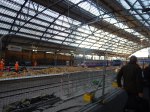
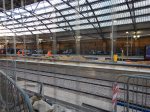

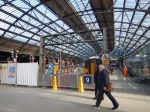
Note.
- Work even seems to have started on the second platform for Virgin services, which would allow two trains per hour.
- Extra platforms will also allow direct Liverpool to Glasgow services.
In some ways, the Grade II Listed station, will become the first station in the North ready to be ready for high speed trains from London and across the North of England.
Updating The Central Line
The Central Line will breathe two huge sighs of relief in the next eighteen months.
- The Elizabeth Line will open between Abbey Wood and Paddington stations in December 2018.
- The Elizabeth Line will open between Shenfield and Paddington stations in May 2019.
Travellers, from London, other parts of the UK and abroad will then have the following.
- Five East-West interconnected routes across Central London; Metropolitan, Central, Elizabeth, District and Jubilee Lines.
- Massive transport interchanges at Canary Wharf, Stratford, Whitechapel, Liverpool Street, Farringdon, Tottenham Court Road, Bond Street and Paddington will tie it all together.
- Liverpool Street. Whitechapel and Stratford will allocate passengers in the East of Central London.
- Paddington will allocate passengers in the West of Central London.
And this is before the Elizabeth Line opens between Paddington and all stations to Heathrow and Reading in December 2019.
The Central Line After the Elizabeth Line Opens
So will the Central Line become a little-used backwater?
- Holborn is a major interchange with the Piccadilly Line, which is that line’s only access to the Central or Elizabeth Lines.
- Oxford Circus is a major interchange with the Victoria Line, which is that line’s only access to the Central or Elizabeth Lines.
- Holborn, Oxford Circus, Marble Arch and other stations are destinations in their own right.
- The overcrowding of the Central Line probably kept passengers away and after freeing up will they come back?
I suspect that in a few years time it will be as busy as it ever was!
Improving the Central Line
It is my view, and probably that of Transport for London, that improvements need to be made to the Central Line.
Three projects are underway.
The Central Line Train Upgrade
This article on Railway-news.com is untitled London Underground’s Central Line Trains Set For Upgrade.
Currently, the Central Line‘s 1992 Stock have DC motors, which will be replaced by more efficient AC motors and a sophisticated control system.
The cost of the upgrade will be £112.1 million or about £1.3 million per train.
Transport for London are only making a reliability claim for the upgrade. Hopefully, if the trains are more reliable, then more can be in service. so can a higher frequency be run?
I also think in addition, the trains could possibly accelerate faster from stops, thus reducing the dwell times at stations and ultimately the journey times.
- Epping to West Ruislip currently takes ninety minutes with 38 stops.
- Ealing Broadway to Newbury Park takes sixty minutes with 24 stops.
- Northolt to Loughton takes sixty-seven minutes with 28 stops.
Saving just ten seconds on each stop will reduce journey times by several minutes.
I suspect that Transport for London will rearrange the timetable to increase the service frequency from the current twenty-four trains per hour (tph).
It will be interesting to see what frequency of trains and journey times are achieved, when all the Central Line trains have been updated.
Bank Station Capacity Upgrade
This page on the Transport for London web site gives details of this important upgrade at Bank station, which is already underway. It starts with this paragraph.
Bank and Monument stations form the third busiest interchange on the London Underground network. Work we’re doing to substantially improve the capacity of Bank station should finish in 2022.
It lists these improvements.
- A new railway tunnel and platform for the Northern line that will reduce interchange times and create more space for passengers
- Step-free access to the Northern line and DLR platforms
- More direct routes within the station, with two new moving walkways
- Two new lifts and 12 new escalators
- A new station entrance in Cannon Street
There will also be a new entrance in Wallbrook Square under the Bloomberg Building, which is planned to open this year.
Comprehensive is a good word to describe the upgrade.
I avoid the Northern Line platforms at Bank because they are so narrow. After the upgrade, I will have no need.
Holborn Station Capacity Upgrade
This page on the Transport for London web site, gives details of this important upgrade at Holborn station. It starts with this paragraph.
We’re proposing changes at Holborn station that would make it substantially easier for customers to enter, exit and move around the station. Subject to funding and permissions, work on the station would start in the early 2020s.
I don’t think this upgrade can come too soon.
As with some parts of Bank station, I avoid Holborn station.
What Still Needs To Be Planned?
The major projects left must surely be upgrading the capacity and providing step-free access at the following Central London stations.
St. Paul’s And Chancery Lane
St. Paul’s and Chancery Lane stations both need step-free access, but the problems of installing lifts at the two stations would be surprisingly similar, as both stations have a similar layout.
- Both stations will need lift access to the ticket halls, which are below street level.
- At both stations, the two Central Line tracks are unusually arranged one on top of the other.
- Even more unusually, the Westbound tunnel is on top at St. Paul’s and the Eastbound tunnel at Chancery Lane.
- At both stations, escalators lead down to a spacious lobby, which has direct access to the top platform.
- St. Paul’s has two escalators and a staircase, whereas Chancery Lane has three escalators.
- From the low-level lobby, two short escalators and a staircase lead down to the bottom platform.
It may be possible to provide lifts that go from the ticket hall to both platforms as before rebuilding in the 1930s, this arrangement was used.
Both stations might also be suitable for the application of inclined lifts.
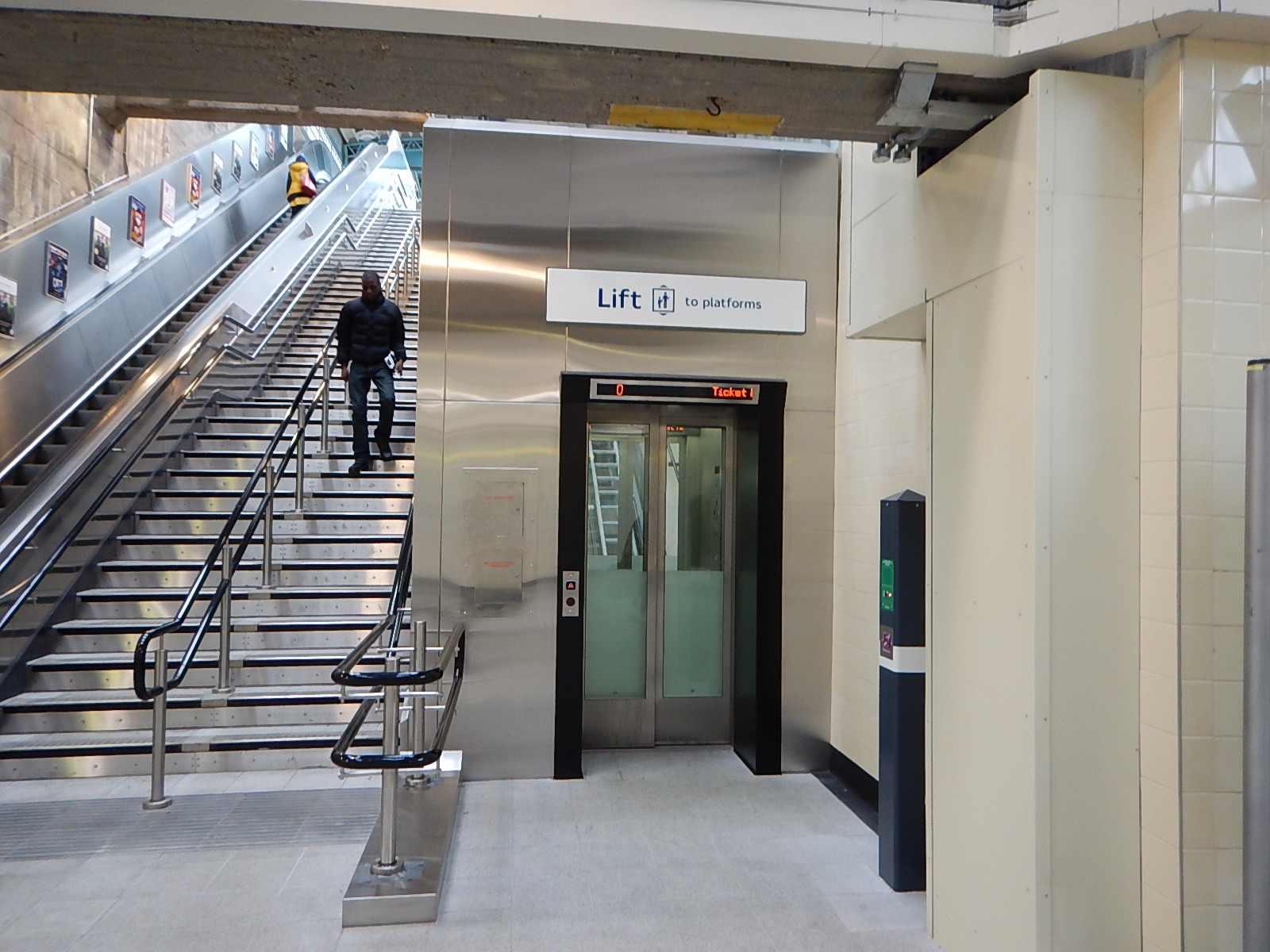
For instance, would two escalators and an inclined lift handle the lower transfer at both stations?
Oxford Circus
Oxford Circus is a busy interchange, where the Bakerloo, Central and Victoria Lines cross each other.
This map from carto.metro.free.fr shows the lines at Oxford Circus station.
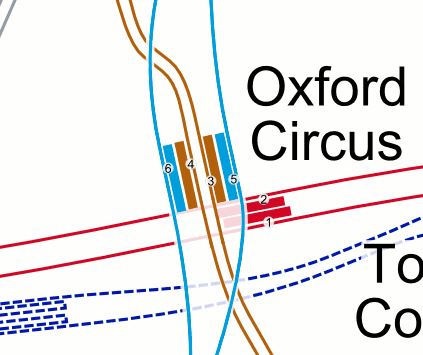
Note.
- The Cemtral Line, shown in red, was built under Oxford Street to avoid disturbing the buildings.
- The Bakerloo Line, shown in brown, was built under Regent Street.
- The Victoria Line, shown in light blue was cleverly threaded through in the 1960s to give cross-platform interchange with the Bakerloo Line.
- The dotted purple lines are the Elizabeth Line.
- Between the two dotted lines, the Eastern End of the platforms at Bond Street station can be seen.
These pictures show the buildings at the four corners of Oxford Circus.

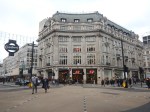


Wikipedia says this about these buildings.
Oxford Circus was designed as part of the development of Regent Street by the architect John Nash in 1810. The four quadrants of the circus were designed by Sir Henry Tanner and constructed between 1913 and 1928.
Note.
- The building on the North-East corner used to be Peter Robinson and is Grade II Listed.
- The other three corner buildings are also Listed.
- The shops in the two Southern corners are being refurbished.
I believe that the following is needed at Oxford Circus station.
- Measures to alleviate the overcrowding.
- Full step-free access to all platforms.
- Improved access to the Central Line platforms.
- Better interchange between the Bakerloo/Victoria platforms and the Central Line.
In some ways, the biggest problem in the next few years will be passengers changing between the Victoria and Elizabeth Lines. Passengers between say Walthamstow and Heathrow will probably want to change between Oxford Circus station and the new Hanover Square entrance to Bond Street station.
- The planned pedestrianisation of Oxford Street will obviously help, especially if the roads around Hanover Square, like Harewood Place and Princes Street are similarly treated.
- Joining the Victoria Line at Oxford Circus is not a problem, as there are four entrances to the ticket hall under Oxford Circus, a large number of entrance gates and four escalators down to the trains.
- But on arrival at the station, you are forced to exit from the station about fifty metres East of the station, which means you’re going the wrong way for the Elizabeth Line.
It strikes me what is needed is a new entrance to the station on the South Western corner of Oxford Circus.
But would this alone satisfy the needs of this station?
More Station Entrances On Oxford Street
For Crossrail, Bond Street station is being given two new entrances in Davies Street and Hanover Square.
But it is also being given another entrance on the North side of Oxford Street, to give better access to the Central and Jubilee Lines.
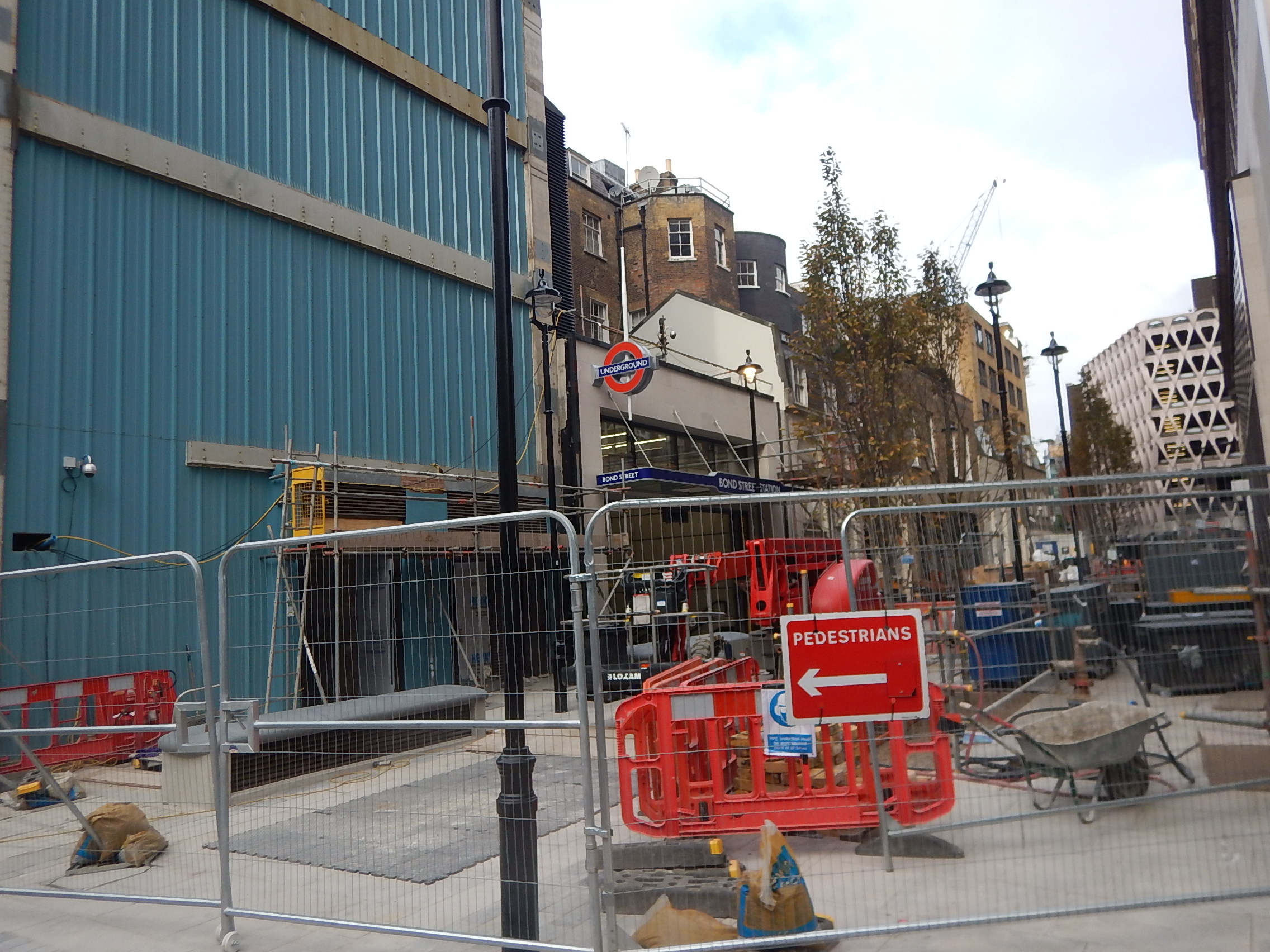
The picture shows the new entrance tucked away in what will probably become a new development.
So could this technique be used on Oxford Street to improve station access?
Look at the map of the lines at Oxford Circus station earlier in the post and you will notice that the Central Line platforms extend to the East. I took these pictures around where the platforms could end.



Could there be space to squeeze in another entrance to the Eastern end of the Central Line platforms?
It probably won’t be possible whilst traffic is running up and down Oxford Street. But after the road is pedestrianised, it would surely be much easier to dig down to the Central Line , which is not very deep below the surface of Oxford Street.
Marble Arch
Marble Arch station is at the Western end of Oxford Street. Wikipedia says this about the station.
The station was modernised (2010) resulting in new finishes in all areas of the station, apart from the retention of various of the decorative enamel panels at platform level.
But has it got the capacity needed?
It is also not step-free and needs lifts.
New Trains In The Mid 2020s
Under Future and Cancelled Plans in the Wikipedia entry for the Central Line, this is said.
The Central line was the first Underground line to receive a complete refurbishment in the early 1990s, including the introduction of new rolling stock. A new generation of deep-level tube trains, as well as signaling upgrades, is planned for the mid-2020s, starting with the Piccadilly line, followed by the Bakerloo Line and the Central Line.
The new trains would fit well to replace the current trains and give an increase of capacity to the line.
Possible Developments
These are possible developments.
Shoreditch High Street Station
There is a possibility of connecting Shoreditch High Street station to the Central Line.
This is said under Plans in the Wikipedia entry for the station.
There have also been discussions of creating an interchange with the Central line between Liverpool Street and Bethnal Green which runs almost underneath the station. However, this would not be able to happen until after the Crossrail 1 project is complete, due to extreme crowding on the Central line during peak hours.
Given that in a few years time, the following will have happened.
- There will have been a lot of development in Shoreditch.
- The East London Line will have a frequency of twenty-four trains per hour.
The connection may be worth creating.
On the other hand, the Elizabeth Line may make the connection unnecessary, as travellers can use the two connections at Stratford and Whitechapel stations.
Mile End Station
If ever there was a station, where step-free access would surely be worthwhile it must be Mile End station.

Consider.
- It is a busy station.
- It has cross-platform access between District/Metropolitan and the Central Lines.
- It has a cab rank.
Knowing the station fairly well, I suspect fitting the probably three lifts required would not be the most challenging of tasks.
Eastern Improvements
Crossrail has a step-free cross-platform interchange with the Central Line at Stratford, which will have the following effects.
Changing at Stratford will give better access to and from Oxford Street, Paddington and Heathrow.
Crossrail trains will be larger, more comfortable, better equipped and probably less crowded.
Journey time savings will be six minutes to Bond Street and nineteen minutes to Ealing Broadway stations.
Taken with the improved Central Line trains, it all must result in increased patronage in the East.
But there are twenty stations East of Stratford, of which only four are step-free.
So I suspect that Transport for London will make strenuous efforts to improve the Eastern end of the Central Line.
- More step-free access.
- Better bus services.
- More small retail outlets at stations.
I believe that in ten years time, the Eastern station will be very different.
Western Improvements
West of Marble Arch, there are seventeen stations, of which by 2020 only two will be step-free.; Ealing Broadway and Greenford.
Improvements will probably a similar pattern to the East, although there are rumours of rebuilding some stations.
Conclusion
There’s a lot of scope for improvement in the Central Line.
A Tale Of Two Stations
This article from City AM is entitled Opinion: How a mixture of new business, Crossrail and, finally, homes will transform Tottenham Court Road forever.
This is said.
In recent years, the area around Tottenham Court Road has gone through a marked transformation. Once considered the scruffy end of Oxford Street, with no real identity, the area has become a thriving crossroads between London’s creative and technology industries.
In the middle of all the development is Tottenham Court Road station, which is being developed for Crossrail.
This morning Is Open House and I went a few miles South on the East London Line to Peckham Rye station, where I took these pictures.



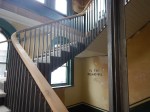
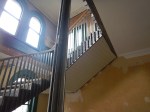
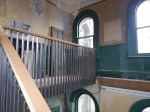




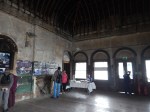




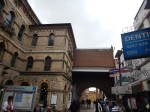
The old Victorian waiting room is being transformed into possibly a community space.
This is only one of a number of developments in the station and it is to be hoped that the transformation of the building designed by Charles Henry Driver, will start the upgrading of Peckham.
Look at the classic 1980s-era extension in brick, by British Rail in the last picture. Incarceration for life with very hard labour, is too soft a punishment for the idiots who designed and sanctioned that monstrosity.
Coastal Communities Among Worst Off In UK, Report Finds
The title of this post is the same as an article on the BBC web site, which they are covering on BBC Breakfast.
When I was fifteen my parents partially-retired to Felixstowe and I remember a very boring couple of summers in the town. In summer 1963, I spent most of it reading Nelkon and Parker in preparation for my A Level Physics course.
In those days, public transport to Ipswich was dire with nothing back after working hours and I can remember that I only ever went to the cinema in Felixstowe once!
Today, the last train from Ipswich is 22:28, but in those days it was about 19:00.
So one factor that applied, was you needed a car to have any social life outside of the dreary town. The few people of my age, I knew in the town couldn’t wait to leave school, so they could earn money to buy a car.
If you look around the country, the coastal areas that are vibrant and successful like say Bournemouth, Brighton, Liverpool, Southend and Swansea, tend to be larger, with excellent external and internal public transport links.
Other non-successful coastal towns like Felixstowe, Hastings, Hull, Lowestoft, Redcar, Skegness and Ysrmouth don’t have the same quality of external transport links, although some like Hull have good bus networks.
I may be being selective, but I believe it would make a big difference to a lot of coastal towns, if they had a first class rail service to the nearby inland larger towns and cities.
If there is no rail route, then a first class bus connection is needed.
Felixstowe
I’ll take Felixstowe as an example.
- The train service is one train per hour and it finishes around ten in the evening.
- The length of the line is such, that one train can do the return trip in an hour.
- Most of the rolling stock used on the line are past it, although I’ve done the trip in a passenger-friendly Class 170 train.
- If it is a sunny Saturday or Sunday, the train can get overloaded at times.
Hopefully, the train service will get better.
- Greater Anglia have ordered new three-car Class 755 bi-mode trains.
- Network Rail are improving the Felixstowe Branch Line.
- Ipswich station is to be upgraded with an extra bay platform for Felixstowe and Lowestoft services.
Point 1 would probably attract more passengers and points 2 and 3 would allow a half-hourly service at selected times of the day.
The increase in capacity and quality, should be enough, so that on a glorious day if people in Ipswich decide to go to the coast, the trains can make it a good experience.
It will be interesting to see how the number of rail passengers to Felixstowe change in the next few years.
Incidentally, Felixstowe station shows how you can create a quality station for a town of 24,000 people.
- The Grade II Listed station buildings have become a Shopping Centre with a cafe and bar.
- There is just a single platform that can take a four-car train.
- There is a ticket machine and a basic shelter.
- The station is on the High Street.
- The car park is shared with the local Co-op supermarket.
- The station is unstaffed, but the trains are double-manned.
How many coastal stations could be Felixstowed?
Felixstowe used to have a second station at Felixstowe Beach, which is near to the Port of Felixstowe and Landguard Fort.
Some might argue that reopening the station would be a good idea, especially as it could be a modern single platform station.
But surely, it would be better to improve the bus services in the town or provide quality bike hire at the station.
Greater Anglia’s Class 755 Trains
Greater Anglia have ordered 24 x four-car and 14 x three-car Class 755 trains.
- The trains are bi-mode.
- In terms of carriages, the new bi-mode fleet will be at more than twice the size of the current diesel fleet.
- Greater Anglia have said, that they will use electric power from overhead wires, even if it’s only available for short distances.
- The trains are probably large enough for an on-board full function ticket machine and lots of buggies, bicycles and wheel-chairs.
- They will probably carry their own wheelchair ramp, as I saw in What Train Is This?
This article in RailNews is entitled Greater Anglia unveils the future with Stadler mock-up and says this.
The bi-mode Class 755s will offer three or four passenger vehicles, but will also include a short ‘power pack’ car to generate electricity when the trains are not under the wires. This vehicle will include a central aisle so that the cars on either side are not isolated. Greater Anglia said there are no plans to include batteries as a secondary back-up.
So Stadler are using their well-proven design, which I saw in Germany.
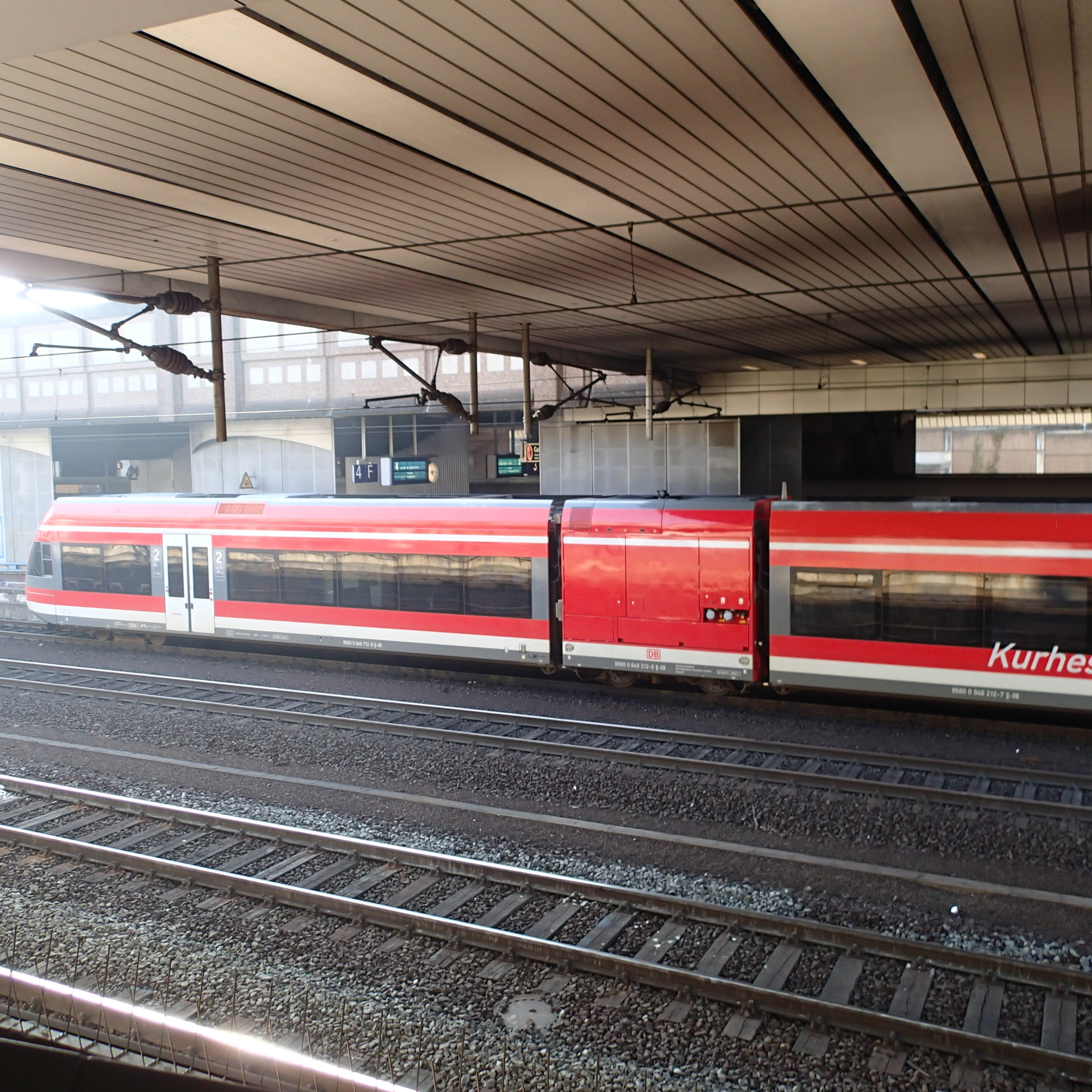
What surprises me is the ruling out of batteries by Greater Anglia.
The central powercar would surely be the ideal place to put energy storage, for the following reasons.
- It could be easily integrated with the diesel power-pack.
- The weight of the battery is probably in the best place.
- It could be part of an energy saving regenerative braking system, which would work under electric or diesel power.
- In Battery EMUs For Merseyrail, I wrote how Stadler were fitting batteries in Merseyrail’s new fleet.
When the trains arrive, it’ll all be explained. Perhaps, Greater Anglia’s words were carefully chosen.
How will these trains change the coastal towns of Cromer, Felixstowe, Lowestoft, Sheringham and Yarmouth?
If it’s positive, Greater Anglia will be setting a strong precedent.
What Needs To Be Done To Railways To And Along The Coast
In no particular order, there are various topics.
A Coastal-Friendly Train Fleet
From personal experience on East Anglian trains, I feel that the passenger profile is different with always several bicycles on a train. Greater Anglia will have researched their passengers’ journeys and this has resulted in their choice of three- and four-car bi-mode Class 755 trains.
- One- and two-car diesel multiple units are being replaced with three-car bi-modes
- The Class 170 trains appear to be being replaced by four-car bi-modes.
So it would appear that Greater Anglia are expecting more passengers on the coastal routes to Cromer, Felixstowe, Lowestoft and Yarmouth, as they are always running at least three-car trains.
I also suspect they will be allowing for more bicycles and buggies, with higher traffic at weekends with good weather.
Their fleet choice will also allow them to use a four-car train instead of a three-car.
Looking at the fleet choices of other train operators like Northern working over a wide area with a large proportion of leisure traffic, they seem to have a degree of flexibility.
Stations In Coastal Towns
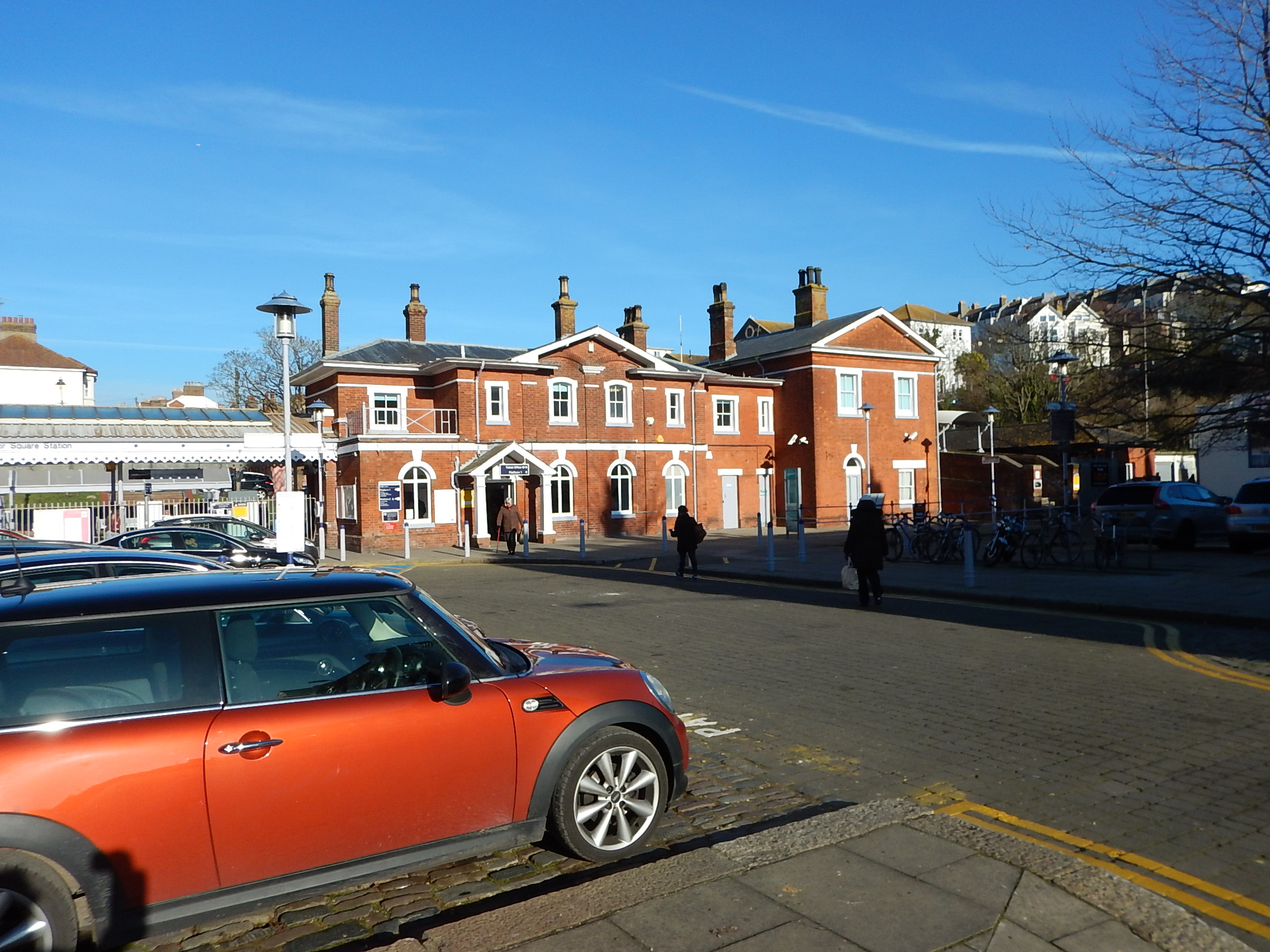
Many stations in coastal towns were built in the grand manner. This is St. Leonard’s Warrior Square station.
Felixstowe station was built in this way and the station buildings are Grade II Listed. This is the single platform.
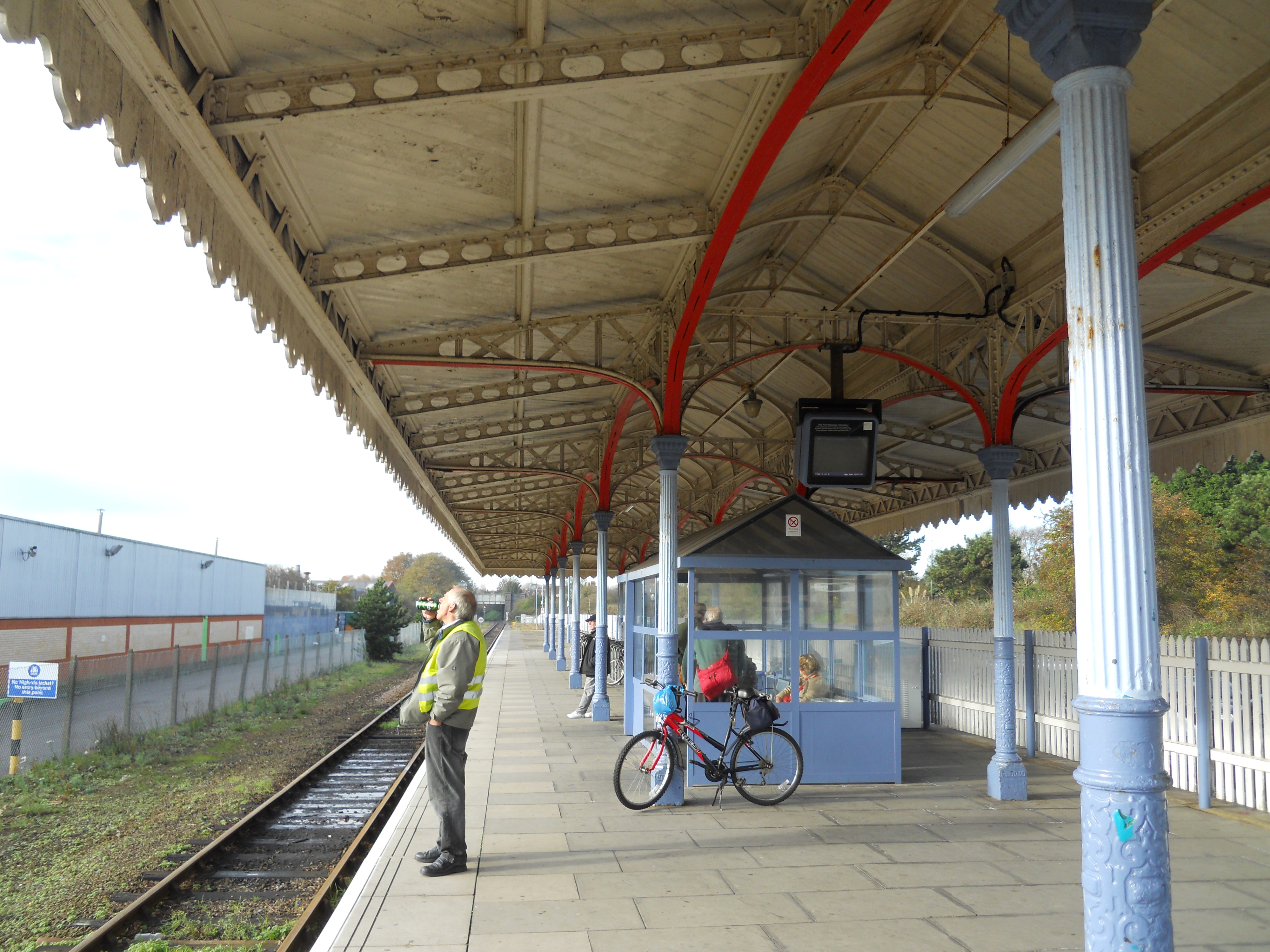
But it also shows how you can create a quality station for a town of 24,000 people.
- The station buildings have become a Shopping Centre with a cafe and bar.
- There is just a single platform that can take a six-car train.
- There is a ticket machine and a basic shelter, underneath an ornate 1898 canopy.
- The station is on the High Street.
- The car park is shared with the local Co-op supermarket.
- The station is unstaffed, but the trains are double-manned.
How many coastal stations could be Felixstowed?
These are a few pictures of other stations in coastal towns.
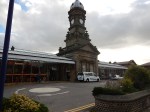

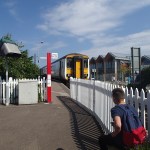
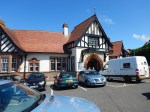
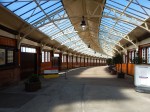
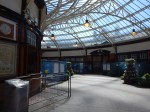
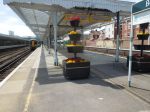
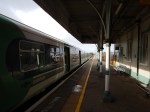
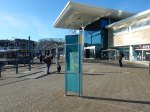


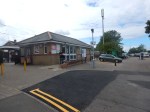

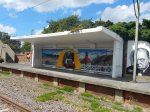
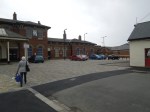
Some are grand, some are simple and some need a lot of improvement.
But if you want to improve the fortunes of a coastal town, or any town for that matter, you must give it a decent station, which will be one of main entry points for visitors.
The larger stations must have the following characteristics.
- A certain style.
- Good understandable information and perhaps a proper Tourist Office.
- A cafe or a bar.
- Decent bus connections to the rest of the town.
- Bicycle hire
- A shop for a paper and some chocolate.
- A cash machine with no extra charges.
Hopefully, the station needs a central location in the town.
But Felixstowe station shows what can be created, with its Victorian canopy and a single platform, tucked away behind a shopping centre, built around the original Listed station building.
These days with modern signalling and double-ended multiple units, single-platform stations like Felixstowe, could probably handle four trains per hour.
New Stations
In DfT Names Five Winners Of Fresh £16m Stations Fund, I talked about new stations funded by the Government’s New Stations Fund. Two of the five stations are near the coast; Bow Street and Horden Peterlee.
So does the Government realise the value of good rail links to coastal areas?
The Walkers’ Halt
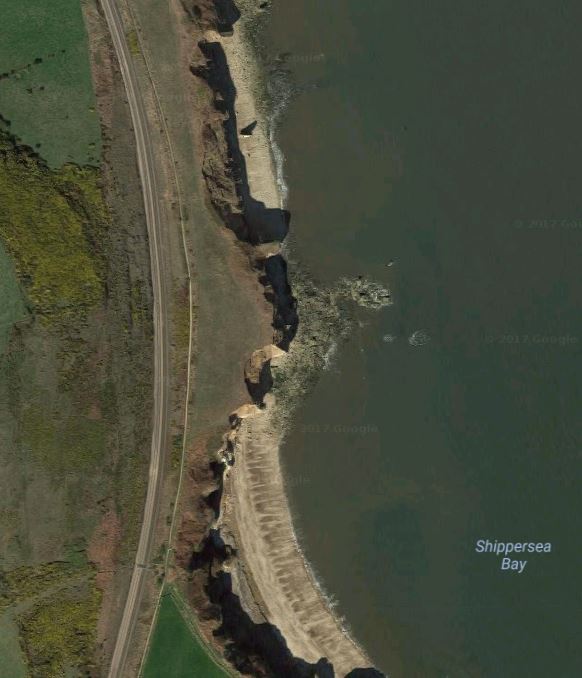
Some of the coastal lines go along some of the most spectacular coast-lines in the UK.
This Google Map shows the Durham Coast Line just South of Seaham station.
A modern train like a bi-mode Class 755 train could have the following characteristics.
- The ability to execute station stops with a short dwell time.
- In-cab radio signalling.
- CCTV to aid the driver at a station stop.
- On-board ticketing machine.
- On-board wheelchair ramp.
- Two crew members.
So would it be able to stop to pick up and set down at an old-fashioned halt with perhaps a single platform?
The England Coast Path
The England Coast Path will be 4,500 kilometres long and go round the whole coast of England.
In places, it must go near to railway lines, so will we see simple walkers’ halts, as I described in the previous section?
It strikes me, that we need a large helping of careful design to make sure that the England Coast Path and our costal rail routes would well together.
I used England as an example, but I suspect, the same logic applies in the rest of the UK.
Conclusion
This post isn’t complete yet!
I do feel though based on my East Anglian experience, that improving the train service to coastal towns could be the first step in improving their prosperity.
Too often going to the coast by train is a second-rate experience. Greater Anglia with its train fleet renewal seem to be creating a new era of getting to the coast in Norfolk and Suffolk.
Other companies should be made to follow.
 The Anonymous Widower