The Anonymous Widower

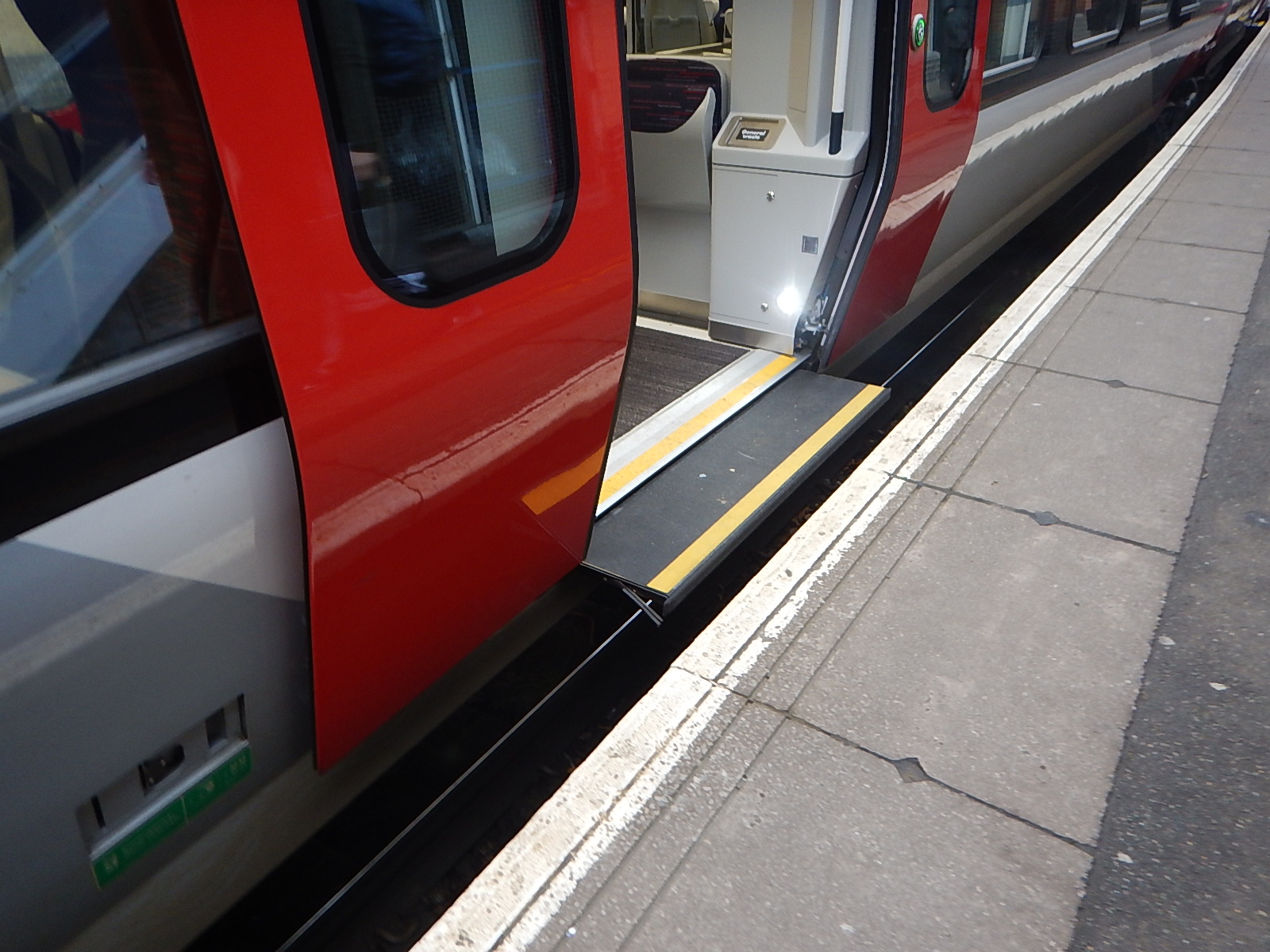
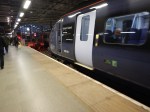
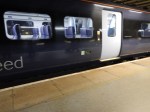
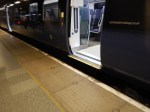
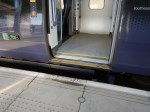
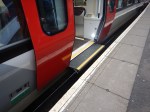
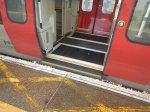
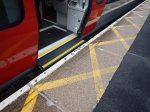
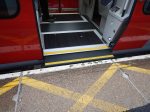
Level Boarding As A Policy

In his Informed Sources column in the August 2021 Edition of Modern Railways, Roger Ford says this.

GBR might, for example, set level boarding as a long-term policy.

By GBR, Roger means Great British Railways.

If vibrant Liverpool and sleepy East Anglia can do it, then surely all trains can be this way.

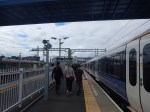
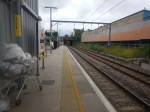
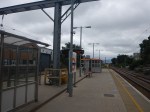
The pictures show the particularly bad example of a Class 395 train.

It is very surprising to me, that these trains didn’t have level boarding as many of the platforms they serve were new when the trains were introduced.

I blame the Treasury!

But this is what can be done.

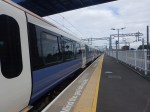
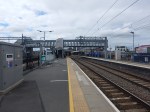
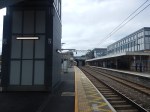
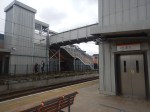
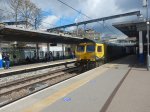
The pictures show Greater Anglia’s Class 745 and Class 755 trains.

As I’m not getting any younger, I would like to see Roger’s suggestion made the standard.


August 15, 2021 Posted by | Design, Transport/Travel | , , , | 2 Comments

Is King’s Cross Station Ready For Parcel Trains?

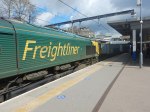
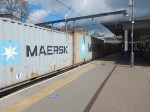
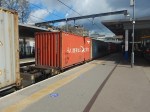
In Is This The Shape Of Freight To Come?, I wrote about the converting of redundant electrical multiple units into 100 mph freight and parcel trains.

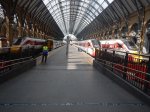
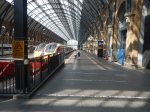
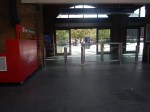
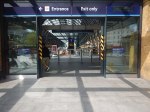
A couple of days ago, I was walking through Kings Cross station and took these pictures.

Note.

  1. The wide platforms.
  2. The gates in the ticket barriers to allow vehicles through.
  3. The passenger entrances line up with the gates in the ticket barriers.

It does look like everything is setup to efficiently get cargo between the trains and the road network outside.

A collateral benefit, is that access to the trains for passengers is step-free.

August 7, 2021 Posted by | Transport/Travel | , , , | 8 Comments

The New Cameron Bridge Station On The Levenmouth Rail Link

The reinstated Levenmouth Rail Link, will have two stations; Leven and Cameron Bridge.

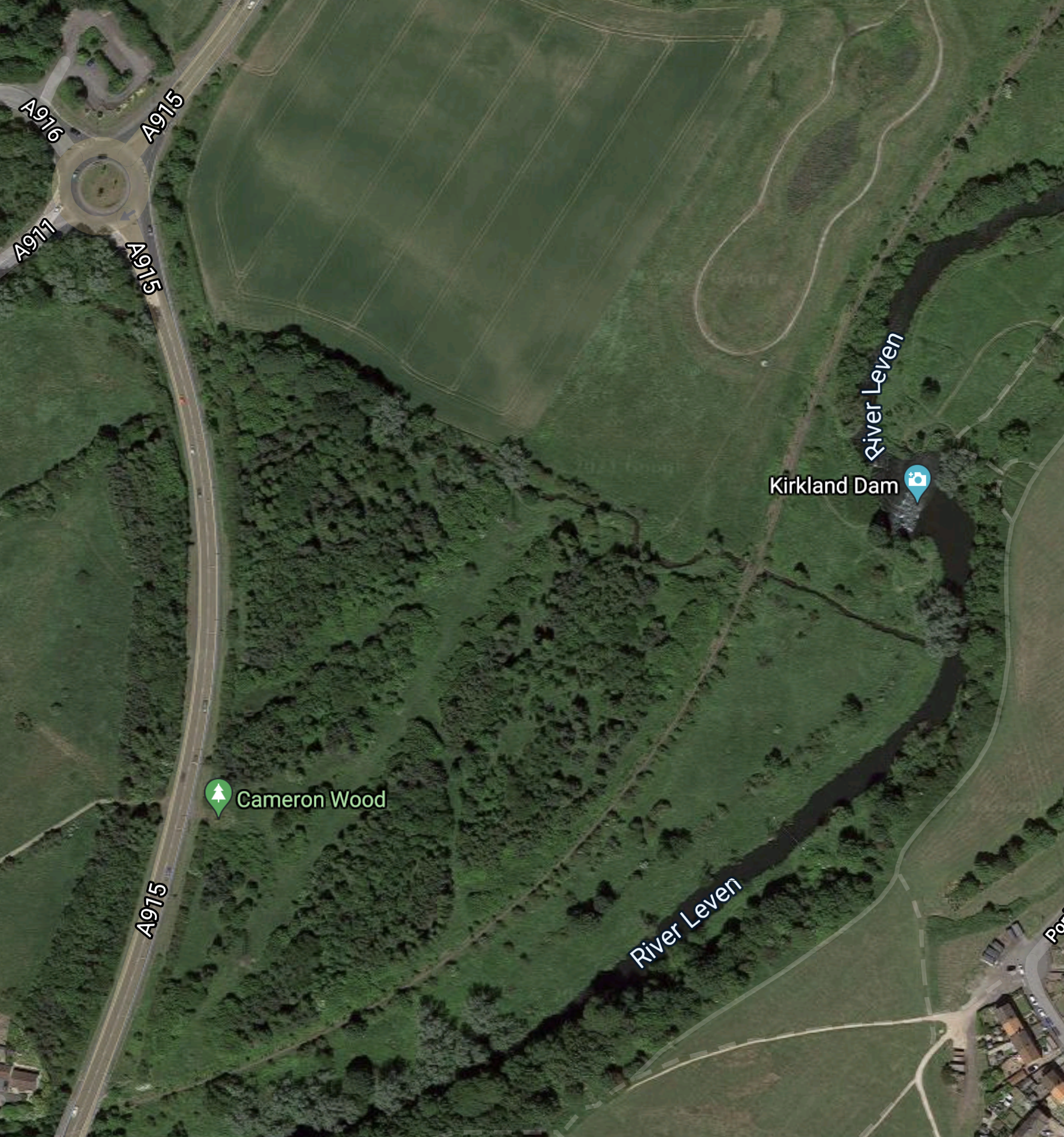
This Google Map shows the River Leven and the remains of the old railway as they run West from Leven.

Note.

The River Leven runs South-West to North-East across the map.

The track of the old rail link runs towards Leven along the North Bank of the river.

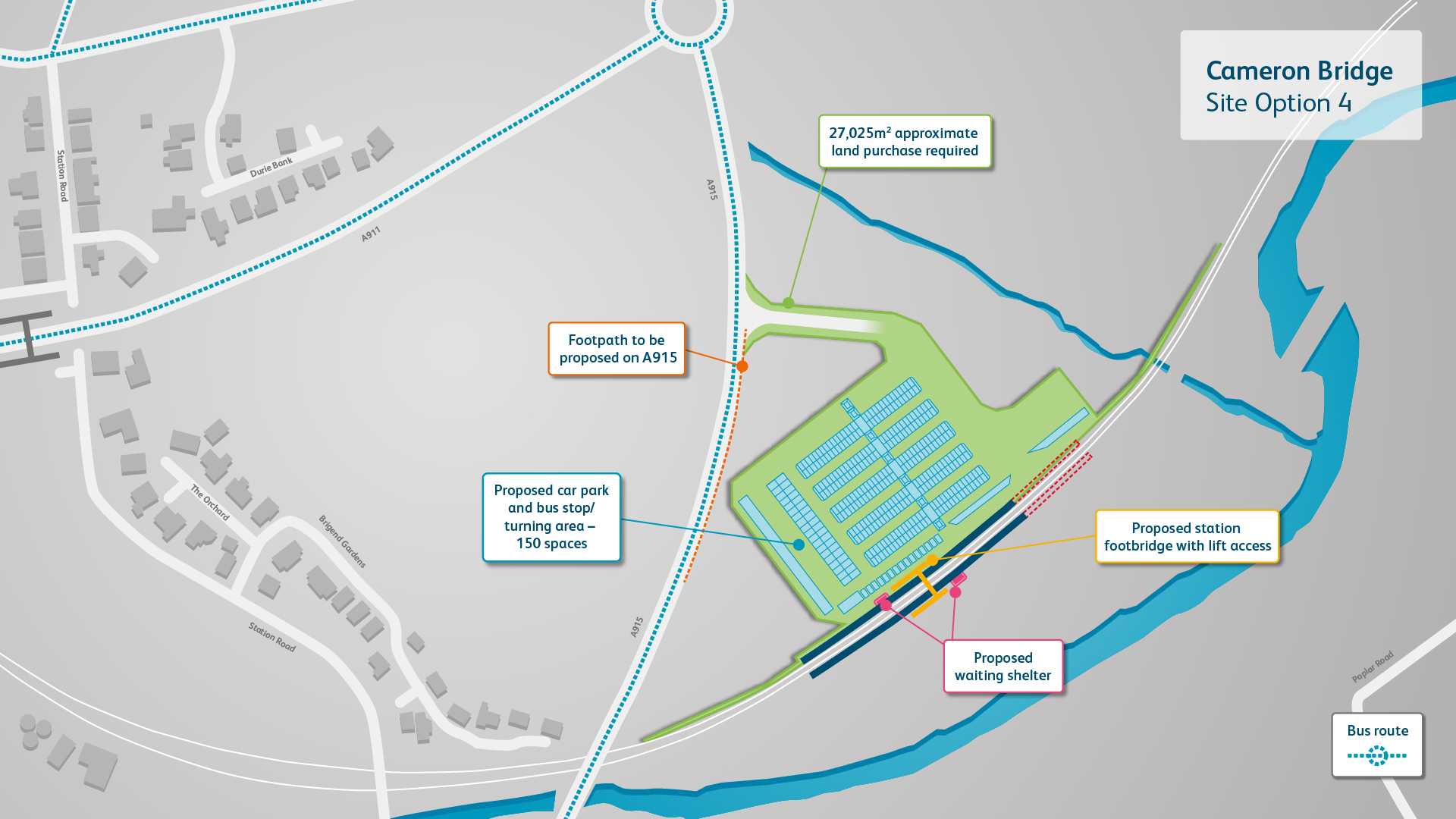
This Map from this page on the Network Rail web site, shows the location of the new Cameron Bridge station.

Note.

  1. The station will be to the East of the A915 road.
  2. Cameron Bridge station will have two platforms.station has two platforms.
  3. There will be 150 car parking spaces.
  4. There is space for a bus stop and turning area.
  5. There will be two waiting shelters.
  6. The platforms look like they could be extended if needed.

Unlike Leven station, there will be a bridge with lifts for passengers.

Related Posts

The New Leven Station On The Levenmouth Rail Link

North From Thornton Junction

Service Provision On The Levenmouth Rail Link

Trains On The Levenmouth Rail Link

Whisky Galore!


July 27, 2021 Posted by | Transport/Travel | , , , , | 5 Comments

Down Into The Depths At Moorgate Station

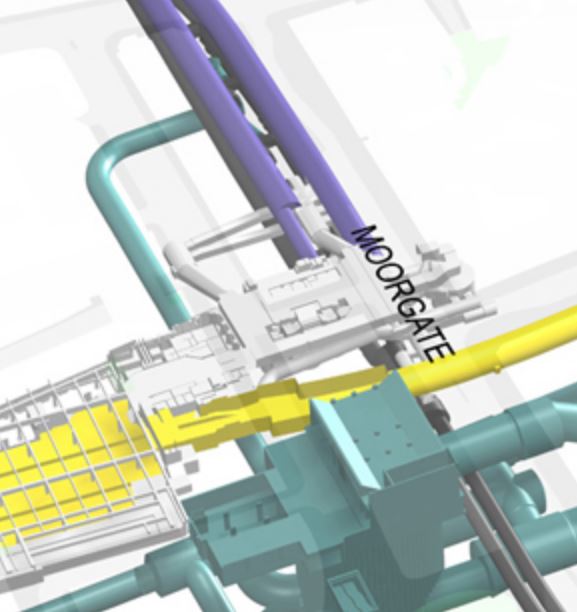
This visualisation shows Moorgate station and mas of tunnels that will connect Crossrail to The Northern Line, the sub-surface lines and the Northern City Line.

Note.

  1. The Circle, Hammersmith and City and Metropolitan Lines are shown in yellow.
  2. The Northern City Line is shown in purple.
  3. The Northern Line is shown in black and the two platforms are underneath the two platforms of the Northern City Line
  4. Older parts of the existing station are shown in white.
  5. New Crossrail infrastructure is shown in green.

There is a new pedestrian tunnel that links the far ends of the Northern and Northern City Lines to the main Crossrail station.

The tunnel is in the top left of image and has a right-angle bend in the middle.

This picture shows the lift between the Northern Line platforms and the tunnel.

Note.

  1. It is a standard Transport for London lift lobby.
  2. There is signage for the Circle, Hammersmith and City and Metropolitan Lines and the Elizabeth Line above the lift doors.
  3. The lift appears to be showing floor -8, which is the floor where the lift is currently parked.

I know Moorgate station is deep, but are there eight underground levels?

  • The escalator to the Northern City Line is probably about three floors and it starts in the current original booking hall, which is one floor  below street level.
  • So that would make the Northern City Line at level -4.
  • As the Northern Line is one level below the Northern City Line, it must be at level -5.

This picture shows the stairs that go between the Northern Line and the pedestrian tunnel to Crossrail.

It really is a long way down.

For those, who can use escalators, there is still the rat-up-the-drainpipe route I described in Up From The Depths At Moorgate Station.

July 16, 2021 Posted by | Transport/Travel | , | 3 Comments

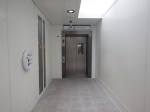
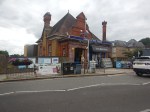
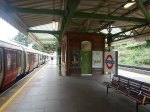
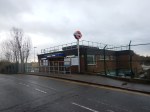
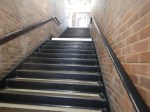
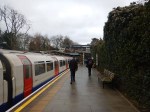
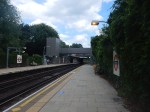
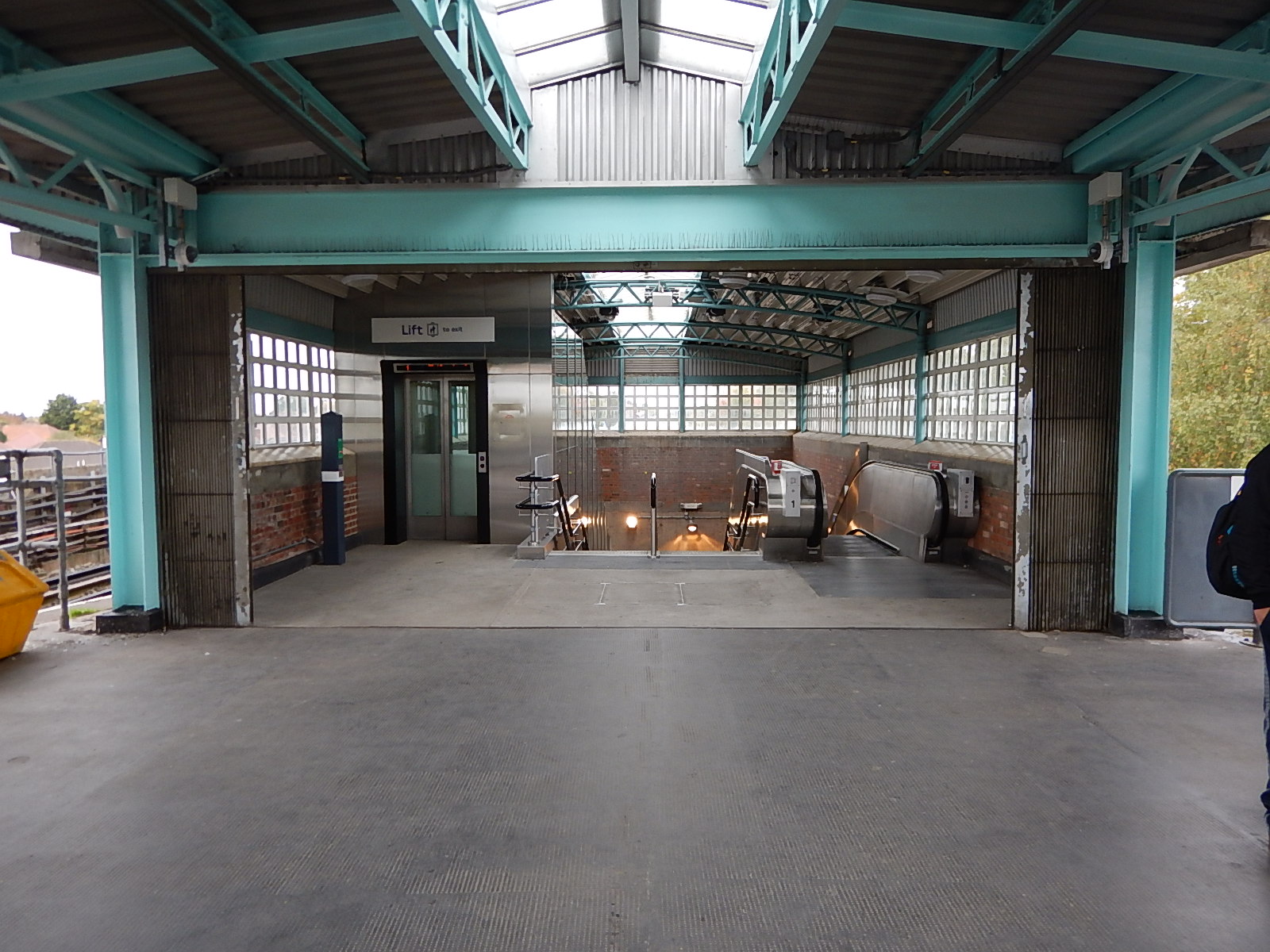
Ickenham Station Has Gone Step-Free

I wrote West London Stations To Be Made Step-Free in January 2018.

One of the stations on the list; Ickenham station, is now step-free.

These pictures showed the station, when I visited the station in early 2018.

And these show it, after the addition of step-free access.

It is a practical rather than architectural lift installation incorporating new walkways connecting the two lifts and the main entrance to the station.

  • Unlike many Underground stations, Ickenham station, does not appear to be Listed.
  • The cladding for the installation, appears to be in a slate-grey steel.
  • The stairs are still there for the agile.

As the pictures show the walkways are open to the elements, but there is enough headroom to use an umbrella.

June 26, 2021 Posted by | Transport/Travel | , , , , | Leave a comment

Is Caledonian Road And Barnsbury An Ideal Four-Track Station?

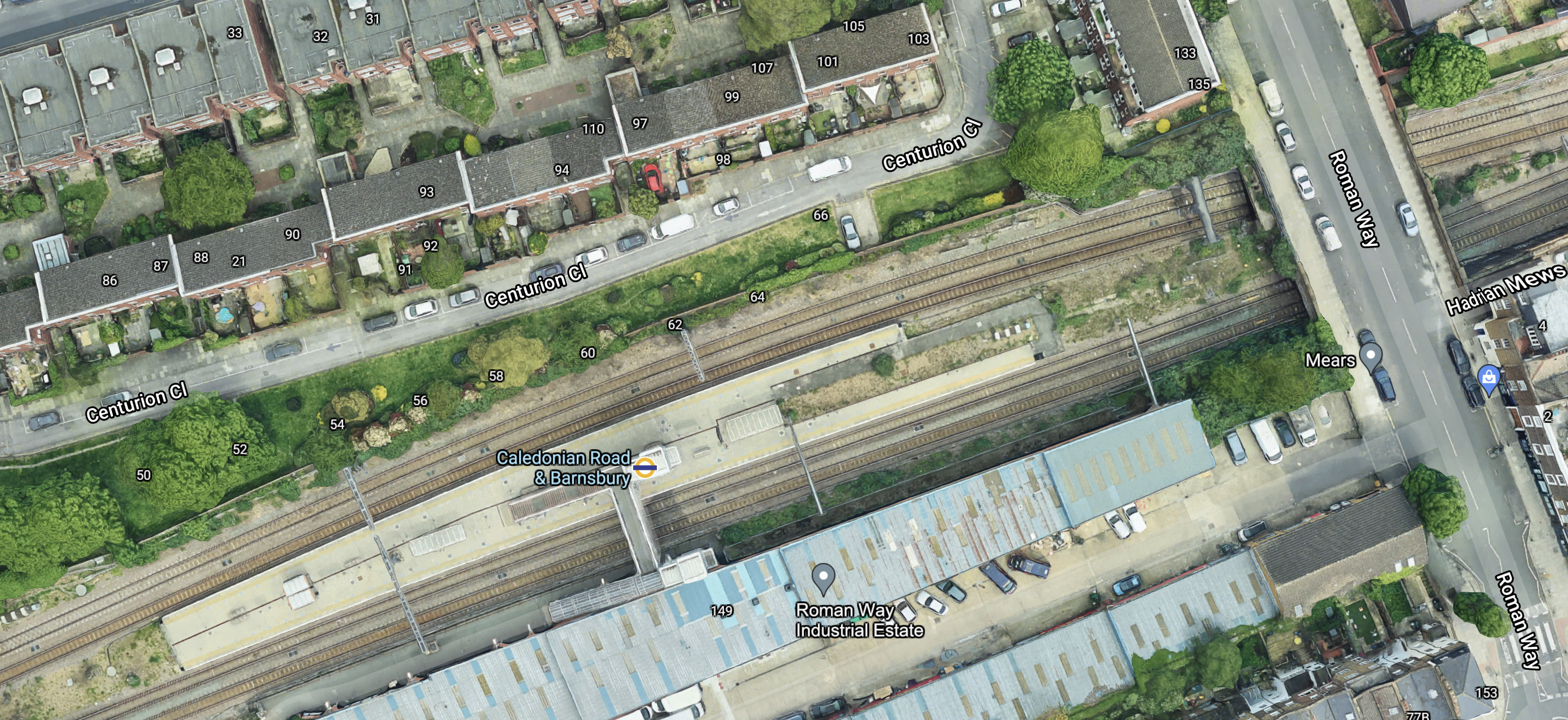
This Google Map shows Caledonian Road And Barnsbury station.

Note the island platform, with two tracks on either side.

These four pictures show each pair of tracks in both directions.

And these pictures show general views of the station.

I don’t know the layout of every station, but Caledonian Road And Barnsbury seems to be unusual.

  • There is a spacious island platform in the middle of the four tracks.
  • On either side of the island platform, there are the two lines for local passenger trains.
  • Outside of the two local passenger lines, there are two lines for freight trains.
  • Access to the island platform is via a simple half-bridge with only two lifts.
  • Everybody enters the station from one side.

Does this layout have advantages?

Ease Of Construction

I think that this station was designed, so that it was quick and easy to build.

Once the tracks are aligned correctly, it shouldn’t be too complicated to build.

The bridge only has to span two tracks, so that must be half the work of crossing four tracks.

Passenger Safety

I have used real time trains to check the platform of freight trains passing through Caledonian Road And Barnsbury station.

It seems that only rarely do trains use the tracks in the two platforms.

This must surely be safer, when compared with the standard arrangement.

These pictures were taken at Highbury & Islington station.

The wide platform, also allows passengers to keep well out of the way of any trains that do pass through.

Would The Layout Work With High Speed Trains?

I don’t see why not!

The space between the outside lines and the platform, almost acts like a moat in a zoo, that keeps visitors away from dangerous animals.

Costs

It was probably not an expensive station to build.

Conclusion

Why are other four-track stations not built like this?

The main reason is probably, that most four-track main lines were laid out decades or even centuries ago and their builders used their own layouts.

June 19, 2021 Posted by | Design, Transport/Travel | , , , , , , | 7 Comments

Crossrail’s Inclined Lifts

This page on variably, shows the inclined lifts on Crossrail, at Liverpool Street station.

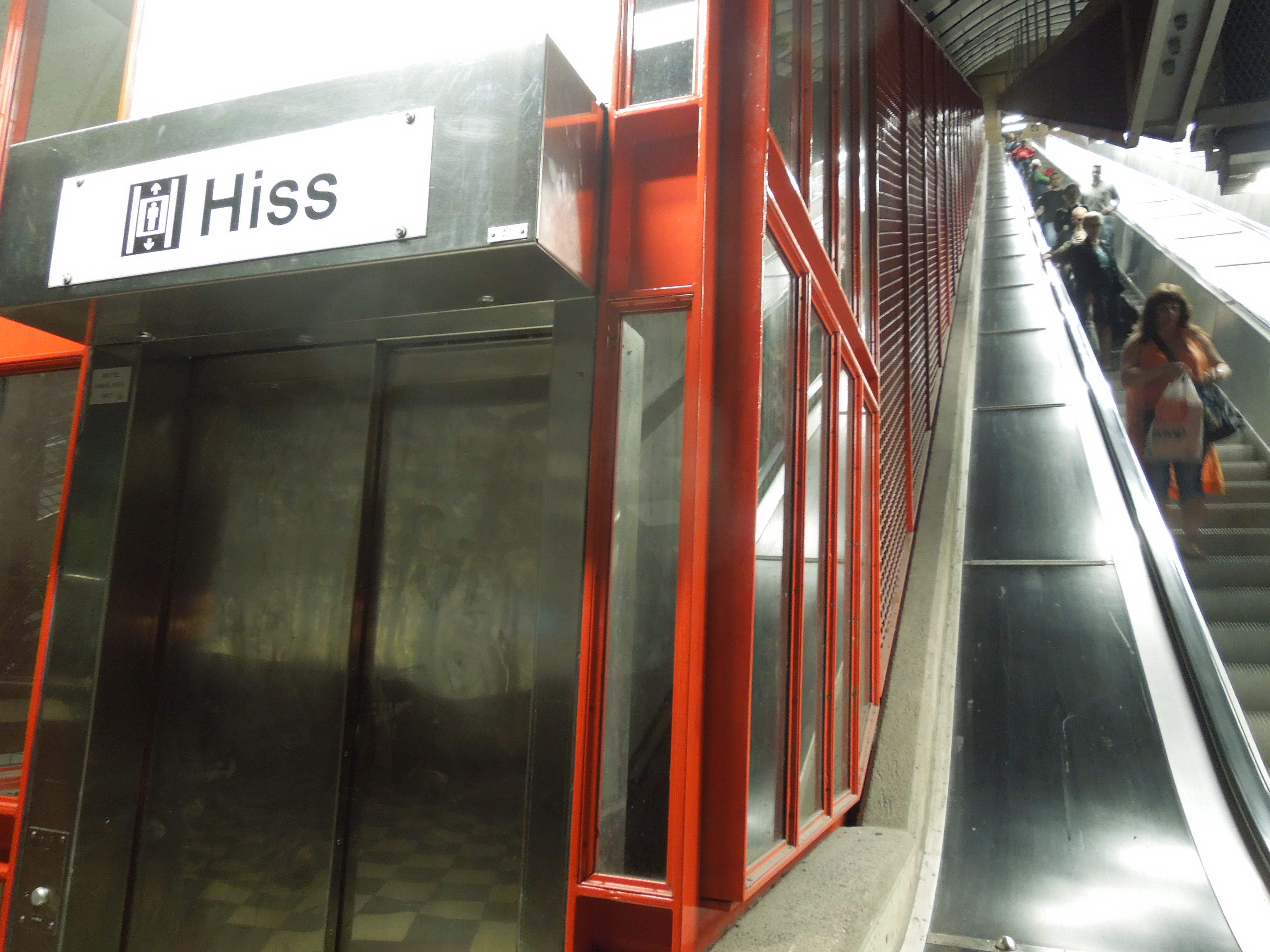
Take a look, as they are impressive. To my built-in video camera with an enormous instant-access store, they look like modern versions of the first inclined lift, I ever saw, which was on the Stockholm Metro.

If I remember correctly, the Swedish one was installed on if not an Angel-sized set of escalators, certainly one of a good length.

It looks like it was at Duvbo station.

Enjoy the video.

It’s not this set of escalators at Duvbo, as it is the other way round, but it certainly is very similar.

Are they available in bronze for the Northern reaches of the Piccadilly Line, where I suggested inclined lifts for step-free access in Thoughts On Step-Free Access At Manor House Station.

One could be built in like this short one at Greenford station.

I shall replace this picture with a better one.

June 17, 2021 Posted by | Transport/Travel | , , , , , , | Leave a comment

Thoughts On Step-Free Access At Manor House Station

I use Manor House station regularly, as I have a bus-stop by my house, that is perhaps fifty metres from my front door, that connects to the station.

  • There is also a zebra crossing to get to the other side of the road.
  • The 141 bus actually connects me to Manor House, Turnpike Lane and Wood Green stations on the Piccadilly Line.
  • This is because it was a replacement for the 641 trolley-bus route that used to run between Winchmore Hill and Moorgate via. Milmay Park.
  • I also use the station as a convenient station to go West on the Piccadilly Line.
  • As it connects step-free at Finsbury Park station to the Victoria Line, it certainly has its uses.

Click this link to see an excellent photo of a 641 trolley-bus at Manor House station.

The pub in the photo was the Manor House, where I saw such performers as John Mayall and Eric Clapton amongst others.

I took these pictures today

The station has an unusual layout.

      • Two major roads; the Seven Sisters Road (A503) and Green Lanes (A 105) cross at the station.
      • The four major roads are all controlled by traffic lights, which also allow pedestrians to cross the major roads safely on the surface.
      • There are a couple of staircases at each corner of the junction and these lead down to a maze of passages that connect these entrances to the escalators that lead up and down to the platforms.
      • The former Manor House pub and a new Travel Lodge sit opposite each other on the junction.
      • The Travel Lodge sits on the South-West corner.
      • The North-West corner leads directly into Finsbury Park., which is not a bad place to go for a walk or a jog.

The below ground subways in the station are all level.

The staircases between subway and street level are very reminiscent of those at Piccadilly Circus or Leicester Square stations.

The staircases also have some excellent period details.

But then they tend to do things as they should in my part of North London.

This picture was taken after a World Cup Third!

What will happen, if England win the Euros?

Manor House station’s design can best be summed up as two level areas connected by a series of staircases.

  • Central London stations with this layout include Bank, Cockfosters, Kings Cross St. Pancras,Leicester Square, Manor House, Piccadilly Circus. Tottenham Court Road and Victoria.
  • At least Cockfosters, Kings Cross St. Pancras, Tottenham Court Road and Victoria have lifts between the two levels.
  • Bank station will have more lifts than Oti Mabusi in a dance routine, after the rebuild.
  • Old Street was similar, but Transport for London (TfL) are rebuilding the station.

Cockfosters has level access at both the surface and the platform level and they have sneaked in a lift in a corner of the station.

Grandparents in a wheel-chair or Louis or Lilibet in a pushchair can easily be taken easily between train and the car-park.I am certain, that if there are a number of lifts at the four corners of the road junction at Manor House, then access both to the station and across the junction will be substantially eased.

That just leaves us with the problem of getting between subway and platform levels.

This map from cartometro.com shows the platform layout.

Note that as at Turnpike Lane station in this platform layout, there is also a generous space between the platforms.

The two escalators and a set of stairs face North.

Wood Green station is a bit different, as it has a turnback siding

The two escalators and a set of stairs also face South.

When I used to use the Piccadilly Line in the 1960s, it tended to be pain, if a Wood Green train turned up, when you wanted  to go to Oakwood or Cockfosters.

Bounds Green station is shown in this map.

Again the tracks appear to have been curved to allow generous space.

The two escalators and a set of stairs face North.

Arnos Grove station is a station with sidings and four platforms on the surface.

The car parks are likely to be developed for housing, so there will be major changes at the station.

Southgate station is the last station, that doesn’t have step-free access.

But again there is some space between the tracks.

The two escalators and a set of stairs face North.

So did the designers of the Northern Extension of the Piccadilly Line leave space to put in more equipment or even lifts?

After all they didn’t stint themselves on the design of the stations.

Designing Step-Free Access

This is not easy and various considerations must be taken into account.

Revenue Protection

At Cockfosters station, the new lift goes between two areas that are outside the ticket barriers.

If as I have proposed at Manor House station, where there would be lifts between the surface and the subway level, both areas are outside the ticket barriers.

At Tottenham Hale station, there several lifts all of which are inside the ticket barrier.

Staff At The Barrier

Nearly all ticket barriers in London are watched by staff to sort out problems like passengers, who don’t know how to use the system.

Costs

It is unlikely, that large sums of money will be available to add step-free access to all stations on the Underground.

I also think, that step-free access at stations will be funded by developments close to stations.

A London-Wide Solution

It is for these and other reasons, that I think London needs to look in detail at all stations and see if a series of solutions can be developed for all stations.

In this section of the Piccadilly Line, there are five stations with three escalators or two escalators and a staircase.

But there are others on the other deep tube lines.

So should a standard solution be developed for all stations like this? And for all groups of similar stations.

Could An Inclined Lift Be Used At This Group Of Stations?

This picture shows the first inclined lift, I ever saw, which was on the Stockholm Metro.

Looking at the picture shows it was installed on a very long set of escalators.

At present, there is only one inclined lift on the London Underground and that one is at Greenford station.

It is a very neat and compact installation, that incorporates a double-staircase, an up escalator and an inclined lift in a confined space.

I think we’ll see similar solutions to Greenford employed in some stations on the Underground. In Is This A Simple And Affordable Solution To Providing Step-Free Access At Essex Road Station?, I outline how an inclined lift could be used at Essex Road station.

These pictures show the three escalators at Manor House station.

Note.

  1. The middle escalator was switched off.
  2. There is a spacious lobby at the bottom of the escalators.

The other four below-ground stations North of Finsbury Park; Turnpike Lane, Wood Green, Bounds Green and Southgate all have two escalators and a central staircase

These pictures show Bounds Green station.

Note that the stairs are in the middle.

It looks to me, that all five escalator systems to the North of Finsbury Park are more or less identical.

  • Only Manor House has a third escalator.
  • There is a large lobby at the bottom.
  • All stairs are in the middle escalator slot.
  • Are the stairs designed to be replaced with a third escalator?

So would it be possible to design an inclined escalator solution for all stations, that fitted all of the stations?

I think it might be very much a possibility.

  • The central staircase would be replaced by a third escalator.
  • One of the outside escalators would be replaced with an inclined lift.

Note

  1. Many of these escalators were probably  installed in the early 1990s, a few years after the Kings Cross Fire.
  2. Escalators are replaced regularly every ten or twenty years.

So could the installation of the inclined lifts, be worked into the schedule of escalator maintenance and replacement?

I believe with good project management it could be arranged.

  • At no time during the works would any station have less than two escalators.
  • If there were to be an escalator failure, all of the stations are connected by frequent buses and some are even within walking distance.

The works could also be arranged to fit in with available cash-flow.

I believe that eventually all these stations will need to be provided with full step-free access.

Conclusion

I believe that a sensible program of works can be developed to make all deep-level stations North of Finsbury Park step-free on the Piccadilly Line.

  • The deep-level platforms would be served by two escalators and an inclined lift.
  • The works would be performed alongside the regular maintenance and replacement of the current escalators.
  • There would be no substantial tunneling.
  • The works could also be arranged to fit in with available cash-flow.

The technique would be applicable to other stations on the Underground network.

Turnpike Lane Station

In Is Turnpike Lane Tube Station Going Step-Free?, I tried to explain the puzzling works going on at Turnpike Lane station.

Could those works be digging a lift-shaft or something in a more engineering line, like installing more ventilation or new power cables?

There’s certainly no clues on the Internet.

This table shows step-free status and 2019 passenger numbers at the Piccadilly Line stations to the North of Kings Cross St. Pancras station.

  • Cockfosters – Step-Free – 1.86 million
  • Oakwood – Step-free – 2.78 million
  • Southgate – 5.43 million
  • Arnos Grove – 4.44 million
  • Bounds Green – 5.99 million
  • Wood Green – 12.13 million
  • Turnpike Lane – 10.6 million
  • Manor House – 8.55 million
  • Finsbury Park – Step-free – 33.40 million
  • Arsenal – 2.77 million
  • Holloway Road – 6.69 million
  • Caledonian Road – Step-free – 5.60 million
  • Kings Cross St. Pancras – Step-free – 88.27 million

Note.

  1. The high passenger numbers at Finsbury Park and Kings Cross St. Pancras, where there is interchange with lots of other services.
  2. The long gap of step-free access between Oakwood and Finsbury Park.
  3. Arnos Grove could be an easier station to make step-free.

I just wonder, if a lift at Turnpike Lane station could be the interim solution, until inclined lifts are installed in the distant future.


June 16, 2021 Posted by | Design, Sport, Transport/Travel | , , , , , , , , , , , , | 5 Comments

Is Turnpike Lane Tube Station Going Step-Free?

I took these pictures as I passed through Turnpike Lane station today.

Note.

  1. The blue hoardings are at the London end of the Northbound platform.
  2. There are no other blue hoardings at platform level.
  3. The yellow gates are on the bus station side of the station.
  4. A lift on the surface behind the yellow gates would be convenient for the buses and just round the corner from a light-controlled crossing of the busy Green Lanes.
  5. I couldn’t find any other evidence of work.

This Google Map shows the station.

Note.

  1. The station block in the North-West corner of the map.
  2. Green Lanes runs North-South to the West of the station.
  3. There is a bus on Green Lanes by the station.
  4. The spine of the bus station to the East of the station.
  5. The pedestrian crossing between the Underground station and the bus station at the Northern end of the spine.
  6. The wide pavements to give access to the light-controlled crossing over Green Lanes and the bus stops on the road.

This second map from carto metro, shows the track layout through the station.

Note that the escalators to the platforms are to the North of the platforms and connect to a lobby between middle of the two platforms,

Could this mean that using traditional tunneling on the London-end of Platform 2 allows access to what appears to be a generous space between the two platforms and their associated tracks?

It looks to my untrained eye, that a lift shaft could be dug in this area.

But there is no reference to step-free access at Turnpike Lane station anywhere on the internet.

Conclusion

This could be a simple scheme to add step-free access to another of the stations on the Northern section of the Piccadilly Line.

  • At present, Cockfosters, Oakwood, Finsbury Park and Caledonian Road stations are already step-free.
  • Southgate station could be difficult, but it does have bus connections to some of the stations with step-free access.
  • Arnos Grove station is a surface station, where there will be a major housing development on the car park. So I would expect, that this could be one of the next to be planned for step-free access.
  • The track and escalator layout might make Wood Green station difficult to make step-free. But it does have lots of buses to Turnpike Lane station.
  • I’ve never used Bounds Green station, but it does appear that a Turnpike Lane solution might be possible.
  • Manor House station has so many exits, that full step-free access could be expensive. But if it were to be decided that it should be step-free, I feel there could be an innovative solution.

It should be noted that all these stations, with the exception of Manor House are Grade II or Grade II* Listed.

As all road crossings at Manor House are controlled by lights, perhaps the solution at the station, is to replace one or more of the many exits with a lift.

June 10, 2021 Posted by | Transport/Travel | , , , , | 5 Comments

Ealing Broadway Station – 31st May 2021

This article on Rail Technology Magazine, which is entitled Transport for London Completes Step-Free Access At Ealing Broadway, alerted me that the station might be worth a look.

I took these pictures this morning.
This map from cartometro.com shows the station layout.

Note.

  1. The black lines in Platforms 1 and 2 are the Great Western Railway main line platforms.
  2. The black/blue lines in Platforms 3 and 4 are the Great Western Railway slow line platforms, which are also used by Crossrail.
  3. The red tracks in Platforms 5 and 6 are the Central Line platforms.
  4. The green tracks in Platforms 7, 8 and 9 are the District Line platforms.

These are my thoughts.

Step-Free Access

Consider.

  • Access between platforms 4, 5, 6, 7, 8 and 9 is on the level, as it has been for years.
  • There are a pair of lifts to access these six platforms from street level.
  • There are also two other lifts to Platform 1 and Platform 2/3.
  • There are three typical Network Rail stairs to the platforms, with double-handrails, which at 73, I can still manage.

I’ve certainly seen much worse stations with supposedly step-free access.

I also wonder if another lift will be added to directly serve the District Line platforms.

It could be one of those additions, that has been catered for, so it can be added if necessary.

Crossrail And Routes Into And Out Of London

Crossrail will change commuting and leisure routes, into and out of London.

  • Crossrail serves the West End, the North of the City and Canary Wharf directly.
  • Crossrail has good connections to the Central, Circle, District and Jubilee Lines.
  • Crossrail has a direct connection to Thameslink.
  • All Crossrail interchanges will be step-free.

After it has been opened for a few months, I can see that direct connections and ducking and diving will have seriously changed London’s well-established commuting and travel patterns.

Using Ealing Broadway Station As An Interchange

It will certainly be easier with all the new step-free access, but I suspect some passengers, who previously changed at Ealing Broadway station, will go straight through on Crossrail.

In Will Crossrail Open To Reading in 2019?, I said that Ealing Broadway station will get the following total number of Crossrail trains.

  • 12 tph in the Peak
  • 10 tph in the Off-Peak

Note.

  1. tph is trains per hour.
  2. Six tph would go between London Paddington and Heathrow.
  3. Two tph would go between London Paddington and Reading.

It will be interesting to see what Crossrail timetable is delivered.

The Overall Design

It is a fairly conservative design, that follows the principles of good step-free access.

Interchange is level and good between Crossrail and the tube lines.

There are still a few details to be finished and I suspect it will be a well-thought of station.

A Few Questions

These are a few questions.

Will The Station Be A Gateway To Heathrow?

I suspect it could be, as the station is well-connected by bus and tube to large numbers of places.

Conclusion

Ealing Broadway will be a busy interchange and I’m sure, it’s been designed to handle a lot of passengers.


May 31, 2021 Posted by | Transport/Travel | , , , , , , | 1 Comment