Sutton Station To Gatwick Airport By Hydrogen-Powered Bus
In Central London and Gatwick Airport For Free On A Freedom Pass, I indicated it was possible to go to Gatwick Airport for nothing, if you had a Freedom Pass, which is also a free bus pass for England.
This morning I took public transport to Gatwick Airport by this route.
- I took a 43 bus to London Bridge station.
- This bus terminates in the bus station in front of the train station, so it was a simple step-free entry into the part of the station, where Southern Trains terminate.
- I took a Southern Train to Sutton station.
- I then took a Metrobus 420 bus from Sutton station to Gatwick Airport.
These pictures show the journey.
















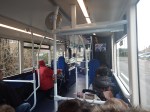






















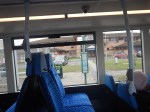







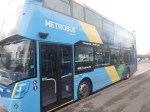
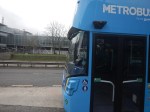
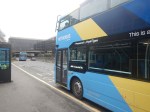

Note.
- The bus stop is directly outside the entrance to Sutton station.
- Sutton station is step-free.
- The information on the Metrobus’s buses at Sutton station is poor.
- The bus had a 74 number plate, so was registered after September 1st, 2024.
- The bus said it was a hydrogen bus.
- The seats were comfortable with leather facings.
- The route was mainly through rural Surrey.
- There were sections of dual-carriageway road with continuous 40 mph running.
- There were a number of steep hills.
- Previously, I have been told by a Bradford Councillor, that the City of Bradford is going for hydrogen-powered buses , as the city has lots of steep hills.
- The unusual Reigate and Redhill War Memorial on the A25.
- The route goes past Hadworth, Reigate and Redhill stations.
- Just before Gatwick Airport, the bus called at East Surrey Hospital.
I have some thoughts.
Does This Hydrogen Bus Have Almost The Quality Passengers Would Expect From A Coach?
Consider.
- I was very impressed with the quality of the bus and its fittings.
- But its biggest assets were the ride and mouse-quiet noise and being vibration-free.
- It was certainly up there, with the best British buses on UK roads.
- Strangely, I never rode in any of London’s Green Line coaches of the 1950s and 1960s.
But as Wrightbus are selling hydrogen-powered single-decker buses to the Germans, the quality must be of a certain standard.
The Performance Of The Bus
I would sum up the bus as follows.
- The bus didn’t hang around and it was well-driven.
- On much of the dual-carriageway, the bus appeared to be at the maximum speed limit of 40 mph
- Ride and seats were comfortable.
- There was virtually no vibration.
- At times, you almost felt you were in a top-of-the-range coach.
- The running gear is from German company ZF, which certainly doesn’t hinder the ride.
- The journey from Sutton to Gatwick Airport is twenty miles and took about ninety minutes.
I would feel that if Wrightbus design their CoachH2 chassis to the same standard of this bus, they’ll have a difficulty to meet sales demand.
Wrightbus Hydrogen Buses For My Local Bus Route 141
Consider.
- The 141 bus route is my local bus, which gets me to Moorgate, Bank, London Bridge and Manor House.
- The length of the full route is twenty miles and it takes about an hour to go from London Bridge station to Palmers Green.
- The route is currently run by older Wrightbus hybrid diesel-electric buses.
- I suspect that modern hydrogen buses could last almost all day on one fill of hydrogen, with perhaps a top-up at lunchtime.
They would have no difficulty handling the route and would greatly increase the customers current rock-bottom satisfaction.
Hydrogen Buses In Leafy Suburbs
- Where I live, is not particularly leafy or a suburb.
- But I seems to remember, when I moved here, that some of my neighbours complained about the noise of the 76 bus route.
- So Transport for London put on some quieter buses.
I would expect, that Metrobus might use the mouse quieter hydrogen buses in post areas, to avoid annoyance.
Hydrogen Buses As Route Extenders
Effectively, the Metrobus route 420 is acting as a route extender for Southern and Thameslink services coming South from London.
As it is a quality bus, that gets a move on, I suspect that some travellers, who previously took a train to Sutton, Tadworth, Reigate, Redhill or other stations and were then picked up, may take a hydrogen bus to a more convenient bus stop.
Because of the long range of a hydrogen bus or coach, zero-carbon performance, should be achieved without any range anxiety for passengers, driver or bus company.
Onward From Oakhampton Parkway Station
Consider.
- In 2014, storms destroyed the railway at Dawlish in Devon.
- As there was no alternative route, the storms cut everything west of Dawlish off from the rest of the UK.
- It is now likely, that a Park-and-Ride station will be built close to Okehanpton, which commuters would use for travel to Exeter.
- The main road to the South-West ; the A 30 will pass nearby.
It would appear, that Okehampton Interchange station could be used, if Nepture decided to show his power again.
Hopefully, the emergency plan will scare Nepture away.
Lumo To The Scottish Borders
Consider.
- Lumo have applied to extend some of their Edinburgh services to Glasgow.
- Talking to a friend in the Scottish Borders, they said, that travelers drive to Newcastle or Morpeth to catch Lumo for London.
- Four or five Lumo services every day stop in each direction at Morpeth station.
- So would it be sensible to run a bus or coach through the Scottish Borders to connect with the Lumo services?
This Google Map shows Morpeth in relation to the Border towns.
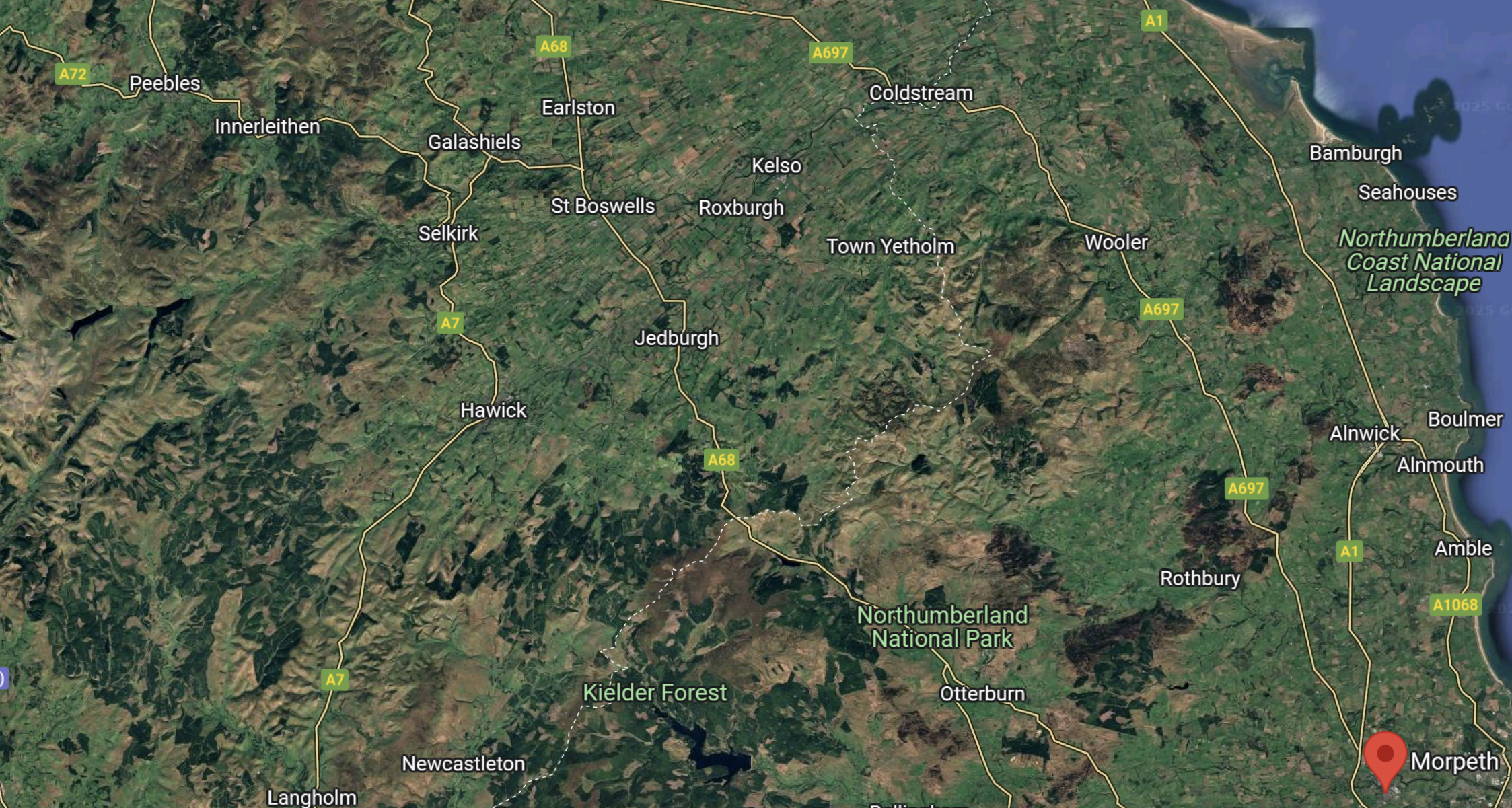
Note.
- Morpeth is marked by the red arrow in the South-East corner of the map.
- Galashiels, Galashiels, Hawick, Jedburgh, Peebles, Saint Boswells and Selkirk can be picked out on the map.
- The coach service would probably terminate at Galashiels, as it has a large bus terminal and and a railway station.
- Click the map to show it to a larger scale.
Morpeth to Galashiels is 69 miles and it should take about an hour and a half.
Hydrogen Buses As Rail Replacement Buses
Consider.
- I have had Rail Replacement Coaches as opposed to buses a few times in the UK.
- Once on the East Coast Main Line but usually on the Great Eastern Main Line to Ipswich or Norwich.
- They are generally more suited to their task. as they are faster and more luxurious.
- Many of our major rail lines run alongside trunk roads or motorways or fast dual carriageways.
So because hydrogen buses and coaches a have superior performance, than their diesel cousins, will hydrogen be the better fuel for a Rail Replacement Bus.
Metrobus’s Hydrogen Buses
This press release on the Metrobus web site is entitled Hydrogen Buses.
This is the sub-heading.
Our commitment to Zero Emissions
As part of our commitment to reducing emissions, twenty new hydrogen fuelled buses will operate on Fastway routes 10 & 20. These new buses demonstrate an ongoing commitment to reducing our local emissions. They deliver against science-based targets set by Metrobus and its parent company, The Go-Ahead Group, of becoming a net zero business by 2045 and decarbonising our bus fleet by 2035.
Conclusion
This bus is the best I’ve ridden in.
Central London and Gatwick Airport For Free On A Freedom Pass
I have always found it odd, that I can get to Heathrow Airport for free on my Freedom Pass, but for Gatwick Airport, I must buy a ticket.
Not that I’m bothered about the price of the ticket, but for some it might mean that they can’t get to their preferred holiday destination, as planes only fly from Heathrow.
The different treatment of the two airports must also annoy some airport and airline owners and bosses.
But recently, a free route for London’s Freedom Pass holders has opened.
This article on Inside Croydon is entitled Metrobus Rolls Out Zero-Emission Hydrogen Fleet Into Sutton.
These are the first two paragraphs.
Metrobus has been rolling out a fleet of hydrogen-powered buses, and last week its first double deckers, operating the 420 route from Sutton town centre to Gatwick Airport and Crawley, were brought into service.
Metrobus is planning on having more than 40 hydrogen-powered buses, in a partnership with West Sussex, Surrey and Kent county councils and Gatwick, in a £24million investment by the partners including a £10 million grant from the Department for Transport.
Note.
- The range of a Wrightbus Hydroliner is 280 miles on a full tank of hydrogen.
- It looks like as Crawley to Sutton station is a 42.2 miles round trip, so that means six round trips are possible on a tank of hydrogen.
- The Hydroliners may have the speed to use the M23 between Sutton and Crawley.
According to the article, refueling would be at Crawley.
A Zero-Carbon Extension To The Freedom Pass Zone
The free route for Freedom Pass holders to Gatwick Airport will be.
- Southern or Thameslink Train to Sutton.
- 420 bus to Gatwick Airport.
The article says this about the routes that are being planned.
The 420 route runs from Sutton town centre, through Belmont and Banstead, to Tadworth and then on to Reigate and Redhill, serving East Surrey Hospital before going on to the airport and Crawley. Metrobus is planning to use other hydrogen-powered buses on routes that will serve Caterham, Dorking, Tunbridge Wells, Haywards Heath and Brighton.
It appears that the hydrogen buses will add a large zero-carbon area to the Freedom Pass zone.
The only new infrastructure, would be the refueling equipment at Crawley.
I can also see the buses becoming an unusual tourist attraction for the area.
An Extension To An Electric Railway Or Tramway
They may also set a precedent for how a transport network can be extended in a zero-carbon manner from a tram or rail terminal served by an electric railway or tramway.
Battery electric buses could be used, but their range means that on anything but the shortest routes, they would constantly need recharging.
Okehampton Interchange Station
The first paragraph of the Wikipedia entry for Okehampton Interchange station describes it like this.
Okehampton Interchange (formerly known as Okehampton Parkway) is a proposed railway station in Okehampton on the Dartmoor Line. The station would be part of the Devon Metro and has been described as a priority station. The station is to be sited off Exeter Road, by the Business Park and close to the junction with the A30, in the Stockley Hamlet area of Okehampton. It would also serve 900 new homes to be built nearby.
But I believe that Okehampton Interchange station also has another purpose.
If the sea should destroy the coastal railway, as it did a few years ago, then passengers for the South-West could be ferried to and from Okehampton Interchange station by high-speed hydrogen-powered coaches along the A30, to catch trains to Exeter and London.
So, I would build a hydrogen filling station at Okehampton Interchange station, so that if the sea destroys the coastal railway again, the alternative is ready.
Normally, the hydrogen filling station would refuel local hydrogen buses, trucks, cars and other vehicles and those passing on the A30 to and from Cornwall.
Okehampton Interchange station would be the ultimate extension to an electric railway. Even if the Dartmoor Railway was worked by electro-diesel trains.
Thoughts On The Sutton Loop Line
The Sutton Loop Line is a bit of a problem.
- It runs two trains per hour (tph) in both directions.
- Trains are eight-cars.
- It is not the most heavily-used of lines.
It is deeply political and difficult to make any changes.
Network Rail’s original plan is described under Political Developments in the Thameslink entry in Wikipedia. This is said.
Network Rail had planned to terminate Sutton Loop Thameslink trains at Blackfriars station, rather than have them continue through central London as at present. This would increase the capacity of the central core as the Sutton Loop could only accommodate shorter trains. This upset many residents in South London and their local politicians, who saw it as a reduction in services rather than an improvement. In response to pressure, government has ordered Network Rail to reverse the decision.
Was this design by those, who don’t understand the complexity of designing and running a train service?
On the other hand, the line has some strengths.
- It is a double-track railway.
- It is fully-electrified using 750 VDC third-rail.
- Stations have long platforms.
- There seems to be quite a bit of housing and other development.
But in some ways, the line’s biggest strength, is the wide margins at both sides of the tracks.
This section between Hackbridge and Carshalton stations is not untypical.
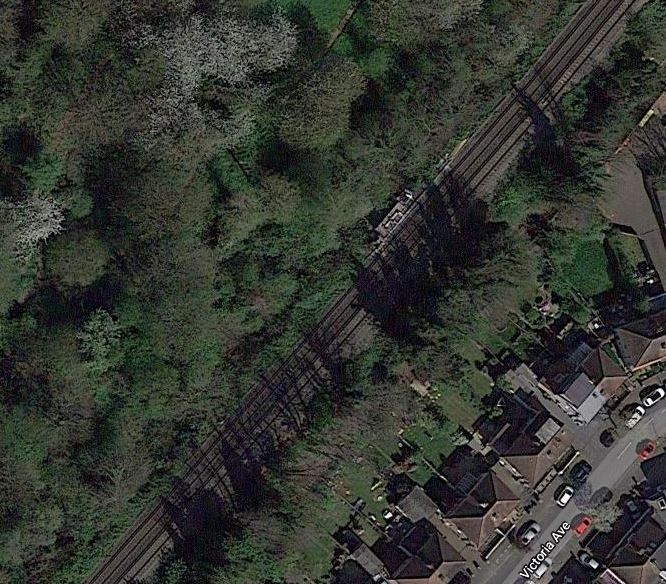
Adding extra platforms or complete stations would not be difficult.
What solutions are available to improve train services on the Sutton Loop Line, for both passengers and train operators?
Splitting And Joining Trains
In Has Thameslink Got The Wrong Length Of Train?, I proposed the following.
- Using twelve- and six-car trains on Thameslink.
- Allowing two six-car trains to work as a twelve-car unit.
- Trains would be able to join and split automatically, as Hitachi’s Class 395 trains are able to do.
I also proposed the following method of operation for the Sutton Loop Line.
The Sutton Loop Line could be run by using six-car trains that split and join in the area of Streatham station.
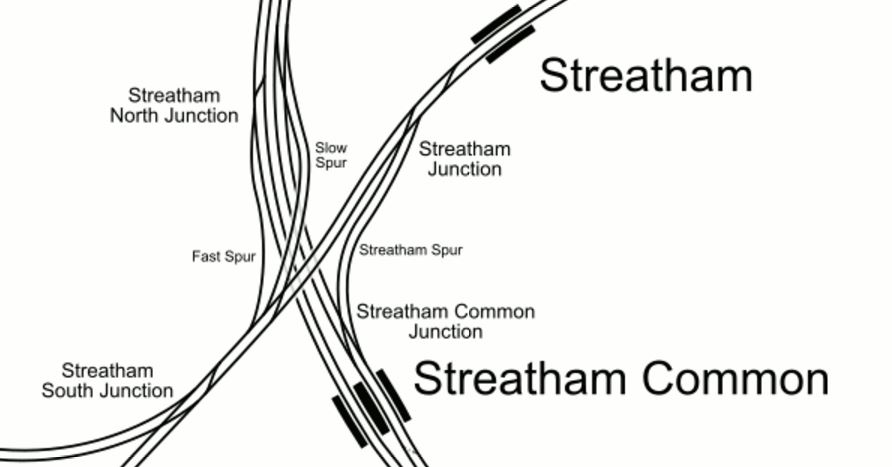
This map from carto.metro.free.fr shows the track layout at Streatham, at the start of the loop.
Note.
- Streatham South Junction is the gateway to the Sutton Loop, with the tracks to the West going via Tooting station and those to the South via Mitcham Eastfields station.
- There is a lot of spare land in this area.
- Transport for London keep talking about creating an interchange at this point.
I think, if and when the interchange is built, it could be designed, so that it increased traffic around the Sutton Loop Line.
- Two six-car trains running as a twelve-car could split at the interchange.
- One train would go round the loop clockwise and the other anti-clockwise.
- The trains would rejoin together at the interchange.
The same procedure could be done at Streatham, without creating the interchange, but it would block the station, if trains got delayed on the loop.
Currently, two trains per hour (tph) are proposed to run in both directions on the Sutton Loop Line.
This requires four eight-car trains and four paths through the central core.
If four six-car trains were to be used, running in pairs splitting at Streatham station or a new Streatham Common interchange, there would still be two tph in both directions round the Sutton Loop, but only two paths would be needed in the central core.
Travellers to and from stations on the loop would see six-car, rather than the current eight-car.
If the number of six-car trains were to be doubled and four paths used in the central core, the Sutton Loop Line would see four tph in both directions.
It sounds complicated but it would work and it has the following advantages.
- Train frequency could be increased as required.
- Paths are released in the central core.
- Twelve-car trains would go through the central core, where the capacity is needed.
The service would need a few more drivers and other staff.
Loop Only Services To A New Streatham Common Interchange
If a new interchange station is built at Streatham Common, then extra services could easily be run round the loop.
- Thameslink services could be reduced to perhaps one tph in each direction.
- These would be augmented by perhaps a four tph shuttle around the loop starting and finishing at Streatham Common.
- The shuttle trains could be any suitable unit, but surely a four-car would suffice.
I suspect that this wouldn’t work, as it would upset the natives.
The German Solution
I can’t help feeling that the Germans and especially those in Karlsruhe would look at the Sutton Loop Line and because there are both trams and trains, in the area, they would come up with a solution based on trains and tram-trains.
As fsr as I know, no-one has ever built a third-rail-powered tram-train!
But I don’t think that a tram-train powered by third-rail electrification, when running as a train is an impossibility. I lay out my ideas in The Third-Rail Tram-Train.
Safety
As to safety, look at this picture taken at Mitcham Junction station.
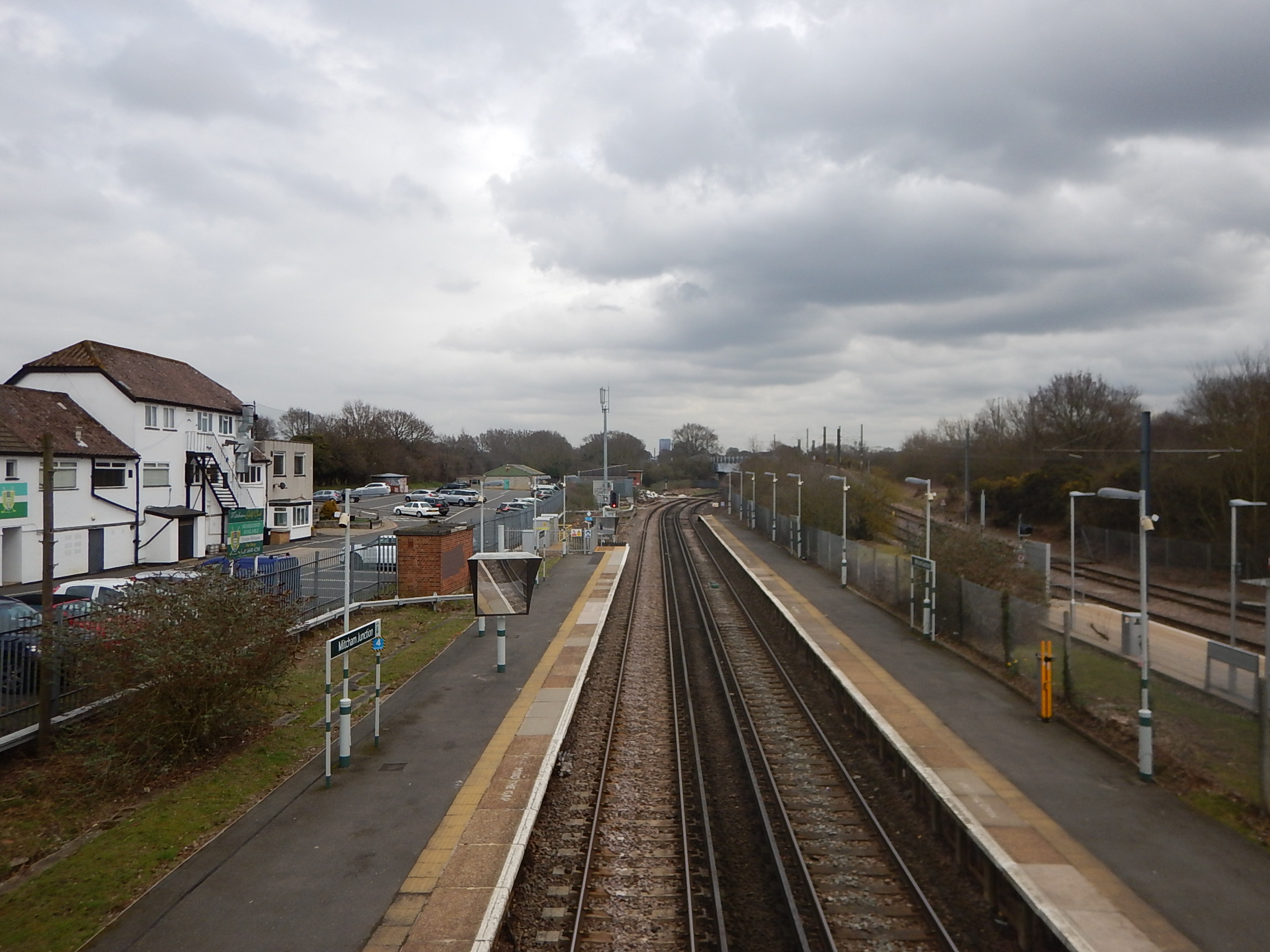
Note how the third electrified rails are in the middle away from the platforms. This is standard practice with this form of electrification.
So if it is deemed to be safe for trains now, it will surely be safe for third-rail train-trams.
When running as trams, the tram-trains will use 750 VDC overhead electrification.
Changing Networks
Tram-trains will need to change between the tram and rail networks.
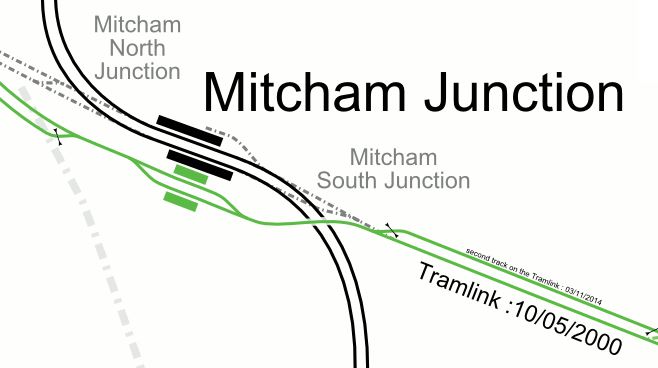
This map from carto.metro.free.fr shows the track layout at Mitcham Junction station.
Note.
- Wimbledon is to the West and Croydon is to the East.
- With the addition of some extra tracks, it should be possible for tram-trains to pass between the networks.
- As trams can take tight curves, a chord could allow Westbound tram-trains from Croydon to turn South to Sutton.
- Tram-trains will probably change networks using a couple of ininutes of battery power.
I doubt any of the engineering will be too difficult.
Adding The Sutton Loop Line To Tramlink Using Tram-Trains
Tram-trains would take the following route.
- Arrive from Croydon at Mitcham Junction, where they would turn South onto the Sutton Loop Line.
- Pass through Hackbridge and Carshalton stations.
- Call in Sutton station for interchange with trams and National Rail.
- Continue to Wimbledon station calling in Platform 9 for interchange with trams in Platform 10 and 10b and National Rail.
- Pass through Hatdons Road and Tooting.
- Take new chord to cross to the other leg of the Sutton Loop Line.
- Pass through Itcham Eastfields station.
- Rejoin the tram route at Micham Junction station.
Tram-trains could also travel in the reverse direction.
Trams And Tram-Trains At Wimbledon
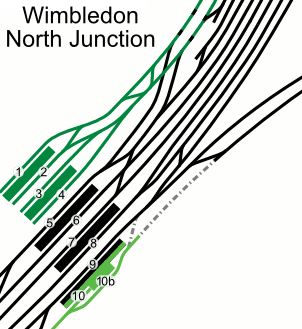
This map from carto.metro.free.fr shows the track and platform layout at Wimbledon station.
Note.
- Currently, Thameslink services on the Sutton Loop Line use Platform 9 in both directions.
- Hayons Road station is to the North-East and |Wimbledon Chase station is to the South.
- Tram-trains on the Sutton Loop Line would do the same.
- Platform 9 probably defines the capacity of the Sutton Loop Line.
Access to the trams in Platforms 10 and 10b, is just a walk across the platform.
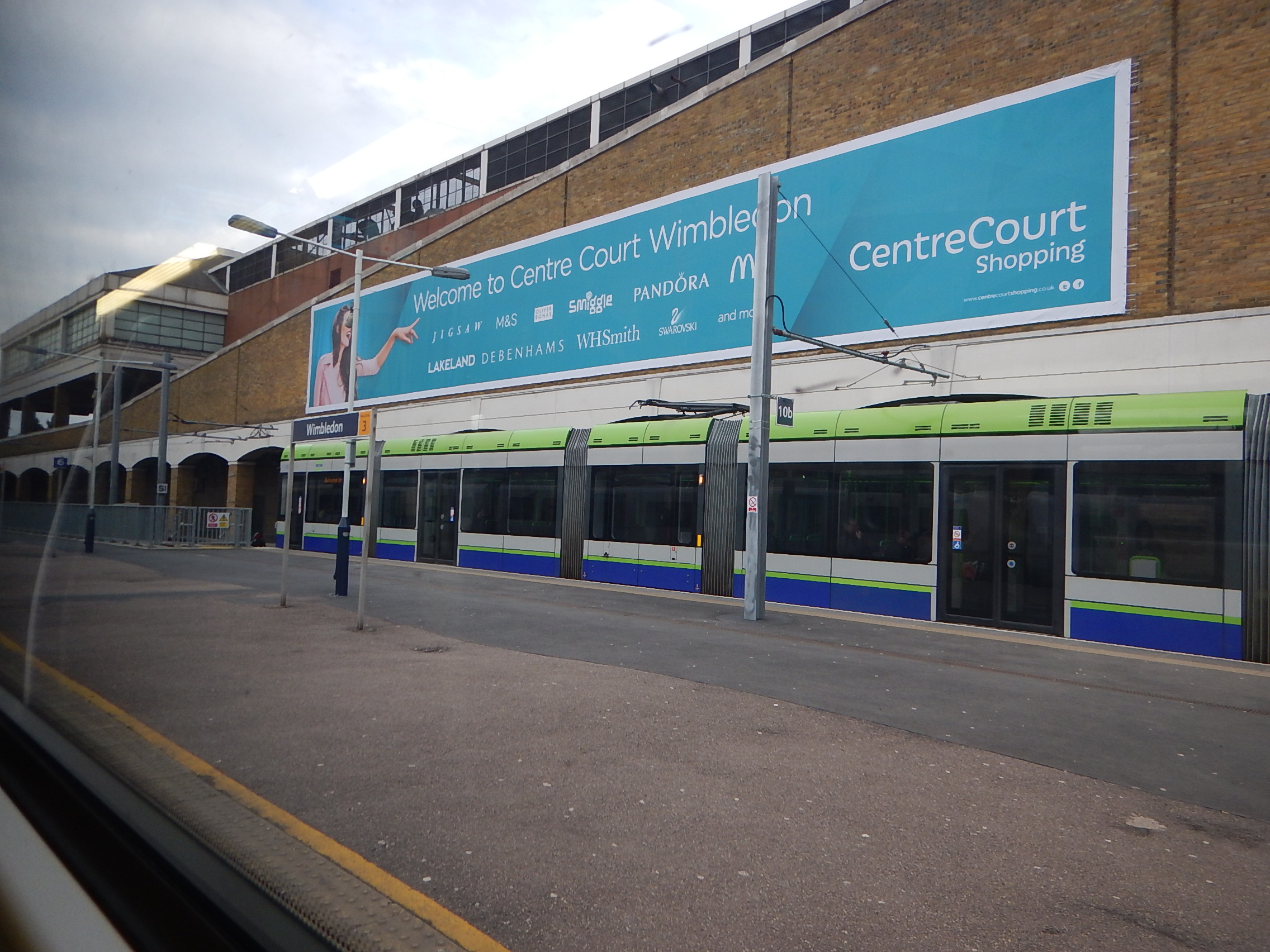
The picture was taken from a Thameslink train.
There might even be space for another tram platform, that can be accessed from the Haydons Road direction.
Trams And Tram-Trains At Sutton
This map from carto.metro.free.fr shows the track and platform layout at Sutton station.
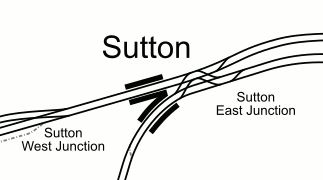
Note.
- The Sutton Loop Line is the Northernmost pair of tracks.
- Carshalton station is to the East and West Sutton station is to the West.
- It could be possible for tram-trains to by-pass Sutton station and run on the streets of Sutton.
This picture shows Sutton High Street.
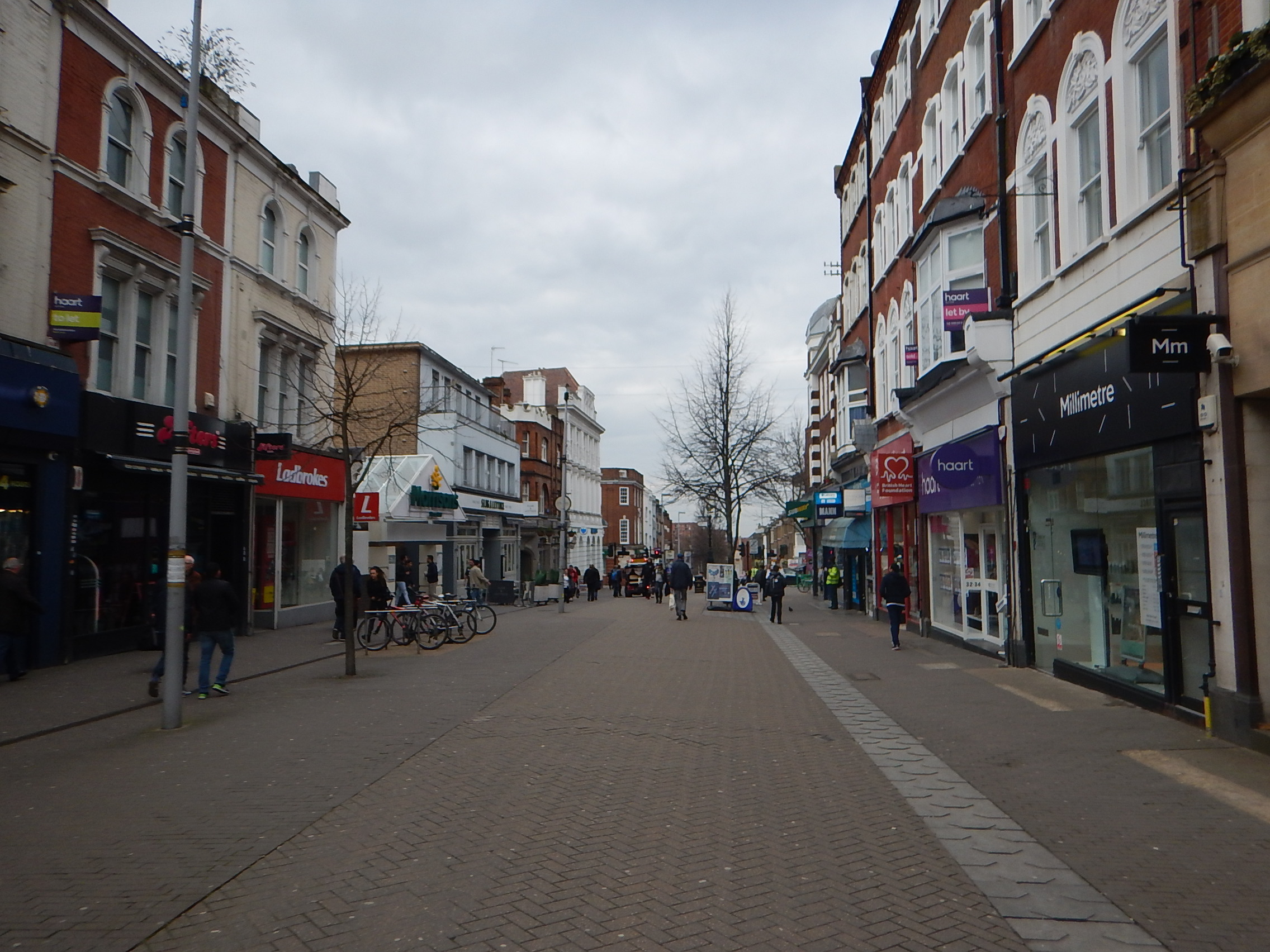
Is it going to be easy to bring the planned tram extension from Wimbledon to Sutton?
Dual Platform Issues
Platforms at the stations on the Sutton Loop Line are long and are certainly capable of taking eight-car trains.
But are they long enough to have a lower section of platform, so that tram-trains can have step-free access?
This is one of the problems, that should be solved in the tram-train trial in Sheffield.
The Split At Streatham Common
This Google Map shows, where the two routes of the Sutton Loop Line meet near Streatham Common station.
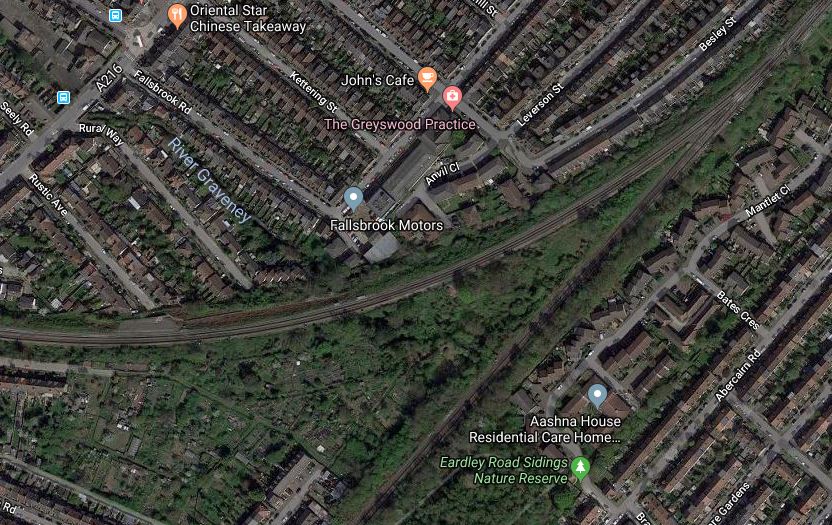
This picture shows a train going towards Mitcham, from one having passed through Tooting station.
I don’t think it would be the most difficult engineering project to create a chord, that would allow tram-trains to go directly between Tooting and Mitcham Eastfields stations.
A Possible Service
As I said earlier, Platform 9 at Wimbledon station. is probably the limiting factor on services round the Sutton Loop Line.
Thameslink is planning two tph in both directions.
I suspect that this could be supplemented by two tph services run by tram-trains, if a signalling solution can be implemented to allow four tph in each direction, through the platform.
Conclusion
There are several ways to improve the Sutton Loop Line.
Sutton Station
Sutton Station is one of the stations on a proposed South London Outer Orbital
These are pictures I took of the station and the town as I passed through.




Sutton is one of those stations, that will see a dramatic improvement in services in the next few years.
- Thameslink will get newer higher-capacity Class 700 trains.
- The Tramlink may finally reach the town. I wrote about this and a further extension in Why The London Tramlink Should Be Extended To The Royal Marsden Hospital.
Given all the development around the station, more services will be desperately needed.
Sutton will develop into a major hub station like Wimbledon, but with not anywhere near as many services as East Croydon.
A South London Orbital Route should call at Sutton to tap into the stations excellent connectivity.
 The Anonymous Widower