A New Era For Train Travel – FlixTrain Has Ordered 65 New European High-Speed Trains
The title of this post, is the same as that of this press release from Flix.
These four bullet points act as sub-headings.
- FlixTrain has ordered 65 new European high-speed trains, produced by Spanish train manufacturer Talgo, with locomotives supplied by Siemens
- The contract volume amounts up to EUR 2.4 bn, including certain maintenance services
- Flix sees enormous market potential for FlixTrain in Germany and Europe
- CEO André Schwämmlein: “We will start a new era of train travel”
These three paragraphs add more details.
FlixTrain, a subsidiary of the global travel–tech company Flix SE, today announced that it has ordered 65 new European high-speed trains. Talgo will provide the respective trainsets and certain maintenance services, while Siemens will provide the locomotives. The contract volume amounts up to EUR 2.4 bn, of which more than EUR 1 bn is already firmly committed.
With this strategic move, FlixTrain is responding to the growing demand for fast and affordable rail travel. The company intends to use the new high-speed trains to leverage the enormous market potential in Germany and Europe. The high-speed rail market in Germany is expected to grow by 45% by 2030, compared to 2021 volume. Across Europe, the market potential is even greater – around EUR 27 bn in 2023 with an expected annual growth of 4 – 5%.¹ In 2024 alone, FlixTrain expanded its offering by 40%, and recorded significant passenger growth, building on the strong results of 2023.
“We are pursuing a long-term strategy with FlixTrain and we will significantly expand our services in the coming years,” says André Schwämmlein, CEO and co-founder of Flix. “With the tremendous expansion of our train fleet, we will start a new era of train travel in Germany and Europe.” FlixTrain’s overall goal is to bring more people to sustainable travel by train: “We plan not only to increase our market share, but also to significantly grow the market itself”.
It looks like they’re creating a Lumo in Germany.
I have some thoughts.
The Politics
The press release says this about the German government’s view.
On the political side, the newly formed German government has acknowledged the immense potential of long-distance rail by committing to long-term investments in rail infrastructure and a reform of the track access system in Germany. These plans could unlock more private investment in Germany’s rail sector, fostering innovation for a broader range of services. Ultimately, this would lead to more competition and a better offer for customers.
I don’t think, they would be allowed to set up in the UK, as they take revenue from Great British Railways.
I can also see FlixTrain appealing to a future Reform UK government.
Passenger Service
The press release says this.
At the same time, FlixTrain works closely with the European Commission to foster European train travel and to provide a better overall offer for passengers.
I can see FlixTrain providing a better value service in Europe, than that provided in the UK by Great British Railways.
FlixTrain Is A European Product
The press release says this.
Currently, thanks to a comprehensive cooperation with regional transport, around 650 destinations are bookable via FlixTrain; 50 cities are directly connected to the vast FlixTrain network. Together with around 300 FlixBus stops in Germany alone, Flix provides a unique intermodal long-distance travel offer of international bus services and high-speed train connections. The new trains are intended to drive expansion in Germany and other European countries. “We see FlixTrain as a European product. Starting from our home market, we also want to make the service available in other countries” adds Schwämmlein.
I regularly see Flixbuses in London on their way to where?
Conclusion
If FlixTrain is allowed to setup in the UK, Great British Railways is finished for long distance services.
So of course, it won’t be allowed to setup in the UK or even come through the Channel Tunnel.
Ten Spanish Companies Join Forces To Apply Hydrogen Propulsion To A High-Speed Train For The First Time
The title of this post, is the same as that of this press release from Talgo.
These are the three bullet points.
- The Hympulso project is part of the Strategic Projects for Economic Recovery and Transformation (PERTES)
- A new technical car with hydrogen and batteries to be developed for a Talgo 250 train, allowing it to run on clean energy on non-electrified lines.
- The main partners are Talgo, Golendus, Ingeteam, Repsol, Sener and Optimus3D.
These are the first four paragraphs.
Ten Spanish companies have joined forces to design, build and install, for the first time in the world, a propulsion system based on renewable hydrogen fuel cells on a high-speed train. Under the Hympulso project, the companies will develop a set of technologies that can be applied to the Talgo 250 ‘all-terrain’ train, making it possible to electrify the rail network with energy generated entirely from renewable sources, even on lines without overhead power lines.
Led by Talgo, Hympulso also includes Golendus, Ingeteam, Optimus3D, Repsol and Sener as partners. Universidad Pontificia Comillas and Tecnalia are collaborators, while Adif is an observer. The initiative has received a grant of €6.5 million and is part of the Incentive Programme for the Innovative Value Chain and Knowledge of Renewable Hydrogen, as part of the Recovery, Transformation and Resilience Plan.
Hympulso will be comprehensive in nature: it will activate the entire renewable hydrogen value chain in the railway system, from production to consumption. The project will also make it possible to analyse the impact of the future transition on the various railway infrastructure assets managed by Adif, such as maintenance facilities or the track.
Thus, the project will result in a joint output of hydrogen supply installations adapted to railways -both mobile and static- and a pioneering prototype of a hybrid bimodal train for passengers with automatic track-gauge change, which will be able to run both on conventional and high-speed networks, using catenary supply when available, or hydrogen and batteries in those corridors that are not electrified.
This picture shows a visualisation of the train.
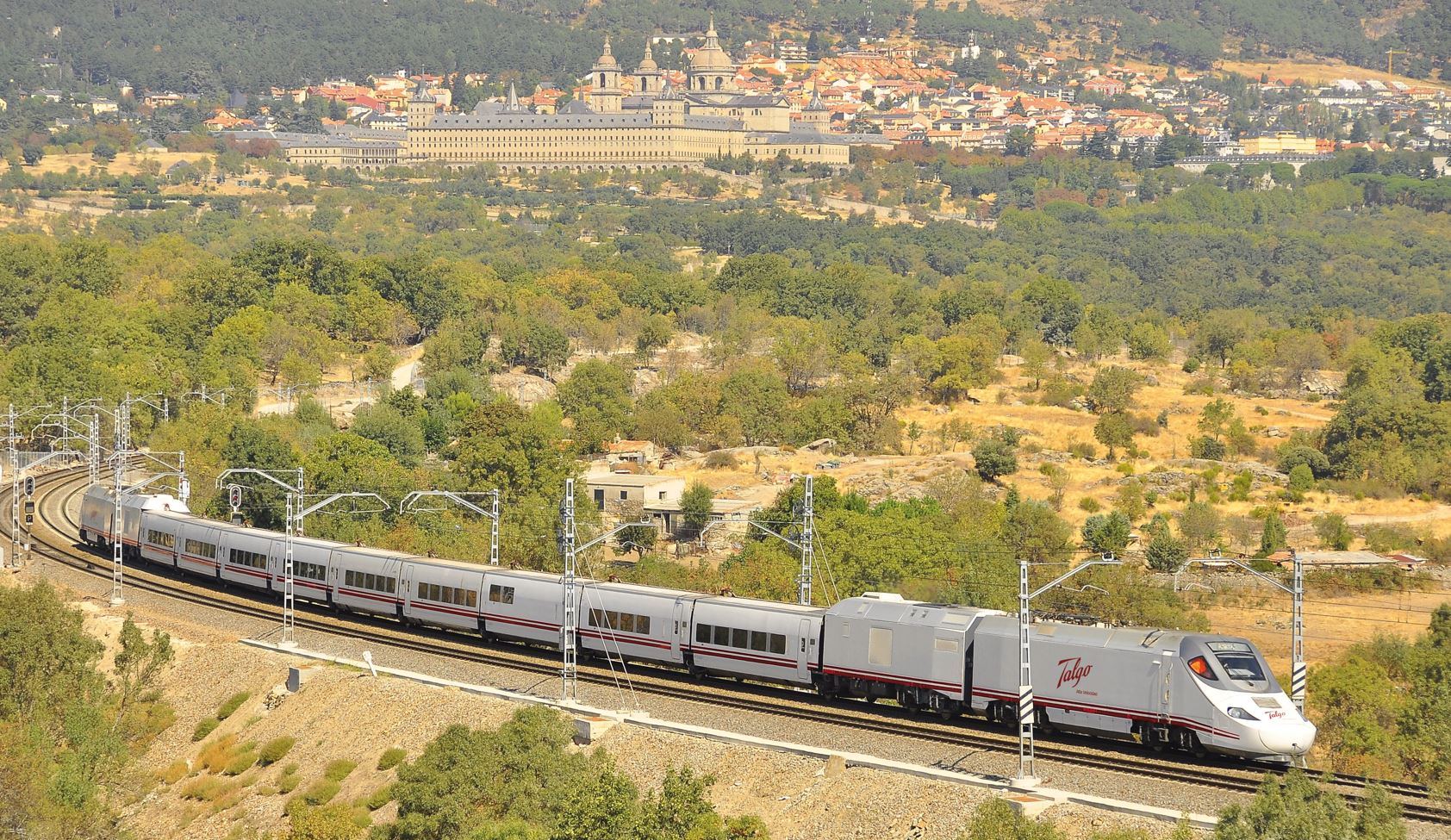
Note.
- There is a power car containing the hydrogen fuel cells and other gubbins behind the one or both locomotives.
- Hydrogen power is used, where there is no electrification.
- Talgo already make a high speed train with a diesel power pack, so engineering would only involve developing a new hydrogen power pack.
My only questions are.
- Do the trains come without gauge-changing?
- Could they be run on a typical UK rail line?
- Do they speak, Cornish, Gaelic and Welsh?
If the answer to all questions is yes, then this must be the ideal train for these routes.
- London Euston and Aberystwyth
- London Euston and Holyhead
- London King’s Cross and Aberdeen.
- London King’s Cross and Cleethorpes/Grimsby
- London King’s Cross and Inverness.
- London King’s Cross and Thurso/Wick.
- London Paddington and Carmarthen
- London Paddington and Penzance
Note.
- No more electrification on these routes would be needed.
- The trains could use High Speed Two to wherever it goes.
- The trains could do 140 mph on the Great Western Main Line, East Coast Main Line and West Coast Main Line.
Hympulso looks a very comprehensive, professional and practical plan, that could easily be adapted to the UK mainland.
Are These Two Stories Related?
These are two stories recently published in Railway Gazette.
Deutsche Bahn Sells Arriva Businesses To Private Equity Holding Company, which starts with this paragraph.
Deutsche Bahn has reached agreement to sell its Arriva local transport activities in Denmark, Poland and Serbia to München-based private equity holding company Mutares SE & Co KGaA.
That is fairly clear and is probably related with the German government’s desire for DB to concentrate on its core business.seren
This article on Railway Gazette is entitled RENFE Looks At Entering UK Rail Market Through Open Access Partnership, which starts with this paragraph.
Open access passenger service developer Grand Union Trains is working with Spain’s national operator RENFE and private equity firm Serena Industrial Partners on a proposed service between London and Wales.
That also is fairly clear and would bring competition to services to and from South Wales.
It would also help in the financing of Grand Union Trains.
The article also says the following.
- RENFE seem to be expanding into partnerships to run services outside Spain.
- A parkway station at Felindre will be build to avoid the reverse at Swansea, that would save 20 mins.
- It will be a high quality service with new electro-diesel trains.
- Four trains will be needed.
- A 2025 start is envisaged.
Will this partnership with Grand Union Trains proceed with the development of Grand Union Trains’ London and Stirling service?
I have some thoughts and questions.
Will Deutsche Bahn Sell Other Arriva Businesses?
I think this is a reasonable question to ask, especially, as Deutsche Bahn owns two Open Access Operators in the UK; Chiltern Railways and Grand Central Trains.
- Both operators have a good reputation.
- Both operators need to decarbonise, either by updating their current stock or buying new trains.
- Both operators have solid niche markets, where they are often responsible for the stations.
- Both operators have expansion plans.
Would RENFE and Serena Industrial Partners be interested in taking over Arriva UK and developing the business?
The Talgo Factory At Longannet
I believe that there is reason to believe that one of Talgo’s reasons for a factory in Scotland, is that it could have been used to build Russian and dual-gauge trains for Eastern Europe. The trains would have been delivered by ferry from Rosyth.
There is also the not-small matter of the fleet for Rail Baltica, for which Talgo will surely be a bidder.
But Russia’s attack on Ukraine has scuppered that plan, or at least delayed it for a few years. But now, there could be a much larger market for trains in Eastern Europe and especially Ukraine.
If RENFE Acquire Open Access Operators In The UK, They Will Need New Trains
They will certainly need new trains for the South Wales operations, if they go ahead, but if they were to decarbonise Chiltern and Grand Central, the order could be substantial.
With one Spanish train factory in the UK and another a possibility, I would suspect any train order would go to a Spanish train-builder.
If the orders fell right, could we see Talgo’s factory at Longannet built after all?
Call For Rail Sector To Mobilise To Get Ukrainian Agricultural Exports Moving
The title of this post, is the same as that of this article on Railway Gazette.
These are the first two paragraphs.
Rail has a central role in the European Commission’s plan to establish ‘Solidarity Lanes’ for the transport of Ukrainian agricultural exports which would normally use the Black Sea ports that are being blockaded by Russia.
Announcing its plan, the commission said the Russian blockade is threatening global food security, creating an urgent need for alternative transport routes. Ukraine is the largest exporter of sunflower oil (50% of world exports), the third largest of rapeseed (20%) and barley (18%), the fourth of maize (16%) and the fifth of wheat (12%).
It certainly is a big problem and not just for Ukraine, but for any country that habitually buys these agricultural products from Ukraine.
But it will probably require a lot of investment to solve.
These are points from the article.
- Trains handling 1,400 tonnes are possible.
- The average waiting time for wagons at the Ukrainian border is sixteen days.
- The capacity of existing freight corridors must be expanded and new ones must be created.
After reading the whole article, it does seem that an EU plan is being created.
I have my thoughts.
Gauge Change
Consider.
- There will be a gauge change between standard and Russian gauge.
- Spanish company; Talgo has developed the technology, so that trains can run on both gauges and even change between gauges at a slow speed.
- The technology is used on the Strizh train, which runs passenger services between Berlin and Moscow via Warsaw.
I feel it is likely, that Talgo could develop freight wagons to move the agricultural products between Ukraine and ports in Poland or Germany.
Talgo’s Plans
In A Spaniard In The Works!, I outlined Talgo’s plans, which included building a factory at Longannet in Scotland.
But their plans must have been disrupted, as the company did not secure the High Speed Two Classic-Compatible rolling stock contract.
On the other hand Longannet could be an ideal place to build trains for Eastern Europe. They could go on a ferry to Gdansk, Helsinki or other ports.
Union Demands Withdrawal Of All HSTs After Carmont Report
The title of this post, is the same as that of this article on Railnews.
This is the first paragraph.
The TSSA union says it has written to the regulator demanding the immediate withdrawal of all surving HSTs, after new revelations in the Carmont derailment. report.
Manuel Cortes of the TSSA feels that the corrosion problem found in the train that crashed at Carmont, may be present in other trains.
He finishes with this this statement.
Frankly, it’s time to ban the HSTs. They were great in their day, but that day is nearly 50 years ago now and they simply aren’t up to modern safety standards.
I must admit, that I tend to agree with him, on this last point.



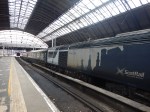
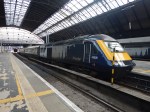






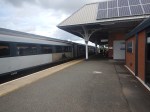


Scotrail have the following fleet of Inter7City trains.
- There are 52 Class 43 power cars and 120 Mark 3 coaches, which are arranged as nine four-car and seventeen five-car trains.
- The trains have sliding passenger doors.
- The trains meet all the regulations for Persons of Reduced Mobility.
- The trains have wi-fi and power points.
- They seem to run at up to 100 mph, as against the 125 mph for InterCity 125‘s in the past.
- The power cars have generally been reengined with modern MTU 16V4000 R41R diesel engines.
But they are now on average over forty years old.
In Battery And Hydrogen Trains For ScotRail ‘Could Make Scotland A Global Leader’ In Zero-Emission Transport, which is based on an article in the Scotsman with the same title, I said this.
Other points from the article.
- Talgo appear to have passed the story to Scotland on Sunday.
- Three routes are mentioned; Borders Railway, Fife Circle and Glasgow-East Kilbride.
- The new trains could help phase out diesel trains by 2035, which is Scottish Government policy.
- The Inter7City trains might be replaced by 2030.
- Talgo hopes to win an order for its factory in Fife.
Talgo’s Managing Director is quoted as saying, they are starting testing of a hydrogen and electric train with a range of 311 miles.
Consider.
- I wrote about this train in Talgo To Begin Fuel Cell Loco Trials.
- Talgo’s hydrogen and electric train would be ideal for Scotland’s railways of which only forty percent are electrified.
- A four or five-car high specification hydrogen and electric train would be ideal for the Inter7City routes, if it were built specifically for the routes.
- The range would cover all of Scotland.
- Hydrogen hubs are being planned all over Scotland.
- Scotland have 26 Inter7City trainsets.
This could be a rather nice order to fund the factory and test all the trains close to the factory.
- There could be as many as fifty trains.
- They would probably have an operating speed of 100 mph on electricity.
- Would the speed on hydrogen be 100 mph or perhaps a bit less?
- They would be able to use 25 KVAC overhead electrification, where it exists.
- They could have a length of three, four or five cars.
I wouldn’t be surprised to see three or four car trains for the suburban trains and four or five car trains for the Inter7City replacements.
Battery And Hydrogen Trains For ScotRail ‘Could Make Scotland A Global Leader’ In Zero-Emission Transport
The title of this post is the same as that of this article in the Scotsman.
This is the first paragraph.
New fleets of cutting-edge trains expected to include battery and hydrogen power are to be ordered for ScotRail which the rail industry believes will put Scotland at the forefront of zero-emission transport.
Other points from the article.
- Talgo appear to have passed the story to Scotland on Sunday.
- Three routes are mentioned; Borders Railway, Fife Circle and Glasgow-East Kilbride.
- The new trains could help phase out diesel trains by 2035, which is Scottish Government policy.
- The Inter7City trains might be replaced by 2030.
- Talgo hopes to win an order for its factory in Fife.
Talgo’s Managing Director is quoted as saying, they are starting testing of a hydrogen and electric train with a range of 311 miles.
Consider.
- I wrote about this train in Talgo To Begin Fuel Cell Loco Trials.
- Talgo’s hydrogen and electric train would be ideal for Scotland’s railways of which only forty percent are electrified.
- A four or five-car high specification hydrogen and electric train would be ideal for the Inter7City routes, if it were built specifically for the routes.
- The range would cover all of Scotland.
- Hydrogen hubs are being planned all over Scotland.
- Scotland have 26 Inter7City trainsets.
This could be a rather nice order to fund the factory and test all the trains close to the factory.
Is there a better place to show off your new train to a prospective buyer than the Highlands of Scotland?
In A Class 319 Train, But Not As We Know It!, I told this tale.
I am reminded of a tale, that I heard from a former GEC manager.
He was involved in selling one of GEC’s Air Traffic Control radars to a Middle Eastern country.
The only working installation of the radar was at Prestwick in Scotland, so he arranged that the dignitaries and the sales team would be flown to Prestwick in GEC’s HS 125 business jet.
As they disembarked at Prestwick and walked to the terminal, the pilot called the GEC Manager over.
The pilot told him “The Scottish Highlands at this time of the year, are one of the most beautiful places in the world! Would you and your guests like a low-level tour on the way back? I can arrange it, if you say so!”
Despite knowing GEC’s draconian attitude to cost control he said yes.
The sale was clinched!
I’m sure that Talgo will exploit the scenery and the local produce.
Talgo’s Hydrogen Trains
This page on the Talgo web site, is entitled Talgo’s Hydrogen Train Will Be Ready In 2023.
This paragraph gives an overview of Talgo’s hydrogen power system.
This system is configured as a modular solution that can be installed on all types of trains, as well as in upgrades from diesel to hydrogen. However, it has been specifically designed for the Vittal platform for Commuter and Regional trains, which Talgo has presented in the bidding process for various tenders in Spain and other countries.
And these two paragraphs describe Talgo’s hydrogen trains in more detail.
This innovative system uses hydrogen batteries that provide the energy for the train’s electric motors. It is powered by renewable energy sources, such as solar photovoltaic or wind, which produce hydrogen that is stored and then used to power fuel cell-based propulsion systems, such as the one designed by Talgo. The system is complemented by batteries that increase the speed of the train when it starts, taking advantage of the braking system to recharge it.
Unlike the extended battery systems in the automotive industry, hydrogen (H2) technology is the logical answer to the needs of heavy transport and, in particular, of those railway lines that do not have catenary electrification systems, and which today depend on trains powered by diesel engines. The hydrogen system designed by Talgo enables conventional network lines to be “electrified” without the need for costly and lengthy adaptation operations, and without the use of fossil fuels.
What do they mean by hydrogen batteries? Looking at the German and the Spanish on the page, I think Talgo means hydrogen fuel cells.
The Rebuilding Of Ukraine
It should be noted that Talgo have sold trains in the past to Russia, which has a gauge of 1.520 metres, which lies between Iberian gauge of 1.668 metres and our standard gauge of 1.435 metres.
- Talgo have also sold trains to Germany, who use standard gauge.
- Talgo have built Strizh trains for Russia, that are both standard gauge and Russian gauge for running between Berlin and Moscow.
- According to the BBC and The Times, Ukraine’s railways have been an important lifeline during the Russian invasion, but pictures show they are in need of modernisation and more electrification.
- The Strizh trains or a development would surely be ideal for running between Kviv and Berlin, Budapest, Prague and Warsaw.
- There would also appear to be a need for a hydrogen and electric regional train to reconnect the country back together.
- Other countries using Russian gauge include Mongolia, Kazakhstan, Kyrgyzstan, Tajikistan, Turkmenistan, Uzbekistan, Armenia, Azerbaijan, Georgia, Belarus, Moldova, Estonia, Latvia, Lithuania, and Finland.
So are Talgo positioning themselves to take part in the modernisation of Ukraine’s railways, once the war is over?
- Development and testing is done in Spain and Scotland.
- Manufacturing could be done in Spain and Scotland.
- Delivery from Scotland could either be by ship or if they were dual-gauge trains, they could be hauled through the Channel Tunnel and then through Germany and Poland.
As Talgo has the technology, I can certainly see them exploiting the Russian gauge market once Vlad the Mad has gone.
Talgo To Begin Fuel Cell Loco Trials
The title of this post, is the same as that of this article on Railway Gazette.
These are the first two paragraphs.
Trials are to begin shortly with the TPH2 fuel cell test locomotive developed by Talgo as part of its hydrogen traction programme. This forms part of a low-carbon research and development strategy which is being supported by a green hydrogen supply alliance and financing from the European Investment Bank.
The TPH2 loco has been produced by fitting fuel cells and traction batteries to the Travca L-9202 ‘Virgen del Buen Camino’ prototype multi-system and variable gauge locomotive which was built by Talgo in 2005.
This page on the Talgo web site describes the Travca locomotive like this.
Travca: Traction Without Borders
Travca is a locomotive that stops at nothing; not at different power supplies, track gauges nor signalling systems all of which makes Travca Talgo’s most advanced development in the field of traction.
This is the specification of the electric locomotive from the Talgo web site.
- Operating speed – Up to 250km/h (passenger version)
- Configuration – Bo-Bo
- Track gauge (mm) -1435-1668
- Length (m) – 19400
- Bodyshell width (mm) – 2950
- Unladen weight (tonnes) – 72 (passenger version)
- Number of axles – 4
- Power – 2,400 kW (25kV, 50Hz) / 2,000kW (3kV dc)
- Brakes – Regenerative, rheostatic and air brakes
Notes.
- It is a variable-gauge and variable-voltage locomotive.
- 1435 mm is standard gauge
- It is lighter and wider than a Class 90 locomotive.
It does seem to be the basis of a very useful locomotive.
This article on Railway News is entitled University Of Extremadura To Work With Talgo On Its Hydrogen Train, says this about the test train.
During the first stage of the hydrogen train project, Talgo is developing the necessary engineering for the assembly and commissioning of hydrogen traction in a test train. The train will comprise a Talgo Travca MS locomotive, which can change gauges and run under different electrification systems, and five Talgo hauled cars that will house the hydrogen fuel cell system. One of the cars will be a laboratory car.
This would appear to be an experimental train with the hydrogen power station in four of the coaches.
It also appears that Extremadura is developing a hydrogen infrastructure.
Applications In The UK
The obvious application in the UK, is as a Class 66 diesel locomotive replacement, for some of the light to medium duties.
The Class 66 locomotives have a power of 2400 kW, which could be within the range of the Talgo locomotive.
In LNER Seeks 10 More Bi-Modes, I speculated that Talgo, with all their experience of high speed trains might like to bid for the extra ten trains, that LNER requires.
They could be ideal to allow electric trains to run between London and Aberdeen and Inverness.
- The Travca locomotive running on electricity could certainly handle 140 mph between London and Edinburgh.
- The power requirements North of Edinburgh would be less, as speeds would be lower.
- Ranges on hydrogen would be under two hundred miles.
It would be a flagship service for both LNER and Talgo.
Talgo and Repsol To Develop Fuel Cell Trains Powered By Renewable Hydrogen
The title of this post, is the same as that of this article on Railway Gazette.
This article follows the pattern, of if you’re going to build hydrogen-powered trains, you need a quality partner for your hydrogen.
I still puzzle, what Talgo will do with their factory in Scotland, if they miss out on the orders for High Speed Two.
- Russia is an obvious market for their Spanish gauge high speed trains and delivery from Rosyth by ship is probably easier, than from Spain.
- The UK probably needs a quality modern hydrogen train for remote routes, as does the island of Ireland.
- As I indicated in LNER Seeks 10 More Bi-Modes, there could be a niche for a small fleet of 140 mph hydrogen bi-modes to run between London and the North of Scotland.
Note.
The UK probably has enough capacity for regional and commuter electric and battery trains, with Alstom, CAF and Hitachi all with modern trains in production.
Ireland and Russia, with their similar gauge to Spain could be worthwhile markets.
However, I do believe that the 140 mph hydrogen bi-modes would slot into substantial markets in continents and countries like Africa, Australia, Canada, India, Norway, South America, Sweden and the United States, where there are enormous mileages of standard gauge railways without electrification.
Talgo Unveils Plan To Have Vittal-One Hydrogen Train Operational By 2023
The title of this post, is the same as that of this article on Hydrogen Fuel News.
This is the most important paragraph of the report.
The company explained that the fuel cell technology it designed for its train is modular. In this way, the tech can be installed on any type of existing train. In this way, the transition away from diesel and into hydrogen fuel. That said, Talgo did underscore that its Vittal platform was the primary reason for which the H2 solution was designed. The company is hoping to win several Spanish tenders, as well as those in other countries, for this regional and commuter train.
Talgo hopes to start testing their train next year.
They certainly seem to have got their skates on, or whatever the Spanish say!
A Hydrogen Train For Scotland
Consider.
- Scotland has a major need for a large number of zero-carbon trains to decarbonise routes outside the Central Belt, which is extensively electrified.
- Talgo are building a factory at Longannet in Scotland.
- Talgo’s Vittal-One train has a modular hydrogen traction system, but the train is designed for European standards.
- This page on the Talgo web site, describes the design philosophy behind the Talgo Vittal. After reading that page, I feel Talgo could build a version of the train for the UK. There are already standard gauge versions in Germany and they’d just need to make a different body, that was about a 100 mm. narrower.
- The Talgo Vittal is a 100 mph train, which is what Scotland needs.
So I feel that Talgo have the technology to build a hydrogen-powered regional train for the UK. And the island of Ireland, which uses a 1600 mm track gauge, which is not far from the Iberian gauge of 1668 mm gauge!
The question has to be asked about, when Talgo chose the location for the factory, were there any nods and winks with the Scottish Government about the country’s future train needs?
It certainly appears that Scotland has the need and the hydrogen, and Talgo has the technology, to decarbonise the railways North and South of the Central Belt in Scotland.
Talgo: Our Hydrogen Train Will Be Ready In 2023
The title of this post, is the same as that of this article on Railway News.
This sentence from the opening paragraph, gives and explains the name.
The train will be called Talgo Vittal-One, which Talgo says is a reference to hydrogen’s atomic number.
It appears to be a commuter and regional train.
 The Anonymous Widower