A First Visit To Clacton
Despite living quite close to Clacton for perhaps about thirty years of my life, I’d never been to the town before today.
I needed some sun and felt that a visit and a walk along the front was in order.
Since the Shenfield Metro train service through East London to henfield has been run by TfL Rail, getting to places like Clacton and Sudbury, as I did, a couple of weeks ago, has become a lot cheaper.
Sudbury cost me £11.70 return, and Clacton today was £14.25! As Clacton is seventy miles from London, surely that is good value!
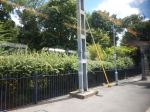
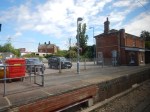
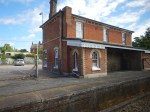
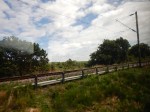
These are of some pictures I took of the trip from the time I joined the Sunshine Coast Line at Colchester.






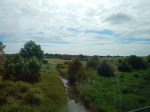
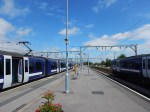
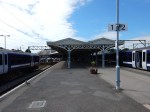

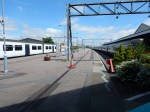
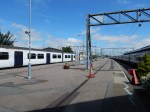
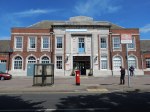


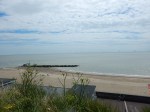


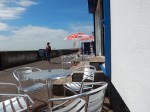

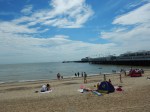
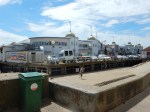


Note.
- The stations on the branch look reasonable, although Thorpe-le-Soken station could do with improvements.
- According to a local, the front at Clacton has had a recent makeover.
- There is a maintenance depot for the trains at Clacton.
- The line is an electrified double-track, although the branch to Walton-on-the-Naze and Frinton-on-Sea is only a single-track.
- I must admit to being surprised at the size of Clacton station with four platforms capable of taking twelve-car trains.
This Google Map shows the route where I walked.
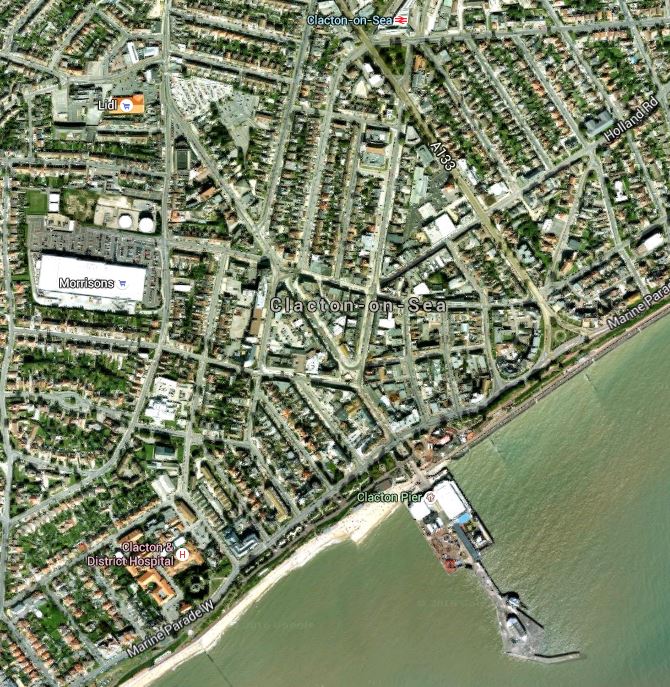
Clacton
I walked down from the station to the sea front, along the promenade to the Pier and then back up to the station. It was virtually flat all the way.
One of the reasons, I went to Clacton was to look at the train service and see if it is likely, than the new franchise will improve it.
- As I said earlier, most of the stations I saw are in reasonable condition, although some may need step-free access.
- Thorpe-le-Soken station would appear to need improvement.
- According to Wikipedia Abellio has plans to improve stations at at Alresford, Kirby Cross and Weeley
- It is still possible to see the remains of the second track to Walton at Thorpe-le-Soken station.
- Generally, the Off Peak service to Clacton and Walton is one train per hour.
- Going to Clacton, I rode in an acceptable Class 360 train, but going back I was in a Class 321 train.
- Signalling on the Sunshine Coast Line was modernised a few years ago, but what is the state of the electrification?
- Colchester Town station is served by a spur from the Sunshine Coast Line, which has a low speed limit because of sharp curves.
There is certainly scope for improvement.
These are a few notes on what can be done.
Colchester Town Station
Wikipedia says this about the station.
As of 2013 there is only one platform, but there is space for a second which would make possible a more intensive service on the Sunshine Coast Line. To the east of the station, Colne Junction is the western extremity of a triangle which gives access towards Colchester station to the west and Hythe station to the east. The curve to the north from Colne Junction to East Gates Junction is sharp, with a continuous check rail which necessitates slow passage.
This Google Map shows Colchester Town station and Colne Junction.
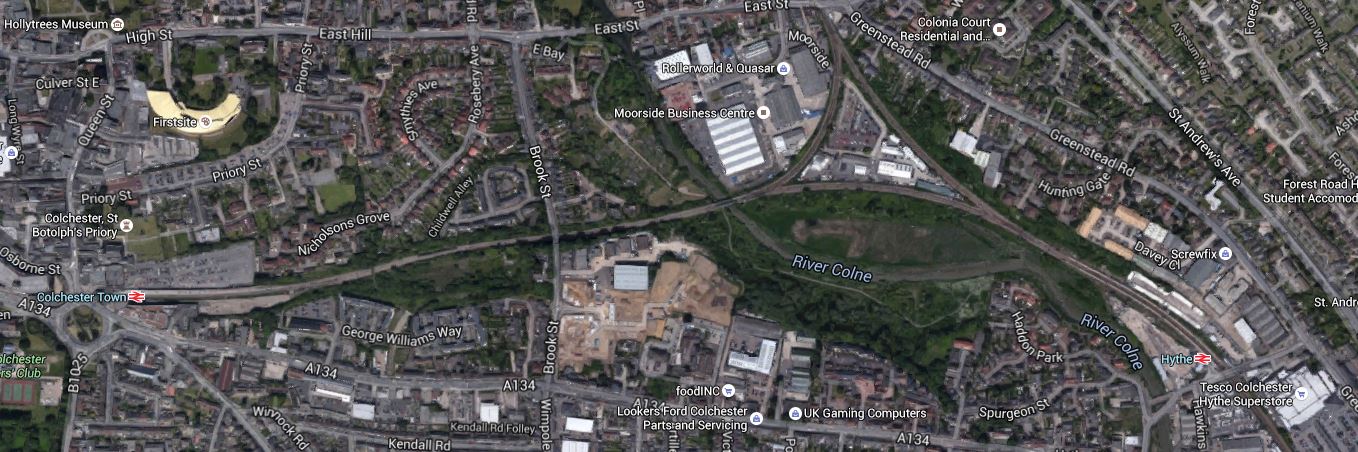
Colchester Town Station And Colne Junction
Colchester Town station is at the Western side of the map and the lines lead out of the station to the triangular Colne Junction.
As the map shows, it is a much sharper curve to turn North than go to the Sunshine Coast.
The other station shown at the |Eastern side of the map is Hythe station, which is on the route to Clacton and Walton.
I suspect that there have been many sensible ideas to improve services through Colchester Town station, but that as train services in East Anglia have always had a low priority, nothing has been done.
These pictures show Colne Junction from a train between Clacton-on-Sea and Colchester.


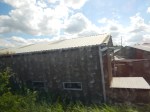

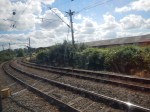
I was surprised to see that all sides of the junction are double-track.But not surprised to see a collection of second-rate industrial and Royal Mail development in the middle of the junction.
An absolute minimum of improvements would be.
- Improving the curve to the North at Colne Junction, so that there is a speed increase for trains going to and from Colchester and towards London, that serve Colchester Town and the Sunshine Coast Line.
- A second platform at Colchester Town station.
- Opening Colchester Town station on Sundays.
I will be interested to see if improvements are proposed in the new East Anglia Franchise.
New Trains
In Could Class 387 Trains Do Norwich In Ninety And Ipswich In Sixty?, I wrote that to obtain these timings, North of Chelmsford, all trains must be capable of holding a 100 mph line speed or perhaps even 110 mph.
The Class 360 trains might be fast enough, but there are rumours in the Derby Telegraph, that a new fleet of Bombardier trains will be ordered, to fulfil a requirement in the new franchise agreement.
If a version of something like a Class 710 train is ordered, it could have the following characteristics.
- Four-car trains, able to run in four, eight and twelve car formations.
- 100 mph or 110 mph line speed.
- Regenerative braking.
- Provision for on-board energy storage.
On the Sunshine Coast Line, the trains would not use the onboard energy storage for primary traction, but to save energy, as I don’t suspect the line has been updated for regenerative braking.
These trains will certainly provide a better passenger experience. They could also be faster between Liverpool Street and Colchester.
Electrification
The electrification looked to be in good condition, but judging by the design, some of it, is fairly elderly.
I also have my doubts as to whether the overhead wires can handle regenerative braking. Use of regenerative braking in the UK have shown energy saving around 15%, but it does need a more expensive infrastructure.
So will we see, a project to renew the wires, transformers and other electrical equipment, as has been seen on parts of the Great Eastern Main Line?
I think we will, but the operator could use on-board electrical storage in new trains to simplify the electrification.Instead of returning braking energy through the overhead wires, it would be stored on the train for using the train to get started again.
One idea that could happen, is that to appease the sensitive souls in Frinton, that the Walton-on-the-Naze branch could be run using onboard energy storage to eliminate any pantograph noise. After all the branch is only five miles long. But that would be five miles less of overheasd wire to maintain.
I do wonder whether some branch lines like the short one to Walton-on-the Naze could be run to tram rules using on-board energy storage. It might enable stations to be built step-free without electrification, lifts and bridges. I wrote about Thurston station, where they have a walk across with lights in Two Solutions To Make Crossing A Railway Safe.
Track Improvements
As with Colne Junction, I suspect that there are some long-standing ideas to increase the line speed from the current 40-90 mph on the Sunshine Coast Line.
Have Train, Will Travel
This article in the underland Echo is entitled Metro bosses unveil plans to extend network, including direct link between Sunderland and South Tyneside.
This is the opening couple of paragraphs.
Ambitious plans to extend and expand the region’s rail and Metro networks have been drawn up by public transport bosses.
The scheme – to be presented to the North East Combined Authority (NECA) – could see a direct link between Sunderland and South Tyneside and the network extended as far as Washington and Peterlee.
It is a comprehensive plan, that takes note and advantage of the best practice and technology from around the world.
The Proposed New Routes
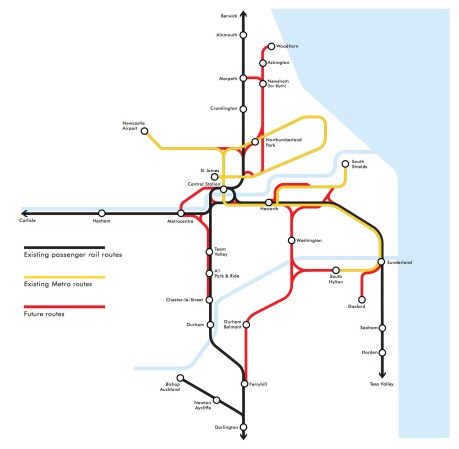
Plans for the Tyne and Wear Metro include.
- Sunderland City Centre to Doxford Park using the route of the former Hetton Colliery Railway.
- New Routes From South Tyneside by linking the South Shields and Sunderland routes, using an existing single-track railway in the region of Tyne Dock.
- A Wearside Loop can be created to serve Washington using existing rail routes.
- The Leamside Line could be used as a new Metro route.
- Re-electrification of Sunderland to 25 KVAC would give advantages to Network Rail and allow Metro services to go South.
- Dualling of the track through South Tyneside.
Every plan seems to have serious element of using former and existing routes in a creative manner.
This map shows how the network could look in a few years.
The Metro Has A Touch Of The Karlsruhes
What many forget about the Metro, is that it some of its operation on the Sunderland route is based on a modified form of the Karlsruhe model, where heavy rail passenger and freight trains, share tracks with the Metro.
I was surprised once on a station on the Metro to see a Grand Central High Speed Train come through.
The last two improvements listed above; 5 and 6, use this capability.
The Durham Coast Line runs from Newcastle to Middlesborough and the East Coast Main Line, via Sunderland and Hartlepool. The only electrified section of this line is that which is used by Metro trains.
If new Metro trains could run on their current 1500 VDC and 25 KVAC, then if the line was fully electrified, the following benefits, would be realised.
- Metro trains could go as far South as Middlesbrough.
- Grand Central could run electric trains to Middlesbrough, Hartlepool and Sunderland.
- There would be a second electrified route South from Newcastle, for use as a diversion.
- Network Rail would get maintenance advantages, as the electrification is network standard.
So we would see Metro trains sharing the route with high speed passenger trains like Class 800s and electrified freight.
The South Tyneside Dualling would incorporate the freight line to the Jarrow Oil Terminal into the Metro. I think that the line would be arranged, so that if freight ever needed to use the line, the Karlsruhe model would apply.
It looks to me that this dualling and the upgraded electrification through Sunderland would be done together.
New Trains
New trains are also mentioned and in this article on Global Rail News. This is said.
Nexus, the Tyne and Wear region’s Passenger Transport Executive (PTE), said it would look to procure a new fleet of multi-system trains capable of operating on the Metro’s 1.5 kV DC electrification system and the 25 kV AC used on the national rail network. Battery technology is also being considered for short sections of non-electrified line.
Looking at the map, there are a couple of short new lines, that might be ideal for IPEMUs.
Conclusion
Taken as a whole, it is good well-thought out plan.
Sadiq Khan Backs Gatwick
This article on the BBC is entitled Sadiq Khan urges swift decision on Gatwick expansion.
Doesn’t most of those living and/or working in london and the South East?
This is said in the article.
London Mayor Sadiq Khan has urged Theresa May to make a quick decision on airport expansion in the South East.
Mr Khan said the new Prime Minister should make the final decision on whether a new runway should be built at Gatwick or Heathrow a top priority.
This decision has been kicked further into the long grass for years, ever since Harold Wilson cancelled Maplin Airport in 1971.
With Brexit on the near hotizon, what better way to say the UK and London is open for business, than by deciding on the next runway in the South East.
I don’t believe Heathrow should build another runway for the following reasons.
- Building another runway would cause endless problems as the M25 is diverted., if what happened when it was diverted for Terminal 5 is anything to go by.
- Gatwick will have better rail connections.
- Heathrow has annoyed a lot of influential and powerful people and organisations in West London.
- The site is too small, even after demolishing the odd village.
- I don’t believe they’ll solve the pollution problem.
- I don’t like approaching the airport over Central London.
- It is the more expensive option.
You can probably say similar things for Gatwick.
But at least Gatwick’s owners don’t seem to be as greedy and uncooperative as those at Heathrow.
At least Gatwick’s plans seem well advanced, as this visualisation shows.
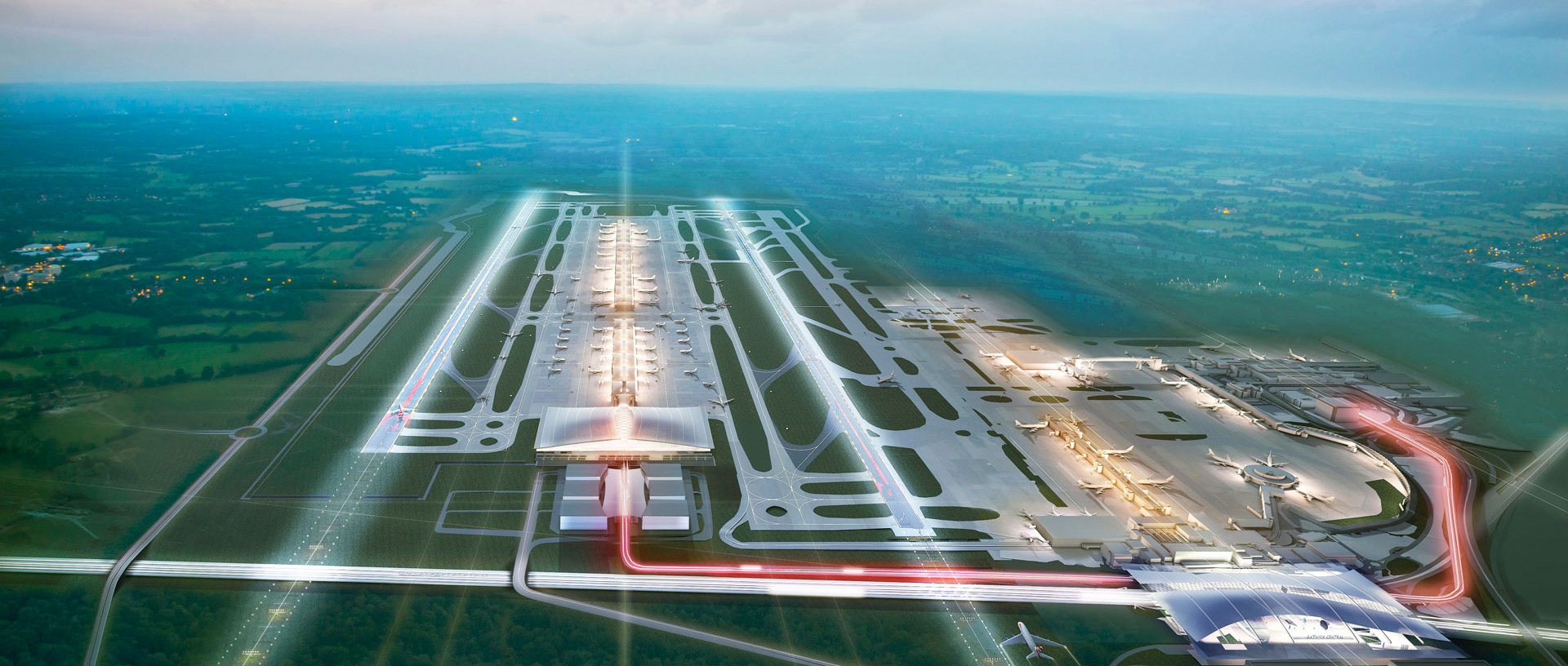
Gatwick With Two Runways
This appears to me to be a good efficient design.
- The new runway is on the left.
- It looks like the secondary North runway, used when the current main runway is under msaintenance, is still in place.
- Between the two runways is a massive new terminal.
- Note the station in the bottom right corner, with the Brighton Main Line going across.
- The red line is a shuttle, that takes passengers between the current North and Main terminals, the new terminal and the train station.
- Little demolition seems to have taken place.
But in some ways, where the runway is built is irrelevant, if Crossrail and the improved Thameslink work as they say on their tins.
These two high-capacity railways will give Heathrow and Gatwick a shared terminal called London, that unfortunately for them, they will share with Stansted, Luton, HS2 and Eurostar.
I feel though, that because of Brexit, we’ll see a decision before the end of the year and possibly in the next few weeks.
British governments have fiddled for far too long!
A Space Too Good To Leave Empty
I took these pictures in the space between the Southbound Thameslink and Westbound Metropolitan platforms at Farringdon station.

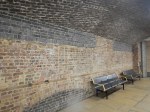
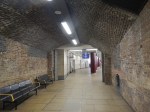
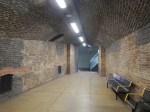
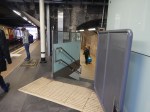
It’s just too good to leave empty!
But at least it’s a convenient almost step-free way to interchange between the two lines. Say from.
- Liverpool Street to Gatwick.
- Bedford to Paddington.
It’s just a pity that all the other connections at Farringdon, seem to be lots of steps.
Marks Tey Station And The Sudbury Branch
The Sudbury Branch or the Gainsborough Line, is one of those lines that abound all over the UK, to serve a major town stranded from the main line.
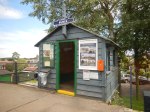
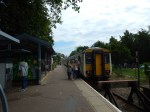
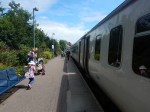
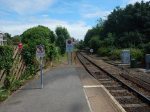
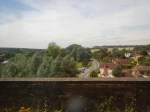
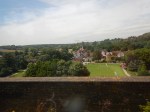
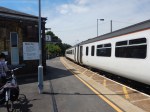
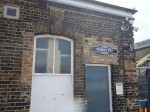
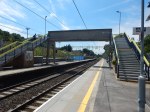
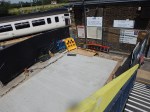
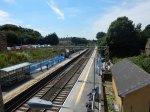
These pictures show my visit.




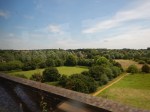
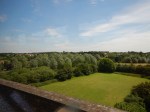
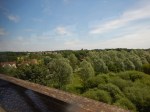


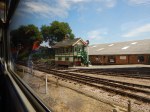




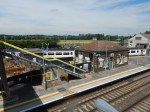
Note.
- The line is certainly rural.
- The Chappel Viaduct is large and gives good views.
- Bures station is rather quaint.
- Sudbury station is an easy walk to the Town Centre
- Chappel and Wakes Colne station has a railway museum.
- Marks Tey station seems to be being upgraded.
Incidentally, I was able to get to Sudbury from London for just £11.70, using my Freedom Pass to Shenfield and a ticket from there to Sudbury with my Senior Railcard.
The Future Of The Sudbury Branch
With the new franchise being awarded within a few weeks, I wonder what the plans are for Marks Tey station and the Sudbury Branch.
- I can’t find anything about the building works at Marks Tey station.
- The station certainly needs a proper bridge with lifts.
- Marks Tey only has two trains per hour in each direction. Is that enough?
- Trains are hourly between Marks Tey and Sudbury and for a weekday were fairly busy.
- In an ideal world, trains would be twice an hour on the Sudbury Branch and would synchronise with trains on the Great Eastern Main Line.
- The journey takes nineteen minutes between Sudbury and Marks Tey, which probably means that two trains are needed for a doubled frequency.
There is certainly a lot of potential for an improved service.
Two Trains Per Hour To Sudbury
The obvious way to achieve a two trains per hour service on the Sudbury Branch would be to use two trains. Although, this could be expensive as the line probably works currently under rules called One Train Working.
It would also need a passing loop on the single-track branch, two trains and two crews, so I think it could be discounted.
The line has a speed limit of 50 mph and it is not electrified. If the line was upgraded to increase this speed limit, it might be possible for a single train to shuttle twice between Marks Tey and Sudbury in an hour. Time could be saved, by using two drivers and changing them at Marks Tey. But the current time of nineteen minutes for the journey makes four trips in an hour impossible. It probably needs a time in the order of ten to thirteen minutes, which might be possible with a faster train after the track was upgraded to say 75 mph.
Electric trains accelerate faster and generally have shorter station dwell times, than the current Class 156 diesel trains.
So perhaps to electrify the line is an option, that would allow the desired service. But electrification of the line will be expensive and there will be a lot of opposition to having overhead gantries marching through the Suffolk countryside and on top of the Grade II Listed Chappel Viaduct.
An Aventra IPEMU To Sudbury
One solution that would work is to use something like a four-car Class 710 train, that are being built for the London Overground.
It would need to be an IPEMU, fitted with energy storage and there would probably need to be a short length of electrification in Platform 3 at Marks Tey station to charge the train after each trip to Sudbury.
A Suffolk Metro From Sudbury To Felixstowe
An alternative strategy may also be possible, which would require no new track, platforms or electrification.
The Felixstowe branch also needs new trains and could be run using a similar Aventra IPEMU from Ipswich.
So why not link the two services back-to-back to create a half-hourly service from Sudbury to Felixstowe, which called at the following stations?
- Bures
- Chappel and Wakes Colne
- Marks Tey
- Colchester
- Manningtree
- Ipswich
- Westerfield
- Derby Road
- Trimley
The trains would charge their energy storage on the main line and the Felixstowe branch would not need a bay platform at Ipswich station.
The Sudbury and Felixstowe Branches are eleven and twelve miles long respectively, which means that if the trains charged their energy storage on the main line between Ipswich and Marks Tey, they would need to be able to do about twenty-five miles on their on-board energy storage, which is well within all estimates of the train’s range.
Currently, using three trains that would take 72 minutes of train time, but I suspect that time saved on the branches by an Aventra could make the trip in around an hour.
In Could Class 387 Trains Do Norwich In Ninety And Ipswich In Sixty?, I postulated that to achieve the Norwich in Ninety and Ipswich in Sixty targets, all trains North of Colchester, must be capable of running at 110 mph, so they don’t slow the crack East Anglian Expresses down.
This rule would probably have to apply to the Felixstowe to Sudbury trains.
This would be one of those train services where most are winners.
- Passengers on the two branch lines get a two trains per hour direct service to Ipswich, Manningtree and Colchester, run using modern four-car electric trains.
- Passengers using stations between Marks Tey and Ipswich would have extra trains to Ipswich and Colchester.
- The train operator replaces two ageing diesel multiple units, with two brand-new electric multiple units with an IPEMU-capability.
- Network Rail would have no electrification to install and only minimal changes to make to infrastructure, such as some general track improvement and platform lengthening.
- It would probably help time-keeping, if the long-promised dualling of part of the Felixstowe Branch were to be done.
- There might even be a case for reopening disused stations at Bentley, Ardleigh and Orwell and perhaps creating a couple of new ones.
What I have proposed is pure speculation, but it could be the first line of the Suffolk Metro.
Incidentally, I wouldn’t be surprised to see four-car Aventra IPEMUs working the following routes for the new East Anglian Franchise.
- Cambridge to Norwich.
- Ipswich to Bury St. Edmunds, Cambridge, Ely and Peterborough
- March to Wisbech
- Norwich to Cromer, Lowestoft, Sheringham and Yarmouth.
The only line, which would be outside their capability would be Ipswich to Lowestoft, which is just a bit long. But the Aventras would release Class 170 trains to provide a high quality service on this line.
There are several reasons, why I think that IPEMUs might be used in East Anglia.
- The tests of the IPEMU technology were carried out by Abellio Greater Anglia on the Harwich branch. The drivers must know how good the IPEMU technology really is.
- East Anglia has several branch lines for which using IPEMU technology, is an affordable way of introducing electric trains.
- Network Rail have an appalling record, when it comes to electrification.
- What is the state of the electrification on the Braintree, Southminster and Harwich branches? It might be more affordable instead of replacing dodgy wiring to use a train with IPEMU technology.
- Quite a few of these branches have capacity problems, which a four-car electric train would solve.
- The invitation to tender for the franchise included the following – “extra points will be awarded to bidders who include plans to trial new technologies in rolling stock”
- Providing free wi-fi across the franchise is mandated. Does anybody fancy doing this in a Class 153 or Class 156 train?
The new franchise is supposed to be awarded before the 21st of July, this year.
It will be interesting to hear the winner’s plans.
Onward To Cambridge
It is just a pity, that the Stour Valley Railway from Sudbury to Cambridge via Haverhill was closed in the 1960s.
In Sudbury To Cambridge – D-Train, IPEMU Or Tram-Train?, I looked at the various options for reopening the whole line to create a new route from Ipswich and Colchester to Cambridge via Marks Tey, Sudbury and Haverhill.
As trains from Sudbury to Felixstowe will probably be Aventra IPEMUs with a main line capability, these trains would be used through to Cambridge, which is about fifty miles from Marks Tey.
I think this line will eventually be rebuilt.
- This is the sort of project a devolved East Anglian Authority would back.
- It creates alternative routes to London and Cambridge.
- It joins up well with the East West Rail Link and the prtoposed station at Addenbrookes Hospital.
- It provides another commuting route for Cambridge.
- It puts Haverhill back on the rail map.
- It would complete rail links from Suffolk’s County Town of Ipswich to all parts of the county
Who knows what routes will be unlocked by the reopening of the Stour Valley Railway?
Would High-Speed Trains With Onboard Energy Storage Enable Environmentally-Friendly High-Speed Lines?
If you stand on the platform at Stratford International station, when a Eurostar Class 373 train comes through, it is a very noisy experience.
For this and other reasons high-speed trains usually have their own fenced-off tracks, well away from centres of population.
High-speed trains like Eurostar tend to have a journey profile, where they accelerate to line speed and then run at this speed, until they stop at the next station.
High speed lines are also designed, so that trains don’t lose energy on gradients and curves for energy efficiency.
I’d love to see an energy use profile for a modern high-speed train like a Class 374 train, as it goes from London to Paris.
Onboard energy storage is rather primitive today, but who’s to know how far the next generation of battery technology will take a train in say ten years time.
Say a high speed train has to go through an area that is highly-sensitive with respect to visual and/or audio intrusion!
If the section was not electrified, which would cut the visual intrusion to just the trains passing through and reduce the pantograph noise to zero, how far would a mix of battery power and the kinetic energy of the train power it until it could get electric power on the other side of the electrification gap?
We could be closer than anybody thinks to the use of batteries on high-speed trains.
The Midland Main Line is being electrified and Ian Walmsley in Modern Railways has speculated that 125 mph Aventras could be used between London and Sheffield. I wrote about this in A High-Speed Train With An IPEMU-Capability.
Could we see sections of the fast lines deliberately built without wires, so that noise is reduced?
Leicester station is a serious bottleneck, so could track be arranged there with two quiet fast lines without wires, through the centre of the city and the station?
It’s an interesting possibility to both reduce the effects on the environment and cut the cost of electrification.
I also think there are other reasons why trains will increasingly have on-board energy storage or in the case of electric locomotives, a small diesel engine.
- A get-to-the-next-station capability for when electric power to the line fails.
- Depots could be without electrification.
- Complicated stations could be electrically-dead.
It is a technology, that will have a large number of positive effects in the coming years.
I Get Struck By The DOO Lurgy
The DOO (Driver Only Operation) Lurgy has generally been limited to Southern, Gatwick Express and ScotRail trains.
But today, when coming back from IKEA, I was unable to get a train on the Great Northern Route at Highbury and Islington to Essex Road, as the train was cancelled.
The station-man upstairs said it the DOO Lurgy and I walked off to catch a bus.
This row over DOO has gone on long enough and from what I wrote about in Design For Safety In A New Station, I would suspect that the solution I saw at Lea Bridge station, is as good as its going to get!
Design For Safety In A New Station
I took these pictures at the new Lea Bridge station
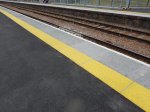

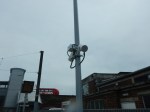
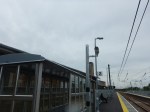


Note.
- There is a series of cameras, that display images of the complete train on the screens for the driver.
- Speakers and CCTV cameras are everywhere along the platforms.
- Very little seems to have been left to chance.
I doubt, even a driver, who was in the midst of some unfortunate personal emergency would miss anything untoward happening on the platform.
But even if they collapsed, it would be hoped that other safety systems on the train, would cut the power.
As a passenger and engineer, the setup of the platform, certainly reassured me.
Should we make sure, that the safety systems at all stations are as comprehensive as this?
Are You Annoyed By Noisy Trains At The Bottom Of Your Garden?
I have just found this document on the European Parliament web site, which is entitled Reducing Railway Noise Pollution.
It is a fascinating document and this is the abstract.
12 million EU inhabitants are affected by railway noise during the day and 9 million during the night. This study lists measures, funding and regulations to reduce it. The introduction of modern rolling stock will lower noise most significantly. In the short run, the replacement of cast iron by composite brake blocks on rail freight cars is most important. Developing a regulation scheme for a staged process towards low-noise rolling stock is the heart of a rail noise abatement strategy.
Many of us in the UK, would think that we suffer badly from the noise of trains, but it would appear that Germany and other Central European countries suffer badly from all freight trains passing through. The Rhine Valley which has over 400 freighs trains a day, suffers badly from noise.
So how can we reduce noise?
- As the abstract says new rolling stock is the best way to reduce noise and many of our trains have been replaced with new or refurbished ones in the last few years.
- The report says that most (approximately 75%) of UK freight wagons have disc brakes or composite brake blocks. So that is good.
- In my view one of things that gets most complaints is noisy and smelly diesel locomotives, like the dreaded Class 66 locomotives. They may be liked by the freight companies, but they are not favourites of drivers and those living by the railway. More friendly types of diesel locomotives like the Class 68 are starting to appear and it can’t be too soon.
- Surprisingly, with electric trains, pantograph noise is a problem. I’d hand that and any other aerodynamic problems over to the engineers in Formula One and aircraft design. I have read that Bombardier’s new Aventra will be very clean aeodynamically, which must make for a reduction in noise.
Let’s hope that these small improvements continue to reduce the noise by trains.
The report also says this about physical noise barriers.
Noise barriers are a visual intrusion, particularly since they are a target for graffiti; they have a high cost, and cause problems for track access. Their effectiveness depends on their absorption properties, their height, and the proximity of the barrier to the noise source and/or to the receiver.
I am not a fan, as they ruin my taking of photographs.
After The Northern Hub, Is Network Rail Planning A Midland Rail Hub?
The study on Network Rail’s web site is entitled West Midlands and Chilterns Route Study, proposes a concept of a Midland Rail Hub.
By adding the following infrastructure.
- Bordesley Chords and new platforms at Moor Street
- More tracks through Water Orton
- Kings Norton upgrade
- Snow Hill Platform 4
- Begin rollout of Digital Railway
Network Rail feel, it will bring the following benefits.
- Up to 10 extra trains every hour
- More freight trains
- New journey opportunities between East and West Midlands
- Unlocking new jobs
- Maximising benefits of HS2.
It doesn’t appear to be as radical as the Northern Hub.
These are my notes and thoughts on the various proposals.
Bordesley Chords
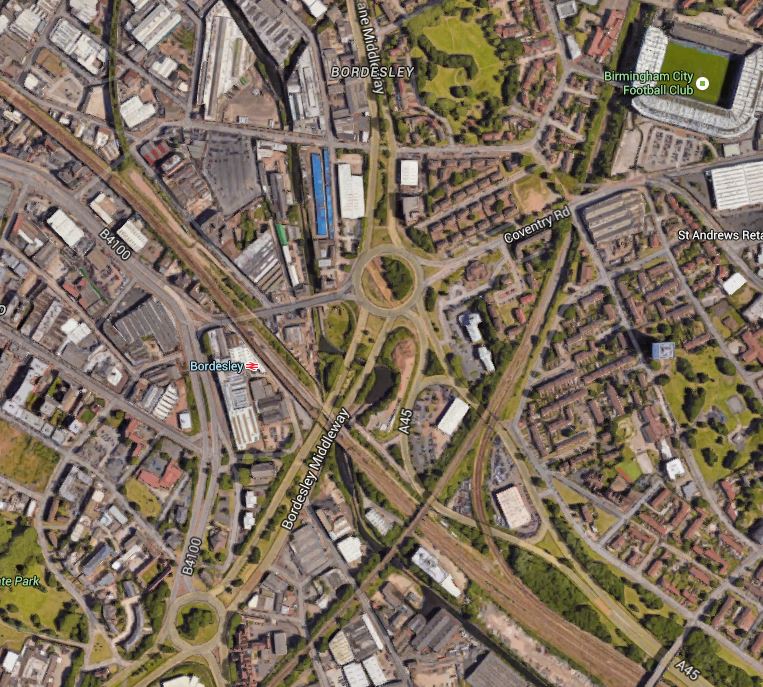
This Google Map shows the Bordesley area of Birmingham.
Bordesley Chords
In the top-right or north-eastern corner of the map is Birmingham City Football Ground.
In the middle of the map is Bordesley Circus, which is a roundabout, that is one of the most dangerous for pedestrians in the country. When I was last there, it was being improved and I wrote My Least Favourite Roundabout Gets Pedestrian Lights. I hope they’re working on Tuesday, 13th December, when I’ll be going to see Ipswich play.
Bordesley station, which is one of the worst stations in the UK, lies to the South-West of this roundabout and is on the Chiltern Main Line into Birmingham Moor Street station, although services don’t stop.
Running almost North-South across the map is the Camp Hill Line, which incidentally passes behind the stands at the football ground.
Where it crosses the Chiltern Main Line, there is a chord allowing limited connection between North and East.
I would assume that as the report says Bordesley Chords, that there will be some extra connectivity between these two lines.
Under the future of the Camp Hill Line on Wikipedia, this is said.
The reinstatement of local rail services to the former Camp Hill Line has been a long term aspiration of the City, and during 2007, Birmingham City Council announced that they were looking into the possibility of reopening the line between Kings Norton and Birmingham Moor Street via the construction of a railway viaduct from Sparkbrook to Bordesley, where trains would be taken into the “old” Birmingham Moor Street station. In October 2007, a 1500-name petition was handed in to the council asking for the line to be re-opened. In 2013 the proposal was shelved indefinitely.
As Kings Norton is to the South, this would need a West to South connection at Bordesley.
These pictures show the area from a Chiltern Train going into Moor Street.

Salubrious it is not! There is certainly a lot of space on the North side, but there might be less on the South. This Google Map shows the area between the station and where the two lines cross.
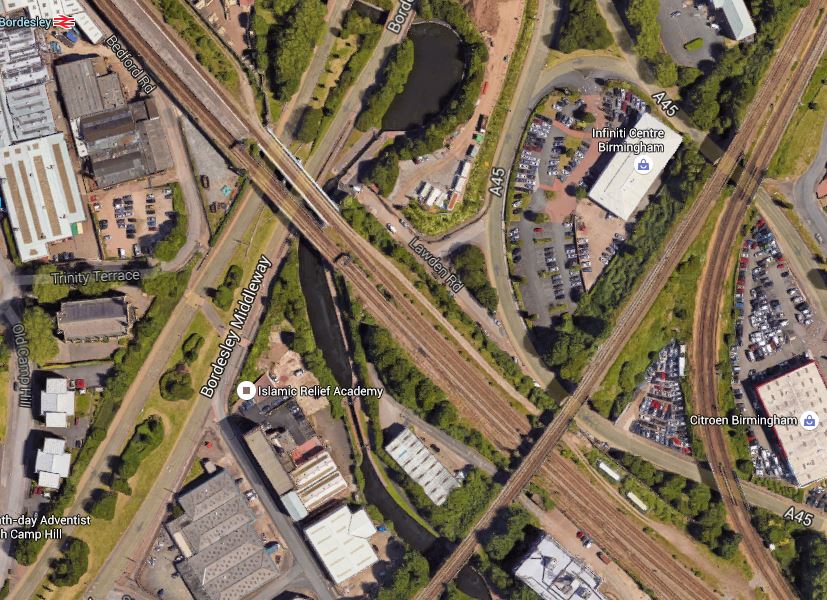
Bordesley Station And Chords
Note the double-track chord between the Camp Hill Line to the North and the Chiltern Main Line to the East. This chord gives services from the Chiltern Main Line to access Birmingham New Street station. If you take a train from Oxford to Birmingham New Street, it will take this chord, if it doesn’t go via Coventry.
From what I have seen in Manchester and some parts of London, the area could surely be put to a better purpose, perhaps driven by a rebuilt Bordesley station, with regular services to Moor Street, Kings Noton and Solihull. The area does have the added factor of water in the shape of one of Birmingham’s numerous canals.
Hopefully, the first piece of development in a very run-down area, the sorting of a decent walking route between Bordesley station and Birmingham City Football Ground has been completed.
New Platforms At Birmingham Moor Street Station
This Google Map shows Birmingham Moor Street station.
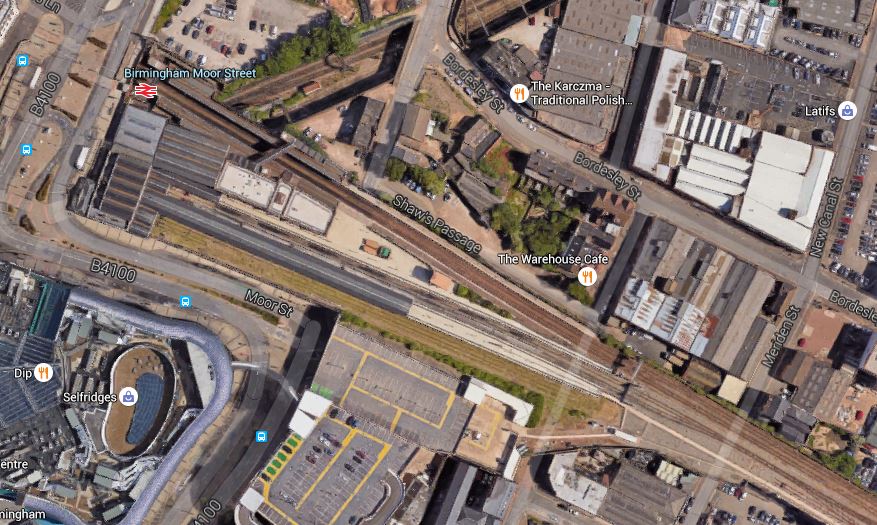
Birmingham Moor Street Station
The most northerly pair of platforms in the station are numbered 1 and 2 and are for the through lines to Birmingham Snow Hill station.
Over the last few years, work has opened the next pair of bay platforms 3 and 4. On my last trip to Birmingham in June, I arrived in Platform 4.
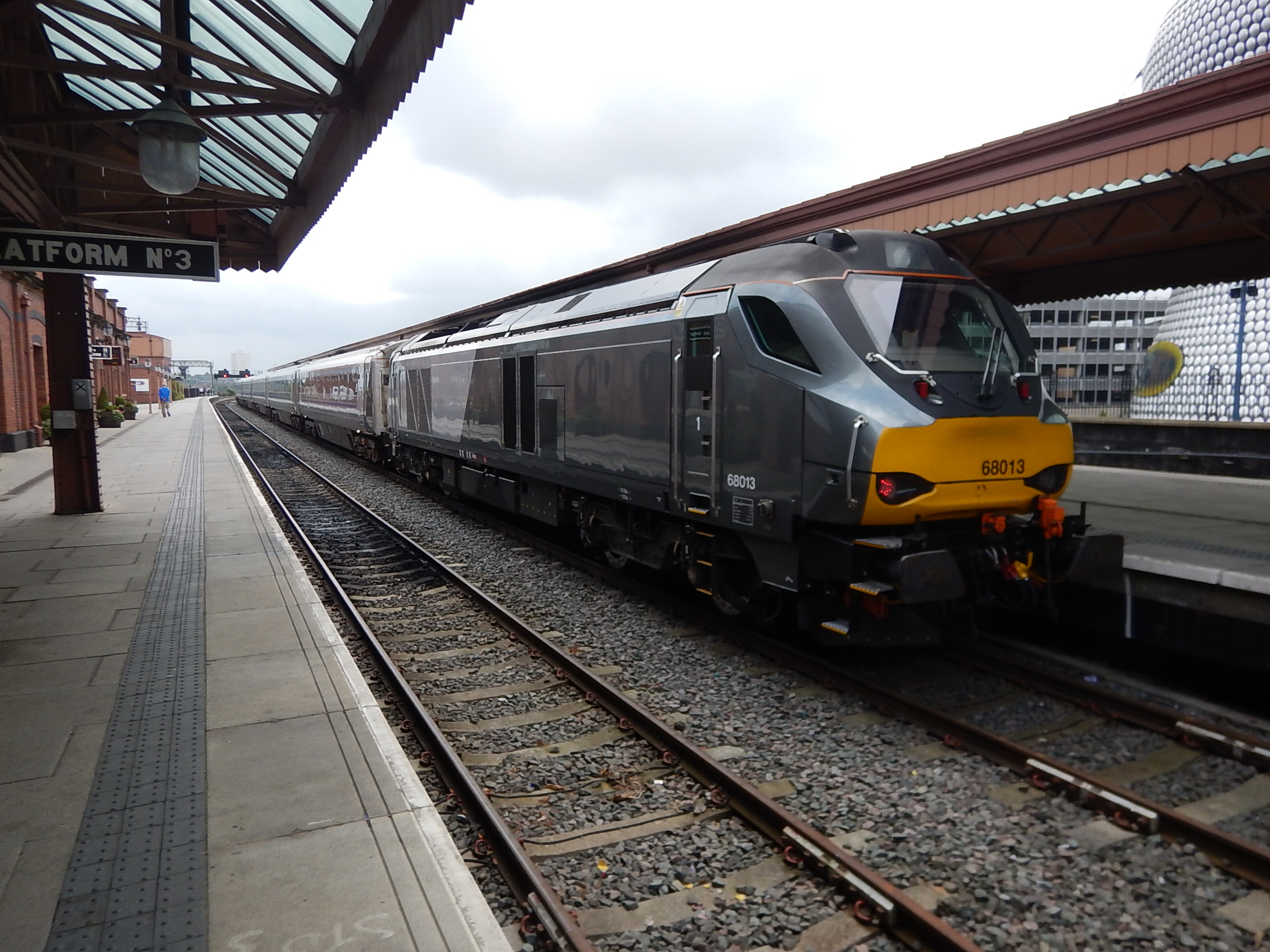
A Chiltern Main Line Train In Platform 4 At Birmingham Moor Street Station
Platform 5 on the other side of Platform 4 may have been reinstated, but there doesn’t seem to be any trains using it, as yet!
The map shows that there would appear to be space to open Platforms 3, 4 and 5, but could a clever architect squeeze in a Platform 6?
These pictures show the space for a possible Platform 5 and 6.
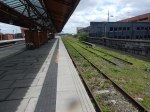
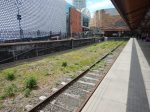
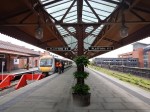
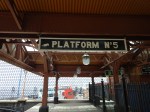

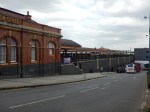
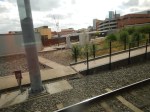
There would certainly appear to be space to shoe-horn two tracks and a new Platform 6 between the current Platform 5 and the retaining wall.
As the pictures show, Platform 5 is a platform that is long enough for any train currently envisaged that might call at Moor Street station.
Looking at the map of the station, it might even be possible to make Platform 6 even longer, if this were thought to be needed.
More Tracks Through Water Orton
This Google Map shows Water Orton station and the lines through it.

Lines Through Water Orton Station
If you look up services from Water Orton and Coleshill Parkway stations, they are certainly of the turn-up-and-wait-forever variety.
Water Orton has one train every two hours to Birmingham, but at least Coleshill Parkway has a train every half-hour.
Perhaps more lines through Water Orton will enable more trains through the area.
Looking at the rail map of Birmingham, it would be possible to go from Water Orton via the Camp Hill Line to Kings Norton and if the North to West chord was built at Bordesley to Moor Street.
It would certainly be the view of many, including myself, that a Parkway station needs a train or tram every fifteen minutes.
Kings Norton Upgrade
If the Camp Hill Line is reopened to passenger trains, then Kings North station will be the terminus.
This Google Map shows the station.
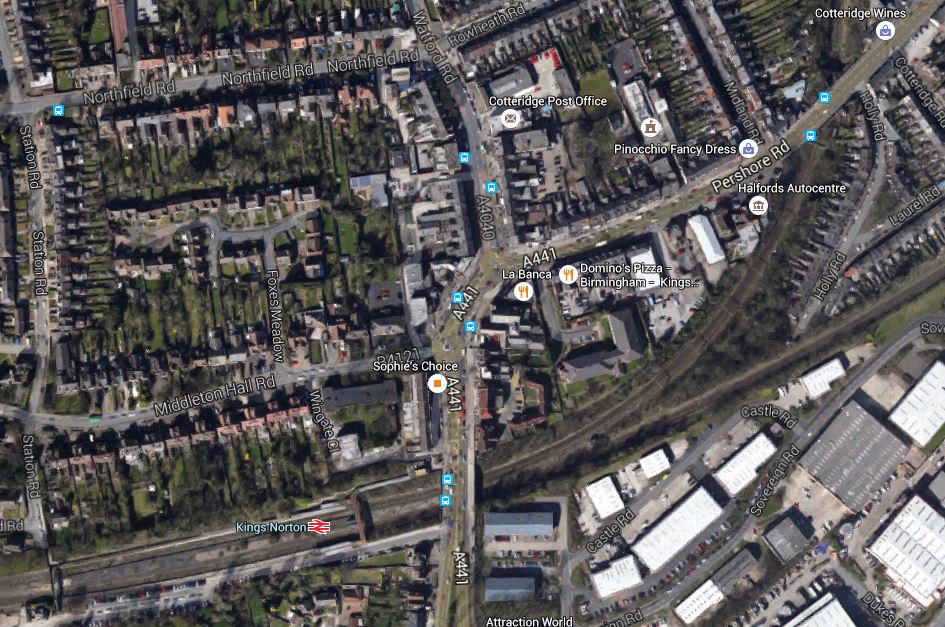
Kings Norton Station
It is a large station with an unused island platform in the middle.
These pictures show Kings Norton station.
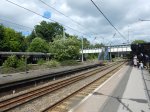
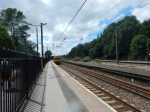
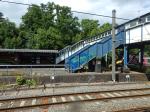
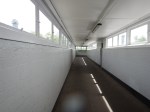
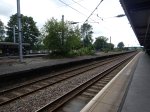
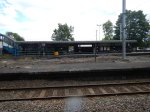
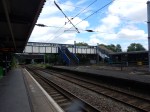
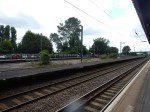
There is certainly work to be done.
But the station also has a lot of potential and space that can be utilised. It might even be possible to fit in a bay platform to turn trains back to Moor Street and New Street.
Birmingham Snow Hill Platform 4
Wikipedia says this about platforms at Birmingham Snow Hill station,
The present Snow Hill station has three platforms for National Rail trains. When it was originally reopened in 1987 it had four, but one was later converted in 1999 for use as a terminus by Midland Metro trams. The original tram terminus closed in November 2015, in order for the extension of the Midland Metro through Birmingham city centre to be connected. This includes a dedicated embankment for trams alongside the station, and will also include a new through stop serving Snow Hill. This will eventually allow the fourth platform to be returned to main-line use.
As the Midland Metro now has its own new platform outside the station, the fourth platform can soon be converted back to heavy rail use.
These pictures show the current state of the closed tram platform.

I don’t think that converting it back to heavy rail will be the most difficult of jobs.
Birmingham Station Connectivity
Although, not on the Network Rail infrastructure list, I feel that to gain the full benefits of HS2, then the line must be properly connected to Moor Street and New Street stations.
I can easily walk between Moor Street and New Street stations, but I do feel that Birmingham’s solution of using the Midland Metro as a link and to the Curzon Street HS2 station, is not the way to do it.
It needs some form of people mover. Perhaps a travelator would be better.
City Centre Ticketing
In Liverpool, a ticket to Liverpool stations, allows you to use the Underground to any of the other stations in the City Centre.
In London, many visitors by rail, add a Travelcard to their rail ticket.
Perhaps, in Birmingham, a ticket to Birmingham stations, should include the Midland Metro in the City Centre? Or a simple add-on for the Metro between Jewellery Quarter and Five Ways could be added for a few pounds.
At present, you have to buy a separate ticket. How visitor-friendly is that? At least a short journey is only a pound
If Birmingham is to make the most out of the opportunity of HS2, then they must use easy and understandable ticketing.
Chiltern’s Superb Trains
My trip down to Birmingham was in a Class 168 train, which although was a good experience for a diesel multiple unit, was spoilt as one engine went AWOL and we were late in to Moor Street.
But going home to London, I rode in what I think are one of the best long distance trains anywhere in Europe; Chiltern’s rakes of Mark 3 coaches pulled and pushed by a modern Class 68 locomotive.
- Nearly every seat gets a table and a window aligned to it.
- The seats are spcious and comfortable.
- The ride is the superb one, you always get from a Mark 3 coach.
- Trolley-service of drinks and a buffet on most services.
- Free wi-fi.
- London to Birmingham return for £19.20 with a Railcard.
- I’ve never travelled on Chiltern’s Mark 3 coaches and been unable to read my paper flat in front of me on the table.
The experience may be slower than Virgin’s, but give me Standard Class on Chiltern against First on Virgin every time between London and Birmingham.
The only problem, is that Marylebone station, isn’t as accessible as Euston from where I live. However, when Crossrail opens, times will be within a few minutes.
I can’t help feeling that Transpennine’s decision to use Class 68 locomotives and rakes of new CAF Mark 5 coaches across the Pennines, was influenced by the success of Chiltern’s flagship service and its superb rolling stock.
I’m looking forward to riding the CAF coaches in a few years, to see how they stand up to an almost forty year old British Rail coach.
I wonder how many Spanish engineers have ridden Chiltern’s trains?
I also feel that the Class 68 locomotive is an asset to a passenger service, in that so many diesel locomotives look dirty and smelly, but Class 68s seemed to have been designed to keep clean and also look how a locomotive should; powerful, purposeful and sleek.
For those, who don’t like that the trains are still diesel-hauled, there is even a Spanish solution for that, if the lines ever get electrified, in the shape of the new Class 88 electro-diesel locomotive, which is a sister of the Class 68 locomotive.
And of course, if Chiltern need some more trains and can’t find the Mark 3 coaches, they can always buy some new coaches from CAF.
Conclusions
It’s a very sensible plan and it will open up all sorts of possibilities for Birmingham.
The chords at Bordesley and the extra tracks through Water Orton would seem to open up a new route for trains across the city from Moor Street band Kings Norton to Water Orton and Nuneaton.
- New subsurban services could link Nuneaton and Kings Norton to Moor Street.
- Cross-country services might use Moor Street with a reverse, rather than New Street.
- Extra services from Moor Street to Nuneaton might take pressure off the heavily-loaded New Street to Birmingham route.
- How would the new station at Kenilworth station fit in?
But there are railways all over this area and I’m sure that the Bordesley and Water Orton improvements, will not be the last.
Already there is talk of reopening, the Sutton Park Line and the Stonebridge Railway.
I asked about Kenilworth station. I don’t know, but after Bordesley and Water vOrton are upgraded, there would be the possibility of a Warwickshire Circle, starting and finishing at Moor Street.
- Moor Street
- Solihull
- Warwick Parkway
- Warwick
- Leamington Spa with a reverse.
- Kenilworth
- Coventry
- Coventry Arena
- Bedworth
- Bermuda Park
- Nuneaton
- Coleshill Parkway
- Water Orton
- Moor Street
It would be a route, where several stations could be reopened or built from scratch. Leamington Spar incidentally already has a bay platform for the reverse.
I also think, that one of the biggest beneficiaries of all this will be Chiltern Railways.
Consider.
- Their two Birmingham termini of Show Hill and Moor Street are getting extra capacity.
- Moor Street will become a big terminal with two through and four bay platforms, all of which will be able to handle the longest Chiltern trains.
- Birmingham New Street station lacks capacity.
- The Birmingham New Street to Coventry route is seriously crowded.
- In Will Chiltern Railways Get A Second London Terminal At Old Oak Common?, I talked about Network Rail’s ideas to link the Chiltern route to the new station.
- Banbury station has been upgraded for more traffic.
- Chiltern will be running to Oxford station by the end of this year.
- Chiltern have plans in hand to run to Milton Keynes station.
We’ll certainly see extra services from London to Birmingham and possibly beyond, but will we see a triangular route going between London – Oxford – Birmingham – London?
It will depend on whether the passengers want it, but from Chiltern’s point of view, it might mean that their platforms in London, Oxford and Birmingham, and their trains, saw higher utilisation.
I suspect too, that the Oxford -Birmingham leg has more paths available and that Chiltern’s capacity problems are mainly at the London end of the Chiltern Main Line, especially now, that Banbury has been remodelled.
Chiltern Railways are an ambitious company and if they get a second terminal in London at Old Oak Common, they will certainly use it profitably.
I think that the Network Rail report shows that a few simple improvements, when thought through and executed with care can produce improvements not suspected in the original plans.
But all rail planning has to discount the London Overground Syndrome, where new stations, routes and trains, attract more passengers than originally expected.
 The Anonymous Widower