Vivarail D-Trains And The Heart Of Wales Line
I’d never really heard of the Heart of Wales Line until it was mentioned in this paragraph in this article on Wales Online about D-Trains running in Wales.
Vivarail spokesman Alice Gillman says the firm’s engineers believe the refurbished rolling stock would be suitable for lines in Wales including the Heart of Wales Line.
It certainly looks like a forgotten line that could certainly use some new rolling stock.
Reading the Wikipedia entry for the line, I come to the following conclusions.
- The line is mainly single track, but has been upgraded with four modern passing loops and can take freight trains that fir a loading guage of W5.
- The line is thought to be scenic.
- The passenger service is only a few trains a day and is mainly run by single coach Class 153 trains.
- It must have some horrendous operating problems, which could be expensive to handle.
It sounds to me, that this line is a very much underused asset, that if it was given a better train service could help to improve the lives of those in some of the most remotest parts of Wales. It might even bring more tourists to the area.
I must take a trip on the line.
In 2010, I took a train ride from Inverness to Kyle of Lochalsh and after that trip, I came to the conclusion, that that very scenic line needed more capacity.
But five years on there is still not enough diesel multiple units to give these lines an upgraded service.
So as reports are suggesting, could one or more D-Trains be used on the Heart of Wales line?
The journey takes just over three hours with a Class 153 Train, which has a top speed of 75 mph.
So a D-Train would unlikely be faster along the route, as it only has a top speed of sixty. Although, as there are 29 stations on the line, the D-train which has been designed for easy loading and unloading in London, may actually not be much slower overall.
Imagine a train service with these characteristics.
- A train with seats arranged in fours around tables by the window.
- Lots of space for bicycles.
- Fully-accessible for everyone!
- Something like Vivarail’s proposed catering system.
- A clock-face hourly service from Craven Arms to Llanelli.
All is possible with the right number of D-trains.
D-trains offer other advantages.
- As the D-trains don’t need the sort of specialist depot that most trains need, this must ease maintenance of the trains.
- More than one train, probably eases the problems of what to do if a train has a serious breakdown or hits a flock of sheep or a snow drift in the middle of nowhere.
- Don’t forget the novelty value of riding a refurbished London Underground train in some of the most rural parts of Wales.
- D-trains will be available by the end of 2016.
D-trains may never run on the Heart of Wales Line, but I can certainly see the reasons why Vivarail have thought seriously about the possibility.
Is Vivarail True Disruptive Innovation?
Disruptive innovation is defined like this in Wikipedia.
A disruptive innovation is an innovation that helps create a new market and value network, and eventually disrupts an existing market and value network (over a few years or decades), displacing an earlier technology.
I’ve always been a great believer in this sort of innovation.
When we started Metier Management Systems and created Artemis, project management was worthy, time-consuming and if a computer was used it was an expensive mainframe. So we took a small but powerful industrial computer put it in a desk, added a VDU and a printer to do the same PERT and financial calculations much faster and often much physically closer to where the answers were needed. I have heard argued that one of our reasons for great success in the early days of North Sea Oil, was that you could find space for an Artemis system in Aberdeen, but not for a mainframe. The city was crawling with dozens of our systems.
After Artemis, project management was never the same again!
If we look at the building of trains, it is supposed to be an expensive business, with large manufacturers like Alstom, Bombardier, Hitachi and Siemens make expensive complicated trains, that are virtually computers on wheels. But at a price and to a time-scale that is such, that say a train company needs perhaps some extra four coach diesel multiple units to support say a Rugby World Cup or Open Golf venue, there is nothing that can be delivered in a short time.
Over the last few years, disruptive innovation has been alive and well in the train building industry. In the 1970s and 1980s, we built a large number of trains and electric and diesel multiple units based on the legendary Mark 3 coach. Wikipedia says this about the coach.
The Mark 3 and its derivatives are widely recognised as a safe and reliable design, and most of the surviving fleet is still in revenue service on the British railway network in 2015.
It is truly one of the great British designs. My personal view is that the ride in a Mark 3 coach, is unsurpassed for quality by any other train, I’ve ever ridden, in the UK or Europe.
A Mark 3-based multiple unit also survived the incident at Oxshott, where a 24-tonne cement mixer lorry fell on top of the train. There were injuries, but no-one was killed.
So what has the Mark 3 coach got to do with disruptive innovation?
They are like a well-built house, that constantly gets remodelled and improved by successive owners.
The structure and running gear of a Mark 3 coach is such that it is often more affordable to rebuild and improve Mark 3-based trains, rather than order new ones.
If Terry Miller and his team in Derby, had not designed the Mark 3 coach and the related InterCity 125 in the 1960s, I suspect that UK railways would be in a truly terrible state today.
These trains still remain the benchmark against which all other trains are judged. Two journeys sum up the class of a Mark 3 coach.
- Travel in First and enjoy Pullman Dining on a First Great Western service between London and Wales or the West. Is there any better rail journey available without a special ticket in the world?
- Travel in Standard on Chiltern to Birmingham and enjoy the ride and the views from the large windows, in the style that the designers envisaged for all passengers.
But the Mark 3 coach has created this industry in the UK, that can take well-built old trains and turn them into modern trains, that are often the equal of shiny new ones from the factory.
So where do Vivarail fit in all this?
London Underground has always specified the best for its railways and expected the trains to last a long time. In some ways it had to, as when it depended on Government favours for new trains, it could not predict if the replacements would ever be forthcoming.
Until the 1980s, most trains were built by Metro-Cammell in Birmingham and regularly fleets have lasted for forty or fifty years, as they were built to handle the heavy use in London, where journeys can be over an hour of full-speed running with frequent stops and often with far more passengers than the trains were designed. Take a Piccadilly Line train from say Kings Cross to Heathrow in the rush hour, if you want to see the sort of punishment that London Underground trains are built to take. The last of these Piccadilly Line trains were built in 1977 and under current plans, they will have to stay in service to 2025.
The oldest London Underground trains still in regularly passenger service, are the Class 483 trains used on the Isle of Wight. Admittedly, they are running a service in a less-stressful environment after fifty years service in London, but the trains were originally delivered to London Underground in 1939 or 1940.
The London Underground D78 Stock, that has been purchased by Vivarail for conversion into the D-train, were first delivered in 1980, so they have only taken about thirty-five years of London’s punishment.
The trains were also extensively refurbished in the mid-2000s.
It also has to be born in mind, that although London works its Underground trains very hard, they also get first class servicing.
Several factors have all come together to create an opportunity for Vivarail.
- There is a desperate shortage of diesel multiple units all over the UK. Partly, this is because of a need to replace the ageing Pacers, but mainly because of the growth in passenger numbers and the reluctant of Government in the 2000s to invest in much-needed new diesel trains.
- Network Rail’s well-publicised problems with electrification, only makes the need for more diesel trains more important.
- A lot of trains will have to be taken out of service as they don’t meet the disability regulations.
- The UK’s world-class train refurbishment business, which has honed its skills on creating new trains from old for forty years, is ready for a new project.
- There is now a supply of well-maintained, corrosion-free D78 Stock, that may not be sexy, but are as tough as teak, that are surplus to requirements.
It should also be said, that train operators and passengers want more flexible and better specified train services on difficult lines that are unlikely to be electrified in the near future and are difficult lines on which to provid a decent reliable train service.
Read any of the serious literature about the D-Train and it shows that the engineers are taking the project very seriously and are thinking very much outside the box.
- Power units are based on Ford Duratorq diesel engines mounted on rafts under the train, with two to each power car.
- These rafts can be changed using a fork lift at a remote location.
- Flexibility of interior layout to suit the route.
- Extensive use of LED lighting, Wi-fi and other modern technology.
- The crash test has been released as a video. How often do you see that?
But perhaps this article from Rail Magazine entitled Catering for VivaRail’s rebuilt D-Stock, illustrates their innovative thinking better than ever.
The more I read about the D-train, the more I think it will surprise everybody.
It is true world class disruptive technology. And British technology too!
How To Work Outdoors
We all love working outside in the dark and wet, repairing things and perhaps digging holes.
Wouldn’t it be much nicer to do the work indoors in a workshop.
The problem is much worse on the railways, where when say you want to check rails, points or sleepers, you need to make sure the workers are protected from passing trains.
So I was intrigued to see this report on Rail Engineer entitled Video: Mobile Maintenance Train.
Talk about taking your shed with you and parking it over the problem!
It’s such a brilliant concept, I find it amazing that this hasn’t been standard practice for at least fifty years!
Do they have trucks like this, so they can repair potholes or accident damage on motorways?
The Curse Of The Coeliac Traveller
On Tuesday with my jaunt round the East Midlands, the weather played its part in that my intended pit-stop in Carluccio’s at Lincoln had to be cancelled because of the rain. This wasn’t too serious as I’d had a double-egg pot at Leon in Kings Cross before I left.
I could have got something in Nottingham before I went up the Robin Hood Line, but I decided to do the trip to Worksop first.
Unlike many other main stations like Birmingham, Cambridge, Manchester Piccadilly and Sheffield, there is no Marks and Spencer Simply Food, so there was nothing gluten-free to eat in Nottingham station. Except possibly salads and a banana, which I’ve eaten so much of on my travels, that aversion therapy has worked its evil magic.
After returning from Worksop, I had about forty minutes to get something to eat before catching the hourly train to Peterborough to get home. This was not enough time to have a meal in any number of places in Nottingham, so I decided to go to the city centre to get some sandwiches in Marks and Spencer. But they didn’t have any!
I was quite hungry by now, but luckily I found a Holland and Barrett, where I bought a couple of EatNakd bars to replace the two I’d brought from London and eaten en route.
After all I only needed to keep going for another couple of hours until London, where I could either eat at Kings Cross/St. Pancras or after a short bus ride to Islington.
I got to Peterborough with ease and then I sat for an hour in a train waiting for clearance to leave.
But it never did, as there had been someone killed by a train at Sandy.
So in the end hunger got the better of me and I left the train and walked in to Peterborough to get some supper in Carluccio’s.
I finally got home at eleven, which was about three hours later than planned.
I do wish that people wouldn’t practice assisted dying using trains!
It must be so much easier for non-coeliacs to travel, as they can pop-in to so many places to buy a sandwich or a burger.
Is The Vivarail D-Train On A Roll?
I have a Google Alert for Vivarail and over the last few days, it has produced quite a few hits.
This article for the Manchester Evening News is worth reading.
People are sceptical, but some of the reports from possible buyers and passengers, think that the Vivarail D-Train might just be able to step into the gap left by Pacers.
In Raw Material For A New Train, I gave my view and thought they would be a success.
The people who must be really worried, are the manufacturers of new trains. If Vivarail could make this concept work with something as old as the D78 Stock, could they do a job with trains built in the intervening years, that are now thought to be just a bit tired.
Is There A Pattern In The Performance Of Train Operating Companies?
I don’t care about the politics of rail nationalisation, as I just want my train to be on time and be safe, clean and comfortable.
I think this article from Rail Technology Magazine is showing a pattern of good performance.
If you read the article, it looks like two groups of train operating companies (TOCs) are doing better.
Locally controlled TOCs like London Overground, Merseyrail, ScotRail and TfL Rail, all seem to be doing well.
Two other TOCs that have a close relationship with their railway lines; C2C and Chiltern are also at the top of the pile.
I do wonder that as these two types of companies give passengers a quick and easy and often political way to complain, that they know if they muck-up they’ll be deep in e-mails, phone calls and letters, if they don’t perform.
I think this shows that we should increase areas of the country, where there are more arrangements of these types.
For instance, should short distance metro services in areas like Birmingham, Bristol, Cardiff, Glasgow, London, Manchester, Leeds, Nottingham and Newcastle, be under more direct control from the local authorities.
And also, where the operator has a virtual monopoly of track use, as does First Great Western to Bristol and the South West and Abellio Greater Anglia does in East Anglia and North Essex, should there be a more direct relation between track and train companies.
My belief is that people on the ground, be they passengers or rail staff, see problems and opportunities that are best served by a strong degree of local control or lins to those, who are providing the infrastructure.
This is well illustrated by the performance of TfL Rail on the Shenfield Metro, since being under the control of TfL Rail. The article says this.
And despite its good performance, other TOCs were close seconds, with TfL Rail raising its PPM dramatically compared to the same period last year – up by 8.5% to 96.9%. TfL also reported significantly less cancellations and lateness, from 4.9% in period 5 last year to 1.5% this year.
Previously, this line and the service was managed by Abellio, who are headquartered in Norwich.
In some ways it’s probably more about having a good management and communications structure for the train operating company, the track on which the trains run and the stations to where the trains go.
I also feel that a lot of the smaller developments in the UK rail system are locally-based projects like the reopening of branch lines and the creation of new stations, are projects that are better managed through a devolved rather than a centralised structure.
From Nottingham To Peterborough
I took an East Midlands Trains service to Norwich to get to Peterborough. I wanted to look at the Allington Chord. Wikipedia says this about the chord under its entry for the East Coast Main Line.
The Allington Chord was constructed near Grantham in 2006, allowing services between Nottingham and Skegness to call at Grantham without having to use the ECML, trains now passing under the line. This provided sufficient extra capacity for 12 additional services between Leeds and London each day.
This certainly illustrates the improvements gained, when these crossings of the East Coast Main Line are sorted. Could similar improvements be gained when the Newark Crossing is eliminated.
I took these pictures on the journey.

















My problems then started as I reported here in The Curse of the Coeliac Traveller.
Up And Down The Robin Hood Line
The Robin Hood Line was one of the first old railways to reopen.
It had been closed in the nineteen-sixties to save money, although parts were kept open to serve collieries and power stations.
It had then been reopened in the nineteen-nineties.
These pictures show the line as I rode from Hucknall to Worksop and back to Nottingham.







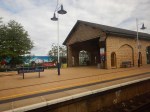

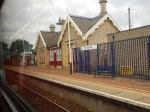


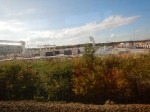
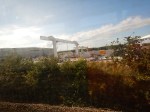
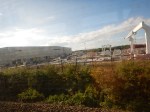
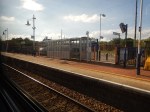
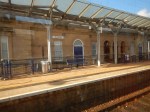
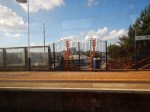
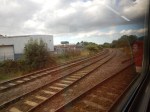
It is not an unattractive line, with the least attractive thing about the line being the Class 156 train.
Two branch lines are likely to be developed.
The proposed Ollerton branch leaves to the East, North of Shirebrook station.
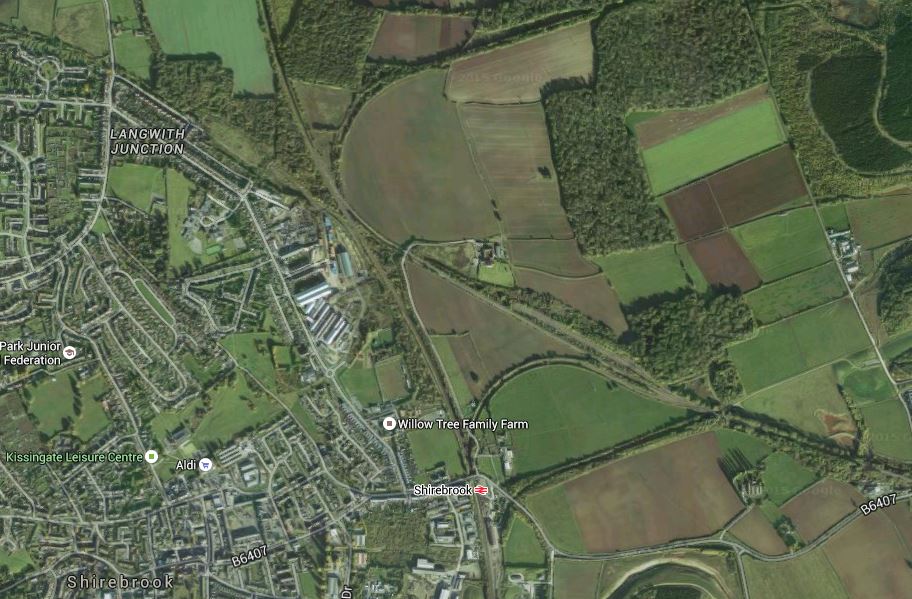
Shirebrook Station
And the Branch that leads to the Erewash Valley Line is just South of Kirkby-in-Ashfield station.
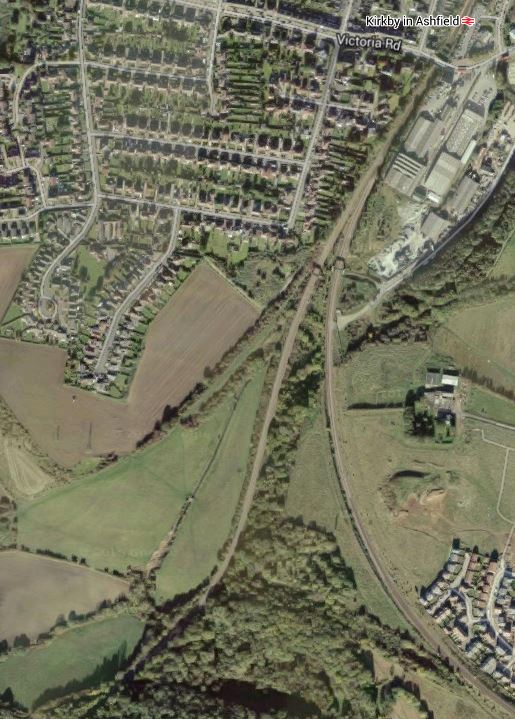
Kirkby-In-Ashfield Station
A large amount of development could happen to the Robin Hood Line in the next few years.
It has a lot of things going for it.
- The Government has backed the extensions to the line.
- The track needed is used regularly.
- The East Midlands and Nottingham in particular support new railways.
- The line could mean an increase in prosperity in the area.
- There’s no electrification needed.
- If they play their cards right, they should be able to rustle up some rolling stock, if various plans work out.
- The funding appears to be in place.
Network Rail also needs an early win and Robin Hood might just steal it for them!
The Newark Crossing
To improve services between Lincoln and Nottingham, the Route Utilisation Strategy (RUS) for the East Midlands recommends doing something about the notorious flat junction at Newark, which is best described as a cross roads, where a B-road crosses a motorway. This is said.
Of the remainder, the RUS recommends that the provision of a flyover at Newark is further developed in CP4 to refine the infrastructure costs and potential benefits. It is recognised that the development of the East Coast Main Line Intercity Express Programme service requirements beyond those proposed for LDHS services from May 2011, combined with freight growth beyond 18 freight trains per day on the east – west corridor, may drive the requirement for the flyover in CP5.
I shall now look at this Victorian railway relic.
This Google Map shows the location of the crossing.
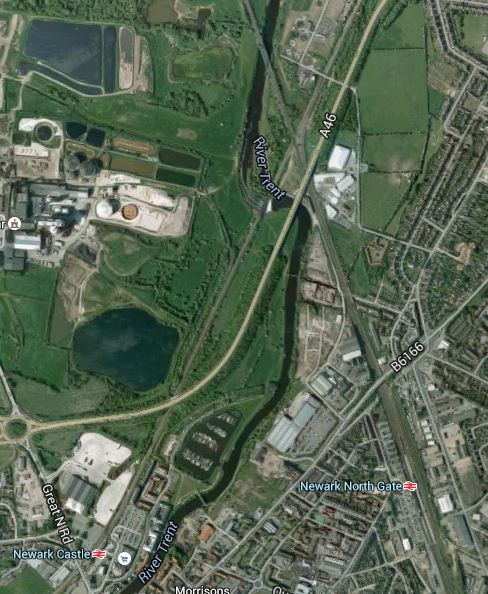
Newark Crossing
Newark Northgate station is on the East Coast Main Line, which runs top to bottom right on the map, whereas Newark Castle station is on the Nottingham to Lincoln line, which runs top to bottom left. To make matters worse the two lines cross by the River Trent and the A46, with the A1 a short distance to the East. These pictures were taken in quick succession from a train going from Lincoln to Nottingham.



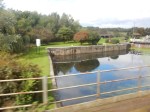
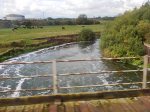
The Civil Servant who signed that the road off, should have the knighthood taken away, that he obviously got for making a decision, which should have included sorting the railway, by building a flyover to take both the railway and the A46.
If this crossing were to be sorted, it would deliver benefits all up the East Coast Main Line and on the routes that use it from Nottingham to Lincolnshire.
I can’t find anything on the Internet, but hopefully some Network Rail engineers have the envelopes and fag packets on the table.
In my view there are two possible solutions to the problem of the Newark Crossing. But whatever solution is chosen, these criteria must apply.
- The new crossing must be able to handle probably twenty long freight trains and upwards of a couple of dozen passenger trains pass every day, that need to cross the East Coast Main Line.
- It must be built without any long closures of the East Coast Main Line.
The first approach is the obvious one, where a flyover or an avoiding line on a different route, is built to allow trains on the Nottingham to Lincoln Line to cross the East Coast Main Line. But if it is so obvious and as I suspect that the place where it would be built has been surveyed and examined in great detail, then Network Rail must have a plan that has a reliable cost and time-scale assigned to it.
As the benefits of eliminating the Newark Crossing must be very well defined, it would therefore appear that the cost of building the flyover is way out of line, as otherwise this important project would be published somewhere on Network Rail’s web site.
This snippet from the RUS suggests the problem.
The gradient of the flyover will need to be able to accommodate the freight trains travelling east – west along this corridor. A key geographical constraint is the proximity to the River Trent and the A1 trunk road which adds to the overall construction cost for the flyover.
As freight trains and especially those going from East to West, will only get longer and heavier, there will have to be a large margin for increasing weight and length built in to any design for the crossing, which not only crosses the East Coast Main Line, but the River Trent. The river probably kills off any chance of a dive-under.
The other approach is that Network Rail are working on a radical plan, that perhaps uses some of the many Nottingham rail lines to completely by-pass the Newark Crossing. Trains could cross the East Coast Main Line on either the Allington Chord, North of Grantham or where the High Marnham Test Track crosses South of Tuxford.
A Very Wet Stop At Lincoln
I had intended to have a good lunch at Lincoln and go up the hill to look at the cathedral.
But the weather put a stop to that and I just went to see the progress on the two level crossings in the area. This Google Map shows the area of the station and the two crossings that are being given step-free footbridges.
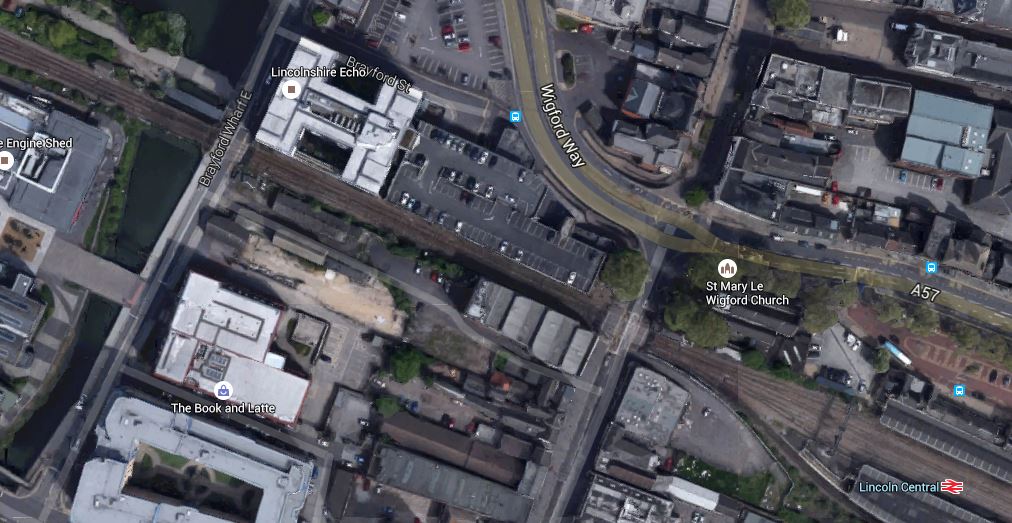
Lincoln Level Crossings
These are some of the pictures I tried to take.

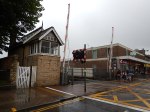



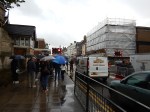

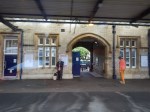
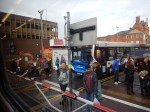
Progress doesn’t seem to be very fast.
It will be interesting to see if Network Rail’s solution makes things easier. This Google Map shows the southern part of Lincoln.
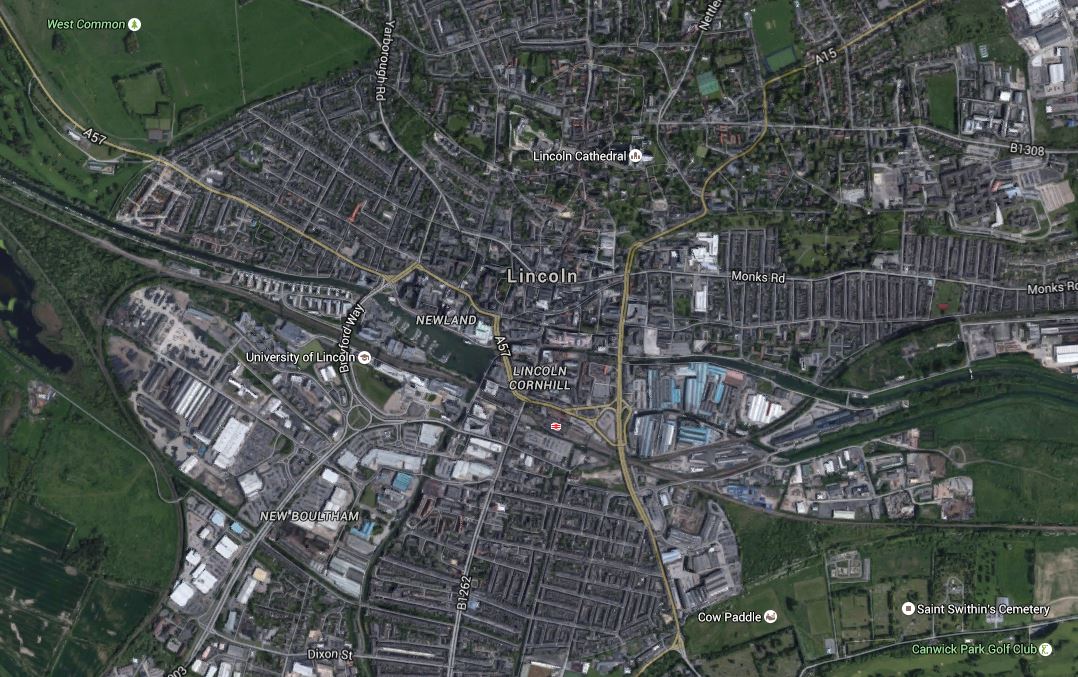
Lines Through Lincoln
The lines come into the City and through the station on an East-West axis. You can just make out the scar of the Lincoln Avoiding Line, which used to allow trains to by-pass the level crossings. Together with Lincoln St. Marks station, it closed in the 1980s.
According to Wikipedia, train services run between Lincoln and
- Newark North Gate and Leicester via Newark Castle and Nottingham using the Nottingham to Lincoln Line (“Midland line”);
- Sheffield via Retford and direct to Doncaster via the Doncaster to Lincoln Line (“Great Northern and Great Eastern Joint Line”).
- Peterborough via Sleaford via the Peterborough to Lincoln Line (“Great Northern and Great Eastern Joint Line”)
- Grimsby Town via Market Rasen, with occasional journeys to Cleethorpes
Most of these services operate on an hourly or two-hourly basis although some services to places like Nottingham might go to two trains per hour.
There are also once daily services Monday to Saturday to London St Pancras operated by East Midlands Trains and to London Kings Cross operated by Virgin Trains East Coast.
Lines to Doncaster, Newark, Nottingham and Sheffield run to the West and lines to Grimsby, Peterborough, Skegness, Sleaford and Spalding are to the East.
You can understand, why the Route Utilisation Strategy (RUS) for the East Midlands felt that services could be improved by joining services together in Lincoln to free up platform space. At present some Grimsby Town services go though Lincoln to Newark North Gate.
It’s certainly a tricky problem at Lincoln and I can’t help feeling that at some time in the future, there’s going to have to be a solution that takes freight trains away from Lincoln High Street.

