Frinton-on-Sea Station
My family has had a typical relationship with Frinton, where it has been the butt of several jokes. But then C did get the odd nasty letter after the story of The First Off Licence In Frinton.
I dread to think what would happen to a lawyer doing something like that case these days.
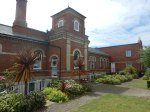
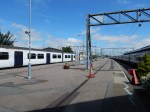
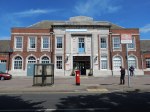
I finished my walk at Frinton-on-Sea station, where I took these pictures.
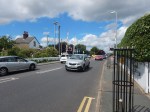


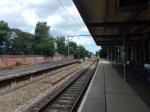
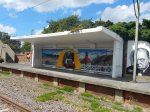


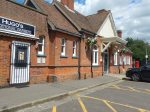
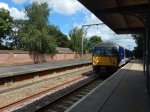
Note.
- You can clearly see, where the second track used to be.
- Trains always use the Southern platform.
- Frinton has rather a retro taste in artwork.
- The catenary seemed to be not of the best quality.
- The station has a proper booking office.
- Like Walton-on-the-Naze station, the platform seems to be able to accommodate eight-car trains.
- I didn’t see anywhere to park a bike. According tom this station facilities page, there are spaces for six.
According to Wikipedia, it would appear that both Walton-on-the-Naze and Frinton-on-Sea stations get about a hundred thousand passengers a year. Kirby Cross station, the only other station on the branch gets roughly four times as much.
This Google Map shows the station and its location.
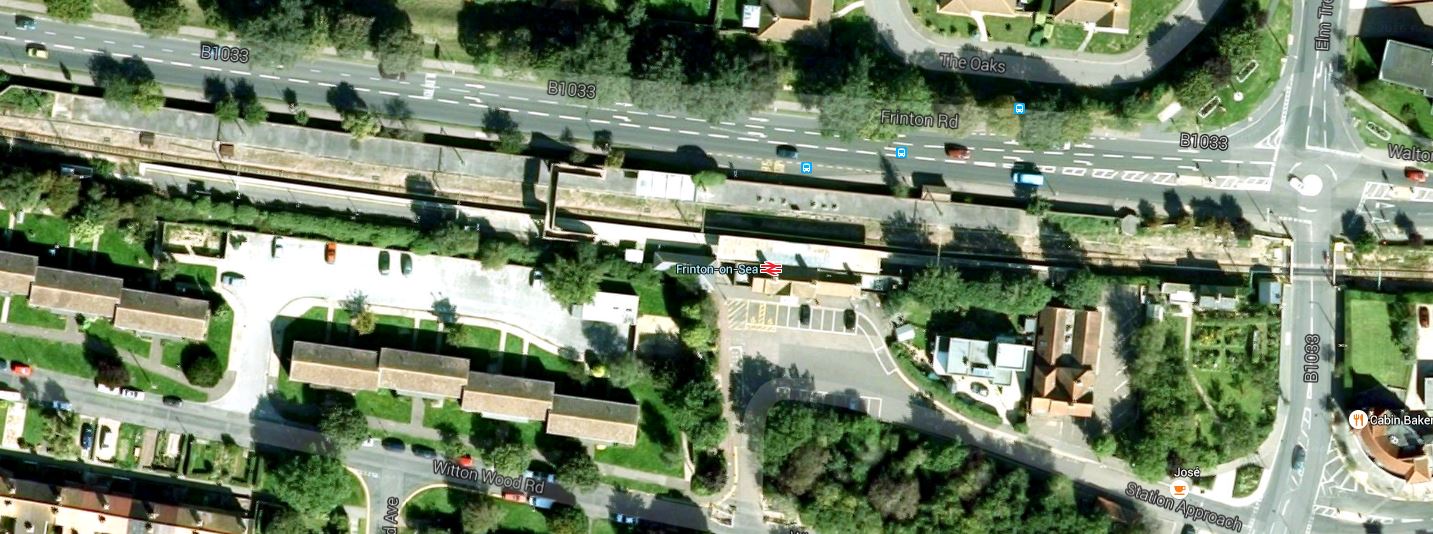
Frinton Station
A One-Sided Station
Note how one-sided the station is, with little except the unused platform and the road on the North side of the track. The station buildings with their traditional barber and the car park are all on the South side of the track.
I assume that anybody coming rom the North side and wanting to get a train on foot or on a bicycle has to go across the level crossing and round into the station.
In When Is A Train Not A Train?, I proposed running lines like this under tram rules.
This station would be ideal, as obviously most passengers arrive on the side with a plattform.
It could even have a light-controlled walk-across the track by the level crossing to allow passengers to cross to and from the north.
Electrifcation
I’m no electrification expert, but as an Electrical Engineer by training, I do feel that the wires, I saw at both Frinton-on-Sea and Walton-on-the Naze stations have seen better days and are probably up for replacement in the next few years.
If as I expect that the next East Anglia Franchise orders trains with the possibility of on-board storage, then I believe that instead of renewing the wires to Walton, the shuttle trains to Thorpe-le-Soken and the the direct Liverpool Street trains, could use stored energy on the Walton Branch.
They would charge their batteries, when running between Thorpe-le-Soken and Colchester.
Replacement of the electrification on the five mile long branch would conservatively cost several million pounds and need ongoing specialist maintenance. The money saved would surely pay for the onboard energy storage on the trains needed for the branch.
Removal of the electrification would give the following benefits.
- The branch would be free of high-voltage electricity.
- Stations could be of a simpler design.
- Trains would be quieter with no pantograph noise.
- Regenerative braking with all its electricity saving would be enabled.
- The track would be simpler, with less to go wrong.
- The line would be without unsightly wires.
But the biggest benefit would be that overall the line could be much safer.
New Track
But removal of the electrification would give other advantages, as any new track would not need to be electrified. New track might include.
- Provision of a siding at Walton-on-the Naze, where the second track used to be.
- Provision of a proper passing loop at Kirby Cross station.
- Reopening of Platform 3 at Thorpe-le-Soken station.
- Installation of a chord to allow trains to go from Walton-on-the-Naze to Clacton-on-Sea directly.
Whatever is done with respect to track, will greatly improve the service on the branch.
Conclusion
I believe that in a few years time, a visitor to Frinton-on-Sea station, will find it very different.
But probably very much better.
However, if the line is run by silent electric trains, will their curiosity bring too many visitors to |Frinton, for the residents’ liking?
Walton-on-the-Naze Station
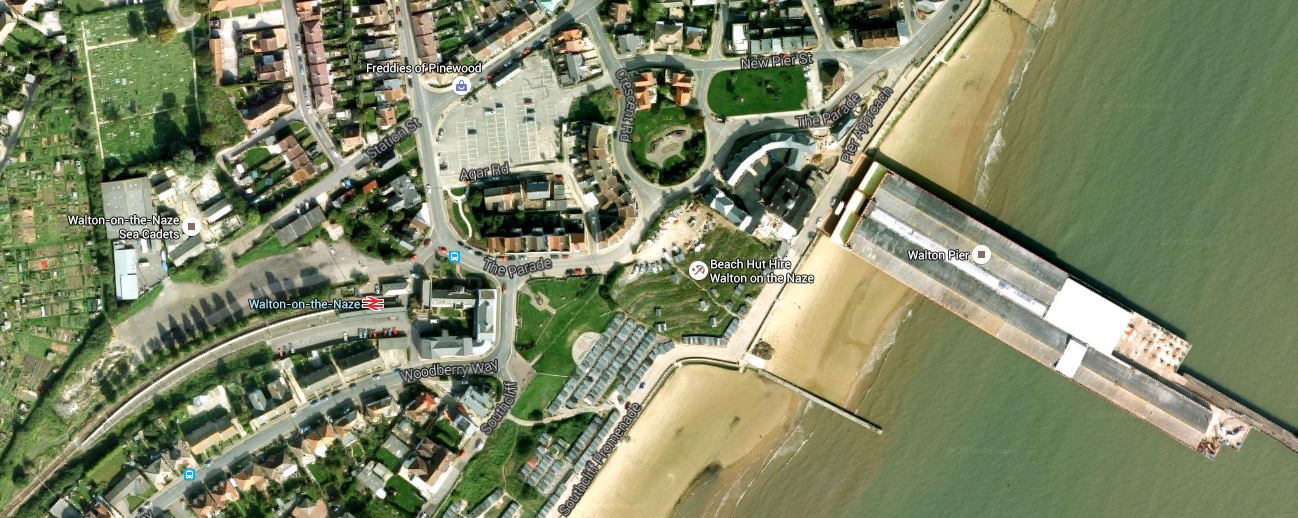
As a terminus of the Sunshine Coast Line, Walton-on-the-Naze station has a certain level of importance.
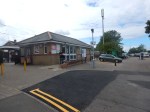
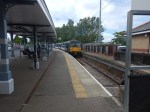

This Google Map shows its location with respect to the town and Walton Pier.
Note.
- The long curving platform in the station, which can certainly accommodate an eight-car train and might manage twelve-cars with a bit of stretching.
- The rather small station building with a neat and compact booking office inside.
- There would appear to be a very rudimentary level of facilities with no coffee stall or shop.
- The location isn’t too bad, but doing anything spectacular would probably be difficult.
- The Off Peak frequency of one train per hour, is probably half what is needed.
Services to London Liverpool Street station usually rely on changing at Thorpe-le-Soken station for a train from Clacton and take around one hour forty minutes.
There are also two direct trains in the morning.
- The 07:38 is a stop-everywhere on the Sunshine Coast Line and to Shenfield, which takes two hours and fifteen minutes.
- The 08:00 is a fast limited-stopper to Shenfield that takes one hour and thirty-six minutes.
Is this all they want to run?
All other trains require that change at Thorpe-le-Soken.
If the operator wants to increase the number of trains to London in the morning peak, they also have the problem, that it would appear, that the only place to stable trains overnight is at Clacton and Colchester, although I suppose one train can be stabled in Walton station.
Looking at the timetable, it appears that the shuttle train works hard in the Peak partly because of the limitations of the line’s layout.
- Only one terminal platform at Walton.
- No sidings to store trains.
- An extra platform at Colchester Town station would help.
- Do limitations in the layout at Thorpe-le-Soken station contribute?
In addition capacity problems on the Great Eastern Main Line make everything a lot worse!
But other things help.
- At least Kirby Cross station may or could have a passing loop.
- Trains only take twelves minutes to go between Walkton-on-the Naze and Thorpe-le-Soken. So two round trips an hour could be possible.
- The signalling was only installed in 2009 and I would jope it was future-proofed for possible developments.
I suspect Network Rail have a few ideas to increase frequencies on the branch.
Look at this Google Map of Thorpe-le-Soken station, with the lines running to the East and splitting into the two coastal destinations..
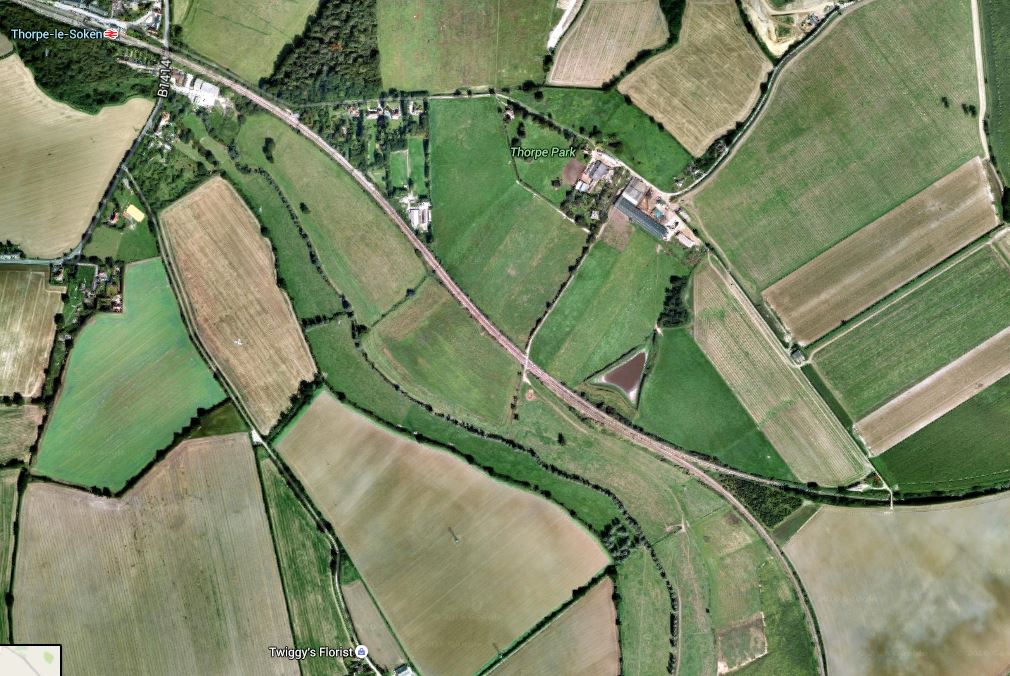
Thorpe-le-Soken Station
I know this is only speculation on my part, but Wikipedia says this about Thorpe-le-Soken station.
It has two platforms forming an island platform that is accessible via a footbridge. There is a clearly visible platform and trackbed on what would be platform 3; this is continuous with the other stations on the Walton branch. One of the double tracks that were originally on the line to Walton has been completely taken up.
This Google Map shows a close-up of the station.
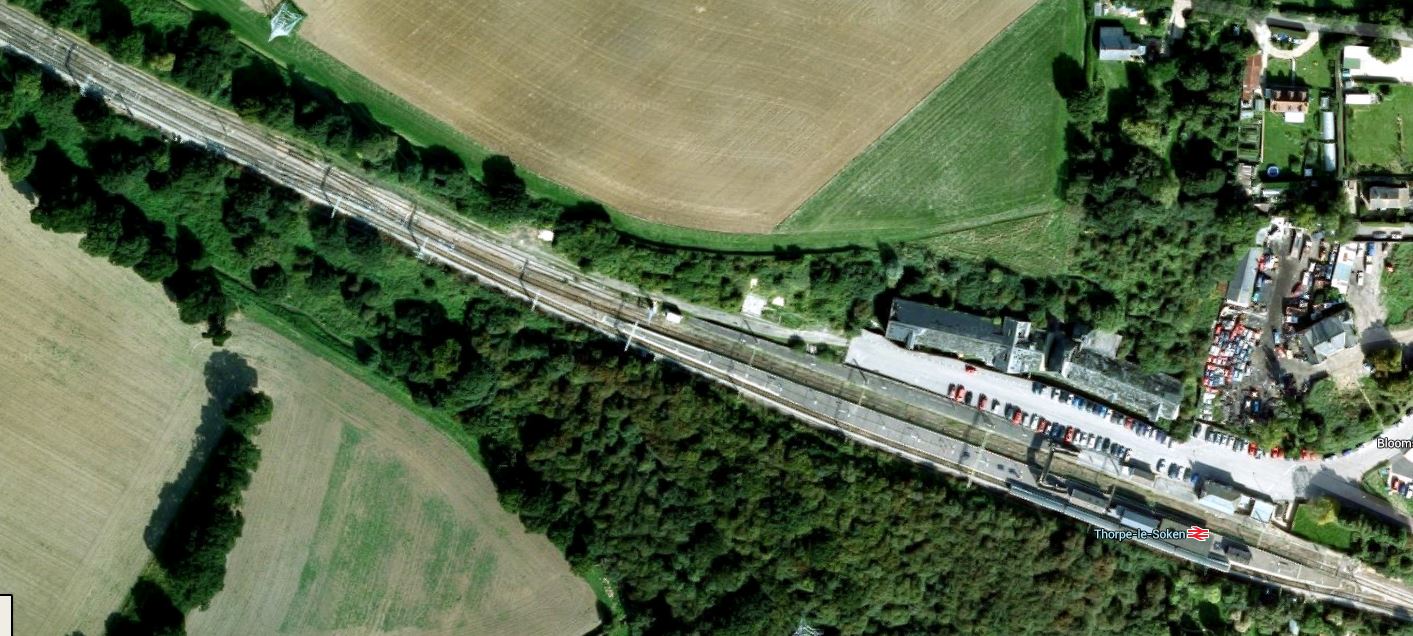
Thorpe-le-Soken Station – Close-Up
So it would appear that the station could be modified to provide a second platform for handling trains on the Walton branch. I suspect Network Rail have investigated this, as it must help towards increasing the frequency on the Walton Branch.
There must also be the possibility of building a single-track chord between the two branches to the East of Thorpe-le-S0ken station.
Such a chord would enable direct services if required, but it would probably be more useful for moving empty stock between Walton station and the sidings at Clsacton.
My conclusion, is that in a few years time, the service to Walton-on-the-Naze and Clacton-on-Sea will be very much better than it is today.
Both terminii will get at least two trains per hour to and from Colchester, with all trains being either to and from London or with a cross-platform change with a London train.
A Walk Between Walton-on-the-Naze And Finton-on-Sea Stations
One of the reason’s I went to Walton-on-the-Naze station today, was to see if I could have a nice walk in the sun along the sea to Frinton-on-Sea station and then take the train home.
This Google Map shows the two stations and the sea.
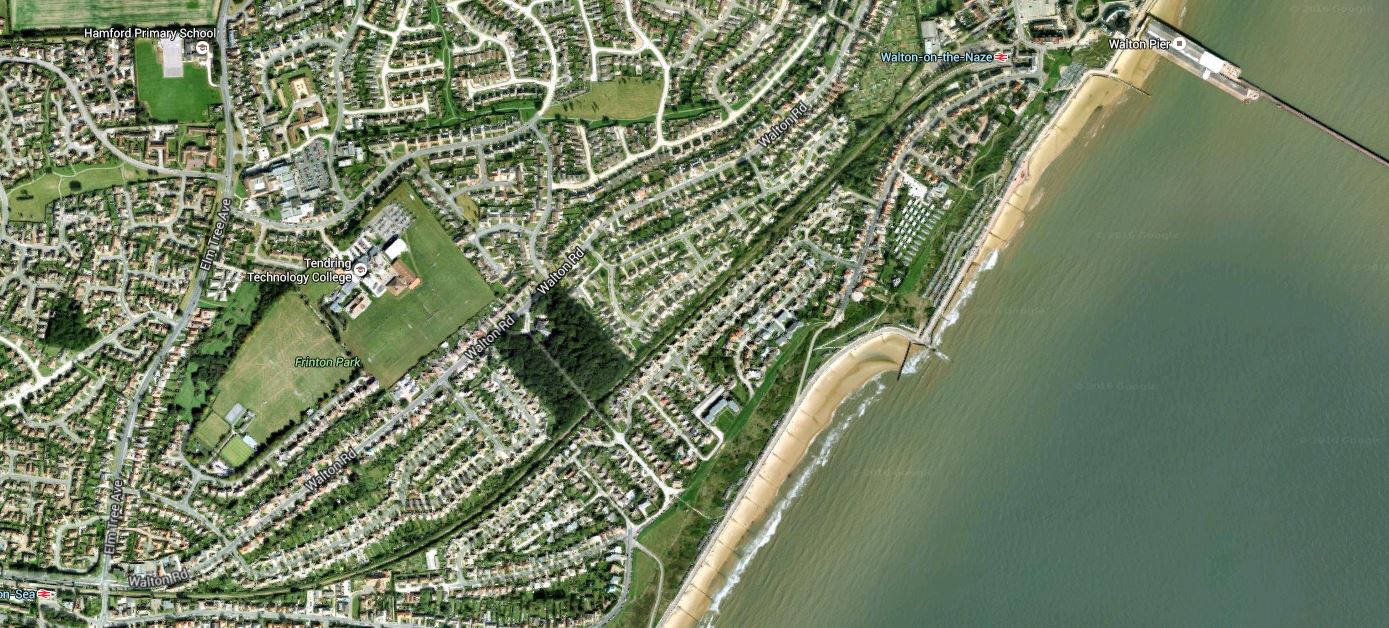
A Walk Between Walton And Frinton Stations
Walton-on-the-Naze station is in the North-East corner of the map by Walton Pier and Frinton-on-Sea station is in the South-West corner.
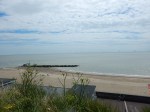
I walked along the promenade, which goes all the way to Clacton-on-Sea, between the beach-huts on the shore and the wide sandy beach and the sea.
I took these pictures as I walked.


Note.
- The number of Thames Sailing Barges in the sea. I saw five, but others saw six.
- The beach welcomes dogs.
- The memorial to PC Brian Bishop.
- I got lost walking from the beach to Frinton-on-Sea station. There were no signs or maps.
The walk took me about ninety minutes. Unlike at Clacton, I didn’t pass a decent cafe. I should have had lunch before I left Walton.
When Is A Train Not A Train?
Take a modern train, say something like a Class 172 DMU or a two-car version of say a Class 710 EMU.
The size and weight of these are very similar to that of one of Sheffield’s trams.
Many, if not all, trams in the UK run to a set of rules, which allow the following.
- Running at up to 50 mph on a dedicated track, which can be either single or double track.
- Running at slower speeds through City Centres and amongst pedestrians, as they do through Birmingham, Blackpool, Croydon, Edinburgh, Manchester, Nottingham and Sheffield
- Trams are driven, by a trained driver, who takes notice of everything and everybody around the tram.
- Passengers can cross the track in designated places provided they keep a good look-out.
- Passengers can only board a tram at a designated stop.
- All rail vehicles run to the same rules.
The rules must work, as you don’t often hear of trams having accidents with pedestrians. In fact fourteen people have died in accidents with modern trams in the UK since 2000. The rate seems to have dropped in recent years, so are drivers getting better and pedestrians learning how to live with the trams?
I believe that in Zwickau in Germany, local trains, run on the tram tracks in the City Centre. There’s more on it under Vogtlandbahn in Wikipedia.
So could some branch lines be run according to tram rules, but using standard modern trains, like Class 172 or Class 710 trains?
In A First Visit To Clacton, I said this about the Walton-on-the-Naze branch of the Sunshine Coast Line.
I do wonder whether some branches like the short one to Walton-on-the Naze could be run to tram rules using on-board energy storage. It might enable stations to be built step-free without electrification, lifts and bridges, provided trains kept to a safe slow speed.
In an ideal system, the rules could be.
- No electrification. Zwickau uses diesel vehicles, but ones using on-board energy storage would be ideal.
- Trains do not exceed an appropriate slow speed. Zwickau uses 80 kph.
- Step free access from platform to train.
- All trains on the line run to the same rules.
- No freight trains.
The advantages would be.
- There is no electrification.
- Signalling is standard railway signals and rules. Often routes would run under One Train Working, which is very safe and well proven.
- Many routes could be built as single-track without points and like the Sudbury branch trains would go out and back.
- DMUs would be exactly, the same as others of their type.
- EMUs would be too, but would have on-board energy storage.
- Extra stations could be added to the line, by just building platforms.
- The line could perhaps be extended past its current terminus.
I must get to Zwickau and see how the Germans do it.
A few examples of lines that could run to these rules include.
- Sudbury Branch
- St. Ives Branch
- Walton-on-the-Naze Branch of the Sunshine Coast Line
- Windermere Branch
Whether some of these would need it, is doubtful. Some though, like Sudbury and St.Ives, terminate as a single platform in a car park.
The Felixstowe Branch certainly couldn’t as it has lots of freight trains, although the final section, from where it branches off the line to Felixstowe Port could.
I said that no freight trains could run on the routes, but those devilish Germans have designed a freight tram that runs in Dresden to supply the Volswagen factory in the city. It’s called a Cargo Tram.
Could this be a way of bringing freight into a City Centre? as I said in The LaMiLo Project, this type of thinking is in the minds of planners.
A First Visit To Clacton
Despite living quite close to Clacton for perhaps about thirty years of my life, I’d never been to the town before today.
I needed some sun and felt that a visit and a walk along the front was in order.
Since the Shenfield Metro train service through East London to henfield has been run by TfL Rail, getting to places like Clacton and Sudbury, as I did, a couple of weeks ago, has become a lot cheaper.
Sudbury cost me £11.70 return, and Clacton today was £14.25! As Clacton is seventy miles from London, surely that is good value!
These are of some pictures I took of the trip from the time I joined the Sunshine Coast Line at Colchester.

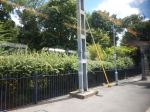


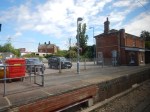
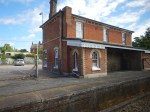










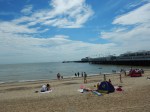
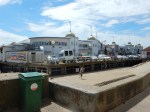


Note.
- The stations on the branch look reasonable, although Thorpe-le-Soken station could do with improvements.
- According to a local, the front at Clacton has had a recent makeover.
- There is a maintenance depot for the trains at Clacton.
- The line is an electrified double-track, although the branch to Walton-on-the-Naze and Frinton-on-Sea is only a single-track.
- I must admit to being surprised at the size of Clacton station with four platforms capable of taking twelve-car trains.
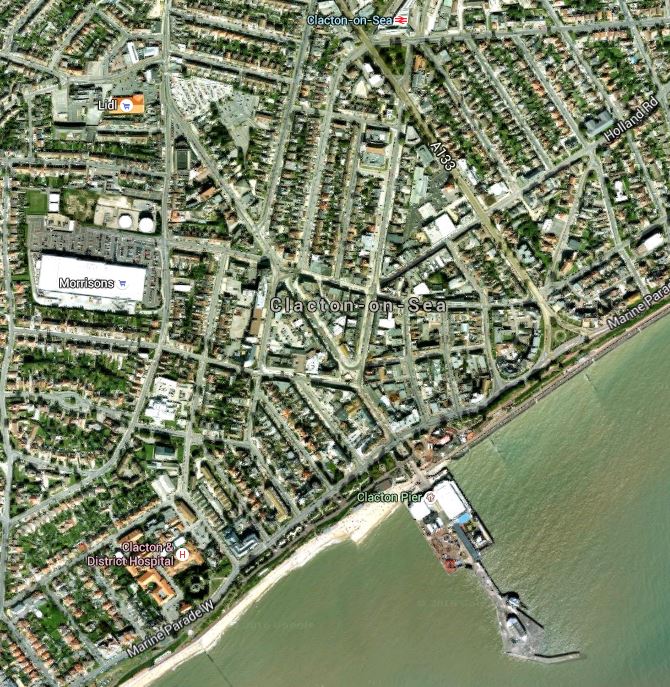
This Google Map shows the route where I walked.
Clacton
I walked down from the station to the sea front, along the promenade to the Pier and then back up to the station. It was virtually flat all the way.
One of the reasons, I went to Clacton was to look at the train service and see if it is likely, than the new franchise will improve it.
- As I said earlier, most of the stations I saw are in reasonable condition, although some may need step-free access.
- Thorpe-le-Soken station would appear to need improvement.
- According to Wikipedia Abellio has plans to improve stations at at Alresford, Kirby Cross and Weeley
- It is still possible to see the remains of the second track to Walton at Thorpe-le-Soken station.
- Generally, the Off Peak service to Clacton and Walton is one train per hour.
- Going to Clacton, I rode in an acceptable Class 360 train, but going back I was in a Class 321 train.
- Signalling on the Sunshine Coast Line was modernised a few years ago, but what is the state of the electrification?
- Colchester Town station is served by a spur from the Sunshine Coast Line, which has a low speed limit because of sharp curves.
There is certainly scope for improvement.
These are a few notes on what can be done.
Colchester Town Station
Wikipedia says this about the station.
As of 2013 there is only one platform, but there is space for a second which would make possible a more intensive service on the Sunshine Coast Line. To the east of the station, Colne Junction is the western extremity of a triangle which gives access towards Colchester station to the west and Hythe station to the east. The curve to the north from Colne Junction to East Gates Junction is sharp, with a continuous check rail which necessitates slow passage.
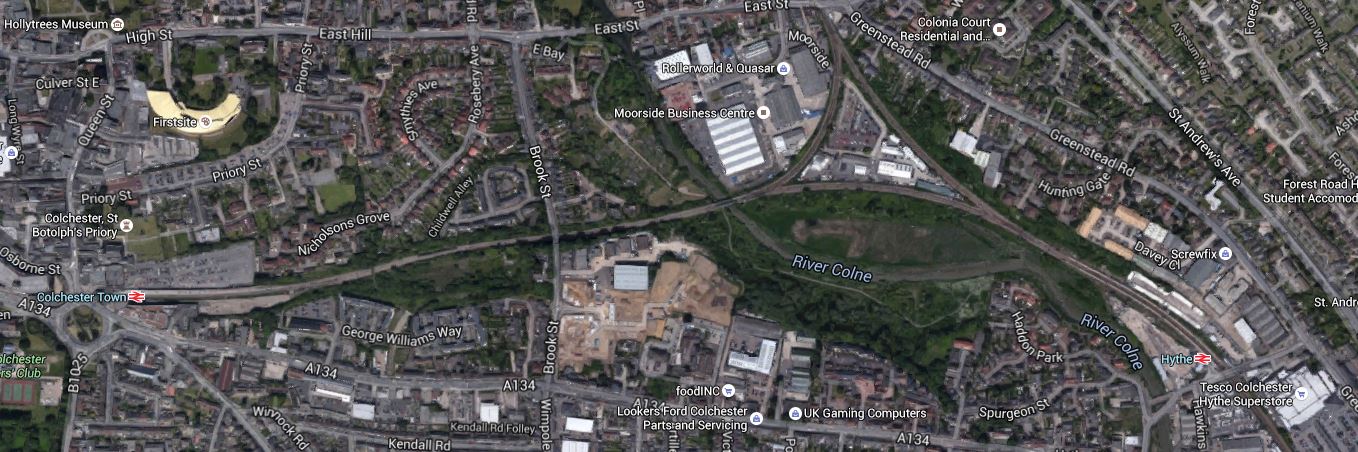
This Google Map shows Colchester Town station and Colne Junction.
Colchester Town Station And Colne Junction
Colchester Town station is at the Western side of the map and the lines lead out of the station to the triangular Colne Junction.
As the map shows, it is a much sharper curve to turn North than go to the Sunshine Coast.
The other station shown at the |Eastern side of the map is Hythe station, which is on the route to Clacton and Walton.
I suspect that there have been many sensible ideas to improve services through Colchester Town station, but that as train services in East Anglia have always had a low priority, nothing has been done.
These pictures show Colne Junction from a train between Clacton-on-Sea and Colchester.



I was surprised to see that all sides of the junction are double-track.But not surprised to see a collection of second-rate industrial and Royal Mail development in the middle of the junction.
An absolute minimum of improvements would be.
- Improving the curve to the North at Colne Junction, so that there is a speed increase for trains going to and from Colchester and towards London, that serve Colchester Town and the Sunshine Coast Line.
- A second platform at Colchester Town station.
- Opening Colchester Town station on Sundays.
I will be interested to see if improvements are proposed in the new East Anglia Franchise.
New Trains
In Could Class 387 Trains Do Norwich In Ninety And Ipswich In Sixty?, I wrote that to obtain these timings, North of Chelmsford, all trains must be capable of holding a 100 mph line speed or perhaps even 110 mph.
The Class 360 trains might be fast enough, but there are rumours in the Derby Telegraph, that a new fleet of Bombardier trains will be ordered, to fulfil a requirement in the new franchise agreement.
If a version of something like a Class 710 train is ordered, it could have the following characteristics.
- Four-car trains, able to run in four, eight and twelve car formations.
- 100 mph or 110 mph line speed.
- Regenerative braking.
- Provision for on-board energy storage.
On the Sunshine Coast Line, the trains would not use the onboard energy storage for primary traction, but to save energy, as I don’t suspect the line has been updated for regenerative braking.
These trains will certainly provide a better passenger experience. They could also be faster between Liverpool Street and Colchester.
Electrification
The electrification looked to be in good condition, but judging by the design, some of it, is fairly elderly.
I also have my doubts as to whether the overhead wires can handle regenerative braking. Use of regenerative braking in the UK have shown energy saving around 15%, but it does need a more expensive infrastructure.
So will we see, a project to renew the wires, transformers and other electrical equipment, as has been seen on parts of the Great Eastern Main Line?
I think we will, but the operator could use on-board electrical storage in new trains to simplify the electrification.Instead of returning braking energy through the overhead wires, it would be stored on the train for using the train to get started again.
One idea that could happen, is that to appease the sensitive souls in Frinton, that the Walton-on-the-Naze branch could be run using onboard energy storage to eliminate any pantograph noise. After all the branch is only five miles long. But that would be five miles less of overheasd wire to maintain.
I do wonder whether some branch lines like the short one to Walton-on-the Naze could be run to tram rules using on-board energy storage. It might enable stations to be built step-free without electrification, lifts and bridges. I wrote about Thurston station, where they have a walk across with lights in Two Solutions To Make Crossing A Railway Safe.
Track Improvements
As with Colne Junction, I suspect that there are some long-standing ideas to increase the line speed from the current 40-90 mph on the Sunshine Coast Line.
Have Train, Will Travel
This article in the underland Echo is entitled Metro bosses unveil plans to extend network, including direct link between Sunderland and South Tyneside.
This is the opening couple of paragraphs.
Ambitious plans to extend and expand the region’s rail and Metro networks have been drawn up by public transport bosses.
The scheme – to be presented to the North East Combined Authority (NECA) – could see a direct link between Sunderland and South Tyneside and the network extended as far as Washington and Peterlee.
It is a comprehensive plan, that takes note and advantage of the best practice and technology from around the world.
The Proposed New Routes
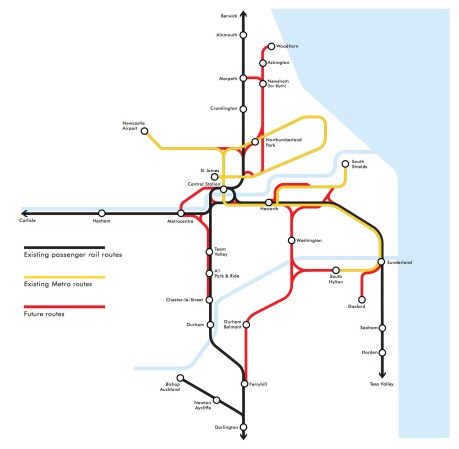
Plans for the Tyne and Wear Metro include.
- Sunderland City Centre to Doxford Park using the route of the former Hetton Colliery Railway.
- New Routes From South Tyneside by linking the South Shields and Sunderland routes, using an existing single-track railway in the region of Tyne Dock.
- A Wearside Loop can be created to serve Washington using existing rail routes.
- The Leamside Line could be used as a new Metro route.
- Re-electrification of Sunderland to 25 KVAC would give advantages to Network Rail and allow Metro services to go South.
- Dualling of the track through South Tyneside.
Every plan seems to have serious element of using former and existing routes in a creative manner.
This map shows how the network could look in a few years.
The Metro Has A Touch Of The Karlsruhes
What many forget about the Metro, is that it some of its operation on the Sunderland route is based on a modified form of the Karlsruhe model, where heavy rail passenger and freight trains, share tracks with the Metro.
I was surprised once on a station on the Metro to see a Grand Central High Speed Train come through.
The last two improvements listed above; 5 and 6, use this capability.
The Durham Coast Line runs from Newcastle to Middlesborough and the East Coast Main Line, via Sunderland and Hartlepool. The only electrified section of this line is that which is used by Metro trains.
If new Metro trains could run on their current 1500 VDC and 25 KVAC, then if the line was fully electrified, the following benefits, would be realised.
- Metro trains could go as far South as Middlesbrough.
- Grand Central could run electric trains to Middlesbrough, Hartlepool and Sunderland.
- There would be a second electrified route South from Newcastle, for use as a diversion.
- Network Rail would get maintenance advantages, as the electrification is network standard.
So we would see Metro trains sharing the route with high speed passenger trains like Class 800s and electrified freight.
The South Tyneside Dualling would incorporate the freight line to the Jarrow Oil Terminal into the Metro. I think that the line would be arranged, so that if freight ever needed to use the line, the Karlsruhe model would apply.
It looks to me that this dualling and the upgraded electrification through Sunderland would be done together.
New Trains
New trains are also mentioned and in this article on Global Rail News. This is said.
Nexus, the Tyne and Wear region’s Passenger Transport Executive (PTE), said it would look to procure a new fleet of multi-system trains capable of operating on the Metro’s 1.5 kV DC electrification system and the 25 kV AC used on the national rail network. Battery technology is also being considered for short sections of non-electrified line.
Looking at the map, there are a couple of short new lines, that might be ideal for IPEMUs.
Conclusion
Taken as a whole, it is good well-thought out plan.
Sadiq Khan Backs Gatwick
This article on the BBC is entitled Sadiq Khan urges swift decision on Gatwick expansion.
Doesn’t most of those living and/or working in london and the South East?
This is said in the article.
London Mayor Sadiq Khan has urged Theresa May to make a quick decision on airport expansion in the South East.
Mr Khan said the new Prime Minister should make the final decision on whether a new runway should be built at Gatwick or Heathrow a top priority.
This decision has been kicked further into the long grass for years, ever since Harold Wilson cancelled Maplin Airport in 1971.
With Brexit on the near hotizon, what better way to say the UK and London is open for business, than by deciding on the next runway in the South East.
I don’t believe Heathrow should build another runway for the following reasons.
- Building another runway would cause endless problems as the M25 is diverted., if what happened when it was diverted for Terminal 5 is anything to go by.
- Gatwick will have better rail connections.
- Heathrow has annoyed a lot of influential and powerful people and organisations in West London.
- The site is too small, even after demolishing the odd village.
- I don’t believe they’ll solve the pollution problem.
- I don’t like approaching the airport over Central London.
- It is the more expensive option.
You can probably say similar things for Gatwick.
But at least Gatwick’s owners don’t seem to be as greedy and uncooperative as those at Heathrow.
At least Gatwick’s plans seem well advanced, as this visualisation shows.
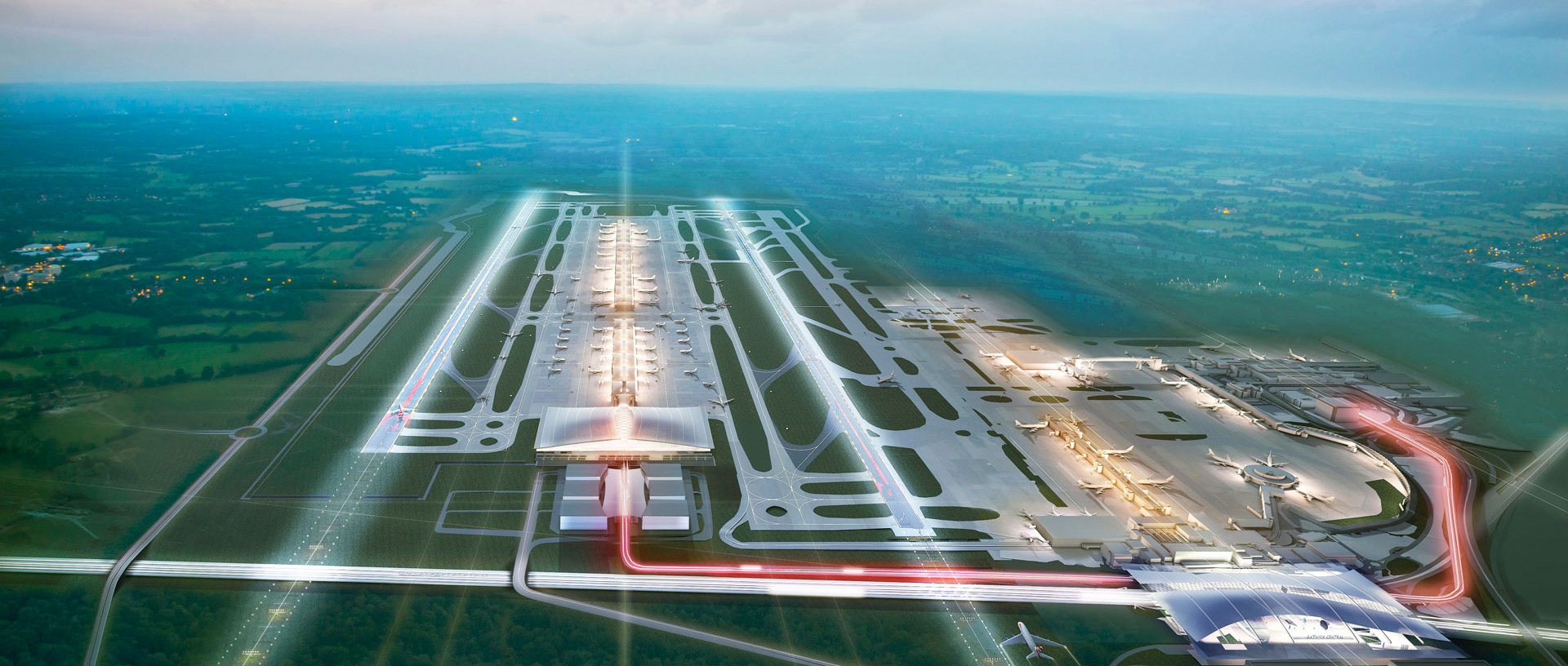
Gatwick With Two Runways
This appears to me to be a good efficient design.
- The new runway is on the left.
- It looks like the secondary North runway, used when the current main runway is under msaintenance, is still in place.
- Between the two runways is a massive new terminal.
- Note the station in the bottom right corner, with the Brighton Main Line going across.
- The red line is a shuttle, that takes passengers between the current North and Main terminals, the new terminal and the train station.
- Little demolition seems to have taken place.
But in some ways, where the runway is built is irrelevant, if Crossrail and the improved Thameslink work as they say on their tins.
These two high-capacity railways will give Heathrow and Gatwick a shared terminal called London, that unfortunately for them, they will share with Stansted, Luton, HS2 and Eurostar.
I feel though, that because of Brexit, we’ll see a decision before the end of the year and possibly in the next few weeks.
British governments have fiddled for far too long!
Could More Pedestrianisation And Better Public Transport Be A Weapon Against Terrorism?
Protecting against the sort of attack like the one in Nice last night , must be every policeman’s nightmare.
The City of London put a ring of steel around the Square Mile and there hasn’t been a serious attack since. But it caused lots of other problems.
I actually think, that we now have so many areas where large crowds congregate for work, shopping and sporting events, that we need more and more traffic restrictions like those proposed for Oxford Street.
Intriguingly, the City of London is going the same way and wants to remove a lot of traffic from the area around Bank.
So is this pedestrianisation, perhaps linked with better public transport, one of our best weapons against terrorism?
The Mind Of A Terrorist
I don’t know, as I’m at best, a poor amateur psychologist, but it strikes me there are two types of terrorist wanting to create mayhem and kill lots of people.
The first group, are those who want to leave a bomb or device and get safely away.The Bishopsgate and Baltic Exchange bombings which in today’s money together caused over a billion pounds of damage, are examples of this type, where no-one was ever prosecuted, or even publicly named.
The second group are the much-more suicide bombers, who generally strike without warning
Incidentally, I only think one Irish bomber was killed by his own bomb and we can all be thankful for that, as if suicide tactics had been employed, we would have seen many more deaths.
The City Of London’s Ring Of Steel
The City of London is protected by a so-called Ring of Steel, which is a network of barriers, check-points and 649 CCTV cameras.
It certainly seems to have protected the City from further bombings and made terrorists seek out alternative targets outside the Square Mile.
It has had one very positive effect, although at times that doesn’t seem to be as effective as it was. The City inside the ring, is now a very pleasant place to walk about and explore, as traffic is much-reduced.
Also, at weekends, the City is now a very quiet place for much of the year.
When I was still driving and needed perhaps to park a car for the evening or overnight, I would also park it prominently on a meter or legal parking space inside the ring, as I knew it would still be there in the morning.
The Future Of The City Of London
The City of London is pushing ahead with a policy of pedestrianisation, improved walking routes and better access to the Underground and rail network.
They have one great advantage compared to most other local authorities. Land is so expensive in the City and therefore fortunes are spent to create buildings that will earn billions, that if the City says to a developer, can you put an Underground entrance in your building, the answer is usually yes.
At the present time, Bloomberg are creating a new headquarters building called Walbrook Square, that will incorporate a second entrance to the Waterloo and City Line.
Other cities across the UK and the wider world are not so lucky!
Crossrail and the upgraded Thameslink will have their effects on the City, because of the positions of their stations and other factors.
- , Crossrail will have a massive double-ended station stretching from Liverpool Street in the East to Moorgate in the West.
- Thameslink will have a line of stations; Fasrringdon, City Thameslink and Blackfriars, down the West of the City.
- Crossrail and Thameslink will have their important interchange at Frarringdon.
- Crossrail will have a major interchange at Whitechapel serving the East of the City.
- Thameslink will also have a major interchange at London Bridge, just across the River from the City.
- Crossrail and Thameslink will be running two hundred metre long trains at a frequency of twenty-four trains per hour in both directions.
Add to that the existing services of the Central, Circle, District, Metropolitan and Waterloo and City Lines of the Underground and National Rail services out of Cannon Street, Fenchurch Street, Liverpool Street and Moorgate, all of which will be upgraded and I believe that at some point in the future, the City of London, will take the bold and very green step of making the whole area a pedestrian-only one, with the only vehicles allowed in the day, being approved electrical ones.
It would be a bold move, but it have several positive effects.
- Air quality would improve.
- The City would be the place to work!
- The City would become one of London’s major tourist attractions, with visitors able to walk all across from St. Pauls to the Tower and the River.
- Innovation would work to provide the services a city needed despite the restrictions.
Would terrorists realise that the sort of spectaculars they love, would be more difficult and go elsewhere?
We could see a return to suicide bombers on the Underground!
Conclusions
The City of London will reinvent itself, as it does periodically with great success.
Given that Oxford Street has said that it will pedestrianise by 2020, are we seeing a green transport revolution?
I can think of a few other cities and towns, that could follow London’s example.
The Attack On La Promenade Des Anglais
I know the area of the despicable, cowardly and ultimately tragic attack well, as over the last thirty years or so, I’ve been to Nice several times and stayed just off that road and even walked down the road, which runs parallel to the beach. There are even pictures of the area in Wandering Around Nice.
Years ago, when we had the house in Antibes, I seem to remember one Bastille Day going to see the fireworks. It was chaotic, as they still allow traffic to go through the area. Which I think they did last night!
Protecting against this sort of attack, must be every policeman’s nightmare.
Losing The Plot?
David Aaronovitch in The Times today has a piece about the Labour Party and its leadership election.
He says this.
On the very day that Theresa May was, in effect, transfigured into prime minister, Corbyn was at a meeting of the Cuba Solidarity Committee, recommitting to the dynastic dictatorship of the Castros, just as he has been doing these 40 years.
Was Corbyn getting advice?
I am virtually Corbyn’s age and I can remember the ardent, often heavy smoking, left-wingers we had when I was at Liverpool University, in the 1960s. Prominent amongst them was that pillar of the left; Robert Kilroy Silk, who incidentally was C’s tutor and persisted in smoking Capstan |Full Strength all through tutorials, despite C being pregnant at the time.
I have checked the Internet for all the left-wingers, that I remember from that time and all seem to have vanished without trace. I wonder how many are living in semis in Pinner, Mossley Hill and Edgbaston, with a Mondeo outside and 2.4 children?
 The Anonymous Widower