Thoughts On The Introduction Of Class 800 Trains On The Great Western Railway
I have travelled about six times on Class 800 trains on the Great Western Railway.
I have not had any train-related problems and on every journey, the trains have arrived close to schedule.
That even included an out-and-back trip to Swansea from Paddington on a Saturday.
There doesn’t seem to be too many complaints or news stories on the Internet. Although, I do feel some passengers are missing the InterCity 125s and others talk of hard seats.
I would also not complain about the view from a window seat and I have found the trains to be a good camera platform.
Rail Magazine’s Verdict
This article in Rail Magazine is entitled Does Great Western Railway’s Class 800 IET pass the test?.
This is their main conclusion.
The Great Western Railway Class 800 is a good train. It is quiet and comfortable, with better legroom for those travelling in Standard Class. Its acceleration on electric is borderline spectacular, while its diesel performance appears better than predicted.
They also say, that First Class is not worth the extra, whereas they felt it was was in the InterCity 125s.
Conclusion
There’s nothing much wrong operationally or passenger-wise with the Class 800 trains, that will not be put right by minor adjustments in the next couple of years.
Why Are There So Many Slim Female Weather Presenters?
As I travel around the country, I have probably watched BBC News or Breakfast in perhaps seven to ten regions.
Over recent years, the proportion of weather presenters, who I see on the BBC who are slim and female, seems to have grown.
It is a rare event to see a stocky male weather presenter.
I am not complaining, but after watching Alina Jenkins doing the UK weather and Elizabeth Rizzini doing the London weather, I had a thought.
Both ladies are slim and they were wearing dresses with elbow length sleeves, which showed off slim arms.
With all the pointing and waving that weather presenters do, it struck me that the reason there are no many slim female presenters could be that there is less of them to get in the way of the information on the screen. Presenters too, are often squeezed into a narrow vertical space at the side of the screen.
So is it just about getting more information on the screen?
Earlier this week Lucy Martin, who lost most of her right arm at birth was presenting the London weather in a sleeveless white dress.
She has to do everything with her left hand and her performance is as polished and confident as anybody else.
You do wonder though, that as she can’t use her other hand for balance as we all do in a presentation, she actually can give a less busy and more professional performance.
How Long Will A Class 345 Train Take To Go Between Two Stations Ten Kilometres Apart?
A Class 345 train has the following characteristics.
- Maximum speed of 145 kph.
- Acceleration of 1 m per second²
Using Omni’s Acceleration Calculator, I can calculate that, the train can accelerate up to full speed in 40 seconds.
Using the formula v²=u²+2as, this means that the train takes around 811 metres to get to 145 kph.
With regenerative braking, I suspect that a deceleration of the same order can be assumed.
So will it take 811 metres to stop from speed? I’ll use this figure until someone corrects me.
If the train is doing a start-stop over ten kilometres, then it will travel 8.4 kilometres at maximum speed, which will take about 3.5 minutes.
This means that the start-stop time will be 4.7 minutes.
Now I’ll look at a real example using a similar Greater Anglia Class 720 train.
These are 160 kph trains and typically work on the Great Eastern and West Anglia Main Lines with a similar operating speed.
The train will take 44.4 seconds to accelerate to operating speed and this will take 985.7 metres.
The distance between Tottenham Hale and Cheshunt stations is 12894.8 metres.
So the full speed distance could be 10923.4 metres. This will take 4.09 minutes at 160 kph.
So the start-stop time will be 5.5 minutes.
Currently, the fastest train on this route I can find takes 10 minutes.
I suspect that somewhere in this, the time at the station will complicate matters, but I do think that the fast acceleration and deceleration of the new trains will contribute to faster schedules.
And it’s not just Aventras that have this fast acceleration!
This is an extract for the Wikipedia entry for a Stadler Flirt.
Acceleration also varies between 0.8 and 1.2 m/s2 (2.6 and 3.9 ft/s2)
If you’re worried about the G forces, this is taken from the Wikipedia entry for London Underground’s 2009 Stock for the Victoria Line.
They have a higher top speed of 80 km/h (50 mph), a faster maximum acceleration of 1.3 m/s2(4.3 ft/s2), a normal service deceleration of 1.14 m/s2 (3.7 ft/s2), and an emergency brake deceleration of 1.4 m/s2 (4.6 ft/s2).
These accelerate even faster and are used for over 200.000 million journeys a year.
To put in an example from motoring, a Mini Cooper S has a 0-60 mph time of 7.4 seconds, which is an acceleration of 3.62 m/s2
Conclusions
Possibly the most important thing to reduce journey times on a rail journey, is to make sure that the operating speed is as high as possible and trains running on the route must be capable of running at that speed.
Obviously, trains do the short journey in three sections.
- They accelerate as fast as they can to the operating speed.
- They cruise at the line speed.
- They decelerate and brake, so they stop in the right place in the next station.
Dear Old Vicky has been doing this under computer control since, the line opened in the 1960s.
I gave an example from Merseyrail in Slow Trains Outside The South-East.
I said this.
The new Stadler Flirt trains are promised to save nine minutes between Southport and Hunts Cross stations, because they are better designed for passenger entrance and exit with faster speed and better braking and acceleration.
There is a corollary to all this.
So long as you have the energy on a train for fast acceleration, whether it is battery, diesel, electrification or hydrogen, it doesn’t matter for a faster service.
So alternatives to electrification are just as good!
How Will Greater Anglia/London Overground Use The Third Track On The West Anglia Main Line?
This morning as I often do, I took the 11:00 train between Stratford and Enfield Lock stations.
I like to have a look at progress on STAR, which involves the following.
- A five and a half kilometre third track to the East of the current two tracks of the West Anglia Main Line between Lea Bridge and Angel Road stations.
- A third platform and station improvements at Tottenham Hale station.
- A third platform, removal of a level crossing and complete rebuilding of Northumberland Park station.
- Building of a completely new three-platform station at Meridian Water to replace the current inadequate Angel Road station.
This Google Map shows the location of Meridian Water station with respect to Tesco Extra and IKEA in Glover Drive.
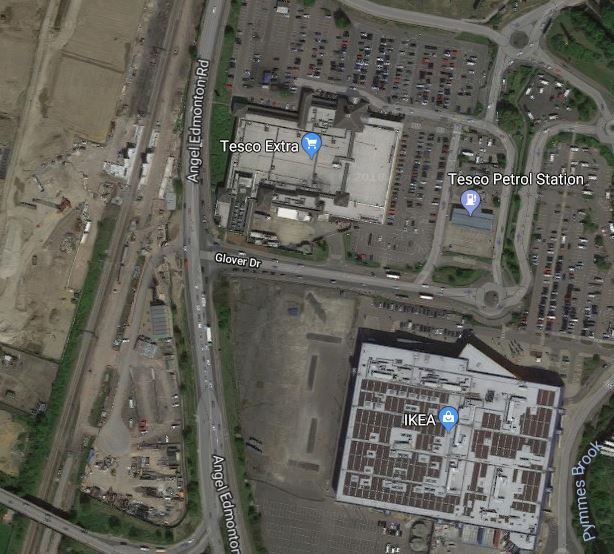
You can just see the concrete foundations of the station and its platforms alongside the West Anglia Main Line to the West of the Tesco Extra.
In Meridian Water Station – 14th June 2018, I show pictures of the station just over two months ago.
There has been steady and worthwhile progess since.
- Meridian Water station now has platforms under construction.
- Northumberland Park station looks like it could be ready before Spurs’ new stadium.
- The lift towers for the footbridge at Tottenham Hale station are being erected.
- I estimate about seventy percent of the third track has been laid.
- All the electrification gantries seem to have been erected and there are even some overhead wires.
The target for finishing the works is said to be May 2019 and I suspect that is achievable.
Use Of The Third Track
It certainly looks like the third track will be ready, so how will it be used?
The Northern End
At the Northern end, the third track appears to finish in a bay platform at Meridian Water station.
Once Angel Road station is closed and reduced to rubble, there would be plenty of space to add a junction, so that trains going South towards Stratford, could use the third track.
This would surely ease operation of the West Anglia Main Line.
Meridian Water Station
Meridian Water station appears to be being built as a three-platform station with provision for a fourth.
From various drawings and notes on the Internet it looks like there will be two platforms on the West Anglia Main Line and a separate bay or through platform to the East.
This map from carto.metro.free.fr shows the relationship of Angel oad and Meridian Water station.
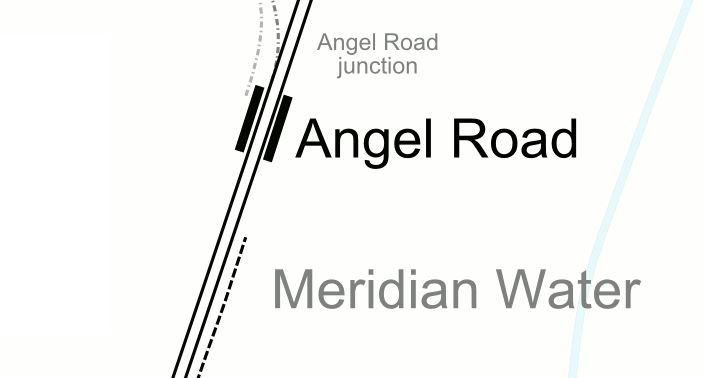
The dotted line on the map is the third track.
I took these pictures from a slow train through the station.



It looks very much like a through platform is being created.
I feel that access to this platform will be in two ways.
- From the North via a junction with the Southbound track of the West Anglia Main Line. This junction could be to the North the current Angel Road station.
- From the South using the new third track.
This would mean that no trains will have to cross the West Anglia Main Line using a flat junction.
I don’t believe that trains can run bi-directionally on the third track, as there is not enough time in an hour for four trains to shuttle between Lea Bridge and Meridian Water.
So that means all services calling at Meridian Water will go further up the Lea Valley to turn back.
Using The Third Platform At Tottenham Hale Station
I think it is likely that the current two platforms will be used as follows.
- Platform 2 – Northbound trains
- Platform 1 – Southbound trains to Liverpool Street
It would be logical that the new third platform would handle Southbound trains to Stratford.
As Platform 1 and the new platform share an island, passengers will have a step-free cross-platform interchange, if they need to go to the alternative destination.
The following journey times should be noted.
- Tottenham Hale to Stratford currently takes 14 minutes
- Tottenham Hale to Liverpool Street currently takes between 14 and 17 minutes
- Liverpool Street to Stratford will take eight minutes on Crossrail
I suspect a lot of passengers will change to a direct train.
It could also mean that an ideal service would see the same frequency of trains at both platforms.
The Southern End
At the Southern end, the third track joins the West Anglia Main Line going towards Stratford, but there is also a crossover to allow trains coming from Stratford to use the third track.
Is The Third Track Going To Be Bi-Directional?
Loops like this third track are often signalled to be bi-directional, to ease operation. But as I said earlier, I think the third track is too long to operate in that way all the time with passenger services.
What Will Be The Operating Speed Of The Third Track?
I have watched the third track being constructed and it is totally new.
- All bridges have been replaced with new structures.
- The track is fully electrified.
- There appear to be no junctions, except at the two ends.
Everything certainly looks professional to my untrained eye.
The operating speed will probably be determined by the time set for the driver to take the train between stations on the line.
But the track has surely been designed to minimise the time between Meridian Water and Stratford.
Could The Third Track Be Extended Northwards?
The length of the third track is 5.5 km.
Could the third track be extended to the North?
If Crossrail 2 is built, there will be a need to make the route four tracks.
- Two fast tracks for the expresses between London, Stansted and Cambridge.
- Two slow tracks for Crossrail 2 as far as the terninus at Broxbourne.
These are my observations
- Looking from both a train and on Google Map, it appears that it will be a tight fit to squeeze in two tracks.
- There is the serious problems of the two level crossings at Brimsdown and Enfield Lock stations.
- Waltham Cross station seems very tight too.
But I do think, that with a clever redesign at the three troublesome stations, that a third track, but not necessarily a fourth can be squeezed in as far as North as Broxbourne, which would be another 11.2 miles.
Although in places, like these pictures taken just South of Tottenham Hale station show, there may be plenty of space for two tracks.
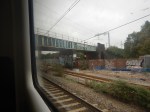
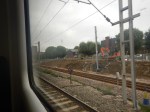
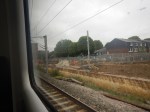
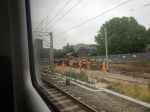
I suspect that to put in the fourth track will mean that the bridge at Ferry Lane will need to be rebuilt.
But it does appear that in building the third track, the builders are making sue there is space for a fourth track to be added in a few years.
Currently, How Many Calls Are There At Each Station?
These figures are calculated from the current timetable.
Lea Bridge
- Two trains per hour (tph) – Stratford to Bishop’s Stortford
Two tph stop in both platforms.
Tottenham Hale
- Two tph – Liverpool Street to Hertford East
- One tph – Liverpool Street to Cambridge
- One tph – Liverpool Street to Cambridge North
- Four tph – Liverpool Street to Stansted Airport
- Two tph – Stratford to Bishop’s Stortford
Ten tph stop in both platforms.
Northumberland Park
- Two tph – Stratford to Bishop’s Stortford
Two tph stop in both platforms.
In addition, eight tph pass through both platforms without stopping.
Meridian Water
- Two tph – Stratford to Bishop’s Stortford
Two tph stop in both platforms.
In addition, eight tph pass through both platforms without stopping.
Ponders End
- Two tph – Liverpool Street to Hertford East
Two tph stop in both platforms.
In addition, eight tph pass through both platforms without stopping.
Brimsdown
- Two tph – Liverpool Street to Hertford East
Two tph stop in both platforms.
In addition, eight tph pass through both platforms without stopping.
Enfield Lock
- Two tph – Liverpool Street to Hertford East
- One tph – Stratford to Bishop’s Stortford
Three tph stop in both platforms.
In addition, seven tph pass through both platforms without stopping.
Waltham Cross
- Two tph – Liverpool Street to Hertford East
- Two tph – Stratford to Bishop’s Stortford
Four tph stop in both platforms.
In addition, six tph pass through both platforms without stopping.
Cheshunt
- Two tph – Liverpool Street to Hertford East
- One tph – Liverpool Street to Cambridge
- One tph – Liverpool Street to Cambridge North
- Two tph – Stratford to Bishop’s Stortford
Six tph stop in both platforms.
In addition, four tph pass through both platforms without stopping.
Broxbourne
- Two tph – Liverpool Street to Hertford East
- One tph – Liverpool Street to Cambridge
- One tph – Liverpool Street to Cambridge North
- Two tph – Stratford to Bishop’s Stortford
Six tph stop in both platforms.
In addition, four tph pass through both platforms without stopping.
Harlow Town
- One tph – Liverpool Street to Cambridge
- One tph – Liverpool Street to Cambridge North
- Two tph – Liverpool Street to Stansted
- Two tph – Stratford to Bishop’s Stortford
Six tph stop in both platforms.
In addition, two tph pass through both platforms without stopping.
Bishop’s Stortford
- One tph – Liverpool Street to Cambridge
- One tph – Liverpool Street to Cambridge North
- Two tph – Liverpool Street to Stansted
- Two tph – Stratford to Bishop’s Stortford
Four tph stop in both platforms.
Two tph would terminate at the station.
In addition, two tph pass through both platforms without stopping.
A Summary Of Current Services
This is summary of stops at the selected stations.
- Lea Bridge – 2 tph
- Tottenham Hale – 10 tph
- Northumberland Park – 2 tph
- Meridian Water – 2 tph
- Ponders End – 2 tph
- Brimsdown – 2 tph
- Enfield Lock – 3 tph
- Waltham Cross – 4 tph
- Cheshunt – 6 tph
- Broxbourne – 6 tph
- Harlow Town – 6 tph
- Bishop’s Stortford – 6 tph
Note.
- To say the least service is a bit patchy, with some stations getting a much better service than others.
- London Overround, Merseyrail and others feel that a service of four tph is highly desirable and attracts passengers.
The service definitely needs improvement.
STAR Services
It is certainly intended that four tph, will be run between Stratford and Meridian Water stations calling at Lea Bridge, Tottenham Hale and Northumberland Park stations.
Current Services
Currently, this service is provided at a frequency of two tph by Greater Anglia, who extend the service to Bishop’s Strortford station.
There are various ways that this could be increased to four tph
Possible Northern Terminals
As I said earlier to avoid train-slowing flat junctions, STAR services must terminate North of Meridian Water station.
I think there are these possibilities.
- Bishop’s Stortford, which currently handles two tph in the bay platform 3.
- Broxbourne which is a large station with 8 platforms and has been earmarked as the terminal for Crossrail 2.
- Hertford East has platform space, but there may not be the capacity for the trains on the Hertford East Branch.
Passenger numbers will drive the choice, but I suspect all three terminals have their merits.
In the following sub-sections I’ll look at each terminus.
Two Extra Trains To Bishop’s Stortford
I will assume these services will call at the same stations as the current two trains.
This is summary of stops at the selected stations.
- Lea Bridge – 4 tph
- Tottenham Hale – 12 tph
- Northumberland Park – 4 tph
- Meridian Water – 4 tph
- Ponders End – 2 tph
- Brimsdown – 2 tph
- Enfield Lock – 4 tph
- Waltham Cross – 8 tph
- Cheshunt – 8 tph
- Broxbourne – 8 tph
- Harlow Town – 8 tph
- Bishop’s Stortford – 8 tph
Note.
- Enfield Lock now has the preferred four tph.
- Ponders End and Brimsdown probably need more services.
- Are there too many services at Harlow Town and Bishop’s Stortford?
But generally, it is a better distribution than now!
Two Extra Trains To Broxbourne Or Hertford East
I will assume these services will call at the same stations as the current two trains, that run between Stratford and Bishop’s Stortford.
This is summary of stops at the selected stations, which will be the same for both destinations.
- Lea Bridge – 4 tph
- Tottenham Hale – 12 tph
- Northumberland Park – 4 tph
- Meridian Water – 4 tph
- Ponders End – 2 tph
- Brimsdown – 2 tph
- Enfield Lock – 4 tph
- Waltham Cross – 8 tph
- Cheshunt – 8 tph
- Broxbourne – 8 tph
Note.
- Enfield Lock now has the preferred four tph.
- Ponders End and Brimsdown probably need more services.
- There will be no increase in frequencies North of Broxbourne.
Operational needs and passenger numbers will decide if these are better destinations.
Use Of The High Meads Loop At Stratford
The High Meads loop under the Eastfield Shopping Centre was designed to turn trains.
This map from carto.metro.free.fr shows the loop.

On the map it is the horeshoe-shaped double track shown in black.
- , It goes through Platforms 11 and 12 in Stratford station.
- Currently, Platform 11 is used exclusively as a terminal for the two tph between Stratford and Bishop’s Stortford.
- Currently, Platform 12 is not used and the track is used to take trains to and from the Orient Way sidings
- Both ends of the loop join together just to the South of the Orient Way sidings and Lea Bridge station.
- In the past it has been used to turn Stansted Expresses, which used Platform 12 according to the signs still in place.
- I believe it would be possible to build a platform on the loop to serve Stratford International station and the Northern part of the Olympic Park.
In my view it is wasted fully-working infrastructure.
The Wirral Line Loop Under Liverpool
The most important rail loop in the UK is the loop of the Wirral Line under Central Liverpool.
- The loop is single-track with three single-platform stations
- This loop handles fourteen tph.
- The loop is built for full-size trains.
- Trains take eight minutes to go round the loop from Liverpool James Street station and fourteen minutes from Birkenhead Hamilton Square station on the other side of the Mersey.
It was built in the early 1970s and I’m sure the designers of the High Meads Loop were influenced strongly by the track layout in Liverpool.
The Wirral Line Loop showcases the major examples of this type of track layout.
- The driver just keeps driving and doesn’t have to change ends.
- A single terminal platform can handle a maximum of perhaps 4-6 tph, whereas a single platform on a loop can handle at least 14 tph.
- Stations can be provided at several places on the loop, where they are needed.
A loop is a very fast and simple way to turn trains.
Time Saving At Stratford Using The High Meads Loop
The 06:34 from Bishop’s Stortford stops at Tottenham Hale at 07:29, Lea Bridge at 07:33 and Stratford at 07:43.
The train then forms the 08:04 from Stratford, which stops at Lea Bridge at 08:10, Tottenham Hale at 08:18 and terminates at Bishop’s Stortford at 09:02.
So the train has taken thirty-seven minutes between the two calls at Lea Bridge station on a modern double track railway.
If the train loaded and unloaded passengers at Platform 11 at Stratford, I suspect that this time could be reduced to under twenty minutes, if the train continued round the High Meads Loop.
Even if there was an extra station on the loop to serve Stratford International station and the Northern part of the Olympic Park, I suspect that a saving on twenty minutes could be made.
Greater Anglia would be a big beneficiary. Currently the train leaves Bishop’s Stortford at 06:34 and arrives back at 09:02, which means a total trip time of 148 minutes for an out-and-back journey with ten intermediate stops both ways.
With a bit of time saving and the new Class 720 trains, I suspect that with the turnround time at Bishop’s Stortford added in, that a train could do the full trip within two and a half hours.
This would mean that ten trains would be needed for a four tph service between Stratford and Bishop’s Stortford.
Take off the twenty minutes saved by the High Meads Loop and the minutes saved by the new trains and I believe that well-driven trains could do the full trip in two hours
This would mean that eight trains would be needed for a four tph service between Stratford and Bishop’s Stortford.
Stansted Airport To Stratford
How much time would be saved if Stansted Airport trains went to Stratford and used the High Meads Loop?
The fastest trains take forty-seven minutes between Liverpool Street and Stansted, with about fourteen minutes needed for the short stretch between Liverpool Street and Tottenham Hale.
Using the High Meads Loop at Stratford would probably mean a similar journey time, as from Liverpool Street, but there would be other advantages, disadvantages and score draws.
- Both platforms used by Stansted Expresses would be step-free.
- Train tracks to Stratford are probably less likely to delay.
- Walking routes at Stratford might be shorter.
- Both Liverpool Street and Stratford will be served by Crossrail.
- Stratford could have links to Highspeed services to Kent.
Greater Anglia would be a big winner, as they would have a better train utilisation.
What Length Of Trains Could Use The High Meads Loop?
The only restriction will be the length of platforms at Stratford, Lea Bridge and Tottenham Hale.
Without getting my tape measure out, I suspect they are all capable of taking a twelve-car Class 317 train, which is around 240 metres long.
Ten-car versions of Greater Anglia’s new Class 720 trains are 243 metres long.
I would be very surprised if the platforms couldn’t accept these long trains.
What Would Be The Ultimate Capacity Of The High Meads Loop?
Consider.
- The Wirral Line Loop under Liverpool handles fourteen tph.
- More complicated tunnels under London like Crossrail, the East London Line and Thameslink are planned to handle 24 tph.
- Modern digital signalling will be applied in the next couple of decades to the West Anglia Main Line.
Consider.
- The Southbound third track and the route to Stratford from Lea Bridge can probably easily handle fifteen tph or a train every four minutes.
- Platform 11 at Stratford with perhaps some escalators, could probably handle fifteen or even twenty tph, as do stations like Canada Water and several stations on Thameslink and the Wirral Line.
- Northwards from Stratford, there is probably a total limit of twelve tph along the Lea Valley, that could be increased by removing level crossing and modern signalling.
I suspect that the ultimate capacity is way in excess of the number of services that need to be run from Stratford up the West Anglia Main Line.
Using The High Meads Loop To Take Pressure From Liverpool Street
Liverpool Street is crowded.
- Some platforms can’t accept full length trains.
- West Anglia services crawk between Liverpool Street and Tottenham Hale at a speed of not much more than 40 mph at times.
- The two operators; London Overground and Greater Anglia want to add additional services to the station.
- c2c also want to serve the station, as they have capacity problems at Fenchurch Street.
However, future developments will make Stratford a viable alternative to Liverpool Street.
- Crossrail will provide a high-capacity service linking both stations to the Canary Wharf, Heathrow and the West End.
- Better access to the Central Line will happen.
- Stratford has access to the important Jubilee Line.
- Stratford will be able to take advantage of Docklands Light Railway developments.
- Tottenham Hale station will have better interchange to the Victoria Line.
So why not move some services from the West Anglia Main Line to the High Meads Loop?
What Services Could Be Transferred From Liverpool Street To The High Meads Loop?
At present, all stopping trains between London and Bishop’s Stortford, start from Stratford and I can see this continuing after the third track opens.
I could also see extra services on this route to deliver the promised four tph to Meridian Water and Nothumberland Park.
Four tph can probably use Platform 11 st Stratford, but looking at the smooth unhurried operation of the Wirral Line Loop at Liverpool, I suspect that the High Meads Loop will be used.
Looking at all the other services between Liverpool Street and Tottenham Hale, only the two tph between Liverpool Street and Hertford East, stop at another station, which is South of Tottenham Hale.
So it would probably not be sensible to transfer theseHertford East services to the High Meads Loop, but it might be a good idea to add two tph all day between Stratford and Hertford East, to create a four tph service to Hertford East with two tph from both Southern terminals.
Some services between Liverpool Street and Cambridge and between Liverpool Street and Stansted might be augmented with more services or moving the services to the High Meads Loop at Stratford.
I would suggest that about half the services went to Liverpool Street and terminated as they do now and the rest used the High Meads Loop.
This would mean that those, who’d caught the wrong train or changed their destination, could just change at Tottenham Hale by walking across the island platform.
I was on a train going South to Liverpool Street recently, when I changed my mind and transferred to a Stratford train. As I inew a Stratford train was close behind, I only had to wait a few minutes.
Note that, if there are six trains on both branches, then the maximum wait would be ten minutes.
Examining A Possible Timetable
This is definitely my speculation, but I am trying to show what is possible!
I also very much believe that Network Rail, Greater Anglia and London Overground will come up with something much better.
A Few Rules
I am using these rules to guide me in my thinking.
- All trains going to Stratford use the High Meads Loop and Platform 11 at Stratford.
- No station gets an inferior service to that it gets at the present time.
- All Southbound trains for Stratford use the new third track between Meridian Water and Lea Bridge Junction.
I think that this could be a good mix of services.
- One tph Liverpool Street to Cambridge
- One tph Liverpool Street to Cambridge North
- Two tph Liverpool Street to Hertford East
- Four tph Liverpool Street to Stansted
- Four tph Stratford to Bishop’s Stortford
- Two tph Stratford to Hertford East
- Two tph Stratford to Stansted
Note.
- Greater Anglia have said they will run a Stratford to Stansted service from 2019.
- The two extra Stratford to Bishop’s Stortford and Hertford East services will have similar calling patterns to the existing services.
- Eight tph goes to and from both Liverpool Street and Stratford.
- Currently, eight tph run between Tottenham Hale and Liverpool Street.
- Based on the my observations of the relaxed operation of the Wirral Line Loop under Liverpool, I feel the capacity of the High Meads Loop could be as high as sixteen tph.
- Calling patterns will be adjusted to improve frequencies at Ponders End and Brimsdown stations
- The only other passenger trains on the route are two tph between Stansted Airport and Cambridge.
The number of trains running on each section of track would be as follows.
- Eight tph – Liverpool Street to Tottenham Hale
- Eight tph – Stratford to Tottenham Hale – Southbound trains use the third track where is has been added.
- Sixteen tph – Tottenham Hale to Broxbourne – Southbound trains use the third track where is has been added.
- Twelve tph – Broxbourne to Bishop’s Stortford
- Eight tph – Bishop’s Stortford to Stansted Airport
- Six tph – Stansted Airport to Cambridge
I’m not sure if this would be achievable, but there are several double-track main lines in the country, that handle at least sixteen tph.
Extra Services On The Lea Valley Routes Of The London Overground
The London Overground services from Liverpool Street to Cheshunt and Enfield Town have the following characteristics.
- A frequency of two tph.
- Extra peak hour services.
- Both services pass through Hackney Downs and Seven Sisters stations.
London Overgriound probably want to add two extra tph to both routes to increase the frequency to four tph. Unfortunately, the crowded lines South of Seven Sisters and a full Liverpool Street station, probably make this difficult.
Look at this map from carto.metro.free.fr, which shows the lines South of Tottenham Hale and Seven Sisters stations.
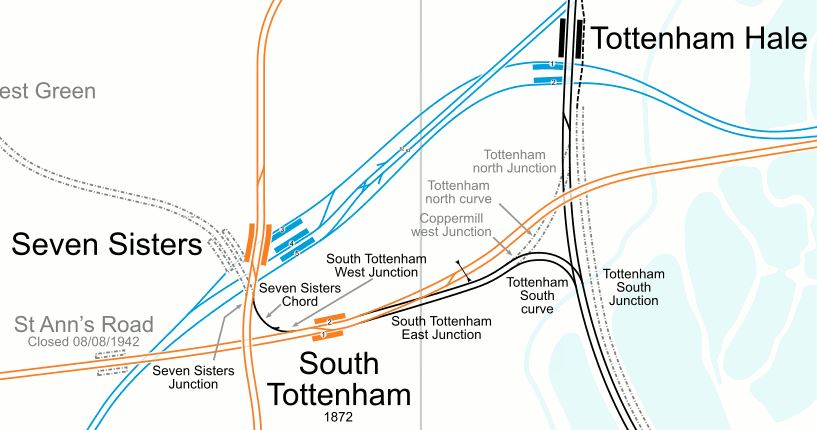
South Tottenham station is on the Gospel Oak to Barking Line, with the following connections.
- At the Western end of the station, the Seven Sisters Chord connects the station to the Lea Valley Line to Cheshunt and Enfield Town.
- At the Eastern end of the Tottenham South Curve connects the station to the line to the High Meads Loop at Stratford.
Would it be possible to run the extra two tph from both Cheshunt and Enfield Town to the High Meads Loop?
If it is possible, then the following frequencies will be achieved.
- Four tph between Cheshunt and Edmonton Green
- Four tph between Enfield Town and Edmonton Green
- Eight tph between Edmonton Green and Seven Sisters.
- Four tph between Seven Sisters and Stratford.
But more importantly, it will create more routes for East London’s Duckers-and-Divers to challenge the clock.
- Large parts of Enfield and Haringey now get a direct connection to Stratford.
- The new White Hart Lane station will have a direct connection to Stratford.
- Stratford to stations on the Gospel Oak to Barking Line is now just a step-free change at South Tottenham station.
I also wonder how many new sites for housing will become viable because of all the new transport links.
Future Developments
There are several developments planned or proposed, that will affect traffic on the West Anglia Main Line.
Track Improvements
The mainly two-track West Anglia Main Line has a maximum operating speed of 100 mph, but travelling the line over the last few days, at times we were only travelling at about 50 mph for long periods.
So I suspect that the average operating speed could be increased.
There are also several level crossings, including those at Brimsdown, Enfield Lock and Cheshunt on the busiest Southern section of the route..
Digital Signalling
Modern digital signalling on the West Anglia Main Line must allow more trains to be squeezed into the timetable.
New Trains
The current trains that work the West Anglia Main Line are Class 379 and Class 317 trains.
Both trains are 100 mph trains although the Class 317 trains are now nearly forty years old.
They are being replaced with Class 720 and Class 745 trains, which although they are also 100 mph trains, may offer advantages, because they are newer designs.
- Better acceleration and smoother regenerative braking.
- Easier passenger entry and exit.
- Shorter dwell times at stations.
- Better passenger comfort and facilities.
But crucially, they will be able to take advantage of the modern digital signalling.
I think it is very likely that the new trains will speed up services on the West Anglia Main Line.
I also think that the combination of digital signalling and new trains, that are capable of using it, will allow higher frequencies of trains to be run on the West Anglia Main Line.
A Possible Pattern Of West Anglia Line Services
Could we see the following in the future?
- London Overground services on the Lea Valley Lines use Liverpool Street, as they do now.
- Greater Anglia services on the West Anglia Main Line to Bishop’s Stortford, Cambridge, Hertford East and Stansted Airport are split between Liverpool Street and Stratford.
- Stratford services use the High Meads Loop and stop at either Platform 11 or 12 at Stratford.
It would certainly increase terminal capacity at the Southern end of the West Anglia Main Line and free up platform space in Liverpool Street.2 ru
.Conclusion
I wouldn’t be surprised to see the following.
- Twenty tph up and down the West Anglia Main Line.
- Direct services up the West Anglia Main Line to Norwich via Cambridge using bi-mode Class 755 trains.
- Extra services between Stratford and Cambridge, Hertford East and Stansted.
- Services are adjusted so that each station South of Broxbourne gets four tph or more.
Note that I haven’t mentioned adding a fourth track.
I believe that my calculations show it might not be needed to achieve the required intensive service on the West Anglia Main Line.
Council Pitches £375m Light Rail Scheme Linking South To Heathrow Airport
The title of this post, is the same as that of this article on Rail Technology Magazine.
This is the first paragraph.
Spelthorne Borough Council has submitted proposals for a light rail link from Staines-upon-Thames to Heathrow airport to provide “joined-up journeys” into the airport from the south.
The light rail link would run from close to Stains station to the Heathrow, every six minutes and take just seven minutes.
Based on trams, the same size as the Midland Metro, it would provide a capacity of 2100 passengers per hour to and from the Airport.
Note the following.
Markets Served
In Could Rail Access To Heathrow Be Formed Of The Best Bits Of Various Schemes?, I noted four main uses for transport to Heathrow Airport.
- Passengers
- Workers
- Supplies For The Airport And The Aircraft
- Air Cargo
Spelthorne’s plan only serves a very limited market of passengers and workers living in Staines, who need to go to the Airport.
If you have a direct train or bus, would you go to Staines and change to a tram? No way!
The plan does nothing to get polluting trucks off the road, although it might be a vote winner in Spelthorne.
Heathrow Southern Railway’s Plan To Extend Crossrail To Staines
I question whether Spelthorne have read the plans for Heathrow Southern Railway (HSR), which I first heard about in the December 2016 Edition of Modern Railways.
I wrote about HSR, Crossrail and Staines in Heathrow Southern Railway’s Plans For Staines. This link would do the following.
- Provide up to six trains per hour (tph) between Staines all Heathrow stations, HS2 and Central London.
- Transport passengers to Paddington in less time, than it takes to get to Waterloo at present.
- Use Class 345 train with a capacity of 1500 passengers.
- Give nearly three times the capacity of a light rail system with four tph.
- Give over four times the capacity of a light rail system with six tph.
- Allow passengers between Staines and the Airport would also be able to use services between Heathrow and Waterloo.
- Need perhaps a couple of extra trains for the Staines extension of Crossrail.
I have no costings for the addition of the extra platform at Staines station, but I suspect that it is less than £375million.
If Heathrow Southern Railway is built, Spelthorne’s plan would be as dead as a dodo.
Conclusion
I see no future in Spelthorne’s light-rail plan, so it should be buried now before it costs taxpayers more money.
Falling Off A Cruise Ship
This story on the BBC is entitled British Woman Rescued 10 Hours After Falling Off Cruise Ship In Croatia.
Happily the lady survived.
I am reminded of a old story.
A consultant and his friend, after a busy winter decided to go on a cruise in the Caribbean, where they had been told, they would be able to liven up their boring sex lives.
They were not enjoying themselves, as there wren’t any spare ladies under the are of fifty.
So one night, after having a few too many rum punches, they were at the blunt end of the ship, moaning about their lives telling very rude jokes and smoking lots of cigarettes.
One joke involved the consultant gently tapping the other on the shoulder and he let go of his drink. In trying to catch it, he slipped and started to disappear into the sea. The other tried to catch him and the outcome was that both of them fell in the sea.
Luckily, the episode had been seen by a seaman, who immediately raised the alarm., as he knew the sharks in the area, were very quick to find a free meal.
Within ten minutes or so, the consultant had been pulled unharmed from the water, but all they found of his friend was his left foot.
Back on board the ship, the consultant was summoned to see the Captain, as he needed to put a report in the log.
The Captain spoke to the consultant. “These waters are very dangerous! So how do you, as a consultant explain, why you didn’t get eaten by the sharks, like your friend?”
The consultant was uncharacteristically brief with his answer. “Professional Etiquette!”
DB Says Innovative Freight Train Project ‘Very Promising’ So Far
The title of this post is the same as that of this article in Global Rail News.
This is the first paragraph.
A project to design innovative freight wagons, which is being financed by Germany’s Federal Ministry of Transport and Digital Infrastructure (BMVI), DB Cargo and VTG, is producing ‘very promising’ results.
The article is worth reading in full and in my mind it could be important in the development of efficient and reliable freight trains.
I remember in the 1960s, British Rail were trying to run faster freight trains and a lot of four-wheel wagons kept derailing.
Research at Derby using computer simulation solved the problem and went on to lead to a greater understanding of the dynamics of steel wheel on steel rail.
I do know that British Rail Research had one of the best tools for this job; a PACE 231-R analogue computer.

This is the one, that I worked on at ICI.
They were a powerful computer, which were capable of solving a hundred simultaneous differential equations.
They were late 1950s technology, based mainly on electronic valves, that responded to tender loving care.
But two of them working together, did the dynamic calculations for the moon landings, when linked to the digital computers of an Apollo capsule and lander.
On Apollo 13, when Jack Swigert said “Houston we have problem”, it was these machines, that were used to find a way to bring everyone home.
And the rest, as they say is history!
In my view, after over fifty years in computing, the rescue of Apollo 13 was the greatest piece of computing ever done with an electronic machine.
I’d love to know, whether the superb dynamics of the Mark 3 coach, are down to the work that was done on British Rail’s PACE 231-R
The second paragraph of the Global Rail News article has this phrase.
feature new digital systems which optimise handling.
Does this mean the Germans are worried about the handling?
I do sometimes wonder, if dynamic systems are best analysed using analogue computers and the demise of the technology means the same problems keep returning in different guises.
There can’t be many of us left, who’ve used an analogue computer seriously.
Heathrow Southern Railway And Woking Station
This news item on the Heathrow Southern Railway web site is entitled Plans Announced For £1 billion Rail Link Between Southampton And Heathrow.
This is an extract.
We hope three trains an hour (tph) could be running to Southampton by 2026.”
That is the message from Graham Cross, chief executive of Heathrow Southern Railway (HSR), which is preparing plans for a £1 billion rail link between the city and the UK’s biggest airport.
This map shows a schematic of the Heathrow Southern Railway.
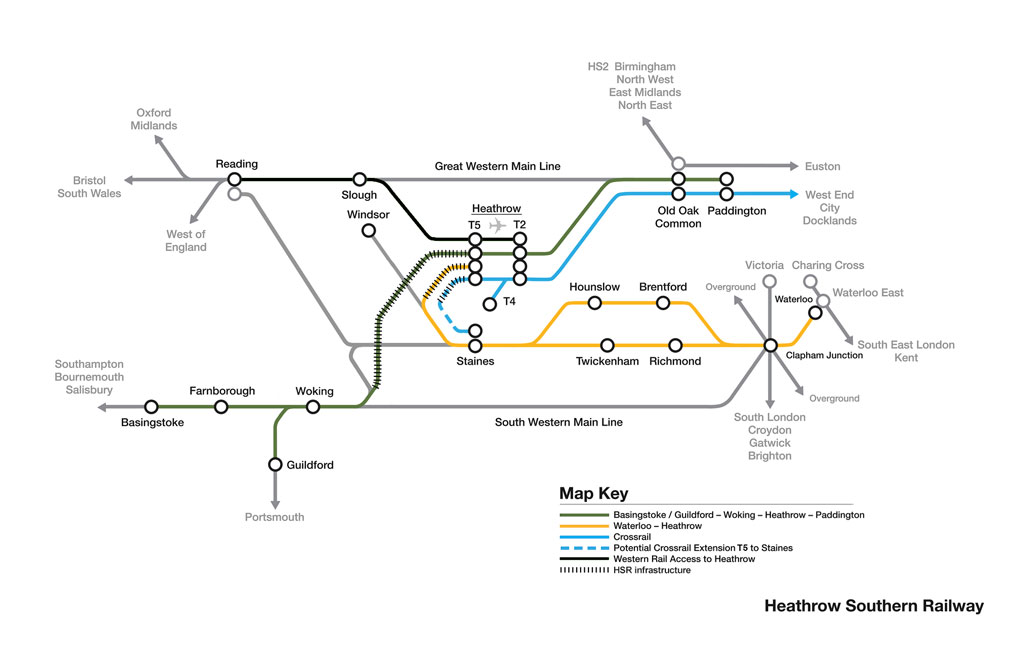
Hethrow Southern Railway’s plans are as follows.
- A new section of railway will connect the Chertsey Branch Line to Heathrow Terminal 5 station.
- This new section of railway will be built alongside the M25 to minimise environmental disruption.
- From there trains will call at Heathrow Central and Old Oak Common stations before terminating at Paddington station.
- Trains will connect Heathrow to Woking station and on to Basingstoke and Guildford.
Currently, the service between Southampton Central and London is as follows.
- South Western Railway – One tph – Poole and Waterloo
- South Western Railway – One tph – Weymouth and Waterloo – Stops at Woking
- South Western Railway – One tph – Weymouth and Waterloo
- Southern – One tph – Southampton Central and Victoria – Stops at Gatwick
If we take Graham Cross at his word, that the following frequencies to various stations.
- Gatwick Airport – 1 tph
- Heathrow Airport – 3 tph
- Old Oak Common – 3 tph
- Victoria – 1 tph
- Warerloo – 3 tph
- Woking – 4 tph
Passengers from Southampton.Bournemouth, Poole and Weymouth would have a much larger choice of London stations.
As Heathrow Southern Railway also plan to run two tph between Paddington and Guildford via Heathrow, Woking could become a busier place.
These pictures show Woking station.
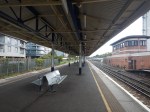
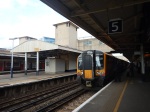
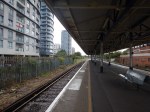
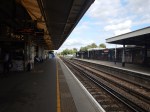
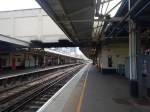
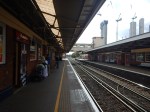

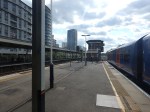
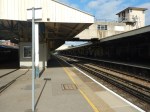
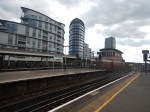

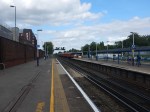
This Google Map shows the station.
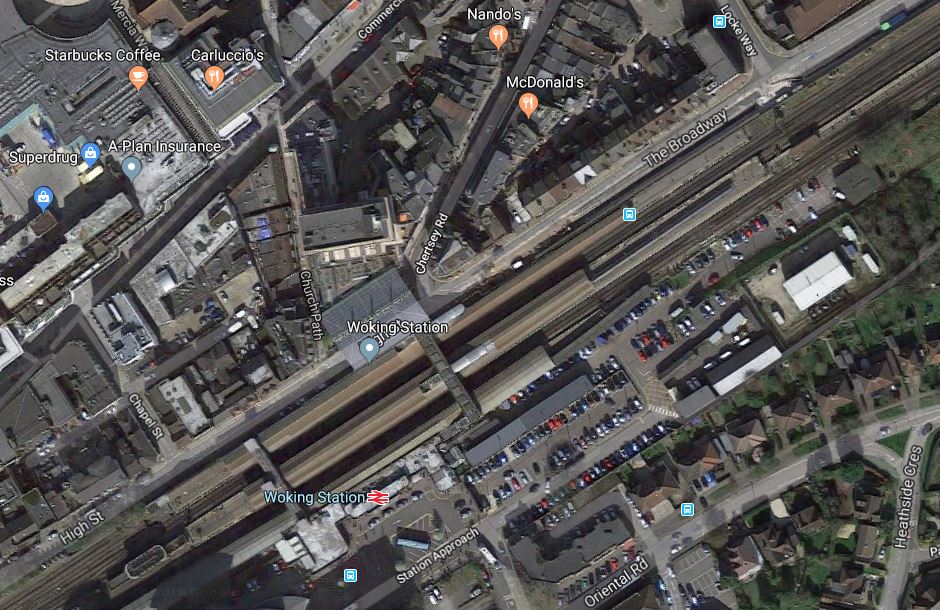
Note some of the characteristics.
Four Long Through Platforms
The station has four long through platforms, which can accommodate the longest ten-car trains used by South Western Railway.
Twelve-Car Class 387 Trains
Two five-car Class 444 trains are 230 metres long, when running as a ten-car train.
If Heathrow Southern Railway want to run Class 387 trains, train lengths will be as follows.
- Eight cars – 163 metres
- Twelve cars – 280 metres
Twelve-cars trains may be too long for the platforms at Woking and other stations. but as Heathrow Southern Railway won’t open for a few years, I wouldn’t be surprised to see new trains used by Heathrow Express and Heathrow Southern Railway.
Splitting And Joining Trains At Woking
I also think, that these platforms are ideal for pairs to join and split here, so that trains are say tencars between Woking and Paddington via Heathrow and Old Oak Common and five cars to the South West of Woking.
Conclusion
Woking’s long platforms will be used to great advantage by Heathrow Southern Railway to match their services to the capacity needed.
- For passengers and workers to and from Heathrow Airport.
- For commuters and passengers to and from Paddington, Central London, the City of London and Canary Wharf
- For passengers to and from HS2 at Old Oak Common.
Heathrow Southern Railway will do a lot more, than just provide Southern access to Heathrow.
A Shorter Bay Platform At The London End
There is a shorter bay platform at the London end of the station, which is currently used for stopping trains to London.
It can’t handle long trains like the through platforms and for this reason along, I doubt it will be used by services to Heathrow.
But I wouldn’t be surprised to see a second bay platform added to improve capacity.
A Shorter Bay Platform At The Country End
Wikipedia says this about Plstform 6, which is a short by platform facing West.
The first train of the day to Portsmouth Harbour via Eastleigh starts from this platform, and it is often used to stable diesel locomotives in the event of a train failure.
It is probably best filed under operationally useful and I doubt it will be used by Heathrow Southern Railway, as it faces away from Heathrow.
Woking Station Is Surrounded By Tower Blocks
In the pictures, you can see tower blocks rising all round the station.
There will obviously be more, even if as I suspect the local residents object.
But we do need more housing in this crowded country of ours and Woking is a convenient distance from London for commuters.
Should Tracks At Woking Station Be Remodelled?
After Heathrow Southern Railway opens, trains calling at Woking station will use the following routes towards London.
- Via Clapham Junction to Waterloo.
- Via Heathrow to Old Oak Common and Paddington
And the following routes away from London.
- Via Basingstoke to Bournemouth, Exeter, Poole, Salisbury, Southampton and Weymouth.
- Via Guildford to Portsmouth
An ideal layout might be two wide island platforms, as they have at Reading stations.
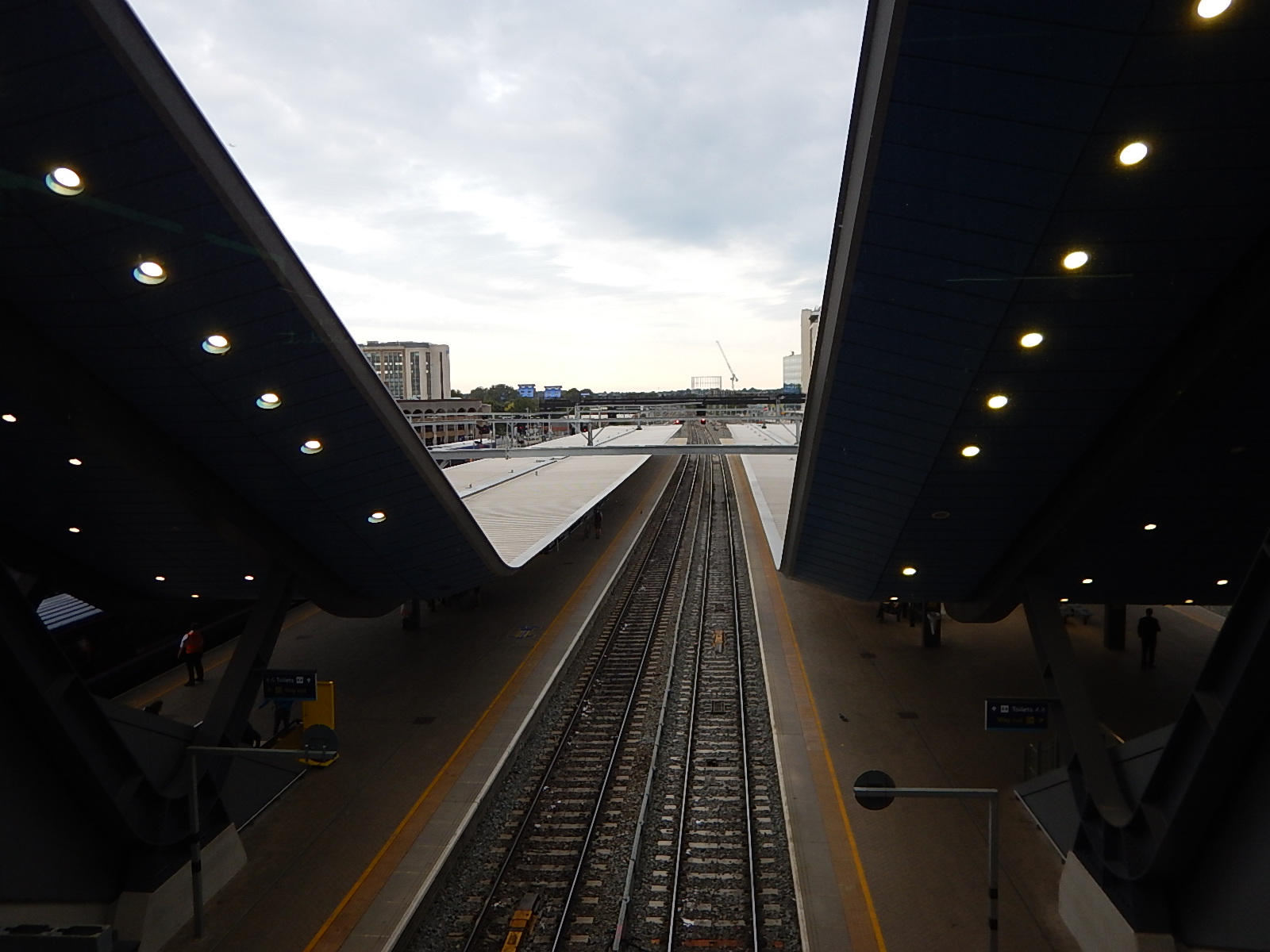
The platforms are connected to a wide overbridge with coffee kiosks and useful shops, by escalators and lifts.
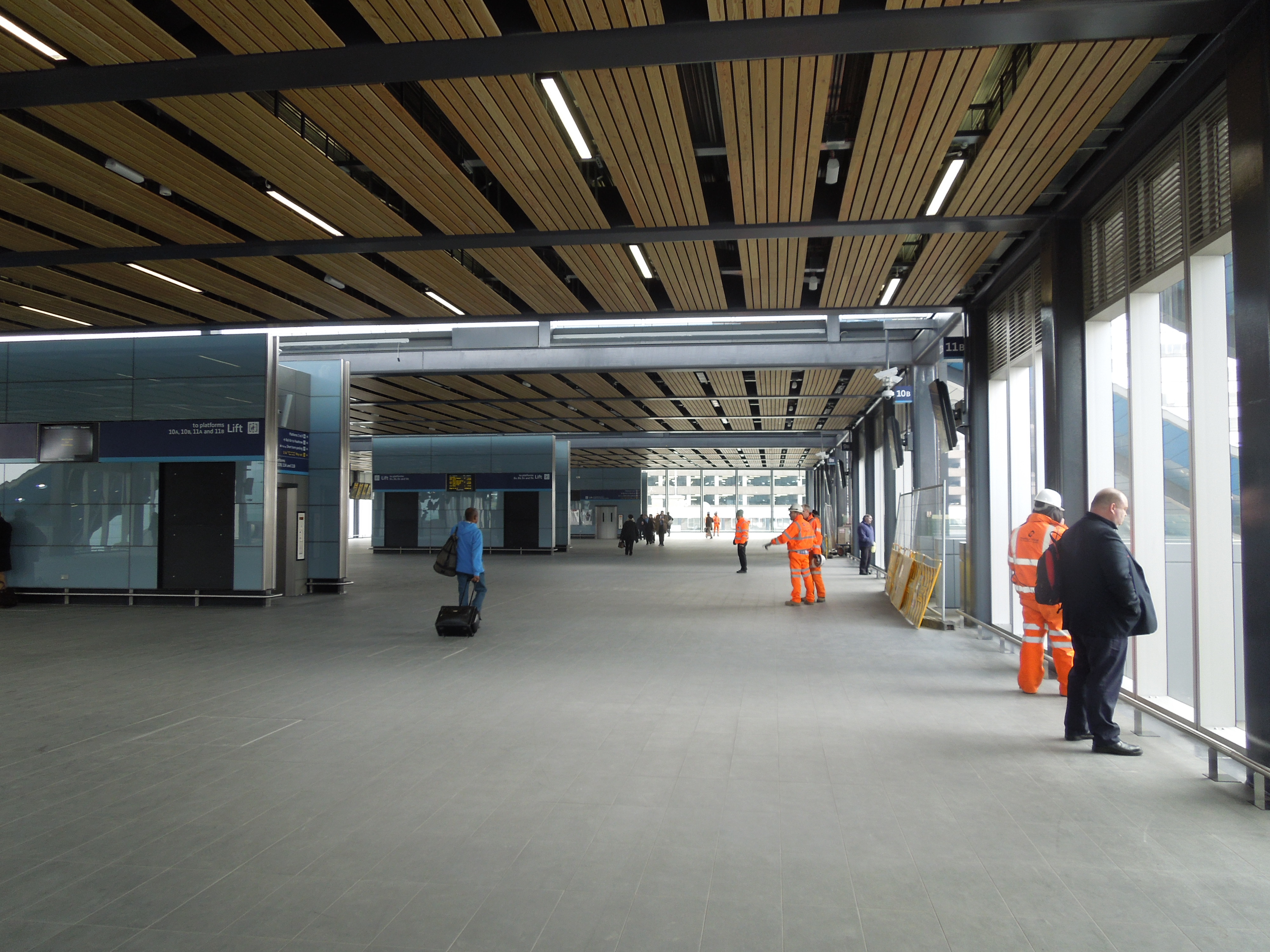
The picture shows the wide open spaces of the overbridge at Reading on the day it opened.
At Reading passengers can change trains, by waiting on the platform or sitting on the overbridge.
Would a similar design work at Woking?
Certainly something designed on similar principles to fit the circumstances of Woking station would!
Reading incidentally manages at least six tph on each face of the wide island platforms.
They are able to do this because.
- The platforms are very wide.
- Trains are increasingly Class 800 trains with modern doors.
- There are both up and down escalators.
- There are lifts.
I suspect, that when InterCity 125 trains no longer call at Reading and all trains are using modern in-cab signalling, that the frequencies of train through Reading will rise significantly.
Space To The West
To the West of Woking station, where the routes to Guildford and Basingstoke divide, there is a lot of space and if required a flyover or dive-under could be built to minimise the need for flat junctions.
West Byfleet and Byfleet & New Haw Stations
West Byfleet and Byfleet & New Haw stations are between Woking station and Byfleet Junction, where Heathrow and Waterloo services will divide.
This map from carto.metro.free.fr shows Byfleet & New Haw station and Byfleet Junction.
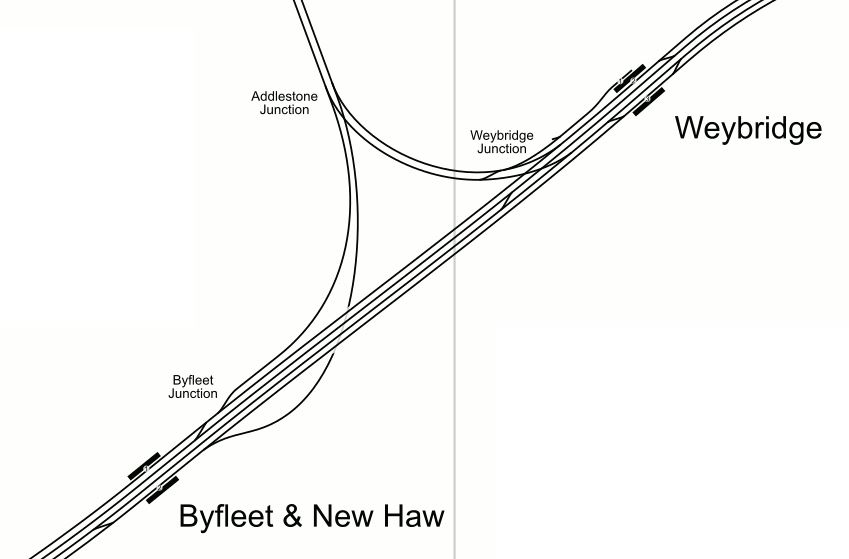
Note.
- There is only four tracks between Byfleet junction.
- Byfleet junction connects to the slow lines.
- Crossovers connect the slow and fast lines.
This layout means that fast trains coming from Heathrow will have to go through the slow platform at Byfleet & New Haw station.
There are two ways to increase safety.
- Increase the number of tracks between Woking station and Byfleet Junction to six, with dedicated tracks for Heathrow services.
- Rebuild the platforms on the two intermediate stations to the design rules in Two Platform Stations With 125 mph Trains.
It all depends, whether Heathrow Southern Railway want to use 125 mph trains on their services to Heathrow!
I discussed this in Will Heathrow Southern Railway Use Trains Capable Of 125 mph?, where I came the conclusion that the railway will be built to that standard.
Will Woking Station Be Rebuilt?
To work efficiently, as a railway station, I very much feel that Woking station will be rebuilt.
As at Reading, this will probably be done without too much disruption to passengers and trains.
It is quite a large station site and I wonder, if the ideal solution would be to build a concrete deck over the station and railway and put developments like housing, offices, shops, cafes and green spaces over the top.
Why shouldn’t we create more land for useful purposes?
The Station Concourse
The station could have a massive concourse.
- Wide lines of gates on either side would give quick access to the Town Centre and the Car Parking.
- Escalators and lifts would lead down to the platforms
- Useful shops and cafes would be on the concourse.
Think Edinburgh Haymarket station, only bigger, more spacious and with escalators
A Capacity Of 24 Trains Per Hour
The new station should be designed to allow up to 24 tph, through the station.
Currently, services include
- 14 tph to Waterloo
- 4 tph to Portsmouth
- 2 tph to Salisbury and/or Exeter
- 6 tph to Southampton, Bournemouth and/or Poole
Perhaps it would be sensible to design fora capacity of 12 tph on all branches.
With modern signalling and perhaps a degree of automatic train control, these frequencies shouldn’t be a problem.
Wide Platforms
Wide platforms, that allow passengers to change trains, by just getting off one train and onto another a few minutes later are an essential.
A double-faced island platform could be used or a single wide platform in each direction as on Thameslink at St. Pancras station.
The platforms at St. Pancras work reasonably well and have been designed to handle 24 tph.
- They have three escalators.
- They have a lift.
- The platforms are fully-manned.
- Passenger information displays are magnitudes better than most stations.
- There are Harrington Humps for step-free access to the Class 700 trains.
- Only one class of train uses the platforms.
- Modern digtal signalling is used.
- Passengers use the station to change trains, when perhaps they are on a train going to one direction and need another.
To complicate matters at St.Pancras, there is a flat junction to the North of the station, where services go to and from the Midland Main and East Coast Main Lines. It appears the junction causes no delays to services.
So perhaps at Woking we could see one very wide platform in each direction.
Building On Experiences At London Bridge, Reading And St. Pancras
I’m sure that Network Rail and their architects can use the experience gained at other stations in the UK to create an interchange station at Woking, that is fit for the 21st Century.
Conclusion
I feel there is a lot to be gained by creating a bold interchange at Woking station to integrate the Heathrow Southern Railway and the existing services into Waterloo
Will Heathrow Southern Railway Use Trains Capable Of 125 mph?
If the Heathrow Southern Railway is built, by the time it opens, there will have been significant developments.
- Digital signalling based on ERTMS, with the possibilities of a degree of automatic control will be commonplace.
- Train manufacturers will offer 125 mph trains, that with the right interiors will be able to perform well on 100 mph routes with frequent stops.
- 125 mph bi-mode trains will have arrived.
- Great Western Railway services into Paddington, with the exception of local services will be run by 125 mph Class 800 trains.
- The opening of Old Oak Common station with its connections to High Speed Two, may mean that some Great Western Railway services stop at that station.
These developments may mean that on the Western end of the Great Western Main Line, there will be a need for a train with a lot of acceleration, to avoid inducing delays in the complex schedule of trains serving Paddington and Old Oak Common stations.
The easy way to achieve the required acceleration, may be to use more powerful trains, which will probably be capable of 125 mph.
But would they offer advantages over other parts of the routes Heathrow Southern Railway will serve?
The following must be considered.
The Top Speed Of Third-Rail Trains
Currently, the Class 395 train, is the fastest train fitted with third rail shoes.
But the train only has a top speed of 100 mph, when on lines electrified using third-rail electrification.
The world record for a train powered by third-rail electrification was set by a Class 442 train at 108 mph.
As several trains in the UK can cruise at 125 mph, could it be that the dynamics of third-rail electrification impose a limit to top speed?
This article in Rail Magazine, is entitled Bombardier Bi-Mode Aventra To Feature Battery Power.
A few points from the article.
- Development has already started.
- The bi-mode would have a maximum speed of 125 mph under both electric and diesel power.
- The trains will be built at Derby.
In Mathematics Of A Bi-Mode Aventra With Batteries, I analyse the train in detail.
This was my conclusion.
I am rapidly coming to the conclusion, that a 125 mph bi-mode train is a practical proposition.
- It would need a controllable hydrogen or diesel power-pack, that could deliver up to 200 kW
- Only one power-pack would be needed for a five-car train.
- For a five-car train, a battery capacity of 300 kWh would probably be sufficient.
From my past professional experience, I know that a computer model can be built, that would show the best onboard generator and battery sizes, and possibly a better operating strategy, for both individual routes and train operating companies.
Obviously, Bombardier have better data and more sophisticated calculations than I do.
My calculation might be wrong, but it’s in the right area.
Using batteries with third-rail electric trains, may be an alternative way to overcome any problems with the dynamics of that method of electrification.
But I do suspect that if train manufacturers were asked to produce an electric train capable of running at 125 mph using third-rail electrification, they would take the money and build the trains.
Upgrading Track To 125 mph
Virtually all of Heathrow Southern Railway’s proposed or possible routes to the South and West of Heathrow are third-rail electrified
- The South Western Main Line to Southampton, Bournemouth, Poole and Weymouth has a 100 mph operating speed.
- The Portsmouth Diect Line to Guildford and Portsmouth has a 90 mph maximum speed.
South Western Railway know that speed on these routes sells tickets, so much so that they are refurbishing the Class 442 trains for the Portsmouth route because of their higher performance.
Network Rail may get a lot of criticism for their performance with electrification, which work on new track layouts and improvements,seems not to attract.
They have also been very successful in designing and executing 125 mph track upgrades to the Midland Main Line.
So would it be possible to upgrade some of the routes to allow faster running?
Consider.
- Fifty miles of line upgraded from 100 mph to 125 mph running saves six minutes.
- Waterloo to Weymouth is 143 miles.
- More powerful trains might save time on station stops.
- The routes are four tracks to Basingstoke.
- As modern digital signalling is applied to this route there will be further time savings.
At the moment there is no point, as South Western Railway only has trains with an operating speed of 100 mph.
But these trains will probably be replaced in the next few years or so and I wouldn’t be surprised to see them replaced with trains that are capable of 125 mph, which would make updating sections to the West of Woking possible.
South Western Railway
Surely faster services to Bournemouth, Poole, Portsmouth, Southampton and Weymouth will be of interest to South Western Railway, even if it means new trains.
The New Route Between Heathrow And Woking
Heathrow Southern Railway intends to build a new route between Heathrow Terminal 5 and Working stations.
- A tunnel will connect the Western end of Heathrow Terminal 5 station to new tracks running alongside the M25 to connect to the Chertsey Branch Line to the West of Chertsey station.
- Trains would pass through Chertsey and Addlestone stations, before joining the South Western Main Line at Byfleet Junction.
- Trains would pass through West Byfleet and Byfleet & New Haw stations to reach Woking station.
It is a well-designed route, that uses the M25 to minimise environmental damage.
From what I have said earlier about 125 mph third-rail trains, upgrading of routes to 125 mph and South Western Railways desire for faster services, I can see no reason, why this route shouldn’t be built for 125 mph operation.
125 mph trains would mean.
- Removing level crossings at Chertsey and Addlestone stations.
- Upgrading West Byfleet and Byfleet & New Haw stations.
- Probably upgrading between Byfleet Junction and Woking station for 125 mph running.
But there would be about fifteen miles of high speed rail line, which for ease of operation would probably be electrified with third-rail.
Trains would switch electrification systems in Heathrow Terminal 5 station.
Conclusions
I am led to the following conclusions.
- 125 mph third-rail trains will become a reality.
- South Western Railway and Heathrow Southern Railway will look at them seriously.
I also feel that Heathrow Southern Railway will be a 125 mph railway.
Two Platform Stations With 125 mph Trains
Increasingly, we are seeing stations in the UK, where there is only two platforms and trains pass through the station without stopping at 125 mph.
If HS4Air is built, there will be several stations between Gatwick Airport and Ashford, where this will happen.
I must admit, that I don’t like being on a platform, where trains past through, so perhaps it is a personal thing.
With me it’s not just 125 mph trains, but freight trains as well.
But for reasons of safety, I think we could come up with a better design of station.
I shall use Penshurst station on the Redhill to Tonbridge Line as an example.
This Google Map shows the station.

Note that it is very simple with a platform on each line.
Currently, it gets a single train per hour (tph) in both directions.
HS4Air would probably mean that at least another four tph, passed through the station at 125 mph.
Platform-edge doors would be a difficult and expensive solution, but why not make access to the platform only possible, when a train is stopping?
Looking at Penshurst station, this station also needs some more facilities, like a fully accessible footbridge.
The footbridge would be outside the secure area.
For slower passing trains and heavy freight trains, the use of wide platforms and rear access will suffice as these pictures from Hackney Wick station show.


If more stations were built to the rules used at Hackney Wick, the UK’s railways would probably be safer.
 The Anonymous Widower