Alternative Uses For Socks
I always carry a spare pair of socks in my man-bag.
Take today, I needed to bring home two bottles of beer safely from Sainsbury’s.
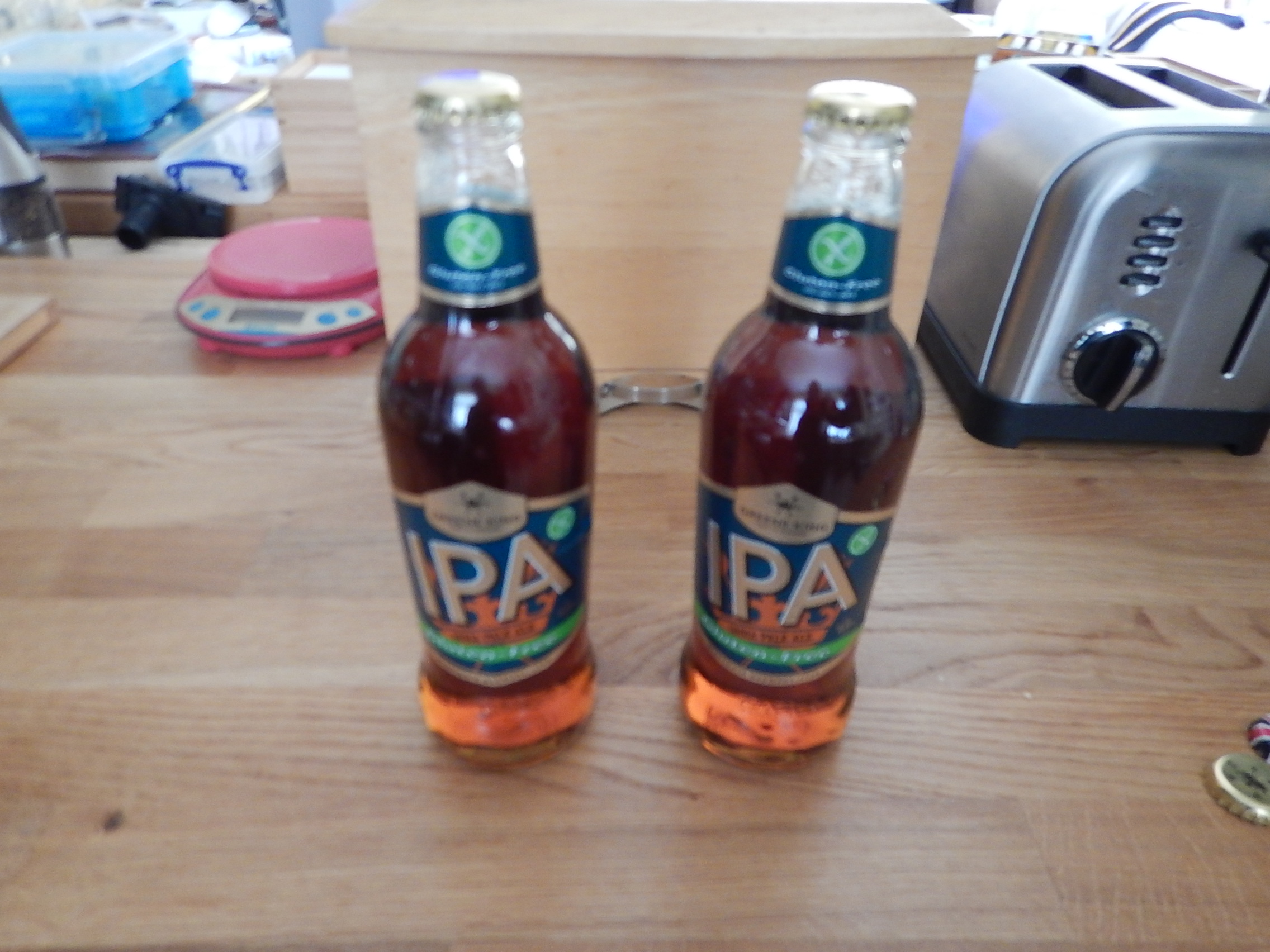
So each went in its own sock.

And they fitted snugly in my man-bag.

As you can see, they came home safely.
Northumberland Unveils £3.5m Rail Project To Bring Back Passenger Services
The title of this post, is the same as that of this article on Rail Technology Magazine.
The first three paragraphs describe the project.
A county council has unveiled a new plan to reintroduce direct trains between Newcastle and south-east Northumberland, bringing back passenger services to a current freight line in a £3.5m investment.
Northumberland County Council said it is “determined” to reintroduce the direct passenger services as it could boost the local economy by up to £70m, with more than 800,000 annual return journeys by 2038.
The trains would travel directly along a 20-mile freight route between Newcastle Central and Ashington in south-east Northumberland, and the council wants to submit formal proposals by the end of the year and commence passenger services in 2022.
Reinstating a twenty mile railway for £3.5million seems extremely good value, so I would assume that the money will take the project another phase down the tracks to a full reopening. I have seen figures quoted of hundreds of millions for the full project.
This article in the Newcasstle Chronicle, gives other information.
- The line could be open by 2022.
- The line passes through ten of the least affluent council wards in the country.
- SENRUG,, who are a local passenger group, describe the reopening, as one of the easiest in the country.
In 2017, I wrote Class 319 Flex Trains And Reopening Newcastle To Ashington.
This map from SENRUG, shows the lines North of Newcastle to Ashington and Blyth, which are now regularly referred to as the Northumberland Line,

Since I wroye the article about the lines, various things have happened.
- Class 319 Flex trains are now Class 769 trains and will enter service within three or four months.
- Network Rail have indicated that Ashington, Blyth and Tyne is a project they would welcome being built by a third-party, as I wrote in Network Rail Is Open For Business.
- Vivarail and others are working on the concept of pop-up stations.
I think we can file the Ashington, Blyth and Tyne reopening under Watch This Space.
We also shouldn’t ignore the fact, that if this reopening is successful, there are several other rail projects in the UK, where passenger services can be added to existing freight and mothballed lines.
- Camp Hill Line
- Joneybourne-Stratford-on-Avon
- Leamside Line
- March-Wisbech
- Middlewich Reopening
- Robin Hood Line Extension
- Southampton-Fawley
- West London Orbital
Is the Government and Network Railway sending in the Geordies first?
Grants To Support Low-Carbon Technology Demonstrators
The title of this post is the same as that of this article on Railway Gazette.
This is the two introductory paragraphs.
The Department for Transport has awarded grants of around £350 000 to each of five projects which aim to develop technology to reduce the rail network’s carbon footprint.
The projects were selected under the second round of the DfT’s First of a Kind competition, run by Innovate UK as part of the DfT’s wider Accelerating Innovation in Rail programme.
These are the winners.
Project 1 Riding Sunbeams
I wrote about this technology in Solar Power Could Make Up “Significant Share” Of Railway’s Energy Demand.
Project 2 Diesel Freight Carbon Reduction Technology
We all hate Class 66 locomotives, with their noise, vibration and pollution.
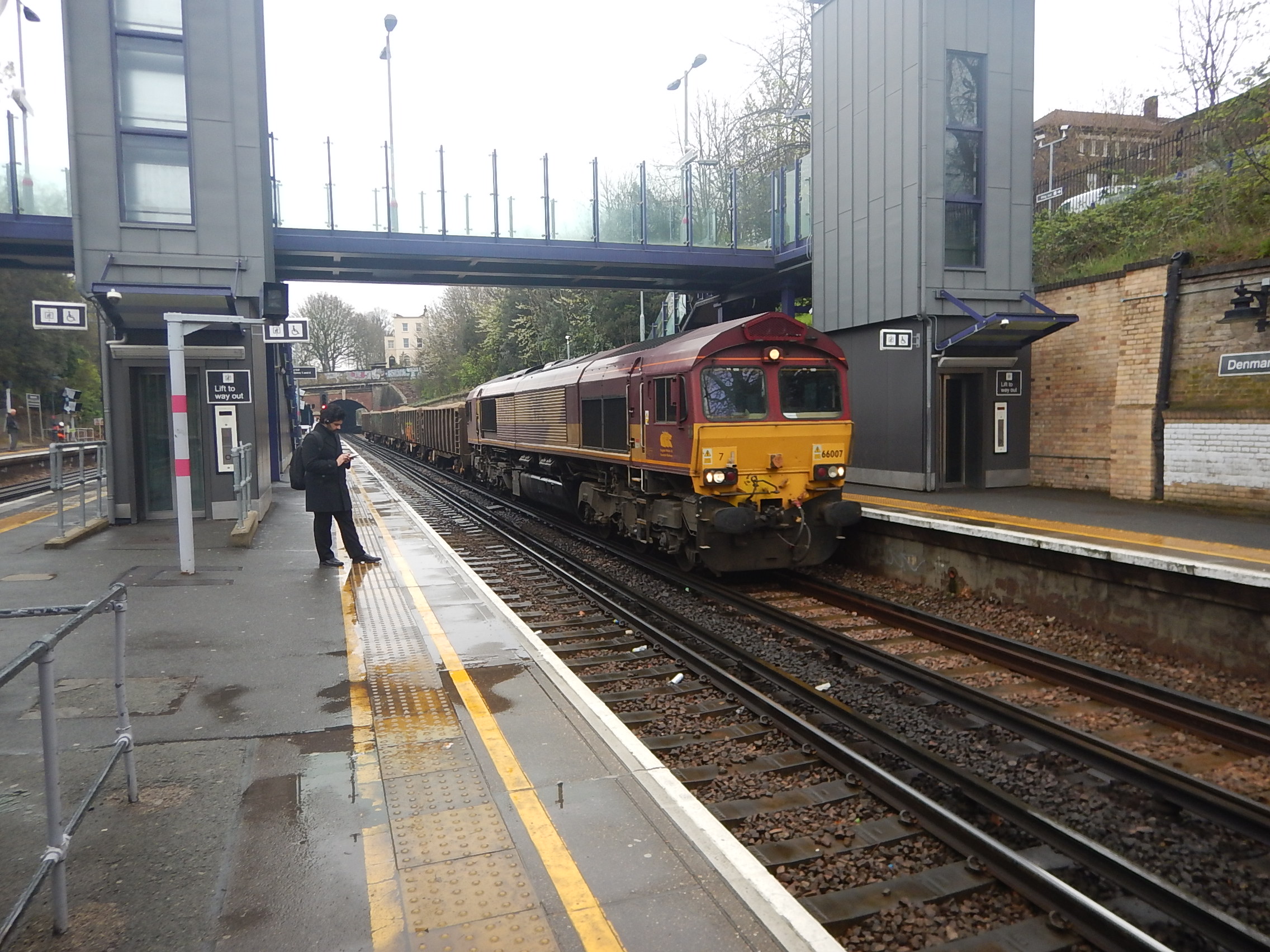
But an Essex company called Vortex Exhaust Technology has been awarded a grant to see if their free-flowing exhausts can tame, these most unfriendly of beasts.
They make this claim on their web site.
Vortex is the ONLY exhaust technology available that effectively eliminates back pressure, improving engine efficiency, boosting power and cutting emissions.
A Class 66 locomotive will be a tough challenge.
To see what the company can do for road vehicles, there is a case study at the bottom of this page.
But then they are Essex Boys! Performance is in the genes!
Project 3 CODD-P Hydraulic Pump
This is said in the Railway Gazette article.
Unipart Rail will undertake in-service testing of a commercial version of a digital displacement pump and electronic controller in place of a traditional hydraulic pump with swashplate design. This is expected to provide a significant reduction in fuel consumption.
It sounds like an idea from Artemis Intelligent Power in Edinburgh.
Project 4 Green Rail Exhaust After Treatment
This is said in the Railway Gazette article.
Leasing company Porterbrook will collaborate with Eminox to transfer an on-road exhaust after-treatment system widely fitted to heavy-duty vehicles to the railway environment, equipping a South Western Railway Class 158 DMU for in-service trials. This will enable the technical and commercial viability to be established, so it can be offered for widespread fitment.
There are currently 170 Class 158 trains and 30 of the closely-related Class 159 trains in service, so if this is successful, there won’t be a shortage of installations.
The picture shows one of East Midlands Trains, Class 158 trains.

It should also be said, that most Class 158 trains are in excellent condition, despite being nearly thirty years old.
Note that Porterbrook are involved. Train leasing companies seem to be getting increasingly involved with innovation.
Project 5 W2W Zero Emissions Power System
This is said in the Railway Gazette article.
Steamology’s Water 2 Water concept will use compressed hydrogen and oxygen gas in a ‘compact energy-dense steam generator’ to produce high pressure superheated steam to drive a turbine, which will generate electricity to charge the batteries as a ‘range extender’ for a Vivarail Class 230 multiple-unit produced from former London Underground vehicles.
It sounds to me, that the tabloids will say that this is the return of the steam train.
Conclusion
They are a broad spread of technology and I have this feeling, that the Department for Transport will get a sensible return for an outlay of around two million pounds.
But I suspect that the best and most profitable idea, will come, after a meeting between two or more of the award winners and their backers.
Walking Down Renwick Road To Barking Riverside
This morning, I walked down Renwick Road to Barking Riverside.
This Google Map shows the area.
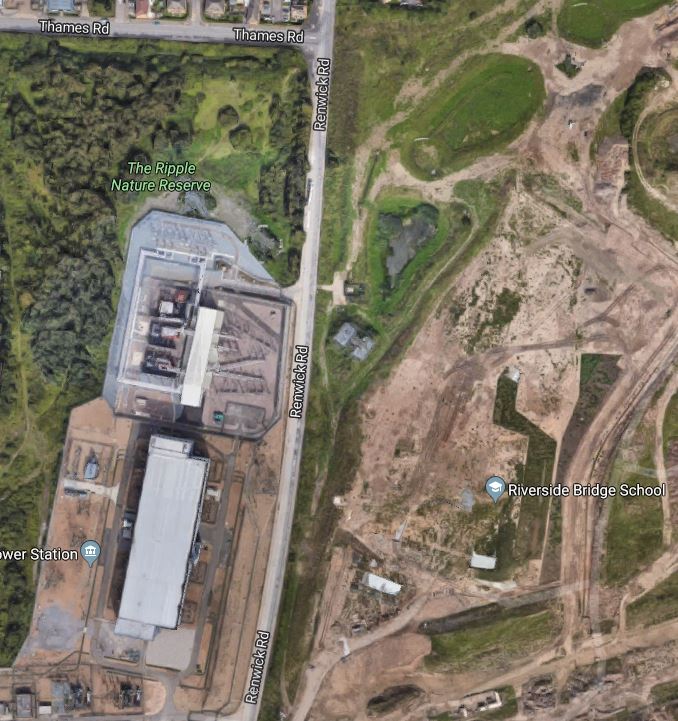
I started walking from Thames Road, turned South into Renwick Road and then walked to the bottom of the map.
- On the West side of the road is a Nature Reserve and the massive Barking sub station, which is a major distribution point for East London’s electricity.
- On the East side of the road is Barking Riverside Campus, which is a large school catering for a wide age range.
It appears that the Barking Riverside Extension of the Gospel Oak to Barking Line, will run between the campus and Renwick Road, according to this map.
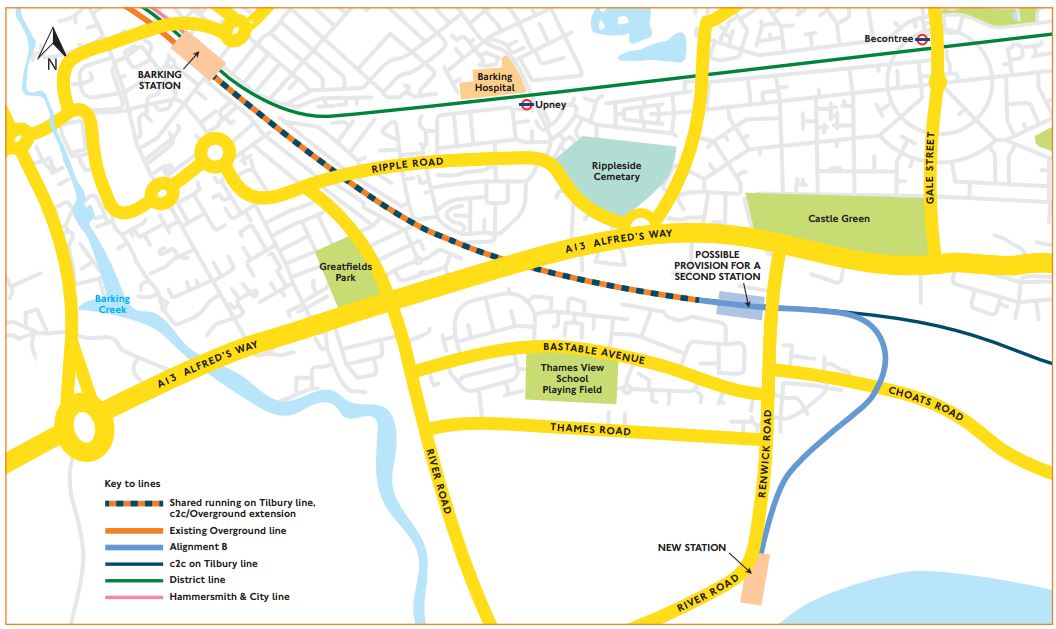
The location of Barking Riverside station is at the end of the branch line that comes South from the Barking to Tilbury Line.
I took these pictures as I walked.

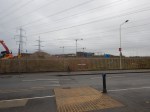

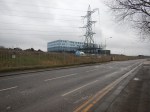
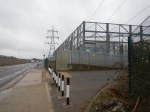
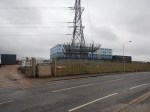
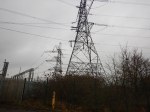

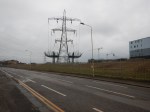



There are certainly a lot of large electricity pylons over the area.
I will be taking this walk, several times in the next few years to see how it changes, as the station is built.
The Hundred Mile City
I heard about The Hundred Mile City on the BBC London News
It will never happen!
- Can you imagine all London Boroughs agreeing to it?
- Negotiation would be like Brexit squared.
- Armies of Nimbys and the Council For The Fossilisation Of England would have a field day.
- Linear cities were proposed for Londonn to Southampton and Ipswich to Felixstowe in the 1960s.
On the other hand, as a child, I had dreams of a circular railway through where I lived in Cockfosters, as getting to Central London was fast, but getting to my friends and relatives in Edgware and Enfield was slow.
Note that the plans involve a circular monorail. Monorails are not very common, except at theme parks. That is an idea from well into the last century.
Today, we would use tram-trains, as they are so much more functional and easily extended.
Building Under The Wires At Barking Riverside
I went to Barking Riverside yesterday, where they are building over 10,000 housing units and took these pictures where the EL1 buses from Barking station turn round.
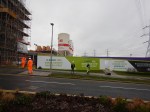




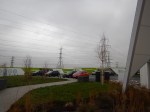

As the pictures show, there are a lot of high voltage cables running over the site.
The East London Transit
The EL1, EL2 and EL3 buses of the East London Transit connect the area to Barking station.
When I last came to this area, the buses weren’t to the high standard of New Routemasters.
New Hitachi Rolling Stock Unveiled by Hull Trains As Part Of £60m Investment
The title of this post is the same as that of this article on Rail Technology Magazine.
Five new Class 802 trains will replace Hull Train‘s current fleet of four Class 180 trains and an InterCity 125.
Currently, the InterCity 125 runs the service between Kings Cross and Beverley stations, whilst three Class 180 trains are needed to run the six round trips between Kings Cross and Hull stations.
So Hull Trains have a spare train, that can be in maintenance.
With five new Class 802 trains, replacing the current fleet, four will be needed for the current service, thus leaving a spare train.
The new trains will give various advantages.
- The Class new 802 trains have a top speed of 140 mph, whereas the current Class 180 trains can only do 125 mph.
- The Class 802 trains have an increase of thirteen percent in seating capacity.
- They will obviously have a better interior, with everything passengers expect.
In a few years time, the extra speed may offer a big advantage.
The Southern part of the East Coast Main Line is being upgraded to allow 140 mph running, which would probably save around ten minutes on a journey between Kings Cross and Hull stations.
Could this time-saving mean, that extra services between Kings Cross and Hull stations are possible?
If 140 mph running allowed a round trip in under five hours, I have a feeling this could mean over ten trains per day in each direction, if there are enough paths available.
But flights of Class 800 trains and Class 802 trains running at 140 mph might just do it.
Conclusion
What would ten trains per day between Kings Cross and Hull, do for the economy of Hull?
The East Coast Main Line might not have the 250 mph operating speed of High Speed Two, but 140 mph isn’t that slow.
Storage At Scale Competition
The title of this post is the same as that of this press release from the Department of Business, Energy & Industrial Strategy.
This is the details of the competition.
Innovative large-scale energy storage will play an important role in decarbonising industry, power, heat and transport.
This competition is looking for innovative, replicable solutions which could provide a market competitive alternative to conventional commercial large scale energy storage technologies, for example pumped-hydro or batteries (such as lithium ion, lead acid or sodium-sulphur).
A range of electrical energy storage technologies are within scope, with a target minimum output power of 30 MW or minimum capacity of 50 MWh. Power-to-X technologies (e.g. power-to-gas) with a target minimum input power of 5 MW are also in scope.
Up to £20 million will be available from 2019 to 2021. The competition will support up to 3 demonstration projects with build completion by March 2021 and operational testing to be completed December 2021.
Projects should be at a technology readiness level of 6 or above, which could result in lower capital or operating costs to the traditional storage technologies, or improved capacity, sustainability and response rates at a comparable cost.
A few thoughts.
The Minimum Output Power
A minimum output of 30 MW is specified.
To put this in context, the pumped-storage Dinorwig Power Station, has a maximum power output of 1,800 MW.
The Minimum Capacity
A minimum capacity of 50 MWh is specified.
Dinorwig has a capacity of 9.1 GWh
Power-to-X Technologies
As Power-to-gas is mentioned, I would feel that this refers to a process like electrolysis, where electricity is perhaps converted into hydrogen, which can be stored and then converted back to electricity using fuel cells or combustion and a steam turbine.
Conclusion
The competition looks to me to be a good idea.
Let’s hope it produces something worthwhile.
How UK Carbon Emissions Tumbled
The title of this post is the same as that of this article on I News.
This is the first paragraph.
Amid the doom and gloom, there is thankfully one piece of good news today. The amount of carbon dioxide the UK pumps into the atmosphere through its power generators, car exhausts, wood burners and industry has dived by 38 per cent since 1990. A statistic that’s even more impressive when you consider the population has grown by nearly 10 million during that period.
So how has this happened?
- The reduction in the number of coal-fired power stations.
- We are using less energy, because of more efficient electrical equipment and devices.
- There is less heavy engineering.
Let’s hope this downward trend continues.
 The Anonymous Widower