Thoughts On Eurostar To North Netherlands And North West Germany
I have now taken Eurostar to Hamburg twice, with a change at Amsterdam Centraal.
The first time, I took two German Inter City trains, with a change at Osnabruck. I wrote about it in From Amsterdam To Hamburg The Hard Way.
On my latest trip, I took the following route.
- An overnight stay in Amsterdam
- Train from Amsterdam Centraal to Groningen with changes at Almere Centrum and Zwolle
- An overnight stay in Groningen
- Rail Replacement Bus from Groningen to Leer
- Train from Leer to Bremen
- Train from Bremen to Bremerhaven
- Train from Bremerhaven to Hamburg
Note.
- There are no direct trains between Amsterdam Centraal and Groningen. Most involve a quick interchange at Almere or Utrecht.
- Amsterdam Centraal to Groningen is electrified.
- Amsterdam Centraal to Groningen takes two hours six minutes on the fastest train.
- When the bridge over the Ems is rebuilt, there should be an hourly train between Groningen and Leer, rather than a two-hourly bus.
- Leer to Bremen is electrified and takes under an hour and a half.
- I took a roundabout route from Bremen and Hamburg, as I wanted to check that the hydrogen-powered trains were running.
- There are direct trains between Bremen and Hamburg.
Could The Slower Route Be Improved?
My thoughts are as follows.
Between Amsterdam Centraal And Groningen
Consider the following.
- The Dutch probably planned the timetable before Eurostar served Amsterdam.
- Eurostar is going to three trains per day between London and Amsterdam
- There are new Dutch InterCity trains on order for other routes.
- A direct service between Amsterdam Centraal and Groningen could probably be under two hours, with perhaps two stops.
- On my trip, the trains trundled along at 50-60 mph, which isn’t very fast.
For these reasons, I would rate it highly lightly that the Dutch will think about a direct service.
Between Groningen And Leer
Without doubt, the problem on this section is the bridge over the Ems.
I estimate the following.
- The mainly single-track railway without electrification between Groningen and Ihrhove near Leer is about seventy kilometres.
- After the bridge is rebuilt, one of Arriva’s Stadler GTWs could do the journey in perhaps 30-35 minutes.
- A bi-mode Stadler Flirt, like one of Greater Anglia’s Class 755 trains, which have a top speed of 100 mph and bags of grunt could probably break the half-hour.
Some web sites put the opening of the new bridge in 2024. I’m reasonably certain, that by that date, an electric train with these power systems would be able to handle the route.
- Dutch electrification
- German electrification
- Batteries
Bombardier and Stadler are certainly aiming to have battery-powered trains in service by the bridge opening date.
Between Leer and Bremen/Hamburg
This electrified double-track section has the following timings.
- Leer and Bremen – 1:24
- Leer and Hamburg 2:23
There doesn’t appear to be any major improvements needed.
Times On The Two Routes Compared
How do the fastest times on the two routes compare?
Via Osnabruck
This is the only route available and the fastest times are something like.
- Amsterdam Centraal and Bremen – 4:16
- Amsterdam Centraal and Hamburg – 5:14
It appears that most services go to both Bremen and Hamburg.
Every time, I’ve changed at Osnabruck, the second train has been late.
Via Groningen
I would estimate the best fastest times are something like.
- Amsterdam Centraal and Bremen – three hours
- Amsterdam Centraal and Hamburg – four hours
I am very surprised that the route via Groningen could appear to be over an hour faster.
Trains For An Amsterdam Centraal and Bremen/Hamburg Service Via Groningen
At present, this service would not be possible, because of the bridge over the Ems.
The route has the following characteristics.
- Dutch electrification at 1.5 KVDC between Amsterdam Centraal and Groningen.
- No electrification from Groningen between Groningen and Ihrhove, which is seventy kilometres.
- German electrification at 15 KVAC between Ihrhove and Bremen/Hamburg
There are several trains that can handle both electrification systems at the two ends of the route, it’s just the seventy kilometres in the middle.
In my view there are several ways to bridge the gap.
Electrification
The Dutch or the Germans can probably electrify the line on time and on budget better than we could.
But which electrification system would be used?
Diesel
Using a dual-mode bi-mode train, that could also run on diesel would be a possibility and I’m sure that Bombardier, Hitachi and Stadler could supply a more or less off-the-the-shelf train, that could run at up to 200 kph where possible and handle the section without electrification on diesel.
But using diesel in an area developing a green economy based on wind power and hydrogen, is probably not a good marketing idea.
Hydrogen
If diesel can handle the route, I’m certain that hydrogen could be used on the section without electrification.
Battery
The section without electrification is only seventy kilometres and in a few years time will be totally in range of a battery train, that charged the batteries on the end sections. Power changeover could be arranged in Leer and Groningen stations if this was thought to be more reliable.
Note that in Hitachi Plans To Run ScotRail Class 385 EMUs Beyond The Wires, I write that Hitachi are claiming a battery range of sixty miles or a hundred kilometres with a Class 385 train with batteries in a few years time. Hitachi won’t be the only train manufacturer with the technology to build a suitable product.
I have to conclude that Groningen and Leer is a classic application for battery power.
Intermediate Stops For An Amsterdam Centraal and Bremen/Hamburg Service Via Groningen
Obviously, the Dutch and the Germans, should know their market and would know where the trains should stop.
Having experienced the route in the last few days, the following stops could be possible.
- Almere Centrum
- Zwolle
- Groningen
- Leer
- Oldenburg
But with modern trains, that have a minimum dwell time at stations, there may be more stops than some might think.
Which Company Would Run The Service?
I don’t know anything about the complications of running international trains, even when they are totally in the Schengen Zone.
In the UK, Amsterdam to Hamburg is the sort of service that would be proposed by a well-funded Open Access Operator.
The company, who would benefit most from this service is Eurostar.
So could we see Eurostar operating or sponsoring Open Access feeder services in Europe, using say 200 kph trains?
Conclusion
It would appear that the following journey times are possible.
- Amsterdam Centraal and Bremen – three hours
- Amsterdam Centraal and Hamburg – four hours
For this to be possible the following is needed.
- The bridge over the Ems is rebuilt.
- Battery power works as its developers hope it will.
How many other routes in the world, would benefit from a similar philosophy?
Hamburg
I took these pictures in the centre of Hamburg, after taking a U-Bahn train to the Rathaus.




I should say that it took me under thirty minutes to get to the Airport from this area. So it was a good place to kill some time, rather than wait at the Airport.
Clooney Calls For Brunei Hotels Boycott Over Brunei LGBT Laws
The title of this post is the same as that article on the BBC.
Isn’t it about Islam and some of its adherents realisae that we now live in a modern world, where everyone has human rights!
Will I be following George Clooney’s boycott?
Of course, just like I don’t visit countries that regularly use the death penalty or have obscene human rights policies.
My First Ride In An Alstom Coradia iLint
I’m finally, riding in a hydrogen-powered Alstom Coradia iLint train through the German countryside.

Not as quiet as the two battery trains, I’ve ridden, but that’s because It feels to me that the traction motors are crudely under the passengers and cardan shafts are used to drive the wheels!
Battery electric trains with regenerative braking should be virtually free of any mechanical noise. Both the Class 379 and Class 230 battery demonstrators were almost silent. As electricity generated from hydrogen doesn’t appear to generate much noise, then a hydrogen-powered train can also be almost silent.
From talking to fellow passengers, it would appear that the train has been very reliable in service.
Alstom are proving hydrogen would work well in a train designed for that purpose, but updating a DMU with a mechanical transmission, possibly isn’t the way to go.
Class 321 Breeze Train
I think that the Class 321 Breeze train will be quieter and faster.
It appears too, that if Alstom’s conversion follows the design of the Class 321 Renatus, the train will have a totally flat floor.
Come to think of it, I can’t think of a train running in the UK, that doesn’t have a totally flat floor!
The iLint, like the Lint has several sets of steps.
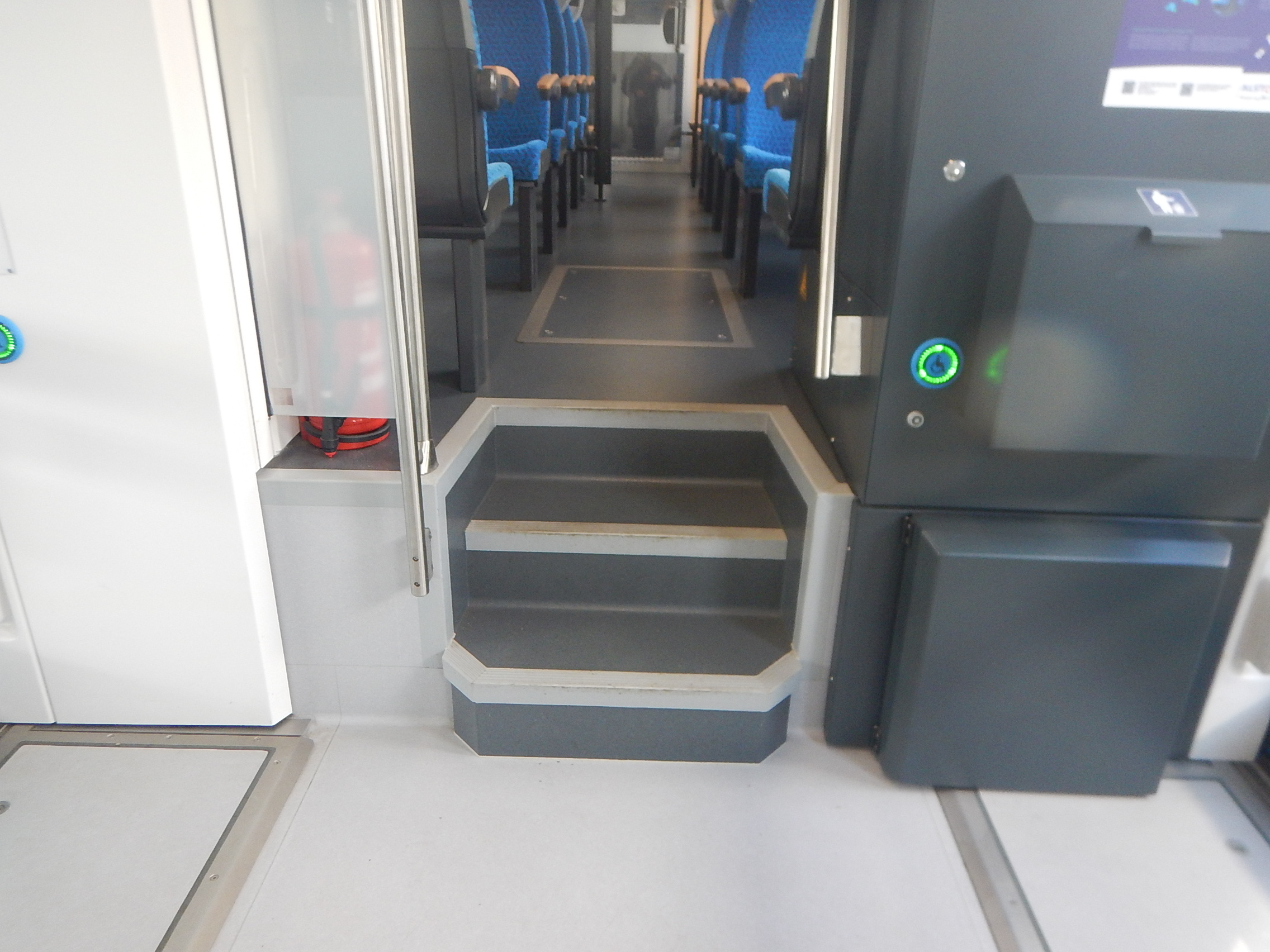
These are not acceptable in a modern train, bus or tram.
Lint 41 And iLint Compared
It is interesting to compare the iLint with the current diesel Lint 41s on the route.
- The iLint is faster and may accelerate better.
- The iLint is based on the bigger Lint 54, so it has more seats and two doors instead of one on each side of the cars.
- The newer iLint appears to have a higher quality interior.
I feel that the iLint will be quicker on a real.route.
The Future Of Buxtehude And Cuxhaven
Currently, to go between Buxtehude and Cuxhaven and back to Buxtehude takes around five hours. So that means the current hourly service needs five trains.
But if the iLint could do a round trip in four hours, the number of trains would be teduced to four.
If to increase capacity, all trains were pairs of iLints, the number of trains required would be eight.
Supposing it was required to double frequency, this would mean sixteen trains would be needed!
And how many trains have been ordered? Sixteen!
Coincidence or good planning?
Publicising The Achievement
When Bombardier created the Class 379 IPEMU, they made certain that there was a lot of local publicity including a report on BBC Look East.
I made a point of asking local residents about the train and no-one had heard of it. Although, I must say that students who regularly used the train, were very much in favour.
This was the only information, I found about the train.
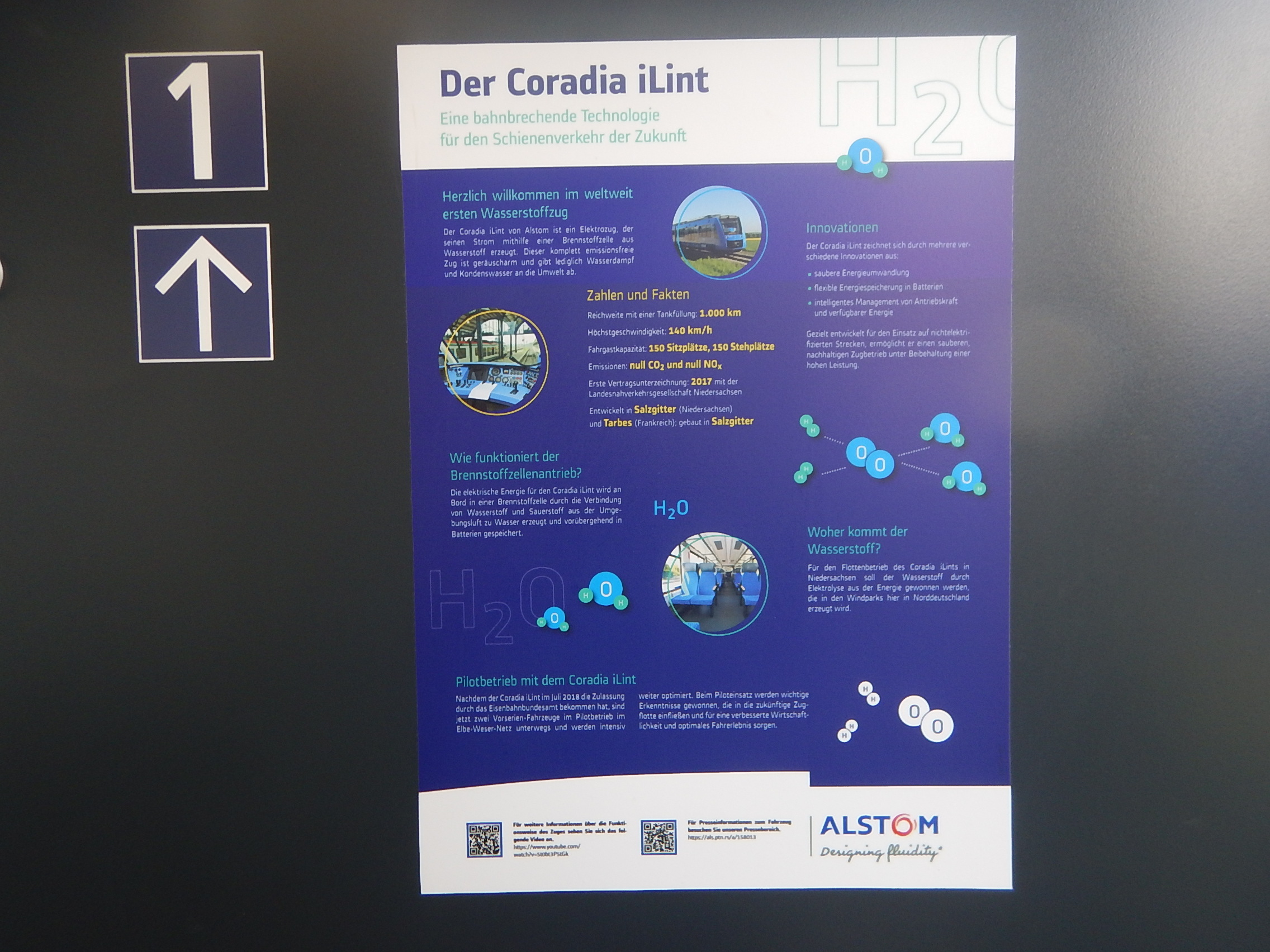
It was only in German, which I can read,. But surely, such an important achievement deserves better publicity and explanation in perhaps German, English and French.
Conclusion
Alstom have proved that hydrogen-power is possible in a smaller train, suitable for regional routes.
My reservations are totally about the Lint, which is an inferior train compared to many others that I’ve ridden in the UK and Europe.
I wouldn’t like to use the train in a wheel-chair!
The next generation of purpose-built trains with hydrogen power will be much better!
Hamburg S-Bahn Trains
These trains of the Hamburg S-Bahn are fairly typical of Germany.
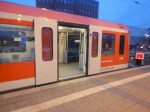
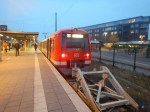
Note.
- They have step-free access from platform to train, which is rare on the German rail network.
- There are no phone charging points or wi-fi, but on the surface there is a good 4G signal.
- The seats are not as comfortable as those on a Class 378 train.
They seem to cope reasonably well with heavy traffic in the Peak.
Groningen Station
Groningen station sits at the centre of a rail network reaching to Delfzijl, Eemshaven, Harlingen,, Leer, Leeuwarden, Veendam and Zwolle.
These pictures show the station.
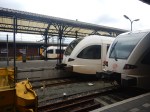
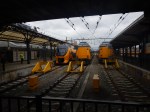



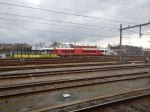
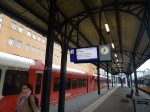

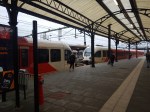
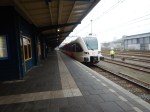
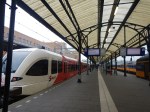
Note.
- The large numbers of Stadler GTW trains, which Arriva call Spurt.
- The decoration in the Booking Hall.
- The multiple bay platforms, some of which are electrified.
It is certainly a station worth a visit.
The Harlingen–Nieuweschans Railway
Groningen station is on the Harlingen–Nieuweschans Railway.
- It stretches from Harlingen. on the Ijsselmeer in the West to Leer in Germany in the East.
- The distance is around eighty miles.
The railway was originally built for trade between the port at Harlingen and Cerntral Europe.
Unfortunately, the Eastern section is cut-off as the freighter; MV Emsmoon, destroyed a bridge. Wikipedia says this about the accident.
On 3 December 2015, Emsmoon collided with the Friesenbrücke [de], which carries the Ihrhove–Nieuweschans railway over the Ems. The cause of the accident was reported to be miscommunication between the bridge operator and pilot on board the ship. The bridge could not be raised as a train was due, but the ship failed to stop and collided with the bridge, blocking both railway and river.[4] The bridge was so severely damaged that it will have to be demolished. Replacement is expected to take five years.
Was für ein Haufen Wichser!
And we think, we have problems with level crossings!
Conclusion
Groningen would make a base from where to tour the area. But it will be even better, when the bridge over the River Ems has been rebuilt!
From Bremen Hauptbahnhof To Buxtehude
This should have been an easy journey with a change at Bremerhaven Hbf.
But it wasn’t and I had a nearly eighty minute wai at Bremerhaven.
If this sort of ptoblem had occured with most railway conpanies, you’d have got accurate updates and information, but even though there were some announcements, even the German passengers were confused.
I temember one incident on Greater Anglia on an extremely windy day, when a tree brought the overhead wires down at Chelmsford. Station staff at Colchester were handing out refund forms and I got refunded my trip back to Liverpool Street.
But where were the Germans?
Nowhere to be seen for a start!
I thought EU regulations laid down a tefund policy, if trains were late.
When I got to Buxtehude, a fellow passenger told me there had been signalling problems.
How do I claim my refund?
Oldenburg Station
Oldenburg station caught my eye as I passed through.
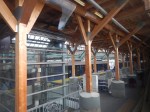
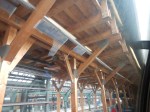
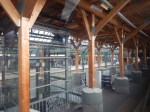
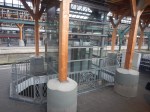
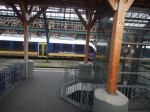
It’s good to see a new well-designed timber roof.
Having read the Wikipedia entry for the station, it appears that Oldenburg could have been an ideal place for a pit-stop.
Bremen
I took a detour from Bremen Hauptbahnhof, when I changed trains to walk to the centre.


If there’s a convenient hotel, it looks like it could be a place for a pit-stop or overnight stay.
By the way, the sausage appeared to be gluten-free, as I certainly had no reaction and German sausages usually are.
An Uncomfortable Seat
The Germans don’t encourage you to sit down in stations and this seat at Bremerhaven Hauptbahnhof is typical. That’s if there are any seats!
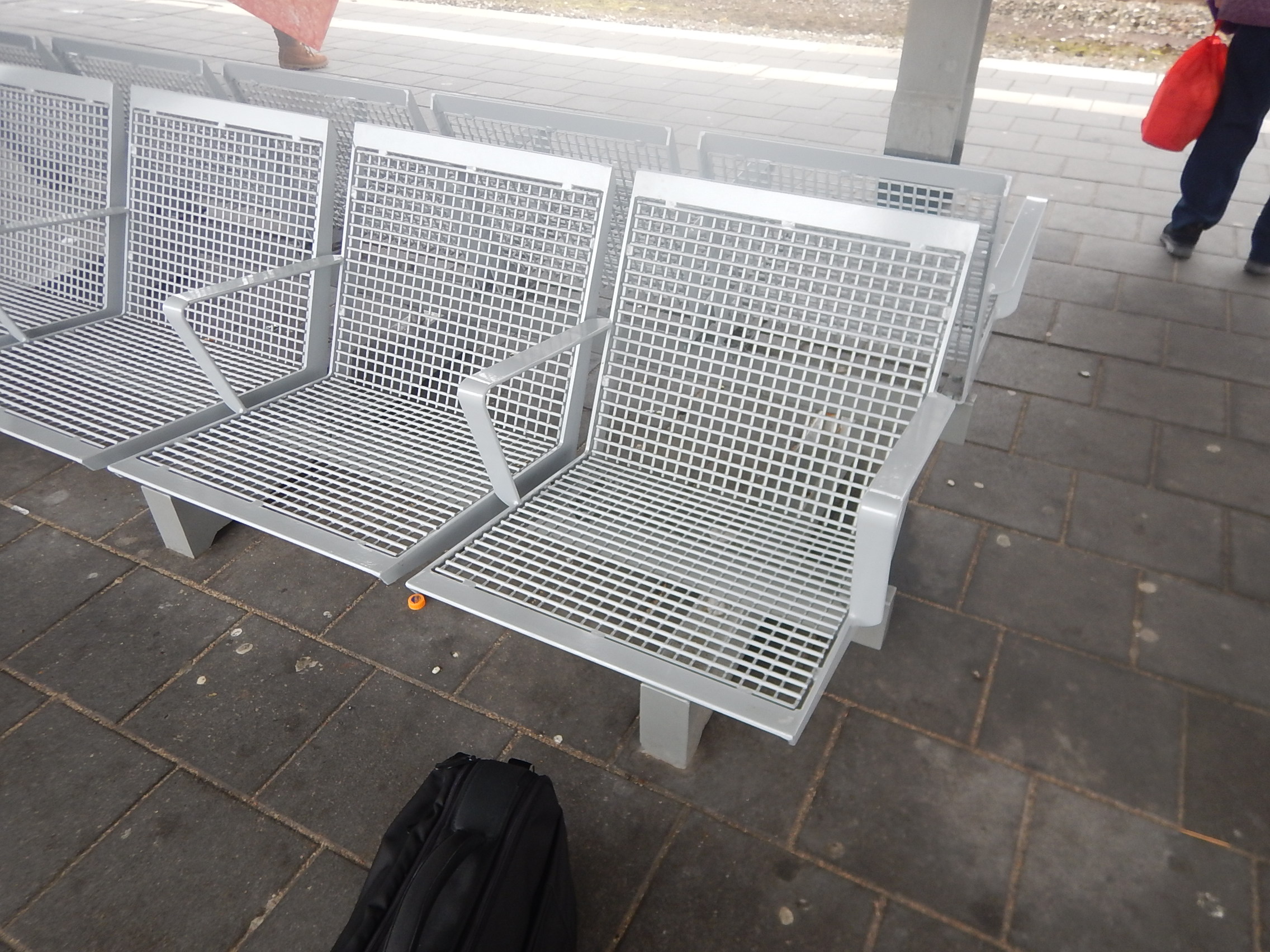
I think I’ll take a blow-up cushion on my next trip to Germany! Or on Thameslink!
 The Anonymous Widower