St. James Station To Reopen
This article on the Liverpool Echo is entitled Merseyside Set To Get Two New Train Stations As Part Of Massive Transport Investment.
One of the new stations will be a reopened Liverpool St. James station, which closed in 1917.
This Google Map shows the location of the station.

In the North-East corner is Liverpool’s Anglican cathedral.
In the South-West, there is a large road junction, where Parliament Street meets St. James Place. To the South-West of this junction, there is a black hole.
This Google Map shows a close-up of the hole.
Note the railway tracks in the dark of the hole.
This was where St. James station was located between Liverpool Central and Brunswick stations.
It would be a challenge to design a station, but one that a decent architect should enjoy.
This page on Disused Stations gives more details and several pictures of the station in all its glory.
Does The Acceleration Of The TransPennine Upgrade Have Anything To Do With Boris?
In Issue 885 of Rail Magazine, which was published on 14/08/19, there is an article, which is entitled Johnson Vows To Build New Manchester-Leeds Line, where this is said.
New Prime Minister Boris Johnson has pledged to fund a new line as part of Northern Powerhouse Rail in what has been described by leaders in the North as a “seminal moment”.
Speaking in Manchester on July 27, Johnson said. “I want to be the PM who does with Northern Powerhouse Rail what we did with Crossrail in London. And today I’m going to deliver on my commitment to that vision with a pledge to fund the Leeds to Manchester route.
“It will be up to local people and us to come to an agreement on the exact proposal they wat – but I have tasked officials to accelerate their work on these plans so that we are ready to do a deal in the autumn.”
Since Boris’s speech, plans for improvements between Huddersfield and Dewsbury have been announced and now it seems that Network Rail have published plans for full electrification between Huddersfield and Leeds, as I discussed in Is There Going To Be Full Electrification Between Leeds And Huddersfield?.
Whether you are for or against Boris, he certainly seems to have got action from Network Rail.
Is There Going To Be Full Electrification Between Leeds And Huddersfield?
This article on Rail Technology Magazine is dated 23/08/19 and is entitled Network Rail Reveals Detailed £2.9bn Upgrade Plans For TransPennine Route and it prompted me to write this post of the same name.
The Rail Technology Magazine article talks about a comprehensive upgrade to the Huddersfield Line is planned that includes.
- Improvement between Huddersfield and Westtown
- Grade separation or a tunnel at Ravensthorpe
- Rebuilding and electrification of eight miles of track.
- Possible doubling the number of tracks from two to four.
- Improved stations at Huddersfield, Deighton, Mirfield and Ravensthorpe.
I have now found this document on the Network Rail web site, which is entitled Huddersfield to Westtown (Dewsbury).
This statement is included under proposals.
Electrification of the railway from Huddersfield to Ravensthorpe – and right through to Leeds.
Because there is a dash in the words, has electrification to Leeds, been a recent addition?
It certainly doesn’t fit with the Rail Technology Magazine article.
It also doesn’t fit with this article on the BBC, which is dated 20/08/19 and is entitled Detailed TransPennine £2.9bn Rail Upgrade Plans Unveiled.
Electrification is mentioned in the second paragraph.
Network Rail has also announced it intends to electrify the line between Huddersfield and Dewsbury and double the number of tracks from two to four.
And in the sixth paragraph.
Network Rail said the proposed major overhaul and electrification work would be carried out on an 8-mile (13km) section of the route, with the “first round” of consultations starting with those living closest to the railway.
The two news sites seem to have used the same source.
The BBC also uses this map, that I have copied from the Network Rail document
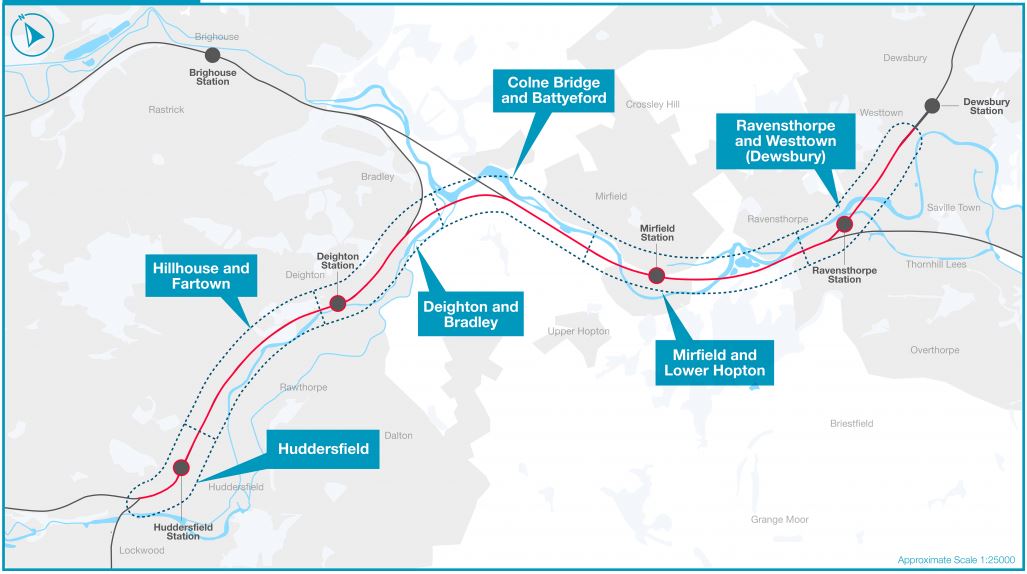
Note the railway lines shown in red. Are these the ones to be electrified? As they go from Huddersfield to Westtown, I think the answer is probably in the affirmative.
I seems to me, that Rail Technology Magazine and the BBC are using a common source and could it be an earlier version of the Network Rail document.
But the map, I have shown, shows the electrification only going as far as Westtown, despite coming from a document, that states twice that the electrification is going as far as Leeds.
It is certainly sloppy documentation.
Track Layouts
This document on the Digital Railway web site is dated 16/08/18 and is entitled Transpennine Route Upgrade SDO1 ETCS – Analysis.
Significantly, it is written by the Digital Railway – Joint Development Group (JDG), which consists of representatives of Siemens, Hitachi, ARUP and Network Rail.
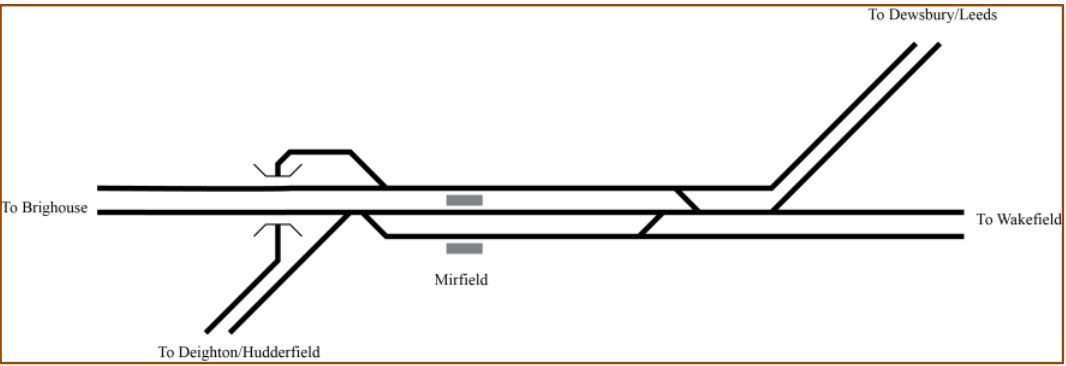
It is mainly about using digital signalling called ETCS on the Transpennine Route, but it does give these track layouts between Huddersfield and Dewsbury.
This is the current layout.
There is also this full four-track layout, which I assume was the original plan.
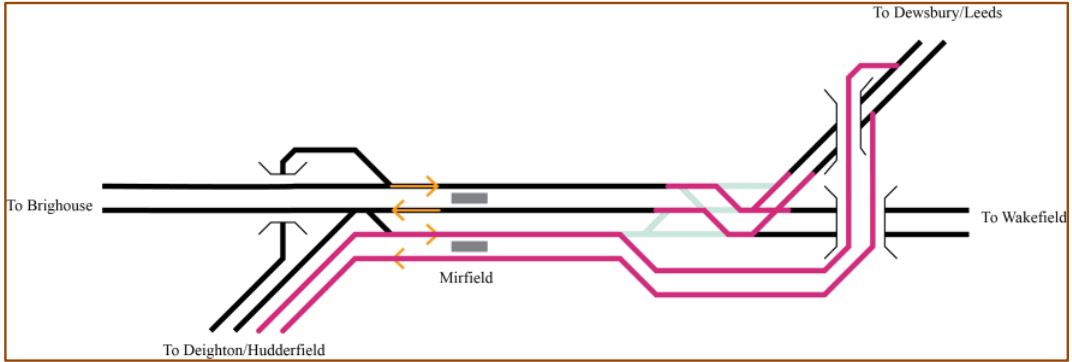
It is more complicated and involved the building of bridges in the area of Ravensthorpe station.
There is also a reduced four-track layout, which I assume was developed as the track analysis progressed.
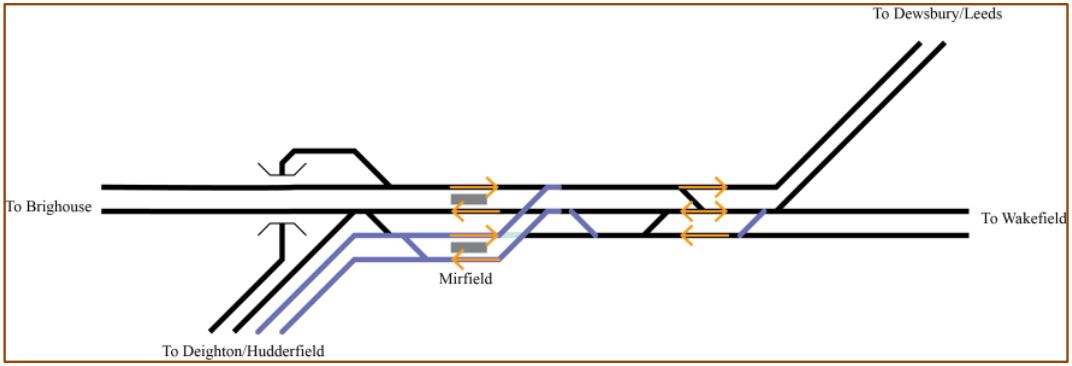
It is not a massive upgrade from the current layout.
As I see it, if the reduced layout can handle the required number of services, it has major advantages over the full scheme.
- There are no changes to track layout between Ravensthorpe and Dewsbury stations.
- Rebuilding Ravensthorpe station should be a smaller project.
- The current and reduced layout have three tracks between Mirfield and Ravensthorpe stations.
- There are no expensive new bridges to be built.
To make the scheme work there is a small amount of bi-directional running on the centre track, which is made possible by using digital signalling on the route.
Track Usage
By using bi-directional running on the centre track between Ravensthorpe and Mirfield stations, which is controlled by ETCS, the track layout is simplified, with three tracks instead of four.
- Slow trains from Huddersfield to Dewsbury will dive under the Brighouse lines and call in/pass Platform 1 at Mirfield station before going straight on to Ravensthorpe and Dewsbury. This is as trains do now.
- Slow trains from Dewsbury to Huddersfield will use the centre track from East to West and call in/pass Platform 2 at Mirfield station before turning South-West on to Huddersfield. This is as trains do now.
- Fast trains from Huddersfield to Dewsbury will call in/pass Platform 3 at Mirfield station and then cross over to the top track and go straight on to Ravensthorpe and Dewsbury.
- Fast trains from Dewsbury to Huddersfield will use the centre track from East to West and call in/pass Platform 4 at Mirfield station before turning South-West on to Huddersfield.
- Trains from Brighouse to Wakefield will call in/pass Platform 1 at Mirfield station and then cross to the centre track and go straight on to Wakefield. This is as trains do now.
- Trains from Wakefield to Brighouse will use the centre track from East to West and call in/pass Platform 2 at Mirfield station and go straight on to Brighouse.
Note.
- Platforms at Mirfield station are numbered 1 to 4 from the North
- The slow lines between Mirfield and Huddersfield are shown in black.
- The fast lines between Mirfield and Huddersfield are shown in blue.
- Passengers can use Platforms 1/2 as a cross-platform interchange between slow Huddersfield-Leeds and Brighouse-Wakefield services.
I also think it likely, that the proposed layout will improve the timetable.
Does The Reduced Layout Produce A Cost Saving?
In one of the first jobs I did at ICI Plastics Division, I simulated a chemical process on an analogue computer. My mathematics showed they could use much smaller vessels, which meant the height of the plant could be reduced by a few metres. I remember the engineer in charge of the project being very pleased, when he told me, that height costs money.
- The reduced layout removes three bridges, which must mean a cost saving.
- There is probably less track to lay
The negative is that digital signalling with ETCS must be installed through the area. This is going to be installed on the UK network, so it probably needs little more than shuffling the installation order.
On balance, when all things are considered, I suspect if the reduced layout can be used, there will be substantial cost savings on the project.
Problems At Morley Station
Morley station is two stations after Dewsbury station on the route towards Leeds.
Unusually for Wikipedia, the entry for Morley station has a large section entitled Current Problems.
This is the first two paragraphs.
The increase in demand, combined with growth elsewhere on the line, means that overcrowding in the morning peak, particularly for commuters heading towards Leeds, is becoming more of an issue.
Despite this commuter growth little has been done to bring this station into the 21st century. For example, only one platform is accessible for disabled passengers, there is insufficient parking, access routes to and from the station are often overgrown with weeds, and there are frequent drainage problems which all combine to make the station not as pleasant as other stations in West Yorkshire. In 2012 a “Friends of Morley station” group was formed, and is addressing some of these issues. Work to improve the car park and drainage commenced in February 2013.
To make matters worse, the station is 10-15 minutes walk from the centre of Morley with poor bus and taxi connections.
Would the following help the Friends of Morley Station?
- Longer trains.
- More frequent trains.
- Faster trains to Leeds
- Better bus services.
Electric trains would help solve the first three.
White Rose Station
There are plans to build a new White Rose station in the next couple of years at the White Rose Centre..
This would be between Morley and Cottingley stations.
This station will surely increase the passenger numbers on the Huddersfield Line.
Have Network Rail Designed The Electrification Between Dewsbury And Leeds?
This electrification has been off and on more times, than the lights in an average kitchen, so I suspect there is a workable plan dating from the last century amongst many others.
Would Extending Electrification To Leeds Provide The Power?
Electrification needs a good connection to the National Grid to provide the power needed to run the trains.
The short eight-mile electrification, as originally proposed could probably have been fed from one end; Huddersfield or Dewsbury.
Both locations would need new sub-stations, with Huddersfield possibly needed in the future to power the wires all the way to Manchester.
Leeds is already fully-electrified with electric expresses to Doncaster and London and several electric local services.
So is the easiest and most affordable way to power the eight-mile electrification between Huddersfield and Westtown to run an extension cable between Leeds and Dewsbury?
Network Rail had a similar problem on the Midland Main Line, which I wrote about in Welcome For Extension Of Midland Electrification.
National Grid had provided a power connection near Market Harborough for the Midland Main Line electrification, which was then cancelled North of Kettering North Junction, leaving the electrification to Corby without a power supply.
The problem is being solved, by extending the electrification to Market Harborough and connecting the wires to the power there.
I do wonder, that the most affordable way to power the Huddersfield and Westtown electrified line is to electrify all the way to Leeds and connect to the power there.
Conclusion
Improving services on the Huddersfield Line between Huddersfield and Leeds is going to be very necessary in the next few years, as passenger numbers will surely grow, due to new housing, increased commuting and the opening of White Rose station.
- New or refurbished four-car electric trains would provide more capacity, increased frequencies and faster services,
- Digital signalling with ETCS would allow more trains to run smoothly.
It appears to me, that to electrify all of the Huddersfield Line between Huddersfield and Leeds would be a good idea, if the money can be found.
Has that money been found by developing a more affordable track layout for the proposed TransPennine Upgrade between Huddersfield and Westtown?
But also using the power at Leeds and electrifying all the way between Huddersfield and Leeds, seems to be a bloody great tail, that is wagging the dog of electrification.
Further Electrification
Providing a fully-electrified route between Huddersfield and Leeds, would leave just two sections of the main TransPennine route without electrification.
- Stalybridge and Huddersfield over Saddleworth Moor and through the Standedge Tunnels.
- Leeds and the Northbound East Coast Main Line.
I don’t know about the planning and difficulty of the first route, but from my helicopter the engineering shouldn’t be too difficult, with the exception of the elecxtrification of the Standedge Tunnels, although Wikipedia seems optimistic about the electrifying the main twin-bore tunnel.
During the 2000s, Network Rail proposed reinstating rail traffic through the 1848 and 1871 tunnels to increase capacity on the Leeds-Manchester trans-Pennine route, but after a re-appraisal after the decision to electrify the trans-Pennine line, it was reported in 2012 that reinstatement was unnecessary.
In addition, could it be, that Manchester with lots of electric trains can provide enough power at Stalybridge, where an updated power connection has been recently installed, to power electric trains between Manchester and Huddersfield?
, The second has been planned for years and has a string of advantages.
- Speed up services between Leeds and Newcastle and Scotland.
- Allow LNER to run electric trains between London and Scotland via Leeds.
- Create an electrified route between Neville Hill Depot and York.
- Create an electrified diversion through Leeds for the East Coast Main Line
This section should be electrified for operational reasons on the East Coast Main Line.
A Final Conclusion
Network Rail’s plans seem to have evolved under analysis to be as follows.
- Limited four-tracking and updated track between Huddersfield and Westtown.
- Digital signalling with ETCS between Huddersfield and Leeds.
- Full electrification between Huddersfield and Leeds
- Power for the electrification from Leeds.
Could it even cost less than the allocated £2.9billion?
Trams Tested On New Section Of West Midlands Metro
The title of this post is the same as that of this article on the South Wales Argus.
I don’t understand why test running of the battery trams on the West Midlands Metro has been reported in South Wales.
But it does report, that the UK’s first battery trams could be running in December.
Dewsbury Station
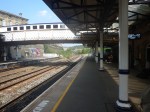
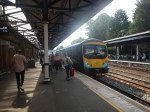
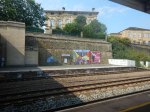
I broke my journey between Leeds and Huddersfield at Dewsbury station, where I had a very acceptable gluten-free pizza and a glass of cider.
I took these pictures of the station.

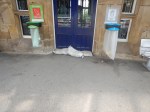

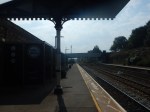

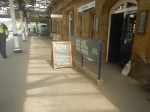
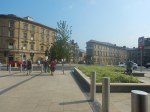

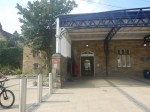
Note.
- There appears to be an avoiding line, through the station, which means that faster trains can pass slower ones stopped in the station.
- The station has a step-free bridge, but no toilets.
- The square outside the station has been recently landscaped.
- The station is Grade II Listed.
- The station has four TransPennine Express trains per hour (tph) in both directions.
Overall it is an excellent station with a touch of class, that probably deserves a few more trains.
Electrification
I cover possible electrification between Leeds and Huddersfield in Is There Going To Be Full Electrification Between Leeds And Huddersfield?.
Electrification as far as Leeds, which would offer faster acceleration and shorter station dwell times could offer the following.
- The solution to the problems at Morley station. using longer and faster trains.
- A faster journey time between Leeds and Huddersfield for the stopping trains.
Northern’s new Class 331 trains would probably do just fine.
If the stopping trains could run between Leeds and Huddersfield in perhaps twenty-five minutes, which may or may not be possible after the upgrade, just two trains would be needed for a two tph service.
I could see electrification opening up the following services on the electrified route, through Dewsbury.
- Two tph – Leeds and Huddersfield – Stopping at all stations
- One tph – Leeds and Wigan North Western – Stopping at all stations
- Four tph – Leeds and Huddersfield – Stopping only at Dewsbury and other selected stations.
All except the Wigan service would be electric trains.
Conclusion
Dewsbury station is going to get a much-improved train service.
The Bridges At Mirfield
The tracks through Mirfield station are due to be upgraded as part of Network Rail’s £2.9billion project to upgrade the Huddersfield Linebetween Huddersfield and Dewsbury stations, that I wrote about in Network Rail Reveals Detailed £2.9bn Upgrade Plans For TransPennine Route.
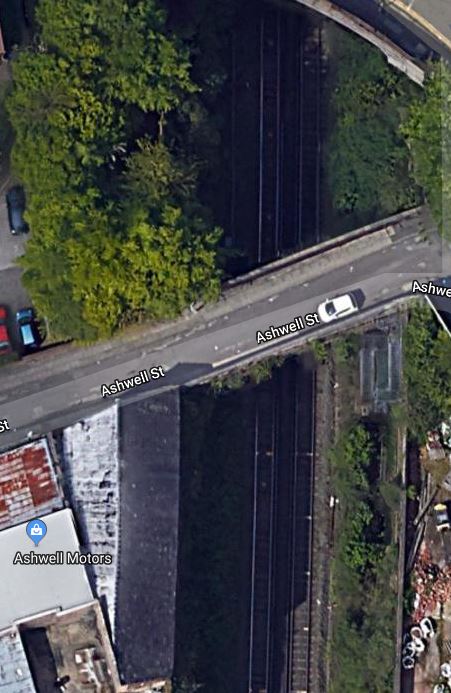
This Google Map shows the railway bridges, a road bridge and the surrounding land.
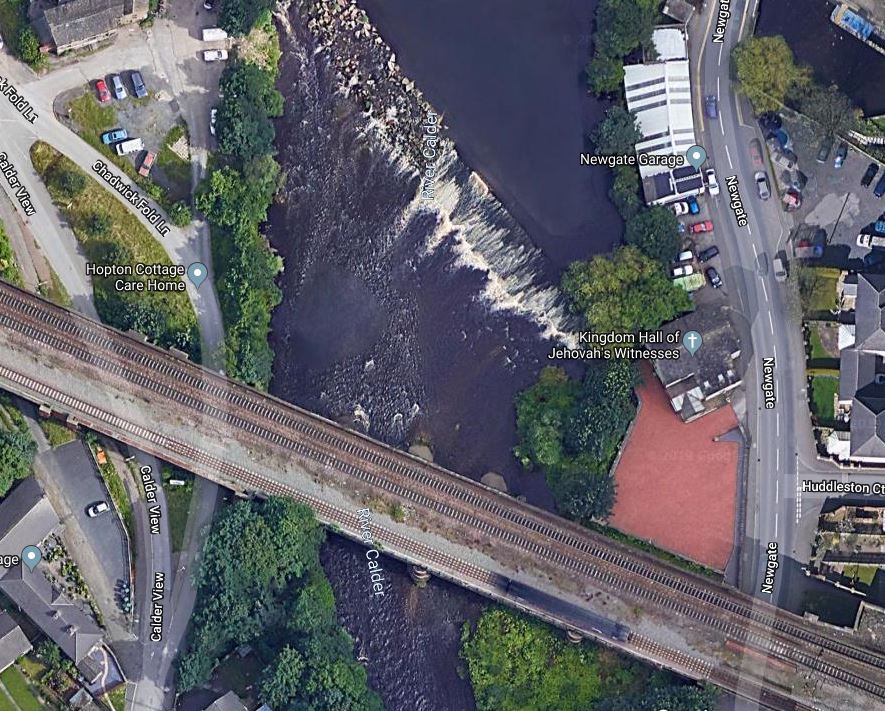
These pictures show the bridges.
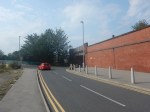

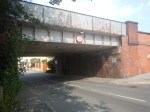
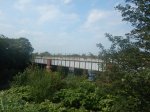

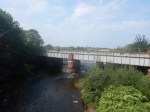
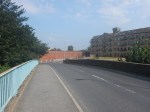

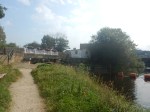
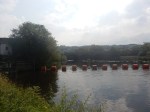
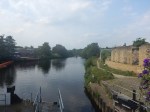
The bridge is in two parts and the original stone bridge is Grade II Listed. The entry on Historic England contains this description of the bridge.
Railway bridge. Circa 1840. Engineer George Stephenson, supervisor T. L. Gooch, for the Manchester and Leeds Railway. Rock-faced stone with rusticated dressings. Four segmental arches over river and a further five arches to west and two to east, all on bull-nosed abutments. String course at base of stone parapet. Later steel bridge on south side, not included in the item.
I suspect that it will be needed to be treated very sensitively, because of the age, the Listed status and the builder.
I also feel, that any work won’t be easy, due to the restricted site and the River Calder underneath.
I feel that the most likely track layout through Mirfield station will be the reduced four-track layout, that I found in this document on the Digital Railway web site is entitled Transpennine Route Upgrade SDO1 ETCS – Analysis.
Note.
- There are four tracks between Mirfield station and Heaton Junction, where trains go South-West towards Deighton and Huddersfield.
- The older stone bridge would appear to be carrying the slow trains and those going between Brighouse and Wakefielld.
- The steel bridge on the South side would appear to be carrying the fast trains.
It looks to me, that the track layout has been designed, so that the steel bridge can be replaced if required, without too much disruption.
The Weight Limit Of The Existing Bridges
TransPennine Express have bought a series of trains, that will be running over the existing bridges.
So they can’t be that weak!
Electrification
Electrification could be a problem on the older stone bridge, as it is the sort of project like the Steventon Bridge, that the Heritage Lobby like to attack!
From Green Gin To Sustainable Steel, Government Fires Up £140m Hydrogen Push
The title of this post, is the same as that of this article on Business Green.
The projects are wide ranging.
Green Gin
This is said about gin production by Orkney Distilling Ltd.
The successful projects feature a number of eye-catching initiatives, including the HySpirits project which has been awarded just under £200,000 to explore how the European Marine Energy Centre could work with local gin producer Orkney Distilling Ltd to convert its distillery from using liquid petroleum gas to hydrogen produced using renewable power.
I have been told that making whisky produces carbon dioxide. Does gin?
My source, also said carbon dioxide frpm Scotch whisky production has been used in the growing of soft fruit.
I found this article on The Courier, which is entitled Time To Cut Back On Whisky’s CO2 Emissions and this article on Scottish Capture and Storage, which is entitled Carbon Capture In The Heart Of The City.
Both are worth reading.
This is a paragraph from the second article.
The carbon capture process at this site is relatively simple, because the off gas from fermentation is already very pure in CO2. The process is not about enhancing CO2 concentration, but more about removing impurities. That involves a number of washing stages to remove water and impurities from the gas given off during fermentation, before it is compressed, stored, and eventually transported by road.
The article also says that the distillery produces four tonnes of carbon dioxide per day, which compared to the emissions of Chinese, Indian and United States coal-fired power stations is small beer, but it does show how in some industrial processes capturing the carbon dioxide can be relatively easy in some industrial processes and of a high quality for perhaps using in food and medical products.
But I can’t find a article connecting carbon dioxide from whisky to food production.
The Dolphyn Project
This is said about the Dolphyn Project.
A further £427,000 has been awarded to the Dolphyn project, which plans to mount electrolysers onto floating wind turbine platforms to produce hydrogen. One wind turbine alone has the potential to produce enough low carbon hydrogen to heat around 2,500 homes, fuel over 120-240 buses, or run eight to 12 trains,” the government said
I can’t find much on the Internet about this project, except this extract from this document on the Institution of Engineering and Technology web site, which is called Transitioning To Hydrogen.
The Deepwater Offshore Local Production of Hydrogen
(Dolphyn) project will consider large-scale retrofit
hydrogen production from offshore floating wind
turbines in deep water locations (Figure 19).This is a partnership project led by ERM with Engie,
Tractebel Engie and ODE. The project looks to
utilise the vast UK offshore wind potential to power
electrolysers to produce hydrogen from the water the
turbines float on. Large 10MW turbines consisting of
desalinisation technology and PEM electrolysers will
feed hydrogen at pressure via a single flexible riser to
a sub-sea manifold with other turbines’ lines. The gas
is then exported back to shore via a single trunkline.
A 20-by-20 array array would have a 4GW capacity,
producing sufficient hydrogen to heat more then 1.5
million homes.This project may include the offshore wind supply
of hydrogen supported with hydrogen from steam
methane reformation with carbon capture technology.
This project is well aligned to work the ACORN75
project at St Fergus.
Note that the project is talking about gigawatts of energy and providing enough hydrogen to heat millions of homes.
I think that the Dolphyn Project is badly named, as Google thinks you’re looking for projects about aquatic animals.
Gigastack
This is said about Gigastack.
Meanwhile, a consortium featuring Ørsted, ITM Power, and Element Energy is celebrating after securing just shy of £500,000 to help move forward with its Gigastack feasibility study, a six-month project to investigate the potential for delivering bulk, low-cost, and zero-carbon hydrogen.
There’s more here on this page on the ITM Power web site, where this is the first paragraph.
Project to demonstrate delivery of bulk, low-cost and zero-carbon hydrogen through gigawatt scale PEM electrolysis, manufactured in the UK.
As you’d expect from the name, they are looking at creating gigawatts of hydrogen.
Steel
This is said about steel.
The funding awards came as the government also launched a new call for evidence seeking views on how the government should structure and manage a planned £250m Clean Steel Fund. The government said the proposed fund would help the industry embrace clean technologies and move on to “a pathway that is consistent with the UK Climate Change Act” and its new net zero emission goal.
So what has hydrogen got to do with steel?
Search for hydrogen steelmaking on Google and you get lots of articles including this article from the Stockholm Environmental Institute, which is entitled Hydrogen Steelmaking For A Low-Carbon Economy.
This is a paragraph.
In the spring of 2016, three Swedish companies – LKAB (iron ore mining), SSAB (steel manufacturer) and Vattenfall (power utility) – announced their ambition to develop and implement a novel process for fossil-free steel production in Sweden. This process would use hydrogen (instead of coal) for the direct reduction of iron oxide/ore (H-DR), combined with an electric arc furnace (EAF). It would be almost completely fossil-free when the hydrogen is produced from electrolysis of water by use of renewable electricity. The concept is called Hydrogen Breakthrough Ironmaking Technology, or HYBRIT for short.
My knowledge of process engineering, tells me, that even if the Swedes don’t succeed, someone will and here in the UK, we’re ideally placed to take advantage, as we have the wind power to produce the hydrogen.
Conclusion
The future’s bright, the future’s green hydrogen!
, The North Sea can provide us with more than enough hydrogen, so long as the wind blows and there’s water to electrolyse..
Upgrading Mirfield Station
Mirfield station is due to be upgraded as part of Network Rail’s £2.9billion project to upgrade the Huddersfield Line between Huddersfield and Dewsbury stations, that I wrote about in Network Rail Reveals Detailed £2.9bn Upgrade Plans For TransPennine Route.
This Google Map shows the station and the surrounding land.
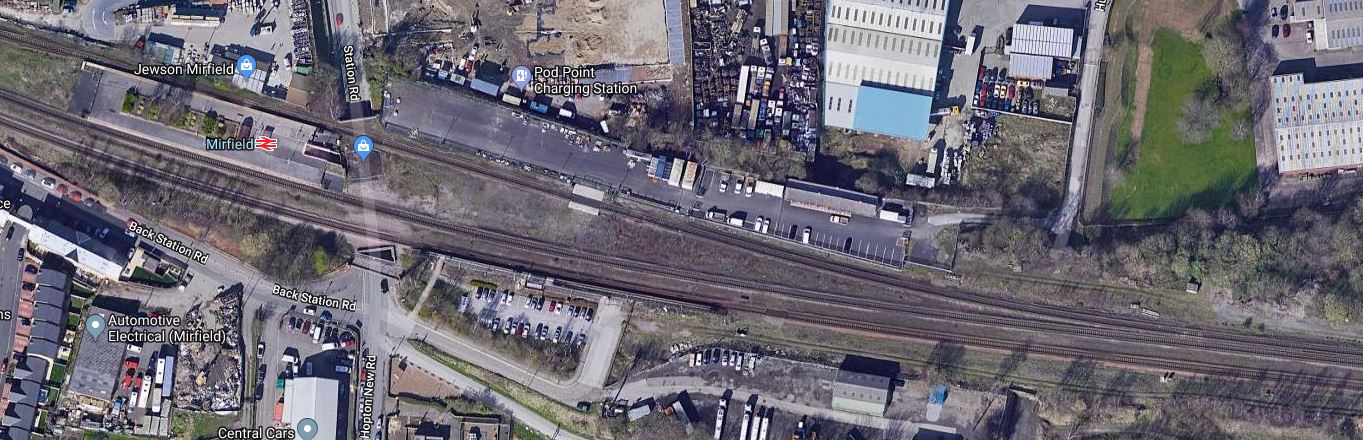
These pictures show the station.
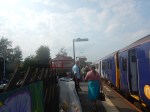
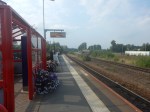
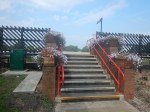
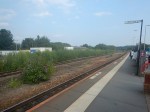


Currently, it is a three-station platform, with a wide island Platform 1/2 and a separate platform 3. The platforms are used as follows.
- Platform 1 for all Eastbound trains.
- Platform 2 for Westbound through trains.
- Platform 3 for Westbound stopping trains.
This document on the Digital Railway web site is entitled Transpennine Route Upgrade SDO1 ETCS – Analysis.
It is mainly about using digital signalling called ETCS on the Transpennine Route, but it does give these track layouts between Huddersfield and Dewsbury.
This is the current layout.
This is a reduced four-track layout.
In Proposed Track Layouts Between Huddersfield And Dewsbury, I came to the conclusion, that the reduced four-track layout or something better could handle the current trains through the area.
If the reduced four-track layout is used, the requirements for a new Mirfield station can now be stated.
- Platforms 1/2 sharing an island on the slow tracks.
- Platforms 3/4 sharing an island on the fast tracks.
- Some better shelters than at present.
- Step-free footbridges or a tunnel
In Winner Announced In The Network Rail Footbridge Design Ideas Competition, I wrote how the competition was won by this bridge.
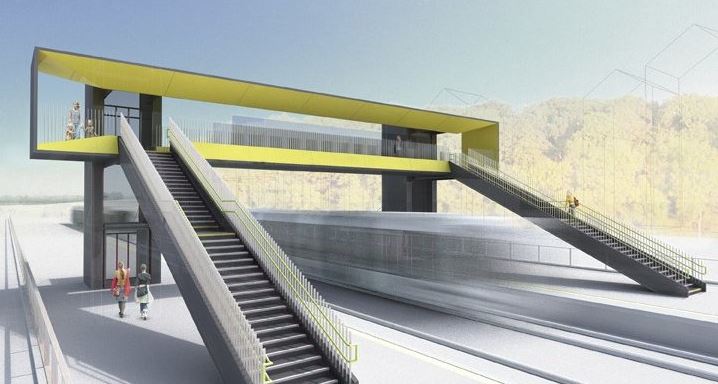
So could a factory-built bridge like this be installed at Mirfield station?
- There is plenty of space.
- The bridge would have the correct clearance for the electrification.
It could also replace the subway to Platform 1/2.
Upgrading Ravensthorpe Station
Ravensthorpe station is due to be upgraded as part of Network Rail’s £2.9billion project to upgrade the Huddersfield Line between Huddersfield and Dewsbury stations, that I wrote about in Network Rail Reveals Detailed £2.9bn Upgrade Plans For TransPennine Route.
This Google Map shows the station and the surrounding land.
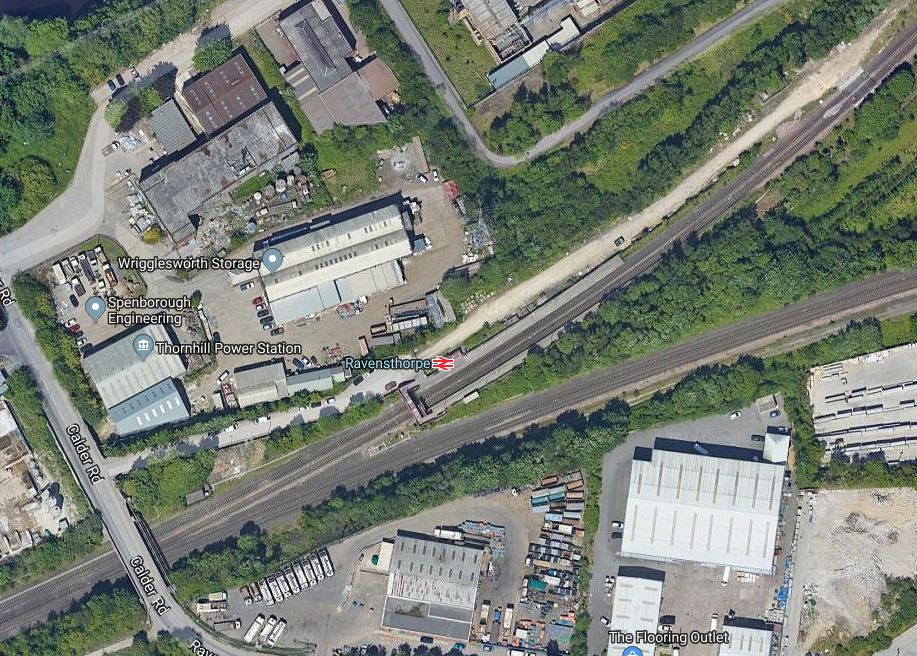
Note.
- The lines through the station go between Huddersfield in the East and Dewsbury in the North-East.
- The line going East goes to Wakefield.
These pictures show the station.

I did try to get a picture of the bridges over the River Calder, but I was unable to find the route and the weather was about to deteriorate.
The station is currently just two platforms on the lines between Huddersfield and Dewsbury, with a terrible overbridge, a poor shelter and a couple of seats.
The Wikipedia entry for Ravensthorpe station says this.
Ravensthorpe station is adjacent to Thornhill LNW (London North Western) Junction, where a line branches to Wakefield Kirkgate. There are plans to extend the station by building new platforms on this line, which was built by the former Manchester and Leeds Railway.
This document on the Digital Railway web site is entitled Transpennine Route Upgrade SDO1 ETCS – Analysis.
It is mainly about using digital signalling called ETCS on the Transpennine Route, but it does give these track layouts between Huddersfield and Dewsbury.
This is the current layout.
This is a reduced four-track layout.
In Proposed Track Layouts Between Huddersfield And Dewsbury, I came to the conclusion, that the reduced four-track layout or something better could handle the current trains through the area.
If the reduced four-track layout is used, the requirements for a new Ravensthorpe station can now be stated.
- Two platforms on the tracks to and from Dewsbury.
- Two platforms on the tracks to and from Wakefield.
- Some better shelters than at present.
- Step-free footbridges.
In Winner Announced In The Network Rail Footbridge Design Ideas Competition, I wrote how the competition was won by this bridge.
So could a factory-built bridge like this be installed at Ravensthorpe station?
- The platforms from Dewsbury and to Wakefield, could probably be arranged as a walk-across interchange.
- This would mean that the flexible nature of the bridge design would enable a single bridge with three lifts and three sets of stairs to be erected to join all the platforms together.
- The bridge would have the correct clearance for the electrification.
I doubt it would be the most complicated of stations.
Proposed Track Layouts Between Huddersfield And Dewsbury
Tracks between Huddersfield and Dewsbury stations are due to be upgraded as part of Network Rail’s £2.9billion project to upgrade the Huddersfield Line between the two stations, that I wrote about in Network Rail Reveals Detailed £2.9bn Upgrade Plans For TransPennine Route.
This document on the Digital Railway web site is entitled Transpennine Route Upgrade SDO1 ETCS – Analysis.
It is mainly about using digital signalling called ETCS on the Transpennine Route, but it does give these track layouts between Huddersfield and Dewsbury.
This is the current layout.
This is a full four-track layout.
This is a reduced four-track layout.
As I see it, if the reduced layout can handle the required number of services, it has major advantages over the full scheme.
- There are no changes to track layout between Ravensthorpe and Dewsbury stations.
- Rebuilding Ravensthotpe station should be a smaller project.
- The current and reduced layout have three tracks between Mirfield and Ravensthorpe stations.
- There are no expensive new bridges to be built.
By using bi-directional running on the centre track between Ravensthorpe and Mirfield stations, which is controlled by ETCS, the track layout is simplified, with three tracks instead of four.
- Slow trains from Huddersfield to Dewsbury will dive under the Brighouse lines and call in/pass Platform 1 at Mirfield station before going straight on to Ravensthorpe and Dewsbury. This is as trains do now.
- Slow trains from Dewsbury to Huddersfield will use the centre track from East to West and call in/pass Platform 2 at Mirfield station before turning South-West on to Huddersfield. This is as trains do now.
- Fast trains from Huddersfield to Dewsbury will call in/pass Platform 3 at Mirfield station and then cross over to the top track and go straight on to Ravensthorpe and Dewsbury.
- Fast trains from Dewsbury to Huddersfield will use the centre track from East to West and call in/pass Platform 4 at Mirfield station before turning South-West on to Huddersfield.
- Trains from Brighouse to Wakefield will call in/pass Platform 1 at Mirfield station and then cross to the centre track and go straight on to Wakefield. This is as trains do now.
- Trains from Wakefield to Brighouse will use the centre track from East to West and call in/pass Platform 2 at Mirfield station and go straight on to Brighouse.
Note.
- Platforms at Mirfield station are numbered 1 to 4 from the North
- The slow lines between Mirfield and Huddersfield are shown in black.
- The fast lines between Mirfield and Huddersfield are shown in blue.
- Passengers can use Platforms 1/2 as a cross-platform interchange between slow Huddersfield-Leeds and Brighouse-Wakefield services.
I also think it likely, that the proposed layout will improve the timetable.
Conclusion
I think it is highly likely that the reduced four-track layout will be used.
Unless of course something better is devised.
 The Anonymous Widower