Oxford And Cambridge Compared On COVID-19
In Is There A Link Between Historic Coal Mining And COVID-19?, I mentioned this article in The Times, which is entitled Pressure To Free London From Lockdown As Cases Fall.
The article gives an interactive table, which is entitled Number Of Cases By Area.
Three figures are given.
- Registered cases
- Cases per 100,000 of the population.
- Cases in the last two weeks.
These figures are for areas around Oxford.
- Oxford – 615, 399, 90
- South Oxfordshire – 358, 255, 36
- West Oxfordshire – 324, 295, 50
And these figures are for areas around Cambridge
- Cambridge – 222, 177, 20
- South Cambridgeshire – 206, 131, 10
- East Cambridgeshire – 111, 124, 12
- West Suffolk – 205, 115, 18
So why are COVID-19 cases in Cambridge so much lower than Oxford?
Consider.
- Both cities and surrounding counties have a similar character.
- Both have well-respected hospitals, medical schools and medical research.
- Air pollution appears to be low in both areas.
- Both cities probably have a similar ethnic mix and large student populations.
As I used to live near Cambridge, I have my own mad personal theory.
Addenbrooke’s Hospital
I have used several hospitals in my life, but only two changed my life totally.
- I had my vasectomy in the old Hackney Hospital.
- Addenbrooke’s, who with a simple blood test decided I was probably coeliac.
So perhaps, I’m biased.
But consider these possible facts.
- My coeliac consultant at Addenbrooke’s told me, that he had more patients with the disease than any other in the UK.
- The manager at Carluccio’s in Cambridge, told me that they sold more gluten-free food, than any other restaurant in the group.
- In 1997, I was diagnosed fast, because Addenbrooke’s were using a new genetic test. I was later checked using an endoscopy.
Could it be that someone at Addenbrooke’s had decided they wanted to find all the coeliacs in and around Cambridge?
What would be the effects of diagnosing as many coeliacs as you could find in an area?
- A doctor of my acquaintance talked of coeliac disease as the many-headed hydra, as it led to so many other medical problems. So extra diagnosed coeliacs might improve health statistics in an area.
- Personally, I have said good-bye to migraines, nail-biting and lots of joint pains, after going gluten-free.
- I also haven’t had a serious dose of flu since diagnosis. Since 2005, I’ve probably had the flu jab.
- Joe West at Nottingham University, has shown that coeliacs on a gluten-free diet have lower cancer rates than the general population.
Consider.
- Immunotherapy is a medical technique, where the patient’s immune system is activated or suppressed to help them fight a disease.
- Coeliac disease is an autoimmune disease, where gluten causes damage to the gut.
So could coeliacs on a gluten-free diet have a more powerful immune system?
Undiagnosed Coeliacs
Coeliac disease is genetic, with mine coming from an Ashkenazi Jewish ancestor from Konigsberg in the Baltic.
- Other roots of coeliac disease are Irish, Italian and black people, who have slaves as ancestors.
- There was no test for coeliac disease in children until 1960.
- There was no genetic test for coeliac disease until the late 1990s.
- Research has shown that coeliacs are at least 1-in-100 of the UK population, but could be higher.
If coeliacs on a gluten-free diet have a good immune system, do undiagnosed coeliacs have a poorer one?
Oxford And Cambridge Compared
Is the large number of diagnosed coeliacs around Cambridge, the reason the area has a lower COVID-19 rate than Oxford?
Conclusion
What do I know?
I’m just a mad engineer and mathematician with coeliac disease.
Is There A Link Between Historic Coal Mining And COVID-19?
In Air Pollution May Be ‘Key Contributor’ To Covid-19 Deaths – Study, I wrote about the link between current pollution and COVID-19, that had been shown by European researchers.
Today, in The Times, there is an article, which is entitled Pressure To Free London From Lockdown As Cases Fall.
It talks about the areas, that are recording the most new cases of confirmed COVID-19 in the last fortnight.
The article says this.
Only one area south of Birmingham is in the 20 local authorities with the most coronavirus cases in the past two weeks, while those with fewest are clustered in the south, an analysis of official figures by The Times shows.
That local authority in the top twenty is Ashford.
i have looked at all the data in The Times and this table shows the number of cases in the last fortnight in decreasing order.
- Birmingham – 266
- County Durham – 209
- Manchester – 184
- Bradford – 168
- Sandwell – 164
- Wigan – 156
- Shropshire – 155
- Cheshire West and Chester – 151
- Sheffield – 144
- Cheshire East – 135
- Leeds – 138
- East Riding Of Yorkshire 129
- Barnsley – 126
- Tameside – 124
- Doncaster – 121
- Ashford – 118
- Stoke – 117
- Wirral – 107
- Trafford – 102
- Folkestone and Hythe – 99
- Leicester – 99
- Bolton – 94
- North Somerset – 94
- Oldham – 93
- Stockton-on-Tees – 93
- Oxford – 90
Note.
- Why is Cheshire in the top half of the list?
- There seem to be a lot of coal mining areas on the list.
- Ashford and Folkestone and Hythe are even close to the former Kent coalfield.
I’d love to see Welsh, Scottish and Northern Irish data added to this list!
Is Coal A Factor?
Given the large number of coal-mining areas featuring in my list, I very much feel that there should be a serious analysis to see if working in the mines or growing up in a coal-mining area, is a factor related to the chances of catching COVID-19.
I should say, that my only personal memories of British coal mines working, was to see the mines in Kent, as we drove to see by uncle in Broadstairs. They were filthy places.
The Cheshire Paradox
Cheshire doesn’t have any coal mining, but it does have a lot of chemical works and oil refineries along the Mersey, many of which use Cheshire’s most valuable natural resource – salt.
When I worked at ICI, I was told that there was enough salt underneath the green fields of Cheshire to last several thousand years, at the current rate of extraction.
There was also the ICI office joke about pensions.
You would get a good pension from ICI, as the pension scheme was well-funded and also because so many pensioners, after a lifetime of working amongst all the smells and dusts of a chemical works, which gave the lungs a good clear out, didn’t live long in the fresh air of normal life and caught every cold, cough and flu doing the rounds.
The three Cheshire areas have these numbers of total confirmed cases per 100,000 residents.
- Cheshire East – 304
- Cheshire West and Chester – 312
- Wirral – 378
These compare closely to nearby Liverpool with 319.
But look at these figures of a similar county around London, that from personal experience is similar to Cheshire.
- East Hertfordshire – 176
- North Hertfordshire – 171
So have all the chemicals in the historic Cheshire air, softened up the population for COVID-19?
I used the word historic, as pollution in the seventies in Cheshire/Merseyside was much higher, than it is today.
New Wolverhampton Train Station Opens This Bank Holiday – After Multi-Million Pound Revamp
The title of this post, is the same as that of this article on Birmingham Live.
The title is the full story, except for the actual date of Monday, the 25th.
Wolverhampton station is getting a £150 million Interchange development to better connect trains, buses and trains and although, this is only the completion of a substantial part, in more normal times, I’d be on the train on Monday to see the new development.
I’ll just add it to a long list of places, I need to visit.
’88’ Makes Sizewell Debut
The title of this post, is the same as that of a news snippet in the June 2020 Edition of Modern Railways.
There is a picture of the electro-diesel Class 88 locomotive moving a nuclear flask from Sizewell on the closed Aldeburgh branch line to Crewe.
Note that is about 27-28 miles from the electrification at Ipswich East Suffolk Junction and the siding close to the power station, where flasks are loaded.
This is a classic use of an electric locomotive, that has a Last Mile-capability using an on-board diesel engine.
Many ports in the UK, like these examples are a few miles from the electrified network.
- Felixstowe – 16 miles
- Liverpool – 5 miles
- London Gateway – 4 miles
- Southampton – 2 miles
How many trains could be hauled to and from these and other ports using a Class 88 locomotive or their similar, but more powerful sibling; the Class 93 locomotive?
Conclusion
I suspect there are a number of routes that could be handled by electro-diesel locomotives.
I would like to see a serious analysis of all duties performed by diesel locomotives, like for example; Classes 66, 67, 68 and 70 locomotives, to see how many could be performed by suitably-sized electro-diesel locomotives.
If there is a gap in the market, then a rolling stock leasing company, should fill it!
Just like Beacon Rail Leasing and Clayton Equipment appear to have done with a diesel shunter, which I wrote about in UK Diesel-Battery Hybrid Locomotive Lease Fleet Ordered.
As Beacon Rail Leasing seem to be heavily involved in the leasing of electro-diesel locomotives, perhaps, they’re working on it?
UK Diesel-Battery Hybrid Locomotive Lease Fleet Ordered
The title of this post, is the same as that of this article on Railway Gazette.
This is a visualisation of the CBD90 from Clayton Equipment.
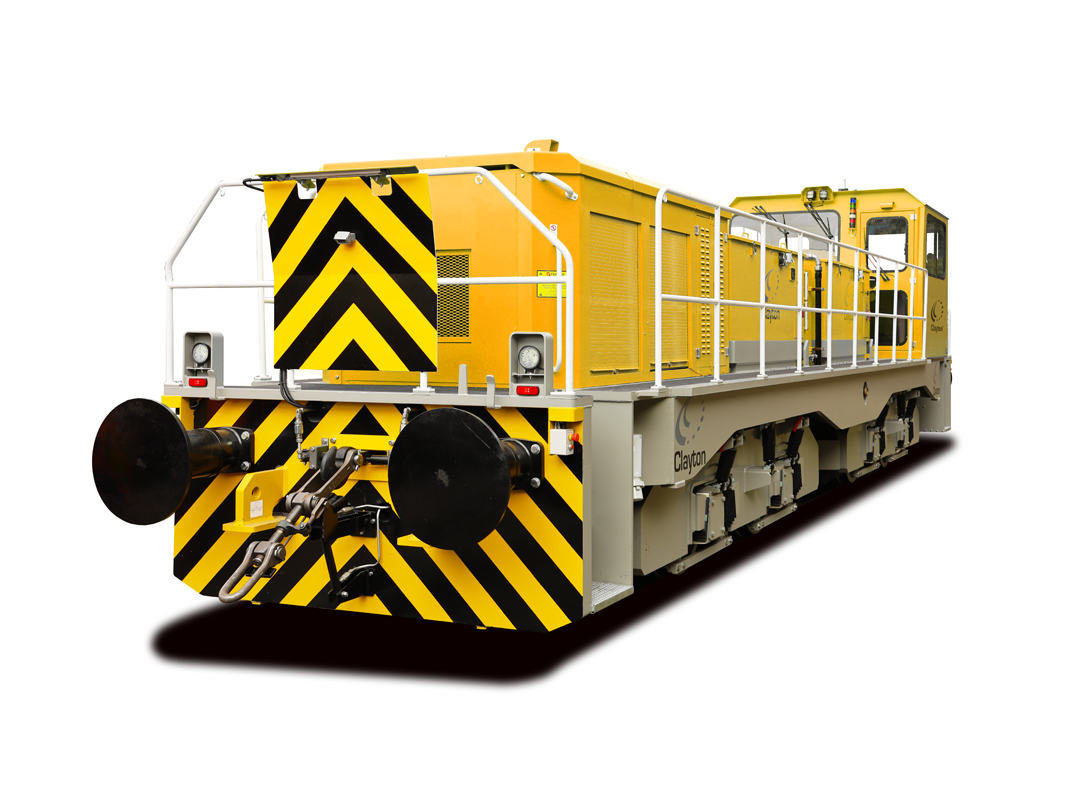
It certainly looks purposeful!
This is the introductory paragraph.
Beacon Rail Leasing has awarded Clayton Equipment a contract to supply 15 diesel-battery locomotives, with options for more to be ordered over three years.
These points are made.
- The locomotive is mainly for industrial shunting applications.
- These are the largest locomotives built in the UK for twenty years.
- It has an onboard diesel to charge the batteries.
- Batteries can also be charged directly from a three-phase supply.
Beacon’s CEO is quoted as saying
It was seeing increased demand for lower emissions, new technology, more capacity and cost-effective assets in a fast-changing environment.
It looks like Beacon Rail Leasing and Clayton Equipment have come up with a product that suits a lot of customers.
- Some will surely be used in mines, quarries, refineries, chemical works and steel works.
- Will some be used in large rolling stock depots, where they can provide an environmentally-friendly method of moving trains?
- Some shunting locomotives in the UK, like the Class 08 locomotive, were built in the 1950s.
- Some train operating companies have a small fleet, of these veterans.
- In Battery-Powered Shunter Ready To Begin Testing, I described how one Class 08 locomotive was being converted to diesel-electric hybrid power.
- As Beacon has interests in Europe, could some of these powerful shunting locomotive could be going for export?
- Could some end up in the large mines of Africa, Australia and the Americas?
From this article on Railway Gazette, which is entitled Steelworks Locomotive Order, it appears five CBD90 locomotives have already been ordered by Tata Steel for their steelworks at Port Talbot.
This video shows one of the locomotives under test.
I shall be interested to see, where the new shunting locomotives end up.
The Leasing Model
When we started Metier Management Systems in the 1970s and developed Artemis, which was the world’s first small and powerful project management system, we used to lease systems to our customers. These were often large engineering or other companies for whom the leasing model was very convenient.
It certainly did us well!
COVID-19 Pandemic In Cambodia
The title of this post, is the same as this entry in Wikipedia.
This is the introductory paragraph.
The first case relating to the COVID-19 pandemic was confirmed in Cambodia on 27 January 2020. According to Global Health Security Index’s report in 2019, Cambodia ranked 89th out of 195 countries in preparedness for infectious disease outbreak.
It doesn’t prepare you well for the remarkable statistics from the country, given in the Wikipedia entry.
- Confirmed cases – 123
- Tests conducted – 15,162 as of 17th May
- Active case – 1
- Recovered – 122
- Deaths – 0
The Wikipedia entry then lists all of the cases in detail.
I know we can say that any country with an important amount of revenue from tourism can massage the statistics, but I do feel that the data is reasonably scientifically correct.
So why are Cambodia’s statistics so remarkable?
I have never visited Cambodia, but Cambodian cuisine used to be recognised as completely gluten-free, when I was diagnosed as a coeliac by Addenbrooke’s hospital in 1997. I was told by a dietician at the hospital, who joked that someone should start a Cambodian restaurant in Cambridge
There is sufficient data on the Wikipedia entry to almost do a professional track and trace and it appears that several cases came from a cruise ship and others from foreign travel.
But even so, only 52 Cambodians have been admitted to hospital with Covid-19 and all have survived.
Could it be that their diet gives them a strong immune system?
I seem to remember reading somewhere, that a scientist postulated that one of the waves of plague that swept Europe happened, soon after high-gluten wheat started to be grown in great quantities.
Conclusion
The Cambodians are obviously doing something right!
New Zinc-Air Battery Is ‘Cheaper, Safer And Far Longer-Lasting Than Lithium-Ion’
The title of this post, is the same as that of this article on Recharge.
These are the first two paragraphs.
A new type of battery is coming onto the market that can store multiple days’ worth of energy, that doesn’t degrade, can’t possibly explode and is up to five times cheaper than lithium-ion, claimed its developer as it prepares to pilot the technology in New York state.
The zinc-air hybrid flow battery developed by Canadian company Zinc8 has the potential to disrupt the entire energy-storage market — making wind and solar farms baseload and even replacing the need for transmission grid upgrades in many places.
The article then gives an in depth review of Zinc8, its technology and its future prospects.
- The Chief Executive is a former Canadian MP. Political connections help!
- The company has $100million of funding.
- Zinc8 energy storage systems are made larger by fitting and bigger storage tank and adding more electrolyte.
- The capital cost of an eight-hour Zinc8 storage system is about $250/KWh, but this falls to $100/KWh for a 32-hour system and $60/KWh for a hundred-hour system.
- Lithium-ion systems ttpically cost $300/KWh for any duration over eight hours.
- The cost of Zinc8 systems is expected to fall as manufacturing increases.
The article finishes with a detailed description of how the technology works.
It also details the company’s growth strategy.
Conclusion
This technology looks like it will give lithiujm-ion batteries a good run for its money in grid storage applications and it could be one of those technologies that help the world to embrace renewable energy, like wind, solar and wave power.
It has various advantages.
- Lower cost of installation.
- Falling manufacturing cost.
- Easily scalable.
- No exotic or hazardous materials, just zinc, water and air, which are recycled.
My only worry, is that Zinc8, sounds too good to be true! But having met researchers at ICI, who were concerned in the birth of polythene, this could be a normal cynical reaction.
Hydrogen Powered Tractors Could Be The Green Answer In That Industry
The title of this post, is the same as that of this article on Hydrogen Fuel News.
I agree with the title and the article is worth a read.
For some time, I’ve felt that hydrogen would be ideal to power a tractor and other agricultural machinery.
- Now that companies like ITM Power have developed efficient electrolysers, the accessibility of the fuel is a lot easier.
- Many farmers would have their own electrolyser.
- Diesel is always getting nicked, but stealing hydrogen would probably be more difficult.
- Hydrogen could also power the farmer’s cars.
Energy use on the farm could be very different.
Battery Storage Trialled To Provide Upward And Downward Flexibility To UK’s National Grid
|The title of this post, if the same as that of this article on Energy Storage News
This is the introductory paragraph.
Battery software company Arenko has teamed up with the Electricity System Operator (ESO) arm of National Grid in the UK to provide upward and downward reserve flexibility in a “first of its kind trial”.
So what do Arenko actually do?
This is the home page of their web site.
It has this title across the page.
Automation Technology For Batteries
Beneath it is a mission statement.
Our vision is to be the preferred software platform to unlock value for batteries worldwide.
Finally you get this explanation.
Arenko is a world leading battery software and controls platform building a differentiated position in the multi-billion dollar battery controls and automation market.
Batteries are software defined assets which are only as valuable as what controls them.
Arenko’s enabling software platform uses our proprietary and proven automation technology for batteries to asset owners, utilities and battery system integrators unlocking and capturing substantially higher returns and protect your battery assets.
Arenko’s automation technology connects and optimises both the battery’s technical and commercial performance using AI, enhanced analytics and deep learning algorithms.
I would think, this could be my kind of company.
- Software-based
- Ambitious
- All about control engineering.
- I suspect they constantly simulate what is happening to batteries and the electricity network.
If they get it right, they could go a long way.
Watch First Electric Caravan Fly
The title of this post, is the same as that of this article on AOPA.
As AOPA is the Aircraft Owners And Pilots Association, the caravan is a Cessna C208B Grand Caravan, which has been converted to electric power.
I have flown in a Cessna Caravan in Kenya, where it took me from Nairobi Airport to the Maasai Mara.
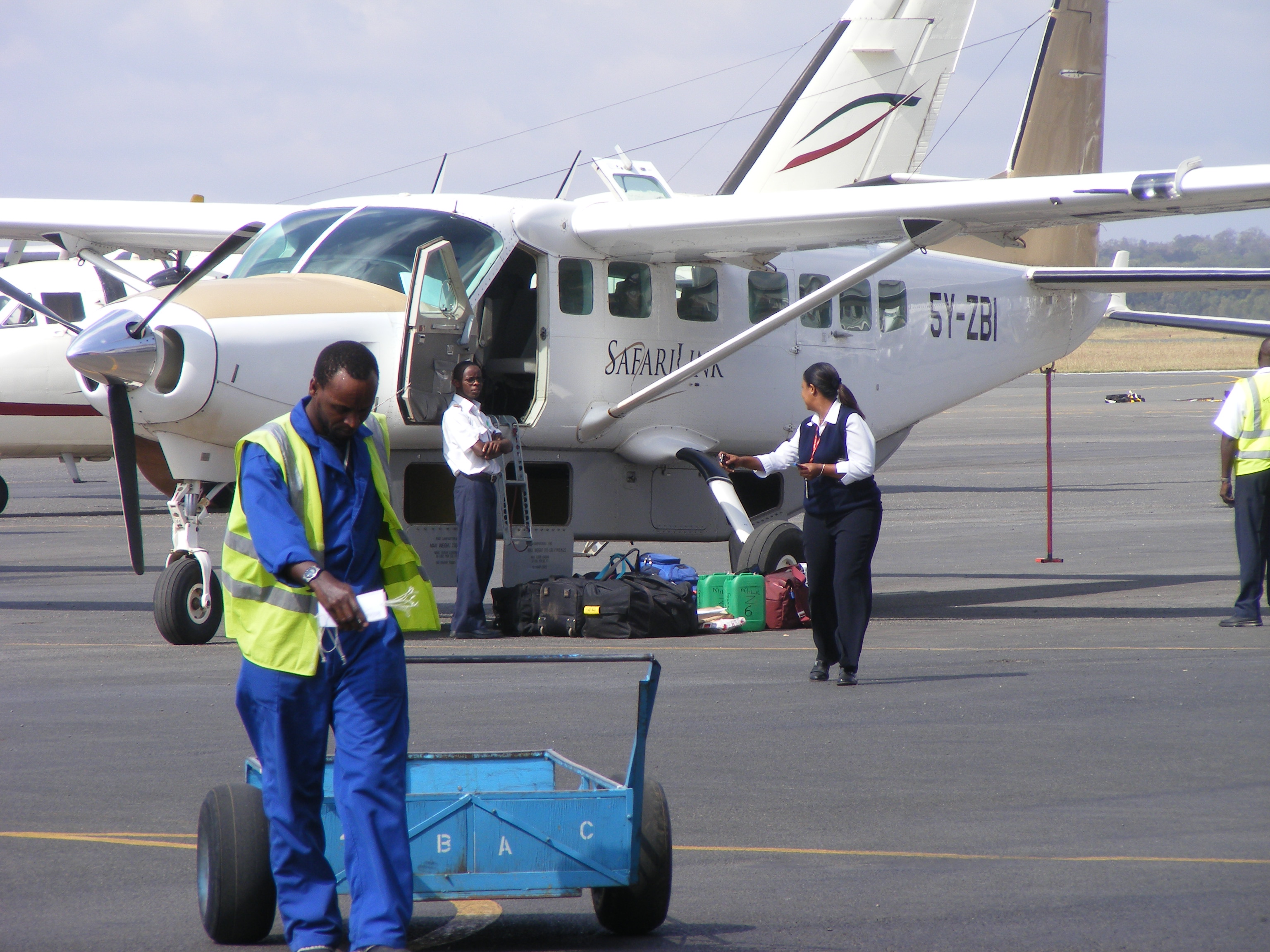
It is a typical workhorse all over the world carrying up to nine or thirteen passengers or freight.
- They have a single turboprop engine.
- The undercarriage is fixed and very sturdy.
- Around 2,600 had been built by 2017.
- It is used by a variety of operators.
I would certainly be happy to fly in one at any time, unlike some aircraft I could mention.
This paragraph from the article details how the maker of the electric motor;magniX is involved in electric flight.
The Grand Caravan is to be the largest, but not the first commercial aircraft magniX has converted to fly with 100 percent electric power. Roei Ganzarski, CEO of magniX, wrote in an email exchange that the de Havilland DHC–2 Beaver first flown in December continues its test flight program in Canada. Harbour Air, a short-haul air carrier with a fleet of seaplanes, is working with magniX to convert its fleet to all-electric power, and the same 750-hp electric motor that will power the upcoming Grand Caravan flight has been performing well in test flights over British Columbia.
Ganzarski is quoted as saying he is pleased with results to date.
The aircraft is lined up to make its first flight on May 28th, which hopefully will be shown on the Internet.
My flight in Kenya was only about half-an-hour and despite the Caravan having a range of nearly 2,000 kilometres, I suspect that many flights in the aircraft are of similar duration.
A Quick Battery Size Estimate
- 750 hp is 560 kW.
- So a half-hour flight on full power will use 280 kWh plus whatever is needed for aircraft systems like avionics, heating and air conditioning.
- The Eviation Alice electric aircraft seats nine passengers and has a 900 kWh battery according to Wikipedia.
I would suspect a 900 kWh battery should allow the Electric Caravan to do two half-hour trips.
The Future Of Electric Aviation
It is interesting to note, that four of the projects in designing and building a viable electric aircraft are in this nine-seater segment.
- Eviation Alice, which is a new radical aircraft with three magniX electric motors.
- Harbour Air Seaplanes‘s conversion of a DHC-2 Beaver seaplane using a magniX motor.
- magniX’s conversion of a Cessna Caravan, described in this post.
- Cranfield University‘s conversion of a Britten-Norman BN-2 Islander in Project Fresson.
Note.
- All except Eviation Alice, are conversions of proven high-wing aircraft with a fixed undercarriage.
- Moderately large fleets available for conversion. – Beaver (1,600 plus built), Caravan (2,600) and Islander (700)
- Conversion only needs a Supplemental Type Certificate, rather than full certification.
- The DHC-2 Beaver prototype first flew on the day I was born, so it can’t be all bad.
A detailed insight into the reasons and the economics of converting an existing fleet of aircraft are given in a sub-section called Development in the Wikipedia entry for Project Fresson.
- Scottish Airline Loganair appears to be the launch airline and will use the plane for their short flights around Orkney.
- Several companies are involved in the development.
- First flight is aimed for 2021.
- Conversion kits could be available in 2022-2023.
- It is hoped that operators would get a return on their money for the kit in 2-3 years.
Once they get the design right, there is talk of a nineteen-seat electric airliner.
I can see hundreds of converted electric Caravans and Islanders flying short routes by 2030.
 The Anonymous Widower