Thoughts On The Future Of Orkney
This article on the BBC is entitled Orkney Votes To Explore ‘Alternative Governance‘
This is the sub-heading.
Orkney councillors have voted to investigate alternative methods of governance amid deep frustrations over funding and opportunities.
These paragraphs outline the story.
Council leader James Stockan said the islands had been “held down” and accused the Scottish and UK governments of discrimination.
His motion led to media speculation that Orkney could leave the UK or become a self-governing territory of Norway.
It was supported by 15 votes to six.
It means council officers have been asked to publish a report to Orkney’s chief executive on options of governance.
This includes looking at the “Nordic connections” of the archipelago and crown dependencies such as Jersey and Guernsey.
A further change which would see the revival of a consultative group on constitutional reform for the islands was accepted without the need for a vote.
My Thoughts On The Economic Future Of The Islands
The economic future of Orkney looks good.
Tourism and the traditional industries are on the up, but the islands could play a large part in renewable energy.
The West of Orkney offshore wind farm, which will be a 2 GW wind farm with fixed foundations, is being developed and a large hydrogen production hub at Flotta is being proposed, along with the development of a large quay in Scapa Flow for the assembly of floating wind farms.
The West of Orkney wind farm could be the first of several.
If the future wind farms are further from shore, they will most likely be based on floating technology, with the turbines and their floats assembled in Scapa Flow, from components shipped in from mainland UK and Europe.
Political Future
With a good financial future assured, I believe that Orkney will be able to choose where its political future lies. It could be a Crown Dependency or join Norway.
Whichever way it goes, it could be an island that effectively prints money, by turning electricity into hydrogen and shipping it to countries like Germany, The Netherlands, Poland and Sweden!
From a UK point of view, a Crown Dependency could be a favourable move.
Would Shetland follow the same route?
Offshore Hydrogen Production And Storage
Orkney is not a large archipelago and is just under a thousand square kilometres in area.
It strikes me, that rather than using up scarce land to host the large electrolysers and hydrogen storage, perhaps it would be better, if hydrogen production and storage was performed offshore.
Aker Northern Horizons
In Is This The World’s Most Ambitious Green Energy Solution?, I talk about Northern Horizons, which is an ambitious project for a 10 GW floating wind farm, which would be built a hundred kilometres to the North-East of Shetland, that would be used to produce hydrogen on Shetland.
Other companies will propose similar projects to the West and East of the Northern islands.
This map shows the sea, that could be carpeted with armadas of floating wind farms.

Consider.
- There are thousands of square miles of sea available.
- As the crow flies, the distance between Bergen Airport and Sumburgh Airport in Shetland is 226 miles.
- A hundred mile square is 10,000 square miles or 2590 square kilometres.
- In ScotWind Offshore Wind Leasing Delivers Major Boost To Scotland’s Net Zero Aspirations, I calculated that the floating wind farms of the Scotwind leasing round had an energy density of 3.5 MW per km².
- It would appear that a hundred mile square could generate, as much as nine GW of green electricity.
How many hundred mile squares can be fitted in around the UK’s Northern islands?
53 Train Stations To Benefit From Tap-In Tap-Out Rollout
The title of this post, is the same as that of this news story from the UK Government.
This is the sub-heading.
Passengers across the South East of England will benefit from ‘Pay As You Go’ technology by the end of December 2023.
The news story has these three bullet points.
- £20 million of government funding marks the first phase of the government’s commitment to extend Pay As You Go to a further 200 stations in the South East
- The department is also working with Great British Railways transition team (GBRTT) to agree Pay As You Go pilots in the Greater Manchester and the West Midlands by the end of the year
- Both form part of the government’s plan to make fares and ticketing simpler and more convenient for passengers
If I look at the list of 53 stations to be added in this first phase, several are ones I have regularly used.
- Beaconsfield
- Bletchley
- Bricket Wood
- East Tilbury
- Gerrards Cross
- High Wycombe
- Kempton Park
- Southend Central
- Southend East
- St Albans Abbey
- Staines
- Windsor & Eton Riverside
With the Government saying that this list of stations in the South East, will rise to 200, I suspect that the number of listed stations, where I go regularly will increase.
At present, if I go to a contactless station like Gatwick Airport, which is outside of the Freedom Pass area, I have to buy an extension ticket, either before I board the train or I have to get off somewhere like East Croydon and tap-out with my Freedom Pass and tap-in with my bank card.
Surely, a better system, would be to be able to link a bank card to my Freedom Pass. This would enable my bank card to be charged excess on my Freedom Pass.
National Grid And SSEN Transmission Agree Joint Venture For UK’s Largest Ever Electricity Transmission Project
The title of this post is the same as that of this press release from National Grid.
This is the sub-heading.
Joint Venture Agreement Important Milestone In Subsea Electricity Superhighway – Eastern Green Link 2
These four paragraphs outline the project.
National Grid Electricity Transmission (NGET) and SSEN Transmission have taken a big step forward in the development of a new subsea electricity superhighway project along the east coast of Scotland after reaching agreement on the terms of their joint venture (JV).
The ‘Eastern Green Link 2’ (EGL2) project will see the creation of a 525kW, 2GW high-voltage direct current (HVDC) subsea transmission cable from Peterhead in Scotland to Drax in England. The UK’s single largest electricity transmission project ever.
The subsea HVDC cable system is approximately 436km in length with new converter stations at either end to connect it into the existing transmission network infrastructure. HVDC technology provides the most efficient and reliable means of transmitting large amounts of power over long distances subsea.
The EGL2 link will support the growth of new renewable electricity generation, creating jobs and delivering a pathway to net zero emissions targets, as well as helping to alleviate existing constraints on the electricity network.
The Wikipedia entry for Eastern HVDC has a detailed description of the two 2GW Scotland-England interconnectors, that are planned.
This is the first section.
Eastern HVDC and Eastern HVDC projects are the names used by Ofgem for two planned HVDC submarine power cables from the East coast of Scotland to Northeast England to strengthen the National Grid. The two links combined will deliver 4 GW of renewable energy from Scottish wind farms to England.
Ofgem state that “At an estimated cost of £3.4 billion for the two links, the Eastern HVDC projects would be the largest electricity transmission investment project in the recent history of Great Britain.
The Project Background Document for SEGL1 can be viewed here.
EGL2 also has its own web site.
Take A 360° Tour Of World’s Largest Offshore Wind Farm In Operation
The title of this post, is the same as that of this article on offshoreWIND.biz.
This is the sub-heading.
Located some 89 kilometres off the Yorkshire Coast, the UK, the 1.3 GW Hornsea Two comprises 165 Siemens Gamesa 8 MW wind turbines and is currently the world’s largest fully commissioned offshore wind farm.
The article has a link to an excellent Ørsted video, about they access and service the wind farm.
Khan’s Stupid Plan To Rename The Overground Lines
renamThis page on the TfL web site is entitled Naming London Overground Lines.
This is the first paragraph.
London Overground lines are to be named to make the network easier to navigate and ensure the Capital’s transport system reflects its rich and diverse history. We aim to make the changes by the end of 2024.
So why do I feel it is a stupid plan?
London Wouldn’t Stomach A Load Of Woke Names
When Khan and his fellow politicians choose the names, they will probably be a load of woke rubbish and this could cause problems with some political groups.
When The Lines Are Renamed, Will They Then Start On Station Names?
This could open a real can of worms, as some station names are totally unacceptable to some groups of people.
When Arsenal moved from Highbury, Spurs fans mounted a campaign to get Arsenal tube station renamed to its original name of Gillespie Road.
Londoners Use Their Geographic Names
I use the Overground regularly and use their geographic names like.
- Cheshunt Line
- Chingford Line
- East London Line
- Enfield Town Line
- Gospel Oak and Barking Line
- North London Line
- Romford and Upminster Line
- South London Line
- Watford DC Line
- West London Line
I also use The Drain for the Waterloo and City Line.
Thameslink And Moorgate Services
It is likely, that some or all of the Thameslink and Moorgate routes will go to Transport for London.
These would need more names.
Cost
Transport for London (TfL) have a financial crisis and I believe, that the money spent on signage and branding could be better spent on other projects like hydrogen buses or creating the West London Orbital Railway.
If Another Political Party Took Power Would They Rename Everything?
Probably! And this would be more cost!
Conclusion
Sadiq Khan is a vain and stubborn man. Renaming lines will open a nest of vipers.
With the mess Khan has got in over ULEZ, this could be another problem caused by his bad judgment.
Marsh Barton Station – 4th July 2023
The main purpose of my trip to Devon was to visit the new Marsh Barton station, on the Riviera Line.




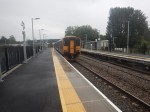

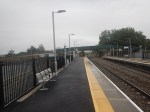
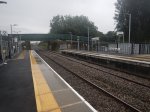
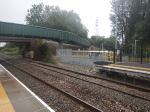

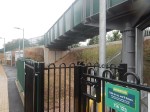
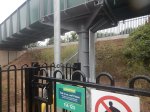
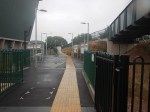
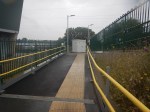
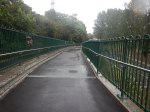
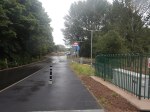

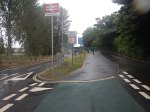
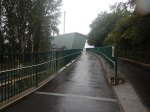

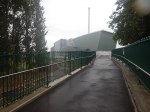

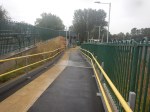
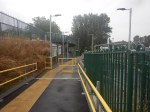
These are my thoughts about the station.
The Overall Design
This Google map shows Marsh Barton station under construction.
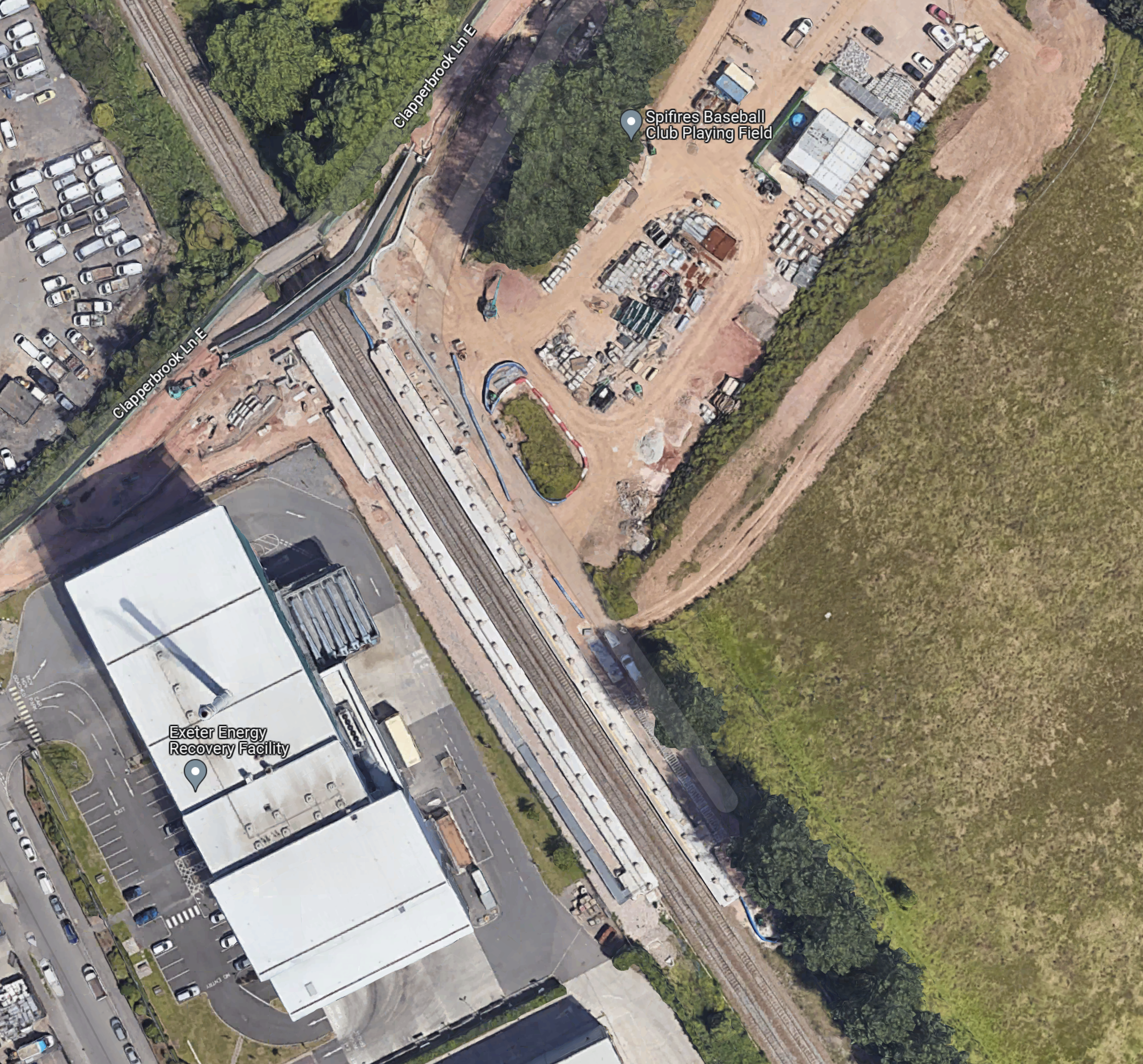
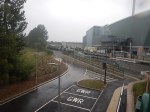
The station is built on a narrow lane by an industrial estate, which features a large waste-to-energy facility, which is in the South-West corner of the map.
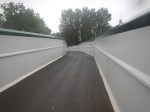
The station is a basic two platform design with everything you need on the platforms and a gently sloping bridge over the top to give full step-free access.
I’ve never been to a station, which uses this form of step-free access, either in the UK or Europe.
I think it works because of the unusual site.
Car Parking
The station’s page on the GWR web site, says this about parking.
The station only has disabled parking bays for blue badge holders in order to encourage more sustainable transport use to and from the station.
Staff
The station is unstaffed.
Refreshments
When I arrived, I was hungry and needed a drink, so I asked a guy with a dog, if there was a cafe or pub nearby.
He said, the cafe shut the day before, but there was a pub called Double Locks about three or four minutes away on the canal.
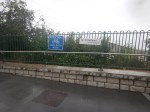
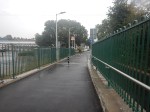
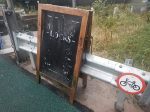
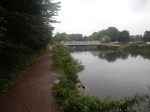
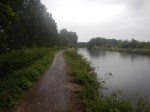
These pictures show the walk.


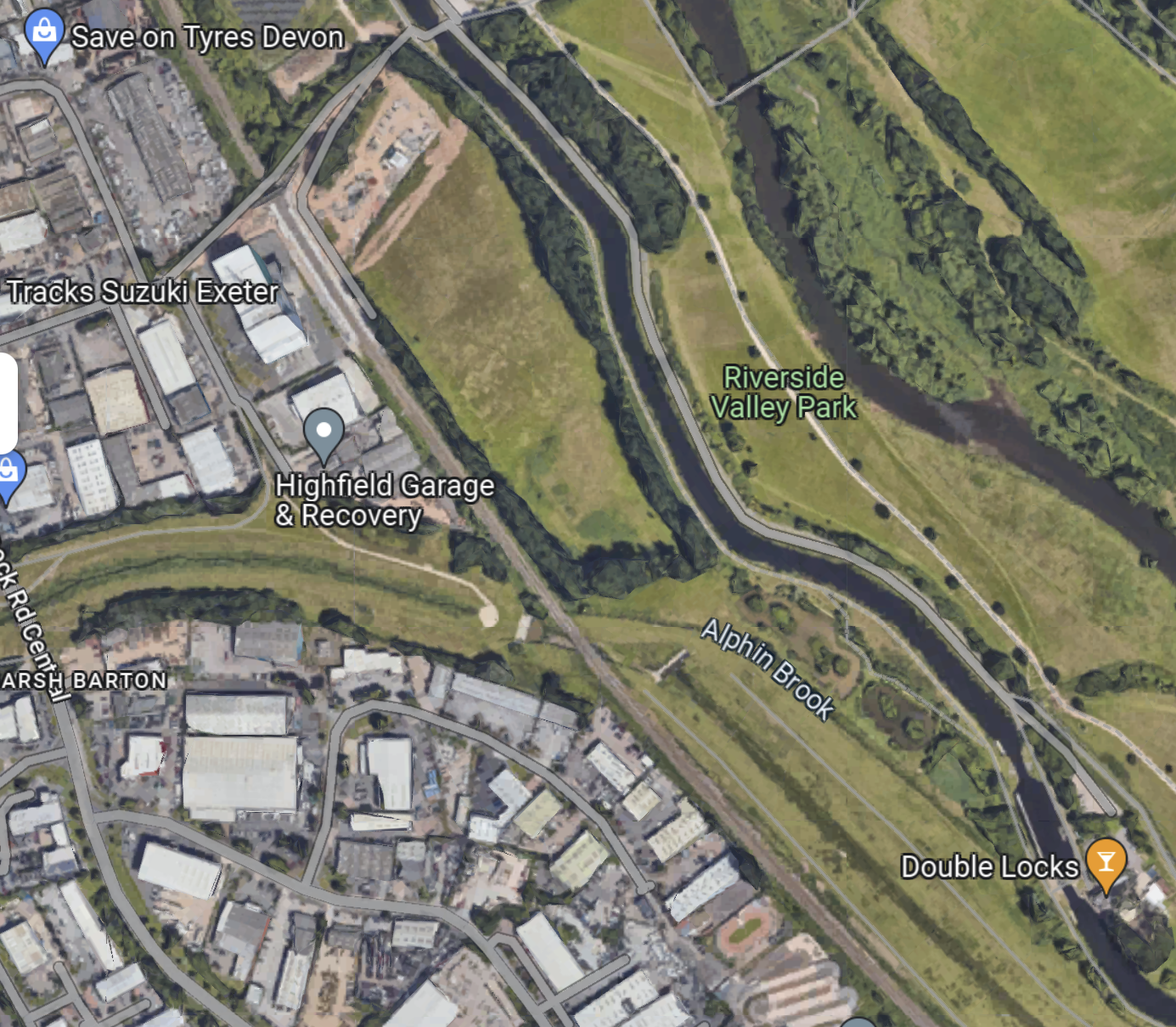
And this map shows the location of the pub and the station.
Are country minutes like country miles and a lot longer than those everybody else uses?
In the end, as I was getting soaked, I made a retreat back to the station.
Service Frequency
Currently, the trains are only hourly. Is that enough?
 The Anonymous Widower