H2goesRail
The title of this post, is the same as that of this page on the Deutsche Bahn web site.
These three paragraphs introduce the H2goesRail philosopher.
Deutsche Bahn is currently developing and implementing solutions that utilize hydrogen. One such endeavor is the H2goesRail project. In partnership with Siemens Mobility, we are breaking new ground and driving forward decarbonization of the transport sector for the good of the environment. Together we are developing an innovative hydrogen system for rail transport, which will comprise a refueling station, hydrogen train, and maintenance infrastructure.
We aim to replace diesel multiple units in regional service and thus further reduce carbon emissions in rail transport. To achieve this, with H2goesRail we are developing an innovative mobile refueling station whose smart control unit will allow fast refueling of hydrogen trains.
DB Energie GmbH will ensure the supply of hydrogen for the project, from production by means of renewable-powered electrolysis all the way through to storage and provision.
There is a lot of video.
Late Great Engineers: Geoffrey Ballard – Fuel Cell Visionary
If you’ve ever wondered, where the name Ballard came from for the hydrogen fuel cell company, then this article from The Engineer gives a detailed explanation.
French City Cancels Purchase Of 51 Hydrogen Buses After Realising Electric Ones Would Be Six Times Cheaper To Run
The title of this post, is the same as that as this article on Recharge Magazine.
The city is Montpelier and it’s their decision, but I do find it strange, that the French city of Pau have chosen the hydrogen version of the the Van Hool ExquiCity bus.
But Pau have chosen a British hydrogen system from ITM Power, rather than a French one.
A Last Look At Bank Station Before Shutdown
On Sunday, I took a last look at the Northern Line before its closure on January 15th until mid-May 2022.
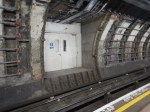
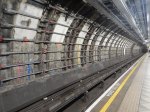
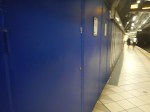
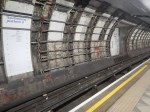
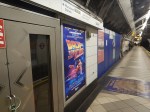
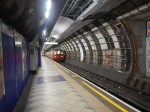
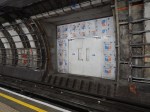
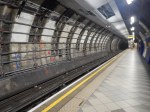
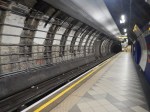
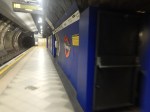
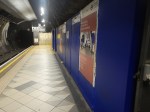
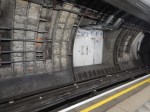
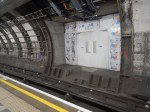
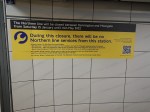
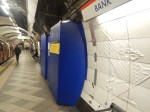
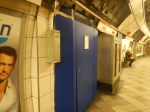
Note.
- The tunnel without cladding on the wall is the Southbound tunnel.
- The Southern tunnel will be opened up and will become a platform for the Northern tunnel.
- The doors in the Southern tunnel will lead to the new Southern tunnel, which is a number of metres to the West.
- The last two pictures are on the Central Line.
I had a brief chat with staff and they are not sure yet, if the Waterloo and City Line will be open during the closure.
The Completed Bridge At Feltham Station
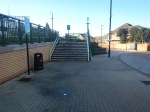
I took these pictures of the completed bridge at Feltham station.
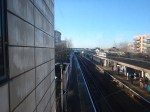
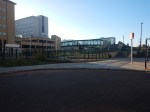
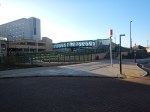
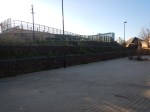


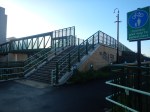
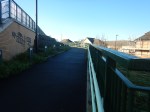
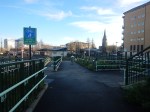
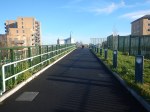
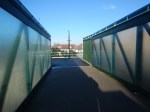
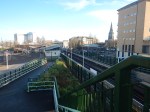

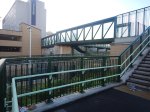
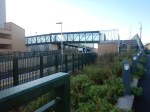
Note.
- The platforms at Feltham station have been lengthened.
- The level crossing at the station has been removed.
- The new bridge allows pedestrians to cross the railway.
- 4. The new bridge has already been vandalised.
In addition to the bridge, there is also a bridge with lifts in the station.
Barriers And Planters On The London Overground Platforms At Clapham Junction Station
To get home from Feltham station, after my visit this morning to see the new bridge, which I wrote about in The Completed Bridge At Feltham Station, I changed trains at Clapham Junction station.
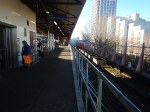
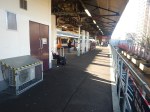
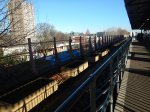
I noticed that a barrier has been put up between the current two Overground platforms; 1 and 2.
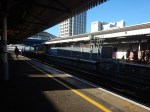
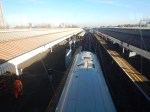
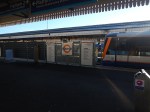
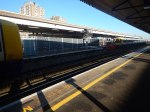
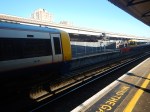
.I suspect it is for safety reasons, as it will certainly stop passengers falling off the platform.
I also noticed that planters had been placed where I suspect that the new Platform 0 will be built.
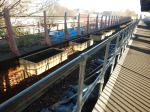
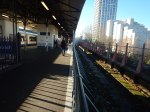
Note.
- If the track is to placed between the planters and the platform, the space could be a bit small.
- Or is the platform going to be rebuilt a bit narrower?
- It also looks like the platform won’t be long enough for the planned eight-car train.
I also took these pictures of what looks to be a Fire Exit.
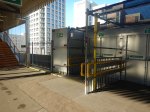
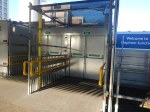
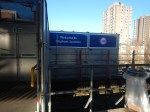
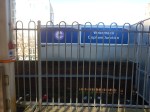
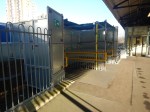
Could it be a temporary entrance, that will be used if there is a lot of work going on about the Grant Road entrance to create the new platform?
I also took these pictures of the Eastern end of the platform.
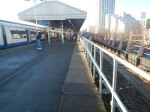
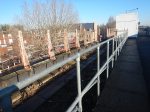
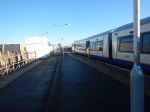
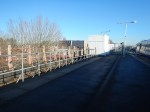
Considering, that the Class 378 train is five cars and an eight-car train would be sixty percent longer, it looks to me, that they will have to extend the platform, behind the temporary entrance or perhaps further towards the East.
Or could Network Rail have called up Baldrick, and asked him for one of his cunning plans?
Consider.
- Currently, there is a one train per hour (tph) between Milton Keynes and Clapham Junction stations, run by Southern.
- The service used to run between Milton Keynes and South Croydon stations.
- There surely is a need for a high-frequency service between the High Speed Two station at Old Oak Common and Clapham Junction station.
- Currently, there is no planned link between Crossrail and the West London Line.
Hythe Road station is planned to be on the West London Line and will serve the High Speed Two station at Old Oak Common.
This Transport for London map, shows the position of the proposed Hythe Road station with respect to High Speed Two and Crossrail.
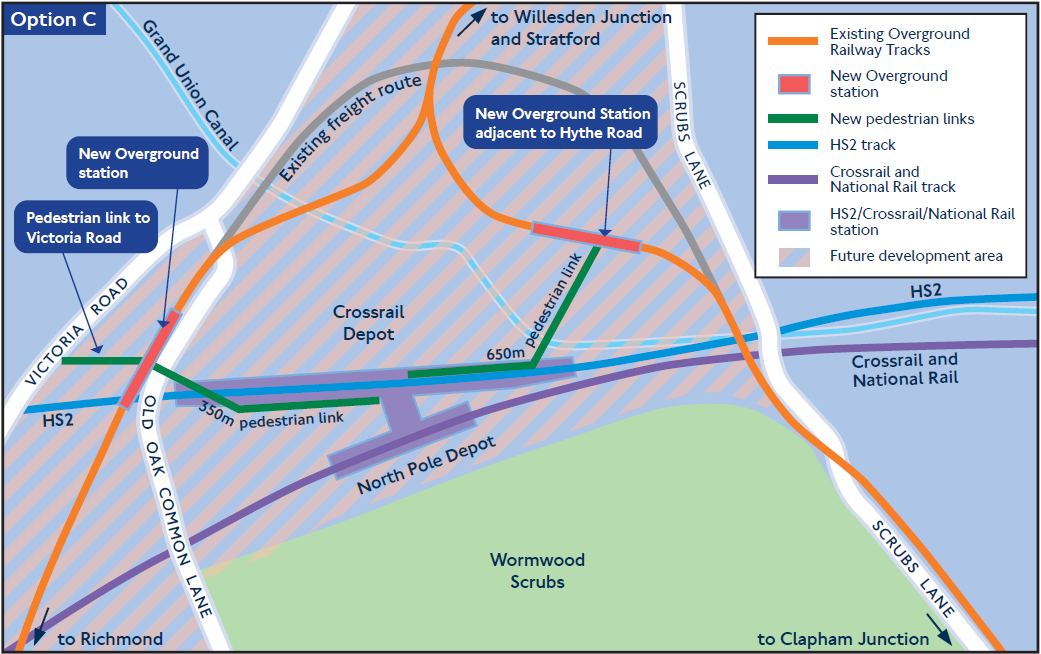
Note.
- The West London Line to and from Clapham Junction goes down the East of the map.
- The North London Line to and from Richmond goes down the West of the map.
- The current Milton Keynes and Clapham Junction service doesn’t go through the site of Hythe Road station, but somehow sneaks round on the freight line in the map.
Wikipedia describes the proposal for Hythe Road station like this.
Hythe Road railway station would be situated about 700 metres (770 yards) from the mainline Old Oak Common station. Construction work would involve re-aligning the track along a new railway embankment (built slightly to the north of the existing line) and demolishing industrial units along Salter Street, on land currently owned by a vehicle sales company (‘Car Giant’). The station structure will sit on a viaduct, with a bus interchange underneath. The station will incorporate 3 platforms, allowing through services between Stratford and Clapham Junction with an additional bay platform to accommodate terminating services from Clapham Junction.
I can envisage an eight tph service between Clapham Junction and Hythe Road stations, made up something like this.
- Four tph between Stratford and Clapham Junction stations
- One tph between Milton Keynes and Clapham Junction stations
- Three tph between Hythe Road and Clapham Junction stations
Note.
- Services would stop at Shepherd’s Bush, Kensington (Olympia), West Brompton and Imperial Wharf.
- Two platforms at Clapham Junction station could easily handle eight tph.
- The London Overground’s five car Class 378 trains would probably be long enough for the shuttle.
- There is even the possibility of running the Milton Keynes and Clapham Junction service with five car trains, to void the expense of creating an eight-car platform at Clapham Junction station.
It would be better if the Milton Keynes and Clapham Junction service could go through Hythe Road station. But this might be difficult to arrange.
Conclusion
An eight tph service through Old Oak Common could be a nice little add-on for both High Speed Two and Crossrail.
Two-Hour Energy Storage Offers Better Value As UK Frequency Response Market Saturating, Investor Gresham House Says
The title of this post, is the same as this article on Energy Storage News.
I would agree with what Gresham House says and it is my view that we need a lot more energy storage.
I like the system that Highview Power are building at Carrington near Manchester.
- It has an output of 50 MW.
- It has a capacity of 250 MWh.
This means it can supply 50 MW for five hours.
As they have sold other systems to Chile, Spain and the United States, I wouldn’t be surprised to see more of their systems sold in the UK.
Does Anybody Know Of A Shuttle Train Without A Timetable?
In Very Light Rail – A Revolution, I suggested that automated shuttle trains could be run between West Ealing and Greenford on the Greenford Branch.
Trains would not run to a timetable, but when they were ready and the line was clear, they would move to the next station.
I suspect the safest way would be for when the driver had a green signal and the doors were closed, they just pressed a button which told the train to proceed to the next station.
I believe this was the system, that was used when the Victoria Line was opened in 1968.
It has its advantages.
- On average passengers don’t have to wait so long.
- If the driver sees a group of passengers coming, he can delay the train for a minute or so until they have got on.
- If perhaps a passenger in a wheelchair is having a bit of difficulty, he can wait.
- If, as on the Greenford Branch, another train needs to come through, the shuttle train can park up in a platform and continue operating after the second train has cleared. Separation between the lightweight passenger train and any other train is maintained at all times.
But the biggest advantage is that you get more trains per hour (tph).
I know that cable cars, cliff railways, funiculars and of course lifts often work without a timetable, but does anybody know of a rail line, that works without one?
Cap And Floor Mechanism The ‘Standout Solution’ For Long Duration Storage, KPMG Finds
The title of this post, is the same as that of this article on Current News.
These are the first two paragraphs.
A cap and floor regime would be the most beneficial solution for supporting long duration energy storage, a KPMG report has found.
Commissioned by Drax, the report detailed how there is currently no appropriate investment mechanism for long duration storage. Examining four investment mechanisms – the Contracts for Difference (CfD) scheme, Regulated Asset Value (RAV) model, cap and floor regime and a reformed Capacity Market – it identified cap and floor as the best solution.
Cap and floor has been used successfully in the financing of interconnectors, so perhaps to apply it to long duration energy storage, will lead to greater use of such storage.
Very Light Rail – A Revolution
The title of this post, is the same as that of this article on Rail Engineer.
It is a good explanation of what very light rail is all about and the design concepts behind the first vehicle, which is called Revolution.
My feeling is that Any Very Light Rail vehicle should be able to run a short branch line route as capably as a Class 153 train.
But hopefully with better passenger and driver comfort and facilities.
- The speed of Revolution is 65 mph and that of a Class 153 train is 75 mph, so is that close enough?
- I would hope that Revolution has better acceleration as it has an electric transmission.
- Revolution has 56 seats and a wheelchair space and is PRM-compliant, whereas the Class 153 train has a few more seats and only some are PRM-compliant.
- Revolution has wi-fi and power sockets and most Class 153 trains don’t.
The quality of the seats and the view from the trains will probably be the tie-breaker.
The article doesn’t say, but surely they would find more applications, if they could run in pairs, do they might be able to replace a two-car Class 150 train.
Reading the whole article gives me the impression, that the designers have done thorough job to design a lightweight train, that both passengers and drivers will like.
I will reserve my judgement until I see and ride one of these trains.
An Automated Shuttle Train
In An Automated Shuttle Train On The Greenford Branch Line, I proposed an automated shuttle on the Greenford branch.
The Greenford Branch Line has the following features.
- It is 2.5 miles long.
- It is double-track.
- It is not electrified.
- There is a single platform station at both ends with three intermediate stations.
- The service frequency is two tph.
- Trains take 11-12 minutes to go between the two terminals.
- Freight trains also use the line.
To run the ideal four tph, trains would need to do a round trip between West Ealing and Greenford in fifteen minutes.
Suppose the Revolution vehicle was automated with the driver having a supervisory role.
- The train would shuttle between West Ealing and Greenford, leaving each station, when it was ready, so as many trips as possible were performed.
- On seeing a green signal, the driver would tell the train to proceed top the other station, if they knew it to be safe.
- If a freight train needed to come through, the shuttle train would stay in either West Ealing or Greenford stations out of the way protected by the signalling, until the freight train had cleared the track.
- Freight trains and the shuttle would never be on the same piece of track at the same time, which would greatly aid safety.
I suspect that at least three trains would go between the two stations in every hour, with perhaps four in the Peak.
 The Anonymous Widower