How Will Crossrail Affect The Docklands Light Railway?
When Crossrail opens, there will be a simple step-free walking link between Canary Wharf station and and Poplar DLR station.
As Poplar is the station on the DLR, where the North-South and the East-West routes cross, this is one of the better connectivity features of Crossrail.
Poplar serves a junction in four directions:
- Eastbound towards Beckton and Woolwich Arsenal.
- Northbound towards Stratford and Stratford International.
- Southbound towards the Isle of Dogs, Greenwich and Lewisham.
- Westbound towards Bank and Tower Gateway.
At present to get to Greenwich and Lewisham, you need to change at Canary Wharf DLR station, but as there is a reasonable walking route between Canary Wharf station and Canary Wharf DLR station, passengers for Lewisham could use that route.
As Crossrail will also have a reasonable link to the DLR at both Stratford and Woolwich, I wonder if we’ll see some reorganisation of services on the North-South DLR route between Lewishan and Stratford International.
Will some services go all the way between Lewisham and Stratford International?
Obviously, this will be determined by the routes travellers take after Crossrail opens.
There will also be affects due to the Law of Unexpected Consequences.
I am fairly sure, that Crossrail trains on the two Eastern branches will interface well at Whitechapel station, so passengers going between a station on the Abbey Wood branch to one on the Shenfield branch may prefer to go via Whitechapel, as it will be a simple cross-platform interchange.
How will this affect passenger numbers on the Jubilee Line and the DLR?
I suspect that passengers will use the route that is best for them and this can only mean spare capacity on the two historic routes.
As Crossrail will also be a bypass for the Central Line with connections between the two lines at Stratford, Liverpool Street, Tottenham Court Road, Bond Street and Ealing Broadway, the Greater East London area will be a big beneficiary from Crossrail.
We’ll have to wait and see how passenger numbers work out, but I think that the North-South route of the DLR could be blessed with spare capacity because of Crossrail, so there may be scope to extend the route past Stratford International and Lewisham.
Two possible extensions from Lewisham are detailed on Wikipedia.
But there is nothing past Stratford International. The DLR Horizon 2020 Study, does propose an extension up the Lea Valley to Tottenham Hale. This is the report’s summary of this route.
A DLR extension to Tottenham Hale via the Lea Valley was tested extending all services (15tph) onwards from Stratford International. The route would run alongside the Lea Valley rail route. The DLR extension is seen as serving intermediate markets (heavy rail would only stop at Tottenham Hale and Stratford) and would serve the Olympic site(s) and the Olympic legacy with additional stops at Lea Bridge and Walthamstow Marshes. Potential drawbacks are largely environmental, covering concerns over Hackney Marshes and the Lea Valley reservoirs.
I talked about it in a sub-section of The High Meads Loop At Stratford. This is a summary of what I said.
Extension of the DLR to Tottenham Hale was mooted a few years ago and a document called DLR Horizon 2020 talked about extending the system from Stratford International up alongside the Lea Valley Lines to Tottenham Hale station
It may be a worthy idea, but does it really make economic sense, when according to what you believe a lot of things may be happening in the area.
- A new Lea Bridge station has been created.
- A new Hall Farm Curve will happen.
- A rebuilt Hackney Wick station is being constructed.
- Crossrail 2 is being promoted and will serve Tottenham Hale and to the North.
- Transport for London have taken over the Lea Valley Lines.
- There will be a a major upgrade in the Tottenham Hale area, which is described in this document on the Haringey Council web site.
- Four-tracking will happen through Tottenham Hale station.
When the heavy rail expansion is sorted and the area between Tottenham and Walthamstow is developed as housing and a very large wetland and leisure area, the case for a Lea Valley Light Railway may be stronger and in need of reassessment.
What happens to the North-South route will be driven by the consequences of Crossrail and the massive need for housing in London and the transport links to serve it.
The Mayor’s Plan For A Gallions Reach Extension
The latest plan is to extend the DLR from Gallions Reach station across the Thames to Thamesmead and Abbey Wood.
I wrote about this plan in The Mayor’s Plans For East London River Crossings.
I shall repeat what I said, as I think this is a plan with legs.
A BBC article says this about this proposal.
A DLR crossing at Gallions Reach, helping support the development of around 17,000 new homes across Newham and the Royal Borough of Greenwich
It is different to the original proposal of a Docklands Light Railway extension to Dagenham Dock, which stayed on the North bank of the Thames.
This map shows the area of London from Gallions Reach to Abbey Wood.
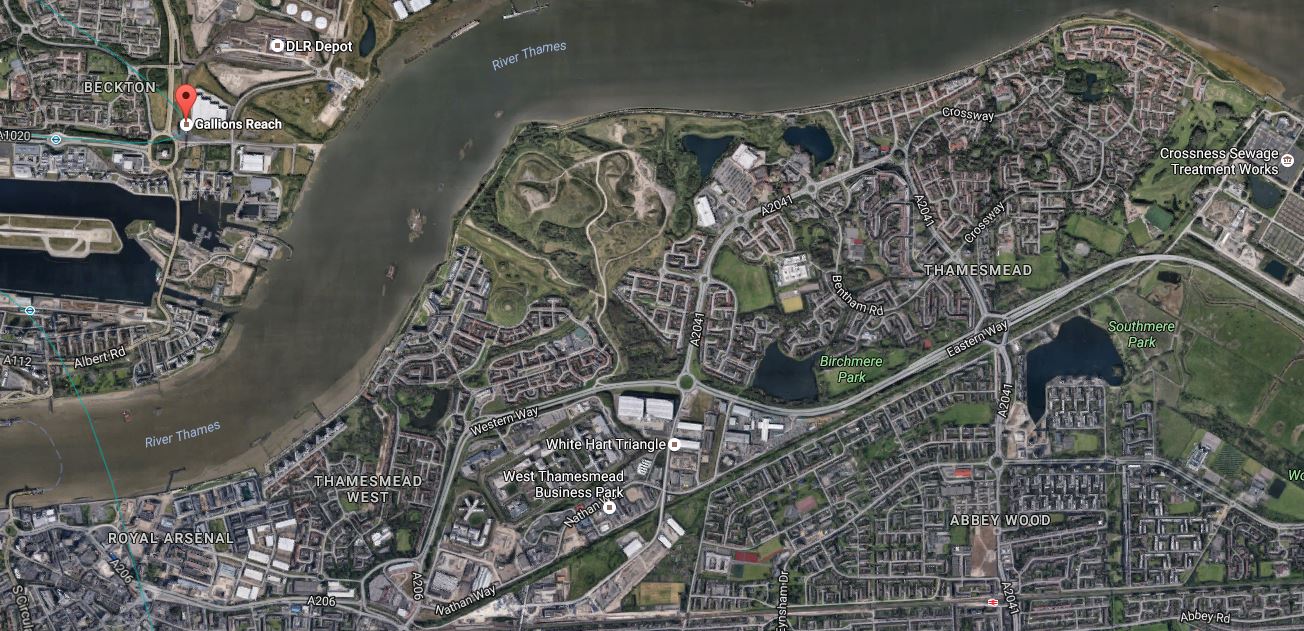
Gallions Reach To Abbey Wood
Note.
- Gallions Reach DLR station is marked with the red arrow.
- Just to the North of Gallions Reach station is the main DLR depot, which would probably be an excellent site to start a tunnel.
- The tunnel would probably emerge on the South bank of the Thames to the West of Thamesmead.
- It could then weave its way along the side of the main road.
- The North Kent Line with Abbey Wood and Belvedere stations runs along the bottom of the map.
- Crossrail could be extended to Gravesend.
- Crossrail should also be extended Ebbsfleet International for European rail services.
If the DLR extension went from Gallions Reach DLR station to Abbey Wood station it will be a loop on Crossrail serving a lot of areas ripe for quality housing and commercial development.
It certainly looks a feasible area to think about taking the DLR.
I also think if more destinations are created in the East, then this will need other developments.
- More capacity in the new trains, that are being ordered.
- Extra destinations in the West
- Expansion of the North-South route t balance the network.
The North and South extensions were covered earlier.
Extension To The West
I have written about this in Extending The Docklands Light Railway West From Bank Station.
Conclusion
The Docklands Light Railway must be one of the best stop-gap transport projects ever created.
Crossrail’s effects on the DLR will be more about providing opportunities, than creating problems.
We also shouldn’t underestimate the role of the DLR in bringing passengers to Crossrail.
A Design Crime – Stratford International Station
I went to Canterbury today and took the Highspeed service from Stratford International station.
These are pictures I took at the station.


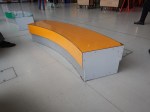
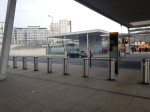


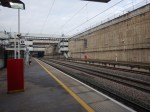
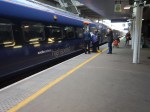
Most stations have the odd design issue, but Stratford International has a whole warehouse that’s full of them.
International In Name, But Not Trains
Stratford International station must be the only station in the world, which is billed as an International station, where all trains are domestic.
That to me is fraud!
Should I report the station to the Police?
Connecting With Stratford Station
I travelled to the station via the domestic Stratford station, which meant I had to walk the best part of a mile through the Eastfield Shopping Centre, which was mainly closed as it was earl;y in the morning.
Surely the connection could have been designed to be a shorter walk.
It’s not even straight through the Shopping Centre, but you have to double back after going right through almost to John Lewis.
It’s just designed so you pass as many shops as possible. I was wanting to use a train, not buy something.
This Google Map shows the two Stratford stations.
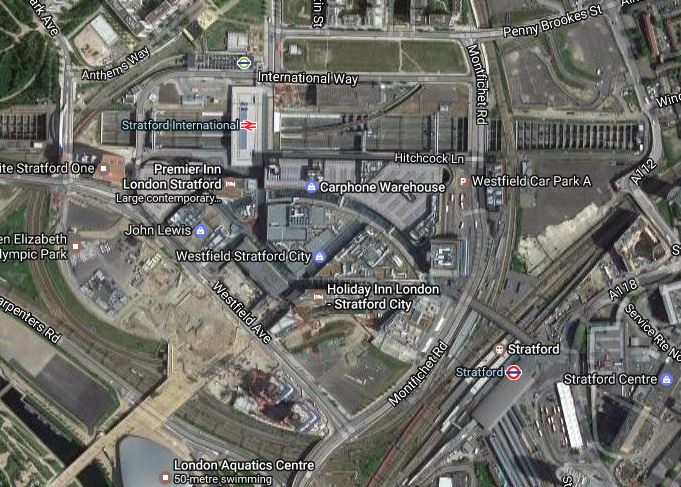
Topsy could have designed it better. Even when she was about five!
Surely something better can be done.
The Link To The Docklands Light Railway
You could use the Docklands Light Railway, but then that introduces more changes into to your journey.It is the route recommended by the National Rail Journey Planner.
But the DLR station is on the other side of a road, rather than inside Stratford International station.
The Link To Crossrail
It’s only going to get worse when Crossrail opens, as passengers wanting to go to between say Paddington and East Kent will be drawn to Stratford, only to discover the struggle through Eastfield to Stratford International.
The alternative route via Abbey Wood will be slower and will probably mean extra changes.
There will be one better route available from Crossrail to Stratford International, when the new line opens and that will be to go to Canary Wharf station and, take the short walk to Poplar DLR station. A trip on London’s unique Docklands Light Railway will take you direct to Stratford International station. The DLR always delivers when the chips are down, just as it did in the 2012 Olympics.
No Place To Wait Before The Platforms
Except for a few uncomfortable seats designed by a sadist and what looks to be a comfortable cafe, there is no place to wait on the station concourse before going to the platforms.
A few comfortable seats would be welcome.
The Bleakest Platforms In The UK
That is being charitable, as in all my traels across Europe, even in say a very cold Eastern Europe, any set of platforms as unwelcoming.
Perhaps I should try Siberia!
Appalling Train Access For The Disabled
Considering that the Class 395 trains are the only ones to use the platforms, the disabled acess using a ramp is so nineteenth century.
I joked about the quality of this to a member of staff and they said that in the rush hour, they are sometimes assisting as many as four passengers.
It’s probably lucky that the HighSpeed service is not an intense one, as with this level of disabled access, there would be train delays.
Conclusion
The station and line is a disgrace and especially for the disabled.
Considering it was only built a few years ago, everybody concerned should hang their heads in shame.
What would I do?
- Where the DLR goes under the main line platforms at Stratford station, between the two subways, I’d extend the DLR platforms underneath and provide direct access between the two levels. This must be possible and would enable passengers to change between main line, Crossrail and Central Line services with the DLR between Canary Wharf and Stratford International.
- Try and improve the connection to the DLR at Stratford International
- Replace or modify the Class 395 trains/pltform interface with something fit for purpose, that had level access to the platforms, so wheelchair passengers could just roll in.
- Do something about the bleakness of the station.
I’d also increase the number of Highspeed services through the station, so that all destinations got at least two direct trains per hour from Stratford.
I would also add some extra new destinations like Eastbourne and Hastings.
A Bactrian Station
Canonbury station has now got two Harrington Humps.
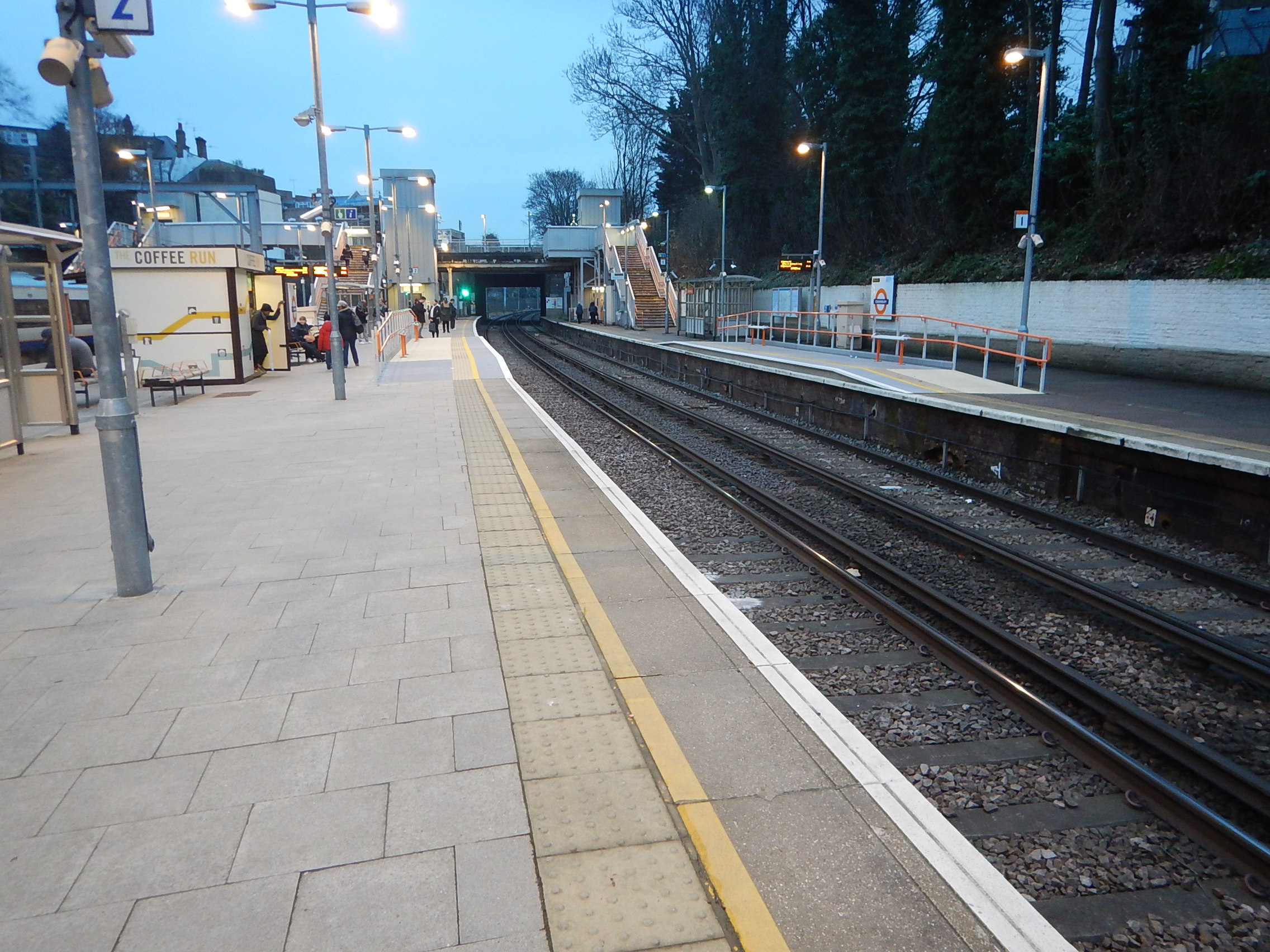
Does that make it a Bactrian station?
It’s certainly the sort of thing, that you’ll see in posh Islington and would never see in plebian Hackney.
Amateurs!
That is my one word response to this article on the BBC, which is entitled Michael Flynn resignation: He had to go, says White House.
Will High Speed 2 Have Go-Anywhere Trains?
I ask this question as after writing Plans For Toton Station For HS2 Are Beginning To Emerge, I started to think about the specification of the trains that will work on HS2.
Extending North |From Toton Or East Midlands Hub Station
Extending HS2 to Sheffield from Toton will eventually be via a dedicated High Speed Line, where the trains can run at their design speed of 225 mph.
But Toton HS2 to Sheffield via Chesterfield will be linked by the Erewash Valley Line, where trains will be able to travel at least as fast as 125 mph.
The Erewash Valley Line will probably be electrified before HS2 opens to Toton HS2 around 2030, to bring Sheffield consistently under two hours from London.
Extending North From Crewe
Similarly Crewe to Liverpool will not be getting a dedicated High Speed Line, but there is already a route where at least 125 mph is possible.
As passengers won’t want to change trains, Liverpool will get two trains per hour (tph)from London on HS2.
The only work needed North of Crewe would be to create extra and longer platforms at Liverpool Lime Street, provided that the new HS2 trains can work on classic high speed lines like the West Coast Main Line.
These improvements at Liverpool Lime Street are actually underway and knowing Scousers as I do, you could bet your house on it being ready in 2027, as they would want to have HS2 services at the same time as Manchester, if not a couple of years before.
Learning From The French
We should also look at how the French do things.
If you travel from Biarritz to Paris via a TGV, the service runs on both High Speed and classic lines.
From the Liverpool and Sheffield examples, I suspect that we will adopt a similar philosophy.
Consider when HS2 opens, the places that could be served directly from Crewe.
- Runcorn and Liverpool
- Manchester Piccadilly, if there is platform space.
- Warrington, Preston, Carlisle, Glasgow and Edinburgh – Why not?
- Chester and Holyhead – If the North Wales Coast Line is electrified, as has been threatened!
Note most of the West Coast Main Line routes are covered.
Can this explain the decision to combine the HS2 and West Coast Main Line franchises and the early extension of HS2 to Crewe?
The new franchise could even use the same 225 mph trains for HS2 at a slower speed on the West Coast Main Line to replace the Pendelinos.
The only disadvantage would be that the new trains couldn’t take advantage of the more generous HS2 loading gauge, unless of course the classic lines, where they are to run have their gauges enhanced. This may already be the case, as many of these routes have a loading gauge of W10 to take large freight containers.
The Trains For HS2 And West Coast Main Line
I think we’ll be seeing a very interesting specification for the HS2 trains.
- 225 mph capability on High Speed Lines
- 140 mph Pendolino performance on classic lines where possible.
- Short and long trains. Class 800 trains and others seem to be ordered this way, as five and nine/ten car units.
- Automatic coupling and uncoupling of units, just as Class 395 trains do now!
As the trains won’t be delivered for nearly ten years, wouldn’t be surprised to see that they have a 100 mph independently-powered capability of perhaps 100 miles. This would enable the trains to reach places like Aberdeen, Barrow in Furness, Blackpool, Inverness and Lincoln from the West Coast Main Line or Phase 1 of HS2.
Expanding The High Speed Network
It may seem strange to use perhaps onboard energy storage to extend services away from HS2. But this capability would probably only be given to the shorter trains that can join and split at Crewe or Birmingham International for fast running to and from London. Generally, when operating on onboard energy storage, the trains will be travelling at slower speeds. so less energy is needed.
This would mean that places like Barrow-in-Furnace, Blackpool, Cleethorpes and Lincoln could be easily added to the high speed network.
The High Speed network could also be expanded by improving the current network with selective electrification and the capability for higher line speeds.
All of these improvements on the classic lines, would mean that local and freight trains were able to provide a better service too!
Coupled with HS2, they would make a wonderful marketing opportunity.
I estimate the following using new trains and HS2 from Crewe, when Phase 2a of HS2 is complete.
- Glasgow-London would take under four hours for the journey as opposed to just over four and a half hours now.
- Liverpool-London would come down from two hours twelve minutes to one hour 33 minutes.
- Preston-London would down from two hours fifteen minutes to under a hundred minutes.
- Wigan-London would come down from just over two hours to just 87 minutes.
And some commentators and politicians doubt HS2 is needed.
Conclusion
Certainly, the decision to extend as fast as possible to Crewe was a very good idea.
Consider going from Euston to Glasgow in say 2028.
- The train would run from Euston to Crewe at full speed of 225 mph stopping if required at Old Oak Common and Birmingham International in a time of 58 minutes.
- From Crewe to Glasgow, the train would run at least at 125 mph stopping as appropriately.
- Selective improvements and in-cab signalling would reduce journey times from those of today to the North of Crewe.
Ten years or so later, the journey time will be even faster as the High Speed line was extended past Crewe.
Plans For East Midlands Hub Station For HS2 Are Beginning To Emerge
East Midlands Hub (Toton) station depending on who’s writing the words is beginning to emerge from HS2’s plans. (I shall use Toton HS2 in this post, to emphasise I mean the HS2 station.) Wikipedia says this about the station.
It is intended to be located on the existing railway sidings in Toton, situated between Nottingham and Derby. A connection to the Nottingham tram system and new connections to existing rail services are proposed, to link the station to Nottingham, Derby and Leicester railway stations. The station would be located adjacent to the M1 motorway in Nottinghamshire, close to the border with Derbyshire.
This Google Map shows the location.
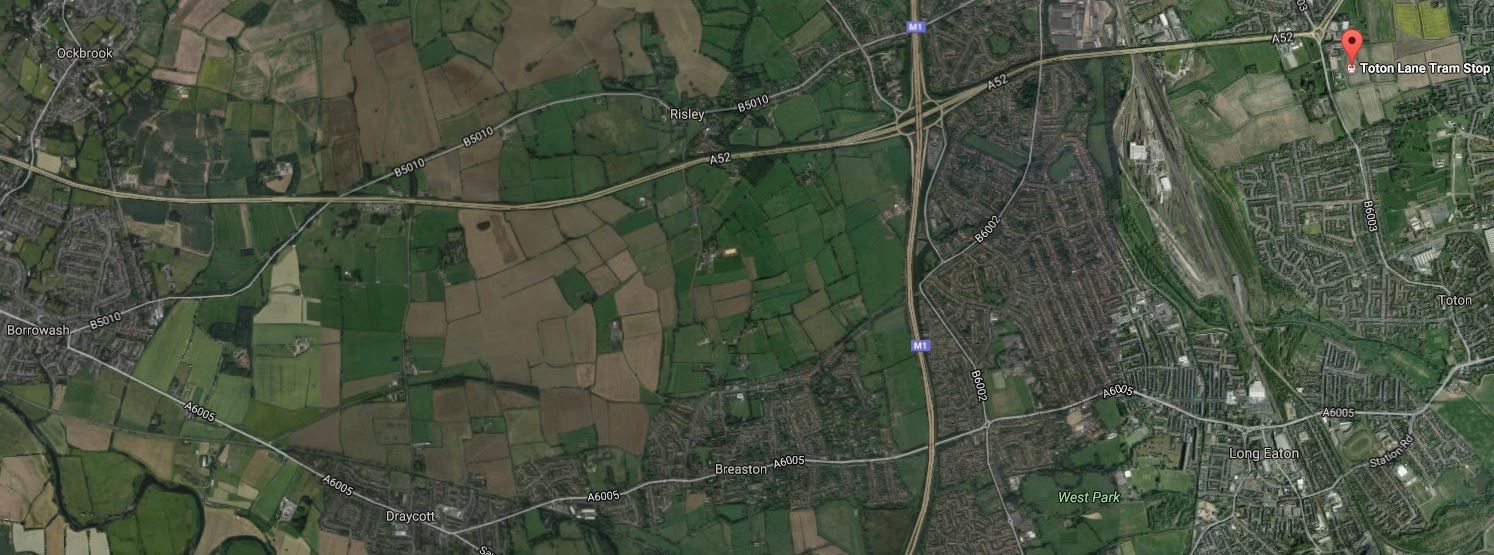
The red arrow marks Toton Lane Tram Stop, which is a Psrk-and-Ride terminus of the Nottingham Express Transit. Between the tram stop and the M1, the Erewash Valley Line passes through in a North-South alignment. South of the East-West A52 is the site of Toton Sidings, which is proposed for the new Toton HS2 station.
I think that HS2 have made a good start in the planning of the connections at this station.
Link To Nottingham Express Transit
Extension of route 1 to serve HS2 at Toton and Derby is a section in the Wikipedia entry for the Nottingham Express Transit.
This is said.
News that a station for the proposed HS2 line (the East Midlands Hub) is likely to be built on the site of Toton sidings, only a short distance from the Toton Lane terminus has fuelled speculation that the line could be extended to the new station. In November 2015 there was a proposal for the tram network to be extended from Toton to Derby. Two routes were later proposed by the D2N2 local enterprise partnership for the route to Derby. The first route would be via the A52 while the second would be via Borrowash and Spondon.
This is not a cheapskate extension to connect Nottingham to HS2, but a proper solution, that creates a high-capacity link running from Nottingham to Derby via the new Toton HS2 station.
- The A52 is the East-West road connecting Derby and Nottingham, which is clearly shown on the Google Map.
- Borrowash is a village at the Western edge of the Google Map, with Spondon, which has a station on the Midland Main Line to Derby, just off the map to the West.
I wouldn’t rule out the possibility of extending the trams from Toton HS2 using tram-trains to go via Long Eaton and Spondon to Derby.
- Tram-trains could use existing track between Toton HS2 and Derby, provided it was electrified.
- Daul-voltage tram-trains would be needed to work on main line and tramway electrification.
- Journey time from Derby to Toton HS2 could be around 20 minutes.
- Network Rail’s plan to move Long Eaton station should make this easier.
- A high frequency service could be run.
- Extra stops could be introduced.
- There are tram-train versions of the Alstom Citadis trams used in Nottingham.
Tram-trains would need 25 KVAC electrification along the route between Toton HS2 and Derby stations. But surely the Midland Main Line electrification will have got to these two stations by 2026 or so!
Nottingham To Derby Via Toton HS2
Nottingham and Derby are two very different cities, but both are successful in their own ways.
Currently, there are about three direct trains per hour (tph) between the two cities.
- Birmingham-Coventry has 7 tph
- Birmingham-Wolverhampton has 9 tph and the Midland Metro.
- Manchester-Leeds has 8 tph
- Leeds-Bradord has 6 tph
Nottingham and Derby get a very raw deal and working on the London Overground/Merseyrail principle of Turn-Up-And-Go , Derby and Nottingham need a four tph connecting service to give passengers something that is acceptable.
As with Birmingham-Woverhampton, a mix of heavy rail, tram and perhaps tram-train might give the two cities the service to Toton HS2 and between themselves, that they need.
Bssed on good practice in London, Birmingham and Liverpool, I would provide the following minimum service.
- 4 tph – Express heavy rail stopping at Beeston, Toton HS2, Long Easton and Spondon.
- 4 tph – Tram-train stopping everywhere between Hucknall and Derby via Beeston, Toton HS2, Long Eaton and Spondon.
- 3 tph – Extra long distance trains calling at both, which would probably also stop at Toton HS2.
It would be a darn site better than what is currently provided.
A Notts/Derbys Crossrail
There might even be a case for a Newark to Burton-on-Trent service via Nottingham, Toton HS2, Long Eaton and Derby. It would be Notts/Derbys version of Crossrail, feeding passengers from all over the area to HS2.
Nottingham City Centre To London In Under 90 Minutes
Currently Nottingham to London takes one hour forty minutes by the fastest trains. But after HS2 opens, it would take 30 minutes from Nottingham to Toton HS and the 52 minutes by HS2 to London.
So even if the classic service to St. Pancras gets faster and more frequent, will passengers opt for the quicker HS2 from Toton HS2?
If say Toton HS2 to London was four tph and run on almost a Turn-Up-And-Go basis, and the connections to Derby and Nottingham were upwards of six tph, the classic trains will have to work hard to maintain market share.
Derby to London wouldn’t show the same improvement as Nottingham to London, but the service could be more frequent and probably well under ninety ,minutes.
The big winners would be the passengers from the Far West of Derby to the Far East of Nottingham.
Using The Erewash Valley Line
Network Rail is improving the Erewash Valley Line. Under Future is a section in the Wikipedia entry for the line.
This is said.
Network Rail as part of a £250 million investment in the regions railways has proposed improvements to the junctions at each end, resignalling throughout, and a new East Midlands Control Centre.
As well as renewing the signalling, three junctions at Trowell, Ironville and Codnor Park will be redesigned and rebuilt. Since the existing Midland Main Line from Derby through the Derwent Valley has a number of tunnels and cuttings which are listed buildings and it is a World Heritage Area, it seems that the Erewash line is ripe for expansion.
It would seem that Network Rail are creating a 125 mph-plus line between East Midlands Parkway and Chesterfield stations. Is this part of a pragmatic philosophy to improve services from London to Chesterfield and Sheffield.
- Derby to Chesterfield along the Derwent Valley will not be electrified because of heritage and engineering reasons.
- Derby to Sheffield via Chesterfield will be served by bi-mode or other independently-powered trains.
- The Erewash Valley Line will be electrified and could even be cleared to allow 140 mph running.
- London to Sheffield trains would go via East Midlands Parkway, Long Eaton, Toton HS2 and Chesterfield.
Even if HS2 isn’t built, Chesterfield and Sheffield would get a vastly improved service to London.
When HS2 is built to Toton HS2, HS2 can take advantage of the Erewash Valley Line to create faster services to the North.
Extending HS2 To Sheffield
If HS2 can get to Toton HS2 in 52 minutes, surely this could mean a London-Sheffield time of well under two hours once the Erewash Valley Line is electrified, even if passengers had to change trains.
But I think we know enough about the dynamics of High Speed Trains, that can run at 225 mph on High Speed Lines to get them to run at 125 or even 140 mph on high standard main lines, like the Midland Main Line.
After HS2 opens to Toton HS2, Chesterfield and Sheffield would get a better service from London in three ways.
- Direct from London on the Midland Main Line.
- By HS2 with a change at Toton HS2 to a classic service.
- By HS2 direct.
All services would use the electrified Erewash Valley Line to get to Chesterfield.
It should be noted that from 2020, London-Norwich will be on a frequency of 3 tph. Surely, the much larger Sheffield needs 4 tph to and from London.
Using The Robin Hood Line
The Robin Hood Line goes between Nottingham in the South to Mansfield Woodhouse and Worksop in the North.
- It is an underdeveloped line with diesel multiple units running to a frequency of 2 tph.
- The Southern end of the line connects to the tracks through Toton HS2, so it wouldn’t be difficult to use the new station as an additional terminus for the Robin Hood Line.
- At the Northern end, there is scope to develop new branches.
I can envisage Nottingham developing the Robin Hood Line into a suburban network feeding passengers to both the City Centre and Toton HS2.
Extending HS2 to North Nottinghamshire And Lincoln
In After The Robin Hood Line Will Nottingham See The Maid Marian Line?, I wrote about an article in the Nottingham Post is entitled Hopes HS2 could see ‘Maid Marian Line’ opened to passengers.
There is a freight only line, that if reopened to passenger traffic would allow trains to connect from Toton HS2, through Ilkeston and Langley Mill to North Nottinghamshire and all the way across Lincolnshire to Lincoln, thus giving a large area direct access to HS2.
Lincoln to London would be under two hours with a change at Toton HS2.
Will All Sorts Of Towns And Cities Get The Benefit Of Direct HS2 Trains?
I have mentioned a lot of stations at various town and cities in this post.
To take Langley Mill station as an example, currently this gets at least one fast train a day to and from St. Pancras.
When the new HS2 trains are running between London, Chesterfield and Sheffield via Toton HS2, will they do the same thing?
If they do, then stations like Ilkeston, Langley Mill and Alfreton could get a direct HS2 service to and from Birmingham and London.
One of the things to note, is that the new trains will be much faster at stopping and getting on their way again, than the current generation of trains, so adding stops between Toton HS and Sheffield. won’t delay the service like it does today.
As I said earlier, I believe there could be a similar connecting service from Toton HS2 to Lincoln, calling at Kirkby-in-Ashfield, Mansfield, Gainsborough, Lincoln and Cleethorpes.
The train to Lincoln would probably be a short five can train and it would couple and uncouple with a similar train at Toton for the express journey South.
Other destinations from Toton HS, might include Doncaster, Doncaster Airport and Hull.
It’s one thing for a short train to trundle round Nottinghamshire and Lincolnshire at 100 mph, but when on HS2, you probably need two trains coupled together to maximise the use of a limited number of train paths.
Connections could also be created using slower trains! But they wouldn’t be so sexy!
A New City At Toton
The Sunday Times has an article this week, which was entitled Next Arrival On The HS2 Line: A Brand New City.
It is an interesting proposition.
- There’s certainly space between Derby and Nottingham.
- Birmingham will be 19 minutes away by HS2.
- London will be within the hour.
- The M1 will pass right through the city.
But above all we need more housing.
Conclusion
The HS2 station at East Midlands Hub or Toton HS2, is a lot more than a HS2 station for Nottingham and Derby.
I would do the following.
- Electrify to Sheffield on the Erewash Valley Line and between Derby and Nottingham.
- Extend the Nottingham Express Transit to Derby via Toton HS2 using tram-train technology.
- Run a 4 tph express local service between Derby and Nottingham via Toton HS2.
- Make sure that HS2 reaches Toton HS2 as soon as possible.
- Build the new city at Toton.
Surely because the Nottingham-Derby area has a lot to gain from HS2, it would probably be very beneficial for HS2’s revenue.
Whitechapel Station Now Has Full Length Platforms
The East London Line platforms at Whitechapwl station are now full length.


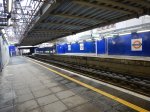

The roof is coming on too!
I still think that Whitechapel Will Be The Jewel In The East.
The station will open to Crossrail in December 2018. This document on the Crossrail web site gives details of the schedule of works in 2017.
Will Britain Negotiate With A United Europe?
In this article on the BBC, which is entitled EU chief Jean-Claude Juncker ‘will not seek second term’, this is said.
Mr Juncker also said the UK could divide opinion among EU leaders once Brexit negotiations begin.
I think that will be highly likely, as putting 27 people in a room and asking themany question, will give several different answers.
Last year, I wrote Brexit – Signalling Implications For The UK, which was based on an an article on Rail Engineer.
This is a paragraph from the article, which talks about implementing signalling post-Brexit.
The endless committees to discuss and agree how the standards will be implemented do not get in the way. Whilst not suitable for main line usage (at least in the foreseeable future), there could be suburban routes around cities (for example Merseyrail) that could benefit from CBTC deployment.
I know it is talking about one small part of railway signalling, but if the states of Europe can’t agree a common position on that, how will they agree a common position on how to deal with the UK during and after Brexit?
In some ways, the biggest problem with Brexit, is that we will still be arguing about the details of the settlement well into the 2030s and beyond.
I can see some absolutely silly arguments going on and on!
The Adverse Effects Of Electric Vehicles
This article in theMail OnLine has one of those titles which are all you need to read.
UK could need 20 more nuclear power stations if electric cars take over our roads and cause ‘massive strain’ on power network
There is also a similar article in The Times.
The articles are based on research by Transport for London.
The article has a point and TfL have done the sums.
Consider the future.
At present London doesn’t apply the full Congestion Charge for electric vehicles and they get other discounts. So as electric vehicles get more affordable and with a longer range, it will be sensible to purchase an electric vehicle and take advantage of using it at a discount in London.
So will London be grid-locked by electric vehicles?
We may get cleaner air, but how will all those, who depend on buses and taxis get through all this congestion?
Many of these new electric cars will be driverless, which will increase their attraction and just add to the congestion.
All of these vehicles will also need to be charged, so will we see every parking space fitted with a charging point.
Who is going to pay for these points?
And then as Transport for London say, just providing enough electricity for London’s transport, will require two nuclear power stations.
So how about using hydrogen fuel cells to power these vehicles?
But to create the hydrogen you need electricity to electrolyse water. So more nuclear power stations?
So what will we do?
London is lucky, in that compared to other cities in the UK, it has an extensive public transport network that works, that people like to use.
So Crossrail 2 and possibly 3 and 4, if properly designed can take the pressure off London, to allow space for driverless electric buses and taxis, and a severely restricted number of other vehicles.
Just as people are now complaining that they were told by the Government to buy a diesel car and now they are being abused as polluters, in a decade or so, those buying electric cars will be abused as congesters.
Owning a car in the future will become an increasingly expensive and annoying business.
Now That’s What I Call A Mega Bendy Bus!
Bendy buses weren’t liked in London and although some places in Europe have them, they are nothing like the mega-bendies from Brazil discussed in this article on Global Rail News, which is entitled New mega-buses to replace trams?.
This is the opening paragraph.
Could advances in bus design threaten the role of trams on busy routes? New, longer designs which carry more passengers and combine flexibility with vast capacity.
On the other hand, I don’t see why a bendy bus with driving cabs at each end, running in a dedicated traffic lane or perhaps in a concrete guided busway couldn’t be used on a fixed link between say a railway station and the centre of a city. A double-ended design would eliminate the need to turn the bus, which is a big space-hungry problem
I think that once, one city, airport or attraction develops this idea successfully, then the idea could spread!
The chassis developed by Volvo in Brazil mentioned in the article, would certainly be a good starting point.
 The Anonymous Widower