London Underground: Platform Phone Boxes Given Listed Status
The title of this post, is the same as that of this article on the BBC.
This is the sub-heading.
Four classic phone boxes on London Underground platforms have been Grade II-listed, Historic England has announced.
This is the first paragraph.
The K8 model, which came after the traditional red-panelled box, was designed to have a “modern and minimalist” appearance.
These are the four boxes.
Chalfont & Latimer Station
This box is at Chalfont & Latimer station.

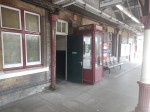



Why is it maroon?
Chorleywood Station
This box is at Chorleywood station
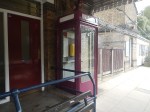
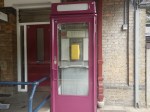
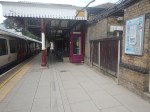
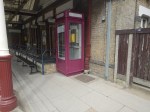
It is maroon like the nearby one at Chalfont & Latimer station. Is it maroon for Metropolitan?
This box is next to a defibrillator. Could the K8 phone boxes be used to protect the defibrillators from the elements?
High Street Kensington Station
The box is on the platform at High Street Kensington station.





Why is it in dark blue? Dark blue is not Circle or District.
Northwick Park Station
The box is on the island platform at Northwick Park station.






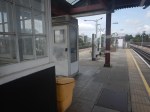
I think it needs a bit of tender loving care, rather than listing.
A Pair Of Toilets At Peterborough Station
Coming back from Lincolnshire yesterday, I had a few minutes to wait for my train to London on Platform 3. As there was a sign to toilets, I thought I’d sort myself out before the train arrived.
I found two spacious identical unisex toilets.
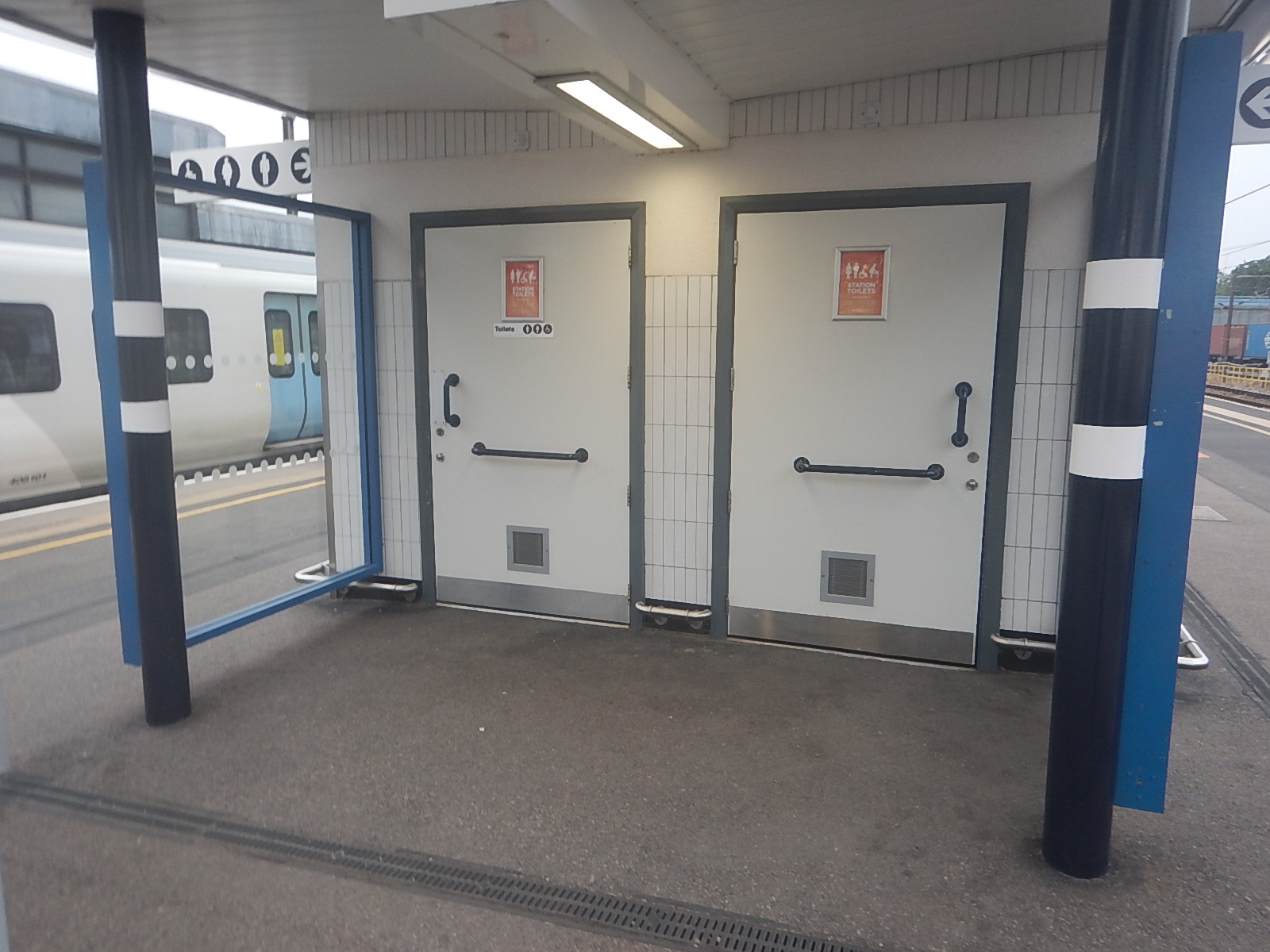
If you were of any sexual orientation, in a wheelchair, needed a place to change a baby or just wanted a quick splash and dash, I don’t think, anybody would find a problem with this pair.
They were also scrupulously clean. But then most station toilets generally are these days. Earlier in the day, I’d used the toilets at Lincoln station and they were very clean too!
I do think that the quality and cleanliness of toilets has been one of the biggest improvements of train travel in the UK, in the last fifty years in the UK.
My Second Ride In A Wrightbus Single-Decker Hydrogen Bus
Or it might have been the third or fourth, but it was the first outside of London in a single-decker Wrightbus hydrogen bus. The earlier rides were in the RV1 route, which I wrote about in London’s Hydrogen Buses.
I took these pictures.


















Note.
The trip was in Crawley and Go-Ahead are building a network of hydrogen buses to link the town and Gatwick Airport.
- It was a high quality bus.
- It was busy.
- It was the first bus, I’d seen in the UK, with a detailed route.
Someone had been thinking about how to design a bus route.
New Wellington Railway Station Worth £15m Could Open By 2025
The title of this post is the same as that of this article on the BBC.
This is the sub-heading.
Efforts to build a new railway station could soon move a step closer – if plans for 220 new homes are approved.
These are the first two paragraphs.
Somerset West and Taunton Council and Mid Devon District Council put together plans to reopen Wellington and Cullompton railway stations
Both closed during the infamous Beeching cuts of the mid-1960s.
Reading the article, it looks like the Department for Transport are going to pay for the station.
Four weeks ago, I went to the opening of Reading Green Park station, which I wrote about in Reading Green Park Station – 27th May 2023.
When I was there, I met the guy, who works for Great Western Railway, who is responsible for new stations in the area, who when I asked him about Wellington and Cullompton, indicated that they might be treated together.
In Thoughts About Electrification Through Devon And Cornwall, I speculated that there might be some electrification in the area to charge battery-electric trains on their way to and from the Devon and Cornwall Peninsular. As the M5 motorway goes through the area close to the railway, who would complain about some well-designed overhead electrification.
Network Rail could even use a design like this.
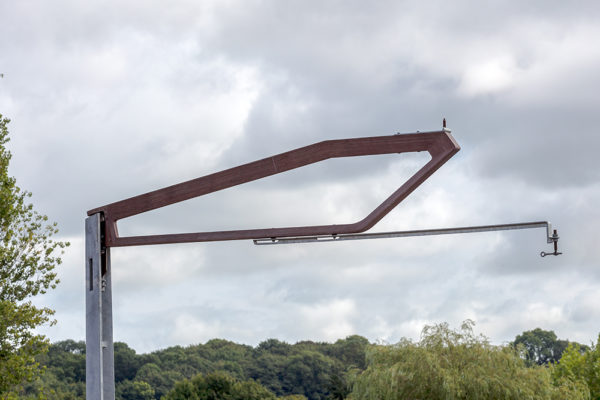
The structural rhomboid shape on top is made from laminated wood.
I describe it in detail in Prototype Overhead Line Structure Revealed.
According to Real Time Trains, Taunton and Exeter St. David’s are 30.7 miles apart and a typical train takes twenty-seven minutes, so I’m fairly sure that a long enough electrified section can be created to fully charge trains, even if they speed through at nearly 70 mph.
Services
The BBC article says this about services.
David Northey, a retired strategic planner with Network Rail, said at a public meeting held in May, that the station would initially be served by trains every two hours as part of the Great Western Railway service between Exeter St. David’s and Cardiff Central.
However, he said this likely increase to once per hour as demand grows.
There are currently four services that go through the site of the proposed stations at Wellington and Cullompton.
- London Paddington and Exeter St. David’s
- London Paddington and Plumouth
- London Paddington and Penzance
- Cardiff Central and Penzance
Note.
- All trains have a frequency of one train per two hours (tp2h).
- There is a train every thirty minutes.
- All trains stop at Taunton, Tiverton Parkway and Exeter St. Davids.
If at some time in the future all services are run by battery-electric Class 802 trains, I suspect GWR will have fun working out an efficient charging and stopping schedule, which increases the number of stops at Wellington and Cullompton stations.
Rolls-Royce Considering Switching From BEV To Hydrogen For Future Models
The title of this post, is the same as that of this article on INSIDEEVs.
This is the sub-heading
The luxury carmaker’s CEO rules out hydrogen combustion, but fuel cells are on the table.
This is the first paragraph.
Rolls-Royce is considering ditching all-electric powertrains in favor of fuel cell technology for its future zero-emissions models once the technology is mature enough and can be scaled to meet its demands, according to Autocar, quoting the luxury car brand’s CEO, Torsten Müller-Ötvös.
As the Rolls-Royce Spectre has a kerb weight of almost three tonnes, I suspect that the handling might make someone like Alec Issigonis, Colin Chapman or Stirling Moss have a good laugh.
But the smaller battery that the fuel cell technology would require, might give a better balance between acceleration, handling and performance.
It would be good fun to model the dynamics of such a heavy car.
I do think though that it is these dynamics, that have suggested a move to hydrogen.
Or Torsten Müller-Ötvös, may have made the statement to find out, what the sort of people, who would buy this car, might think!
The Shuttle Lift At Whitechapel Station
Whitechapel station is an unusual station on the London Overground/Underground network, as the two Overground tracks are underneath the two Underground tracks.
But then Marc Brunel and his more famous son; Isambard didn’t realise that their Thames Tunnel would eventually be part of London’s circular Overground railway.
The interchange is further complicated, by the Elizabeth Line being dozens of metres below the Overground, so that is connected to the main station bridge concourse by a giant three-barrel escalator.








A single shuttle lift and a set of stairs connect the bridge concourse to the Northbound Overground platform.
















Note.
- The route is well used, as passengers have realised it is the fastest way between the Elizabeth Line and the Northbound London Overground.
- Judging by the number of passengers, who exit from the first car of Northbound Overground trains, this route could be a popular one for passengers from South London, who are continuing their journey on the Elizabeth Line.
- I use the route to come home with shopping, I’ve bought along the Elizabeth Line. I can manage the Lizzie Line escalators with two shopping bags and after rising from the depths at Whitechapel, I can take this lift to the first car of a train for Dalston, where there is a lift to the street and a bus to home.
- The lift has only two stops and one button is used to shuttle it, between the stops.
- The lower lift stop is perhaps ten metres from the first car of Northbound Overground train.
- The upper lift stop is perhaps ten metres from the bridge concourse and twenty from the escalator to the Elizabeth Line.
Strangely, the lift and stairs arrangement is more complicated on the Southbound platform of the Overground.
London’s transport network needs more simple shuttle lifts like this.
Run Larger, Multi-Site Offshore Wind Tenders, French Energy Commission Recommends To Gov’t
The title of this post, is the same as that of this article on offshoreWIND.biz.
This is the sub-heading.
The French Energy Regulatory Commission (CRE) has recommended that the government conducts larger offshore wind tenders, inviting bids for several sites. This is according to the latest update from CRE, which has now published specifications for the country’s AO5 tender for a floating wind farm in southern Brittany.
Looking at the building of large numbers of wind turbines and their fixed or floating foundations, I am drawn to the conclusion, that it might be better if all were as identical as possible.
I should also note, that we were very successful selling Artemis project management systems in France. Our manager in the country, said it was because all the country’s top managers had been to the same schools and universities and passed the best solutions around themselves.
So perhaps a standard solution appeals to the French psyche?
In the UK, BP are currently designing and planning these fixed foundation wind farms.
- Mona – 1500 MW – 35 m. depth – 30 km. offshore
- Morgan – 1500 MW – 35 m. depth – 30 km. offshore
- Morven – 2907 MW – 65-75 m. depth – 60 km. offshore
Given that Mona and Morgan are in the Irish Sea and Morven is North-East of Aberdeen, I wouldn’t be surprised to find that BP treat these three projects as two separate 3 GW projects, which could share the same turbine design and fixed foundation designs, that were very similar.
I’m sure BP would save money, if they used a similar design philosophy on all three projects.
Stackable Floating Wind Platform Gets DNV Approval
The title of this post, is the same as that of this article on offshoreWIND.biz.
This is the sub-heading.
DNV has awarded Bassoe Technology an Approval in Principle (AiP) for a 17 MW D-Floater floating wind foundation, designed to withstand extreme 50-year typhoon conditions in the South China Sea.
I wrote about this technology in An Elegant Solution.
This visualisation shows five D-floaters being transported on a ship.
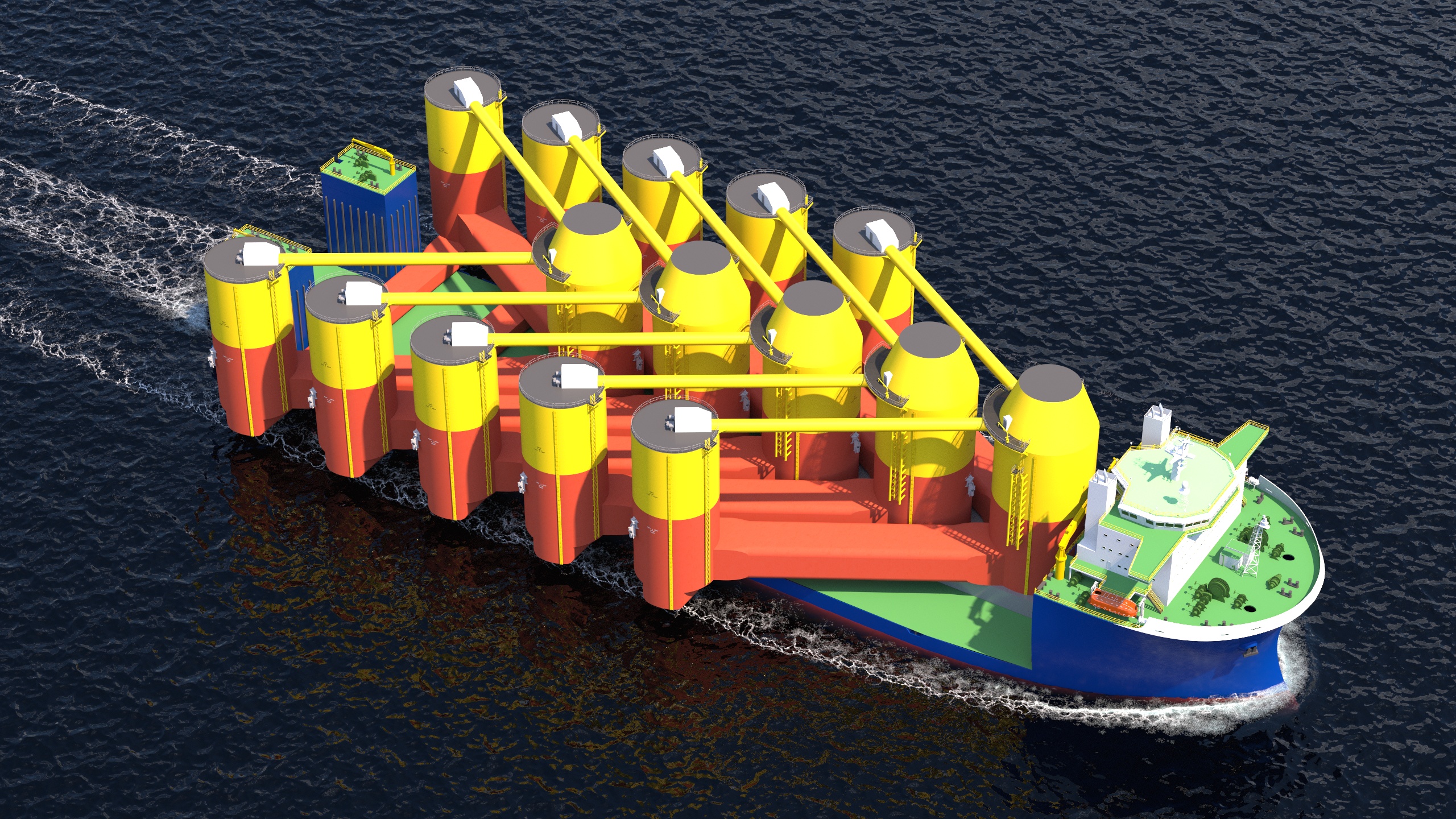
DNV Approval makes it more likely that the design will be deployed in the near future.
Close-Up: New Scour Protection Solution That Has Potential To Cut Costs By 70 Pct Inspired By Turtles
The title of this post, is the same as that of this article on offshoreWIND.biz.
This is the sub-heading.
At the beginning of May, Balmoral presented a scour protection solution that could replace rock dumping and is set to potentially cut costs by up to 70 per cent when compared to this conventional method. In an interview with offshoreWIND.biz, the company revealed that the initial concept behind its new HexDefence system was aimed at a solution for the oil and gas industry but was further developed with the offshore wind industry in mind and that its design was inspired by – turtles.
These first two paragraphs outline HexDefence.
As reported last month, the Scotland-based engineering company introduced HexDefence saying the solution could drastically reduce scour phenomena around fixed offshore wind turbines that cause seabed erosion and a reduction in foundation strength and stiffness.
The structure provides a non-invasive approach to protecting the monopile and the immediate surrounding area and eliminates the need for rock installation which can cost up to 70 per cent more when compared to this new solution, according to Balmoral.
HexDefence has its own section of the Balmoral web site.
In my long career, I have dealt with a lot of fluid flow and I like what Balmoral are doing.
Seaway7 Installs Final Foundation At Seagreen Offshore Wind Farm
The title of this post, is the same as that of this article on offshoreWIND.biz.
This is the sub-heading.
Seaway7 has installed the final wind turbine foundation on Seagreen Offshore Wind Farm, off the coast of Angus, Scotland, concluding the 18-month installation campaign.
Note.
- As 114 foundations have been installed in eighteen months or just over six installations in a month.
- According to Deepest Ever Fixed-Bottom Wind Turbine Foundation Stands Offshore Scotland, each foundation weighs two thousand tonnes.
- Some are also the deepest ever turbine foundations with a depth or is that height of nearly sixty metres.
- The Seagreen web site, says that phase 1 will be complete in the second quarter of this year.
- The first phase will generate 1075 MW.
We should raise a few cheers for the companies involved.

