UK Solar Deployment Poised To Increase 50% YoY, Following Rapid Growth In The Second Half Of 2024
The title of this post, is the same as that of this article from Solar Power Portal.
This is the sub-heading.
Josh Cornes, analyst at Solar Media Market Research, looks at what 2025 might hold for the solar industry.
The first four paragraphs give some interesting statistics.
The UK is forecast to add between 3-3.5GWp-dc of capacity in 2025, just shy of the huge numbers seen in 2015 and huge growth on 2024.
The UK added around 2.3GWp-dc in 2024, exceeding original expectations with the help of a push in ground mounted projects toward the back end of the year. This equates to around 20% growth on the 1.9GW that was added in 2023.
Approximately 20% of the 2.3GW deployed in 2024 came from residential rooftop installations, continuing the boost in this sector, first highlighted by the near 200% year-on-year (YoY) increase from 2022 to 2023. Commercial rooftops also contributed 20% of installations in 2024 with a slight increase of 10% YoY.
Large-scale ground-mount installations in 2024 saw the largest growth, making up 60% of the annual capacity. This uptick has continued to be driven by projects with Contracts for Difference (CfD), with rounds AR4 and AR5, and even AR6, accounting for nearly 850MW of the 1.3GW added.
It is a well-written article, that should be read in full.
Summarising 2024
In 2024 solar installations broke down as follows.
- Ground-mounted -1.38 GW
- Residential rooftops – 0.46 GW
- Commercial rooftops – 0.46 GW
Which adds up to the total installed solar capacity of 2.3 GW.
3.5 GW of total solar is scheduled to be installed in 2025, which at that rate until the end of 2030 would add 21 GW of total solar power.
But the UK will get help from what I think is one of the best solar ideas, which surprisingly comes from The University of Swansea in Wales.
This Google Map shows the three large solar roof panels on Denmark Hill station in London.
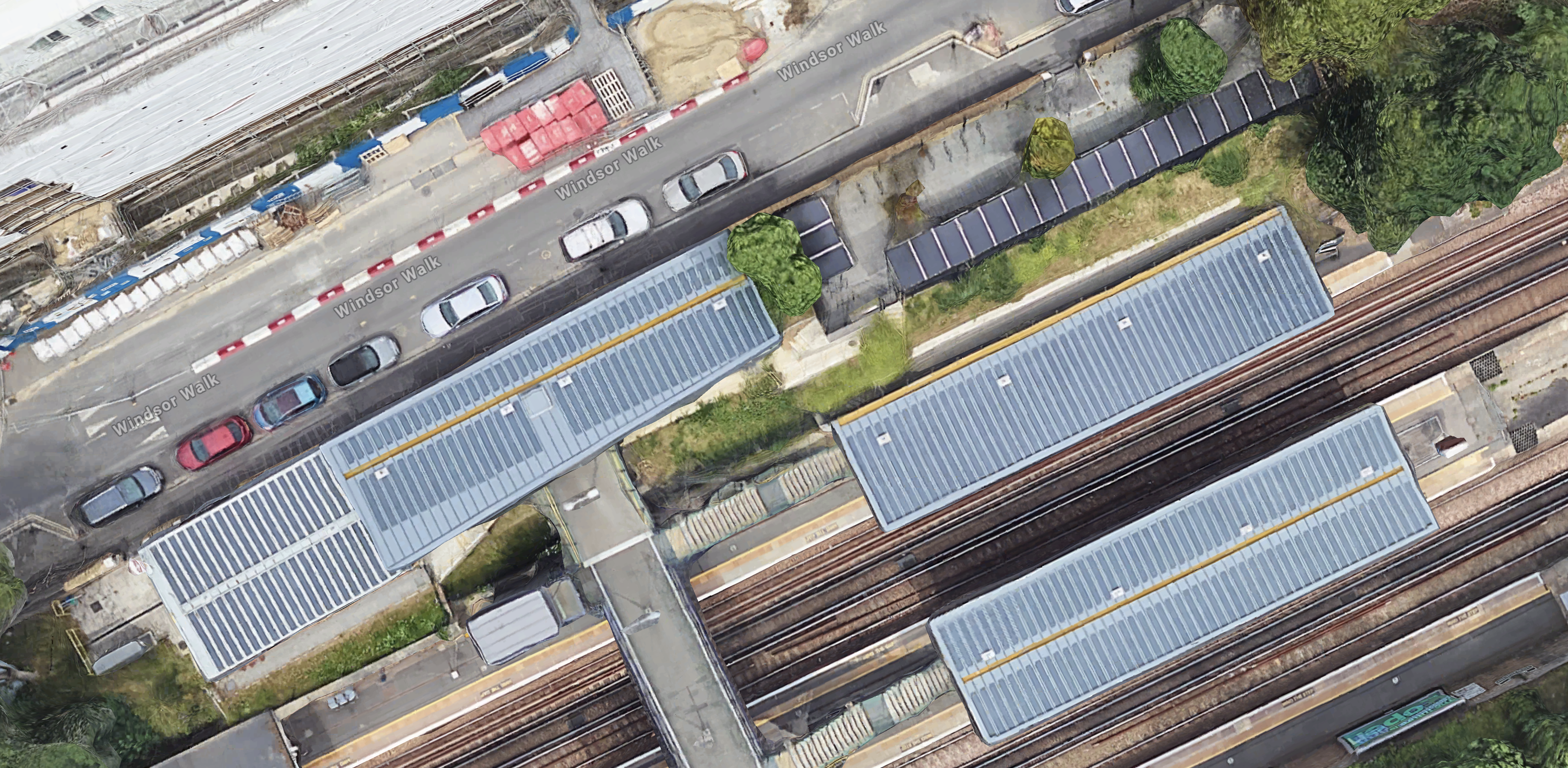
Note.
- The three large panels are flat.
- The panels are built on a steel substrate.
- Two provide shelter for three platforms.
- The third panel provides shelter for entering passengers.
These pictures show the panels from various angles.
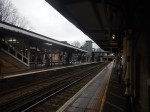
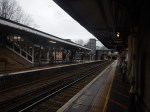
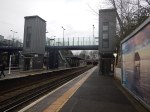
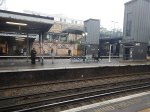
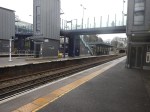


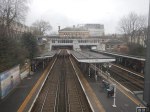
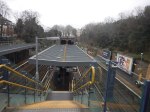
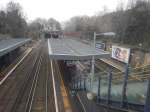

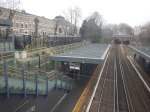


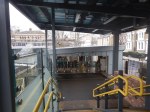




So often, a small improvement opens up a large opportunity.
This page on the Kalzip web site which is entitled Modernisation of Denmark Hill Station, gives more details of the station project.
Over the years, I put up a few steel-roofed buildings in my time and I helped design a few with a client in the 1970s, that could have benefited from solar panels like these.
Is FirstGroup’s Order For Fourteen Trains For Lumo And Hull Trains More Identical Than Is Generally Assumed?
Currently, Hull Trains operate Class 802 trains and Lumo operate Class 803 trains.
Both trains are five-car Hitachi A-Trains and appear to be similar in size, although there are other differences.
- Hull Trains have a two-class layout, whereas on Lumo everybody sits in the same class.
- Hull Trains are a true bi-mode with the 700 kW Rolls-Royce mtu diesel generators.
- Lumo only have a battery for emergency hotel power.
- Hull Trains currently operate a route, where up to a hundred miles in each round trip can be on diesel.
- Lumo’s current route is all electric.
However, the differences in train specification doesn’t stop the two operators using each other’s trains.
This is from an article in the November 2023 Edition of Modern Railways, that is entitled Extra Luggage Racks For Lumo.
The co-operation between sister East Coast mail line open access operators Lumo and Hull Trains continues, with one recent move, being the use of a Hull Trains ‘802’ on Lumo services to cover for a shortage of the dedicated ‘803s’ while one unit was out of action for repairs following a fatality. Although the two types are similar, there are notable differences, most obviously that the Hull Trains units are bi-modes while the Lumo sets are straight EMUs and a training conversion course is required for Lumo drivers on the ‘802s’. There are also challenges from a passenger-facing perspective – The Hull Trains units have around 20 % fewer seats and a First Class area.
A future Chief Executive of FirstGroup might at some future date decide to convert all trains to the same specification.
Drive Systems Of The Five-Car Class 80x Trains
I’m writing them down for all the five-car Class 80x trains to make it easier to understand.
- Class 800 train – DPTS–MS-MS-MC–DPTF – (LNER) 3 x 560 kW or (GWR) 3 x 700 kW diesel generators.
- Class 801 train – DPTS–MS-MS-MC–DPTF – 1 x 560 kW diesel generators
- Class 802 train – DPTS–MS-MS-MC–DPTF – (LNER) 3 x 700 kW diesel generators.
- Class 803 train – DPTS–MS-MS-MS–DPTF
- Class 805 train – DPTS–MS-MS-MC–DPTF – 3 x 700 kW diesel generators.
- Class 810 train – DPTS–MS-MS-MC–DPTF – 4 x 735 kW diesel generators.
Note.
- All these five-car trains have the same drive configuration.
- Traction motors are on cars 2 and 4.
- Trains with one diesel generators have them under car 3.
- Trains with three diesel generators have them under cars 2/3/4.
- Trains with four diesel generators have them under cars 1/2/4/5.
- The traction battery in the Class 802 battery-electric test train was 750 kW, according to The Data Sheet For Hitachi Battery Electric Trains.
It is all a very balanced design.
A Standard Basic Train For Hull Trains And Lumo
This may be possible and could be the following.
- A Class 802 or Class 803 train to the latest specification.
- Five cars.
- Interior to the customers specification.
- Ability to work in pairs.
- A standard size traction battery in car 3.
The battery could be changed according to route.
- Carmarthen – 75.3 miles – See Thoughts On Lumo’s Proposed Paddington And Carmarthen Service.
- Edinburgh – 100 miles – To cover the Lincolnshire Diversion.
- Hull – 100 miles – To cover the Lincolnshire Diversion.
- Paignton – 128.2 miles – See Thoughts On Lumo’s Proposed Paddington And Paignton Service.
- Rochdale – 100 miles to cover reverse at Rochdale.
- Sheffield – 100 miles – To cover Retford and Sheffield both ways.
- Stirling – Possibly no batteries required.
I can see a battery range of 100 miles covering most routes.
There could be two or three batteries close together in cars 2, 3 and 4, driving the traction motors in cars 2 and 4 and being charged by them.
These are my thoughts on individual Hull Trains and Lumo routes.
Beverley And Hull
In Could Hull Station Be Electrified?, I put forward my view that if Hull station were to be electrified, it opens up various possibilities of running battery-electric trains to Hull and Beverley.
Hull Trains services would charge the battery, every time they went through Hull station.
Distances needed on battery power to electrification would be.
- Beverley – 16.7 miles for return trip.
- Bridlington – 31.1 miles
- Doncaster – 40.8 miles
- Scarborough – 53.8 miles
- Temple Hirst – 36.1 miles
Except for Scarborough, a single battery would probably suffice.
Beverley and Hull are handled without a battery at present, but Hull Trains might like to carry sufficient power in batteries to be able to handle the Lincoln Diversion.
Carmarthen
Cardiff and Carmarthen via Gowerton is 75.3 miles, which probably means two batteries would be needed.
See Thoughts On Lumo’s Proposed Paddington And Carmarthen Service, for more details.
Edinburgh
Edinburgh is handled without a battery at present, but Lumo might like to carry sufficient power in batteries to be able to handle the Lincoln Diversion.
Paignton
Paignton is the longest route at 128.2 miles and I doubt, it would be talked about if it wasn’t technically possibly.
See Thoughts On Lumo’s Proposed Paddington And Paignton Service, for more details.
Rochdale
Sheffield
Stirling
Stirling could be handled without a battery, but Lumo might like to carry sufficient power in batteries to be able to handle a small diversion.
Petition Calls Made To Scrap Blackwall And Silvertown Tolls
The title of this post, is the same as that of this article on the BBC.
This is the sub-heading.
A petition containing more than 37,000 signatures calling for proposed tolls on the Blackwall and Silvertown tunnels to be scrapped has been presented at City Hall.
These four paragraphs give more details.
Toll charges of up to £4 per journey through the soon-to-open Silvertown Tunnel and the neighbouring Blackwall Tunnel were announced by Transport for London (TfL) on 26 November.
The Silvertown Tunnel will open next spring and will provide a new road crossing under the Thames between Silvertown and the Greenwich Peninsula.
The charges are “designed to manage levels of traffic using the tunnels”, TfL has said.
A TfL spokesperson added that without the tolls, “traffic would increase in both tunnels causing delays and congestion, which contribute to poorer air quality”.
Note.
- 37,000 is a large petition.
- If Transport for London wanted to reduce pollution, they could encourage greater use of hydrogen.
I have done some simple modeling using Excel.
- There are six vehicle crossings; Dartford Bridge, Dartford Crossing, Woolwich Ferry, Silvertown Tunnel, Blackwall Tunnel and Rotherhithe Tunnel.
- Matters are complicated by each crossing being a different size.
- There are several reliable rail crossings and a number of foot crossings, which offer alternatives, for those travellers on foot.
- Currently the worst disruption occurs, when more than one route is out of action at the same time.
It is a very complex river crossing,
I feel strongly that we aren’t going to get a true picture of traffic flow through the two new tunnels, until we see serious disruption on the Dartford Crossing.
But what worries me most, is that in the last few years, TfL have made decisions, where they must have done extensive mathematical modelling and they seem to have come up with answers, that are wide of the mark.
Congestion Prediction
I believe that we now have enough data, that by the use of modern computing, advanced vehicle detection techniques and a liberal dollop of artificial intelligence we should be able to accurately predict the traffic flow over the Thames between Dartford and Silvertown, better than we have done in the past.
But will this just mean, that everybody just takes the least-congested route?
Are Too Many Pharmaceuticals Round And White?
Last week one of the nine pills I take was changed from a small plain cream pill to one that was white, slightly larger with a slash on it.
I now take nine pills daily of which five are white and round, with two having slashes on them.
It didn’t cause any confusion with the dispensing, as I made sure I only pre-loaded a week’s drug containers. But, when I went to fill up Tuesday’s and Wednesday’s containers for this week, I couldn’t find the new drugs, as I’d confused them with the other drug with a slash and put them in the wrong drawer of the cabinet, where I store the drugs.
I put the confusion down to two many similar white drugs.
As a child, I used to build radios and amplifiers, so to avoid mistakes electricians and engineers started to use colour-coded wires, for all the different signals.
It became important, as some voltages used in high-power amplifiers could kill you. As Keith Relf of the Yardbirds was!
But then white drugs are cheap, just like grey cables.
New Tram-Like Bus Involved In Crash On Launch Day
The title of this post, is the same as that of this article on the BBC.
This is the sub-heading.
Transport for London (TfL) has said it is investigating after one of its new electric “tram-like” buses collided with a car on the day the new fleet was launched.
These are the three paragraphs of the article.
The Go-Ahead London bus was reportedly involved in the crash on Sevenoaks Road in Orpington, south-east London, on 20 November, when the new 358 buses came into service.
During a Bromley Council meeting, Labour councillor Kathy Bance said the bus collided with a car belonging to a Bromley Labour councillor’s wife.
A TfL spokesperson said no-one was injured and it was understood the collision was minor.
It appears to be very embarrassing, but not as serious, as it might have been.
If you go back to Edwardian times, there are tales of horses being startled by new-fangled motor-cars and charabancs, so could the councillor’s wife have been confused by this unusual looking bus?

I think it best to keep a watching brief, as to whether the bus did confuse the lady.
My First Ride In An Irizar ie tram
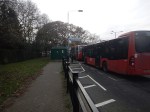
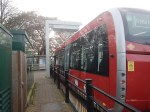
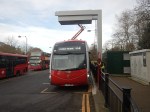
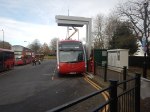
I took these pictures as we travelled from Orpington station to Crystal Palace.
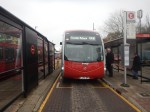
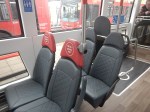
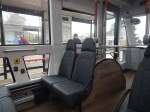


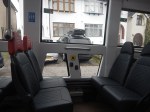

















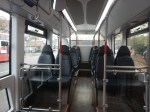





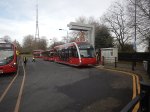

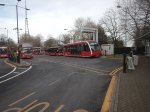

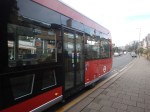

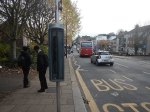
These are my thoughts. In My Second Ride In A Wrightbus Single-Decker Hydrogen Bus, I talk about the Wrightbus single-decker hydrogen bus. Both buses are going for the single-decker zero-carbon market.
Design And Build Quality
The design and build quality of both buses is excellent, but then I suspect Irizar and Wrightbus are giving the bus companies, what they feel they need, within the various regulations.
Both buses had USB charging for phones and I particularly liked the seats in the Spanish bus for being very comfortable.
Road Holding
None of my rides in these two buses were at a particularly fast speed, but both vehicles handled the roads in and South of South London with very little difficulty.
Both vehicles felt much more like mini-coaches, rather than small buses, which is probably a good thing.
Battery Charging Of The ie Tram
I watched this at Crystal Palace. But for some reason my camera wasn’t recording the time. So I don’t know how long it took.
Hydrogen Or Battery Power
When you are in the bus, you don’t have any idea, what the fuel is. Both buses are mouse quiet, but I do feel that hydrgen’s longer range and greater power may mean it is better on some routes.
So some bus companies will go hydrogen and some will go battery.
Looks Like It Was Modelled On A Steel Urinal Stolen From The Gents In A Flat-Roofed Pub
This pithy comment was put in the comments of The Times for an article on the Tesla Cybertruck.
I once saw a Hummer on the road in London, but Tesla’s monstrosity would be a lot worse.design.
The Cybertruck is certainly a design crime!
Is A Ride Across South London On Tramlink, The Worst Rail Ride In London?
Last week, I took a ride across South London on the London Tramlink from Beckenham Junction to Wimbledon.
I was in one of the original Bombardier trams and it was very underwhelming.
None Of The Current Trams Have Air-Conditioning
These days, this is expected.
In this article on RailAdvent, which is entitled Potential Tram Builders Announced For New London Trams, this is said.
Transport for London has issued an Invitation to Tender for four manufacturers to design and build a new fleet of trams.
Alstom UK, CAF, Hitachi and Stadler are the four manufacturers who can now proceed to the next stage of the procurement process with Transport for London to design and build the new trams.
The new trams are expected to feature air-conditioning, real time travel info and charging points, along with areas designed for wheelchair users and those with pushchairs and luggage.
It sounds that the new trams will be to a higher standard with more comfort and interior space.
The Current Trams Have Bricks For Seat Padding
In my except from the Rail Advent article, surely this is covered with more comfort.
The Current Trams Lack Interior Space
In my except from the Rail Advent article, surely this is covered with more interior space.
On one journey recently, two mothers were having a friendly discussion about the limited space for their buggies.
The Current Trams Lack Flat Floors
The floors weren’t flat on my cross-London tram ride and it nearly tripped me up.
All trams, buses and trains should have flat floors and no-step entrances and exits.
The Current Trams Lack Details That Passengers Now Expect
In my except from the Rail Advent article, surely this is covered with more real time travel info and charging points.
The Route Of The Tramlink Is Boring
I’ve travelled on trams and light rail systems in other cities and towns, in the UK, in Europe and around the world.
But I feel that unlike say Blackpool Tramway, except for a couple of shopping centres and IKEA, London Tramlink doesn’t take you anywhere.
I expected to find refreshment kiosks at the terminals, but only at Wimbledon and East Croydon did they exist.
Perhaps, Transport for London could add a few kiosks, as they have done on the Overground?
Conclusion
Transport for London should look at all aspects of design of the London Tramlink.
Principle Power Unveils New Floating Wind Foundations For 15 MW+ Turbines
The title of this post, is the same as that of this article on offshoreWIND.biz.
This is the sub-heading.
Principle Power has expanded its WindFloat portfolio by introducing two new semisubmersible floating wind foundation designs, called WindFloat TC and WindFloat FC, which are said to be optimised for 15 MW+ wind turbines.
A large picture and these two paragraphs introduce the new designs.
According to the company, the new designs are natural evolutions of the existing WindFloat technologies that support a wind turbine located on a column in the centre of the platform.
Designed to complement the existing perimeter column designs WindFloat T and WindFloat F, the new solutions share the same 4th generation design heritage and benefits.
Smart Hull Trim System
The article also mentions a Smart Hull Trim System in this sentence.
Some of these include a Smart Hull Trim system to maximise annual energy production and reduce loads.
I would assume that the Smart Hull Trim System, works very much like the control surfaces of an aeroplane or submarine to keep the craft straight and level.
On the Principle Power web site, the various WindFloats are described as follows.
- WindFloat T – Proven WindFloat® design, suitable for tubular construction.
- WindFloat F – A pontoon-based design suitable for flat panel construction.
- WindFloat TC & FC – Center column design solutions, optimized for 15MW+ turbines with stiff-stiff towers.
From work, I did in the 1970s, with two Cambridge University engineering professors, I reckon that the TC and FC designs will be the best.
Conclusion
Whatever way you look at it, a 15 MW+ floating wind turbine, when you consider they can have capacity factors in excess of 50 %, could be a very powerful electricity generator.
 The Anonymous Widower