Nuclear-Enabled Hydrogen – How It Helps To Reach Net Zero
The title of this post, is the same as that of this article on Power Engineering.
These are the first two paragraphs.
Nuclear enabled hydrogen is zero carbon, has low cost energy input, is large scale and offers co-location synergy and energy system connectivity.
With the revival of interest in nuclear energy, interest is growing in the potential for nuclear-enabled hydrogen, otherwise sometimes known as ‘pink’ hydrogen, to meet the anticipated demand for hydrogen at scale.
The article is certainly a must-read.
Topics covered include.
- Co-location of pink hydrogen production with industrial clusters, where heat can also be provided.
- The production of hydrogen on a large scale.
- The use of high temperature electrolysis, using steam from the nuclear plant.
I particularly like the idea of combining a small modular nuclear reactor with high temperature electrolysis to generate hydrogen for local industry like a steelworks or chemical plant.
Vast Australian Renewable Energy Site Powers BP’s Ambitions
The title of this post, is the same as that of this article on The Times.
These are the first two paragraphs.
BP is to lead the development of a $36 billion wind, solar and hydrogen project in Western Australia in its latest foray into green energy.
The oil company has bought a 40.5 per cent stake in the Asian Renewable Energy Hub in the eastern Pilbara region and will become operator of the project, one of the biggest such developments globally.
The Wikipedia entry for the Asian Renewable Energy Hub, starts like this.
The Asian Renewable Energy Hub (AREH) is a proposal to create one of the world’s largest renewable energy plant in the Pilbara region of Western Australia. It was first proposed in 2014, with plans for the project concept changing several times since then. As of November 2020, the project developers Intercontinental Energy, CWP Global, Vestas and Pathway Investments were planning to build a mixture of wind power and solar energy power generators which would generate up to 26 gigawatts of power.
Up to 1,743 wind turbines of 290 metres (950 ft) in height would be accommodated in 668,100 hectares (1,651,000 acres) of land, and 18 arrays of solar panels each generating 600 megawatts would cover 1,418 hectares (3,500 acres). It is to be located in the Shire of East Pilbara, about 30 km (19 mi) inland from 80 Mile Beach, with the nearest settlement on the map being Mandora Station. The total size of the scheme would be about 666,030 ha (1,645,800 acres).
It is a gigantic project and this Google Map of Western Australia shows its location.
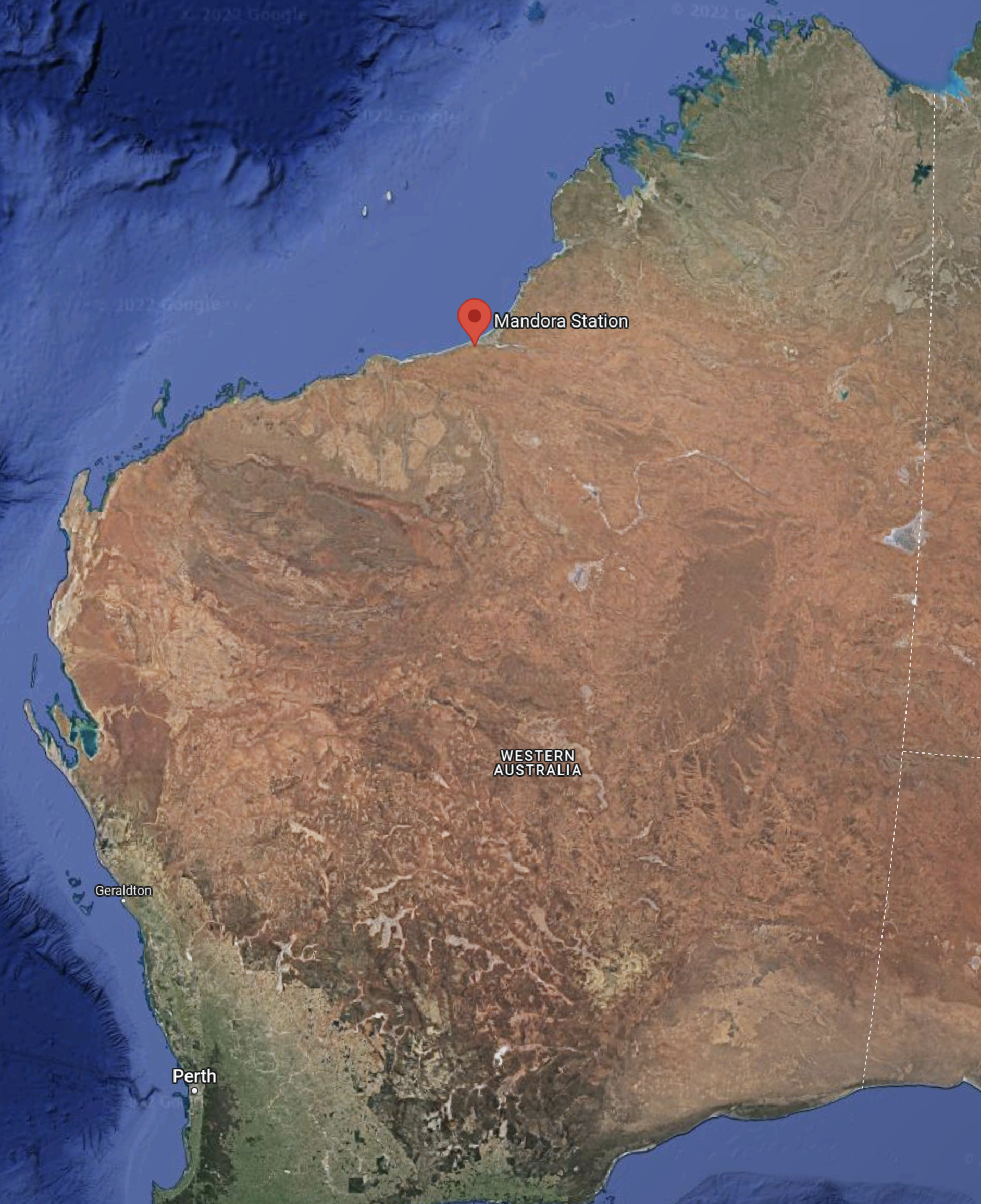
It is no more than a pimple on the huge area of Western Australia.
I have my thoughts about BP getting involved with this project.
The Power Of Research
Around 1970, I spent four years in ICI applying mathematical methods to some of their processes, that were in research or development. I also worked for a time on their hydrogen plants. Some of the projects I heard about, were pretty wacky and some of these appear to have never been commercialised.
When I left ICI, I built a few mathematical models for other research organisations.
So I do wonder, if BP have found something, that will enable the process of making hydrogen from water a lot more efficient. There is an American startup called Bloom Energy, who have teamed up with Westinghouse to use steam from the nuclear reactor to do electrolysis more efficiently at a high temperature.
I wrote about this partnership in Westinghouse And Bloom Energy To Team Up For Pink Hydrogen, where Bloom Energy Vice President of Hydrogen Business Rick Beuttel, is quoted as saying this.
We are proud Westinghouse has turned to Bloom and our solid oxide technology to supercharge the clean hydrogen economy. Solid oxide technology is well suited for nuclear applications, efficiently harnessing steam to further improve the economics of hydrogen production. High temperature electrolysis is already garnering attention and accolades as a cost-effective and viable solution to create low-cost, clean hydrogen, which is critical to meeting aggressive decarbonization goals.
It sounds that by integrating the nuclear power station and the electrolyser, there are cost savings to be made.
Why not use solar power to create steam, which is called solar thermal energy and is used in various hot places in the world and then use high temperature electrolysis?
I suspect that BP are up to something, that is very similar to Fortescue Future Industries in the Australian company’s back yard.
So will they be selling the hydrogen to FFI, so they can market it together all over the world?
This BP deal is one to watch.
Has The NorthConnect Interconnector Been Binned?
If you type “NorthConnect interconnector” into Google and select News, the latest stories are from March 2020.
One story from that date is this article on Energy Live News, which is entitled Norway Postpones Decision On Interconnector To Scotland.
These are the first three paragraphs.
The Norwegian Ministry of Petroleum and Energy (MPE) has postponed a decision on whether to allow the construction of a new subsea power cable between Norway and Scotland.
The 1,400MW Project NorthConnect, which is partly owned by Swedish energy group Vattenfall, has been put on hold pending public consultation and performance and cost reviews of similar projects under construction.
Minister of Petroleum and Energy Tina Bru, said: “The Norwegian and Nordic power system is going through significant changes, at a rapid pace. Two new interconnectors, to the UK and Germany respectively, will be commissioned in the near future.
The NorthConnect web site has some community news from last year.
So has this project been binned?
Westinghouse And Bloom Energy To Team Up For Pink Hydrogen
The title of this post, is the same as that of this article on Hydrogen Fuel News.
This is the introductory paragraph.
Westinghouse Electric Company and Bloom Energy Corporation have announced that they have signed a letter of intent together for the production of pink hydrogen in the commercial nuclear power market.
Note.
- Westinghouse Electric Company is an American builder of nuclear power stations.
- Bloom Energy Corporation make a solid-oxide electrolyser.
- Pink hydrogen is green hydrogen produced using nuclear power.
Figures on the Bloom web site, claim that their electrolysers could be upwards of twelve percent more efficient than PEM electrolysers, as produced by companies like ITM Power.
Bloom Energy Vice President of Hydrogen Business Rick Beuttel, is quoted as saying this.
We are proud Westinghouse has turned to Bloom and our solid oxide technology to supercharge the clean hydrogen economy. Solid oxide technology is well suited for nuclear applications, efficiently harnessing steam to further improve the economics of hydrogen production. High temperature electrolysis is already garnering attention and accolades as a cost-effective and viable solution to create low-cost, clean hydrogen, which is critical to meeting aggressive decarbonization goals.
It sounds that by integrating the nuclear power station and the electrolyser, there are cost savings to be made.
Conclusion
I think this could turn out to be a significant development.
Some countries, like Iceland, Indonesia, New Zealand, Philippines and the United States, who can generate large amounts of electricity and steam from geothermal energy, Bloom’s technology must surely be a way of electrolysing hydrogen.
ElecLink: A Wholly Successful First Week Of Operations
The title of this post, is the same as that of this press release from the Getlink Group.
These are the first three paragraphs.
Getlink is delighted with the good first week of commercial operations of its electrical interconnector, ElecLink, marked by the success of the initial auctions and the first transfers of energy through the cable.
The first auctions for short term capacity (day ahead) held since 24 May were met with great success. The entire capacity available was sold, confirming the interest of the sector for this new interconnection. The first monthly auctions will take place from 01 June, for the month of July and will be accessible via the JAO platform.
From an operational perspective, the go-live of the cable was also achieved successfully. For this world’s first, ElecLink delivered an excellent quality of service to its customers.
Note.
- Getlink is the manager and operator of the Channel Tunnel.
- ElecLink has a capacity of 1,000 MW.
- The interconnector was privately-funded.
I wouldn’t be surprised to see more privately-funded interconnectors like this, as they increase our energy security and can be a nice little earner for their owners.
Namibia Proposes Green Hydrogen Supply To EU To Replace Russian Oil And Gas
The title of this post, is the same as that of this article on H2 Fuel News.
These paragraphs explain the plan.
The African country has considerable wind and sunshine resources available, providing the opportunity to use renewable energy for the production of H2. Namibia is located along the African South Atlantic coastline and is among the world’s driest countries. Its 3,500 hours of sunshine per year mean that solar panels will be able to absorb a tremendous amount of energy, without much unexpected downtime.
That energy will be used for producing yellow H2, a form of green (renewable) H2 made using electrolysers powered by solar electricity. The electrolyser will split seawater, another abundant resource for the country due to its position on the map. As a result, it has the potential to offer the European Union a clean fuel source that can help it to simultaneously combat the energy crisis and the climate crisis.
Note.
- Liquid hydrogen will be shipped to Europe by tanker.
- I don’t think Vlad the Mad will like the plan!
- How many other countries have the resources like Namibia to become hydrogen exporters?
This plan was proposed at the World Economic Forum at Davos.
Will Coire Glas Start A Pumped Storage Boom In Scotland?
This article on Renewables Now is entitled SSE Gets Tenders For Construction Of 1.5-GW Pumped Hydro Scheme.
This is the first paragraph.
SSE Renewables said on Wednesday it has received tenders for the main construction works for the Coire Glas hydro pumped storage project with a capacity of up to 1.5 GW in the Scottish Highlands.
It then lists, the companies who have tendered for the project.
SE Renewables said the ITT has drawn global interest. The tenderers shortlisted for mechanical and electrical plant scope are a partnership between ANDRITZ HYDRO GmbH and Voith Hydro GmbH & Co KG, and GE Hydro France. The parties shortlisted for the civil engineering scope include three consortia and STRABAG UK Ltd. The consortia are made up of Bechtel Ltd, Acciona Construccion SA and Webuild SpA; BAM Nuttall Ltd, Eiffage Genie Civil SA and Marti Tunnel AG; and Dragados SA and BeMo Tunnelling UK Ltd.
It is an impressive list.
The article says that construction is to start in 2024. Other sources say the pumped storage project will have a storage capacity of 30 GWh, which will make it the largest pumped storage plant in the UK.
This press release from SSE Renewables is entitled Tenders Submitted For The Coire Glas Pumped Storage Scheme.
The press release contains this quote from the Project Director for Coire Glas; Ian Innes.
Receiving the tenders on schedule from the six short-listed tenderers is another significant milestone for the Coire Glas project and we are grateful for their continued interest in the project.
We are encouraged by the content of the tenders which now provides the Coire Glas project team with several options on how construction of the project could be undertaken. It is going to take some time to carefully consider and scrutinise the tenders thoroughly and we look forward to working with the tenderers as we endeavour to make our selection decision.
It appears that not only were the tenders received from quality companies, but that they contained options and ideas that could improve the project.
Coire Glas would appear to me to be a project, that is attracting the best companies and they could be putting their best workers on the project.
These are my thoughts.
The Potential For Pumped Storage Schemes In Scotland
There are at least six schemes under development or proposed in Scotland.
- Balliemeanoch – 45 GWh
- Coire Glas – 30 GWh
- Corrievarkie – 14.5 GWh
- Loch Earba – 33 GWh
- Loch Sloy – 14 GWh
- Red John – 2.8 GWh
This page on the Strathclyde University web site, gives these figures for the possible amounts of pumped-storage that can be added to existing hydro schemes.
- Errochty – 16
- Glasgarnock – 23
- Luichart – 38
- Clunie – 40
- Fannich – 70
- Rannoch – 41
- Fasnakyle – 78
- Tummel – 38
- Ben Lawers – 12
- Nant – 48
- Invermoriston – 22
- Invergarry – 41
- Quoich – 27
- Sloy – 20
That is a total of 547 GWh or 653.3 GWh if you include the new storage, I listed above.
Scotland would appear to be land overflowing with large pumped storage possibilities and could provide the modern equivalent of milk and honey.
The Potential For Offshore Wind Power Schemes In Scotland
This is the first two paragraphs of this press release on the Crown Estate Scotland web site.
Crown Estate Scotland has today announced the outcome of its application process for ScotWind Leasing, the first Scottish offshore wind leasing round in over a decade and the first ever since the management of offshore wind rights were devolved to Scotland.
The results coming just months after Glasgow hosted the global COP26 climate conference show the huge opportunity that Scotland has to transform its energy market and move towards a net zero economy.
Some highlights are then listed.
- 17 projects have been selected out of a total of 74 applications.
- A total of just under £700m will be paid by the successful applicants in option fees and passed to the Scottish Government for public spending.
- The area of seabed covered by the 17 projects is just over 7,000km2.
- Initial indications suggest a multi-billion pound supply chain investment in Scotland
- The potential power generated will move Scotland towards net-zero.
This map shows the location of each wind farm.

Note, that the numbers are Scotwind’s lease number in their documents.
Fixed Foundation Wind Farms
These are the six fixed foundation wind farms.
- 1 – BP Alternative Energy Investments – 859 km² – 2.9 GW
- 6 – DEME – 187 km² – 1.0 GW
- 9 – Ocean Winds – 429 km² – 1.0 GW
- 13 – Offshore Wind Power – 657 km² – 2.0 GW
- 16 – Northland Power – 161 km² – 0.8 GW
- 17 – Scottish Power Renewables – 754 km² – 2.0 GW
Adding up these fixed foundation wind farms gives a capacity of 9.7 GW in 3042 km² or about 3.2 MW per km².
Floating Wind Farms
These are the ten floating wind farms.
- 2- SSE Renewables – 859 km² – 2.6 GW
- 3 – Falck Renewables Wind – 280 km² – 1.2 GW
- 4 – Shell – 860 km² – 2.0 GW
- 5 – Vattenfall – 200 km² – 0.8 GW
- 7 – DEME Concessions Wind – 200 km² – 1.0 GW
- 8 – Falck Renewables Wind – 256 km² – 1.0 GW
- 10 – Falck Renewables Wind – 134 km² – 0.5 GW
- 11 – Scottish Power Renewables – 684 km² – 3.0 GW
- 12 – BayWa r.e. UK – 330 km² – 1.0 GW
- 14 – Northland Power – 390 km² – 1.5 GW
Adding up the floating wind farms gives a capacity of 14.6 GW in 4193 km² or about 3.5 MW per km².
Mixed Wind Farms
This is the single wind farm, that has mixed foundations.
15 – Magnora – 103 km² – 0.5 GW
This wind farm appears to be using floating wind turbines.
These wind farms total up to 24.8 GW
I would expect that this is only a phase in the development of Scottish wind power, which will grow substantially over the next decade.
As I write this the UK is generating a total of 26.2 GW of electricity.
Backing Up The Wind Power
This wind power, which could grow up to well over 50 GW in Scotland alone.
But what do you do, when there is no wind?
Energy will need to come from batteries, which in Scotland’s case could be over 500 GWh of pumped storage.
Europe’s Powerhouse
It is not an unreasonable prediction, that we will continue to expand our wind farms to supply Europe with thousands of GWh of electricity and/or millions of tonnes of green hydrogen.
Conclusion
It is likely that we’ll see an upward increase of wind power in Scotland closely matched by a similar increase in pumped storage.
It is no wonder that the world’s largest and most experienced contractors were so keen to get the first big contract in Scotland’s new pumped storage boom.
They know a good thing, when they see it and after their experience with the Scotland’s oil boom in the last century, I doubt they are delaying their return.
Fortescue Future Industries Enters Ethiopia to Produce Green Energy
The title of this post, is the same as that of this article on 2Merkato, which describes itself as Ethiopia’s biggest business portal.
This is the first paragraph.
Ethiopia grants license to Fortescue Future Industries (FFI) for the production of green hydrogen and ammonia. Ahmed Shide, Minister of Finance, noted that the company would increase Ethiopia’s access to green energy.
FFI seems to buying hydrogen from everywhere.
Shell’s Jackdaw Gas Field Given Go-Ahead By Regulators
The title of this post, is the same as that of this article on the BBC.
These are the first two paragraphs.
Development of a major North Sea gas field has been approved by regulators.
The Jackdaw field, east of Aberdeen, has the potential to produce 6.5% of Britain’s gas output.
This is Greenpeace’s response
But environmental campaigners have condemned the move.
The activist group Greenpeace said it believed the approval could be unlawful and it was considering legal action.
“Approving Jackdaw is a desperate and destructive decision from Johnson’s government, and proves there is no long-term plan,” said Ami McCarthy, a political campaigner for Greenpeace.
I have my thoughts.
The Short Term Problem
We are all paying the high gas price, brought about by Vlad the Mad’s illegal invasion of Ukraine.
On the other hand, I am all for cutting carbon emissions, but stopping the development of the Jackdaw gas field will do nothing to cut total emissions in the short term.
In my view, the only way to cut carbon emissions is to replace the use of natural gas with hydrogen or electricity produced by renewable sources like solar, tidal, wave or wind power.
This change to every heating system and important industries like cement, chemicals, glass and steelmaking to hydrogen and renewable energy is not a short term or low-cost project. Especially whilst we’re still recovering from the pandemic and trying to handle Vlad the Mad.
We will need a supply of natural gas for a few years and if we don’t have enough gas will Greenpeace and their ilk, be happy to see everybody freezing and a large increase in unemployment?
The Government is between a rock and a hard place, where they can either bow to Greenpeace or buy Putin’s bloodstained gas, where there are two alternatives.
- Buy liquified natural gas (LNG) from countries like Australia, Canada, Qatar or the United States.
- Develop our own proven resources.
The advantages of taking the second route include.
- Some of the countries from where gas is available, have bizarre views on human rights and keeping their people safe.
- Gas is transported over long distances in a liquid form. Liquifying natural gas uses a lot of energy. Is that energy renewable?
- Countries from where gas is available are thousands of miles away. How much carbon dioxide will be emitted liquifying and transporting it?
- Gas from our own resources is delivered by pipeline.
- Development of gas fields like Jackdaw, will surely create employment in the UK.
At a first look, I feel that developing Jackdaw and other similar fields, may well be a sensible option to help us through these difficult times.
Exporting Gas To Europe
If you look at the geographical position, you would feel, that the gas will be landed at St. Fergus gas terminal, which is to the North of Aberdeen.
But no! The gas will be landed at Bacton in Norfolk through the SEAL pipeline, which is 475 km. long
Could this be because Shell want to make sure the South of England gets its gas?
Possibly, but much of the UK’s gas imports arrive at LNG terminals in the South.
But Bacton has other assets, in that it has two undersea gas pipelines to the Continent. One is to Belgium and the other is to the Netherlands.
Surely, if we export our gas to other countries, then it is their business what they do with the carbon dioxide.
Not our’s or Shell’s!
Perhaps, we should develop other proven gas fields, as they will create employment in the UK and valuable exports. It will also help our friends out in Europe, in their time of need!
Will Shell Play The Market?
I have just been informed, that recently, improvements have been made to the pipelines in the area and Jackdaw’s gas could now go to St. Fergus.
This surely would give the gas from Jackdaw three destinations.
- Scotland via St. Fergus.
- England via Bacton
- Europe via Bacton and the undersea pipelines.
So will Shell play the markets?
If in the future, we start to produce massive amounts of green hydrogen, I’m sure Europe, will be happy to buy that instead.
Powering Platforms With Renewable Energy
The BBC article says this.
And it plans also to re-power its offshore platforms with renewable electricity rather than burning gas.
Looking at the map, Jackdaw will not be far from the 2 GW wind farm, that Shell are developing.
Will they build a short interconnector from this wind farm to the gas platforms of Jackdaw and other nearby fields?
Will Shell Produce Hydrogen Offshore?
This article on Gas Processing And LNG is entitled Construction Of World’s Largest PEM Electrolyzer Completed.
This is the first two paragraphs.
Air Liquide has completed the construction of the world’s largest PEM (Proton Exchange Membrane) electrolyzer. Supplied with renewable energy, this unit is now producing up to 8.2 tons per day of low-carbon hydrogen in Bécancour, Québec. With this large-scale investment, the Group confirms its long-term commitment to the hydrogen energy markets and its ambition to be a major player in the supply of low-carbon hydrogen.
The new 20 MW PEM electrolyser, equipped with Cummins technology, is the largest operating unit of its kind in the world and will help meet the growing demand for low-carbon hydrogen in North America. Bécancour’s proximity to the main industrial markets in Canada and the United States will help ensure their supply of low-carbon hydrogen for industrial use and mobility. The commissioning of this electrolysis unit increases by 50% the capacity of Air Liquide’s Bécancour hydrogen production complex.
Note.
- This article is about a year old and electrolysers will get larger.
- 20 MW of electricity will produce 8.2 tons per day of low carbon or green hydrogen.
- It may surprise some, that the electrolyser has been built by Cummins, who are diesel engine manufacturers. They are a company, who appear to have seen the way the wind is blowing and are making sure they lead the revolution.
How much hydrogen could a 2 GW wind farm produce?
- Wind farms have a capacity factor, which is how much energy they actually produce compared to their rating.
- Shell’s 2 GW wind farm will be a floating wind farm and these typically have a capacity factor of at least 50 percent.
- I will assume the capacity factor of 50 percent.
This will give 8,200 tonnes per day of green hydrogen. This is nearly three million tons per year.
How Will The Hydrogen Be Brought Ashore?
The HyDeploy project is investigating blending of hydrogen into our natural gas grid.
- It appears that up to 25 % of hydrogen can be added without the need to change boilers and appliances.
- This blending of hydrogen into our natural gas supply, would cut our carbon emissions by a worthwhile amount.
So will we see gas piped to nearby gas platforms like Jackdaw for blending with fresh virgin natural gas?
This would have the following advantages for Shell.
- They wouldn’t need to install an electric cable to the shore with all its associated onshore and offshore substations.
- The hydrogen could be brought ashore at either Bacton or St. Fergus gas terminals.
- Shell could invite other local wind farms to share their electrolyser.
- Shell would need to new onshore installations.
If Shell get this right, they could cut the project cost.
Will Shell Produce Blue Hydrogen Offshore?
I wonder if Shell have a cunning plan.
- It is known, that Shell have developed a catalyst-based blue hydrogen process, which splits natural gas into hydrogen and carbon dioxide, with the addition of oxygen from the air.
- I suspect the process could need a lot of energy to work. But at least a GW from the nearby wind farm will probably be a good start.
- Could that carbon dioxide be captured and stored in a depleted gas field.
- The hydrogen could be piped to either Bacton or St. Fergus, as I previously described.
This hybrid method might be a more economic way to produce zero-carbon hydrogen.
Conclusion
I wouldn’t be surprised if Shell will produce hydrogen offshore.
Offshore Wind Champion Appointed As £160m Floating Offshore Wind Fund Opens For Expressions Of Interest
The title of this post, is the same as that of this press release from Kwasi Kwarteng.
These three paragraphs describe the policy.
Ambitious plans to expand offshore wind around the United Kingdom to power homes and businesses with cheap, homegrown energy received a further boost today with the appointment of a new government champion and a multimillion-pound manufacturing fund opening for expressions of interest.
The appointment of Tim Pick as the first UK Offshore Wind Champion was confirmed by Prime Minister Boris Johnson and Business and Energy Secretary Kwasi Kwarteng today.
The Floating Offshore Wind Manufacturing Investment Scheme (FLOWMIS) will provide £160 million in government funding to boost floating offshore wind capability around the UK at sites in Scotland, Wales and elsewhere by supporting manufacturers and giving private investors the confidence to back this emerging sector which is expected to rapidly expand in the years ahead.
Floating offshore wind needs the following components.
- Wind turbines, which are the same as those used onshore.
- Floats, which are generally made from steel, but concrete can also be used. There are a few proven designs, like the Windfloat from Principle Power.
- Mooring systems for the turbines.
- Electrical substations and cables.
There is also a need for deep water docks, with large cranes to assemble the systems, prior to towing the turbines into position.
Floating offshore wind is a new industry and there will be new ideas coming through from innovators.
I feel that the strategy could help bring new ideas through.

