Gore Street Energy Storage Fund’s Portfolio Increases To Over 1GW
The title of this post, is the same as that of this article on the Solar Power Portal.
By any measure a GW is a substantial amount of power and the article gives all the figures for the fund.
One thing, I feel, I can say, is that large grid-connected lithium-ion batteries, as deployed by Gore Street, are more reliable than the similar smaller batteries in e-bikes and e-scooters.
The media and especially the financial pages would have had a field day, if a lithium-ion battery caught fire. Certainly Gore Street and others building large batteries, don’t seem to have any planning permission problems from Nimbys.
Italian Firm To Build Green Hydrogen Platform For CrossWind’s Hollandse Kust Noord
The title of this post, is the same as that of this article on offshoreWIND.biz.
This is the sub-heading.
CrossWind has awarded Rosetti Marino an Engineering, Procurement, Construction, and Installation and Commissioning (EPCIC) contract for an offshore green hydrogen production and storage plant, located within CrossWind’s Hollandse Kust Noord offshore wind farm in the Netherlands.
These paragraphs describe the platform.
Rosetti Marino said that the pilot plant, called the Baseload Power Hub and fully integrated into an offshore wind farm, is a world first.
The plant on a MegaWatt scale will convert excess wind energy to green hydrogen through an electrolyser and store it as green hydrogen that can be converted to electricity when needed via a fuel cell.
It will also include battery storage for shorter-term power storage.
It looks like they’ve got all angles covered.
I suspect that we’ll see more platforms like this, as they should make the output of a wind farm much more controllable.
Ørsted Receives Development Consent For 2.6 GW Hornsea Four Offshore Wind Farm
The title of this post, is the same as that of this article on offshoreWIND.biz.
This is the sub-heading.
The UK Secretary of State for Energy Security and Net Zero has granted development consent to Hornsea Project Four, a 2.6 GW offshore wind farm Ørsted plans to build some 69 kilometres off the Yorkshire Coast.
This is the first paragraph.
The UK government, in a press release issued on 12 July, stated that Hornsea Four was the 126th Nationally Significant Infrastructure Project and 73rd energy application to have been examined by The Planning Inspectorate within the timescales laid down in the Planning Act 2008.
It certainly looks like The Planning Inspectorate has been working overtime.
Note that the four Hornsea wind farms are planned to have at least the following sizes.
- Hornsea 1 – 1218 MW
- Hornsea 2 – 1386 MW
- Hornsea 3 – 2852 MW
- Hornsea 4 – 2600 MW
These four wind farms give the Hornsea complex, a total capacity of at least 8056 MW.
When I worked at ICI in Runcorn in the late 1960s, I used to cross the Runcorn Bridge twice every day and would see Fiddlers Ferry power station, with its eight cooling towers, on the North Bank of the River Mersey to the East. It was generally thought of as a large coal-fired power station.
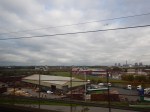




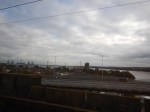
These pictures of Fiddlers Ferry power station were taken in 2021, from a Liverpool-bound train on the railway bridge.
This Google Map shows the power station.

Note.
- Fiddlers Ferry may have been large for its time at 1989 MW, but it is still less than a quarter of the size of the Hornsea wind farm!
- Drax power station in 1986 at 3960 MW, was larger than Fiddlers Ferry, but was still less than half of the size of Hornsea!
Hornsea wind farm is a true green giant!
This paragraph is from the Hornsea Project 4 section of the Wikipedia entry for the Hornsea wind farms.
Construction of the wind farm was provisionally expected to start in 2023, and be operational by 2027, at the earliest. The project’s capacity is unknown by Ørsted due to the ever increasing size of available wind turbines for the project.
When completed, it could be even bigger.
Germany Rakes In EUR 12.6 Billion Through ‘Dynamic Bidding’ Offshore Wind Auction
The title of this post, is the same as that of this article on offshoreWIND.biz.
This is the sub-heading.
Germany’s first dynamic bidding process, covering four offshore wind zones with a combined capacity of 7 GW, has generated EUR 12.6 billion in proceeds, according to the Federal Network Agency.
This dynamic bidding process seems to have brought in the euros.
I hope the Crown Estate is going to look at this bidding, to see if it would be good for the UK.
CIP’s Flagship Fund On Track To Become World’s Largest Dedicated To Greenfield Renewable Energy Investments
The title of this post, is the same as that of this article on offshoreWIND.biz.
This is the sub-heading.
Copenhagen Infrastructure Partners (CIP) has reached the first close on its fifth flagship fund, Copenhagen Infrastructure V (CI V), at EUR 5.6 billion in capital commitments received. This puts the fund on track to reach its target size of EUR 12 billion, which would make this the world’s largest dedicated greenfield renewable energy fund, according to CIP
These three paragraphs give more details on the size and investments of the latest fund, which is named CI V.
The first close of the flagship fund saw a large group of leading institutional investors across continental Europe, the Nordics, the UK, North America, and the Asia-Pacific region.
CIP noted that there is a strong interest from additional investors already in process, so CI V is on the way to reaching its target fund size of EUR 12 billion.
The fund now has ownership of more than 40 renewable energy infrastructure projects with a total potential CI V commitment of approximately EUR 20 billion, corresponding to more than 150 per cent of the target fund size.
The CIP web site gives more details on the company, including this summary on the front page.
Founded in 2012, Copenhagen Infrastructure Partners P/S (CIP) today is the world’s largest dedicated fund manager within greenfield renewable energy investments and a global leader in offshore wind. The funds managed by CIP focuses on investments in offshore and onshore wind, solar PV, biomass and energy-from-waste, transmission and distribution, reserve capacity, storage, advanced bioenergy, and Power-to-X.
CIP manages 11 funds and has to date raised approximately EUR 25 billion for investments in energy and associated infrastructure from more than 150 international institutional investors.
In the UK, CIP are currently involved in the Ossian and Pentland floating wind farms.
Centrica To Build Largest Battery Storage Project To Date
The title of this post, is the same as that of this news item from Centrica.
These three paragraphs outline the news.
Centrica Business Solutions has secured the development rights to a 65MW two-hour battery storage plant in Perthshire, Scotland, its largest battery storage acquisition to date.
The site in Abernethy is located near a connection for North Sea offshore wind farms and will help manage grid capacity by charging when demand for power is low, and discharging when demand is at its highest.
Once connected to the grid in 2028, the 65MW two-hour battery will be able to store enough electricity to power 130,000 homes for an hour – the equivalent to a town the size of Aberdeen. The discharge could happen up to four times a day.
This map shows the site of the substation at Abernethy.
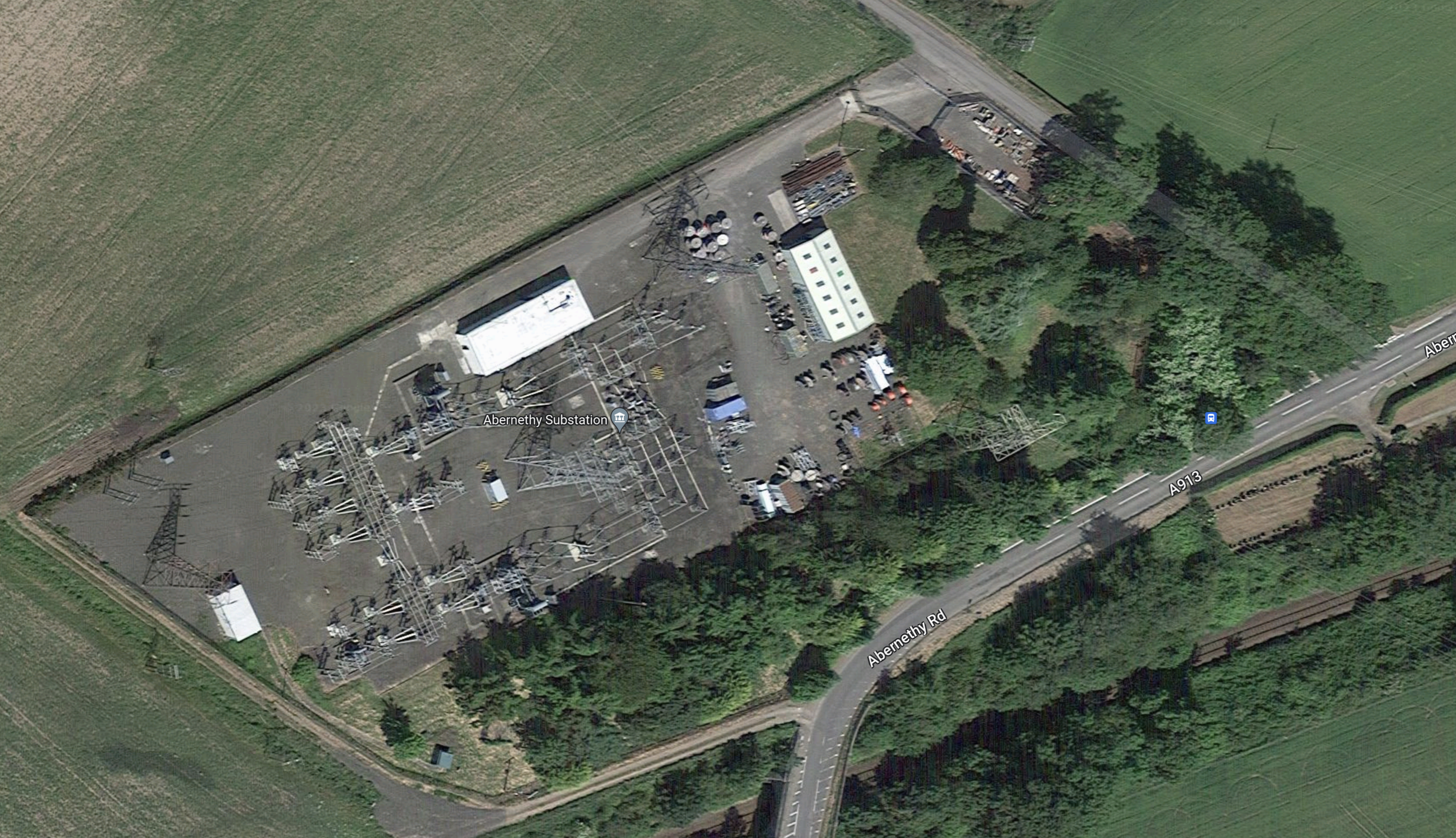
It seems a site with enough space for a 65 MW/130 MWh battery.
But is that a railway running past the site in the South-East corner of the map?
Yes! It is the single-track unelectrified railway that is used by trains to go between Edinburgh and Perth.
- There are stations at both ends of the single-track section at Ladybank and Perth.
- Abernethy substation looks like it is about halfway between the two end stations.
This page on Scotland’s Railway is entitled Fife Electrification and lists these four phases.
- Haymarket and Dalmeny
- Kinghorn and Thornton North
- Thornton and Lochgelly
- Thorton and Ladybank
The page also says that the electrification will support BEMUs (Battery Electric Multiple Units)
I feel that the electrification to Ladybank and Centrica’s battery could be linked.
- If the electrification was extended a few miles to Abernethy substation, this would surely be a reliable way to power the electrification.
- It would also be ideally placed, if Perth and Ladybank were to be electrified.
- The new battery would surely smooth out any deviations in the power supply.
I certainly don’t expect that Centrica will object to a new customer.
Electrification Between Edinburgh And Ladybank
Consider.
- Edinburgh and Ladybank is 39 miles and takes a couple of minutes over an hour.
- Once, the four phases of the electrification are complete, only the 13.6 miles between Dalmeny and Kinghorn, will be without electrification.
- I doubt that Dalmeny and Kinghorn will ever be electrified, as it includes the Forth Rail Bridge.
- Dalmeny and Kinghorn is 13.6 miles and takes around twenty-four minutes.
It looks like the BEMUs will be under wires for 25.4 miles and nearly forty minutes, which will be more than enough to charge the trains.
Edinburgh And Aberdeen
In Thoughts On Batteries On A Hitachi Intercity Tri-Mode Battery Train, I said this about services between Edinburgh and Aberdeen.
Consider.
-
- The gap in the electrification is 130 miles between Edinburgh Haymarket and Aberdeen.
- There could be an intermediate charging station at Dundee.
- Charging would be needed at Aberdeen.
I think Hitachi could design a train for this route.
The 25.4 miles of new Fife electrification between Haymarket and Ladybank will reduce gap in the electrification to 105 miles and ensure trains leaving Ladybank for Aberdeen had a full battery.
Denmark Exploring Multiple Platforms As Alternative To Building Artificial Island
The title of this post, is the same as that of this article on offshoreWIND.biz.
This is the sub-heading.
After concluding that the current concept of its North Sea Energy Island would be too expensive for the State, the Danish government, the transmission system operator (TSO) Energinet, and other relevant agencies are now looking into the concept for the island to be established on several large platforms.
I feel this could be a sensible decision, as it would fit well with a modular approach to the building of offshore wind farms.
Suppose, the floating turbines used by a company like Ørsted were all similar. This would surely simplify management of their portfolio of wind farms.
If it works for floating wind turbines, surely, it would work for substations, electrolysers and other offshore hardware.
Conclusion
Artificial energy islands may seem an impressive way to go, but I suspect that the modular approach using standard components, that either sit on the sea bed or float may be a more affordable and faster way to build offshore wind farms.
Thoughts On The Future Of Orkney
This article on the BBC is entitled Orkney Votes To Explore ‘Alternative Governance‘
This is the sub-heading.
Orkney councillors have voted to investigate alternative methods of governance amid deep frustrations over funding and opportunities.
These paragraphs outline the story.
Council leader James Stockan said the islands had been “held down” and accused the Scottish and UK governments of discrimination.
His motion led to media speculation that Orkney could leave the UK or become a self-governing territory of Norway.
It was supported by 15 votes to six.
It means council officers have been asked to publish a report to Orkney’s chief executive on options of governance.
This includes looking at the “Nordic connections” of the archipelago and crown dependencies such as Jersey and Guernsey.
A further change which would see the revival of a consultative group on constitutional reform for the islands was accepted without the need for a vote.
My Thoughts On The Economic Future Of The Islands
The economic future of Orkney looks good.
Tourism and the traditional industries are on the up, but the islands could play a large part in renewable energy.
The West of Orkney offshore wind farm, which will be a 2 GW wind farm with fixed foundations, is being developed and a large hydrogen production hub at Flotta is being proposed, along with the development of a large quay in Scapa Flow for the assembly of floating wind farms.
The West of Orkney wind farm could be the first of several.
If the future wind farms are further from shore, they will most likely be based on floating technology, with the turbines and their floats assembled in Scapa Flow, from components shipped in from mainland UK and Europe.
Political Future
With a good financial future assured, I believe that Orkney will be able to choose where its political future lies. It could be a Crown Dependency or join Norway.
Whichever way it goes, it could be an island that effectively prints money, by turning electricity into hydrogen and shipping it to countries like Germany, The Netherlands, Poland and Sweden!
From a UK point of view, a Crown Dependency could be a favourable move.
Would Shetland follow the same route?
Offshore Hydrogen Production And Storage
Orkney is not a large archipelago and is just under a thousand square kilometres in area.
It strikes me, that rather than using up scarce land to host the large electrolysers and hydrogen storage, perhaps it would be better, if hydrogen production and storage was performed offshore.
Aker Northern Horizons
In Is This The World’s Most Ambitious Green Energy Solution?, I talk about Northern Horizons, which is an ambitious project for a 10 GW floating wind farm, which would be built a hundred kilometres to the North-East of Shetland, that would be used to produce hydrogen on Shetland.
Other companies will propose similar projects to the West and East of the Northern islands.
This map shows the sea, that could be carpeted with armadas of floating wind farms.

Consider.
- There are thousands of square miles of sea available.
- As the crow flies, the distance between Bergen Airport and Sumburgh Airport in Shetland is 226 miles.
- A hundred mile square is 10,000 square miles or 2590 square kilometres.
- In ScotWind Offshore Wind Leasing Delivers Major Boost To Scotland’s Net Zero Aspirations, I calculated that the floating wind farms of the Scotwind leasing round had an energy density of 3.5 MW per km².
- It would appear that a hundred mile square could generate, as much as nine GW of green electricity.
How many hundred mile squares can be fitted in around the UK’s Northern islands?
National Grid And SSEN Transmission Agree Joint Venture For UK’s Largest Ever Electricity Transmission Project
The title of this post is the same as that of this press release from National Grid.
This is the sub-heading.
Joint Venture Agreement Important Milestone In Subsea Electricity Superhighway – Eastern Green Link 2
These four paragraphs outline the project.
National Grid Electricity Transmission (NGET) and SSEN Transmission have taken a big step forward in the development of a new subsea electricity superhighway project along the east coast of Scotland after reaching agreement on the terms of their joint venture (JV).
The ‘Eastern Green Link 2’ (EGL2) project will see the creation of a 525kW, 2GW high-voltage direct current (HVDC) subsea transmission cable from Peterhead in Scotland to Drax in England. The UK’s single largest electricity transmission project ever.
The subsea HVDC cable system is approximately 436km in length with new converter stations at either end to connect it into the existing transmission network infrastructure. HVDC technology provides the most efficient and reliable means of transmitting large amounts of power over long distances subsea.
The EGL2 link will support the growth of new renewable electricity generation, creating jobs and delivering a pathway to net zero emissions targets, as well as helping to alleviate existing constraints on the electricity network.
The Wikipedia entry for Eastern HVDC has a detailed description of the two 2GW Scotland-England interconnectors, that are planned.
This is the first section.
Eastern HVDC and Eastern HVDC projects are the names used by Ofgem for two planned HVDC submarine power cables from the East coast of Scotland to Northeast England to strengthen the National Grid. The two links combined will deliver 4 GW of renewable energy from Scottish wind farms to England.
Ofgem state that “At an estimated cost of £3.4 billion for the two links, the Eastern HVDC projects would be the largest electricity transmission investment project in the recent history of Great Britain.
The Project Background Document for SEGL1 can be viewed here.
EGL2 also has its own web site.
Take A 360° Tour Of World’s Largest Offshore Wind Farm In Operation
The title of this post, is the same as that of this article on offshoreWIND.biz.
This is the sub-heading.
Located some 89 kilometres off the Yorkshire Coast, the UK, the 1.3 GW Hornsea Two comprises 165 Siemens Gamesa 8 MW wind turbines and is currently the world’s largest fully commissioned offshore wind farm.
The article has a link to an excellent Ørsted video, about they access and service the wind farm.

