Six Good Points Of The Elizabeth Line
The Ride Quality
I wrote about this in The Quality Of The Ride On The Lizzie Line.
The Virtual Extension Of The Elizabeth Line To Epping And South West Essex
I wrote about this in Elizabeth/Central Line Interchange At Stratford – 23rd June 2022.
The Quality Of The Station Staff
They are excellent and I suspect they’ve been very well-trained.
The Bakerloo Line Link At Paddington Station
I wrote about this in Elizabeth Line – Paddington Bakerloo Line Link – 24th May 2022.
The Connection Between The Northern And Lizzie Lines At Tottenham Court Road Station
Iwrote about this in The Connection Between The Northern And Lizzie Lines At Tottenham Court Road Station.
The Underground Link between Liverpool Street and Moorgate Stations
I wrote about this in London’s First Underground Roller Coaster.
I wrote about my first ride in Elizabeth Line – Riding The Underground Roller Coaster At Liverpool Street Station – 24th May 2022.
Elizabeth Line: Bond Street Station Gets Opening Date
The title of this post, is the same as that of this article on the BBC.
These are the first two paragraphs.
The opening date for the Elizabeth line at Bond Street station has been revealed.
The central London station will begin taking passengers from 24 October, subject to final approvals, Transport for London (TfL) said.
The 24th of October is a Monday.
Serious Fire At Silvertown Tunnel Worksite: Severe Repercussions?
The title of this post, is the same as that of this article on Murky Depths.
Apparently, this may mean that the tunnel builders may have to build more affordable homes, if the tunnel is delayed.
Given the serious opposition to this tunnel, I wonder if this wasn’t an accidental fire.
‘It Was Wonderful’: Eviation’s Alice Electric Airplane Wins Praise After Its First Flight Test
The title of this post, is the same as that of this article on GeekWire.
The long-expected first flight of Eviation Alice has happened.
The flight was only a short one and was described like this in the article.
Alice flew for eight minutes and reached a maximum altitude of 3,500 feet before landing safely back at the airport.
There is also a video in this article on Electrek, which is entitled Watch Eviation’s All-Electric Alice Aircraft First Flight.
This is an important milestone in the history of aviation.
Hydrogen ICE Trucks Offer Lower Cost Shift Away From Diesel
The title of this post, is the same as that of this hydrogen news item from Ryse Hydrogen.
These three paragraphs put forward their view.
Truck manufacturers are offering fleet managers an alternative decarbonisation route that allows them to use clean hydrogen within a well-known environment: the internal combustion engine (ICE).
This U.S. engine giant Cummins will unveil a medium-duty concept truck powered by the H2-ICE at this week’s IAA Transportation exhibition in Hanover, Germany, while Westport Fuel Systems revealed its HPDI hydrogen ICE engine for heavy duty vehicles just last week.
Hydrogen ICE vehicles offer many of the benefits of hydrogen fuel cells housed within a technology that is already familiar to millions of mechanics and engineers around the world.
I agree with Ryse and feel that several companies are working on doing the same for smaller vehicles like cars and vans.
Extending the Elizabeth Line – Stratford To Walthamstow and Chingford
A lot of people in Walthamstow and Chingford would like a direct rail connection to Stratford with its shopping, sporting, entertainment and employment opportunities.
The Hall Farm Curve used to provide this connection, but it was removed in 1968, despite having been electrified in 1960.
This map from cartometro.com shows the curve.

Note.
- The Chingford branch line is shown in orange.
- The triple-track Stratford branch of the West Anglia Main Line crosses the Chingford branch line at right angles.
- Lea Bridge station reopened in 2016.
It has been stated that the Hall Farm Curve would be reinstated as an electrified single track.
There would probably be a need for a crossover to the North of the former Hall Farm junction to enable trains from Lea Bridge to get to the Chingford-bound track.
The Hall Farm Curve would also give access to Elizabeth Line and Greater Anglia services at Stratford. But it may be that when the Elizabeth Line opens fully in November, travellers get used to going into Liverpool Street and changing there.
Services Between Stratford and Chingford Via Walthamstow
Providing this service might be difficult, but not impossible.
- Trains could use the High Meads Loop at Stratford.
- Digital signalling may allow more trains to be squeezed in.
- Chingford could certainly handle eight trains per hour (tph)
But there is always the problem of the level crossing at Highams Park station.
Changing Between The Elizabeth And Chingford Branch Lines At Liverpool Street Station
Consider.
- At present Liverpool Street station on the Lizzie Line has sixteen trains per hour (tph).
- Eight tph go to both Eastern termini at Abbey Wood and Shenfield.
- In the West two tph go to each of Heathrow Terminal 4, Heathrow Terminal 5, Maidenhead and Reading, with the other eight tph reversing at Paddington.
- If you travel in the Eastern end of a Lizzie Line train, you should enter Liverpool Street station opposite to where all London Overground services including those to and from Chingford terminate in the station.
- The walking route between the Elizabeth And Chingford Branch Lines At Liverpool Street is step-free.
Some passengers will use this route to places like Walthamstow Central, but others moan, that there is no direct connection between the Victoria and Lizzie Lines.
Stations Without Step-Free Access On The Chingford Branch Line
These stations on the Chingford Branch Line do not have full step-free access between train and street.
- Bethnal Green
- Cambridge Heath
- London Fields
- Hackney Downs
- Clapton
- St. James Street
- Walthamstow Central
- Wood Street
Only Hackney Downs and Walthamstow Central have been mentioned with respect to installing some form of step-free access.
Increasing Capacity Between Liverpool Street And Chingford
The Chingford Branch Line can handle pairs of four-car trains and running these all day, would surely be the best way to increase capacity.
Conclusion
If money was no object, the Chingford Branch Line could be improved to make it a much better feeder line for the Elizabeth Line.
I also have a feeling, that a lot of people living in North-East London will switch their travelling from the Victoria Line to the Chingford Branch Line and the Lizzie Line.
Amber Train Links The Baltic States To Western Europe
The title of this post, is the same as that of this article on Railway Gazette.
These paragraphs outline the freight link.
A trial Amber Train service between the Baltic States left the Estonian port of Muuga on September 13, arriving the following day at Kaunas in Lithuanian where its load of semi-trailers was transferred to 1 435 mm gauge wagons for onward transport to destinations including France and the Netherlands.
The 1 520 mm gauge wagons returned to Muuga with trailers for onward sea transport to Finland.
This Google Map shows the Estonian port of Muuga Harbour.
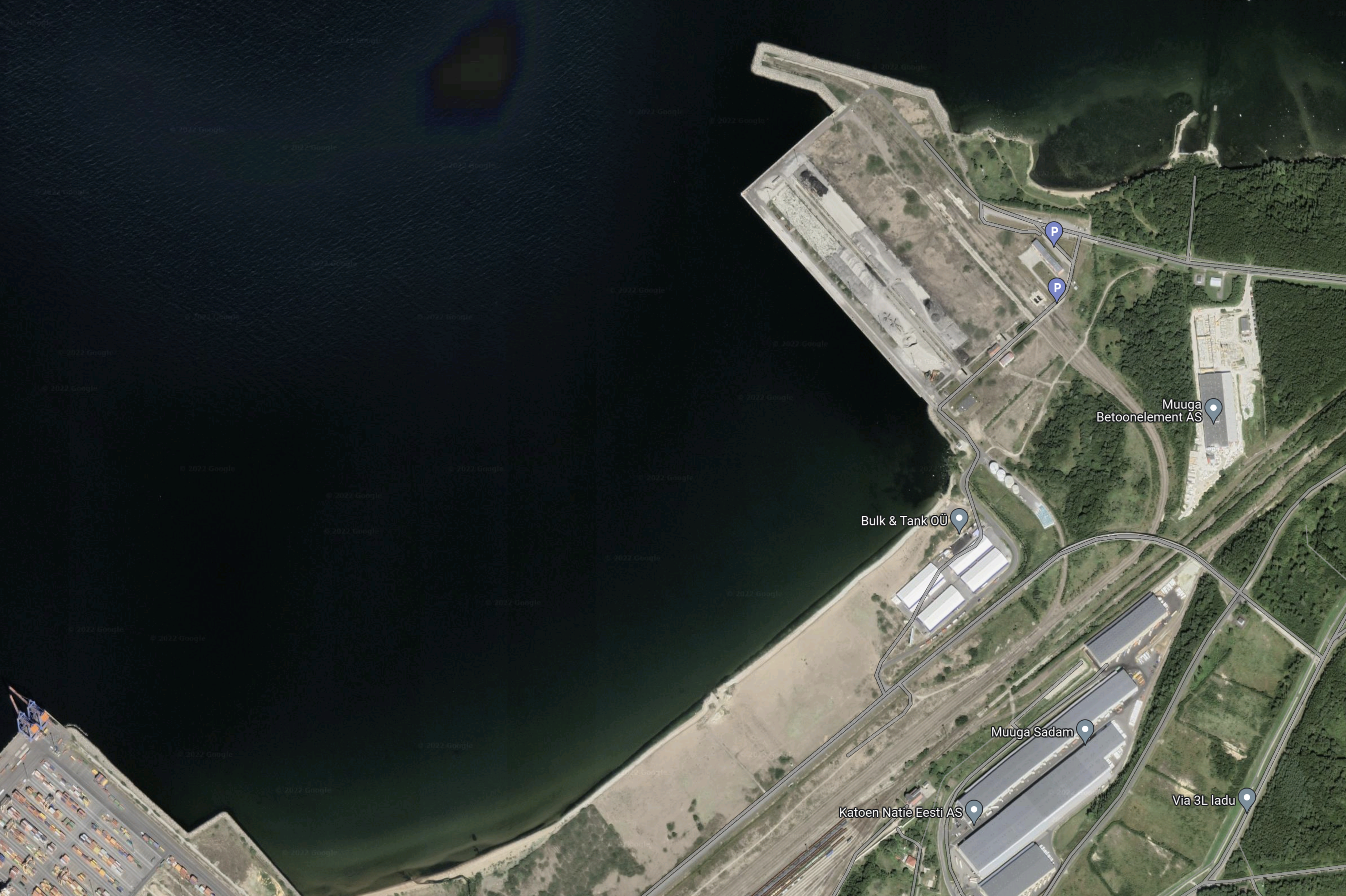
Note.
- Muuga Harbour is the largest cargo port in Estonia, located on the southern coast of the Gulf of Finland, 17 kilometres (11 mi) northeast of the capital Tallinn
- It is one of the few ice-free ports in northernmost Europe and one of the most modern ports in the Baltic Sea region.
- Enlarging the picture shows a lot of rail lines.
It looks like Muuga Harbour is an ideal Northern terminus for the Amber Train freight service.
This Google Map shows the area of the Kaunus Intermodal Terminal.
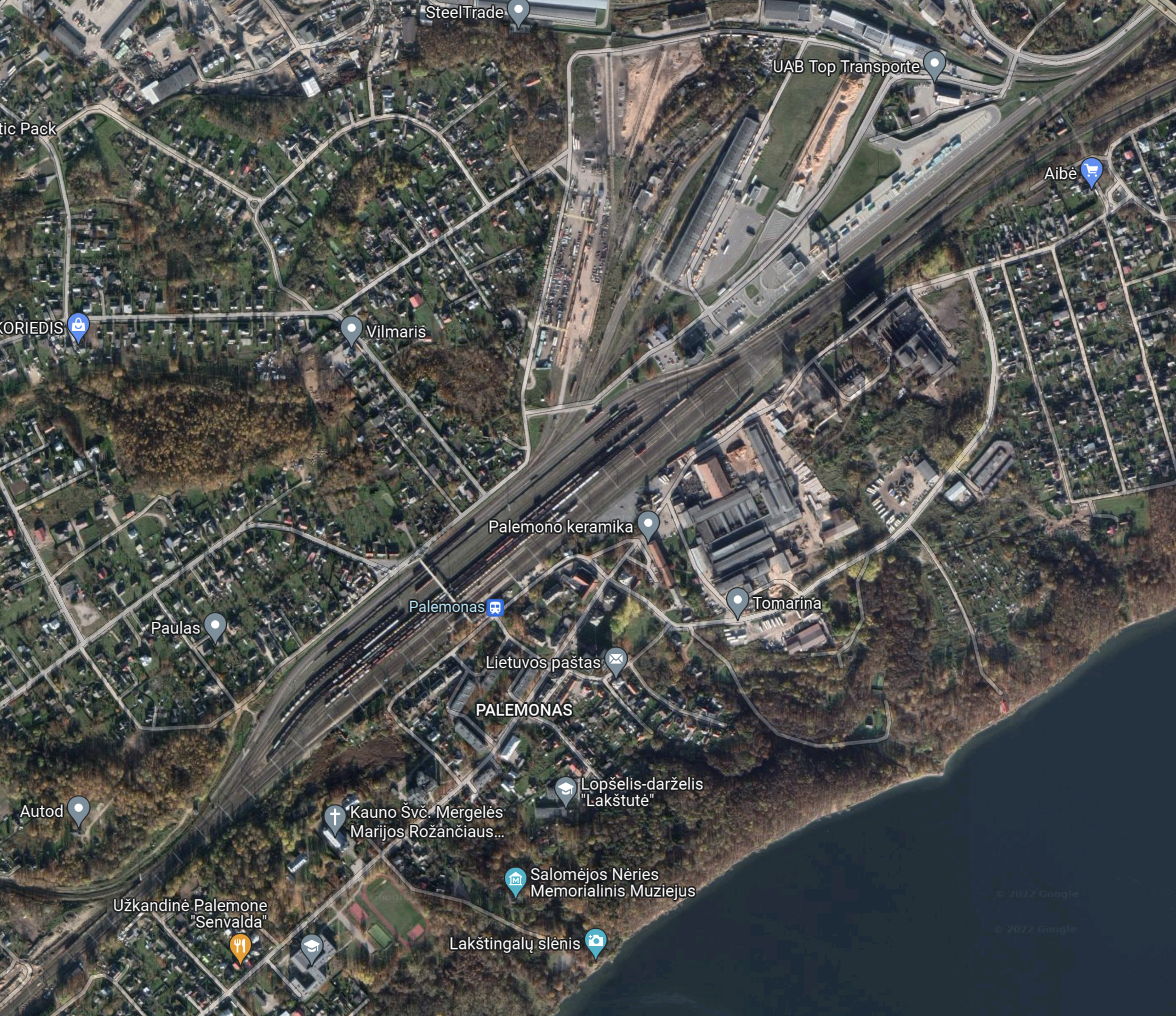
Note.
- The railway runs diagonally across the map.
- Estonia is to the North-East.
- Poland is to the South-West.
This map shows how the different gauges are used in the North-East of the previous map.
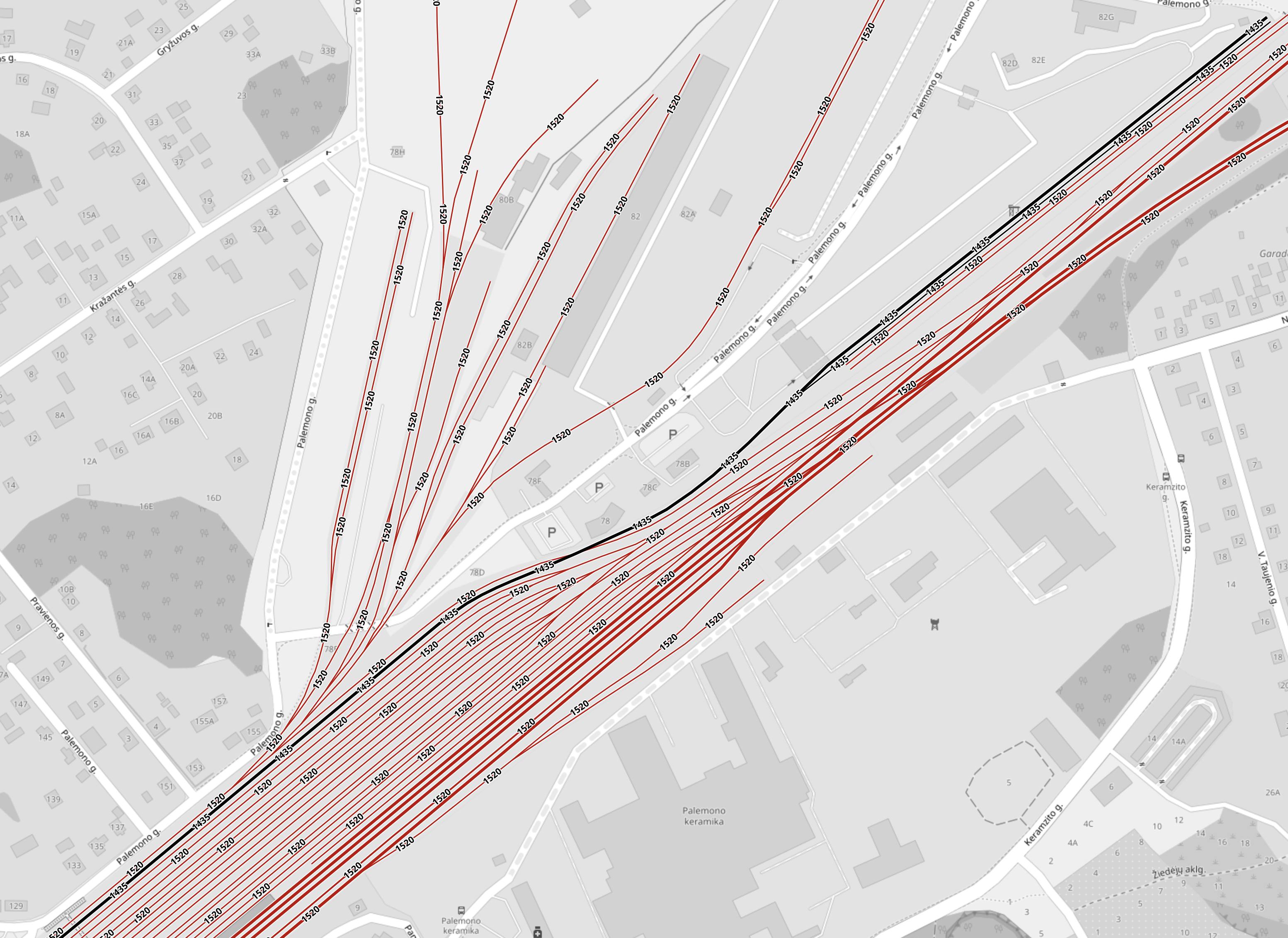
Note.
- Standard gauge tracks are shown in black.
- Russian gauge tracks are shown in red.
- The standard gauge track ends in the North-East corner of the map.
Trucks would probably moved between trains on parallel tracks in this freight terminal.
It appears to be a very simple way to run piggy-back trains of trucks between The Baltic States and Finland and Central and Western Europe.
Rail Baltica
According to Wikipedia, the location for the Kaunas Intermodal Terminal was chosen as it is compatible with the route of Rail Baltica, which will create a new standard gauge route between Kaunas and Tallinn in Estonia.
The Amber Train
The Amber Train has an impressive web site, where this is said on the home page.
Amber Train is a joint project of the national railways of Lithuania, Latvia and Estonia. It is an excellent example of cooperation, that offers road and railway clients convenient and efficient freight logistics.
Amber Train is an intermodal train, which runs on the route Šeštokai / Kaunas – Riga – Talinn, thus connecting the three Baltic States by railways and opening new business opportunities for freight shippers.
Exclusivity of the project is the connection of Western and North Europe, using the unique Šeštokai and Kaunas intermodal terminals, which enable the transshipment of freight from the European gauge to the 1520 mm gauge and vice versa.
The train is planned to run 2 times per week (with a future perspective to run up to 4 times per week), delivery time is 24 hours. Train length – up to 43 container wagons.
It is planned, that already in 2021 customers will be offered the opportunity to transport semi-trailers by railways via all three Baltic States. For this purpose, special “pocket” wagons are already in production.
Operations are managed by AB LTG Cargo (Part of Lithuanian Railways group), Latvia’s LDZ Loģistika and Estonia’s Operail.
It appears to be a well-thought out service.
A few years ago, I was on the roads of North-East Poland, about a hundred miles South of Kaunas.
These roads were crowded with large trucks going between The Baltic States and Finland and Central and Western Europe.
I suspect that once the Amber Train is fully established, a proportion of these trucks will go by rail.
Could Chiltern Go Battery-Electric?
In the October 2022 Edition of Modern Railways, there is an article, which is entitled Chiltern Considers Turbo Future, with a sub-title of Battery Replacement Could Be On The Cards.
These are the first two paragraphs.
In early September Chiltern Railways was preparing to launch a market sounding exercise to consider options for the future of the Class 165 Turbo DMU fleet.
The operator has 28×2-car and 11×3-car ‘165s’. which operate alongside its more modern Class 168 DMUs and its loco-hauled sets. The market sounding exercise will consider two options for the future of the fleet – some sort of hybrid conversion, or outright replacement.
The Class 165 Trains
The Class 165 trains were built in 1990-1991.
- Maximum Speed – 75 mph
- Prime Movers – One per car, Perkins 2006-TWH
- 2-car Trains – 28
- 3-car Trains – 11
One is being converted to a diesel/battery hybrid.
The Class 168 Trains
The Class 168 trains were built in 1998-2004.
- Maximum Speed – 100 mph
- Prime Movers – One per car, MTU 6R 183TD13H
- 2-car Trains – 9
- 3-car Trains – 8
- 4-car Trains – 11
One has been converted to a diesel/battery hybrid.
Conversion To Hybrid Operation
If this proves to be feasible, it will surely be the more affordable of the two options.
But it does leave Chiltern with a mixed fleet with two types of train with different maximum speeds and these lengths.
- 2-car Trains – 37
- 3-car Trains – 19
- 4-car Trains – 11
Would a fleet of similar trains, with perhaps a maximum speed of 100 mph, be better operationally?
Battery-Electric Operation
The Modern Railways article introduces the concept of battery-electric operation with this paragraph.
If a replacement fleet is considered the best option for the Turbo units, the replacements could take the form of a straight battery EMU, taking advantage of recent advances in ‘fast charge’ technology.
The article also says this about battery technology and electrification.
There is optimism that advances in battery technology will provide a smooth pathway to decarbonise Chiltern’s operations – the company serves the only non-electrified London terminus.
In the longer-term, it is hoped electrification from Birmingham to Banbury as part of a strategy to decarbonise CrossCountry and freight services would enable Chiltern to run a battery EMU on London to Birmingham duties, running under battery power as far north as Banbury and switching to overhead wires from there, both powering the unit and enabling the batteries to be recharged.
The Modern Railways article looked at each route and I will do this in more detail.
London Marylebone And Aylesbury via High Wycombe
London Marylebone and Oxford would be under battery operation for 40 miles.
Trains would be charged at London Marylebone and Aylesbury stations.
London Marylebone And Aylesbury Vale Parkway
London Marylebone and Oxford would be under battery operation for 41 miles.
Trains would be charged at London Marylebone and Aylesbury Vale Parkway stations.
It might be better to electrify between Aylesbury and Aylesbury Vale Parkway stations.
London Marylebone And Banbury
London Marylebone and Oxford would be under battery operation for 69 miles.
Trains would be charged at London Marylebone and Banbury stations.
Leamington Spa And Birmingham Moor Street
Assuming the Birmingham and Banbury section of the route is electrified, this route will be electrified.
London Marylebone And Birmingham Moor Street Or Birmingham Snow Hill
Assuming the Birmingham and Banbury section of the route is electrified, this route can be considered to be in two sections.
- London Marylebone and Banbury – Battery operation – 69 miles
- Banbury and Birmingham – Electric operation – 42 miles
Trains would be charged at London Marylebone station and on the electrified section.
London Marylebone And Gerrards Cross
London Marylebone and Oxford would be under battery operation for 19 miles or 38 miles both ways.
Trains would be charged at London Marylebone station.
London Marylebone And High Wycombe
London Marylebone and Oxford would be under battery operation for 28 miles or 56 miles both ways.
Trains would be charged at London Marylebone station.
London Marylebone And Oxford
London Marylebone and Oxford would be under battery operation for 66.8 miles.
Trains would be charged at London Marylebone and Oxford stations.
London Marylebone And Stratford-upon-Avon
Assuming the Birmingham and Banbury section of the route is electrified, this route can be considered to be in two sections.
- London Marylebone and Banbury – Battery operation – 69 miles
- Banbury and Hatton Junction – Electric operation – 26 miles
- Hatton Junction and Stratford-upon-Avon – Battery operation – 9 miles
Trains would be charged at London Marylebone station and on the electrified section.
Chiltern’s Mainline Service
Chiltern’s Mainline service between London and Birmingham is run by either a Class 68 locomotive pulling a rake of six Mark 3 coaches and a driving van trailer or two or three Class 168 trains.
As the locomotive-hauled train is about eight coaches, it could surely be replaced by two four-car multiple units working together.
I believe that if Chiltern obtained a fleet of four-car battery electric trains, this would be the most efficient fleets for all their routes.
Charging At London Marylebone Station
I took these pictures at Marylebone station today.
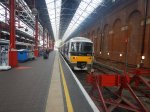
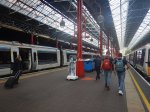
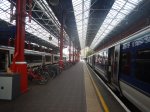
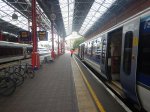


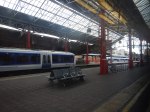
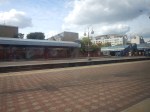


Note.
- It is a surprisingly spacious station and I feel that Furrer+Frey or some other specialist company could add some form of charging to the platforms.
- Charging would probably performed using the train’s pantograph.
It appears that the turnround time in Marylebone is typically twelve minutes or more, which should be adequate to fully charge a train.
Conclusion
Both solutions will work for Chiltern.
But I prefer the new battery-electric train, which has some crucial advantages.
- Battery-electric trains will be quieter than hybrid trains.
- Marylebone station has a noise problem and battery-electric trains are very quiet.
- Chiltern have ambitions to built new platforms at Old Oak Common and to serve Paddington. This could be easier with a battery electric train.
Rhe only disadvantage is that Banbury and Birmingham would need to be electrified.
Rolls-Royce Releases mtu Rail Engines For Sustainable Fuels
The title of this post, is the same as that of this press release from Rolls-Royce.
The press release starts with these bullet points.
- mtu Series 1300, 1500 and 1800 engines already released; Series 1600 and 4000 to follow shortly
- Up to 90% CO2 savings by operating existing engines with Hydrotreated Vegetable Oil (HVO/renewable diesel)
- Locally emission-free operation possible in combination with mtu Hybrid PowerPack
- Field tests with DB Cargo and RDC Autozug Sylt
Note.
- Hitachi Class 800, 802, 805 and Class 810 trains appear to use Series 1600 engines.
- CAF Class 195, 196 and Class 197 trains appear to use Series 1800 engines.
- Class 43 power cars, as used in InterCity 125 trains appear to use Series 4000 engines.
It would appear that many of the UK’s new diesel trains and the remaining Class 43 power-cars can be converted to run on HVO.
This paragraph from the press release gives more details.
Rolls-Royce is taking a significant step towards even more climate-friendly rail transport with the release of mtu rail engines for use with sustainable fuels. With synthetic diesel fuels of the EN15940 standard, CO2 emissions can be reduced by up to 100 percent compared to fossil diesel. Hydrotreated Vegetable Oil (HVO or renewable diesel), which is already commercially available today, reduces CO2 emissions by up to 90 percent. If the fuels are produced with the help of renewable energy and green hydrogen – through what is termed a Power-to-X process – existing rail vehicles can be operated in a completely CO2-neutral manner. The mtu Series 1800 engines which are used in mtu PowerPacks, as well as Series 1300 and 1500 for locomotives and multi-purpose vehicles, are already approved for use with synthetic fuels such as HVO. Series 1600 and versions of Series 4000 engines will follow in the near future. The release of engines for climate-friendly fuels requires a series of tests and trials and Rolls-Royce has found strong partners for this activity. DB Cargo and RDC Autozug Sylt have already tested or are currently testing mtu Series 4000 engines with HVO in their locomotives.
Rolls-Royce mtu seem to have covered all issues.
This is a very significant statement in the paragraph.
If the fuels are produced with the help of renewable energy and green hydrogen – through what is termed a Power-to-X process – existing rail vehicles can be operated in a completely CO2-neutral manner.
This must be the most affordable way to make your diesel trains zero carbon.
Conclusion
Rolls-Royce and Cummins seem to be doing a thoroughly professional job in decarbonising the diesel engines they have made in recent years.
It now needs someone to take small diesel engines down the conversion route, just as Rolls-Royce mtu and Cummins are cleaning up their large engines.
Ricardo Partners On Innovative Hydrogen-Electric Train Trial
The title of this post, is the same as that of this press release from Ricardo Rail.
This is the introductory paragraph.
Ricardo, in partnership with Scottish Power, Network Rail Scotland and the University of Leeds, have received next phase energy sector funding to develop their innovative Holistic Hydrogen Approach to Heavy Duty Transport (H2H) project, which aims to be a catalyst that will help the UK remove all diesel trains from the network by 2040.
Of all British companies, one of those with most to lose from world-wide decarbonisation and the phase out of petrol and diesel is Ricardo.
Ricardo plc is an unusual company, which started life as Engine Patents Ltd in 1915.
For over a hundred years, they have been the go-to company, if you have a tricky design problem, with your diesel or petrol engines or the transmission.
Wikipedia has a list of technologies that shaped the company’s first 100 years.
I used to know the grandson of the company’s founder; Sir Harry Ricardo and he told me, that virtually every modern diesel or petrol engine in the world, has been designed with help from one or more of the company’s patents.
So decarbonisation has meant that Ricardo has diversified and their innovative Holistic Hydrogen Approach to Heavy Duty Transport (H2H) project has been one of the results.
 The Anonymous Widower