Wabtec Signs $600M MoU With Kazakhstan Railway Company
The title of this post, is the same as that of this article on Seeking Alpha.
This is the introductory paragraph.
Wabtec announced Tuesday signing of a $600M memorandum of understanding with Kazakhstan Temir Zholy for 150 FLXdriveTM battery-electric shunters and modernization work to transform the mainline fleet into NextFuelTM liquid natural gas-powered (LNG) locomotives.
Note.
- It is for 150 shunting locomotives, which is not a small number.
- A lot of the work will be done in Kazakhstan.
- Wabtec certainly seem to be getting their FLXdrive technology about.
- Obviously LNG locomotives must be a good route to reduce carbon emissions for diesel locomotives.
- The Kazahks seem pleased with the deal for economic and decarbonisation reasons.
But what surprises me about this deal, is that it has not gone to Russia. Does this say something about Putin’s lack of friends.
Cummins Shows Hydrogen Internal Combustion-Engined Concept Truck At IAA Transportation Exhibition
The title of this post, is the same as that of this article on Commercial Motor.
These are the first two paragraphs.
Cummins believes hydrogen internal combustion engines (H2-ICE) will be suitable for the 10- to 26-tonne GVW range, and showed a concept vehicle at the IAA Transportation exhibition.
The truck, which is based on a Mercedes-Benz Atego 4×2, is fitted with Cummins’ new 6.7-litre B6.7H engine. It is rated at 290hp, has a peak torque of 1,200Nm, and a range of up to 500km.
Alison Trueblood, Cummins executive director – on-highway business Europe, is extensively quoted in the article and it is worth reading what she says.
I believe that by providing a hydrogen infrastructure and converting trucks to hydrogen, by using similar techniques to Cummins could be a quick and effective way to improve air qualities in urban areas.
Tevva Unveils 19-Tonne Hydrogen Electric Truck
The title of this post, is the same as that of this article on Fleetpoint.
These paragraphs outline the company’s launch into Europe and their new 19-tonne hydrogen-electric truck.
Electric and hydrogen truck OEM Tevva is to unveil its 19-tonne (19t) hydrogen-electric truck and announce its strategy for mainland Europe at the IAA Transportation show in Hanover, Germany from Monday 19 September.
The company is partnering with its wide portfolio of customers, including Kinaxia Logistics, Codognotto and FM Logistic, to showcase its range of full-electric and hydrogen-electric medium-duty (7.5t to 19t / Class 5 to 8) truck solutions designed for the European market.
Its largest truck platform launch to date, Tevva’s 19t hydrogen-electric model represents a significant milestone and highlights the scalability of its technology. As with the 7.5t hydrogen-electric model, the 19t variant benefits from the company’s revolutionary dual energy system, combining lithium-ion batteries and a hydrogen fuel cell range extender. The truck is expected to have a range of up to 500km depending on the number of hydrogen cylinders specified, which can be refilled in 10 minutes.
Since, I first wrote about Tevva trucks in Tevva Presents 7.5 Tonne Truck With Range Extender, I have felt that their design of truck could be one way to go.
- It seems to give a very good range.
- It has a good load carrying capacity.
- It is zero-carbon.
- The batteries can be charged on a charge system or by use the the hydrogen fuel cells.
- It would be good for deliveries in a city.
Tevva’s engineers seem to have done a good job.
My First Ride In A Refurbished New Routemaster
When I went to see the Queen’s flowers, that I wrote about in The Queen’s Flowers In Green Park, the 38 bus, I rode to Green Park, was a refurbished New Routemaster.




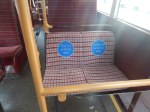
Note.
- It appears to have scrubbed up well.
- There is a new fabric and all the gold metal parts have been re-anodised.
- The priority seats for those with limited mobility are now labelled.
- As they are now up to eleven years old, will they now be good for at least another ten?
This article on Key Buses is entitled New Routemaster Refurbishment Underway, where this is said.
Despite coming under threat as a result of Tf L’s funding crisis the first New Routemasters have now returned from refurbishment. These include buses in the Abellio London, Metroline and London United fleets. The latter now carry RATPDev Transit London fleetnames. The first 200 vehicles are expected to be refurbished by March 31, 2023.
With 200 buses, I should get a lot of chances to add some more pictures.
In Could London’s New Routemaster Buses Be Converted To Hydrogen Power?, I came to this conclusion.
I believe from my knowledge of Cummins and the way they work, that they will come up with a hydrogen-based solution, that will replace the Cummins diesel in these buses with a zero-carbon engine.
If Cummins don’t then someone else will.
Whoever solves the problem of converting London’s new Routemasters to hydrogen will have one of the best adverts for their product, there has ever been.
After converting London’s thousand Routemasters, the engineers could move on to anything powered by a Cummins engine.
Since then I’ve written Werner Enterprises Signs Letter Of Intent Planning To Secure 500 X15H Engines From Cummins, which describes the application of Cummins technology to convert heavy trucks to hydrogen power.
Britain’s Longest Road Tunnel Could Be Built Along A27
The title of this post is the same as that of this article in The Argus.
These three paragraphs outline the scheme.
The longest road tunnel in the UK could be built as a long-term solution to congestion along the A27.
The tunnel, which would cost around £2 billion, has been touted as a way of addressing traffic and a way to improve local quality of life.
A new report by Transport for the South East (TfSE) said investing in such schemes is the only way carbon emissions from congested road traffic can be seriously tackled and improve.
The article also states, that the project is unlikely to be started before 2050.
These are my thoughts.
Where Will The Tunnel Be Built?
This Google Map shows Worthing.
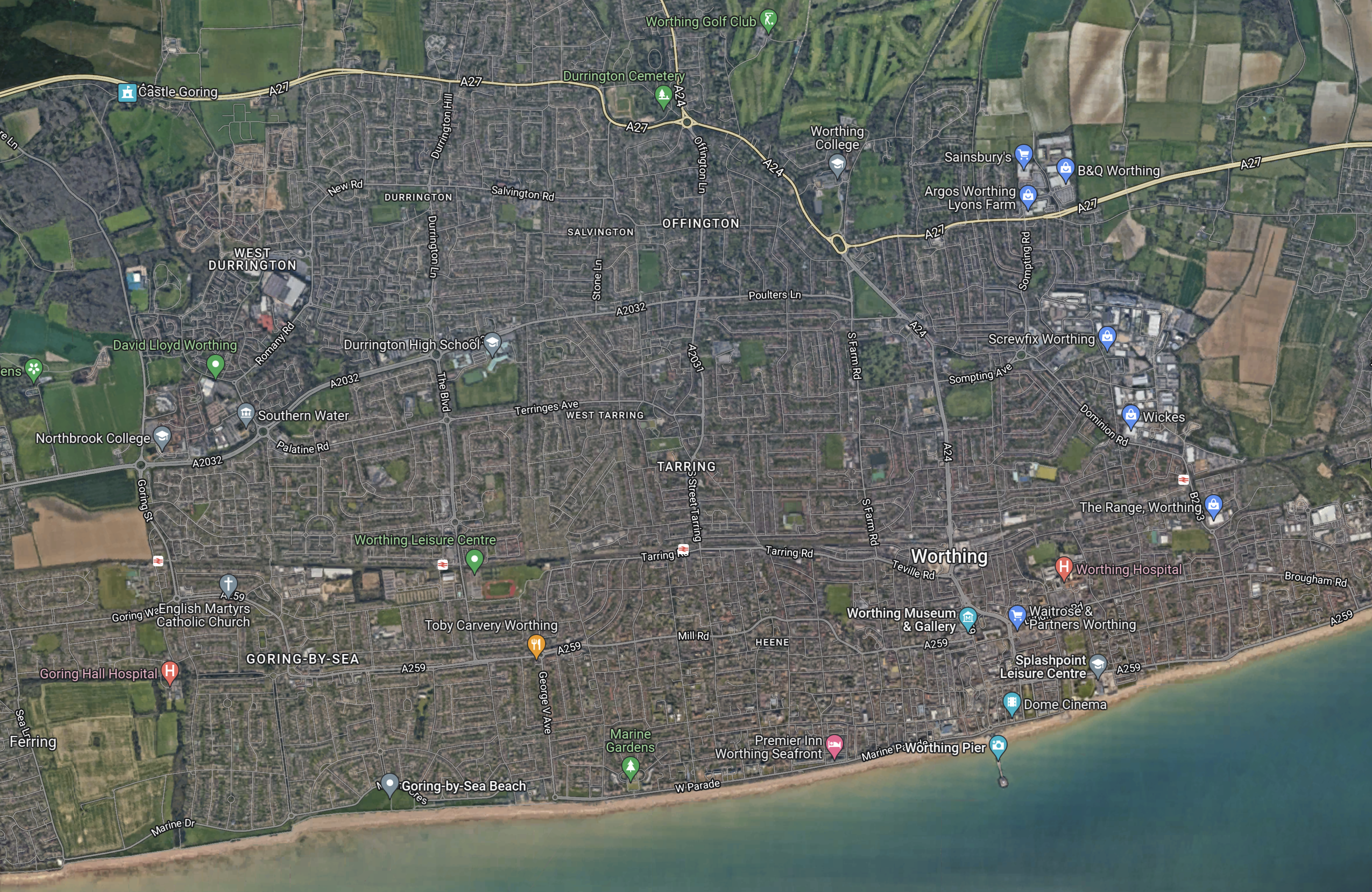
Note.
- The A27 road runs roughly across the top of the map.
- The A27 has sections of dual-carriageway.
- There are two roundabouts, where the A27 connects with the A24 road between London and Worthing via Sutton, Dorking and Horsham.
- The West Coastway Line runs across the middle of the map.
- Four of the five stations in Worthing are visible.
- From East to West the stations are East Worthing, Worthing, West Worthing and Durrington-on-Sea, with Goring-by-Sea off the map to the West.
This Google Map shows the section of the A27 to the West of the A24.
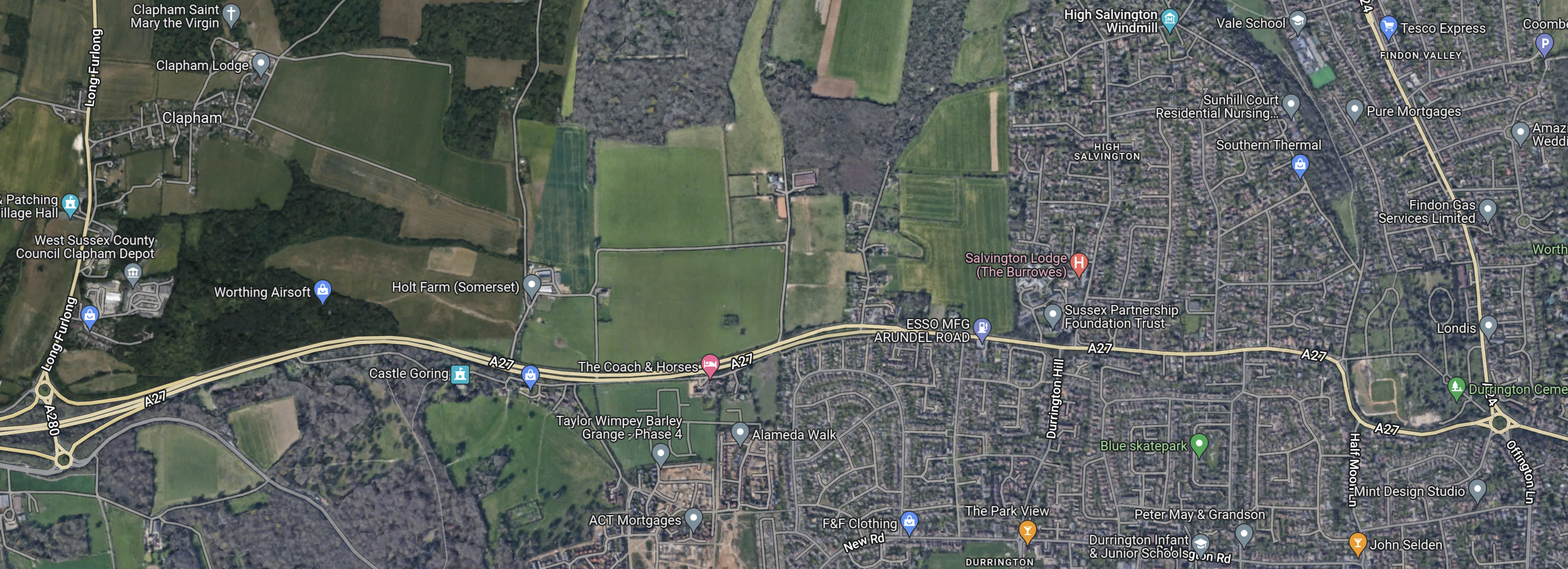
Note.
- The A27 goes all the way across the map.
- There is a large junction with the A280 at the Western edge of the map.
- There is a large roundabout at the junction with the A24, at the Eastern edge of the map.
- The Western half of the A27 between the two junctions, appears to be dual-carriageway.
- The A27 continues in the West as a dual-carriageway between the junction with the A280, almost as far as Arundel.
I suspect the Western portal of the tunnel would be close to the junction with the A280 and for much of the route, it could be bored under the A27 to minimise noise and vibration for those living along the route.
This third Google Map shows the section of the A27 to the East of the A24.
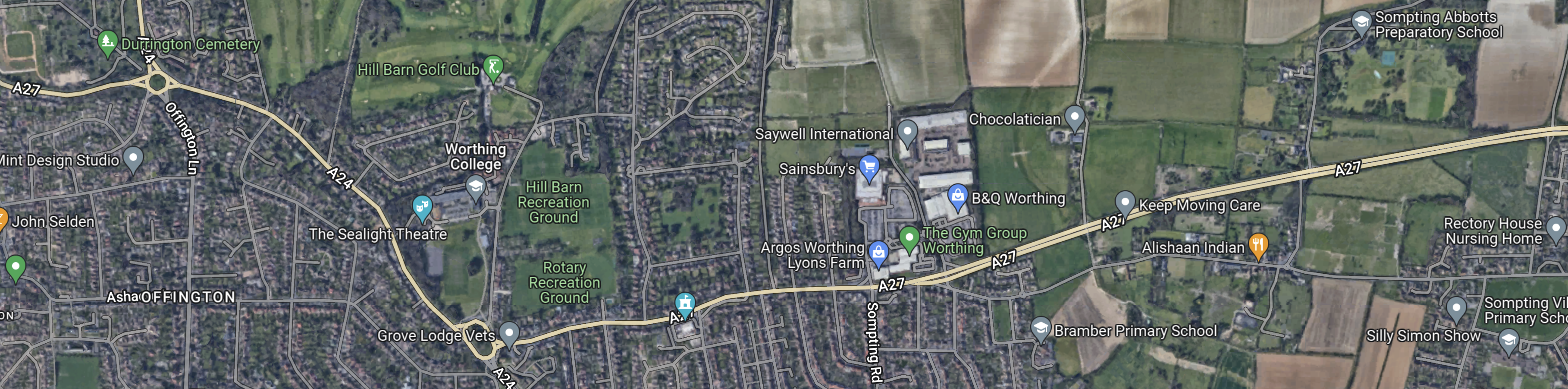
Note.
- The A27 goes all the way across the map.
- It shares a route with the A24 between the two roundabouts towards the West of the map.
- The Eastern section of the A27 appears to be dual-carriageway.
- T27 continues in the East to the North of Shoreham and Brighton and the South of Lewes.
I suspect the Eastern portal of the tunnel would be close to the Western end of the dual-carriageway section to Lewes and for much of the route, it could be bored under the A27 and A24 to minimise noise and vibration for those living along the route.
As we’re good at tunneling in the UK, I don’t think this will be a difficult tunnel to bore.
What Should We Do In The Interim?
The article in the Argus says this.
Should the plans go ahead, the tunnel could be ready for construction by 2050, with a range of other measures proposed to cut congestion in the short term.
2050 is a long time to wait.
I haven’t driven in the area much in the last twenty years, as even before I didn’t drive, I’ve tended to take the train to places like Brighton, Eastbourne, Portsmouth and Southampton.
In my experience the East and West Coastway Lines along the South Coast have reasons, why people drive for preference.
- The trains are not frequent enough. There should be four trains per hour (tph) if possible.
- There needs to be more direct train services to London and Gatwick Airport.
- Some of the stations are not very passenger-friendly. More step-free access is needed.
- Some of the stations can’t handle twelve-car trains.
- The Class 313 trains, that are used to the West of Brighton, were built in the 1970s. Similar trains of that period in the rest of the UK, have either been replaced or will soon be.
- Is there enough car parking?
- Could some closed stations be reopened?
- Could Park-and-Ride facilities be built, where the A27 crosses the railway?
- Would it help, if the West and East Coastway Lines didn’t need a change at Brighton?
- Would a high speed service between Eastbourne and London via Hastings and High Speed One attract leisure passengers.
An improved railway might reduce traffic on the A27.
Perhaps the easiest improvement would be to replace all the East and West Coastway fleet with new or refurbished trains with the following specification.
- 100 mph operation.
- High-class well-designed interior matched to the passenger mix.
- Ability to handle the Marshlink Line and other sections without electrification.
- Wi-fi and power sockets.
- A refreshment trolley might be a good idea.
A marketing campaign might help.
Battersea Power Station Station To Battersea Power Station Pier – 18th September 2022
I walked between Battersea Power Station station and Battersea Power Station pier.
















Note.
- A new route between the station and the pier has been opened up, which is shorter.
- The development opens on the fourteenth of next month, but there is already some good restaurants and coffee shops.
- The corgi was the first one I’d met for a few years.
I walked between the station and the pier in under ten minutes.
Battersea Power Station To London Bridge – 18th September 2022
I took a Thames Clipper from Battersea Power Station to London Bridge.
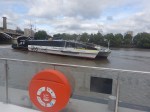

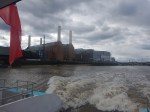
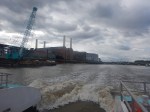
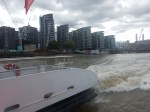
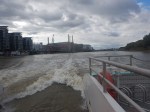
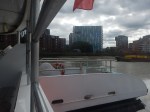
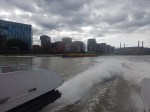




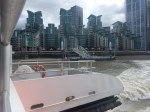
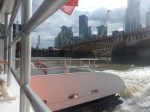
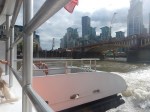


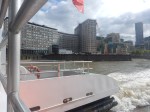











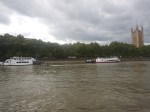









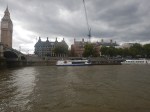
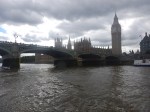

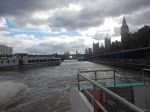
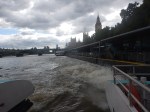
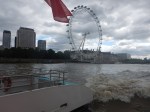
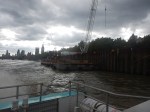

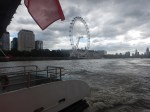
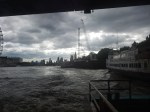




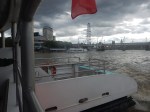

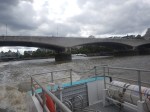
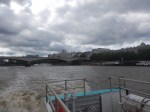



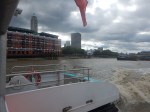
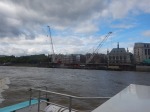
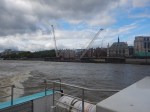

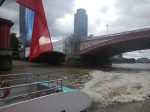
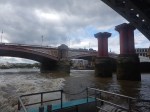
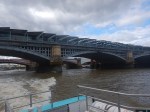

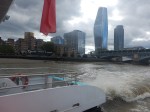

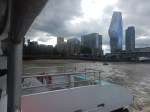

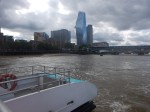




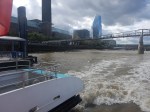
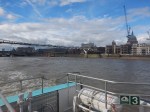
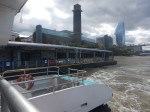
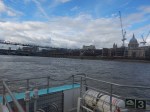



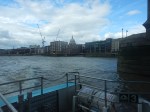
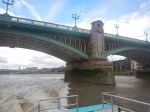
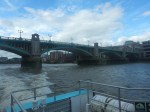

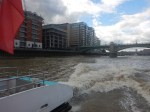
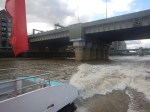
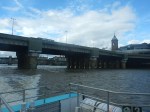

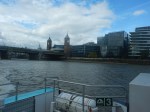
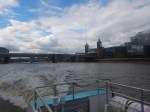

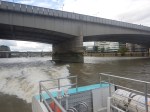
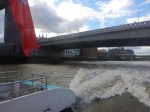
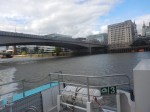


Note.
- The South Bank is generally to the left in the pictures.
- I took a Northern Line train to Battersea Power Station pier.
- As I finished at London Bridge pier, it was convenient for the Northern Line.
- I took these pictures from the back of the boat in the open as the windows were so dirty.
- In some pictures you can see the power of the boat, as it pulls away from the stops.
- The boat passed three of the super sewer sites.
- There were large numbers on the South Bank queuing to pay their respect to The Queen.
The fare was £7.70 on my Oyster card and the journey took under forty minutes.
Bank Station – 16th September 2022
On August 13th, I wrote What Goes Up Must Come Down, where I described the crane coming down over the new Bank station entrance on Cannon Street.
The triangular site, that lies between Cannon and King William Streets, has now been opened up for development, as these pictures show.








Note.
- I took the pictures from the top of a 141 bus, that was going to London Bridge station.
- It is going to be a large block on top of the station.
- Do the pictures indicate retail or further station entrances along King William Street?
- This development must help in the financing of the massive Bank Station Upgrade.
This is the last picture, shown to a larger scale.
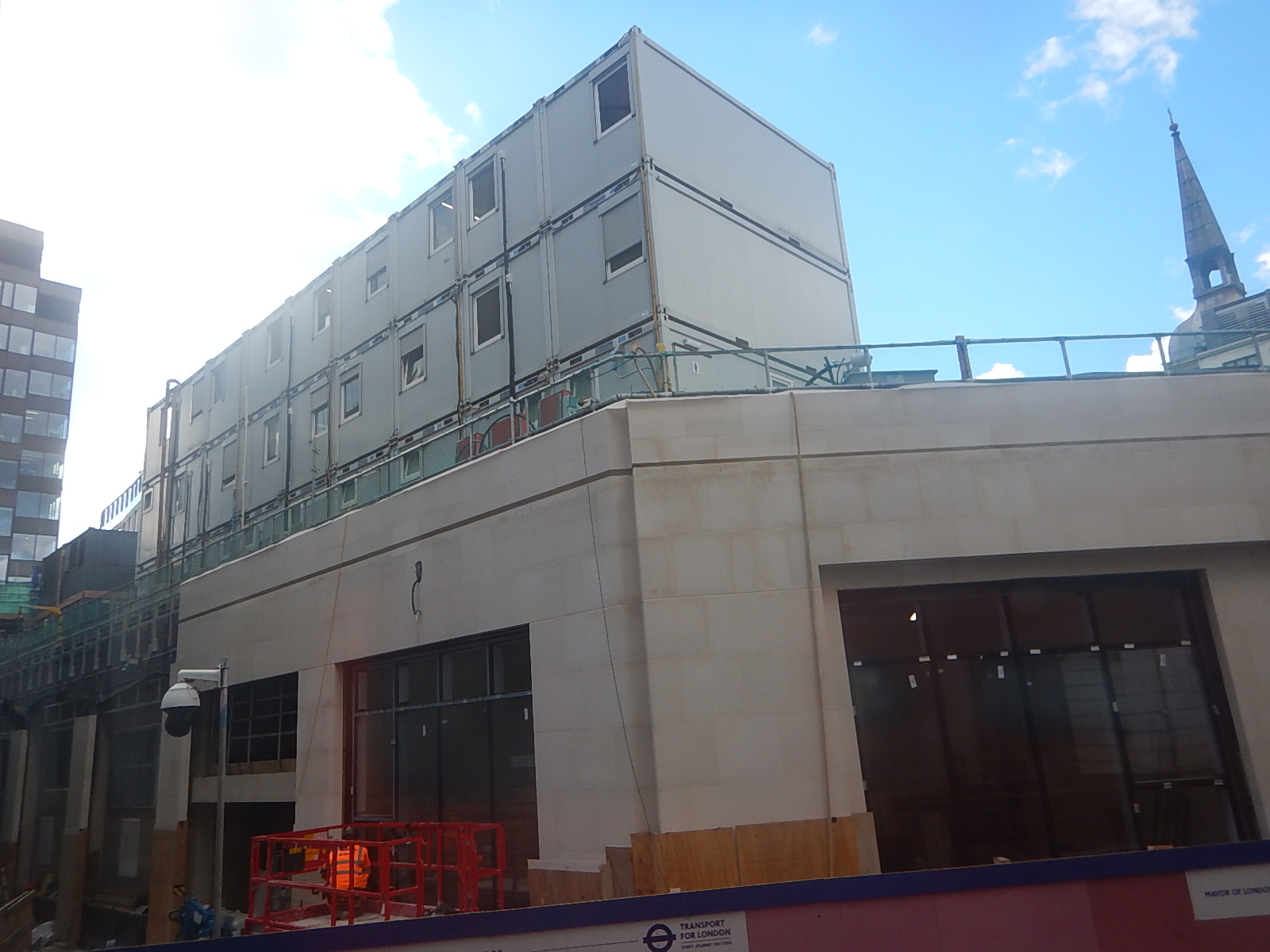
On the end of the lowest level of the portable offices, you can just about make out a sign indicating a ladies toilet.
Is this the most inaccessible ladies toilet in London? Or even the world?
Alstom’s Coradia iLint Successfully Travels 1,175 km Without Refueling Its Hydrogen Tank
The title of this post, is the same as that of this press release from Alstom.
This paragraph describes the trip.
Alstom, global leader in smart and sustainable mobility, has demonstrated the effectiveness of its hydrogen powered solutions for long distance transportation. During a long-distance journey, an unmodified serially-produced Coradia iLint train covered 1,175 kilometres without refuelling the hydrogen tank, only emitting water and operating with very low levels of noise. The vehicle used for this journey comes from the fleet belonging to LNVG (Landesnahverkehrsgesellschaft Niedersachsen), the transport authority of Lower Saxony, and has been in regular passenger operation on the network of evb (Eisenbahnen und Verkehrsbetriebe Elbe-Weser GmbH) since mid-August. For the project, Alstom also partnered with the gas and engineering company Linde.
The distance is around 730 miles.
This paragraph describes the detailed route.
Starting in Bremervörde, the route took the Coradia iLint across Germany. From Lower Saxony, where the hydrogen train was built and developed by Alstom, it travelled through Hesse to Bavaria, all the way to Burghausen near the German-Austrian border before coming to a stop in Munich. Following this remarkable journey, the train will now head for the German capital. Several trips through Berlin are on the agenda as part of InnoTrans 2022, the premier International Trade Fair for Transport Technology, to be held from 20 to 23 September.
It looks to be a good test of a hydrogen-powered train.
It looks like Alstom believe that hydrogen trains can replace diesel ones, providing there is a source of hydrogen.
Every Station Should Have One!
I took these pictures at London Bridge station, today.







How many other stations in the world, have a proper organ?
 The Anonymous Widower