West Hampstead Station – 12th May 2018
West Hampstead station is being rebuilt with a new entrance and a step-free footbridge.

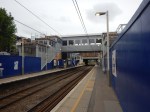
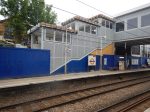
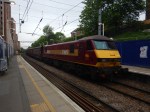

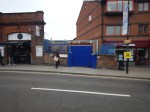


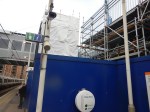

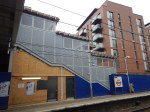
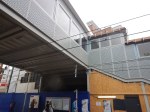

The new station would appear to be able to handle more passengers.
This image on the BPR Architect’s web site, shows how it will look, when it opens.
The new station would appear to be able to handle more passengers.
It’s strikes me, that the design is almost a modern application of the rules, that created London Underground’s distinctive stations of the 1930s.
One of the routes I took to and from Minchenden School, involved two of the Piccadilly Line‘s iconic stations; Oakwood and Southgate. Both were designed by Charles Holden and are Grade II* listed buildings.
Those stations were and still are all about space, brickwork, glass, imaginative use of metal and clean lines, often with integrated retail units.
West Hampstead station appears similar, but the retail is more surrounding, than integrated.
Modern fabrication techniques with metal and plastics, also give the architects and designers more freedom.
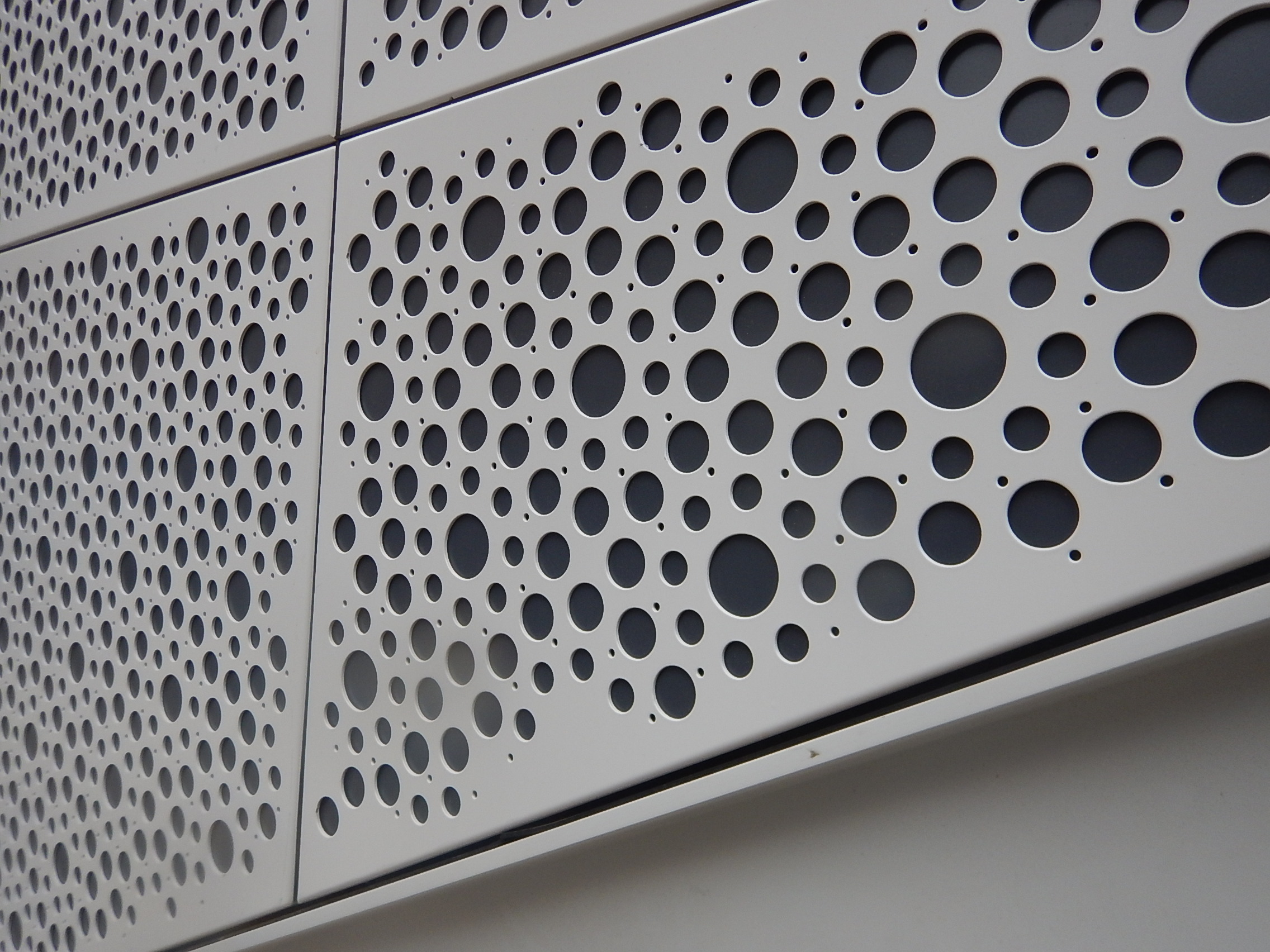
I like the pierced steel cladding on the footbridge at West Hampstead station and it is probably a lot more affordable, than all the bronze used in Southgate station.
If my mother, who died a few years ago, came back and arrived at the new West Hampstead station on the London Overground, she’d only confuse it with a London Underground station.
London Mayor Sadiq Khan Plans TfL ‘Junk Food’ Advert Ban
The title of this post, is the same as that of this article on the BBC.
I don’t buy junk food, except for the odd bag of gluten-free chips from McDonalds, where there is nothing else I can find.
The move is to cut obesity in the capital.
I think a relately problem is the steadily-growing numbers of fast food shops in places like Kingsland High Street, near where I live?
- They offer unhealthy food.
- Few offer food for those like me, who have special needs.
- They contribute largely to litter all over the place.
- They are always dropping junk mail through my door.
Walk past these shops, just after school has finished and they are full of kids, stuffing themselves.
So what is Sadiq Khan doing to curb the numbers of the unhealthy places? Precisely, nothing!
In the BBC article, Karl Mercer the BBC corespondent says this.
It seems the mayor is trying to have his (low-calorie) cake and eat it.
Perhaps aware that high sugar, fat and salt ads bring in around £13m for TfL he says his new ban will not apply to companies – just to their less healthy products.
I think it is unworkable policy, that if it results in reduced advertising spend for TfL, could result in higher fares or Council Tax.
Eversholt Joins Very Light Rail Consortium
The title of this post is the same as that of this article on Global Rail News.
- Eversholt Rail Group are a rolling stock operating company.
- The very light rail consortium is called Revolution VLR, which has an impressive list of backers, including several Councils and Universities, Network Rail and the Department of Transport.
One of my previous clients; Cummins are involved. I used to provide analysis software for their factory in Darlington.
- That factory, used to specialise in providing custom-built engines for smaller applications. So if say you wanted a diesel engine for a customised application, Cummins were the first place to go.
- The factory was also geared up to making small numbers of these engines.
- The company was very keen on getting quality right, which had actually led to my involvement.
I doubt Cummins would get involved in a project, that didn’t have a good chance of success.
I think the addition of Eversholt to the consortium could be beneficial.
Their traditional market is being eroded by new players looking for safe long-term investments funding some of the new trains.
But they have expertise in funding rail systems and Revelution VLR’s concept of very light rail running on a lightweight slab track could be something that they could fund, especially as a very light rail solution, must be cheaper than a traditional solution.
I shall be watching this consortium.
A Cheering Community Rail Story From Wiltshire
This article from the Wiltshire Times is entitled Station Scheme Gets Under Way.
The article talks about Melksham station and how the Transwilts Partnership and Great Western Railway are improving the station.
- A new community cafe, 53 car parking spaces and a bus interchange will be provided.
- GWR will lease land from Wiltshire Council and lay out and manage 75 parking spaces.
- Transwilts appear to be funding the community cafe.
- Car park improvements will be paid for by new parking charges.
- Passenger numbers have grown from 10,000 in 2013 to more than 75,000 last year.
- GWR have doubled the number of carriages on the route.
The last two points, must mean that everybody involved must be doing something right.
I’ll finish with this quote from Dan Okey of GWR.
We believe very strongly in community rail and in this route and we want to see it continue to grow.
This partnership between GWR and the local comminity rail partnership, could and should be copied elsewhere.
Charity Charter Visits Suffolk Hotspots
The title of this post is the same as that of the caption on a picture in Issue 851 of Rail Magazine.
I was intrigued that the charter appeared to visit Leiston station on the Aldeburgh Branch Line.
So I searched for Leiston station on the Internet and found this article on the East Anglian Daily Times, which is entitled Network Rail Improving Suffolk Line That Has No Regular Train Services.
It would appear that last Autumn, Network Rail improved the line. Reasons given in the article include.
- It would be used again if Sizewell C is built.
- It is occasionally used to stable Network Rail engineering trains during the day if they are working in the area at night.
- Steam-hauled charters are also mentioned.
I looked at building a new station at Leiston in A Station For Leiston.
The charter service didn’t use Leiston station, because it has been converted to houses.
So it ran to the level crossing near the power station.
This Google Map shows the level crossing.
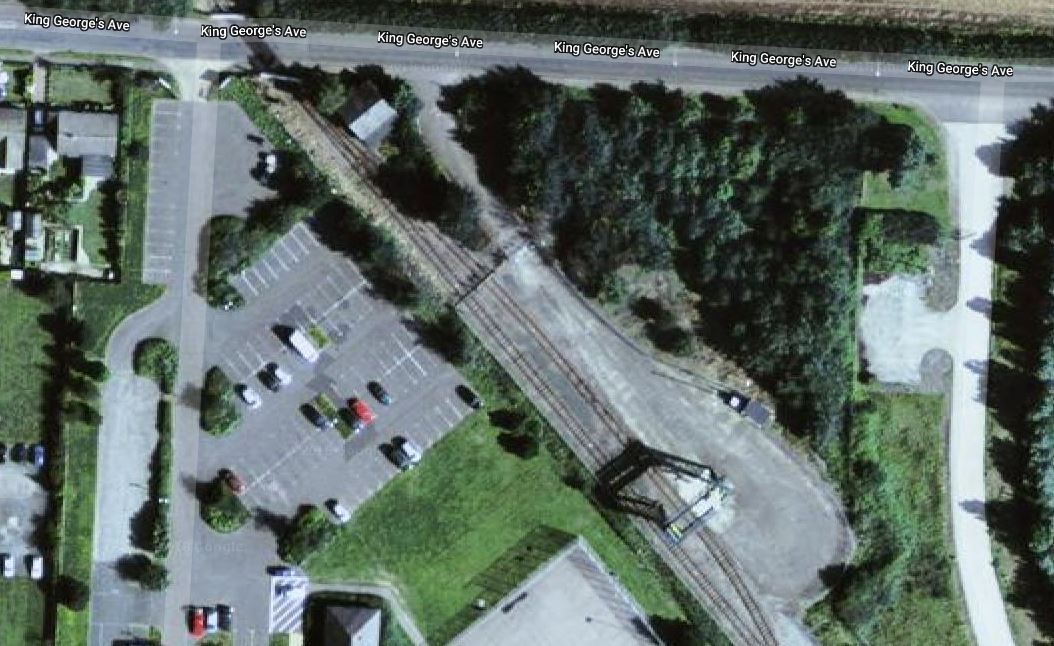
The area with two tracks was used for loading the nuclear flasks from Sizewell A, that used to be taken to Sellafield for reprocessing.
It would appear to be an ideal place to turn a train round, as if necessary the locomotive could be moved to the other end.
Perhaps, Network Rail store their engineering trains here!
Reopening The Aldeburgh Branch Line To Passenger Trains
Wikipedia says this about Sizewell C.
In October 2017, it was announced that the projected completion and first generation date of Sizewell C would be in 2031.
This could mean that the Aldeburgh Branch Line would be needed to transport workers and materials to the site, possibly as early as 2022-3.
In my view there are other reasons for reopening the line.
- About ten thousand people live in the area and an hourly train service to Woodbridge and Ipswich might be a useful commuter and leisure service.
- Work opportunities for some groups are thin on the ground.
- The roads in the area need improvement.
- Aldeburgh is a town that attracts a lot of visitors.
But I think, the biggest reason for reopening a service would be that an hourly Ipswich to Aldeburgh service, would mean that it might be possible to timetable a half-hourly service between Ipswich and Saxmundham calling at Westerfield, Woodbridge, Melton and Wickham Market.
This increase in service on the Southern section of the East Suffolk Line, might attract a lot of passengers going to and from Ipswich.
Greater Anglia have certainly got enough new Class 755 trains to run the service.
Conclusion
Thje Aldeburgh Branch Line works as an occasional branch line, but would it work as a regular commercial passenger service?
Porterbrook Targets OffLease DMU Class 153s As ‘Capacity-Busters’
The title of this post is the same as that of an article in Issue 851 of Rail Magazine.
I wrote about my visit to the new Kenilworth station in Kenilworth Station – 1st May 2018.
I travelled between Coventry and Kenilworth stations in a well-turned out Class 153 train.
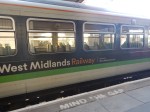
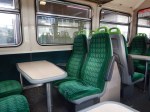
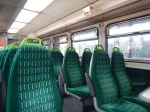
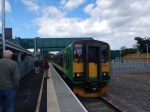
The pictures show it is no scrapyard special.
As the article says, Porterbrook own thirteen of these trains and they are looking at ways of using them profitably for a few more years.
The article suggests these uses.
- Reforming them as two-car Class 155 trains, which is how they were built.
- Inserting them into other DMUs.
- Converting them to luggage/cycle-carrying vehicles.
When I was at Oxenholme Lake District station on Monday, a Class 153 train, was being used to convert two-car Class 156 train into a three-car train, to increase capacity on the Windermere Branch Line.
Many of the Class 153 trains are due to be replaced in the next few years and as there are seventy in total, there will need to be a lot of good ideas.
Route Development
For a start, there is the job the single Class 153 train is doing at Kenilworth, which is route testing and development.
- Drivers are being trained on the route.
- Systems are being tested.
- Passengers have a train service, they can use.
On the Kenilworth route, it doesn’t matter if it is too small a train, as in a couple of months a ten-year-old Class 172 train should be available to double the capacity.
Stand-In Trains
East Anglia has a problem with trains being severely damaged in level-crossing accidents.
Pairs of Class 153 trains could be used as stand-in trains on many branch lines.
Network Rail Uses
Don’t underestimate the uses that Network Rail will find for the trains!
Conclusion
I think that some of the uses will e very innovative.
TPE Earmarks Top-And-Tail ’68s’ For Passenger Services
The title of this post is the same as that of an article in Issue 851 of Rail Magazine.
The article describes how TransPennine Express are going to use four Class 68 locomotives and four-carriage rakes of Mark 3 coaches to provide passenger services between Liverpool Lime Street and Scarborough.
From the 20th of May, services will leave Liverpool at 0556, 0656, 1156, 1256, 1756 and 1856 and Scarborough at 0846, 0946, 1446, 1546, 2050 and 2149.
Catenary Masts Erected On Alloa Branch
The title of this post is the same as that of an article in Issue 851 of Rail Magazine.
Alloa is one of the many Scottish towns and cities, that I only know through the results of Alloa Athletic FC, at around 17:00 on a Saturday afternoon.
Alloa station has a chequered history with growth through the Victorian era and total closure in October 1968.
The station was demolished to make way for a leisure centre.
But then in 2008, the line to Stirling station was reopened and a new station was built.
Wikipedia says this about the reopening.
Passenger use of the new railway station has greatly exceeded forecasts and since re-opening the service has been improved by increasing evening and Sunday frequencies from two-hourly to hourly and by adding the peak hour service to Edinburgh in 2009. In its first year the station was used by 400,000 passengers, against a forecast of 155,000.
Now the branch to Alloa is getting the ultimate upgrade – It is being electrified.
This could provide a lot of useful data on the financial returns of electrification.
Use Of Battery Trains
When I first saw a map of this line which clings to the North shore of the Forth of Firth, I was surprised that Strling to Alloa should be electrified.
It is only eight miles and if it is a level coastal railway, it could surely be handled by battery-powered trains.
So why electrify now, rather than wait for Hitachi to bring their technology to the UK and save costs?
But digging deeper, there are two large industrial sites further to the East.
- The closed Longgannet power station, which sits on a massive site.
- The large Rosyth Docks, which seems to have plans to create businesses, employment and housing.
The railway from Alloa extends to Dunfermline Town station on the Fife Circle Line and could play a part in the development of both sites.
An electrified line to Alloa, leaves all options open.
The Wikipedia entry for the Stirling–Alloa–Kincardine Rail Link says more.
This is the first paragraph.
The Stirling–Alloa–Kincardine rail link was a project to re-open 21 kilometres (13 mi) of railway line between Stirling, Alloa and Kincardine in Scotland. The route opened to rail traffic in March 2008.
The rail link effectively had two purposes.
- To allow passenger trains to run as far as Alloa station.
- To allow coal trains to run to Longannet power station, without using the Forth Bridge.
The Wikipedia entry says this under Future Expansion.
The retention of the coastal route offers the possibility of providing passenger services to Dunfermline via Clackmannan, Kincardine, Culross, Valleyfield and Cairneyhill. The former direct main line from Alloa to Dunfermline (which was not proposed for closure by Dr. Beeching) is now partly obstructed by developments on the site of the old Dunfermline Upper station. There would appear to be no prospect of access to the existing Dunfermline Town (formerly Dunfermline Lower) station by this route, unless a new stretch of line were built west of Dunfermline. However, the coastal Kincardine line does give direct access to Dunfermline Town.
There has been some discussion of the possibility of providing a service to Rosyth Ferry Terminal.
The Scottish Government have a lot of options to provide the best rail system for the current rail travellers and future developments in the area.
TPE Pledges Capacity Boost With Class 68/Mk 5A Sets
The title of this post is the same as that of an article in Issue 851 of Rail Magazine.
It adds a few extra details to those, that I wrote about in Nova 3 On The Test Track.
This information is revealed.
The Route
The TransPennine Express fleet will run on the Liverpool Lime Street-Manchester Airport-Scarborough/Middlesbrough Routes, replacing three car Class 185 trains.
Train Length
Each Mark 5A car has a length of 22.2 or 22.37 metres.
Adding on the Class 68 locomotive gives a train length of 131.84 metres.
This compares with a train length for the Class 185 train of 71.276 metres.
It means that two Class 185 trains working together, which is current practice, are longer than the new fleet.
This must limit platform and depot modifications.
The Capacity
The number of seats on the two trains are as follows.
- Class 185 train – 15 First Class – 165 Second Class
- Class 68/Mk 5A sets – 30 First Class – 261 Second Class
This gives twice as many seats in First Class and nearly sixty percent more in second.
Both trains seem to have around sixty seats in each car.
Technical Characteristics
The Rail Magazine article gives several technical characteristics.
- Each coach has two passenger doors, except the First Class coach which has one.
- There is Selective Door Opening controlled by GPS.
- Door controls are in the Driver Trailer and Class 68 cans, which the driver controls.
- Two door control panels are in every vehicle for usde by the conductor.
- Wheel Slip Protection is fitted.
- Automatic passenger counting is provided.
- Wi-fi is fitted.
The trains have a high specification.
 The Anonymous Widower