Cambridge Station Has Changed
Cambridge station is a Grade II Listed building, that over the last few years has been extended with a new pair of platforms capable of handling the longest trains and a step-free footbridge to access them.
But I haven’t been to the station for a couple of years and was surprised to see how the buildings outside have changed.
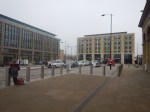


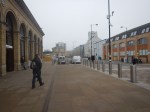

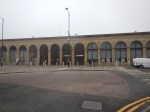
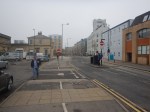

It used to be cluttered outside with taxis, buses, cycles and cars queuing for the car park everywhere.
Now, it’s a big pedestrianised square.
Greater Anglia, The Fen Line And Class 755 Trains
Greater Anglia currently operates two trains per day between King’s Lynn and Liverpool Street stations, in the Morning Peak
- 05:17 – 07:25 – 2 hr. 8 min.
- 06:17 – 08:25 – 2 hr. 8 min.
This is matched by three trains a day between Liverpool Street and King’s Lynn, in the Evening Peak.
- 17:07 – 19:08 – 2 hr. 1 min.
- 18:-07 – 20:10 – 2 hr. 3 min.
- 19:07 – 21:05 – 1 hr 58 min.
Note.
- The two Morning Peak trains stop at Watlington, Downham Market, Littleport, Ely, Cambridge North, Cambridge, Whittesford Parkway, Audley End, Bishops Stortford and Tottenham Hale.
- The three Evening Peak trains call similarly, but miss out Cambridge North.
- Services are run by Class 317 or Class 379 trains.
All the passenger trains on the Fen Line including Great Northern’s Class 387 trains, are four x twenty metre cars, which can run as four, eight or twelve cars.
Maximum Length Of Trains On The Fen Line
This article in the Eastern Daily Press is entitled Plans For Longer Trains Between King’s Lynn And London Could Be Delayed.
Reading it, I get the following impressions.
- The Fen Line can currently accept four-car trains.
- Eight-car trains are needed.
- Plans have been or are being developed to lengthen all platforms to accept eight car trains.
- Network Rail are quoted as saying “The King’s Lynn eight car scheme is amongst the CP5 projects that have funding.”
Extending further might well be out of the question, on grounds of cost and inconvenience to passengers, whilst the work is carried out.
Greater Anglia’s Trains And The Fen Line
There is a problem for Greater Anglia, as both the Class 317 and Class 379 trains are being moved on.
Class 745 Trains
The thirty x four-car Class 379 trains, that work the express West Anglia Main Line services are being replaced with ten x twelve-car Stadler Class 745 trains.
These trains will be too long for the Fen Line.
Class 720 Trains
Five-car Class 720 trains would fit the Fen line and as they are 100 mph trains, like the Class 317 and Class 379 trains, they could handle the current service.
Class 755 Trains
Greater Anglia currently have the equivalent of twenty-eight assorted diesel trains in different lengths, which they are replacing with thirty-eight bi-mode Class 755 trains.
These are.
- 100 mph trains.
- Bi-mode trains with the ability to run on electric or diesel.
- Compatible with the Class 745 trains.
Fourteen will be three-car trains and twenty-four will be four-car trains.
Greater Anglia, have already said they will run services to and from Liverpool Street from Lowestoft, so will they use the extra trains to run services to and from Liverpool Street to important East Anglian towns?
It is worth looking at the capacity of the various trains.
- Class 379 train – four-car – 189 2nd/20 1st
- Class 755 train – three-car – 166 2nd
- Class 755 train – four-car – 224 2nd
- Class 720 train – five-car – 430 2nd
Would a four-car Class 755 train have sufficient capacity for a service between Kings Lynn and Liverpool Street?
I think the answer is probably in the affirmative, but a six or seven car train couple be created, by joining two trains together, if required.
So if the Class 755 trains can provide direct Liverpool Street services for Kings Lynn and Lowestoft, what other towns could get a direct service to London?
- Bury St. Edmunds – Either via Newmarket and Cambridge or Stowmarket and Ipswich
- Cromer/Sheringham via Norwich and Ipswich
- Norwich via Wymondham, Attleborough, Thetford, Ely and Cambridge
- Peterborough via March and Cambridge
- Yarmouth via Via Norwich and either Ipswich or Cambridge.
I can remember, when some of these towns had services to Liverpool Street.
Trains could also split and join at Cambridge and Ipswich to save paths on the main lines to London.
Could trains go up to London in the Morning Peak and return in the Evening Peak?
If there was sufficient demand, they could return in mid-morning and come back to Liverpool Street in mid-afternoon, in time for the Evening Peak.
If so, how many trains would be needed?
- Bury St. Edmunds (35k) – 1
- Cromer (7k)/Sheringham (7k) – 1
- King’s Lynn (43k) – 3
- Lowestoft (70k) – 1
- Norwich via Cambridge – 2
- Peterborough – 1
- Yarmouth (47k) – 1
The figures in brackets are the population
Considering, that my rough calculation, showed there were ten spare trains, these numbers seem feasible.
I have some questions.
- How many Class 755 trains will be able to link together?
- Will platforms needed to be extended at Liverpool Street
- Could Lincoln be reached from London, via a reopened March to Spalding Line via Wisbech?
- Could a Yarmouth and Lowestoft service to London be created by reopening the chord at Reedham?
- Would it be a good idea to have a dozen First Class seats in the Class 755 trains doing the London commute.
I feel that Greater Anglia have ambitious plans.
Conclusion
From this rather crude analysis, it appears that Greater Anglia will be using the Class 755 trains as three and four car electric trains on the electrified lines to Cambridge, Ipswich and Norwich and then using their diesel power to create new direct routes to the capital.
I also suspect, trains will split and join at Cambridge, Ipswich and Norwich to reduce the number of paths needed to and from London. After all one twelve-car train is cheaper to run than three four-car trains!
Could Greater Anglia be bringing forward a timetable, where any town in East Anglia, with a population of over say 10,000, gets at least one fast train to London in the morning and back in the evening?
As the tracks, signals and stations are already there, away from the main lines, there may be little that needs doing.
If not, Greater Anglia have bought too many trains.
Two Trains Per Hour Between Manchester Piccadilly And Buxton Stations From May 21st
If you are going between Manchester Piccadilly and Buxton stations tomorrow, just after ten in the morning, the trains are as follows.
- 10:49 – 11:58 – 59 minutes
- 11:49 – 12:58 – 59 minutes
But do the journey on May 21st and the trains will be as follows.
- 10:11 – 11:06 – 55 minutes
- 10:47 – 11:49 – 62 minutes
- 11:11 – 12:06 – 55 minutes
- 11:47 – 12:49 – 62 minutes
Returning on or after May 21st, the trains will be as follows.
- 10:02 – 10:56 – 54 minutes
- 10:34 – 11:36 – 62 minutes
- 11:02 – 11:56 – 54 minutes
- 11:34 – 12:36 – 62 minutes
Note.
- Two extra trains have been added to the service, to give two trains per hour (tph)
- The faster trains stop at Stockport, Davenport, Woodsmoor, Hazel Grove, Disley, New Mills NewTown, Whaley Bridge and Chapel-en-le-Frith.
- The slower trains have additional stops at Levenshulme, Heaton Chapel, Furnace Vale and Dove Holes.
As the times aren’t that different to the current ones, I suspect that the timings could be achieved by the current Class 156 trains, that work the route.
I have seen an early copy of Porterbrook’s brochure for the Class 319 Flex train, which is now the Class 769 train.
This is an extract.
Porterbrook determined that the most arduous route would be Manchester Piccadilly to Buxton, which has a steep gradient and multiple stops along its 25 mile route 9(8 miles of which is electrified). This anlysis was included to give confidence that the Class 319 Flex would be comparable to existing Diesel Multiple Unit (DMU) technology across a range of different routes, stopping patterns and gradients.
Take a quick look at the Buxton Line on Wikipedia.
This is said.
Due to steep gradients on this line, Class 142 and Class 153 DMUs are banned from the section of line between Hazel Grove and Buxton. Therefore, services to Buxton are worked by Class 150 and Class 156 DMUs. Also Class 158 DMUs were once blocked from operating on the line to Buxton due to the possibility of the large roof-mounted air vents striking low bridges on the route.
Note the two extracts both say “to Buxton”, as obviously, the trains can use the free power boost of gravity on the way down.
If Class 769 trains were to be used on the Manchester Piccadilly to Buxton service, the following would apply.
- Between Manchester Piccadilly and Hazel Grove, the trains could use the electrification.
- They are four-car trains as opposed to the two-car Class 156 trains that currently run the service.
- The service could be extended on the other side of Manchester, when the electrification is finally complete.
I think there’s every chance that Northern are preparing to run Class 769 trains, on the route for which they were designed.
Instead of just one two-car tph, as at present, Buxton could be getting two four-car tph.
Capacity could be increased by four times.
Does A New Service Start Between Wigan North Western And Alderley Edge Stations Using Class 769 Trains On May 20th?
On the Wikipedia entry for Class 769 trains, this is said about the introduction into service of the trains by Northern.
Scheduled to begin entering service in May 2018, Northern plans to deploy its Class 769 units on the Windermere branch line and also their Manchester Airport to Windermere, Wigan North Western to Alderley Edge and Wigan North Western to Stalybridge services
I have looked at the National Rail timetable for the 19th of May and looked up getting between Wigan North Western and Alderley Edge station involves a change at Manchester Piccadilly station.
But look at the journey on the 21st of May and there is an hourly direct train.
- First train – 08:50
- Last train – 19:50
- Journey time – 78 minutes
The train will stop at Hindley, Westhoughton, Bolton, Salford Crescent, Deansgate, Manchester Oxford Road, Manchester Piccadilly, Levenshulme, Heaton Chapel, Stockport, Cheadle Hulme, Handforth and Wilmslow.
In the other direction, the service is as follows.
- Hourly
- First train – 06:49
- Last train – 19:48
- Journey time – 70 minutes
It is an ideal route for a Class 769 train.
- Between Wigan North Western and Bolton is not electrified.
- I also suspect that Bolton and Salford Crescent won’t have the wires completed by the 20th of May.
Manchester will be getting another cross-city service courtesy of a thirty-year-old electric train, with a couple of diesel engines slung underneath.
Wigan North Western And Stalybridge
An hourly service from Wigan North Western to Stalybridge also appears to be in the timetable from the 21st of May.
- First train – 08:08
- Last train – 22:50
- Journey time – 59 minutes
The trains will stop at Hindley, Westhoughton, Bolton, Moses Gate, Farnworth, Kearsley (Manchester), Salford Crescent, Salford Central, Manchester Victoria and Ashton-under-Lyne.
In the other direction, the service is as follows.
- First train – 06:30
- Last train – 21:29
- Journey time – 63-66 minutes
It is another ideal route for a Class 769 train.
- Between Wigan North Western and Salford Central not fully electrified.
As the current service between Wigan Wallgate and Stalybridge seems to have been discontinued, it looks like Pacers and elderly diesels are being replaced by electric trains.
Conclusion
It looks to me, that as the electrification through Bolton and Salford Crescent, that Northern are doing the best they can with what they have available.
I estimate that Northern will need around six trains to run these two services, one of which is new and the other a change of terminus from Wallgate to North Western at Wigan.
Disabled Access On South Western Railway’s Class 707 Trains
This article on Rail Technology Magazine is entitled RMT Backs Disabled Passengers Protest In London.
I will not comment directly on the article, but relate an incident, that I observed on Saturday, as I was travelling to Brentford station, to see Ipswich Town at nearby Brentford.
- I was travelling in the fourth car of a ten-car formation of two five-car Class 707 trains, when we stopped at a station and seemed to be waiting a long time to depart.
- I then noticed a guy in a motorised wheel-chair moving along the platform, who stopped at the door at the front of my car.
- The guard then appeared on the platform, said something to the guy in the wheelchair and entered the train.
- He returned a couple of minutes later holding the folding ramp, which he used professionally to load the guy and his wheelchair into the train.
- A couple of minutes later after stowing the ramp, the guard closed the doors and gave the signal to start.
This picture shows the height difference at Brentford station.
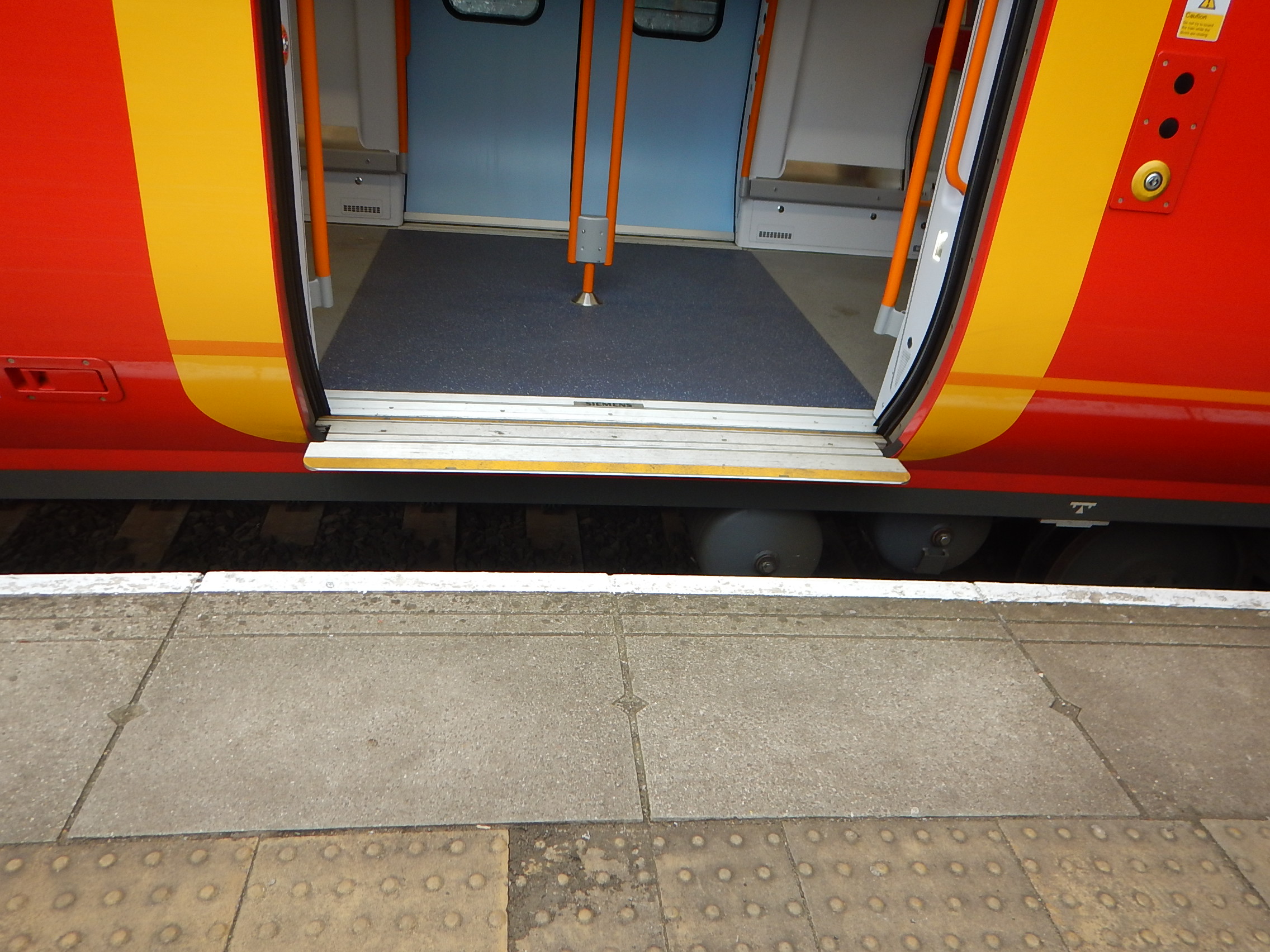
This is not as bad as some train-plarform gaps, but why isn’t it flat?
A station-man on the London Overground once told me, that loading disabled passengers on to trains using a ramp, is a major source of delay.
Saturday’s incident illustrated the problem beautifully.
It also showed the professionalism of one of their staff
South Western Railways use a very inefficient system.
- The guard had to walk some way to load the passenger, as he happened to be at the back of the train.
- He was actually in the second train, so had to walk on the platform.
- The ramp had to be removed from and replaced in its cupboard.
- How many times, do guards and station staff catch their fingers in the ramp?
If level access were to be provided between train and platform, the guard would just have acted as a guide to get the guy in the wheelchair on the train.
South Western Railways are getting a new fleet of Class 701 trains.
- These trains will be walk-through, meaning the guard can get to where assistance is needed easily. And in the dry, if it’s raining hard.
- Will the trains floors, be level with those of the platforms?
- If not, will a Harrington Hump be provided?
Surely, this will mean many disabled in a wheelchair, like an acquaintance of mine, will be able to push or drive themselves into and out of the train.
It will of course help others like those with an infant in a buggy or dragging a heavy case.
Let’s hope the new fleet of trains, will be designed to access the trains in a much better way than the current Class 707 trains, and the older Class 455 trains.
Conclusion
Could this incident illustrate the problems, that prompted South Western Railway to decide to return the Class 707 trains to the leasing company?
Does what I saw , have any relevance to the role of guards on trains?
The incident I saw, would have required assistance from a second person, even if the access had been totally level.
Note.
- London Underground and Overground try to always have somebody on the platform, when a train is in the station.
- The Docklands Light Railway always have someone on the train.
South Western Railway could use either method.
ScotRail’s ‘385s’ Face Further Delay As New Windscreens To Be Fitted
The title of this post is the same as that of this article on Rail Magazine.
This is the opening paragraph.
Hitachi has confirmed to RAIL that new windscreens are to be fitted to ScotRail’s new Class 385s, which are already late entering traffic because of infrastructure problems.
It’s all a bit of a mess.
Hopefully, we’ll see the trains in service soon.
I do wonder, if the communication lines and manufacturing process are a bit long, between Japan and Newton Aycliffe
The Liverpool Manchester Hydrogen Clusters Project
The project is described briefly on this page on the Cadent web site.
This is the introduction.
The use of hydrogen in place of natural gas could offer a route to widespread decarbonisation of gas distribution networks.
The Liverpool-Manchester Hydrogen Cluster project is a conceptual study to develop a practical and economic framework to introduce hydrogen into the gas network in the Liverpool-Manchester area.
It proposes converting natural gas into clean-burning hydrogen gas, using a process called steam methane reforming. The process also removes CO2 from the gas, which can then be captured using existing carbon and capture storage technology and stored in depleted offshore gas reservoirs.
The hydrogen gas would then be supplied to a core set of major industrial gas users in Liverpool-Manchester and fed into the local gas distribution network as a blend with natural gas.
Note.
- At Runcorn, Ineos make hydrogen and chlorine by the electrolysis of brine.
- When I worked in Castner-Kellner works at Runcorn, it was generally taken away be truck.
- The Burbo Bank wind farm in Liverpool Bay, can produce 348 MW of electricity using some of the biggest wind turbines in the World, according to this article in The Guardian.
- Using excess electricity generated by win turbines at night, is used by the Germans to create hydrogen.
It doesn’t look like the project will suffer from a shortage of hydrogen.
Alsthom And Hydrogen Powered Trains
Alsthom have a site at Widnes, where they modify and paint trains. They have also indicated, that they might build new trains in the UK.
They have also developed a hydrogen-powered train called the Alsthom Coradia iLint, which starts test running with passengers in a couple of months.
This promotionalvideo shows how Alsthom’s hydrogen-powered Coradia iLint works.
The North Wales Coast Line would be an ideal test track.
- It’s around eighty miles long.
- It is nearly all double-track.
- It has a 90 mph operating speed.
- It’s probably pretty flat, as it runs along the coast.
I don’t think too many people would bother about a few extra quieter trains, just emitting steam and water vapour.
North Wales could be getting a new environmentally-friendly tourist attraction.
Is This The World’s Toughest Management Job In Public Transport?
I came across this article on the BBC, which is entitled Meet The Brit In Charge Of Fixing NYC’s Subway.
It is an excellent read.
Crewe Hub To Be First ‘All-Digital’ Station, Says Transport Chief
The title of this post is the same as that of this article in the Warrington Guardian.
This is the first three paragraphs
Delays caused by signalling faults could eventually be a thing of the past on trains running to and from Crewe.
At a meeting on Friday Pete Waterman, chairman of the Cheshire and Warrington Local Transport Body (LTB), revealed that Network Rail, the Department for Transport and HS2 Ltd have agreed that the town will become home to Britain’s first all-digital station.
It means that all trains running from Crewe to Warrington, Chester and other destinations across Cheshire would benefit from the same technology which will be used by HS2 services – meaning lines could run more efficiently with trains travelling in a tighter sequence.
I feel that increasingly, digital signalling will be used to improve capacity on UK railways.
Call For ETCS On King’s Lynn Route
The title of this post, is the same as that on an article in Edition 849 of Rail Magazine.
The article is based on this document on the Fen Line Users Aoociation web site, which is entitled Joint Response To Draft East Coast Main Line Route Study.
In addition to ETCS, which could improve capacity on the East Coast Main Line, they would also like to see journey time reductions using trains capable of running at 125 mph or faster on the King’s Lynn to King’s Cross route.
The Fen Line
The Fen Line runs between Ely and King’s Lynn stations.
- It is mainly single -track with a double-track section at Downham Market station.
- The line has an operating speed of 90 mph.
- The line is electrified.
- All stations have two platforms.
- Looking at the line from my virtual helicopter, I suspect that redoubling would be possible.
- Passenger numbers are increasing at stations on the line.
- There are several level crossings.
It also would appear that because of the complicated nature of timetabling trains on the East Coast Main Line to the South of Hitchin, that there are often delays on the Fen Line, as there is only one passing place at Downham Market.
I therefore agree with the opinions expressed on the Fen Line Users Association, that restoring double-track could help reduce delays on the Fen Line.
The Cambridge Line
The Cambridge Line connects Cambridge to the East Coast Main Line at Hitchin.
- It is double-track throughout.
- It is fully electrified.
- It has a 90 mph operating speed.
- King’s Lynn to King’s Cross services use the line.
- Currently four trains per hour (tph) run between Cambridge and Kings Cross.
- This will be increased by two tph, when Thameslink is fully operational.
King’s Lynn to King’s Cross services use this line.
The Current Timetable
Trains seem to take around an hour and forty minutes to go from King’s Cross to King’s Lynn, where they take under ten minutes to turnround and then they take around an hour and forty minutes to return to King’s Cross. I suspect, it isn’t the easiest service for an operator to mrun, as a train could be sitting in King’s Cross for thirty minutes.
How Could The Service Between King’s Lynn and King’s Cross Be Improved?
From the Rail Magazine article, the views of the Fen Line Users Association and the details of the route, the following could help.
ERTMS And ETCS
ERTMS and the closely related; ETCS are digital systems that enable trains to run faster and closer together, which could increase the capacity of the line and reduce journey times.
The Wikipedia entry for the East Coast Main Line says this about recent and future development of the signalling.
A new Rail Operating Centre (ROC), with training facilities, opened in early 2014 at the “Engineer’s Triangle” in York. The ROC will enable signalling and day-to-day operations of the route to be undertaken in a single location. Signalling control/traffic management using ERTMS is scheduled to be introduced from 2020 on the ECML between London King’s Cross and Doncaster – managed from the York ROC.
I would think it likely that if the whole route from King’s Lynn and King’s Cross were digitally signalled, there would be advantages.
- It would help the merging of trains at Hitchin.
- It would help in managing trains on the single-track sections of the Fen Line.
The Rail Magazine article mentions flighting trains on the single-track sections, where two or more trains in the same direction, went though in succession.
It would also allow closer spacing and higher frequencies on the East Coast Main Line.
All trains using the route, including freight trains, would need to be fully equipped for digital signalling.
Improving The Fen Line
The biggest improvement would come by redoubling the line between Littleport and King’s Lynn.
- Trains could pass anywhere on the Fen Line.
- It might also be possible to avoid complicated operating procedures.
- Timetabling should be easier.
- Extra services would be possible.
- Delays should be reduced, as there would be less knock-on effects from problems on the East Coast Main Line.
On the flat lands of the fens, it might also be possible to increase the operating speed.
Improving Ely
Ely is a mess, where trains always seem to be waiting for something.
Hopefully, improvements are on the way, as I wrote in Are The Trains In Ely Finally To Be Sorted?
According to an e-mail and comments on this post, Ely North Junction needs improvement.
This Google Map shows the junction.
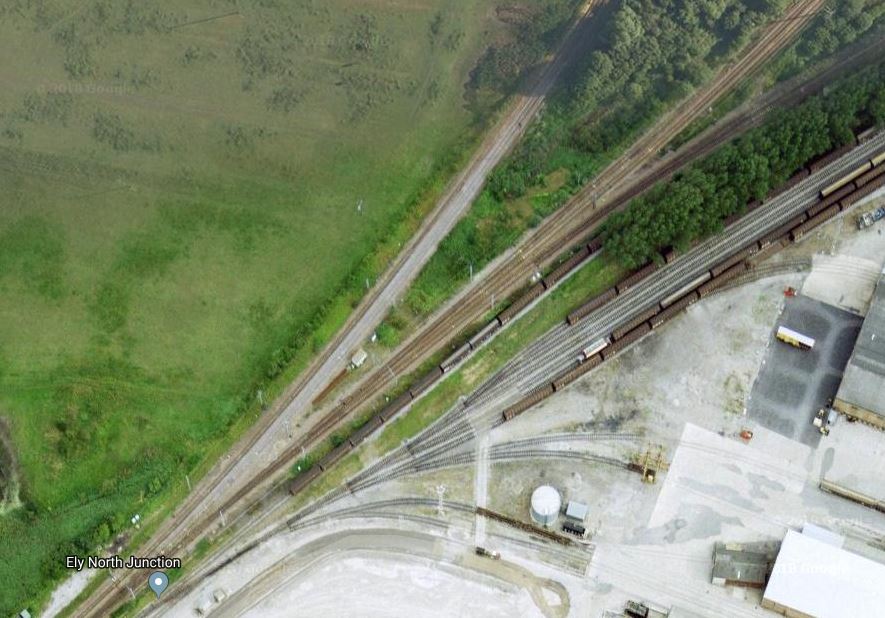
Note.
- Ely station is to the South West.
- starting at the top-left and going clockwise, lines go to Peterborough, Ely and Norwich.
- The last set of lines are sidings.
There would appear to be two solutions.
- Extra lines and flat junctions can be added. Flat junctions mean that trains have to cross each other.
- From what I’ve read digital signalling is very good at handling junctions, by making sure trains present themselves correctly, so this may be a better solution.
Either solution could be make to work very well!
Improving The Cambridge Line
There don’t appear to be any projects on the Cambridge Line, but I suspect that Network Rail are looking for small things, that will save minutes here and there.
125 Mph Trains
Who’d have thought forty or fifty years ago, that someone would seriously suggest running trains capable of 125 mph to King’s Lynn?
The Class 387 trains are 110 mph trains and I have recorded one at that speed on the East Coast Main Line.
Would a 125 mph train, be able to use that speed South of Hitchin?
If it could then.
- It could cruise on the fast lines with all the fast trains to and from the North.
- It would cut a couple of minutes from the journey time.
Once digital signalling is operational, the trains could be closer together, which would increase line capacity.
There are several fast electric multiple units, that have been built in recent years or are on order.
- Bombardier Class 387 – 110 mph – In service.
- Bombardier Aventra – 110 mph -In development for West Midlands Trains.
- CAF Class 397 – 125 mph – In development for TransPennine Express.
- Hitachi Class 801 – 125 mph On test for service entry this year.
- Siemens Class 350 – 110 mph – In service.
Bombardier are also showing ideas for a 125 mph bi-mode Aventra to various train operating companies, which I wrote about in Bombardier Bi-Mode Aventra To Feature Battery Power.
To build a 125 mph bi-mode train, you probably start with a 125 mph electric train.
So have Bombardier designed a 125 mph version of the Aventra?
It would appear, that Bombardier, Hitachi and possibly CAF and Stadler will be offering 125 mph electric multiple units, with a bi-mode version if needed, for lines without electrification.
But there are several routes in addition to Kings Cross to King’s Lynn
- St. Pancras to Corby
- Euston to the West Midlands
- Liverpool/Manchester to Edinburgh/Glasgow
- Leeds/York to Edinburgh/Glasgow.
- Waterloo to Bournemouth/Southampton/Weymouth
Train travel could be getting faster?
Conclusion
The ultimate benefit would come if trains could do a round trip in under three hours.
This would probably need a journey time of perhaps an hour and twenty-four minutes between King’s Cross and King’s Lynn. It is certainly not possible now, but it might be with the following.
- 125 mph-capable trains.
- Digital signalling on the East Coast Main Line and on the Cambridge and Fen Lines.
- 125 mph running, where possible on the East Coast Main Line.
- Improvements at Ely.
- Full double-tracking of the Fen Line.
- If possible, 100 mph running on the Cambridge and Fen Lines.
A three-hour round trip would allow the current service of one tph to be run with just three trains.
If both of the twice-hourly fast services between Kings Cross and Cambridge were extended to King’s Lynn, instead of the current one, this would mean that the following service could be possible with just six trains.
- Two tph
- Stops at Cambridge, Cambridge North, Waterbeach, Ely, Littleport, Downham Market and Watlington.
- Ten x 23 metre cars or twelve x 20 metre cars.
- Possibly a bistro.
- Trains might stop at Royston, Hitchin and/or Stevenage.
It would be a passenger-attracting 125 mph Metro.
There is improvement to come between King’s Cross, Cambridge and King’s Lynn, if the financial case stacks up.
 The Anonymous Widower