A Detailed Look At A Three-Car Aventra
In Bombardier and CAF To Make 413 Carriages For New West Midlands Franchise, I wondered if the three-car Aventras ordered by West Midlands Trains had a battery capability.
The Train Weight
I need a good estimate of the weight of a typical Aventra carriage.
Wikipedia gives the following values.
- Bombardier Aventra – A nine-car Class 345 train weighs less than 350 tonnes, which gives a figure of 39 tonnes per car.
- Siemens Desiro City – A twelve-car Class 700 train weighs 410 tonnes, which gives a figure of 34 tonnes per car.
- Bombardier Electrostar – A five-car Class 378 train weighs 159.5 tonnes, which gives a figure of 32 tonnes per car.
Bombardier seem to play their weight figures close to their chest, so I’ll just use a figure of 35 tonnes per car. But it does appear that Aventras, could be heavier than Electrostars.
The Battery Weight
I tend to think in terms of New Routemaster hybrid bus batteries, which have a capacity of 75 kWh. Surely hybrid bus batteries are fairly common and if you were needing a battery for a new application, it might be where you will start.
The best estimate I can make is that a 75 kWh battery weighs about 600 Kg. I will use this until I find a better figure.
Could the weight of the battery explain the increase in weight between an Electrostar and an Aventra?
The Gangway Weight
One thing that could add to the weight of the Aventras of West Midlands Trains, is the fact that they will be built with a gangway.
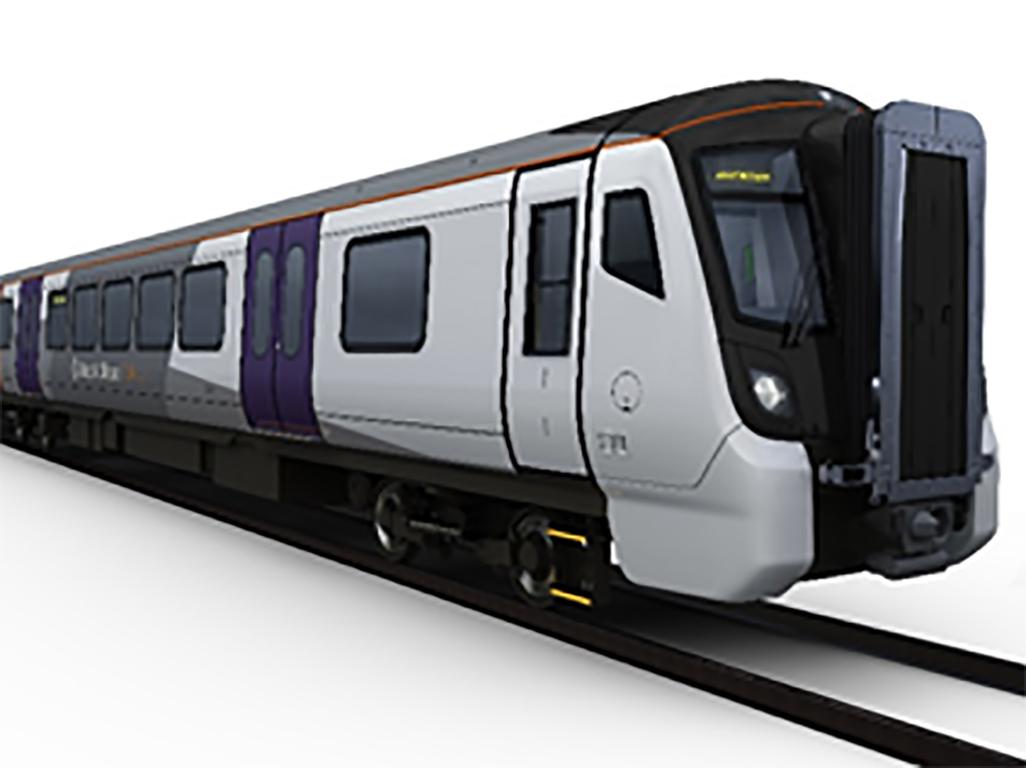
Will they be able to split and join automatically in a couple of minutes?
Aventras Have A Lot Of Traction Motors
From what I’ve seen on the Internet, it appears that Aventras have a lot of powered bogies.
A Three-Car Aventra
I think that a three-car Aventra would have a formation something like.
- DMSLW – Driver Motor Standard – Wheelchair and Universal Access Toilet
- PMS – Pantograph Motor Standard
- DMS – Driver Motor Standard
Note.
- I estimate it would have about 230 Standard Class seats in a traditional layout. or perhaps 150 in a Metro layout.
- There would be a couple of wheelchair spaces.
- Would a toilet be provided on the train? Crossrail puts them in the stations! Does Birmingham?
- Each car would be fully motored.
- Could each car have its own battery, so they handled their own regenerative braking efficiently?
- All the cars would be connected together by an electrical bus fed from the pantograph car.
- West Midlands Trains have said the new trains will be 90 mph units.
The capabilities are not unlike the current Class 323 trains.
The Aventras have advantages over the older trains.
- They are articulated, which gives more space.
- They are wider inside due to thin, strong car sides and underfloor heating.
- Design of lobbies has improved.
- A mixed traditional/metro interior can be used as in Crossrail’s Class 345 trains.
They could also be designed to a slightly longer length if required. But this might have operational and depot issues.
I expect Bombardier will have used every trick and dodge to get this order.
What Size Of Battery Is Needed To Handle Regenerative Braking?
I’ll do the calculation for one car with perhaps a hundred passengers running at 90 mph or 145 kph.
I’ll assume each passenger weighs 80 Kg with all their baggage, which gives a one-car mass of 43 tonnes.
The amount of energy in that one car is a very surprising figure of just 10 kWh.
How Far Could A Three-Car Aventra Go On Battery Power?
In an article in the October 2017 Edition of Modern Railways, which is entitled Celling England By The Pound, Ian Walmsley says this in relation to trains running on the Uckfield Branch.
A modern EMU needs between 3 and 5 kWh per vehicle mile for this sort of service.
The three-car Aventra will be an efficient train, but it will have features like air-conditioning, so I suspect that a figure of 4 kWh per car-mile will be achievable, if the following is done.
- Air-conditioning is very intelligent and efficient.
- The train is very well insulated.
- All electrical equipment on the train like lights, toilets and doors are efficient.
- Operation ensures batteries are fully charged before entering battery sections.
- Pantograph operation will be intelligent to snatch a sneaky charge on a short length of electrification.
- Regenerative braking energy is stored on the train.
3 kWh per car-mile may even be possible.
Suppose the battery in each car had a capacity of 75 kWh. This would give the following ranges with various energy consumption rates.
- 3 kWh – 25 miles
- 4 kWh – 19 miles
- 5 kWh – 15 miles
It certainly is important to get the train as energy efficient as possible.
Increasing the battery capacity will increase the range proportionally.
This would mean that a very efficient train with a double-size battery could go fifty miles without wires.
Where Practically Could These Trains Run?
There are several possibilities.
Camp Hill Line
The Camp Hill Line is an obvious possibility.
A lot is said about the reopening in Future Plans in the Wikipedia entry for the line.
This is the latest part of the section.
In August 2017, West Midlands Trains announced plans as part of their franchise deal that the line would reopen by December 2019 as part of a £1 billion investment in the West Midlands. This included a new station at Moseley.
There has also been speculation in the railway press, that chords will be created to allow trains on the line to run directly into Birmingham Moor Street station.
Moor Street Station
If these trains were to run into Birmingham Moor Street station would the bay platforms at the station be electrified?
This would allow the trains batteries to be charged before returning along the Camp Hill Line.
But it would open up interesting possibilities.
With electrification at stations like Stratford-upon-Avon and Leamington to charge the batteries, could services South of Birmingham be run by three-car Aventras running on batteries?
Both |Stratford-upon-Avon and Leamington Spa are under forty miles by road from Birmingham,
I think it could be theoretcally possible, but West Midlands Trains are acquiring a lot of diesel trains.
Extending Existing Electric Services
From May 2018, the electric services on the Cross City Line will run between Bromsgrove and Lichfield Trent Valley stations.
Could trains running on batteries extend services?
Conclusion
Three-car Aventras are an interesting possibility.
I think we’ll be seeing a lot of them around the UK.
Is This The Hippest Train Status Displays?
In Technology Doesn’t Have To Be Complex, I described how Transport for London were using the suspension to assess how crowded trains are on the London Overground.
In my post, I suggested that the information could be used in modern station displays to show the train loading.
Yesterday, this article in the Standard, had a picture of such a display, at Shoreditch High Street station.
So today, I took one of my own.
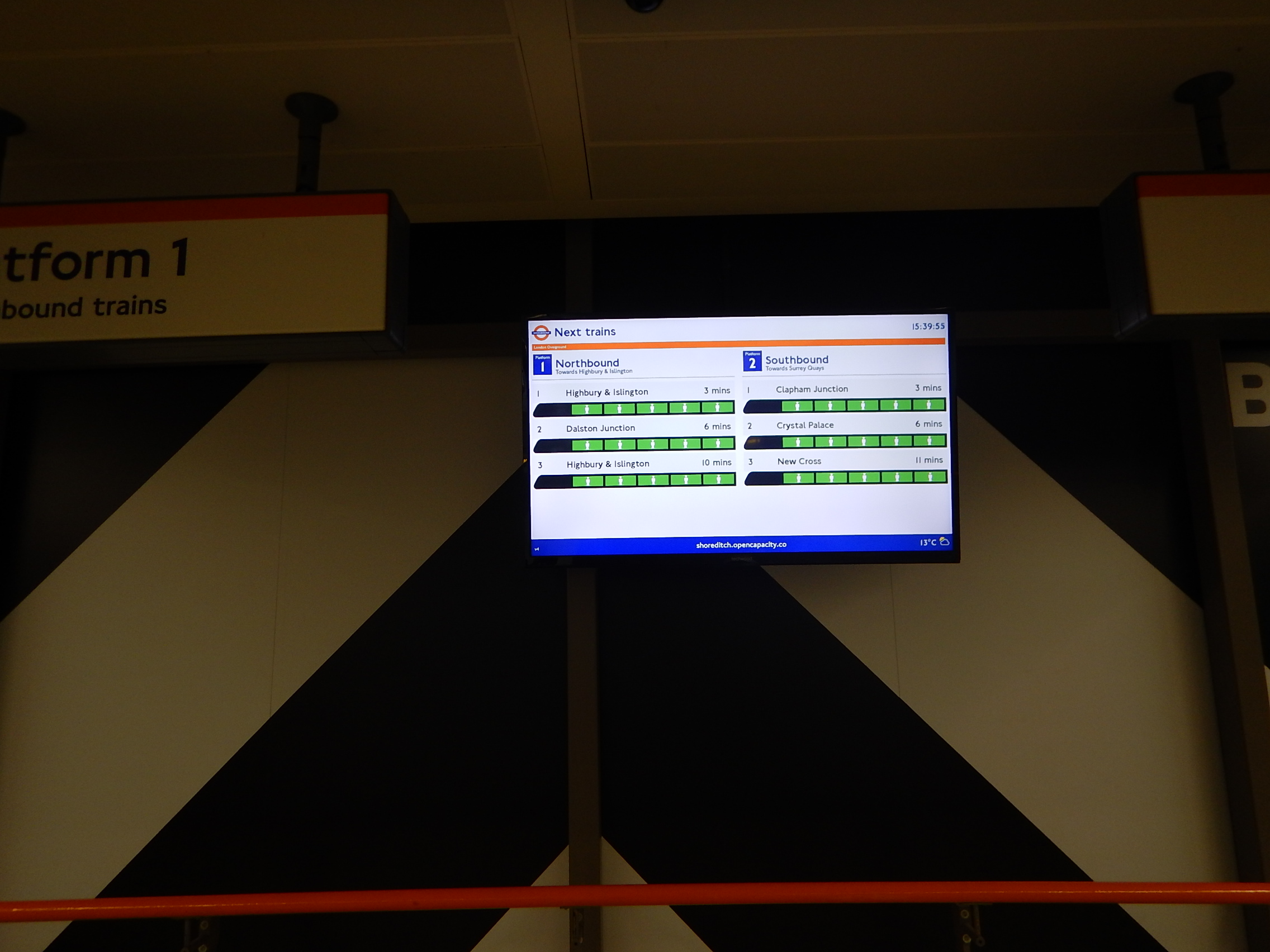
According to the Standard, passengers like the display.
It should be born in mind, that this is only the first version and I’m certain the information captured from the train suspension will find be used in several innovative ways.
Should Thameslink Be Extended To Corby?
I ask this question as someone who created his pension pot from writing the algorithms to allocate resources in the planning of projects and because I know that the number of train paths on the Midland Main Line is very tight for the number of services required.
This document on the Network Rail web site has this paragraph.
Electrification of the MML north of Bedford to Kettering and Corby is scheduled to be completed by December 2019.
The Wikipedia entry for Corby station has a section entitled Future, where this is said.
It is planned that a half-hourly London St Pancras to Corby service will operate from December 2019 using new Class 387 trains, once the Midland Main Line has been electrified beyond Bedford as part of the Electric Spine project. Network Rail has also announced that it plans to re-double the currently singled Glendon Junction to Corby section as part of this scheme.
So how will the second service in each hour be provided?
Bedford To St. Pancras
Looking at Bedford, it would appear the following trains run to London.
- East Midlands Trains in 39-40 minutes
- Thameslink in 57-59 minutes at a frequency of four trains per hour (tph).
- A Limited-Stop Thameslink in 52 minutes.
As Thameslink has now fully introduced an all-Class 700 train service, could we be seeing a faster service?
Bedford To Corby
The current hourly service between St. Pancras and Corby stops at Bedford and takes thirty-four minutes between Bedford and Corby with stops at Wellingborough and Kettering.
A modern electric train like a Class 700 train, might be able to do the return trip from Bedford to Corby in under an hour. If a Class 700 train can’t do it, then a Class 387 train certainly could.
This would mean that one way to provide the extra service between St. Pancras and Corby would be to extend one of the four tph Bedford to Brighton services to Corby.
This approach would give the following advantages
- No extra train path is needed South of Bedford.
- Corby, Kettering and Wellingborough would get a choice of service.
- Corby, Kettering and Wellingborough would have a direct link to Crossrail.
But there would be disadvantages.
- The Thameslink service would be a few minutes slower.
- The Class 700 trains don’t have tables, cup-holders, wi-fi and power sockets.
- The Class 700 trains are only 100 mph trains and probably not fast enough.
The obvious solution is to run the service with a faster electric train, which addresses the deficiencies of the Class 700 trains.
The Ultimate Solution
The Midland Main Line between Bedford and Glendon Junction for Corby is at least three tracks, with in most places space for a fourth.
I believe the following improvements should be made to the route between Bedford and Glendon Junction.
- All the tracks between Bedford and Corby should be upgraded to be as fast as possible, so that 110 or 125 mph trains to Corby could make full use of their speed, without using the two Fast Lines.
- Wellingborough station should have the fourth platform restored.
- Extra stations, including a Parkway station, could be added if required.
Thameslink would acquire a number of 110 or 125 trains and replace the four tph service between Brighton and Bedford, with a four tph service between Brighton and Corby.
Class 387 trains would probably be acceptable. Especially, as Govia Thameslink Railway uses these trains on Cambridge services.
The consequences of doing this would be.
- The current one tph path between St. Pancras and Corby on the Fast Lines would be released.
- Platform needs at St. Pancras would be reduced.
- No extra Slow Line paths would be needed.
- Bedford would get the same four tph service to London all day.
- Corby, Kettering and Wellingborough would get four tph to St. Pancras.
Twelve faster trains would be needed to provide a full four tph service between Corby and St. Pancras.
Alternatively, you could extend just two opf the four tph from Brighton tom Bedford to Corby!
This would mean.
- Bedford would get the same four tph service to London all day.
- Corby, Kettering and Wellingborough would get two tph to St. Pancras.
Six faster trains would be needed.
Conclusion
I am led to the conclusion, that by providing some extra 110 or 125 mph trains for Thameslink, that the service on the Midland Main Line can be improved significantly.
It also leads me to believe that the specification of the Class 700 trains was created by someone with worse vision than George Shearing.
The trains lack a lot of features like wi-fi and power sockets.
But more importantly, they lack the 110 mph capability of trains like the |Class 350, Class 387 and Class 379 trains, which enables them to run efficiently with express services cruising at 125 mph.
Bombardier and CAF To Make 413 Carriages For New West Midlands Franchise
The title of this post is the same as this article on Global Rail News.
This is said.
Future operator West Midlands Trains has made a £680 million order with Bombardier and CAF for 413 carriages.
Bombardier will manufacture 36 three-car and 45 five-car Aventra trains at its Derby site, while CAF will produce 12 two-car and 14 four-car Civity trains. In total, 107 new trains will be delivered.
The electric three-car Aventras will operate on metro services, the electric five-car units for outer suburban and long distance, while CAF’s DMUs will run on dedicated services to the towns and cities around Birmingham.
These are my thoughts on the various parts of the order.
The Three-Car Aventras
The thirty-six three-car Aventras will probably replace the twenty-six Class 323 trains, which lack wi-fi and other passenger-friendly features.
It should also be noted that the Aventra has a slightly unusual and innovative electrical layout.
This article in Global Rail News from 2011, which is entitled Bombardier’s AVENTRA – A new era in train performance, gives some details of the Aventra’s electrical systems. This is said.
AVENTRA can run on both 25kV AC and 750V DC power – the high-efficiency transformers being another area where a heavier component was chosen because, in the long term, it’s cheaper to run. Pairs of cars will run off a common power bus with a converter on one car powering both. The other car can be fitted with power storage devices such as super-capacitors or Lithium-ion batteries if required.
This was published six years ago, so I suspect Bombardier have refined the concept, which is probably more to do with spreading weight around the train for better dynamics than anything else!
Obviously for West Midlands Trains, there is no need for 750 VDC, but will there still be a pair of power cars?
So it looks like there may be a reorganisation of the electrical system in the trains.
A few other points.
- I am surprised that some of the trains aren’t six-cars, as every other set of new trains seem to be single and double lengths.
- According to Wikipedia, the trains will have end gangways.
- The trains are air-conditioned and have free wi-fi and power sockets.
Hopefully, the full specification and Tops-number will be disclosed soon.
Are Batteries An Inherent Part Of The Operation Of Three Car Aventras?
Suppose each car in the train was a self-contained power car.
- Each car could also have a 75 kWh battery, which is the size of one on a New Routemaster hybrid bus.
- Regenerative braking would be efficient as it would use the battery in the same car.
- Batteries can be topped up using the 25 KVAC overhead wires.
- Passenger services like power-points would be powered from the battery.
If we assume that each car needs 5 kW to do a mile, this would give the train a range away from the wires of 15 miles.
Would it be possible for trains to run on the Camp Hill Line and the proposed Camp Hill Chords into Birmingham Moor Street station solely using battery power?
I think it is possible and after the battery-powered trams on the Midland Metro, it’s another case of emphasising the B in Birmingham.
The Five-Car Aventras
These will probably be vaguely similar to the other two five-car Aventras; Class 701 and Class 720.
Differences highlighted in the various articles and Wikipedia include.
- According to Wikipedia, the trains will have end gangways.
- The trains will be 110 mph units.
Both are firsts for Aventras.
I don’t think it will be long before a train operator buys an Aventra capable of 125 mph.
The CAF Civity Trains
The CAF Civity are a mixture of two-car and four-car units and will be used to replace some older diesel multiple units and augment some of the more modern Class 170 and Class 172 trains.
Class 230 Trains
West Midlands Trains have also ordered three Class 230 trains for the Marston Vale Line.
The route has the following characteristics.
- It is roughly twenty-four miles long.
- Trains take just over forty minutes for the journey between Bletchley and Bedford stations.
- There are plans to extend the service to Milton Keynes Central station.
- It is a diesel island in a sea of electrified lines.
Wikipedia says this about the Infrastructure.
Apart from a short length of single track at both ends, the line is double track, and is not electrified (barring short lengths at either end). It has a loading gauge of W8 and a line speed of 60 miles per hour (97 km/h). The line’s signalling centre is at Ridgmont.
I would suspect that two trains are needed to provide an hourly service, so buying three trains gives a spare, that might augment the services at busy times.
The flexibility of the Class 230 trains will give a choice of operating modes.
- Using 25 KVAC overhead electrification at the ends.
- Using onboard diesel power.
- Using batteries charged at the ends of the route.
I suspect that the most efficient will be a mix of all three.
The trains are also designed for remote servicing, so they could be based in a siding at Bedford, Bletchley or Wolverton and supported by a well-designed service vehicle and a fuel bowser.
Conclusions
West Midlands Trains seem to have gone for a sensible Horses-for-Courses solution.
I have a feeling that their concept for the Marston Vale Line will be used elsewhere.
The Penistone Line And Rotherham Tram-Train Trials
The Penistone Line Tram-Train Trial
The Penistone Line from Sheffield to Barnsley, Penistone and Huddersfield was the line originally selected for the tram-train trial.
In the Wikipedia entry for the line, this is said about the tram-train trial.
On 18 March 2008, the Department for Transport released details of a proposal to trial tram-trains on the Penistone Line, the first use of such vehicles in the UK. The trial was to start in 2010 and last for two years. Northern Rail, the operator of passenger services on the line, asked potential manufacturers to tender for the design and construction of five new vehicles, which Northern Rail would subsequently lease. In addition, Network Rail planned to spend £15m modifying track and stations to make them compatible with the new vehicles.
However, it was announced on 15 September 2009 that a city tram-train trial between Rotherham and Sheffield would replace the Penistone Line scheme.
More about the trial is said in this article on Rail News, which is entitled Penistone Line Is Chosen For £24m Tram Trains Trial. In particular, this is said.
One of the biggest initial tasks is to set a specification for the building of the five diesel-electro hybrid tram trains at a cost of £9 million. The trains will have to be equipped with braking systems suitable for on-street running and a Train Protection Warning System which is required for running on lines with ‘heavy’ rail passenger and freight trains.
The article was written in 2008 and Chemnitz hybrid Citylink tram-trains didn’t enter service until 2016.
So was the trial on the Penistone Line a disaster before it even started?
It had the following problems.
- It was expecting a diesel-electric hybrid tram to be designed and built before 2010.
- A long distance was involved.
- The track-work needed to connect to the Sheffield Supertram could have been incredibly complicated.
- The first all-electric Citylink tram-trains weren’t delivered to Karlsruhe until May 2014, which was seven months late.
For these and other reasons, I think that the decision of the trial to be delayed and to use Rotherham, was a prudent decision.
The Rotherham Tram-Train Trial
Consider these characteristics of the current trial, between Cathedral and Rotherham Psrkgate.
- The tram-trains are virtually standard Karlsruhe Citylink tram-trains, adapted for UK 25 KVAC and painted blue!
- A simple chord connecting the two systems.
- A few miles of electrification, that could be powered by either 750 VDC or 25 KVAC.
- Modification of the recently-built Rotherham Central station.
- Building of a new terminal tram stop at Rotherham Parkgate.
It’s a simple plan, but one that covers a lot of design possibilities and has few, if any, risky elements, that haven’t been done in the UK or Karlsruhe.
The following can be tested.
- The Class 399 tram-trains on the Sheffield Supertram network and an electrified main line.
- Passenger entry and exit at Rotherham Central station and all over the Supertram network.
- Operation under both 750 VDC or 25 KVAC.
- Signalling systems on both tram and main line networks.
The one thing that can’t be tested is a diesel hybrid tram-train as they have in Chemnitz, as they haven’t ordered any!
But if they did want to order some, they could easily be tested between Cathedral and Rotherham Parkgate.
Conclusion
The original plan to use the Penistone Line and diesel-electric tram-trains was impossible.
Network Rail might have got this one right at the second attempt.
They could even run a UK version of the Chemnitz hybrid tram-train on the test route between Sheffield and Rotherham.
It Looks Like Platforms 21 And 22 Will Open Soon At Waterloo
I went to Reading from Platform 20 at Waterloo this morning.
There were temporary signs all over Platform 19 pointing to 20-22!
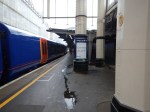
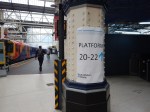
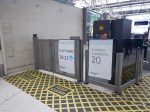
The barriers were blocking access to 21-22, but it looks like the extra two platforms are ready to open soon!
Class 399 Tram-Trains In Service
On my two day trip to Sheffield, I reckon that I saw six of the seven Class 399 tram-trains in service on the Supertram.
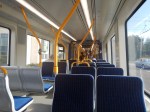
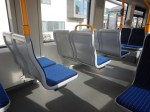
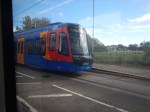
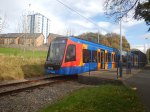
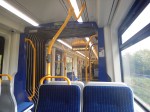
These pictures were taken on a quiet Saturday morning trip from the station to Herdings Park.
Current Service
Currently, the Class 399 tram-trams are running on the Purple Route from Cathedral to Herdings Park, which is generally tun at a frequency of two trams per hour.
If you arrive in Sheffield station and don’t feel like walking up the hill, you take any of the trams from the stop on the station side of the tracks.
But take a tram going to Cathedral and over the two and a bit days I was in Sheffield, it was always a Class 399 tram-train.
Comparison With Current Fleet
The Class 399 tram-trains and the existing Siemend-Duewag Supertram are surprisingly similar in several ways.
- Both have three sections and four doors on either side.
- The Siemens tram is 34.8 metres long, whereas the Class 399 is 37.2 metres long.
- The Siemens tram weights 46.5 tonnes, whereas the Class 399 is a lot heavier at 66.1 tonnes.
- The Siemens tram has installed power of 1108 kW, whereas the Class 399 has just 870 kW.
- The Siemens tram has room for 86 sitting and 155 standing passengers, whereas the Class 399 has room for 88 and 150 respectively.
- The seats and their arrangement are vaguely similar.
- Neither tram has wi-fi.
The big difference other than the tram-train capability and what that entails, is that the Class 399 tram-train is faster with a 100 kph top speed, as against the 80 kph of the Siemens tram.
Other differences are detailed in the next sub-sections.
Step-Free Access
Getting on and off both trams is step-free and I saw people in wheel-chairs on both vehicles. One was easily pushed into a Class 399.
These pictures show the steps inside the two trams.
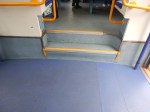
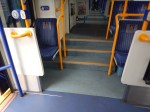
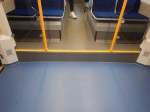
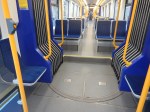
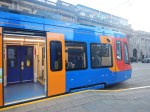
There is only a single-step on the Class 399 tram-train, whereas the Siemens tram has more.
Neither tram is a hundred percent step-free.
Weight
Note that the weight of the Class 399 tram-train is more than that of the Siemens tram.
As the two vehicles are of a similar size, could this mean that any of the following causes the weight increase.
- The electrical equipment needed to handle 15/25 KVAC power.
- The weight of the two extra traction motors.
- Strengthening for main line operation.
As someone, who has ridden for a few hours in both the Karlsruhe and Sheffield variants of the Citylink tram-train, they certainly don’t ride badly.
Performance
The current Siemens tram has 1108 kW of power and a weight of 46.5 tonnes, which gives an installed power/weight ratio of 23.8 kW/tonne.
The Class 399 tram-train has 870 kW of power and a weight of 66.1 tonnes, which gives an installed power/weight ratio of 13.1 kW/tonne.
So it would appear that the Class 399 tram-trains may not have the acceleration and hill-climbing capability of the Siemens trams.
However look at this data sheet on the Stadler Rail Espana web site for the Class 399 tram-train.
It clearly shows that the tram has four bogies and the text says that three are motored and one is a trailer. So this means that the central car is not a trailer and that power must be distributed along the tram, which probably puts the power to the rail in a more efficient way.
I did speak to a driver and he told me that on some of the hills the Siemens trams will strruggle with a full load, but the Class 399s can go up the hills at 40 mph.
The Class 399 tram-trains are very similar to the Stadler tram-trains in Karlsruhe, where the hills are much stiffer than Sheffield.
So it would appear that the layout of six smaller motors in a more modern vehicle probably does the trick.
Energy Efficiency
The question has to be asked if, as the Class 399 tram-trains have twenty-one percent less installed power, does this result in a saving of electricity use?
Comparison With Karlsruhe’s Tram-Trains
The Karlsruhe and Sheffield tram-trains are both variants of the Vossloh Citylink tram-train, that is now built by Stadler at Valencia in Spain.
The tram-trains in Karlruhe would appear to be very similar to the Class 399 tram-train, with a few small technical differences.
- They work on 750 VDC and 15 KVAC overhead wires, whereas the Class 399 can work on 750 VDC and 25 KVAC.
- As an electrical engineer, I wonder if the electrical systems are the same in both tram-trains and both can work 750 VDC and 15-25 KVAC, so they could work cross-border routes between say Germany and France.
- They have couplers to work in multiple.
- They have different passenger door arrangements.
- The driver’s cab windows have different arrangement.
These pictures show Karlsruhe’s tram-trains.
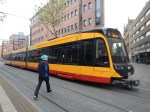
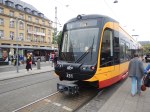
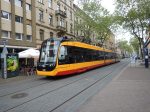
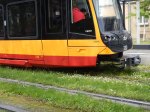
Imagine these trams in Supertram colours on the streets of Sheffield.
Take a close look at picture 4.
You will notice that the Karlsruhe tram-trains have an obvious coupling and it can be assumed that they can work in ,multiple, although I don’t seem to have seen it happening.
Picture 4, also shows passengers apparently sitting in the back cab of the tram-train.
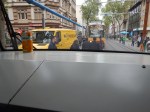
The fifth picture was taken from sitting inside the tram-train looking backwards, over the folded-down driver’s desk.
This feature wasn’t being used in Sheffield and this could be for one the following reasons.
- The Class 399 tram-trains don’t have the feature installed.
- There has been a Health and Safety decision.
- It takes perhaps ten minutes to fold up the driver’s desk and this would slow the timetable.
It’s a pity , as this feature of German trams is very common and popular.
Comparison With Class 144 Train
The Class 399 tram-trains and Northern’s Class 144 train will share routes and on some routes the tram-trains may even take over from the Pacers.
So how do the two trains compare?
- The Class 399 has room for 88 sitting and 150 standing passengers, whereas the Pacer has 99 seats in a two-car and 157 in a three-car train.
- The Class 399 weighs 66.1 tonnes, whereas a two-car Pacer weighs 49.2 tonnes and a three-car weighs 72 .7 tonnes.
- The Pacer has a toilet.
- The Class 399 is air-conditioned, whereas the Pacer relioes on waste heat from the engine.
- The Pacer is a 75 mph train, but seems to operate most of the time at 60 mph
- The Class 399 has installed power of 870 kW, whereas the Pacer has just 336 kW.
- The Pacer is thirty-year-old crap, that should have been strangled at birth, whereas the Clas 399 is a modern unit.
You could argue, that I’m being biased, as the tram-train can’t operate without electrification.
But it can!
Chemnitz or Karl Marz Stadt as the East Germans renamed it. also runs Stadler Citylink tram-trains, which are similar to the Class 399 tram-trains.
But the tram-trains in Chemnitz are different in that instead of being dual-voltage like Sheffield and Karlsruhe, they have a diesel-generator to power them away from the 750 VDC overhead wires.
This data sheet gives a few details of the Chemnitz Hybrid tram-train. The data sheet doesn’t specify the power of the diesel powerpack, but the much heavier Class 769 train uses two rail-proven MAN diesel engines of 390 kW each.
In this article on Rail News, which is entitled Penistone Line Is Chosen For £24m Tram Trains Trial, the original trial is described and this is said.
One of the biggest initial tasks is to set a specification for the building of the five diesel-electro hybrid tram trains at a cost of £9 million.
The article was written in 2008 and hybrid Citylink tram-trains didn’t run in Chemnitz until 2016.
So the original proposal envisaged using hydrid diesel tram-trains.
Why not use them in Sheffield?
Operational Details
The Class 399 tram-trains have other features that became apparent on my observations.
Battery Use
Passing a Class 399 tram-train, I took this picture.
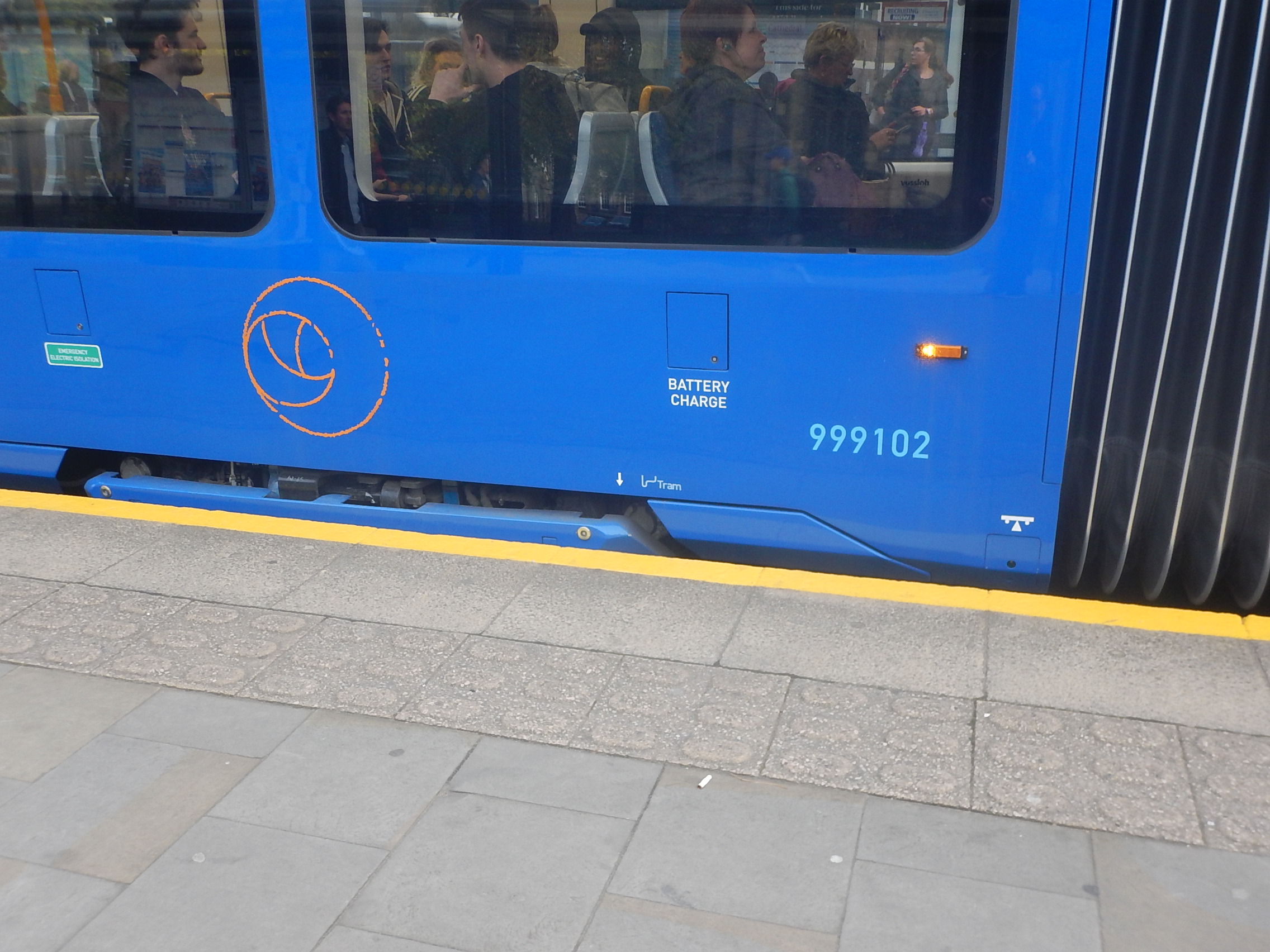
I hadn’t thought about it before, but batteries on a tram must have similar uses to those in any vehicle.
- Starting up the vehicle.
- Raising the pantograph, on an electric tram, train or locomotive.
- Opening the powered doors.
- Providing lighting and other important services in a power failure.
- Being able to move the vehicle a short distance in case of a complete overhead power failure.
- With a dual-voltage vehicle, it must be there in case the changeover isn’t successful.
But with a tram-train, battery operation surely opens up the possibility of changing between the tram and heavy rail lines using very simple track without electrification, points and cross-overs.
The driver would do the following.
- Pan down on one network.
- Use battery power to move perhaps fifty or a hundred metres to the other system.
- Raise the pantograph on the other network.
Provided the driver obeys the rules and the signals, it should be a safe transfer.
Regenerative Braking
This article on the Railway Gazette is entitled Karlsruhe orders Vossloh tram-trains.
These tram-trains were the first of the Citylink family of tram-trains, of which the Class 399 tram-trains are a member.
This is said.
The three-section steel-bodied tram-trains will incorporate extensive crashworthiness design elements and provision for regenerative braking. Top speed will be 80 km/h, with the four bogies having pneumatic secondary suspension. The air-conditioned interior will have 104 seats cantilevered from the sides for easy cleaning.
How do the Citylink tram-trains handle the regenerative braking?
Two methods are possible.
- They return the braking energy to the overhead wires.
- They store it in their battery for reuse.
In the Wikipedia entry for the Supertram, there is a section called Overhead Wiring. This is said.
The contact wires are twin cadmium copper ones, twin wires being necessary because of the high installed power rating of the trams (1 megawatt). The regenerative braking on the tram feeds current back into the wires.
So any braking energy can be returned to the wires.
But as the Railway Gazette article dates from 2011, I wonder if the trams have been developed to use battery storage?
How Far Could The Tram-Train Go On Battery Power?
I’ll assume the following.
- A New Routemaster bus battery of 75 kWh can be fitted to the Class 399.
- Running on an easy track, the Class 399 could need 5 kWh for each car-mile.
This would give a range of five miles.
Note.
- The stiffer the route the smaller the range.
- Battery capacity should increase through the years.
- Battery cost should decrease through the years.
- Charging stations can be fitted at station stops.
The only certainties are that practical battery range will increase and battery cost will decrease.
Conclusions
These tram-trains have been well worth waiting for.
If I was in charge of the Sheffield Supertram and a decision was made to replace the original Siemens trams, I would think seriously about going to Stadler for a replacement fleet.
If the fleet was all Class 399 tram-trains, this could offer other savings.
- The lower-power of the Class 399 tram-trains might cut electricity use.
- Regenerative braking using onboard batteries saves electrification costs.
- Would expensive twin cadmium copper contact wires still be needed?
- One tram type would save costs in maintenance and staff training.
New must-have features like wi-fi and 4G boosters could be added, as the technology has now been developed, since the Siemens trams were built.
A Trip To Gainsborough
I wrote about Gainsborough in A Town With Two Stations And Infrequent Rail Services, so when I was in Sheffield, I had to go and have a look at the town.
From Sheffield To Gainsborough Central
I left Sheffield on the 08:09 train to Cleethorpes and arrived at Gainsborough Central on time at 09:01.
I took these pictures on the way.
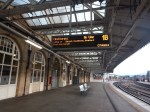

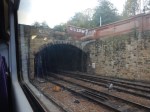
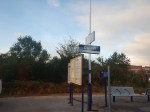



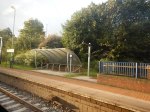

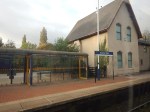
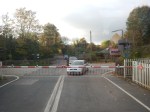


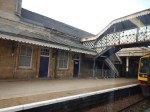


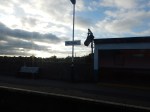

Note.
- The route is double-track.
- The terrain is flat with no tunnel,
- There are seven intermediate stations and several level crossings.
- There is an interchange at Worksop station with the Robin Hood Line to Nottingham.
- There is an interchange at Retford station with the East Coast Main Line.
Our Class 144 train handled the route with ease at a steady sixty mph or so.
Gainsborough Central Station
Gainsborough Central station only has a train service on a Saturday.

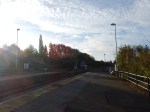
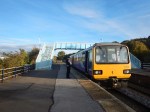
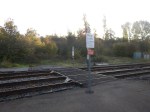
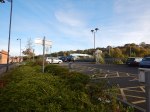
As the pictures show, the facilities are basic. Although there is plenty of parking.
Gainsborough Central station illustrates the the problems of providing step-free access at some stations.
Consider.
- With modern trains or trams, all the tools are there to enable anybody to board and leave the train easily.
- At present, someone in a wheelchair or pushing a buggy would just use the crossing shown in picture four.
- The three services a week, probably don’t attract many passengers.
- How many passengers have used the bridge recently?
This is a station, that cries out for a well-designed solution to ensure safety.
Marshall’s Yard
Marshall’s Yard is a Shopping Centre by Gainsborough Central station.



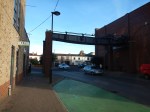

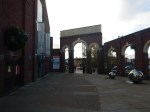

The Shopping Centre is a comprehensive one, with a wide range of shops and a few cafes and restaurants.
- I bought an excellent gluten-free breakfast at Root
- I was surprised to see an M & S food store.
- There were several middle-range specialist chain stores.
It was certainly busy.
It strikes me, that a more frequent train service to the station might be in the interest of everyone.
Walking Between Gainsborough Central And Lea Road Stations
It took me about half-an-hour and I took these pictures as I walked.


I would have taken more, but I was walking directly into the sun and couldn’t see much!
Gainsborough Lea Road Station
Gainsborough Lea Road station is an unusual station, as these pictures show.
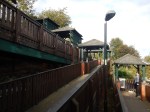
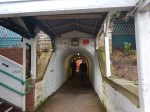


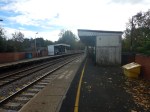
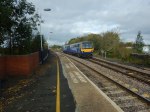
I would assume British Rail asked the local agricultural building manufacturer to design and build the wooden disabled ramp on the Lincoln-bound platform.
A couple of years ago I was coming down from Edinburgh to London in an Inter-City 125, when because of engineering works, we were diverted through Gainsborough Lea Road station.
From Gainsborough Lea Road To Sheffield
The two routes from Gainsborough to Sheffield join between Gainsborough and Retford and these are pictures of the return journey.




I timed this journey, so that I would arrive in Sheffield, to get to Bramall Lane in good time, for the Ipswich match. There were a lot of football supporters on the train, as Rotherham were also at home and the poor old Pacer was creaking at the seams.
It certainly proved to me, that the trains working between Lincoln and Sheffield are totally inadequate for the task.
Improving The Service Between Sheffield And Lincolnshire
The service between Sheffield and Lincolnshire needs improvement.
New Trains
New trains on the services are desperately needed and I will be interested to see in a couple of years, what trains are running the services.
The football crowds on the Saturday, showed that a two-car train is sometimes inadequate.
I suspect that Northern will run new Class 195 trains on the Sheffield to Lincoln route.
- These are 100 mph trains, as opposed to the 75 mph of the Class 144 trains.
- I suspect the trains will have wi-fi and power sockets.
- Three-car units are on order.
They should be a great improvement.
Improved Stations
The stations are rather variable, with some like Retford and Worksop of a high quality, but others a bit more suspect.
Is there also a need for extra stations to serve new developments?
Extra Services
The current times from Sheffield are as follows.
- Worksop – 30 minutes
- Retford – 41 minutes
- Gainsborough Lea Road – 56 minutes
It is reasonable to assume that the Class 195 trains will better these times by a few minutes.
Consider.
- The passenger demand will probably be higher, close to Sheffield.
- Worksop station has a turnback facility.
- It is likely, that a Class 1895 train could go from Sheffield to Worksop and back, within an hour.
I, therefore feel that an extra service from Sheffield to Worksop may well be possible.
Tram-Train To Worksop
In Class 399 Tram-Trains In Service, I discussed the Class 399 trains that are now running in Sheffield.
The performance of the Class 399 tram-trains is such, that they could be able to achieve the one hour time for a complete journey to Worksop.
If a suitable route from the Supertram at Sheffield to Worksop could be identified and electrified, I don’t see why Sheffield’s new Class 399 tram-train couldn’t run to Worksop.
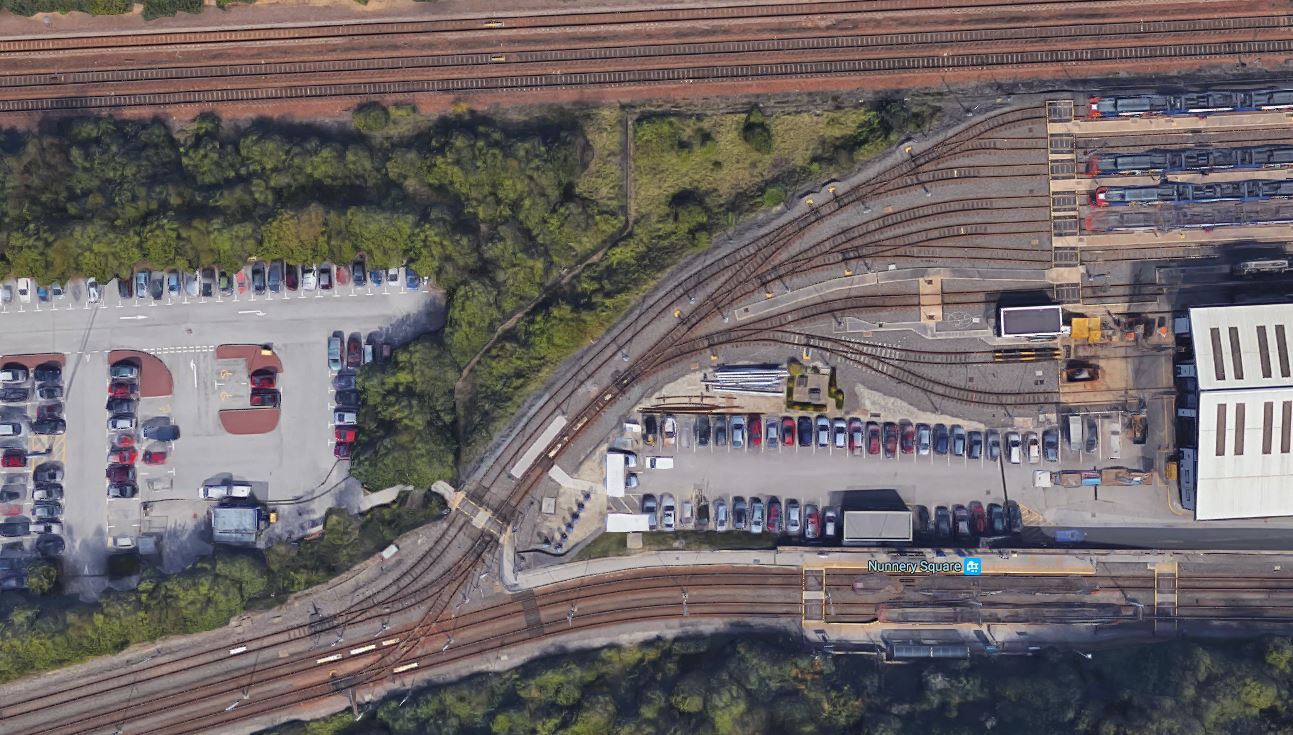
This Google Map shows where the Sheffield to Workshop rtoute passes alongside the Supertram Depot.
Note.
- The Sheffield to Workshop route is the two tracks at the top of the map.
- The Meadowhall Branch of the Supertram is the two tracks at the bottom of the map.
- The Nunnery Depot is in between.
I believe it would be possible to arrange a connecting pair of track, so that tram trains could go between the two routes.
Use Of Hybrid Tram Trains
I have assumed that the tram-train route will need to be electrified, but this isn’t necessary.
Chemnitz or Karl Marz Stadt as the East Germans renamed it. also runs Stadler Citylink tram-trains, which are similar to the Class 399 tram-trains.
But the tram-trains in Chemnitz are different in that instead of being dual-voltage like Sheffield and Karlsruhe, they have a diesel-generator to power them away from the 750 VDC overhead wires.
This data sheet gives a few details of the Chemnitz Hybrid tram-train. The data sheet doesn’t specify the power of the diesel powerpack, but the much heavier Class 769 train uses two rail-proven MAN diesel engines of 390 kW each.
Conclusion
The service between Sheffield and Lincolnshire needs to be improved.
This could be done traditionally using Class 195 trains or creating a tram-train extension.
Riding The Penistone Line
The Penistone Line from Sheffield to Barnsley, Penistone and Huddersfield was the line originally selected for the tram-train trial.
I wrote about the tram-train trials in The Penistone Line And Rotherham Tram-Train Trials.
Sheffield To Penistone
I took these pictures between Sheffield and Penistone




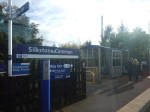
Note.
- Barnsley Interchange is a combined train and bus station, that does the town proud.
- There are several level crossings, including one in the middle of Barnsley.
- Some stations are rather basic.
- The Class 144 train, I rode is totally inadequate for the line.
The line certainly needs improvement to stations and trains.
Penistone Station
Penistone station is an unusual station, in that it is a two-platform station without any form of bridge, subway or controlled level crossing.
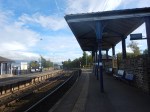
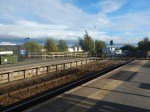
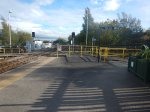
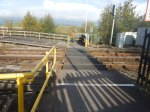

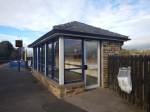
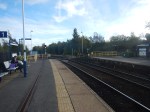
Note that to cross the line, passengers just walk across on a uncontrolled pedestrian crossing.
This Google Map shows the layout of the station.
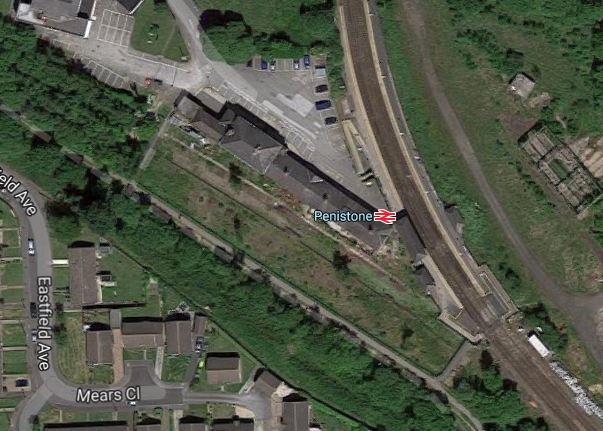
It certainly has a lot of space and possibilities.
Wikipedia says this about services to the station.
On Monday to Saturday, trains operate every hour in each direction towards Huddersfield and Sheffield via Barnsley. On Sundays, these run every two hours each way.
There are proposals by Alliance Rail to run a 4 trains-per-day service between Huddersfield and London Kings Cross, via Worksop, Sheffield and Penistone, giving Penistone a direct train to London 4 times a day.
So Alliance Rail, think the station has possibilities too!
Conclusion
Tram-trains like the Class 399 tram-train could easily climb the hill to Penistone to provide a perhaps two trains per hour service to Sheffield.
But the line would need to be electrified or hybrid diesel tram-trains, as in Chemnitz will need to be used.
So perhaps Northern‘s plan for the Northern Connect service, which would use more powerful Class 195 diesel multiple units, might be better suited to the Penistone Line.
Progress On The Sheffield-Rotherham Tram-Train – October 13th 2017
It is only a couple of weeks since I wrote Progress On The Sheffield-Rotherham Tram-Train and progress seems to have accelerated in that time.
The Class 399 tram-trains are now running between Cathedral and Herdings Park, as I reported in Class 399 Tram-Trains In Service.
Progress On The Tinsley Chord
I took these pictures at Tinsley Chord, where the track connects theMeadowhall branch of the Supertram to the freight line to Rotherham.
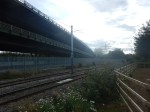
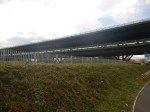
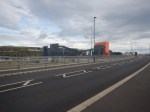
There isn’t really much to see, as trees obscure any good view from the road.
This Google Map shows the area.
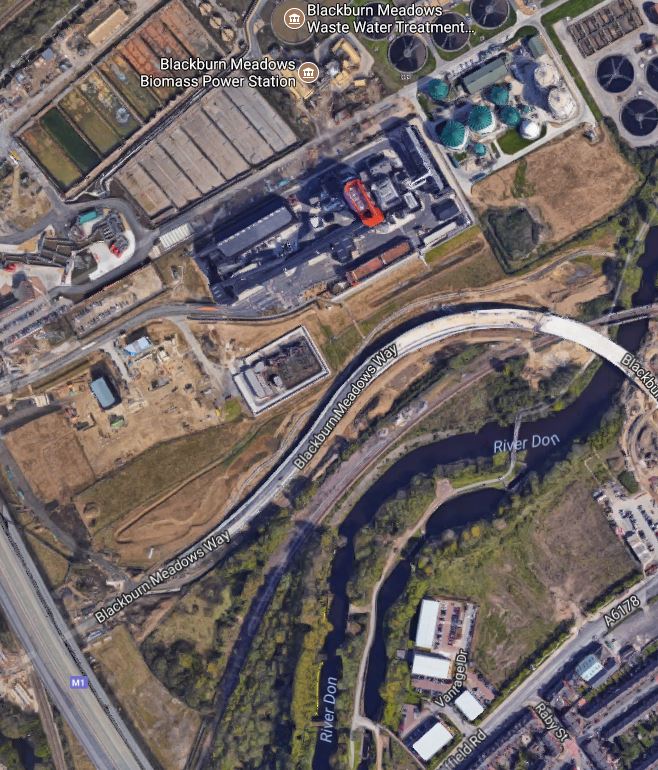
Note.
- The Tinsley Viaduct carrying the M1 cutting across the bottom-left corner of the map.
- Blackburn Meadows, with the Water Treatment Plant and Biomass Power Station, at the North of the map.
- The Blackburn Meadows Way linking into Meadowhall.
- The freight line to Rotherham runs to the outh of this road.
- The Supertram running along the West side of the motorway.
The Tinsley Chord, that links the tram and freight lines is hidden under the viaduct.
I did get some more pictures later.

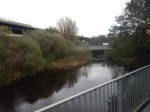
The Tinsley Chord appears to be double-track, where it will join the existing tram line.
The Wires Are Going Up
These pictures show that the wires are going up between the freight line and Rotherham Central station.
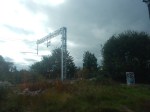
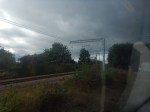

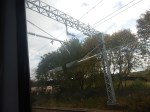
The gantries seem much more main line than tram.
But the Class 399 tram-trains, won’t care if they contain 750 VDC or 25 KVAC. Changing the volts is a lot easier than changing the catenary.
Rotherham Station
These pictures show the current state of Rptherham Central station.


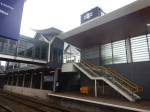
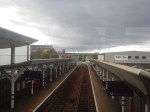
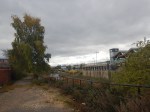
Note.
- The wires are going up.
- The low-level platform extensions need to be completed.
- Trains will use the high end of the platforms and tram-trains the low end.
Karlsruhe have much worse platform height problems, as they have two generations of tram-trains and German trains that need low platforms to cope with.
Walking To The Parkgate Shopping
I thought about using a taxi, but in the end, I walked to the Parkgate Shopping, as the weather was sunny.
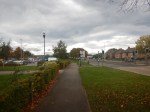

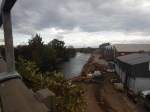
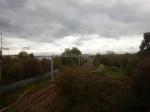
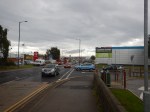
I did manage to get an idea of the distance in a thirty minute walk.
Parkgate Shopping
Parkgate Shopping is the sort of shopping centre I rarely visit.
I am a guerrilla shopper, who decides what he needs and then chooses where to go and buy it. Being a coeliac, food shopping usually requires a couple of shops. One of these must be a Marks and Spencer, as their gluten-free staples like bread, biscuits, beer and muesli are better than most.
These days, I don’t drive, but a couple of doctors have told me, they reckon I could get my licence back.It’s just that not having a car, removes a whole chunk of hassle from your life. I don’t want it back!
I also often create shopping with a visit to either a friend, a restaurant, a museum or perhaps even a dentist.
I’ll often plan my day, so I come home via somewhere like the Angel, Moorgate, Eastfield or King Cross, where I pick up my supper.
Parkgate might be a place to go if it fitted my target requirements and I lived locally.
But it would need decent public transport like Meadowhall down the riad.
The Tram Stop At Parkgate Shopping
These pictures show the railway that passes Parkgate Shopping and the tram-train stop being built.

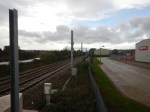
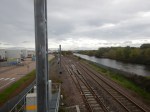

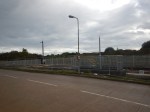
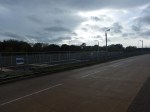
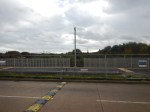
The stop needs finishing and a route to the stops would need to be created.
But it looks like the designers have developed a simple one platform stop capable of handling the required three trains an hour.
Conclusion
The project appears to be coming towards the end.
There are several things that need to be completed.
- The catenary.
- The connection of the tracks at the Tinsley Chord.
- Rotherham Central station pltforms
- Parkgate Shopping tram stop.
Then it would need to be tested.
If I have a question about the project, I wonder how they managed to be so late and over budget, as IS reported in this article in the Guardian, which is entitled Sheffield to Rotherham Tram-Train Is Five Times Over Budget, Says NAO.
My gut instinct tells me, that there are a few problems with this project, that would have been avoided by a little bit more thought before it started.
But I think it’ll come out alright on the end.
 The Anonymous Widower