Zopa’s Courageous Decision
I have believed for a long time, that certain databases should be made public, so that they can be properly analysed.
Suppose for example that a suitably anonymised database of all road deaths, was to be made available.
I will not speculate as to what it might show.
But you can rest assured, that some parties would not like some of the obvious conclusions that were thrown up.
How about to a detailed database of all those in prison?
Because of the power of data analysis, I was very surprised to read that Zopa has decided to make their loan data available for analysis.
It is a very courageous decision, that I hope gets other companies and organisations to do the same thing.
Serial Cooking – A Good Cauliflower Cheese
This is another Lindsey Bareham recipe, that I cooked serially like the Sausage and Bean Casserole a few days ago.












It is easy to do and I suspect that the completed dish could be prepared earlier and left in the fridge for most of the day.
Custom House Is Looking Like A Station
The combined Crossrail/DLR station at Custom House grows every week.
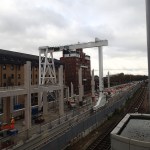
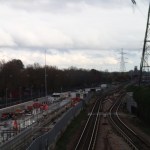

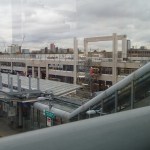

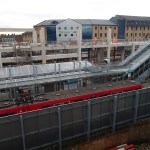
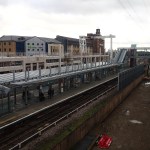
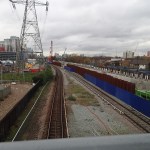
It’s now beginning to look like a station and you can see how it will connect to the Docklands Light Railway.
I have a feeling, that when Crossrail opens, this station will get a high rating.
As it is built in a factory, the engineers have told me, that the quality of the concrete is excellent.
A Radical Idea For The Bakerloo Line Extension
I have spent forty years involved in project management, writing software for project managers and generally listening to some of the thoughts and experiences of some of the best engineers from all over the world.
One common thread, which is best illustrated by how the size of lift possible increased in the North Sea in the 1970s, is that as time has progressed machines have got bigger and more capable, and the techniques of using them has improved immeasurably.
The Crossrail tunnel boring machines (TBM) make those used on the Jubilee Line extension or the Channel Tunnel look like toys. But not only are the TBMs bigger and faster, they have all the precision and control to go through the eye of the smallest needle.
If we look at the proposals for the Bakerloo Line Extension, there have been several differing ideas. Some envisage going under Camberwell and in others the trains terminate on the Hayes line.
Transport for London (TfL), obviously know the traffic patterns, but do we really want to take the chance of say connecting the Hayes line to the Bakerloo and then finding that it’s not the best solution?
What we should do is augment the services in the area, by providing a good alternative transport mode, that links to some of the traditional rail lines to give even more flexibility. We certainly shouldn’t repeat the grave mistake that was made at Brixton in the 1960s by not connecting the Victoria line to the surface rail lines.
This is Transport for London’s indicative map of the extension.
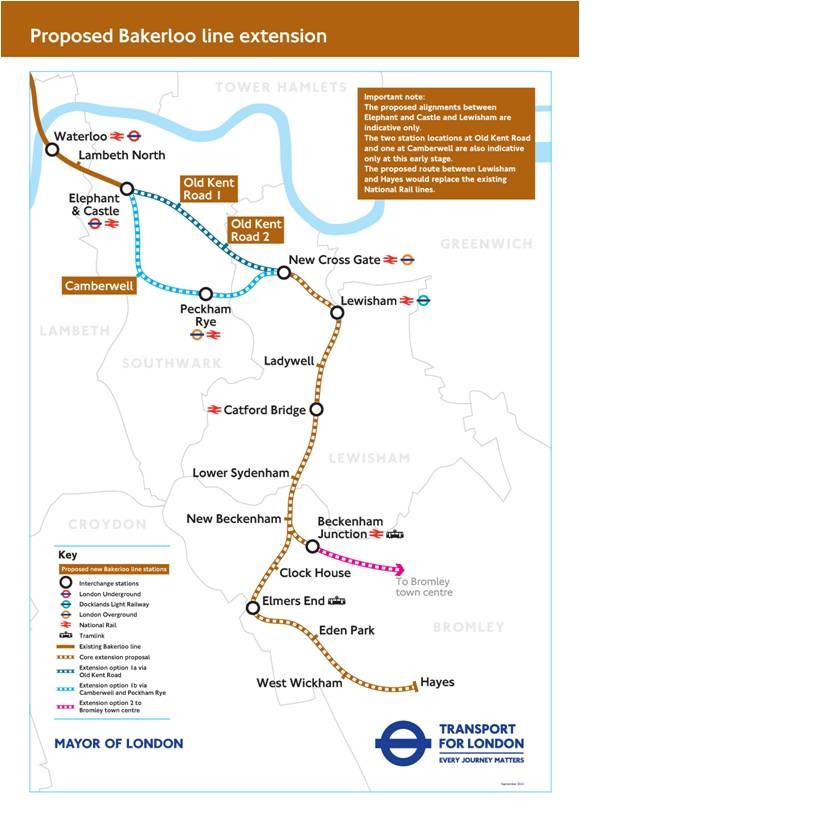
Bakerloo Line Extension Map
I have reason to believe that the Northern Line Extension may be being built as an extension to the Kennington Loop.
So could we design the Bakerloo Line Extension as a loop starting and finishing at Elephant and Castle calling at important stations?
A possible route could be.
- Elephant and Castle – Interchange with Northern Line and National Rail including Thameslink
- Old Kent Road 1 – Proposed on Map
- Old Kent Road 2 – Proposed on Map
- New Cross Gate – Interchange with London Overground and National Rail
- Lewisham – Interchange with Docklands Light Railway and National Rail including Hayes Line
- Catford Bridge – Interchange with Catford station and National Rail including Hayes Line and Thameslink
- Peckham Rye – Interchange with London Overground and National Rail
- Camberwell – Interchange with National Rail including Thameslink
- Elephant and Castle
The advantages of this simple design are.
- The tunnel would be excavated in one pass by a single TBM.
- The line could be deep under any existing infrastructure.
- Most stations would be simple one-platform affairs, with perhaps only large lifts and emergency stairs, to give unrivalled step-free access for all from the street to the train. Surely lifts exist, that are large and fast enough to dispense with escalators.
- For safety, passenger convenience and flows, and other reasons, the stations could have two entrances, at opposite ends of the platform.
- The simple station entrances would be much easier to position on the surface, as they wouldn’t need to be much bigger than the area demanded by the lifts.
- A single loop would only need half the number of platform edge doors.
- At stations like New Cross Gate, Lewisham, Catford and Peckham Rye the lifts would surface within the confines of the existing surface stations.
- The route has interchanges with the Brighton Main Line, East London Line, Hayes Link, Thameslink and other services, so this would give lots of travel possibilities.
- Trains do not need a terminal platform, as they just keep going on back to Elephant and Castle.
- The loop would be operationally very simple, with no points to go wrong. TfL have aspirations to run twenty-seven trains per hour on the Bakerloo and a simple reversing loop , which would mean the driver didn’t have to change ends, must certainly help this. It would probably be a lot more difficult to get this capacity at the northern end of the line,where Harrow and Wealdstone doesn’t have the required capacity and the only possibility for a reversing loop would be north of Stonebridge Park.
- Elephant and Castle would need little or no modification. Although it would be nice to have lifts to the Bakerloo Line.
- Somewhere over two billion pounds has been quoted for the extension. A single loop with simple stations must be more affordable.
The main disadvantage is that the loop is only one-way.
But making even part of the loop two-way would create all the operational difficulties of scheduling the trains. It would probably be better, less costly and easier to make the trains go round the loop faster and more frequently.
But if a passenger went round the loop the wrong way and changed direction at Elephant and Castle that would probably only take a dozen minutes or so.
Alternatively, I’m sure some New Routemasters would step up to the plate and provide service in the other direction between the stations.
Tottenham Hale Bus Station Opens
The new bus station at Tottenham Hale has opened.
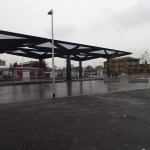

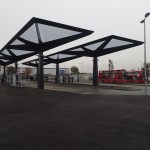
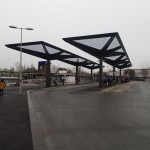

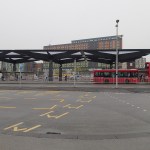
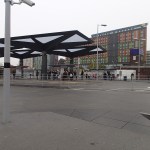

It will certainly be useful as an interchange to get the 192 bus to and from IKEA.
The 76 which passes close to my house, also ends up here.
Are There Any Other Places Where A Loop Extension With Stations Can Be Built?
I said this in my piece on the Northern Line Extension.
Reversing loops with stations are not unknown in the UK. Terminal 4 at Heathrow is served by the Piccadilly Line in this way and the Merseyrail Loop Line, is a larger example, that reverses and provides several stations for the Wirral Line. It could also be argued that Bank station on the Docklands Light Railway is two platforms on a reversing loop.
But are there any other places, where a loop extension with stations could be built to advantage?
The great advantage of the reversing loop layout for an extension, is in the construction phase.
1. Only one continuous tunnel needs to be built, which can be built with one tunnel boring machine (TBM).
2. Crossrail has shown that TBMs can be controlled to a high-degree of accuracy, which enables optimal loop tunnels to be created, going deeper than traditionally if necessary.
3. Simple stations can be built by connecting the out and return legs of the loop together and then adding lifts and escalators to the surface.
4. Simple one-platform stations could be built on the outer reaches of the loop.
5. It might be possible to reduce the number of shafts dug to the working tunnel. This would surely help in a crowded city.
6. There is only minimal disruption to existing infrastructure during the construction.
These are some places, where the loop extension with stations might be used.
Bakerloo Line Extension
There have been lots of proposals for the route of the Bakerloo Line Extension. Some are just simple ones taking the line to Camberwell and some envisage the line taking over the Hayes branch.
I have seen discussions about the latter and some have flagged up all sorts of problems, like how do you provide a service during the construction period.
So the design of this is going to be difficult. But I wouldn’t rule out an out and return loop going via Camberwell.
This links to my proposal.
Extending The Docklands Light Railway Westwards From Bank
There have been two proposals for this.
Would these best be served by extending the loop tunnel at Bank appropriately?
Possibly, but does the DLR have enough capacity for either of these services?
Extending The Docklands Light Railway Southwards From Lewisham
There have been two proposals for this.
Perhaps an underground loop could be used to turn trains at Lewisham, that served several stations, south of the current terminus.
Jubilee Line
Extending the Jubilee Line eastwards from its orignal terminus of Charing Cross could have used the reversing loop technique to take in stations in the eastern parts of the city in a wide loop. But in the end the Jubilee Line Extension was built to Stratford.
Extending The Jubilee Line To Thamesmead
In the design of North Greenwich station on the Jubilee line, provision was left for a branch to Thamesmead.
It is not in any plans at the moment, but a reversing loop could be built covering Charlton, Plumstead, Thamesmead and Abbey Wood.
Extending the Gospel Oak to Barking Line from Barking Riverside To Abbey Wood
This is an aspiration of Transport for London. But could it be dug in a single extended loop from Barking Riverside? The biggest advantage would that incorporating a single underground platform at Abbey Wood, would be a lot easier and affordable, than creating a full terminus there.
Extending The Victoria Line Southwards To Herne Hill
This is mentioned under Possible Future Projects on Wikipedia for the Victoria line. This is said.
For many years there have been proposals to extend the line one stop southwards from Brixton to Herne Hill. Herne Hill station would be on a large reversing loop with one platform. This would remove a critical capacity restriction by eliminating the need for trains to reverse at Brixton. However, it would be expensive and cannot currently be justified on cost-benefit grounds. Because the current line is heavily overcrowded this is considered to be the only extension proposal with any realistic prospect of coming to fruition; but to have any hope of being built, it would have to be seen to be effective in reducing overcrowding (by enabling trains to run more frequently) and not to increase it.
But it strikes me that if TfL’s engineers find better ways of building these loops and their stations, perhaps it could be built to increase capacity on the Victoria line.
Outside Of London
Outside of London, I don’t know the railway infrastructure, like I do in London, but I’m sure that the concept could be used elsewhere.
A Heritage Station With Four Clocks
After writing my piece about the Northern Line Extension, I went to have a look at Kennington station.
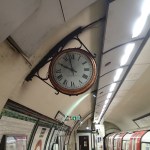
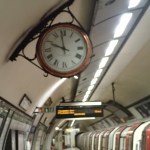

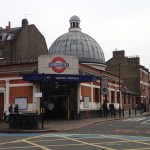
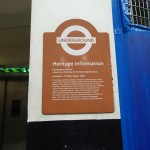
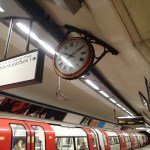
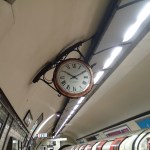
It is a Grade II Listed building, but to me one of its best features is the four clocks.
The layout is unusual in that the two Southbound platforms are underneath the two Northbound ones. But both pairs of platforms have level access between the platforms. So if you came up from Morden and wanted to go to say Tottenham Court Road, you’d just walk across to the Charing Cross branch, if you were on a train going via Bank.
When the Northern Line Extension opens, this will probably mean that there is cross-platform access from the extension to the Bank branch.
It would certainly seem that when the station was substantially rebuilt in 1926, that whoever redesigned the station had the foresight (luck?) to design a station that could be easily linked to a branch to Battersea and Clapham Junction.
Will The Northern Line Extension Go All The Way?
There has been masses of reports about the Northern Line Extension in the special rail media and on the BBC and in other publications, like Time Out and the Standard.
Despite the long term aim of taking the extension to Clapham Junction, mentioned in the Wikipedia entry for the project.
Provision will be made for a possible future extension to Clapham Junction railway station by notifying the London Borough of Wandsworth of a reserved course underBattersea Park and subsequent streets
There has been no discussion about the extra station.
There has also been no statements from the consortium building the line about how they will actually construct the line.
As it is not the longest of tunnels, I suspect to save money, at the expense of possibly some extra time, they will use just one tunnel boring machine (TBM). It won’t be one of the ten-million-pounds-a-time beasts used for Crossrail, as Underground tunnels are generally much smaller in diameter. Although, I wouldn’t be surprised to see the tunnels made slightly larger than normal for reasons of safety and perhaps to re-use a refurbished TBM from another project.
One thing that London Underground doesn’t like is lines that end deep in the ends of tunnels. For reasons of cost in the 1960s, the Victoria line is like this at both ends and according to Wikipedia, there have been proposals for creating a large reversing loop at Brixton to both reach Herne Hill and increase capacity.
Reversing loops also eliminate any possibility of a Moorgate disaster, which has still not been satisfacorily explained. But operationally they remove the need for trains to crawl into the end station for safety reasons, and reduce the time it takes to turn trains, thus increasing the frequency on the line.
Reversing loops with stations are not unknown in the UK. Terminal 4 at Heathrow is served by the Piccadilly Line in this way and the Merseyrail Loop Line, is a larger example, that reverses and provides several stations for the Wirral Line. It could also be argued that Bank station on the Docklands Light Railway is two platforms on a reversing loop.
So could a similar solution be used at Battersea to turn the trains? Look at this map of the area.
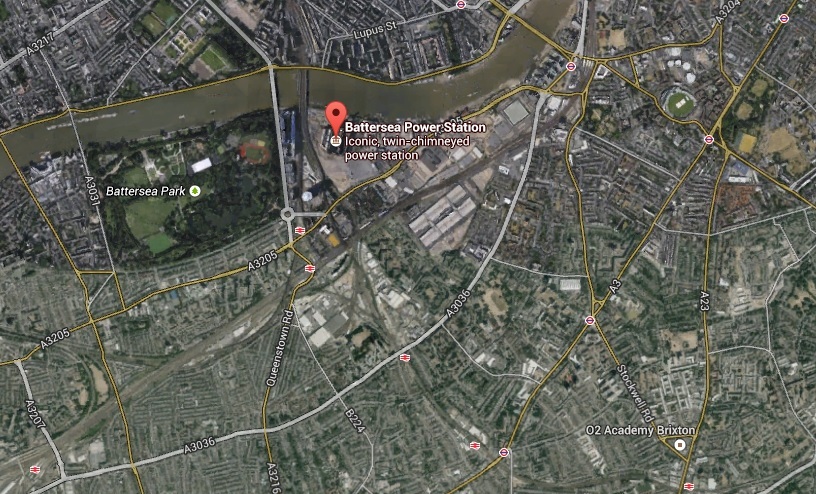
Around Battersea
Battersea Power Station and Battersea Park are obvious, but notice the Underground roundel marking Kennington station in the top-right corner and the British Rail symbol marking Clapham Junction station in the bottom-left.
The extension joins the current Northern line at Kennington and the Battersea station is proposed to be somewhere near the power station.
At present, Charing Cross branch trains reversing at Kennington, can go round the Kennington Loop. Wikipedia says this about the loop.
A loop tunnel south of the station enables southbound Charing Cross branch trains to be terminated at Kennington, leave the station in a southward direction and, traversing the loop, enter the northbound Charing Cross branch platform.
So instead of building two tunnels from Kennington to Battersea, with all the cost of two TBMs or the hassle of turning a single one round, I do wonder, if a cheaper and easier way of building the tunnels, would be to start in the Kennington Loop with a single TBM, tunnel via Nine Elms to Battersea and then create a wide reversing loop before returning to Battersea to dig the second tunnel back to the other side of the Kennington Loop.
One of the consequences of good project management is often that what the engineers build in the end is quite different, but better, more affordable and earlier to what the politicians said they wanted. For this reason alone, I wouldn’t be surprised if the Northern Line Extension is just a single tunnel, dug by a single refurbished TBM.
The cost savings are probably small change in a one-billion pound project, but the time spent inserting and removing a second machine, probably comes off the overall project time.
It then doesn’t take a great leap of the imagination to see that this construction/reversing loop could be extended so that it passes under Clapham Junction station.
There are other advantages too.
Operations, Safety and Reliability
I’ve mentioned the operational advantages of the reversing loop in quicker turn back of the trains and possible safety advantages, but as the extension is going to be a continuation of the Charing Cross branch of the Northern line and an extension of the Kennington Loop, there could be no complicated track work at Kennington. This will mean that the branch used through Central London, will determine the ultimate destination of the train. But this would allow London Underground to split the two lines and probably arrange dedicated platforms for the two northern branches at the operational nightmare that is Camden Town.
The reliability of two continuous lines would probably be a lot higher, than one that was constantly splitting and joining back again.
But whatever happens to the rest of the line, if the extension was a continuous reversing loop with no points or sidings, it could be built faster and would probably cost less, have a higher capacity and probably be more reliable.
The only problem would be if a train were to break down in the loop. But what happens on the Heathrow loop on the Piccadilly line?
Battersea and Nine Elms Stations
Digging the extension as a loop, also means that the two stations at Battersea and Nine Elms, become classic below ground stations of the Underground, like say Southgate and Manor House of the 1930s, and the modern Canary Wharf, where escalators and lifts descend to a wide lobby between the two lines.
Costs could even mean that they were identical below the surface, although architects would probably exercise some flare on the surface.
I also wonder if stations could be built with no escalators, but large efficient lifts, that were scheduled, so they went up and down in time with the trains.
Lift-only stations would be best as double-ended, with the lifts even coming up into car parks of the over-site development.
There is tremendous scope here for a good architect to build passenger-friendly and lower cost stations.
I’ve always believed that urban stations should have development on top, just like my local one at Dalston Junction. But how many stations anywhere make efficient use of expensive land?
Ventilation
A big problem with London Underground’s deep level lines, like the Northern, is keeping everything cool. All over London, you see structures like I photographed here. A continuous reversing loop must have advantages as all three stations would double as ventilation shafts, so there would be no need for any extra holes in the ground. If modern regulations mean that the tunnels have to be built with a walkway for evacuation, like those on the Docklands Light Railway, these larger diameter tunnels would probably help ventilation.
A secondary advantage of a well-ventilated reversing loop, is that it would be cool, so any trains on the loop could cool themselves down, just like many deep-level trains, do by basking on the surface in the suburbs.
Clapham Junction Station
In the future when the station at Clapham Junction is added, little or no tunnelling will be needed, as construction will probably involve sinking a shaft to link it to the current Clapham Junction rail station and creating a new platform or platforms alongside the reversing loop.
I would go for the single platform. In some ways then, this station would be like the Piccadilly Line station at Heathrow Terminal 4, which has a single platform on a one-way loop from Hatton Cross to Heathrow Central.
No surface buildings would be required and space would only be needed to sink the shaft during the construction phase.
Opening Clapham Junction station could give a problem in that some passengers will transfer off the trains from Basingstoke, Portsmouth, Southampton and other places to complete their journeys. Will the Northern Line cope?
On the other hand the new Clapham Junction station will link to Crossrail at Tottenham Court Road, so Clapham Junction would get a hopefully step-free link to Crossrail and on to Heathrow.
Platform Edge Doors
Regulations will probably mean that all the stations would have to be constructed with platform edge doors. A loop extension would probably have the minimum number of platform faces, thus subtracting another saving from the cost.
If I was designing the stations, all platform faces would be identical to save costs.
But if you went for lift-only stations, this could mean that a better design evolved, where the safety functions of the platform edge doors were achieved in better ways.
Train Stabling
A loop extension, if built in its simplest form, would not have any sidings for storing trains overnight or perhaps holding them when there was a problem on the Northern line.
But as the loop would of necessity be rather long between Battersea and Clapham Junction, the trains could be stabled or held in the loop. If staff needed to leave or join the trains and if the tunnel had a walkway, they’d just walk along to the nearest station.
Ease Of Construction
There has been a report in Global Rail News that the Northern Line Extension might be completed before Crossrail.
A loop extension leading off the Kennington Loop has implications for building the extension in a quick and affordable manner, so this might explain the optimism.
Consider the following.
1. No terminal station, platforms, junctions or sidings would need to be built.
2. As the main construction at Kennington only takes place on the Kennington Loop, trains on the Bank branch running to Morden will be unaffected. Trains on the Charing Cross branch would probably be suspended, unless some other way of turning them back could be found.
3. One TBM digs the whole tunnel in a continuous operation.
4. The project length is determined by the time to dig the tunnel, fit it out with track and signalling, connect it to the existing network and then give it an extensive testing, as once the TBM has passed, the construction of the platforms can be started in parallel with the rest of the project.
5. It would probably be easier to adjust the route of a loop tunnel to avoid other infrastructure and the proposed route of Crossrail 2. Victorian engineers didn’t have machines of the accuracy of today’s modern TBMs.
6. Crossrail needed a lot of shafts to insert and extract the TBMs and other equipment and materials. I’m no expert, but surely material could be brought in by service trains on the Morden branch of the Northern line, to avoid digging too many shafts.
Conclusion
I strongly believe the first phase of the Northern Line Extension will be built as a loop off the Kennington Loop and include all the tunnelling for the extension to Clapham Junction.
Clapham Junction station would not look like a terminus, as it would only be a single platform on a reversing loop.
So the second phase would solely be the fitting out of the station and connecting it to the rail station.
Expanding The Manchester Metrolink
In my view the Manchester Metrolink has not grown as fast as it should have done. A good proportion of the system opened in the early 1990s and nothing really seemed to open until the last few years.
For a lot of that twenty year gap, the government was one that you’d think would be sympathetic to expanding public transport in areas, where they could count on the vote. Perhaps, though Blair and Brown were more interested in war abroad than looking after the North!
There have been various plans to extend the Metrolink to places like Middleton, Salford, Stalybridge, Stockport and Trafford Park, but strangely not Bolton. Only the extension to Trafford Park has been funded.
Now I don’t know Manchester politics, but I do feel that if there had been a Manchester mayor for say the last ten years, I suspect with someone batting for Manchester, some of these extensions would have been progressed. Now that one should be there in 2017, hopefully progress will be quicker.
On this post there are comments about the non-extension of the tram from East Didsbury to Stockport.
So can this line be easily built, as it seems to me, as someone who only knows the area from the 1960s and a good map, that it would be of benefit to a lot of people?
Also if the Metrolink went to Stockport rail station, it would surely give an alternative Manchester station for those living on the tram network, just as Watford, Stratford, Ealing Broadway, Wimbledon and others do for the London Underground/Overground. Travellers should be given the choice of as many different routes as possible.
So I looked up how this line would get from East Didsbury to Stockport and found this article, which describes a route as proposed in 2004.
Reading the article, the route seems to be rather complicated and expensive, as it crosses the River Mersey several times and it doesn’t go to the rail station.
So perhaps if Stockport, is ever linked to the Metrolink, it will use a different route.
It all illustrates that extending the Metrolink isn’t as easy as it might first appear. I hope Manchester has got some good transport planners, who know the city well.
As an aside here, it is worth thinking about how the Northern Hub and in particular, the Ordsall Curve linking Manchester Piccadilly and Victoria, will indirectly affect the Metrolink. There could be at least four trains per hour both ways between the two stations and six going towards Bolton and Preston according to Wikipedia. So as some of these services will go south towards Stockport and the Airport, Manchester will probably see a high-frequency service between Piccadilly, Victoria, Bolton, Stockport, Salford and other places in the Greater Manchester area. The trains will all be electric and probably something like the ex-Thameslink Class 319. These trains will extend journeys all round the area to Blackpool, Huddersfield, Leeds, Liverpool, Preston, Warrington and Wigan. With not a lot more electrification, places like Blackburn, Burnley, Sheffield and Southport could be brought into an electrified network, where high-capacity trains run at least four times an hour on all routes.
One thing that would need to be done is improve the interchange between the Metrolink and some of the central Manchester rail stations. Victoria is showing glimpses of being superb, Piccadilly needs to be a much shorter walk and perhaps Salford Crescent needs to be linked to the tram.
I don’t drive and suspect will never do so again, but one thing that always worries me about city transport systems is, are there enough Park-and-Ride spaces and especially close to the motorways? I know London lacks badly in this area and suffers because of it. So how does Manchester stack up?
By the end of this decade, Manchester could be getting the transport system it needs and deserves.
What Do You Do With The Likes Of Roberts And Evans?
I remember the day, when Harry Roberts shot dead the policemen in Shepherds Bush, as it was a Friday and I was working behind the bar in the Merryhills pub in Oakwood. It left a rather sombre mood to the evening, as everybody read the story in the paper.
That is nearly fifty years ago and we now have the problem of what to do with Roberts.
We also have all the arguments about Ched Evans, and whether he should play football again, after release from a sentence served for rape.
If it was up to various vociferous minorities, then the likes of Roberts and Evans, along with masses of other criminals serious or even petty, would be incarcerated for ever.
Some prisoners need to be locked up permanently, and without all the facts, I would never say who these people are.
But really, if we lock even more people up, I feel I have a right to protest about the waste of my taxes.
In some ways, what I dislike most about prison, is that it appears to totally fail in preparing prisoners to return as decent members of society. If a school had the educational performance of the average prison, it would be rightly closed down.
If you read Lord Ramsbotham‘s book, Prisongate, you also realise that quite a few prisoners are suffering from diseases such as dementia, which have rendered them unlikely to be a danger to society. Surely humanity says that these people are better in the care of their families if possible.
But then to some people vengeance is all important, and capital punishment should be applied regularly as it is in Iran, China and the United States.
 The Anonymous Widower