Hydrogen Is A Top Contender In The Race To Zero-Carbon
The title of this post, is the same as that of this article on Forbes.
It is written by influential academics at the Gutierrez Energy Management Institute at the University of Houston, who make some strong points about hydrogen.
- Hydrogen can’t by mined or extracted without a manufacturing process.
- They are warm on electrolysis. Does the US have an electrolyser factory?
- Hydrogen is ideal for medium trucks upwards.
- Research into hydrogen deployment is needed.
- I don’t think, that they’re impressed with Government response.
- Although they do say that the European Commission’s plan with $75billion of funds to deploy the technology is ambitious.
But their strongest comments are reserved for a comparison between the heavy trucks of Tesla and Nikola.
Liverpool Street Station – New Entrance
These pictures show the new entrance taking shape in front of Broadgate and the original Liverpool Street station.




It looks like the entrance is going to be a large fosterito.
They seem to be cropping up all over London.
Judging by the fact, that bikes seem to be parked in front of the entrance, I would suspect that this entrance could be finished soon.
Paddington Station – New Western Entrance
I was alerted to the fact that this new entrance to the Paddington station, by one of Ian’s pieces on Ian Visits, so I had to go along and take a look.








It is a simple design, which looks more like an entrance to a museum, school or church, than to an important station.
Unusually, for a station entrance, it takes you right into the retail and food area of the station, but there are several ways to get to the platforms.
Beeching Reversal – Transforming The Newquay Line
This is one of the Beeching Reversal projects that the Government and Network Rail are proposing to reverse some of the Beeching cuts.
This map clipped from Wikipedia shows the Newquay or Atlantic Coast Line.
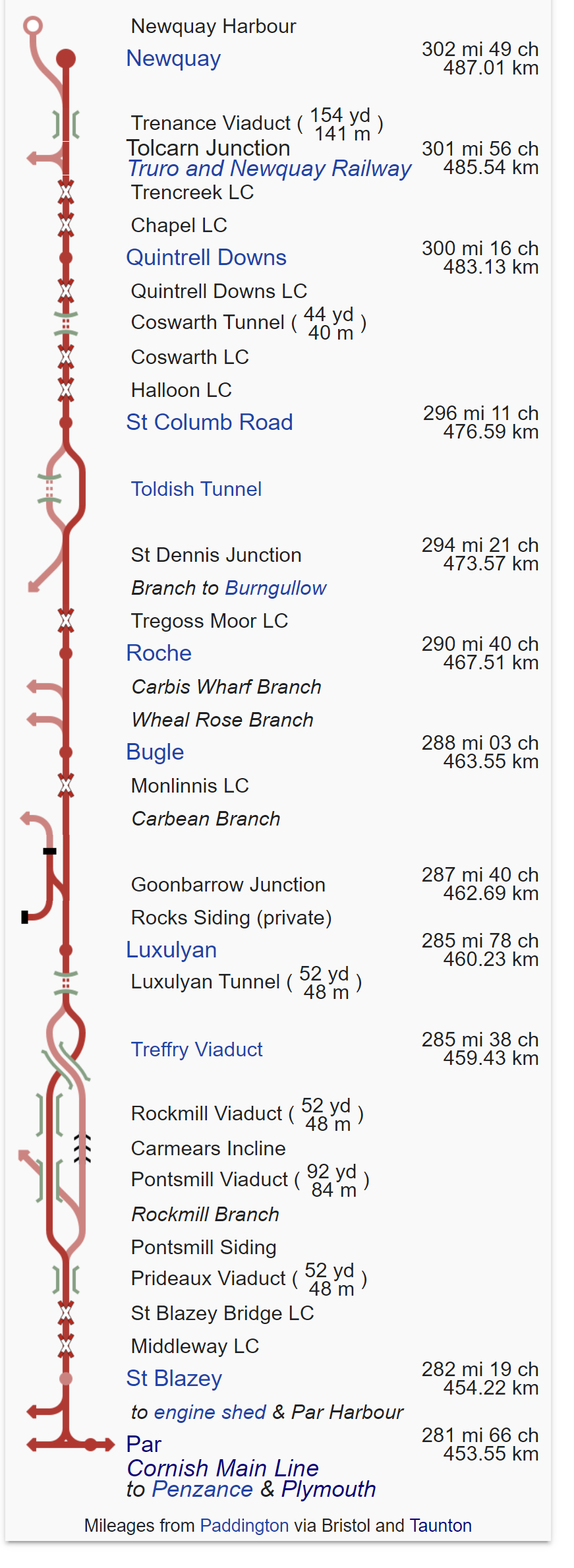
When I first saw this map, my initial thought, was that the various loops and other sections of disused track could and/or might be added to the route.
Searching the Internet, I can’t find much information except from this article on Cornwall Live, which is entitled Cornish Railway lines Axed In Beeching Cuts Could Be Restored, where this is said.
Other projects focused on Cornwall bidding for the funding to develop business cases include one to transform the Newquay to Par railway line as well as a “Mid-Cornwall Metro” proposal.
Nothing more about the Atlantic Coast Line, is said in the article.
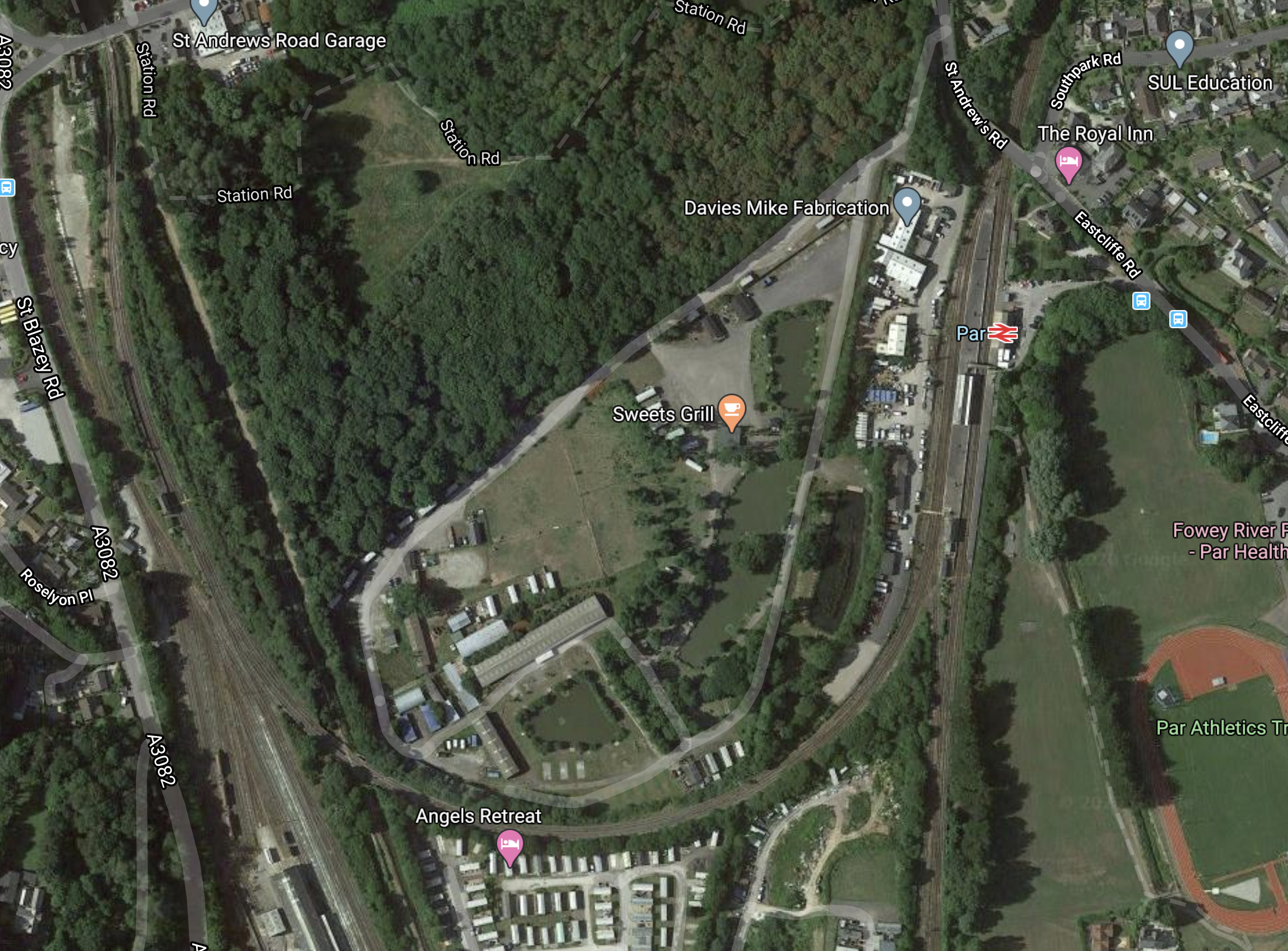
This Google Map shows where the Atlantic Coast Line joins the Cornish Main Line at Par.
Note.
- The Atlantic Coast Line goes off to the North West.
- Par station is shown towards the North-Western corner on the Cornish Main Line.
- The junction is designed, so that china clay trains can access the branch.
In the summer, Newquay station is also served by long-distance trains from London and Scotland.
This Google Map shows Newquay station in the heart of the town.
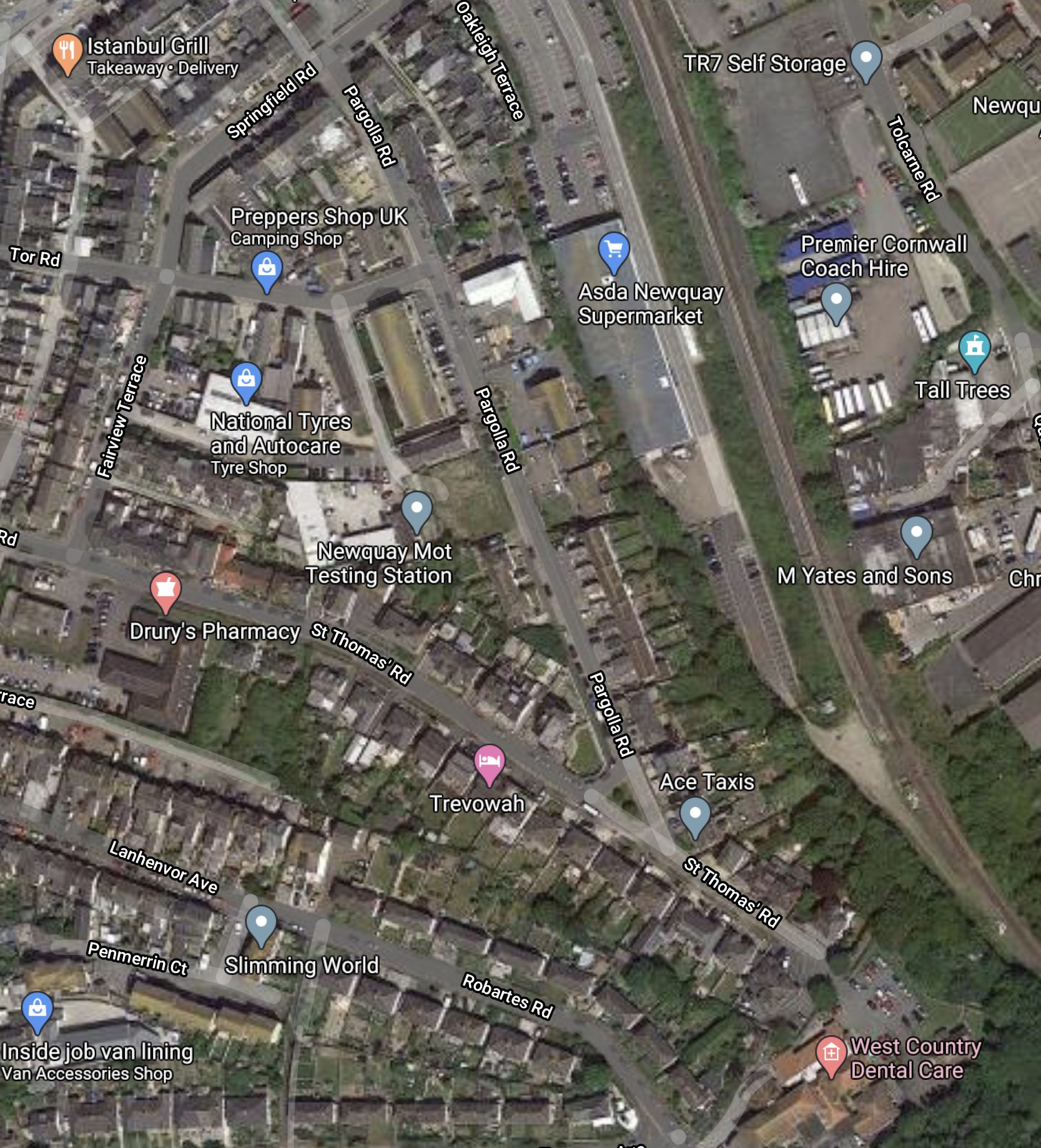
It could probably be called a Beach station, as the sea is just off the map.
Partly, because I lived in the town, from 1963 onwards, I can remember Felixstowe Beach station! Yarmouth Beach station has gone too, but how many others are left?
These are the only ones, I can think of with Beach in their name!
Perhaps, if Felixstowe ever gets the promised tram-train, that I wrote about in Could There Be A Tram-Train Between Ipswich And Felixstowe?, one of the or more of the stops on the way to the Port of Felixstowe will be Felixstowe Beach.
Frequency Improvement
The current frequency on the Atlantic Coast Line is one train every two hours, which is not a family-friendly frequency, as if any child starts playing silly games, you have a two-hour wait for the next train.
I would suspect that an hourly service would create a large increase in ridership on the line.
As the journey takes fifty-one minutes between Par and Newquay, is the frequency defined by the need for one train to work the line, by shuttling from end-to-end?
So is one of the needs, some better track layouts, so that trains can pass and be parked at Par, whilst the crew has a refreshment break?
I also suspect, that if one of Network Rail’s track wizards got the layout spot on, which they seem to do, that this would make things easier for any china clay trains still passing through the area.
Could Newquay Be Used As An Extra Terminal?
I wonder how many people drive to Newquay, if they live in East Cornwall or Devon?
I have just looked at train times today from Plymouth to Newquay.
To be fair to Great Western Railway (GWR), I would only have a few minutes to wait at Par station, but there is only one train every two hours, due to the limitations on the Atlantic Coast Line.
With an improved higher-capacity track, GWR could call up the heavy brigade.
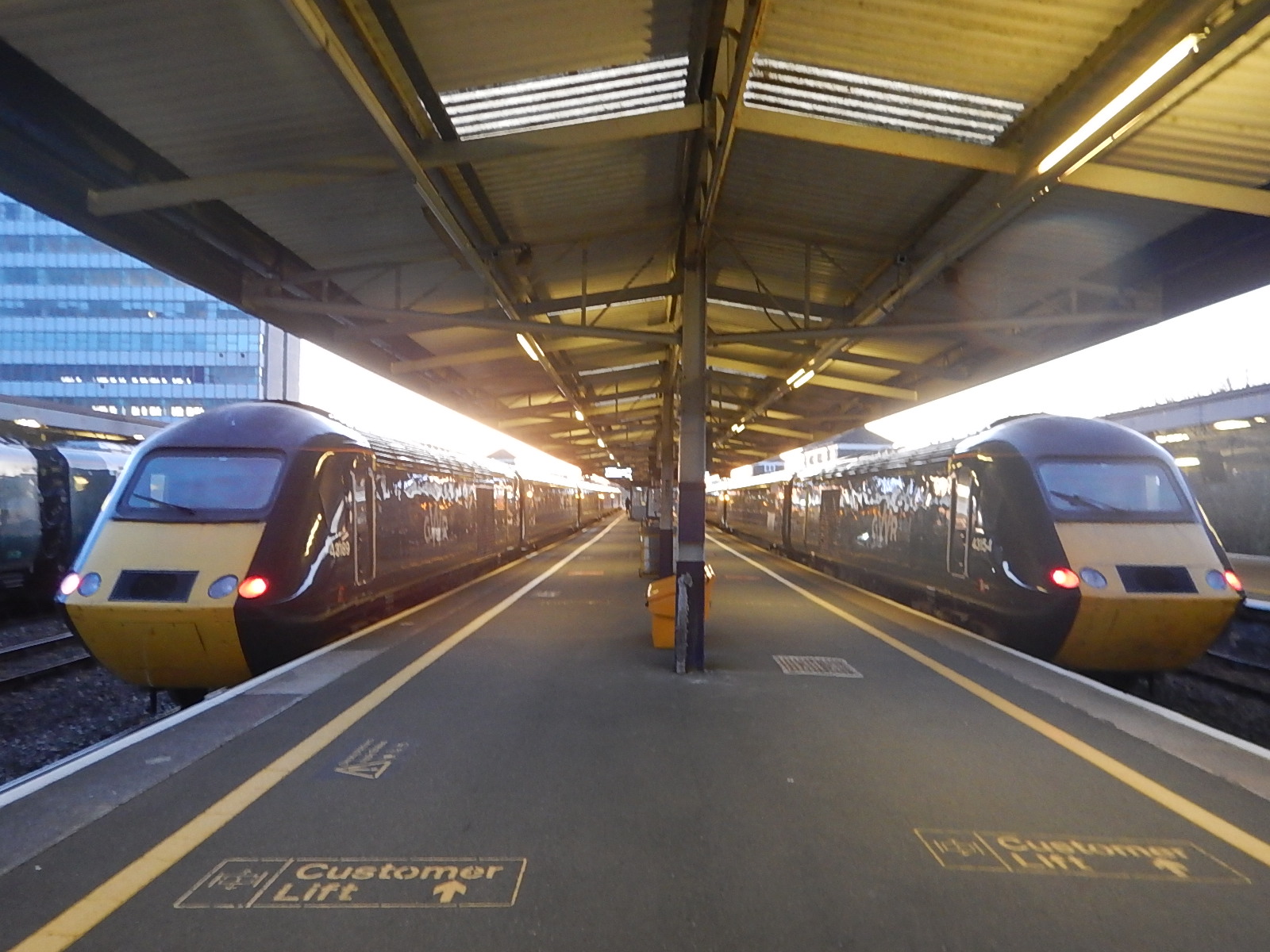
As full-length InterCity125s have served Newquay station for decades, four-car Castles like these, should manage the trip with ease.
Surely, once the Atlantic Coast Line can handle at least hourly trains, that would enable separate one train per two hour schedules.
- Newquay and Par
- Newquay and either Plymouth or Exeter.
This would improve service frequencies on both the Cornish Main Line and the Atlantic Coast Line and enable passengers to go between Exeter, Plymouth and Truro, and Newquay without changing trains.
Hopefully, the Cornish Main Line trains would serve appropriate refreshments at the correct times of the day.
Would Newquay Station Need A Second Platform?
Newquay station used to have more than one platform, but all the others were removed in British Rail’s ruthless quest to save money in the 1960s and 1970s.
I have never been to Newquay station, so I don’t know whether there is space to reinstate another platform.
However, I did find this video, which appears to be some very professional plans for Newquay station.
This video dates from 2008.
The video definitely says, that Newquay station needs an extra platform or two.
- Two platforms would allow two trains to share the station.
- A third platform would allow steam trains to visit.
The video also answers the age old question about why in many towns and cities, the railway station is often the best building, except for the church and the town or city hall.
Conclusion
It does appear to me, that giving the Atlantic Coast Line a modern track layout, will unlock a lot of possibilities that can be tried on the branch, to the benefit of all stakeholders.
Beeching Reversal – St Anne’s Park Station
This is one of the Beeching Reversal projects that the Government and Network Rail are proposing to reverse some of the Beeching cuts.
This Google Map shows the proposed site of St. Anne’s Park station, between British Temple Meads and Keynsham stations.
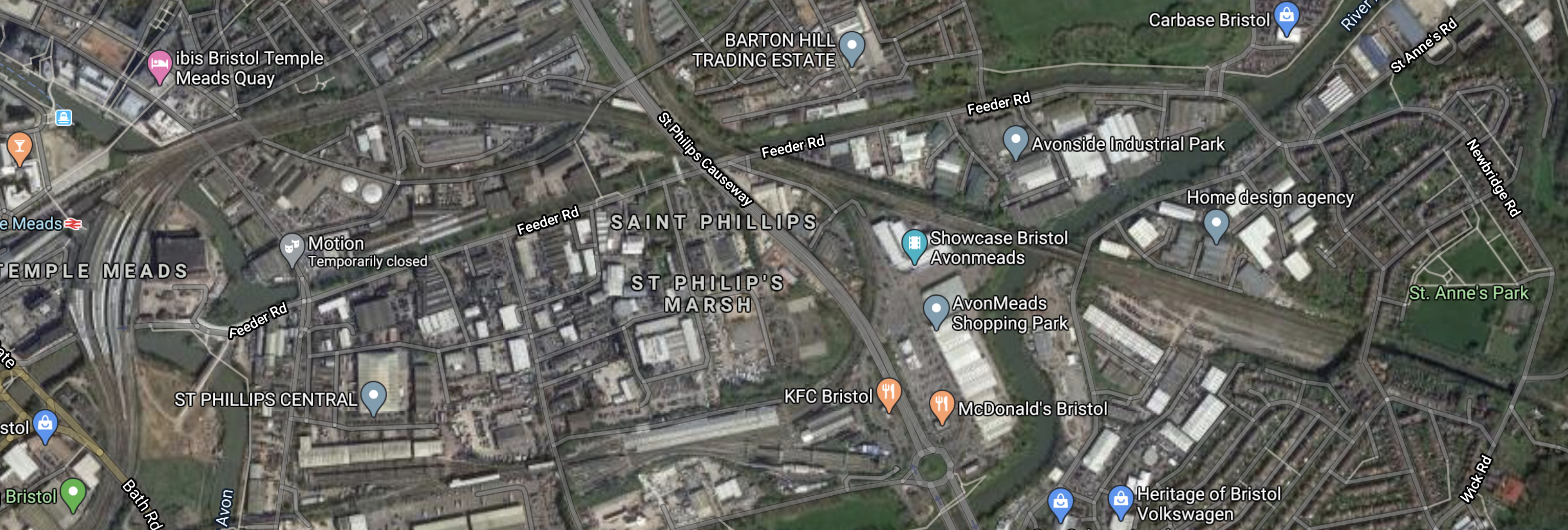
The station is about four-five miles from Bristol Temple Meads station.
- Bristol Temple Meads station is to the West of the map.
- St. Anne’s Park station will be to the East of the map.
- The station has up to two stations per hour.
The Great Western Main Line between Bristol Temple Meads and Bath runs through the site of St. Anne’s station.
Conclusion
There are quite a few stations like this that councils want to reopen.
Beeching Reversal – Primrose Line
This is one of the Beeching Reversal projects that the Government and Network Rail are proposing to reverse some of the Beeching cuts.
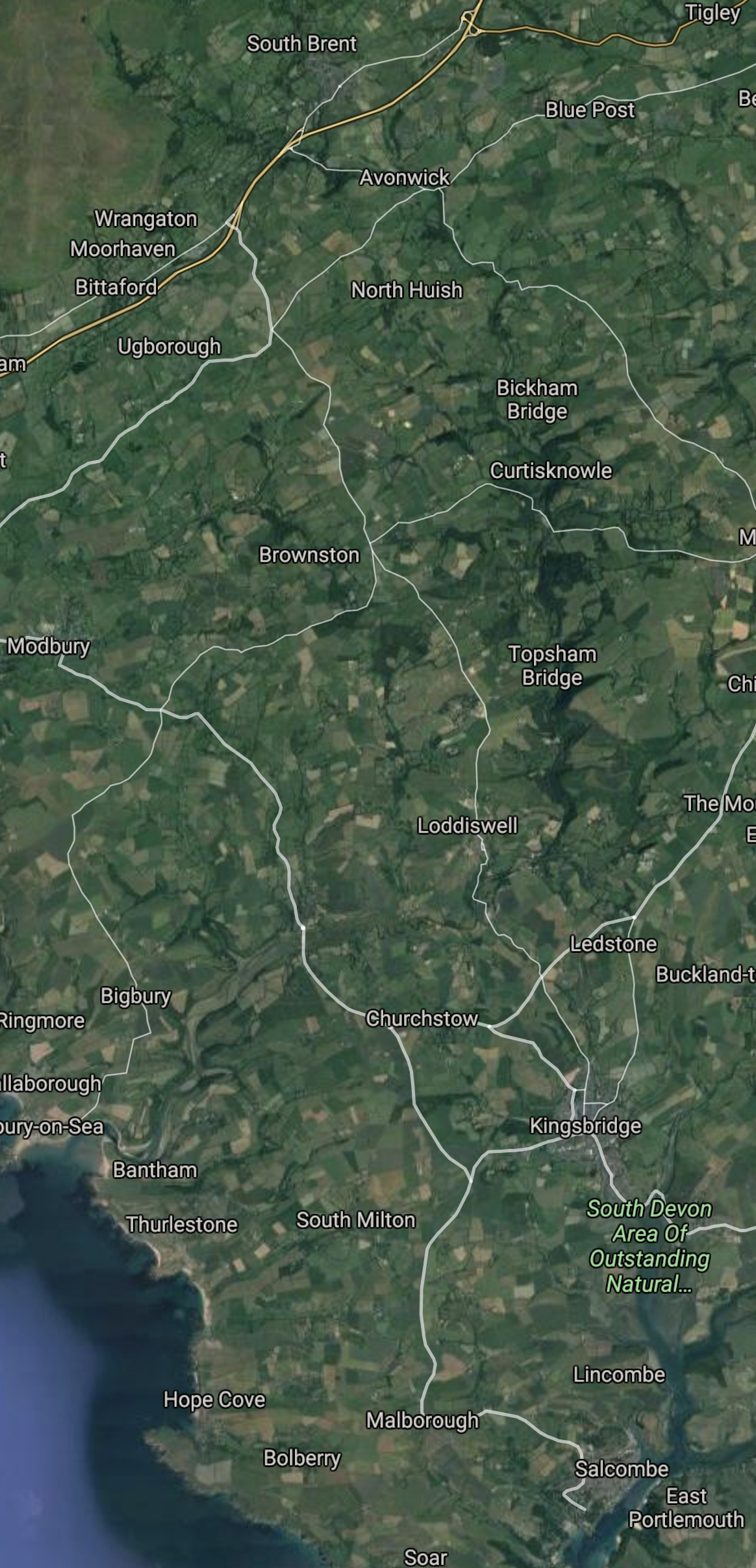
This Google Map shows the area of South Devon, where the railway is proposed to be reopened.
And this diagram from Wikipedia shows the line.
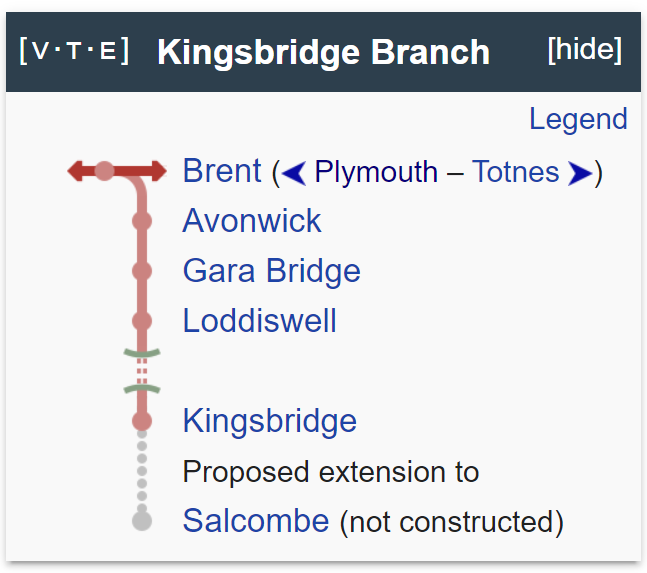
Note.
- The railway runs between South Brent and Kingsbridge stations.
- It connected to the double-track Pymouth and Exeter Line.
- There were originally stations at Avonwick, Gara Bridge and Loddiswell.
- It was single track.
- It was twelve miles long.
- There was also a planned extension to Salcombe, that was never built.
The Connection At Brent Station
This Google Map shows the former position of Brent station.
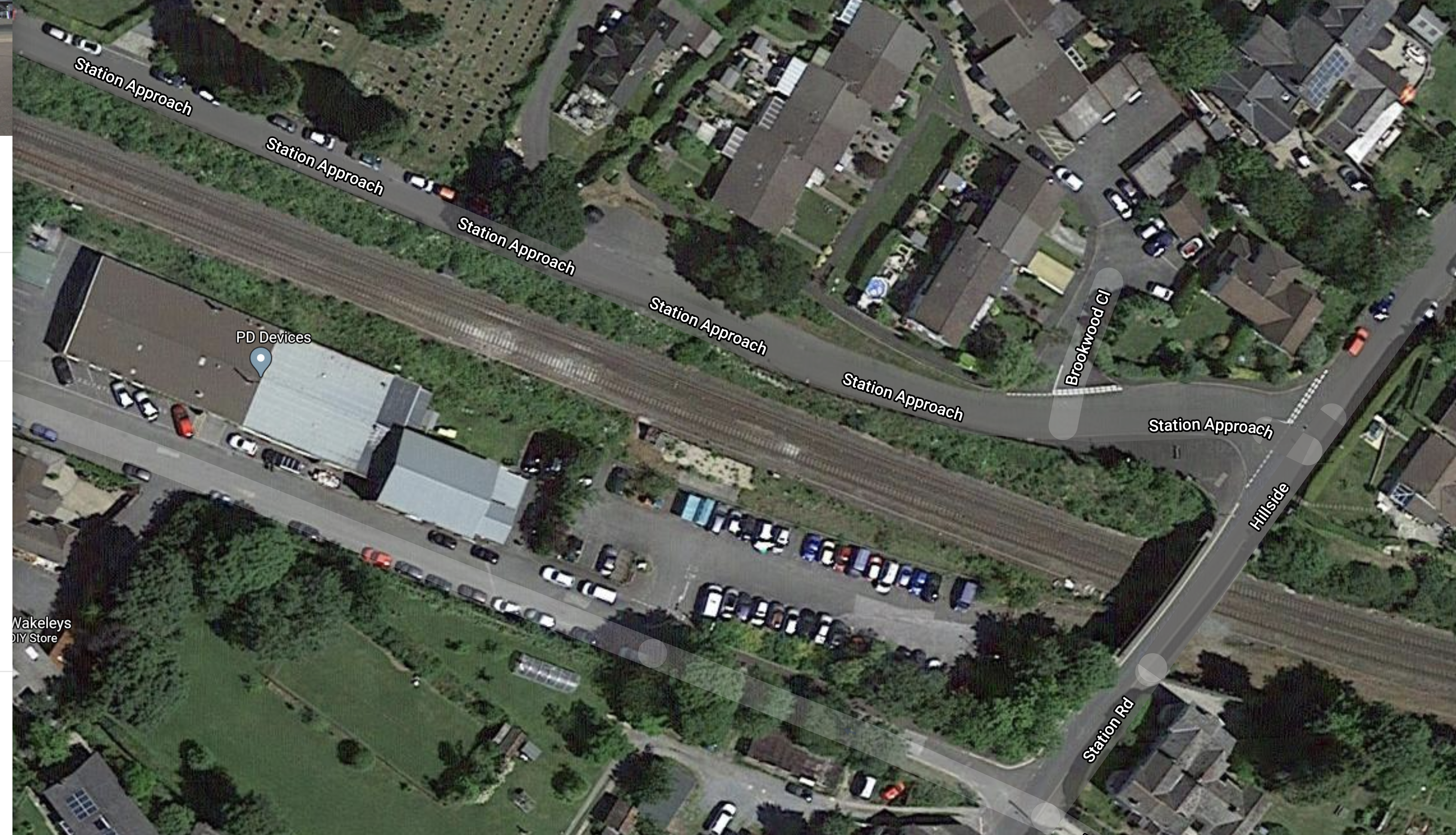
There does appear to be plenty of space for two through platforms and one for the branch line on the South side of the main line.
Trains
I suspect that this route will probably be capable of being run by two or three of Vivarail’s Class 230 trains.
Conclusion
This looks a simple scheme, that could be worthwhile, for commuters residents, shoppers and tourists.
Battery Electric Class 800 Trains Between London Paddington And Bristol Temple Mead Stations
Hitachi have changed the rules on electrification, by the announcement of the development of battery electric trains in collaboration with Hyperdrive Innovation, which I wrote about in Hyperdrive Innovation And Hitachi Rail To Develop Battery Tech For Trains.
The proposed train is described in this Hitachi infographic.

It will have a range on battery power of 90 km or 56 miles.
Currently, services between London Paddington and Bristol Temple Meads stations are as follows.
- The frequency is two trains per hour (tph)
- Services call at Reading, Didcot Parkway (1tph), Swindon, Chippenham and Bath Spa.
- Services use the electrification between London Paddington and Chippenham.
- Services use diesel power between Chippenham and Bristol Temple Meads.
- Chippenham and Bristol Temple Meads are 24.5 miles apart.
It looks to me that a well-driven Class 800 train with Hyperdrive Innovation’s clever batteries replacing some or all of the diesel engines could run between Chippenham and Bristol Temple Meads stations and back without using a drop of diesel.
It might be a bit tight, but it would certainly be possible, if there were more electrification between Bath Spa and Chippenham stations.
- From this article on the BBC, which is entitled Box Tunnel Reopens After Network Rail Electrification Work, it appears that a lot of the pre-electrification work has been completed.
- This would reduce the distance without wires to perhaps 18-20 miles.
As the Class 800 trains have agile pantographs, I’m sure that it will be possible for battery electric Class 800 trains to run between London Paddington and Bristol Temple Meads stations.
Electrification At Bristol Temple Meads Station
This will surely happen and with full electrification, the following will be possible.
- Trains would be able to recharge before returning to Chippenham.
- Trains would be able to extend the service using battery power to Weston-super-Mare, which is only twenty miles away.
- Trains would be able to use the power whilst waiting in the station.
It appears that trains that run between London Paddington and Bristol Temple Meads station, use a selection of platforms in Bristol.
Would it be sensible to reduce the number of platforms used and electrify them first, so that battery electric trains could charge their batteries?
Could A Battery Electric Train Run Between Bristol Temple Means And Taunton Stations?
Consider.
- These two stations are 46 miles apart via Weston-super-Mare, so if there was charging at Taunton, this service might be possible.
- The direct route is a couple of miles shorter.
- A train with full batteries at Taunton, would reach well past Exeter.
Could a battery-electric service be of use in creating Great Western Railway’s timetable, as in the Peak services are extended to Weston-super-Mare and Taunton stations?
It would certainly be lower carbon. than a current journey.
Would The Railway Through Bath Need To Be Electrified?
This would depend on three main factors.
- There is a certain amount of opposition to electrification in the centre of Bath.
- Can all passenger trains through the city be made zero-carbon without electrification?
- Can all freight trains through the city be made zero-carbon without electrification?
I would feel that all passenger trains could be run by appropriate trains, but freight would be a problem under existing technology.
I wouldn’t be surprised, if no electrification was ever erected through Bath!
Eversholt Rail And Alstom Invest A Further £1 Million In Breeze Hydrogen Train Programme
The title of this post, is the same as that of this press release from Alstom.
The major point made is that the train will be called a Class 600 train.
Beeching Reversal – Charfield Station
This is one of the Beeching Reversal projects that the Government and Network Rail are proposing to reverse some of the Beeching cuts.
Wikipedia says this about the Proposed Reopening of Charfield station.
Services between Bristol and Birmingham pass through Charfield. There have been discussions about the viability of reopening the station. The costs would be shared between Gloucestershire and South Gloucestershire councils since, although the station would be in South Gloucestershire, the nearby town of Wotton-under-Edge would be a principal beneficiary.
This Google Map shows the village with the Bristol and Birmingham Line passing through.
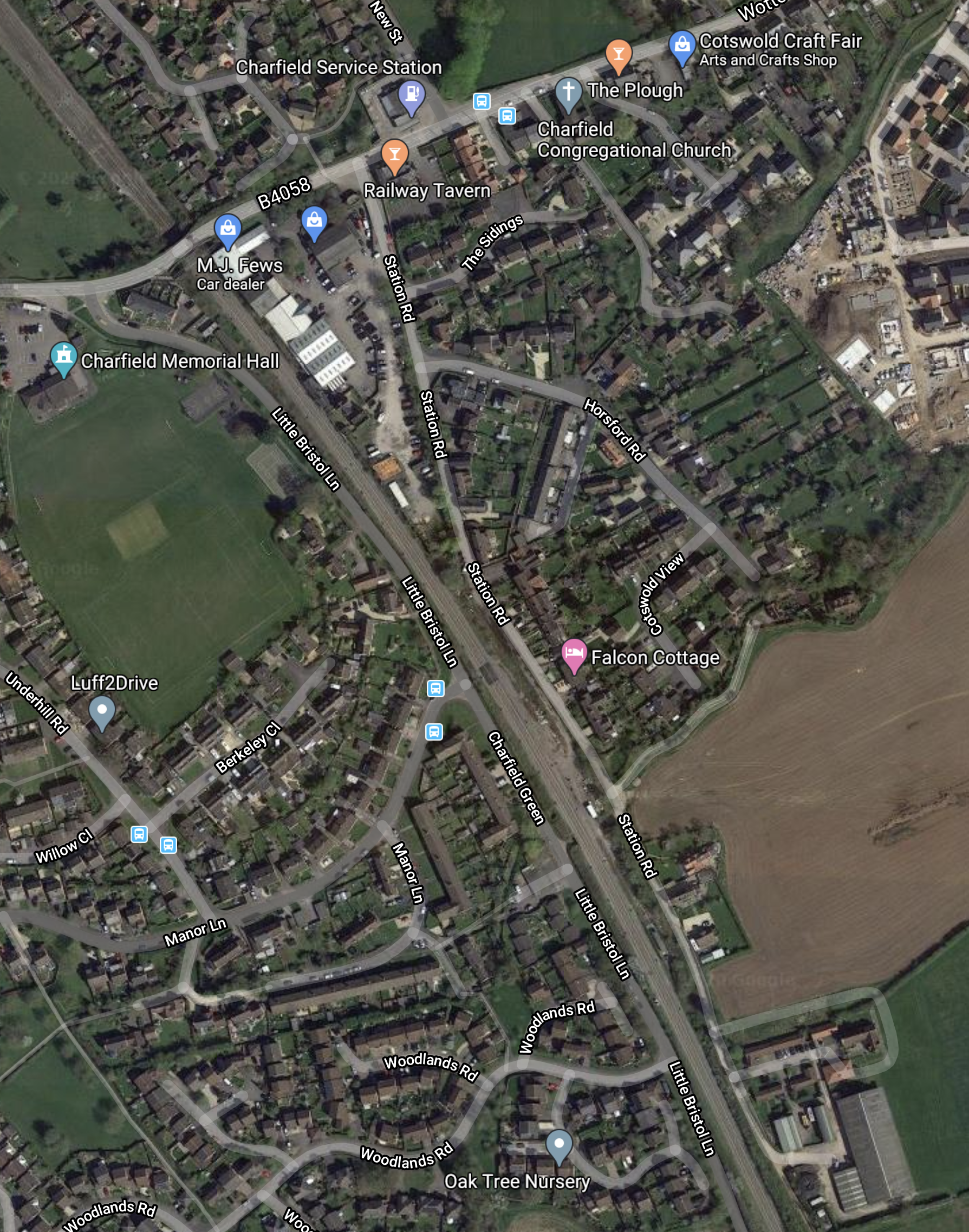
Note, that the road running down the East side of the railway is called Station Road.
There appear to be these services running through the location.
- CrossCountry – Plymouth and Edinburgh/Glasgow via Bristol Temple Meads, Bristol Parkway, Cheltenham Spa and Birmingham New Street
- CrossCountry – Exeter St. Davids and Manchester Piccadilly via Bristol Temple Meads, Bristol Parkway, Cheltenham Spa and Birmingham New Street
- GWR – Great Malvern and Westbury via Bristol Temple Meads, Bristol Parkway, Gloucester and Cheltenham Spa
Note.
All services appear to be hourly.
Bristol Parkway station is thirteen miles away by rail, so is an easy drive, but a very stiff walk or cycle.
Timings by rail from Charfield based on passing GWR trains include.
- Bristol Parkway – 15 minutes
- Bristol Temple Meads – 27 minutes
- Cheltenham Spa – 38 minutes
- Gloucester – 24 minutes
There may be a possibility of improving these times, as the current timetable might have been written for slow trains and a Class 158, Class 165 or Class 166 train can do better.
CrossCountry times include.
- Birmingham New Street – 68 minutes
- Bristol Parkway – 11 minutes
- Bristol Temple Meads – 23 minutes
- Cheltenham Spa – 17 minutes
- Worcestershire Parkway – 32 minutes
I would think, that Charfield station could receive one GWR stopping train and one fast CrossCountry train per hour.
Discontinuous Electrification Between Birmingham And Bristol
Hitachi have changed the rules on electrification, by the announcement of the development of battery electric trains in collaboration with Hyperdrive Innovation, which I wrote about in Hyperdrive Innovation And Hitachi Rail To Develop Battery Tech For Trains.
The proposed train is described in this Hitachi infographic.
It will have a range on battery power of 90 km or 56 miles.
Consider.
- Midlands Connect have ambitions see an extra hourly service between Birmingham and Bristol Temple Meads, with all services running five minutes faster. See Midlands Rail Hub.
- CrossCountry will likely be getting new trains, to replace their exclusively all-diesel fleet. They could be tri-mode trains to make the most of long stretches of electrification on their routes, batteries for short gaps of up to fifty miles and diesel power everywhere else.
- There are electrified stations at Bristol Parkway and possibly Bristol Temple Meads in a few years.
- There is full electrification between Birmingham New Street and Bromsgrove stations.
- Bromsgrove and Bristol Parkway are seventy miles apart.
- There is a possibility, that Cheltenham Spa station will get a charging facility so that London Paddington and Cheltenham Spa services could be run by Class 800 trains converted to battery electric operation.
I don’t think it is an unreasonable prediction to make that Hitachi and other train manufacturers like Stadler with their Class 755 trains, have the technology to run low-carbon services between Bristol Temple Meads and Birmingham New Street stations.
- Trains would leave Bromsgrove and Bristol Parkway with full batteries.
- Quick battery top-ups can be taken at Cheltenham Spa and Worcestershire Parkway stations.
- The fast acceleration of the electric trains will allow extra stops.
I think it would also be possible for GWR to use battery electric Class 387 trains between Great Malvern and Westbury.
Charfield could be an electric train-only station.
Conclusion
The reopening of Charfield station is really a simple station rebuilding and reopening and local passenger forecasts will probably make the decision.
But these forecasts must take into account, the likely partial decarbonisation of the route through the station, which would surely increase ridership.
The new station could also be built with provision for a possible charging facility, in case it might be needed in the future.
Beeching Reversal – Cirencester Community Railway
This is one of the Beeching Reversal projects that the Government and Network Rail are proposing to reverse some of the Beeching cuts.
It is also one of only a few of these projects, that has a very detailed plan.
- The plan has been written to the sort of standards, that would be expected of competent professionals from one of the large international rail consultancies.
- The plan is explained in detail on a comprehensive web site.
- The authors seem to have knowledge of recent developments in rail technology.
After a visit to Cirencester in November 2019, I wrote Could Cirencester Be Reconnected To The Rail Network?, which I started with this paragraph.
In Boris Johnson Vows New Life For High Streets And Axed Rail Lines, I laid out a list of rail lines that could be reopened by a future Conservative government.
Today, I’m going to Cirencester to have lunch with an old friend.
But, Cirencester does not have a rail connection, although there used to be a Cirencester branch line from Kemble station.
This was my conclusion.
With some clever and sympathetic engineering on the branch to handle the crossings, it could be a feasible reopening.
I also felt that a tram-train with batteries, could serve a two trains per hour (tph) service between Swindon and Cirencester via Kemble.
These are some details from the Cirencester Community Railway (CCR) plan.
The Route
In my post, I thought the last part of the route into Cirencester could be a problem.
The authors of the scheme have come up with an elegant solution.
- Between Kemble station and Parklease Farm, the route follows the previous route.
- Between Parklease Farm and the A433 Tetbury Road, the route runs North-South, possible along the route of an existing track.
- The route then follows the A433 into the town.
It is simple and there won’t be much major construction.
- A new bridge over the A429 will be needed.
- The track will need to cross the A433 on the level. It appears that this could be fitted in with major works to provide access to a new housing development.
All of the construction needed is laid out in the CCR report.
Single Or Double Track?
The report says that it will be built single track, which should be sufficient. Although there may be a need for a passing place around halfway to allow a more frequent service.
The Stations
Before detailing the stations, I will show this Google Map, which shows the route of the A433 Tetbury Road into Cirencester.
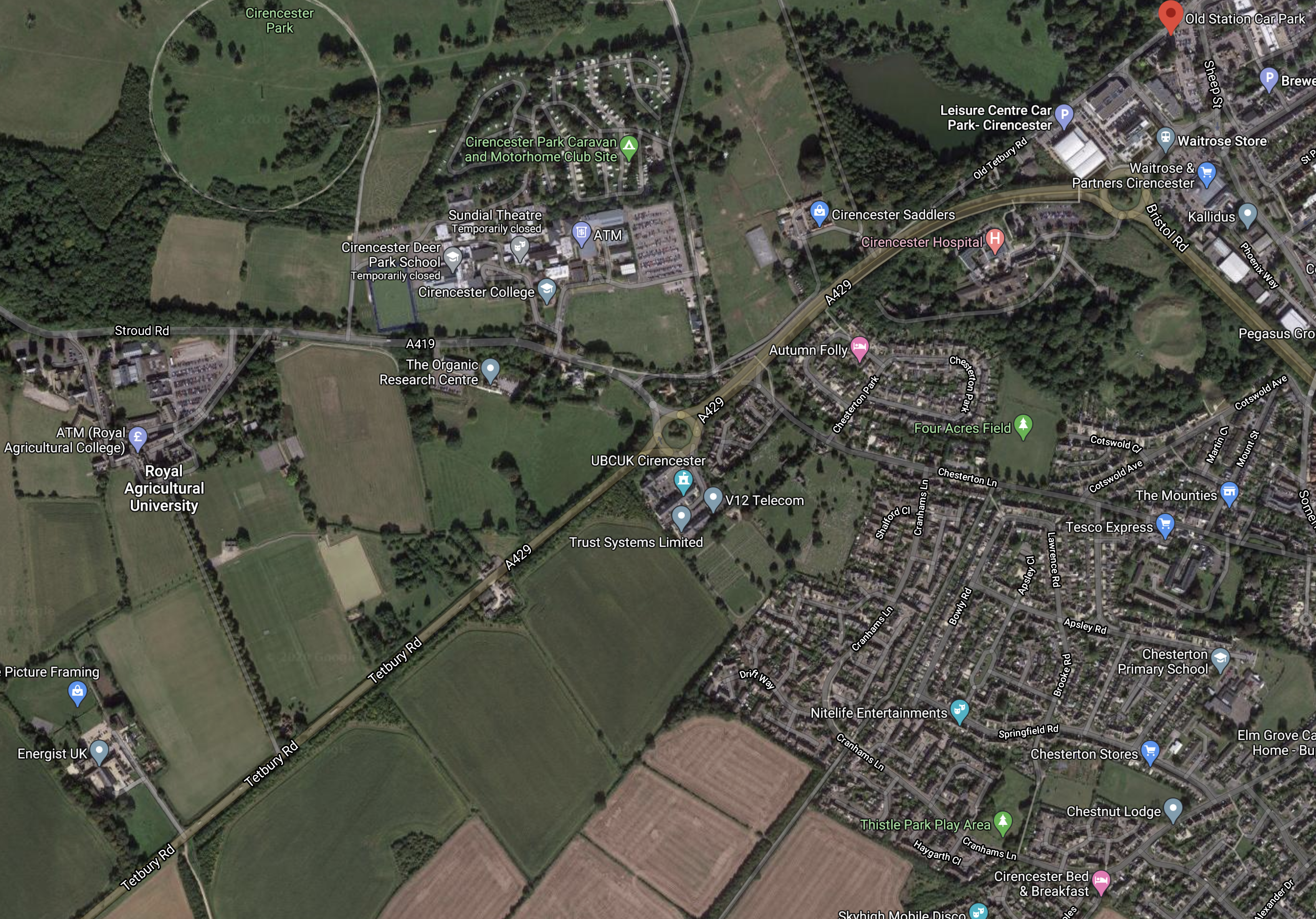
Note.
- The A 433 running SW-NE across the map.
- The Royal Agricultural University towards the West of the map.
- Cirencester College to the North-East of the University.
- The red arrow in the North-East corner of the map, which marks the Old Station Car Park.
The design envisages the following stations.
Parklease Farm
This station could be added, where the track changes direction, when it leaves the old route. It lies to the South of the Royal Agricultural University and off the map above.
It would probably be by request.
The University Station
This would be the main station on the route.
- It would serve the Royal Agricultural University.
- It would act as a Park-and-Ride station, with a large car park.
- Overnight stabling for the trains could be provided here.
If a passing loop is needed it could be added at this station.
The College Halt
This would be to the East of the roundabout on the map and would serve Cirencester College.
The Town Halt
This would be on the edge of the town centre, by the Old Station Car Park.
The Vehicles
The plan envisages using Very Light Rail vehicles.
- If these run on concrete tracks, as the report indicates, then effectively this means the the CCR will be separate from the UK rail network and through running will not be possible.
- In my post, I proposed battery tram-trains as these would allow extra local services between Kemble and Swindon, which might be needed if there was substantial housing development in the area.
- But then I like tram-trains and felt they would be a way to get to the centre of Cirencester. But the CCR’s route avoids the need for tram-trains.
I also wonder, if Very Light Rail would offer enough capacity. But it could probably offer a higher frequency easier than heavy rail.
Service Frequency
Nothing is said in the CCR report about service frequency.
As the University station doubles as a Park-and-Ride for the town, I think the frequency between the University station and the Town halt should be at least four tph.
Would this frequency apply to the whole of the CCR?
Great Western Railway’s Attitude
I can’t speak for Great Western Railway (GWR), but surely they would hope that the CCR would bring them a large number of passengers..
Currently, there is a two tph service between Swindon and Cheltenham through Kemble! Will this provide a good connection with the Cirencester service? Or will passengers find that they waste thirty minutes waiting for trains.
This was one of the reasons, I proposed tram-trains in my original post.
But this would not be a problem unique to the CCR, as the GWR has several branch lines with a similar problem.
So will GWR develop a company-wide solution to feed passengers in from branch lines?
Conclusion
The CCR have produced a well-thought out and detailed plan, but I think it can be improved. Especially, if GWR develop a company-wide solution for branch lines.
 The Anonymous Widower